

Something new seems to have been happening in the Black Sea region at the beginning of the Early Bronze Age. Archaeological work over the past two decades has greatly enhanced our knowledge of the region in the millennia before the Greeks established their first colonies there, and the picture that is emerging is one of local communities’ slow but increasing engagement with the sea first referred to by the Greeks as Pontos Axeinos (inhospitable sea) because of the difficulties navigating its waters and fierce inhabitants.Footnote 1 At the outset of the Early Bronze Age (ca. 3300–2100 BCE), however, new communities seem to appear along the coasts, ones that are often considered coastal variants of better-known inland archaeological groups. The fascinating thing about these variants, however, is that they all display strong similarities in their material culture with each other, including in their architecture, pottery, metalwork, settlement layout, and evidence of resource use (Reference Bauer, Peterson, Popova and SmithBauer 2006a).
Of course, the nation-state orientation of archaeological practice, particularly in the circum-Pontic region, has resulted in a scholarly tradition that privileges national boundaries over transnational connections and thus the construction of archaeological cultures that are focused inward rather than outward (Bauer and Reference Bauer, Doonan and IvanDoonan 2012). Under these circumstances, it should come as no surprise that the apparent similarities among these groups’ archaeological remains have not been examined. Those similarities are compelling, though: in particular, the fact that at around the same time across the whole region appears a distinctive handmade, dark burnished pottery, often in carinated shapes and decorated with incised lines. What the emergence of such a pottery is signaling archaeologically is an important question, but if it can be demonstrated that similarities among the ceramic traditions emerging among these coastal communities are more than just superficial ones, one explanation is that it is due to increased connectivity and engagement with and across the maritime world (Reference Bauer, Biehl and RassamakinBauer 2008, Reference Bauer, Wilkinson, Sherratt and Bennet2011). But how do we approach such similarities rigorously in order to say something meaningful, reasonable, and, one hopes, productive about the constitution of social life in the past?
At issue here is a concern central to archaeology itself: the interpretation of material culture and its patterning across space and time. Understanding past cultural experiences and events through the idiosyncratic, partial, and highly variable archaeological record requires more than simply bridging temporal and cultural distance but an epistemological leap of faith about the certainty of one’s conclusions. While we may have moved beyond the unreflective equation of “pots and people” (Reference Kramer, Levine and YoungKramer 1977, 99) common in migrationist and early culture-historical approaches since our “loss of innocence” (Reference ClarkeClarke 1973, 6) about the uncertainty of our interpretations, determining what kinds of messages about social identity might have been signaled through material culture has proven especially difficult to resolve. The debates over style in the 1970s and 1980s (Reference HegmonHegmon 1992) were pushed aside in the 1990s and 2000s by archaeologists concerned with theories of practice and agency (Reference DobresDobres 2000; Dobres and Reference DobresRobb 2000b; Reference PauketatPauketat 2001) and the ascent of the object in materiality studies (Reference BrownBrown 2004; Reference MeskellMeskell 2005).
But while theories of materiality and agency focus on the important issue of how things act as a locus of the social reproduction of meaning, which is of central importance to interpreting material patterns such as those observable in the Black Sea case, they have significant theoretical and practical limitations (Reference DornanDornan 2002; Reference IngoldIngold 2007). First is the more general philosophical problem of whether things can be imbued with agency. Though definitions vary widely, materiality is typically understood as the way in which objects can act like agents and seem to have their own subjectivities, whether partially (e.g., as an extension of a human actor, as in Reference GellGell 1998) or, inspired by Latour’s (Reference Latour2004) actor network theory, in a more autonomous or “symmetrical” sense (Reference GosdenGosden 2005; Knappett and Reference Knappett and MalafourisMalafouris 2008; Reference OlsenOlsen 2010). But while it is without question that material objects affect and constrain the way people interact with them, and often shape our understandings of the world, such an approach risks being a new kind of “pots = people” (although transcending their distinction is precisely what advocates of symmetrical archaeology intend), a position that, Fowles (Reference Fowles, Bille, Hastrup and Søensen2010, 25) has argued, “tends to blind us to that more complicated world of relations.” By considering the ways in which absent objects have practical effects, such as a set of lost keys, Fowles points out that the effects of things in the world depend on some level at least on their acknowledgment by human subjects, illustrating that the status of things is not ontological but relational, or, as I would argue, semiotic. Moreover, while we may argue over the extent to which objects (and even individuals) may be able to make meaningful choices and act upon the world, or whether we can get at such intentionality, a more basic problem with any inquiry along these lines is that it presents the production of (or, more boldly, the “intended”) meaning of objects as inherent and isolatable, and thus identifiable outside of the communicative act.
Second, it is not clear how well such perspectives can account for material culture patterning—or rather, whether they allow room for the kinds of generalizations about material culture that archaeology has long depended on. A main criticism of agency theories has been their dependence on a structure-agency duality in which the broader generalizations about social dynamics identified as structure are often neglected (Joyce and Reference Joyce and LopiparoLopiparo 2005). Archaeology depends on abstractions such as types, and understanding—or at least thinking of ways to theorize—what such types might tell us, and if people in the past would likely have made the same abstractions, must remain a large part of what archaeology is about.
Finally, theories of material agency are often aimed at considering the ways in which specific objects act in social life to bring about specific ends. Identifying the actions and motives of individual actors or objects requires not only “context-sensitive methodologies” (Dobres and Reference DobresRobb 2005), but the development of an archaeology with a kind of historical and ethnographic richness that is only possible in special cases, and certainly not possible to develop in most prehistoric contexts. Because material meanings are both variable and ambiguous—not to mention individual, personal, and contingent—getting at individual choices and actions through objects may simply be impossible in most cases. But does this mean that agency cannot be investigated? As Gosden (Reference Gosden2005), Knappett (Reference Knappett2002), and others have pointed out, agency may be better understood not on the individual level but as distributed across social networks and observed in archaeological patterning. Indeed, Voutsaki (Reference Voutsaki2010) has recently argued for a “relational agency” that seeks to combine notions of agency with phenomenological approaches to personhood that stress the social embeddedness of individual action and meaning. Taking a case from Bronze Age Mycenaean Greece, she suggests that a relational approach is better suited to the analysis of empirical archaeological data and thus provides a way to overcome agency-focused studies’ inability to be evaluated in any rigorous way. These recent critiques suggest that approaches that understand and investigate agency as distributed may be more applicable to problems of archaeological patterning and thus more productive for understanding social life in the past.
To return, then, to the archaeological problem described at the beginning of this article, how might we confront the apparent sameness or “iconicity” emergent in Early Bronze Age pottery in the Black Sea, and how might have emerging social relationships across the region at this time been signaled and in part constituted by these similarities? How robust is this pattern, and would such iconicity have been apparent or meaningful as “tokens” of a more generalized pottery “type”—which classical archaeologists might call a koine (from the Greek word for “standard dialect”)—in the same way to makers and users of this material in the past? In other words, did these objects operate as icons of each other in the early Black Sea? If so, how did they operate within social life? What relationships of connectivity or “indexicality” might that point to, and how might they have been communicated?
As anticipated by these questions, I believe that a productive alternative to current theories of materiality and agency for addressing the problem of what material culture meant and how it operated in social life is provided by the semiotic writings of Charles Sanders Peirce. As Lele (Reference Lele2006, 48) has argued, Peirce’s semiotic is particularly helpful for analyzing the “habitual character of material culture.” “Habit” is a key concept here, as, according to Peirce, it is as habit that things are meaningful. The identity of things (or of people, for that matter) is not based on an individual instance of action or interpretation but through “regulative habits” (Reference LeleLele 2006, 55), or the patterning of such engagements over time. This insight offers a way we might approach the problem of interpreting the appearance of a Black Sea koine during the Early Bronze Age: rather than return to a culture-historical approach of moving from the identification of iconicity or resemblance in the archaeological record to identity, an equation that Herzfeld (Reference Herzfeld, Bouissac, Herzfeld and Posner1986, 408) explicitly warns against, we should instead seek to address what kinds of meanings are being communicated through the appearance and use of a distinctive material culture type.Footnote 2
The concept of habit also has important implications for approaches to materiality, which focus on the communicative intention of such objects and consider how they act or what they want. Instead, I argue that we should inquire into how people create and understand their social worlds by being brought into semiotically mediated relationships with objects and others. While this might simply seem a shift in perspective, it is more than that, since ascribing agency to objects relegates the act of interpretation to secondary status. A Peircean approach suggests we look at the semiotic process as it unfolds in the creation of what he called the “Interpretant,” or resulting sign of interpretation, and by doing so, refocus our analytical frame on what engagements with objects through the recursive process of semiosis might inform us about the objects themselves and the people who use them. Within this process, material objects stand in a meditative relationship between their creation as Signs and their social interpretation, their production and effects. In this scheme, the interpreter plays an active role in responding to the sign and in creating an interpretation of it and, in turn, an object’s (or person’s) identity is a socially mediated one, which grows or emerges like a pattern out of multiple semiotic encounters. The meaning of something is thus not what is intended but what is understood in a patterned or habitual way. By focusing on habits, the task of interpreting meaning thus calls for what might be termed an “archaeology of self” rather than agency.
In the following sections, I intend to illustrate how Peircean semiotics offers a productive way for archaeologists to think about how objects participate as signs in the social reproduction of meaning that avoids the practical and conceptual problems associated with material agency approaches. To make this argument, I first describe the archaeological case introduced at the outset of this article regarding the development of a distinctive ceramic type around the Black Sea over the course of the Early Bronze Age, beginning around 3000 BCE and becoming most pronounced around 2700–2500 BCE, and present the results of my investigations into that material. I then introduce two ideas developed by Peirce that are particularly relevant to the interpretation of such material culture patterning—the modality of the sign known as the “Interpretant” and his notion of “habit,” or repeated behavior of the sign—and argue that their emphasis on the interpretive process of semiotic mediation is preferable to agency theories that focus on the production rather than consumption side of meaningful communication acts. Finally, I return to the archaeological case to show how a Peircean approach helps us theorize and understand how the pan–Black Sea pottery of the Early Bronze Age acts to mediate newly emergent relationships across the region and, in turn, how that semiotic mediation generates social practice.
Ceramic Patterns and Practices in the Early Bronze Age Black Sea
In the two decades since the end of the Cold War, archaeological interest in the Black Sea region has greatly increased. Most noteworthy is the interest in the “prehistoric” periods before Greek colonization beginning in the seventh century BCE, which for a long time had been regarded by scholars (in practice, if not in theory) as the initial phase of the region’s history worth studying.Footnote 3 Even in those cases where significant prehistoric archaeological materials were discovered, most often these were considered in light of their inland counterparts, with the coastal groups regarded as cultural variants. In spite of this bias away from considering the region as a unit of analysis in its own right (Özveren Reference Özveren and Aybak2001; Bauer and Reference Bauer, Doonan and IvanDoonan 2012), several important cultural groups and sites along the Black Sea littoral can now be identified: the Usatovo, Kemi-Oba, Novosvobodnaya, and the dolmen groups across the north (Reference Zbenovich, Kalousek and Budinský-KričkaZbenovich 1973; Reference MarkovinMarkovin 1997; Reference Trifonov and YakovlevTrifonov 2001; Reference Rassamakin, Boyle, Renfrew and LevineRassamakin 2002); sites around the Varna lakes and Burgas Bay along the Bulgarian coast (Tončeva Reference Tončeva1981; Reference Draganov, Bailey and PanayotovDraganov 1995; Reference Nikolova, Lazarov and AngelovaNikolova 1995); and at İkiztepe and in the Sinop Peninsula in Turkey (Alkım et al. Reference Alkım, Alkım and Bilgi1988, Reference Alkım, Alkım and Bilgi2003; Reference DoonanDoonan 2004b). The appearance of these new sites and culture complexes suggests that something is developing along the coast. What that is exactly is not yet entirely clear, but one thing worth noting is that over the course of the Early Bronze Age, the material cultures of these regions begin to display strong similarities with each other. The pottery is particularly suggestive, with common features appearing across the region, such as a highly polished, dark surface, sometimes with incised decoration and often in carinated shapes, suggesting that they are “skeuomorphs” of metal prototypes (for discussions of skeuomorphs, see Sherratt and Reference Sherratt, Sherratt and GaleSherratt 1991; Reference KnappettKnappett 2002).
What seems to be the appearance of a distinct ceramic style in the first half of the third millennium BCE—shared among Black Sea coastal communities but not with inland groups—raises intriguing questions about the emergence of interregional communication and interaction around the Black Sea at this time. Most of the archaeological research in the region, though, has yet to show any significant evidence for trading activities or other kinds of relationships that archaeologists tend to look for, such as migration or even the diffusion of styles from a specific source, since there is no indication that the new traditions in the region are coming from any one place. Moreover, what the spread of a distinctive style could mean is also a tricky issue since stylistic similarities can be superficial, especially when dealing with patterns on a broad scale.
To deal with these limitations and attempt to map out potential lines of connection across the region, I thus embarked upon a study that sought to identify changing pottery-making practices among the Black Sea groups from the end of the Chalcolithic to the middle of the Early Bronze Age (ca. 3600–2500 BCE) to see if the superficial stylistic similarities among them were also reflected in shared technological practices, which might in turn suggest the existence of communication and knowledge sharing typical of a more integrated and interacting community. A focus on ceramic technology has been shown to provide an important line of evidence independent from and corrective to the stylistic analysis common in culture-history approaches (Reference RyeRye 1981; Reference Vandiver, Sayre, Vandiver, Druzik and StevensonVandiver 1988b). H. J. Franken and Gloria London’s (Reference Franken and London1995) analysis of Late Bronze and Iron Age pottery from the southern Levant, for example, nicely illustrates how the examination of manufacturing techniques moves us beyond the simplistic conclusions that often resulted from an exclusive focus on form and decoration. They show that while the disappearance of painted designs on pottery at the end of the Late Bronze Age has been traditionally interpreted as a sign of social upheavals and new people in the region, analyses of the clays and technology employed by ancient potters reveal that the decision to stop using paint had more to do with changing clay and water availability over the course of the second millennium BCE, which made painting pottery more difficult. Their study has served as one part of a broader reevaluation of the Late Bronze/Iron Age transition in the region, a transition that had been considered a time of sudden and catastrophic upheaval but that is now thought of as a time of sociopolitical reorganization, with varying degrees of disruption across the region.
Employing a chaîne opératoire approach (Reference LemonnierLemonnier 1976, Reference Lemonnier1992; Reference Dobres, Dobres and HoffmanDobres 1999, Reference Dobres2000), I analyzed ceramics from around the Black Sea with a nested strategy of macroscopic and microscopic techniques in order to assess the variability and compare the manufacturing processes of the assemblages over time and with each other. Since the process of pottery production, including clay preparation and tempering, forming, firing, and finishing of vessels, tends to follow socially learned practices, it can contain features identifiable with specific groups and thus can be used by archaeologists to examine boundaries and linkages among groups in the past (Reina and Reference Reina and HillHill 1978; Reference StarkStark 1998; Reference Gosselain, Stark, Bowser and HorneGosselain 2008). Similarities and differences within technological practices thus allow archaeologists a way to identify socially meaningful links among regional traditions that might otherwise be difficult to determine.
The pottery in the main data set was obtained through fieldwork conducted since 1996 by the Sinop Regional Archaeological Project (SRAP), a collaborative, interdisciplinary archaeological research project aimed at investigating long-term patterns of land use and settlement and communication networks in the Black Sea coastal region of Sinop, Turkey, from the inland valleys and mountains to the sea, by combining geophysical and textual study with intensive techniques of systematic survey and excavation (Reference Doonan, Athanassopoulos and WandsniderDoonan 2004a, Reference Doonan2004b). The Sinop promontory (fig. 1) is a peninsula at the northernmost point in Turkey, jutting out into the Black Sea halfway along its southern shore. It is an agriculturally rich region of gently rolling hills, home to timber forests that have been famed since antiquity for boatbuilding and woodworking (Reference Doonan, Faudot, Fraysse and GenyDoonan 2002). Just to the south of the headland, however, the northernmost edge of the Pontic mountains rises steeply, effectively cutting the peninsula off from the central Anatolian landmass and from points east along the Black Sea coast. Few natural river valleys and intermontane passes make passage across this landscape extremely difficult, a situation that undoubtedly had a profound effect on the history of settlement in the region, serving to promote an identity distinct from that of other regions in Anatolia and that looked outward toward and across the sea (Reference MeekerMeeker 1971).
Map of the Black Sea

The prehistoric handmade ceramic material examined from the Sinop region was first classified in the field according to broad technological features such as clay paste, inclusions and possible tempering materials, hardness (as a result of firing temperature), and finishing techniques such as the use of burnish and application of decoration. This strategy was chosen because of the fragmentary nature of assemblages from surface survey and because it was clear almost from the outset that in form and decoration—for better or worse, the two features most commonly used by archaeologists in pottery studies—the assemblages were both conservative and limited in variation. From nearly forty pre-Greek sites documented to date in the terrestrial survey, eleven sites identified as representing phases from the Chalcolithic (fifth to fourth millennium BCE) to Late Bronze Age (mid-second millennium BCE) were chosen for further examination. A sample of this material was analyzed using a nested strategy of macroscopic and microscopic techniques in order to assess the variability and compare the manufacturing processes of the assemblages over time and with each other (for further discussion, see Reference BauerBauer 2006b).
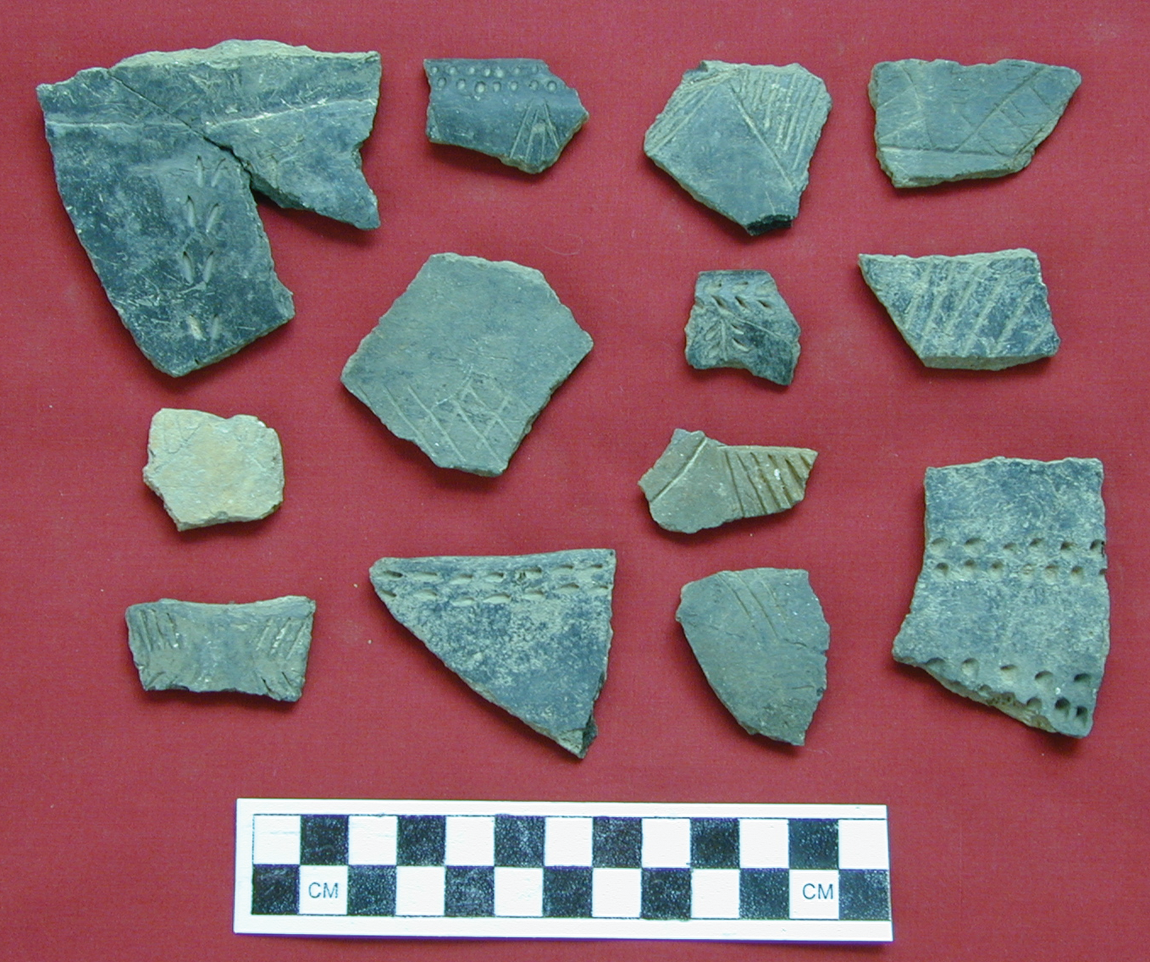
Through this process, eight ware types were identified among the eleven prehistoric assemblages. In spite of the abundance of types in the overall data set, conservatism seems to be a hallmark among them, as four of the most common technological groups are found at all the sites. More important, however, is that analysis of the Sinop assemblage suggests a long-lasting conservative tradition of manufacturing handmade pottery using a “sequential slab” forming method common to Near Eastern practices known from that time, a technique that notably persists in Sinop even as other areas of Anatolia, particularly in northern Mesopotamia, turned to wheelmaking at about 3200 BCE (Reference VandiverVandiver 1988a). The forms and decorative techniques observed within the assemblage are similarly distinctive, with incision and burnish employed in ways more reminiscent of practices known from Balkan and Ukrainian Early Bronze Age sites (fig. 2). Similar studies of pottery undertaken from Black Sea coastal assemblages from the north Caucasus and Ukraine paint a complementary picture of a shift toward similar practices at the time of increased coastal engagement beginning around 3000 BCE (Reference Bauer, Biehl and RassamakinBauer 2008). In all cases, those studies revealed an emerging pattern of distinction, in both forming and finishing methods, from their inland counterparts. What is even more compelling is that the patterns noted as distinctive in both of these regions are almost identical to each other and share numerous features with the Sinop material (table 1).
Handmade pottery from Kayanın Başı, Sinop, Turkey. Photo: Sinop Regional Archaeological Project.

These analyses suggest that a specific pottery-making practice seems to have emerged around the Black Sea, shared among coastal groups and distinct from their inland neighbors, during the first half of the Early Bronze Age. But while this is itself an interesting result, it has proven a challenge to make sense of these patterns in ways that are culturally meaningful beyond making some loose kinds of statements about communication and information exchange (see Reference Wobst and ClelandWobst 1977). On its own, chaîne opératoire provides a only a tool for identifying such patterns but does not provide a way to understand how such practices came into being, or what role they may have played in the constitution of social life.
Theories of agency and materiality may be deployed to address some of these concerns, for although agency theories are quite diverse in their foci and even starting assumptions, most seek to identify purposeful action, potentially in resistance to, or at least in a dynamic relation with, social norms and structures (Dobres and Reference Dobres, Robb, Dobres and RobbRobb 2000a; Reference DornanDornan 2002; Dobres and Reference DobresRobb 2005). Chaîne opératoire fits well with such approaches, as it constitutes a methodology for moving from the identification of manufacturing processes as the result of technological choices and traditions to interpreting broader links among craftspeople as social actors (Reference DobresDobres 2000). Moreover, by understanding objects as an active participant in social life, materiality theories offer a way to theorize what is being communicated by a “technological style.”
But agency theories nevertheless suffer the effects of having been born of structuralist thought and its critiques. While they seek to transcend the duality of individuality/agency and system/structure—and Giddens’s (Reference Giddens1979, Reference Giddens1984) theory of structuration is an explicit attempt to regard the two binary concepts as interdependent and mutually constitutive of each other (see the discussion in Joyce and Reference Joyce and LopiparoLopiparo 2005)—most archaeological engagements with agency nevertheless use it to identify individual actions, or instances of resistance or creativity in opposition to the larger cultural or social systems within which they act (Dobres and Reference DobresRobb 2005). This focus on individual action makes such approaches difficult to apply to data such as those from the Early Bronze Age Black Sea that are broader in scope and/or lack detailed historical or other contextual data. A focus on consequences rather than intentions (as well as larger historical patterns rather than individual instances) proposed by Pauketat (e.g., Reference PauketatPauketat 2001; Pauketat and Reference Pauketat and AltAlt 2005), for example, may be one way around this problem.
As an alternative, Peircean semiotics—and, in particular, his concepts of the Interpretant and habit—provides a way to theorize and think about the ways in which objects act, as articulated by Parmentier, as signs both of and in history. “Signs of history,” Parmentier (Reference Parmentier1987, 11–12) explains, refers to those expressions that “through their iconic, indexical, and residually symbolic properties, record and classify events as history.” In other words, these are signs that communicate and comment upon history itself, effectively relating information about cultural continuity and change as time unfolds. “Signs in history,” in turn, refers to those signs that “as objects, linguistic expressions, or patterns of action, themselves become involved in social life as loci of historical intentionality” (Reference ParmentierParmentier 1987, 12). As a result, signs have the capacity to communicate both reflectively and productively as they are encountered in the process of semiotic mediation (see also Reference Parmentier, Mertz and ParmentierParmentier 1985). In addition, this second modality of the sign suggests a way to see an object as a kind of agent within semiotic mediation, without necessarily regarding it as acting with the same agency and intentionality as human agents. It is to this model that I now turn.
The Interpretant and Habit in Peirce’s SemioticFootnote 4
Recognizing the limitations of structuralist-based approaches to meaning, anthropologists and, more recently, archaeologists have increasingly turned to Peirce’s semiotic writings to develop more rigorous and contextually dense studies of how knowledge is constructed and communicated among individuals and groups in both the past and present (Reference Singer and SebeokSinger 1978; Reference DanielDaniel 1984; Reference TambiahTambiah 1984; Mertz and Reference Mertz and ParmentierParmentier 1985; Reference ParmentierParmentier 1994; Preucel and Reference Preucel and BauerBauer 2001; Reference PreucelPreucel 2006). Rather than focusing on symbolic meanings often associated with Saussurean semiotics, a Peircean approach emphasizes the interactive nature of semiosis as a process, one in which both the creation and the interpretion of a sign are included as necessary components of the interaction. In Peirce’s view, then, the meaning of signs cannot be understood to exist outside of our encounters with and interpretation of them.
Two of Peirce’s concepts are particularly helpful for addressing the problems raised by the study of agency in archaeology. While the relevance of Peirce’s writings for archaeology has increasingly been recognized (Preucel and Reference Preucel and BauerBauer 2001; Reference BauerBauer 2002; Reference KnappettKnappett 2002; Reference Coben, Inomata and CobenCoben 2006; Reference LeleLele 2006; Reference PreucelPreucel 2006; Reference Joyce, Renfrew and MorleyJoyce 2007; Reference CipollaCipolla 2008; Reference Watts, Knappett and MalafourisWatts 2008; Reference CrosslandCrossland 2009; Reference Aldenderfer and RowanAldenderfer 2011), most engagements with his work draw upon his sign typology of icon-index-symbol, and I believe that Peirce’s most useful contributions to semiotics—namely, his concepts of the Interpretant and habit—remain underexplored for archaeology (but see Reference LeleLele 2006). These two concepts are the basis of Peirce’s assertion that identities and meanings are mediated and socially constructed. What Peirce termed “man’s glassy essence” (see also Reference SingerSinger 1984) is the idea that all understandings of the world (of people and things) are those that are reflected in the patterning of perception, and as such are his most relevant for current discussions of agency, self, and personhood.
In practical terms, Peirce’s primary insight is that signs are triadic, rather than dyadic, as suggested by Saussure (for good summaries of Peirce, see Reference ParmentierParmentier 1994, 3–22; Reference LeeLee 1997, 118ff.). What this means is that while Saussure suggested that the meaning of a sign was based on a relationship of convention (or “relatively motivated”; see Reference ParmentierParmentier 1994, 175ff.) between the sign-vehicle, or the signifier (such as a word), and the signified concept (the meaning in the mind of the interpreter of the word), Peirce believed that there was a third dimension, that of the actual Object, which existed in the world as either a physical presence or a general regularity, and through which signs become palpable or experienceable to human minds, often relating to the sign-vehicle in a relationship of necessity. These possible relationships are what Peirce describes with his most widely cited contribution, the trichotomy of icon-index-symbol, with icons and indices being Signs related to their Objects by necessity: in the case of the former, by formal resemblance (e.g., a map), and the latter, by spatio-temporal contiguity (e.g., a weather vane).
For Peirce, the signs that we observe and interpret are in fact made up of three modalities or positions, which describe semiotic relations at any moment of cognition. These he terms the Sign, or subject of one’s perception, the Object, or meaning of the sign that exists in the world, and the Interpretant, or meaning of the sign as conjured in the mind of the interpreter of the sign. In this scheme, then, every Sign acts as a mediator between the Object behind it and the Interpretant it lies behind (fig. 3).
A triadic, mediative model of the sign allows us to do two things. First, it allows us to transcend the subject-object dualism of Kant that has shaped structuralist and then poststructuralist approaches by acknowledging that signs are not arbitrary but rather mediative between the world out there—or intended meanings—and what we interpret. In Peirce’s (Reference Peirce1868) view, meaning cannot be separated into “objective” and “subjective,” because our understanding of all signs is embedded in experience, and thus every cognition has both a subjective and objective aspect. Meaning is thus created and reaffirmed in the each instance of signification and interpretation and does not exist as a reality outside that “semiotic event” (Reference Peirce and HauserPeirce 1998, 291).
The second benefit of turning to a triadic model of signification is that it focuses our inquiry into the social reproduction of meaning—the main goal of agency approaches—on the process of semiosis as it unfolds through the generation of new signs of interpretation (or Interpretants). A Sign’s ability to effect meaning and convey ideas is dependent upon the interpreter and how he or she reads the Sign (or, more precisely, the Sign-Object relation) and acts—creating new signs—in turn. In semiosis, new signs are continually being created in practice, so that through the act of interpretation and communication, Signs themselves (whether material objects, individual actions, or linguistic utterances) have the effects of generating new meanings and challenging old ones. As the resultant sign generated in the mind of observer/interpreter of a Sign-Object relation, the Interpretant itself becomes a new Sign, one that acts as a metasemiotic lens through which previous meanings in the semiotic chain are conveyed and reinterpreted. In other words, Signs have the capacity to produce inferences (Interpretants) about the world, which in turn guide further inferences and investigation (Preucel and Reference Preucel and BauerBauer 2001, 92). In this way, “in the Peircean scheme, all signs have an agency of sorts” (Reference Watts, Knappett and MalafourisWatts 2008, 194).
To illustrate the semiotic process I am describing, I will borrow the example provided by Parmentier (Reference Parmentier1994, 4–5) of a golfer lining up her tee shot (fig. 3). The golfer first tosses bits of grass into the air and watches them drift to the left. The movement of the grass (its velocity and direction) is a Sign that is indexical of the wind. The golfer will read such a sign and may generate an Interpretant by aiming her tee shot at an angle such as to take account of the wind. This resulting tee shot, which is the Interpretant, is also a Sign related to the same Object (the wind) indexically. More important, it will act in such a way as to be itself interpreted by the next group of golfers who are watching as they wait to play the same hole. This is not simply replication, however, as Parmentier notes, as the resulting tee shot will not be interpreted in the same way that the initial falling grass was. Rather, “it will display or exhibit—perhaps for the golfers waiting to tee off next—the complex semiotic relationship of ‘taking account of the wind’” (Reference ParmentierParmentier 1994, 5). In this way, each link in the chain of semiosis builds upon previous ones and so increases in semiotic density. The action of the next golfer will both take account of the wind and take account of how successfully the previous golfer did so (see fig. 4).
Peirce’s trichotomy of the Sign (after Parmentier 1994, 10)

The semiotic process (after Parmentier 1994, 4–5)

Note where agency comes in here. It is not so much the action of throwing the grass in the air as it is in the reading or interpretation of that Sign, on the part of both the golfer herself and those waiting on the side. Peirce’s scheme suggests that inquiry into the production and reproduction of meaning should thus be focused on the results or impacts of object-Signs rather than on the agency of Signs themselves. Moreover, note that the interpretations of the falling grass in this example—and in fact their ability for guiding a successful play—are based on more than simply that single act, but are necessarily dependent on a patterned history of prior experience, of knowing what to look for when “taking account of the wind.” The point is that the way we should approach the issue of agency is by focusing on the meaningful social patterns that allow Signs to be interpreted and responded to, and thus seem to have agency.
This leads me to the second contribution of Peirce’s I wish to discuss. This is the notion of habit, which in many ways parallels a core concern of agency and other practice theories, namely the social reproduction of meaning across time and space. What Peirce called habit refers to the repetition and patterning of socially construed meaning (Reference PeircePeirce 1892; Reference SingerSinger 1984) and may be compared with Bourdieu’s (Reference Bourdieu1977) concepts of “habitus” (Reference DanielDaniel 1984) and “doxa” (Reference SmithSmith 2001; Joyce and Reference Joyce and LopiparoLopiparo 2005), though it differs in some significant ways. First, and most significantly, while in Bourdieu’s formulation such terms refer to some underlying structures of thought or unconscious behaviors that individuals either conform to or challenge, Peirce’s habit does not speak to the relative consciousness of the social actor that is key in most agency approaches. This is because Peirce’s model does not maintain the individual-community, subject-object, agency-structure dualisms common to these approaches (see also Joyce and Reference Joyce and LopiparoLopiparo 2005). Rather, in his view, all identities, individual and communal, are the product of semiosis—the mediative interaction requiring both an observer and observed—rather than of individual, isolatable action (see Reference CollinsCollins 2008).
Habit, according to Peirce (Reference Peirce1892, 15), is “not acting with exactitude.” Rather, conventional understandings (symbols) are derived from the total patterning of the socially observed and mediated instances of meaning. Habit is the repeated behavior observed in a sign, which is always variable at the level of individual observation, and it is this overall patterning that creates meanings such as that sign’s identity. Habit is thus central to a thing’s (or person’s) identity, as things “are” what we observe them to be in a patterned way (Reference SingerSinger 1984). Without habit (and thus acting in a completely arbitrary way), things would have no identity, no (social) meaning (since, for Peirce, all meaning, all knowledge is social, or based on mediation). This is what Peirce (Reference Peirce1892) famously referred to as “man’s glassy essence.”
We can understand habits in two interrelated ways. First, the repetition and patterning of an action or meaning being communicated by a sign are its habitual meaning or identity. Such a meaning is generalizable and can be abstracted beyond an individual instance and thus can be termed in Peirce’s framework a “symbol” (Nöth Reference Nöth2010). At the same time, a sign’s meaning is not inherent but resides in the semiotic engagement with an interpreter of that sign, so that the symbolic meaning or identity of something is generated by that repeated, habitual engagement. Thus, the concept of habit also resolves some of the tensions associated with the ambiguity of meaning (Reference TilleyTilley 1991), for it shows that individual interpretations are always ambiguous, but they may become conventional with repetition over time. In this way, signs of conventional meaning (i.e., symbols) have the capacity to grow, since they are not so much conventional, but habitual ones, “whose effect is the one of a habit of interpretation” (Nöth Reference Nöth2010, 85).
In other words, Peirce’s concept of habit turns agency around and implies that we are not what we do (or eat or wear) but rather what others see. To some extent, this is suggested in the final chapter of Gell’s (Reference Gell1998) discussion of the “distributed person” (following Strathern’s [Reference Strathern1988] “dividual”) and in turn by Knappett (Reference Knappett2002) and Gosden (Reference Gosden2005), who make the important point that agency is better understood as distributed across social networks and not confined to specific instances or events. But I would go further to say that Peirce’s notion of habit questions whether agency (along with intentionality) is even an appropriate subject of study, as it still retains the subject-object dichotomy his semiotic neatly transcends. For if the meaning of a given action is socially mediated, what we are really focusing on in our inquiry of agency is the patterned understanding of that action within a social group. Thus, the study of agency might be better inverted as a “theory of self” in the Peircean sense that what something is in the world—its self—is the sum of how it is semiotically encountered, perceived, and responded to (see Reference SingerSinger 1984; Reference ColapietroColapietro 1989; Lee and Reference Lee and UrbanUrban 1989), a sense not unlike that of Gell’s (Reference Gell1998) distributed self as noted above. Such a perspective prioritizes the study of patterning and allows us to understand the identities (or “selfness”) of individual agents as socially constructed and mediated (see also Reference ThomasThomas 1989; Reference LeleLele 2006).
Methodologically, this view of knowledge is fully compatible with a wide range of archaeological approaches, since observing the patterning within variation is a shared goal. Rigorous analysis such as data collection and statistical analysis is thus welcomed—not as proofs of truth but as indicators of patterned understandings, which are themselves variable and always socially mediated and embedded. Habits may be identified in those material features that index the habitual action of a culture or group and may be inferred from distribution, use, deposition, and other socially relevant patterning commonly researched in the archaeological record.
Habit and Community in the Bronze Age Black Sea
Returning, then, to the archaeological case discussed above, how might Peircean insights about the Interpretant and habit help us to interpret the development of a pan–Black Sea practice of pottery making as also one of meaning-making (Reference Joyce, Renfrew and MorleyJoyce 2007)? In a similar manner as Lele (Reference Lele2006), can we interpret the habitual engagements with these objects as illustrative of an emerging Black Sea identity, and would such an identity have been interpreted as such during that time of the Early Bronze Age? Can Peirce provide a way to understand the active role of material objects in the constitution and (re)creation of social life that avoids the problems of intentionality and the subject-object duality in current approaches to materiality and agency? Peirce’s emphasis on mediation as the core of the semiotic process underlies his other contributions and allows us to resolve many of the issues raised here. Efforts to interpret the significance of an emerging pan–Black Sea pottery-making tradition can benefit from a consideration of their capacity to meditate regional identities. Anthropologists who focus on the role of discourse in establishing and maintaining social relations suggest that all signs, including material objects, mediate and convey meaning between participants in each social encounter and in this way act as vehicles for the ongoing circulation of culture itself (Reference UrbanUrban 1996, 2010; Reference ParmentierParmentier 1997; Reference Keane and MillerKeane 2006). This is the process that Urban (Reference Urban, Bauer and Agbe-Davies2010) terms “cultural motion,” in which relationships are emergent from social interactions and the bits of culture that are transmitted and replicated through such encounters. The replication of signs within ongoing discourse acts to mediate new social relations and the cultural traditions they enable, which are at once generative and reflective—signs in history and signs of history (Reference ParmentierParmentier 1987)—and together bring new culture into existence. The key point here is that signs have the power to act upon and shape the meaning communicated within this interaction and thus may be seen to have a kind of agency. As Watts (Reference Watts, Knappett and Malafouris2008, 204) says, “signs do not simply transport information from one locus to another [but] act as interlocutors.” This emphasis on the mediative relationships at the heart of exchange and the movement of culture itself provides a way to understand the role that material objects play in cultural motion, and a better way to interpret the pottery of the early Black Sea, where a new pan–Black Sea community seemed to be developing out of the practice of interaction itself.
A second benefit to employing a Peircean approach relates directly to the issue of how we investigate and interpret the meaning of patterning in the archaeological record, a problem that many agency-based approaches have difficulty with (Reference VoutsakiVoutsaki 2010). In order to understand how these coastally situated cultures related to each other and whether their generally contemporaneous appearance resulted from interconnections among them, I investigated and compared the technological practices of several of the coastal regions that produced their similar styles, a strategy methodologically similar to the chaîne opératoire approach used in some agency-focused analyses (Reference BauerBauer 2006b, Reference Bauer, Wilkinson, Sherratt and Bennet2011). Using the methodology of chaîne opératoire within the theoretical framework of Peircean semiotics and his concept of habit allows us to link material practices to identities in a theoretically and methodologically robust way. Habitual identities such as these emerge through the repetition and patterning of social action (Reference PeircePeirce 1892; see also Dietler and Reference Dietler, Herbich and StarkHerbich 1998), and with respect to my investigation into connection and communication across the Bronze Age Black Sea, the appearance of habits unique to, but shared among, Black Sea communities may suggest that information is being exchanged and even that a broader shared social identity may be observed as emerging in the region at this time.
How such information was shared and what kinds of networks of interaction existed at this time are questions that remain to be fully understood. While there is no evidence for any significant trading activity in the Early Bronze Age Black Sea, the development of two other communities, those of metalworking and fishing, may represent along with pottery making an emerging “constellation of practices” (Reference WengerWenger 1998, 126–28) through which a broader Black Sea identity emerged. Lave and Wenger’s (Reference Lave and Wenger1991) concept of “communities of practice” is helpful here as a way to work through how mediative understandings are embodied and enacted in social practice. Based on my analysis of the manufacturing methods they employed, early Black Sea potters, for example, at some point likely became aware of their participation in a larger regional community of pottery makers, through their experience of their replicated products and the meanings such objects conveyed, even if the physical distance between Black Sea communities prevented face-to-face encounters. The fact that the shared pottery-making tradition may be identified as emergent and self-organizing, rather than having a clear locus of innovation, fits the community of practice framework that has no clear beginning or end but rather seems to “congeal” after a time (Reference WengerWenger 1998, 96).
Not unlike the semiotic model of cultural motion, the concept of communities of practice suggests that processes of learning and meaning-making themselves give rise to new communities that may not have a neatly identifiable point of origin, but rather may result from the social relations facilitated by other communities of practice.Footnote 5 In the Black Sea, two such communities may be considered as part of a larger circum–Black Sea constellation of practices: metalworking and fishing. Research conducted by Evgeny Chernykh and his colleagues over the past twenty years into the development of metalworking traditions in the Black Sea and Eurasia has identified distinct nodes of innovation that began to coalesce into what they call the “circum-Pontic metallurgical province” at the beginning of the Early Bronze Age (Reference ChernykhChernykh 1992; Chernykh et al. Reference Chernykh, Avilova and Orlovskaya2000, Reference Chernykh, Avilova, Orlovskaya and Kuzminykh2002), precisely the time I am observing the emergence of shared pottery-making tradition across the region. That one of the most distinct characteristics of the pan–Black Sea pottery I am studying is the appearance of dark, burnished ceramics that might be made as imitations (skeuomorphs) of metal vessels itself suggests that the relationship of these traditions to each other may be better understood as part of a larger constellation of practice, which served to mutually reinforce each other over time.
A second community of practice that might be important here is that of fishermen. Although the importance of this community remains largely speculative due to the fact that pre-Greek fishing activities in the Black Sea have been studied only minimally, fish have long been a vital resource in the Black Sea, and the seasonal spawning patterns of its many species, such as the anchovy (fig. 5), require that fishermen exploit different parts of the sea at different times of year. Although sailing technology was not likely employed in the Black Sea until the Iron Age, fishermen following coastlines would have come into contact with one another and, as they do today, would likely have shared knowledge (to a variable extent) about the status of resources they sought (Reference KnudsonKnudson 1995; Bekker-Nielsen Reference Bekker-Nielsen2005). The social relationships made possible through fishing and related maritime-focused activities would have had the capacity to engender new social forms based on shared values and practices.
Black Sea anchovy (hamsi) seasonal migration patterns

Finally, the concept of communities of practice provides a useful contribution to the problem of the intersection of agency and material culture discussed here. While agency does not feature prominently in the community of practice model, it should be noted that “learning … is a form of habit acquisition” (Nöth Reference Nöth2010, 90), and in this vein, Holland and Lave (Reference Holland and Lave2009, 6) have recently acknowledged the importance of Vygotsky’s (Reference Vygotsky1978) concept of “semiotic mediation” (which, I might add, compares favorably to that of Peirce and may be linked to it via Mead) to the communities of practice model and argue that people produce, use, and discard cultural artifacts in ways that reinforce and “remind themselves who they are.” In this way, objects brought into existence by a community of practice act recursively (like signs “in” and “of” history) to situate that community within the social worlds it is actively creating.
A semiotic approach, informed by the concept of communities of practice, thus helps us to understand how a Black Sea “self” could emerge at the onset of the Bronze Age, an identity that is both signaled by and reinforced through material practices and objects. The semiotic functioning of such material objects would have been to convey a powerful message of community among those living along the Black Sea’s shores and a message of distinctiveness from the inland cultural spheres of Europe and the Near East that were beginning to use the Black Sea as a conduit for travel and influence at that time (Reference Sherratt, Jerem and RaczkySherratt 2003). The coherence in style and material practices across the region at this time was likely due to a sense of community identity emergent from a growing communication network connecting Anatolia with Europe. As the Mediterranean routes became preferred as the Bronze Age wore on, the Black Sea network would have lost that which gave it a single, coherent identity with respect to a larger world, and, along with it, the sharing of material practices seems to disappear (Reference Bauer, Wilkinson, Sherratt and BennetBauer 2011).
Conclusion
At the beginning of this article, I set out to address a particular, and quite common, archaeological problem: I wanted to develop a reasonable interpretation of what I saw as a distinct and generalizable pottery type appearing during the Early Bronze Age in the Black Sea region. I wanted to consider why such a shared practice emerged and what it may have signified to those who participated in and experienced it. While recent deployments of materiality and agency theories within archaeology have offered ways to think about material objects and their active role in social life, the tendency for these approaches to assume the ontological existence and even intentionality of objects—a particularly challenging assumption when interpreting prehistoric assemblages—suggests that such approaches should be cast aside in favor of one based on Peirce’s semiotic writings, whose interpretive power for social analysis has been increasingly recognized.
Of particular importance for addressing the problem of how objects act and communicate meaning in social life are Peirce’s concepts of the Interpretant (the meaning in the mind of an interpreter of a given sign) and habit (the repeated behavior interpreted of a sign), as they explain how objects come to hold certain meanings and identities for those who engage with them. An identifiable artifact type (a symbol in Peirce’s terminology of sign types), such as the distinctive pottery appearing in the early Black Sea, is a habitual sign “whose effect,” to quote Nöth (Reference Nöth2010, 85) once again, “is the one of a habit of interpretation,” as manifest in the Interpretant. What this represents is a crucial shift in emphasis to the role of the interpreter—or a multitude of interpreters—in the construction of a given sign’s meaning. Aside from its implications for what archaeologists do in the process of interpretation in the present (Reference BauerBauer 2002, Reference Bauer, Scarre and Coningham2013), it shows that we cannot separate the individual from the community, communicative intent from how that communication is interpreted. Hence Peirce’s pragmatic maxim (as originally stated in Reference PeircePeirce 1878, 293): “Consider what effects, that might conceivably have practical bearings, we conceive the object of our conception to have. Then, our conception of these effects is the whole of our conception of the object.” This is not to say that meaning is entirely at the whim of an interpreter in a relativistic way, but that we can only interpret and thus know things as we experience them and their effects in the world.Footnote 6 As sociologist Patrick Baert (Reference Baert2012, 318) has recently argued with respect to the self-positioning of agents, “the solution [to the problem of identifying intentions] lies in abandoning a vocabulary of intentions for a vocabulary of effects.”
Peirce’s concepts of the Interpretant and habit thus provide a way to address many of the concerns shared with theories of material agency in a way that avoids their conceptual and methodological shortcomings. As a “pragmatic” theory of meaning, Peirce’s scheme avoids the dualism of agency and structure by focusing on the consequences of semiosis: the meaning of a sign is that which is interpreted by the participants in the semiotic encounter and is dependent upon the prior, patterned experience of those participants. Similar to Joyce and Lopiparo’s (Reference Joyce and Lopiparo2005, 365) reading of Giddens’s structuration theory as presenting an intertwined “structured agency” that is “exercised in sequences of practices” as “links in a chain” (the chain metaphor being a familiar one in Peircean analysis), Peirce’s model contends that signs convey meanings in shifting modalities as they are encountered, reencountered, and result in the creation of new signs of interpretation as the semiotic process unfolds.
The case study presented here illustrates that Peircean semiotics has a great deal to contribute to archaeological studies of the social reproduction of meaning through the actions of individuals and groups in the past, a subject that has been dominated by concepts of agency and related practice theories (see also Reference Watts, Knappett and MalafourisWatts 2008). But while agency focuses our attention on identifying the individual actions or goals in the production of meaning, this is not only a difficult task in many cases, such as the early Black Sea, but understanding the re-production of meaning suggests that it is how such actions and goals are interpreted or consumed by others that is socially salient. An archaeology of self, in which the identity and meaning of signs—whether those signs are individual objects or stylistic patterning across a whole region—are based on their patterned understanding by the community of interpreters, is preferable both for its recognition that all meaning is socially mediated and because, as a framework for talking about the pragmatics of interpretation itself, it provides a way for archaeologists, as a community of inquirers in the present, to evaluate and integrate differing ways of interpreting and knowing the past (Reference BauerBauer 2002; Reference PreucelPreucel 2006; Preucel and Reference Preucel, Mrozowski, Preucel and MrozowskiMrozowski 2010; Reference Bauer, Scarre and ConinghamBauer 2013).
For, to return to Parmentier’s (Reference Parmentier1994, 4–5) golfing example discussed earlier, archaeologists engaged in the act of interpreting material signs (the archaeological record) are in effect “the next golfer” (or, more likely, a group arriving at the course a good bit later!), whose interpretations result from previous ones, habitually developed over the course of a career interpreting similar patterns. And each new engagement with the material record represents a negotiation between our habitual interpretations as interpreters and the habitual actions (and processes, e.g., taphonomy; see Reference SchifferSchiffer 1976) in the past whose residue created that material pattern. It is our task as archaeologists to move backward in the semiotic chain to identify and interpret what those original golfers—or Early Bronze Age potters—were up to.
The difference is thus more than simply a shift in emphasis or terminology. Recognizing that the meanings and identities of signs are not inherent and prior but mediated and distributed across social networks represents a significant break from most agency approaches that still maintain subject-object, individual-community, and agency-structure dualisms, in spite of the fact that such dualisms are conceptually and practically inseparable (Joyce and Reference Joyce and LopiparoLopiparo 2005).Footnote 7 Understanding identity as habit that does not exist outside of its recognition in socially mediated contexts also allows us to transcend the emic-etic dichotomy that underlies debates over meaning, such as intentionality, agency, and interpretive categories such as style (see also Reference ParmentierParmentier 1997, 50–51).
An archaeology of self built around Peirce’s concepts of the Interpretant and habit has a great deal to offer the archaeological study of the social reproduction of meaning that has been the focus of agency and materiality approaches. For while the claim at the core of such approaches that material culture is central to how social relations are constituted is certainly true, problems arise when material culture is assumed to have an active or agentive role in itself. A Peircean view of signification that includes the Interpretant shows us that the centrality of material objects in social reproduction is due not to its agency but to its position in the process of semiosis. While it might be possible to think of some signs as “semiautonomous” coagents with their interlocutors (Nöth Reference Nöth2010, 91), because they relate to their Object in a necessary (or natural) way and thus tend to demand certain responses, the goal of identifying the intentions and identities of such signs as those of their producers and interpreters is an elusive one, and we must look to their habit of practical effects in order to come to understand them in this way. The distinction is that while artifacts—like all signs—convey meaning, that meaning is not embedded in the object itself but is created in the communicative and interpretive act at the center of which is the artifact.



