Chest pain is the most common reason for an unscheduled visit to paediatric emergency rooms and the second most common cause for referral to paediatric cardiologists. Chest pain in children usually is not due to a serious disease, in contrast to chest pain in adults, which raises concern about coronary ischaemia.Reference Brenner, Ringel and Berman 1 – Reference Selbst 3
Paediatric chest pain can be classified into cardiac and non-cardiac ones.Reference Lane and Ben-Shachar 4 In the former, congenital structural disease, acquired myocardial, pericardial or coronary artery diseases,Reference Lane and Ben-Shachar 4 and arrhythmia constitute the aetiology. Non-cardiac chest painReference Smith 5 – Reference Selbst 8 is caused by thoracic cage disease,Reference Proulx and Zryd 9 sickle-cell anaemia, and gastrointestinal,Reference Kocis 10 , Reference Sabri, Ghavanini and Haghighat 11 , Reference Wang, Peng and Jiang 12 pulmonary,Reference Kalpatthi, Kane and Shatat 13 , Reference Reagan, DeBaun and Frei-Jones 14 and psychological problems,Reference Smith 5 , Reference Woolf, Gewitz and Berezin 15 – Reference Gilleland, Blount and Campbell 17 and are, by far, the most common causes of chest pain in children and adolescents.
In this study, the causes of chest pain and the role of anxiety and depression in developing chest pain in adolescents were evaluated.
Materials and methods
In this prospective case–control study, all patients aged 11–18 years, referred with chest pain to the Pediatric Cardiology Clinic of Hejazi Heart Center, Shiraz, Iran, during March, 2009 to April, 2010 were selected. Any case of trauma-associated chest pain was excluded from the study. Patients with intercurrent viral or chest infections were not excluded. Hejazi Heart center is a referral centre affiliated with Islamic Azad University, Kazerun Branch, Shiraz, Iran. A chest pain protocol including a detailed history, full physical examination, required blood tests, electrocardiography, and echocardiography was performed for referrals. Exercise stress test was not carried out as a routine evaluation exam. Complete blood count, creatinine phosphokinase, troponin-I, lactate dehydrogenase and sickle-cell prep were requested, if needed. A special questionnaire was filled in by the physician for all patients.
The presence of depression and anxiety and their severity were assessed by Beck Depression Inventory and Beck Anxiety Inventory questionnaires. Each questionnaire contains 21 questions, each with four items, with a score range of 0–63. A total score of 0–13 is considered as normal, 14–19 as mild, 20–28 as moderate, and 29–63 as severe symptoms. The questionnaires were filled by the patients.
The control group was chosen randomly from sex- and age-matched students, from schools in different areas of the city, without chest pain compliant. After complete history and physical examination, electrocardiogram, and echocardiography were performed for the control group as well. They were also asked to fill the depression and anxiety questionnaires. All participants with moderate-to-severe anxiety or depression on Beck tests were assessed by a single mental health professional to confirm the diagnosis.
Statistical analysis was performed using SPSS version 15. Continuous variables are presented as mean±SD and compared using independent samples t-test. Categorical variables are presented as frequencies and corresponding percentages, and their relationships were assessed by Pearson’s correlation and analysis of variance test. A p-value<0.05 was considered to be significant.
Results
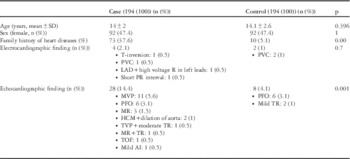
In the present study, 194 adolescents each to the case and control groups, aged 11–18 years, were enrolled. Patients had no previous history of thoracotomy or sternotomy. Characteristics of the groups are shown in Table 1. Positive family history of heart disease was present in 37.6% of the participants in the patient group and 5.1% in the control group, the difference being statistically significant (p=0.00).
Characteristics of studied groups with and without chest pain.

AI=aortic insufficiency; HCM=hypertrophic cardiomyopathy; LAD=left anterior descending artery; MR=mitral regurgitation; MVP=mitral valve prolapse; PFO=patent foramen ovale; PVC=premature ventricular contractions; TOF=tetralogy of Fallot; TR=tricuspid regurgitation; TVP=tricuspid valve prolapse
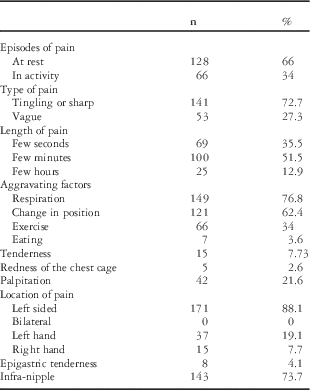
Characteristics of their pain are presented in Table 2. As it is clear, the pain was mostly described as a tingling and sharp sensation at rest in the left side of the chest lasting for a few seconds and aggravated with respiration. Patients did not exhibit pleural or pericardial friction rub on physical examination.
Characteristics of chest pain in patients referred to the cardiology clinic.

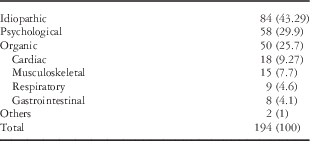
As shown in Table 3, organic causes including cardiac, pulmonary, musculoskeletal, and gastrointestinal problems were detected in 25.7% of patients. In 29.9% of them, psychological causes with positive Beck tests indicating sign and symptoms of moderate-to-severe degree of anxiety and depression were identified. The remaining patients (43.3%) with normal physical and para-clinical exams and normal or mild degree of anxiety and depression were assigned to idiopathic groups.
Classification of chest pain (n (%)) in patients referred to the cardiology clinic.

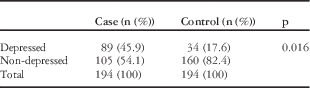
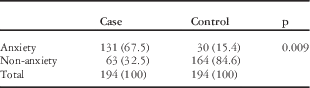
It was shown that 45.9% of the patients group had variable degrees of depression compared with 17.6% of the control group, which was statistically significant (p=0.016) (Table 4). Moreover, anxiety was detected in 67.5% of the patients group compared with 15.4% in controls, which was statistically significant (p=0.009) (Table 5).
Prevalence rates of depression in patients with chest pain and controls.

Prevalence rates of anxiety in patients with chest pain and controls.

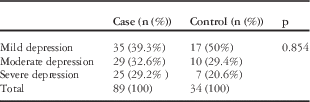
According to Beck test results, mild, moderate, and severe depression were seen in 18, 14.9, and 12.9% of patients with chest pain, respectively. Among controls, the corresponding rates were 8.7, 5.2, and 3.7%, not significantly different from the rates in patients (p=0.854) (Table 6).
Prevalence of varying degrees of depression in patients with chest pain and controls.

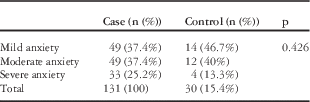
Different degrees of anxiety – mild, moderate, and severe – were detected in 25.3, 25.3, and 17% of patients and 7.2, 6.2, and 2% of controls, respectively, which were not statistically significant (p=0.426) (Table 7).
Prevalence of varying degrees of depression in patients with chest pain and controls.

Discussion
Chest pain accounts for about 13% of visits to paediatric emergency services.Reference Nezu, Nezu and Jain 16 It is also the second most common cause of referrals to paediatric cardiology clinics, after heart murmur.Reference Sabri, Ghavanini and Haghighat 11 , Reference Woolf, Gewitz and Berezin 15 , Reference Nezu, Nezu and Jain 16 It occurs at all ages but is seen mostly in the adolescent age group.Reference Kocis 10 , Reference Waller, Hakenewerth and Tintinalli 18 , Reference Evangelista, Parsons and Renneburg 19
There are a number of causes for recurrent chest pain, which can be broadly divided into the following categories: cardiac, respiratory, gastrointestinal, and musculoskeletal, known as organic causes, and psychological and idiopathic, known as non-organic causes. The frequency of these causes varies widely between studies, based on the method of evaluation used. Generally, idiopathic pain is the most common cause followed by musculoskeletal pain, whereas cardiac pain is the least common. It is noteworthy to say that patients with organic causes of chest pain may experience different degrees of depression or anxiety as well; however, as a general rule, chest pain was categorised on a psychological basis when no organic cause could be identified.
Cardiac chest pain due to cardiac conditions accounted for 9.27% of the referral patients in the present study. Chest pain may be the first complaint that points out an unsuspected anatomic heart defect (Table 1). Different studies have reported rates from 6 to <20%.Reference Brenner, Ringel and Berman 1 – Reference Selbst 3 , Reference Coleman 6 – Reference Selbst 8 , Reference Kocis 10 , Reference Reagan, DeBaun and Frei-Jones 14 , Reference Waller, Hakenewerth and Tintinalli 18 – Reference Danduran, Earing and Sheridan 23 Cagdas et alReference Cağdaş and Paç 24 evaluated all the chest pain referrals by electrocardiography 24-hour Holter monitoring and exercise test. The rate of cardiac chest pain was 23.3% in their study. Wang et al used ambulatory 24-hour oesophageal pH monitoring for the evaluation of recurrent chest pain without respiratory or musculoskeletal problems. They found acid reflux diseases as the most frequent cause of chest pain in 58.3% of their referrals,Reference Wang, Peng and Jiang 12 whereas this rate was 4.1% in the present study. Danduran et alReference Danduran, Earing and Sheridan 23 performed pulmonary function and exercise test for the evaluation. They revealed that abnormal pulmonary function test was observed in 26% of patients not previously diagnosed with hyperactive airway disease, whereas a pulmonary cause was found only in 4.6% of the present patients.
Chest pain due to myocardial ischaemia may occur in patients who have abnormal coronary artery anatomy including congenital anomalies of the coronary artery, coronary artery fistulas, stenosis, or atresia of the coronary artery ostium. They usually describe their ischaemic chest pain as a squeezing sensation, tightness, pressure, constriction, burning, or fullness in the chest, as well as associated with exertion. Although, in contrast to adults, cardiac chest pain is rare in children and adolescents, patients with characteristic ischaemic chest pain need full and careful evaluation and prompt referral to paediatric cardiologist to diagnose the cause of pain.
In the present study, it was shown that the rate of positive family history of heart disease was different in the patient group compared with the controls (37.6 versus 5.1%). Apart from the prominent role of genetic factors in such families, it can be concluded that chest pain in children growing up in families with positive history of heart diseases may resonate with their parents’ concerns too. These parents and consequently their children could be more anxious about their symptoms and feel more depressed.
Psychogenic chest pain in older children occasionally can result from anxiety or a conversion disorder triggered by recent stressors in personal or family life. It was shown in this study that one-third of the adolescents who presented to the cardiology clinic with a complaint of chest pain were suffering from moderate-to-severe anxiety and depression disorders. Tunaoglu et al conducted unstructured interviews with 74 youngsters with non-cardiac chest pain and found that nearly three-quarters of them had psychiatric symptoms of which anxiety was the most common. Their finding was consistent with diagnostic studies of adults where roughly a third of patients with non-cardiac chest pain had panic disorders.Reference Tunaoglu, Olguntürk and Akcabay 25 Psychological chest pain is a diagnosis by exclusion, and is not necessarily the same as idiopathic pain. It is seen in all ages, but has a higher incidence in teenagers, particularly girls.
The direct relationship of chest pain with anxiety is a known issue in adults. In children and adolescents, unexplainable somatic symptoms are often associated with psychological problems. In fact, these symptoms could be a presentation of underlying psychiatric illnesses.Reference Gomez-Caminero, Blumentals and Russo 26 , Reference Gilleland, Blount and Campbell 17 , Reference Nezu, Nezu and Jain 16 Psychological chest pain may be a symptom indicative of a larger constellation of unexplained somatic health complaints as well.Reference Gomez-Caminero, Blumentals and Russo 26
As observed in the present study, there was a significant difference between patients referred with chest pain and the controls in terms of presence of depression and anxiety (p=0.016 and 0.009, respectively), although we could not find any significant difference regarding severity of symptoms (p=0.854 and 0.426, respectively). This could magnify the importance of stressful situations in adolescents’ lives. Emotional stress is very common; adverse life events such as changes in the family structure (births, deaths, divorce, etc.), school problems, and physical or psychological illnesses in the family can often be identified as stressors.Reference Cheng, Wong and Lai 27 , Reference Gilleland, Blount and Campbell 28 In depressed children, an association between severity of chest pain and the presence of one or more somatic symptoms has been reported.Reference Ives, Daubeney and Balfour-Lynn 29
Cheng et al indicated that these patients are more sensitive to stress and their body conditions. Accordingly, they have problems in adjustment mechanisms and also in interpersonal relations, leading to less social support during stressful situations.Reference Cheng, Wong and Lai 27 Anxiety can also enhance tension in thoracic muscles and cause pain. Autonomic and humeral sequel of anxiety can also cause oesophageal and cardiac dysfunctions, resulting in persistent pain.Reference Ives, Daubeney and Balfour-Lynn 29
Lipsitz et alReference Lipsitz, Masia-Warner and Apfel 30 showed higher significant rates of anxiety symptoms and higher levels of anxiety sensitivity in youngsters with non-cardiac chest pain, compared with those with benign cardiac murmur, but no significant difference regarding depression symptoms was detected.Reference Lipsitz, Gur and Sonnet 31 The inconsistency of the present study results may be due to the mean age of our patients, which was higher, and lends support to the finding that symptoms of depression start from older age.Reference Smith 5
As it was noted, patients with somatic problems such as chest pain do not refer directly to psychiatrists, but usually to paediatric cardiology clinics or emergency rooms. Although these patients usually have no organic cause for the pain, they often have a significant degree of functional impairment.Reference Sabri, Ghavanini and Haghighat 11 , Reference Smith 5 , Reference Fyfe and Moodie 2 , Reference Brenner, Ringel and Berman 1 In addition to the burden of financial cost, they are neither diagnosed as having psychiatric problems nor treated effectively.Reference Sabri, Ghavanini and Haghighat 11
Conclusion
Chest pain is common in children referred to cardiology clinics. Although most children have benign causes for their pains, a thorough evaluation seems warranted. Usually, detailed history and physical examinations are sufficient to diagnose the causes; however, for those without any organic finding, continuing symptoms and disability, a psychotherapist and sometimes a clinical psychologist need to be involved. Chest pain clinics in referral centres comprising general paediatricians, cardiologists, and psychiatrists are recommended for efficient management and treatment of such patients.
Acknowledgements
The present article was extracted from dissertation number 6219 in Islamic Azad University – Kazerun Branch, Kazerun, Iran.
Financial Support
This research received no specific grant from any funding agency, commercial, or not-for-profit sectors.
Conflicts of Interest
None.
Ethical Standards
The study was approved by Research Ethic Committee of Islamic Azad University and Research Ethic Board of the Hospital, and had been conducted according to the principles in the Helsinki Declaration of 1975, as revised in 2008. All participants and their parents provided their written informed assents and consents for participation.