Introduction
Sleep problems have become common complaints of older adults. Nearly 50 per cent of older adults complain about their sleeping difficulty in the United States of America (USA), and poor sleep quality could significantly increase mortality and morbidity (Neikrug and Ancoli-Israel, Reference Neikrug and Ancoli-Israel2010). With decreased slow-wave sleep, older adults had higher chances of problems associated with early awakening and fragmented sleep as compared with younger individuals (Suzuki et al., Reference Suzuki, Miyamoto and Hirata2017). Also, the prevalence of sleeping difficulty among older adults is higher than among younger people due to the decline of biological functions such as circadian rhythm (Schmidt et al., Reference Schmidt, Peigneux and Cajochen2012). Therefore, it is imperative to help address older adults’ sleeping patterns.
China is a country with rapid growth of the elderly population, together with skyrocketing prevalence of non-communicable diseases (Zheng et al., Reference Zheng, Pang, Chen, Huang, Liu, Zhang and Islam2016). With the public health challenges related to non-communicable diseases in the older adult population (Wu et al., Reference Wu, Guo, Kowal, Jiang, Yu, Li, Zheng and Xu2013), the prevalence of Chinese older adults reporting sleep problems also is high. For example, a regional study conducted in Hunan province found that 27 per cent of adolescents and older adults reported insomnia (Tang et al., Reference Tang, Liao, Kelly, Xie, Xiang, Qi, Pan, Hao, Liu, Zhang and Chen2017). In Shanghai, one of the mega cities in China, approximately 42 per cent of older adults reported poor sleep quality (Luo et al., Reference Luo, Zhu, Zhao, Guo, Meng, Hong and Ding2013). On the other hand, a published report of the National Sleep Foundation suggests that older adults’ recommended sleep duration should be 7–8 hours daily (Hirshkowitz et al., Reference Hirshkowitz, Whiton, Albert, Alessi, Bruni, DonCarlos, Hazen, Herman, Katz, Kheirandish-Gozal, Neubauer, O'Donnell, Ohayon, Peever, Rawding, Sachdeva, Setters, Vitiello, Ware and Adams Hillard2015). Nevertheless, only 39 per cent of Chinese older adults sleep within this range (Lee et al., Reference Lee, Chang, Liu and Shelley2019).
Several key determinants are associated with poor quality of sleep among Chinese older adults in different studies. Socio-demographic factors associated with poor quality of sleep included being female and having chronic conditions (Wang et al., Reference Wang, Song, Wang, Han, Cong, Wang, Zhang, Yan, Tang and Du2020; Zhang et al., Reference Zhang, Jin, Rao, Jiang, Cui, Li, Li, Ungvari, Ng, Li and Xiang2020). Having more than two kinds of chronic conditions was an important contributing factor associated with poor sleep among Chinese older adults, according to a cross-sectional study targeting Chinese older adults in nursing homes (Zhu et al., Reference Zhu, Hu, Nie, Zhu, Chiwanda Kaminga, Yu and Xu2020). In the same study, as older adults aged, the risks of having poor quality of sleep also increased. Besides, residing in rural areas might be associated with poorer quality of sleep due to residents’ physical and health problems (Zhang et al., Reference Zhang, Jin, Rao, Jiang, Cui, Li, Li, Ungvari, Ng, Li and Xiang2020).
Targeting Chinese older adults, previous studies investigated the determinants associated with sleeping patterns, including socio-demographic and health factors (Gu et al., Reference Gu, Sautter, Pipkin and Zeng2010; Wang et al., Reference Wang, Song, Wang, Han, Cong, Wang, Zhang, Yan, Tang and Du2020), dietary behaviours (Lee et al., Reference Lee, Chang, Lee, Shelley and Liu2018a, 2019), living arrangements (Lee et al., Reference Lee, Chang, Chiang, Liu and Shelley2020a) and health consequences related to poor sleeping patterns such as falls among older adults (Essien et al., Reference Essien, Feng, Sun, Farag, Li and Gao2018). However, several studies targeting Chinese older adults (Gu et al., Reference Gu, Sautter, Pipkin and Zeng2010; Lee et al., Reference Lee, Chang, Lee, Shelley and Liu2018a; Wang et al., Reference Wang, Song, Wang, Han, Cong, Wang, Zhang, Yan, Tang and Du2020) were based on cross-sectional design. Adopting the cross-sectional research design, the authors can make conclusive claims only at a certain time-point because the participants were interviewed once (Sedgwick, Reference Sedgwick2014). These results from such a study design might be temporal. Providing a perspective on changes in sleep quality or duration would not be available from cross-sectional data. The study by Lee et al. (Reference Lee, Chang, Chiang, Liu and Shelley2020a) used a panel analytic approach to tease out the effects of living arrangements on Chinese older adults’ sleeping patterns, but the focus of the research discussed only the importance of living arrangements among older adults. Therefore, knowledge regarding socio-demographic and health behavioural factors associated with Chinese older adults’ status change of sleeping patterns using longitudinal data remains limited.
Such a study, targeting older adults, is needed for several reasons. First, it is a common perception that people have more difficulties with sleep as they age, and sleep architecture changes with age, such as time spent awake at night (Gooneratne and Vitiello, Reference Gooneratne and Vitiello2014). Second, in a regional study conducted in the Shih-Pai area of Taipei City, Taiwan (Chen and Chou, Reference Chen and Chou2017), follow-up surveys showed that only 45.9 per cent of older adults remained in the same sleep duration when they were recruited in both surveys. Additionally, in the same study, the authors observed that long sleepers had the lowest consistency rate, 27.6 per cent at baseline (Chen and Chou, Reference Chen and Chou2017). Therefore, with escalating sleep-related problems among Chinese older adults, it is imperative to use longitudinal data investigating Chinese older adults’ status change of sleeping patterns.
We conducted secondary analyses with a large dataset, the Chinese Longitudinal Healthy Longevity Survey (CLHLS), to investigate the socio-demographic and behavioural factors associated with Chinese older adults’ status change of sleeping patterns. We selected older adults who reported good quality of sleep in the earlier wave, and examined their sleep quality in the next wave (whether or not their sleep quality became worse). In the same vein, we followed the same procedure for the daily sleep duration: we selected older adults who slept within the recommended range of sleep (7–8 hours daily; Hirshkowitz et al., Reference Hirshkowitz, Whiton, Albert, Alessi, Bruni, DonCarlos, Hazen, Herman, Katz, Kheirandish-Gozal, Neubauer, O'Donnell, Ohayon, Peever, Rawding, Sachdeva, Setters, Vitiello, Ware and Adams Hillard2015) in the earlier wave, and examined if they did not sleep within this recommended range in the next wave. With the aforementioned literature gaps and the need to address problems related to Chinese older adults’ sleep, health practitioners and health scholars might use the study results from this research to identify the determinants and provide assistance or interventions as needed. Further policy implications are discussed.
Materials and methods
Data source and study population
Longitudinal data were extracted from the 2012 (collected between 2011 and 2012) and 2014 waves of CLHLS for statistical analyses. CLHLS is a currently ongoing open cohort targeting Chinese older adults. This is an internationally collaborative database including investigators from the Centre for the Study of Ageing and Human Development at Duke University, Peking University and others. This is the first longitudinal dataset ever targeting the oldest-old in a developing country at the national level. The study population of CLHLS includes centenarians, nonagenarians, octogenarians, younger older adults between 65 and 79 years old, and some middle-age adults. In the latest wave (2014), older adults from 23 provinces and mega cities were surveyed and half of the total number of these counties and cities were randomly selected. The surveyed regions covered nearly 85 per cent of the total population in China. CLHLS has a wide range of topics including mental health, cognitive function, dietary behaviour, chronic disease, social welfare (such as social insurance coverage), substance use (including tobacco use and alcohol consumption) and other lifestyle matters. Face-to-face interviews were conducted for data collection. Further information regarding this dataset can be found in Zeng (Reference Zeng2012). As this research used only de-identified and secondary data in the public domain without personal information, Institutional Review Board approvals were not required at the authors’ institutions. All participants provided informed consent to the CLHLS data collectors.
Measurements
Two outcome variables describe older adults’ sleeping patterns. The first measurement is participants’ quality of sleep (‘How do you rate your current sleep quality?’). The original responses included ‘very bad’, ‘bad’, ‘neutral’, ‘good’ and ‘very good’. To correct for the skewed distribution of these responses, participants who answered ‘good’ and ‘very good’ for quality of sleep were categorised as ‘good’ and those who answered ‘neutral’, ‘bad’ and ‘very bad’ were classified as ‘not good’. This dichotomisation has been used in other sleep-related research (Gu et al., Reference Gu, Sautter, Pipkin and Zeng2010; Lee et al., Reference Lee, Chang, Liu and Shelley2019; Lee et al., Reference Lee, Chang, Chiang, Liu and Shelley2020a). We considered older adults’ good quality of sleep in the 2012 wave and estimated the status change of sleep quality in the 2014 wave. The second question is about participants’ average daily hours of sleep (‘How many hours on average do you sleep daily?’). The original measurement was in continuous form. We followed the recommendation by Hirshkowitz et al. (Reference Hirshkowitz, Whiton, Albert, Alessi, Bruni, DonCarlos, Hazen, Herman, Katz, Kheirandish-Gozal, Neubauer, O'Donnell, Ohayon, Peever, Rawding, Sachdeva, Setters, Vitiello, Ware and Adams Hillard2015) that older adults should sleep between 7 and 8 hours daily. This measurement was coded as a categorical variable. The reference group included participants who slept between 7 and 8 hours daily. The other two categories included older adults who slept less than 7 hours daily ( < 7 hours) and those who slept more than 8 hours daily ( > 8 hours). We considered those who slept within the recommended range of sleep hours in the 2012 wave (between 7 and 8 hours daily) and estimated the change of duration in the 2014 wave (either more than 8 hours daily or less than 7 hours daily). The outcome variables were selected from the 2014 wave.
Two variables represent older adults’ biological characteristics: age (65–80, 81–95 and above 95 years; an ordinal variable) and gender (male, female; a binary variable). Variables representing participants’ socio-economic status included marital status (married, other – including those who were widowed, divorced, separated or never married; a binary variable), household income (⩽10,000, 10,001–30,000, 30,001–50,000, 50,001–70,000, > 70,001 RMB, and do not know; a categorical variable) and years of formal education (none, 1–5, 6–10 and 11 years and above; an ordinal variable). The current Chinese currency, renminbi (RMB), was used as the currency unit. In addition, we selected community of residence (urban, rural; a binary variable) and province (North, North-East, East, Central-South and West; a categorical variable) for regional information.
Furthermore, variables describing Chinese older adults’ health condition, wellbeing and health-related behaviours were selected to explore their potential associations with sleeping patterns: exercise status (no, yes; a binary variable), suffering from chronic conditions that required inpatient treatments in the past two years (no, yes; a binary variable), life satisfaction (good, neutral and bad; a categorical variable), disability (not limited, limited and strongly limited; a categorical variable), smoking status (none, former and current; a categorical variable) and alcohol-use status (none, former and current; a categorical variable). We selected all predictors from the 2012 wave.
Statistical analyses
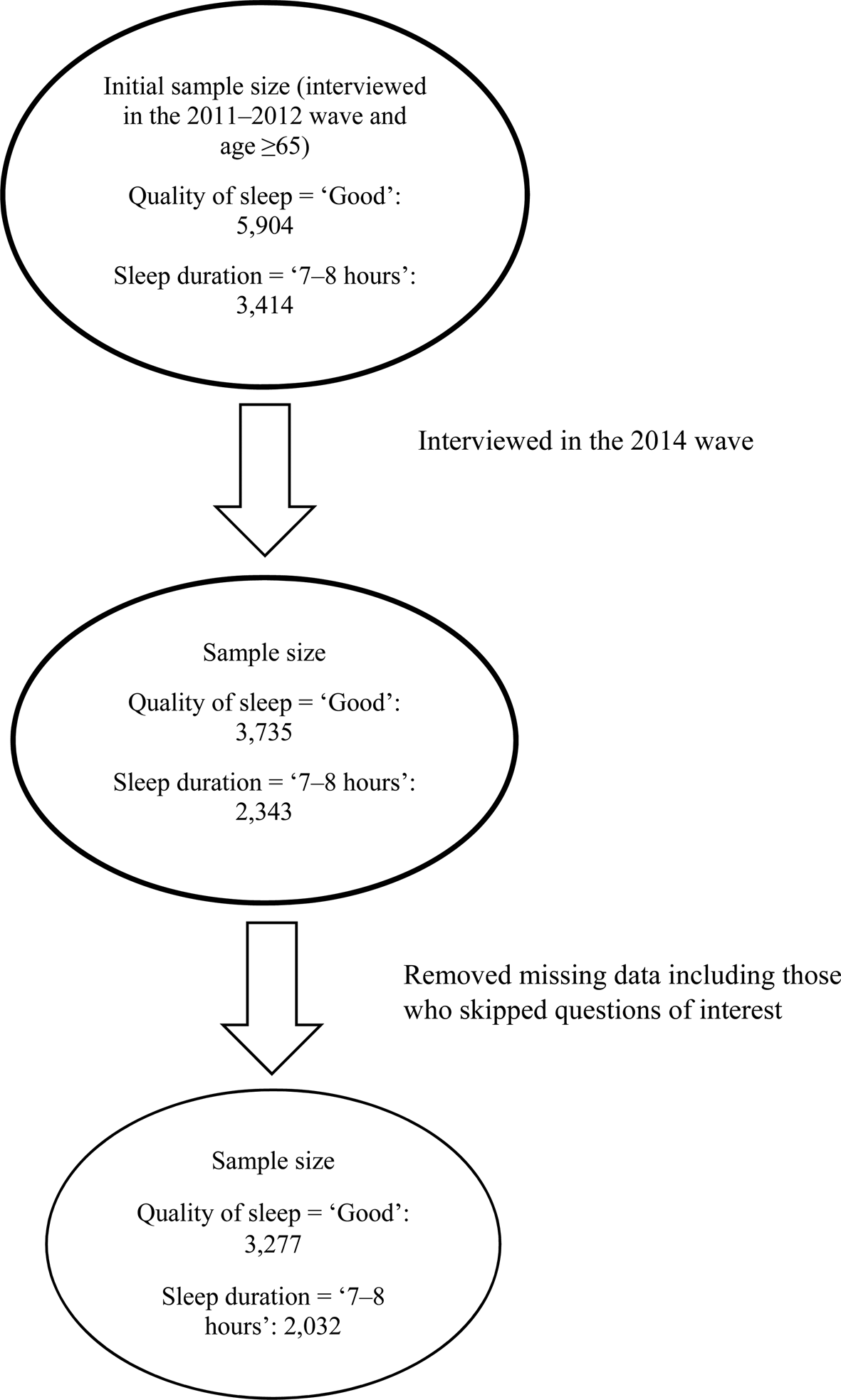
To carry out the statistical analyses, two groups of participants were created to investigate the status change of sleeping patterns among older adults without missing responses and who answered all questions of interest. First, participants who reported good quality of sleep in the 2012 wave were followed up to examine status change of quality of sleep in the 2014 wave (whether or not their sleep quality changed during this time period). This study sample regarding older adults’ quality of sleep included 3,277 participants. Second, for individuals who slept within the recommended duration of between 7 and 8 hours daily in the 2012 wave, their change of sleep duration in the 2014 wave was examined. This study sample included 2,032 participants. Figure 1 shows the sample selection procedure.
Flowchart of the study sample selection procedure.

A multivariable logistic regression model was estimated to investigate the socio-demographic and behavioural variables associated with the potential change of sleep quality. A multinomial logistic regression model was estimated for sleep duration, given that the outcome measurement had more than two categories. Adjusted odds ratios (AORs) and 95 per cent confidence intervals (95% CIs) were reported for both regression models. All statistical tests were two-tailed with level of significance at 0.05 (p < 0.05). All statistical analyses were conducted using the free and publicly available statistical software R (version 3.4.3); the package ‘nnet’ was used for multinomial logistic regression (Ripley and Venables, Reference Ripley and Venables2016).
Results
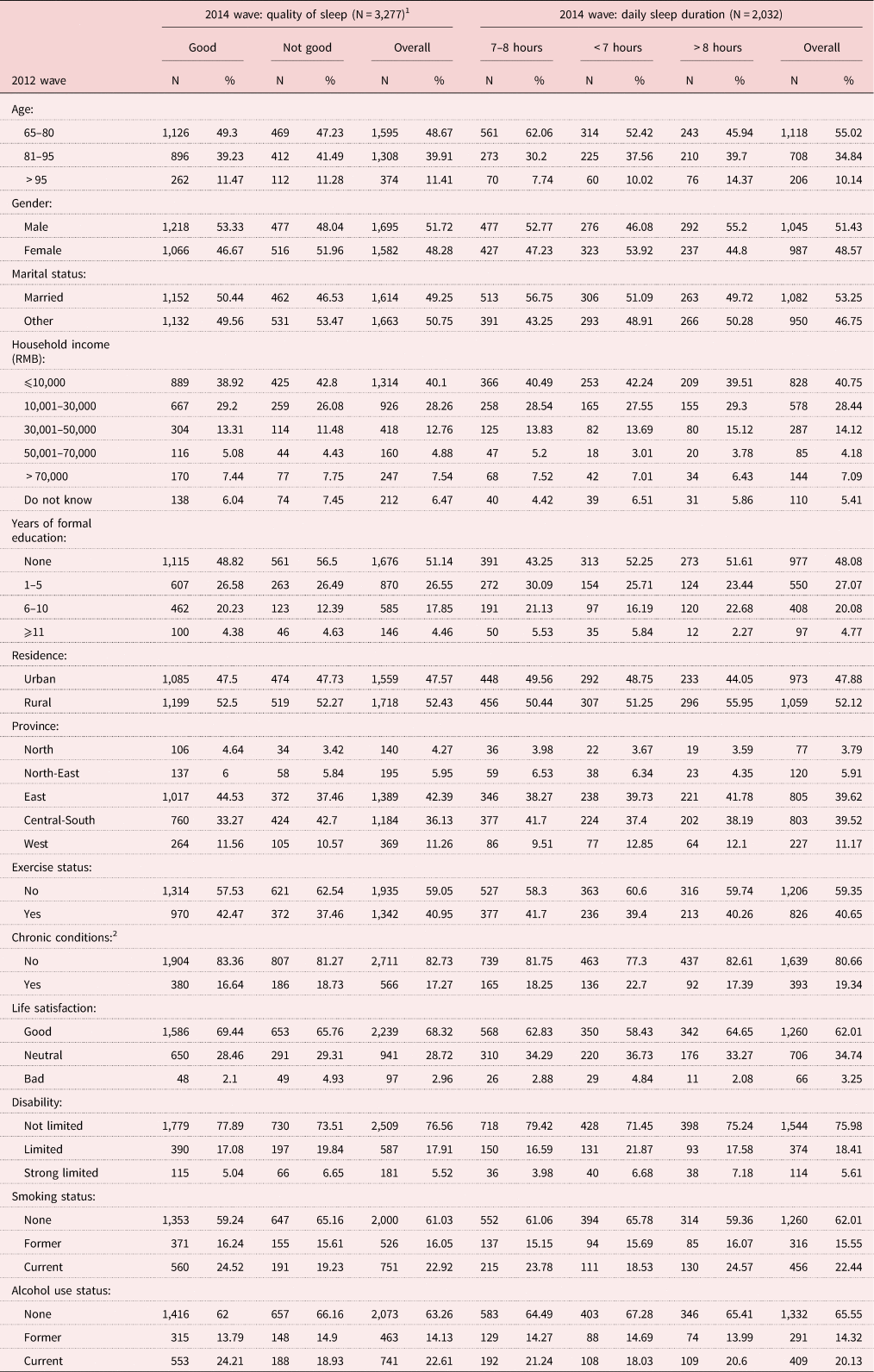
Table 1 provides the sample characteristics of the two study samples. The results were based on the study participants who reported good quality of sleep and those who slept within the recommended daily sleep duration in the 2012 wave and their status changes in the 2014 wave. In both samples, a majority of participants were above 80 years old and male. More than 50 per cent of older adults were not married in the first study sample, but nearly 53 per cent of the participants were married in the second study sample. Most older adults had lower household income (less than 30,000 RMB), did not have formal education, lived in rural communities, and resided in East and Central-South provinces (Table 1).
Sample characteristics of older adults who reported good quality of sleep and those who slept within the recommended daily sleep duration in the 2012 wave and their status changes in the 2014 wave

Notes: 1. The distributions of quality of sleep and sleep duration were based on the changes between 2012 and 2014. 2. Suffering from chronic conditions that required inpatient treatments in the past two years.
Source: Chinese Longitudinal Healthy Longevity Survey.
Some discrepancies in health behaviours, health conditions and wellbeing were observed between the two study samples. First, for the first study sample regarding quality of sleep, 17 per cent suffered from chronic diseases that required inpatient treatments in the past two years, 68 per cent felt good with their life, 23 per cent were current smokers and 23 per cent were current alcohol users. In the second study sample, 19 per cent of participants suffered from chronic conditions that required inpatient treatments in the past two years, 62 per cent felt good with their life, 22 per cent were current smokers and 20 per cent were current alcohol users. However, nearly 41 per cent exercised and only 6 per cent were strongly limited with basic activities of daily living (ADLs) in both study samples.
For the change of quality of sleep between the 2012 and 2014 waves, approximately 52 per cent of female older adults did not report good quality of sleep. Non-married participants, older adults without formal education and those with the lowest level of income all reported greater frequency of poorer sleep quality as compared with other categories. Nearly 63 per cent of older adults who did not exercise reported poorer quality of sleep. Interestingly, the majority of older adults who did not report good quality of sleep did not suffer from chronic conditions, did not have a disability, did not smoke and did not consume alcohol. These observations may be due to the fact that most older adults did not engage in such behavioural activities or conditions.
For the change of daily sleep duration between the 2012 and 2014 waves, approximately 54 per cent of female participants reported shorter sleep duration (less than 7 hours daily) and only 44.8 per cent of female older adults reported longer sleep duration (more than 8 hours daily). A majority of married older adults reported shorter sleep duration (51%), but most non-married participants reported longer sleep duration (50.3%). Individuals with the lowest level of income or education had higher percentages of reporting either shorter or longer sleep duration daily compared with other categories. A majority of those who did not sleep within the recommended average sleep hours daily did not suffer from chronic conditions, did not have a disability, did not smoke and did not consume alcohol. Again, these observations may be because most of the older adults did not engage in such behavioural activities or conditions.
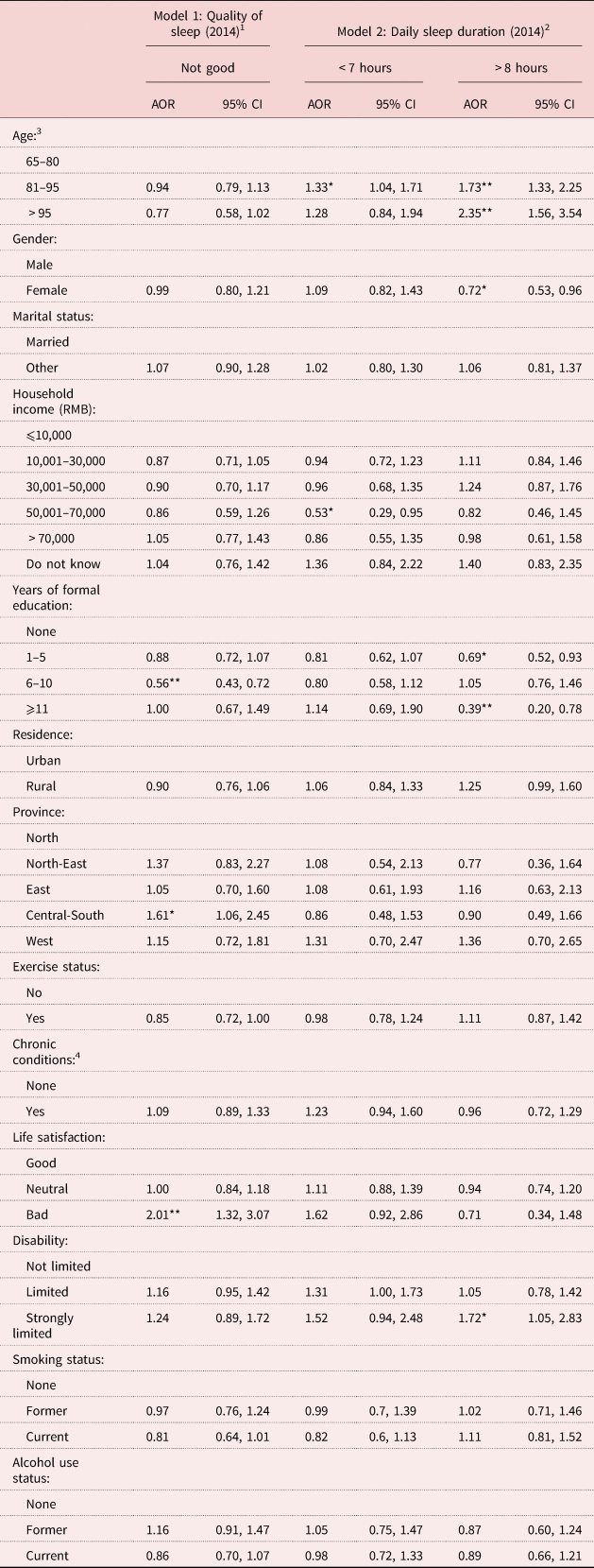
Table 2 shows the results of multivariable logistic and multinomial regression models with outcomes of changes of sleep quality and daily sleep duration. Participants who had received 6–10 years of formal education had lower odds of reporting poorer quality of sleep (AOR = 0.56, 95% CI = 0.43, 0.72; p < 0.01), compared with those who received no formal education. Compared with participants from northern regions, residents from central and southern areas had lower odds of reporting poor quality of sleep (AOR = 1.61, 95% CI = 1.06, 2.45; p < 0.05). Bad life satisfaction was associated with poorer quality of sleep (AOR = 2.01, 95% CI = 1.32, 3.07; p < 0.01). However, exercise, smoking behaviour and alcohol consumption were not associated with quality of sleep.
Multivariable logistic and multinomial regression models examining the socio-demographic factors associated with status change of quality of sleep and daily sleep duration

Notes: All models were controlled for the same set of variables. 1. Multivariable logistic regression (quality of sleep); reference group: ‘good’. 2. Multinomial regression (daily sleep duration); reference group: ‘7–8 hours’. 3. All predictors were selected from the 2012 wave. 4. Suffering from chronic conditions that required inpatient treatments in the past two years. AOR: adjusted odds ratio. 95% CI: 95% confidence interval.
Significance levels: * p < 0.05, ** p < 0.01.
In the second model estimating daily sleep duration, older participants had higher odds of longer sleep duration ( > 8 hours; all p values < 0.01), compared with younger individuals. Older participants also had higher odds of shorter sleep duration, compared with younger counterparts (AOR = 1.33, 95% CI = 1.04, 1.71; p < 0.05). Being female was negatively associated with longer sleep duration (AOR = 0.72, 95% CI = 0.53, 0.96; p < 0.05). Household income between 50,001 and 70,000 RMB was negatively associated with shorter sleep duration ( < 7 hours). A higher level of education was negatively associated with longer sleep duration (p < 0.05), with the exception of older adults who received 6–10 years of formal education. Older adults who were strongly limited with ADLs had higher odds of longer sleep duration (AOR = 1.72, 95% CI = 1.05, 2.83; p < 0.05), compared with those who were not limited with ADLs. Exercise status, smoking behaviour and alcohol consumption were not associated with daily sleep duration.
Discussion
We used a large study sample with longitudinal data to investigate the socio-demographic and behavioural traits associated with Chinese older adults’ status change of sleeping patterns. The use of longitudinal data made it possible to capture older adults’ change of sleep status at two different time-points. Among all socio-economic and regional variables, only education and province were associated with quality of sleep. In terms of health and wellbeing predictors, only older adults who were unsatisfied with their life satisfaction were more likely to report poor quality of sleep. In the second multinomial regression model regarding daily sleep duration, increasing age was positively associated with both longer and shorter sleep duration, and being female was negatively associated with longer sleep duration. Again, older adults with higher levels of education (between 1 and 5 years of formal education and 11 years and above) had lower odds of reporting longer sleep duration, compared with participants who did not have any formal education. Older adults who were strongly limited with ADLs had higher odds of reporting longer sleep duration, compared with those who did not have such challenges.
However, one of the most surprising findings is that older adults’ health-related behaviours, including exercise status, smoking behaviour and alcohol consumption, were neither positively nor negatively associated with any sleeping measurements. Previous studies (Gu et al., Reference Gu, Sautter, Pipkin and Zeng2010; Lee et al., Reference Lee, Chang, Lee, Shelley and Liu2018a), using cross-sectional CLHLS datasets (2005 and 2014), have found somewhat paradoxical findings that older smokers and alcohol users had higher odds of reporting good quality of sleep, compared with non-smokers and non-alcohol users. Nevertheless, it also has been observed previously that smoking was associated with challenges in initiating sleep, insomnia-like sleep problems and other sleep disturbance (Wetter and Young, Reference Wetter and Young1994; Jaehne et al., Reference Jaehne, Unbehaun, Feige, Lutz, Batra and Riemann2012; Costa and Esteves, Reference Costa and Esteves2018). In the same vein, heavy alcohol use may affect length of sleep or reduce quality of sleep (Martindale et al., Reference Martindale, Hurley and Taber2017; Devenney et al., Reference Devenney, Coyle, Roth and Verster2019), although it is known that mild standard drinks before bedtime could increase the quality of sleep (Stein and Friedmann, Reference Stein and Friedmann2005). These interesting discrepancies can be explained in different ways.
First, the majority of the participants included in our analyses were healthy. More than 80 per cent of these older adults claimed that they did not have any chronic conditions that required inpatient treatments in the past two years. In fact, chronic conditions are associated with sleep problems (Koyanagi et al., Reference Koyanagi, Garin, Olaya, Ayuso-Mateos, Chatterji, Leonardi, Koskinen, Tobiasz-Adamczyk and Haro2014), which might also be the reason why we did not find any associations between older adults’ chronic conditions and sleep-related measurements because only 17 per cent of participants had chronic conditions in our study samples. Second, in China, cigarette and alcohol products are used as symbols of celebration and relationship, and people always share and exchange these products as gifts (Xu et al., Reference Xu, Xu, Wu and Guo2016; Lee et al., Reference Lee, Chang, Liu and Shelley2020b). Chinese older adults may not be aware of the harmful effects of these products. Further research or clinical experiments might be needed to examine the impacts of smoking and alcohol consumption behaviours on older adults’ sleep-related measurements. Third, as previous research has observed the paradoxical effects of smoking and alcohol consumption behaviours on sleeping patterns with cross-sectional data (Gu et al., Reference Gu, Sautter, Pipkin and Zeng2010; Lee et al., Reference Lee, Chang, Lee, Shelley and Liu2018a), this study employed longitudinal data to examine Chinese older adults’ status change of sleep at two time-points. Previous paradoxical observations might be relevant only to a single time-point. Other research should continue to use longitudinal data to examine this topic of interest.
Moderate physical activity is associated with better quality of sleep, and poor sleep and physical inactivity are public health priorities (Kline, Reference Kline2014; Wang and Boros, Reference Wang and Borosin press). Exercise is well-documented as an intervention to improve quality of sleep (Youngstedt and Kline, Reference Youngstedt and Kline2006). In one meta-analysis, the authors observed that exercise has modest effects on improving quality of sleep among middle-aged and older adults with challenges to sleep (Yang et al., Reference Yang, Ho, Chen and Chien2012). However, this study did not reveal such associations. One major explanation of this discrepancy is that exercise status may not continue to affect older adults who already slept well, given that we recruited participants who already reported good quality of sleep and slept within the recommended range of daily sleep duration. The long-term effect of exercise on maintaining sleep quality also should be investigated further with longitudinal data or clinical trials.
The positive findings between poorer life satisfaction and poorer sleep quality and between strongly limited status of ADLs and longer sleep duration were not as surprising. These observations were consistent with previous research studies (Paunio et al., Reference Paunio, Korhonen, Hublin, Partinen, Kivimaki, Koskenvuo and Kaprio2009; Gu et al., Reference Gu, Sautter, Pipkin and Zeng2010). In fact, poor sleep may have effects on emotions and the brain (Paunio et al., Reference Paunio, Korhonen, Hublin, Partinen, Kivimaki, Koskenvuo and Kaprio2009), so it is not surprising to observe the associations between quality of sleep and life satisfaction among older adults. This could imply that life satisfaction and sleep quality might go hand-in-hand. For disability status, lower levels of muscle strength and balance function were associated with longer sleep duration among Chinese men (Fu et al., Reference Fu, Jia, Zhang, Han, Kang, Ma, Yu, Zhai, Chen and Guo2017). In this study, targeting older adults, participants who were strongly limited with ADLs may not have sufficient physical function or good muscle strength to perform basic activities. Therefore, they could spend more time with sedentary behaviour, which might lead to a higher level of sleepiness. Further assistance might be needed to support older adults who were strongly limited with ADLs to have a reasonable amount of sleep duration, 7–8 hours per day for older adults (Hirshkowitz et al., Reference Hirshkowitz, Whiton, Albert, Alessi, Bruni, DonCarlos, Hazen, Herman, Katz, Kheirandish-Gozal, Neubauer, O'Donnell, Ohayon, Peever, Rawding, Sachdeva, Setters, Vitiello, Ware and Adams Hillard2015).
Two biological factors, age and gender, were not associated with quality of sleep, but were associated with sleep duration. Observing increasing age on both longer and shorter daily sleep duration was not surprising, as ageing is associated with changes of circadian rhythms (Cooke and Ancoli-Israel, Reference Cooke and Ancoli-Israel2011; Duffy et al., Reference Duffy, Zitting and Chinoy2015). Both short and long sleep duration were associated with a higher level of mortality (Hublin et al., Reference Hublin, Partinen, Koskenvuo and Kaprio2007). However, when the biological function of circadian rhythms changes among older adults, it is more difficult for them to maintain the same level of sleep hygiene as in their younger adulthood. Therefore, it has become more critical for older adults to sleep within the recommended daily average time, which is 7–8 hours. Providing assistance and helping older adults to sleep within a reasonable duration become keys to geriatric health. Changes in daily habits might be able to increase the odds of sleeping within the recommended average hours of sleep daily as they age. For example, it has been suggested previously that more frequent consumption of vegetables and fruits might help older adults to sleep within the recommended duration (Lee et al., Reference Lee, Chang, Lee, Shelley and Liu2018a).
Some gender gaps were observed between this present research and other research. Although it has been found previously that men reported better sleep than women (Gu et al., Reference Gu, Sautter, Pipkin and Zeng2010), such an association was not present in this research. Furthermore, women tend to sleep more than men in the USA at the same lifecourse stage (Burgard and Ailshire, Reference Burgard and Ailshire2013). Compared with the results in the USA (Burgard and Ailshire, Reference Burgard and Ailshire2013), we speculate that this discrepancy could be the result of cultural variation. Interestingly, in one study targeting middle-aged Chinese men and women, Chen et al. (Reference Chen, Kartsonaki, Clarke, Guo, Yu, Bian, Jiang, Li, Chen, Li and Chen2018) observed that women had shorter sleep duration and more symptoms of insomnia, especially for those who were more than 50 years old. To some extent, our research findings were more consistent with the observations by Chen et al. (Reference Chen, Kartsonaki, Clarke, Guo, Yu, Bian, Jiang, Li, Chen, Li and Chen2018) regarding Chinese middle-aged women.
However, some discrepancies between the US and Chinese study samples should be noted. In China, women take most of the role at home (including housework) while men usually take the responsibility of work and become the major source of family income. According to the National Bureau of Statistics (The Straits Times, 2019), Chinese women spend approximately 2.1 hours on housework daily, which is three times that of men. In addition, most Chinese women are responsible for taking care of their family members at home. The long-term family burden of Chinese women might make them sleep less than men. Further research should investigate gender gaps in sleeping patterns, especially for the cross-cultural differences.
Education is another important variable for human health, and higher education could be a good indicator of better health (Winkleby et al., Reference Winkleby, Jatulis, Frank and Fortmann1992; Zajacova and Lawrence, Reference Zajacova and Lawrence2018). In our research, a higher level of education was negatively associated with poor quality of sleep, although the statistically significant association was observed only between participants with 6–10 years and those without any formal education. A higher level of education also was negatively associated with longer sleep duration ( > 8 hours), holding all other variables constant. In China, people with a higher level of education are more likely to make healthier choices, including the use of preventive care services, and report lower odds of alcohol related problems (Lee et al., Reference Lee, Chiang and Liu2018b, Reference Lee, Chang, Liu and Shelley2020b). Similarly, individuals with higher levels of education tend to make better health decisions and long-term health choices in the USA, compared with those with a lower level of education (Fletcher and Frisvold, Reference Fletcher and Frisvold2009). Highly educated individuals might care more about their health condition (Lee et al., Reference Lee, Chiang and Liu2018b), which could be associated with better sleeping patterns in general. The effect of education also could be more evident among older adults, given that most of them have experienced drastic social changes in their earlier life, including the Chinese Civil War and the Cultural Revolution. These two social changes, on the other hand, might have hindered their opportunities to receive formal education.
A few research limitations should be stated as caveats. First, one major weakness is that the CLHLS questionnaire did not include an instrument such as the Pittsburgh Sleep Quality Index to assess older adults’ sleeping patterns. Therefore, we did not have sufficient information to identify whether an older adult had insomnia. Second, all health-related measurements, including sleep-related measurements, were self-reported. Therefore, the results might reflect self-report bias. However, previous research has shown that self-rated health measurements are actually consistent with objective health status (Wu et al., Reference Wu, Wang, Zhao, Ma, Wu, Yan and He2013). Besides, this is a common limitation for survey-based research and should not be a major concern to this research. Third, observational data, rather than clinical data, were used for our analyses. We can provide only evidence of associations of each socio-demographic variable, not ‘impact’. Thus, further research should attempt to resolve this study limitation by conducting clinical trials. Lastly, some categories were relatively small among variables. We should be careful not to make a conclusive claim for those measurements.
Conclusion
In spite of these limitations, this study adds to the body of literature examining the socio-demographic and behavioural factors associated with Chinese older adults’ status change of sleeping patterns. The advantages of this study include a substantial amount of oldest-old respondents, the use of a large dataset and investigating older adults’ sleeping status change between two time-points. Taken together, the results of this research may help public health practitioners and care providers assist older adults with their sleep-related challenges.
Data
Data used for this research were provided by the Chinese Longitudinal Healthy Longevity Survey (CLHLS) managed by the Center for Healthy Aging and Development Studies, Peking University. CLHLS is supported by funds from the US National Institutes on Aging (NIA), China Natural Science Foundation, China Social Science Foundation and the United Nations Population Fund.
Acknowledgements
We thank research participants and researchers for their efforts in collecting the Chinese Longitudinal Healthy Longevity Survey data.
Financial support
This research received no specific grant from any funding agency, commercial or not-for-profit sectors.
Conflict of interest
The authors declare no conflicts of interest.
Ethical standards
The authors used only secondary datasets for this present study and data analyses. Thus, approvals from the Institutional Review Board were not required.