Introduction
Survivors of childhood cancer who received treatment directed at the central nervous system (CNS) are at an increased risk for experiencing cognitive deficits secondary to their disease and treatment (e.g., Mulhern & Butler, Reference Mulhern and Butler2004). The emergence of cognitive impairments is associated with a slower rate of acquiring new skills, academic performance problems, and reduced quality of life (e.g., Mitby et al., Reference Mitby, Robison, Whitton, Zevon, Gibbs, Tersak and Mertens2003; Mostow, Byrne, Connelly, & Mulivhill, Reference Mostow, Byrne, Connelly and Mulivhill1991). With increased survival rates among children diagnosed with cancer, efforts are now focused on delineating the nature of cognitive deficits, developing interventions to mitigate their impact, and, ultimately, optimizing quality of survival.
Historically, much of the survivorship literature focused on global cognitive outcomes, with a continued need to better understand specific cognitive changes associated with the diagnosis and treatment of childhood cancer. Greater specification allows researchers to identify neural systems most susceptible to disruption following treatment, clarify mechanisms of cognitive impairment, and develop appropriate interventions. More recently, findings suggest core deficits in sustained attention, processing efficiency, and working memory (WM) may be associated with CNS-directed therapies, thus contributing to global declines (Dennis et al., Reference Dennis, Spiegler, Obonsawin, Maria, Cowell and Hoffman1992; Reeves et al., Reference Reeves, Palmer, Reddick, Merchant, Buchanan, Gajjar and Mulhern2006; Waber et al., Reference Waber, Pomeroy, Chiverton, Kieran, Scott, Goumnerova and Rivkin2006). CNS-directed therapies, such as radiation therapy and high-dose chemotherapy, are also well-established causes of changes to cerebral white matter and researchers have demonstrated poor cognitive outcomes are associated with reductions in white matter volume (e.g., Reddick et al., Reference Reddick, White, Glass, Wheeler, Thompson, Gajjar and Mulhern2003).
WM represents a core executive function responsible for facilitating “online” storage and manipulation of information used to guide thinking and behavior (Baddeley, Reference Baddeley1986). WM subserves higher-order cognitive processes including language comprehension, problem-solving, and academic performance (Hanten, Levin, & Song, Reference Hanten, Levin and Song1999; Moran & Gillon, Reference Moran and Gillon2005; Smith, Marshuetz, & Geva, Reference Smith, Marshuetz and Geva2002). WM is likely supported by a distributed neural network, although previous neuroimaging studies have demonstrated frontal-parietal brain areas, including the prefrontal cortex, are primary regions of activation (e.g., D'Esposito, Reference D'Esposito2007; Smith & Jonides, Reference Smith and Jonides1999). The prefrontal cortex has been shown to be protracted in neurodevelopment (Giedd, Reference Giedd2004; Sowell, Thompson, Tessner, & Toga, Reference Sowell, Thompson, Tessner and Toga2001), with evidence that it is one of the last brain areas to myelinate. Given the role of the prefrontal cortex in WM performance, coupled with white matter susceptibility to neurotoxicity associated with CNS-directed therapy, WM abilities may be at particular risk for disruption. Prior studies have demonstrated impairments on performance measures of WM among childhood cancer survivors (e.g., Conklin et al., Reference Conklin, Ashford, Howarth, Merchant, Ogg, Santana and Xiong2012; Dennis et al., Reference Dennis, Spiegler, Obonsawin, Maria, Cowell and Hoffman1992; Reimers, Mortensen, & Schmiegelow, Reference Reimers, Mortensen and Schmiegelow2007; Robinson et al., Reference Robinson, Livesay, Campbell, Scaduto, Cannistraci, Anderson and Compas2010) and some researchers have investigated attention ratings (e.g., Kahalley et al., Reference Kahalley, Tyc, Wilson, Nelms, Hudson, Wu and Hinds2011; Mabbott et al., Reference Mabbott, Spiegler, Greenberg, Rutka, Hyder and Bouffet2005; Mulhern et al., Reference Mulhern, Khan, Kaplan, Helton, Christensen, Bonner and Reddick2004) such as the Conners’ Rating Scales (CRS; Conners, Reference Conners1989) and Child Behavior Checklist (CBCL; Achenbach, Reference Achenbach1991), which are highly correlated with the Behavior Rating Inventory of Executive Function (BRIEF; Gioia, Isquith, Guy, & Kenworthy, Reference Gioia, Isquith, Guy and Kenworthy2000). However, there are no known prior investigations using the BRIEF with this population.
WM is typically assessed using performance-based, clinical measures administered in a one-on-one setting. Such tasks require children to actively hold and manipulate information in mind (e.g., span, serial addition, self-ordered search tasks). Digit span backward is a frequently used clinical measure for assessing WM and a common threshold for identifying relative deficits is performance at least one standard deviation (1 SD) below the mean. Childhood cancer survivors often participate in serial neurocognitive assessments, allowing clinicians to monitor the emergence of cognitive late effects and make appropriate recommendations for intervention. Nevertheless, there are obstacles associated with conducting successive evaluations including time, cost, and accessibility of professional resources. In addition, some children may display better performance during evaluations relative to what is observed in real world settings (e.g., school) given the structured nature of the testing environment. As a result, rater-based questionnaires may be a useful tool to measure behavioral manifestation of WM difficulties in the child's daily environment.
Rater measures may offer several advantages over performance-based instruments with pediatric oncology patients. Rating scales are readily available, can be mailed to families for convenience, and do not require a lot of time or training to complete or score. Questionnaires also lend themselves well to assessing efficacy associated with interventions, particularly when interested in effects across settings. The BRIEF (Gioia et al., Reference Gioia, Isquith, Guy and Kenworthy2000) is a commonly used rating scale designed to examine the real-world manifestation of executive functions in children, including WM. Executive functions represent a multi-dimensional construct that includes inter-related processes necessary for purposeful and goal-directed behaviors such as planning and organization, behavioral regulation, and self-monitoring. Given the overlap among executive processes secondary to involvement of the prefrontal cortex, terms are often used interchangeably. For the purpose of this study, WM is specifically defined as an executive function responsible for the “online” storage and manipulation of information, a construct that has been well-defined and mapped out neuroanatomically using functional brain imaging studies (e.g., Petrides, Reference Petrides1995; Smith & Jonides, Reference Smith and Jonides1998).
The utility of rater-based measures in the assessment of WM among childhood cancer survivors is unclear. A retrospective cohort study of long-term adult survivors of childhood cancer was recently completed with participants from the Childhood Cancer Survivor Study (CCSS; Krull et al., Reference Krull, Gioia, Ness, Ellenberg, Recklitis, Leisenring and Zeltzer2008). A brief, self-report neurocognitive questionnaire (CCSS-NCQ) consisting of 25-items selected from an early experimental adult version of the BRIEF was developed to assess functions commonly impacted by cancer treatment. Authors concluded the questionnaire demonstrated good reliability as well as construct and discriminant validity (Krull et al., Reference Krull, Gioia, Ness, Ellenberg, Recklitis, Leisenring and Zeltzer2008). Of note, the CCSS-NCQ is a self-report measure completed by adults. However, self-report measures could be problematic for use with survivors of childhood cancer who are often young in age at the time of treatment, and present with a higher incidence of neurocognitive impairment compared to same-age healthy peers, which may impact insight into the extent of cognitive difficulties. Adult survivors of childhood cancer have also been shown to under-report difficulties (O'Leary, Diller, & Recklitis, Reference O'Leary, Diller and Recklitis2007). Thus, it is important to obtain ratings from an adult informant who is familiar with the child (e.g., parent, teacher) to accurately assess behavioral manifestations of neurocognitive impairments in the daily environment.
Prior research has not specifically investigated the relationship between rater- and performance-based measures of WM in childhood cancer survivors. A majority of previous studies examining this association have focused on executive functions more broadly. The BRIEF has generally been used within the context of traumatic brain injury (TBI) in children, with largely inconsistent findings. Some studies found parent ratings are more sensitive than performance measures for identifying executive deficits (Vriezen & Pigott, Reference Vriezen and Pigott2002), while others revealed evidence of executive dysfunction on both types of measures among children with TBI (Conklin, Salorio, and Slomine, 2008), frontal lobe pathology (e.g., early treated phenylketonuria, hydrocephalus, and frontal lesions; Anderson, Anderson, Northam, Jacobs, & Mikiewicz, Reference Anderson, Anderson, Northam, Jacobs and Mikiewicz2002), and neurofibromatosis type 1 (Payne, Hyman, Shores, & North, Reference Payne, Hyman, Shores and North2011). Mangeot, Armstrong, Colvin, Yeates, and Taylor (Reference Mangeot, Armstrong, Colvin, Yeates and Taylor2002) found children who sustained a TBI were rated as displaying significantly more executive dysfunction compared to controls. In addition, index and composite ratings on the BRIEF were consistently related to performance on a measure of WM (Consonant Trigrams; Paniak, Miller, Murphy, Andrews, & Flynn, Reference Paniak, Miller, Murphy, Andrews and Flynn1997). Prior research has generally examined the Behavioral Regulation Index, Metacognition Index, and Global Executive Composite scores in relation to performance measures (Mangeot et al., Reference Mangeot, Armstrong, Colvin, Yeates and Taylor2002; Payne et al., Reference Payne, Hyman, Shores and North2011; Vriezen & Pigott, Reference Vriezen and Pigott2002), with fewer studies specifically investigating clinical scales, namely WM (Anderson et al., Reference Anderson, Anderson, Northam, Jacobs and Mikiewicz2002; Conklin et al., Reference Conklin, Salorio and Slomine2008).
Since previous studies have not focused on survivors of pediatric cancer, little is known about the value of parent ratings for specifically identifying WM problems, the relationship between rater- and performance-based measures of WM, or the factors most predictive of difficulties among childhood cancer survivors. The primary aim of the current study was to examine the utility of the BRIEF in detecting WM problems among childhood cancer survivors. We hypothesized parents of brain tumor survivors would rate them as displaying higher levels of WM problems compared to parents of healthy sibling and solid tumor participants who did not receive CNS-directed therapy. The second aim was to investigate the inter-relationships among the BRIEF-WM scale and performance measures of WM with this population. Based on the childhood TBI literature, we predicted parent reports of WM functioning would be modestly but significantly associated with performance-based measures of WM (digit span, computerized self-ordered search tasks). Finally, predictors of parent-reported WM problems were explored.
Method
Participants
Participants were between 8 and 18 years of age at the time of evaluation and included: childhood brain tumor survivors treated with conformal radiation therapy (n = 50), healthy siblings of brain tumor survivors (n = 40), and solid tumor survivors who had not received CNS-directed therapy (n = 40). All three groups were stratified by gender and age (8–12; 13–18), with the brain tumor group additionally stratified by tumor location (infratentorial; supratentorial). Healthy siblings were included since norms were not available for experimental measures used in this study and to increase the likelihood that groups would be balanced with regard to potentially contributory variables (e.g., SES). Solid tumor patients were added to control for aspects of the cancer experience (e.g., extended absence from school).
Eligible participants were approached and enrolled in the order of visits for routine medical appointments with an overall participation rate of 82%. Participants and non-participants did not differ with regard to gender, age at diagnosis, or age at assessment (for brain tumor patients and siblings). Solid tumor non-participants were significantly older than participants, with all those who declined in the older age range (13–18).
Brain tumor survivors were treated for a primary CNS tumor (ependymoma, low-grade glioma, or craniopharyngioma) on an institutional phase II trial of conformal radiation therapy (RT-1; NCT00187226). Treatment was initiated at least 2 years before study enrollment and patients were required to have no evidence of recurrent disease. Patients received conformal radiation therapy given in daily fractions of 1.8 Gy over the course of six to seven weeks to a totaling dose of 54–59.4 Gy. The target volume included the tumor or tumor bed surrounding a clinical target volume margin of 1 cm that did not extend beyond anatomic limits of tumor extension, and an additional geometric planning target volume margin of 0.3–0.5 cm to account for set-up uncertainty.
Sibling participants were healthy siblings of brain tumor patients treated at this institution. Of note, only 15 (of 40) were siblings of brain tumor patients included in the current study. The remaining 25 were siblings of brain tumor patients treated at this institution who did not participate.
Solid tumor patients were diagnosed at least 2 years before study enrollment (Ewing sarcoma, osteosarcoma, soft tissue/rhabdomyosarcoma, neuroblastoma, or Wilms’ tumor) and treatment did not include CNS-directed therapy (i.e., cranial radiation therapy, intrathecal chemotherapy, or high dose methotrexate). The most common tumor locations included the abdomen (e.g., kidney) or extremity (e.g., femur, forearm). All solid tumor participants underwent surgery and a majority received adjuvant therapy. Approximately half received radiation and the most common chemotherapy agents were cyclophosphamide, doxorubicin, vincristine, etoposide, and ifosfamide.
Individuals with global intellectual impairment were excluded from participation to increase the likelihood of completing cognitive tasks. Intellectual impairment was operationalized a priori as an intellectual quotient (IQ) less than 70 for brain tumor patients, per most recent RT-1 protocol testing. Comparison participants were initially excluded for a history of pull-out special education services since IQ scores were not available at the time of enrollment. Following enrollment, data was to be removed from analyses for comparison participants with an IQ less than 70; however, no participants were excluded for this reason. Additional exclusion criteria included a history of CNS injury or disease (predating cancer diagnosis in brain tumor patients), documented attention deficit/ hyperactivity disorder (AD/HD; predating cancer diagnosis for brain tumor patients), treatment with psychotropic or stimulant medication within two weeks of study participation, or a major sensory and/or motor impairment that would compromise the validity of testing (e.g., blindness, hemiparesis, poorly controlled seizures). This study was approved by the Institutional Review Board and written informed consent was required before participation.
Procedure
Rater-based measure(s) of working memory
Parents completed the BRIEF (Gioia et al., Reference Gioia, Isquith, Guy and Kenworthy2000). The BRIEF consists of 86-items, from which eight clinical scales (including WM), two indices (i.e., Behavioral Regulation and Metacognitive), and an overall Global Executive Composite (GEC) are derived. BRIEF T scores have a mean of 50 and SD of 10. Scores are standardized by age and gender with T scores greater than 65 (1.5 SD above mean) reflective of clinically significant concerns. In the current study, scores for all clinical scales were examined, although WM was the primary scale of interest. Internal consistency for the BRIEF is high across clinical scales (.80–.98), including WM (.89–.92). Test–retest reliability is also high for the clinical scales combined (.81) and the WM scale individually (.82–.85) over a 2-week interval. Convergent validity has been demonstrated with measures of behavioral functioning (e.g., inattention, impulsivity), whereas BRIEF scales correlate less with measures of emotional functioning (Gioia et al., Reference Gioia, Isquith, Guy and Kenworthy2000). Furthermore, clinical studies have differentiated children with various clinical diagnoses (e.g., AD/HD, TBI, documented brain lesions) from normative groups regarding characteristics of executive functioning (Gioia et al., Reference Gioia, Isquith, Guy and Kenworthy2000). Data from participants with elevated validity indices (e.g., Inconsistency or Negativity scales) were excluded due to potential parent bias.
Performance-based measures of working memory
Participants were administered Digit Span from the age appropriate Wechsler Scale [Wechsler Intelligence Scale for Children- Fourth Edition (WISC-IV; Wechsler, Reference Wechsler2003) or Wechsler Adult Intelligence Scale- Third Edition (WAIS-III; Wechsler, Reference Wechsler1999)]. The Digit Span Task is comprised of Digit Span Forward, a measure of auditory attention and immediate recall, and Digit Span Backward, a measure of WM based on the need to mentally manipulate information before responding (Lezak, Reference Lezak1995). Z scores were computed separately for longest forward and backward spans to combine scores across the WISC-IV and WAIS-III.
Two experimental, computerized WM measures were also administered [Self-Ordered Search-Verbal (SOS-V) and Self-Ordered Search-Object (SOS-O)], which have been described elsewhere by our group (Conklin et al., Reference Conklin, Ashford, Howarth, Merchant, Ogg, Santana and Xiong2012). Briefly, participants were seated in front of a computer screen on which stimuli were presented, over four trials, in arrays of varying length. For the SOS-V, array lengths included 2 × 2 (four words), 3 × 2 (six words), 3 × 3 (nine words), and 4 × 3 (12 words). The SOS-O task is parallel in format to the verbal task except geometric objects were presented instead of words and the most recently shown object location was covered with a black square. Therefore, SOS-O array lengths included 2 × 2 (three objects), 3 × 2 (five objects), 3 × 3 (eight objects), and 4 × 3 (eleven objects). The participant was instructed to select each word or object only once, with the goal of completing each trial with as few responses as possible. Each trial ended when the participant had selected all the target stimuli or after 3N responses (N is the number of stimuli in a trial), whichever happened first. The error score (E) was the dependent variable of interest and reflected the number of erroneous attempts in the process of identifying unselected stimuli. Previous behavioral studies of typically developing children have incorporated these tasks and demonstrated improvements with age (Conklin, Luciana, Hooper, & Yarger, Reference Conklin, Luciana, Hooper and Yarger2007; Luciana, Conklin, Hooper, & Yarger, Reference Luciana, Conklin, Hooper and Yarger2005). Furthermore, findings from a positron emission tomography (PET) study revealed a relationship between task performance and regional cerebral blood flow in the dorsolateral prefrontal cortex, with greater blood flow to that region associated with better performance (Curtis, Zald, & Pardo, Reference Curtis, Zald and Pardo2000).
Measure of general cognitive ability
To obtain an estimate of general cognitive functioning, all participants were administered the two subtest version of the Wechsler Abbreviated Scale of Intelligence (WASI; Wechsler, Reference Wechsler1999). This estimated IQ is highly correlated with the full scale (FSIQ) obtained from administration of the Wechsler scale (WISC-IV = .82, Wechsler, Reference Wechsler2003; WAIS-III = .87, Wechsler, Reference Wechsler1999).
Demographic characteristics
Caregivers completed a structured questionnaire that included questions about general child characteristics and development (e.g., age, gender, ethnicity, past emotional or behavioral problems). Additional questions about family demographic characteristics (e.g., parental education, occupation, income) were also included to derive an index of socioeconomic status (SES). Specifically, the Barratt Simplified Measure of Social Status was used (Barratt, Reference Barratt2006), which takes into account parental education and occupation.
Identification of clinical variables
Based on the existing literature, clinical variables of interest were obtained from the medical record for patient groups. Based on neuroimaging scans conducted at the time of diagnosis, tumor location was categorized as infratentorial or supratentorial. A majority of brain tumor survivors underwent surgical resection before radiation and extent of resection was categorized as biopsy, subtotal resection, near total resection, or gross total resection. In addition, treatment with chemotherapy and the presence of hydrocephalus were categorized as yes or no. Finally, medical records were reviewed to identify those brain tumor patients who received placement of a ventriculo-peritoneal (VP) shunt for the management of hydrocephalus.
Data Analyses
Descriptive analyses of demographic and clinical variables were conducted to characterize the three participant groups. To establish group similarity, groups were statistically compared using analyses of variance (ANOVA) or χ2. To address the primary aim of the study, group differences on the BRIEF were examined using analysis of covariance (ANCOVA), controlling for IQ, and appropriate post hoc comparisons for significant findings. Next, participants were categorized as elevated or not elevated on the BRIEF-WM scale using a 1 SD cutoff to capture those “at risk” for difficulty, and the rate of elevation was examined relative to comparison groups and normative data. Then, the sensitivity and specificity of the BRIEF-WM scale for detecting performance-based WM problems was investigated for the brain tumor group, again using a 1 SD cutoff to determine usefulness as a screening tool.
For the second aim of the study, the relationship between the BRIEF-WM scale and performance measures of WM was examined using Spearman rank partial correlations, controlling for group membership. Finally, univariate linear models were used to explore demographic (e.g., gender, age, SES) and clinical (e.g., diagnosis, tumor location, hydrocephalus) predictors of parent-reported WM problems.
Results
Demographic and Clinical Characteristics
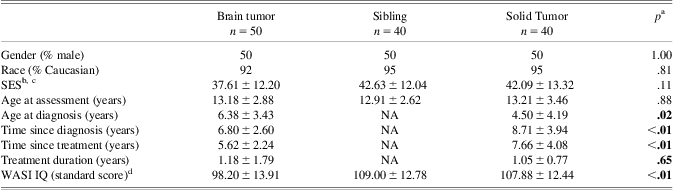
Descriptive analyses of demographic and clinical variables as well as group comparisons (Table 1) revealed the three groups were balanced with regard to demographic factors (e.g., gender, race, SES, age at participation). Participants were, on average, 13.11 years of age (SD = 2.98) at the time of study participation. The solid tumor group was significantly younger at the time of diagnosis (p = .02), further from diagnosis (p < .01), and further from treatment completion (p < .01) compared to the brain tumor group. Significant group differences were also revealed on an abbreviated measure of IQ, with significantly lower performance for the brain tumor survivors than solid tumor (p < .01) and sibling groups (p < .01), who did not differ from one another.
Demographic characteristics by group
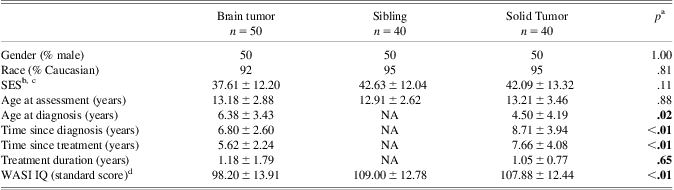
ap-values are from ANOVAs for analyses with three groups and independent t-tests for analyses with two groups.
bSES based on the Barratt Simplified Measure of Social Status. Scores range from 8 to 66 with higher scores indicative of higher SES.
cAll values are presented as mean ± standard deviation.
dWASI = Wechsler Abbreviated Scale of Intelligence; standard scores have a mean of 100 and standard deviation of 15.
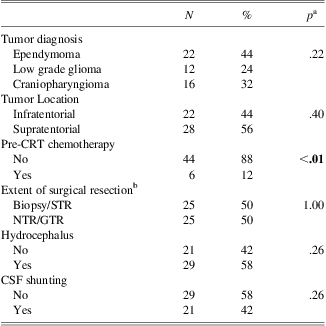
The brain tumor group was balanced with respect to diagnosis and tumor location (Table 2). On average, brain tumor patients were 6.38 years of age (SD = 3.43) at the time of diagnosis and 6.80 (SD = 2.60) years from diagnosis. Only six patients received chemotherapy before radiation and half the sample underwent at least a near total resection. For the solid tumor group, participants were not balanced with regard to diagnosis (p = .02) and a majority of patients were diagnosed with Ewing sarcoma (30%), neuroblastoma (30%), or Wilms’ tumor (25%). Solid tumor participants were approximately 4.50 years of age (SD = 4.19) at the time of diagnosis and 8.71 years (SD = 3.94) from diagnosis.
Clinical characteristics of brain tumor survivors
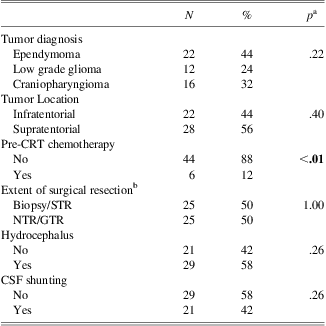
ap-value indicates whether group is equally distributed across sub-categories using Chi-square.
bBiopsy (tumor sampling to determine pathology), STR = subtotal resection (incomplete tumor resection with gross residual disease present on post-operative neuroimaging), NTR = near total resection (incomplete tumor resection with minimal residual disease present on post-operative neuroimaging), GTR = gross total resection (resection of tumor without residual disease observed by the operating neurosurgeon and confirmed on post-operative neuroimaging)
Parent Report of Working Memory
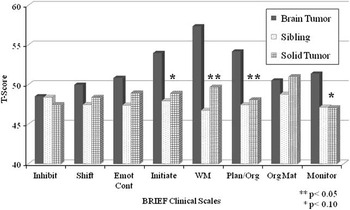
To investigate whether parents of brain tumor survivors would endorse higher levels of WM difficulties compared to healthy sibling and solid tumor participants, group differences on the BRIEF clinical scales were examined using ANCOVA, accounting for IQ (Figure 1). Data from one brain tumor participant was excluded due to an elevated validity scale (Negativity). Results revealed significant group differences on the WM (p = .03) and planning/organization (p = .04) scales in addition to a trend for significance on the initiation (p = .07) and monitoring (p = .08) scales. Post hoc pairwise comparisons indicated parents rated brain tumor survivors as significantly more elevated in these areas compared to solid tumor and healthy sibling groups, who did not differ from one another. There was a significant interaction for the organization of materials scale; there was a stronger relationship with IQ for the brain tumor group but no significant group differences.
BRIEF Clinical Scales by Group. T scores have a mean of 50 and standard deviation of 10. Higher scores are indicative of more difficulty. The BRIEF clinical scales include: Inhibit =Inhibition; Shift = shifting; Emot Cont = emotional control; Initiate; WM = working memory; Plan Org = planning/organization; Org Mat = organization of materials; Monitor = monitoring.

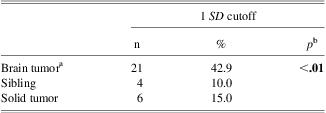
Participants were then categorized as elevated or not elevated on the BRIEF-WM scale based on a 1 SD cutoff above the mean. Brain tumor participants displayed a significantly higher percentage of elevation compared to control groups (see Table 3) as well as the normative rate of 16%. In contrast, the rate of elevation among the sibling and solid tumor groups did not significantly differ from the normative rate. Finally, sensitivity and specificity of the BRIEF-WM scale to detect WM problems identified by digit span backward was investigated for the brain tumor group. Using the 1 SD cutoff, 26 of 49 brain tumor participants (53%) were correctly classified, resulting in a sensitivity of 0.40 and specificity of 0.56.
Rate of elevation on BRIEF-WM Scale
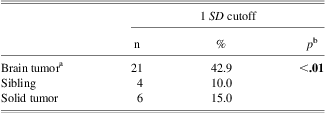
aOne brain tumor participant was excluded from analyses due to an elevated Negativity Scale.
bp-value from Fisher exact test.
Rater- Versus Performance-Based Working Memory Measures
As previously reported by Conklin and colleagues (2012), brain tumor survivors performed significantly worse across performance-based WM measures compared to siblings and solid tumor survivors. In short, brain tumor survivors performed significantly worse on digit span backward than both solid tumor and healthy sibling groups (p < .01), who did not differ from one another (p = .61). For both the SOS-Verbal and SOS-Object tasks, linear mixed models revealed main effects for array size (with worsening performance as size increased) and group. For both tasks, post hoc comparisons indicated brain tumor survivors performed significantly worse than both solid tumor (p < .01) and healthy sibling groups (p < .05).
To examine the relationship between the BRIEF-WM scale and each of the performance-based measures, Spearman rank partial correlation coefficients were calculated, controlling for group. Results revealed significant, yet modest, correlations between the BRIEF-WM scale and digit span forward (r = −.24; p < .01), digit span backward (r = −.21; p = .02), SOS-V (r = 0.22; p = .02), and SOS-O (r = .22; p = .01), all in the expected direction.
Clinical Predictors
Finally, univariate linear models were used to explore demographic and clinical predictors of parent-reported WM concerns. For the combined group, age at time of testing (p = .02), SES (p < .01), and IQ (p < .01) were significant predictors of elevations on the WM scale, whereas other demographic (e.g., gender, parent education) and clinical factors (e.g., diagnosis, treatment history) were not statistically significant. More specifically, older age at testing, lower SES, and lower IQ were predictive of more parent-reported concerns with WM. When looking individually at the brain tumor group, gender (p = .04), age at testing (p = .03), and extent of surgical resection (p = .02) were significant predictors of elevations on the WM scale. Specifically, greater WM concerns were reported for male brain tumor survivors who were older at the time of testing and had a less extensive resection (e.g., biopsy, subtotal resection). While specific brain tumor diagnosis was not a significant predictor, χ2 analyses revealed an association between diagnosis and extent of resection, with a majority of those receiving a less extensive resection diagnosed with either craniopharyngioma (48%) or low-grade glioma (44%).
Discussion
The current study sought to determine the utility of the BRIEF for detecting WM problems among survivors of pediatric brain tumors. Consistent with a priori hypotheses, results revealed that parents rated brain tumor survivors as displaying significantly greater difficulty with everyday WM abilities compared to solid tumor and healthy sibling participants. However, the BRIEF-WM scale demonstrated poor sensitivity and specificity for identifying WM problems among brain tumor survivors as identified by performance-based measures. Other areas of executive functioning were also rated as more problematic for children treated for a brain tumor relative to comparison groups, such as planning/organization. This pattern reiterates the multi-dimensional nature of executive functions and suggests the BRIEF scales measure overlapping constructs. While WM may be specifically vulnerable among executive functions, processes loading onto the metacognition index may also be more generally at risk among childhood brain tumor survivors. Significant, albeit modest, correlations were found between the BRIEF-WM scale and performance measures of WM. Parental endorsement of WM concerns significantly correlated with both traditional and experimental, computerized performance-based measures of WM. Furthermore, exploratory analyses revealed age at testing, SES, and IQ were significant predictors of parent ratings of WM among participants, whereas other demographic and clinical factors were not. The notion that higher SES was predictive of fewer parent reported problems with WM could reflect greater cognitive reserve secondary to better access to resources and/or correlation with parental IQ. No significant relationships have been found when these same factors were examined as predictors of performance on WM measures (Conklin et al., Reference Conklin, Ashford, Howarth, Merchant, Ogg, Santana and Xiong2012).
Among brain tumor survivors, more WM concerns were reported for males who were older at the time of testing and underwent a less extensive resection. These findings are not entirely consistent with the previous literature, which has identified risk factors for cognitive deficits to most reliably include female gender (Ris, Packer, Goldwein, Jones-Wallace, & Boyett, Reference Ris, Packer, Goldwein, Jones-Wallace and Boyett2001), younger age at treatment (Jannoun & Bloom, Reference Jannoun and Bloom1990), longer time since treatment (Ellenberg, McComb, Seigel, & Stowe, Reference Ellenberg, McComb, Seigel and Stowe1987), higher treatment intensity (Hoppe-Hirsch et al., Reference Hoppe-Hirsch, Brunet, Laroussinie, Cinalli, Pierre-Kahn, Renier and Hirsch1995), and complicating medical factors (Merchant et al., Reference Merchant, Kiehna, Kun, Mulhern, Li, Xiong and Sanford2006). Although there is not a clear explanation for why males were reported as having more WM problems compared to females, recent studies of survivors of pediatric acute lymphoblastic leukemia (ALL; Jain, Brouwers, Okcu, Cirino, & Krull, Reference Jain, Brouwers, Okcu, Cirino and Krull2009) and brain tumors (Conklin et al., Reference Conklin, Li, Xiong, Ogg and Merchant2008) have demonstrated greater male vulnerability when examining specific cognitive skills, such as attention and language-based processes.
Current findings of greater WM concerns reported for participants who were older at the time of testing may be reflective of the “growing into deficits” phenomenon, which has been described in the TBI literature (Dennis, Reference Dennis1989; Giza & Prins, Reference Giza and Prins2006). Specific difficulties may become more apparent as a child enters adolescence secondary to brain maturational changes, decreased environmental supports, and increased demands for independence associated with this stage of development.
With regard to resection, there could also be a relationship between tumor location and extent of resection performed. The possibility of achieving a gross or near total resection may be limited when a tumor is located near or around critical brain structures. For example, cerebellar tumors are more often associated with gross total resection compared to tumors located within deep, subcortical structures. It is plausible that children receiving a less invasive or extensive resection may have had residual and/or diffuse disease, which subsequently impacted neural pathways in the brain. Consistent with this hypothesis, a majority of those participants with a less extensive resection were diagnosed with either craniopharyngioma or low-grade glioma.
WM problems were not found in the solid tumor group, despite being younger at the time of diagnosis, and further out from diagnosis and treatment completion. Despite evidence of CNS disruption associated with some solid tumor diagnoses (e.g., Wilms’ tumor and chronic kidney disease), the higher rate of elevation reported among brain tumor survivors is more likely related to CNS disease and/or CNS-directed treatment than the general cancer experience. Consistent with current findings, recent studies examining the cognitive late effects associated with systemic chemotherapy have revealed little impact (Minisini et al., Reference Minisini, Atalay, Bottomley, Puglisi, Piccart and Biganzoli2004; Vardy & Tannock, Reference Vardy and Tannock2007). While the notion of “chemo-brain” has received a great deal of attention in the recent literature, particularly among adult cancer patients (e.g., Boykoff, Moieni, & Subramanian, Reference Boykoff, Moieni and Subramanian2009; Hede, Reference Hede2008; Wefel, Saleeba, Buzdar, & Meyers, Reference Wefel, Saleeba, Buzdar and Meyers2010), the current data are not suggestive of risk.
Consistent with the TBI literature, current findings revealed significant, yet modest, correlations between the BRIEF-WM scale and performance-based WM measures. The modest correlations, coupled with poor sensitivity and specificity of the BRIEF-WM scale relative to digit span backward, suggest the BRIEF is likely not a sufficient tool for fully capturing the nature of WM difficulties experienced by childhood cancer survivors. The limited correlation could also indicate rater measures are more valid for use with unselected, healthy populations. Rater and performance measures may offer complimentary yet distinctly different information in assessing cognitive late effects. As such, despite the number of advantages associated with using questionnaires, it does not seem appropriate to use them in isolation or instead of performance measures in the assessment of WM and other executive functions among childhood cancer survivors. Because rater measures offer information about a child's performance in the natural setting, the BRIEF may be a simple and quick compliment to clinical assessment. Rather than relying on rater or performance measures of WM alone, it seems optimal to use both types of instruments.
Within the context of these findings, study limitations are acknowledged, which provide directions for future research. First, the current study used a cross-sectional design. A longitudinal study would afford a more in-depth examination of parent reported WM problems over time. Second, examining a larger cohort may help to more comprehensively explore demographic and clinical predictors of WM difficulties. Next, while less than half of siblings were siblings of brain tumor patients included in this study, the potential for non-independence of observations is acknowledged. Finally, rating scales relied on one informant and a measure of negative affect was not used. Previous studies have shown that symptoms of negative affect may contribute to self-report ratings (e.g., Hermelink et al., Reference Hermelink, Kuchenhoff, Untch, Bauerfeind, Lux, Buhner and Munzel2010). As such, biases may exist when using rater measures with characteristics of the informant reflected in responses (e.g., depressed parents may over-report their child's symptoms), regardless of whether ratings are obtained from a parent, teacher, or the individual. Thus, future research may cross-validate parent report by also administering teacher and/or self-report versions of the BRIEF, including measures of negative effect.
In conclusion, both rater and performance measures identified WM concerns among childhood cancer survivors, although the correlation between them was modest. Performance measures appear to be proximal measures that better tap into the classically defined core WM construct whereas the BRIEF may more accurately capture one's ability to independently execute and apply these skills in the everyday environment; hence, it identifies more distal outcomes that, despite ecological validity, are subject to potential confounds and intervening influences. Accordingly, the BRIEF does not appear to be a good screening tool for assessing WM among brain tumor survivors in isolation or in lieu of performance measures. This pattern of findings highlights the multi-faceted nature of executive dysfunction experienced by childhood cancer survivors, while also offering some neurodevelopmental clues about patterns of vulnerability, specific areas to monitor, and appropriate targets for developing interventions.
Acknowledgments
The authors thank Clay Curtis, Catalina Hooper, and Matt Scoggins for their contributions in developing the experimental computerized self-ordered search tasks. The authors also thank the patients and their families who volunteered their time to participate in this study. This work was supported in part by the National Cancer Institute (St. Jude Cancer Center Support [CORE] Grant [P30 CA21765]; H.C., R21 CA131616); the International Neuropsychological Society (H.C., Rita G. Rudel Award); and the American Lebanese Syrian Associated Charities (ALSAC). Portions of this study were presented at the annual meeting of the American Academy of Clinical Neuropsychology in Washington, DC, June 8–11, 2011. The authors have no conflicts of interest to disclose.