Introduction
Maize (Zea mays L.) is a versatile industrial crop with the highest output potential among all cereals and has wide genetic diversity (Sun et al., Reference Sun, Wang, Zhang, Fowler and Rajaratnam2011; Volpicella et al., Reference Volpicella, Leoni, Fanizza, Distaso, Leoni, Farioli, Naumann, Pastorello and Ceci2017). Maize and maize products are used as food, feed and fodder for both humans and animals (Asgher et al., Reference Asgher, Ahmad and Iqbal2013; Junqueira et al., Reference Junqueira, Costa, Boff, Muller, Mendonça and Batista2017). Furthermore, a larger portion of the maize is consumed by the ethanol business, and increased prices will intensify the rivalry for consumers' attention and may have an impact on maize prices for both animal and human consumption (Cooper et al., Reference Cooper, Baranski, Stewart, Nobel-de Lange, Bàrberi, Fließbach, Peigné, Berner, Brock, Casagrande and Crowley2016; Zhang et al., Reference Zhang, Ma, Wang, Lu, Li, Xie, Zhu and Guo2017). Over the years, increasing food and industrial demand for maize has exerted huge pressure on natural resources and conventional agriculture which led to numerous challenges for stable food production (Avnery et al., Reference Avnery, Mauzerall, Liu and Horowitz2011; Dang et al., Reference Dang, Moody, Bell, Seymour, Dalal, Freebairn and Walker2015). Loss of soil organic matter (SOM) and soil erosion are threatening the future viability of agricultural production on a worldwide scale, particularly in extreme weather conditions with insufficient nutrient management (Montgomery, Reference Montgomery2007; Smyth et al., Reference Smyth, Garcia, Rader, Foster and Bras2017). Maize growers of the Indo-Gangetic Plains (IGP) of India frequently use a huge quantity of nitrogen (N) in the form of urea, very little phosphorous (P) and potassium (K), and nearly no secondary and micronutrients (Singh et al., Reference Singh, Phogat, Dahiya and Batra2014). Chauhan et al. (Reference Chauhan, Mahajan, Sardana, Timsina and Jat2012) stated that the rice–wheat (RW) cropping system in the IGP has not only led to the mining of important nutrients (N, P, K and S) from the soil but also has induced a nutrient imbalance, deterioration in soil health and low input use efficiency. Excessive nutrient mining reduces the soil productivity in the intensive rice–wheat monocropping system because rice and wheat are nutrients that devour crops than supplemented by chemical fertilizers and other sources (NRC, 2009; Lal, Reference Lal2010). The repeated conventional tillage (CT) and unbalanced nutrition are all related to increased soil compaction, poor soil aggregate stability, disrupted soil productivity, decreased water retention and aggravated losses from run-off erosion (Goddard et al., Reference Goddard, Zoebisch, Gan, Ellis, Watson and Sombatpanit2008). Repeated CT increases the subsoil compaction which causes a 13–16% reduction in cob length (Singh et al., Reference Singh, Malik, Garg, Devraj and Sheoran2012).
Conservation agriculture (CA) is a resource-conserving climate-smart practice to make agriculture more sustainable by protecting the soil and environment (Singh et al., Reference Singh, Babu, Avasthe, Yadav and Rajkhowa2015). Long-term adoption of no-till/zero-till (NT/ZT) and minimum tillage (MT) improves crop yield, quality, soil porosity, soil organic carbon and water holding capacity, and reduces the soil bulk density (Akbarnia et al., Reference Akbarnia, Alimardani and Baharloeyan2010; Karami et al., Reference Karami, Homaee, Afzalinia, Ruhipour and Basirat2012; Singh et al., Reference Singh, Babu, Avasthe, Yadav, Das, Mohapatra, Kumar, Singh and Chandra2020). Permanent broad beds with residue (PBB + R) and without residue (PBB) produced 29 and 26% higher maize grain yields over CT, respectively (Das et al., Reference Das, Saharawat, Bhattacharyya, Sudhishri, Bandyopadhyay, Sharma and Jat2018). More P acquisition by crop was reported under minimum tillage with residue retention instead of minimum tillage with residue removal and CT (Gupta et al., Reference Gupta, Bali, Kour, Bharat and Bazaya2011). Similarly, long-term NT adoption in maize production systems increases soil carbon and phosphatase activities at the 0–50 cm soil depth as compared to the CT (Sharma et al., Reference Sharma, Chandrika, Grace, Srinivas, Mandal, Raju, Munnalal, Kumar, Rao, Reddy, Osman, Indoria, Rani and Kobaku2014a, Reference Sharma, Singh, Tyagi and Tomar2014b). The CA has various advantages, but it has not been widely implemented because of weed control issues, residue management issues, nutrient management issues and a lack of machinery. Among these CA-related aspects, crop and nutrient management have received considerable study, with a focus on three main CA principles such as minimum disturbance of soil, diversified crop rotations and crop residue management. Nutrient management has also been added as the fourth principle of CA in light of the particular impact on plant nutrient dynamics. There is a need to determine the nutrient demand of crops for various ecologies, specifically in the CA-based systems, as the nutrient requirement is expected to vary with crops, cropping systems and management approaches.
P deficiency in soil is one of the major limiting factors for sustainable crop production (Pattanayak et al., Reference Pattanayak, Suresh kumar and Tarafdar2009; Kumar et al., Reference Kumar, Behera, Shiva-Dhar, Shukla, Bhatiya, Meena, Gupta and Singh2018). It is an important component of ATP, nucleic acids and phospholipids and regulates several functions such as gene transfer, photosynthesis, respiration, root growth, reproduction and crop yield (Mahdi et al., Reference Mahdi, Hassan, Hussain and Faisulur2011; Haokip et al., Reference Haokip, Dwivedi, Meena, Datta, Jat, Dey and Tigga2020). The efficiency of P throughout the world as well as in India is around 10–25%, and the concentration of bio-available P in soil is very low about 1.0 ppm (Goldstein, Reference Goldstein2000; Oberson and Joner, Reference Oberson, Joner, Turner, Frossard and Baldwin2005). The P management in CA is entirely different as compared to conventional agriculture due to variations in soil conditions and nutrient dynamics altered with RT/ZT, therefore, appropriate P management is highly warranted (Saad, Reference Saad2014; Haokip et al., Reference Haokip, Dwivedi, Meena, Datta, Sharma and Saharawat2019). Most of the researchers have done work on N, K and other nutrients but very less work has been done on P management under CT systems (Swarna et al., Reference Swarna, Behera, Shivay, Pandey, Naresh and Pandey2018). In Indian soils, systematic information on P transformation is scanty under maize-based cropping systems concerning microbial inoculant-mediated integrated P management under CA. To achieve higher crop productivity, growers use higher chemical phosphatic fertilizers than the recommended level under CA in many areas in India. Hence, to sustain crop productivity, there is an urgent need to identify alternate eco-friendly and economically robust technologies to meet the P need of the crop grown under CT systems. Therefore, it was hypothesized that microbial inoculants-mediated integrated P management under CA can potentially enhance maize productivity, profitability and grain quality besides energy saving. Hence to achieve the above hypothesis, the current study was conducted with the following objectives (1) to assess the effect of tillage and microbial inoculants-mediated integrated P management on maize productivity and quality and (2) to assess the impact of tillage and microbial inoculants-mediated integrated P management on economic outturn and energy dynamics of maize production.
Materials and methods
Experimental site
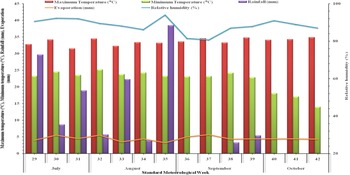
The experiment was carried out over two consecutive years (2016–17 and 2017–18) during kharif season at Research Farm of ICAR-IARI, New Delhi (latitude 28°35′N, longitude 77°12′E and an elevation of 228.6 m above MSL). The experimental farm represents the Western Ghat Plains Zone and belongs to the Mehrauli series of order Inceptisol, which is taxonomically classified as Typic Haplustept. The soil of the experimental field was sandy clay loam with a pH of 8.2, low OC content (0.43%), low available N (191.5 kg/ha), medium available P (11.9 kg/ha) and high available K (208 kg/ha). Before the start of the experiment, baseline soil samples were taken from 0–15 cm depth with 10 cm intervals and completely mixed for analysis. The detailed analysis of initial soil samples of the experimental site is presented in Table 1. The climate of the site was semi-arid and sub-tropical, with hot, dry summers and bitterly cold winters. The hottest month of the year was June, with maximum temperatures hovering around 39–40°C, while the coldest month was January, with a mean low temperature of 7.7°C. The average annual rainfall was roughly 650 mm, with approximately 80% falling between July and September during the monsoon season and the rest rainfall occurs between October and May. The typical daily US Weather Bureau Class ‘A’ open pan evaporimeter value reaches a maximum (10.9 mm) in June and a minimum (1.5 mm) was observed in January. The average annual pan evaporation was 850 mm. The meteorological data for the period of experimentation (2016–17 to 2017–18) recorded at the meteorological observatory of ICAR–IARI, New Delhi are depicted in Fig. 1.
Weather parameters during the period of experimentation (average of 2016–17 and 2017–18). RH, relative humidity.

Initial physical, chemical and biological properties of the soil of experimental site

C, carbon; N, nitrogen; P, phosphorus; K, potassium; EC, electrical conductivity; CEC, cation exchange capacity; SMBC, soil microbial biomass carbon; TPF, tri-phenyl formazon; TTC, tri-phenyl tetrazolium chloride; PNP, p-nitrophenol phosphate; cfu, colony forming unit.
Experimental design
The experiment was undertaken in split plot design assigning three tillage practices in main plots [T1: CT–R (conventional tillage with no residue); T2: ZT–R (zero tillage with no residue); T3: ZT + R (zero tillage with wheat crop residue at 2.5 Mg/ha)] and five microbial inoculants-mediated integrated P management in subplots [P1: control (NK as per recommendation, but no P); P2: 17.2 kg P/ha; P3: 17.2 kg P/ha + phosphate solubilizing biofertilizer (PSB); P4: 17.2 kg P/ha + compost inoculants and P5: 34.4 kg P/ha] with three replications. Except for CT–R and ZT–R plots, after sowing of the crop, sun-dried wheat residue (Table 2) was applied in maize crop at 2.50 Mg/ha on the soil surface as mulch in all treatments. The compost inoculant was a mixer of Aspergillus awamori, Trichoderma viride, Phanerochaete chrysosporium and Aspergillus nidulans. Aspergillus awamori releases cellulose and hemicellulose enzymes and degrades the in situ crop residues. While turning the starch into sugar, it also produces citric acid. Numerous enzymes including cellulases and chitinases, which can break down cellulose and chitin, are produced by Trichoderma viride. Extracellular enzymes are released by Phanerochaete chrysosporium to decompose the unique three-dimensional structure of lignin into molecules that can be used by its metabolism. The fungus Aspergillus nidulans secretes enzymes that effectively break down the linear polymer cellulose (which is made up of glucopyranose units joined by β-1, 4 bonds) to oligosaccharides and glucose. The culture of compost inoculants and PSB was obtained from the Division of Microbiology, ICAR–IARI, New Delhi.
Chemical composition of wheat crop residues used in the experiment

N, nitrogen; P, phosphorus; K, potassium; Ca, calcium; Mg, magnesium; S, sulphur; Fe, iron; Mn, manganese; Zn, zinc; Cu, cupper.
Field experiment
Individual plots (5.60 m × 4.20 m) were formed in the experimental field by manual labourers using a spade to avoid soil mixing in various plots with various nutrient treatments. The recommended dose of fertilizer 150 kg N/ha, 34.4 kg P/ha and 49.8 kg K/ha was applied. Urea, diammonium phosphate and muriate of potash, respectively, served as the sources of the nutrients (N, P and K). The whole dose of K and half dose of N were supplemented as basal at sowing, and the remaining N was top-dressed at the first and second irrigations. However, the dose of P was applied according to the treatment plans as basal. Before sowing the crop, seeds were treated with suitable microbial culture. A mixture of warm water 20–25 litres (60°C) and jaggery (2.5 kg) was prepared in a plastic bucket. After 30 min, the seeds of maize were mixed. Seeds were treated at 20 g/kg by using a suitable carrier (PSB culture) as per the recommendation and after that seeds were shade dried for 6–7 h. The culture of compost inoculants was mixed with water and then distributed on crop residue at 500 g/acre in different plots shortly after the sowing of the crop. Across the study years, the crop was raised by using the recommended cultivation techniques.
Crop productivity
The net plot area consisted of two central rows of the gross plot area. To evaluate yield, crop was physically harvested from the net plot area. Hand-picking was used to harvest maize cobs, and hand-shelling was used to separate the kernels. The grain yield of maize was reported at 14% moisture content and the grain yield per net plot was recorded and expressed as Mg/ha.
Quality parameters (amino acids and protein content %)
The amino acid content in maize grains was assessed according to the procedure given in the Basic Biochemistry Manual, Division of Biochemistry, ICAR–IARI, New Delhi. The amino acid yield was calculated by using the following formula:

Protein content in grains was calculated by multiplying N% by the factor of 6.25. While protein yield was calculated by using the following formula:

Profitability
For financial auditing, the cost incurred by the cultivation of crop (sowing to harvesting) and the economic value of all the outputs were calculated on the basis of market price during study period (2016–18). The monetary value of the total output was expressed as gross returns, net returns and benefit-cost (B: C) ratio were calculated by the following equations:


Energy dynamics
To estimate the total input energy, the energy equivalents of all the inputs were added. The input energy used in different field operations (field preparation to post-harvest operations) was used to determine operation-wise energy, which is shown in Table 3. The direct and indirect energies of the inputs, both renewable and non-renewable, were also calculated as follows:


Where E 0 = Energy output and E i = Energy input.

where E 0 = energy output and E i = energy input.
Energy equivalent of inputs and output in agricultural operations

N, nitrogen; P2O5, phosphorus pentoxide; K2O, potassium oxide; PSB, phosphate solubilizing biofertilizer.
The data obtained for various parameters were appropriately statistically analysed using the GLM process of Split Plot Design for analysis of variance (SAS Software packages), SAS EG 9.2. . The ‘F’ test was used to compare the means, and the least significant difference (LSD) was calculated when the variance ratio was determined to be significant for the treatment effect. At a 5% probability level, the significance of the treatment effects was examined.
Results
Productivity
Significant improvement in grain yield of maize was 20.3 and 19.7% higher under ZT + R as compared to CT–R but it remained statistically at par with ZT–R during 2016–17 and 2017–18. In the case of P nutrition, across the study years maize yield varied from 4.02 to 6.49 Mg/ha (Table 5). The treatment P5 registered a significantly (P < 0.05) higher grain yield (6.40 and 6.49 Mg/ha) than other treatments. Treatment P3 recorded a similar yield with P4 during both years of experimentation. The interaction effect between tillage and microbial inoculant-mediated integrated P management practices on grain yield was influenced significantly (P < 0.05) during both the years and presented (Table 5 and Fig. 2). However, treatment combination ZT + R along with P5 gave the highest grain yield (7.30 and 7.41 Mg/ha, respectively) than other treatment combinations.
Interaction effect of tillage and microbial inoculants-mediated integrated P management on grain yield of maize during kharif season 2016–17 and 2017–18. CT–R (conventional tillage with no residue); ZT–R (zero tillage with no residue); ZT + R (zero tillage with wheat crop residue at 2.5 Mg/ha); P1: control (NK as per recommendation, but no P); P2: 17.2 kg P/ha; P3: 17.2 kg P/ha + phosphate solubilizing biofertilizer (PSB); P4: 17.2 kg P/ha + compost inoculants and P5: 34.4 kg P/ha.

Influence of tillage and microbial inoculants-mediated integrated phosphorus (P) management on productivity, amino acids and protein yield of maize under conservation tillage

CT–R (conventional tillage with no residue); ZT–R (zero tillage with no residue); ZT + R (zero tillage with wheat crop residue at 2.5 Mg/ha); P1: control (nitrogen–potassium as per recommendation, but no P); P2: 17.2 kg P/ha; P3: 17.2 kg P/ha + phosphate solubilizing biofertilizer (PSB); P4: 17.2 kg P/ha + compost inoculants and P5: 34.4 kg P/ha; s.e.m.±, Standard error of mean; LSD, Least significant difference.
Quality
Amino acids and protein content in maize grains were not significantly (P < 0.05) influenced by tillage and microbial inoculants-mediated integrated P management practices during both years of experimentation (Table 4). However, the highest value of amino acids and protein content was found under ZT + R treatment followed by ZT–R treatment whereas, the lowest value was recorded under CT–R treatment. Among the tillage practices, lysine content varies from 1.97 to 2.32%, methionine content varies from 1.71 to 2.18%, tryptophan content varies from 2.10 to 2.65% and protein content varies from 8.45 to 9.19% across the study years. Based on 2 years' mean data, maximum values of lysine (2.30%), methionine (2.15%), tryptophan (2.62%) and protein content (9.13%) were found under ZT + R followed by ZT–R. The minimum values of lysine (1.99%), methionine (1.74%), tryptophan (2.13%) and protein content (8.49%) were observed under CT–R. In the case of microbial inoculant-mediated integrated P management practices, amino acid content varied from 1.65 to 2.70% and protein content varied from 8.36 to 9.40%. During both years of experimentation, treatment P5 recorded maximum values of lysine (2.24 and 2.28%), methionine (2.05 and 2.13%), tryptophan (2.66 and 2.70%) and protein content (9.28 and 9.36%) followed by P3, P4 and P2. Furthermore, the lowest values of lysine (1.65 and 1.68%), methionine (1.60 and 1.63%), tryptophan (1.80 and 1.85%) and protein content (8.36 and 8.43%) were recorded under P1 during both the years of experimentation.
Influence of tillage and microbial inoculants-mediated integrated phosphorus (P) management on quality parameters (amino acids and protein content) of maize under conservation tillage

CT–R (conventional tillage with no residue); ZT–R (zero tillage with no residue); ZT + R (zero tillage with wheat crop residue at 2.5 Mg/ha); P1: control (nitrogen–potassium as per recommendation, but no P); P2: 17.2 kg P/ha; P3: 17.2 kg P/ha + phosphate solubilizing biofertilizer (PSB); P4: 17.2 kg P/ha + compost inoculants and P5: 34.4 kg P/ha; s.e.m.±, standard error of mean; LSD, least significant difference.
Concerning amino acids and protein yield, tillage and microbial inoculants-mediated integrated P management had a significant (P < 0.05) effect on amino acid and protein yield (Table 5). However, significantly higher values of amino acids (lysine yield 134 and 139 kg/ha, methionine yield 125 and 131 kg/ha, tryptophan yield 153 and 159 kg/ha) and protein yield (538 and 553 kg/ha) were noticed under ZT + R as compared to ZT–R and CT–R. Among the P levels, treatment P5 recorded the significantly highest (P < 0.05) values of amino acids (lysine yield 143 and 148 kg/ha, methionine yield 131 and 138 kg/ha, tryptophan yield 170 and 175 kg/ha) and protein yield (597 and 608 kg/ha) as compared to all remaining treatments, respectively, during both the years.
Profitability
The maximum gross (1428 and 1552 US$/ha) and net returns (849 and 954 US$/ha) were noticed under ZT + R which was statistically at par with ZT–R and significantly higher than CT–R (Table 6). The cost of cultivation varied among the treatments, but the highest cost of cultivation was observed under CT–R followed by ZT + R and the lowest cost of cultivation was found under ZT–R. However, the maximum B: C ratio (1.46 and 1.59) was found under ZT–R which was statistically at par with ZT + R and significantly higher than CT–R. In terms of P nutrition, the maximum gross return (1540 and 1674 US$/ha), cost of cultivation (595 and 617 US$/ha) and net returns (945 and 1055 US$/ha) were found under P5 which were significantly higher than all remaining treatments. The maximum B: C ratio (1.59 and 1.71) was recorded under P5 which was statistically similar to P3 and significantly superior to the remaining treatments, respectively. During both the years of experiment, the interaction effect between tillage and microbial inoculants-mediated integrated P management practices on net returns was recorded as significant (P < 0.05) (Table 6 and Fig. 3). However, the combination of ZT + R along with P5 resulted in significantly higher net returns (945 and 1056 US$/ha, respectively) as compared to the other treatment combinations.
Interaction effect of tillage and microbial inoculants-mediated integrated P management on net returns of maize during kharif season 2016–17 and 2017–18. CT–R (conventional tillage with no residue); ZT–R (zero tillage with no residue); ZT + R (zero tillage with wheat crop residue at 2.5 Mg/ha); P1: control (NK as per recommendation, but no P); P2: 17.2 kg P/ha; P3: 17.2 kg P/ha + phosphate solubilizing biofertilizer (PSB); P4: 17.2 kg P/ha + compost inoculants and P5: 34.4 kg P/ha.

Economics of maize influenced by tillage and microbial inoculants-mediated integrated phosphorus (P) management under conservation tillage

CT–R (conventional tillage with no residue); ZT–R (zero tillage with no residue); ZT + R (zero tillage with wheat crop residue at 2.5 Mg/ha); P1: control (nitrogen–potassium as per recommendation, but no P); P2: 17.2 kg P/ha; P3: 17.2 kg P/ha + phosphate solubilizing biofertilizer (PSB); P4: 17.2 kg P/ha + compost inoculants and P5: 34.4 kg P/ha; s.e.m.±, standard error of mean; LSD, least significant difference.
Energy dynamics
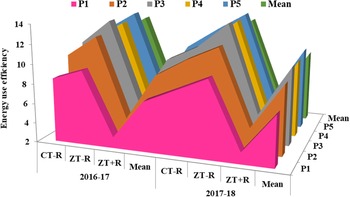
Tillage and microbial inoculants-mediated integrated P management practices exerted a significant (P < 0.05) effect on the energy dynamics of maize (Table 7). Among the tillage practices, the adoption of ZT + R registered significantly higher gross energy returns (205 and 214 × 103 MJ/ha) over CT–R but it remained statistically at par with ZT–R. Energy input varied significantly among the tillage practices but the maximum energy input (46.9 × 10³ MJ/ha) was recorded under ZT + R and the lowest energy input (15.6 × 10³ MJ/ha) was incurred under ZT–R. The maximum energy net returns (175 and 183 × 103 MJ/ha) and energy use efficiency (12.2 and 12.7) were recorded under ZT–R which was significantly higher than ZT + R and CT–R during both years. In the context of P management practices, treatment P5 recorded significantly highest gross returns of energy (219 and 229 × 103 MJ/ha), energy input (26.8 × 10³ MJ/ha) and energy net returns (192 and 202 × 103 MJ/ha) over other treatments, respectively, during both the years. The maximum energy use efficiency (9.9 and 10.4) was found under the P5 treatment which was statistically similar to P3 and remarkably greater than all other treatments. During both years of experimentation, energy use efficiency was influenced significantly (P < 0.05) by the interaction effect of tillage and microbial inoculant-mediated integrated P management practices (Table 7 and Fig. 4). Treatment combination ZT–R along with P3 resulted in the significantly highest energy use efficiency (13.4 and 13.9, respectively) followed by ZT–R along with P4 and ZT–R along with P5.
Interaction effect of tillage and microbial inoculants-mediated integrated P management on energy use efficiency of maize during kharif season 2016–17 and 2017–18. CT–R (conventional tillage with no residue); ZT–R (zero tillage with no residue); ZT + R (zero tillage with wheat crop residue at 2.5 Mg/ha); P1: control (NK as per recommendation, but no P); P2: 17.2 kg P/ha; P3: 17.2 kg P/ha + phosphate solubilizing biofertilizer (PSB); P4: 17.2 kg P/ha + compost inoculants and P5: 34.4 kg P/ha.

Impact of tillage and microbial inoculants-mediated integrated phosphorus (P) management on energy dynamics of maize under conservation tillage

CT–R (conventional tillage with no residue); ZT–R (zero tillage with no residue); ZT + R (zero tillage with wheat crop residue at 2.5 Mg/ha); P1: control (nitrogen–potassium as per recommendation, but no P); P2: 17.2 kg P/ha; P3: 17.2 kg P/ha + phosphate solubilizing biofertilizer (PSB); P4: 17.2 kg P/ha + compost inoculants and P5: 34.4 kg P/ha; s.e.m. ± : standard error of mean; LSD: least significant difference.
Discussion
Productivity
In general, crop productivity mainly depends on the characteristics that contribute to growth and yield, and it can be increased by adopting efficient agronomic management techniques (Shao et al., Reference Shao, Xie, Wang, Yue, Yao and Liu2016; Das et al., Reference Das, Pramanick, Goswami, Maitra, Ibrahim, Laing and Hossain2021; Kar et al., Reference Kar, Pramanick, Brahmachari, Saha, Mahapatra, Saha and Kumar2021). The increased grain yield in ZT plots as compared to CT plots is the result of the several benefits of more nutrients, including softened seed bed for quicker germination, better crop establishment (Jat et al., Reference Jat, Singh, Kumar, Jat, Parihar, Bijarniya, Sutaliya, Jat, Parihar, Kakraliya and Gupta2019), decreased weed population, enhanced soil health (Kumar et al., Reference Kumar, Mitra, Mazumdar, Majumdar, Saha, Singh, Pramanick, Gaber, Alsanie and Hossain2021), precise water management and improved nutrient usage efficiency (Jat et al., Reference Jat, Bijarniya, Kakraliya, Sapkota, Kakraliya and Jat2021a, Reference Jat, Choudhary, Singh, Meena, Singh and Rai2021b). Similar outcomes were reported by Naresh et al., Reference Naresh, Rathore, Kumar, Singh, Singh and Shahi2014; Page et al., Reference Page, Dang, Dalal, Reeves, Thomas, Wang and Thompson2019; Kumar et al., Reference Kumar, Mishra, Rao, Mondal, Hazra, Choudhary, Hans and Bhatt2020. In the current study, the grain yield of maize was increased by ~20.3% under ZT + R over CT–R. The ZT + R plots contributed to a decrease in evapotranspiration, and improved soil nutrient dynamics as compared to the CT-R plots (Singh et al., Reference Singh, Babu, Avasthe, Meena, Yadav, Das, Mohapatra, Rathore, Kumar and Singh2021). NT and mulching in CA, as opposed to CT without mulching, resulted in greater moisture conservation (Choudhary et al., Reference Choudhary, Datta, Jat, Yadav, Gathala, Sapkota, Das, Sharma, Jat, Singh and Ladha2018) which enhances the crop resistance to soil moisture stress and increases maize grain yield. Furthermore, higher N losses through immobilization and nitrate leaching in CT plots resulted in low productivity as compared to ZT plots (Nishigaki et al., Reference Nishigaki, Sugihara, Kilasara and Funakawa2017; Tamta et al., Reference Tamta, Kumar, Ram, Meena, Meena, Yadav and Subrahmanya2018). Crop yields have been shown to increase when crop residue is kept as surface mulch at 2–6 Mg/ha (Jimenez et al., Reference Jimenez, Pinto, Ripoll, Sanchez-Miranda and Navarro2017). The superior growth, agro physiological performance and yield characteristics observed with the ZT + R treatment might be attributed to the plants' improved growth as a result of the increased availability of N, P and K (Das et al., Reference Das, Bhattacharyya, Sudhishr, Sharma, Saharawat, Bandyopadhyay, Sepat, Bana, Aggarwal, Sharma, Bhatia, Singh, Datta, Kar, Singh, Singh, Pathak, Vyas and Jat2014). The growth and yield attributes are the outcome of every metabolic action taking place inside the plant's body (Congreves et al., Reference Congreves, Hayes, Verhallen and Van Eerd2015; Lizasoain et al., Reference Lizasoain, Trulea, Gittinger, Kral, Piringer, Schedl, Nilsen, Potthast, Gronauer and Bauer2017). P had a positive impact on the metabolism, energy conversion and root development of the plant, which increased the amount of photosynthates that were transported to the sink development (Husain et al., Reference Husain, Kashyap, Prusty, Dutta, Sharma, Panwar and Kumar2019). In the current study application of P at the rate of 34.4 kg/ha resulted in a higher maize yield. P administration increased the number of energy transfer processes, improved uptake of other critical cations and produced photosynthates, and translocation from source to sink, which finally gave the higher values of growth and yield contributing traits, which ultimately resulted in a considerable enhancement in grain and stover yields (Mi et al., Reference Mi, Chen, Wu, Lai, Yuan and Zhang2010; Singh et al., Reference Singh, Raj, Singh, Singh and Singh2018; Shyam et al., Reference Shyam, Rathore, Shekhawat, Singh, Pradhan and Singh2021. The enhanced availability of N and P led to well-developed roots, which improved plant growth and development as well as the better redirection of photosynthates towards sinks, even with the use of a single or combination of bio-fertilizers and ultimately this contributed significantly to the higher yield of maize (Franzini et al., Reference Franzini, Mendes, Muraoka, Silva and Adu-Gyamfi2013; Jat et al., Reference Jat, Bijarniya, Kakraliya, Sapkota, Kakraliya and Jat2021a; Pramanick et al., Reference Pramanick, Kumar, Naik, Kumar, Singh, Maitra, Naik, Rajput and Minkinia2022).
Quality
The addition of crop residues on the soil surface improves the product quality because increased bioavailability of essential and desired nutrients in the crop root zone, and increased photosynthetic and metabolic activity, which resulted in better partitioning of photosynthates from source to sink (Cai et al., Reference Cai, Ma, Zhang, Ping, Yan, Liu, Yuan, Wang and Ren2014). Crop residue management has been demonstrated to be an effective way for improving amino acid and protein content in grains, which is controlled not only by genetic factors but also by growing conditions, which has significant consequences for maize industrial demand (Martinsen et al., Reference Martinsen, Shitumbanuma, Mulder, Ritz and Cornelissen2017). The crop residues retention on the soil surface increases the availability of macro and micronutrients, improves the aeration and root activity and thereby increases the absorption and assimilation of nitrogen by plants and encouraged the translocation of ‘N’ from vegetative parts to grains which indirectly affect the protein concentration and amino acid content (Kabiri et al., Reference Kabiri, Raiesi and Ghazavi2016; Fernandez et al., Reference Fernandez, Zentner, Schellenberg, Aladenola, Leeson, Luce, McConkey and Cutforth2018). ZT + R improves SOM storage which resulted in higher amino acid content over the CT system (Swanepoel et al., Reference Swanepoel, Rotter, Van der Laan, Annandale, Beukes, Du Preez, Swanepoel, Van der Merwe and Hoffmann2018). In the current study, significantly higher amino acids (lysine, methionine and tryptophan) and protein yields were noticed under ZT + R as compared to ZT–R and CT–R might be due to early and better establishment of crop under ZT + R plots. Crop residues retentions in ZT maintain favourable soil moisture, regulate soil temperature and enhance nutritional conditions, which might be resulting in better crop growth and yield, amino acid and protein content in grains, and higher amino acid and protein output (Sharma et al., Reference Sharma, Chandrika, Grace, Srinivas, Mandal, Raju, Munnalal, Kumar, Rao, Reddy, Osman, Indoria, Rani and Kobaku2014a, Reference Sharma, Singh, Tyagi and Tomar2014b; Yadav et al., Reference Yadav, Das, Lal, Babu, Meena, Saha, Singh and Datta2018). Surface residue retention increases SOC, soil microbial biomass carbon, dehydrogenase activity, earthworm population, water and nutrient availability, which leads to enhanced crop growth, productivity and produce quality (Wang et al., Reference Wang, Liu, Li and Han2015; Kumar and Babalad, Reference Kumar and Babalad2018; Babu et al., Reference Babu, Singh, Avasthe, Yadav, Das, Singh, Mohapatra, Rathore, Chandra and Kumar2020).
Adequate nutrient availability regulates the metabolic processes in the plant system and improves protein and amino acid synthesis (Son et al., Reference Son, Diep, Giang and Thu2016; Jia et al., Reference Jia, Wang, Peng, Zhao, Kong, Wang, Yan and Wang2017). Better N and P nutrition led to higher root growth and more efficient utilization of other available nutrients and water by the plants, which resulted in higher amino acids and protein content in grains with increasing levels of P (Patil, Reference Patil2015; Stori et al., Reference Stori, Parihar, Ahmadi, Ahmadzai, Nayak, Jat, Mandal, Wasifhy, Sayedi, Shamsi, Ehsan, Parihar, Kumar and Meena2019; Wen et al., Reference Wen, Li, Shen, Tang, Xiong, Li, Pang, Ryan, Lambers and Shen2019). Adequate P supply enhanced the photosynthesis rate and redirected the photosynthates for the formation of amino acids and protein. Furthermore, enhanced P supply increases the degradation of the carbohydrates into ‘acetyl co-enzyme A’, which is necessary for the synthesis of amino acids and protein (Fecak et al., Reference Fecák, Sarikova and Cern2010; Nanthakumar et al., Reference Nanthakumar, Panneerselvam and Krishna kumar2014). Higher P bioavailability in the soil increases lateral root proliferation, nutrient uptake and formation of polypeptide chain which ultimately results in more protein and amino acid formation (Sharma, Reference Sharma2001; Roychowdhury et al., Reference Roychowdhury, Mondal and Banerjee2017).
Profitability
In the current study, the highest gross and net returns were noticed under ZT + R followed by ZT–R, and significantly higher than CT–R treatment due to higher economic yield. Similarly, the adoption of CT–R incurred the highest cost of cultivation, followed by ZT + R, and ZT–R with the lowest cost. The highest B:C ratio, however, was reported under ZT–R, followed by ZT + R, and was much higher than CT–R. Under CA tillage operations are largely avoided which result in cost saving for tillage practices (Halde et al., Reference Halde, Bamford and Entz2015; Kumar et al., Reference Kumar, Behera, Shiva-Dhar, Shukla, Bhatiya, Meena, Gupta and Singh2018, Reference Kumar, Kumar, Kumar, Gharsiram, Bhutekar and Kumar2022; Maiga et al., Reference Maiga, Alhameid, Singh, Polat, Singh, Kumar and Osborne2019; Munyao et al., Reference Munyao, Gathaara and Micheni2019; Rashid et al., Reference Rashid, Timsina, Islam and Islam2019). Less soil disturbance and higher crop yield with lower inputs under ZT + R resulted in more economic returns per unit of investment (Kabiri et al., Reference Kabiri, Raiesi and Ghazavi2016; Chalise et al., Reference Chalise, Singhm, Wegner, Kumar, Pe´rez-Gutie´rrez and Osborne2019). Adequate P supply improves the plant growth and yield which in turns in more economic returns as compared to poor P supply plots. Several workers also reported a similar increase in grain and stover yields at higher P doses (Martinsen et al., Reference Martinsen, Munera-Echeverri, Obia, Cornelissen and Mulder2019; Singh et al., Reference Singh, Singh and Singh2019; Haokip et al., Reference Haokip, Dwivedi, Meena, Datta, Jat, Dey and Tigga2020). The production cost was inversely related to the gross returns and net returns and the B: C ratio (Singh et al., Reference Singh, Babu, Avasthe, Yadav and Rajkhowa2015; Selassie, Reference Selassie2016; Naik et al., Reference Naik, Kumar, Singh, Karthika and Roy2022).
Energy dynamics
The energy utilization under CA is very much crop-specific and strongly aligned with management practices. The significant maximum gross returns of energy were registered under ZT + R as compared to the CT–R treatment. In comparison to CT–R, a higher amount of stover and seed production resulted in higher energy output (Karunakaran and Behera, Reference Karunakaran and Behera2016; Jat et al., Reference Jat, Bijarniya, Kakraliya, Sapkota, Kakraliya and Jat2021a, Reference Jat, Choudhary, Singh, Meena, Singh and Rai2021b). The next most energy-intensive component in all the tillage treatments was diesel usage for agronomic crop management activities. The ZT + R was the most energy-intensive system followed by CT–R and the lowest energy input was involved under ZT–R treatment. This was due to the residue incorporation (2.5 Mg/ha) in ZT + R, and more tiling operations performed in the CT–R system. The high energy value of residue (12.5 MJ/kg) was the driving force behind the highest energy demand. These findings are in agreement with Gathala et al. ( Reference Gathala, Timsina, Islam, Krupnik, Bose, Islam, Rahman, Hossain, Harun-Ar-Rashid, Ghosh, Hasan, Khayer, Islam, Tiwari and McDonald2016) and Kumar et al. (Reference Kumar, Mitra, Mazumdar, Majumdar, Saha, Singh, Pramanick, Gaber, Alsanie and Hossain2021). Tillage affects root growth and function, which in turn affects crop development. As a result, the root system acts as a link between changes in shoot function and harvested yield and the effects of soil management options (Singh et al., Reference Singh, Phogat, Dahiya and Batra2014; Pramanick et al., Reference Pramanick, Kumar, Naik, Kumar, Singh, Maitra, Naik, Rajput and Minkinia2022). In the current study, across the study years, ZT–R has recorded the highest energy net returns and energy use efficiency, and it out performed ZT + R and CT–R treatment. It might be a result of lower energy consumption and high energy output brought on by increased grain and stover yields. Due to crop residues' potential energy value, their excessive inclusion renders treatments ineffective in terms of energy balance and energy use efficiency (Jat et al., Reference Jat, Datta, Sharma, Kumar, Yadav, Choudhary, Choudhary, Gathala, Sharma, Jat, Yaduvanshi, Singh and McDonald2017). Singh et al. (Reference Singh, Singh, Dwivedi, Singh, Majumdar, Jat, Mishra and Rani2016) reported that tillage treatments had a substantial impact on crop growth, yield characteristics, yield and energy net returns. The RT was shown to have significantly higher yield and energy net returns than CT. In the context of P management practices, application of a treatment P5 considerably increased the gross returns of energy by 54.6 and 56.4% over the other P management practices. The energy net returns were increased with increased P levels in the current study. Combined application of ZT–R along with P3 noticed the significantly highest energy use efficiency (13.4 and 13.9, respectively) followed by ZT–R along with P4 and ZT–R along with P5. This was due to more grain and stover yield under ZT–R and integrated P management (Abbas et al., Reference Abbas, Aslam, Shah, Depar and Memon2016; Kumawat et al., Reference Kumawat, Sharma, Meena, Dwivedi, Barman, Kumar, Chobhe and Dey2018). This finding was also confirmed by Son et al. (Reference Son, Diep, Giang and Thu2016) and Haokip et al. (Reference Haokip, Dwivedi, Meena, Datta, Sharma and Saharawat2019). A higher degree of P application resulted in increased crop energy net returns due to higher grain and stover yields. Similar observations were also reported by Parihar et al. (Reference Parihar, Jat, Singh, Majumdar, Jat, Saharawat, Pradhan and Kuri2017) and Jat et al. (Reference Jat, Sharma, Jakhar and Sharma2018).
Policy implications and constraints
The P management in CA is entirely different as compared to conventional agriculture because soil conditions and nutrient dynamics alter with RT/ZT, therefore, appropriate P management is needed. The current study suggested that ZT + R along with the application of P at the rate of 34.4 kg/ha (P5) significantly improved crop yield by 59%, protein yield by 43.6%, profitability by 46% and energy use efficiency by 29% as compared to the control plot. Thus, it is a suitable and energy-saving practice for the profitable production of quality maize in the semi-arid region of India and other similar ecoregions. Achieving widespread adoption of CA requires not only the development of viable technological options but also needs the dynamic complement of enabling policies and institutional support to farmers and supply chains (e.g. custom hiring service providers and markets), which are presently lacking in the majority of countries. Furthermore, the provision of credit to the farmers for purchasing machinery, and inputs through banks and credit agencies at reasonable interest rates must be insured for larger adoption of CA.
Conclusions
The current study proved the hypothesis that conservation tillage and microbial-mediated integrated phosphorus management improve the productivity, quality, economic returns and energy use efficiency of maize production. The highest grain yield, amino acid and protein content and yield, gross returns, net returns and gross returns of energy were attained under ZT + R while, a higher B:C ratio, energy net returns and energy efficiency were found under ZT–R. Application of P at the rate of 34.4 kg/ha resulted in higher grain yield, amino acid and protein content and yield, gross returns, net returns, B: C ratio, gross returns of energy, energy net returns and energy use efficiency during both the years of experimentation. Hence, microbial-mediated integrated phosphorus management under ZT + R is an economically sound and environmentally robust approach for the sustainable production of quality maize in semi-arid regions.
Acknowledgement
The Director of the ICAR-Indian Agricultural Research Institute in New Delhi is to be thanked for providing the facilities required to carry out the Ph.D. experiment on conservation agriculture.
Author contributions
Conceptualization – A. K., U. K. B., S. D., L. S.; methodology and visualization – A. K., U. K. B., S. D., L. S.; software – R. S., S. B.; validation – A. K., U. K. B., S. D., L. S.; formal analysis – A. K., G. G., A. K., V. K. S.; investigation – A. K.; writing original draft preparation – A. K., P. K. U., G. V., B. A. G., R. K. B.; writing review and editing – A. A. Q., N. B., R. K., A. K., S. P.; visualization – A. K., U. K. B., S. D., L. S.; supervision and research administration – U. K. B., S. D., L. S.
Financial support
This research received no specific grant from any funding agency, commercial or not-for-profit sectors.
Conflict of interests
None.
Ethical standards
Not applicable.