Introduction
Movement between host plants throughout a growing season is a common phenomenon for insect herbivores. For example, the mormon cricket (Anabrus simplex Haldeman; Orthoptera: Tettigoniidae) migrates up to 2 km per day eating vegetation in its path (Lorch et al. Reference Lorch, Sword, Gwynne and Anderson2005), and the prairie planthopper (Prokelisia crocea (Van Duzee); Hemiptera: Delphacidae) moves about 8 m per day between local patches of Prairie cordgrass (Spartina pectinata Link; Poaceae) (Cronin Reference Cronin2003).
There have been many hypotheses for why insect herbivores move between host plants (Charnov Reference Charnov1976; Cronin Reference Cronin2003; Mody et al. Reference Mody, Unsicker and Linsenmair2007). Perhaps the most obvious reason is that foraging reduces the quantity and/or quality (e.g., high carbon:nitrogen or increased concentrations of toxic secondary metabolites) of available food on the host plant (Karban and Myers Reference Karban and Myers1989; Nykänen and Koricheva Reference Nykänen and Koricheva2004). New host plant individuals may provide more resources and/or higher quality resources (Loxdale and Lushai Reference Loxdale and Lushai1999). Therefore, insect herbivores move between host plants to maintain a high relative growth rate (RGR) (Mody et al. Reference Mody, Unsicker and Linsenmair2007; Karban et al. Reference Karban, Karban, Huntzinger, Pearse and Crutsinger2010).
Alternatively, insect herbivores may move between plants to avoid attracting predators or parasitoids (Heinrich Reference Heinrich1979; Greeney et al. Reference Greeney, Dyer and Smilanich2012). To find their prey, predators and parasitoids often use visual detection of herbivory damage (Heinrich Reference Heinrich1979; Sime Reference Sime2005; Greeney et al. Reference Greeney, Dyer and Smilanich2012) or chemical detection of herbivory-induced volatiles released by the plants (Finidori-Logli et al. Reference Finidori-Logli, Bagnères and Clément1996). Several studies have proposed reduction of cues used by predators or parasites as a factor driving movement of insect herbivores between plants (Heinrich Reference Heinrich1979; Greeney et al. Reference Greeney, Dyer and Smilanich2012), however little empirical evidence can be found that explicitly tests whether movement between plants reduces natural enemy risk.
In this study, we examined the factors promoting movement between host plants of the Arctic caterpillar (Gynaephora groenlandica (Wocke); Lepidoptera: Lymantriidae) that can move up to 4 m per day (C.J.G.-G., personal observation). Arctic caterpillars primarily feed on Arctic willows (Salix arctica Pallas; Salicaceae), a dominant plant in Arctic tundra (Morewood Reference Morewood1999). Large phenotypic variation between individuals of Arctic willow in many relevant traits (e.g., leaf mass per unit area, and carbon and oxygen isotope discrimination (Steltzer et al. Reference Steltzer, Hufbauer, Welker, Casalis, Sullivan and Chimner2008)) could influence caterpillar feeding preferences. Arctic caterpillars are used as hosts by the parasitoids Exorista thula Wood (Diptera: Tachinidae) and Hyposoter diechmanni (Nielsen) (Hymenoptera: Ichneumonidae) (previously named Hyposoter pectinatus (Thomson) until reevaluated by Várkonyi and Roslin (Reference Várkonyi and Roslin2013)) (Morewood Reference Morewood1999). These parasitoids exert strong top–down pressure on Arctic caterpillars with mortality estimates at ~24.5% per year (Kukal and Kevan Reference Kukal and Kevan1987). Together these characteristics make the Arctic caterpillar-Arctic willow system ideal for evaluating the factors driving insect herbivore movement between host plants.
To evaluate the role of host plant resource quantity, quality, and enemy avoidance on Arctic caterpillar movement, we experimentally manipulated caterpillar movement between willows in the field. If host plant quantity and/or quality determines caterpillar movement, we would predict that (1) caterpillars moved to new willows would have greater RGR and would consume more resources compared to stationary caterpillars, and (2) herbivory would negatively affect host plant quality. If caterpillars move to avoid natural enemies, we would predict that the abundance of parasitoids near experimentally moved caterpillars would be reduced relative to near stationary caterpillars. Alternatively, both host plant quantity and/or quality and avoidance of natural enemies could simultaneously promote movement of Arctic caterpillars between willows.
Methods
Study site and species
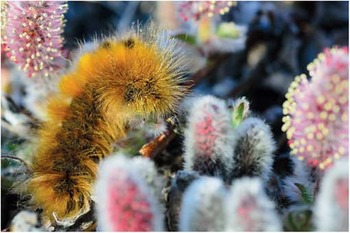
We conducted this study on the coastal plain lowland at Alexandra Fiord (78°53′N, 75°55′W) on the central east coast of Ellesmere Island, Nunavut, Canada. The lowland is well vegetated with a variety of tundra types, including a deciduous dwarf shrub-graminoid plant community covering ~4% of the lowland (Muc et al. Reference Muc, Freedman and Svoboda1989). This plant community is dominated by Arctic willow (S. arctica), a deciduous, dioecious, shrub with a prostrate morphology. Arctic willow is found throughout the Arctic and in Northern Hemisphere alpine tundra (Hulten Reference Hulten1968). Arctic willow is long-lived and reproduces both sexually and vegetatively (Wilson Reference Wilson1964; Steltzer et al. Reference Steltzer, Hufbauer, Welker, Casalis, Sullivan and Chimner2008). The Arctic willows at Alexandra Fiord maintain a large population of Arctic caterpillars (G. groenlandica, see Fig. 1) (Muc et al. Reference Muc, Freedman and Svoboda1989; Morewood Reference Morewood1999) with an average density of two caterpillars per m2 in the Arctic willow dominated plant community (G.H.R.H., personal observation). Arctic caterpillars are long-lived (seven years) and are found in Greenland, the Canadian High Arctic, and recently in southern Yukon, Canada (Morewood and Ring Reference Morewood and Ring1998; Barrio et al. Reference Barrio, Schmidt, Cannings and Hik2013). Each summer the caterpillars moult once and in the final year they metamorphose and reproduce (Morewood and Ring Reference Morewood and Ring1998). Caterpillar activity usually lasts three weeks immediately following snowmelt, after which caterpillars spin silk hibernacula and enter dormancy (Kukal and Kevan Reference Kukal and Kevan1987; Kukal Reference Kukal1995). Researchers have postulated that the short activity duration within growing seasons is to avoid the ichneumonid wasp, H. diechmanni, and the tachinid fly, E. thula (Kukal and Kevan Reference Kukal and Kevan1987; Morewood Reference Morewood1999; Várkonyi and Roslin Reference Várkonyi and Roslin2013) because the Arctic caterpillar hibernaculum protects them from parasitoid oviposition (Morewood Reference Morewood1999). Hyposoter frigidus Lundbeck (Hymenoptera: Ichneumonidae) has been found to use Arctic caterpillars as hosts in the north east of Greenland but has not yet been found at Alexandra Fiord (Várkonyi and Roslin Reference Várkonyi and Roslin2013). The first two instars of Arctic caterpillars are likely consumed by mites and spiders (Kevan and Kukal Reference Kevan and Kukal1993). The moths and pupae of Arctic caterpillars are consumed by birds (Morewood Reference Morewood1999). To our knowledge, H. diechmanni and E. thula are the only natural enemies of the third to seventh instars of Arctic caterpillars at Alexandra Fiord (C.J.G.-G., personal observation).
Hypothesis 1: movement between host plants improves insect herbivore RGR.
An Arctic caterpillar (Gynaephora groenlandica). Photograph: A. Bjorkman.

To address whether the RGR of Arctic caterpillars is affected by movement between willows, we experimentally manipulated the frequency of caterpillar movement. In June 2013, we collected 60 caterpillars (of instars 4–7) that had been active for approximately seven days, and used net bags (made from polyester, with holes of about 1.3 mm2) to contain each caterpillar on a single branch of 60 randomly chosen Arctic willow individuals. For half of these caterpillars (n=30) we physically moved them every four days to 30 new (no prior bagging) randomly chosen willows that were within 10 m of the previous willows, where a new willow individual was defined as any non-contiguous willow patch. These caterpillars were physically moved between willows a total of three times until 6 July 2013, which is the time of year when most caterpillars in the field build their hibernacula. The remaining 30 Arctic caterpillars were kept on their original individual willow plant (stationary treatment) but were physically moved to a new branch if all leaves and flowers on the branch had been eaten. We surveyed branches on the stationary treatment willows every four days to determine whether caterpillars needed to be moved to a new branch. The 30 caterpillars remaining on the original Arctic willow plants were moved between branches on average 1.7 times during the three week period. Caterpillars of differing instars and sizes were randomly assigned to treatments. Due to the need for sufficient replicates, we used all caterpillars available including instars that would undergo metamorphosis. We did not consider the moulting cycle because all caterpillars moulted once during the summer and it was very difficult with the time available to differentiate caterpillars that had or had not moulted.
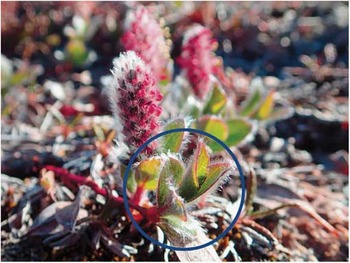
For both experimentally moved and stationary treatments, each contained section of branch had on average five leaf fascicles, where a leaf fascicle was an independent collection of leaves derived from the meristem at the end of branchlets and each leaf fascicle had on average five leaves (see Fig. 2). Willows were chosen in an area of ~100 m by 50 m with the condition that they had to have enough leaves for sufficient feeding and subsequent leaf trait measurements. Leaf traits can differ between the sex of willows (Palo Reference Palo1984; Berg Reference Berg2003), although responses to environmental change has been found to be similar (Jones et al. Reference Jones, MacDonald and Henry1999); therefore, Arctic willow sex was randomly distributed between the treatments and within the replicates for the experimentally moved treatment. Mammalian herbivores (lemmings had a low year in 2013) are rare at Alexandra Fiord (Henry et al. Reference Henry, Freedman and Svoboda1986; G.H.R.H. and C.J.G.-G., personal observation) and so Arctic caterpillars are the main herbivore of Arctic willows. Therefore, we assumed no damage by other herbivores on the willows used in our experiment.
Contained within the circle is an example of a leaf fascicle on a Salix arctica branch. Photograph: G.H.R. Henry.

We measured the mass of each caterpillar at the beginning and end of each four-day foraging bout in order to calculate a single RGR value for each caterpillar (RGR was calculated as fresh mass gain over feeding period/(time of feeding period×average fresh mass over the feeding period), where the feeding period in our study was the length of the experiment (Waldbauer Reference Waldbauer1968; Morewood Reference Morewood1999)). In order to assess the consumption of resources by Arctic caterpillars, we counted the number of leaf fascicles on each netted branch at the beginning and end of each four-day foraging bout, where partially eaten leaf fascicles were quantified as a proportion remaining. We used the leaf fascicle instead of individual leaves as the level of measurement because at the start of the experiment the leaf fascicles were small (essentially at leaf bud break stage), and it was impossible to count individual leaves even though the Arctic caterpillars were still eating these leaf fascicles. To identify changes in leaf quality due to herbivory, we measured plant traits including specific leaf area (SLA), leaf dry matter content (LDMC), and carbon (C) and nitrogen (N) content at the end of the experiment for all willows used in the experimentally moved and stationary treatments. Undamaged leaves were collected between 4 July and 11 July 2013, and replicates for both treatments were randomly distributed between days to account for any phenological changes between collection days. We estimated SLA and LDMC by weighing five leaves from each experimental willow to obtain the fresh mass (g), digitally scanned them and measured the leaf area (mm2) using ImageJ (Version 1.46r) (Abràmoff et al. Reference Abràmoff, Magalhães and Ram2004), and oven-dried them at 60 °C for 72 hours to obtain the dry mass (mg) (Cornelissen et al. Reference Cornelissen, Lavorel, Garnier, Díaz, Buchmann and Gurvich2003). We calculated SLA as leaf area/dry mass and LDMC as dry mass/fresh mass for each plant (Cornelissen et al. Reference Cornelissen, Lavorel, Garnier, Díaz, Buchmann and Gurvich2003). To measure total C and N content we used the same oven-dried leaves for SLA and LDMC. We ground these leaves using a ball mill (SPEX SamplePrep Mixer/Mill 8000D, Metuchen, New Jersey, United States of America) and analysed subsamples on an elemental analyser (NC 2500 Carlo-Erba, Milan, Italy). Because Arctic caterpillars were observed in the field eating Arctic willow leaf petioles, we included the petioles in the ground samples.
We used t-tests comparing experimentally moved and stationary caterpillars to establish the effect of experimental movement on RGR, herbivory rate, and on the proportion of available leaf fascicles eaten. We defined herbivory rate as the average number of leaf fascicles eaten per day over the length of the experiment. The proportion of available leaf fascicles eaten over the experiment was used to account for the differing amounts of leaf fascicles between treatments. Even though the number of leaf fascicles differed between treatments, we still compared herbivory rate between treatments with a t-test and used herbivory rate in our correlation analysis (see below) because the average number of leaf fascicles eaten per day may be important to RGR. Next, we used separate t-tests to examine whether there were any differences in SLA, LDMC, C:N, and C and N content for willows where caterpillars had been experimentally moved or remained in place. Finally, we calculated Pearson’s correlation coefficients (r) to identify associations between SLA, LDMC, C:N, C and N content, herbivory rate and RGR. Using one-way analysis of variances (ANOVAs) with the main effect of date collected, we found no difference in leaf traits from earlier and later willows used in the experimentally moved treatment. Therefore, we used the average SLA, LDMC, C:N, C and N content for each experimentally moved treatment replicate (four willows in each replicate) in the correlation analyses. The same variables for each stationary treatment willow replicate (one willow for each replicate) were used in the correlations. Because the nitrogen content exhibited a strong negative correlation with C:N (r=−0.980, P<0.001), we retained only C:N and C for further analysis.
Hypothesis 2: movement of insect herbivores between host plants reduces natural enemy encounters.
We estimated parasitoid abundances close to the Arctic caterpillars that had their movement experimentally manipulated to establish whether movement reduces parasitoid encounters. During June 2013, we placed one sticky trap (7.6 cm by 12.7 cm, 10 cm aboveground and within 5 cm of the net bag) each next to nine randomly chosen experimentally moved caterpillars and nine randomly chosen stationary caterpillars. From 17 June to 11 July these sticky traps were replaced every two to three days and were moved to follow the caterpillars. There were so few E. thula that we concentrated on H. diechmanni, identifying them to genus. At Alexandra Fiord, H. diechmanni is the only Hyposoter Förster species that uses Arctic caterpillars as hosts; therefore, we assumed all identified Hyposoter to be H. diechmanni. We used abundances on the sticky traps as a proxy for the number of encounters, after successful use of sticky traps by Puckett et al. (Reference Puckett, Calixto, Barr and Harris2007) to quantify the attraction of Pseudacteon Coquillett (Diptera: Phoridae), to Solenopsis saevissima (Smith) (Hymenoptera: Formicidae) middens, and by Rodriguez-Cabal et al. (Reference Rodriguez-Cabal, Barrios-Garcia, Amico, Aizen and Sanders2013) to quantify wasps attempting to consume fruit of Aristotelia chilensis (Molina) Stuntz (Elaeocarpaceae).
To establish whether the experimental movement of caterpillars affected the numbers of parasitoids caught (encounters), we used a generalised linear model using a Poisson distribution with a log link function followed by a χ2 test. Using the pscl package (R Core Team 2012), we determined that the above model was adequate to deal with zero-inflation of count data (Jackman Reference Jackman2015).
All analyses were done using R (R Core Team 2012) and figures were produced using ggplot2 (Wickham Reference Wickham2009). Data were transformed where necessary to improve normality, reduce heteroscedasticity, and to meet assumptions of all analyses. We did not use Bonferroni’s corrections for multiple comparisons because this would inflate the probability of committing type II errors (Ellison and Gotelli Reference Ellison and Gotelli2004). Our data are available to download from the Polar Data Catalogue (www.polardata.ca) (Greyson-Gaito et al. Reference Greyson-Gaito, Barbour, Rodriguez-Cabal, Crutsinger and Henry2015).
Results
Hypothesis 1: Movement between host plants improves insect herbivore RGR.
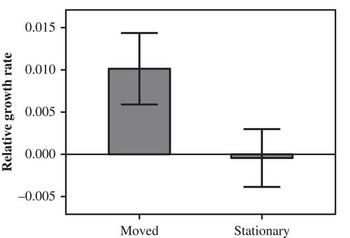
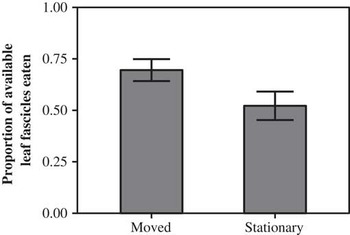
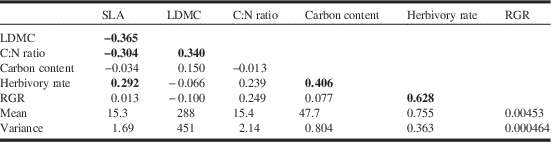
We found that Arctic caterpillars that were experimentally moved between Arctic willows throughout their activity period had positive growth whereas the stationary caterpillars had negative growth (t 57=2.090, P=0.041, moved n=30, stationary n=29, Fig. 3). In addition, herbivory rate was 66% higher for experimentally moved caterpillars (t 56=2.924, P=0.005, moved n=29, stationary n=29), and the proportion of available leaf fascicles eaten was 33% higher for experimentally moved caterpillars (t 54=2.040, P=0.046, moved n=27, stationary n=29, Fig. 4). Herbivory rate and RGR were positively correlated (r=0.628, P<0.001, Table 1).
Relative growth rate of experimentally moved and stationary Arctic caterpillars (P=0.041, moved n=30, stationary n=29). Means±SE.

Proportion of available leaf fascicles eaten by experimentally moved and stationary Arctic caterpillars (P=0.046, moved n=27, stationary n=29). Means±SE.

Pearson’s correlation coefficients with significant correlations in bold between SLA (mm2 mg−1), LDMC (mg g−1), C:N ratio, carbon content (%), amount of leaf fascicles eaten per day (herbivory rate), and relative growth rate (RGR) for each replicate where SLA, LDMC, C:N ratio, and carbon content are average values of all four plants used in each experimentally moved treatment replicate (n=30).
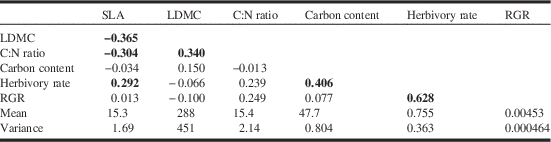
Notes: Overall means and variances are given for each variable. Leaves for plant trait analyses were collected after the period of Arctic caterpillar activity (leaves were collected between 4 and 11 July 2013).
SLA, specific leaf area; LDMC, leaf dry matter content.
We found slight differences in host plant characteristics between experimentally moved and stationary treatments, though trait differences were not correlated with higher RGR observed in experimentally moved caterpillars. Specific leaf area was 4% higher in stationary treatment willows (t 145=−1.971, P=0.051, moved n=118, stationary n=29), while LDMC was marginally lower (−4%) (t 144=1.897, P=0.060, moved n=117, stationary n=29). Willows subjected to the experimental movement treatment had marginally higher C content by ~1% (t 72=1.938, P=0.057, moved n=59, stationary n=15). We did not find a difference in C:N (t 72=0.676, P=0.501, moved n=59, stationary n=15) between treatments. No plant trait we measured was correlated with RGR, but both SLA and C content were positively correlated with herbivory rate (r=0.292, P=0.025 and r=0.406, P=0.001 respectively) (see Table 1 for all correlations).
Hypothesis 2: Movement of insect herbivores between host plants reduces natural enemy encounters.
We found no difference in the number of Hyposoter individuals caught on sticky traps adjacent to experimentally moved (two found) and stationary (one found) caterpillars (treatment: χ2=0.340, P=0.560, n=18). We caught the first Hyposoter on about 1 July.
Discussion
We found that Arctic caterpillars benefited from being experimentally moved between host plant individuals because experimentally moved caterpillars experienced higher growth rates and herbivory rates compared to stationary individuals. Our results were likely driven by the fact that experimental movement to a new host plant resulted in access to higher quality forage, allowing greater total herbivory and higher growth rates. Aside from differences in resource availability, we found minimal qualitative differences in the measured plant traits between willows subjected to the two treatments that would explain these results. However, we did not perform a comprehensive survey of willow characteristics, such as secondary metabolites, and, therefore, we cannot rule out other changes in willow quality with caterpillar damage or within plant quality differences that could produce this pattern.
Our results suggest that growth rate in Arctic caterpillars was positively affected by experimental movement. Previous observational surveys of caterpillar movement and foraging have found that caterpillars move randomly feeding opportunistically (Dethier Reference Dethier1989; Singer and Stireman Reference Singer and Stireman2001); however, no other study to our knowledge has experimentally moved an insect herbivore, whether specialist or generalist, from plant to plant. Other complimentary methods have been performed, and similar responses in growth rate were found (Cruz-Rivera and Hay Reference Cruz-Rivera and Hay2001; Mody et al. Reference Mody, Unsicker and Linsenmair2007; Karban et al. Reference Karban, Karban, Huntzinger, Pearse and Crutsinger2010). For example, the growth rate of Ampithoe longimana Smith (Amphipoda: Ampithoidae), a generalist amphipod, was enhanced when provided with an alternating diet of high-quality and low-quality algae species or a mixture of algal species, compared to amphipods consuming single algal species (Cruz-Rivera and Hay Reference Cruz-Rivera and Hay2001). Comparing interspecific (e.g., Cruz-Rivera and Hay Reference Cruz-Rivera and Hay2001) and intraspecific (our study) plant quality is difficult. However, the specialist caterpillar Chrysopsyche imparilis Aurivillius (Lepidoptera: Lasiocampidae) also had an improved growth rate when provided with a diet from several plants of the same species compared to a diet containing a single plant (Mody et al. Reference Mody, Unsicker and Linsenmair2007).
The higher herbivory rate by experimentally moved caterpillars likely supported the higher growth rates as suggested by the strong correlation between these two variables. Higher herbivory rates do not always promote greater RGRs, for example when insects consume more due to low quality resources (Flores et al. Reference Flores, Larrañaga and Elosegi2014). This compensation behaviour could explain the greater proportion of available eaten leaf fascicles consumed by experimentally moved caterpillars, where stationary caterpillars possibly had higher quality leaves to eat and so did not have to compensate. However, the negative growth rate exhibited by the stationary caterpillars suggests otherwise. The negative growth rate of stationary caterpillars was likely caused by a combination of fewer available leaf fascicles (on average experimentally moved caterpillars had 19 leaf fascicles and stationary caterpillars had 14) and reduced proportion of available leaf fascicles eaten. An alternative explanation could be an experimental artefact, whereby the food exhaustion frequency is higher for the stationary caterpillars. However, the proportion of available eaten leaf fascicles does not support this because lower proportions were found for the stationary caterpillars. Instead, herbivory by stationary caterpillars may have adversely affected leaf quality, causing the stationary caterpillars to eat less of a browsed willow. Because experimentally moved caterpillars were placed on a new willow with relatively little herbivory two more times than stationary caterpillars, they may have been less affected by this herbivory consequence and so could consume more forage available to them. If the stationary caterpillars can consume only lower quality leaves, then RGR would be reduced. We did find that SLA, LDMC, and C content differed between willows subjected to the experimentally moved and stationary treatments; however, none of these traits were associated with the observed increases in RGR. This runs counter to our prediction that movement allows Arctic caterpillars to access new willows with higher quality leaves. However, we did not measure other plant traits, including secondary metabolites, which could cause reduction in consumption or growth. In general, studies have shown that induced responses of plants result in reduced herbivore performance and preference (Agrawal Reference Agrawal1999; Van Dam et al. Reference Van Dam, Hadwich and Baldwin2000; Nykänen and Koricheva Reference Nykänen and Koricheva2004). Specifically in Arctic willow, the catechin concentration increased after simulated herbivory causing a reduction in consumption rate by collared lemmings (Dicrostonyx groenlandicus (Traill); Rodentia: Cricetidae) (Berg Reference Berg2003).
An alternative but not mutually exclusive hypothesis to explain the differences in RGR is within plant quality differences not caused by induced quality changes. Caterpillars and other insects can exhibit preference between leaves with differing quality on a plant individual (Gutbrodt et al. Reference Gutbrodt, Dorn, Unsicker and Mody2012; Johns et al. Reference Johns, Ozaki and Tobita2012). Arctic caterpillars may forage first on the higher quality leaves on a single Arctic willow and either stop eating or continue to eat the lower quality leaves. Experimentally moved caterpillars would likely have had greater access to higher quality leaves compared to stationary caterpillars allowing greater RGR. Further research would be required to examine the effects of within plant quality differences on RGR and to differentiate induced plant quality changes from within plant quality differences. Seemingly, Arctic caterpillars move to access new foliage, but a more comprehensive survey of plant traits between and within individuals is required to ascertain exactly what promotes leaving one willow and choosing another.
Presently, due to problems with our experimental design, it is difficult to conclude whether Arctic caterpillar movement reduces parasitoid encounters during the short overlap of activity of the Arctic caterpillar and its parasitoids. Induced volatile compounds have been found in Salix exigua Nuttall and Salix lemmonii Bebb (Pearse et al. Reference Pearse, Hughes, Shiojiri, Ishizaki and Karban2013); thus, volatile compounds that attract parasitoids may be found in Arctic willow. Volatile compounds attractive to herbivore predators are often released from damaged plants shortly after and sometimes within minutes of the damage (Kessler Reference Kessler2001). If the parasitoids of Arctic caterpillars use chemical detection of herbivory, the parasitoids could still detect caterpillars regardless of experimentally moving the caterpillars every four days. Alternatively, the parasitoids of Arctic caterpillars may use visual detection of the caterpillar or herbivory damage (Morehead and Feener Reference Morehead and Feener2000). If this were the case the net bags may prevent visual detection. Therefore, we acknowledge that our experimental design may be limiting our ability to identify the benefits of movement for parasitoid avoidance. However, the parasitoids of the Arctic caterpillar emerge just before the caterpillars cease activity (Kukal and Kevan Reference Kukal and Kevan1987). Thus, for the majority of their active period Arctic caterpillars are moving between willows for reasons other than immediate parasitoid avoidance.
Insects in the Arctic are under great abiotic pressure from sub-zero temperatures and short growing seasons (Strathdee and Bale Reference Strathdee and Bale1998). For Arctic caterpillars, growing seasons are further shortened in order to avoid parasitoids (Kukal and Kevan Reference Kukal and Kevan1987). In this short period of activity larvae must forage, moult, and grow. Arctic caterpillars that were experimentally moved between Arctic willows quite clearly benefited in terms of resource acquisition. The exact mechanism causing decreased consumption by stationary caterpillars is unclear, but other non-measured induced responses or within plant quality differences could be the cause. Future research would, therefore, need to evaluate the role of induced responses, such as the secondary metabolite catechin, and within plant quality differences on the movement of Arctic caterpillars. An observational study of Arctic caterpillar movements would add important information including Arctic caterpillar foraging choices between and within Arctic willows. Our study adds to the present literature on bottom–up and top–down control in ecosystems (including Denno et al. Reference Denno, Gratton, Peterson, Langellotto, Finke and Huberty2002; Gruner Reference Gruner2004) with the insight of bottom–up control likely being dominant over top–down control on the movement of Arctic caterpillars.
Acknowledgements
Thanks to the members of the Schuur, Crutsinger, and Henry laboratories for their continued comments and support. Thanks also to the anonymous reviewers for their comments. D. Morewood helped with understanding the natural history of Arctic caterpillars and K. Needham helped in the identification of the parasitoids of Arctic caterpillars. Thanks goes to the Royal Canadian Mounted Police for the use of their buildings at Alexandra Fiord. Logistical support was provided by the Polar Continental Shelf Program, Natural Resources Canada. Financial support was provided by grants to G.H.R.H. from Natural Sciences and Engineering Research Council of Canada, ArcticNet, and the Northern Scientific Training Program, Aboriginal Affairs, and Northern Development Canada.