Throughout the developing world, governments struggle to navigate between shrinking budgets and expanding demands on crumbling public services. Just as these developments augur substantial consequences for public welfare and notions of citizenship, they also offer opportunities for political parties and social movements to mobilize support by providing services the state is unwilling or unable to deliver. When social welfare becomes “a terrain of political contestation” can parties use social-service provision to generate an electoral advantage? Footnote 1 If so, what are the nature of the linkages connecting social-service provider and voter?
Briefly, I argue that social-service provision can credibly affiliate the provider organization with the traits of competence, honesty, and approachability. In conditions where information about parties is poor or contradictory—such as during periods of non-democratic rule and during founding elections—these impressions can powerfully influence citizens’ vote choice. Citizens, in short, do not exit these facilities feeling an obligation to repay the provider organization with a vote at the ballot box, nor do they use the experience to identify those parties most likely to advance a basket of policies that is most copacetic to their preferences. Instead, they walk out of these facilities convinced that the compassionate, professional, and honest care they have just received is a harbinger for how the provider organization might behave in government.
I use qualitative and experimental evidence drawn from the study of the Egyptian Muslim Brotherhood to examine this causal mechanism. Interviews with Islamist medical providers and site visits, along with historical and internal managerial documents show how the Muslim Brotherhood produces such a high-quality atmosphere in their medical initiatives. Then, to probe the causal process connecting this provision to attitudinal change, I introduce an original survey experiment of 2,483 Egyptians conducted in May 2014. The survey primed a randomly-selected subgroup of Egyptians with basic factual information about either the Muslim Brotherhood’s or the Ministry of Health’s medical activity. Respondents in the treatment group are significantly more likely to consider voting for the Brotherhood in elections, and also more likely to rate Brotherhood candidates higher on their honesty, competence, and approachability. A causal mediation analysis, as well as respondents’ brief descriptions of the atmosphere at Brotherhood medical facilities provide further support for the idea that social service provision influences citizens to vote for the Muslim Brotherhood’s candidates because they want to, not because they feel they have to.
Not only do I extend the study of social movement and political party interactions beyond democratic contexts, by showing how the work of a social movement forges visceral, reputation-based linkages with voters, I specify the conditions under which social movements influence elections. Footnote 2 One of the most lively research agendas under this umbrella concerns the relationship between social-service provision and electoral mobilization, and in particular, the effect of this activity on a party’s broader political fortunes. Footnote 3 By using a novel survey experiment to identify the reputation-based linkage between social-service providers and citizens, I develop the micro-level side of this literature.
For decades Islamist parties have arguably been the Middle East’s most consequent political actors, notching victories under stultifying autocracies and running off strings of electoral triumphs in the regions’ founding elections. There has been increasing interest in expanding beyond ideological and cultural arguments to uncover the generalizable mechanisms that produce this “Islamist Advantage.” Footnote 4 I contribute to this literature by showing how professional and businesslike social-service provision—rather than ideological indoctrination or lockstep organizational discipline—generates powerful reputation-based linkages with voters. One implication of this finding is that any type of provider organization—not just and Islamist one—could reap a similar political advantage from this style of social-service provision.
Understanding social-service provision’s integral role in mobilizing political support for the Brotherhood also helps understand Egypt’s recent political history. For decades the Muslim Brotherhood was unique among Egypt’s opposition parties for their ability to send larger and larger handfuls of candidates to Egypt’s authoritarian parliament. Footnote 5 The Brotherhood’s electoral momentum grew as Egyptians flooded the country’s streets and squares, sending the country on an unsteady period of political liberalization. From 2011 to 2013 the Muslim Brotherhood dominated politics, winning elections for parliamentary seats and presidential office, and mustering the popular support to push through constitutional referendums. In July of 2013 Egypt’s military dislodged the Brotherhood and seized control of the country, inaugurating a sweeping campaign of state violence. In addition to mass killings and widespread torture and imprisonment, the regime has also shuttered and seized thousands of the Brotherhood’s social institutions in an attempt to strip the group of the mechanisms which, for decades, served to connect them with average Egyptians.
In what follows I highlight the relevant literatures on social-service provision, party-movement relations, and Islamist politics, then articulate a theory focusing on how social-service provision helps voters make inferences about candidates when alternative sources are limited. I then examine the theory with a combination of both qualitative and experimental evidence. Interviews with providers and site visits illustrate how the Muslim Brotherhood is able to produce technically competent and relationally enjoyable care in their medical services. A priming experiment demonstrates how this care is translated into electoral support, and additional evidence drawn from the survey instrument both provides additional context for the hypothesized mechanism and increases confidence in the results. A conclusion highlights the key implications of the study and suggests extensions for future research.
Social Service Provision and Voter Linkages: Who Gets Served?
Throughout the developing world, governments struggle to navigate between shrinking budgets and expanding demands on crumbling public services. Just as these developments augur substantial consequences for public welfare and notions of citizenship, they also offer opportunities for political parties and social movements to mobilize support by providing services the state is unwilling or unable to provide. Footnote 6 When is such a strategy successful? And what is the nature of the linkages that social-service provision generates between party and voter?
There is a recent and growing literature in comparative politics that attempts to apprehend how and why social-service provision can generate electoral mobilization. Tariq Thachil argues that social-service provision allowed the upper-class Bharatiya Janata Party (BJP) to attract the support of poor Indians who would otherwise be hostile to the party’s pro-growth economic agenda. As he shows, this strategy won the support of those less-affluent voters by building “voluntary goodwill” for the BJP’s social service efforts. Footnote 7 Tarek Masoud’s intricate examination finds that, in the post-Mubarak period, Islamist groups’ network of mosque-based social institutions demonstrated their commitment to redistributive economic policies and thus helped them attract the support of poorer segments of the electorate. Footnote 8 In Indonesia, social-service provision allowed the Prosperous Justice Party (PKS) to grow their electoral coalition to include the support of “poorer communities neglected by the government,” particularly those outside of the group’s urban core. Footnote 9 And Melani Cammett’s investigation of non-state social-service providers in Lebanon shows how an organization’s tendency to prioritize electoral competition will incentivize them to provide social services to citizens outside their ethnic community in an attempt to reach out to new voting blocs. Footnote 10
This literature tends to align on two general conclusions. First, they all help demonstrate the ways that social movement activism can help political parties expand and stabilize their electoral coalitions, enriching prior work on social movement-political party activism in early Europe, Footnote 11 Latin America, Footnote 12 and Africa. Footnote 13 And while they each offer different mechanisms, this new literature on social service provision generally emphasizes the disproportionate ability of this outreach strategy to mobilize the poor. Footnote 14 Thachil explains why this is so: “The key to creating such appeal lies in ensuring that welfare chapters affect a large number of poor voters for comparatively low expense, thereby allowing the party to circumvent more costly redistributive strategies for appealing to the vote-rich poor.” Footnote 15 While the mentioned authors explicitly distance their mechanisms from the quid pro-quo exchange of clientelism, on this point they support a key conclusion from that literature: the poor offer the greatest “bang for the buck” for the resource-maximizing political machine. Footnote 16
The Muslim Brotherhood is perhaps the preeminent example of an organization that blends social service provision and electoral success. But more closely examining key characteristics of these groups suggests limits to the explanatory power of the proposed theories. First, while the provided cases all fall into a universe of more or less democratic competition, Islamist groups’ successes across the Arab world have been lodged under monarchies, single-party hegemonies, and military-backed autocracies. Second, Islamic groups’ social-service networks tend to be a nearly-exclusive preserve of the middle class. Janine Clark’s seminal analysis of these institutions in Egypt, Jordan, and Yemen shows how providers must navigate an extensive bureaucracy to obtain permits, seek out real estate and building materials, and leverage their contacts to hire competent staff (to say nothing of having the free time to undertake these endeavors). Middle-class networks are a necessary resource for successful completion of these tasks, which serves to give a disproportionate middle-class tint to these institutions. As she summarized, “Islamic social institutions are run by and for the middle class—this process not only neglects the poor, it often comes at the expense of the poor.” Footnote 17 Likewise, Carrie Wickham shows how the Muslim Brotherhood were able to build a vibrant, middle-class social movement by leveraging a “parallel Islamic sector” of Islamic social institutions, mosques, and businesses. Footnote 18
If social-service provision usually works by mobilizing the poor, how were Islamist groups able to generate political mobilization with a network of social services grounded in the middle class? Are the linkages that social-service provision generates with the middle class qualitatively different than those that obtain where the beneficiaries are poorer? Understanding the connection between social-service provision and Islamist political support is more than an abstract theoretical question: it helps make sense of the Egyptian government’s post-2013 crackdown on the Brotherhood’s network of social-service institutions. Since the military coup, Egypt’s new rulers have shuttered and seized thousands of the Brotherhood’s schools, hospitals, and social institutions, in the process risking social upheaval as Egypt’s citizenry is forced to cope with the sudden loss of services upon which they relied for so long. Footnote 19 As one Egyptian lamented after the regime seized the Brotherhood’s facilities, “the government neither provides us with hospitals suitable for human beings, nor do they allow the hospitals that treat us well to continue operating!” Footnote 20 By uncovering the linkage between social-service provision and political mobilization, the regime’s motivation for pursing this strategy emerges in stark relief.
Uncertainty, Social Service Provision, and Party Brand
For citizens living in non-democratic regimes and navigating the tumult of founding elections, reliable information about parties and candidates is in short supply. Non-democratic regimes take proactive steps to ensure this is the case by erecting barriers for opposition campaign rallies, shutting down media outlets, and arresting politicians and organizers. Footnote 21 And by their very nature these regimes circumscribe the ability of opposition parties to use performance in government to signal competence, further robbing voters of valuable cues they would otherwise use when deciding how to apportion electoral support. Instead of mollifying this uncertainty, the onset of competitive elections tends to magnify it; the proliferation of new parties and explosion of campaigning smothers the signal under a wave of noise.
Parties who can cut through this uncertainty and quickly communicate key ideas to voters can gain a crucial advantage over their competitors. Thomas Pepinsky and his co-authors show that when individuals are unsure about policy—in particular economic—issues, a party’s “Islamic” identity exercises a significant influence over how citizens vote. “Uncertainty,” they summarize, “plays a critical role in shaping the electoral fortunes of Islamic parties.” Footnote 22 Tarek Masoud’s aforementioned study fits into a similar vein: he finds that citizens who are embedded in Islamic associations associate Islamic parties with redistributive economic policies. Footnote 23 But instead of these calculated programmatic linkages, I focus on how citizens traverse the “fuzzy and permeable boundary” between political party and social movement Footnote 24 by drawing from their exposure to social-service provision to forge more visceral and impressionistic linkages with politicians.
Social-service provision can do more than just give the provider organization a prominent place to meet the voters. Footnote 25 Building on research from American politics, I argue that well-run social-service networks allow the provider organization to generate and credibly broadcast the politically valuable traits of competency, trustworthiness, and approachability, forming reputation-based connections with an electorate struggling to navigate uncertainty. By associating a party “with some goal or state or symbol that is positively or negatively valued (by the electorate),” social-service provision helps a party establish its brand. Footnote 26 Based on a series of experiments, Daniel Butler and Eleanor Powell argue that these valence issues have “an impact on constituents’ vote choice that is comparable or even bigger than other important factors (such as economic and ideological factors) and at the same time is easier to influence.” Footnote 27
Where do these traits come from? In American politics, “trait ownership” theory suggests that impressions about candidates “are created and reinforced by issue ownership campaigning.” Footnote 28 In other words, people infer traits from a party’s stance on programmatic issues. But where political issues are either not up for debate or when party platforms are in a state of extreme flux, it is the “observable qualities” of the provider that help communicate such basic impressions as competence and honesty. Footnote 29 And various research points to the powerful influence of impressions of candidates over an individuals’ vote choice, mirroring the findings of the literature on valence. Footnote 30 By tying into the routine of daily life—receiving needed medicine, obtaining a short-term loan, obtaining child care—social-service providers have a unique opportunity to credibly communicate these impressions directly to citizens.
Social-service provision offers a sturdy basis upon which voters can make inferences about what a party stands for, and as such can generate a potent political effect when information about parties and their platforms is conflicting or hard to come by. When the provider organization can generate fair, consistent, and interpersonally enjoyable care they are able to credibly communicate traits of honesty, competence, and approachability to voters.
A Reputation for Quality
How can the provider organization ensure that the quality of its social services is sufficient to distinguish them from competing providers? A school that lacks supplies and competent teachers, or a medical facility with deteriorating equipment and unqualified doctors will fail to communicate desirable traits to voters (and under certain circumstances it may do the opposite). The key is resources: a provider organization may aim for high quality, but without a stream of steady and predictable revenue, this attempt is likely to fail. And the simplest way to generate this revenue stream is to base social service provision on paying customers rather than destitute supplicants.
Directing care at a paying middle-class audience generates a key advantage in producing the proposed reputational effect. Most visibly, it allows providers to distance themselves (conceptually, if not always concretely) from the “dirty river” of politics. Footnote 31 This allows the provider organization to capture diffuse benefits of the provision—namely affiliating them with the traits discussed earlier—but retain the image of being above the fray of politics (it would be hard, for example, to communicate an image of compassion and professionalism when refusing service to supporters of one’s political opponents). Such a studied ambiguity appears in the local service provision networks of Turkish Justice and Development Party (AKP). “Whether or not the activists provided services in the name of the party,” Jenny White writes, “it was known that they were party members and credit for their neighborly assistance was informally attributed to the party.” Footnote 32
Explicitly counterpoising social service provision to clientelism helps reach blocs of supporters who would otherwise be alienated by a facility run in a baldly-politicized manner. Footnote 33 In practical terms, this means that the focus on contingency and monitoring that is foundational to clientelist exchange is less prevalent in this reputation-based pathway. Footnote 34 Because this mechanism works by shifting underlying preferences rather than by explicit behavior, there is no monitoring of recipient behavior, nor is there a threat that, should recipients defect in the voting booth, “they would be cut off from the flow of minor payoffs in the future.” Footnote 35 In fact, a social-service provider that can effectively tie its own hands—to credibly commit not to revoke provision if political support wanes—can reap powerful rewards. As Melani Cammett and Sukriti Issar summarize, in the case of Lebanon, “high-fixed-cost projects, embodied in physical structures, equipment, and regular personnel, show a party’s willingness to invest in a community, rendering out-group service provision all the more surprising and meaningful.” Footnote 36
This does not mean that parties could not use social-service provision to generate political support in a more instrumentalist fashion—as the earlier section noted, parties in a variety of country contexts do exactly this. Egypt’s non-Islamist parties are no different. Consider this dispatch from the official newspaper of the Hizb al-Wafd, one of Egypt’s other opposition parties, describing a campaign rally in Suez governorate:
Doctor al-Sayyid Badawi, head of the Wafd Party, confirmed that throughout the past years the party’s social role has been no less beneficial to the people than the party’s political role. He pointed to the tens of thousands of citizens who found in the party’s clinics free medical exams by well-regarded professors of medicine, free surgical procedures in the best hospitals, and the distribution of numerous medicines, all free of charge. Footnote 37
But this activity targets the poor, offering free care (which the article emphasized three times in one sentence), in the hope of triggering a recipient’s sense of reciprocity on election day. Footnote 38 And while this tactic can work, it rests on a different linkage between party and voter than the reputational one proposed here.
There are two reasons why an organization or party would struggle to trigger a reputation-based effect among poor voters. First, because the service itself would not be self-sustaining, the provider would be forced to access considerable external revenue streams to provide such wide-ranging and high-quality care. Prior scholars have argued that this subtly advantages ideological actors, who can rely on the free labor of committed activists, such as members of a religious organization committed to service. Footnote 39 But even if activists could be corralled or wealthy patrons secured, the quality of the facilities would likely still be rudimentary and insufficient to generate the specific reputational linkage. Tariq Thachil, for instance, notes how the “very basic standard of services offered by the [BJP’s movement affiliate] is that such services are appealing only in areas where even basic public provisioning is absent, and even then only to those voters who cannot pay to obtain these services privately.” Footnote 40
Even if a party has access to a revenue stream that allowed them to provide such high-quality care to poor citizens, those citizens would likely have to vote against their immediate economic interests in order to produce a political effect for the provider organization. While these poor citizens may want to vote based on the reputation of the provider organization, to do so would require them to defect from the clientelist networks in which they are embedded, and thus risk access to the immediate material resources upon which they tend to be dependent. Footnote 41 This dilemma will be particularly acute in non-democracies, where the regime exploits its resource advantage to proliferate robust clientelist networks that disproportionately enroll poorer citizens. Footnote 42
Especially to the middle class, then, social-service provision allows the provider organization to broadcast politically-valuable traits of competence, honesty, and approachability, generating linkages with citizens in less than democratic regimes and helping voters cut through the noise of founding elections. I will now use the Egyptian Muslim Brotherhood’s network of medical service provision to assess the theory. After explaining this particular selection, I present a variety of evidence drawn from historical materials and fieldwork to show how the Brotherhood was able to generate and maintain consistently high quality services. The final sections turn to an original survey experiment which explicitly traces the reputation-based causal mechanism connecting social-service provision to political support.
Why the Egyptian Muslim Brotherhood? And Why Medicine?
While parties and organizations across the globe blend social-service provision and electoral mobilization, Islamist parties are perhaps the most prominent case of the phenomenon. In a perceptive review article, Melani Cammett and Pauline Jones-Luong attempt to excavate the micro-level relationship between Islamists’ social-service provision and uncommonly successful efforts at political mobilization. They theorize that Islamists benefit from the tripartite interaction between religious identity, organizational power, and networks of social-service provision. These factors combine to generate a reputation for competence and good governance that distinguishes Islamists from a crowded group of competitors. Footnote 43 Yet these authors do not empirically test the relationship, nor specify the conditions under which it obtains.
In Egypt the Islamist movement couples its most extensive network of social-service provision with a history of electoral participation. Muslim Brotherhood-affiliated candidates have competed in each Egyptian parliamentary election since 1976 (the Brotherhood, along with other opposition parties, boycotted in 1990). This authoritarian-era electoral success peaked in 2005, when the group sent 88 deputies to parliament, by far the best showing of Egypt’s opposition parties. The run of success continued following Mubarak’s departure as the group successfully campaigned for the passage of a constitutional referendum in March 2011 and won pluralities in the 2011 elections for the lower house and in the 2012 elections for the upper house of parliament. In the Summer of 2012 longtime Muslim Brotherhood activist Mohammed Morsi won Egypt’s first democratic presidential elections, and in the winter of 2012–2013 the group pushed through a new constitution in a contentious nationwide referendum.
Running in tandem with this history of electoral success, some allege that the Egyptian Muslim Brotherhood also operates a network of social services so vast as to be an “alternative” to the state Footnote 44 or a “state within a state.” Footnote 45 Nancy Davis and Robert Robinson describe “a massive decentralized network of mosques, religious schools, clinics and hospitals, Islamic banks, textile factories, day care centers, youth clubs, social welfare agencies, services for the unemployed, and legal aid agencies.” Footnote 46 This network, Sheri Berman tells us, gives Islamists “essentially unlimited pathways through which to build linkages to ordinary citizens.” Footnote 47
To gain specific analytical traction on the linkage between electoral success and social-service provision, I focus specifically on the Egyptian Muslim Brotherhood’s medical efforts. I examine medical services—rather than some other social service initiative—for four reasons. First, despite the above claims, there has been surprisingly little empirical research into the Brotherhood’s network of social services. Crucial and basic details—how many people are served, how these services function, their history—have been “presumed rather than demonstrated.” Footnote 48 Thus in addition to general theoretical insights about social-service provision and electoral mobilization, an in-depth investigation of the Brotherhood’s medical networks marks an independent empirical contribution to the study of the Egyptian Muslim Brotherhood, one of the most prominent actors in today’s Middle East.
Secondly, medical services are the Brotherhood’s oldest and largest social services, dating back to the group’s founding in the interwar period. Footnote 49 In the late 1970s after the Brotherhood emerged from Nasser’s prisons, senior Brotherhood figure Ahmed al-Malt founded the Islamic Medical Association (IMA) as one of the first, post-Nasser organized initiatives of the Muslim Brotherhood. Footnote 50 Since that date, the group’s medical initiatives have expanded to the point where they were benefitting nearly 2 million Egyptians annually at the time of the July 2013 military coup. Footnote 51
Third, medical initiatives are nearly universal in their appeal. Other types of social services would either target some specific subset of the population (a food bank would cater primarily to the poor, wedding services for young people, or employment services to those in the job market, for instance) or risk introducing confounding variables. Educational services and Quranic study circles, for instance, not only risk some background selection process (for instance, only Egyptians with a pre-existing degree of piety might attend a Quranic study circle or send their children to a religious school), but these types of services may also generate powerful socialization effects that potentially complicate experimental attempts to isolate the causal pathway. Orienting the study around sickness and health—concepts to which every citizen can relate—maximizes the relevance of the investigation. Footnote 52 But as I note later, it suggests potential scope conditions on the theory and areas for further research.
Finally, examining medical provision rather than some other social service eases comparisons with prior work that has examined non-state medical provision in Egypt and elsewhere. Footnote 53
I now turn to the evidence, introducing a variety original qualitative material, including interviews with Muslim Brotherhood service providers as well as archival sources, to illustrate how the group’s social services convey this image of professionalism and approachability. In addition to motivating and contextualizing the experimental evidence that follows, this provides insights into why other, non-Islamist parties were unable to use their social-service provision to generate this reputational effect.
Generating a Reputational Advantage
Two themes emerge from historical and contemporaneous materials related to the Islamic Medical Association: the importance of providing high-quality and compassionate care on one hand, and the focus on a paying customer base, on the other. For instance, the IMA’s founder Ahmed al-Malt noted in a 1978 article in the Brotherhood’s al-D’awa magazine that the IMA would serve as a third option for those Egyptians caught between a hollowed-out public health system and an out of reach private one, providing “reliable care without exploiting the patient.” Footnote 54 In his memoirs al-Malt elaborated:
We [the IMA] can say to the people “we are able to provide dignity for those who cannot bear standing in line at a public hospital only to receive substandard care, or who cannot go to a private hospital because they lack the ability to pay … At the IMA we have Muslim doctors who work for Allah’s pleasure, with solid qualifications, who respect the rights of the patient and are sensitive to that patient’s ability to pay.” Footnote 55
Abdul Moneim Abu El-Fotouh, a one-time presidential candidate and former member of the Muslim Brotherhood, who also served as the IMA’s president during the Mubarak era, explained that
at that time (1970s) we saw two paths for medical care in Egypt—the governmental, weak, fraying system, and the investment (private) system, which was for the rich … So the reason behind founding [the IMA] was to offer medical service, moderately priced and decent … So when the middle class comes for an operation, they can afford it and they’ll have a clean place to stay. [The IMA] is not as good as a private hospital, but it is also not humiliating like a public one. Footnote 56
This twin focus on high quality and sustainability for a paying clientele is echoed in how the IMA is administered. Each IMA facility is responsible for balancing receipts and expenses, and nearly all patients at the IMA’s facilities pay, in cash, for the services they receive. In fact, according to the Islamic Medical Association’s own balance sheets, during the period 2005–2011 the annual percentage of “poor” patients treated at all IMA facilities never rose above 4.5 percent. Footnote 57 And those poor who do visit must navigate a relatively extensive bureaucracy in order to access services. Most of the poor patients come pre-referred through an existing mosque, charity organization, or wealthy person in the area known for their sponsorship of the poor (Ahl al-Khayr, literally “Person of Good”). Footnote 58 If the poor patient is a walk-in they are still eligible for reduced prices, but they are first investigated by the specific hospital’s “public relations” committee to determine whether or not they are truly needy. Footnote 59
The fact that the IMA prioritizes fiscal sustainability—to the extent that over 95 percent of their patients are paying customers rather than destitute supplicants—has a number of important ramifications. Most directly, it guarantees the IMA a steady revenue stream that allows them to hire and maintain paid, competent staff rather than relying on volunteers (in fact, there are no volunteers in the IMA network). Footnote 60 Particularly for doctors, these relatively generous salaries generate a high traffic of job applicants, allowing the IMA to be relatively selective and hire those medical professionals with the requisite blend of technical and interpersonal skills to maximize the patient experience. Footnote 61
In hiring and administering, IMA managers emphasize the relational aspect of care as much as technical issues of cleanliness and competence. A senior IMA manager explained how he expected his employees to
present a good image to the people, be well-trained, understand how to deal with the patients and the people, and they must be honest. [Presenting these traits] is the main point of the association. It is not just about medical services. Our employees have to smile, have to be able to sympathize with the patient’s pain, and things like that. Footnote 62
As one hospital manager summarized, “The most important person in our hospitals is not the director, or the employees, but the patient. We all exist to serve the patient.” Footnote 63 This atmosphere, as the manager of a dialysis clinic in southern Cairo explained, was why a number of wealthy Egyptians preferred traveling to his facility for treatment rather than visiting private clinics much closer to their homes. Footnote 64
Instead of ideological discipline or the unpaid labor of activists, these medical facilities’ ability to generate a high-quality patient experience stemmed from Islamists’ business savvy and effective management. Managers are chosen and promoted based on their competence, and inside the organization a flat management style encourages employees to become personally invested in the success of each facility. As one manager described it, employees’ freedom to bring problems, and suggest improvements, to higher-ups creates a “family like” atmosphere. Footnote 65 A young doctor described a “familiarity between employees, where everyone is in good spirits, and the facility is well-organized.” Footnote 66 A laboratory manager explained the type of ethos he brought to his job: “we should not just work (at one of these facilities) for the money, we should belong to it, feel like we have to make it better—to take ownership of it.” Footnote 67 To ensure that the level of each facilities remains high, officials from the IMA’s headquarters in Cairo rank each facility based on a series of internal organizational standards for cleanliness, service, and fiscal stability. When a facility slips in these rankings, a specialist team of managers is brought in to bring the rating back up. Footnote 68
What’s Religion Got To Do With It?
Why was the Brotherhood able to generate this high quality care? Over multiple visits to facilities and interviews with providers both ideological commitment—or religious devotion more broadly—were conspicuous for their weak explanatory power. What stood out instead was proactive, competent management and a decentralized style that encouraged employees to invest in the success of the facilities.
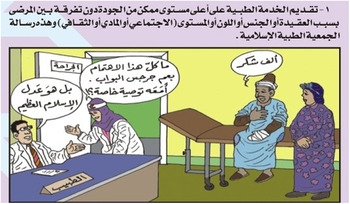
When Islam did appear in these facilities, it generally served to help translate common sense practices for effective management into a culturally-specific idiom. And in fact, despite the medical facilities’ specific ideological affiliation to the Brotherhood, IMA personnel went to great lengths to emphasize their depoliticization and dedication to providing care without discrimination. As Mohi al-Zeit, director of the IMA’s flagship hospital in suburban Cairo put it, “Yes, we are Muslim Brothers, but here I am a physician. I remove any political affiliation. Here the patient is a human being, and I am a physician. There is no political orientation or social class.” Footnote 69 In fact the organization’s credo (posted at every facility I visited) specifically forbids discrimination, mandating “compassion for the patient without respect to his ability to pay, social status, type of disease, without discriminating on the basis of color, nationality, or creed.” The IMA also drives home the message of non-discrimination in other media. Figure 1 reproduces a cartoon from the pamphlets available at the organization’s facilities, this one discussing the idea of justice or fairness (’adl) in a medical setting.
Cartoon, Islamic Medical Association Pamphlet

The text at the top reproduces the organization’s credo of non-discrimination. In the cartoon the patient is heartily thanking the medical staff (“thanks a million!”), while the nurse asks the doctor, “What’s with all the attention you’ve paid to Mr. Girgis the bawwab (doorman)? Is he a friend of someone important?” The doctor replies “This is what Islam means by justice.” The subtext is that Mr. Girgis is an unlikely character to receive such attention from the doctor: he is both poor (judging by his profession and his patched clothes) and Christian (judging by his name and the fact that his wife does not wear a headscarf). This explains the nurse’s suspicion that the doctor treated the man only because someone important called in a favor.
Every individual who comes through the door receives the same level of care regardless of their political orientation, and managers proactively attempt to stop the politicization of their facilities. From the IMA’s management in Cairo I obtained an internal disciplinary letter sent to the manager of a hospital in lower Egypt (the Delta) warning against allowing employees to campaign in the IMA’s facilities: we “do not provide any support to any party or trend or person,” the letter reads. Instead “we deal respectfully with all of them.” Footnote 70 An external indicator of the success of this anti-discrimination policy is that, as I will show, even those survey respondents who self-identify as the Brotherhood’s staunchest political opponents rate the quality of care at the Brotherhood’s facilities very highly.
Using interviews, memoirs, and internal administrative documents, the previous section illustrates the significant effort Islamist service providers exert to ensure that they are delivering high quality and compassionate care. This is an important antecedent condition for the proposed theory, whereby patients use the atmosphere at the Brotherhood’s social-service facilities to make inferences about the group’s political candidates. The next section introduces and justifies an original survey experiment designed to specifically test how this qualitative advantage in social-service delivery translates into political success.
Medical Provision and Electoral Support: A Priming Experiment
An original and nationally representative (n=2,483) telephone survey of adult (18+) Egyptians illuminates the reputational mechanism linking social-service provision to attitudinal change. Embedded in the survey was a randomized experimental component modulating basic factual information about medical-service provision in Egypt. The Cairo-based Egyptian Center for Public Opinion Research (Baseera) carried out the survey using CATI in May 2014. Especially for the hypothesized relationship at issue here, one key benefit of a telephone, as opposed to a face-to-face, survey is that it reduces the need to account for certain enumerator effects, such as the physical appearance of the enumerator. Footnote 71 I do account for enumerator gender, and more information, including sample characteristics, randomization checks, and additional statistical tests, follows the article in the online appendix.
While recognizing the trade-offs, especially in the simplification of a complex and relational process such as medical care, three considerations recommend adding an experimental component to the more traditional observational aspects of this study. First, the presence of potentially endogenous relationships and hidden variables recommends the use of experimental manipulation. Consider the causal mechanism embedded in this theory: exposure to these facilities causes an individual to update their beliefs of the traits of Brotherhood candidates for elected office. In a traditional survey it would be difficult to account for the possibility that a respondent may have sought out these facilities precisely because she has had some prior positive interaction with the Muslim Brotherhood, a fact that would make it difficult to establish the direction of causality.
Similarly, an experimental approach also helps to mitigate concerns that unobserved variables are influencing the relationship between exposure to social-service provision and political support. It is possible, if not probable, that the Brotherhood’s social services are not distributed randomly across Egypt’s sociopolitical landscape. Authors suggest that the group provides social services towards members and sympathizers Footnote 72 while some maintain that the provision targets a wider audience. Footnote 73 Others suggest that the provision is tied to electoral patterns. Footnote 74 Regardless, the randomization protocol assumes that these audiences are distributed evenly across both the treatment and control groups, and therefore cannot be responsible for any observed variation in outcome. Footnote 75
At the same time, the on-location, nationally-representative sample ensures that the causal inferences are applicable to the broader population. Footnote 76 Note that the online appendix includes a comparison of the survey sample with results of the 2006 Egyptian census. In recent years political scientists have increasingly relied on experimental manipulation, and survey experiments in general, to generate new insights about politics in non-western and difficult settings. Footnote 77 The theorized mechanism here, and its intimate link to psychological processes, makes a survey experiment a sensible tool with which to test it.
To provoke and capture the attitudinal effects of exposure to information about the Brotherhood’s provision of medical services I look to experimental designs developed in American politics. In their landmark study of race and affirmative action, Sniderman and Piazza sought a simple way to stimulate and measure attitudes that may otherwise remain latent. In their case, they designed an experimental manipulation that could simulate the kinds of conversations that ordinary people undoubtedly have about affirmative action and the characteristics of blacks. The basic idea is to determine whether references to affirmative action can, in and of themselves, excite negative reactions to blacks. Footnote 78
The present study adopts this approach, using a brief informational prime about the Muslim Brotherhood’s medical services to stimulate and capture respondent attitudes about the group’s political candidates. This “mere mention” design necessarily simplifies a complex process by which individuals consume and process information—from official and nonofficial (and social) media, from friends and acquaintances, and from first-hand experience. But it also has the benefit of being fairly unobtrusive way to probe—on a large scale—the attitudinal effects of exposure to the Brotherhood’s social services. A key implication of the theory is that receiving basic, factual information about the Brotherhood’s medical provision will provoke a positive shift in the respondent’s broad political attitudes towards the Muslim Brotherhood, as well as their more specific assessment of Brotherhood candidates’ and deputies’ character traits.
In the specific construction here, all 2,483 survey respondents received a prime in the form of four questions about medical provision in Egypt. However, the content of the four questions subtly differed based on the survey form to which the individual had been randomly assigned. While those respondents in the control version were asked about the Ministry of Health’s medical services, respondents in the treatment condition received questions about the Muslim Brotherhood instead. The treatment and control batteries, where modulated text appears in italics, are as follows:
TREATMENT
Now I would like to ask you some questions about The Muslim Brotherhood and their activities in the field of medical provision in Egypt. The Muslim Brotherhood operates many hospitals and clinics in all parts of the country, and these facilities provide a wide range of medical services to millions of Egyptians every year, among them the poor and destitute. Have you heard about these facilities before?
Have you or a member of your family visited a hospital or clinic operated by The Muslim Brotherhood before?
The The Muslim Brotherhood organizes “medical caravans” that provide medical services to areas lacking hospitals or clinics, where they focus on specialized problems such as glaucoma. Have you heard about these before?
Have you had a checkup, received medicine, or undergone a simple medical procedure at one of The Muslim Brotherhood’s medical caravans?
CONTROL
Now I would like to ask you some questions about The Ministry of Health and their activities in the field of medical provision in Egypt. The Ministry of Health operates many hospitals and clinics in all parts of the country, and these facilities provide a wide range of medical services to millions of Egyptians every year, among them the poor and destitute. Have you heard about these facilities before?
Have you or a member of your family visited a hospital or clinic operated by The Ministry of Health before?
The The Ministry of Health organizes “medical caravans” that provide medical services to areas lacking hospitals or clinics, where they focus on specialized problems such as glaucoma. Have you heard about these before?
Have you had a checkup, received medicine, or undergone a simple medical procedure at one of The Ministry of Health’s medical caravans?
The lack of a natural control made it particularly challenging to produce a prompt that was both anodyne and relevant (the final sections here discuss—and ultimately rule out-potential alternative mechanisms at work). My own fieldwork showed that competing politically-active service providers (such as the aformentioned Wafd party) were comparable neither in the scope nor the quality of their facilities to what the Brotherhood was offering. Footnote 79 And it would be difficult to specify a private sector provider/network that all respondents in the nationwide sample could immediately identify, risking confusion in that subgroup.
For simplicity’s sake, I hereafter refer to the Ministry of Health battery as the control, although it is better conceptualized as a second prime. Footnote 80 This potentially complicates efforts to uncover the causal pathway. For instance, it may be difficult to determine if a positive result stems from the pro-Brotherhood prime or a general revulsion at the incumbent (government) that would reflect positively onto all opposition (including the Brotherhood). But were this the case, the specific pro-Brotherhood prime would have to work extremely hard to generate an observable increase in support over and above the general anti-incumbent effect. And beyond the variety of qualitative evidence referenced earlier, a causal mediation analysis on the survey data (which follows) supports the argument that being primed with information about the Brotherhood’s medical services increases electoral support by increasing respondent opinion of Brotherhood candidates’ character, rather than some other pathway.
Following the questions in the treatment battery, all respondents answered a question about their self-reported propensity to vote for the Muslim Brotherhood, and then three questions designed to capture their perception of the traits of the Muslim Brotherhood’s candidates. The first question was designed to probe the basic and widely assumed relationship between social-service provision and political support: that the Brotherhood’s social-service provision benefits the group at election time. The following battery of three questions were designed to test the hypothesized causal mechanism: that the Brotherhood’s social-service provision causes recipients to view the character of the Brotherhood’s candidates more positively. Footnote 81
Respondents were first asked “if the Brotherhood did participate in the upcoming elections, how likely would you be to vote for their candidates?” (Very Likely, Likely, Unlikely, Very Unlikely). Footnote 82 Respondents were then asked to rate the Muslim Brotherhood’s “candidates and (parliamentary) deputies” across three traits: honesty, capability, and approachability (Strongly Agree, Agree, Disagree, Strongly Disagree). Each of the three trait questions were asked independently, although the results of a principal-component factor analysis reveal that all three questions load on a common factor (α = .8305). Thus in the tables that follow the results of this question are compiled into a single index measure, “likability,” which reports the mean for all three answers, centered. Footnote 83
Finally, in order to explore divergent predictions based on socioeconomic class, each respondent answered whether or not she belonged to a household that owned an automatic washing machine and whether the household owned a car. “Poor” households owned neither. “Non poor” households owned either an automatic washer and a car, or just a car. Footnote 84
Hypotheses
The theory given here proposed that social service would generate a politically potent effect by demonstrating an organization’s competence, honesty, and approachability to voters. These effects, furthermore, would manifest more strongly among the middle class than the poor. To restate as specific hypotheses tailored to both the experimental design provided here, and the general case of the Egyptian Muslim Brotherhood, these are: Footnote 85
-
H1: Egyptians exposed to information about the Muslim Brotherhood’s medical initiatives will rate Muslim Brotherhood candidates higher on perceptions of honesty, capability, and approachability.
-
H2: Egyptians exposed to information about the Muslim Brotherhood’s medical initiatives will be more likely to support the Muslim Brotherhood politically.
-
H3: Egyptians’ perceptions of Muslim Brotherhood candidates’ honesty, capability, and approachability will mediate the relationship between exposure to information about the Muslim Brotherhood’s medical initiatives and political support for the Muslim Brotherhood’s candidates.
-
H4: Non-poor Egyptians will react more positively to the experimental manipulation than poor Egyptians.
From Medicine to Mobilization
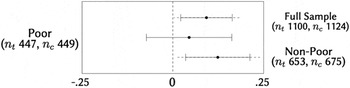
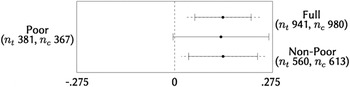
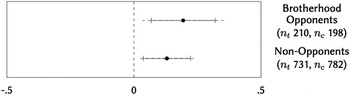
Figures 2 and 3 summarize the results of the experimental manipulation on the entire sample, as well as the posited differential effects according to socioeconomic class. For each question and subgroup, the figures report the difference of means (Treatment minus Control). The solid lines represent the 95 percent confidence intervals, while the dashed extensions represent revised confidence intervals after modifying α post-hoc through a Bonferroni (Holm) correction. Footnote 86
Difference in means, propensity to vote for the Brotherhood (treatment minus control)

Difference in means, likability index (treatment minus control)

Figure 2 supports the central claim of Hypothesis 1: exposure to basic information about the Brotherhood’s medical provision increases political support for the group. Applying the correction did not change the results (although for the full sample the result was close). Figure 3 reports the results of the experimental manipulation on the three-question battery assessing respondents’ opinions about the Brotherhood’s candidates and parliamentary deputies’ likability. Footnote 87
Figure 3 shows how all three groups displayed a positive and significant shift in their assessment of Brotherhood candidates’ likability (a composite of three specific questions assessing their honesty, capability, and approachability). Again, applying the correction does not substantively change the results. Taken together, the findings summarized in figures 2 and 3 strongly support Hypotheses 1 and 2: that respondents primed with information about the Brotherhood’s social services will report themselves more likely to support the Brotherhood’s candidates at the polls, and will perceive those candidates as more honest, capable, and approachable than those respondents in the control group.
It is worth noting two points before proceeding further. First, this experimental design simplifies and approximates what is a more complex and vivid interaction, reducing a complex behavioral process to a stylized attitudinal one. Yet it shows that simply presenting basic, factual information about the Brotherhood’s provision of medical services produces a robust and statistically-significant positive shift in how respondents report their likelihood of voting for the group, as well as how they perceive the group’s candidates for elected office. It stands to reason that the millions of Egyptians who have used the Brotherhood’s medical facilities to alleviate their own painful kidney disease, set a child’s broken arm, or care for their aging parent’s declining vision would manifest a correspondingly stronger effect, up to and including support on election day.
Secondly, this survey experiment was conducted in 2014, amidst a historically-singular period of anti-Brotherhood rhetoric emanating from the regime and its allies. This context establishes clear incentives for individuals to inflate their opposition to the Brotherhood, effectively constituting a tough test for the theory. Footnote 88 We can, in other words, imagine that individuals asked about their likelihood to vote for the Brotherhood would accommodate to the perceived social and political pressures by answering “never.”
But even in an environment where respondents were required to swim against a strongly anti-Brotherhood current, the treatment was able to produce a significant and positive shift in respondents’ attitudes towards the group. The implication is that, were this survey fielded in the calmer waters of the pre-coup period—whether during the country’s brief transition or the Mubarak-era autocracy that preceded it—we may well expect to see substantively larger pro-Brotherhood shifts in attitudes produced by the mere-mention design. This suggests that the experimental manipulation actually understates the power of this mechanism to produce support for the Brotherhood across Egypt’s cities and villages. In light of this, it renders tractable the question of why Egypt’s post-2013 military regime would risk social upheaval in order to rip the Brotherhood’s social-service network out by its roots.
The Brotherhood’s Beneficiaries
A persistent problem with research into Islamist social services is the lack of basic but critical information, such as how many individuals these services reach and the type of clientele they benefit. The survey, and in particular the treatment group, can help provide this detail. The theory suggests that the reputational mechanism should manifest more strongly among the middle class, and the above tables provide some support for this fact: the experimental manipulation was unable to budge the poor respondents’ attitudes towards the Brotherhood. Footnote 89 Probing the results of the treatment group more extensively can help contextualize this finding, and further test the theory’s structural implications.
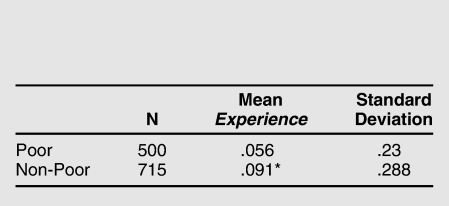
The theory predicts that poor respondents react only weakly—if at all—to experimental manipulation because they generally cannot afford to visit these facilities in the first place. To test this intuition, table 1 reports the results of t-tests for the same poor and non-poor groups conducted within the Muslim Brotherhood treatment group. Recall that the survey form asked all respondents in the treatment group “have you visited Muslim Brotherhood medical facilities before?” If a respondent answered in the negative, they were coded 0. If they answered in the affirmative they received a 1.
Poor and non-poor experience with Brotherhood facilities

* =p < .05
Table 1 shows one way in which the Brotherhood’s medical networks are not evenly distributed across the socioeconomic landscape. Simply, poor Egyptians are much less likely to have direct experience with the Brotherhood’s brick-and-mortar medical facilities than their non-poor counterparts. This differential underlying experience suggests that the experimental manipulation struggles to provoke a response among the poor because the treatment remains more abstract—there is less of an underlying memory of the Brotherhood’s medical care for the experimental design to provoke.
Social-Service Provision, Candidate Reputation, and Electoral Support
Hypothesis 3 suggests a specific causal process in which exposure to Muslim Brotherhood social-service institutions increases Egyptians’ assessment of Brotherhood candidates’ honesty, capability, and approachability. These traits, in turn, positively shape Egyptians’ attitudes towards the Brotherhood’s candidates for elected office. In order to test the empirical support for this process, I use the mediation package for Stata to conduct a causal-mediation analysis on the survey data. Footnote 90
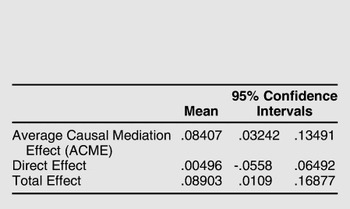
Briefly, the approach generates two models. The first models predictions for the likability index as a function of the treatment/control condition. A second model generates estimates for the propensity to vote for the Muslim Brotherhood’s candidates as a function of both the treatment/control and the likability index. Model one’s estimation of the values for “likability” under both the treatment and control feed into model two’s estimates of the propensity to vote for the Brotherhood’s candidates. Averaging the differences in the predicted values of this propensity as the predictions for “likability” shift under the treatment and control yields the average causal-mediation effect (ACME). Footnote 91 Table 2 presents the results of the causal mediation analysis.
Mediation results, effect of “likability” on propensity to vote for Brotherhood candidates

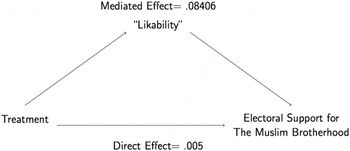
Figure 4 maps the results of the causal-mediation analysis onto a diagram of the hypothesized causal process.
Causal pathway

One way to interpret the results is to say that the likability index mediates 92.7 percent of the observed total effect of the treatment on self-reported propensity to vote for the Brotherhood. That is, of the total effect of the treatment on vote propensity (.089), over 90 percent (.08416) operates through a shift in the perception of the candidates’ likability. This supports the causal mechanism introduced earlier, whereby exposure to the Brotherhood’s facilities leads to an increase in perceptions of Brotherhood candidates’ likability, which in turn increases Egyptians’ likelihood to support the group’s candidates for political office. Before concluding, however, it is important to note that the results here are valid so long as the sequential ignorability assumption obtains. This is not directly testable, however a supplementary online appendix reports the results of an analysis showing that this procedure is robust to fairly significant violations of this critical assumption.
The Islamist Advantage, Illustrated
There are two key assumptions in the causal chain that the survey evidence can help support. First, that the Brotherhood’s network of social services is actually large enough to produce any type of political effect. Because the structure of the treatment also facilitated the collection of data on how many individuals self-report visiting these facilities, we can tease out ostensibly independent data on self-reported usage of these facilities. Second, the proposed reputational effect assumes that the quality of these services is formidable. The qualitative evidence, based on site visits and interviews, supports this assumption, but responses to the survey can bring additional evidence to bear on this question. This section considers each of these two points in turn.
Just how extensive is the Brotherhood’s social-service network? There is a frequent assertion in the literature—noted earlier—that the Brotherhood operates these networks on a large scale. Yet hard data on the extent of these networks is lacking, and authors familiar with the Brotherhood question whether or not the empirical evidence supports these assertions. Tarek Masoud, for example, suggests that “no authoritarian regime worthy of the name would allow such a thing (the existence of Brotherhood-type social-service networks).” Footnote 92
The IMA’s own internal balance sheets, referenced above, reveal that the group provided medical services to nearly two million Egyptians annually from the years 2005–2010. This provides one indication that the Brotherhood’s medical network was indeed considerable (and recall that these are only a slice of the larger efforts, which encompass schools, civic associations, and other services). The post-2013 crackdown has revealed further information. Following the military coup, the state daily al-Ahram claimed that the investigative committee tasked with overseeing the Brotherhood’s assets had seized 43 hospitals (valued at $12.5 million) as well as extensive cash deposits during the crackdown on the group. Footnote 93
Buttressing the claims from both the IMA and the government, 7.65 percent of the treatment group self-report having visited a Muslim Brotherhood medical facility. To the extent this is reflective of Egypt’s general population (approximately 82 million), this would translate into over six million Egyptians who report that they—or a member of their family—has used one of the Muslim Brotherhood’s medical facilities. Furthermore, the timing of the survey—executed during an unprecedented crackdown on the Muslim Brotherhood—establishes significant incentives for individuals to deny having anything to do with the organization to avoid state or social sanction. Under these conditions, the six million is likely a low-ball of the on-the-ground reality.
A variety of evidence aligns on the fact that the reach of the Brotherhood’s medical services is extensive—but what about their quality? While my previous sections produced qualitative data about the Brotherhood’s high quality services, the survey instrument also gave respondents who reported visiting the Muslim Brotherhood’s facilities the option to use up to five (separate) words or short phrases to describe their experiences there, which survey enumerators recorded in Egyptian colloquial Arabic.
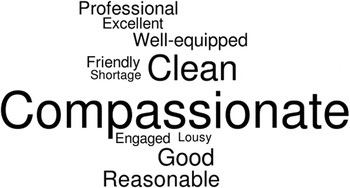
To provide a rough measure of satisfaction, I dichotomously coded from the Arabic each of the 230 total words or phrases as either “generally positive” or “generally negative.” Over 86 percent (86.1 percent) of the words or short phrases were positive, heightening confidence in the aforementioned qualitative research. To further illustrate how Egyptians perceive their experience in the Brotherhood’s facilities, figure 5 presents a word cloud aggregating the rough English equivalent of these 230 terms. Footnote 94 For presentation purposes, those descriptive terms mentioned less than five times are not included in the word cloud. In the word cloud, the size of the text indicates the frequency with which respondents used that word.
Respondent descriptions of Muslim Brotherhood facilities

Figure 5 vividly demonstrates the positive impressions that the Brotherhood’s medical provision leaves on those Egyptians who visit. This finding is also an important link in the proposed causal process. Footnote 95 In particular, the conceptual association between the words that respondents used to describe the Brotherhood’s facilities (e.g., “compassionate” and “professional”) map onto those traits Egyptians are also using to describe the Brotherhood’s candidates for elected office (e.g., honest, capable, and approachable). While subjective, the word cloud provides supports the reputational mechanism hypothesized earlier: respondents focus on the technical and relational quality of care as much as its mere existence.
Collecting impressions of how Egyptian respondents experience the Brotherhood’s hospitals is also important because it suggests that earlier qualitative findings about the high-quality of these facilities are not the process of a selection bias (only visiting hospitals in wealthy areas, for instance) or of a cunning attempt by the Brotherhood to direct public scrutiny towards attractive but unrepresentative selections. Rather, the results here suggest that the Brotherhood’s medical provision is generally high-quality, or at least perceived as such by those who have reported using it.
The Benefits of a Big Tent
As noted in the discussion of the informational prime, the possibility exists that the general mention of the Muslim Brotherhood, rather than the specific mention of the Muslim Brotherhood’s medical facilities, drove the observed positive shift in the treatment group’s attitudes. On the surface this seems unlikely: both the widespread anti-Brotherhood sentiment among the population at the time of the survey and the regime’s nationwide campaign to repress the group suggest that mentioning the Muslim Brotherhood would be far more likely to prompt the average respondent to express disdain rather than support. However, it is possible to test for this possibility using the survey data.
Prior to receiving the treatment, enumerators asked each respondent if there was any organization, party, or individual for whom she would never vote. Those answering in the affirmative were then asked an open-ended question to name that specific entity. Out of the 2,483 respondents, 460 respondents answered with either “The Muslim Brotherhood,” “The Freedom and Justice Party” (the Muslim Brotherhood’s political party), or “Mohammed Morsi” (the deposed president of Egypt, a Muslim Brother). Separating out these respondents allows the ex-ante identification of subgroups within the treatment and control who express deep antipathy towards the Brotherhood. If it was only a mention of the Brotherhood—rather than the Brotherhood’s medical services—that was prompting the observed shift in attitudes, then one implication would be that the subgroup of anti-Brotherhood partisans would be unaffected by the treatment, if not moved to evince more hostility than the control. In contrast, if even this subgroup displayed a positive shift in response to the prime, then it should raise confidence that the observed effect is a result of the treatment provoking positive feelings about the Brotherhood’s social service endeavors.
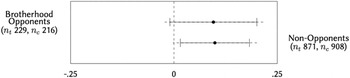
Figures 6, 7, and 8 reproduce both the experimental manipulation and the word cloud analysis by constricting the treatment and control groups to include only the Brotherhood’s harshest opponents. The treatment and control groups for the remainder of the sample is included in both figures for comparison’s sake.
Difference in means, propensity to vote for the Brotherhood (treatment minus control—Brotherhood opponents)

Difference in means, likability index (treatment minus control—Brotherhood opponents)

Brotherhood opponents’ description of Brotherhood facilities

The treatment effect did seem to produce a positive shift in the likelihood of the Brotherhood’s opponents to vote for the group (figure 6), although it was only statistically significant at p < .10, rather than the p < .05 (p = .0748). Footnote 96 The effect was notably stronger in figure 7, where the treatment produced among opponents an essentially identical positive shift to the non-opponents. This should raise confidence that the observed positive effect on political attitudes derives from association with the Brotherhood’s social services rather than an alternative mechanism.
It is possible to further examine attitudes among anti-Brotherhood partisans by reproducing the word cloud in figure 5. Before presenting the results, note that one implication of this data is that there exist self-described political opponents who nonetheless report visiting the Brotherhood’s medical facilities-something we would not expect if the organization was refusing care to those did not offer their political allegiance to the organization. Figure 8 marshals the descriptive terms those self-described Brotherhood opponents used when describing the Brotherhood’s medical facilities.
Figure 8 shows that the Brotherhood’s opponents used essentially similar terms to describe the Brotherhood’s facilities as those who expressed no prior hostility to the group. The cumulative results of this investigation into Brotherhood opponents’ attitudes should increase confidence that stimulating respondents to think about the Brotherhood’s provision of medical services is driving the observed change in attitudes. In other words, if mention of the Brotherhood alone was driving the observed positive response, then we would expect a null or even negative result among subgroups composed of only the Brotherhood’s political opponents. Instead, presenting information about the Brotherhood’s medical efforts nudged in a positive direction the political attitudes of even the most anti-Brotherhood partisans in the sample. Not only does this minimize concerns about alternative causal pathways activated by the informational prime, it suggests that the effect of these social services extends beyond those already favorably disposed towards the Muslim Brotherhood.
Appreciating the Reputational Advantage
In situations where information about parties and politicians is poor or conflicting, organizations can use social-service provision to generate powerful, reputation-based linkages with voters. And for reasons related to both the character of this social-service delivery and the larger structural and institutional factors that shape the political environment, this social-service provision is an especially effective strategy for mobilizing the middle class. Both qualitative and experimental evidence drawn from a study of the Egyptian Muslim Brotherhood’s medical outreach efforts supports a key implication of this theory: priming Egyptians with information about the Brotherhood’s medical services makes respondents more likely to consider voting for the Brotherhood’s candidates in parliamentary elections. The precise causal mechanism is as follows:
-
1) Egyptians interact with the Muslim Brotherhood’s medical services;
-
2) they experience high-quality and compassionate care therein;
-
3) they transfer these characteristics to the Brotherhood’s candidates and
-
4) they use these character assessments as part of their calculus when considering how to distribute their political support.
In the narrow context of Egypt, the findings here offer one potential mechanism by which the Muslim Brotherhood gains votes. The study is unable to specify how this mechanism compares to ideological or programmatic supporters for the Brotherhood, or how other types of service-provision might shift the precise relationship between social service provision and political mobilization. We might expect, for instance, that the mechanism may shift in the case of schools or religious classes because of the greater degree of peer-based socialization—to say nothing of underlying selection effects—in those institutions.
Despite incendiary anti-Brotherhood rhetoric from the regime and its allies, and in a context where the consequences for expressing sympathy—if not support—for the group were not trivial, a simple mention of the Brotherhood’s social-service provision delivered a measurable boost in political support. This not only helps explain why the regime has expended tremendous effort to uproot the Brotherhood’s social services, it helps understand some of the key issues with which Islamists across the region are grappling. Social services are able to generate the reputational effect because they are seen as distant from partisan political competition. While the Brotherhood took pains to maintain this firewall, they recognize that it had begun to break down in the post-Mubarak era. A minister in Mohammed Morsi’s government recently reflected on this failure, explaining that “it is clearly impossible for the [Brotherhood] to compete politically against a large segment of the population but at the same time work alongside them socially. This is simply not achievable, and this is the largest mistake that took place.” Footnote 97 Perhaps learning from their Egyptian colleagues’ mistakes, the Tunisian Ennahda Islamist movement proposed—and resoundingly passed—a similarly stark separation of political work and social activism at their party congress earlier this year. Footnote 98
What are the ramifications, if any, for politics in consolidated democracies? On the one hand, the mechanism identified here is inherently informational, based on how citizens overcome poor quality or contradictory information (e.g., in non-democratic regimes and founding elections) to form impressions of political parties. This suggests that where citizens have access to better information about parties—for example a reputation for advocating a specific basket of policies or a history of campaigning and governing—any signal sent through social-service provision will be only marginally useful to communicating a party’s type. On the other hand, Danny Hayes shows that, at least in American presidential elections, voters tend to reward those politicians who can successfully “trespass” on traits usually associated with the opposite party (think George W. Bush’s “compassionate conservatism” in the 2000 elections). Footnote 99 To the extent that social services could play a role in helping a party not usually associated with these traits create that perception among voters, they could be a potentially powerful tool in reshaping the electoral landscape.
In democracies, social service can be an especially effective tool to mobilize poor voters, albeit through different mechanisms than the reputational one specified here. Footnote 100 We may expect, therefore, that as parties become better known commodities, their social-service provision may reorient to the poor, or that parties would add a new component to their preexisting network dedicated to that sector. Footnote 101 While the 2013 military coup precludes a full examination of long-term changes in the Muslim Brotherhood’s provision, there is evidence that the group began to aggressively deploy mobile medical caravans in the spring and early summer of 2013 to try to mobilize less-affluent Egyptians. Footnote 102
Perhaps the largest outstanding question for researchers is to disentangle the precise effect of religion on the theorized reputation-based mechanism. While Islamist parties like the Muslim Brotherhood benefitted from this effect, there seems little reason to suggest that the mechanism is uniquely Islamic or, for that matter, religious. The Muslim Brotherhood was able to use social services to generate political mobilization because they alone were able to generate high-quality social services that were targeted at a middle class audience. And rather than religious atmospherics or ideological commitment, the Muslim Brotherhood produced this effect by crafting their social service outreach around paying customers and running the facilities in a modern, efficient, and businesslike manner. Why would non-Islamist groups not be able to provide services in a similar fashion?
Yet there may in fact be an Islamist advantage that functions more subtly, particularly in the way that high-quality and compassionate social-service provision effectively confirm the traits that individuals already associate with Islamist groups. This possibility speaks to the need to further disentangle and measure the different—and potentially divergent—technical and interpersonal facets of social service provision. Not only should this entail an investigation of how the proposed mechanism varies across religious and non-religious provider organizations, it may also be useful to extend this research to contexts where the cleavage between religious parties and their opponents takes different forms—and is less inflamed—than in contemporary Egypt.