INTRODUCTION
Highly variable prevalence rates of sleep difficulties have been found in advanced cancer patients, varying between 12 and 96% across studies. A wide range of sleep complaints is also reported, including difficulty falling asleep, frequent awakenings during the night with a difficulty to go back to sleep, early awakenings, the impression of not feeling rested in the morning, and short sleep durations (Akechi et al., Reference Akechi, Okuyama and Akizuki2007; Delgado-Guay et al., Reference Delgado-Guay, Yennurajalingam and Parsons2011; George et al., Reference George, Iwuanyanwu and Anderson2016; Gibbins et al., Reference Gibbins, McCoubrie and Kendrick2009; Mercadante et al., Reference Mercadante, Aielli and Adile2015; Mystakidou et al., Reference Mystakidou, Parpa and Tsilika2009).
The high variability in rates of sleep difficulties published thus far can be explained by the use of different assessment tools (single-item vs. full questionnaire), by variable participants' prognosis and performance status, and by a failure to distinguish insomnia from hypersomnolence, two distinct sleep–wake disorders. Although excessive daytime sleepiness is frequently encountered among palliative care patients (Dean et al., Reference Dean, Abu Sabbah and Yingrengreung2015; Renom-Guiteras et al., Reference Renom-Guiteras, Planas and Farriols2014; Vena et al., Reference Vena, Parker and Allen2006), with rates varying between 21 and 74% when using a self-report scale, the prevalence of hypersomnolence in this population is unclear, as no study has yet used a validated diagnostic interview to distinguish this sleep–wake disorder from insomnia.
Sleep–wake difficulties can lead to various negative consequences in this population, including decreased quality of life and exacerbation of pain, fatigue, depression, anxiety, and delirium (Mystakidou et al., Reference Mystakidou, Parpa and Tsilika2007; Sanna & Bruera, Reference Sanna and Bruera2002). Moreover, there is some evidence showing that the disruption of the sleep–wake cycle is associated with shorter cancer survival times (Chang & Lin, Reference Chang and Lin2014; Lévi et al., Reference Lévi, Dugué and Innominato2014), although this finding needs to be interpreted carefully, as a poorer prognosis could also lead to worse sleep–wake cycles. Hence, a clearer portrait of sleep–wake disturbances in palliative care is very much needed. Moreover, very limited information is available on daily subjective and objective sleep parameters in advanced cancer patients receiving palliative care. Indeed, only a few studies have used a daily sleep diary or objective sleep measurement (e.g., actigraphy), and these variables were reported for the total sample without taking into account the presence and the type of sleep–wake disorders encountered (Dean et al., Reference Dean, Abu Sabbah and Yingrengreung2015; Gibbins et al., Reference Gibbins, McCoubrie and Kendrick2009; Ma et al., Reference Ma, Chang and Lin2014; Parker et al., Reference Parker, Bliwise and Ribeiro2008; Yennurajalingam et al., Reference Yennurajalingam, Tayjasanant and Balachandran2016). This is important because parameters may vary a great deal whether patients have insomnia or hypersomnolence, and lumping together all patients may blur some important differences.
The goals of this study, conducted in community-dwelling cancer patients receiving palliative care, were to: (1) assess rates of sleep–wake disorders and subsyndromal symptoms; and (2) compare subjective and objective sleep–wake parameters by type of sleep–wake disturbance. We decided to study patients still living in their homes because the average length of stay in a palliative care hospice is only 17.3 days in Quebec province where the study was conducted (Alliance des Maisons de Soins Palliatifs du Québec, 2013). Hence, studying community-dwelling patients was likely to lead to more generalizable findings.
PATIENTS AND METHODS
Participants
The inclusion criteria were: (1) a diagnosis of advanced cancer (i.e., only palliative treatments possible); (2) significant alterations in daytime functioning as defined by a performance status of 2 or 3 on the Eastern Cooperative Oncology Group (ECOG) Scale (Oken et al., Reference Oken, Creech and Tormey1982); (3) ≥18 years of age; (4) to be able to read and understand French; (5) to be able to give informed and free consent; and (6) to live within 90 minutes of L'Hôtel-Dieu de Québec (L'HDQ; CHU de Québec–Université Laval). The exclusion criteria were: (1) to receive curative treatments; (2) to have current delirium, dementia, or severe cognitive impairments as reported by the palliative care team; (3) a score ≤23 on the Mini-Mental State Examination (MMSE; Folstein et al., Reference Folstein, Folstein and McHugh1975); and (4) the presence of suicidal thoughts with a risk of acting out as defined by a score ≥1 on items 4 or 5 of the Scale for Suicide Ideation (Beck et al., Reference Beck, Kovacs and Weissman1979; Beck & Steer, Reference Beck and Steer1991) or a suicide attempt in the last 5 years.
Patients were recruited by a research assistant prior to their follow-up appointment at the L'HDQ Outpatient Palliative Care Clinic or during activities at the Day Care Center at Maison Michel-Sarrazin (MMS), a palliative care hospice in Quebec City. A brief screening was performed at that time or over the phone, and eligible patients were then fully informed about study goals and procedures. Those who agreed to participate provided their written consent at recruitment or at the first home visit. The study was approved by the research ethics committees of CHU de Québec–Université Laval and the MMS.
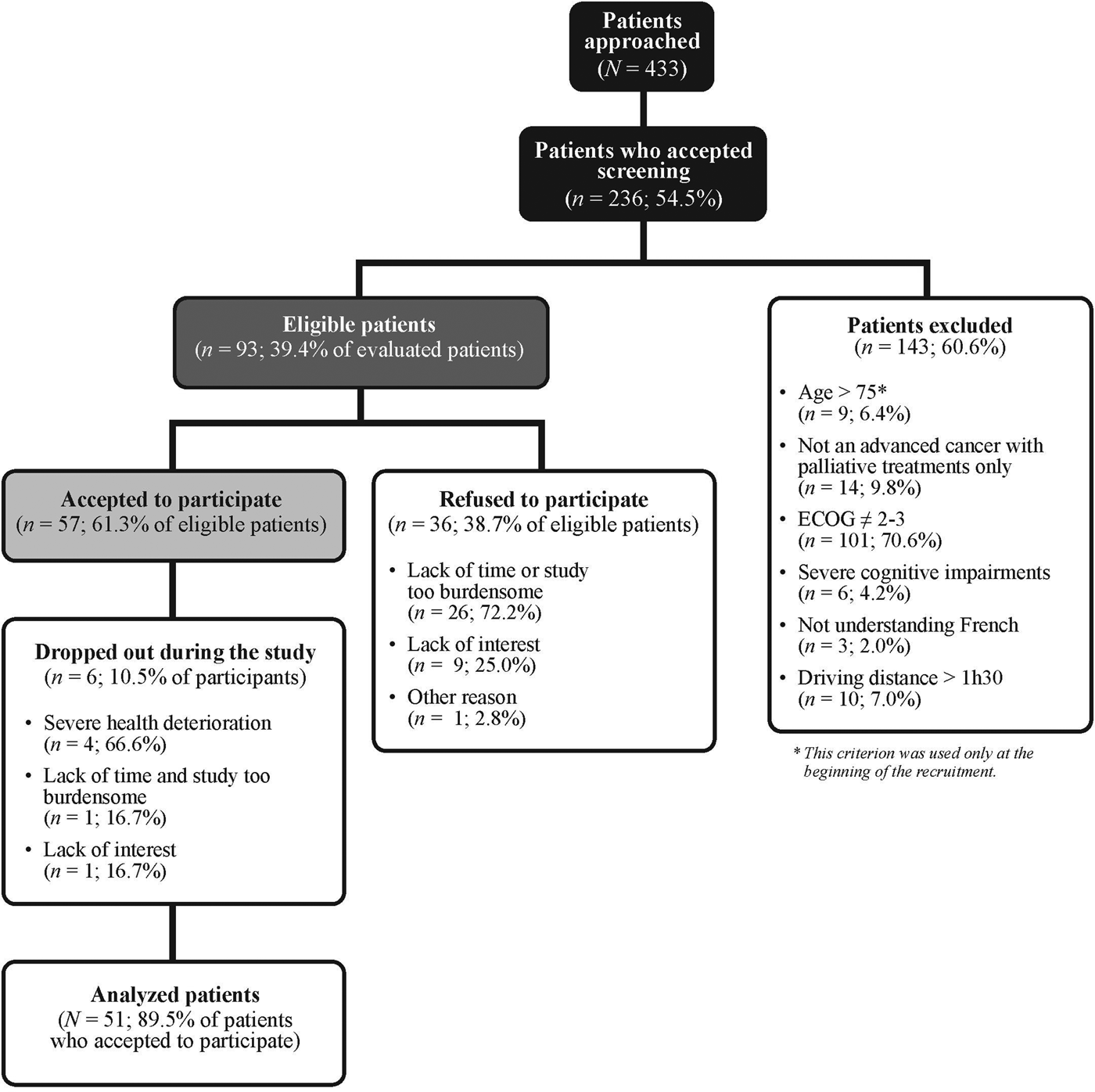
Of the 433 patients approached, 236 accepted the screening procedure. Of those, 143 were excluded and 36 refused to participate in the study, thus yielding a participation rate of 61.3% (N = 57; see Figure 1). There were no significant differences between participants and nonparticipants on sex, age, cancer site and stage, presence of distant metastases, and performance status (all values of p > 0.22). Six participants dropped out before the end of the data collection period (see Figure 1). Hence, the final sample size was N = 51.
Participant flowchart.

Measures
Duke Structured Interview for Sleep Disorders (DISD)
Relevant sections of the DISD (Carney et al., Reference Carney, Edinger and Olsen2008) were used to assess the presence of current sleep–wake disorders and subsyndromal symptoms. The sleep disorders assessed were: insomnia, hypersomnolence, sleep apnea, restless legs syndrome, periodic limb movement disorder, environmental sleep disorder, and circadian rhythm sleep–wake disorders. Some questions of the Insomnia Interview Schedule (Morin, Reference Morin1993) were added to clarify the presence and duration of insomnia syndrome and symptoms, as well as to document the utilization of prescribed hypnotic medications. To reduce participants' burden, the interview was administered over the phone. Although the validity of the DISD when administered on the phone has not yet been studied, an excellent agreement was found between clinical interviews conducted over the phone to diagnose mental health disorders, such as depression and anxiety, and face-to-face assessments (Rohde et al., Reference Rohde, Lewinsohn and Seeley1997), including in the elderly (Senior et al., Reference Senior, Kunik and Rhoades2007).
A committee of four experts, including palliative care and sleep professionals, met to establish the decisional aid prior to determining participants' diagnoses of sleep–wake disorders. It was agreed that the main diagnosis of sleep–wake disorder (or subsyndromal symptoms) would be given based on the most disturbing complaint for the patient, and that a second type of sleep–wake disturbance could be diagnosed when all symptoms could not be explained by a single diagnosis. Hereafter, the term “comorbidity” is used to designate the presence of concomitant sleep–wake difficulties. No other DSM–5 disorders were assessed (e.g., depressive disorder).
The insomnia disorder (or syndrome) was defined using the following criteria based on the DSM–5: (1) a subjective complaint of sleep difficulties; (2) sleep onset latency (SOL) or wake after sleep onset (WASO) or early morning awakening (EMA) ≥30 minutes; (3) occurring ≥3 nights a week for ≥3 months; (4) occurring despite an adequate opportunity for sleep; and (5) causing significant daytime impairment or distress. Patients were considered to have (subsyndromal) insomnia symptoms when having an insomnia complaint without meeting all the criteria for an insomnia disorder. As determined by the committee of experts, patients who were taking a hypnotic medication still had to be symptomatic and still have a complaint of insomnia in order to be considered as having an insomnia disorder or insomnia symptoms.
The hypersomnolence disorder was defined using the following DSM–5 criteria: (1) excessive daytime sleepiness despite a main sleep period ≥7 hours with recurrent periods of sleep or lapses into sleep within the same day, or a prolonged main sleep period ≥9 hours per day that is nonrestorative, or a difficulty being fully awake after abrupt awakening; (2) occurring ≥3 times per week for ≥3 months; and (3) causing significant daytime impairment or distress. Patients having a complaint of excessive daytime sleepiness without meeting all the criteria for a hypersomnolence disorder were considered to have (subsyndromal) hypersomnolence symptoms. The committee of experts recommended adding the specification “associated with a pain medication” when excessive daytime sleepiness arose or worsened right after initiation of a pain medication or after its dosage was increased.
All diagnoses were initially determined by the first author (M.S.B.), a Ph.D. student in clinical psychology. Each case was then reviewed by two members of our research team with extensive experience in sleep in cancer patients (J.S. and M.H.S.) and discussed in a group to establish a final diagnosis.
Sleep Diary (SD)
A daily SD was used to provide subjective estimates of SOL, WASO, EMA, total wake time (TWT), total time in bed (TIB), total sleep time (TST), sleep efficiency (SE), as well as number and duration of naps.
Actigraphy
The Actiwatch-64® (Philips Respironics, Andover, MA) is a small, nonintrusive actigraphic device that is worn on the wrist. By calculating orientation and movement, the Actiwatch records sleep–wake activity and gives an objective measure of the same sleep parameters as the SD. Actigraphy is a valid measure to objectively assess sleep in advanced cancer patients (Grutsch et al., Reference Grutsch, Wood and Du-Quiton2011). Each trace was scored manually on screen using 30-sec epochs. Data from the SD were used to help score naps, lights out/lights on, and periods when the actigraph was removed. Periods of rest (sleep), nap, and activity, as well as artifacts, were scored independently by M.S.B. and a trained research assistant. Interrater agreement analyses on rest and activity periods revealed excellent intraclass rates (varying between 86.2 and 96.3%). Thus, no change was made to the traces, and only those scored by the first rater (M.S.B.) were used, given her greater experience scoring this type of data.
Demographics, Health Behaviors and Cancer Characteristics
Demographics and medication use data were collected using a questionnaire. Cancer-related data (e.g., cancer site and stage, palliative treatments received during study, date of death) were extracted from the patient's medical record.
Procedure
M.S.B. or another trained graduate student in clinical psychology went to the participant's home to administer the MMSE and other measures not included in this report and to hand over the SD and the Actiwatch® recorder (home visit no. 1). Participants wore the actigraphic recorder 24 hours a day for 7 consecutive days and completed the SD every morning for the same period. Those who were unable to fill out the SD by themselves and could not be helped by their caregiver on a daily basis were called every morning, so that their data could be collected (9 patients). At the end of the week, the material was retrieved at the participant's home (home visit no. 2), and other questionnaires were completed (not included in this report). Finally, a few days later (median = 6 days), the relevant sections of the DISD were administered over the phone by M.S.B.
Statistical Analyses
The raw data were entered independently by two research assistants and were compared to ensure maximal integrity. Data were analyzed using SPSS (v. 13.0; SPSS Institute Inc, Chicago; Norusis, Reference Norusis2000). Analyses of variances (5 groups, 1 factor) with simple effects, correcting for multiple testing using the Ryan–Eniot–Gabriel–Welsch range, were computed to investigate differences on subjective and objective sleep–wake parameters as a function of participants' main sleep–wake complaint. Those with a main complaint other than insomnia or hypersomnolence (n = 4) were excluded from these analyses, as their main complaint was too infrequent, thus giving data for 47 participants. The value of alpha was fixed at 5% (two-tailed).
RESULTS
Demographic and Medical Characteristics
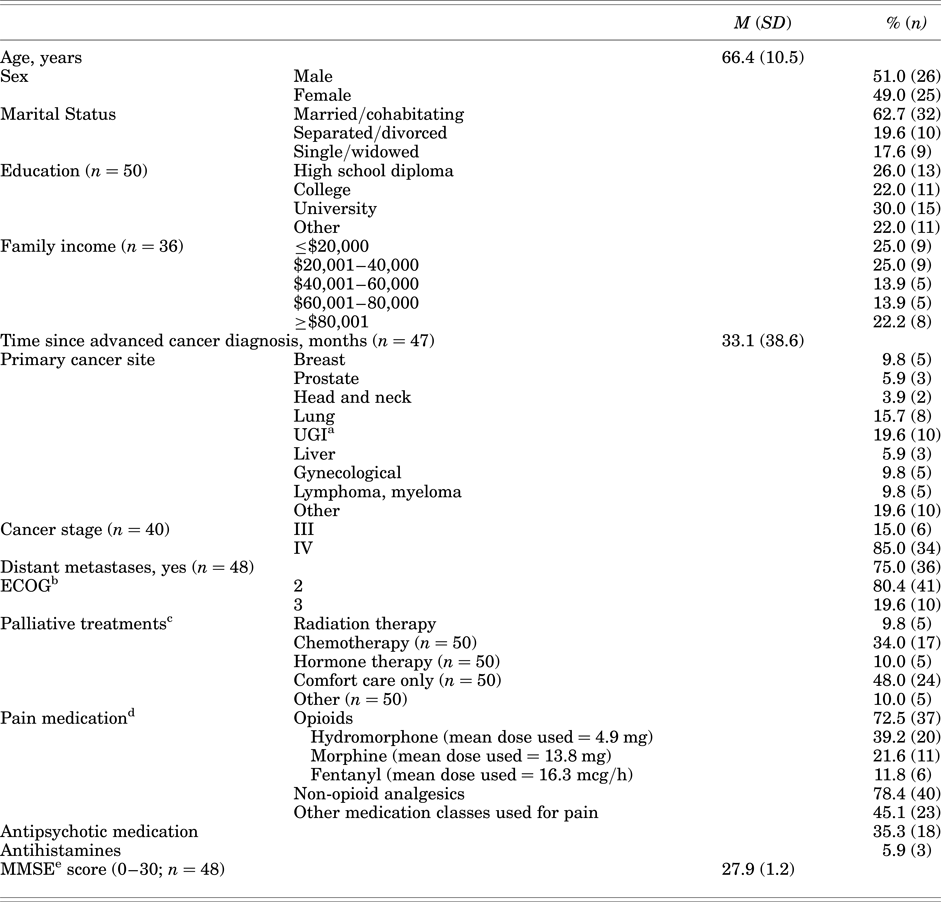
The sample consisted of 51 white French-Canadian patients receiving palliative care for advanced cancer and still living at home (Table 1). Participants were 66 years of age on average, 51.0% of them were males, and 62.7% were married or cohabitating. The mean time to death from the date of the first home visit was 265.2 days (standard deviation [SD] = 255.7, range = 28–1082, n = 42). With regard to medication that can have an impact on sleep–wake cycles, 37 participants (72.5%) were taking opioids during the study, 18 were on an antipsychotic medication (35.3%), and 3 (5.9%) reported using antihistamines.
Participant characteristics (N = 51)

a UGI = urinary and gastrointestinal cancer.
b ECOG = performance status on the Eastern Cooperative Oncology Group scale.
c The total of palliative treatments exceeds 100% because some patients received more than one palliative treatment.
d The total for pain medication exceeds 100% because some patients received more than one class of pain medication; other medication classes used for pain were antidepressants, anticonvulsants, and steroids.
e MMSE = Mini-Mental State Examination.
Rates of Sleep–Wake Disorders
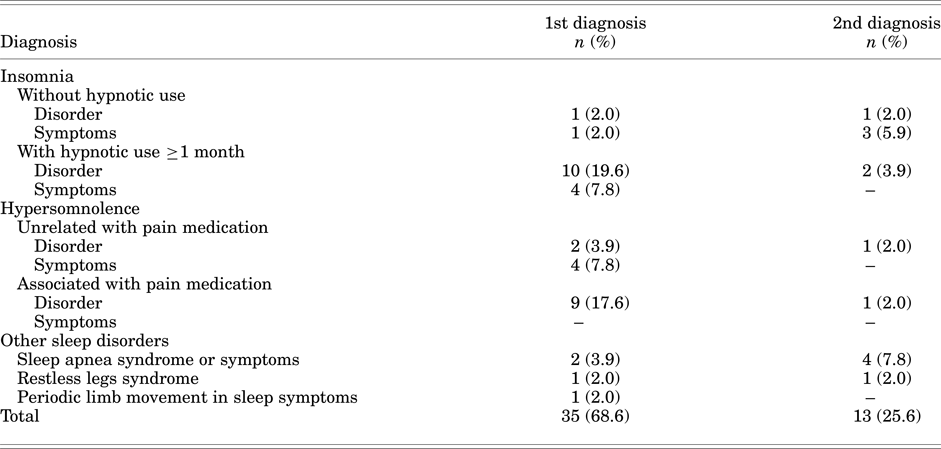
Table 2 shows the rates of sleep–wake disorders and subsyndromal symptoms based on DSM–5 diagnostic criteria. A total of 35 participants (68.6%) had at least one type of sleep–wake disturbance, including full-blown disorders and subsyndromal symptoms: 16 (31.4%) had insomnia (11 with a disorder and 5 with symptoms), and 15 (29.4%) had hypersomnolence (11 with a disorder and 4 with symptoms) as their main sleep–wake problem. A total of 16 patients (31.4%) had no sleep–wake difficulties.
Rates of sleep–wake disorders and subsyndromal symptoms (N = 51)

Olanzapine was considered a sleep medication given its common use to improve sleep in palliative care (Davis & Bruera, Reference Davis and Bruera2014).
A comorbid (secondary) sleep–wake disorder or subsyndromal symptom was found in 13 (25.6%) participants. Two patients who received a primary diagnosis of insomnia disorder had a secondary diagnosis of hypersomnolence disorder (50% of patients with insomnia comorbid with another sleep difficulty), and five patients with a main complaint of hypersomnolence had a comorbid insomnia disorder or insomnia symptoms (62.5% of patients with hypersomnolence comorbid with another sleep difficulty). Thus, 13.7% (7/51) of the total sample and 53.8% (7/13) of participants with more than one type of sleep–wake difficulty had both insomnia and hypersomnolence.
A total of 16 patients (72.7%) with insomnia as their primary or secondary type of sleep difficulty were taking a hypnotic medication ≥3 nights a week for ≥1 month. Among the 17 cases of hypersomnolence, 10 (58.8%) were associated with initiation or an increase in the dosage of a pain medication.
Only 4 participants (7.8%) reported a sleep apnea disorder previously confirmed with polysomnography, and 2 of them were still using continuous positive airway pressure (CPAP) every night. These 2 patients received a primary diagnosis of another sleep–wake disorder (1 had an insomnia disorder and the other had a hypersomnolence disorder) because their sleep apnea was under control and could not explain all of their symptoms. The other 2 patients, not using CPAP on a regular basis, received a main diagnosis of sleep apnea and did not show symptoms of another sleep disorder. Three other participants (5.9%) had sleep apnea symptoms (subsyndromal) as a secondary complaint, and two of them had these symptoms confirmed by polysomnography but were not advised to use CPAP by their physician.
Put differently, the 51 participants can be classified into the six following categories: (1) 12 (23.5%) had insomnia alone (disorder or symptoms); (2) 4 (7.8%) had insomnia comorbid with a secondary type of sleep–wake difficulty (with comorbidity); (3) 7 (13.7%) had hypersomnolence only (disorder or symptoms); (4) 8 (15.7%) had hypersomnolence comorbid with a secondary type of sleep–wake difficulty (with comorbidity); (5) 4 (7.8%) had another type of sleep–wake difficulty as their main complaint that was different from insomnia and hypersomnolence, including 1 who had a comorbid type of sleep–wake difficulty (with comorbidity); and (6) 16 (31.4%) did not have any sleep–wake disorder or subsyndromal symptoms. Of note, no significant difference was found on the presence of sleep–wake disorders between men and women (p = 0.97).
Subjective Sleep–Wake Parameters for Each Category of Sleep-Wake Difficulty
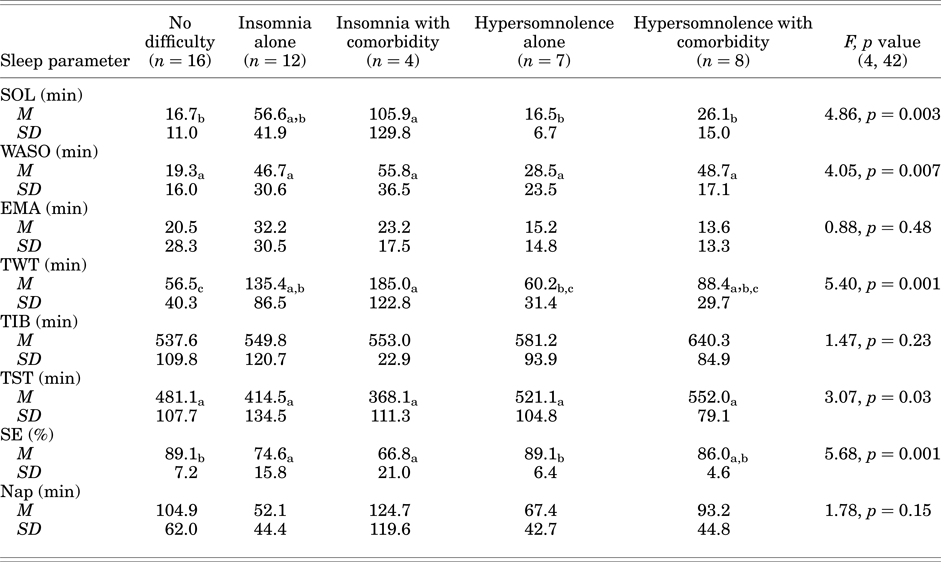
Table 3 shows sleep–wake parameters assessed with the SD for each category described above (except the category “other type of sleep–wake difficulties as the main complaint” which was too heterogeneous). Significant between-group differences were found on SOL, WASO, TWT, TST, and SE. Simple effects, correcting for multiple testing, showed that participants with insomnia comorbid with a secondary type of sleep–wake difficulty had a significantly longer SOL compared to those with hypersomnolence, with or without comorbidity, and to patients with no sleep–wake difficulty. These participants also had a significantly higher TWT than those with hypersomnolence alone and those with no sleep–wake difficulty. Patients with insomnia (with and without comorbidity) had an SE under 85% (with comorbidity = 66.8%, without comorbidity = 74.6%), a criterion generally used to distinguish poor from good sleepers, which was significantly lower than in patients with hypersomnolence alone and those with no difficulty.
Mean subjective sleep–wake parameters for each category of sleep–wake difficulty (n = 47)

EMA = early morning awakening; M = mean; SD = standard deviation; SE = sleep efficiency; SOL = sleep onset latency; TIB = time in bed; TST = total sleep time; TWT = total wake time; WASO = wake after sleep onset.
Simple effects were corrected for multiple testing using the Ryan–Eniot–Gabriel–Welsch range. Means with different subscripts are significantly different.
Although univariate analyses revealed significant between-group differences on WASO and TST, simple effects showed no significant differences across specific categories of patients. Nevertheless, the highest WASO durations were reported by patients with insomnia alone (46.7 min) and insomnia comorbid with another sleep–wake difficulty (55.8 min) and by patients with hypersomnolence with comorbidity (48.7 min), while the longest TST was found in patients with hypersomnolence, regardless of the presence of comorbidity (521.1 and 552.0 min).
No significant between-group differences were found for EMA, TIB, and total naptime. However, patients with hypersomnolence, with or without comorbidity, reported the longest TIB (640.3 and 581.2 min, respectively). Also, participants of all groups reported napping on average more than 50 minutes per day, with the longest mean duration reported by patients with insomnia comorbid with a secondary type of sleep–wake difficulty (124.7 min). Finally, no significant difference was found by sex on any subjective sleep–wake variable (all values of p ≥ 0.30).
Objective Sleep-Wake Parameters for each Category of Sleep-Wake Difficulty
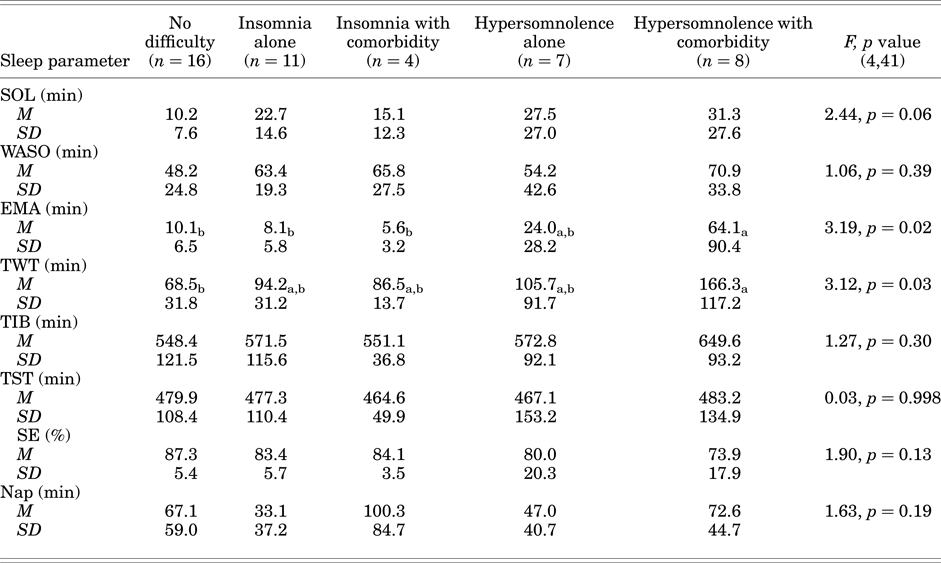
Table 4 shows objective sleep–wake parameters obtained for the same five groups. Outlier data from one participant with insomnia symptoms (e.g., SE = 18.3%) were removed from the analyses. Significant between-group differences were found on EMA and TWT only. Simple effects, correcting for multiple testing, showed that participants with hypersomnolence comorbid with a secondary type of sleep–wake difficulty had significantly greater EMA than those with insomnia, with or without comorbidity, and participants with no sleep–wake difficulty. These participants also had a significantly longer TWT than those with no sleep–wake difficulty. They also had the highest mean TST (483.2 min), although this was not significantly different from the other groups.
Mean objective sleep–wake parameters for each category of sleep–wake difficulty (n = 46)

EMA = early morning awakening; M = mean; SD = standard deviation; SE = sleep efficiency; SOL = sleep onset latency; TIB = time in bed; TST = total sleep time; TWT = total wake time; WASO = wake after sleep onset.
Simple effects were corrected for multiple testing using the Ryan–Eniot–Gabriel–Welsch range. Means with different subscripts are significantly different.
Interestingly, participants in all five groups were awake more than 30 minutes during the night on average (WASO = 48.2–70.9 min). Also, the longest total time spent napping during the day was found in patients with insomnia comorbid with a secondary type of sleep–wake difficulty (100.3 min). All participants with sleep–wake difficulties had a mean SE lower than 85%, the lowest mean being found in patients who had a primary complaint of hypersomnolence with comorbidity (73.9%). Finally, no significant difference was found between men and women on any sleep–wake parameter objectively assessed (all values of p ≥ 0.06).
DISCUSSION
This study, conducted in 51 advanced cancer patients receiving palliative care with an ECOG of 2 or 3 and still living in their homes, aimed to assess rates of sleep–wake disorders and subsyndromal symptoms using a diagnostic interview and to document subjective and objective sleep–wake parameters across these difficulties. Overall, more than two-thirds of the sample had at least one type of sleep–wake difficulty (disorder or symptoms). Participants with insomnia as their main difficulty had greater sleep disruptions on SD (SOL, TWT, SE). On the other hand, some objectively-assessed sleep parameters (EMA, TWT) were more disrupted in patients with hypersomnolence comorbid with another type of sleep–wake difficulty.
To our knowledge, ours is the first study to assess sleep–wake difficulties using a diagnostic interview. The high rate of sleep–wake disorders and subsyndromal symptoms found (69%) is in line with most previous findings conducted in palliative care, using a single-item or a validated self-report scale (e.g., the Pittsburgh Sleep Quality Index) to assess sleep (Akechi et al., Reference Akechi, Okuyama and Akizuki2007; George et al., Reference George, Iwuanyanwu and Anderson2016; Mercadante et al., Reference Mercadante, Aielli and Adile2015), although both higher (85.0–96.3%) and lower (12%) rates have been reported (Delgado-Guay et al., Reference Delgado-Guay, Yennurajalingam and Parsons2011; Gibbins et al., Reference Gibbins, McCoubrie and Kendrick2009; Mystakidou et al., Reference Mystakidou, Parpa and Tsilika2009).
Another novel aspect of this study was the differential diagnosis made between insomnia and hypersomnolence. Our results indicate that hypersomnolence (29.4% of participants) is a frequent issue among patients with advanced cancer. Daytime sleepiness rates varying from 21 to 74% have previously been reported in that population (Dean et al., Reference Dean, Abu Sabbah and Yingrengreung2015; Koopman et al., Reference Koopman, Nouriani and Erickson2002; Renom-Guiteras et al., Reference Renom-Guiteras, Planas and Farriols2014; Vena et al., Reference Vena, Parker and Allen2006), but none of these studies used specific criteria to determine the excessive nature of sleepiness and the disturbance associated with it. Besides, hypersomnolence as a main or a secondary type of difficulty was associated with pain medication use in 58.8% of cases. Sedation is a frequent side effect of opioid medications, which tends to diminish with stabilization of treatment (Alt-Epping & Nauck, Reference Alt-Epping and Nauck2015). However, some patients develop persistent sedation due to opioids, characterized by an excessive daytime sleepiness that leads to significant daytime impairments (Bourdeanu et al., Reference Bourdeanu, Loseth and Funk2005; Bruera & Paice, Reference Bruera and Paice2015).
This study is also the first to document sleep parameters using both daily subjective and objective measures in this population. As might be expected, insomnia patients had SE indices quite below the clinical threshold of 85% when assessed with the SD (66.8 to 74.9%), while their objective SE was only slightly below that threshold (83.4 to 84.1%). Gibbins et al. (Reference Gibbins, McCoubrie and Kendrick2009) reported an SE assessed with actigraphy of 92.8% in 28 advanced cancer patients with a sleep complaint, but with a better functional status (ECOG mainly of 0 or 1). There is some evidence suggesting that the lower the performance status, the more disrupted the sleep–wake cycle (Innominato et al., Reference Innominato, Focan and Gorlia2009; Lévi et al., Reference Lévi, Dugué and Innominato2014). Other prior studies conducted among advanced cancer patients obtained similar results for objective SE, varying between 76 and 81% (Dean et al., Reference Dean, Abu Sabbah and Yingrengreung2015; Ma et al., Reference Ma, Chang and Lin2014; Yennurajalingam et al., Reference Yennurajalingam, Tayjasanant and Balachandran2016).
Conversely, participants with hypersomnolence, with or without comorbidity, had an objective SE under 85%, but a subjective SE above that threshold. Moreover, patients with hypersomnolence with comorbidity had a significantly longer objective EMA than those with insomnia (with or without comorbidity) and those with no sleep–wake difficulties. These participants also had a significantly longer objectively-assessed TWT compared to those with no sleep–wake difficulties. Together, these findings suggest that, despite subjective sleep parameters within the normal range, objectively, the sleep of patients with hypersomnolence was fairly disrupted. Although data on sleep in the context of chronic use of opioids is scarce, some sleep and palliative care experts have highlighted that respiratory depression is one of the adverse effects of opioids, particularly during sleep. This can lead to sleep disruptions, not necessarily noticeable by the sleeper, as well as exacerbation of excessive daytime sleepiness (Kryger et al., Reference Kryger, Roth and Dement2011; Mystakidou et al., Reference Mystakidou, Clark and Fischer2010).
More than 25% of our participants had a secondary full-blown sleep–wake disorder or secondary subsyndromal symptoms, thus highlighting the complexity of sleep–wake difficulties experienced by palliative care patients. Among these, 53.8% had both insomnia and hypersomnolence (disorder or symptoms). Overall, the subjective and objective sleep parameters of these participants were more disrupted. The strategies that these patients employed to cope with their sleep–wake difficulties can be part of the explanation. Indeed, despite the absence of significant between-group differences on total napping time, patients with both insomnia and hypersomnolence had the longest napping time (72.6–124.7 minutes) as compared to participants with either insomnia or hypersomnolence alone. It has been shown that daytime napping could have a detrimental effect on nocturnal sleep in advanced cancer patients (Parker et al., Reference Parker, Bliwise and Ribeiro2008).
Subanalyses were conducted to assess sleep–wake difficulties by sex. The results indicated no significant differences between men and women on the presence of sleep–wake difficulties as assessed with the DISD, as well as on subjective and objective sleep–wake variables. This finding is in line with a recent study that used the Athens Insomnia Scale in 820 patients in various palliative care settings and reported no significant differences between men and women on insomnia scores (Mercadante et al., Reference Mercadante, Aielli and Adile2015).
Our study is characterized by important strengths, including the use of a structured clinical interview with an operational algorithm to categorize patients according to their main and secondary types of sleep–wake difficulties and the use of validated tools to assess sleep–wake parameters. The subjective and objective assessment of sleep–wake parameters during seven consecutive 24-hour periods is another asset of this study. On the other hand, the fact that only a small proportion of all the patients approached participated in the study limits the ability to generalize our findings. In fact, recruiting patients with significant alterations in daily functioning was a major challenge in this study. Besides, although it was emphasized during the recruitment phase that all types of sleepers needed to be included in our study, we cannot rule out the possibility of a selection bias that would have made poor sleepers more likely to participate. Nevertheless, our sample size is appreciable and is comparable to those of previous studies that objectively assessed sleep with actigraphy in advanced cancer patients (range = 29–79 participants; Dean et al., Reference Dean, Abu Sabbah and Yingrengreung2015; Gibbins et al., Reference Gibbins, McCoubrie and Kendrick2009; Ma et al., Reference Ma, Chang and Lin2014; Yennurajalingam et al., Reference Yennurajalingam, Tayjasanant and Balachandran2016). We also obtained an acceptable participation rate of 61.3% among eligible patients.
In summary, our study confirms the high rates of sleep–wake difficulties in community-dwelling cancer patients who were receiving palliative care. These difficulties may take several forms, from insomnia to hypersomnolence or a combination of the two. These findings indicate the need to more systematically and rigorously assess sleep–wake disorders in palliative care research and clinical practice. The presence of difficulties both at night and during the day highlights the need for further study of the 24-hour sleep–wake cycle in this population. In addition, the relationship between sleep and chronic opioid use warrants further investigation.
The results of our study also emphasize the need to properly treat sleep–wake disturbances in palliative care. Pharmacotherapy (hypnotics for insomnia and psychostimulants for hypersomnolence) is the most frequently used treatment option, despite the numerous side effects associated with these medications and the absence of empirical evidence of their efficacy and innocuity in this population (Bernatchez et al., Reference Bernatchez, Collin and Gagnon2015; Kuriya et al., Reference Kuriya, Yennurajalingam and de la Cruz2015). Moreover, our findings showed that many patients still display insomnia symptoms despite using a sleeping medication on a regular basis. Patients are also often reluctant to take an additional medication to manage their symptoms, and polypharmacy is a significant issue in this population (Kotlinska-Lemieszek et al., Reference Kotlinska-Lemieszek, Paulsen and Kaasa2014). Cognitive-behavioral therapy for insomnia is considered the treatment of choice for chronic insomnia in the general population (Qaseem et al., Reference Qaseem, Kansagara and Forciea2016), and its efficacy for insomnia comorbid with cancer has been supported by several randomized controlled trials (Johnson et al., Reference Johnson, Rash and Campbell2016). In palliative care, some authors have recommended using behavioral and environmental strategies, such as to remain active as much as possible during the day (e.g., social contacts, light exercise) to counteract daytime sleepiness, to maintain a regular sleep–wake schedule, and to minimize nighttime noise or other detrimental environmental factors to reduce nocturnal awakenings (Hearson & Sawatzky, Reference Hearson and Sawatzky2008). Therefore, clinical studies are needed to develop effective nonpharmacological interventions targeting both insomnia and hypersomnolence in order to reduce sleep–wake difficulties in cancer patients receiving palliative care.
ACKNOWLEDGMENTS
This study was supported by training awards held by the first author from the Canadian Institutes of Health Research, the Fonds de Recherche Santé Québec, and the Psychosocial Oncology Research Training Program, and a research grant held by the second and the fourth authors from the Équipe de Recherche Michel-Sarrazin en Oncologie Psycho-Sociale et Soins Palliatifs. We would like to warmly thank the patients and their families for participating in this study and to acknowledge the significant contribution of Michèle Lavoie, M.D. (CHU de Québec–Université Laval) and Linda Beaudoin (MMS) and their respective teams.