Background
For many centuries, humanity has consumed psychoactive plant products, such as tea, coffee, tobacco, cocaine, opium and cannabis for medicinal and recreational purposes. Traversing geopolitical borders, these substances have had a considerable impact on the economies, legislation, conflict and health of nations. While tobacco and alcohol have had an immense societal impact over many years, arguably, neither has caused a greater social, scientific, cultural, economic and legislative revolution than cannabis (marijuana), in the modern era. Scientific evidence supporting its medicinal benefits (Wilkinson et al., Reference Wilkinson, Radhakrishnan and D'Souza2016, Abrams, Reference Abrams2018; Allan et al., 2018; McGuire et al., Reference McGuire, Robson, Cubala, Vasile, Morrison, Barron, Taylor and Wright2018; Stockings et al., Reference Stockings, Campbell, Hall, Nielsen, Zagic, Rahman, Murnion, Farrell, Weier and Degenhardt2018a, Reference Stockings, Zagic, Campbell, Weier, Hall, Nielsen, Herkes, Farrell and Degenhardt2018b) is often tempered with caution regarding the risk of mental illness following frequent heavy use in young people (Di Forti et al., Reference Di Forti, Morgan, Dazzan, Pariante, Mondelli, Marques, Handley, Luzi, Russo, Paparelli, Butt, Stilo, Wiffen, Powell and Murray2009, Reference Di Forti, Marconi, Carra, Fraietta, Trotta, Bonomo, Bianconi, Gardner-Sood, O'Connor, Russo, Stilo, Marques, Mondelli, Dazzan, Pariante, David, Gaughran, Atakan, Iyegbe, Powell, Morgan, Lynskey and Murray2015, Reference Di Forti, Quattrone, Freeman, Tripoli, Gayer-Anderson, Quigley, Rodriguez, Jongsma, Ferraro, La Cascia, La Barbera, Tarricone, Berardi, Szöke, Arango, Tortelli, Velthorst, Bernardo, Del-Ben, Menezes, Selten, Jones, Kirkbride, Rutten, de Haan, Sham, van Os, Lewis, Lynskey, Morgan and Murray2019; World Health Organization, 2016; National Academies of Sciences, Engineering and Medicine, 2017). In present-day North America, and increasingly globally, dynamic legislative changes reflect emerging evidence of safety and harm and coincide with the growth of a multibillion dollar cannabis industry.
The Indian Hemp Drugs Commission (IHDC, 1894a, 1894b, 1894c)
In the nineteenth century, India was a primary source of cannabis consumed in the British Empire. While the hemp plant was available in temperate climates, and grown for the durable fiber produced, the Indian Hemp plant (Cannabis indica) was found to have a much wider range of medicinal and recreational uses. Historians have examined the history of hemp through several lenses: colonialism and power positioning between the British and the local Indian elite, missionary zeal and panic over toxic substances (Mikuriya, Reference Mikuriya1968; Kalant, Reference Kalant1972; Mills, Reference Mills2000; Shamir and Hacker, Reference Shamir and Hacker2001). In his book, Madness, Cannabis and Colonialism, Mills (Reference Mills2000) describes the construction of madness and the medico-administrative organization of Indian asylums run in different administrative regions. The revenue gains from the production, sale and levying of cannabis taxes conflicted with claims of adverse health effects and criminal behavior from cannabis use. This was further compounded by assertions of increasing cannabis-related asylums, police, court and prison expenditure. It was against this backdrop that The Indian Hemp Drugs Commission (IHDC, 1894a, 1894b, 1894c) was promulgated, tasked with determining the relationship between Indian Hemp and the Empire with a focus on health, taxation and legislative issues. The quasi-judicial nature of colonial evidence gathering in the Indian Hemp Drugs Commission (Storm, 2018) and the challenge of interviewing witnesses has also been highlighted (Mikuriya, Reference Mikuriya1968). In a bold attempt to present national consensus results, some authors viewed the report as a product of paternalistic missionary zeal and moral panic over a high-revenue substance associated with abuse (Kalant, Reference Kalant1972; Shamir and Hacker, Reference Shamir and Hacker2001). Storm (2018) ridiculed the commission and the process by which it reached its conclusions. While historians caution against diagnostic reconstruction of historical mental disorders into contemporary classificatory systems, the multi-source, detailed descriptions of ailments attributed to cannabis give insights that invite consideration. In this paper, I summarize the operation and findings of the Indian Hemp Drugs Commission (1894a, 1894b, 1894c) as a population study that confronted many of the same concerns facing some countries today as they contemplate or manage the legalization of marijuana.
‘Intoxicant Drug’ taxation
In the 1700s–1800s, Imperial India faced similar dilemmas to those of today where indigenous strains – Cannabis indica and Sativa – grew wild and were also cultivated. Cannabis products had been smoked, drunk and ingested across the society for centuries. Knowledge of its uses was shared through ancient folklore, cultural ceremonies and Sanskrit text. Several observers wrote about hemp in the medical literature citing its medicinal and toxic effects (IHDC, 1894a, 1894b, 1894c). By the late 1780s, the focus had shifted to its relationship with insanity (IHDC, 1894a, 1894b, 1894c).
The British colonial government imposed ‘intoxicant drug’ levies on Indian landlords with tighter regulation introduced in 1793, decreeing – ‘No personal shall manufacture or vend any such drugs’ namely bhang (an edible form of cannabis), ganja (flowering tops of cannabis plant-smoked) or charas (a smoked cannabis resin) without a license (IHDC, 1894a, 1894b, 1894c).
In 1798, authorities considered cannabis prohibition; however, they concluded that it did not have ‘very violent or dangerous effects of intoxication except when taken to excess.’ Furthermore, ‘original productions, and artificial combinations’ were ‘useful in either medicine or otherwise’ (IHDC, 1894a, 1894b, 1894c). Instead, further taxation was introduced as a source of revenue and regulation. Temporary prohibition of charas in 1800 was subsequently rescinded in 1824, ‘as it was found to be not more prejudicial to health than ganja.’
Medicinal use and concern regarding ‘insanity’
Folk knowledge about Indian hemp had existed for centuries, but it was the English language publications by the British Army Physician, Sir William Brooke O'Shaughnessy (1838, Reference O'Shaughnessy1843), that inspired interest in the medicinal effects of cannabis across the wider British empire, encouraging scholarly activity, experiments and therapeutic trials across British hospitals with samples shipped to eminent chemists and apothecaries (Ley, Reference Ley1843, Reference Ley1844; Jackson, Reference Jackson1857; Oliver, Reference Oliver1883). High-profile endorsement by Sir Russell Reynolds (Reference Reynolds1890), Physician to the Royal Household of Queen Victoria on the health benefits of this exotic plant consolidated the earlier endorsement by the General Medical Council and position of cannabis in British Pharmacopeia (1867) in the management of nervous irritation, neuralgia, insomnia, epilepsy, painful and spasmodic affections. This had not been devoid of controversy as some physicians asked for cannabis to be expunged (Headland, Reference Headland1859). British use of Indian Hemp medicinal tinctures were not without mishap though, as highlighted in the House of Commons (1884) after the death of a 9-year-old boy. However, in India, where consumption was traditional and not limited to apothecary tinctures, concern grew regarding reports of insanity associated with the hemp plant in Indian asylums (IHDC, 1894a, 1894b, 1894c; Baxter-Tyrie, Reference Baxter-Tyrie1897).
In 1870, the Financial Secretary R.B. Chapman observed that ‘every lunatic asylum report was full of instances of insanity and crime due to use of ganja.’ He contended that ‘officers in charge of lunatic asylums were not systematically investigating how the drug produced insanity’ (IHDC, 1894a, 1894b, 1894c). Unlike the effects of alcohol, this source of insanity was hitherto unfamiliar to British physicians and asylums. In 1871, investigators observed that ‘there is some evidence to show that on rare occasions this drug, usually so noxious, may be usefully taken. There can however be no doubt that its habitual use does tend to produce insanity’ (IHDC, 1894a, 1894b, 1894c). In 1891, the Secretary of State for India revisited the concerns regarding the harmful effects of ganja, citing reports in the Indian press. Shortly afterward, a decade of data gathered at the Bengal Lunatic Asylum from 1860 to 1870 were presented to the British House of Commons (Hansard, 1891; IHDC, 1894a, 1894b, 1894c). The Bengal Asylum Report indicated that 34.7–45.4% of patients ‘lost intellect from the effects of ganja.’
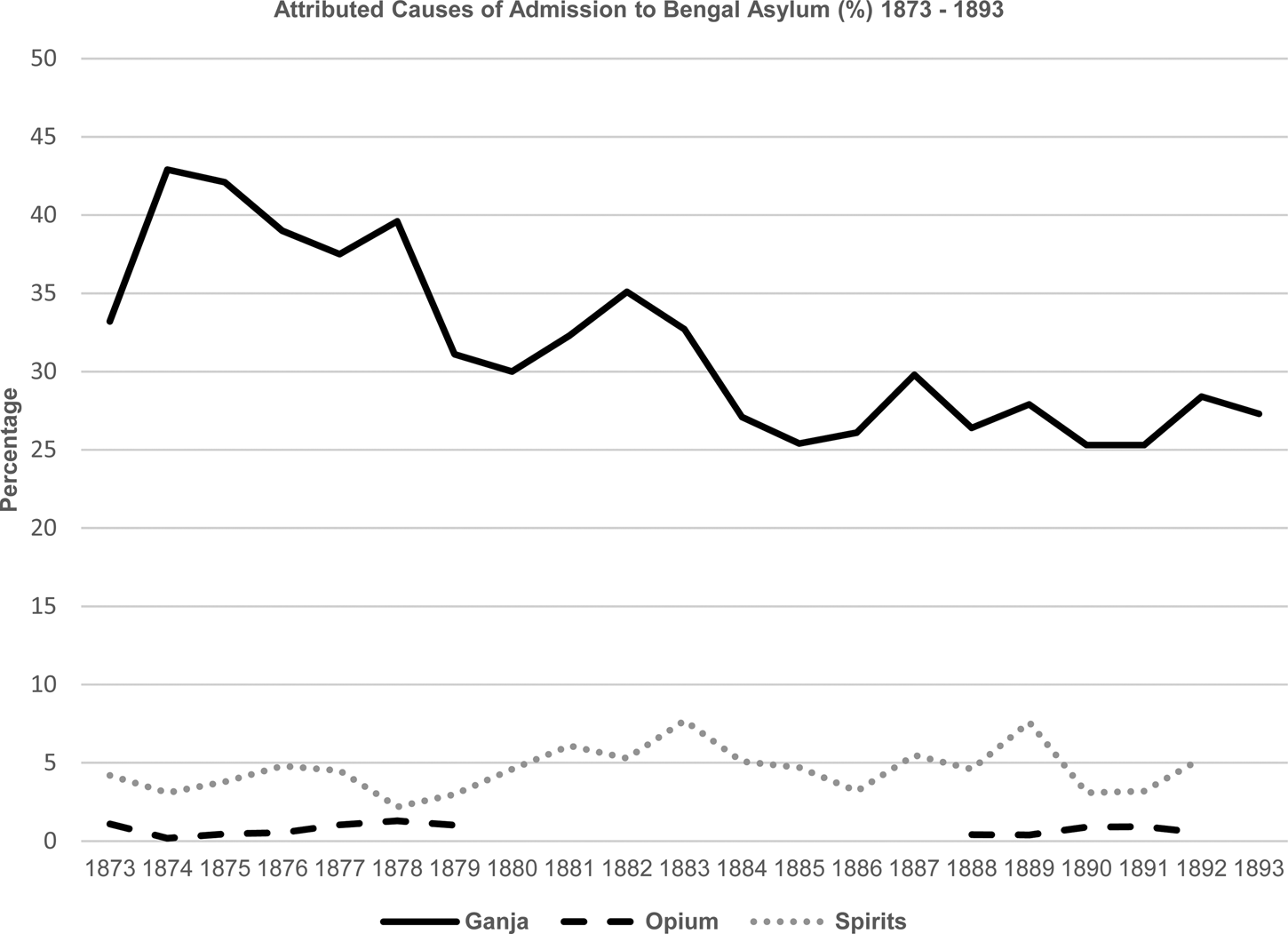
While opium and spirit consumption was a concern, ganja-related asylum admissions were 30–40 times opium-related and approximately 10-fold spirit-related admissions (Fig. 1).
Attributed causes of admission (ganja, opium and alcohol) to Bengal Asylum.

The rising concern culminated in the establishment of the Indian Hemp Drugs Commission in 1893 (IHDC, 1894a, 1894b, 1894c). The Commission included eight-persons [Financial Commissioner (President; European); Collector (revenue collector and district magistrate; European); Commissioner (regional administrative head; European); Surgeon-major (Professor of Chemistry; European); Raja (traditional Indian ruler); Native Indian administrators and Secretary (European)].
The Commission met from August 1893 through 1894, holding 86 meetings, receiving evidence from 1455 witnesses and visiting 30 cities in eight provinces and Burma. The nine-volume Report (3698 pages) now available online providing detailed information about cannabis use and its effects (http://digital.nls.uk/74908458).
The Commission elicited information from five main sources:
(1) Interviewing witnesses.
(2) Examination of asylum cases attributed to hemp drugs.
(3) Scientific investigation into physiological actions of hemp drugs.
(4) Review of official records and current literature on the subject.
(5) Observation of the habits and conditions of consumers of hemp in various parts of India.
Each witness received 70 framed questions on cannabis including several on insanity (available in the appendix). They came from diverse backgrounds, including included civil officers, medical officers, private practitioners, traditional health practitioners, cultivators, professional men, missionaries and cannabis-product sellers. These witnesses were divided into three classes:
(a) superior medical officers, including assistant surgeons
(b) hospital assistant class
(c) native practitioners who had not been trained in medical colleges, and who practiced according to native methods.
Additional evidence was also obtained from growers, sellers, users of cannabis-products and patient interviews.
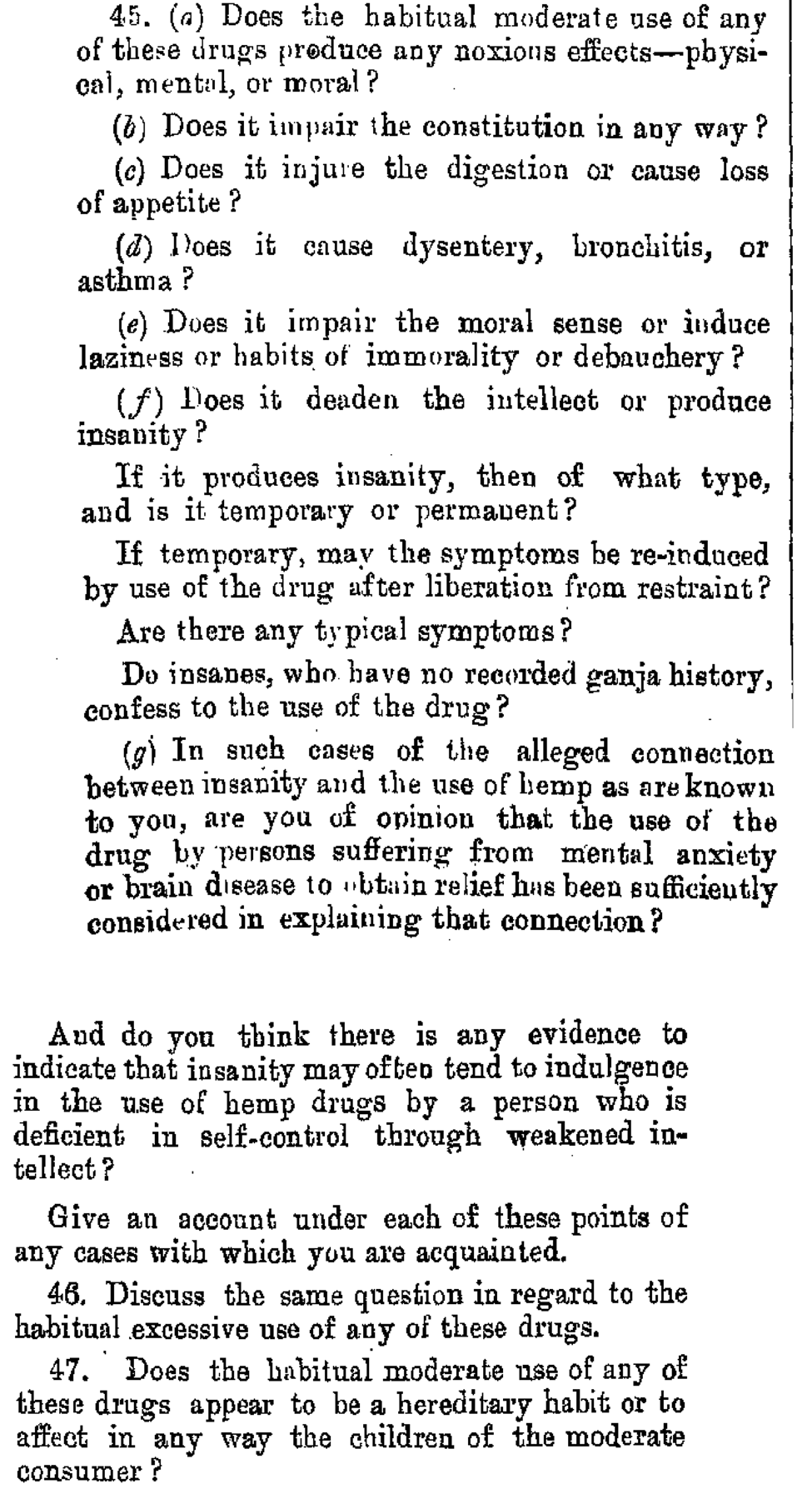
This paper focuses primarily on the specific aims of the Commission and questions relating to mental health (Fig. 2).
Commission questions regarding Indian Hemp and insanity (Question 45).

While the Commission explored broad cultivation, sale, taxation, criminality and health issues, it is possible several commissioners faced a conflict of interest, including the President, who was involved in the financial administration of the British Raj for which cannabis taxes were a major source of income.
The investigators relied heavily on interpreters. However, a culturally and linguistically matched panel member, Raja Soshi Sikhareswar Roy, an Indian noble from Bengal, highlighted translation and transcription errors on a number of occasions. Furthermore, the commission did not define the exact quantities of cannabis consumed and its judgments of ‘excessive, moderate and occasional’ use were subjective. With only one established medical member, diagnostic ascertainment was carried out on the proof of verifiable evidence and incidence rates may have been higher or lower. Raja Roy also noted some respondents gave biased answers because they were anxious about the impact of the study on their trade and taxation.
Results
While witness statements gave rich qualitative insight into mental-health effects of cannabis, the Commission's Report expressed frustration over the inconsistency, veracity and reliability of some responses as well as the lack of clinician inquiry into family history or hereditary predisposition to insanity (Box 1).
Sample witness statements (Indian Hemp Drugs Commission, Evidence of Witnesses, 1894b)
‘The smoking of these preparations affects the nervous system directly, and is hence more injurious than eating or drinking. In the latter case the drug is slowly introduced through the digestive system, and exerts its effect slowly. Smoking is more deleterious to the nervous system, and gives rise to emaciation and other well-known symptoms including insanity, sooner than drinking or eating the same drugs…consumed in equal quantities.’ ‘When ganja is smoked to excess, impotence results often in eight to ten years.’- British Civil Surgeon (Vol. 1; p. 446)
‘Regarding the well-known loss of memory caused by habitual smoking of ganja there is a Bengali proverb: He who smokes ganja forgets even his own father's name.’- British Civil Surgeon (Vol. 1; p. 447)
‘I know of people who when very young, about 17 or 18 years old, contracted the habit of smoking ganja, and within a short time they become inveterate ganja smokers. After some four years or so they became insane temporarily.’- Indian Teacher of Medical Jurisprudence (Vol. 1; p. 448)
‘It deadens the intellect and produces insanity only in those who are predisposed to it or whose nervous system is weak and excitable….’ (Evidence of Witnesses from Bengal and Assam; p. 352)
‘Majority of habitual consumers become permanently insane, never to be cured. Some become temporarily so, and become sane on breaking off the habit. Symptoms are apt to be re-induced on resuming the habit.’- Indian Medical Practitioner (Vol. 1; p. 452)
The 1892 asylum statistics, however, provided quantifiable data and individual patients’ case histories. Following inquiry by a magistrate, the civil surgeon would ascertain the past, personal and family history of the patient, and determine the circumstances to endorse a medical certificate of insanity for admission. Asylum registers documented background history with presumed cause of illness from 1885 forward.
The Indian Census return of 1891 reported four ‘insane persons’ per 10 000 population (IHDC, Vol. 2, page 218). There were 1344 admissions to all Indian asylums in 1892, of which 222 (16.5%) were attributed to the use of the hemp drug. Following stringent review by the Commission, 98 cases (7.3%) were deemed primarily a consequence of hemp drug use; comprising 12.6% of 775 ‘known’ causes of insanity. Patients without objectively demonstrable antecedents of cannabis use were excluded.
All but one patient was male; 82 Hindus and 16 ‘Muhammadans’ (Muslim), which was similar to the population distribution. Occupations spanned Indian social classes and castes, including students, teacher, constable and priest.
Cases of insanity ‘provoked by’ Indian hemp were classified as follows:
(a) Toxic insanity (39.8%)
(b) Mania (42.9%)
(c) Melancholia (3.1%)
(d) Dementia (4.1%) (*dementia praecox)
(e) Recovered with no mental aberration (10.2%)
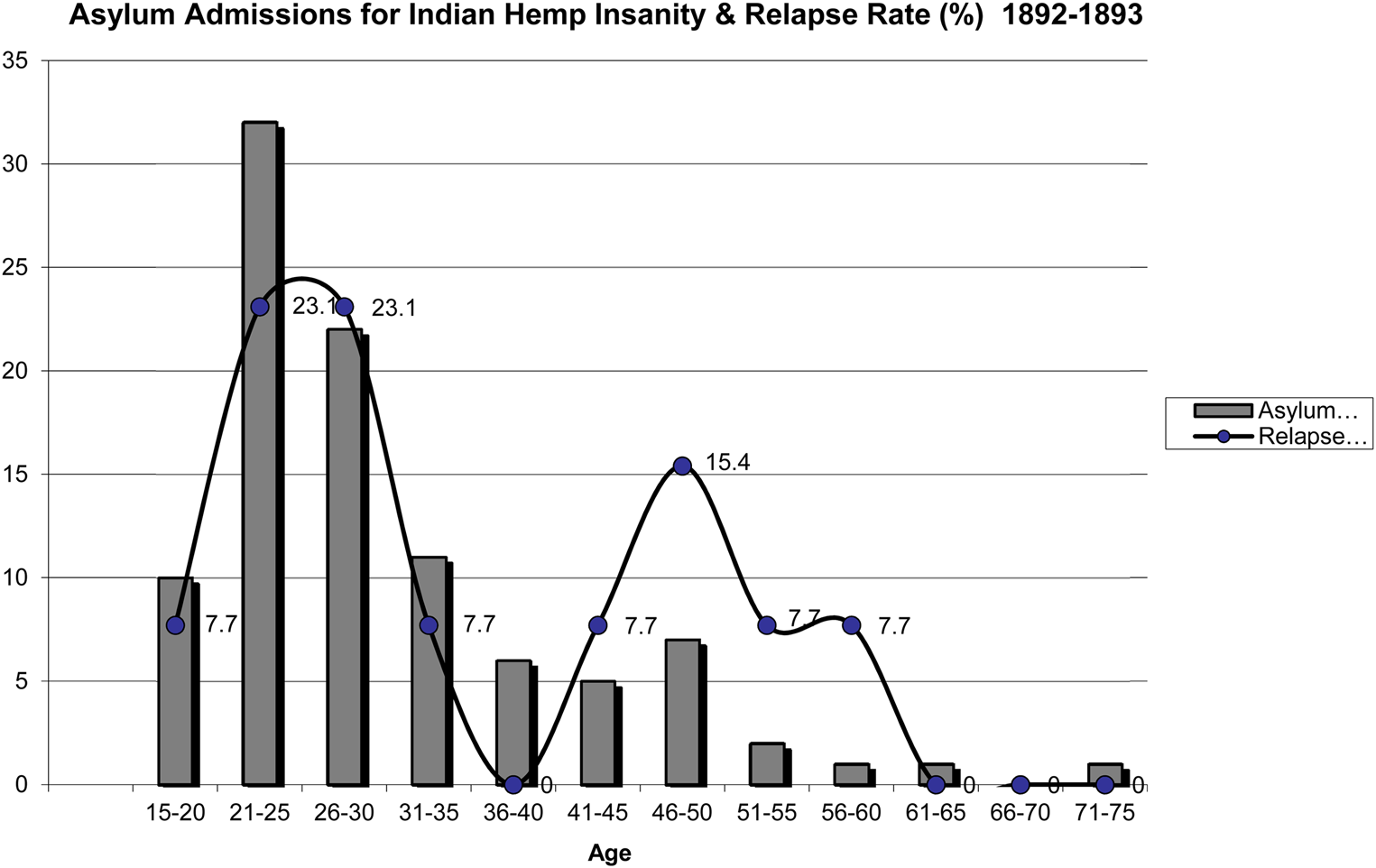
The majority of asylum patients with hemp insanity were young adults: 76.5% between 15 and 35 years; 33% aged 21 and 25 years and about 10% between 15 and 20 years. This younger age group also had the highest frequency of relapses; with 61.6% occurring between 15 and 35 years and 46.2% of relapses between 21 and 30 years. Nearly 8% of teenagers (15–20 years) relapsed.
A larger number of cannabis-related cases (61.2%) recovered while in the asylums with enforced abstinence compared with recovery of cases that were not attributed to hemp use (34.7%) whose illness persisted (Figs. 3 and 4).
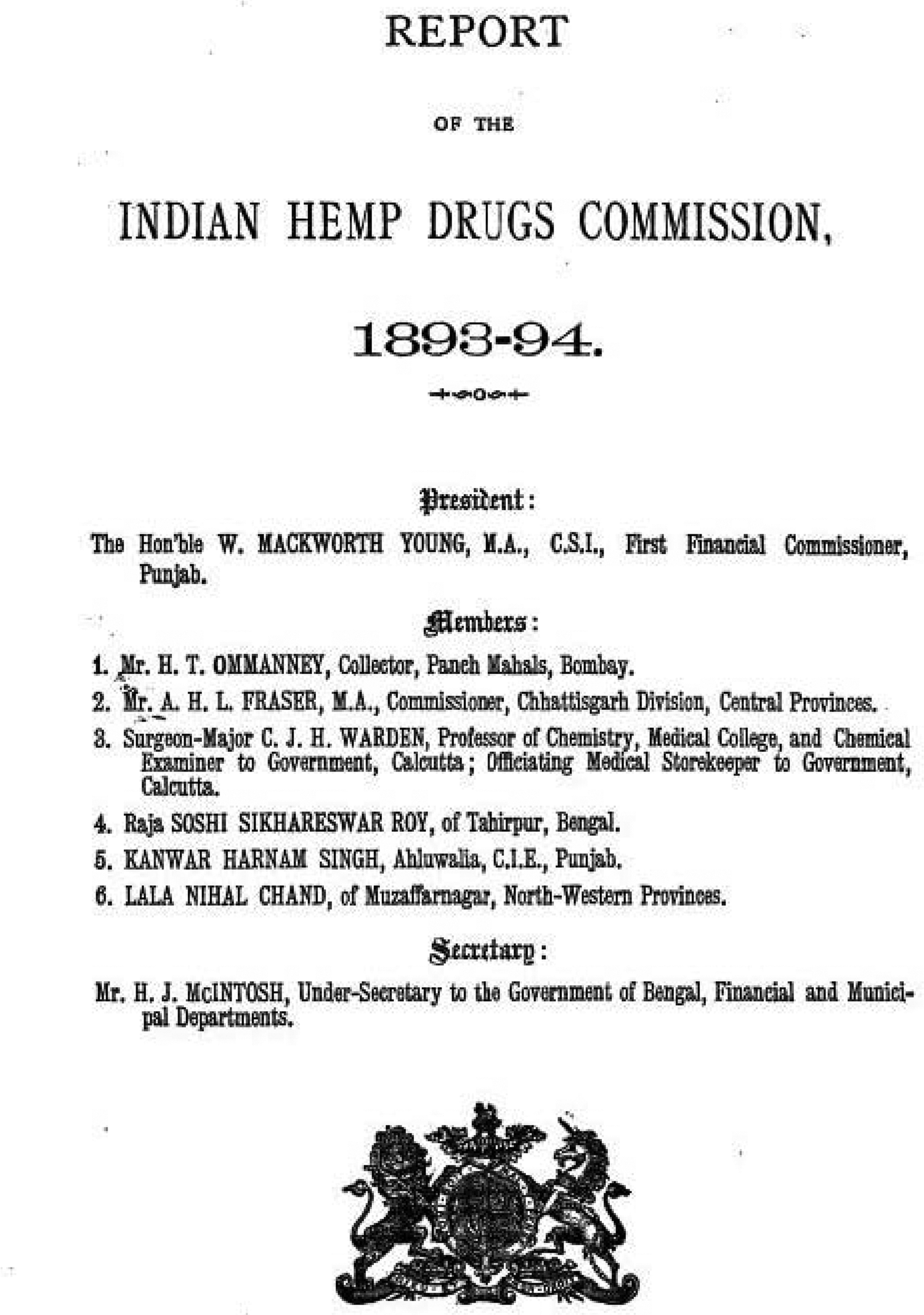
Report of the Indian Hemp Drugs Commission.

Admission and relapse ages of asylum patients with Indian hemp insanity (n = 98).

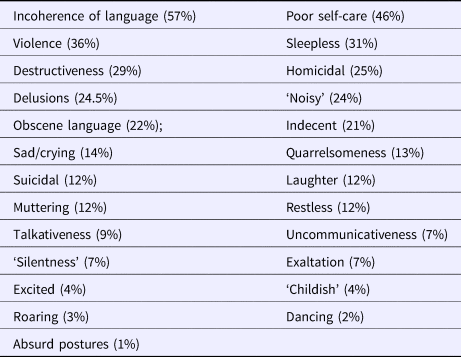
There were no specific ‘premonitory’ or pathognomonic symptoms of hemp insanity compared with other types of insanity (Table 1). However, some distinction was made between ‘acute ganja intoxication’ and ‘ganja drunkenness,’ or ‘continued immoderate use over a lengthened period of time.’ Acute ganja intoxication was marked by the extreme vehemence of the mania, ‘infuriated aspect, glaring and glistening eyes and red injected conjunctiva with shouting, vociferation, singing, pacing and sometimes aggression and running amok.’ The short-duration attack was often followed by perfect recovery and the patient oblivious of what took place. ‘Insanity from long-continued, immoderate use of ganja was, however, subject to relapses even after lengthened periods of freedom from symptoms.’ The Commission concluded that, with the exception perhaps of the shorter duration, determination of cause depends wholly upon history with ‘no typical brain lesions peculiar to hemp drug insanity, though definite lesions are doubtless present in chronic cases.’
Ranked symptoms and their frequency (%) in ‘Indian Hemp Insanity’ (n = 98)

Wording as documented in the Commission report.
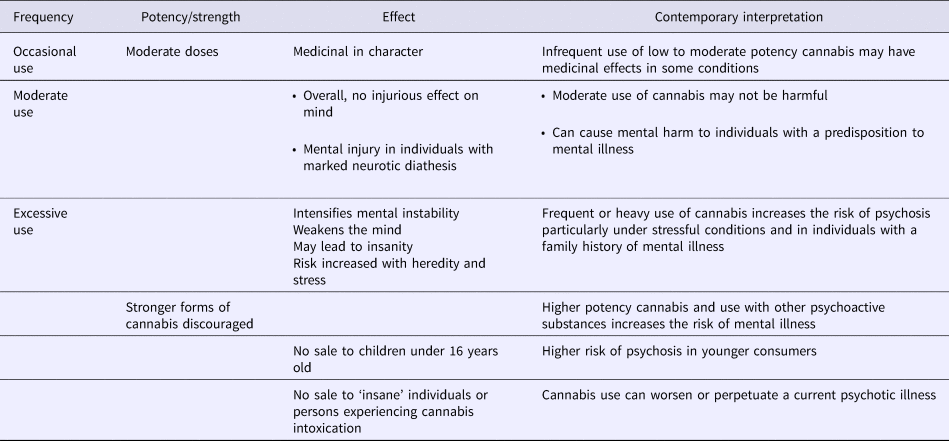
With respect to the alleged mental effects of different quantities and frequency of cannabis use, the Commission came to the following conclusions (IHDC, 1894a, 1894b, 1894c):
(1) ‘The occasional use of hemp in moderate doses may be beneficial; but this use may be regarded as medicinal in character.’
(2) ‘The moderate use of hemp drugs produces no injurious effects on the mind. It may indeed be accepted that in the case of specially marked neurotic diathesis, even the moderate use may produce mental injury.’ This observation suggested that in mentally vulnerable individuals, even moderate use may trigger mental health difficulties.
(3) Excessive use indicates and intensifies mental instability. It tends to weaken the mind. It may even lead to insanity. Two factors only are necessary for the causation of insanity, which are complementary: (a) heredity and (b) stress. It appears that the excessive use of hemp drugs may, induce insanity.
Furthermore, it was observed that some parts of the country grew stronger ganja than others and proposed ‘stronger forms’ should be discouraged from sale and prohibited to allow weaker ganja in the market. Alternatively, ganja could be left to oxidize for a year to reduce its potency before sale. Vendors with a license were discouraged from adulterating cannabis with other drugs. Given the deleterious effect on young people, it was suggested that retail vendors should not sell Indian hemp products to children under 16 years of age. With overwhelming evidence, it was also recommended that cannabis products should be restricted from sale to ‘insane’ persons or those under the influence of hemp (ganja, bhang or charas) at the time of purchase.
Finally, ‘opening of new shops should follow consultation with municipal members and local inhabitants, as shops will afford a greater facility for consumption and enable obnoxious drugs to reach new converts’ (Table 2).
Summary of key findings

Discussion
The study was unique in the broad scope of information gathering across the spectrum of cannabis growers, sellers and consumers as well as health and law enforcement observations. Such a nationwide study would be difficult to replicate currently.
The Indian Hemp Drugs Commission Report contained a rigorous analysis of the relationship between ‘Indian Hemp and Insanity.’ Cannabis plants were observed to yield different strains and characteristics of wild growing plants, cultivated crops, different regional and climatic conditions.
With the benefit of contemporary knowledge, the nineteenth century concern regarding the risk of impaired mental health at the time was not unfounded. Stringent criteria found rates of Indian Hemp insanity in 7–13% of patients. Symptoms suggested acute intoxication, affective disorder and possible schizophrenia (dementia praecox). Observations of brief or enduring features in different individuals are worthy of note, particularly the younger age of symptom onset and frequency of relapses in cannabis using youth. Cannabis use disorder in youth and young adults had a higher incidence and prevalence than older persons. It was also associated with higher rates of relapse and rehospitalization often in the context of reinstating cannabis use. With enforced abstinence, close to 60% cannabis use patients made a recovery in hospital. Observations also identified differences in the pharmacodynamics and pharmacokinetics of different smoked and ingested cannabis products.
Predating current systematic reviews, synthesized knowledge (WHO, 2016; National Academies of Sciences, 2017) and the descriptive psychopathology leading to the diagnosis of schizophrenia (1901), the discovery of dopamine (1952) (Carlsson and Carlsson, Reference Carlsson and Carlsson2006, 2014) and the psychoactive cannabinoid; delta-9-tetrahydrocannabinol (THC) in 1964 (Gaoni and Mechoulam, Reference Gaoni and Mechoulam1964), the study combined folk and traditional medical, spiritual and social knowledge with contemporary science. Modern recognition of psychosis, and dopamine receptors were important landmarks (Arvid Carlsson, 2019a, 2019b) in the development of effective antipsychotic medications. While acknowledging the limitations of applying historical research methods to current clinical presentations, many of the report's conclusions and recommendations foreshadowed future scientific discoveries and some still seem relevant today. For instance, there are different grades of cannabis potency with different THC-related psychoactive properties (Di Forti et al., Reference Di Forti, Morgan, Dazzan, Pariante, Mondelli, Marques, Handley, Luzi, Russo, Paparelli, Butt, Stilo, Wiffen, Powell and Murray2009; Cascini et al., Reference Cascini, Aiello and Di Tanna2012; ElSohly, Reference ElSohly, Mehmedic, Foster, Gon, Chandra and Church2016; Freeman and Swift, Reference Freeman and Swift2016). Lower psychoactive potency cannabis products, and ratios of other cannabinoids, particularly cannabidiol are currently being investigated for potential medicinal uses (Health Canada, 2018). Frequent and heavy use of cannabis increases the risk of psychosis and schizophrenia, particularly in young people (Casadio et al., Reference Casadio, Fernandes, Murray and Di Forti2011; Marconi et al., Reference Marconi, Di Forti, Lewis, Murray and Vassos2016; McHugh et al., Reference McHugh, McGorry, Yung, Lin, Wood, Hartmann and Nelson2017; Freeman et al., Reference Freeman, van der Pol, Kuijpers, Wisselink, Das, Rigter, van Laar, Griffiths, Swift, Niesink and Lynskey2018). This observation has been replicated in different countries and cultures (DiForti, Reference Di Forti, Quattrone, Freeman, Tripoli, Gayer-Anderson, Quigley, Rodriguez, Jongsma, Ferraro, La Cascia, La Barbera, Tarricone, Berardi, Szöke, Arango, Tortelli, Velthorst, Bernardo, Del-Ben, Menezes, Selten, Jones, Kirkbride, Rutten, de Haan, Sham, van Os, Lewis, Lynskey, Morgan and Murray2019). Furthermore, longitudinal studies have replicated the psychosis vulnerability of young cannabis users (Andreasson et al., Reference Andréasson, Allebeck, Engström and Rydberg1987; Arseneault et al., Reference Arseneault, Cannon, Poulton, Murray, Caspi and Moffitt2002; van Os et al., Reference van Os, Bak, Hanssen, Bijl, de Graaf and Verdoux2002; Clausen et al., Reference Clausen, Hjorthøj, Thorup, Jeppesen, Petersen, Bertelsen and Nordentoft2014). Relapses of psychotic symptoms among individuals with Indian hemp insanity were noted to be more prevalent with reinstated or continued cannabis use following an early psychotic episode a finding evidenced in the modern era by Schoeler et a l. (Reference Schoeler, Monk, Sami, Klamerus, Foglia, Brown, Camuri, Altamura, Murray and Bhattacharyya2016a, Reference Schoeler, Petros, Di Forti, Klamerus, Foglia, Ajnakina, Gayer-Anderson, Colizzi, Quattrone, Behlke, Shetty, McGuire, David, Murray and Bhattacharyya2016b). While psychosis has been reported to increase vulnerability of cannabis use (Minozzi et al., Reference Minozzi, Davoli, Bargagli, Amato, Vecchi and Perucci2010; Carney et al., Reference Carney, Cotter, Firth, Bradshaw and Yung2017) chronological accounts from subjects, families and witnesses were insufficient to determine prodromal psychosis preceding cannabis use.
It was prudent of the Commission to recommend restricting the sale of cannabis to young people, under 16 years with their greater risk of severe mental illness and higher rate of relapse. Current recommendations extend the age limit to between 18 and 25 years (WHO, 2016; National Academies, 2017). Furthermore, the suggestion that cannabis use should be discouraged in individuals with a personal or family history of mental illness is in keeping with contemporary advice (Fischer et al., Reference Fischer, Russell, Sabioni, van den Brink, Le Foll, Hall, Rehm and Room2017; Tibbo et al., Reference Tibbo, Crocker, Lam, Meyer, Sareen and Aitchison2018; DiForti, Reference Di Forti, Quattrone, Freeman, Tripoli, Gayer-Anderson, Quigley, Rodriguez, Jongsma, Ferraro, La Cascia, La Barbera, Tarricone, Berardi, Szöke, Arango, Tortelli, Velthorst, Bernardo, Del-Ben, Menezes, Selten, Jones, Kirkbride, Rutten, de Haan, Sham, van Os, Lewis, Lynskey, Morgan and Murray2019). Legislative suggestions regarding the opening, location and licensing of cannabis shops with municipal consultation are also relevant to current debates regarding regulating the ease of access and reducing the risk of misuse.
Early intervention, harm reduction and the use of antipsychotic medication (Zammit et al., Reference Zammit, Moore, Lingford-Hughes, Barnes, Jones, Burke and Lewis2008; McHugh et al., Reference McHugh, McGorry, Yung, Lin, Wood, Hartmann and Nelson2017) may alter cannabis psychosis trajectory, however, this nineteenth-century evidence, generated in the absence of current treatment modalities, reveals the natural history of the relationship between cannabis and mental illness.
Awareness of cannabis harms in youth were inconsistent though as argued by an editorial (Davison, Reference Davison1896) attributing the harmful effects of smoking to use at a ‘tender age’ and deep inhalation rather than the effects of opium or cannabis used. The findings of the Commission highlight the importance of stakeholder engagement in population studies and the implementation of primary prevention strategies. Historical observations also highlight the importance of Early Psychosis Intervention services in mental health care.
Conclusion
Revisiting the historical evidence from 1892, renews interest in the natural history of cannabinoids and the brain as well as an appreciation for research advances in genetics (Sherva et al., Reference Sherva, Wang, Kranzler, Zhao, Koesterer, Herman, Farrer and Gelernter2016; Verweij et al., Reference Verweij, Abdellaoui, Nivard, Sainz Cort, Ligthart, Draisma, Minică, Gillespie, Willemsen, Hottenga, Boomsma and Vink2017), neuroimaging, endocannabinoids, psychosis and antipsychotic treatments. However, it also reminds us that in the smoked, ingested and infused history of cannabis lies the need for more research and greater scientific understanding.
Author ORCIDs
Oyedeji A. Ayonrinde, 0000-0002-8799-4225
Financial support
None.
Conflict of interest
None.