


Not otherwise known as a bright era for the Jews of Christian Europe, the late fourteenth century nonetheless counted a number of thriving Jewish medical careers. One physician who surfaced in this period was Jacob b. Solomon of Avignon (sometimes called Jacob b. Solomon haTzarfati), whose career has been documented in two cities. In northern France, the land of his ancestors, we find him in the 1370s in the orbit of the University of Paris and its prestigious medical faculty. By the early 1380s, however, Jacob was at the papal court in Avignon, where or near where he was raised. There, in his own day at least, he achieved some renown while serving as physician to Pope Clement VII's brother, Count Pierre of Geneva.
North and south, Jacob's extant writings emphasize his French cultural loyalties and his reverence for both medical learning and his Christian patrons. This is evident in what is probably Jacob's least-known work, a tractate on vertigo that describes a consultation in Paris for an unnamed (but dizzy) knight beloved of the French king. Indeed, Jacob's treatise on vertigo reflects a close familiarity with the medical program at the University of Paris and a working relationship with at least one member of its senior medical faculty. While paying homage to the Paris curriculum and its masters, Jacob adapted their teachings and literary conventions in significant ways. By sensibly modifying the recommendations of his textbooks, notably Avicenna's Canon, Jacob acknowledged the limitations of theoretical prescriptions under real-life constraints. At the same time, he produced a literary work that is a startling blend of theory and practice, a remarkable accomplishment on two counts. First is the Parisian masters' disinclination toward original theoretical writing. But Jacob's literary production is also significant in the context of Jewish medical writing of this period, where enthusiasm for Christian (Latin) scholastic methods has been associated with the school of Jewish rationalist philosophers and physicians. In contrast, Jacob can be identified with the antirationalist, or traditionalist, camp of Jewish writers, where his literary originality may have had a special agenda.
Although my subject here is Jacob's medical activity and writing, he was a man of many talents. Some of his endeavors have merited sporadic attention over the years, but rarely, if ever, as expressions of the lively intelligence behind them all. In 1895, David Kaufmann published Jacob's “Evel rabbati,” a moving description of the latter's daughter's death from the plague in 1382–83.Footnote 2 Elliott Horowitz and Ron Barkai have since revisited this essay, the former for what it reveals of late medieval Jewish mourning practices and the latter for its depiction of familial ties during the great fourteenth-century epidemics.Footnote 3 I have also explored this work for its evidence of Jewish medical responses to the plague.Footnote 4 The “Evel rabbati” survives in a unique copy made in 1395, perhaps by the author, who appended it to a collection of his theological essays, treated by Georges Vajda in 1976.Footnote 5
With the exception of Vajda's essay, Jacob's theological essays have not been treated at all. They comprise the author's proof of creation ex nihilo; a discussion of the rabbinic acronym preserved in the Passover Haggadah for the ten biblical plagues visited upon the Egyptians; and an analysis of these same biblical plagues that engages medical theory to prove that the plagues were directly ordained by God and were not explicable by natural law. These writings help establish Jacob as someone who was concerned with the philosophical implications of rationalist exegesis, a concern that is equally evident in attacks in the “Evel rabbati” on the philosophical allegorists.
Jacob's scribal work has also been preserved in the famed Wolf Haggadah, first described by Kaufmann and more recently by Katrin Kogman-Appel.Footnote 6 As Kogman-Appel documented, the liturgy recorded by Jacob offers an uneasy blend of northern and southern practice. In some cases, he resolutely indicates his preference for French usage; in others, a curious hybridity characterizes the liturgical formulae of the text.Footnote 7
Jacob's writings do not merely suggest an astonishing range of interests and talents. A reading of all his extant works establishes certain themes and attitudes that transcend genre conventions and suggest genuine affinities of the author. These themes and attitudes include a fervent affirmation of French identity, striking in a man descended from French exiles who presumably lost all that they owned in the expulsion of 1306. Jacob himself must have been born shortly prior to or following the pandemic of 1348 (he had a twenty-one-year-old daughter in 1382), which suggests that his parents may have been living in Provence and then were chased into the Comtat Venaissin during anti-Jewish persecutions triggered by the Black Death. Jacob bitterly denounces Jewish associates whom he refers to as mitpalsifim and allegorists whose rationalist approach to sacred texts undermines Jewish learning, memory, and life. These denunciations, like his equally fervent affirmations of his French colleagues and their learning, testify to a notable scientific and theological conservatism that pervades both his response to the plague epidemic and questions of religious faith and practice.
Jacob's theological and scientific conservatism is the hallmark not only of his northern kin but of the University of Paris and its scholars as well.Footnote 8 It is frequently cited in discussions of the Paris physicians' collaborative communiqué on the 1348 plague, a treatise that ultimately saw the hand of God in the pandemic's devastation. It also characterizes at least two graduates of the Parisian school, Jean de Tournamire and Jacme d'Agramant, both of whom spent time at the Avignon court when Jacob was there.
Certainly, during the years of the Avignon popes and throughout the years of the Great Schism, traffic between royal Paris and Avignon was continuous and heavy. From at least the mid-century, Clement VI (r. 1342–52), Innocent VI (r. 1352–62), Urban V (r. 1362–70), and Gregory XI (r. 1370–78) hailed from French-speaking lands, and they advanced the will of French kings, surrounding themselves with appointees, from notaries to physicians to cardinals, who were either themselves from French lands or sympathetic to French interests. Indeed, upon the death of Gregory XI in 1378, it was King Charles V of France who convened a meeting of bishops and clerks at the University of Paris, ostensibly in an effort to bring an end to the Schism and its dual papacy.Footnote 9 That effort failed, and Clement VII, elected to the Avignon papacy in 1378, was one of the formidably francophile counts of Geneva.Footnote 10 Had Jacob been a Christian cleric or courtier, his movement between Avignon and Paris would not have been odd at all; as noted, that traffic was continuous. For a Christian physician, his career path would have seemed slightly odder, as medical careers generally traveled in the opposite direction.Footnote 11 A great many of the papal physicians in Avignon had studied and taught at the University of Paris, while only a handful of southerners found prestige in the north.Footnote 12 According to Pearl Kibre, the election of Clement VII precipitated a second exodus of Parisian masters in another direction entirely, when faculty who remained loyal to the Roman pope (Urban VI) relocated to Prague in 1381. Those who stayed in Paris, or resettled in the Avignon court, were by default supporters of the Avignon papacy, Clement VII, and his ties to the French king.Footnote 13
Jacob's appearance in Paris, then, is remarkable first for his direction of movement, which originated in the papal lands of the Comtat Venaissin and brought him to the north; his return journey from Paris to the papal court in Avignon was far more typical for a Paris-based physician. For a Jewish physician, however, his journey was unusual for other reasons as well. Certainly the Parisian (and Italian) saturation of the Avignon court meant that Jacob's northern and southern sojourns were not truly at cultural extremes. Nonetheless, it is hard to imagine how he arrived in Paris without an established reputation—in fact, he signed his treatise as משטר' יעקב מאויניון צרפתי, “Maestre Jacob of Avignon, the Frenchman,” attesting to credentials already in hand. Moreover, it is unlikely that he could have undertaken his initial studies in Paris. Although Jews were readmitted to the kingdom in 1359, and were present in the city from the mid-1360s, their numbers were small and their professional activities linked primarily to lending.Footnote 14 Indeed, the University of Paris, where classes were taught in Latin until the end of the fifteenth century, has left behind no evidence of openness to Jewish students of the sort Joseph Shatzmiller claimed to have found—for a tiny number of cases—in Montpellier and Bologna during this period.Footnote 15 However, it is also true that Charles V, France's king through most of the 1370s, respected and enforced existing Jewish privileges, and the small Jewish community was relatively robust during these years.Footnote 16
With the death of Charles V in 1380, and the accession of the young Charles VI to the French throne, the small Jewish community once again encountered a period of unrest, capped by two years of anti-Jewish riots in 1380–82. Jacob's reverse itinerary is thus easier to plot than his journey north. His career in Avignon in the 1380s and 1390s must have been linked to his time in Paris and to his royal and university contacts. Most likely, his sojourn in Paris concluded with the election of Clement VII in 1378, when a new wave of French appointees headed south, and Jacob's Parisian connections steered him to the papal court. As we shall see, the treatise on vertigo was a Parisian work. It vividly reveals a Jewish physician at work among Christian colleagues, treating a Christian patient who was closely connected to the court of Charles V. The treatise is equally unusual for its style, a dialectical weave of theory and practice with a conscious incorporation of narrative. Its literary qualities attest to an author who was willing to experiment with established conventions in provocative ways.
Jacob b. Solomon's treatise on vertigo is preserved in a single manuscript, MS Oxford Bodleian 4o, 174 (Neubauer 2583). A fifteenth-century copy written in Ashkenazic script (attesting to its later influence in northern lands), the manuscript is a medical miscellany containing four works: a paraphrase of Maimonides' commentary on Galen's commentary on the Aphorisms of Hippocrates, in Moses ibn Tibbon's translation (fols. 1a–26a); Jacob b. Solomon's essay on vertigo (fols. 26a–30b); Jean de St. Amand's commentary on the Antidotarium Nicolai, in an anonymous Hebrew translation (fols. 31b–175b); and medical recipes, of anonymous authorship (fol. 175b). The combination testifies to the practical interests of the copyist, whose scrawl suggests a work that was created for personal use.
The Oxford anthology also testifies to the adoption of a Parisian-style curriculum among northern Jewish physicians. Maimonides' aphoristic commentary, the Pirke refu'ah, not only recuperated a text central to the Paris curriculum but also was, in Latin translation, recommended to his students by the Paris-trained Jean de Tournamire.Footnote 17 Jean de St. Amand, who was active in and around Paris between 1261 and 1298, has been described by Danielle Jacquart as one of the “most illustrious representatives” of Parisian scholarly life.Footnote 18 The Antidotarium Nicolai officially entered the required reading list for medical students at Paris in the statutes of 1274.Footnote 19 By association, therefore, the copyist linked Jacob's treatise to canonic Parisian texts.
The author would doubtless have been pleased, as his Parisian association was important to him. His opening paragraph establishes that he was part of a consulting team assembled by a high-ranking lord who is later identified as the king (Charles V). Jacob claims that he is writing at the king's command and refers to a parallel document written by his Christian colleagues (now lost to us):

Said Jacob Tsarfati: Since I have been commanded and charged by a lord of high rank to make known my examination of the disease that befell a certain knight, among the most beloved and close to him. … And on behalf of my masters, those among whom I was called about this disease, I have responded to him with this, in as abridged a form as possible, supporting myself and relying on what those same respected physicians have written about this same invalid … [fol. 26b]
Other passages, including the following example, refer almost casually to the presence of a group or team of practitioners involved in this case:

And afterward, he should eat the things prepared for him, which have been ordered for him by the physicians, my teachers, and which are close to what I say here out of my own investigation. … [fol. 28b]
Jacob's account of his collaboration with his Christian teachers and colleagues is embedded in a technically sophisticated, theoretical work. He carefully divides his essay into eight sections, moving from a definition of the disease to its symptoms, substance (humoral composition), point of origin in the body (the brain with, in this case, the participation of the stomach), the prognosis, an exercise regimen, a dietary regimen, and pharmaceutical therapy. The text displays a deft facility with scholastic exposition, painstakingly developing a diagnosis and treatment by means of logical categories and deductions. These theoretical sections of the treatise demonstrate the author's immersion in his sources and in the hermeneutics of reading them; they are deliberate attempts to convince readers of Jacob's facility with the high theory of university medicine.
Jacob's admiration for scholastic method would not have been unique among Jewish physicians of his day. As detailed in an important article by Luis García Ballester, Lola Ferre, and Eduard Feliu, there was a conscious effort among Jewish medical men to import the model represented by the Latin curriculum and methods into Jewish learning.Footnote 20 For a number of reasons, that effort met with mixed success. Over the course of the fourteenth century, however, as García Ballester, Ferre, and Feliu demonstrate, medical translators showed an increasing preference for theoretical medical writing over the practical medical works that had drawn translators in the earlier part of the century.Footnote 21 Unsurprisingly, scholars have linked the production of this kind of writing with the rationalist Jewish camp and have assumed a corresponding link between opposition to scholastics and the natural sciences and the so-called traditionalists.Footnote 22 Jacob's case suggests, among other things, that this linkage is overly facile. An inherently conservative theologian, he nonetheless adopted scholastic discourse with enthusiasm, and his treatise must have been intended as an endorsement of the method as much as an illustration of its application.
Typical is the introduction to section 5, on prognosis, which is defined as the process of clarifying whether the patient's cure is “guaranteed” (fol. 28a). Because of the duration of the illness, which has allowed the buildup of superfluities that have weakened the patient's faculties—a condition further exacerbated by age—his cure is not “guaranteed.” However, because the patient's condition is also one that is neither healthy nor unhealthy, but sometimes one and sometimes the other, a cure is also not “impossible”:

And since it is neither of the two extremes, it must of necessity be the middle [option], which is that it is without doubt possible to treat. And because there are three categories of the possible, one that something's existence is more likely than its absence, the second that its absence is more likely than its existence, and the third a combination of both of these, i.e., that its existence is not more likely than its absence and its absence is not more likely than its existence, as is entirely explained in the book of rhetoric they call Peri ermoniae, therefore I say that the treatment of this disease in this man is within the realm of the possible … [fol. 28b]
Remarkably, however, amid all his theoretical display, Jacob never loses sight of the patient at the bottom of the demonstrations of learning. Woven into the technical discussions, an extraordinary portrait of his dizzy charge leaps forth—a man of mixed choleric and melancholic temperament, close to sixty years of age, “agile and intelligent, sharp-witted and a big eater and drinker.” But he is sick:
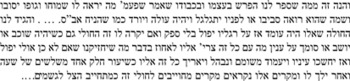
This is what the knight told us himself. He said that sometimes it seemed to him that his brain and body would spin and what he saw in front of him would revolve and go up and down as Avicenna claimed … [so] that if he stood on his feet he would surely fall, and if … he was lying or sitting or leaning on something, he would have to grab something and hold it tightly or else he might fall. Then his sight would darken and he would remain dazed and confused. This would last approximately two minutes and then fade. These symptoms are called requisite symptoms for this disease, as necessary as clouds are for rain … [fol. 26b]
Jacob elaborates further:

He also told us that prior to an incident he would hear a ringing in his ears, especially the left one, and it was as if a wind rose to his head and confused him, and a vapor would rise from his body to his face following pain and heaviness in his head. [fol. 26b]
Sometimes, the knight continues, the attacks came after he had indulged too heavily at dinner, but sometimes they came unexpectedly, when he was anxious or afraid. His palms and nostrils would grow dry, and he had been scratchy and itchy for years (fol. 26b). These detailed descriptions of his symptoms, presumably provided in response to questioning by his physicians, are incorporated faithfully into the treatise. In the process, a vivid portrait emerges of a high-strung, hard-living, sometimes volatile man who has spent years indulging his appetites amid the luxuries and comforts of the royal court. Equally vivid is the context in which his illness has taken hold, particularly through the temptations of an opulent social setting that is now trying his learned physicians.
Jacob defers frequently to his colleagues, whom, as we have seen, he calls rabbotai (my masters) and morai (my teachers). He explicitly names one of them:

And secondly, I rely on his [i.e., the patient's] intention and wisdom; this important man will seek to heed the advice of the physicians both because of his desire for health and because of his desire to be free of their supervision. Here I will abridge mention of these matters as I can due to my deficiencies and [also] to much of what was ordered for him by those physicians who were my teachers and in whose company I was called to visit him and consult, and what was prescribed for him by the great sage and physician, Maestre Gilbert, the physician to the king of France, may he live, who had been at his disposal for many days and particularly at the onset of his illness … [fol. 28b]
The Gilbert to whom Jacob refers can be identified. He must be Gilbert (Guibert, transcribed in the manuscript as Glibert) of Celsoy, regent master on the faculty of the University of Paris and physician to Kings Jean II, Charles V, and Charles VI.Footnote 23 Guibert led an illustrious career in Paris. As was the case with his university colleagues, he was in religious orders: Unlike the scholars of Provence, Aragon, or Italy, the scholars of Paris were all clerics. Guibert was one of a small handful of faculty members over the fourteenth and fifteenth centuries who received ecclesiastical dispensation to teach.Footnote 24 Moreover, he was one of only three fourteenth-century faculty of noble birth (on his mother's side); in 1374, he received letters of nobility from the king.Footnote 25 Between the time he received his first degree as a maître ès arts in 1349 and his death in 1390, Guibert also amassed a long list of ecclesiastical benefices that surely left him a wealthy man.Footnote 26
But Guibert was not merely a figure of considerable prestige whose prominence might have attracted Jacob's professional interest and admiration. As a nobleman and tonsured priest, he was an embodiment of the royal and ecclesiastical hierarchies that a Jew might be expected to eye with some reserve, if not resentment—particularly a Jew whose status as an exile was hardly a matter of ancient history. But not, apparently, Jacob, whose adulation for “the great sage and physician” is explicit. And here one more fact of Guibert's life bears mention. The Paris program, we know, was preeminently oriented toward producing men of practice over theory. To this end, every student was required to spend two years in the company of a faculty master on his rounds in Paris or, alternatively, two months in practice in the suburbs.Footnote 27 In fact, even a bachelor in medicine who was as yet unlicensed as a master was forbidden to visit patients or to prescribe treatment or medications unless he was accompanied by a master of the Paris faculty.Footnote 28
With its distinctive orientation toward practice, the Paris faculty cultivated the group consultation. Consultations were also popular in Italy, where documentation survives to give a sense of how these group sessions contributed to the socialization of the young physician. Nonetheless, records of Parisian consultations are not vast, and the rare survivals exhibit none of the expansive narrative or scholastic flair that Jacob so enthusiastically unfolds.Footnote 29 Moreover, they rarely mention theory or theoretical concerns.Footnote 30 The consultation records of Guillaume Boucher, for instance, tersely list the patients' condition, status, and recommended treatment. Among the 111 cases preserved, a case of paralysis, treated at some length, is of interest because both Galen and Avicenna included this affliction with vertigo (and epilepsy) among the kinetic disorders originating in the brain. Boucher's recommended therapy, based also in the Canon, bears some kinship to that prescribed by Jacob.Footnote 31 Nonetheless, Jacob's treatise, as a description of a consulting team at work, including both a case narrative and a theoretical treatment of the illness in question, is unique.
Guibert of Celsoy led consultation teams, and we know that he permitted Jews and other non-university practitioners to participate in them. In 1420, several decades after his death, an empiric pursued by the university for practicing without a license claimed in his defense that Guibert had included him on consultations and frequently solicited his input.Footnote 32 It is not unlikely at all, then, that Guibert's liberality toward non-university practitioners, combined with his social prestige, brought Jacob admiringly within his orbit. Certainly this liberality was not an outstanding characteristic of the Paris masters, who had asserted their right to prosecute unlicensed practitioners since the early thirteenth century and who exercised this right with increasing vigor, if not success, from the later thirteenth century through the fifteenth.Footnote 33
In Avignon, a similar tolerance of Jewish colleagues characterized the papal physician and Montpellier master Jean de Tournemire, whose path also probably intersected with Jacob's over the next decade. As I argued in No Place of Rest, Jacob's Avignon career, during which he served as physician to the pope's brother, Count Pierre of Geneva, would likely have brought him into contact with Jean.Footnote 34 Moreover, Jean, like Guibert, was another example of a Parisian-trained physician who made his way to the papal court in Avignon. He, too, extended himself to Jewish practitioners.Footnote 35 Jean's claim that his daughter Marguerite was miraculously healed of a breast tumor with relics from the robe and scourge of Pierre of Luxembourg may have attracted Jacob's attention, particularly in the aftermath of his own daughter Esther's death from the plague that swept through Avignon from late summer 1382 into the early spring of the following year.Footnote 36 Jean, as we know, put his claim into writing, submitting a lengthy deposition on behalf of Pierre's canonization in 1395. Jacob, who may have treated another patient subsequently healed by the recently deceased Pierre, edited his own writings that same year. In any event, his Parisian treatise testifies more than amply to the possibility of collaborative interaction among Jewish and Christian physicians in northern France.
If Jacob's explicit references to his colleagues and setting pay homage to the Parisian milieu, the works cited in his essay, and the format it takes, also defer to Parisian standards. Avicenna's Canon, of course, was of primary importance in Montpellier and the Italian universities. Indeed, Benjamin Richler told us that, with more than 100 manuscript copies extant today, it was the most popular medical work among Jewish physicians in the Middle Ages.Footnote 37 Natan haMeati's translation of 1279, produced in Rome, was subsequently modified by Joshua haLorki to create the version published in Naples in 1491.Footnote 38 Jacob's citations echo closely the language of the Lorki-Meati translation, which he must have seen in manuscript.
Jacob cites other authorities as well, made up of a small but select group of writers and works that were core to the university curriculum in Paris and, in one case, beyond: Galen, especially the Tegni (Ars Parva; Sefer ha-Melakhah ha-ketahnah) and On the Art of Healing (Sefer ha-Taḥbolet); Hippocrates' Aphorisms with Galen's commentary, as rendered loosely in Maimonides' Pirke refu'ah; Averroes's Colliget (Kulliyāt); Isaac Israeli's works (untitled but most likely the Universal and Particular Diets, which were incorporated early on into the Paris curriculum), Aristotle's Two Questions (?) and the Peri ermoniae (a rhetorical work); and, finally, a regimen falsely attributed to the Montpellier master Arnau of Villanova.Footnote 39
So, too, the dizzy knight is offered a treatment that defers to that outlined in the Canon. Like Avicenna, Jacob begins by ordering his patient to exercise in the morning and evening.Footnote 40 Jacob's dietary recommendations, which are not found in the Canon, address a type of vertigo that originates in an excess of phlegmatic humor in the brain. In the knight's case—and here the patient's description of evening excesses must have been helpful—the stomach plays a contributing role. Because phlegmatic humor is cold and moist, and humoral medicine tries to counteract the properties of superfluities, foods are prescribed with hot and dry properties. The concluding list of drugs emphasizes plants with laxative or purgative qualities, a number of which are also found in the Canon. Footnote 41 Some, such as coloquintida, yera pigra galieni, or ginger, were known to purge phlegmatic superfluities. These were offset by drugs to calm the stomach, such as chamomile and cinnamon, or to treat headaches and ailments of the brain, such as melissa, coriander, or metridatum.
Jacob demonstrates some flexibility when applying his book learning to a headstrong patient who is set in his ways. Avicenna's primary recommendations for vertigo originating in the brain and stomach are to bleed the patient (thereby releasing excess humor) or to induce vomiting.Footnote 42 In contrast, Jacob is reluctant to pursue aggressive treatment, and he sometimes defers to his patient's age and the advanced stage of his condition, perhaps acknowledging a wily sufferer accustomed to living large. An impressive number of the patient's vertiginous episodes are precipitated by heavy sessions of eating and drinking, as the following accounts make clear:

He also told us that he had had this illness for about two years, and it would come upon him frequently, especially after he had sated himself with meat, wine, and a variety of foods … or after he would sleep after overeating. [Then] he would break out in a sweat with fever and burning in his face and feel hot all over, after which the illness would strike him … [fol. 26b]

He said that once after eating and drinking heavily at the evening meal, when he already had drunk scented wine three times before lying down, and after he had become heated from exerting himself greatly earlier, his face started burning and a smoke like a furnace rose through his entire body and face. No sooner did this happen than all he saw started spinning and going around, as if the heavens and earth reversed. After a short while he was restored to his former strength. [fol. 27b]
Changing this behavior is not an easy process. “Due to his greatness and conduct,” we learn, the knight is used to demanding large servings of food and drink and getting what he wants (fol. 28a). This has promoted an unfortunate alteration in his complexion, and his enablers are an ever-present obstacle to change. Acknowledging these limits, Jacob's emphasis is on moderate dietary adjustments, including smaller meals and only three small glasses of wine per night. Clearly, his diagnostic skills included a realistic assessment of the extent of his authority when temptation and habit were strong:

And the drink that is fitting for him to have for this sickness is honeyed water cooked with a bit of ginger or vanilla, which is called mormiel, or water with the sugar of raisins. However, because of his age and because it would already be difficult for him to leave off drinking wine when he has already grown accustomed to it, it is proper for him to drink wine that is of medium strength and very clear in color, of a good scent[?] and taste, and it should be diluted to half-strength about an hour before he drinks it with warm water after it has been heated. He should not drink more than three times during his meal, and moreover, it is better to drink after eating, and to use small cups. He should not eat too many varied foodstuffs and not to satiation, even of one type. [fol. 29b]
Light, easily digestible foods (by medieval calculation) are optimal. Bread should be made from flour that originates in a cold, dry climate, as it stores heat that will be released when eaten. It should include barley flour and be well kneaded and baked in the oven (fol. 29a). Foods prepared with barley flour or chickpea broth (considered a digestive and appetite stimulant) are acceptable, but should be followed by a walk to improve digestion, and then a nap of “three to four hours [sic!]” (fol. 29b).Footnote 43 If partridges, goose, and goat meat are undesirable during Lent, moreover, Jacob offers his patient a list of suitable fish (fol. 29b). Best are fish with fins and scales, but crustaceans are on the list as well. The physicians have apparently provided the knight with a separate regimen (presumably in the vernacular) that details these instructions more fully, and the knight is requested to follow them. Prior to bedtime, he can try massaging his legs with warm water, to which herbs may be added (chamomile, violets, and others). A final section recommends various drugs, also prepared by “my teachers the physicians,” which may be consumed either with liquids or in the form of pills. Laxatives and emetics should be used cautiously, and Jacob offers one of his favorite recipes for a purgative. Bleeding is less advisable because of the patient's age, but might be considered in the spring; cupping should definitely be applied to the head and back of the neck, especially on full moons (fol. 30a).
Jacob's naptime prescription comes with an interesting caveat. He comments,

Even though it is bad to sleep during the day, as Avicenna said in Book 1, Fen 3, if he has become accustomed to it, he should not leave off entirely and especially not abruptly, because habits are not rational, and experience trumps reason, as Avicenna said in Fen 3 section 7. He should sleep on his right side and raise his headrest and cover himself more than he does when awake, for the natural heat will penetrate and leave him cool on the outside. According to many, he should not sleep for a long time, but others say as long as he needs, and it depends upon the regimen … [fol. 29b]
As Jacob's primary authority, the Canon, contradicts his recommendation, he defensively countermands it with a general precept about the strength of habit and “experience”—ironically, taken from a later section of the passage he is citing. In fact, Book 1 of the Canon, with its disapproval of daytime sleep, is a general introduction to medical principles. Avicenna's specific discussion of vertigo is in Book 3, the section of the Canon dedicated to pathology; indeed, Jacob has already relied heavily on this section, which treats a family of diseases moving from vertigo to epilepsy, lethargy, and paralysis. Relatively speaking, Avicenna spends little time on vertigo, the least severe of these conditions. Primarily, as noted, he advocates bleeding and purging, ointments and drugs, with a final admonition to have the patient avoid looking at spinning objects or tall towers, rivers, hills, or high rooftops.Footnote 44
The Canon's treatment of vertigo says nothing about daytime sleep. But its treatment of epilepsy, vertigo's sister disease, also warns strongly against too much sleeping during the day, “which is very harmful, especially on a full stomach.”Footnote 45 Jacob surely noted Avicenna's disapproval in this passage, but he cites the milder and more generic warning of Book 1 instead, arguably because of its proximity to a useful precept about the force of habit. This permits him to downplay Avicenna's disapproval by deferring to Avicenna himself. Consequently, napping seems less pernicious, particularly if, as in the knight's case, it has already become habitual. Jacob's ability to shuttle between the world of his patient and the lore of his books thus reflects more than passive receptivity of the latter. He is making selective use of his texts to adapt them to real conditions, while demonstrating his sensitivity to a headstrong patient and the temptations of the knight's way of life. This is partly because the patient and his lifestyle pose obstacles to recovery, but equally because the knight presents a dynamic, living embodiment of what is otherwise theoretical and abstract. Notably, too, Jacob mediates the gap between patient and theory, particular and general, with a remarkable tool—narrative—a point to which I will return later.
In sum, Jacob's treatise is a hybrid genre, shuttling between theory and practice in a way that may not have been unique in life but seems to be so in medical literature. True, his willingness to step away from his textbooks is a far cry from the dialectical blend of theory and practice that Gad Freudenthal wished we could find among medieval Jewish physicians.Footnote 46 Nonetheless, it minimally reflects the integration of practical knowledge into what passed for medieval “experience.”Footnote 47 And it raises some difficult questions for consideration as well.
Why compose a treatise in this form? For whom was it intended? Although Jacob tells us that he is writing at the “command of the king,” Charles V of France, this is a puzzling assertion. Why would Charles V have wished a treatise in Hebrew? Theoretical writing, presumably of little interest to the king for its content, was disdained by the medical faculty at the University of Paris; notably, the king also demanded an account of this case from Jacob's Christian colleagues (the plague treatise of the Parisian masters was also written in response to a royal command). As Jacob himself notes, the knight has already received a written regimen of some sort from the consulting physicians. This is not necessarily the same document sought by the king, but it would have included, as Jacob periodically indicates, explicit instructions and recipes for the patient's diet and drugs. Even if he could have read Hebrew, therefore, much of the practical contents of Jacob's essay would have been irrelevant to the knight. Were Jacob's presence and professional skills so noteworthy that they came to the king's ear? As we know that the knight was one of Charles's favorites, the king might have wished to preserve some record of the episode. From this perspective, Jacob's treatise serves both as a testimony to the intellectual prestige of the Parisian medical community and as a road map for other physicians, Jewish or with access to Jewish translators, in need of its knowledge. Alternatively, Jacob's treatise may have been written to bolster his career in Avignon, where writing mattered more and Jewish competition was plentiful.
Certainly, neither the Christian physicians in the courts of Paris and Avignon nor their rulers were literate in Hebrew. Thus, on some level, even if Jacob's treatise was composed in response to a royal request, it was written to be read by Jewish physicians. For these readers, Jacob's learning and exposition offer an impressive testimony to his professional success as well as his erudition. While vertigo was probably not a very common condition, the treatise demonstrates the way one should think about medical problems, providing methods for diagnosing, understanding, and treating them, and showing how one might balance theoretical learning against the realities of practice. In this context, the notations in the margins of the manuscript, some of which were clipped by later binders, testify to the fact that a vigilant reader did make use of this treatise, at times identifying or supplementing Jacob's sources, and at times offering corrections.
It is also true that while the patron commands, the writer preserves his own agenda. Concluding his treatise, Jacob suggests some of his own motives for writing. His admiration for his French “teachers” is linked explicitly to his admiration for the type of thinking they represent, and its particular embodiment of an ideal:
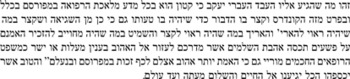
This is what came down to the Hebrew servant Jacob, for he is little in all knowledge of the art of medicine, from what is known generally and in particular in this treatise. He has abridged his speech to contain his error, even though it [still] has mistakes, since he has abridged what he should have expanded and expanded what he should have abridged, and elided what he should have mentioned. However, the love of the enlightened ones overlooks sins; it is their way to help the beloved in the matter of attributes or righteousness. That is the law of the physicians and sages, my teachers, for whom Truth is most beloved and merciful regarding the known and the hidden. May the good which all men seek bring us to life and peace now and forever. [fol. 30b]
Jacob, as we have seen, bears all the hallmarks of a conservative thinker whose later writings explicitly challenge what he decries as rationalist excess among the Jewish “would-be philosophers” in the south. Yet here it is poignantly evident that his stubbornness in matters of faith goes hand in hand with a love of learning and scientific rigor that is surely equal to that of his rationalist foes. In this context, Jacob attempts to offset the traditionalist distrust of scientific method by anchoring his theoretical discussion in real-life conditions—the dizziness of a particular knight.
In conclusion, Jacob asks us to refine (and complicate) the characteristics we reflexively assign to the rationalist and antirationalist debate in fourteenth-century Jewish thought. Jacob's admiration for his Parisian “teachers” is rooted in his admiration for their learning and methods, which commit them to a search for truth that transcends the accidents of time and place, perhaps even of confessional affiliation. What this learning can offer is a route to enlightenment, not merely an abstraction honored in books but an ideal reflected in the generosity of colleagues willing to instruct and to share.Footnote 48 Was it a perfect generosity and sharing? Surely not, and as Monica Green and Daniel Smail recently showed for a case of malpractice in early fifteenth-century Marseille, the veneer of medieval Christian tolerance for Jewish practitioners could prove perilously thin.Footnote 49 But it was something, perhaps even something beyond what chafed some Jewish physicians about their coreligionists' intolerance for theoretical learning, even in a field as valued as medicine. As Jacob's near contemporary in Aragon, the Jewish physician Leon de Carcassone, would observe,

The majority of those who practice the art of medicine among my people do not intend to fathom the depths of their object. … They mutter, this science is not a true science but rather a skill; and with a “sound of tumult” everybody wishes to turn it into a means of existence. They make an ideal of it, and say that a learned physician is he who asks large amounts of money and does not heal free of charge; this man [is] called an expert physician. … For this and other reasons, they have not whiled away their time in the study of medical books. …Footnote 50
In this regard, I conclude with a final thought on Jacob's use of narrative. Citing Averroes, Jacob says early in his treatise that he includes his patient's story because a “disease and its cause are unknowable to the physician unless through the sick man's story or his symptoms, which are the physician's proofs” (fol. 26b). Surely Jacob's unique blend of theory and case history exemplifies a theory of narrative as much as a theory of vertigo. Indeed, narrative, as I have suggested, provides him with the means of mediating between theory and practice, ideal and real, general and particular. The case of a particular knight becomes emblematic of the general condition of vertigo and its theoretical principles, and, as noted, it anchors those theoretical principles in empirical conditions. Similarly, Jacob's other writings make clear his determination to read sacred narratives, from the biblical plagues to the plight of Job, as exemplars attesting to God's presence in a historical world. He offers his own experience of suffering with his daughter's death as “proof” that Job's tale of loss and suffering must also be “real,” a claim that makes sense only if we see the world as Jacob apparently saw it—as a world of perishable signs and emblems that imperfectly signal the presence of an unalterable, enduring truth.
Whether this was a position we can associate with his traditionalist, antirational peers in France and Provence, or whether this was Jacob's original way of trying to convince them, I do not know. Certainly Jacob's conservatism and traditionalism found a home among the elite physicians' circles of Paris and Avignon, and we know from his other writings that he clung passionately to his beliefs in a moment of personal loss. Was his conviction shared by others like him, or was he truly unique? This, at least as much as his physician's skills, is worth further exploration. Perhaps—time will tell.


