





1. Introduction
The solution of the Schrödinger equation

can be formally written as

where $\hat {f}(\xi )=\int _{\mathbb {R}^{N}}e^{-ix\cdot \xi }f(x)\,{\rm d}x$ . $e^{it\Delta }f$
 is referred to as the Schrödinger mean of $f$
 at time $t$
 . The problem of almost everywhere convergence as $t\rightarrow 0$
 has been studied extensively, under the assumption that $f$
 belongs to the Sobolev space $H^{s}(\mathbb {R}^{N})$
 . The a.e. convergence result holds for $s\ge 1/4$
 when $N=1$
 by Carleson [Reference Carleson3], and for $s > \frac {N}{2(N+1)}$
 when $N \ge 2$
 by Du-Guth-Li [Reference Du, Guth and Li8] and Du-Zhang [Reference Du and Zhang9]. These results are sharp (except for the endpoints when $N\ge 2$
 ) according to Dahlberg–Kenig [Reference Dahlberg and Kenig6] and Bourgain [Reference Bourgain2]. It is worth mentioning that a different counterexample was raised by Lucà-Rogers [Reference Lucà and Rogers12] for $N \ge 2$
 .
In this paper, we consider a related problem: to investigate the almost everywhere convergence properties of $e^{it_{n}\Delta }f$ , where $t_{n}$
 belongs to some decreasing sequence $\{t_{n}\}_{n=1}^{\infty }$
 converging to zero. One may expect that less regularity on $f$
 is enough to ensure a.e. convergence along some special sequences $\{t_{n}\}_{n=1}^{\infty }$
 , such as $t_{n} = 2^{-n},\, n \in \mathbb {N}$
 . However, this is not always true for general discrete sequence $\{t_{n}\}_{n=1}^{\infty }$
 . For example, when $N=1$
 and $t_{n}=1/n$
 , $n=1,\,2,\,\cdots$
 , Carleson [Reference Carleson3] proved that the a.e. convergence result holds for $s >1/4$
 but fails for $s < \frac {1}{8}$
 . Indeed, it actually fails for $s < 1/4$
 by the counterexample in Dahlberg–Kenig [Reference Dahlberg and Kenig6]; a detailed explanation can be found in Section 3 of Lee–Rogers [Reference Lee and Rogers11]. Recently, this kind of problem was further considered by Dimou–Seeger [Reference Dimou and Seeger7] when $N=1$
 , Sjölin [Reference Sjölin14] and Sjölin–Strömberg [Reference Sjölin and Strömberg15] in general dimensions. In particular, under the assumption that $\{t_{n}\}_{n=1}^{\infty } \in {\ell }^{r,\infty }(\mathbb {N})$
 , $0< r<\infty$
 , i.e.,

it has been shown in [Reference Dimou and Seeger7] that $e^{it_{n}\Delta }f$ converges almost everywhere to $f$
 if $s \ge \min \{ \frac {r}{2r+1},\, \frac {1}{4} \}$
 ; moreover in [Reference Dimou and Seeger7], this condition is also shown to be necessary under the additional assumption that $t_{n}-t_{n+1}$
 is decreasing. By Theorem 1 in [Reference Sjölin14], the a.e. convergence results hold if $s > \min \{r,\, \frac {N}{2(N+1)}\}$
 for general dimension $N$
 . Theorem 3 and Corollary 6 in [Reference Sjölin and Strömberg15] imply that $s > \min \{\frac {r}{r+1},\, \frac {N}{2(N+)}\}$
 suffices for a.e. convergence. In this paper, we obtain essentially sharp results in all dimensions.
1.1. Outline of this paper
We first state the main results on a.e. convergence for sequences of Schrödinger means, which are sharp (up to endpoints). Then, we obtain some generalizations to the fractional Schrödinger means $e^{it\Delta ^{\frac {a}{2}}}f$ ($1 < a < \infty$
 ) and nonelliptic Schrödinger means $e^{it_{n}L}f$
 , where

and

Conventions: Throughout this article, we shall use the notation $A\gg B$ , which means if there is a sufficiently large constant $G$
 , which does not depend on the relevant parameters arising in the context in which the quantities $A$
 and $B$
 appear, such that $A\geq GB$
 . We write $A\sim B$
 , and mean that $A$
 and $B$
 are comparable. By $A\lesssim B$
 we mean that $A \le CB$
 for some constant $C$
 independent of the parameters related to $A$
 and $B$
 .
1.2. Almost everywhere convergence for sequences of Schrödinger means
Theorem 1.1 Let $N \ge 2$ and $r\in (0,\,\infty )$
 . For any decreasing sequence $\{t_{n}\}_{n=1}^{\infty } \in {\ell }^{r,\infty }(\mathbb {N})$
 converging to zero and $\{t_{n}\}_{n=1}^{\infty } \subset (0,\,1)$
 , we have

whenever $f\in H^s(\mathbb {R}^N)$ and $s> s_{0}=\min \{\frac {r}{\frac {N+1}{N}r+1},\, \frac {N}{2(N+1)}\}$
 .
By standard arguments, it is sufficient to show a corresponding maximal estimate in $\mathbb {R}^{N}$ .
Theorem 1.2 Under the assumptions of theorem 1.1, we have

whenever $f\in H^s(\mathbb {R}^N)$ and $s> s_{0}=\min \{\frac {r}{\frac {N+1}{N}r+1},\, \frac {N}{2(N+1)}\}$
 , where the constant $C$
 does not depend on $f$
 .
By translation invariance in the $x$ -direction, $B(0,\,1)$
 in theorem 1.2 can be replaced by any ball of radius $1$
 in $\mathbb {R}^{N}$
 , which implies theorem 1.1. The a.e. convergence result is almost sharp by the Nikisin–Stein maximal principle and the fact that theorem 1.2 is sharp up to the endpoints.
Theorem 1.3 For each $r \in (0,\,\infty )$ , there exists a sequence $\{t_n\}_{n=1}^{\infty }$
 which belongs to ${\ell }^{r,\infty }(\mathbb {N})$
 , for which the maximal estimate (1.7) fails if $s< s_{0}=\min \{\frac {r}{\frac {N+1}{N}r+1},\, \frac {N}{2(N+1)}\}$
 .
Remark 1.4 One expects that the sparser the time sequences become, the lower the regularity of almost everywhere convergence requires. Theorems 1.2 and 1.3 reveal a perhaps surprising phenomenon, namely if $0< r<\frac {N}{N+1}$ , there is a gain over the almost everywhere convergence result from [Reference Bourgain2, Reference Du, Guth and Li8, Reference Du and Zhang9, Reference Lucà and Rogers12] when time tends continuously to zero, but not when $r\geq \frac {N}{N+1}$
 . In fact this phenomenon already appeared in the one-dimensional case [Reference Dimou and Seeger7].
Our counterexample is presented in § 3. The construction is inspired by the work [Reference Lucà and Rogers12], which is an alternative proof for Bourgain's counterexample that showed the necessary condition for $\lim _{t\rightarrow 0}e^{it\Delta }f(x)=f(x)$ , a.e. $x\in \mathbb {R}^N$
 .
Next, we briefly explain how to prove theorem 1.2. Notice that when $\frac {r}{\frac {N+1}{N}r+1} \ge \frac {N}{2(N+1)}$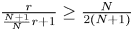 , theorem 1.2 follows from the celebrated results by [Reference Du, Guth and Li8] ($N=2$
 ), and [Reference Du and Zhang9] ($N \ge 3$
 ). Therefore, we only need to consider the case when $\frac {r}{\frac {N+1}{N}r+1} < \frac {N}{2(N+1)}$
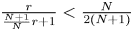 , so we always assume that $0< r < \frac {N}{N+1}$
 in what follows.
By Littlewood–Paley decomposition and standard arguments, we just concentrate on the case when ${\rm supp}\hat {f} \subset \{\xi : |\xi | \sim 2^{k}\}$ , $k \gg 1$
 . We consider the maximal functions

and

We deal with the first term by the assumption that the decreasing sequence $\{t_{n}\}_{n=1}^{\infty } \in {\ell }^{r,\infty }(\mathbb {N})$ and Plancherel's theorem. For the second term, since $k< \frac {2k}{\frac {N+1}{N}r+1}< 2k$
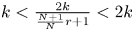 , the proof can be completed by the following theorem.
Theorem 1.5 Let $j \in \mathbb {R}$ with $k < j < 2k$
 . For any $\epsilon >0$
 , there exists a constant $C_{\epsilon } >0$
 such that

for all $f$ with supp $\hat {f} \subset \{\xi : |\xi | \sim 2^{k}\}$
 . The constant $C_{\epsilon }$
 does not depend on $f$
 , $j$
 and $k$
 .
In the case $N=1$ , a similar result was proved in [Reference Dimou and Seeger7] by the $TT^{*}$
 argument and stationary phase method. But their method seems not to work well in the higher dimensional case. In order to prove theorem 1.5, we first observe that (1.8) holds true if the spatial variable is restricted to a ball of radius $2^{k-j}$
 . Due to references [Reference Du, Guth and Li8, Reference Du and Zhang9], for any function $g$
 with supp $\hat {g} \subset \{\xi : |\xi | \sim 2^{2k-j}\}$
 , there holds

By scaling, we have

whenever supp $\hat {g} \subset \{\xi : |\xi | \sim 2^{k}\}$ . Then, we obtain the following lemma by translation invariance in the $x$
 -direction.
Lemma 1.6 When $k < j < 2k$ , for any $\epsilon >0$
 and $x_{0} \in \mathbb {R}^{N}$
 , there exists a constant $C_{\epsilon } >0$
 such that

whenever supp $\hat {f} \subset \{\xi : |\xi | \sim 2^{k}\}$ . The constant $C_{\epsilon }$
 does not depend on $x_{0}$
 and $f$
 .
Then we can obtain theorem 1.5 with the help of lemma 1.6, wave packets decomposition and an orthogonality argument. See § 2 for details. Moreover, we give the following remark on theorem 1.5.
Remark 1.7 We notice that theorem 1.5 is almost sharp when $j=k$ and $j=2k$
 . Indeed, when $j = 2k$
 , Sobolev's embedding implies

By taking $\hat {f}$ as the characteristic function on the set $\{\xi : |\xi | \sim 2^{k}\}$
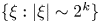 , it can be observed that the uniform estimate (1.11) is optimal. When $j = k$
 , it follows from [Reference Du, Guth and Li8, Reference Du and Zhang9] that

The above inequality (1.12) is sharp up to the endpoints according to the counterexample in [Reference Bourgain2] or [Reference Lucà and Rogers12]. However, the presence of $2^{\epsilon k}$ on the right-hand side of inequality (1.8) leads us to lose the endpoint results in theorem 1.2.
1.3. Related generalizations
The method we adopted to prove theorem 1.2 can be generalized to the fractional case and the nonelliptic case. Then, the corresponding a.e. convergence results follow. We omit most of details of the proof because they are very similar with that of theorem 1.2. Moreover, the sharpness of the result for the nonelliptic case will be proved in § 4.
Firstly, for the fractional case, we have the following maximal estimate. When $a =2$ , it coincides with theorem 1.2.
Theorem 1.8 Under the conditions of theorem 1.2, for $1 < a < \infty$ , we have

whenever $f\in H^s(\mathbb {R}^N)$ and $s> s_{0}=\min \{\frac {a}{2} \cdot \frac {r}{\frac {N+1}{N}r+1},\, \frac {N}{2(N+1)}\}$
 , where the constant $C$
 does not depend on $f$
 .
We now consider maximal estimates for the nonelliptic Schrödinger means, as defined in (1.5). The following result is sharp up to the endpoints, as will be shown in § 4 below.
Theorem 1.9 Under the conditions of theorem 1.2, we have

whenever $f\in H^s(\mathbb {R}^N)$ and $s >s_{0} = \min \{\frac {r}{r+1},\, \frac {1}{2}\}$
 , where the constant $C$
 does not depend on $f$
 .
The proof of theorem 1.9 depends heavily on the following theorem.
Theorem 1.10 If supp $\hat {f} \subset \{\xi : |\xi | \sim \lambda \}$ , $\lambda \ge 1$
 , then for any interval $I$
 with $\lambda ^{-2} \le |I| \le \lambda ^{-1},$
 we have

where the constant $C$ does not depend on $f$
 .
Theorem 1.10 follows directly from Sobolev's embedding. Specially, theorem 1.10 is sharp when $|I|= \lambda ^{-1}$ according to the counterexample in Rogers–Vargas–Vega [Reference Rogers, Vargas and Vega13]. When $|I|= \lambda ^{-2}$
 , the sharpness can be proved by taking $\tilde {f}$
 as the characteristic function over the annulus $\{\xi : |\xi | \sim \lambda \}$
 . We point out that the sharpness of theorem 1.10 enables us to apply the similar decomposition as Proposition 2.3 in [Reference Dimou and Seeger7] to get a stronger result than theorem 1.9 when $r \in (0,\,1)$
 .
Theorem 1.11 If $\{t_{n}\}_{n=1}^{\infty } \in {\ell }^{r(s),\infty }(\mathbb {N})$ , $r(s)= \frac {s}{1-s}$
 . Then for any $0< s <\frac {1}{2}$
 , we have

whenever $f\in H^s(\mathbb {R}^N)$ , where the constant $C$
 does not depend on $f$
 .
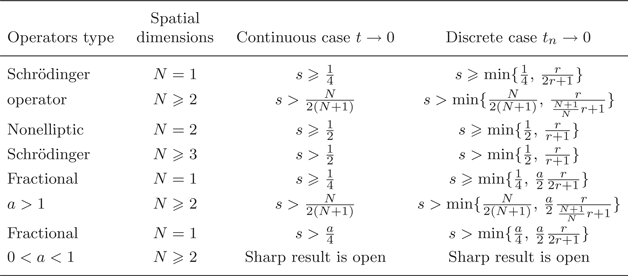
Remark 1.12 In table 1, we synthesize our theorems and all results to our best knowledge, and list all almost sharp requirements of regularity on a.e. convergence for different Schrödinger-type operators. We also notice that some results in the table 1 come from theorems 1.1, 1.8, 1.9 and 1.11 in this paper. For the remaining results, readers can refer to the relevant results of the nonelliptic Schrödinger operators in [Reference Rogers, Vargas and Vega13]; the conclusions about the fractional Schrödinger operators when $t$ continuously tends to $0$
 can be found in [Reference Cho and Ko4] ($a > 1$
 ) and [Reference Walther16] ($0 < a <1$
 ); other results were introduced at the beginning of the introduction and will not be repeated here.
A summary of a.e. convergence for some Schrödinger operators.

Remark 1.13 Shortly after our paper was posted on arXiv.org in July 2022, Cho, Ko, Koh and Lee posted a paper with partially overlapping results, which has now been published in [Reference Cho, Ko, Koh and Lee5].
2. Proof of theorems 1.2 and 1.5
Proof of theorem 1.2 Let $s_{1}=\frac {r}{\frac {N+1}{N}r+1} + \epsilon$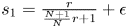 for some constant $\epsilon >0$
 . We decompose $f$
 as $f=\sum _{k=0}^{\infty }{f_{k}},$
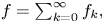 where ${\rm supp} \hat {f_{0}} \subset B(0,\,1)$
 , ${\rm supp} \hat {f_{k}} \subset \{\xi : |\xi | \sim 2^{k}\},\, k \ge 1$
 . Then, we have

For $k \lesssim 1$ and arbitrary $x \in B(0,\,1)$
 , $|e^{it_{n}\Delta }f_{k}(x)| \lesssim \|f_{k}\|_{L^{2}(\mathbb {R}^{N})}$
 , it is obvious that

For each $k \gg 1$ , we decompose $\{t_{n}\}_{n=1}^{\infty }$
 as

and

Then, we have

We first estimate $I$ . Since $\{t_{n}\}_{n=1}^{\infty } \in {\ell }^{r,\infty }(\mathbb {N})$
 , we have

which implies that

For $II$ , since

By previous discussion, we have $k<\frac {2k}{\frac {N+1}{N}r+1}<2k.$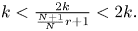 Then it follows from theorem 1.5 that,

Inequalities (2.3), (2.5), and (2.6) yield for $k \gg 1$ ,

Combining inequalities (2.1), (2.2), and (2.7), inequality (1.7) holds true for $s_1$ . Because $\epsilon > 0$
 , we have finished the proof of theorem 1.2. It remains to prove theorem 1.5.
Proof of theorem 1.5 We use a wave packets decomposition and an orthogonality argument to prove theorem 1.5.
$\bullet$ Wave packets decomposition.
We first decompose $e^{it\Delta }f$ on $B(0,\,1) \times (0,\,2^{-j})$
 in a standard way. For this goal, we decompose the annulus $\{\xi : |\xi | \sim 2^{k}\}$
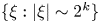 into almost disjoint $2^{j-k}$
 -cubes $\theta$
 with sides parallel to the coordinate axes in $\mathbb {R}^{N}$
 . Let $2^{k-j}$
 -cube $\nu$
 be dual to $\theta$
 and cover $\mathbb {R}^{N}$
 by almost disjoint cubes $\nu$
 . Denote the centre of $\theta$
 by $c(\theta )$
 and the centre of $\nu$
 by $c(\nu )$
 . We notice that if $\nu \neq \nu ^{\prime }$
 , then $|c(\nu ) - c(\nu ^{\prime })| \ge 2^{k-j}$
 .
Let $\varphi$ be a Schwartz function defined on $\mathbb {R}^{N}$
 whose fourier transform is non-negative and supported in a small neighbourhood of the origin, and identically equal to $1$
 in another smaller ball centred at the origin. Let $\widehat {\varphi _{\theta }}(\xi ) = 2^{-\frac {(j-k)N}{2}} \hat {\varphi }(\frac {\xi - c(\theta )}{2^{j-k}})$
 and $\widehat {\varphi _{\theta, \nu }}(\xi )= e^{-ic(\nu ) \cdot \xi } \widehat {\varphi _{\theta }}(\xi )$
 . Then $f$
 can be decomposed by

and

When $t \in (0,\,2^{-j})$ , integration by parts implies

Here, $M$ can be sufficiently large. Therefore, $e^{it\Delta } \varphi _{\theta,\nu }(x)$
 is essentially supported in a tube

where $\delta =\epsilon ^3$ . The direction of $T_{\theta, \nu }$
 is parallel to the vector $(-2c(\theta ),\, 1)$
 , and the angle between $(-2c(\theta ),\, 1)$
 and the $x$
 -plane is approximately $2^{-k}$
 .
$\bullet$ Orthogonality argument.
We decompose $B(0,\,1)$ by $B(0,\,1) = \cup _{\nu ^{\prime }} B(c( \nu ^{\prime }),\, 2^{k-j})$
 with $|c(\nu ^{\prime })| \lesssim 1$
 . Then

We will consider two cases: (i) $j < k+\frac {\epsilon k}{N}$ and (ii) $j \geq k+\frac {\epsilon k}{N}$
 , respectively. In case (i), let $j=k+\epsilon _0k$
 , $0<\epsilon _0<\frac {\epsilon }{N}$
 , by lemma 1.6,

We use an orthogonality argument in the proof of case (ii). Fix $c(\nu ^{\prime })$ , we divide $f$
 into two terms

and

For $f_{1}$ , by lemma 1.6 and the $L^{2}$
 -orthogonality, we have

We will complete the proof by showing that the contribution from $|e^{it\Delta }f_{2}|$ is negligible when $(x,\,t)$
 belongs to $B(c(\nu ^{\prime }),\, 2^{k-j}) \times (0,\,2^{-j})$
 .
Indeed, by the Cauchy–Schwarz inequality and the $L^{2}$ -orthogonality, there holds

For each $\theta$ , $|x- c(\nu ) + 2t c(\theta )| \ge |c(\nu ) -c(\nu ^{\prime })|/2$
 , then we have

Notice that the number of $\theta$ 's is dominated by $2^{Nk}$
 . So by choosing $M$
 sufficiently large, for each $(x,\,t) \in B(c(\nu ^{\prime }),\, 2^{k-j}) \times (0,\,2^{-j})$
 , we have

Then, the proof is finished since

3. A counterexample: theorem 1.3
We notice that the counterexample for $r=\frac {N}{N+1}$ can be also applied to the case when $r > \frac {N}{N+1}$
 , since ${\ell }^{N/(N+1),\infty }(\mathbb {N}) \subset {\ell }^{r,\infty }(\mathbb {N})$
 and $\min \{\frac {r}{\frac {N+1}{N}r+1},\, \frac {N}{2(N+1)}\} = \frac {N}{2(N+1)}$
 when $r > \frac {N}{N+1}$
 . Therefore, next we always assume $r \in (0,\, \frac {N}{N+1}]$
 .
Fix $r \in (0,\, \frac {N}{N+1}]$ , we first construct a sequence which belongs to ${\ell }^{r,\infty }(\mathbb {N})$
 . Put $\beta = \frac {2}{\frac {N+1}{N}r+1}$
 . Let $R_{1}=2$
 and for each positive integer $n$
 , $R_{n+1}^{-\beta } \le \frac {1}{2} R_{n}^{-\beta (r+1)}$
 . Denote the intervals $I_{n}=[R_{n}^{-\beta (r+1)},\, R_{n}^{-\beta })$
 , $n \in \mathbb {N}^+$
 . On each $I_{n}$
 , we get an equidistributed subsequence $t_{n_{j}},\, j =1,\, 2,\,...,\, j_{n}$
 such that

and $t_{n_{j}} - t_{n_{j+1}} = R_{n}^{-\beta (r+1)}$ . We claim that the sequence $t_{n_{j}},\, j=1,\,2,\,...,\,j_{n},\, n=1,\,2,\,...$
 belongs to ${\ell }^{r,\infty }(\mathbb {N})$
 .
Indeed, according to Lemma 3.2 from [Reference Dimou and Seeger7], it suffices to show that

Notice that we only need to consider $0 < b <1$ because $t_{n_{j}} \in (0,\,1)$
 for each $n$
 and $j$
 . Assume that $(b,\, 2b] \cap I_{n} \neq \emptyset$
 for some $n$
 , then we have $b < R_{n}^{-\beta }$
 , $2b \ge R_{n}^{-\beta (r+1)}.$
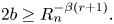 Therefore,

This yields $(b,\, 2b] \cap I_{n^{\prime }} = \emptyset$ for any $n^{\prime } \neq n$
 , hence

Then (3.1) follows by the arbitrariness of $b$ .
Our counterexample comes from the following lemma.
Lemma 3.1 Let $R \gg 1$ and $I=[R^{-\beta (r+1)},\, R^{-\beta })$
 . Assume that the sequence $\{ t_{j} : 1 \le j \le j_{0}\} = R^{-\beta (r+1)}\mathbb {Z} \cap I$
 and $t_{j} - t_{j+1} = R^{-\beta (r+1)}$
 for each $1 \le j \le j_{0}-1$
 . Then there exists a function $f$
 with supp $\hat {f} \subset B(0,\,2R)$
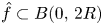 such that

and

Here, $\epsilon$ is any positive number.
We use lemma 3.1 to show the counterexample here and prove the lemma a moment later. Assume that the maximal estimate

holds for some $s >0$ and each $f \in H^{s}(\mathbb {R}^{N})$
 , then for each $n \in \mathbb {N}^+$
 , we have

whenever $f \in H^{s}(\mathbb {R}^{N})$ . Lemma 3.1 and inequality (3.5) yield

Then, we have $s \ge \frac {r}{\frac {N+1}{N}r +1}$ , since $R_{n}$
 can be sufficiently large and $\epsilon$
 is arbitrarily small. Finally, we obtain a sequence $\frac {t_{n_{j}}}{2\pi },\, j=1,\,2,\,...,\,j_{n},\, n=1,\,2,\,... \in {\ell }^{r,\infty }(\mathbb {N})$
 such that the maximal estimate (3.4) holds only if $s \ge \frac {r}{\frac {N+1}{N}r +1}$
 .
In the rest of this section, we prove lemma 3.1. Setting

then we define $\hat {f_{1}}(\xi _{1}) = \hat {h}(\xi _{1} + \pi R)$ , $\hat {f_{2}}(\bar {\xi }) = \hat {g} (\bar {\xi } + \pi R\theta )$
 , where $\hat {h} = \chi _{\Omega _{1} }$
 , $\hat {g} = \chi _{\Omega _{2}}$
 , and some $\theta \in \mathbb {S}^{N-2}$
 (when $N=2$
 , $\theta \in (0,\,1)$
 ) which will be determined later. Define $f$
 by $\hat {f} = \hat {f_{1}}\hat {f_{2}}$
 , it is easy to check that $f$
 satisfies (3.3). We are left to prove that inequality (3.2) holds for such $f$
 . Notice that

We first consider $|e^{i\frac {t_{j}}{2\pi }\Delta }f_{1}(x_{1})|$ . A change of variables implies

It is easy to check that $|e^{i\frac {t_{j}}{2\pi }\Delta }h(x_{1})| \gtrsim |\Omega _{1}|$ for each $j$
 whenever $|x_{1}| \le R^{-\frac {\beta }{2}}$
 . Note that for each $x_{1} \in (0,\, R^{1-\beta })$
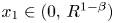 , there exists at least one $t_{j}$
 such that $|x_{1}- Rt_{j}| \le R^{1-\beta (r+1)} \le R^{-\frac {\beta }{2}}$
 since $\{t_j\}_{j=1}^{j_0}\subset [R^{-\beta (r+1)},\,R^{-\beta })$
 and $t_j-t_{j+1}=R^{-\beta (r+1)}$
 . Hence, we have

whenever $x_{1} \in (0,\, \frac {1}{2}R^{1-\beta })$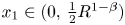 and $Rt_{j} \in (x_{1},\, x_{1} + R^{-\frac {\beta }{2}})$
 .
For $|e^{i\frac {t_{j}}{2\pi }\Delta }f_{2}(\bar {x})|$ , we have

According to Barceló–Bennett–Carbery–Ruiz–Vilela [Reference Barceló, Bennett, Carbery, Ruiz and Vilela1], for each $j$ and $\bar {x} \in U_{0}$
 ,

here

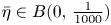
We sketch the main idea of the proof of inequality (3.9) for the reader's convenience. Indeed, for each $\bar {\xi } \in \Omega _{2}$ , we write $\bar {\xi } = 2 \pi R^{\frac {(r+1)\beta }{2}}l + \bar {\eta }$
 , $l \in \mathbb {Z}^{N-1}$
 , $2\pi |l| \le R^{1-\frac {(r+1)\beta }{2}-\epsilon }$
 , $\bar {\eta } \in B(0,\, \frac {1}{1000})$
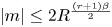
 . Then for any $\bar {x}_{m}= R^{-\frac {(r+1)\beta }{2}}m$
 , $m \in \mathbb {Z}^{N-1}$
 , $|m| \le 2 R^{\frac {(r+1)\beta }{2}}$
 , $t_{j} = R^{-(r+1)\beta }(j_0+1-j)$
 , $1 \le j \le j_{0}$
 , we have

Noting that $|\bar {x}_{m}| \le 2$ , $|t_{j}| \le R^{-\beta }$
 and $|\bar {\eta }| \le \frac {1}{1000}$
 imply

then, we have

Moreover, for each $\bar {x} \in U_{0}$ , there exits an $\bar {x}_{m}$
 such that $|\bar {x} - \bar {x}_{m}| \le \frac {1}{1000} R^{-1 + \epsilon }$
 , by the mean value theorem and the fact that $|\bar {\xi }| \le 2R^{1-\epsilon }$
 ,

Finally, we arrive at inequality (3.9) by the triangle inequality.
Therefore, we have

Set $U_{x_{1}} = \bigcup _{j: Rt_{j} \in R^{1-(r+1)\beta }\mathbb {Z} \cap (x_{1},\, x_{1} + R^{-\beta /2}) } U_{0} + Rt_{j} \theta$ . Then inequalities (3.8) and (3.10) imply that for each $x_{1} \in (0,\, \frac {1}{2}R^{1-\beta })$
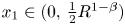 and $\bar {x} \in U_{x_{1}}$
 , there holds

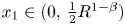
Next, we need to select a $\theta \in \mathbb {S}^{N-2}$ , such that $|U_{x_{1}}| \gtrsim 1$
 for each $x_{1} \in (0,\, \frac {1}{2} R^{1-\beta })$
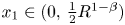
 , which follows if we can prove that there exists a $\theta \in \mathbb {S}^{N-2}$
 such that $B(0,\,1/2)\subset U_{x_1}$
 for all $x_{1} \in (0,\, \frac {1}{2} R^{1-\beta })$
 . So it remains to prove the claim that there exists a $\theta \in \mathbb {S}^{N-2}$
 such that

is $\frac {1}{1000}R^{-1 + \epsilon }$ dense in the ball $B(0,\, 1/2)$
 . In order to apply Lemma 2.1 from Lucà–Rogers [Reference Lucà and Rogers12] to get this claim, we first rescale by $R^{\frac {\beta (r+1)}{2}}$
 , and replace $R^{1+\frac {\beta (r+1)}{2}}t_{j}$
 by $s_{j}$
 , replace $R^{\frac {\beta r}{2}}$
 by $R^{\prime }$
 , recall that $\beta = \frac {2}{\frac {N+1}{N}r+1}$
 , then we are reduced to show

is $\frac {1}{1000}(R^{\prime })^{-\frac {1}{N} + \frac {(\frac {N+1}{N}r+1)\epsilon }{ r}}$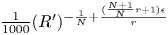 dense in the ball $B(0,\, \frac {1}{2} (R^{\prime })^{(r+1)/r})$
 , which is equivalent to prove that for any $y\in B(0,\,\frac {1}{2}(R')^{(r+1)/r})$
 , there exist

such that

for a fixed $\theta \in \mathbb {S}^{N-2}$ , which is independent of $y$
 and $x_1$
 . This is implied by the following Lemma 3.2 from Lucà–Rogers [Reference Lucà and Rogers12], but we prefer to omit the proof of (3.12), because a similar but more detailed proof can be found in Corollary 2.2 of [Reference Lucà and Rogers12].
Lemma 3.2 [Reference Lucà and Rogers12, Lemma 2.1]
Let $d\geq 2$ , $0<\epsilon,\,\delta <1$
 and $\kappa >\frac {1}{d+1}$
 . Then, if $\delta <\kappa$
 and $R>1$
 is sufficiently large, there is $\theta \in \mathbb {S}^{d-1}$
 for which, given any $[y]\in \mathbb {T}^d$
 and $a\in \mathbb {R}$
 , there is a $t_y\in R^{\delta }\mathbb {Z} \cap (a,\,a+R)$
 such that

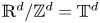
where ‘$[\cdot ]$ ’ means taking the quotient $\mathbb {R}^d/\mathbb {Z}^d=\mathbb {T}^d$
 . Moreover, this remains true with $d=1$
 , for some $\theta \in (0,\,1)$
 .
Finally, it follows from (3.7) and (3.11) that

which implies inequality (3.2).
4. A counterexample for theorem 1.9
For convenience, we first set $N=2$ . By changing of variables, the nonelliptic Schrödinger operator can be written as

For each $r \in (0,\,1]$ , we will show that there exists $\{t_{n}\}_{n=1}^{\infty } \in \ell ^{r, \infty }(\mathbb {N})$
 , such that the maximal estimate

holds for all $f \in H^{s}(\mathbb {R}^{2})$ only if $s \ge \frac {r}{r+1}$
 .
Indeed, we may choose $t_{n}=1/n^{\frac {1}{r} + \epsilon }$ , it is clear that $\{t_{n}\}_{n=1}^{\infty } \in \ell ^{r, \infty }(\mathbb {N})$
 but never belongs to $\ell ^{r-\epsilon, \infty }(\mathbb {N})$
 for any small $\epsilon >0$
 . Moreover, $t_{n} -t_{n+1}$
 is decreasing. According to Lemma 3.2 in [Reference Dimou and Seeger7], we can select $\{b_{j}\}_{j=1}^{\infty }$
 and $\{M_{j}\}_{j=1}^{\infty }$
 satisfying $\lim _{j \rightarrow \infty }b_{j} = 0,\, \:\ \lim _{j \rightarrow \infty }M_{j} = \infty,\,$
 and

such that

By the similar argument as Proposition 3.3 in [Reference Dimou and Seeger7], when $t_{n} \le b_{j}$ , we have

For fixed $j$ , choose $\lambda _{j}=\frac {1}{1000} M_{j}^{\frac {1}{2}}b_{j}^{-\frac {r-\epsilon +1}{2}}$
 and $\widehat {f_{j}}(\xi _{1},\,\xi _{2}) =\frac {1}{\lambda _{j}} \chi _{[0,\lambda _{j}]\times [{-\lambda _{j}-1,\,-\lambda _{j}}]} (\xi _{1},\,\xi _{2}).$
 Therefore,

Let $U_{j}=(0,\,\frac {\lambda _{j}b_{j}}{2}) \times (-\frac {1}{1000},\, \frac {1}{1000}).$ Notice that $U_{j} \subset B(0,\,1)$
 due to inequality (4.3). Next, we will show that for each $x \in U_{j}$
 ,

After changing variables, we have for each $n \in \mathbb {N}$ ,

For each $x \in U_{j}$ , there exists a unique $n(x,\,j)$
 such that

It is obvious that $t_{n(x,j)+1} \le \frac {b_{j}}{2}$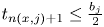 , then $t_{n(x,j)} \le b_{j}$
 due to inequality (4.4) and the assumption that $t_{n} -t_{n+1}$
 is decreasing. Then it follows from inequality (4.5) that

Also, $| x_{2}\eta _{2}| \le \frac {1}{1000},$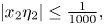 and by inequality (4.3), we have $|\lambda _{j}t_{n(x,j)}\eta _{1}\eta _{2}| \le \lambda _{j}b_{j} \le \frac {1}{1000}.$
 Therefore, if we take $n=n(x,\,j)$
 in (4.8), then the phase function will be sufficiently small such that $|e^{it_{n(x,j)}\square }f_{j}(x)| > \frac {1}{2(2\pi )^{2}}$
 for each $x \in U_{j}$
 , which implies inequality (4.7). Then, it follows from inequalities (4.6) and (4.7) that

This implies that the maximal estimate (4.2) can not hold when $s \le \frac {r-\epsilon }{r-\epsilon +1}$ , hence when $s < \frac {r}{r+1}$
 by the arbitrariness of $\epsilon$
 .
Remark 4.1 The original idea we adopted to construct the above counterexample comes from [Reference Rogers, Vargas and Vega13]. The same idea remains valid in general dimensions. For example, in $\mathbb {R}^{3}$ , by changing variables, we can write

In order to prove the necessary condition, we only need to take

and

Data
Our manuscript has no associated data.
Acknowledgements
We would like to express our gratitude to the referees for his/her insightful and helpful suggestions and comments.
This work is supported by the National Natural Science Foundation of China (No.12271435; No.12271501; No.12071052).
Competing interest
None.