… lâkin bir devletin böyle külliyen tebdil ve tecdid-i nizamatı müceddeden bir devletin teşkilinden güç olduğuna binaen …
… since it is more difficult thus entirely to change and renovate the laws of a state than to found a state anew …
—Ahmet Cevdet PashaFootnote 1
The failed coup attempt of July 15, 2016 was yet another point of rupture that brought to the fore Turkey’s primordial state crisis. Such crisis had been the driving force behind modernization efforts dating back to the early 19th century. Turkish modernization rested on an overarching motive to salvage the state, above all via modernization of the army and maintenance of the diplomatic balance of power. The resulting Weberian road map largely empowered the military and diplomatic bureaucracy, which in turn became the flag bearers of the modernization project. Yet without organic links to the society, the project ultimately failed to arrest the disintegration of the multiethnic Ottoman Empire and thus shaped the course of top-down nation-building in the republican era.
The modernization project failed to diffuse throughout the societal order, leaving open the question of the integration of peripheral interests into the state structure. While the top-down state apparatus remained largely intact until the end of the Cold War—occasionally restored through bureaucratic interventions in the political order following certain anomalies—the growing identity crises of the republican polity in the Cold War’s aftermath gave way to an urgent need for the integration into the state structure of nationalist/conservative and ethnic/class concerns. In theory, such ruptures could have served to consolidate state power and strengthened the center via inclusion of the periphery. In practice, however, it led to a continuous kulturkampf between the secular/modern center and the Islamic conservative/nationalist periphery, with leftist Kurdish, Alevi, and non-Muslim identities generally being pushed to the margins of Turkish politics.
The political will to reform set the stage for the bureaucratic center’s resistance to change and the conservative periphery’s predicament of having to struggle against the bureaucratic Leviathan, particularly after the so-called “postmodern coup” of February 28, 1997. The end result of this process was a loosening of the bureaucratic cadres’ grip on the center, leading to the gradual erosion of bureaucratic power rather than a paradigm shift toward the empowerment of civil society. While the bureaucratic “modernization” process thus proved unsustainable, the resulting vacuum was filled by the hegemonic role assumed by the governing Justice and Development Party (Adalet ve Kalkınma Partisi, AKP), which first co-opted and then sought to eliminate bureaucratic resistance through a broad-based coalition of Gülenists, moderate Kurds, and liberal/secular Turks. In return—and particularly after the 2011 electoral victory and the 2013 Gezi protests—the Gülenists, who had established a predominant position in the bureaucracy after replacing the military/secular cadres in the decisive 2010 constitutional referendum and the subsequent large-scale purges, fought back to delegitimize the AKP government both at home and abroad. In due course, multiple failures in the management of the peace process between the state and the Kurds, as well as the Kurdistan Workers’ Party’s (Partiya Karkerên Kurdistanê, PKK) state-building ambitions in Syria and Iraq, put Turkey back into a “security-first” outlook. This, in turn, undermined both democratization efforts and relations with Western and regional countries. Simultaneously, the liberal minority, advocating European Union (EU) integration through lobbying and intellectual power, lost touch with the AKP’s increasingly nationalist/conservative agenda.
Against this murky background, the coup attempt of July 15, 2016 represented an attempt to overthrow the elected government, dissolve the parliament, and impose full control over the state apparatus. The putschists acted on the parochial legacy of Turkish politics; i.e., whoever controls the state authority exercises a hegemonic hold over the Turkish political regime. Now that, owing to the coup’s failure, the Gülenist project to impose a syncretic and largely ambiguous pro-Western and theocratic identity on the Turkish state has come to an end, the political arena has once again become ripe for transformation—a transformation that the AKP under President Recep Tayyip Erdoğan maintains a “historical claim” to lead.
The Turkish state’s structural capacity deficit and lack of institutionalization are among its foremost problems in averting such an imposition of particularist interests. Indeed, the coup attempt and the massive purges that came in its aftermath have brought the state to a breaking point. This state crisis has transpired right in the middle of a political transition process in which the ruling party has tried to justify changing the political system from a parliamentary to a presidential one. In order to offset what has been dubbed “bureaucratic tutelage,” Erdoğan has spearheaded a campaign to eliminate alternative levers of power, an effort that would, in the end, effectively neutralize parliamentary and judiciary checks on executive authority. The constitutional amendments introduced as part of this transformation also imply changes in the administrative order with further political hold being exercised on bureaucratic cadres.
This paper will discuss the ways, means, and prospects for capacity development and institution building, which would clarify Turkey’s route to leaving behind the state crisis. What is the root cause of the problem of state crisis in Turkey? Does history tell us anything about state crisis in the country? What are the precedents for state reform in Turkey? What are the impediments for reforming the country’s administrative structure? Would systemic change in Turkish politics facilitate such a reform? How does state crisis make sense in the bureaucracy and among the political elites? What is the relevance of democracy to the country’s problems in regards to capacity and institutions? The subsequent sections of this paper will seek answers to these questions before concluding with general outlines in relation to prospective policymaking.
The state in Turkey
The recent literature on state capacity focuses on the ability and performance of the state in keeping the state apparatus harmonious, protecting stability, and managing the economy.Footnote 2 States are categorized as either strong or weak according to their abilities to deliver essential public goods, including security and welfare. This approach, however, falls short of explaining the changing performance of the state in its varying functions or at different times. In addition, it also says little about the reasons for which states are or become weak. And finally, the literature also ignores the nuances differentiating governance from state capacity.Footnote 3
Turkey’s state-building process followed the path of modern state formation, which prioritized the provision of security, identity, and welfare to the citizenry. The founders of the Republic of Turkey pursued state-building efforts in such a way as to render themselves the undisputed authority within the new national borders and to obtain legitimacy in the post-Ottoman international order. Their efforts were, to some extent, a continuation of earlier reform movements instituted in the Ottoman era. In this context, Carter Findley points to the emergence of legal rationalism and the modern sense of statehood as against the traditional patrimonialism of the Ottoman system.Footnote 4 In the eyes of reformist cadres in the imperial state, this worldview became a normative basis for government. Metin Heper supports this idea, arguing that this legal rationalism had been the most widely shared perspective among an expanding bureaucracy since World War I.Footnote 5
Exemplifying the complexity of the discussion, the idea of the state in Turkish history has been almost identical to that of a capable state.Footnote 6 According to this understanding, the reason behind the dissolution of former states within the same geography has been presented as the erosion of the state as a patrimonial provider (Devlet Baba). In earlier state formations, there were a variety of different motives for acquiring and protecting the strong state. According to Osman Turan, for instance, the medieval Turks held an ideal of world domination that was intrinsic to their belief system after Islamization, with the state acting as the defender of Islam in military and political terms.Footnote 7 Halil İnalcik explains the 600-year reign of the Ottoman Empire through the state’s strict adherence to the ideal of justice.Footnote 8 In this line of thought, born from the classical worldview of the empire, the state was strong when it actualized the ability to provide justice and followed the principles of Islamic and sultanic law in order to achieve that end. In contrast to this, the republican choice was to build on the path of political centralization and to mark the state as the first and the last resort of modernization, with a broader objective being the establishment of political and social control. For the republican elites, a strong state was measured by the success of the modernization project in all aspects of life, from education to institution building, even if there was a disproportionate emphasis on security.Footnote 9
This centralized state structure placed itself above the political and civilian spheres and considered state institutions, including the judiciary and the bureaucracy, to be transformative branches that should also participate in transforming and modernizing society. This symbiotic model, which had early successes until the multiparty era, ultimately failed to adapt to the needs of democratic and popular rule. The result has been, at best, an uneasy coexistence between the elected government and selected cadres of the military/civilian bureaucracy. This dichotomy, in turn, set the stage for the presence of a modern state structure characterized by deficits in performance and implementation as well as by an incomplete democratic consolidation. The Turkish case of the relationships between government and bureaucracy not only fell short of the Weberian legal-rationalistic ideals of ensuring stability and bestowing predictability on the regime, but also undermined the popular quest for democratization (i.e., representation), in large part due to the bureaucracy’s self-assigned role of determining the contours of modernization. In any case, the bureaucracy’s sui generis role was utilized for social control and to intervene on behalf of protecting the regime’s founding principles (above all secularism and nationalism). The Turkish state has also shown willingness to adapt its structure in conformity with foreign policy alignments—i.e., the multiparty system that emerged in the wake of World War II and the EU integration process after the Cold War—in order to adjust governance capabilities and ensure both popular and international legitimacy.
The two qualities of this symbiotic model also gave rise to concurrent paradoxes of state power in Turkey. The first of these was the lack of expertise and preparedness of the Turkish state vis-à-vis societal crises. The ruling elite’s confusion in the face of social upheavals was one of the main reasons for the overall failure in conflict resolution in Turkey. This defect has been epitomized not only in the broader Kurdish question, but also in local, sectoral, and environmental conflicts on a smaller scale. Secondly, popular governments’ quest for legitimacy vis-à-vis the bureaucracy boosted the urgency of developmentalism and capacity building. However, even if the implemented developmentalism did reinforce state capacity and result in better performance and the delivery of state services, the prioritization of capacity building over democratization also unleashed social crises. This ultimately set the stage for a call for the restoration of stability and hence, paradoxically, a growing quest for bureaucratic rule.
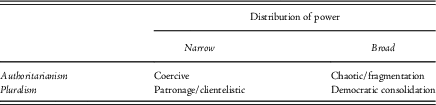
In an inclusive/plural political setting, these two paradoxes would have been addressed through broad power distribution. The default mode, instead, has been a narrow power distribution, which has been the result of the state elite’s search for hegemony and dominance over society. The distaste for sharing power and authority is also an offshoot of the conservative belief in defending state authority as an exclusive prerogative of state elites, which went hand in hand with an underlying mistrust of society. In the Turkish case, broad distribution of power generally ends in chaos and fragmentation. However, such a situation occurs primarily under the straining imperatives of deep divisions and polarization in society, which are themselves direct results of authoritarian rule. The ideal scenario for transforming the state into a service provider and instrument of good governance is to have broad power distribution within a plural political environment.Footnote 10 The absence of this condition in the Turkish case is one of the main reasons for the recurrence of state crises, mainly as a result of an accumulated inability to perpetuate the clientelist and populist distribution of public goods under what has generally been a rather monopolistic hold on power (see Table 1).
Varieties of power and rule in Turkey

Source: Based on Daron Acemoğlu and James A. Robinson, Why Nations Fail: The Origins of Power, Prosperity and Poverty (New York: Crown Publishers, Reference Acemoğlu and Robinson2012).
Unfolding the crisis after July 15
The most recent state crisis in Turkey built up against this backdrop. However, it also possessed peculiar elements that further complicated the proper functioning of the state apparatus. The AKP’s coming to power in 2002 symbolized the culmination of post-Cold War attempts to modernize the government-bureaucracy relationship, a process that was initiated under the political leadership of Turgut Özal and Süleyman Demirel and the subsequent coalitions of the 1990s. With an empowering electoral mandate, the AKP felt obliged to orchestrate the long-awaited reform in the state apparatus. To that end, the government espoused a gradualist and indirect approach, co-opting the EU process in order to neutralize the bureaucratic resistance to reform.Footnote 11 The idea of Europeanization thus not only empowered the government to liberalize the administrative system, but also brought together a broad coalition of Islamists, liberals, and moderate Kurds.
Between 2002 and 2004, Turkey experienced an intense process of harmonization with the acquis communautaire in order to proceed with its goal of EU membership. The secular elements in the bureaucracy were won over, and even the military assented so as to further the Kemalist ideal of implementing contemporary (i.e., Western) civilization. The EU process proved, however, to be a double-edged sword: a practical package of state reform was introduced in order to bring efficiency to the administrative system, but this came together with derogations that compromised state sovereignty. Overall, the EU process “established new mechanisms to make public administration more transparent, accountable and participatory.”Footnote 12
The ensuing controversy in Turkey was not about allegiance to the EU process, but rather about the disagreement over how far the bureaucratic establishment was willing to comply with the electoral mandate. The presidential elections in 2007, in which the parliament was poised to elect former Deputy Prime Minister and Minister of Foreign Affairs Abdullah Gül, turned into a major crisis. The military issued an ultimatum, since Gül’s family was seen as unfit to represent the secular values of the republican regime. There were massive demonstrations by secularists all over Turkey against the AKP’s choice, as well as a great deal of concern that the republic was under threat from an Islamist takeover of the presidency, a “threat” aggravated by the fact that the party had already managed to hold onto the posts of the premier and the speaker of the parliament, the top three positions in terms of state protocol.Footnote 13 To overcome this crisis, the AKP espoused a two-pronged response: first, to call snap elections, and second, to co-opt the Gülenists in order to break bureaucratic resistance. The latter choice, as has been proven by the later course of events, laid the groundwork for an even broader political and institutional crisis in the state apparatus.
The Gülenists—who gained predominance in the top echelons of the state through a feeling of esprit de corps—utilized their growing bureaucratic, economic, and media power to delegitimize the secular stronghold in the state system. The AKP appeared willing to co-opt the Gülenist project even as the party came to the brink of closure and a possible political ban in 2008. After being declared the linchpin of anti-secular activities in Turkey, the AKP was only able to avoid the ban via a narrow 5-4 vote in constitutional court, which did not prevent the court from issuing a monetary punishment for such activities as a kind of warning. Once more, legal and political disputes turned into existential conflicts that could well have unraveled the political system. Mahir Ünal, deputy head of the AKP, identified the problematic relations that transpired between his party and the Gülenists, stating: “While we tried to strengthen civil space, it turned out that we jumped out of the frying pan into the fire, because an illegal organization, which presented itself as legal, started to in the meantime infiltrate the state [sic].”Footnote 14 Here, Ünal is alluding to the political decision to break the ranks of the military bureaucracy via dubious court cases—i.e., the Ergenekon and Balyoz (Sledgehammer) cases—which resulted in the Gülenists’ virtual takeover of the military, judiciary, and police.
The presumptuous division of labor in the aftermath of the 2010 constitutional referendum, through which the AKP maintained political power while the Gülenists acquired bureaucratic power, ultimately proved unsustainable. The Gülenists proved reckless in employing state authority to eliminate the strongholds of the secular bureaucracy, further eroding the Turkish state’s institutional capacity. The scorched earth tactics of the Gülenists—who in 2014 would be declared a terrorist organization, the Gülenist Terrorist Organization (Fetullahçı Terör Örgütü, FETÖ), by the Turkish courts—unwound the uniformity of state authority. The Gülenist cadres in the bureaucracy, operating in a complicated relationship with the AKP, engaged in a multi-pronged attempt to obtain monopoly of the state by cheating on entrance exams and in job interviews, interfering with appointments and promotions, and sidelining potential “rivals” through threat, intimidation, eavesdropping, and similar dirty tactics. Within this context, the failed coup attempt of July 15 appears to have been the Gülenists’ last chance at turning the tables against the ongoing purges in the bureaucracy, which broadly aimed at eliminating the group’s disruptive attempt to neutralize governmental authority.Footnote 15
Ever since the coup attempt, Turkey has entered yet another phase in the redefinition of the government-bureaucracy relationship. AKP circles have defended the notion that a “strong presidency” would eradicate the bureaucracy’s tutelary power and pave the way for a more efficient and representative government. Put to referendum on April 16, 2017, the proposed system implies a presidential control of the bureaucracy in which the cadres in top echelons would be appointed every five years in line with the president’s choice. It also envisioned turning the Council of Ministers into a cabinet of technocrats responsible and accountable only to the president, without parliamentary oversight. This shift symbolizes a paradigmatic shift in the public administration towards a sui generis Turkish model.
Two fundamental issues arise concerning the feasibility of this change: first, the basis of bureaucratic upbringing, and second, the bureaucracy’s ethos and performance criteria. The modern bureaucracy in Turkey was originally a product of Western education, with the republic opting for continuity by upholding that choice. In this sense, institutions such as the military academy (Harbiye) and the administrative school (Mülkiye) maintained their status as the breeding grounds of the military and civilian bureaucracy, respectively. Throughout its 15-year rule, the successive AKP governments have been unable to establish similar institutions, let alone a purposeful education policy.
An even more overarching question concerns the defining ethos and performance criteria of the bureaucracy. In practice, partisanship has brought nothing but nepotism, favoritism, and clientelism in public administration, a phenomenon that had been partly offset by the institutional setup of the republican era. For instance, the university and high school exams had been one of the most egalitarian outlets enabling lower- and middle-class citizens to seek vertical mobility in Turkey. In fact, the AKP and conservative elites are themselves products of this egalitarian aspect of the republic, which presented an opportunity to balance against bureaucratic exclusivity, in terms of either social roots or ideology. If the bureaucratic ethos were to serve the governing party, this would entail ideological and institutional sophistication, which has been an acknowledged failure of the AKP.Footnote 16 The most likely scenario ahead is a painful transition process that will entail the education and indoctrination of the new cadres from scratch through institutions that are yet to be established.
In the aftermath of the coup attempt, the political class and the bureaucracy have grown alarmed over the destructive effects of the state crisis. Since breaking away from the so-called “National Vision” (Millî Görüş) line, the AKP government has always been apprehensive about the potential threat of the military-civilian bureaucracy intervening in the political process. The main opposition party, the Republican People’s Party (Cumhuriyet Halk Partisi, CHP)—as well as such cornerstones of the republican regime as the military, judiciary, and mainstream secular media—have been preemptively accused of being complicit in efforts to that end. To neutralize this sword-of-Damocles-type threat to its rule, the AKP has sought comprehensive reform and fervently promoted its case for the transition to a presidential system.Footnote 17 The turn of events after the coup attempt thus came to be construed as a vindication of the AKP’s projections. In the wake of the coup attempt, even though the AKP presented a semblance of being in control, the underlying motive behind the party’s will to transition was to exert maximum political control so as to avert the recurring threat of coup d’états. While still assured of its electoral power, AKP leadership still appears apprehensive about the possibility of non-electoral, “tutelary” forces disrupting the political process. The constitutional cure was formulated, firstly, to ensure majoritarian control of all branches of the government, thus transcending the separation of powers, and secondly, to sideline any bureaucratic resistance by remodeling the bureaucracy.
Although the military and civilian bureaucracy have taken a severe hit as a result of recent events and the associated purges, the bureaucracy has also felt vindicated by the turn of events insofar as civilian political choices brought the state to the brink of collapse—thus the quest for a restoration of bureaucratic rule in order to reinstate state power. Paradoxically, the pro-reform and mostly pro-AKP conservative elements in the bureaucracy have largely been either purged, intimidated, or sidelined, and the higher echelons of the bureaucracy have once again been filled by pre-2010 nationalist/secular elements that saw the post-July 15 purges as a second chance to resuscitate their “entitlement” to power.Footnote 18 Even so, the debilitated bureaucracy lacks political and international support, and, more importantly, has lost the allegiance of its traditional allies, the national bourgeoisie and Western allies. Therefore, a best-case scenario for the medium term is cohabitation during the inevitable process of transition toward a new political order.
Institutional reform
Triggering domestic and international factors facilitated the systemic shift toward a consolidated political system with stronger executive powers, which, according to President Erdoğan, is essential for Turkey.Footnote 19 In this sense, political principals play a crucial role in determining the course and direction of reform. As Cortell and Peterson argue, political leaders “occupy and control the reins of government and thus possess the means to enforce their preferences.”Footnote 20 Other actors, such as the bureaucracy and society itself, only become influential in reform processes in relation to their proximity and level of access to political rulers. In Erdoğan’s view, the need for greater state capacity is precisely the reason for the change to the presidential system in Turkey. In one pre-referendum rally, he underlined the de facto transition to a new administrative system, which awaits de jure actualization: “[W]hether one accepts it or not, Turkey’s administrative system has changed. Now, what should be done is to update this de facto situation in the legal framework of the constitution.”Footnote 21
Observing the situation from the perspective of bureaucrats, firstly, they must have their own motivations for providing public services, motivations that are at least to some extent independent of the political preferences of the ruling elite. Secondly, bureaucrats require partial autonomy from the elected government in order to be able to provide policy advice as well as to actually implement policy. They also need incentives for contributing to the cultivation of public goods for citizens, which would help to safeguard the legitimacy of the state.Footnote 22 Although these two premises effectively sever the government’s will from that of the bureaucracy—and are likely to be the case in Turkey—in general civil servants are cognizant of the need for reform, capacity, and institution building in the state apparatus.Footnote 23
In the case of significant state reform, the mechanisms of the state’s capacity result either in administrative capacity supplementing democratic consolidation or in coercive power advancing autocracy.Footnote 24 According to Michael Mann, coercive power is the “range of actions which the elite is empowered to undertake without routine, institutionalized negotiation with civil society groups.”Footnote 25 The state’s capacity would appropriate an alternative preference in order to “penetrate civil society and to implement logistically political decisions throughout the realm.”Footnote 26
Ultimately, the massive purges in the aftermath of the failed July 15 coup have boosted the pressing need for administrative reform in Turkey, which would make earlier public plans and policy failures a matter of the past. Lifetime bureaucrats often serve longer than actual politicians, and so they would like to preserve their own collective and individual interests as elements in and makers of the state machine. This does not, of course, mean that bureaucrats may not have political positions and interact with the rulers in order to facilitate their services. At the same time, however, Turkey’s ruling party wants to keep the bureaucracy at arm’s length while pursuing its reform goals through a systemic change from parliamentary to presidential rule.
For reformist leaders wishing to implement a reform agenda in Turkey, there is a great deal of room for maneuver. On the one hand, state reform is indeed projected as both the justification for and the result of this search for systemic change as a political project. On the other hand, for the bureaucracy there is sufficient reason and motivation for interacting with the rulers, as this would facilitate services and benefits for their own organizations. As a result, the widespread agreement on the need for reform in fact legitimizes the institutional rearrangements. The challenge here, though, is that such institutional rearrangements can generate greater infrastructural power and/or secure loyalist political and economic interests crowding out any possibility of dissent in a corporatist setting. The envisioned systemic change thus runs the risk of empowering the elected president to utilize institutional changes in order to consolidate his/her hold on power and eliminate or undermine existing political constellations so as to achieve a monopolistic political order.
In Turkey, the way in which the state’s capacity was challenged plays a decisive role in shaping the mindset of the ruling elite during the process of developing policies in the post-July 15 era. As Orçun Selçuk argues: “As Turkish state capacity is increasingly challenged by Kurdish separatists and Islamic extremists, the experiences of Venezuela and Ecuador are highly instructive, particularly with regard to their high rates of murder, political violence and the emergence of violent non-state actors.”Footnote 27 One government member of parliament, however, highlights a different perspective: “Competitive economic development, political stability, effective governance, and the fight on multiple fronts against terrorist groups requires greater state power. Though it may seem coercive, that is what Turkey needs at this time.”Footnote 28 The direction of the use of state power will depend on how the relevant actors handle institutional rearrangement under the imperatives of the state crisis that reached an abyss after July 15.
Another point that remains unclear at the moment is exactly how the projected systemic change would transform public administration institutions. There is, though, some overall perspective as to how public administration will take shape in the coming years. The assumed time period for change and transformation was set as the period between the April 16, 2017 referendum and the June 24, 2018 presidential elections.Footnote 29 The referendum has thus been conceived as a mandate for the implementation of bureaucratic reform. The top bureaucratic posts will be changed to managerial positions and filled by political appointees for the period of the elected presidency.Footnote 30 In principle, this change aims to fulfill the criteria of policy consistency and accountability in the administration.Footnote 31 The permanent bureaucracy or state establishment will thus consist of junior- and mid-level civil servants who will not be subject to reshuffling; this will be done with a view to maintaining an element of continuity in the public administration.
The harmony between political consistency and bureaucratic autonomy underlines an intrinsic dilemma between bureaucracy and government in Turkey: the bureaucrat “is expected to be both independent and subservient, both responsible for its actions and subject to ministerial responsibility, both politicised and non-politicised at the same time.”Footnote 32 However, defeating the bureaucratic stronghold via institutional reform will depend on how effectively the gap between the government’s ambitions and the bureaucrats’ capacity and willingness to appropriate new roles is bridged. There would likely be tension between the political appointees and other civil servants, just as there may be problems of adaptation in adjusting to roles in a functional public administration. Lack of tension, particularly in the preliminary stages, would indicate a bureaucratic reflex to avert either responsibility or total loss of its mandate vis-a-vis the co-opted political appointees. The proponents of the presidential system argue that the electoral mandate together with political appointments would allow top bureaucrats to better respond to the public demand for reform and bring an element of political accountability to the bureaucracy. At the same time, a certain degree of bureaucratic autonomy would still be devolved to junior- and mid-level civil servants, but only under the watchful eye of Turkey’s clientelistic political culture.
Bureaucratic reform will certainly aim to increase the state’s capacity to deal with a variety of problems, ranging from separatist threats to the quality of education. According to many Turkish politicians, it is the bureaucratic cadres who are to blame for the failure to address many of the country’s problems. This is why they are continuously seeking out capacity development and a better functioning state system.Footnote 33 In the view of civil servants, however, rather than involvement in issues and problems at the micro and macro level, it is their bureaucratic socialization and culture that shapes the ethos and skills of the organization.Footnote 34 Both institutional ethos and self-interest play important roles in shaping the bureaucratic functions of the office. In other words, while certain norms come to at least partly define a bureaucratic organization, it is ultimately salary, promotion, reputation, and recognition—among other factors—that determine what bureaucrats want and how they act within their organization.Footnote 35 In this context, the search for a performance- and delivery-oriented public administration would only make sense in the state apparatus provided that there is a modus vivendi between political and state elites, or that the political elite is able to develop a strong mandate vis-à-vis the state elite, with congruous internal and external conditions for reform.
State of reform or state of emergency?
Against this pressing atmosphere of state reform, in the post-July 15 period Turkey entered into a vicious cycle of political crises. Early hints at crossparty consensus gave way to polarization and a widening of the gap between the government and the opposition. Worse still, not only have the confines of opposition been expanded so as to preclude differences of opinion within the AKP ranks, but also dissidence has largely come to be associated with treachery and even terrorism. Within this context, the government espoused an escalating approach intended to corner and isolate any attempt to even moderate, let alone oppose, its rule under the state of emergency.
This polarizing attitude has defied the expected climate of reform. The April 16 referendum turned into a vote not on the presidential system per se, but rather on President Erdoğan himself, along with his mandate for prospective change. Subsequently, with a de facto uncodified presidential system in place, the thin line separating the AKP and the state apparatus effectively vanished as the president assumed a direct and publicly visible role in policy making that was seemingly reflected at all levels of government. This pretense of what Çağaptay calls “sultanic”Footnote 36 rule hints at an ever evolving monopolistic political order.
Nevertheless, neither the strongman policies nor the AKP’s hegemonic hold on electoral power have ensured an end to tutelary practices in Turkey. Beyond its populistic policy decisions, the government has appeared to be far from exercising authoritative control over the rebooted bureaucratic order, court cases, and transfers of wealth, and this has tarnished the Turkish state’s domestic and international reputation. The perception that dissidents were criminalized for largely unsubstantiated felonies and intellectuals and journalists were either ostracized or imprisoned found a receptive audience among both the domestic opposition and the international media.Footnote 37 Overall, this was construed as an intellectual cleansing meant to ward off ideological threats to the new Turkish state in the making, which had also been the case in earlier post-coup state-building practices in the country.Footnote 38 The government, rather unrealistically, seemed to think that these dynamics were playing into its goal of bringing back political and economic stability. Consequently, beyond the openly stated aim of freeing public and private arenas from subversive influences—i.e., Gülenists and PKK elements—the criminalizing environment thus created broadly undermined political and social trust in general, while also leading to disaffection in certain pro-AKP groupings, particularly the conservative and Kurdish electorate. President Erdoğan has yet to prove that he can restore law and order against the bureaucratic abuse of power, regardless of his much debated political ambitions.
Under heavy pressure from political cadres to implement party/government policies without, necessarily, any prerequisite of legality or precedence, the bureaucracy appeared to be obliged to take self-preserving measures in order to protect its institutional coherence and its sustainability in functioning as defensible institutions. The bureaucracy thus wove a web of internal short circuits so as to preserve its institutional core following the massive purges. Yet these moves largely lacked a political and democratic mandate. The attempt to restore traditional practices free from legal ordinances was far from legitimate, let alone being either transparent or accountable. As such, hiring and firing—as well as performance criteria and promotions—grew increasingly subjective, feeding into an ideal of the return to the “good old days” of bureaucratic hegemony. This general motive has been called a reboot to “factory settings”; i.e., it was a bureaucratic reflex aimed at restoring and upholding the status quo ante. The controversial public administration examination system was shelved in order to open up places for “trustworthy” staff who evidenced ideological and cultural conformity. Powerful yet controversial cliques that had been targeted in earlier purges made a comeback. Policy dissent or alternative thinking became, quite simply, irrelevant. In general, a fait accompli approach became once again a pervasive characteristic of bureaucratic cadres, though now generally restricted to the inner workings of the bureaucratic apparatus due to heavy governmental pressures in public policymaking.
Particularistic interests also gained an upper hand. Pro-government political cliques acquired a veneer of infallibility as they came to direct purges, appointments, and security checks at all levels of governmental and even societal institutions. The pro-government media, together with a strong army of social media outlets, set the tone for the post-coup investigations and court cases. Even intraparty power rivalries turned into media and information wars. What is more, the rather enigmatic ultra-nationalists began to boast of their consolidated hold on bureaucratic cadres and imprint on court cases.Footnote 39 The Nationalist Movement Party (Milliyetçi Hareket Partisi, MHP) came to play an overarching role in defining Turkish foreign and counterterrorism policy, with a growing irredentist tone. Islamic sects (tarikat) also reportedly gained control of certain sectors of the government and the bureaucracy.Footnote 40
In the end, it would not be going too far to characterize the current imbroglio in the government-bureaucracy relationship as a security dilemma. The government remains apprehensive about possible extralegal executive interventions in its electoral right to rule.Footnote 41 The bureaucracy, for its part, has concerns about the viability of the current model of government, which is open to the danger of perpetual crisis and devoid of the political will required for conflict resolution. Thus, the ideal of state reform as a result of cohabitation between the government and the bureaucracy is largely gone. Instead, we may well come to witness power plays based around the ideal of an all-encompassing bureaucratic shake-up on the one hand and a desired return to bureaucratic rule in Turkey on the other. This will soon take more concrete shape after the presidential election of June 24, 2018. This presumption does not disregard the fact that the higher echelons of the bureaucracy have sworn allegiance, or are at least paying lip service, to the emerging presidential system. However, the eradication of the secular bureaucracy implied by the systemic transformation to a presidential system may well usher in a period of final reckoning, with the government likely to seek a free hand to engage in political transition after the June elections.
In any case, the ultimate casualty of this disorder and test of wills has been the ideal of state reform itself. Immediately after the coup attempt, the idea of consensual government was put forward by all political parties—but was then eclipsed all too quickly. The unprecedented initial rally-’round-the-flag effect was instantly consumed, giving way to partisan rivalry in the presidential referendum held on April 16 of the following year. Not even the post-referendum era has given rise to a reform agenda: instead, the political parties have simply sailed full steam toward the new cycle of elections. Reform, in this sense, came to mean no more than preparing the groundwork for winning the 2018 elections—a pragmatic reconceptualization meant both to politicize the idea of reform and to defy the need for reform. The government continued to extend the state of emergency and depended more and more on rule by decree, even as the opposition vowed to restore the parliamentary regime.Footnote 42
Up until the June 24 elections, the dualistic structure of an all-powerful presidency without constitutional checks went hand in hand with a still in-place parliamentary constitutional order. In the meantime, much has been left in limbo: the definition of government organs; the prerogatives of the president, parliament, and judiciary; bureaucratic reform; civil rights; and many other constitutional issues pertaining to government. The crossparty constitutional reform committee was suspended, and for one reason or another public debate concerning the elements of political transition simply slipped away. With the purges and ongoing investigations, the judicial system virtually ceased to function properly, and so has proven a non-player in stemming the rising propensity for arbitrary and unaccountable executive practices.
Turkey, in short, has lost track of the reform process, instead focusing on electoral cycles as a means of achieving the political mandate for leading and owning a renewed constitutional order. Turkish politics have grown ever more divided between supporters of a yet to be defined presidential order and advocates of a return to the parliamentary system. The end result has been the loss of any remnants of consensual politics and common ground. On top of this, against the backdrop of purges, infighting, and the lack of judicial and effective executive scrutiny, the administrative order has lost its ability to function properly. Rather than rebuilding a new constitutional and institutional order, the political squabbles in Turkey have undone the old order without putting in place the pillars of a new one.
A feasible way ahead
The World Bank has reported that “being realistic about what is politically and institutionally feasible” is among the foremost determinants in public sector reform.Footnote 43 In Turkey, too, any reform and restructuring process would call for cooperation and at least a certain level of understanding between the government, the opposition, and the bureaucracy. Polarization and disenfranchisement can only be recipes for further fragmentation in Turkish politics. Fighting as part of an all-or-nothing approach to eliminate the bureaucracy either dilapidates state authority or, if the bureaucracy proves astute enough to turn the crisis in its favor, engenders political instability. Therefore, the current state crisis—which is only further aggravated by Turkey’s growing security and identity crises—is driving a wedge between the case for majoritarian decision-making and the ultimate goal of political transition.
In theory, the AKP government’s ultimate goal is to transform the Turkish state from an administrative state to a managerial state. The basics of this envisioned process are still unclear, and indeed there appears to be confusion in government cadres about the particulars of setting a course. If one reads between the lines, as it were, it seems that President Erdoğan intends political appointments of high-level bureaucrats, which would facilitate the implementation of government policies. This is seen as a measure to curb bureaucratic resistance and optimize public sector performance.
Yet this general perspective seems to underestimate the pitfalls that lie ahead. Firstly, the reform process is unlikely to move forward in a linear fashion, and so is likely to create frictions and compromises at every step. The specifics of the reform agenda, which are yet to be disclosed, would have both pros and cons, and moreover they would have to be implemented against the background of the current political uncertainty in Turkey. Secondly, Turkey’s long history of patrimonial tradition and state hegemony vis-à-vis all societal actors would form an insurmountable barrier to reform. In this context, bureaucratic institutions’ resistance to change would make the assumed transition a particularly challenging task. Thirdly, one looming error would be putting bureaucratic reform ahead of the long overdue constitutional reform. In other words, it would be a grave mistake to seek large-scale bureaucratic reform without first defining the constitutional specifics of the presidential system. Following the June 24 elections, President Erdoğan has declared his willingness to seek large-scale bureaucratic reform through political appointments. Yet initial observations indicate a hidden confusion concerning the government-bureaucracy relationship. As such, Erdoğan appointed a former top bureaucrat as his vice president and a number of former bureaucrats as ministers. In this, there was an indication that he would seek bureaucratic reform through “loyal” former bureaucrats, whose first messages to the public have pointed to adjustments in the bureaucratic order rather than paradigm shifts.Footnote 44 Overall, one needs to register the fact that transforming the entrenched bureaucratic culture is a gargantuan task, one that would require especially astute leadership and well-thought reform designs in order to be able to move forward.
In practice, the April 16 referendum was expected to usher in an era of administrative reform in accord with the presidential system’s efforts toward governmental efficiency. But what has transpired ever since has been a perpetual state of emergency marked by unchecked executive decrees. Even worse, the dichotomy between the constitutional order and executive practice—not to mention evasion of the propensity for reform, at least as a perception—has publicly eroded the government’s commitment to state reform. Instead, a rough image of the president’s full control over all three organs of the state and bureaucracy, along with the evolving corporatist fusion of public and private sectors, has overshadowed the broader need for public sector reform.
This presumed quest to melt together all the organs and sectors under governmental control by no means necessarily implies managerialism and governmental efficiency, let alone responsiveness and transparency. As such, it has bred further insecurity and mistrust within the state apparatus. In particular, the bureaucracy is uncertain about its future prospects, and so has utilized its ultimate tools—stalling tactics and reserving its administrative expertise—in order to disfavor the government’s agenda. At the end of the day, the current picture of political and economic mismanagement only discredits the government and its projections for state reform.
To bridge this gap between political rhetoric and political practice, the government needs to introduce a consensual dialogue for reform and begin introducing practical steps toward its goals, starting from the easiest (recruitment and setting benchmarks) to the hardest (changing the bureaucratic culture and ethos). Reform in public administration requires substance and details in addition to public demand and political will. There is no one-size-fits-all formula, and each bureaucratic organization has its own specifics, with functional peculiarities determining the change in every organization, ranging from the degree of autonomy to structural design.
Thus, a feasible preliminary course would build on broader demands for good governance, responsive and transparent public administration, and a general commitment to bettering not only services rendered, but also the overall functioning of the state apparatus, including recruitment, pay, and promotions. In general, administrative reform, institution building, and capacity development require at least some degree of will and participation from the different organizations that make up the state apparatus. Selective bureaucratic affiliation with political principals would help, but would not ensure, ultimate success. Again, the real determinants of public policy success are defining objective performance criteria, instituting a normative order for hiring and firing, and setting benchmarks for policy implementation, and harmonizing the government’s policy agenda with the current bureaucracy’s vested interests (i.e., promotions), as well as the assumption of prospective roles under the new system.
Currently, the public sector in Turkey needs an immediate resupply of human and material resources in order to compensate for the purges. This represents both a chance to achieve the reform agenda and a hurdle facing the attempt to achieve it. There needs to be substantial change in the process of recruiting civil servants: the criteria for recruitment and promotion should be talent, expertise, merit, and, to a degree, equal representation of society’s subgroups, especially women. While good governance may sound like a cliché, it nonetheless still offers the best route for national reconciliation and institution building. Capacity building entails, inter alia, education, training, and legitimate policy goals. The first two of these necessitate institutionalization, while the last requires democratic legitimacy. The process of transformation would, quite simply, be smoother in a plural and democratic political atmosphere—even if Turkey does lack experience in democratic transitions and only ends up reproducing top-down formulas, which in the end can only prove shortsighted and unsustainable. Such a political atmosphere would also facilitate the ruling party’s ambitious development agenda, since economic growth is more likely in a democratic setting.Footnote 45 Turkey should also utilize the possibilities for public-private partnership in order to avail itself of the private sector’s established successes in the management of human and financial resources.
Provided the reform process finds the right course in entrenching the basics of the new system, the government will have a better chance of introducing change into the country’s bureaucratic culture. Even that, however, would call for good working relations between the government and the bureaucracy in order to pursue the broader goals. High-level bureaucrats may not be easily transformed into managers, and outside appointments may not easily fill the required positions. Therefore, there needs to be careful work toward choosing ideal candidates during the process of hiring and promoting new civil servants from among the bureaucracy and non-public officials. In order to adapt to their new roles in the assumed transition, bureaucrats will need to be assured of future security and career opportunities. One also has to remember the fact that, despite the growth in Turkey’s private sector, the public sector is still stocked with highly qualified and educated cadres, particularly in career-based institutions. Given the current gap in human resources and the unpreparedness for a decisive turn, cohabitation between political and bureaucratic cadres represents the most feasible option at every stage.
Earlier attempts at state reform in Turkey simply avoided engagement in public debate. Against this, consultation with the public concerning the ways and means of the civil service that they would like to receive would enrich the reform process in as much as this would provide feedback from a vital stakeholder. The involvement of civil society, interest groups, and societal actors in this process would both democratize and legitimize it. Overall, state reform is not, and cannot be, a one-off decision. As such, a multiphased approach that would expand the pros of reform, ideally in regard to good governance, appears to be a highly reasonable recipe. In any case, though, the reform process must also take into account current realities in Turkey. The education of the prospective cadres should go hand in hand with the learning process of the bureaucrats who are presently in charge. The quest for uniformity will certainly breed large-scale resistance from different sectors of state and society. Thus, the ultimate goal in state reform should be a consensual and pluralist transition that would not only minimize this backlash but also, throughout the process, elevate the quality of public service in Turkey.