Historically, cash interventions, as opposed to material or in-kind aid, have been relatively uncommon in emergencies, and one author notes “reluctance within the humanitarian relief system to include cash-based responses in emergency response portfolios.”Reference Peppiat, Mitchell and Holzmann1 The theoretical basis for cash responses was put forth by Dreze and SenReference Dreze and Sen2 and subsequently has been discussed by other authors.Reference Peppiat, Mitchell and Holzmann1, Reference Harvey3 Yet although cash interventions in the emergency context are becoming progressively more frequent, they are by no means widespread and represent a relatively new form of assistance for many nongovernmental organizations (NGOs) and donors. The gradual accumulation of experience implementing cash programs coupled with the strong theoretical basis for cash response in emergencies suggests that cash-based responses could play an increasing role in humanitarian response.
Cash-based responses in the postdisaster context can have immediate tangible benefits and facilitate community, livelihoods, social, and economic recovery. Cash interventions have been successful in emergencies, and direct cash distribution can be timelier, less costly, and more empowering to local communities than distribution of food and other items.Reference Peppiat, Mitchell and Holzmann1 Cash responses to emergencies are becoming increasingly common for both national governments and nonprofit organizations involved in humanitarian assistance.Reference Harvey3 National government responses to the 2004 Indian Ocean tsunami, the 2005 Pakistan earthquake, and hurricanes Katrina and Rita in 2005 included cash assistance; NGOs have used cash grant programs in the response to natural disasters in Mozambique, Ethiopia, Somalia, Iran, and Moldova.Reference Harvey3, Reference Harvey4
The large-scale implementation of cash grants following the 2004 tsunami provided an opportunity to assess their feasibility as an intervention and to explore the challenges associated with large-scale cash distributions in the emergency context. This article aims to document Mercy Corps' experience of implementing cash grants during the humanitarian response to the 2004 tsunami in Aceh, Indonesia, and appraise the role of cash interventions as a component of relief efforts in future disasters.
On December 26, 2004, north Sumatra experienced a powerful earthquake followed by a series of tsunamis that sent water as far as 6 km inland in areas of Aceh Province. Approximately 1 year after the 2004 tsunami, Indonesian government estimates totaled 129,775 deaths, 38,786 missing, and 504,518 displaced in Aceh Province.5 Destruction of infrastructure, including roads and buildings, was widespread, and access to many areas was limited by severe damage and debris, which complicated relief efforts.
Cash interventions were implemented by many organizations during the emergency response to the 2004 tsunami in Aceh. Cash for work was the most widespread cash-based program in Aceh; however, numerous organizations were involved in other types of cash responses. This study focuses on the Mercy Corps cash grant intervention during 2005, although some aspects of the program remain ongoing. Mercy Corps cash grants were intended to be a dynamic, flexible, and short-term intervention that provided an opportunity to recompense a proportion of structural and financial asset losses. Cash grants were given to local NGOs, communities, livelihoods associations, community-based organizations, and micro- and small businesses on a one-time basis. Most cash grants were distributed through a Livelihoods Program, which aimed to restart existing businesses and livelihoods activities in tsunami-affected areas via individual and group grants based on start-up and asset recovery costs, and through a Returns Program, which enabled communities to decide what was needed to support sustainable return with a per capita disbursement.
METHODS
Mercy Corps' Cash Grants in Posttsunami Aceh
Cash infusions began with the cash for work program and then transitioned into cash grants (individuals and associations) and also loan guarantees (small businesses). The loan guarantees were not used as grants, but if they were not paid back they effectively became grants. The Cash Grants Program developed as a rapid response mechanism to community needs and had an initial aim of providing immediate assistance to communities. As the situation transitioned from relief to recovery, and program objectives evolved, cash grants were used in the Returns, Livelihoods, and Social Revitalization programs, which are summarized in the following paragraphs.6, 7
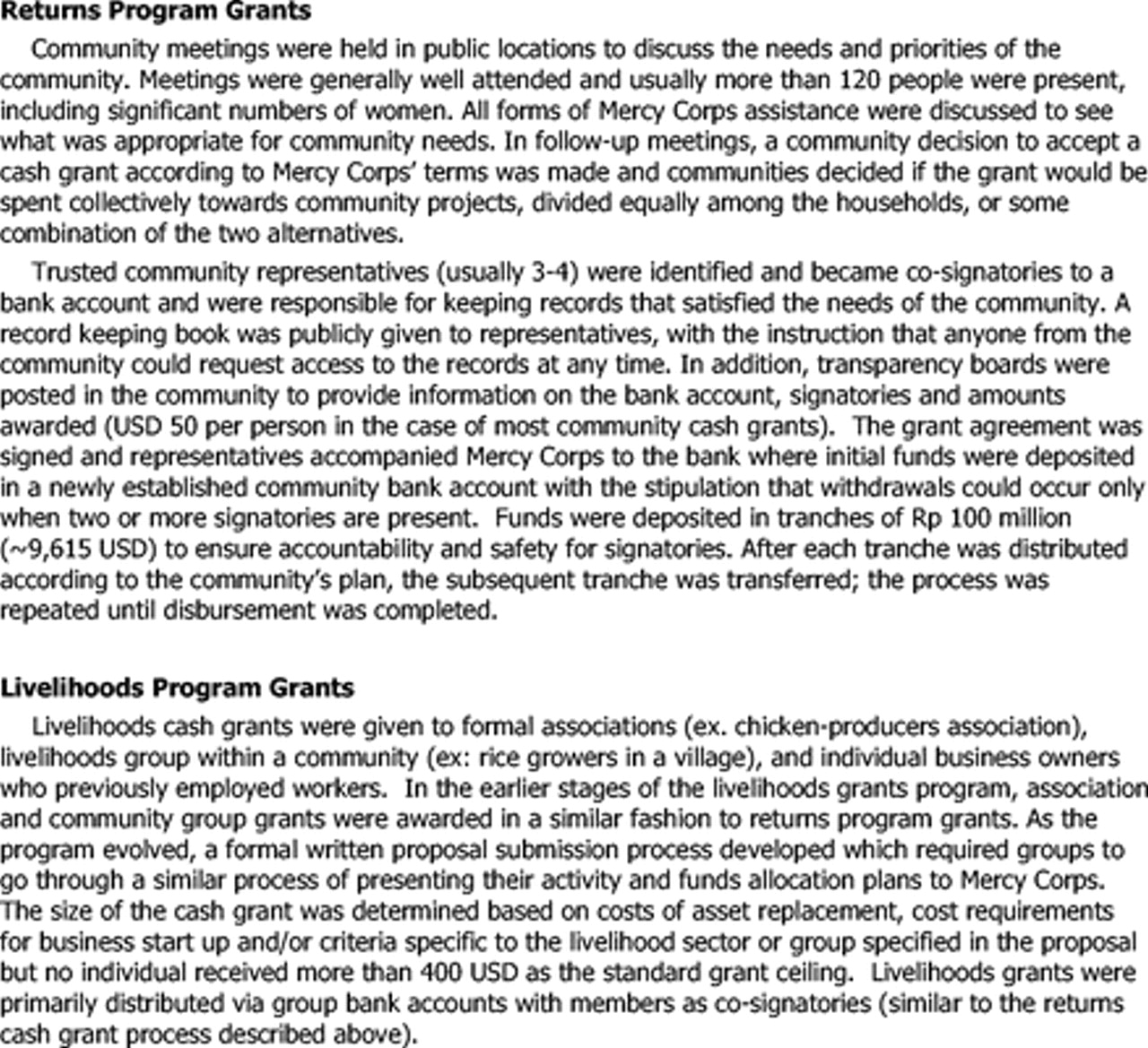
The Returns Program aimed to facilitate rapid return to home communities by providing assistance in the form of material inputs and cash grants to communities and individual households during the period January–August 2005. All of the Returns Program community cash grants were determined per capita based on an award size of US$50 per person. These grants were expensed at the time of their disbursal, meaning that they were completed in 1 tranche and did not require paperwork receipts for clearance. In September 2005 the Returns Program transitioned to a more comprehensive Community Development Program that worked through village-based structures and participatory planning to help communities identify and plan priority infrastructure projects and initiatives for social and economic revitalization. Ultimately, communities decided whether funds were allocated on a household basis, to community reconstruction projects, or to some combination of the 2 alternatives.
The Livelihoods Program sought to provide informal economic opportunities, restart community-based enterprises, and revitalize livelihoods. Program interventions consisted of cash grants, technical support, and acquisition of productive assets (productive assets are defined as those used for income generation; for example, a fishing boat would be considered a productive asset as compared with a television, which would not be included in this category) with the objective of assisting families, communities, associations, and small businesses in the restoration of livelihoods activities. Sectors assisted included agriculture, forestry, aquaculture and fishing, and small businesses that accounted for livelihoods activities of approximately 70% of the tsunami-affected coastal population of Aceh. This program transitioned into a larger Economic Development Program.
The Social Revitalization Program supported social and cultural mechanisms of support and recovery at the community level with the aim of restoring and reinforcing preexisting social structures and community life. Cash grants and other forms of assistance, including material aid, were provided to educational and religious institutions, youth sport leagues, arts and cultural groups, and health structures, primarily midwives.
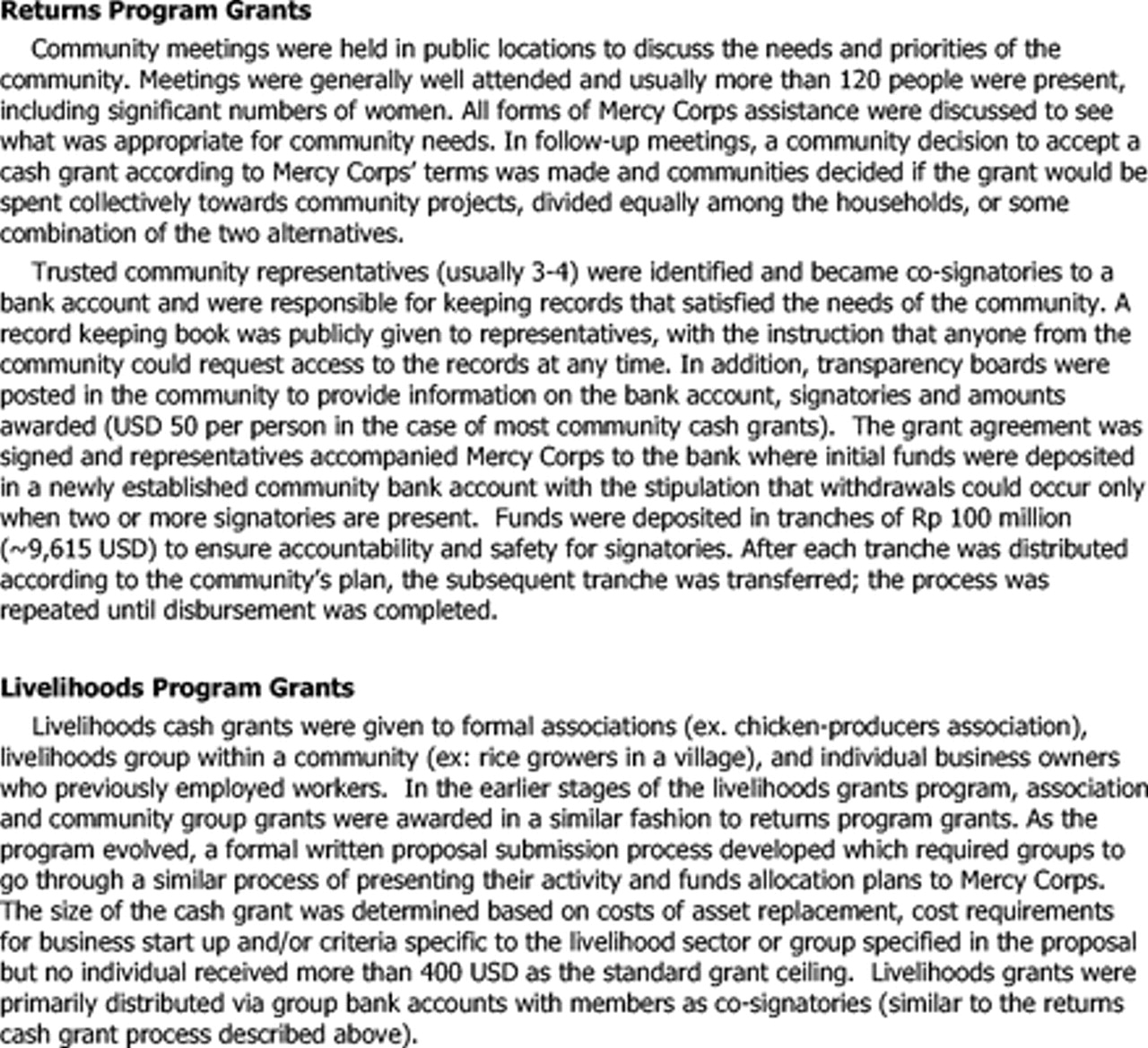
The basic grant distribution process and payment mechanisms are described in Figure 1. Because most of the awards were made to groups or communities, transparency, in terms of having all of the potential recipients understand the award amount and the mechanisms by which the money would be transferred to a group account and then distributed to individuals, was a major focus of implementing the cash grant program. In general, information on the use of funds by individuals and communities was not routinely reported after grants were issued because Mercy Corps believed this was inconsistent with the concept of postdisaster grants as a form of humanitarian assistance and also because it was not operationally feasible to follow all of the beneficiaries. Monitoring was conducted through the grant award and disbursement process to ensure receipt of funds. Surveys of a sample of grant beneficiaries in the Returns and Livelihoods programs were conducted as a means of evaluation at approximately 1 month after grant disbursement and aimed to understand how cash grants had been perceived and used among a systematic cluster sample of beneficiaries.
Planning and disbursing cash grants
Study Design and Data Collection
A grant monitoring system and beneficiary survey were used to assess the Mercy Corps cash grant program that developed in Aceh, Indonesia, following the December 26, 2004, tsunami. The grant monitoring system was developed as a component of program management and included basic indicators such as program area, grant mechanism, economic sector, number of beneficiaries, award amount, approval date, disbursement date(s), and current award status. The review of grants included in the monitoring system incorporated all of the Mercy Corps cash grants approved in 2005 for which disbursement had begun before or during January 2006. In general, disbursement began between 1 to 4 weeks after grant approval. In several cases, particularly among earlier grants, the grant approval date was unknown. When this occurred, the grant was included only if payment began or if the grant status was closed as of January 2006 and all of the funds had been distributed. For analysis of program data over time, the payment date was used for the grant approval date when the latter was unknown. Grant amounts were originally reported in Indonesian Rupiah and were converted to US dollars at a rate of 10,400 Rupiah per US$1. (The exchange rate fluctuated in 2005, ranging from 9722 to 10,802 Rupiah per dollar, before decreasing in 2006. The rate used reflects that used by Mercy Corps to summarize program activities during 2005.)
A cash grant beneficiary survey was conducted among recipients of group grants to assess the viability of group grants as a cash distribution mechanism immediately following disasters and the satisfaction of beneficiaries. The beneficiary survey encompassed the Livelihoods and Returns programs, which accounted for 81% of the cash grant recipients in 2005. Cash grants disbursed via the Social Revitalization Program (7% of 2005 total) were not included in the beneficiary survey because grants were given primarily to local NGOs and individual beneficiaries were not likely to associate the resulting activities with Mercy Corps. Community Development Program beneficiaries also were not included in the survey because the program started later in 2005 and was seen as a development program rather than as a component of the relief and recovery phases.
The cash grant beneficiary survey used a cluster sampling design so that each grant within a program, regardless of number of beneficiaries, would be equally weighted. This design was identified so that the sample would be representative at the grant level and ensure an adequate number of grant recipients in smaller size groups. In addition, this design allowed for comparison across different sizes of groups. (The relation between group size, receipt of funds, and satisfaction was of particular interest to Mercy Corps because it could help to inform the design and implementation of future cash grant programs.) At the time of the study design, Mercy Corps anticipated awarding fewer community returns grants than livelihoods grants, and returns grants tended to be awarded to entire communities whereas livelihoods grants were awarded to smaller groups of individuals with a common livelihoods objective. For these reasons, a different number of beneficiaries were sampled per grant in the 2 programs: the target sample included 15 individuals per grant in the Returns Program and 3 individuals per grant in the Livelihoods Program. Respondents were included in the final sample if more than 12 individuals per Returns Program grant and 2 individuals per Livelihoods Program grant participated in the survey. Individuals were systematically selected by program staff with no prior knowledge of the individuals or grants using interval sampling from grant recipient lists (ie, every nth recipient on the list was included in the sample). If after 2 visits to the community the respondent could not be located, then the next name on the list was selected as a replacement.
Interviews were conducted approximately 1 month after disbursement of the grant; among the first grants awarded, a longer time elapse occurred because monitoring systems were not yet in place. The study methodology was primarily developed by the Johns Hopkins Center for Refugee and Disaster Response and implemented by Mercy Corps, although both entities were involved in aspects of design, data collection, analysis, and writing of findings. The questionnaire was developed in English and translated to Bahasa Indonesia. After piloting and finalization of the questionnaire, back translation was performed to ensure accuracy. The questionnaire was largely structured, but also included open-ended qualitative responses in relation to participants' feelings regarding the grant process and outcomes to ensure that all of the views were accurately reflected and recorded. Interviews were conducted by national staff in the Mercy Corps Monitoring and Evaluation Unit between May 2005 and January 2006. Interviewers were Acehenese and were fluent in the local language of Bahasa Indonesia; they had previous survey experience and received additional training before the start of data collection. Interviewers with no previous contact with cash grant beneficiaries were selected to minimize biased responses. Data analysis was performed using Stata version 8 and SPSS version 14.0. The study was certified as exempt from human subjects review by the Committee on Human Research at the Johns Hopkins Bloomberg School of Public Health because it was an evaluation of a service program.
RESULTS
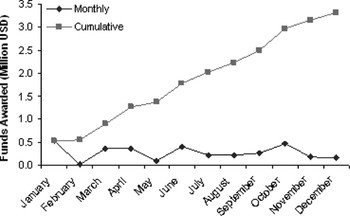
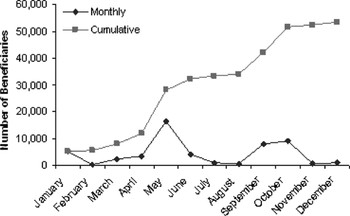
The Mercy Corps cash grant program began within 2 weeks after the December 2004 tsunami. In 2005 Mercy Corps awarded 519 cash grants to groups comprising more than 53,000 individuals; more than US$3.3 million in cash grants were disbursed during the course of the year. The number of awards per month ranged from 11 to 26 between January and May, then increased in the latter half of the year (39–83 awards/month) as the cash for work program phased out and the Livelihoods Program expanded. The evolution of the cash grants program, in terms of funds awarded and total beneficiaries, is summarized in Figures 2 and 3.
Amount of cash grants awarded in tsunami-affected areas of Aceh in 2005 (from program data)

Amount of cash grant beneficiaries in Aceh in 2005 (from program data)

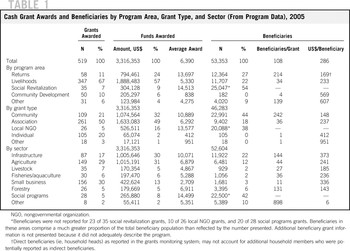
A summary of the cash grant program is presented in Table 1, including number of awards, total amount awarded, and number of beneficiaries by program area, grant type, and sector. In the Returns Program, cash grants were disbursed to communities. In the Livelihoods Program, cash grants were made to individuals, community groups, and associations with common livelihoods objectives. Although association grants were the most numerous and comprised half of all funds distributed, grants in the Returns and Social Revitalization programs accounted for nearly twice the number of beneficiaries and averaged more than double the award size of association grants. The majority of cash grant funds went to support the rehabilitation and establishment of infrastructure and agriculture. Most grants were awarded via the Livelihoods and Returns programs; however, the greatest number of beneficiaries was attributed to the Social Revitalization Program, largely because entire communities benefited from grant-funded activities. Social Revitalization Program grants accounted for the greatest proportion of beneficiaries, despite significant underestimation of the total number of beneficiaries, and likely comprised more than half of all of the Mercy Corps cash-grant beneficiaries.
Cash Grant Awards and Beneficiaries by Program Area, Grant Type, and Sector (From Program Data), 2005

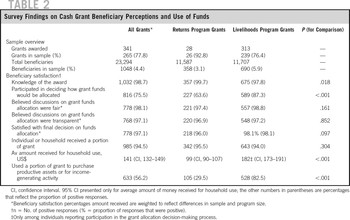
Transparency and satisfaction were both high in both the Returns Program and Livelihoods Program. Survey results for satisfaction measures by program area are presented in Table 2. (Knowledge of the award represents the percent of sampled respondents on Mercy Corps grantee lists that reported being aware that their community or livelihoods group was receiving a grant from Mercy Corps; the percent of respondents reporting receipt of funds reflects the proportion of sampled individuals on Mercy Corps grantee lists that indicated they actually received grant funds from Mercy Corps.) More than 98% of beneficiaries in the Returns and Livelihoods programs reported knowledge of the group award, although participation in the grant allocation process was significantly different between the 2 programs, with 64% of Returns Program beneficiaries reporting involvement in the grant allocation process as compared with 87% in the Livelihoods Program. One potential reason for this difference is that the number of beneficiaries per grant was greater in the Returns Program than the Livelihoods Program, thus it was more difficult to involve all of the beneficiaries. Overall, 98% and 97% of Returns Program and Livelihoods Program beneficiaries, respectively, reported that they perceived the process as fair and transparent. Satisfaction rates were high and statistically similar in the 2 programs, with 97% of participants indicating that they were satisfied with the final decision on how grant funds were allocated. Receipt of grant funds also was statistically similar between the Returns and Livelihoods programs with 95% of respondents reporting receipt of funds.
Survey Findings on Cash Grant Beneficiary Perceptions and Use of Funds

In the Returns Program, grant spending patterns were as follows: food purchases (66%), education (44%), transportation (37%), savings (35%), health (27%), purchase of building materials (17%), contribution to community funds (13%), and purchase of household items (6%). Of Returns Program beneficiaries, 30% reported using a portion of the grant to purchase productive assets or for income-generating activities. This percentage is significantly lower than that reported in the Livelihoods Program; this is likely due to the broader aims of the Returns Program—to facilitate sustainable return to home communities—as compared with the Livelihoods Program, which was more targeted and aimed to restart livelihoods activities.
In the Livelihoods Program, 83% of beneficiaries reported using grant funds to purchase productive assets or for income-generating activities, with 17% reporting purchase of assets for use in household food production. Other uses of grant funds in the Livelihoods Program included purchase of productive assets (30%), contribution to community funds (16%), purchase of household items (50%), savings (31%), food purchases (27%), transportation (18%), education (10%), health (9%), and purchase of building materials (5%).
Approximately half (52%) of Livelihoods Program beneficiaries reported a currently operational business or livelihoods activity at the time of the survey. Common reasons for nonoperational businesses at 1 month after grant disbursement included that necessary productive assets had not been procured, that construction was ongoing, and that there had been changes in household livelihoods activity. In 1 instance, capital was spent on nonbusiness purchases and another respondent reported a failed business.
Most respondents (85%) indicated that they were able to locally procure all of the desired productive assets and 74% of livelihoods beneficiaries reported that all of the essential business assets were recovered through the grant funds provided. However, inadequate funds for complete replacement of all of the productive items were the primary reason for dissatisfaction with the grant process among livelihoods beneficiaries. More than half of livelihoods respondents (60%) reported payment of an administrative fee (not related to Mercy Corps) associated with the disbursement of the grant, although it was unclear whether the fee was assessed by the association/community group or the bank that processed the grant payment.
Among beneficiaries in the Returns Program, 96% received either all or part of the corresponding funds ($50 per person) that were awarded. The per capita household grant amount received ranged from US$1 to $77, with mean and median values of US$26 (confidence interval [CI], 24–28) and US$23, respectively. At the household level, the grant amount received ranged from US$5 to $730 with mean and median values, respectively, of US$99 (CI, 90–107) and US$77. Returns Program beneficiaries' preferences about how funds should be awarded in future grants were divided, with 53% indicating that grants should be divided among households, 44% suggesting grant funds should be divided between households and community projects, and 3% believing that funds should be provided only for community projects.
DISCUSSION
The Mercy Corps cash grant program disbursed more than US$3.3 million in grants to more than 53,000 tsunami-affected individuals in a manner that was both transparent and acceptable to the large majority of the beneficiary population. The first cash grants were disbursed on January 6, 2005, and within 1 month of the tsunami, US$532,000 in cash grants had been awarded to more than 5200 beneficiaries in 14 communities. Although cash interventions, notably for work, were relatively widespread in Aceh, cash grants were only implemented by a handful of other NGOs. In general, NGO cash grants programs, particularly those aimed at livelihoods revitalization, emerged later in the relief phase and continued on in the recovery phase.
The British Red Cross, for example, had a cash for planning program that sought to empower communities by fostering the collective decision-making process, and in later phases, provided financial support for housing and livelihoods. Save the Children's program provided a mix of grants and loans, although all of the vulnerable households received grants. International Relief & Development had a small business grants program that used a voucher system, as requested by beneficiaries, in which vouchers could be redeemed at multiple traders for preidentified assets. The Swiss Development Corporation provided cash grants to families that were hosting displaced people and aimed to acknowledge solidarity and encourage them to maintain their effort by compensating for part of the costs.Reference Adams, Meehan and Sinta8
The cash grant program faced many limitations common in the emergency context, as well as some that are more specific to cash interventions. In the context of Aceh, where international NGOs were not operating before the 2004 tsunami, establishment of program offices and hiring staff and vehicles immediately following the tsunami were challenges. Limitations more specific to cash interventions included the unknown extent of the threat of conflict resurgence and accompanying risks associated with cash transport, as well as the incorporation of the formal banking system and development of cash grants distribution processes that were participatory, transparent, and locally acceptable. One benefit of cash was that it was an efficient and cost-effective intervention for Mercy Corps. Identification, procurement, and transportation of goods were time consuming and difficult considering the unfamiliar context, damaged transportation infrastructure, and limited availability of staff and vehicles; Mercy Corps staff reported that cash programming allowed them to provide rapid assistance to more beneficiaries, and that it minimized transaction time and costs associated with the purchase and subsequent distribution of commodities.
The group grant mechanism was perceived as the only feasible way to reach a large number of beneficiaries, although there was concern over inequitable distribution of funds and exclusion of some intended beneficiaries from grant receipt. In program development, emphasis was placed on a participatory approach and postaward transparency as program strategies that could curb potential negative aspects of cash distribution. In general, the strategies appear to have been successful, with more than 95% of target beneficiaries reporting that allocation processes were fair and transparent and that grant funds were received. Grants to local NGOs were an especially important component of the program because they provided resources to local organizations, which can often be marginalized in the response to large-scale disasters. Through local NGOs Mercy Corps was able to provide more assistance than would otherwise be possible given limited staffing and difficulties inherent to rapid scale-up in the early stages of the emergency response.
In light of initial concerns among the Mercy Corps program staff regarding misallocation of grant funds, the group grant mechanism functioned well, with the overwhelming majority of target beneficiaries reporting receipt of funds. Returns Program grants were allocated on a per capita basis of US$50, although the beneficiary population was not aware of the per capita allotment. (Communities were not made aware of the per-capita allotment because there was a concern that reported population sizes could be artificially increased to receive a larger grant allocation.) Grants were targeted to communities in which the majority of the population was displaced by the tsunami, and all of the surviving residents from affected households, regardless of age, were considered when enumerating community population. The size of grants awarded in the Returns Program varied greatly, however, ranging from US$1 to $77 per person. One possible explanation for this is recall and reporting error. Another is that there was no requirement or suggestion that the money be divided equally. Communities decided to award funds according to differential criteria—such as level of loss, or need—and in some cases, funds were not distributed to households but used at the village level for activities such as reconstruction of community buildings or purchases of generators.
On average, households in the Returns Program reported receiving US$26 per person, or approximately half of the allocated amount. This is likely a reflection of the division of funds by the communities where, in many cases, a portion of the funds went to community projects and the remainder was distributed among households. It is possible that grants were distributed preferentially to some community members and others were marginalized, or that some other form of manipulation occurred; given the overall high levels of participation and satisfaction with the grant process and reported transparency of community disbursement mechanisms, this appears unlikely.
Recipients of livelihoods grants reported using funds for a wide range of purposes, indicating that basic necessities such as food, education and health, and household items remained as important unmet needs at the time that the grant was awarded. A significant minority (31%) also reported that they were able to save funds, suggesting that cash grant recipients had diverse financial needs and that an improved understanding of the household situation and their long-term plans could aid in the grant allocation process in future cash grants programs. More than half of livelihoods respondents reported payment of an administrative fee (not related to Mercy Corps) associated with the disbursement of the grant, although it was unclear whether the fee was assessed by the association/community group or the bank that processed the grant payment. This observation was unanticipated; from an organizational standpoint, it is reasonable to expect banking fees or association fees because the organizations involved incurred costs in distributing the grants. However, this also could be a sign of corruption and an explanation as to why funds received were lower than expected.
Evidence suggests that insecurity and corruption relating to cash-based humanitarian approaches are minimal, and strategies to reduce these risks have been developed successfully in multiple settings.Reference Harvey4,Reference Adams, Meehan and Sinta8–Reference Adams and Kebede11 If cash grant programs are tailored to the local context and delivered via approaches that promote beneficiary participation and transparency in decision-making, then risks of corruption and mismanagement can be minimized. In posttsunami Aceh Mercy Corps found that the key means of combating these constraints is transparency—allowing the free flow of information empowers people to monitor the fairness of cash grant distribution in a community. Transparency in the cash grants program was promoted by public meetings, multiple signatories, and transparency boards that were posted in public locations to provide all of the beneficiaries with access to grant information. Use of local banks to disburse grants, when possible, was also advantageous because it reduced the risks of insecurity and corruption and promoted transparency and process documentation.
Concerns of corruption, mismanagement, inequity, diversion, and misuse of funds by beneficiaries are perhaps the primary reasons why cash interventions have not been adopted by more humanitarian organizations. Other factors limiting the use of cash interventions include skills and capacities of implementing organizations, attitudes and assumptions on the part of aid agencies that find cash threatening, donor funding structures, and a lack of information sharing on experiences with cash in emergencies both within and between agencies.Reference Harvey3, Reference Harvey4 The 2004 Indian Ocean tsunami is the first disaster in which various cash programs have been implemented on a large scale by multiple organizations and few negative experiences were reported, although there were several anecdotal reports by NGOs working in Aceh.
The Mercy Corps experiences following the 2004 tsunami support the conclusions of recent review articles that recognized the risks and limitations of cash-based responses in emergencies while concluding that they are an emerging and appropriate component of humanitarian response:
A strong body of evidence is starting to emerge that providing people with cash and vouchers works. It is possible to target and distribute cash safely, people overwhelmingly spend money on basic essentials, cash provides a stimulus to local economies, and it is often a more cost-effective alternative than commodity-based alternatives.—Harvey, 2005 Reference Harvey4
We argue that cash-based responses should play a role in humanitarian response to crises. This is a relatively new field for aid agencies and, while a foundation is being laid for developing learning, skills, and capacities, much remains to be done.—Harvey, 2007 Reference Harvey3
Cash for work has the longest history of cash-based responses, and was the most widespread cash intervention following the 2004 tsunami, whereas cash grants are a more recently emerging cash intervention. Proponents of cash grants suggest that grants are best for reaching the most vulnerable people, do not promote assumption of debt (as compared with loans), and provide one-time assistance to responsible individuals who have had the misfortune of being victims of disasters. Participants in a cash learning workshop in Aceh concluded that “grants were important to ensure that households' basic needs were covered,” that “loans should only be provided after people had met their basic needs,” and that “a mix of grants and loans was good for small business development.”Reference Adams, Meehan and Sinta8
Mercy Corps found that broad distribution of cash grants catalyzed recovery and facilitated community and economic revitalization. However, the Mercy Corps experience indicates that a primary limitation in establishing cash grant programs during an emergency response is the identification of funding sources. Unrestricted funding from private donors provided organizations responding to the 2004 tsunami with unprecedented freedom to implement programs—such as cash grants—that otherwise may not have been supported by traditional bilateral donors. Cash grants often do not meet the accountability and financial reporting requirements of most donors, and in the case of Mercy Corps, could not have been started without private donations. Once the cash grants program was under way, several larger donors did allow for livelihoods grants after a discussion of the kind of auditing information that would be available. Recipients were responsible for outputs of their grants as per the agreement but were not required to submit receipts. The programming flexibility afforded by private donors is essential to the piloting and development of new approaches in humanitarian response, and was a unique factor that made the cash grant program feasible in Aceh.
The study was designed to balance the need to quantify the cash grant program and to gauge beneficiary perceptions and satisfaction within an operational context that necessitated a simple and straightforward monitoring and evaluation plan. Consequently, the study provides an overview of the program but is limited in scope and does not allow for detailed examination of numerous areas of interest. Another limitation is that the study was developed as the program was evolving, and could not adequately anticipate information that ideally would have been collected in later phases of the program; this was particularly true for the livelihoods grants component, in which the Livelihoods Program evolved over the course of the year.
Locating grant beneficiaries that were selected to participate in the survey was often challenging and may have affected the representativeness of the final sample of grant beneficiaries. Replacement sampling was used, and it is possible that respondents who could not be located were somehow different than those who could be located, particularly in areas with high rates of displacement. In the survey, beneficiaries may have responded more positively out of courtesy, which could lead to overly optimistic conclusions on transparency and satisfaction. Double counting is another potential source of error; the grant monitoring system was not able to track whether the same individual received grants via multiple programs, although this possibility is highly unlikely. Difficulties in counting direct and indirect beneficiaries may have reduced the total number of beneficiaries reported, particularly in the Returns Program, for which there was potential confusion over individual and household level reporting of beneficiaries. Lastly, inadequate reporting, particularly in the Social Revitalization Program, contributed to underestimation of the total number of program beneficiaries.
CONCLUSIONS
In response in the 2004 Indian Ocean tsunami, Mercy Corps distributed more than US$3.3 million to tsunami-affected populations in Aceh Province during the 2005 calendar year via cash grants. Mercy Corps' experience with both large-scale cash for work and cash grants initiatives indicates that cash interventions can be delivered safely and effectively in disaster settings and that management strategies can be developed that minimize concerns of insecurity and corruption while facilitating rapid and large-scale cash distribution. Cash interventions in the emergency context, when properly administered, can have an immediate and positive impact on disaster-affected populations and serve as an efficient mechanism for stimulating recovery. Cash-based approaches promote empowerment and dignity by enabling communities and individuals to have choice and control in the rebuilding of their lives, and on a larger scale, can stimulate regional economic recovery.
Findings from the present study and a growing body of evidence from a variety of cash programs in the emergency context suggest that greater consideration should be given to cash interventions in humanitarian response. Cash has multiple advantages over material aid and can be successful when implemented on a widespread basis, particularly when implemented in conjunction with traditional commodity-based responses. Cash programs in the emergency context have been shown to be cost-effective and acceptable to beneficiary populations in multiple settings. Organizations involved in humanitarian relief, including the United Nations, national governments, donors, and NGOs, should consider expanding the role of cash-based interventions in their responses to future emergencies.
Authors' Disclosures The authors report no conflicts of interest.