1. Introduction
The second volume of Adolf von Harnack's masterful Die Mission und Ausbreitung des Christentums in den ersten drei Jahrhunderten began by documenting the spread of Christianity from the first century to the time of Eusebius.Footnote 1 The catalogue he offered ranges from declarations, some as early as the first and second centuries, to the effect that the gospel had been heard ἐν παντὶ τόπῳ (e.g. 1 Thess 1.8) to admissions by the likes of Origen that the diffusion of the Christ cult was still limited geographically.Footnote 2 Harnack was undoubtedly correct to regard many of the former as rhetorical exaggerations and aspirational more than descriptive.Footnote 3 Even Pliny's claim at the beginning of the second century that Christians in Bithynia were many and were to be found in all ages, all ranks and among both women and men, in the countryside as well as the cities, is not without a good deal of hyperbole.Footnote 4 By the Severan period there is more credible evidence of a wider diffusion of the cult of Christ, both geographically and socially, and by the mid-third century some areas of Phrygia seem to have been substantially Christianised. There is even evidence of a handful of Christians of senatorial rankFootnote 5 and others of the bouletic classes.Footnote 6 Yet by most estimates, only 7–10 per cent of the population was Christian by the eve of the Edict of Toleration.
Since Harnack's day much work has been done to nuance his results by drawing on more recent epigraphical and archaeological dataFootnote 7 including detailed local studies,Footnote 8 and now culminating in the Berlin TOPOI project, which will offer detailed regional surveys of sites in Asia and Macedonia.Footnote 9 This ‘New Harnack’ will offer a breathtaking narrative of the diffusion of Christianity, both historically and geographically, running parallel to endeavours to map the mobility of various Hellenistic cults,Footnote 10 including Isis,Footnote 11 SarapisFootnote 12 and Jupiter Dolichenus.Footnote 13 Drawing on some of these results, I want to ask a different question, not about the broad geographic diffusion of the Christ cult but instead how it moved at the level of the street and neighbourhood. It is at this point that theoretical insights from two disciplines provide useful heuristics, not to manufacture new data, but instead to allow us to read our data with new eyes, and to see new interpretive possibilities.Footnote 14 These disciplines are network theory and epidemiology.
2. Networks and Contagions
There are of course many kinds of networks, including networks of cities linked by roads, airports and harbours; networks of neighbourhoods created by subway and transit lines; and of course many kinds of networks created by the World Wide Web. Social networks – networks of people – are created by a variety of institutions: the family, marriage, the workplace, commercial and fiscal relationships, cultic organisations and the civic assembly, and by sheer spatial contiguity – working or living on the same street or in the same neighbourhood as others. My ‘ego network’ includes my family and more distant relatives, the colleagues and students in my department, colleagues at other universities, my friends, my next-door neighbours, bank manager, lawyer, friends from high school and various chance acquaintances. It is centred in Toronto at the University, but extends to Western Canada, Boston, Germany, Israel, Scandanavia, South Africa, Bulgaria, Italy, and includes academics, musicians, lawyers, engineers, archaeologists, rabbis, two Anglican priests and an artist.
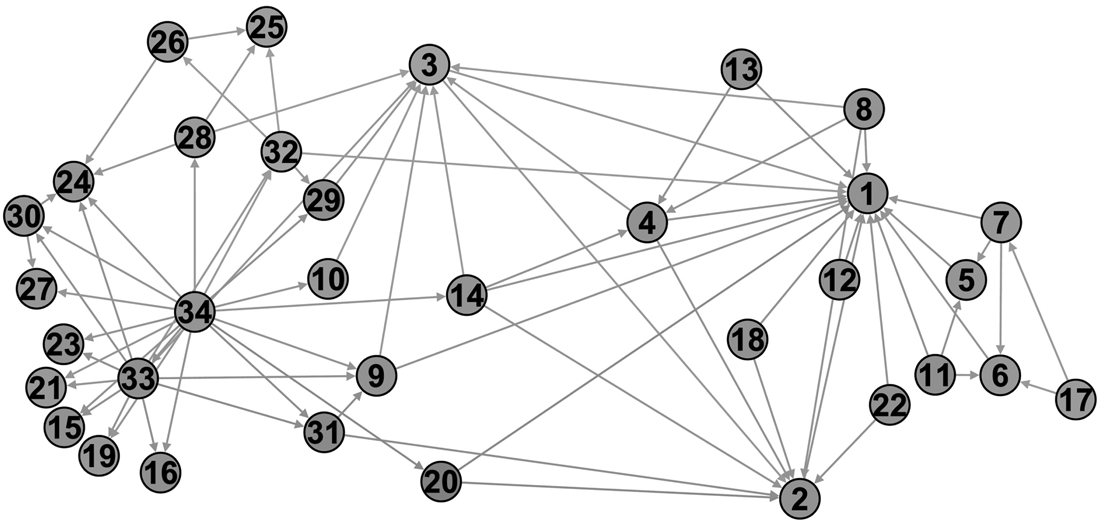
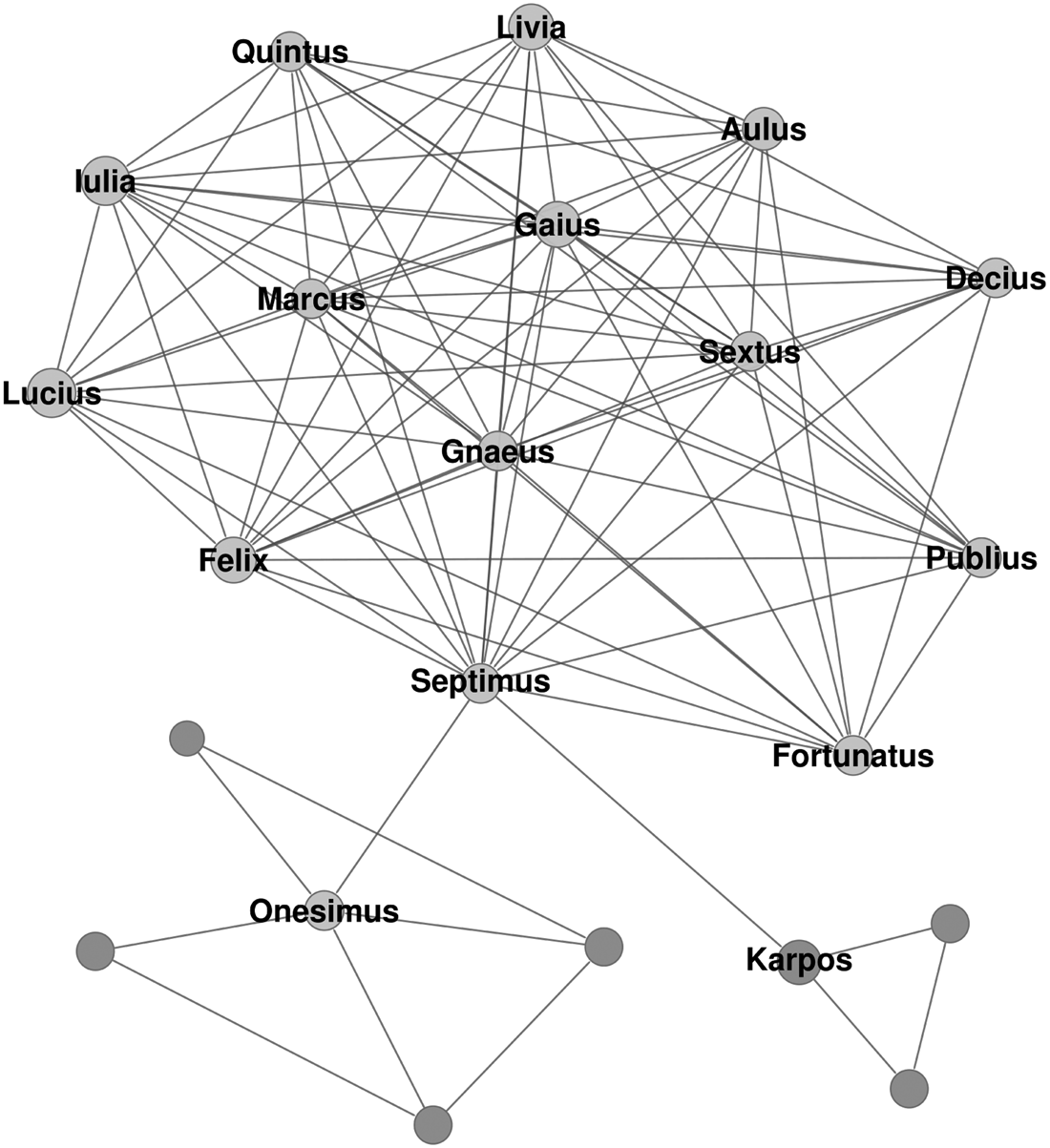
In a social network, some nodes are strongly connected to others, with frequent and intense interactions or multiplex relations, for example, where co-workers also belong to the same family and live in the same neighbourhood, and have common religious commitments. Others connections are weak, with either infrequent interactions – distant acquaintances – or a connection based on a single shared characteristic. Some nodes have many neighbours with whom they are connected directly and interact frequently; others have few connections. A network map can identify ‘hubs’ that connect many nodes, and peripheral nodes with only one or two connections (Fig. 1). If important information enters the network, it is good to be a hub; if an infection enters, it is good to be at the periphery. Strong ties are strong in two senses. On the one hand, nodes are connected by frequent and intense interactions.Footnote 15 On the other, the persons with whom one is strongly connected are themselves likely to be connected to each other, thus producing ‘triads’ (Fig. 2). My closest friends are probably also each other's friends. Weak ties have the opposite characteristics: nodes that are weakly connected have infrequent or even rare interactions. And those with whom one is weakly linked are unlikely to be connected with each other. My distant acquaintances might have strong connections of their own, but they are not likely to be connected to each other.
Hubs and peripheries (1, 2, 3, 34 are hubs)

Strong ties, weak ties

One of the counter-intuitive findings of network theory is that weak ties are disproportionately important in diffusion across networks. In an important article in 1973 Mark Granovetter showed that while strong ties provide their nodes with a high degree of stability, because each node is multiply and tightly connected to its neighbours, weak ties are more likely to be the vectors for new information, innovations and infections.Footnote 16 Job seekers were more likely to obtain information about a new opportunity from someone with whom they were not strongly connected. The logic is that an acquaintance – a weak link – is more likely to move in different circles than one's friends, and so have access to information that is not part of one's ego cluster.Footnote 17 Correspondingly, individuals with very few weak ties are likely to be deprived of information from distant parts of their network, or at least information from distant parts is likely to arrive very slowly.Footnote 18
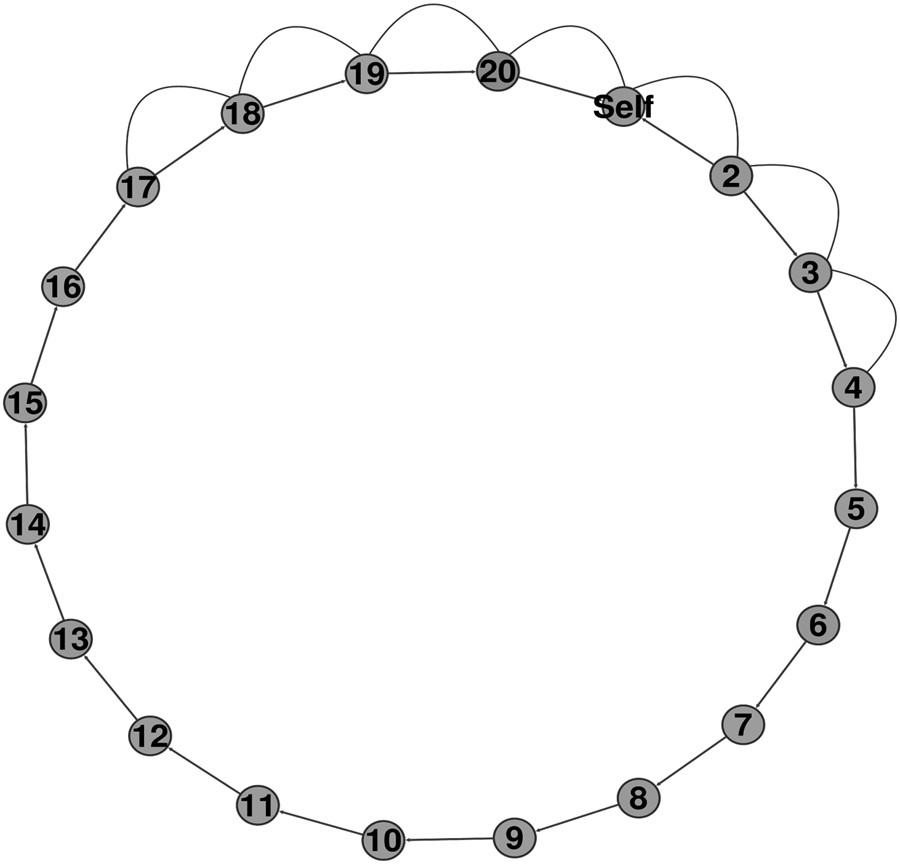
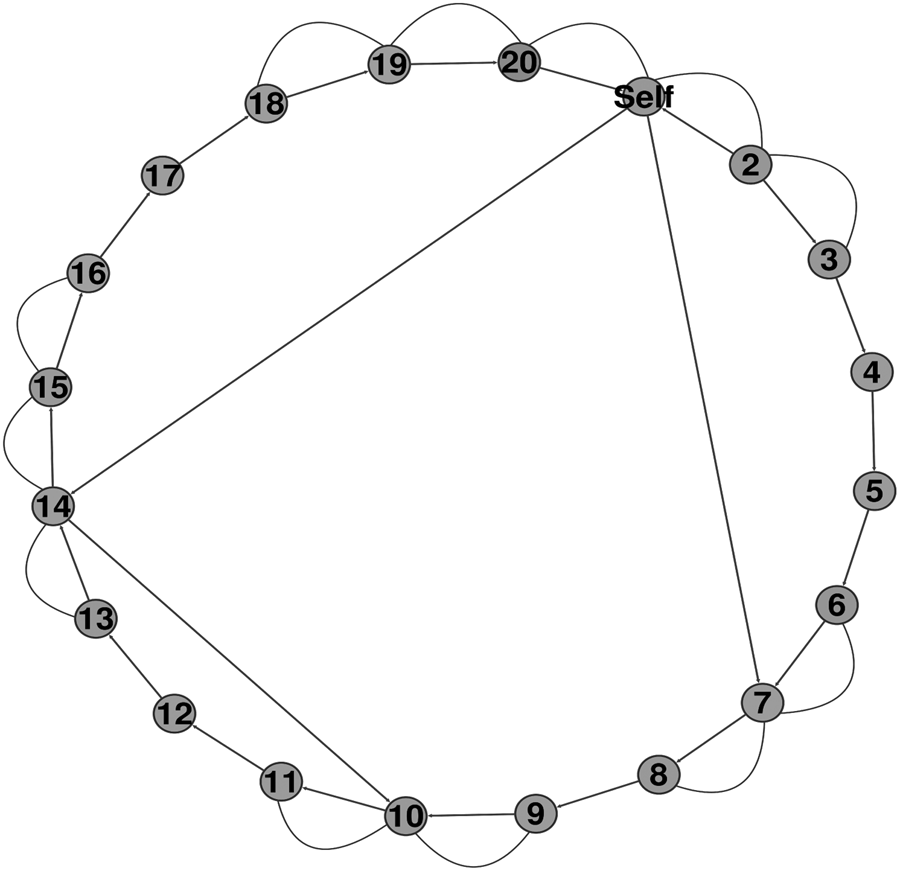
In a large world network where, hypothetically, each node is connected to a neighbour on each side, information will move, but will do so slowly until it has reached the most distant parts of the network. But Duncan Watts showed through mathematical modelling that in a large network, the addition of a few weak ties that join distant parts of the network dramatically improved the rate of diffusion for simple contagions. Such a network becomes a ‘small world’.Footnote 19 This is because information can move not only to its immediate neighbours, but it can jump to distant parts of the network in a single step and propagate laterally from there. Computational models suggest that the introduction of two or three weak ties into a large network reduces the diffusion time by as much as two-thirds (Figs. 3 and 4).Footnote 20
Large world network

Small world network

This model of network diffusion works well in the case of the diffusion of information, news and rumours, but also infections.Footnote 21 A recent outbreak of measles in the Pacific Northwest was likely introduced into a close-knit population of anti-vaxers in Clark County (Washington) by a traveller from Russia or the Ukraine. The weak link – the traveller – brought the infection into a highly clustered network where it propagated quickly. Measles was soon detected in Vancouver to the north, diffused probably via highways or airlines. Granovetter's model of the ‘Strength of Weak Ties’ seemed to have been confirmed: a casual or occasional contact – a weak link – was the vector of infection transmission.
At this point it is necessary to distinguish simple contagions from complex contagions. Information, rumours and infections can diffuse through a large network, aided significantly by the presence of weak ties. These are simple contagions. The threshold for reception is low and no agency is required on the part of the recipient.Footnote 22 A single contact is sufficient to transmit information or an infection like measles. By contrast, the prevention of infection in the same network propagates much more slowly, despite the presence of weak ties. Infection protection, like exercise, adopting healthy (or unhealthy) diets and stopping smoking, is a complex contagion: it requires subjects to adopt a different behaviour and to maintain that behaviour over time. The prevention of measles needs parents to have themselves and their children vaccinated and to maintain the regime of boosters in order to achieve herd immunity.Footnote 23 In a population of anti-vaxers, this requires persuasion.
Ironically, mathematical modelling suggests that the presence of weak ties in a small world network actually inhibits or even stops diffusion entirely.Footnote 24 This is because, if the new behaviour requires two or three ‘nudges’ from network neighbours to persuade a susceptible person to activate the desired behaviour, a single nudge from a weak link will be ineffective. In a highly clustered network of convinced anti-vaxers, a single nudge from a weak link cannot overcome the counter-pressure not to adopt vaccination practices.
What has this to do with the diffusion of cultic practices and the spread of the Christ cult? The adoption of a new cultic practice, in particular one that might entail some serious costs, would appear to qualify as a complex contagion. Adoption requires agency on the part of the recipients, multiple concerted ‘nudges’ or other incentives to adopt the cult, and incentives to persist in the practice of the cult.Footnote 25 In what follows I will illustrate the heuristic values of network theory and the notion of a complex contagion in relation to Paul's Christ assemblies at Thessaloniki and Corinth.
3. The Christ Cult as a Complex Contagion
Acts gives the impression that the cult of Christ diffused as a simple contagion. Paul entered a city, delivered a speech or two or performed a miracle. This won him an immediate following. And he left almost immediately. This is precisely what Acts 17 suggests. It offers an extremely compressed and schematic account of Paul's activities in Thessaloniki, implying a very short stay. The short duration of Paul's stay in Thessaloniki imagined by Acts might have been sufficient if the cult of Christ was a simple contagion. But 1 Thessalonians suggests that it was not.
In 1 Thessalonians Paul recalls the troubles that were experienced by the new Christ-followers and refers to his own experience of mistreatment in Philippi. In fact, it is obvious that after he had left Thessaloniki Paul worried that the group had collapsed entirely. We know of other groups that did collapse. It was only upon Timothy's return to Paul in Athens that he realised that the group had not collapsed but was, evidently, thriving.
At several points Paul alludes to the costs of adoption – that is, disincentives to persist in the Christ cult: the θλῖψις experienced by the new Christ-followers (1 Thess 1.6); unspecified hostility shown by other Macedonians (2.14); and Paul's own strenuous efforts (ἐν πολλῷ ἀγῶνι, 2.2) at preaching the gospel. Some of this is probably hyperbole and stock language associated with the triumph of a deity arriving in a new location. Stories of local opposition and various difficulties are also part of narratives of Sarapis arriving on Delos and later in Opus, where the narrative trope of opposition serves to underscore the ability of the deity to overcome opposition and hostility.Footnote 26 Nevertheless social network models of diffusion suggest that the adoption of a new cult with distinctive behavioural requirements and attitudes (outlined in 4.3–12; 5.1–22) and perhaps reputational costs was not a simple contagion easily adopted. On the contrary, it required multiple ‘nudges’ and incentives. The short stay in Thessaloniki implied by Acts would hardly be sufficient to effect recruitments. Paul's presence there would have been mostly ephemeral.
Paul's letter to the Thessalonians, however, presents a more complicated process. Richard Ascough has argued that the Thessalonian Christ group probably began as an occupational guild in which Paul worked.Footnote 27 Indeed, in 1 Thessalonians Paul stresses his own ‘labour and toil’ (ὁ κόπος ἡμῶν καὶ ὁ μόχθος, 2.9) as a way to identify with his addressees and encourage them to ‘work with their hands’ (4.11). This is not the ephemeral presence in Thessaloniki that Acts 17 implies; it suggests that he remained in the town for some time.
Complex contagions typically require multiple ‘nudges’ in order to propagate effectively. If Paul came to be connected with the Thessalonian workers through translocal links of occupational guilds, this was in network terms a weak link. Network theory, as it pertains to complex contagions, might suggest that by himself Paul would have been ineffective in propagating a complex contagion. Both Acts and 1 Thessalonians, however, suggest that Paul had co-workers, Silvanus and Timothy (1 Thess 1.1),Footnote 28 and that Timothy's connection with Thessaloniki was sufficiently strong for him to be able to return to Thessaloniki after Paul's departure to reinforce their adherence (1 Thess 3.2, 3). Network theory prompts us to take more seriously the roles of Silvanus and Timothy. In network terms, all three were essential in providing ‘nudges’ to the Thessalonian handworkers to adopt the cult of Christ. The three artisans must have formed strong ties with the Thessalonian handworkers. Without multiple incentives and strong supportive ties, a complex contagion such as the Christ cult would almost certainly fail.
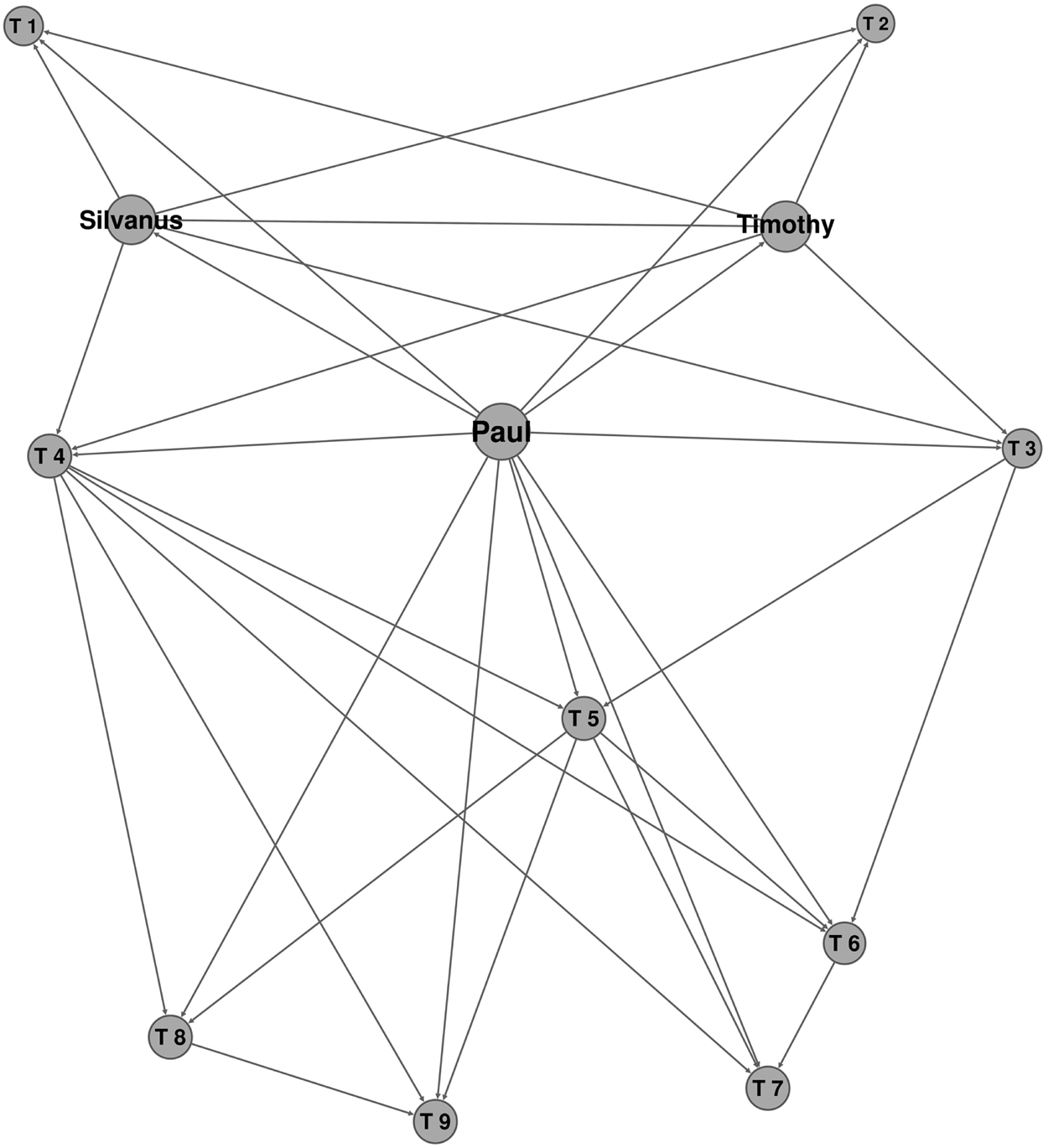
Epidemiological studies indicate that sometime after an infection enters a network and has begun to propagate, it achieves a ‘phase transition’ or ‘tipping point’ when the infection no longer requires external inputs, but becomes self-sustaining.Footnote 29Fig. 5 adapts the notion to the spread of a complex contagion in Thessaloniki. Paul, Silvanus and Timothy were all instrumental and indeed essential at the earliest stages in persuading the group of Thessalonians to adopt the Christ cult, despite its costs. In this hypothetical visualisation, T1–4 were early adopters, prompted by the three visitors. But T3 and T4 eventually became instrumental in the diffusion of the cult to T5–9, so that the inputs of Paul and the others were not as critical. By the time Paul wrote 1 Thessalonians, it appears that the Christ group had not only survived but thrived and that its existence had become widely known (1 Thess 1.8).Footnote 30 This network construction, of course, is speculative, but it is based on the principle that adoption of a difficult or contested behaviour requires nudges from several neighbours in order to become effective, and that at a certain point the contagion becomes self-sustaining.
Paul, Silvanus and Timothy in Thessaloniki

4. The Adoption of Behavioural Innovation
The diffusion of cultic behaviour through social networks has at least three requirements: first, a viable network structure that explains how a cult moved from one site to another; second, attention to what I will call the ‘ecology’ of the cult; and third, recipients susceptible to diffusion. Epidemiology offers some important models for thinking about the propagation of cultic behaviour.
4.1 Reconstructing Networks
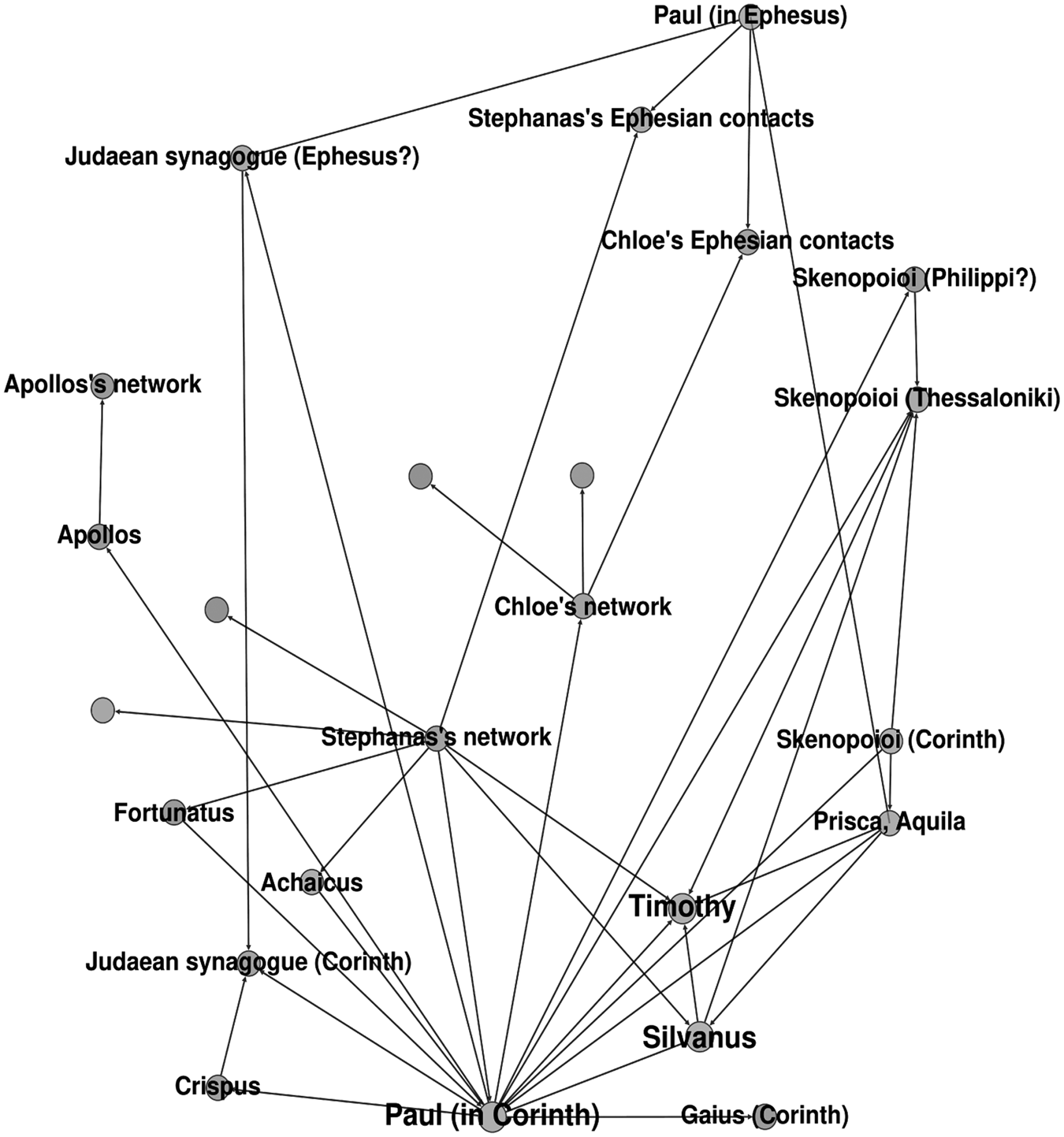
Like the spread of infections, behavioural innovation depends on the existence of a transmitting network. In Corinth Paul probably had access to at least three networks, based on his identity as an artisan,Footnote 31 his connections with diasporic synagogues, and commercial networks. First, Paul, Timothy and Silvanus, if all three were artisans, would have had access to occupational guilds, presumably the σκηνοποιοί, in Philippi, Thessaloniki and Corinth. Prisca and Aquila, who were σκηνοποιοί, also had connections with Ephesus and Rome. Because trades tended to cluster in the ancient city, occupational guilds provided ready-made intersections with members of other guilds located on the same street or alley, and with both patrons and customers of those guilds. Second, networks of diaspora synagogues provided Paul with a second set of connections. We know less about synagogue networks, but Acts assumes that both Ephesus and Corinth had synagogues that Paul might have exploited. Finally, the references to Chloe's agents and Stephanas and his two slaves or freedmenFootnote 32 arriving in Ephesus (1 Cor 1.11 and 16.17) probably point to commercial networks that enabled them to contact Paul while he was in Ephesus.Footnote 33 The network visualisation (Fig. 6) depicts the (hypothetical) network of artisans in Ephesus, Philippi, Thessloniki and Corinth, the commercial networks connected to Stephanas and Chloe, and a synagogue network between Ephesus and Corinth.
Paul's Aegean network

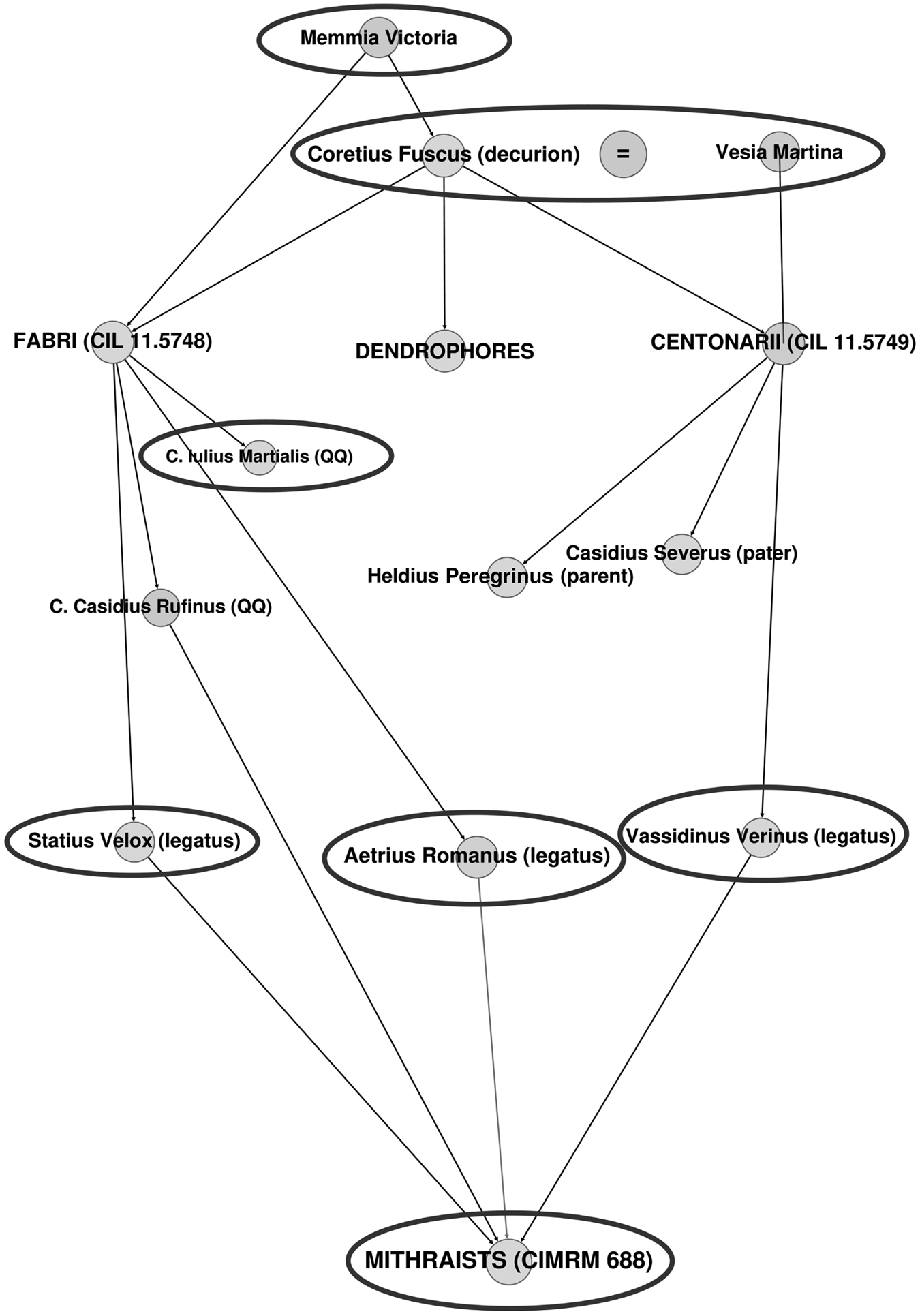
Intersections between networks probably account for the transmission of other cults. For example, a network of occupational guilds in Sentium had connections with a Mithraic cell (Fig. 7). The fabri (builders) had as their patron a certain Memmia Victoria, whom they co-opted as the ‘mother’ of the collegium. They also decided to co-opt her son Coretius Fuscus, a decurion of the town of Sentium, as a patron,Footnote 34 and to that end inscribed a deluxe bronze tablet (tabula patronatus)Footnote 35 to place in his house. Their decree was signed by the two quinquennales of the fabri and sixteen legati of that club. But we know that one of the two presidents and two of these legati were also among the thirty-five members of a Mithraic cell in Sentium, whose membership list we have.Footnote 36 Coretius Fuscus, moreover, and his wife Vesia Martina were also patrons of the textile dealers (collegium centonariorum),Footnote 37 one of whose legati was also a member of the same Mithraic cell. It seems likely that other fabri and centonarii were also Mithraists, but since we do not have membership lists of either guild it is impossible to know. It appears that patronage connected these two guilds (and the dendrophores), and that the two guilds served as venues for recruitment to a Mithraic association.
A patronage network in Sentium

We might suppose that same for the Christ cult in Thessaloniki: the connections among the handworker guilds in Thessaloniki created by patronage and by physical proximity of workshops probably facilitated recruitment to the Christ cult. Thus, the Christ cult spread along the street through network connections.Footnote 38
4.2 Cult Ecology
By ‘cult ecology’ I mean what a cult needs to survive. This concept is borrowed from epidemiology where it has to do with the conditions that allow an infection to survive and propagate. Malaria needs the Anopheles mosquito; measles needs temperate climates and moist surfaces, since the virus survives less than two hours in air. Understanding the ecology of an infection is key in preventing its spread.Footnote 39 Elective cults also have ecological requirements. Ecological success translates into the diffusion of the cult, while the failure to meet ecological requirements leads to its collapse.
A dramatic example of collapse is provided by a collegium of Jupiter Cernenus in Albernus Maior (Dacia, modern Roşia Montanӑ), 167 ce. That year the secretary of the collegium posted wax tablets announcing the dissolution of the group. Of its fifty-four original members, only seventeen remained. The co-president had never attended a meeting. Because no funds were left to buy coffins, the secretary announced, si quis defunctus fuerit ne putet se collegium habere (IDR i.31). The cause of the failure was perhaps the Antonine plague, which struck the Western Empire in 165 ce, or depopulation of the mines as a result of the invasion of Dacia by the Sarmatians (ca. 167 ce) during the Marcomannic War.Footnote 40 In either case, so devastating was the result that the group was apparently unable to recruit replacement members through either occupational or family networks. The group simply collapsed.
An instance of ecological success is offered by P.Mich. viii.511 (late 2nd cent. ce), a letter from a certain Ptolemaios to his father Kastor in the village of Karanis on the northern edge of the Fayûm. Ptolemaios, who had moved from Karanis to the metropolis, Arsinoe-Krokodilopolis, reports that he had been invited to join a group of Sarapiastai as their ἀγορανόμος. This role, which is attested in other cult associations,Footnote 41 is obviously borrowed from the civic role of the same name. It probably involved the supervision of the banquet and perhaps obtaining a venue for the meal.Footnote 42 Ptolemaios told his father that he was required to supply five donkey loads of firewood, probably for the roasting of the sacrifices, and was writing to his father for help.Footnote 43 Typically officials of this nature would have other liturgical responsibilities imposed upon them, which meant that recruits to this role not only needed administrative competences and social connections, but also had to be persons of some means.
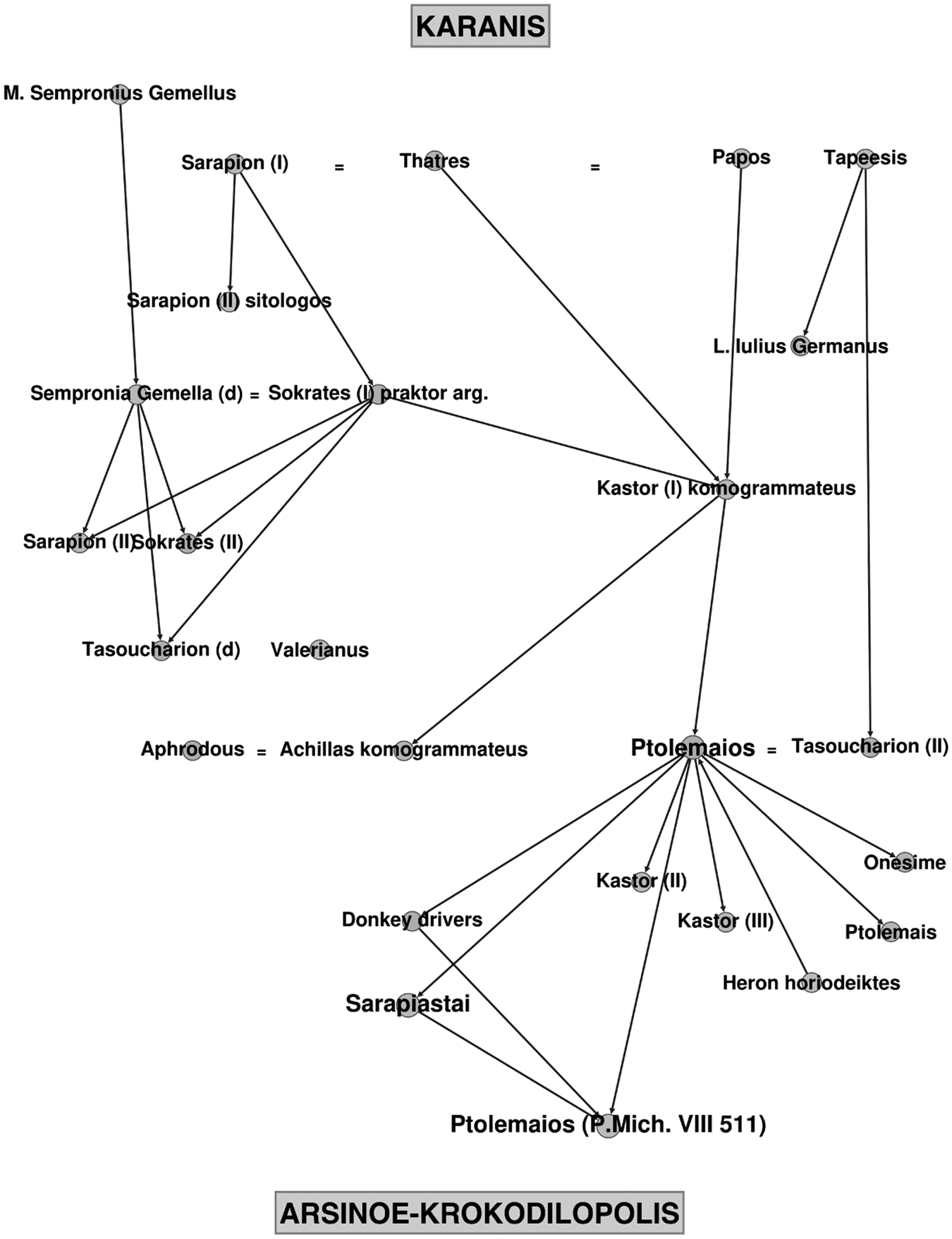
We cannot tell how the Sarapiastai in Arsinoe came to be connected with Ptolemaios,Footnote 44 but it seems safe to conclude that there was a network through which Ptolemaios’ administrative competences were known. His Karanis network, however, is known through the archive of Sokrates (I), the praktor argyrikōn of Karanis,Footnote 45 consisting of 30–50 documents. This archive provides ample testimony to Ptolemaios’ administrative competences (Fig. 8).
A family network in Karanis

Ptolemaios’ father Kastor was the κωμογραμματεύς of Ptolemais Nea near Karanis and probably Sokrates's half-brother. The extended family had significant administrative experience, with various members serving as praktores argyrikōn, sitologoi and laographoi. Ptolemaios’ own son Horion was the horiodeiktēs (charged with the settling of boundaries). Since several of these roles were liturgies that presupposed a minimum census requirement on the part of the liturgist,Footnote 46 we can assume that the family had at least a modest level of wealth. The extensive correspondence in the archive also indicates frequent administrative and personal contacts with the villages surrounding Karanis, and with the ‘city’ (i.e. Arsinoe). Thus, Ptolemaios seems ideally suited as an ἀγορανόμος: he had administrative competences, connections with Karanis (from which wood could be supplied) and a degree of wealth. The survival of the Sarapiastai depended upon their ability to locate and recruit competent administrators to arrange resources and banquet venues. They had been successful in locating Ptolemaios, probably through a commercial or administrative network.Footnote 47
It is unclear how many ‘nudges’ it would have taken to convince Ptolemaios to assume this role. Belonging to the cult of Sarapis was not socially dangerous and the role of ἀγορανόμος, as Ptolemaios explained to his father, brought with it privileges: a seat at the κλίνη of Sarapis, exemption from the initiation fee and double portions of food and drink (διπλᾶ μέρη, P.Mich. viii.511.7). Since the κλίνη of Sarapis was likely a triclinium or deipn ē terion in a temple or private house, holding only 15–20 diners, it was also an exclusive affair to be invited to dine at the table of the god. What was on offer was not just food, but social capital.
As Ptolemaios’ letter indicates, and as the title ἀγορανόμος implies, there were costs that Ptolemaios needed to weigh. His letter indicates that he already had the connections to secure the firewood that was needed. (It might be that his connections with Karanis were the reasons he was recruited in the first place). Evidently, he considered those costs to be manageable and the benefits of membership advantageous. But he puts his decision in theological terms: ‘It is not possible to refuse Lord Sarapis.’
The cultic ecology of a Christ group naturally involved some of the same considerations as other cults: new members had to be recruited to compensate for deaths and defections, and the maintenance of financial solvency. Yet there were challenges: even though Christ groups featured communal dining without costly animal sacrifice, the costs of meals were not negligible. While bread was not very expensive, wine represented by far the largest expense for any meal. Moreover, an analysis of the financial structure of many occupational and cultic associations indicates that none could rely on patronage as the sole support for their communal meals, even those meals that consisted – as most did – of only panis et vinum.Footnote 48 Member contributions or rotating liturgical requirements imposed on leaders were essential to the maintenance of the banquets. Since at least at the beginning there is no defensible evidence of elite patrons in Christ assemblies,Footnote 49 this means that they probably had to rely on the contributions of members to support group activities. This in turn meant that while some members were perhaps without resources, the group had to recruit a few members of at least modest means.
The lack of elite patrons also meant that Christ assemblies had less social capital to convey to potential members. But Christ cults were not alone in this regard: the cult of Theos Hypsistos also appealed to persons of rather humble means.Footnote 50 When they could not rely on the social capital afforded by elite patrons, they had other strategies. Both Theos Hypsistos and Christ groups compensated for the lack of elite patrons by cultivating a discourse that referred to members as ‘brothers’ adopted by the god.Footnote 51
The monetary costs of membership in a Christ group were not very high – at least in comparison to Ptolemaios’ costs. The ‘signalling costs’ imposed by behavioural demands were, however, more substantial.Footnote 52 Christ assemblies imposed a robust set of ethical requirements on members which ranged from avoiding certain proscribed behaviours (1 Cor 5.11) to embracing such high virtues as φιλαδελφία, non-retaliation, and mutual care. Matthew's Sermon on the Mount (7.21–7) and his parables of the wedding garment (22.11–14) and the Judgement (25.31–46) are indexical to how seriously Christ groups took the performance of their ethical requirements. As I will indicate shortly, Christ groups offered much to their members; but they imposed high signalling costs as well. Hence, recruitment necessarily entailed the availability of members who were willing to meet and maintain such high ethical demands.
Literacy had a special role in the ecology of Christ groups. Unlike many other cultic associations in antiquity, the sociality of Christ groups was formed around the reading and discussion of books – at first, the Hebrew scriptures, and then, as Justin Martyr relates, the ‘memoirs of the apostles’ and the ‘writings of the prophets’ (Apol. 1.67.3–5). As Larry Hurtado has observed, Christ groups also produced more than 200 writings in the first two and a half centuries of the Common Era.Footnote 53 It is not that most Christ devotees could read. Literary rates were probably not any higher than the general average, less than 10 per cent. But Christ assemblies needed to recruit some members who were able to read and who had the intellectual resources to comment on the contents of books and eventually to produce their own literature. This was not a structural feature of such cultic associations as the Sarapiastai, or Mithraists, or devotees of Isis or Jupiter Dolichenus. These needed the likes of Ptolemaios and ritual specialists, but not necessarily readers.
The requirements of literacy and the ability to engage book culture meant that Christ groups probably had to cultivate connections with readers and eventually literati such as Justin. This need might have been met, not by professionally trained readers such as those employed by Roman elites like Pliny, but by those whom Guglielmo Cavallo has called ‘free readers’ – those who read not for utilitas, as Cicero observes, but for pleasure (voluptas).Footnote 54 They read ‘for pleasure, out of habit, or because of the prestige that attached to reading … some literate, even educated, people read even though they had no connection with professions linked to the book and to written culture’.Footnote 55 Here I draw attention to one of the very networks with which Christ followers claimed to be connected: tax collectors. We know that at least some of these read and produced literature beyond what their occupations required. The tax collector Sokrates discussed above possessed not only administrative documents, as one should expect, but copies of grammatical papyri, Menander's Epitrepontes and the Acta Alexandrinorum.Footnote 56 His wife had a copy of the Iliad. The archive of Leonides, a flax merchant in the fourth century, contains not only commercial documents, but a poorly written copy of the first page of Romans and another non-canonical gospel.Footnote 57 These are examples of Cavallo's free readers. This might suggest that the tax collectors, who feature so importantly in the early Jesus tradition, were more instrumentally active in the maintenance and transmission of the Christ cult than has previously been thought.
4.3 Susceptibility
The third requirement of the diffusion of a complex contagion concerns the susceptibility of potential members to be ‘activated’ through ‘nudges’ from their neighbours. Susceptibility is both a matter of the affordances offered by a recruiting group, and the threshold that is required for someone to adopt a particular behaviour and to maintain that behaviour. Some will require more ‘nudges’ than others.
The adoption of behavioural innovations is usually assumed to follow an arc described by Everett Rogers. Response to behavioural innovation is distributed among (a) a very small set of ‘innovators’ (2.5 per cent); (b) a larger set of ‘early adopters’ (13.5 per cent), followed by (c) ‘early majority’ (34 per cent), (d) ‘late majority’ (34 per cent) and (d) laggards (16 per cent).Footnote 58 These percentages are not easily transferable to a small ancient cultic association, which probably numbere on thirty members.Footnote 59 Yet Rogers's descriptions of the first three of these categories are worth noting. According to Rogers, innovators are typically eager to form relationships beyond their peer networks and they often have financial resources that cushion them against the risks entailed in the adoption of a new venture. Early adopters, by contrast, are not as socially adventuresome, but remain strongly connected to their peer networks. They are, however, more prone to travel than others and, more importantly, they are opinion leaders to whom others look for models and advice. The ‘early majority’, accounting for about one third of the total, also have strong connections with peers, but are not themselves leaders. Nevertheless, they form the essential bridge between the innovators and early adopters, and the rest of the group.Footnote 60
Roger's categories do not easily map onto a Pauline group, but they might yet have some salience. Of the persons mentioned in 1 Corinthians, Stephanas fits the pattern of an early adopter. He, along with his two slaves or freedmen, was able to travel, perhaps on business, and to meet Paul in Ephesus (1 Cor 16.17). Paul's commendation of him (1 Cor 16.15) suggests that Stephanas and his family were opinion leaders and strongly connected to their peer group. At least at the time of the composition of 1 Corinthians, Paul seems to regard Stephanas as the bridge between himself and the rest of the Corinthians.Footnote 61
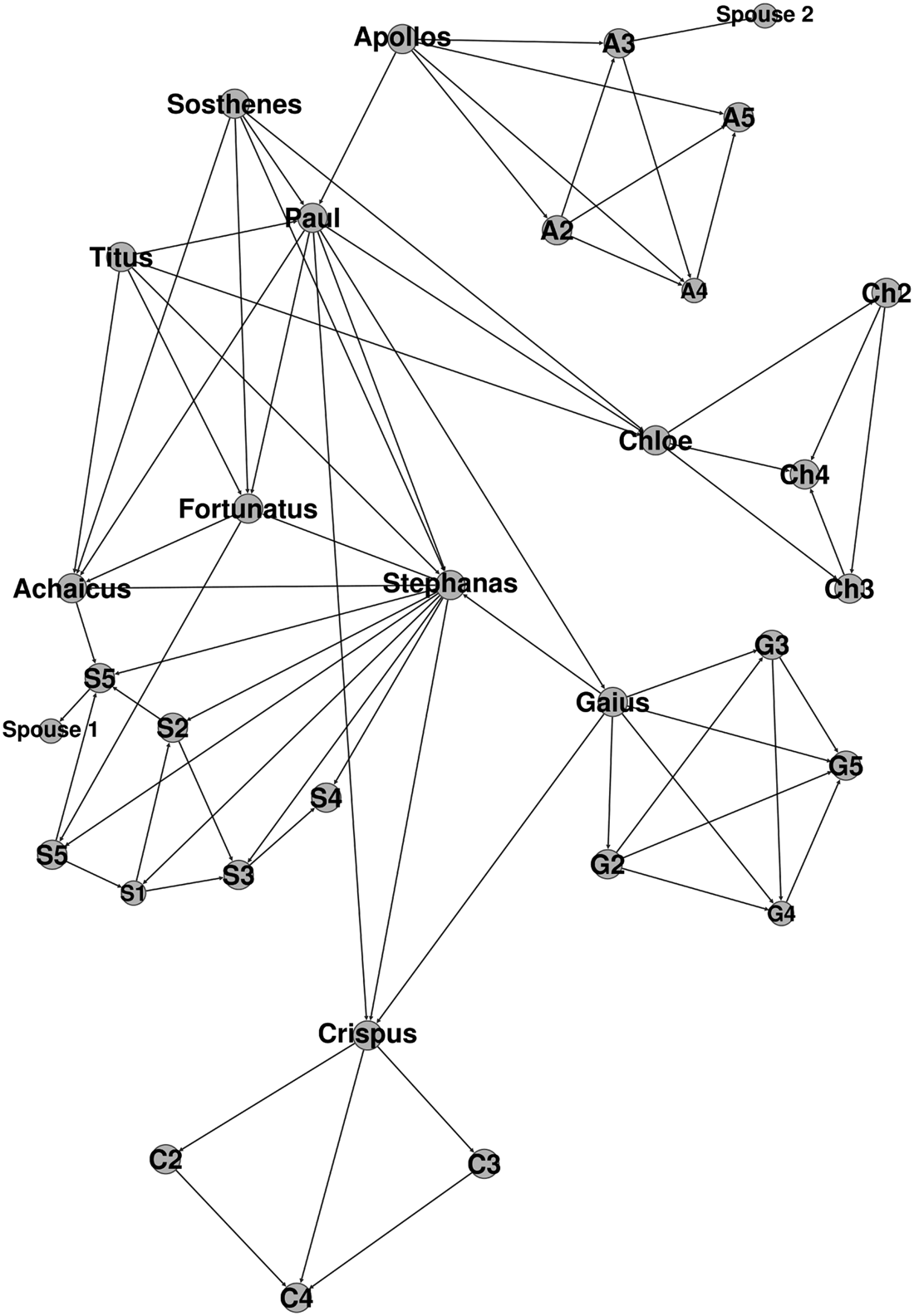
Once a figure like Stephanas had adopted the new behaviour, and with the help of Paul, Apollos and their various his co-workers, others persons connected to Stephanas became susceptible. Whether Crispus and Gaius, whom Paul names before Stephanas (1 Cor 1.14), were also early adopters or innovators cannot be known, although Paul names them as if they might have been. Of course, the particulars of the diffusion of the Christ cult thereafter are invisible to us, but it evidently spread and may have become a small clustered network of several interrelated households, with some households ‘activated’ and others with members – in particular the spouses of some members – who were laggards. Fig. 9 offers a hypothetical model of the Corinthian network, subdivided into partisans of Apollos (A2–5), Chloe (C2–4), Stephanas (S1–5), Gaius (G2–5) and Crispus (C2–4), along with two spouses connected to members of the Christ group but not themselves members.
The Corinthian network

The other side of susceptibility concerns the affordances offered by the Christ cult – what would induce persons to adopt a new behaviour, and in particular a cult that entailed both possible reputational damage and behavioural costs?
If modern studies of conversion have any utility, it is to suggest that personal connections and affect are more important than the beliefs of the recruiting group. According to Rodney Stark, ‘conversion is not about seeking or embracing an ideology; it is about bringing one's religious behaviour into alignment with that of one's friends and family members’.Footnote 62 Stark observes that the appeal of the beliefs of the recruiting group are secondary until after conversion, when retrospectively converts might report that they had been compelled by the obvious truth of the group's doctrines.Footnote 63 But this is not how they self-report while on the road to conversion. At that point they are more likely to say, ‘Their beliefs are rather strange, but they are such wonderful people.’
The various social affordances of membership in an association have been the subject of several recent studies. These provide at least a good place to start in thinking about the particular appeals of the Christ cult. I will mention three. Surely there are more.
First, both modern studies in evolutionary anthropology and the analysis of ancient associations have shown how small face-to-face groups serve to create what Andrew Monson has called ‘networks of trust’.Footnote 64 Common to most ancient associations is that they not only engaged in regular communal dining and other corporate activities such as processions and reverencing of their patronal deities, but they also imposed behavioural rules on members, for example requiring all to attend meetings, to participate in the funerals of members, to treat fellow members ethically, and to assist members whom they found in distress. Groups often undertook to guarantee support for members who had been arrested or suffered other misfortunes. Forms of antisocial and disruptive behaviour were penalised, either by fines or by the threat of exclusion.Footnote 65
It might seem counter-intuitive to join a group that threatened fines or exclusion. But these were strategies to materialise a critical ancient value of belonging, which was also instrumentalised in the posting of membership lists, processions, communal meals and other practices. The imposition of behavioural rules on members meant that it was always safer to deal with a fellow member than anyone else, because one knew that the group enforced common ethical standards not only in domains that pertained to the association itself (meals, principally), but in all matters of conduct. A fourth-century association from Athens announced in its νόμος:
And if a member should be wronged, [the thiasōtai] and all the friends shall come to his assistance, so that everyone might know that we show piety (10) to the gods and to our friends (IG ii2.1275.7–10 = GRA I.8; Piraeus, 325–275 BCE).
This is advertising. It is designed to underscore the benefits of membership and, presumably, to attract new members.
In an empirical study of more than eighty communes in the nineteenth century, Richard Sosis and Eric Bressler have shown that rituals and behavioural rules promote intragroup cooperation. Moreover, groups that imposed costlier requirements – either monetary or behavioural – survived longer than less demanding communes.Footnote 66 And communes that were religious also had an advantage over secular communes, even when the latter imposed costly requirements on their members. These findings would appear to support the thesis that the behavioural rules that Christ groups imposed on their members not only cultivated a strong sense of solidarity but also contributed to their longevity. For those living in the dire conditions of an ancient city, membership in an association which provided a sense of belonging and worth, which offered forms of intimate sociality, and which promised support in the face of the vicissitudes of life, was not a negligible attraction.
Second, like the Sarapiastai mentioned above, Christ groups and a handful of other cultic associations traced the aetiology of their group not to the initiative of some founding member,Footnote 67 but to the god. Thus, Ptolemaios reported that it was Sarapis who had invited him to become ἀγορανόμος. The cult of Syrian goddess Atargatis, which in Athens and on Delos was inclusive of persons of a variety of ethnic and legal statuses, and was also gender-inclusive, also promoted itself as a group that the goddess herself had convened (συνήγαγε).Footnote 68 Paul's language of the god ‘calling’ (καλεῖν) members of Christ groups belongs to the same strategy. Although Christ groups did not have elite patrons who could lend social capital to membership, the notion that invitations came directly from the deity surely translated into social capital and a sense of privilege.
Third, Larry Welborn and others have recently argued that Christ assemblies embodied democratic practices insofar as they constituted themselves as ‘a politeia in which members might pursue resolution of tensions arising from social inequality on the basis of the principle of equality “in Christ”.’Footnote 69 This is not unique to Christ groups. Steven Payne has now assembled a database to show that despite the oligarchic encroachments on democratic practices, the ideals of autonomy and a self-governing ekklēsia were still alive in the East well into the third century ce.Footnote 70 Small face-to-face groups provided concrete ways to instrumentalise the classical values of isonomia and isēgoria, the equality of citizens and the right of all to speak. The appeal of such ‘fictive democracies’ is not to be underestimated.Footnote 71 Democratic impulses, though limited, were not dead, and membership in these fictive democracies allowed members to imagine themselves as self-governing, to be able to decide their own affairs, to judge their own legal cases, to award honours and punishments, and to contribute to the collective good.Footnote 72 In a culture where belonging and connectivity were critical values, and where καλοκαγαθία – public-mindedness – was a prized virtue, small groups such as Christ assemblies created a space for the performance and realisation of virtue.
5. Conclusion
Network models prompt us to think more concretely about how the Christ cult diffused – not by unseen or miraculous means, but by the social mechanisms that are also critical in the spread of other complex contagions. Pliny would compare Christianity to an infection – superstitionis istius contagio (Ep. 10.96). Both the opponents of the Christ cult and advocates like Luke could depict the spread of the cult as though it were a simple contagion, the former to underscore the danger that is presented, and the latter in order to magnify its appeal and to advertise the power of its divine patron. But the spread of a complex contagion like the Christ cult is not as simple as an infection. It required persuasion, not simple contact, and in most cases multiple ‘nudges’ from network neighbours. This implies that the role of Paul's co-workers was much more critical in diffusion than is sometimes thought.
Second, network models also suggest that the schematic chronological picture of Acts, implying only brief stays in certain locales, needs to be adjusted. The Christ cult was not contagious in a single contact. Even though conversion stories like to compress time-lines in order to dramatize the power of the deity, the reality is that persuasion requires multiple ‘nudges’ and contact of some duration. Weak links are fine for simple contagions, but it takes much longer to effect and maintain behavioural innovations.
Third, a convincing model of the diffusion of the Christ cult needs to hypothesise one or more local networks through which the cult diffused. Such networks are created in a variety of ways, through spatial contiguity, family relations, occupational connections and commercial links. Moreover, each cult had its own ecology – the particulars of what it needed to survive and propagate – and each needed receptive recruits who were in a position to respond positively to the affordances of the cult.
The study of ancient cultic associations coupled with network theory provides us with heuristic models to let us think more concretely about how the Christ cult spread in the period prior to Constantine.Footnote 73