Introduction
The problems dominating large housing estates are especially severe in Central and Eastern European countries since such estates constitute a considerable proportion of the housing stock there (Kovács and Herfert Reference Kovács and Herfert2012). It is estimated that European panel-built housing estates (excluding those in the countries of the former Soviet Union), are populated by 41 million people (Węcławowicz Reference Węcławowicz2007). In Western Europe, the share of the population in large housing estates is 10 per cent and in Central and Eastern Europe it is about 40 per cent (Dekker et al. Reference Dekker, Hall, van Kempen, Tosics, van Kempen, Dekker, Hall and Tosics2005). Considerable transformations of inner-city space occurred in post-Socialist countries at the turn of the 21st century. In the 1980s and 1990s, it was anticipated that adverse developments would occur in the social structure of large Central and Eastern European housing estates in connection with the movement of wealthier residents to higher-standard housing stock, leaving poorer residents behind and in the process causing a decrease in house prices. The degradation of urban estates could further result in the occurrence of socially deprived areas. However, numerous studies on the managment of estates and the residential quality of life in large Central and Eastern European housing estates have indicated that such estates have not undergone any rapid processes of ‘ghettoisation’ or ‘slummisation’ (Egedy Reference Egedy and Kovács2000, Reference Egedy, Kovács and Wiessner2006; Herfert, Neugebauer and Smigiel Reference Herfert, Neugebauer and Smigiel2013; Kährik and Tammaru Reference Kährik and Tammaru2010; Kovács and Herfert Reference Kovács and Herfert2012; Temelová and Slezáková Reference Temelová and Slezáková2014; Temelová et al. Reference Temelová, Novák, Ouředníček and Puldová2011; Tosics Reference Tosics2004). The most apparent problem reported for those estates was ageing of the estates’ dwellers. Given that the majority of large housing estates were built between 30 and 40 years ago, ageing in place may turn into one of the greatest issues to be resolved in the near future. Ageing in place will inevitably become a challenge for the city council who will have to ensure a safe and protective environment for older residents. The authorities will also need to implement a range of initiatives in support of the local communities as these are known to provide invaluable care for the vulnerable members of the society. The research on the demographic and social structures of the European large housing estates conducted early in the 21st century indicated that the ageing of the estate populations was clearly visible in the housing estates in Southern Europe (Italy and Spain), while the estates situated in Central and Eastern Europe were characterised by an over-representation of residents in the productive age of 19–65 (Dekker and van Kempen Reference Dekker, van Kempen, van Kempen, Dekker, Hall and Tosics2005). Limited residential mobility in the Central and Eastern European countries leads to accelerated ageing of the estates’ populations. That can be partly associated with selective migration of younger persons (Kährik and Tammaru Reference Kährik and Tammaru2010) and a lower residential mobility among older people (Gilleard, Hyde and Higgs Reference Gilleard, Hyde and Higgs2007; Kährik and Tammaru Reference Kährik and Tammaru2010; Musterd and van Kempen Reference Musterd and van Kempen2007).
The research work relating to the demographic and social structures of large housing estates discussed the process of ageing of the estate populations in large housing estates (Galčanová and Sýkorová Reference Galčanová and Sýkorová2015; Kabisch and Grossmann Reference Kabisch and Grossmann2013; Kährik and Tammaru Reference Kährik and Tammaru2010; Kovács and Herfert Reference Kovács and Herfert2012; Steinführer and Haase Reference Steinführer and Haase2007; Temelová et al. Reference Temelová, Novák, Ouředníček and Puldová2011; Temelová and Slezáková Reference Temelová and Slezáková2014). Surveys conducted in the estates suggested that the issues associated with ageing required expanded studies.
This paper joins the discussion on local community ageing in large housing estates, in the context of ongoing demographic transformations and the evaluation of the residential satisfaction of older people with regard to selected aspects of their life.
The goal of the present research was to define the problem of ageing in the place of residence, in the context of the residents’ evaluation of their quality of life. The following research question was asked: How does the quality of life and residential satisfaction change due to the ageing process?
Theoretical framework: ageing in place, quality of life and residential satisfaction
Ageing in place: older people in large housing estates
Ageing in place is one of the most popular residential strategies (Baker and Prince Reference Baker and Prince1991). The strategy concerns older people who are not eager to move out and prefer to stay in their current place of residence (Appleton Reference Appleton2002; Gilleard, Hyde and Higgs Reference Gilleard, Hyde and Higgs2007; Sixsmith and Sixsmith Reference Sixsmith and Sixsmith2008). This may result from the fact that residential mobility falls with increasing age, which is associated with the fact that older people are less inclined to move out (Angelini and Laferrère Reference Angelini and Laferrère2012; Kearns and Parkes Reference Kearns and Parkes2003; Bonvalet and Ogg Reference Bonvalet and Ogg2008). According to Hillcoat-Nallétamby and Ogg (Reference Hillcoat-Nallétamby and Ogg2014), people may develop an emotional attachment to where they live because they have built up memories and meanings about their lives which they do not want to give up. It becomes difficult to challenge the position that ageing in place in one's own home can be anything else but a desirable outcome for policy makers to support and promote, because older people are seemingly satisfied with this arrangement and do not feel a great desire to move elsewhere (Hillcoat-Nallétamby and Ogg Reference Hillcoat-Nallétamby and Ogg2014: 1773).
It is hard to determine clearly whether the process of ageing in place is positive or negative. On the one hand, ageing in place means attachment to the place of residence and strong social bonds, with the environment and the local community playing important roles in the lives of older people. On the other hand, it can also mean that older people may be grounded by their area of residence or they may be trapped by it (Fokkema, Gierveld and Nijkamp Reference Fokkema, Gierveld and Nijkamp1996; Musterd and van Kempen Reference Musterd and van Kempen2007). The process of ageing in place can lead to social exclusion and ageing in deprived neighbourhoods (Buffel, Phillipson and Scharf Reference Buffel, Phillipson and Scharf2013; Scharf, Phillipson and Smith Reference Scharf, Phillipson and Smith2005).
Quality of life and residential satisfaction of older people
The issues of quality of life and residential satisfaction play essential parts in the research associated with local community ageing. Since there is no clear definition of the quality of life and the term is not directly measurable (Hunt Reference Hunt1997), literature on the subject contains many definitions of the term (Arnold Reference Arnold, Birren, Lubben, Cichowlas Rowe and Deutchman1991; Birren and Dieckmann Reference Birren, Dieckmann, Birren, Lubben, Cichowlas Rowe and Deutchman1991; Bowling Reference Bowling2005; Gill and Feinstein Reference Gill and Feinstein1994). For the needs of the present paper, the definition of the World Health Organization has been assumed as follows: ‘quality of life is an individual's perception of his or her position in life in the context of the culture and value system where they live, and in relation to their goals, expectations, standards and concerns’ (World Health Organization 2002). The existing definitions of quality of life underline the point that quality of life encompasses a person's individual characteristics (e.g. physical and mental health, psycho-social wellbeing and functioning, including feelings of independence and control over life) and external circumstances (e.g. socio-economic conditions, work, built environment and social capital) (Bowling and Zahava Reference Bowling and Zahava2007: 828). However, attention is turned in research to the existence of some doubts due to the diverse range of definitions, usually whether the factors mentioned above constitute the conditions of the standard of living or they are rather its components.
Researchers (Smith et al. Reference Smith, Sim, Scharf and Phillipson2004) pointed out that satisfaction with one's life is proved by a number of factors which can be divided into three basic categories: (a) socio-demographic variables (sex, age, marital status, social class), (b) objective life conditions (equivalised income, access to socially perceived necessities, deprivation, years in neighbourhood, housing problems, victim of crime, social support network, limiting long-standing illness), and (c) subjective domain evaluations (perception of poverty over time, feeling isolated from society, perception of own health, fear of crime, loneliness, community integration, satisfaction with accommodation, satisfaction with neighbourhood, ability to manage financially). We need to stress, however, that quality of life is best regarded as a multi-dimensional construct, the components of which may vary according to the nature of the sample studied, the contextual or environmental situation, and the methodology and design of the study (Smith et al. Reference Smith, Sim, Scharf and Phillipson2004: 797).
In the context of the studies conducted in housing estates, it is absolutely essential to determine the quality of life in reference to the place of residence, i.e. to define the term ‘residential satisfaction’. Residential satisfaction is most frequently defined as an individual's appraisal of the conditions of their residential environment in relation to their needs, expectations and achievements (Amérigo and Aragonés Reference Amérigo and Aragonés1997; George and Bearon Reference George and Bearon1980; Perez et al. Reference Perez, Fernandez, Rivera and Abuin2001). Nevertheless, we should mention that residential satisfaction is strictly associated with residents’ attachment to their place of residence (Amérigo and Aragonés Reference Amérigo and Aragonés1990; Mesch and Manor Reference Mesch and Manor1998). It is further related to the quality of the place of residence and generally related to the quality of identification with the place (Bonaiuto and Bonnes Reference Bonaiuto, Bonnes, Wapner, Demick, Yamamoto and Minami2000; Fleury-Bahi, Félonneau and Marchand Reference Fleury-Bahi, Félonneau and Marchand2008). In research on satisfaction with place of residence, a positive correlation between ageing and residential satisfaction was also confirmed (Bonaiuto, Bonnes and Continisio Reference Bonaiuto, Bonnes and Continisio2004; Carp and Carp Reference Carp and Carp1982) which was essential for research on older people living in housing estates.
Research on the quality of life of older people was also applied to various spatial scales (Bowling and Zahava Reference Bowling and Zahava2007; Fernández, Perez and Abuín Reference Fernández, Perez and Abuín2003; Fobker and Grotz Reference Fobker and Grotz2006; Perez et al. Reference Perez, Fernandez, Rivera and Abuin2001; Smith et al. Reference Smith, Sim, Scharf and Phillipson2004; Wilhelmson et al. Reference Wilhelmson, Andersson, Waern and Allebeck2005). Surveys among older people indicated that the place of residence was important in building a feeling of safety and a high standard of living among older people (Bowling and Zahava Reference Bowling and Zahava2007; Wilhelmson et al. Reference Wilhelmson, Andersson, Waern and Allebeck2005). Gilroy (Reference Gilroy2008: 149) pointed out that a supportive neighbourhood with good access to local shops, transport facilities and facilities for older people, and ‘the ability to get out and about’, promoted wellbeing in old age. Amérigo and Aragonés (Reference Amérigo and Aragonés1997: 47) argued that residential satisfaction has been studied as an important criterion in descriptions of the quality of life of the inhabitants of a determinate residential environment, and also a trigger factor affecting residential mobility.
Characteristics of Polish housing estates
Large housing estates constituted about 35 per cent of all the housing stock in Poland at the beginning of the 21st century and the numbers of housing units (flats) in large housing estates amounted to 3.5 million (Rębowska Reference Rębowska, Ziobrowski, Ptaszycka-Jackowska, Rębowska and Geissler2000). According to Płachcińska (Reference Płachcińska1990), two stages of estate development can be distinguished in the history of Polish multi-family house building during the Socialist period. The first stage occurred in 1945–1960: the designs were dominated by residential blocks made of brick, fairly low-rise with three, four or a maximum five storeys, without lifts. The second stage of 1961–1989 refers to the period of estates erected by industrial methods, high-rise buildings and blocks made of large prefabricated panels (Płachcińska Reference Płachcińska1990). The majority of such estates were erected in 1971–1988. Rębowska (Reference Rębowska, Ziobrowski, Ptaszycka-Jackowska, Rębowska and Geissler2000) estimated that about 2.7 million housing units were provided in such structures. The floor areas of flats designed in the 1970s and the 1980s were larger than those built in the 1960s and 1950s, although less functional since the large panel technology made it next to impossible to design the majority of flats based on the needs of individual residents. Lack of free market regulations applied to the control of housing allocation or the distribution process so that a housing shortage occurred in the post-war period. As a result, large housing estates were perceived as attractive places to live. The economic transformations of the 1990s caused the breakdown of the controlled real-estate market and the government's withdrawal from the direct control of residential house building. A sudden drop in the number of new constructions occurred and the introduction of a market economy meant that newly constructed flats were only available to the most affluent (Chmielewski and Mirecka Reference Chmielewski and Mirecka2007).
It was expected that stock ageing during the transformation period would cause ghettoisation and large housing estates would breed social pathologies (Jałowiecki Reference Jałowiecki1986). However, research conducted in such estates by the end of the 20th and at the beginning of the 21st centuries did not confirm the fears of ghettoisation (Szafrańska Reference Szafrańska2015; Zborowski Reference Zborowski2005). The persistence of a heterogeneous structure of inhabitants and low residential mobility contributes to maintaining the relatively high status of the estates. Consequently, low residential mobility contributes to deepening the process of ageing of the population.
In Poland, population ageing constitutes one of the basic demographic problems encountered in large housing estates (Węcławowicz et al. Reference Węcławowicz, Guszcza, Kozłowski, Bielawska, Adamiak, Krasowska, Fader and Bierzyński2005; Zborowski Reference Zborowski2005). In fact, the age of the housing stock in the estates is reflected in the demographic structure of the residents. This results from the fact that at the time of their construction the housing estates were occupied by a specific type of population, consisting mostly of young couples with children, in their thirties (Szafrańska Reference Szafrańska2014). Consequently, many of today's population of large housing estates are retired pensioners (Węcławowicz et al. Reference Węcławowicz, Guszcza, Kozłowski, Bielawska, Adamiak, Krasowska, Fader and Bierzyński2005; Zborowski Reference Zborowski2005). At the beginning of the 21st century, researchers observed the inflow of younger inhabitants to some estates (many of them being the children or grandchildren of the original occupants) (Janiszewska, Klima and Rochmińska Reference Janiszewska, Klima, Rochmińska and Dzieciuchowicz2011).
Community age is also reflected in evaluations of satisfaction with present place of residence in large housing estates. The research conducted in the Polish estates indicated that senior citizens were attached to their present places of residence (Niezabitowski Reference Niezabitowski and Jażdżewska2010; Węcławowicz et al. Reference Węcławowicz, Guszcza, Kozłowski, Bielawska, Adamiak, Krasowska, Fader and Bierzyński2005; Zborowski Reference Zborowski2005). Studies of social bonds among the senior citizens of the Katowice estates have indicated that the feeling of personal success associated with ‘obtaining’ an apartment, emotional memories of childhood and youth, as well as a sense of roots were the main factors which determined people's attachment to their places of residence (Niezabitowski Reference Niezabitowski and Jażdżewska2010). The research on satisfaction with place of residence and life quality was carried out on several large housing estates, e.g. in Łódź (Janiszewska, Klima and Rochmińska Reference Janiszewska, Klima, Rochmińska and Dzieciuchowicz2011), Warsaw (Węcławowicz et al. Reference Węcławowicz, Guszcza, Kozłowski, Bielawska, Adamiak, Krasowska, Fader and Bierzyński2005) or Kraków (Zborowski Reference Zborowski2005). The Warsaw estate residents were the most satisfied with their green areas, access to public services, neighbours and playgrounds for children (Węcławowicz et al. Reference Węcławowicz, Guszcza, Kozłowski, Bielawska, Adamiak, Krasowska, Fader and Bierzyński2005). The respondents from Łódź estates specified such advantages as comfort and nice neighbours (Janiszewska, Klima and Rochmińska Reference Janiszewska, Klima, Rochmińska and Dzieciuchowicz2011). In Kraków, the residents on large housing estates placed high value on health, family life and neighbourhood relationships (Zborowski Reference Zborowski2005).
Definitions, data and methods
Definitions
In research on large housing estates, the most often accepted definition was that by Ann Power. According to her, large housing estates constitute separate geographic areas on which groups of buildings are situated (Power Reference Power1997). The present studies assumed the definition of large housing estates applied in the RESTATE Project in which ‘large housing estates’ are defined as ‘areas built in the second half of the 20th century as groups of at least 2,000 housing units that are recognised as distinct and geographical areas, planned by the state or with state support’ (Musterd, van Kempen and Rowlands Reference Musterd, van Kempen, Rowlands, Rowlands, Musterd and van Kempen2009: 18).
Research procedure
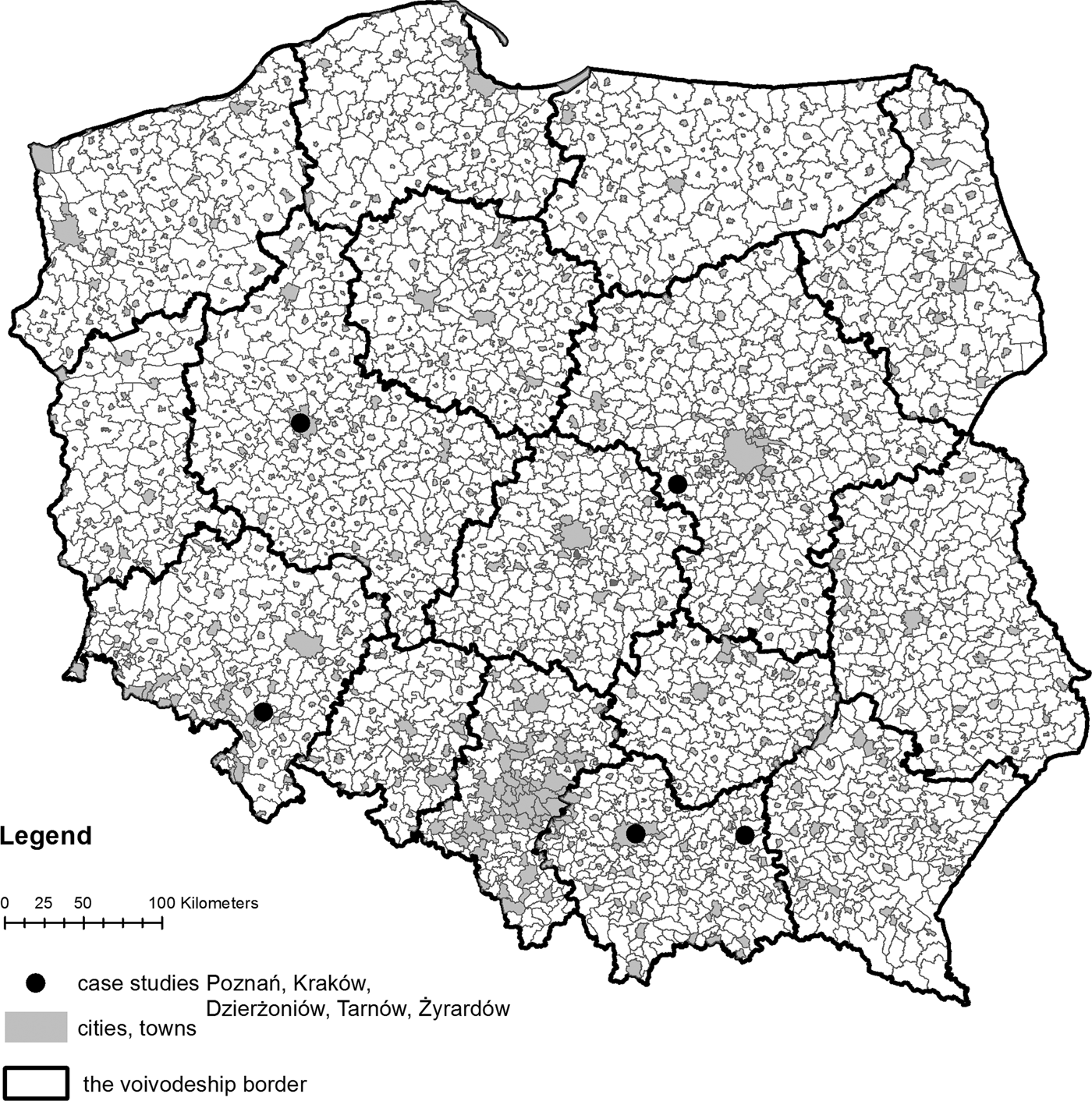
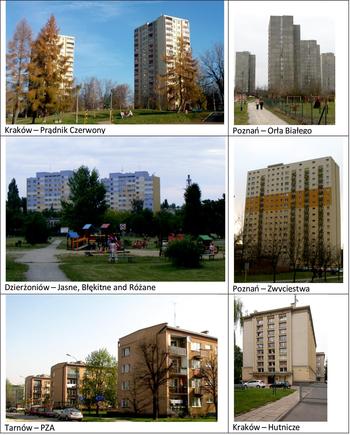
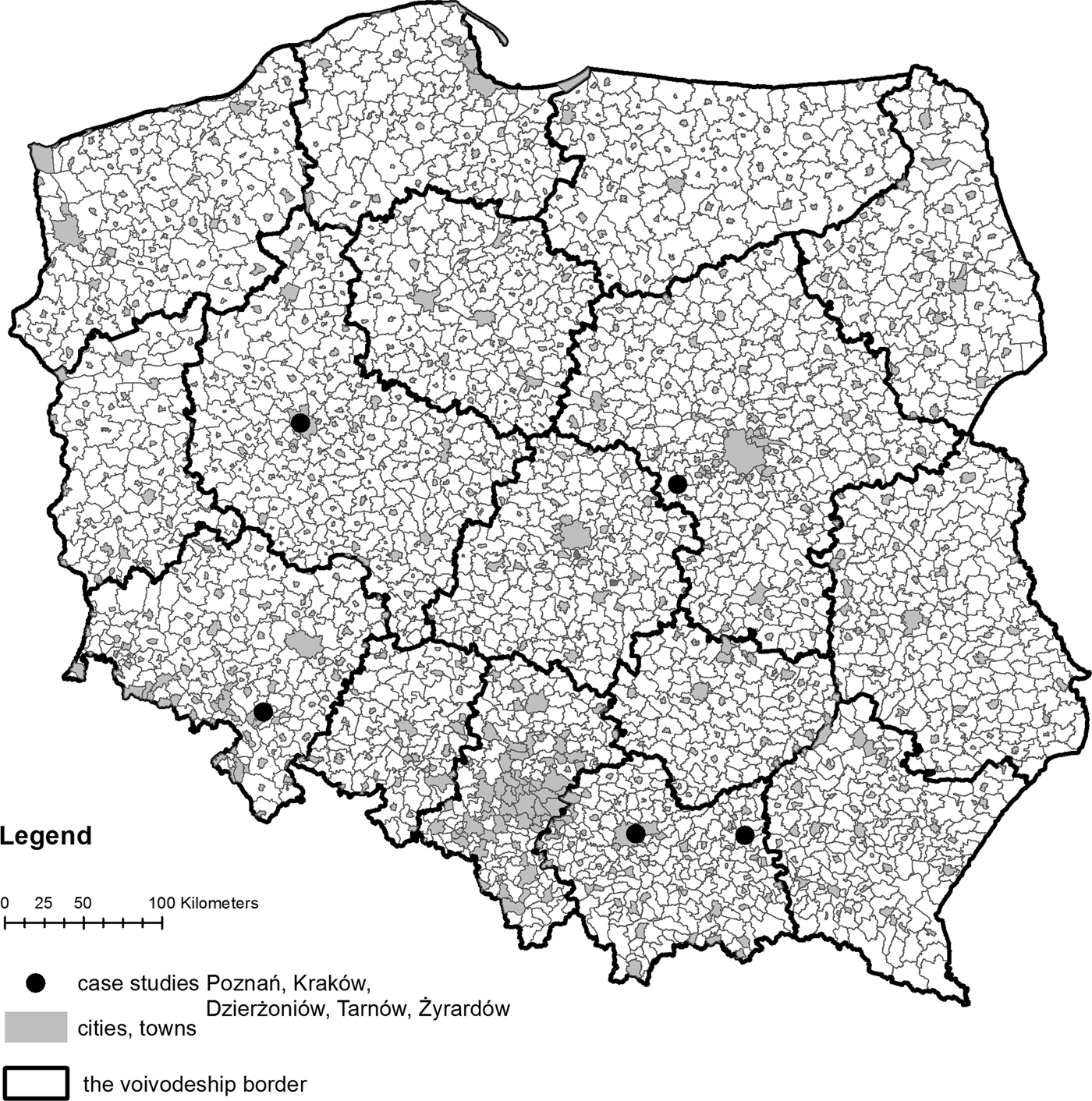
Surveys were conducted on a group of residents of large housing estates, including older people defined as persons aged 65 years or older. Our research concerned seven large housing estates situated in five selected cities and towns in Poland (Figure 1). The assumption of our research studies was to obtain a ‘comparative case study’ (Yin Reference Yin2003), determining the current demographic and social transformations occurring in large housing estates in Poland. Consequently, for our studies, we selected urban centres that differed in population, with a domination of urban functions. Our studies were conducted in two estates in large cities (Poznań and Kraków), with one apartment complex selected in either medium-sized or small towns (Tarnów, Żyrardów and Dzierżoniów) each. The estates selected for studies were different in respect of locations within the city or town, size, period of construction, building technology, and the degree of advancement of current modernisation and rehabilitation works (Figure 2).
The location of the case study cities and towns.
Photographs of the case study areas.

Our analysis of the socio-spatial situation of large housing estates located in various parts of Poland allowed us to obtain results which are likely to correspond to the trends of other large housing estates in Poland.
Source data and methods
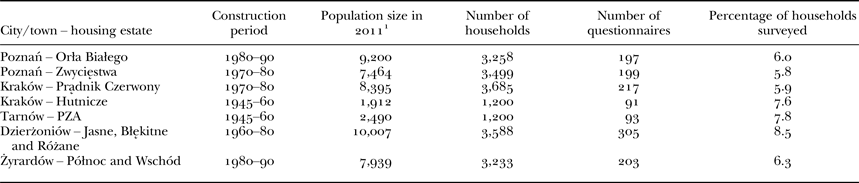
Our study of the demographic structure of residents in large housing estates was associated with difficulties in obtaining proper statistical data for specific urban administrative units. Analyses were conducted on the basis of quantitative statistical sources, i.e. data relating to the gender and age structures of the population recorded in the government's registers of permanent abode in respect of residents living in the housing estates concerned in 2002–2011, as specified in the Polish PESEL database (obtained from the Polish Ministry of Internal Affairs). The data on the structure of households and the evaluation of the residents’ quality of life and residential satisfaction with place of residence were collected by survey. In total 1,305 questionnaires were collected from approximately 7 per cent of all the households existing in the selected housing estates. To ensure a representative quality of study, the numbers of questionnaires matched the sizes of the estates: 100–300 questionnaires were collected from each estate, so that approximately 7 per cent of households could be surveyed (Table 1). The surveys were conducted in 2010–2012 by the door-to-door method.
Basic characteristics of the case study areas

Note: 1. Data concerning the urban population in 2011 originating from the government population registers.
Source: Own study based on the PESEL 2011 database (Polish Ministry of Internal Affairs).
Based on the survey data, residential satisfaction was examined among the 65+ and below 65 groups of residents, and in a similar manner to satisfaction with particular aspects of residents’ life in the context of various age groups. To determine the ageing problem in the place of residence, our data analysis was supplemented by the method of interaction of the bond between the ageing process and the selected variables determining the standard of living and quality of life in housing estates. Questions describing the standard of living and quality of life and residential satisfaction were composed and survey responses were analysed based on the proportional distribution of replies in the total, as well as under specific age groups, in order to observe the process of interaction between satisfaction with the given aspect of life and the age group.
Results
Ageing of the population in large housing estates
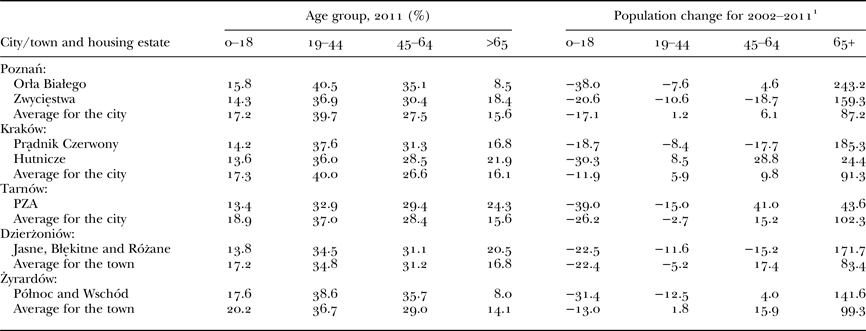
The demographic structure of the majority of the estates studied was characterised by a considerable proportion of people in the age group of 19–65. The estates constructed in similar periods represented similar age structures: the oldest estates, Hutnicze in Kraków and PZA in Tarnów (PZA: nitrogen-compound factory housing estate), which were mainly erected in the 1950s and 1960s, represented the highest proportions of the 65+ population. In the estates constructed during the period of 1960–1980, the proportion of post-production age residents (65+) also exceeded the average figures for cities and towns. The estates constructed 40 years ago were further characterised by a high proportion of residents aged 44–64. The latest estates constructed in 1980–1990 displayed the youngest age structure, with the dominating group aged 19–44, while the proportion of 65+ residents was lower than the average figures for cities and towns, totalling 8 per cent (Table 2).
Populations of large housing estates and cities in 2011 and the dynamics of population change for 2002–2011, by age group

Note: 1. 2002 = 100.
Source: Own study based on data from the Ministry of Internal Affairs, Local Data Bank, Central Office of Statistics (GUS), 2011.
The age structure analysis and habitual residence indicated that fast growth of older people group was a characteristic feature of the housing estates studied. The ageing in place issue can also be analysed on the basis of population dynamics. In 2002–2011, age structure changes within particular age groups were ranging from a 39 per cent drop to a 243 per cent increase. The largest drops in population figures of about 30 per cent were noted in the youngest age group of 0–18 years. All the housing estates studied recorded larger drops in the figures for young persons when compared to the average ones applicable to whole towns. In the 19–44 age group, a population increase was only recorded in the Hutnicze housing estate in Kraków, while the remaining estates recorded drops in population figures. The drops were higher than the average trends recorded in the respective towns. In the 44–64 age group, three types of trends were observed: a large increase of population in the oldest housing estates, PZA and Hutnicze, by 40 and 28 per cent, respectively, and a small increase in the most recent housing estates of Północ, Wschód and Orła Białego, 4 per cent each, as well as a 15–18 per cent drop in the housing estates originating from the 1970s: Prądnik Czerwony, Jasne, Błękitne, Różane and Zwycięstwa. The largest population increase was recorded in the 65+ age group, which corresponded to a parallel natural housing-stock ageing process. In the PZA and Hutnicze estates, the population increases in the oldest age group did not exceed the average figures observed in their respective cities, which could indicate that the respective housing estates entered the phase of being populated by following generations.
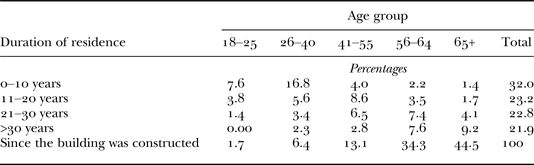
Ageing in place was also reflected by the degree of habitual residence. That measure was studied on the basis of the duration of residence in the estates and the presence of the original residents who moved in upon the commissioning of a block of flats (Table 3). Large housing estates in Poland are characterised by a considerable proportion of habitual residence. Half of the residents studied had lived in their estates for more than 20 years. The longest duration occurred in the age groups of 56–65 and 65+. Nearly a half of the senior citizens had lived in the apartment complexes since buildings had been commissioned, and more than one-third of the persons aged 56–65 were the original residents. Among younger residents (aged 26–40), the majority of people treated their stay in housing estates as temporary, and the duration often lasted less than a decade. Those were mostly the residents of the estates constructed in the 1960s. That could indicate the population replacement in the oldest estates and the arrival of new generations. Our analysis of the date of estate origin and the duration of residence suggested that the largest proportion of the original estate population existed in small towns: Dzierżoniów and Żyrardów.
Duration of residence at housing estates and respondents’ ages

Note: Total number of respondents = 1,305.
Source: Own studies, based on surveys.
The age structure analysis and habitual residence indicated that a fast growth of the older people group was a characteristic feature of the housing estates studied.
Evaluation of the housing conditions by older residents of estate communities
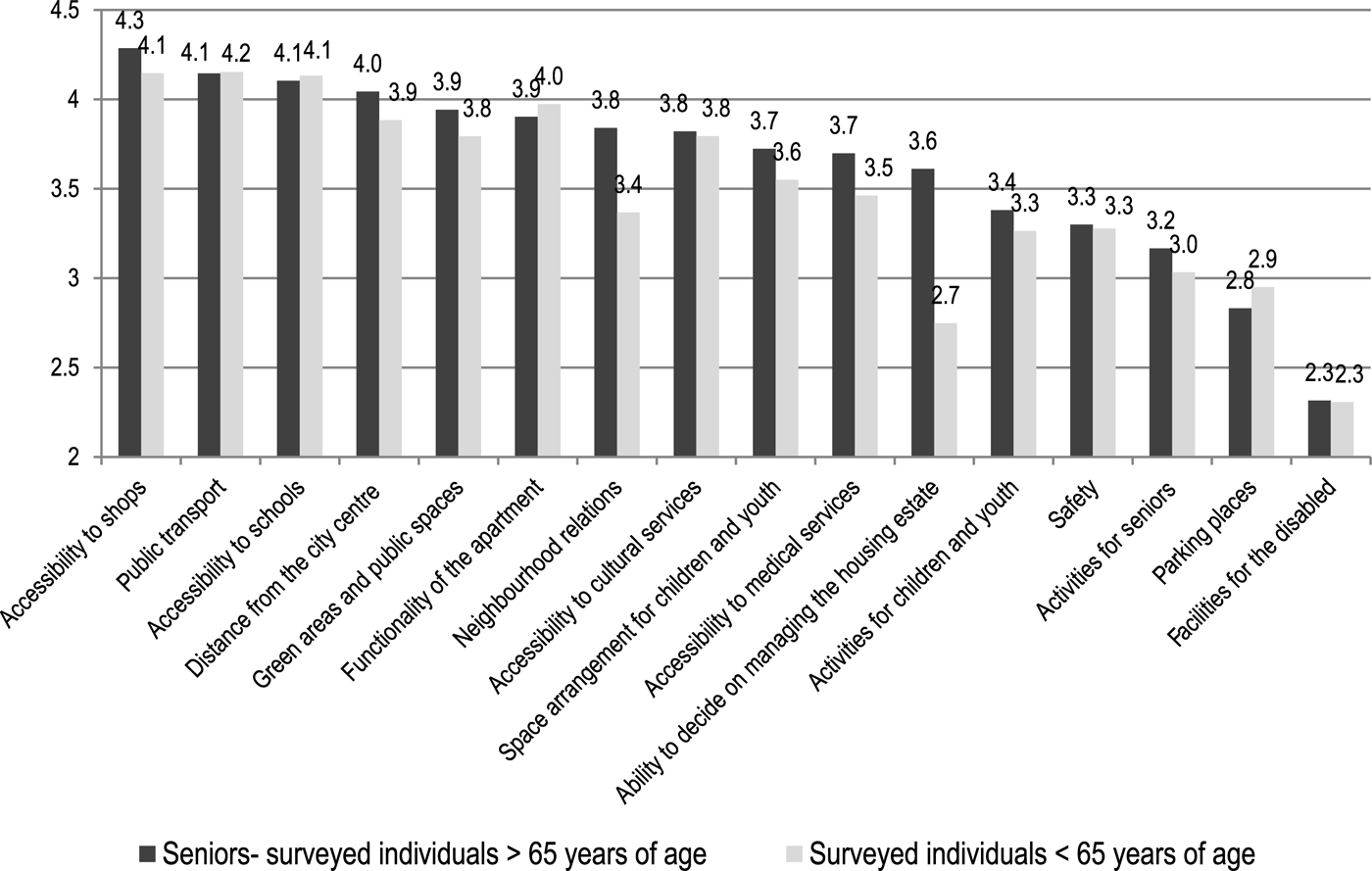
The issue of the ageing of estate communities can be especially important from the viewpoint of the quality of life in a given place. Consequently, we studied the residential satisfaction associated with the functionality of the housing estates. Our surveys were designed for two age groups: up to 65 and 65+. The survey results (Figure 3) indicated that large housing estates were generally well appreciated, in respect of the majority of spatial aspects. Good marks were given to the access to commercial services, schools, public services and the functionality of public transport. Those features were essential for the groups of residents analysed (i.e. those aged 65+ and below 65). Older people gave better marks regarding the opportunity to contribute to decisions regarding estate maintenance, as well as social bonds and access to medical services. Senior citizens gave higher marks than the younger generation to spatial management designed for children and youth, and the quality of the green areas and public space maintenance. The poorest evaluation applied to facilities for the disabled. Low marks were also given to social offerings for older people. That was a crucial problem considering earlier studies indicating that the housing estates were ageing together with their residents. Large housing estates have been subjected to intense processes of community ageing, and thus it seems necessary to improve the mobility facilities for older people and disabled people.
Residential satisfaction by age group.

As regards the evaluation of the key advantages of large housing estates, the main feature that their residents identified was good access to shops. Another factor which determined the attractiveness of a given estate was excellent location, not only with respect to the city or town centre, but also the public transport infrastructure allowing access to the centre. Other aspects that were important for the estate residents were the following: a large proportion of green areas, good living conditions, close distance to friends and acquaintances, as well as work places and schools. Much lower marks were given to a feeling of safety and good relations with neighbours. Our analysis of the respondents’ replies, collected from all the housing estates, indicated the domination of so-called spatial assets over social life aspects.
How residential satisfaction and quality of life satisfaction change with the ageing of the estates’ populations
Quality of life was studied on the basis of the residents’ subjective evaluations of the aspects (or features) that determine one's satisfaction. The residents were asked about the most important spheres of their lives, starting with their satisfaction with children and friends, place of residence, living conditions, education, health, duration and method of spending leisure time, and financial situation. Two questions also concerned the degree of satisfaction with the areas that were generally associated with national and local politics, i.e. the political and economic situation of the country and local government activities.
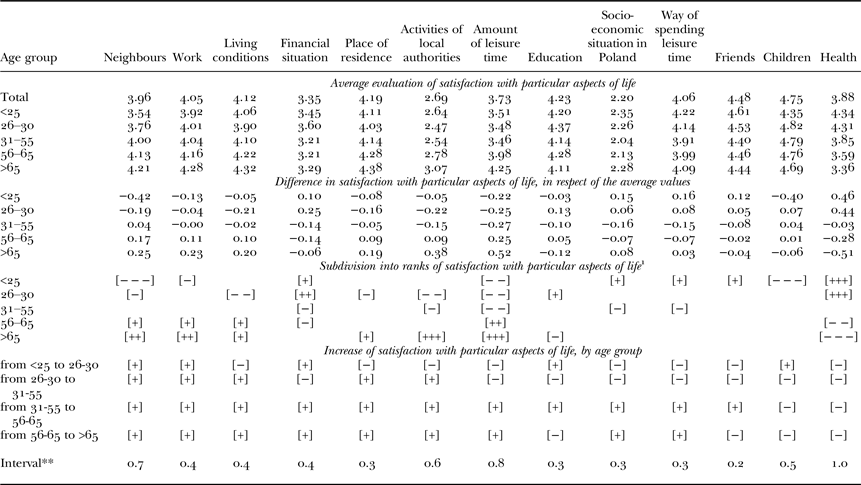
The residents of large housing estates, regardless of age, gave the highest evaluation to their satisfaction with children and friends (Table 4). The most negative grades were given to the current socio-economic situation of the country and local government activities, with a similarly low evaluation of their financial situation. Some differences in the evaluation of particular aspects of life occurred between older and younger residents. Those related to health, amount of leisure time, and satisfaction with living conditions and contacts with neighbours.
Satisfaction with life according to different age groups

Notes: Average rate ranks according to the scale: 1 = bad; 2 = rather bad; 3 = neither good nor bad; 4 = good; 5 = very good). 1. Ranks were marked on the basis of the difference in the values for particular age groups, in respect of the average values; increase of a feature above 35 percentage points (pp) rank [+++], increase of 20–35 pp rank [++], increase by 10–20 pp rank [+]. Difference from −10 to 10 pp [ ], drop from −10 to −20 pp [−], drop from 20 to 35 pp [− −], drop of over 35 pp [− − −]. ** interval - the difference between the maximum and minimum value.
Source: Own studies based on surveys.
The hierarchy of satisfaction with particular aspects of life was interesting in the context of the community ageing process. The method of reaction of the bond strength existing between community ageing and the selected quality of life variables was applied. For that purpose: (a) the proportional distribution of particular responses by age groups was studied; (b) the differences between the average figures and the proportions in particular age groups were calculated to determine the trends of changes within a given aspect in parallel with community ageing; (c) based on the evaluation of the degree to which particular age group results differed from the average figures, a ranking system with seven classes (from [+++] to [– – –] was applied; (d) the system by which aspects change with growing age was examined; (e) the gap or difference between the maximum and minimum values was measured to determine the diversity of distribution of a given aspect (feature).
The course of research is presented in Table 4, showing how the life satisfaction aspect was changing in particular age groups. An essential positive correlation was observed in the evaluation of neighbourhood bonds and satisfaction with one's work (profession, occupation or job). A clear increase in neighbourhood bond and work satisfaction was visible after the 55th year of age. The increase of satisfaction with life was also visible in the evaluation of living conditions and place of residence. The persons who were the least satisfied with the features analysed were those aged up to 40. After age 40, residential satisfaction increased. A good evaluation of living conditions and neighbourhood bond among older people may have resulted from the establishment of the residents representing the oldest age groups (Kotus Reference Kotus2005) and their nostalgic memories associated with the local community operations in the 1970s and the 1980s (Phillipson Reference Phillipson2007).
Equally interesting was the evaluation of the residents’ financial situation. The correlation of that aspect with age was distinct in two periods. The level of satisfaction with one's financial situation increased up to 40 years of age. It dropped in the 40–65 age group to only increase among those who had reached retirement age. That could be a result, to a considerable extent, of the lower financial aspirations of older people. The factors which did not depend on the ageing process included: satisfaction with education, evaluation of the socio-economic situation of the country and the method of spending leisure time. Satisfaction with adequate leisure time only correlated with age among those residents over 50 years of age, with a distinct increase observed among persons of retirement age. Satisfaction with children or friends did not show any correlation with ageing of the estates’ populations. Besides, a negative relationship was also observed in the case of the residents’ health evaluations. Subjective health evaluation was high in the age groups up to 40 years, dropping rapidly afterwards.
In order to present satisfaction with particular aspects of life, ranks were assigned to the variables depending on the evaluation of those life aspects by the residents in particular age groups. Based on that, we could conclude that the majority of positive marks were given by the oldest residents. Senior citizens were the most satisfied with their place of residence, living conditions, work, neighbours, leisure time and local government activities. However, they were the most dissatisfied with their health. Of all the age groups, they gave the lowest marks to satisfaction with their education. Although the respondents from the 65+ age group were either retired or working part-time, one could observe a distinct increase of satisfaction with work among older people from all the large housing estates. Considering the aspects contributing to residential satisfaction with selected place of residence, an increase in residential satisfaction with age was clearly apparent in the case of neighbourhood bonds, place of residence and living conditions.
Conclusions and discussion
The issue of ageing in place can be seen in large housing estates. Our demographic analyses indicated interdependence between the demographic structures existing in estates and the period of estate construction. The age of the housing stock in the estates is reflected in the demographic structure of the residents. The interdependence in question resolves the present situation of the large housing estates and indicates that the majority of older people reside in the estates that were constructed in the 1970s. The studies conducted in Central and Eastern European housing estates indicated a strong interdependence of the development of demographic structures and the time of the estate's construction (Kabisch and Grossmann Reference Kabisch and Grossmann2013), which later could cause problems associated with the concentration of large numbers of older people in the estates (Temelová et al. Reference Temelová, Novák, Ouředníček and Puldová2011).
A subjective evaluation of one's satisfaction with the residential conditions indicates a high level of satisfaction with the living conditions among the residents of the older estates. The residents graded their estates highly with respect to access within urban space, large green areas and availability of basic services. Contrary to general opinion regarding the very poor technical condition of flats in large housing estates, the residents gave fairly high scores to their living conditions, although much lower ones were given to the estates’ organisational and management aspects. The significance of neighbourhood bonds for the older residents of large housing estates is worth emphasising here. Distinctly poor evaluations were associated with the possibility of deciding about the maintenance and management of housing estates. Equally low marks were given to the offerings available to older people in the estates. Inadequate facilities for the disabled within the estate area constituted a key issue identified by both young and old residents. Lack of lifts in buildings with less than five storeys or lack of ramps and driveways presented important obstacles, especially in terms of the ongoing community ageing processes.
Important factors suggested by the residents for improvement, as regards spatial features, included inadequate numbers of parking spaces and poor quality of hard landscaping. Another important aspect of residential satisfaction with the place of residence was, for older people, the improvement of safety in the estate, as well as the provision of communal spaces where neighbours could meet. The studies on residential satisfaction conducted in various European housing estates concluded that older people belonged to those most satisfied with their place of residence, despite essential differences between the estates located in North-Western and Central and Southern Europe (Dekker and van Kempen Reference Dekker, van Kempen, Rowlands, Musterd and van Kempen2009). However, according to Dekker and van Kempen, specific research projects indicated that age is a very important predictor of neighbourhood satisfaction, but that this is no longer the case when housing satisfaction is taken into account. Clearly, older people care most about their own home and less about their neighbourhood (Dekker and van Kempen Reference Dekker, van Kempen, Rowlands, Musterd and van Kempen2009: 71). The emphasis put on the significance of neighbourhood bonds by older residents of the Polish housing estates and their voicing the necessity to create meeting places distinguished the Polish estates and proved the attachment of older people to their estates. The problems associated with ageing of the estate populations can cause changes in the demand for selected goods and services (Temelová et al. Reference Temelová, Novák, Ouředníček and Puldová2011). Stojanová and Kalvach (Reference Stojanová and Kalvach2001) argue that, because of low interest in the issues of seniors at the municipal level, there is a risk of a shortage of institutional facilities and field services (after Temelová et al. Reference Temelová, Novák, Ouředníček and Puldová2011). In the case of the large housing estates in Poland studied in this project, one would recommend involving local government in estate rehabilitation policies and projects. This especially applies with respect to the improvement of the quality of urban space, the provision of facilities for persons with limited mobility, and the offering of more activities for senior citizens.
The studies of the quality of life indicated a fairly high level of satisfaction with the aspects of life examined among the residents of large housing estates. The respondents expressed their greatest satisfaction with their family lives and friendly relationships, while the lowest evaluation concerned the political situation in the country and one's own social or occupational situation. Similar trends were displayed in national studies on the quality of life, described in the Social Diagnosis 2011 study (Czapiński, Sułek and Szumlicz Reference Czapiński, Sułek and Szumlicz2011). However, the variables of satisfaction with family life or friends did not show any correlation with age. Similar high evaluations of the quality of life were correlated with age in the context of satisfaction with the broadly understood neighbourhood (i.e. relationships with neighbours, living conditions and place of residence). That was also confirmed by Czech research stating that older people are the most strongly attached to the large housing estates and that they could also play an important role in community building (Temelová and Slezáková Reference Temelová and Slezáková2014).
In conclusion concerning the research results, it is necessary to say that the housing units located in blocks of flats will continue to constitute essential stock owing to the shortage of flats and low mobility of the present residents of large housing estates. It seems that we should recommend adopting a policy intended to improve housing standards and increase care of the residents’ quality of life.
The estate community ageing process brings about some positive consequences associated with the residents’ bond with their places of residence. The issue of the ageing of the resident populations should, however, be reflected in the modernisation projects to be implemented on the estates. One of the critical issues identified by the residents included the poor adjustment of the estates to the needs of the disabled, which is especially important in the context of community ageing. Projected changes in public spaces should be adapted for older people, in order to prepare a safe environment for the ageing population.
Older residents emphasised the significance of social bonds. It seems that housing estate managers (housing co-operative management) do not notice the issues under discussion and they organise scarce activities intended to integrate older people and the young. Local authorities do not value the significance of estate community integration, as proved by our surveys. Lack of social bonds causes a reduction in the feeling of security, which is presently one of the most serious problems in housing estates. When creating urban policy towards large housing estates, one should remember social infrastructure and developing programmes for the residents that are the most suited to local demographic structures and the residents’ needs.
Acknowledgements
This paper is part of research conducted under the research project on ‘The Social and Spatial Transformations of Large Housing Estates of the Selected Polish Towns at the Turn of the 21st Century’. The project was financed from the resources of the Polish National Science Centre, allocated by Decision Number DEC-2011/01/N/HS4/02164.