I. INTRODUCTION
Ni-based single crystal superalloys with superior properties at high temperature are widely used as turbine blades in aircraft engines. In the past 30 years, various alloying approaches were used to develop multiple classes or generations of Ni-based superalloys with improved performance.Reference Reed1–Reference Seo, Jeong, Ahn, Yun, Lee and Yoo5 Single crystal superalloys, which have reduced the levels of the grain-boundary elements, such as C–carbon and B–boron tend to exhibit increased solidus temperatures.Reference Fuchs6 The increased melting temperature of single crystal alloys frequently allows for increased levels of microstructural refinement of the γ′ with a solution heat treatment followed by one or more aging heat treatments. In alloys with a high volume fraction of γ/γ′ eutectic after casting the complete dissolution of γ′ by the appropriate heat treatment is of extreme importance for improved mechanical properties.Reference Fuchs7
Heat treatments are common processing in nickel-based superalloys and play a key role for the application of these materials at high temperatures.Reference Kramb, Antony and Semiatin8–Reference Lee, Kim, Kim and Yoo10 The objectives of heat treatment are the complete solutioning of γ′ phase in the γ matrix and minimizing the segregation from nonequilibrium solidification in preparation for the aging heat-treatment.Reference Hegde, Kearsey and Beddoes11–Reference Chang, Sun, Cui, Zhang and Yang13 The actual mean size distribution of γ′ precipitates is obviously depend on the chemical homogeneity of the material since the local composition is known to strongly determine the precipitation kinetics.Reference Yu, Sun, Zhao, Jin, Guan and Hu14 Then, by aging heat-treatments, it is possible to achieve a controlled γ′ phase re-precipitation, producing a uniform and isotropic material.Reference Fuchs7 As a matter of fact, the size of the precipitate increases from the cores of the dendrites to the interdendritic regions in the case of materials not fully homogenized. Their morphology also evolved from cuboidal in the cores to more irregular shapes in the interdendritic regions.Reference Hzzotte, Grosdidier and Denis15 Generally, a solution heat treatment is intended to dissolve the precipitating phase for subsequent re-precipitation in an optimized morphology and size. In addition, the solution heat treatment also results in elimination or reduction of the segregation to produce a more uniform, homogeneous microstructure.Reference Fuchs6,Reference Fuchs7 The γ–γ′ microstructure of nickel-base superalloys can encounter drastic change during high temperature heat treatment.
According to previous research, the recent re-introduction of carbon into single crystals has been useful in reducing casting grain defects.Reference Al-Jarba and Fuchs16–Reference Tin and Pollock18 Carbon additions are also helpful in reducing oxide inclusions and surface scale.Reference Mihalisin19 Additions of B and N along with C altered carbide morphologies in the as-cast state with CMSX-4 alloy.Reference Cutler, Wasson and Fuchs20,Reference Cutler, Wasson and Fuchs21
Although a number of influences of heat treatment on the microstructure of superalloys have been reported, much of the alloys were directionally superalloy,Reference Paulo, Azevedo, Renato and Carlos9,Reference Safari and Nategh22,Reference Kuo, Yang, Bor and Wei23 the focus was the γ′ precipitates, γ/γ′ eutectic phase, and TCP phase.Reference Lee, Kim, Kim and Yoo10,Reference Yu, Sun, Zhao, Jin, Guan and Hu14 The effect of heat treatment on the microstructure of carbon modified single crystal superalloys has not been fully characterized.
In this work, four single-crystal superalloys with varied contents of C were prepared. The effect of heat treatment on the microstructure of four carbon-containing modifications is investigated.
II. EXPERIMENTAL PROCEDURE
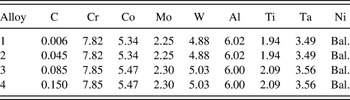
The single crystal superalloys used in this study were modified alloys by the addition of C. The chemical compositions were presented in Table I. The choices for the carbon level were based on the current study.Reference Al-Jarba and Fuchs16–Reference Cutler, Wasson and Fuchs21 The increasing contents of C were added at the expense of Ni, but other constituent elements almost kept constant. Single crystal samples were prepared in a Bridgman-type directional solidification furnace by bottom seeding method. A constant withdrawal rate of 100 μm/s was utilized. The thermal gradient was measured as 300–400 K/cm. The orientation of each single crystal sample was determined by x-ray diffraction (XRD) techniques. Any sample with a misorientation of greater than 7° was considered defective and was not utilized in this study.
Initial compositions of four alloys (mass fraction/%).

Differential scanning calorimetry (DSC) was performed in a Netzsch STA409CD (Germany) on samples to determine the solidus, liquidus, γ′-solvus and eutectic melting point. Prior to the testing of the samples, the DSC unit was calibrated with high purity Ni at a scan rate of 20 °C/min. High purity alumina crucibles were used for all samples. The samples with a minimum size of 280 mg were used. All samples were heated with a rate of 10 °C per minute from 1000 to 1450 °C.
The heat treatments and long term aging were performed in high temperature furnaces with the temperature fluctuation in ±2 °C. All samples were heat treated in air and air-cooled (AC) from the heat-treatment temperature. The heat treatment schedules for the four alloys in this study were: 1305 °C + 3 h, A.C. + 1080 °C + 6 h, A.C. + 870 °C + 20 h,A.C. =
To reveal the microstructure, specimens were etched with a solution of 10 mL HNO3 + 20 mL HF + 30 mL C3H8O3. The microstructure was observed with a Leica DM4000M optical microscopy (OM; Germany) and a JEOL JSM-6040 scanning electron microscopy (SEM; Japan). To reveal the carbide morphology, a deep etching was performed using a solution containing 21 mL HCl + 9 mL H2O2. The mean sizes of γ′ were measured by quantitative metallography and atleast 100 γ′ particles were measured for every state and the average sizes were utilized. Carbide morphologies of the as-cast samples were examined in transverse and longitudinal planes. The carbide volume fraction and carbide size were calculated by using 13 × 15 point grids (195 points per sample) overlaid on transverse micrographs using backscattered SEM micrographs at a magnification of 500 times. Atleast five fields of view were used and the average taken.
Quantitative composition measurements were carried out on the as-cast specimen in as-polished condition using electron microprobe analyzer (EPMA) JXA-8100 (Japan) equipped with wave length dispersive x-ray spectroscopy (WDS). To qualitatively characterize the segregation behaviors of alloying elements, the energy dispersive spectrometer area-scans were performed on the representative regions for the experimental alloys.
III. RESULTS AND DISCUSSION
A. Microstructure states of the alloys after heat treatment
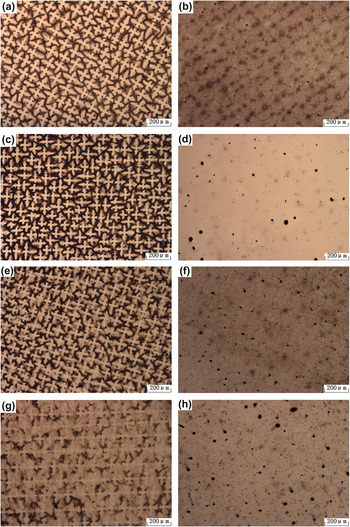
The as-cast microstructure of the investigated superalloy is shown in Fig. 1. As expected, the superalloy exhibited high segregation that was confirmed by a dendritic structure. The dendritic structure exhibited a two-phase γ/γ′ microstructure with a dendrite segregation pattern and a limited amount of γ/γ′ eutectic occurring in some interdendrite regions [Figs. 1(a), 1(c), 1(e), and 1(g)]. The dendrite cores appeared white, the interdendritic regions are black, and the eutectic areas are medium gray. This microstructure caused during solidification, some elements partition to the dendrite core, while other elements tended to accumulate in the interdendritic liquid and then solidify as the interdendritic and eutectic regions. This was reflected in Yu's findings that Al, Ti, Ta, and Mo are reported to segregation to the interdendritic region, whereas, W segregation to the dendrite core.Reference Yu, Liu, Zhao, Zhang, Zhang and Fu24 From this figure, it also could be concluded that when the carbon level was high [Figs. 1(e) and 1(g)], the carbides can be observed in the microstructure by OM images. This problem had been much discussed in author's other literature.Reference Yu and Liu17
OM images showing dendrite microstructure with carbon additions: 0.006% (a-as cast, b-heat treatment), 0.045% (c-as cast, d-heat treatment), 0.085% (e-as cast, f-heat treatment), and 0.15% (g-as cast, h-heat treatment).

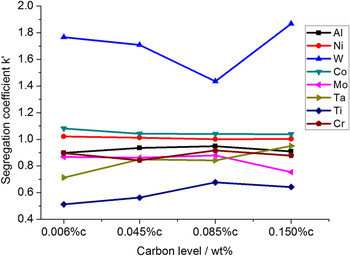
Figure 2 shows the average EPMA compositional results for the alloys in Table I. From these results, it was apparent that the elements such as Co and W all tend to segregate toward the dendrite core regions during solidification, as indicated that the greater than unity. The greater the segregation coefficient, the greater the degree of segregation. A segregation coefficient was less than unity, which indicated that the element segregated to the liquid during solidification, ultimately solidifying in the interdendritic regions.
The segregation behavior of alloying elements.

Elements that segregated in an inverse manner had k′ values less than unity, such as the γ′ forming elements like Al, Ti, Mo, Ta, and Cr. These elements were present in greater concentration in the last liquid phase to solidify and result in large eutectic γ–γ′ phases to form within the interdendritic regions. The element Co that did not favorably segregate to either region has k′ value close to unity and represents the ideal segregation compositions examined here. These results were similar to the study.Reference Fuchs7 It was clear that W was the most severely partitioned element.
The solution temperature was chosen to ensure that γ′ phase and γ–γ′ eutectic in the as-cast microstructure are fully solutioned into matrix, and to reduce the degree of chemical segregation due to partitioning of some of the elements to the dendrite cores and the interdendritic regions, while being sufficiently below the solidus temperature to avoid incipient melting. In this study, the DSC testing of the as-cast samples indicated that the liquidus was from 1360 to 1367 °C, and the solidus was from 1326 to 1334 °C. The γ′-solvus was from 1282 to 1293 °C. The standard heat treatment was based on this DSC results. Two step aging (at 1080 and 870 °C/20 h) was applied for the investigated superalloy.
After heat treatment, all the elements turned to exhibit much more uniform distributions with only limited variations. The dendritic structure was less visible after heat treatment [Figs. 1(b), 1(d), 1(f), and 1(h)]. No obvious γ–γ′ eutectic precipitates were found either in the dendrites or in the interdendritic regions as shown in the typical microstructure micrograph.
B. γ′ morphologies of the alloys after heat treatment
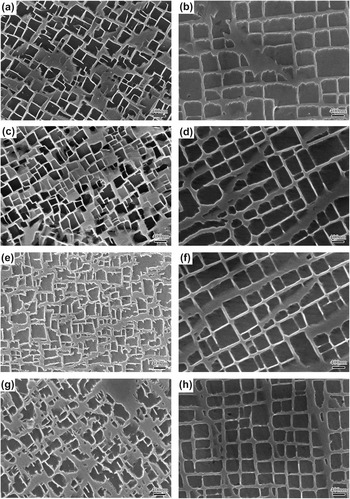
Figure 3 shows the γ′ morphologies of the as-cast and heat treatment. As it can be seen γ′ phase possesses cubic morphology on the average and after heat treatment the γ′ phase became more regular than the as-cast sample. It also showed that the more regular the shape of γ′ precipitated, the more even the size of γ′ precipitated. The average size of γ′ for as-cast samples is from 245 to 350 nm, whereas, the average size of γ′ for heat treatment was from 435 to 500 nm. The equilibrium shape of the γ′ particles was probably determined by a balance between surface energy and strain energy. The morphology of the γ′ precipitates during the early stage of growth was a function of both misfit and particle size, since the transition from spheres to cubes will depend on the total matrix/precipitate strain present due to the lattice mismatch.Reference Pollock, Merphy, Goldman, Uyam, Antolokch, Stusrud and Mackay25 Taking into account a typical interfacial coherent energy density γk ≈ 10 mJ/m2, spheres should transform to cubes with increasing precipitate size to minimize precipitate surface area.Reference Yu, Sun, Zhao, Jin, Guan and Hu14 The formation of γ′ plates aligned statistically along  $\left\langle {100} \right\rangle$ directions at high temperature annealing with no external load is due to the lower surface area of plates as compared to cubes for high volume fraction of precipitates.
SEM images showing γ′ of alloys with carbon additions: 0.006% (a-as cast, b-heat treatment), 0.045% (c-as cast, d-heat treatment), 0.085% (e-as cast, f-heat treatment), and 0.15% (g-as cast, h-heat treatment).

It indicated that the heat treatment changed the morphology and size of γ′. The mismatch between the strengthening γ′ and the γ matrix was essential to determine the morphology and resulting the deformation mechanism of the alloy. The most effective precipitated microstructures had large negative misfits at the desired surface temperature. The equilibrium shape of the γ′ particles was probably determined by a balance between surface energy and strain energy, and can be a function of particle size, resulting from a change in the equilibrium matrix and γ′ composition. Furthermore, it had been shown that the shape of the precipitate varies with the degree of lattice mismatch; the shape changed from a sphere to a cuboid with increasing degree of lattice mismatch.Reference Yu, Sun, Zhao, Jin, Guan and Hu14
It was well known that a distribution of immobile particles in a solid matrix tends to lower its interfacial free energy by transport of matter from the smaller to the larger members of the distribution, thereby diminishing the total particle number but increasing the average particle size. In other words, the surface energy of the precipitate was reduced by coarsening, small ones dissolve, and large ones grow at the expense of the smaller ones. This coarsening process is known as competitive growth or Ostwald ripening clearly followed kinetics which were in general dependent upon the nature of the particle dispersion, provided that the rate-limiting step was other than the transfer of matter across the particle–matrix interface.Reference Ges, Fornaro and Palacio26
C. Carbide morphologies of the alloys after heat treatment
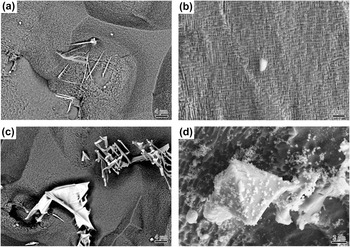
Figures 4 (a) and 4(b) shows the carbide morphologies of 0.006% C as-cast samples and heat treatment samples. It could be seen that heat treatment shows significant influence on carbide morphology. In as-cast sample, acicular carbide can be observed. After heat treatment, the carbide morphology became glomeration. Figures 4(c) and 4(d) shows the carbide morphologies of 0.045% C as-cast samples and heat treatment samples. It could be observed that most of carbides in the 0.045% C as-cast samples were blocky and sheet-like, and the size of carbide was above 5–6 µm. After heat treatment, the carbide morphologies were particle and small blocky, meanwhile, it could be observed that the size of particle carbide was above 150 nm. Figure 4 shows that the size of carbide became much smaller and the distribution of carbide became much more dispersive after heat treatment.
SEM images showing carbide morphologies of deep etched sample 0.006% (a-as cast, b-heat treatment), 0.045% (c-as cast, d-heat treatment).

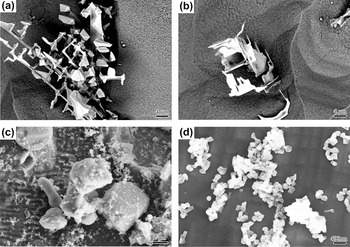
Figure 5 shows that the carbide morphologies of 0.085% C as-cast samples were sheet-like, blocky, and a little acicular, however, the carbide morphologies became particle and small blocky after heat treatment. In as-cast sample, the size of sheet-like carbide was above 10 µm, and the size of blocky carbide was above 3 µm. In heat treatment sample, the size of blocky was above 2 µm, and the size of grainy carbide was above 100 nm. It also could be concluded that the size of carbide became smaller and the distribution of carbide became much more dispersive after heat treatment.
SEM images showing carbide morphologies of deep etched sample 0.085% (a, b-as cast; c, d-heat treatment).

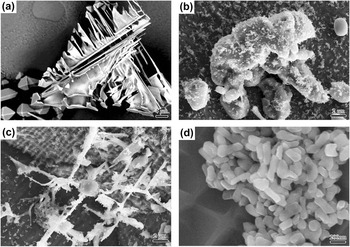
Figure 6 shows the carbide morphologies of 0.15% C sample. It could be observed that the most of carbides in the 0.15% C as-cast sample were Chinese-script like morphology, as reported previously,Reference Al-Jarba and Fuchs16 which fully formed the carbide network in the interdendrite region. Stereo pair images of these scripts carbide showed rods at the center of the dendritic carbides pointing out of the image. From the center, the carbides started to form directions starting with sheets and then splitting to form rods. Figure 6(c) shows the morphology of acicular carbide after heat treatment, and it illustrated that the carbides of heat treatment sample were the decomposition of debris of as-cast samples. Figure 6(d) shows the grainy carbide of heat treatment sample, the size of which was above 100 nm.
SEM images showing carbide morphologies of deep etched sample 0.15% (a-as cast; b, c, d-heat treatment).

After heat treatment, the carbide morphology became much simpler, and the size of carbide was obviously less than the carbide of as-cast samples, meanwhile, the distribution of carbide much more dispersive than the carbide of as-cast samples. Carbides distributed mainly in the interdendritic region, and only when the carbon level was high, the carbide can be observed in the dendrite zone. After heat treatment, Chinese-script like carbide networks became smaller and more spherical [Fig. 5(c)]. These carbide spheres were observed much more frequently in the heat treatment samples [Figs. 4(d), 5(c), 5(d), and 6(d)]. The part of the Chinese script networks in 0.15% C sample retained section of their morphology after heat treatment [Fig. 6(c)].
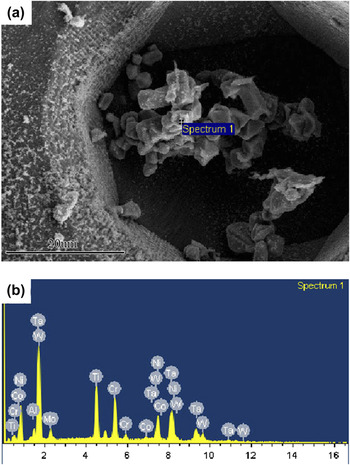
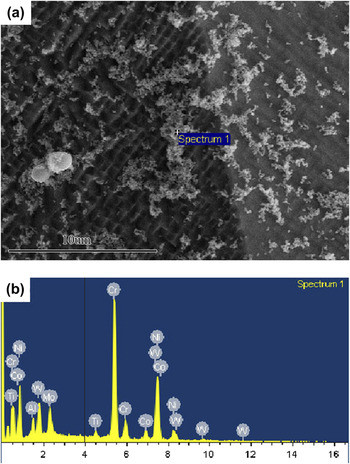
As previous study reportedReference Paulo, Azevedo, Renato and Carlos9 that the carbides of as-cast sample are MC-type carbides. To investigate the chemical composition of carbide after heat treatment, representative WDS was measured, and the results were obtained as Fig. 7. Typical WDS results for small, spherical carbide after heat treatment are shown in Table II. Figure 7 and Table II show that the small, spherical carbides were found to be Ta-rich and were, therefore, considered to also be MC-type carbides.Reference Yu and Liu17,Reference Wasson and Fuchs27
WDS analysis of carbide after heat treatment (0.15% C): (a) Small, spherical carbide; (b) EDS result.

Typical WDS composition (wt%) results for small, round Ta-rich MC type carbide phase observed in heat treated sample (0.15% C).

A typical SEM micrograph showing grainy carbide microstructure of the heat treated sample is shown in Fig. 8(a). Together with the WDS results shown in Fig. 8(b), which can be deduced that these precipitates were chromium-rich M23C6 carbides. It seemed that the precipitation of nanoscaled M23C6 carbide was one of the most important phenomena in the heat treatment alloy. Thus, it was important to examine the formation mechanism and stability of such M23C6 carbide during heat treatment. Comparing Figs. 5(d) and 6(d), it could be found that fine M23C6 carbide precipitates with the size from 50 to 200 nm can be observed apart from the γ and γ′.
WDS analysis of carbide after heat treatment (0.15% C): (a) Grainy carbide; (b) WDS result.

In the C modification, script carbide networks that remained intact after heat treatment decomposed into smaller, spherical, or faceted MC-type carbides due to heat treatment. Secondary, Cr-rich carbides (M23C6 carbide) formed on the surfaces of some MC carbides in all three of the modifications [Figs. 4(d), 5(c), and 6(b)]. These types of carbides were observed more frequently in high C level sample. The decomposition of MC carbide appeared to occur following a reaction (1) and (2), a
 $${\rm{MC}} + \gamma \to {{\rm{M}}_{23}}{{\rm{C}}_6} + \gamma \prime \quad ,$$
 $$\left( {{\rm{Ti,Mo}}} \right){\rm{C}} + \left( {{\rm{Ni}},{\rm{Cr}},{\rm{Al}},{\rm{Ti}}} \right) \to {\rm{C}}{{\rm{r}}_{21}}{\rm{M}}{{\rm{o}}_2}{{\rm{C}}_6} + {\rm{{\rm N}}}{{\rm{i}}_3}\left( {{\rm{Al}},{\rm{Ti}}} \right)\quad .$$
reaction widely reported in literature.Reference Yu, Liu, Zhao, Zhang, Zhang and Fu24 Carbide reactions during the aging at 650–1080 °C caused the precipitation of the discrete M23C6 grainy carbides. On the aging with a relatively long time (20 h) at 870 °C, carbides had enough time to provide the carbon diffusion and reaction with the Cr to form M23C6 (M rich in Cr).
IV. CONCLUSION
(1) After standard heat treatment, dendrite segregation disappeared basically in the single crystal superalloys, a few γ–γ′ eutectics and MC carbides that were not dissolved distribute in the dendrite core. The heat treatment resulted in increased levels of chemical homogeneity.
(2) The size of γ′ in dendrite core and interdendrite region became the same basically; the morphologies and size of primary γ′ precipitates after heat treatment were different with the as-cast sample
(3) Heat treatment of C additions samples resulted in significant changes to as-cast carbide morphologies. The carbide morphologies became more and more identical, and appear small blocky, grain and acicular. The size of carbide was less than that of cast alloy significantly, and the distribution of carbides became more and more dispersion than the cast alloy. Script-type, MC carbide networks transformed during heat treatment to smaller, spherical Ta-rich MC carbides. Heat treatment caused significant MC carbide decomposition and the formation of Cr-rich secondary carbides on or near to decomposition carbides in all modifications.
ACKNOWLEDGMENTS
This work was jointly supported by the National Natural Science Foundation of China (51201130, 51171151, and 51331005), the National Basic Research Program of China (2011CB610406), National High Technology Research and Development Program (2012AA03A511), and the Key Innovation Team of Shaanxi Province (2014KCT-04).