





Impact statement
The socio-cognitive model of continuous traumatic stress proposed in this study reflects specific evidence for populations affected by war, conflict and political violence, including the importance of buffering effects of family and community relationships, in addition to cognitive mechanisms, and contradictory mechanisms during acute stages of war (such as the protective effect of low psychological flexibility during war and high psychological flexibility in the aftermath of war). This novel model can be used to better inform, develop, implement and evaluate mental health and psychosocial support interventions in diverse humanitarian contexts, to ensure that efforts to support mental health reflect the realities of the population needs. This can help to improve the efficacy, relevance and uptake of interventions, ultimately contributing to the reduction of the treatment gap and health inequities.
Introduction
One quarter of the world’s population, 2 billion people, are living through war at the time of writing. There are more than 120 million people worldwide currently displaced by persecution, conflict and human rights violations; almost half are children, and the majority live in low- and middle-income countries (UNHCR, 2025). The devastating mental health and developmental impact of war, displacement and poor living conditions have been consistently documented across contexts, with children significantly more likely to develop trauma symptoms, as well as depression and anxiety (Arakelyan and Ager, Reference Arakelyan and Ager2021). People living in contexts of war, armed conflict and political violence are therefore exposed to continuous and unpredictable instability affecting safety, access to health care, education and housing (Charlson et al., Reference Charlson, van Ommeren, Flaxman, Cornett, Whiteford and Saxena2019). Millions of children are growing up having never experienced safety and stability.
Psychological models aim to understand the mechanisms by which post-traumatic symptoms develop and persist. The most widely used and empirically supported model is the Ehlers and Clark (Reference Ehlers and Clark2000) cognitive model of persistent post-traumatic stress disorder (PTSD). Brewin and Holmes’ (Reference Brewin and Holmes2003) review of psychological models for PTSD highlight that the most comprehensive evidence exists for the Ehlers and Clark (Reference Ehlers and Clark2000) model for adults. The model, shown in Figure 1, posits that prior beliefs and experiences, and the characteristics of the trauma, alongside cognitive processing during trauma, influence the encoding of the trauma memory and here-and-now appraisal of the trauma and its sequelae, leading to a sense of current threat, which in turn leads to maladaptive strategies to control this perceived threat. These strategies can heighten the sense of threat and prevent change in the nature of the memory (not properly processed into autobiographical memory) and negative appraisals. For children, the model is widely applied in clinical settings (Perrin et al., Reference Perrin, Leigh, Smith, Yule, Ehlers, Clark, Landolt, Cloitre and Schnyder2024). Meiser-Stedman (Reference Meiser-Stedman2002) reviewed the evidence for the application of the cognitive model and found that mechanisms are well supported in the literature even for younger children. However, some differences for young children, compared to adults, were highlighted, such as the role of caregiver distress in the appraisal of danger and formation of a coherent narrative, and poorer emotional regulation and verbal ability, making it harder to process memories in younger children.
The Ehlers and Clark (Reference Ehlers and Clark2000) cognitive model of persistent PTSD.

Figure 1. Long description
A flowchart organized into two main sections.
At the top are three antecedent boxes. On the left is a box containing Characteristics of Trauma forward slash Sequelae, Prior Experiences forward slash Beliefs forward slash Coping, and State of Individual. This box has a white arrow pointing right to Cognitive Processing during Trauma. Both of these top boxes have white arrows that merge and point downward into a large central box labeled vertically on the right as P E R S I S T E N T P T S D.
Inside the central box, two boxes sit at the top: Nature of Trauma Memory on the left and Negative Appraisal of Trauma and or its Sequelae on the right. They are connected by a double-headed white arrow.
Below these, a central box labeled Current Threat (Intrusions, Arousal Symptoms, Strong Emotions) receives solid black arrows from both the Negative Appraisal box and a small box labeled Matching Triggers (which itself is pointed to by the Nature of Trauma Memory).
At the bottom of the central box is a box for Strategies Intended to Control Threat forward slash Symptoms. This box has a double-headed solid black arrow connecting it to Current Threat. Additionally, two long, hatched arrows point upward from the Strategies box back to the Nature of Trauma Memory and Negative Appraisal boxes.
A legend in the top right corner defines the arrows: solid black means leads to, white means influences, and hatched means prevents change in. A long white arrow also travels from the far left antecedent box down the side of the diagram to influence the Strategies box at the bottom.
The cognitive model has been applied to treat people with PTSD through cognitive behavioral therapy (CBT), which includes addressing the trauma memory through imaginal exposure, triggers through in vivo exposure, negative appraisals through cognitive restructuring and maladaptive strategies through psychoeducation and behavioral change (Kar, Reference Kar2011). CBT has been widely used and tested for PTSD, with evidence of effectiveness for adults (Rose et al., Reference Rose, Bisson, Churchill and Wessely2002) and children (Xian-Yu et al., Reference Xian-Yu, Deng, Zhang, Li, Gao, Zhang and Gong2022). In war-affected populations, there is mixed evidence of the effectiveness of CBT in reducing traumatic stress symptoms, with some studies finding evidence of effects (e.g., Barbui et al., Reference Barbui, Purgato, Abdulmalik, Acarturk, Eaton, Gastaldon, Gureje, Hanlon, Jordans, Lund, Nosè, Ostuzzi, Papola, Tedeschi, Tol, Turrini, Patel and Thornicroft2020) while others found limited or no effect (e.g., Rose et al., Reference Rose, Bisson, Churchill and Wessely2002; Steinberg et al., Reference Steinberg, Sun, Venturo-Conerly, Sood, Mair, Davydenko, Porzak, Ougrin and Weisz2025). Due to the theoretical assumptions grounded in non-war affected populations, CBT may be limited in this population and require a more contextually-grounded theoretical foundation.
The current psychological model of traumatic stress generally assumes a certain level of current safety, a clear distinction between pre- and post-trauma (Foa and Rothbaum, Reference Foa and Rothbaum1998) and that hypervigilance and a sense of a current threat are maladaptive symptoms linked to the overappraisal of danger and poor integration of trauma memories (Ehlers and Clark, Reference Ehlers and Clark2000). Theory development for PTSD was strongly influenced by experiences of veterans where trauma events were firmly grounded in the past (Cahill and Foa, Reference Cahill, Foa, M. J, Keane and Resick2007). It may therefore be limited in application to populations facing ongoing and very real threats of harm. Indeed, the application of psychological models of trauma to war-affected populations has been heavily criticized, including the use of the term “trauma” to describe events happening at a collective level; diagnosing PTSD for the majority of a population who have experienced mass violence; and undermining natural and normal reactions to complex instability and violence beyond that intended within the definition of a traumatic event in non-conflict-affected societies (Summerfield, Reference Summerfield2001; Jabr and Berger, Reference Jabr and Berger2024). Recognizing the limitation of cognitive theory alone to explain traumatic stress, other models have incorporated a relational approach that grounds PTSD symptoms within a social context. The socio-interpersonal model by Maercker and Horn (Reference Maercker and Horn2013), shown in Figure 2, has three levels. The first is the individual, the second is the close relationships and the third is the more distal social and societal relationships, with these social processes affecting individual and relationship outcomes. For the context of chronic ongoing threat, however, these models still assume a “post”-trauma experience, attending to “the contextual and interpersonal processes that occur in the aftermath of a traumatic experience [italics added]” (p. 468).
The socio-interpersonal model of traumatic stress (Maercker and Horn, Reference Maercker and Horn2013).

Figure 2. Long description
The diagram flows from left to right. On the far left, an arrow labeled Traumatic experiences interpersonal man-made or accidental points into a series of three nested cubes.
At the innermost core is the smallest cube labeled Individual Social-affective response. It includes bullet points for Shame, Guilt, Anger, and Revenge. The top of this cube is labeled perceived and the side is labeled induced.
The next layer outward is a medium cube labeled Close social relationships. It includes bullet points for Disclosure, Social support / negative exchange, and Empathy. The top is labeled received and the side is labeled provided.
The outermost layer is the largest cube labeled Distant social contexts Culture and society. It includes bullet points for Collective experience of trauma, Societal acknowledgment / Injustice, and Cultural value orientations. The top is labeled shaped and the side is labeled transformed.
On the far right, a large arrow labeled Outcomes points away from the cubes toward a final list. Outcomes are categorized into three levels.
* Individual including Symptoms and Well-being.
* Close relationships including quantity and quality.
* Distant social contexts including Social integration and Societal segregation.
Therefore, theoretical foundations and related psychological interventions for traumatic stress are based on assumptions that may not apply to ongoing threat exposure. The concept of continuous traumatic stress (Eagle and Kaminer, Reference Eagle and Kaminer2013) has helped to name and acknowledge this experience and how this differs from the conceptualization of PTSD. Continuous traumatic stress is defined as “responses arising from multiple or prolonged exposure to threat that may include cognitive, behavioral and emotional effects, including anxiety, depressive, somatization, heightened risk perception, constant concern for the future, mental exhaustion and change in sense of self” (Goral et al., Reference Goral, Feder-Bubis, Lahad, Galea, O’Rourke and Aharonson-Daniel2021, p. 2). It therefore differs from PTSD in terms of continued exposure, but also in the diverse manifestations of traumatic stress that are not specific to intrusions and hypervigilance. Most importantly, it differs in the assumption that the response is a normal and often adaptive reaction to entirely abnormal and unjust events. To our knowledge however, the underlying applicability of the theory or mechanism of cognitive models has not been systematically reviewed for populations experiencing continuous traumatic stress. Improved knowledge of how well these theories apply to populations under continuous threat and where there may be differences or gaps can help to inform and improve interventions. This is of particular importance given the scale of need for psychosocial and mental health services in war-affected, refugee and displaced populations (Troup et al., Reference Troup, Fuhr, Woodward, Sondorp and Roberts2021). The aim of this study is therefore to systematically review the evidence for the Ehlers and Clark (Reference Ehlers and Clark2000) cognitive model of post-traumatic stress (PTS) in populations affected by protracted ongoing traumatic stress and instability, including by war, armed conflict or political violence, for both adults and children. The research questions are: a) What is the evidence that the cognitive model of persistent PTSD applies to ongoing threat? b) Are there any gaps in our theoretical knowledge on continuous traumatic stress? c) Is there any evidence that suggests additional mechanisms not captured in the model for this population?
Method
Study design
A systematic review was conducted using four searches to identify the evidence for the main mechanisms of the most widely used cognitive model of traumatic stress, Ehlers and Clark (Reference Ehlers and Clark2000), in the context of protracted and ongoing trauma exposure due to war, armed conflict or political violence.
First, the cognitive model was independently screened by TB, ZH and SJ to identify the main proposed mechanisms. Second, these were merged, grouped into categories that shared similar themes and that could be searched with shared search terms. The final grouping was agreed on by consensus. Third, each search was summarized in terms of its aim and distinct key search terms. The search terms were piloted to maximize sensitivity. We focused on the mechanisms in response to trauma exposure and not the trauma itself. Trauma characteristics, which are included in the Ehlers and Clark (Reference Ehlers and Clark2000) model, have been well documented elsewhere for children (Betancourt and Khan, Reference Betancourt and Khan2008) and adults (Thabet, Reference Thabet2017). This includes, for example, higher persistent distress for those exposed to protracted violence, injury, death of a loved one, displacement and sexual violence. The final allocation of mechanisms to four searches is outlined in Table 1. Search 1 focused on appraisals, search 2 on emotions, search 3 on memory and search 4 on behavior. The review was informed by PRISMA (2020) guidance.
Mechanisms grouped by review number

Table 1. Long description
The table is organized into three columns: Mechanisms in the Ehlers and Clark Reference Ehlers and Clark2000 model of P T S D, a sub-list of specific components, and the corresponding Review Search number.
* Appraisal of the trauma and/or its sequelae: Includes Appraisal of the traumatic event (Search 1), Appraisals of trauma sequelae (Search 1), and Appraisals and emotional responses (Search 2).
* Memory for the traumatic event: Includes Poor elaboration and incorporation into autobiographical memory base (Search 3), Strong S-S and S-R associations (Search 3), and Strong perceptual priming (Search 3).
* Relationship between the nature of trauma memory and trauma appraisals: Linked to Search 3.
* Maladaptive behavioral strategies and cognitive processing styles: Linked to Search 4.
* Cognitive processing during trauma: Includes Influences on appraisal (Search 1) and Influences on memory (Search 3).
A footnote defines S-S as Stimulus-Stimulus and S-R as Stimulus-Response.
Note: S–S, Stimulus–Stimulus; S–R, Stimulus–Response.
Eligibility criteria
Each search of a mechanism was restricted to include only empirical primary research on civilian populations affected by ongoing war, armed conflict, or political violence. When these criteria were not immediately clear based on the author’s description, such as settings with populations living with the legacy of conflict but not active conflict, we consulted the Uppsala Conflict Data Program (2025). The program provides detailed descriptions of country contexts over time, allowing us to cross-check the context at the time of data collection with inclusion criteria. We agreed by consensus whether the criteria were met. This was particularly relevant for contexts where political violence was ongoing following a past period of war or armed conflict. We included studies on any population with a DSM- or ICD-based PTSD diagnosis, as well as more broad traumatic stress symptoms and local idioms of distress, to prevent missing relevant studies. This was necessary given the wide scope and lack of unified definition of continuous traumatic stress. Any study design was included as long as it was a primary research study. We excluded secondary studies like reviews, settled refugees in non-conflict-affected countries (such as refugees with leave to remain in a high-income non-conflict-affected country), other forms of ongoing stress (such as paramedics), soldiers and veterans (with the exception of child soldiers forced into combat) or single-event terrorist acts in usually stable countries. Studies on interventions and prevalence of mental disorders were excluded. However, we did flag studies on mechanisms not included in the Ehlers and Clark model, in case they may be context-specific and relevant for theory development. We did not restrict the search by age of participants, geography, language or date of publication.
Search strategy
The searches were conducted using the databases PubMed (including MEDLINE), PsycINFO and PTSDpub. All searches included the population/context (war OR genocide OR “community violence” OR “mass conflict” OR post-conflict OR “post conflict” OR “political conflict” OR “political violence” OR “armed conflict” OR “armed violence” OR “ethnic cleansing” OR “child soldier” OR sectarian OR sectarianism OR “sectarian-related”) combined with the Boolean term AND with the mechanism. For search 1 (appraisals) search terms were: “cognitive bias” OR perception OR perceive OR perceived OR appraisal. For search 2 (emotions): “cognitive bias” OR perception OR perceive OR perceived OR appraisal OR “self perception” OR self-perception AND emotion OR emotions OR emotional OR mood OR shame OR anger OR fear OR guilt OR anxiety. For search 3 (memory): memory OR memories OR recollection OR recollections. For search 4 (behavior): cognitive AND processing OR style AND coping OR behavior OR behavior OR strategy (see Supplemental Table S1 for full details). Search terms were run using all text, with no restriction on language or date. We used the systematic review software Covidence. The original search was piloted on November 11, 2019, and conducted on January 22, 2020. The search was updated on November 10, 2023. Titles were screened by the first author TB, and abstracts and full texts were independently screened by both TB and ZH (for search 1 and 2) and SJ and ZH (for search 3 and 4). For the updated review, screening was done for all searches by LH, with SJ independently screening the first 50 hits to ensure consistency. There was an average agreement rate of κ = 0.45 (moderate agreement) before discussion and clarification. The reference lists of all included studies were also screened. During full text screening, all full texts were independently duplicate screened. Disagreements were resolved by consensus with the whole team. Some studies did not meet the inclusion criteria of the target mechanism, but did meet the criteria of another mechanism. Many included studies overlapped across mechanisms, such as on emotions and memory or appraisals and behavior, and these were counted under a primary mechanism but included in the analysis for more than one mechanism. These decisions were made in a series of workshops with the whole team by discussion and consensus. The main exclusion reasons were: a systematic review, veterans, did not include PTSD or other traumatic stress measures, or not in a current conflict setting at the time of data collection.
Given the number of included studies, quality assessment was conducted through two simple indicators, a) the study design (longitudinal, cross-sectional or qualitative) and b) sample size. Results were stratified based on design and size, with greater weighting for larger longitudinal studies given their superior generalizability and capacity for identifying causality. Cross-sectional studies were still included given their contribution to identifying the existence of a mechanism, and qualitative studies given their contribution to understanding the nuanced lived experiences of affected populations.
Analysis
Extraction was conducted using a pre-made structured Excel sheet including the author, sample size, design, country context, population and the main findings. Included studies were first grouped by their mechanism(s), then based on whether they were for children and adolescents, or adults. Studies were then further sub-categorized according to their study design and size. Evidence was synthesized, including evidence against or lack of evidence, for each mechanism. As we flagged additional cognitive and non-cognitive mechanisms, these were synthesized separately to inform an adapted version of the model for the context of continuous traumatic stress.
Results
Out of 5,198 studies screened, a total of 69 primary studies were included across all four searches. A breakdown of the review process is displayed in Figure 3.
PRISMA flowchart.

Figure 3. Long description
The flowchart is divided into four columns, each representing a search category. A vertical sidebar on the left labels three phases: Identification (top), Screening (middle), and Included (bottom).
Column 1: Search 1: Appraisals of the trauma event and/or its sequelae and cognitive processing during trauma.
- Identification: 5,578 hits, with 3,519 duplicates removed.
- Screening: 2,059 screened, 539 selected by title, 160 selected by abstract.
- Included: 31 selected by full text (leading to 2,831 references screened), 3 added after search update, 3 added from other searches, resulting in 41 studies included in total.
Column 2: Search 2: Appraisals and emotional responses.
- Identification: 1,606 hits, with 284 duplicates removed.
- Screening: 1,322 screened, 361 selected by title, 349 selected by abstract.
- Included: 5 selected by full text (leading to 233 references screened), 1 added after search update, 3 added from other searches, resulting in 9 studies included in total.
Column 3: Search 3: Nature of the memory and the relationship with appraisals.
- Identification: 4,743 hits, with 3,229 duplicates removed.
- Screening: 1,514 screened, 389 selected by title, 376 selected by abstract.
- Included: 5 selected by full text (leading to 245 references screened), 1 added after search update, 0 added from other searches, resulting in 6 studies included in total.
Column 4: Search 4: Maladaptive behavioral strategies and cognitive processing styles.
- Identification: 865 hits, with 562 duplicates removed.
- Screening: 303 screened, 145 selected by title, 139 selected by abstract.
- Included: 4 selected by full text (leading to 270 references screened), 3 added after search update, 2 added from other searches, resulting in 13 studies included in total.
Search 1: Appraisal of the trauma event and/or its sequelae, and cognitive processing during trauma
The Ehlers and Clark (Reference Ehlers and Clark2000) cognitive model posits that due to overgeneralization after the traumatic event, normal activities are perceived as more dangerous than they really are. It also proposes that there is an exaggerated sense of the probability of further catastrophic events. The person is likely to believe that the way they felt or behaved during the event can have long-term threatening implications (such as an incapability to predict future threats). The person is therefore likely to interpret the fact that the trauma happened to them, as opposed to other people, as evidence for these appraisals. Appraisals of the trauma sequelae include a negative interpretation of their initial PTSD symptoms, of other people’s reactions in the aftermath of the event and of the consequences that the trauma has in other life domains. The model also suggests that cognitive processing during the trauma exposure influences the development of negative appraisals, such as mental defeat, where the person loses all sense of autonomy, affecting their self-worth and ability to cope.
Study characteristics
Forty-one studies were identified, published between 1986 and 2023, on the relationship between cognitive appraisals and traumatic stress during current and ongoing trauma exposure due to war, conflict or political violence. The studies are displayed in Table 2, with reference to studies here reflecting their corresponding number in the table. Twenty-eight studies included adults, and the remainder included children or adolescents. Settings ranged from civil war, military attacks, uprisings, armed conflict, bombardments, political violence, enslavement and torture. Thirty-six studies were cross-sectional; the others were longitudinal (n = 3), experimental (n = 1) or qualitative (n = 1). Sample sizes ranged from 20 to 24,935.
Characteristics of included studies for cognitive appraisal of the trauma event and/or its sequelae, and cognitive processing during trauma

Table 2. Long description
The table is organized into six columns: No., Study full reference, Population and setting, Study design, Sample size, and Main findings. It is divided into two primary sections: Adult population and Children and adolescents.
Adult population section:
• Longitudinal studies: Includes study 1 (Punamäki, 1990) involving 40 Palestinian women, finding that appraisals of stressfulness were not associated with distress.
• Cross-sectional studies: Includes studies 2 through 26. Key findings include cognitive appraisals influencing P T S D severity (Abolghasemi et al., 2013), lack of belief in a benevolent state being protective (Başoğlu et al., 1994), and sense of coherence being associated with fewer symptoms (Braun-Lewensohn et al., 2011; Kimhi et al., 2010).
• Qualitative studies: Includes study 27 (Bedoya-Olaya et al., 2023) with 32 Colombian survivors, identifying themes of rethinking oneself to find meaning.
Children and adolescents section:
• Longitudinal studies: Includes studies 28 and 29. Findings show that changes in cognitions are associated with changes in symptoms (Palosaari et al., 2013) and mental flexibility acts as a long-term moderating factor (Qouta et al., 2001).
• Cross-sectional studies: Includes studies 30 through 40. Notable findings include appetitive perception of violence being associated with fewer post-traumatic symptoms in at-risk youth (Crombach and Elbert, Reference Crombach and Elbert2014; Hecker et al., Reference Hecker, Hermenau, Maedl, Schauer and Elbert2013) and subjective threat perception being linked to mental health (Harel-Fisch et al., 2010).
• Experimental studies: Includes study 41 (Michalek et al., 2024) with 130 Syrian refugees, finding no difference in facial expression perception compared to non-refugee groups.
Evidence synthesis: Adults
Supportive evidence on the role of appraisals
Seventeen cross-sectional studies identified that negative cognitive appraisals of the event (including perception of fear, loss of control, locus of control, negative Islamic appraisals, threat appraisal, sense of security and perceived proximity to danger or violence) were associated with a higher severity of PTS symptoms and distress in adults (2,4,5,6,8,11,13,14,17,19–26). In one study on dissociation, perceived adherence to moral standards was associated with dissociative symptoms in the context of political violence in the North of Ireland (12). In another study in Israel, perceived threat had a smaller effect on peritraumatic stress than sensory-responsiveness (10). Two cross-sectional mediation studies found that threat appraisal mediated the relationship between war exposure and PTSD in the context of the 2006 Israel-Lebanon war in Israel (15), and perceived community rejection mediated the relationship between enslavement and PTSD in the context of Yazidi women (16).
Contradictory or limited evidence
In one longitudinal study with a small sample size (n = 40) in the West Bank, Palestine, locus of control was not associated with distress (1). No studies were identified on mental defeat
Protective mechanisms
Six studies identified protective cognitive appraisals. Lack of faith in a benevolent state was associated with less severe PTSD in the context of state-perpetrated torture (3), while optimism, perceived control, sense of security and sense of coherence also protected against PTS symptoms (7,9,18,24,26). Appetitive aggression was associated with fewer PTS symptoms in the context of Congolese refugees (15). One qualitative study found that “rethinking oneself” helped to find meaning in grief in the context of armed conflict in Colombia (27)
Evidence synthesis: Children
Supportive evidence for the role of cognitive appraisals
Six cross-sectional studies identified the association between cognitive appraisals (including low optimism, threat appraisal, fatalism, external locus of control and perceived stress) and higher PTS symptoms (30,32-34,36,39).
Contradictory or limited evidence
Two large longitudinal mediation studies found that post-traumatic cognitions did not mediate the relationship between trauma exposure and PTS symptoms in the context of the second intifada in Gaza, Palestine (28), and that mental flexibility was not associated with PTS symptoms during active violence – though it was a moderating factor for longer-term improvement in symptoms (29). Five cross-sectional studies found that perception of self as victim or perpetrator was not associated with PTS symptoms in the context of former child soldiers in Uganda (37), that adherence to ideology was linked to fewer PTS symptoms in the context of the second Intifada in Palestine – though based on a relatively small sample size of 20 (38). Optimism and perceived control were correlated with worse PTS symptoms in the context of Israel (40), and appetitive aggression was associated with fewer PTSD symptoms (and high violent behavior) in the context of street children in Burundi (31) and former child combatants in the Democratic Republic of Congo (DRC) (35). One cross-sectional mediation study found that family resources mediated the relationship between perceived stress and PTSD symptoms in the context of the civil war in Lebanon (33), and one experimental study found that the perception of emotive facial expressions was not different between refugees and non-refugees in Jordan (41)
Evidence synthesis: Summary of novel mechanisms
Adherence to moral standards (12), belief in the benevolence of the state (3), positive Islamic appraisals (related to meaning of events, providing a sense of belonging and aiding in problem-solving) (6), adherence to ideology (38), fatalism (36) and appetitive aggression (15,31,35) are novel findings with respect to the cognitive model that may fit specifically in some cultural contexts. For example, where fatalism is dominant, or in the context of protracted state-perpetrated conflict and insecurity. Appetitive aggression was a protective mechanism for PTSD symptoms for both adults and children facing current threat and indicates a counterintuitive but self-protective mechanism. Sense of community coherence and acculturation in the context of a refugee camp in Greece is also a novel protective mechanism for the cognitive model (30).
Search 2: Appraisals and emotional responses
In the Ehlers and Clark (Reference Ehlers and Clark2000) cognitive model, different appraisals lead to different emotional reactions. Appraisals about perceived danger lead to fear, appraisals about unfairness lead to anger, appraisals about one’s responsibility for the event lead to guilt, appraisals about one’s violation of internal standards lead to shame and appraisals about perceived loss lead to sadness.
Study characteristics
Nine studies were identified, in addition to three already included studies, published between 2005 and 2023, on the relationship between cognitive appraisals and emotional responses during current and ongoing trauma exposure. The studies are displayed in Table 3, with reference to studies here reflecting their corresponding number in the table. Eight studies included adults, and four included children or adolescents. Settings ranged from war exposure, missile threats, civil-political conflict and child combatants. Seven studies were cross-sectional, three were longitudinal and two were qualitative. Sample sizes ranged from 21 to 1,358.
Characteristics of included studies for appraisals and emotional responses

Table 3. Long description
The table is organized into two primary sections: Adult population and Child population.
Adult Population Section:
- Longitudinal studies: Study 42 (Neria et al., 2010) in Israel found that social support moderated emotional responses and psychopathology in 200 students.
- Cross-sectional studies: Includes five studies (4, 7, 43, 44, 45). Key findings include Study 4 (Basoglu et al., 2005) with 1,358 adults in former Yugoslavia, linking fear and loss of control to P T S D and depression. Study 43 (Dyer et al., Reference Dyer, Dorahy, Shannon and Corry2013) in Northern Ireland linked childhood neglect to hostility, mediated by shame and guilt. Study 45 (Palace et al., 2024) in Ukraine found social support predicted fewer P T S D symptoms.
- Qualitative studies: Study 46 (Sousa and Veronese, Reference Sousa and Veronese2022) in Gaza highlighted the role of unpredictability and fear in collective social suffering. Study 27 (Bedoya-Olaya et al., 2023) in Colombia found moral sentiments influenced the processing of pain and loss.
Child Population Section:
- Longitudinal studies: Study 47 (Punamaki et al., 2015) in Gaza identified that low negative cognitive appraisals and secure paternal attachment predicted resistance to P T S D symptoms. Study 48 (Behnsen et al., 2022) in Israel found perceived stress mediated the link between classroom stressors and anxiety.
- Cross-sectional studies: Study 49 (Israel-Cohen et al., 2014) in Israel found life satisfaction and negative affect mediated the relationship between gratitude and P T S D. Study 50 (Klasen et al., 2015) in Uganda found that guilt and experiences as a perpetrator were significant predictors of P T S D in former child soldiers.
Evidence synthesis: Adults
Supportive evidence for the role of emotions
Four cross-sectional studies found that higher fear was associated with perceived greater loss of control over life, less belief in the benevolence of people, greater loss of meaning of the war cause and stronger faith (4); that optimism, hope and self-esteem (as well as social support) were negatively correlated with acute anxiety (7); that alterations in self-perception (shame, guilt) mediated the relationship between trauma and post-traumatic hostility and self-harm (43); and that fear mediated the relationship between perceived threat and impaired functioning (44). Two qualitative studies found that in Gaza “temporal moments” (such as roof knocking before bombing) led to immediate fear and terror responses, and ongoing collective social suffering. Unpredictability was specifically linked to low sense of control and existential suffering (46). Moral sentiments also influenced the processes of handling pain and processing loss in the context of armed conflict in Colombia (27). A cross-sectional study found that perceived social support was associated with fewer symptoms (but more peritraumatic experiences) (45), while a longitudinal study conducted in the context of college students during the Gaza War in Israel also found that the perception of social support moderated the effect of distress on mental health (42). No included studies identified the role of anger or sadness
Evidence synthesis: Children
Supportive evidence for the role of emotions
Two large longitudinal studies found that low levels of negative post-traumatic cognitive appraisals, guilt and emotion regulation were significantly higher for children with low PTSD symptoms compared to those with symptoms that worsened over time in the context of Gaza, and that paternal attachment security was associated with low child symptoms and improvement over time (47); and perceived stress mediated the relationship between classroom experience and anxiety development in a high threat area in Israel (48). Two cross-sectional studies found that negative affect, but not positive affect, mediated the relationship between gratitude and PTSD symptoms in the context of Israel (49); and that the experience of perpetration and guilt were predictors of PTSD in the context of former child combatants in Uganda (50). No included studies identified the role of shame or anger
Evidence synthesis: Summary of novel mechanisms
Social support, gratitude and attachment were novel mechanisms with respect to the cognitive model. Three studies identified the perception of social support as linked to lower anxiety and PTSD symptoms (42,7,45), but one study found that social support was associated with higher peritraumatic symptoms (45). The authors suggest this is due to the context of collective trauma and shared experiences in Ukraine. One study identified the positive role of gratitude in positive affect (49). Another study identified the role of attachment security in children linked more generally to lower PTS symptomology (47).
Search 3: Nature of the memory and the relationship with appraisals
In the Ehlers and Clark (Reference Ehlers and Clark2000) cognitive model, the nature of the memory of the traumatic event leads directly to the sense of current threat and arousal symptoms, but also influences appraisals. The model posits that the trauma memory is poorly integrated into autobiographical memory making it feel here-and-now rather than grounded in the past. Strong conditioned responses to triggers or cues, designed to help the individual predict future threat, contribute to this high arousal and often operate outside of conscious awareness. The trauma recall may be biased by appraisals through selective retrieval of memories consistent with the appraisal. Cognitive processing during the trauma may also affect the memory quality due to sensory overload, dissociation, or high emotion.
Study characteristics
Six studies were identified, published between 2014 and 2021, on the nature of trauma memories and their relationship with cognitive appraisals during current and ongoing trauma exposure. The studies are displayed in Table 4, with reference to studies here reflecting their corresponding number in the table. Two studies included adults, and four included children or adolescents. Settings ranged from war exposure, displacement, political violence and oppression, and traumatic grief. Two studies were cross-sectional, three were longitudinal, and one was qualitative. Sample sizes ranged from 21 to 376.
Characteristics of included studies for the nature of the memory and the relationships with appraisals

Table 4. Long description
The table is organized into six columns: No., Study, Population and setting, Study design, Sample size, and Main findings. It is divided into two main sections.
Adult population section:
* Longitudinal studies: Study 51 by Mollica R F et al. (2007) involved 376 Bosnian refugees over 3 years. It found that traumatic recall decreased over time, except for the P T S D group which showed increased recall.
* Qualitative studies: Study 52 by Veronese G et al. (2021) involved 21 women in Gaza. It found that recall reflected a balance between traumatic events and social support, with narrative activities aiding in reframing meaning.
Child population section:
* Longitudinal studies:
- Study 53 by Panter-Brick C et al. (2015) followed 331 Afghan youth for 1 year. It found that youth with chronic P T S were more likely to report trauma exposure and domestic violence.
- Study 54 by Peltonen K et al. (2017) followed 240 children in Gaza for 9 months. It found that war trauma was associated with less positive emotional tone and more specific memories.
* Cross-sectional studies:
- Study 55 by Neshat Doost H T et al. (2014) compared 103 Afghan adolescents in Iran. It found that bereaved adolescents retrieved fewer specific memories and more categoric memories compared to non-bereaved peers.
- Study 56 by Peltonen K et al. (2017) involved 197 children in Gaza. It found that peritraumatic stress predicted higher P T S levels, mediated by the quality of trauma-related memories.
Evidence synthesis: Adults
Supportive evidence for the role of memory
One longitudinal study in the context of Bosnian refugees between 1996 to 1999 found that for people with PTSD, recall of traumatic events increased over time compared to those without PTSD, for whom traumatic recall decreased over time (51). Authors suggest this demonstrates a failure of extinction of traumatic memories. One qualitative study in the context of Gaza found that retaining traumatic memories was perceived as a form of resistance in the face of ongoing threat, and to help reframe the attribution of traumatic meaning within transgenerational daily practices of survival (52).
Evidence synthesis: Children
Supportive evidence for the role of memory
Two longitudinal studies, one in Afghanistan and the other in Gaza, found that multiple traumatic event memories were associated with chronic PTS and high traumatic exposure at follow-up (53). Sustained distress was also related to higher domestic violence exposure and living in a deprived neighborhood; war trauma early memory recall was associated with more specific memories and was more common in boys (54). In Gaza, a cross-sectional study found that the relationship between peritraumatic stress and PTS was partially mediated by the quality of traumatic-related memories, such as if they are fragmented, lacking chronological order, or consistency (55)
Contradictory or limited evidence
A cross-sectional study found that traumatic recall was associated with reduced autobiographical specificity and increased categoric and extended memories (repeated and of a long duration) in Afghan youth with a traumatic parental loss in Iran (56)
Evidence synthesis: Summary of novel mechanisms
One study found that reframing of traumatic events within the practice of transgenerational and collective resistance and survival prompted resilience (52). For children, the impact of current neighborhood deprivation and domestic abuse was found to exacerbate the relationship between war trauma memories and PTS (53). Two studies found contradictory results on the specificity of traumatic memories for children, where one study found that higher specificity was associated with war trauma memories (54) and another found that it was reduced (55).
Search 4: Maladaptive behavioral strategies and cognitive processing styles
In the Ehlers and Clark (Reference Ehlers and Clark2000) cognitive model, strategies intended to control high levels of distress can be maladaptive and unintentionally prevent change in both the nature of the trauma memory (such as preventing processing into long-term autobiographical memory) and negative appraisals (such as increasing the strength of appraisals of the trauma or the sequelae). These maladaptive strategies include thought suppression, behaviors to control symptoms (e.g., going to bed late), selective attention, safety behaviors, trying not to think, avoidance of reminders, avoidance of activity, alcohol or medication, rumination and dissociation.
Study characteristics
Thirteen studies were identified, in addition to eight already included studies, published between 1986 and 2022, on coping strategies and cognitive processing styles and their relationship to symptoms, the nature of the trauma memory and cognitive appraisals during current and ongoing trauma exposure due to war, armed conflict and political violence. The studies are displayed in Table 5, with reference to studies here reflecting their corresponding number in the table. Eight studies included adults, and 13 included children or adolescents. Settings ranged from war exposure, displacement, political violence and oppression, missile attacks and imprisonment. Eighteen studies were cross-sectional, one was longitudinal, and two were qualitative. Sample sizes ranged from 30 to 4,090.
Characteristics of included studies for maladaptive behavioral strategies and cognitive processing styles

Table 5. Long description
The table is divided into two main sections: Adult population and Child population.
Adult Population (7 Cross-sectional studies):
* Study 57 (Bleich et al., 2005): 444 Jewish older adults in Israel. Found older people used cigarettes, alcohol, and tranquilizers more often to cope.
* Study 58 (Kanninen et al., 2003): 106 adult ex-prisoners in Palestine. Emotion-focused coping associated with low P T S in the long run.
* Study 20 (Luitel et al., 2013): 720 war-affected adults in Nepal. Low socioeconomic status and specific coping resources associated with higher P T S D risk.
* Study 59 (Nuttman-Shwartz, 2014): 451 college students in Israel. Distractive coping associated with stress reactions and impaired functioning.
* Study 22 (Punamäki, 1986): 209 Palestinian women. Avoidance, withdrawal, and confrontation associated with poorer mental health.
* Study 26 (Zeidner and Hammer, 1992): 261 Jewish adults in Israel. Palliative and control coping predicted physical and anxiety symptoms.
* Study 60 (Cerquera Córdoba et al., 2020): 70 young adult victims in Colombia. Emotionally avoidant coping correlated with resilience categories.
Child Population (14 studies):
* Longitudinal: Study 39 (Kuterovac-Jagodić, 2003): 252 Croatian children. Emotional expression and external locus of control predicted P T S at follow-up.
* Cross-sectional: Includes 11 studies (Studies 61, 62, 9, 32, 63, 36, 64, 65, 66, 67, 40). Key findings include problem-solving coping being associated with lower distress (Study 62), while emotion-focused coping often associated with higher P T S (Study 61, 9, 40). Study 63 (4,090 Syrian refugees) found social support and neighborhood attachment associated with life satisfaction.
* Qualitative: Study 68 (Cherewick et al., 2015) in D R C found social support seeking protective, while risk behaviors increased distress. Study 69 (Gatenio-Kalush and Cohen, 2020) in Israel found caregiver emotional availability and modeled physiological regulation protective for children.
Evidence synthesis: Adults
Supportive evidence for the role of behavior
Four cross-sectional studies found support for the role of emotion-focused and avoidance coping in PTS symptoms. Distractive coping patterns, but not active or acceptance coping, were related to higher stress reactions, mediated by fear, and active and distractive coping were related to impaired functioning (59), and avoidance, withdrawal, attack and confrontation coping methods were associated with poorer mental health outcomes for Palestinians in Israel and Palestine (22). Palliative (emotion-focused) and control coping were predictors of anxiety symptoms, and active coping and resources were predictors of cognitive functioning in the context of high-risk missile attack areas in Israel (26)
Contradictory or limited evidence
Older people used more substances to cope and were less helped by disengagement coping compared to younger adults in the context of Israel (57). Emotion- and problem-focused coping were associated with high levels of PTS in the context of ex-prisoners in Palestine, but emotion-focused coping was associated with a low level of PTS in the long run and problem-focused coping was associated with a low level of PTS in the short run (58). Coping (using resources and social support systems) was linked to a higher risk of PTSD in the context of Nepal (20). Emotionally avoidant coping was correlated with equanimity and feeling good alone (markers of resilience) in the context of armed conflict in Colombia (60)
Evidence synthesis: Children
Supportive evidence for the role of behavior
Three cross-sectional studies found that emotion-focused coping was associated with PTS (61,9,66), as well as checking, reassurance requesting and low verbal distraction (67), problem-solving coping was linked to lower psychological distress (62) and lower problem-solving and higher emotion-focused coping mediated the relationship between both a sense of coherence and cognitive appraisals and stress reactions in Israel (9), with Palestinians living in Israel using more emotion-focused and avoidant coping than Jewish Israelis (62). Negative coping predicted PTSD in Gaza, Palestine (36). In Uganda, refugee children used more emotion-inhibiting strategies and emotion-focused strategies, as well as looking for advice, praying and acting out more than non-refugee children (68)
Contradictory or limited evidence
One longitudinal study found that aggressive strategies, emotional expression, high social support and low instrumental support were associated with PTS, but only emotional expression and low social support predicted PTS at follow-up in the context of exposure to military attacks in Croatia (39). In addition, daydreaming, religion and expression of emotion all predicted greater PTS severity in Bosnia and Herzegovina (32). Social cohesion, social support, family social capital and neighborhood attachment were all associated with being less lonely, more optimistic and more satisfied with life for Syrian refugees in Lebanon (63). In the Democratic Republic of Congo (DRC), PTS was predicted by both engagement coping and disengagement coping for boys, but for girls, simultaneous and accumulated use of both engagement and disengagement strategies were associated with reduced PTS (64). Two small qualitative studies (n = 30), one in the DRC (68) and one in Israel (69), found that trying to forget had short-term benefits, such as through distraction, but that longer-term forgetting or moving on was possible through social connection and support, and through faith and prayer to reduce the desire for revenge. A 14-year-old boy in DRC said, “I can get rid of this kind of thoughts only by praying to God.” The analysis highlighted the powerful use of praying as an immediately accessible behavior, but that is rooted in a wider communal belonging (68). Constructed knowledge and acquired skills related to physical safety, as well as the sense of emotional availability of their caregivers, were reported to be protective for the mental health of children in the context of missile attacks in Israel. Children used imagination, play and physiological regulation modeled by their mothers to cope, and mothers tried to convey a sense of calm and routine by regulating their own physiological and psychological arousal (69).
Evidence synthesis: Summary of novel mechanisms
Studies identified additional coping mechanisms and sociodemographic risk factors for PTS severity, with respect to the cognitive model, including the appraisal of prison experience as harmful and involving loss in the context of ex-prisoners in Palestine (58), being a Dalit (low-caste) or of low socio-economic status (20), daydreaming (32), religion (32), residing in areas highly affected by war in both Nepal (20) and Palestine (36) and experiencing a greater negative impact of the conflict at the community level (20,68). Level of resources also predicted higher use of active coping, which was associated with better mental health outcomes (26). There were mixed findings for social support. It was associated with a higher risk of PTS in Nepal (20), and lower risk in DRC (68). The mixed findings may be explained by the longitudinal study in Croatia (39), where high social support was linked with worse PTS during the war but improved PTS at follow-up after the war. Differences in coping were also found on the basis of ethno-religious identity in the context of Israel, with Palestinians showing higher emotion- and avoidant-coping than Jewish Israelis (62).
Discussion
We aimed to systematically review the evidence for the Ehlers and Clark (Reference Ehlers and Clark2000) cognitive model of PTSD applied to populations affected by protracted ongoing traumatic stress exposure during war, armed conflict or political violence, for both adults and children. Our findings demonstrated mixed evidence for the model in this context, gaps or discrepancies in our theoretical understanding and compelling evidence for additional mechanisms specific to this population that are not otherwise captured in the model. These include adherence to moral standards and ideology (cognitive), gratitude and attachment (emotional), reframing of traumatic memories within transgenerational and collective resistance (memory) and appetitive aggression (behavioral), as well as the exacerbating effect of neighborhood deprivation, low economic status, domestic abuse and low community cohesion and social support on the severity of distress. Based on these findings, we propose an adapted socio-cognitive model of continuous traumatic stress for populations affected by war, armed conflict and political violence.
The quality of evidence we found is mapped onto the cognitive model in Table 6. We found strong evidence for the role of cognitive appraisals and traumatic stress symptoms, particularly for adults (e.g., Abolghasemi, Bakhshian and Narimani, Reference Abolghasemi, Bakhshian and Narimani2013; Ben-Zur and Almog, Reference Ben-Zur and Almog2013; Berzengi et al., Reference Berzengi, Berzenji, Kadim, Mustafa and Jobson2017). Higher PTS symptoms were associated with threat appraisals, perceived proximity to danger, loss of control and an internal locus of control and threat appraisals mediated the relationship between war exposure and PTS. This is in line with previous research in different contexts (Mitchell et al., Reference Mitchell, Brennan, Curran, Hanna and Dyer2017). However, in children, this mediation effect was not supported (Palosaari et al., Reference Palosaari, Punamäki, Qouta and Diab2013). In the theoretical review by Stallard (Reference Stallard, Graham and Shirley2013), children were found to have different cognitive processes that were highly dependent on developmental stages and this may explain the non-finding. For children, Stallard (Reference Stallard, Graham and Shirley2013) proposed that there was a strong influence of caregiver responsiveness, attachment security and socio-economic stress on the development of PTSD during and after trauma exposure. Our findings support this hypothesis, with good evidence for a role of caregiver relationships and attachment security in PTS symptoms in children (Punamaki et al., Reference Punamäki, Palosaari, Diab, Peltonen and Qouta2015), and a mediating effect of family resources on the relationship between perceived stress and PTS (Farhood, Reference Farhood1999). It may also reflect a difference in “post”-trauma symptoms and continuous traumatic stress. For example, mental (or psychological) flexibility is strongly linked to better mental health outcomes for adults and children in other contexts (e.g., Richardson and Jost, Reference Richardson and Jost2019), but in the context of war was found to be linked to worse PTS during war and improved PTS in the longer term (Qouta et al., Reference Qouta, El-Sarraj and Punamäki2001).
Quality of evidence for the existing cognitive model for persistent PTSD (Ehlers and Clark, Reference Ehlers and Clark2000) in a) adults and b) children and adolescents
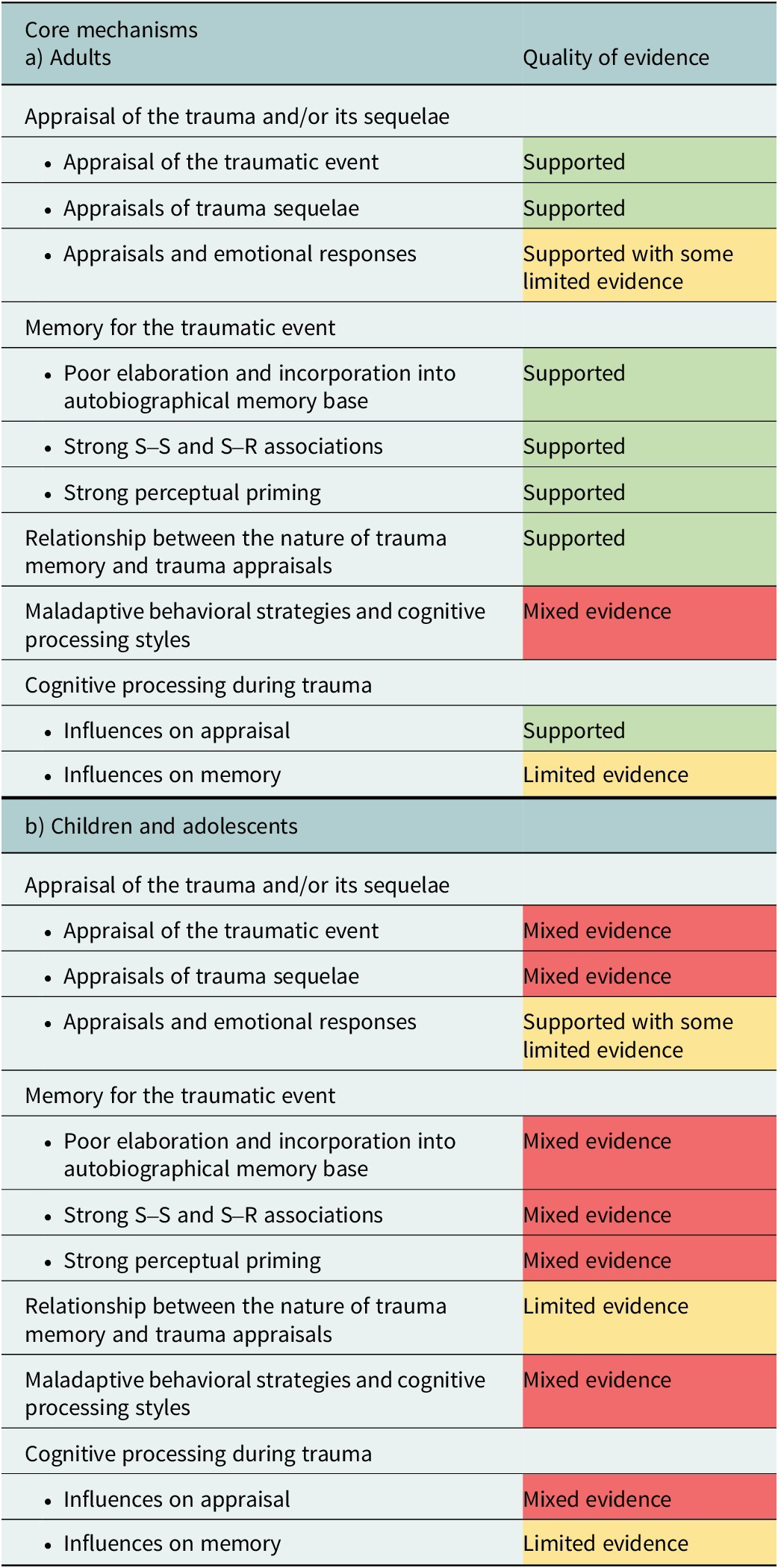
Table 6. Long description
The table is organized into two primary sections.
Section a) Adults:
* Appraisal of the trauma and/or its sequelae: Sub-points for appraisal of the traumatic event and appraisals of trauma sequelae are both marked as Supported. Appraisals and emotional responses are marked as Supported with some limited evidence.
* Memory for the traumatic event: Sub-points for poor elaboration and incorporation into autobiographical memory base, strong S-S and S-R associations, and strong perceptual priming are all marked as Supported.
* Relationship between the nature of trauma memory and trauma appraisals: Supported.
* Maladaptive behavioral strategies and cognitive processing styles: Mixed evidence.
* Cognitive processing during trauma: Influences on appraisal is Supported, while influences on memory has Limited evidence.
Section b) Children and adolescents:
* Appraisal of the trauma and/or its sequelae: Sub-points for appraisal of the traumatic event and appraisals of trauma sequelae both show Mixed evidence. Appraisals and emotional responses are marked as Supported with some limited evidence.
* Memory for the traumatic event: Sub-points for poor elaboration, strong S-S and S-R associations, and strong perceptual priming all show Mixed evidence.
* Relationship between the nature of trauma memory and trauma appraisals: Limited evidence.
* Maladaptive behavioral strategies and cognitive processing styles: Mixed evidence.
* Cognitive processing during trauma: Influences on appraisal shows Mixed evidence, and influences on memory has Limited evidence.
This provides evidence for what psychologists working with war-affected populations have long observed (e.g., Jabr and Berger, Reference Jabr and Berger2024), that “post”- traumatic theory cannot be directly applied to continuous traumatic stress and ongoing exposure. Low mental flexibility, in the moment, may be protective for mental health through a shift in focus to survival. In the same vein, protective effects of appetitive aggression – defined as attraction to violence (Elbert et al., Reference Elbert, Moran and Schauer2016) – were found for street children in Burundi (Crombach and Elbert, Reference Crombach and Elbert2014) and former child combatants in the Democratic Republic of Congo (Hecker et al., Reference Hecker, Hermenau, Maedl, Schauer and Elbert2013). This may also reflect a pre-emptive focus on survival that may be adaptive during exposure, even if it may not be otherwise helpful. Studies also identified evidence new to the model linking religion-focused appraisals and fatalism to high PTS (Khamis, Reference Khamis2008). This demonstrates the importance of religion and religiosity in this population, often overlooked in Western-generated theory and in non-adverse conditions (Rhi, Reference Rhi2001). This suggests that greater attention to religiosity in mental health research is needed. Adherence to ideology was also linked to less severe PTS (Kostelny and Garbarino, Reference Kostelny and Garbarino1994), as well as community coherence (Braun-Lewensohn et al., Reference Braun-Lewensohn, Sagy and Roth2011), both indicating a strong role of socio-political context and community in the experience of PTS during war.
We found limited evidence for the link between appraisals and specific emotional responses. For adults, the links between perceived loss of control and other appraisals with fear responses and impairment were well supported (e.g., Başoğlu et al., Reference Başoğlu, Paker, Paker, Ozmen, Marks, Incesu, Sahin and Sarimurat1994). Guilt was also found to be a response to negative cognitive appraisals for both adults and children (Dyer et al., Reference Dyer, Dorahy, Shannon and Corry2013; Punamäki et al., Reference Punamäki, Palosaari, Diab, Peltonen and Qouta2015). A qualitative study identified terror and collective suffering as responses to uncertainty during war (Sousa and Veronese, Reference Sousa and Veronese2022). However, no studies specifically identified the link between appraisals and anger or sadness, and this may be due to a tendency of studies to measure clusters of symptoms (such as depression) rather than specific emotions, as well as the prolonged nature of terror, suffering and collective distress in this context.
The nature of the trauma memory had mixed evidence for both adults and children. Direct exposure to potentially traumatic events was found to be linked to higher symptoms, in line with the Ehlers and Clark (Reference Ehlers and Clark2000) cognitive model. For those with PTSD symptoms, traumatic recall remained or increased over time while those without PTSD experienced a reduction in traumatic recall over time (Mollica et al., Reference Mollica, Caridad and Massagli2007). In children, the quality of traumatic memories (fragmentation, order, consistency) mediated the relationship between peritraumatic stress and PTS (Peltonen et al., Reference Peltonen, Kangaslampi, Qouta and Punamäki2017). This supports the cognitive model’s mechanism linking poorly processed traumatic memories to ongoing high arousal symptoms. However, in the context of political injustice, memories took on another significance. In Gaza, Palestine, traumatic memories were often reframed as part of a process of transgenerational resistance and survival (Veronese et al., Reference Veronese, Sousa and Cavazzoni2021). A striking mixed finding was identified for children, where high PTS was associated with more specific memories in Gaza (Peltonen et al., Reference Peltonen, Kangaslampi, Qouta and Punamäki2017) but less specific autobiographical memories in Iran (Neshat Doost et al., Reference Neshat Doost, Yule, Kalantari, Rezvani, Dyregrov and Jobson2014). In the general population and in the cognitive model, it is usually the latter, where more fragmented and less coherent memory recall is associated with high distress (e.g., van der Kolk and Fisler, Reference van der Kolk and Fisler1995). This may reflect contextual, population and measurement differences; the former finding was in Gaza with children aged 10–12 and focused on earliest memories, and the latter in Iran for Afghan youth 12–18 years old. Perhaps the younger age and earliest memories affect the encoding of traumatic recall, indicating the cognitive model may apply differently for very young age groups. This is in line with conclusions of the adaptation of the cognitive model to children by Stallard (Reference Stallard, Graham and Shirley2013). Additionally, domestic violence and neighborhood deprivation moderated the relationship between traumatic memories and PTS (Panter-Brick et al., Reference Panter-Brick, Grimon, Kalin and Eggerman2015), highlighting the strong impact of ongoing violence and disadvantage on the development and maintenance of symptoms.
Mixed findings were also found for the strategies used to control symptoms. Unlike the global literature, both emotion-focused and problem-focused coping were found to be associated with higher PTS in some studies on adults (Kanninen et al., Reference Kanninen, Punamäki and Qouta2003). In non-conflict-affected contexts, emotion-focused coping is often associated with poorer outcomes while problem-solving is associated with better outcomes (e.g., Chang et al., Reference Chang, Ward and Lee2024). Given that most evidence-based mental health interventions draw on the assumption that problem-solving is effective for mental health promotion in war-affected populations, this review highlights that the assumption depends on the context. Our findings suggest that problem-solving coping may not always be helpful during war. This is supported by studies on the beneficial effect of problem-solving in the same populations but only after seeking international protection, such as for Syrian refugees in Greece (Abu-Kaf et al., Reference Abu-Kaf, Al-Said and Braun-Lewensohn2021). It is further complicated by gender and by ethnic-religious identity even during war, as findings from Israel reflect different mechanisms for Jewish Israelis and Palestinians, where Palestinians showed higher emotion-focused coping and avoidant coping (Braun-Lewensohn et al., Reference Braun-Lewensohn, Sagy and Roth2010), likely due to the additional socio-political injustices and marginalization Palestinians face (Afana et al., Reference Afana, Tremblay, Ghannam, Ronsbo and Veronese2020).
Equally, across mechanisms, social support was identified as a key mechanism new to the model that may be both harmful or protective in the experience of PTS during or after war exposure. We found that the perception of social support was linked to lower anxiety and PTSD symptoms in some studies, while others found that social support was associated with higher peritraumatic symptoms and risk of PTSD in the context of Ukraine, Croatia and Nepal (Kuterovac-Jagodic, Reference Kuterovac-Jagodić2003; Luitel et al., Reference Luitel, Jordans, Sapkota, Tol, Kohrt, Thapa, Komproe and Sharma2012; Palace et al., Reference Palace, Zamazii, Terbeck, Bokszczanin, Berezovski, Gurbisz and Szwejka2023). This may indicate that during war, social contact may increase symptoms, perhaps due to greater exposure to collective and vicarious trauma. In children, other strategies like daydreaming, religion, expression of emotion, social cohesion, neighborhood attachment, low socio-economic status/class/caste, attachment anxiety and the emotional availability of caregivers were associated with PTS and quality of life (e.g., Gatenio-Kalush and Cohen, Reference Gatenio-Kalush and Cohen2020). This again reflects the importance of caregivers and the socio-economic environment around children in their development and maintenance of PTS.
During the review process, some ineligible studies were flagged due to similarities in civilian exposure to chronic exposure to current threat. In particular, the context of community violence through urban and gang violence, intimate partner violence and being a person of color exposed to institutionalized racism, all had a theme of prolonged exposure to life-threatening risk. In these studies, mechanisms of perceived neighborhood safety (Foell et al., Reference Foell, Pitzer, Nebbitt, Lombe, Yu, Villodas and Newransky2021), sense of solidarity and compassionate self-identity (Wayment and Silver, Reference Wayment and Silver2018), social support (Shoemaker et al., Reference Shoemaker, Howell, Jamison, Walker and Wamser-Nanney2022), justice beliefs (Kırseven and Işıklı Reference Kırseven and Işıklı2020), self-determination and perseverance (Woods-Jaeger et al., Reference Woods-Jaeger, Siedlik, Adams, Piper, O’Connor and Berkley-Patton2020) and low minority stress (Zedan and Haj-Yahia, Reference Zedan and Haj-Yahia2024) were identified as protective effects for the mental health of adults, as well as school cohesion for children (Siaw, Reference Siaw2019). This demonstrates that an understanding of ongoing traumatic stress may be relevant beyond war-affected settings for individuals and communities exposed to social and collective trauma, oppression and injustice, in otherwise stable countries.
The socio-cognitive model of continuous traumatic stress in the context of war, armed conflict and political violence
We propose an adapted socio-cognitive model for adults and children facing current threats due to war, armed conflict and political violence. In this model, outlined in Figure 4, the existing mechanisms in Ehlers and Clark’s original model (2000) remain, with some adaptations to the context and added mechanisms based on the evidence from this review.
Socio-cognitive model of continuous traumatic stress in the context of war, armed conflict and political violence.

Figure 4. Long description
A flowchart with a legend and nested boxes.
At the top, a box labeled Transgenerational and intergenerational patterns and collective experiences has a white arrow pointing down to a box labeled Characteristic of trauma/sequelae, prior experiences, beliefs, faith, values, and coping. This box and a box to its right, Cognitive processing during trauma, are connected by crossed white arrows.
Below these is a large nested rectangle structure. At the top of the inner rectangle, Nature of trauma memory and Negative appraisal of trauma and/or its sequelae are linked by a double-headed white arrow. Black arrows from both point down to a central box: High levels of distress (Intrusions, Arousal symptoms & strong emotions, Terror, Collective suffering & survival).
Moving downward through nested layers, double-headed black arrows connect the following boxes in sequence:
1. Individual strategies intended to cope with distress.
2. Family, peer and community relationships, attachment and support.
3. Socio-economic context, neighborhood disadvantage, social injustice, oppression, and poverty.
Two long grey arrows originate from the bottom-most socio-economic box and point upward to the Nature of trauma memory and Negative appraisal boxes.
A legend on the top right defines arrow types:
- Solid black arrow: leads to.
- White arrow: influences.
- Grey arrow: prevents change in.
On the far right, the text CONTINUOUS TRAUMATIC STRESS is written vertically.
First, we changed the conceptualization of current threat to high levels of distress, due to the reality – not cognitive-emotive distortion – of actual current threat through ongoing exposure. This reflects our findings that different mechanisms can play a role during active exposure (e.g., Hecker et al., Reference Hecker, Hermenau, Maedl, Schauer and Elbert2013). It also reflects not just intrusions and arousal in the existing model, but terror, collective suffering and survival (Sousa and Veronese, Reference Sousa and Veronese2022). Rather than “post”-traumatic and “disorder,” we have amended the term to continuous traumatic stress, to highlight both the ongoing exposure and the normal and adaptive response to abnormal living conditions. This is also in line with the conceptualization of continuous traumatic stress in the context of mass and ongoing adversity in South Africa (Kaminer et al., Reference Kaminer, Eagle and Crawford-Browne2018) and Palestine (Farajallah, Reference Farajallah2022). In addition, we have added a vertical mechanism of transgenerational collective suffering and survival based on our findings on the broader sociological context of trauma (e.g., Ibrahim et al., Reference Ibrahim, Ertl, Catani, Ismail and Neuner2018). We have linked this to the model as an influence on the person’s experience and coping. We hypothesize the mechanisms of this influence may be through shared family histories and identities and parent–child interactions. This is supported by research on transgenerational transmission of trauma, such as the children and grandchildren of survivors of the Holocaust and the genocide in Rwanda (Cohen and Morrison, Reference Cohen and NMv2018; Kagoyire et al., Reference Kagoyire, Kangabe and Ingabire2023).
Within predisposing prior experiences, we have added the themes of faith, beliefs and values that were highlighted in our review as key factors influencing both appraisals and symptoms (e.g., Cherewick et al., Reference Cherewick, Kohli, Remy, Murhula, Kurhorhwa, Mirindi, Bufole, Banywesize, Ntakwinja, Kindja and Glass2015). For behavioral responses, we have added a differential mechanism for immediate vs. longer-term strategies, given that some protective mechanisms in the longer term are risks during immediate exposure (mental flexibility, social support) and vice versa (appetitive aggression) (Qouta, El-Sarraj and Punamäki, Reference Qouta, El-Sarraj and Punamäki2001; Cherewick et al., Reference Cherewick, Kohli, Remy, Murhula, Kurhorhwa, Mirindi, Bufole, Banywesize, Ntakwinja, Kindja and Glass2015; Hecker et al., Reference Hecker, Hermenau, Maedl, Schauer and Elbert2013). Finally, we included multiple horizontal systemic layers, for family, peer and community relationships, attachment and support (including domestic abuse and anxious attachment), and the wider socio-economic context, including neighborhood disadvantage, social injustice, oppression (such as based on gender, class or caste, religious-ethnic identity or minority status) and poverty, that are also closely linked to distress and prevent change in both the nature of the trauma memory and negative appraisals. This major thematic difference, compared to the existing cognitive model, reflects the wealth of evidence we found on multi-systemic influences on traumatic stress (e.g., Luitel et al., Reference Luitel, Jordans, Sapkota, Tol, Kohrt, Thapa, Komproe and Sharma2012; Panter-Brick et al., Reference Panter-Brick, Grimon, Kalin and Eggerman2015; Ibrahim et al., Reference Ibrahim, Ertl, Catani, Ismail and Neuner2018). For children, the specific additional influence of school, caregivers and attachment security was also noted in these systemic levels. While many included studies focused on the negative impact of these systemic influences on children’s distress (e.g., Punamäki et al., Reference Punamäki, Palosaari, Diab, Peltonen and Qouta2015), we also found evidence that indicates protective effects such as nurturing family relationships, long-term social support and community cohesion (e.g., Habib et al., Reference Habib, El-Harakeh, Ziadee, Abi Younes and El Asmar2020).
Additional relevant findings were identified for existing mechanisms, namely the impact of the nature of the traumatic memory and of negative appraisals on each other and on emotions, which impact the development of persistent distress (intrusions, arousal) (Punamäki et al., Reference Punamäki, Palosaari, Diab, Peltonen and Qouta2015). For the nature of the traumatic memory, the mechanism of memory as resistance was noted in the context of traumatic loss, collective care and struggle for justice (Veronese et al., Reference Veronese, Sousa and Cavazzoni2021). For children, the specificity of autobiographical memories was supported by a study in Iran (Neshat Doost et al., Reference Neshat Doost, Yule, Kalantari, Rezvani, Dyregrov and Jobson2014) but the opposite was found for early autobiographical memories in young childhood in the context of Gaza, Palestine (Peltonen et al., Reference Peltonen, Kangaslampi, Qouta and Punamäki2017), indicating potential developmental and contextual differences in the encoding and recall of traumatic experiences. For appraisals, socio-political specific appraisals were identified, such as having little faith in a benevolent state (Başoğlu et al., Reference Başoğlu, Paker, Paker, Ozmen, Marks, Incesu, Sahin and Sarimurat1994), as well as cultural and religious-specific experiences such as Islamic appraisals (Berzengi et al., Reference Berzengi, Berzenji, Kadim, Mustafa and Jobson2017). For emotions, we identified a protective link between gratitude and affect (Israel-Cohen et al., Reference Israel-Cohen, Kashy-Rosenbaum and Kaplan2014), as well as broader collective experiences of suffering, terror and survival (Sousa and Veronese, Reference Sousa and Veronese2022). For children, we also identified a protective role of political ideology and a harmful role of fatalism (Kostelny and Garbarino, Reference Kostelny and Garbarino1994; Khamis, Reference Khamis2008) indicating a greater importance of appraisals related to the current environmental context for children affected by war.
Further research is needed to further develop this adapted model, in particular for young children, as well as to test mechanisms with contradictory or limited evidence. This includes mental flexibility, social support and coping styles. Longitudinal designs that include time points during and after active war exposure are also key to informing the timing of implementation of Mental Health and Psychosocial Support interventions, as well as the optimal intervention components for the population and context.
Strengths and limitations
This is the first study of its kind to systematically weigh the evidence for a widely used cognitive model of PTSD, specifically for populations affected by war, armed conflict and political violence. We followed PRISMA guidance to strengthen the validity and reliability of findings, and we summarized not only data that support the model but also highlighted evidence to the contrary and evidence that points to alternative or new mechanisms in this population. Limitations include using predominantly English-based publications, potentially missing other important mechanisms and the limitations of primary studies that are predominantly cross-sectional and limited in quantity and reach across contexts. In addition, the wide and heterogenous definitions of traumatic stress, and non-unified definition of continuous traumatic stress, made it more challenging to identify relevant studies and may have contributed to the moderate agreement rate.
Implications and conclusions
Findings from this review demonstrate differences in the development and maintenance of traumatic stress for people affected by war, armed conflict and political violence. We found differences in the theoretical mechanisms relating traumatic experience to symptoms, appraisals and strategies. Evidence of differences during vs. after ongoing exposure, and short- and long-term effectiveness of strategies, suggests that as mechanisms differ, so should interventions. Mental flexibility, for example, or problem solving, or even social support, might not be a helpful and effective coping skill for all people in all contexts. This has implications for the development and implementation of mental health interventions and humanitarian programming, which relies on evidence-based recommendations. Our findings show that greater attention is needed to the context (faith, values, ideology), as well as to the wider collective suffering (parent–child relationships, family functioning, social cohesion) and structural injustices (socio-economic and neighborhood disadvantage). This may involve a shift in attention from individual interventions focused on treating symptoms to wider family and neighborhood interventions that strengthen communities, as well as advocacy and mobilization for populations facing injustice and oppression. Current intervention norms neglect these mechanisms, focusing instead on individual “pathology,” “coping” and “resilience.” The neglect of systemic and contextually unique mechanisms underlying trauma during war and political violence risks delivering ineffective, harmful or invalidating interventions that are ill-equipped to contain the reality of collective terror. Future research should further explore these systemic mechanisms and the development and testing of contextually grounded systemic mental health and psychosocial support interventions, particularly for children and adolescents.
Open peer review
To view the open peer review materials for this article, please visit http://doi.org/10.1017/gmh.2026.10290.
Supplementary material
The supplementary material for this article can be found at http://doi.org/10.1017/gmh.2026.10290.
Acknowledgments
We would like to acknowledge our dear colleague Zahraa Shaito, at the American University of Beirut, who was killed by an Israeli airstrike on the first night of the 2026 war on Lebanon.
Author contributions
TB conceptualized, designed and wrote up the study; SJ, ZH and LTH ran the searches, and all authors were involved in the analysis. The final write-up was reviewed by all authors.
Competing interest
The authors have no conflicts of interest to declare.
Data availability statement
Extracted data is available on reasonable written request.
Funding statement
This study was completed with support from the American University of Beirut’s University Research Board (URB) fund (award number: 103782).
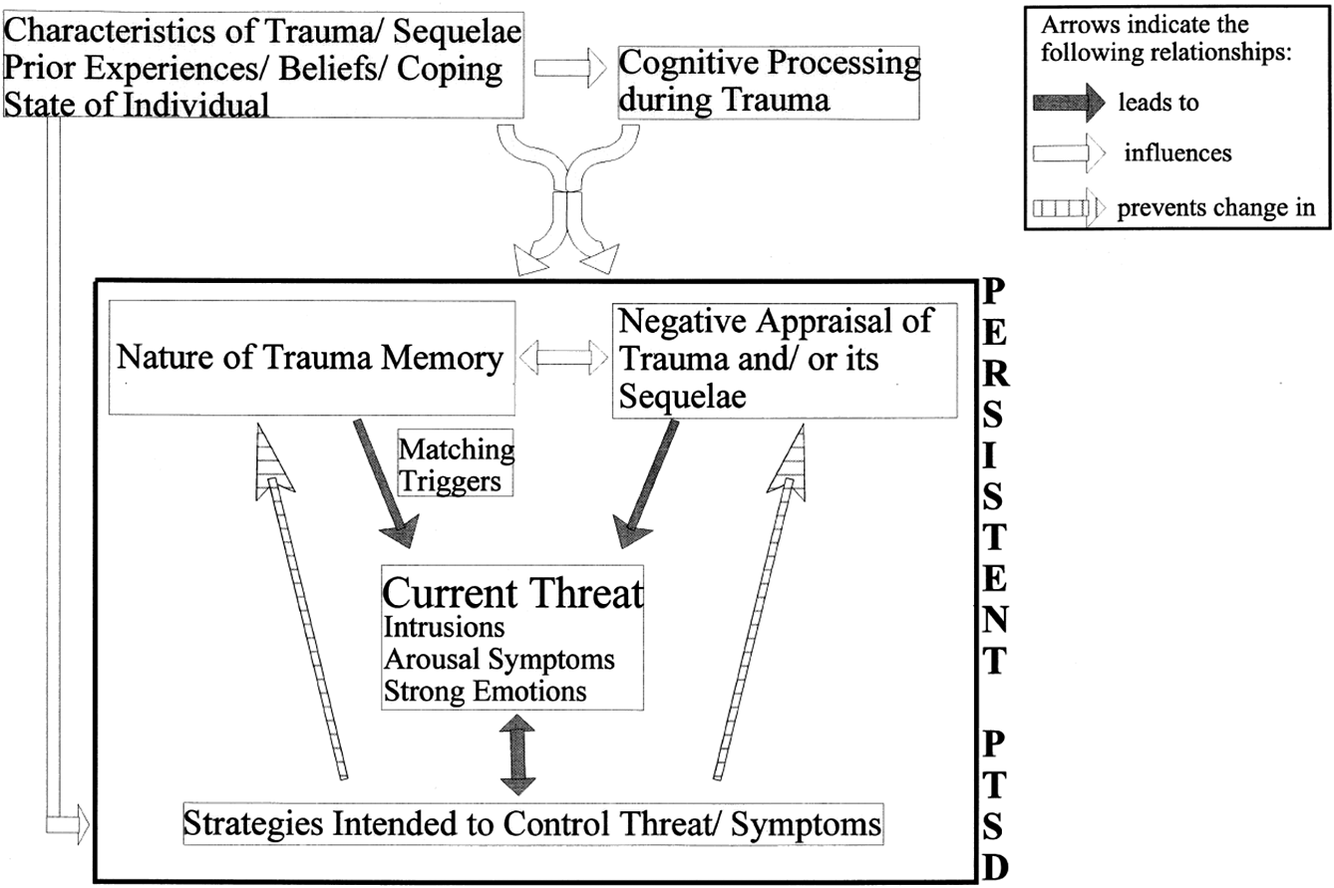


 Open access


Comments
Dear Editors,
I am enclosing a new manuscript entitled “When the current threat is real: A systematic review of the evidence for a cognitive model of continuous traumatic stress during war, armed conflict, and political violence” for consideration for publication in Global Mental Health.
This is the first review of its kind to test the cognitive model of post-traumatic stress in humanitarian settings, and proposes an adapted model for ‘continous traumatic stress.’ The paper has implications for informing interventions in protracted conflicts and displacement contexts.
The enclosed manuscript has not been published previously and is not under consideration for publication elsewhere. The authors declared no potential conflicts of interest with respect to the research, authorship, and publication of this article.
Many thanks for considering our paper. We are looking forward to hearing from you.
Sincerely,
Tania Bosqui
On behalf of all the authors