Introduction
The prevalence of major depressive disorder (MDD) in the general population has frequently been found to decrease with increasing age (Regier et al. Reference Regier, Boyd, Burke, Rae, Myers, Kramer, Robins, George, Karno and Locke1988; Karel, Reference Karel1997; Beekman et al. Reference Beekman, Copeland and Prince1999; Kessler et al. Reference Kessler, Berglund, Demler, Jin, Koretz, Merikangas, Rush, Walters and Wang2003a; Alonso et al. Reference Alonso, Angermeyer, Bernert, Bruffaerts, Brugha, Bryson, de Girolamo, Graaf, Demyttenaere, Gasquet, Haro, Katz, Kessler, Kovess, Lepine, Ormel, Polidori, Russo, Vilagut, Almansa, Arbabzadeh-Bouchez, Autonell, Bernal, Buist-Bouwman, Codony, Domingo-Salvany, Ferrer, Joo, Martinez-Alonso, Matschinger, Mazzi, Morgan, Morosini, Palacin, Romera, Taub and Vollebergh2004; Pirkola et al. Reference Pirkola, Isometsä, Suvisaari, Aro, Joukamaa, Poikolainen, Koskinen, Aromaa and Lönnqvist2005; Wells et al. Reference Wells, Oakley Browne, Scott, McGee, Baxter and Kokaua2006; Troller et al. Reference Troller, Anderson, Sachdev, Brodaty and Andrews2007), and the picture for anxiety disorders is similar (Regier et al. Reference Regier, Boyd, Burke, Rae, Myers, Kramer, Robins, George, Karno and Locke1988; Jorm, Reference Jorm2000; Alonso et al. Reference Alonso, Angermeyer, Bernert, Bruffaerts, Brugha, Bryson, de Girolamo, Graaf, Demyttenaere, Gasquet, Haro, Katz, Kessler, Kovess, Lepine, Ormel, Polidori, Russo, Vilagut, Almansa, Arbabzadeh-Bouchez, Autonell, Bernal, Buist-Bouwman, Codony, Domingo-Salvany, Ferrer, Joo, Martinez-Alonso, Matschinger, Mazzi, Morgan, Morosini, Palacin, Romera, Taub and Vollebergh2004; Wells et al. Reference Wells, Oakley Browne, Scott, McGee, Baxter and Kokaua2006; Troller et al. Reference Troller, Anderson, Sachdev, Brodaty and Andrews2007). A number of methodological reasons have been advanced for this, including selective mortality, excluding the institutionalized from the sample and cohort effects (Karel, Reference Karel1997; Jorm, Reference Jorm2000; Snowdon, Reference Snowdon2001; Hybels & Blazer, Reference Hybels, Blazer, Tsuang and Tohen2002; O'Connor, Reference O'Connor2006). With the exception of the cohort effects, these sampling bias explanations are not thought to be sufficient to explain this age-related pattern (Jorm, Reference Jorm2000; Hybels & Blazer, Reference Hybels, Blazer, Tsuang and Tohen2002; Troller et al. Reference Troller, Anderson, Sachdev, Brodaty and Andrews2007). As to whether the decrease in 12-month or 1-month depressive disorder with age is a cohort or age effect, there is as yet insufficient clear evidence to draw conclusions about this (Jorm, Reference Jorm2000), but it is noteworthy that the same age-related decline in prevalence has now occurred in cross-national surveys conducted in the USA nearly two decades apart (Regier et al. Reference Regier, Boyd, Burke, Rae, Myers, Kramer, Robins, George, Karno and Locke1988; Kessler et al. Reference Kessler, Berglund, Demler, Jin, Koretz, Merikangas, Rush, Walters and Wang2003a), which is more supportive of an age-related than a cohort effect.
Complicating the picture, scale measures of depressive symptoms (e.g. the Center for Epidemiologic Studies Depression Scale, CES-D) frequently show an increase with age (Beekman et al. Reference Beekman, Deeg, Van Tilburg, Smit, Hooijer and Van Tilburg1995; Jorm, Reference Jorm2000; Hybels & Blazer, Reference Hybels, Blazer, Tsuang and Tohen2002; Stordal et al. Reference Stordal, Mykletun and Dahl2003; van't Veer-Tazelaar et al. Reference van't Veer-Tazelaar, van Marwijk, Jansen, Rijmen, Kostense, van Oppen, van Hout, Stalman and Beekman2008), although decreases (Henderson et al. Reference Henderson, Jorm, Korten, Jacomb, Christensen and Rodgers1998), and U-shaped patterns (Newmann, Reference Newmann1989; Kessler et al. Reference Kessler, Foster, Webster and House1992) have also been observed. Prevalences of ‘clinically significant depression’ (measured by the CES-D and/or inclusive of subthreshold depression) among the ⩾65 years age group are generally in the range of 10–20% (Beekman et al. Reference Beekman, Deeg, Van Tilburg, Smit, Hooijer and Van Tilburg1995, Reference Beekman, Copeland and Prince1999; Snowdon, Reference Snowdon2001), compared with prevalences of MDD typically less than 3% (Beekman et al. Reference Beekman, Copeland and Prince1999; Alonso et al. Reference Alonso, Angermeyer, Bernert, Bruffaerts, Brugha, Bryson, de Girolamo, Graaf, Demyttenaere, Gasquet, Haro, Katz, Kessler, Kovess, Lepine, Ormel, Polidori, Russo, Vilagut, Almansa, Arbabzadeh-Bouchez, Autonell, Bernal, Buist-Bouwman, Codony, Domingo-Salvany, Ferrer, Joo, Martinez-Alonso, Matschinger, Mazzi, Morgan, Morosini, Palacin, Romera, Taub and Vollebergh2004; Wells et al. Reference Wells, Oakley Browne, Scott, McGee, Baxter and Kokaua2006; Troller et al. Reference Troller, Anderson, Sachdev, Brodaty and Andrews2007).
The contrast between the age patterning and prevalence estimates of CES-D depressive symptoms versus MDD has fueled suspicion about the validity of diagnostic criteria in older persons, and their operationalization in standardized interviews such as the Composite International Diagnostic Interview (CIDI) (Beekman et al. Reference Beekman, Deeg, Van Tilburg, Smit, Hooijer and Van Tilburg1995; Mulsant & Ganguli, Reference Mulsant and Ganguli1999; Snowdon, Reference Snowdon2001; Hybels & Blazer, Reference Hybels, Blazer, Tsuang and Tohen2002; O'Connor, Reference O'Connor2006). It has been suggested that depression may manifest differently with age, with older people being more likely to report somatic symptoms and less likely to report required diagnostic symptoms of depressed mood and anhedonia (Gallo et al. Reference Gallo, Anthony and Muthén1994; Karel, Reference Karel1997; Christensen et al. Reference Christensen, Jorm, Mackinnon, Korten, Jacomb, Henderson and Rodgers1999; Jorm, Reference Jorm2000; Hybels & Blazer, Reference Hybels, Blazer, Tsuang and Tohen2002). It has also been argued that the attribution of depressive symptoms to a co-morbid physical condition increases with age independent of physical health status (Knauper & Wittchen, Reference Knäuper and Wittchen1994), with the result that standardized diagnostic interviews may underdiagnose in older people because they exclude symptoms attributed to physical disease (Knauper & Wittchen, Reference Knäuper and Wittchen1994; O'Connor, Reference O'Connor2006). Knauper & Wittchen (Reference Knäuper and Wittchen1994) interpret their finding of increasing physical illness symptom attribution with age as a simplifying cognitive heuristic in response to the complex stem questions and probing for physical causes for every depressive symptom in earlier versions of the CIDI. They suggest that changing the structure of the physical cause probe system so that it occurs after assessment of the complete depressive episode should address this problem. This change has been implemented in the version of the CIDI used in the surveys that form the basis of this report.
What is not in dispute is that the prevalence of chronic physical conditions increases with age. There is also substantial evidence that mental disorders are more common among persons with physical illness (Wells et al. Reference Wells, Golding and Burnam1989; Dew, Reference Dew and Dohrenwend1998; Harter et al. Reference Harter, Conway and Merikangas2003; Evans et al. Reference Evans, Charney, Lewis, Golden, Ranga Rama Krishnan, Nemeroff, Bremner, Carney, Coyne, Delong, Frasure-Smith, Glassman, Gold, Grant, Gwyther, Ironson, Johnson, Kanner, Katon, Kaufmann, Keefe, Ketter, Laughren, Leserman, Lyketsos, McDonald, McEwan, Miller, Musselman, O'Connor, Petitto, Pollock, Robinson, Roose, Rowland, Sheline, Sheps, Simon, Spiegel, Stunkard, Sunderland, Tibbits and Valvo2005; Scott et al. Reference Scott, Bruffaerts, Tsang, Ormel, Alonso, Angermeyer, Benjet, Bromet, de Girolamo, de Graaf, Gasquet, Gureye, Haro, He, Kessler, Levinson, Mneimneh, Oakley Browne, Posada-Villa, Stein, Takeshima and Von Korff2007). Moreover, longitudinal studies show that physical disease is a potent risk factor for depression and anxiety episode onset among the elderly (Schoevers et al. Reference Schoevers, Beekman, Deeg, Geerlings, Jonker and Van Tilburg2000; Brilman & Ormel, Reference Brilman and Ormel2001; de Graaf et al. Reference de Graaf, Bijl, Ravelli, Smit and Vollebergh2002; Krishnan, Reference Krishnan2002). In this context, it is perhaps curious to find a decrease in diagnosed depression with increasing age, even taking into account the methodological issues mentioned above.
One possibility is that the relationship between age and depression differs as a function of whether mental disorders are accompanied by physical condition co-morbidity. On the basis of prior research, it might be expected that co-morbid depression (here referring to co-morbidity with a chronic physical and/or chronic pain condition) would increase with age whereas non-co-morbid depression would decrease with age. This paper, based on 18 of the World Mental Health (WMH) surveys (Kessler & Ustun, Reference Kessler and Ustun2004), examines this possibility by testing whether there is an interaction of age with the presence of physical/pain condition co-morbidity in the association with 12-month depressive or anxiety disorder, and by showing the effect of age in those with 12-month mental disorders disaggregated into those with and without physical/pain co-morbidity. The relative proportion of co-morbid to non-co-morbid depression in each age group is also determined. Relevant to the methodological issues raised above, we show the percentage of depression cases excluded for organic (physical) causes in each age group. Our aims are thus both analytical and descriptive. Describing how mental–physical co-morbidity varies across age groups in general population samples is important for guiding the work of both health-care and mental health-care professionals in appreciating the overall health problems of patients they treat.
Method
Samples
Eighteen surveys were carried out in 17 countries in the Americas (Colombia, Mexico, the USA), Europe (Belgium, France, Germany, Italy, The Netherlands, Spain, Ukraine), the Middle East (Israel, Lebanon), Africa (Nigeria, South Africa), Asia (Japan, separate surveys in Beijing and Shanghai in the People's Republic of China) and the South Pacific (New Zealand). All surveys were based on multi-stage, clustered area probability household samples and were carried out face-to-face by trained lay interviewers. Cognitive impairment was not systematically screened for, but given the demands of the lengthy interview, the sample effectively represents the cognitively intact. Sample sizes range from 2372 (The Netherlands) to 12 992 (New Zealand), with a total of 85 088 respondents. The age ranges reported here include those from 18 years and over, but Mexico and Colombia did not sample beyond 65 years and Beijing and Shanghai did not sample beyond 70 years. Response rates range from 45.9% (France) to 87.7% (Colombia), with a weighted average response rate of 70.8%.
Internal subsampling was used to reduce respondent burden and reduce average interview time by dividing the interview into two parts. Part 1 included the core diagnostic assessment of mental disorders. Part 2 included additional information relevant to a wide range of survey aims, including assessment of chronic physical conditions. All respondents completed Part 1. All Part 1 respondents who met criteria for any mental disorder and a probability sample of other respondents were administered Part 2. Part 2 respondents were weighted by the inverse of their probability of selection for Part 2 of the interview to adjust for differential sampling. Analyses in this article were based on the weighted Part 2 subsample (n=42 697). Additional weights were used to adjust for differential probabilities of selection, adjust for non-response and to match the samples to population sociodemographic distributions.
Training and field procedures
The central WMH staff trained bilingual supervisors in each country. The World Health Organization (WHO) translation protocol was used to translate instruments and training materials. Some surveys were carried out in bi- or multi-lingual form (Belgium; Ukraine, Israel, Nigeria). Other surveys were carried out exclusively in the country's official language. Persons who could not speak these languages were excluded. Quality control protocols, described in more detail elsewhere (Kessler et al. Reference Kessler, Bergland, Chiu, Demler, Heeringa, Hiripi, Jin, Pennell, Walters, Zaslavsky and Zheung2004), were standardized across countries to check on interviewer accuracy and to specify data cleaning and coding procedures. The institutional review board of the organization that coordinated the survey in each country approved and monitored compliance with procedures for obtaining informed consent and protecting human subjects.
Mental disorder status
All surveys used the WMH survey version of the WHO-CIDI (now CIDI 3.0; Kessler & Ustun, Reference Kessler and Ustun2004), a fully structured diagnostic interview, to assess disorders and treatment. Disorders were assessed using DSM-IV definitions and criteria (APA, 1994). CIDI organic exclusion rules were imposed for diagnoses of MDD and panic disorder. The probe for physical illness was applied at the episode level (i.e. after all individual symptom questions had been asked). Respondents were asked whether they considered that their episode of symptoms was ever ‘the result of physical causes such as physical illness or injury or the use of medication, drugs or alcohol’. If they responded in the affirmative, they were then asked if their episode was always the result of physical causes. If they responded in the affirmative again, they were asked to specify the causes, which were recorded as open text. In all countries, a mental health clinician subsequently evaluated the open text responses and coded them as a legitimate organic exclusion or not. An episode of MDD was excluded on organic grounds only if the respondents indicated that their episodes were always due to physical causes and if the clinician coded them as legitimate organic exclusions. The percentage of MDD episodes excluded as organic, by age group, for all countries combined was: 4.4% (18–34 years); 6.6% (35–49 years); 8.0% (50–64 years); 8.9% (65–79 years); and 11.1% (⩾80 years).
This paper includes 12-month anxiety disorders (generalized anxiety disorder, panic disorder and/or agoraphobia, post-traumatic stress disorder, and social phobia) and depressive disorders (dysthymia and MDD). Anxiety and depressive disorders were aggregated into a single category, on the basis of prior findings from the WMH surveys that anxiety disorders and depressive disorders have equal and independent relationships with a wide range of chronic physical conditions (Scott et al. Reference Scott, Bruffaerts, Tsang, Ormel, Alonso, Angermeyer, Benjet, Bromet, de Girolamo, de Graaf, Gasquet, Gureye, Haro, He, Kessler, Levinson, Mneimneh, Oakley Browne, Posada-Villa, Stein, Takeshima and Von Korff2007).
Chronic physical conditions
Physical conditions were assessed with a standard chronic condition checklist adapted from the US Health Interview Survey (NCHS, 1994). Prior research has demonstrated reasonable correspondence between self-reported chronic conditions, such as diabetes, heart disease and asthma, and general practitioner records (Kriegsman et al. Reference Kriegsman, Penninx, Van Eijk, Boeke and Deeg1996).
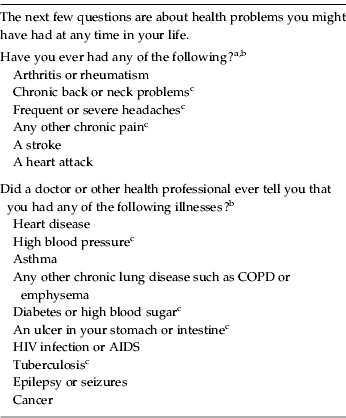
For all countries except Nigeria, Lebanon, China and Ukraine, chronic physical conditions were screened for by asking participants in the Part 2 subsample if they had ever had arthritis, rheumatism, chronic back or neck problems, frequent or severe headaches, other chronic pain, seasonal allergies, stroke, heart attack, and whether they had ever been told by a doctor they had had heart disease, high blood pressure, asthma, tuberculosis, chronic obstructive pulmonary disease (COPD), diabetes, ulcer, HIV/AIDS, epilepsy or cancer (Table 1). For problems that could have remitted, participants were asked if they still had the condition(s) in the past 12 months, except in Nigeria, Lebanon, China and Ukraine (Table 1). The 12-month prevalence of these latter conditions is used in this paper. For the analyses reported here, the physical conditions were aggregated and included: stroke, heart attack, heart disease, asthma, COPD, diabetes, ulcer, HIV/AIDS, epilepsy, tuberculosis and cancer. The pain conditions were also aggregated and included: arthritis, chronic back/neck problems, frequent or severe headaches and other chronic pain.
World Mental Health Survey questions on chronic physical conditions

COPD, Chronic obstructive pulmonary disease.
a In Nigeria, Lebanon, China and Ukraine the first block of questions (from arthritis to heart attack) was asked only in a 12-month format: ‘Have you had any of the following in the past 12 months?’, and the follow-up question (below) was not asked.
b Participants had to respond to each condition (yes/no/don't know/refused).
c If these conditions were endorsed by the participant, the following question was asked: ‘Did you still have (the condition) or receive any treatment for (it/them) at any time during the past 12 months?’
Analysis methods
Prevalences were estimated for four groups, those with: (i) a 12-month depressive and/or anxiety disorder with a co-morbid pain condition, (ii) a 12-month depressive and/or anxiety disorder with a co-morbid physical condition, (iii) a 12-month depressive and/or anxiety disorder without a co-morbid physical or pain condition, and (iv) a physical and/or pain condition without co-morbid depressive/anxiety disorder. Groups (i) and (ii) are not mutually exclusive. Group (iv) is included to provide context for the mental disorder estimates.
Odds ratios for the effect of age (reference level 18–34 years) in each of the four mental and/or physical condition combinations specified above were calculated for all countries combined, in logistic regression models controlling for gender. The interaction of age with physical or pain co-morbidity (present versus absent) in predicting 12-month depressive and/or anxiety disorder was assessed in a logistic regression model on the pooled dataset, controlling for gender.
A separate set of analyses using those with a 12-month depressive and/or anxiety disorder (i.e. cases) as denominator calculated the percentage with a co-morbid physical and/or pain condition, by age group, for all countries combined. All analyses were run with SUDAAN version 8.0.1 (SUDAAN, 2002) to adjust for clustering and weighting.
Results
Sample characteristics
The combined sample of those who completed the longer version of the interview (Part 1+Part 2) including the physical condition checklist was 42 697. The Part 2 sample in each country ranged in size from the smaller Asian surveys in Japan (887), Beijing (914) and Shanghai (714) to the larger samples in New Zealand (7312), the USA (5692), Israel (4859) and South Africa (4315). The proportion of the sample that was age 60 or greater was higher in the developed countries than the developing countries, and the percentage with 12 or more years of education was also generally higher in the developed countries. Further detail on sample characteristics is provided elsewhere (Scott et al. Reference Scott, Bruffaerts, Tsang, Ormel, Alonso, Angermeyer, Benjet, Bromet, de Girolamo, de Graaf, Gasquet, Gureye, Haro, He, Kessler, Levinson, Mneimneh, Oakley Browne, Posada-Villa, Stein, Takeshima and Von Korff2007).
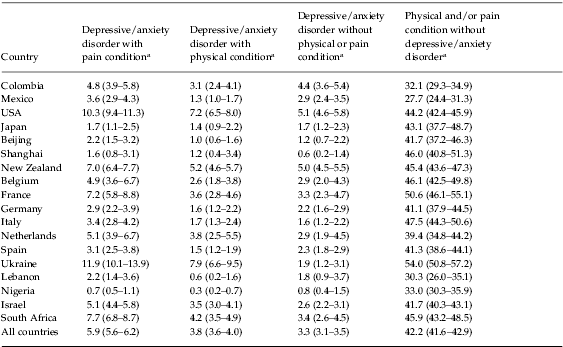
Mental and/or physical condition groups by country
The prevalence of the four groups is shown in Table 2 for each of the contributing countries, all ages combined. The table illustrates two key features: there is a good deal of variability in prevalences across countries, but despite this variability, there is a pattern of mental disorder being more prevalent with pain or physical condition co-morbidity than without it. Physical/pain conditions unaccompanied by mental co-morbidity are a good deal more prevalent than when accompanied by mental co-morbidity, in all countries.
Percentage (and 95% confidence interval) in each of the four mental and/or physical condition groups, by country

a 12-month DSM-IV depressive and/or anxiety disorders; physical disorders included stroke, heart attack, heart disease, asthma, chronic obstructive pulmonary disease (COPD), diabetes, ulcer, HIV/AIDS, epilepsy, tuberculosis and cancer; pain conditions included: arthritis, 12-month chronic back/neck problems, 12-month frequent or severe headaches and/or other 12-month chronic pain.
Mental and/or physical condition groups by age
Prevalence by age
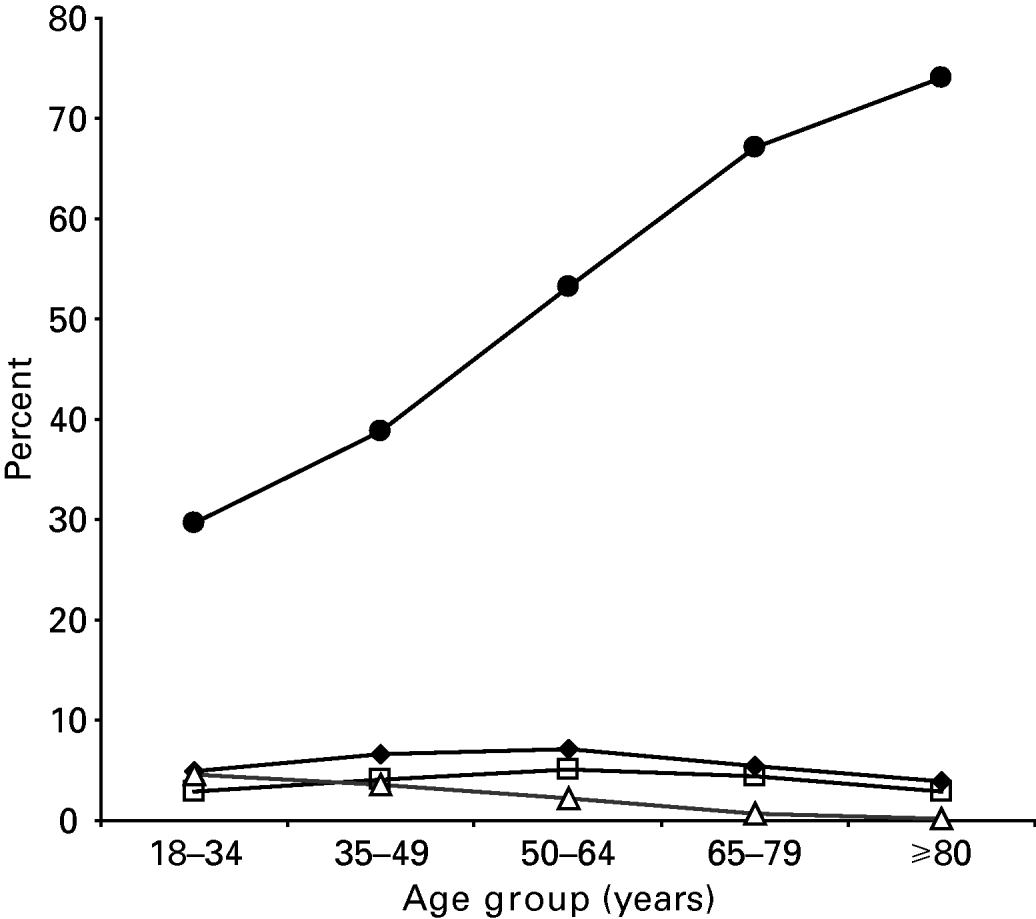
The age patterns in the prevalences of the four mental and/or physical condition groups are depicted in Fig. 1. The prevalence of depressive/anxiety disorders in the absence of physical/pain co-morbidity decreases with age. By contrast, the prevalence of physical/pain conditions in the absence of depressive/anxiety disorder increases sharply with age. The two mental–physical co-morbidity groups display a similar age-related pattern with prevalence climbing slightly from younger to middle age and then reducing somewhat in the older groups.
Percentage with the four mental and/or physical condition combinations, by age group, all countries combined (n=42 697). –♦–, Depression/anxiety with chronic pain; –□–, depression/anxiety with physical and/or pain condition; –△–, depression/anxiety without physical condition; –●–, Physical and/or pain condition without depression/anxiety.

Effects of age, controlling for gender
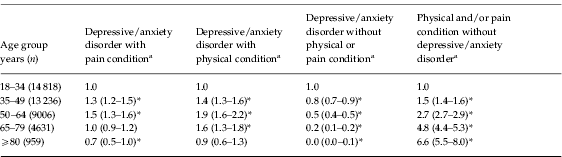
The effects of age on the four mental and/or physical condition groups after controlling for gender are provided in Table 3. These data clarify the age curves shown in Fig. 1, without the distraction of the differing prevalences across the four groups. The greatest change across the lifespan occurs in the decreasing odds of depressive/anxiety disorder without physical/pain co-morbidity. The two mental–physical co-morbid groups show slightly different patterns in that the odds of mental disorder co-morbid with pain are the same in the 65–79 years age group as the youngest group, but the odds of mental disorder co-morbid with physical condition are higher in the 65–79 years age group compared with the youngest group. However, all types of mental disorder (with or without co-morbidity) decline in the oldest age group. The lack of substantive difference between the mental disorder groups in age patterns is confirmed in finding that the interaction of age and physical disorder co-morbidity (present versus absent) in the association with 12-month depression/anxiety was not significant (p=0.40).
Effect of age (reference level 18–34 years) in predicting the four mental and/or physical condition combinations, controlling for gender, all countries combined (n=42 697)

Values are odds ratios (95% confidence intervals).
a 12-month DSM-IV depressive and/or anxiety disorders; physical disorders included stroke, heart attack, heart disease, asthma, chronic obstructive pulmonary disease (COPD), diabetes, ulcer, HIV/AIDS, epilepsy, tuberculosis and cancer; pain conditions included: arthritis, 12-month chronic back/neck problems, 12-month frequent or severe headaches and/or other 12-month chronic pain.
* p<0.05.
Proportion of mental disorder cases with physical/pain co-morbidity, by age
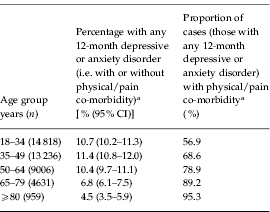
Mental disorders in the aggregate (i.e. both with and without physical/pain condition co-morbidity) decline in prevalence with age (Table 4). The proportion of cases with physical or pain condition co-morbidity is greater than 50% at all ages, increases in a monotonic fashion with age, and comprises the vast majority of the oldest age group with mental disorders (Table 4).
Percentage with any 12-month depressive or anxiety disorder (cases), and proportion of cases with physical and/or pain condition co-morbidity, by age group, all countries combined (n=42 697)

CI, Confidence interval.
a 12-month DSM-IV depressive and/or anxiety disorders; physical disorders included stroke, heart attack, heart disease, asthma, chronic obstructive pulmonary disease (COPD), diabetes, ulcer, HIV/AIDS, epilepsy, tuberculosis and cancer; pain conditions included: arthritis, 12-month chronic back/neck problems, 12-month frequent or severe headaches and/or other 12-month chronic pain.
Discussion
When mental disorders were disaggregated into those with and without physical/pain condition co-morbidity, those without co-morbidity decreased monotonically with age, whereas those with co-morbidity peaked in the middle years and then decreased in older age. However, no significant difference was found in the relationship between mental disorders and age as a function of physical/pain co-morbidity. In the aggregate, depressive and anxiety disorders decreased with age. The overlap of mental and physical conditions was asymmetrical; among those with mental disorders, physical/pain co-morbidity was more common than not, at all ages, and rises with age. By contrast, physical/pain conditions were more likely to occur without mental co-morbidity than with it, at all ages.
The results of this study are consistent with other general population surveys using standardized diagnostic measures in showing lower prevalences of depression and anxiety disorders in older age groups relative to younger age groups. One of the criticisms of this kind of study is that it samples from the non-institutionalized population and, effectively, given the demands of the CIDI, from a cognitively intact population. This is undeniable, but these sampling issues probably do not explain the decline in mental disorder prevalence with age. US data indicate that rates of institutionalization are fairly low among those aged 65–79 years, who form the majority of the older population (3% in those aged 65–69; 5% in those 70–74; 7% in those 75–79) (Siegler et al. Reference Siegler, Bastian, Steffens, Bosworth and Costa2002), and similar figures have been quoted for Australia (Troller et al. Reference Troller, Anderson, Sachdev, Brodaty and Andrews2007). Troller et al. (Reference Troller, Anderson, Sachdev, Brodaty and Andrews2007) have shown (a) that inclusion of those living in aged-care facilities would have minimal impact on mental disorder prevalences among those aged ⩾65 years, and (b) that prevalences are unaffected whether those with mild cognitive impairment are included or excluded from analysis.
It also seems improbable that the application of organic exclusion criteria can explain the decline in mental disorder prevalence with age. First, because the probes for organic causes were applied at the episode and not the symptom level, thus obviating the possibility that older persons would use organic attribution as a cognitive heuristic for dealing with symptom-related probes (Knauper & Wittchen, Reference Knäuper and Wittchen1994). Although this does not obviate the possibility that older persons may be more likely to attribute entire episodes to organic causes (independent of actual health status), at present we are not aware of evidence that this occurs, and in each of the WMH surveys mental health clinicians judged the legitimacy of all such attributions. Second, although the data we present on the rates of organic exclusions show a clear increase with age, the proportion of cases excluded for organic causes is not high enough to explain the decline in mental disorder prevalence with age. For example, if the excluded cases were all reincluded, estimates of mental disorder in the youngest and oldest age groups would rise to 11.2% and 5.0% respectively, compared with estimates of 10.7% and 4.5% with organic exclusions applied (and in fact this would be an overestimate of the impact of organic exclusions because the mental disorder estimates in this paper combine depressive and anxiety disorders). Heithoff (Reference Heithoff1995) showed a similar result with Epidemiologic Catchment Area (ECA) data.
These data do not, however, inform with regard to the possibility that depression may manifest differently with age, which might mean that the declining prevalence we observe is an artifact of the fact that DSM-IV criteria become less valid with increasing age. The research on this is not consistent. Gallo et al. (Reference Gallo, Anthony and Muthén1994), for example, find a negative association between age and reports of anhedonia, whereas Christensen et al. (Reference Christensen, Jorm, Mackinnon, Korten, Jacomb, Henderson and Rodgers1999) find the opposite (see also Karel, Reference Karel1997). A further consideration is the fact that these criticisms of diagnostic validity on the grounds of age differences in symptom manifestation and symptom attribution largely apply to depression diagnoses, yet anxiety disorders show the same decline with age (Alonso et al. Reference Alonso, Angermeyer, Bernert, Bruffaerts, Brugha, Bryson, de Girolamo, Graaf, Demyttenaere, Gasquet, Haro, Katz, Kessler, Kovess, Lepine, Ormel, Polidori, Russo, Vilagut, Almansa, Arbabzadeh-Bouchez, Autonell, Bernal, Buist-Bouwman, Codony, Domingo-Salvany, Ferrer, Joo, Martinez-Alonso, Matschinger, Mazzi, Morgan, Morosini, Palacin, Romera, Taub and Vollebergh2004; Wells et al. Reference Wells, Oakley Browne, Scott, McGee, Baxter and Kokaua2006; Troller et al. Reference Troller, Anderson, Sachdev, Brodaty and Andrews2007). Nevertheless, it is also clear that fully structured lay-conducted interviews such as the CIDI produce considerably lower estimates of DSM-based depressive disorders among older populations than semi-structured interviews conducted by clinicians (Skoog, Reference Skoog2004). The source of this discrepancy in prevalences, and its implications for conclusions about the validity of either the fully structured or semi-structured interviews, remains to be clarified.
In sum, this study demonstrates that despite the extremely prevalent reports of chronic pain and physical conditions among older age groups, the vast majority in the older general population do not have CIDI-diagnosed mental disorders. Methodological explanations notwithstanding, there are possible substantive explanations for this also, including age-related changes in expectations of declining health status (Karel, Reference Karel1997; Siegler et al. Reference Siegler, Bastian, Steffens, Bosworth and Costa2002). Another possibility is that if, as some researchers have speculated, older persons have reduced psychological and social vulnerability to depression (Karel, Reference Karel1997; Henderson et al. Reference Henderson, Jorm, Korten, Jacomb, Christensen and Rodgers1998; Blazer & Hybels, Reference Blazer and Hybels2005), this may compensate for the increased prevalence of physical illness, or increase individuals' ability to cope with it. British researchers, observing a sharp decrease in prevalence of depressive and anxiety disorders at retirement age (Villamil et al. Reference Villamil, Huppert and Melzer2006), have suggested that it may be explained by reducing societal demands and expectations associated with the statutory retirement age. This cannot explain all of the decrease in mental disorder prevalence observed in the current report, as it continues to reduce in the ⩾80 years group relative to the 65–79 years age group (see also Troller et al. Reference Troller, Anderson, Sachdev, Brodaty and Andrews2007), but different factors may be responsible for decreasing mental disorder prevalence at different ages, and retirement may well be an important factor in the younger old that helps to offset the psychological impact of increasing physical morbidity.
Considering the population with mental disorders, however, a different perspective emerges: physical condition co-morbidity is the rule, not the exception, regardless of age. Past research has emphasized the need for improved detection and treatment of mental disorders in primary care (Ormel et al. Reference Ormel, Koeter, van den Brink and van de Willige1991; Katon et al. Reference Katon, Von Korff, Lin, Bush and Ormel1992; Coyne et al. Reference Coyne, Thompson, Klinkman and Nease2002). The present study highlights the need for health professionals, including mental health professionals, to address barriers to adequately manage physical co-morbidity among those with mental disorders. Research among mental health professionals has identified barriers such as a lack of explicit allocation of responsibility for medical treatment, lack of service delivery integration, and pessimistic attitudes among treatment providers as to whether improved physical health is possible, or a priority, among those with mental illness (Brown et al. Reference Brown, Inskip and Barraclough2000; Friedli & Dardis, Reference Friedli and Dardis2002; Hyland et al. Reference Hyland, Judd, Davidson, Jolley and Hocking2003). Further research among primary-care providers and hospital physicians may be warranted to identify whether there are barriers (e.g. attitudinal, or time pressure) to a treatment focus on physical morbidity once a mental disorder has been diagnosed.
Several limitations of this study should be noted, in addition to the sampling limitations already discussed. First, physical and pain conditions were ascertained by a standard checklist, rather than physician's examination, which contrasts with the detailed assessment of mental disorders. While acknowledging the limitation of self-report, methods research indicates that self-report of diagnosis (which was the measure for most of the physical conditions) generally shows good agreement with medical records data (Kehoe et al. Reference Kehoe, Wu, Leske and Chylack1994; NCHS, 1994; Kriegsman et al. Reference Kriegsman, Penninx, Van Eijk, Boeke and Deeg1996). A second, related issue is that the relative prevalences of mental and physical conditions observed here, and their degree of overlap, are influenced by which disorders we have chosen to include/exclude. Not all mental disorders were included, although we included most of the common disorders and those most closely associated with physical co-morbidity. We also grouped together a larger number of physical/pain conditions. While this needs to be borne in mind when interpreting the results, it seems likely that the kind of asymmetry we observe here (a lower proportion of the population with physical conditions having mental disorder co-morbidity relative to the proportion of the population with mental disorder who have physical co-morbidity) is characteristic of general populations. Third, we have not included any data on disability, so although on a pure frequency basis it appears as if physical morbidity outweighs mental morbidity in older populations, this does not take into account the complicating and disabling contribution that depression makes to the morbidity of medical conditions (Kessler et al. Reference Kessler, Ormel, Demler and Stang2003b; Buist-Bouwman et al. Reference Buist-Bouwman, de Graaf, Vollebergh and Ormel2005; Scott et al. Reference Scott, Von Korff, Alonso, Angermeyer, Bromet, Fayyad, de Girolamo, Demyttenaere, Gasquet, Gureje, Haro, He, Kessler, Levinson, Medina Mora, Oakley Browne, Ormel, Posada-Villa, Watanabe and Williamsin press).
In conclusion, this study provides a global, population perspective on the age patterning of CIDI-diagnosed depression and anxiety disorders, for the first time disaggregated into those with and without physical and pain co-morbidity. No significant difference was found in the relationship between mental disorders and age as a function of physical/pain co-morbidity. In the aggregate, depressive and anxiety disorders decreased with age, a result that cannot be explained by organic exclusion criteria. Physical/pain co-morbidity among those with mental disorders is normative and increases with age, which suggests that barriers to the adequate management of mental–physical co-morbidity remain.
Acknowledgements
The surveys discussed in this article were carried out in conjunction with the World Health Organization (WHO) World Mental Health (WMH) Survey Initiative. We thank the WMH staff for assistance with instrumentation, fieldwork, and data analysis. These activities were supported by the US National Institute of Mental Health (NIMH; R01MH070884), the John D. and Catherine T. MacArthur Foundation, the Pfizer Foundation, the US Public Health Service (R13-MH066849, R01-MH069864, and R01 DA016558), the Fogarty International Center (FIRCA R01-TW006481), the Pan American Health Organization, Eli Lilly and Company, Ortho-McNeil Pharmaceutical, Inc., GlaxoSmithKline, and Bristol-Myers Squibb. A complete list of WMH publications can be found at www.hcp.med.harvard.edu/wmh/. The Chinese World Mental Health Survey Initiative is supported by the Pfizer Foundation. The Colombian National Study of Mental Health (NSMH) is supported by the Ministry of Social Protection, with supplemental support from the Saldarriaga Concha Foundation. The ESEMeD project is funded by the European Commission (Contracts QLG5-1999-01042; SANCO 2004123), the Piedmont Region (Italy), Fondo de Investigación Sanitaria, Instituto de Salud Carlos III, Spain (FIS 00/0028), Ministerio de Ciencia y Tecnología, Spain (SAF 2000-158-CE), Departament de Salut, Generalitat de Catalunya, Spain, Instituto de Salud Carlos III (CIBER CB06/02/0046, RETICS RD06/0011 REM-TAP), and other local agencies and by an unrestricted educational grant from GlaxoSmithKline. The Israel National Health Survey is funded by the Ministry of Health with support from the Israel National Institute for Health Policy and Health Services Research and the National Insurance Institute of Israel. The World Mental Health Japan (WMHJ) Survey is supported by the Grant for Research on Psychiatric and Neurological Diseases and Mental Health (H13-SHOGAI-023, H14-TOKUBETSU-026, H16-KOKORO-013) from the Japan Ministry of Health, Labor and Welfare. The Lebanese National Mental Health Survey (LEBANON) is supported by the Lebanese Ministry of Public Health, the WHO (Lebanon), anonymous private donations to IDRAAC, Lebanon, and unrestricted grants from Janssen Cilag, Eli Lilly, GlaxoSmithKline, Roche, and Novartis. The Mexican National Comorbidity Survey (MNCS) is supported by The National Institute of Psychiatry Ramon de la Fuente (INPRFMDIES 4280) and by the National Council on Science and Technology (CONACyT-G30544-H), with supplemental support from the PanAmerican Health Organization (PAHO). Te Rau Hinengaro: The New Zealand Mental Health Survey (NZMHS), is supported by the New Zealand Ministry of Health, Alcohol Advisory Council, and the Health Research Council. The Nigerian Survey of Mental Health and Wellbeing (NSMHW) is supported by the WHO (Geneva), the WHO (Nigeria), and the Federal Ministry of Health, Abuja, Nigeria. The South Africa Stress and Health Study (SASH) is supported by the US NIMH (R01-MH059575) and National Institute of Drug Abuse with supplemental funding from the South African Department of Health and the University of Michigan. The Ukraine Comorbid Mental Disorders during Periods of Social Disruption (CMDPSD) study is funded by the US NIMH (RO1-MH61905). The US National Comorbidity Survey Replication (NCS-R) is supported by the US NIMH (U01-MH60220) with supplemental support from the National Institute of Drug Abuse (NIDA), the Substance Abuse and Mental Health Services Administration (SAMHSA), the Robert Wood Johnson Foundation (RWJF; Grant 044708), and the John W. Alden Trust.
Declaration of Interest
None.