




No CrossRef data available.
Article contents
- Abstract
- INTRODUCTION: MALARIA DISEASE
- MOLECULAR BASIS OF SEVERE MALARIA – CYTOKINE CONTRIBUTIONS
- MALARIAL GPIS AS CANDIDATE TOXINS AND PATHOGENICITY FACTORS
- GPI ACTS AS A CRITICAL TOXIN IN THE CONTEXT OF SEVERE DISEASE SYNDROMES
- PLASMODIUM FALCIPARUM GPI DISTRIBUTION, METABOLISM AND STRUCTURE
- STRUCTURE: ACTIVITY
- SIGNALLING PATHWAYS TRIGGERED BY PLASMODIUM GPI – THE TWO-SIGNAL MODEL
- RECOGNITION OF PARASITE GPIS BY NON-TLR PATTERN RECOGNITION RECEPTORS
- SIGNALLING BY GPI-ANCHORED PROTEINS AND GLYOLIPIDS THROUGH LIPID-DEPENDENT MICRODOMAINS
- CONCLUSIONS AND PERSPECTIVES
- ACKNOWLEDGMENTS
- References
Stimulation of innate immune responses by malarial glycosylphosphatidylinositol via pattern recognition receptors
Published online by Cambridge University Press: 11 November 2005
Article contents
- Abstract
- INTRODUCTION: MALARIA DISEASE
- MOLECULAR BASIS OF SEVERE MALARIA – CYTOKINE CONTRIBUTIONS
- MALARIAL GPIS AS CANDIDATE TOXINS AND PATHOGENICITY FACTORS
- GPI ACTS AS A CRITICAL TOXIN IN THE CONTEXT OF SEVERE DISEASE SYNDROMES
- PLASMODIUM FALCIPARUM GPI DISTRIBUTION, METABOLISM AND STRUCTURE
- STRUCTURE: ACTIVITY
- SIGNALLING PATHWAYS TRIGGERED BY PLASMODIUM GPI – THE TWO-SIGNAL MODEL
- RECOGNITION OF PARASITE GPIS BY NON-TLR PATTERN RECOGNITION RECEPTORS
- SIGNALLING BY GPI-ANCHORED PROTEINS AND GLYOLIPIDS THROUGH LIPID-DEPENDENT MICRODOMAINS
- CONCLUSIONS AND PERSPECTIVES
- ACKNOWLEDGMENTS
- References
Abstract
The glycosylphosphatidylinositol (GPI) anchor of Plasmodium falciparum is thought to function as a critical toxin that contributes to severe malarial pathogenesis by eliciting the production of proinflammatory responses by the innate immune system of mammalian hosts. Analysis of the fine structure of P. falciparum GPI suggests a requirement for the presence of both core glycan and lipid moieties in the recognition and signalling of parasite glycolipids by host immune cells. It has been demonstrated that GPI anchors of various parasitic protozoa can mediate cellular immune responses via members of the Toll-like family of pattern recognition receptors (TLRs). Recent studies indicate that GPI anchors of P. falciparum and other protozoa are preferentially recognized by TLR-2, involving the MyD88-dependent activation of specific signalling pathways that mediate the production of proinflammatory cytokines and nitric oxide from host macrophages in vitro. However, the contribution of malaria GPI toxin to severe disease syndromes and the role of specific TLRs or other pattern recognition receptors in innate immunity in vivo is only just beginning to be characterized. A better understanding of the molecular mechanisms underlying severe malarial pathogenesis may yet lead to substantial new insights with important implications for the development of novel therapeutics for malaria treatment.
Keywords
Information
- Type
- Research Article
- Information
- Copyright
- © 2005 Cambridge University Press
INTRODUCTION: MALARIA DISEASE
Malaria is an infectious disease that causes enormous global medical and economic burdens. Of the four species of malaria parasites known to infect humans, the bulk of severe disease and complications is caused by the species Plasmodium falciparum. More than 80% of the approximately 2 million estimated cases of malaria-related mortality worldwide occur in Africa, mostly affecting infants and pre-school children aged 6 months to 5 years. Malarial fatalities are associated with a spectrum of discrete and overlapping disease syndromes of complex aetiologies. Humans affected and dying of malaria may variously suffer systemic, single- or multi-organ involvement, including acute respiratory distress, coagulopathy, shock, metabolic acidosis, hypoglycaemia, renal failure, pulmonary oedema and cerebral involvement including seizures and coma (White & Ho, 1992). Basic mechanisms controlling these processes are thought to be the site-specific localization of parasites (by cytoadherence to vascular endothelial markers such as the adhesin ICAM-1 (Berendt et al. 1989), and both local and systemic inflammatory responses arising from the action of cytokines produced predominantly by the innate immune system (Stevenson & Riley, 2004). The ability of the intraerythrocytic parasites to cytoadhere to endothelium and sequester in the microvasculature of vital organs (Miller et al. 2002) is thought to promote the accumulation of high local concentrations of bioactive parasite products (GPI-anchored antigens and glycolipids, metabolite toxins) that can trigger a cascade of pro-inflammatory immune responses in the brain, lungs, spleen, liver, kidney and placenta. This cytokine-dependent inflammatory cascade is believed to contribute to the spectrum of acute clinical symptoms that manifest during severe malaria bouts. In order to better understand the molecular mechanisms underlying severe malarial pathogenesis, our group has focused its attention on the interaction between P. falciparum and the immune system of the vertebrate host in the context of malaria infection.
MOLECULAR BASIS OF SEVERE MALARIA – CYTOKINE CONTRIBUTIONS
When examining the molecular basis of malarial pathogenesis it is clear that many factors from both the parasite and the host immune system contribute to the development of severe disease and there is an intricate relationship between these factors (reviewed by Chen, Schlichtherle & Wahlgren 2000; Stevenson & Riley, 2004). Both human and murine malaria infections elicit cells of the innate immune compartment to produce high levels of pro-inflammatory cytokines such as interferon-gamma (IFN-γ), interleukin-1 (IL-1), IL-6, IL-12 and tumor necrosis factor alpha (TNF-α) (Grau et al. 1987, 1989b; Lucas et al. 1997; Lyke et al. 2004). These pro-inflammatory cytokines appear to be essential for mediating acquired immunity to the invasive sporozoite during the early stages of infection (Schofield et al. 1987), but their role in mediating host resistance to blood stage infection is less clear.
The over-production of inflammatory cytokines can also be harmful to the host. Serum IFN-γ levels are elevated in patients with acute P. falciparum malaria (Ringwald et al. 1991), and death resulting from cerebral malaria (CM) was found to be associated with heterozygosity for an IFN-γ receptor-1 polymorphism in Gambian children (Koch et al. 2002). In the murine model both IFN-γ and IFN-γ receptor knock-out mice are resistant to Plasmodium berghei-mediated CM (Amani et al. 2000), and injection of neutralizing monoclonal antibody (mAb) against IFN-γ was shown to protect against CM in C57BL/6 susceptible mice (Grau et al. 1989a). These data suggest a role for IFN-γ as a key regulator of downstream immune system processes in the pathogenesis of severe malaria. IFN-γ has multiple activities in both the innate and acquired compartments of the immune system. Importantly, IFN-γ induces macrophages to become highly activated and, when exposed to live parasites, to generate high levels of free radical nitrogen intermediates (RNIs) via an inducible nitric oxide synthase (iNOS). RNIs can cause irreversible damage to neuronal tissues and have been implicated in the pathogenesis of CM (Al Yaman et al. 1996). In addition, when stimulated with parasite products in vitro, IFN-γ-primed macrophages can produce high levels of other pro-inflammatory cytokines associated with severe malaria, including IL-1, IL-6, IL-10, IL-12 and TNF-α (Grau et al. 1987, 1989b; Lucas et al. 1997; Lyke et al. 2004). Severe malaria is also associated with polymorphisms in the TNF-α promoter region, which may be linked to increased TNF-α expression (Mcguire et al. 1994), and high circulating levels of TNF-α are a prognostic indicator of fatality (Grau et al. 1989b). In concert, IFN-γ and TNF-α cytokines are capable of synergistically up-regulating intracellular adhesion molecules such as ICAM-1, VCAM-1, CD36 and thrombospondin on various cell types, including vascular endothelium and leukocytes. This augments sequestration of parasitized erythrocytes to endothelium and intensifies the deposition of malaria toxins in the deep vasculature of organs such as the brain. Malaria fatalities are thus strongly associated with an exacerbated systemic or organ-specific inflammatory cascade, but the molecular nature of the parasite toxin(s) that trigger the overproduction of pro-inflammatory cytokines has for a long time remained unclear.
MALARIAL GPIS AS CANDIDATE TOXINS AND PATHOGENICITY FACTORS
Several years ago, in vitro and in vivo studies suggested that glycosylphosphatidylinositol (GPI)-anchored molecules of P. falciparum function as the dominant malarial toxin in the context of infection. This hypothesis was based on the finding that purified GPI-anchored glycoproteins and glycolipids of P. falciparum and P. berghei are very potent activators of innate immune cells, capable of inducing pro-inflammatory cytokines TNF-α and IL-1 from macrophages (Schofield & Hackett, 1993). This activity has subsequently been confirmed by others (Naik et al. 2000; Vijaykumar, Naik & Gowda, 2001) (Table 1). The original study also showed that when administered to mice, GPI alone is sufficient to cause symptoms similar to acute malaria infection such as transient fever and hypoglycemia and death of recipients due to TNF-α-mediated sepsis (Schofield et al. 1993). Initial data showed that the endotoxin activity of major P. falciparum surface antigens released during schizont rupture (i.e. MSP-1, MSP-2) is restricted to the GPI moiety, since protein denaturation and exhaustive digestion with pronase does not abolish or reduce the potency of these molecules for the induction of cytokines in vitro (Schofield & Hackett, 1993). In contrast, enzymatic cleavage with phospholipase A2 or chemical treatment of the GPI moiety with mild alkali (for selective removal of fatty acid esterified at the glycerol sn-1 and sn-2 postitions) or nitrous acid (for selective breakage of the glucosamine-myo-inositol bond) reduces most of the pro-inflammatory activity (Schofield & Hackett, 1993) – indicating a requirement for intact GPI-associated glycolipid structure. Additional studies found that purified P. falciparum GPI glycolipids were also able to induce, either directly or in synergy with IFN-γ, a range of other activities in various host tissues and cell types, including insulin-mimetic signalling in adipocytes (Schofield et al. 1994, 1996), the induction of iNOS in macrophages and vascular endothelium (Tachado et al. 1996), and the up-regulation of cell adhesion molecules on the surface of host leukocytes and endothelial cells (Schofield et al. 1996). The bioactivity of purified GPI glycolipid was comparable to that obtained with live parasites in vitro, in the range of 0·1–10 parasite equivalents per macrophage (Schofield & Hackett, 1993; Schofield et al. 1996). Importantly, monoclonal or polyclonal antibodies that recognize malarial GPI completely block the induction of TNF-α or iNOS output from macrophages and ICAM-1 expression on endothelial cells by crude extracts of P. falciparum (Schofield et al. 1994, 1996, 2002). Thus, Plasmodium GPIs appear both necessary and sufficient for the induction of pro-inflammatory host responses by malarial parasites in vitro.

These findings were then extended to GPIs of other parasitic protozoa (Table 1). For example, the GPI anchor of Trypanosoma brucei VSG and highly purified GPIs of Trypanosoma cruzi trypomastigote origin are potent macrophage activators ( Tachado & Schofield, 1994; Magez et al. 1998; Almeida & Gazzinelli, 2001), and this may account for many features of pathogenesis of trypanosomiasis and Chagas disease. More recently, it was shown that highly purified GPIs of Toxoplasma gondii tachyzoites, the infective form of the parasite which causes severe encephalitis, are bioactive factors that participate in the production of inflammatory cytokines from macrophages during toxoplasmal pathogenesis (Debierre-Grockiego et al. 2003). In contrast, GIPLs and lipophosphoglycans derived from infective promastigote forms of Leishmania spp. suppress several functions of the host immune system – thereby allowing this parasite to evade the innate immunological control of infection (Camargo et al. 1997b; Tachado et al. 1997). Taken together, these data support the view that GPIs of the parasitic protozoa are both immunostimulatory and immunoregulatory components in the context of protozoal infections and the important differences in bioactivity that exist depend upon GPI fine structure.
GPI ACTS AS A CRITICAL TOXIN IN THE CONTEXT OF SEVERE DISEASE SYNDROMES
The data reviewed so far indicate that malaria GPI is sufficient to act as a toxin but do not establish that it plays this role in the context of authentic disease processes. We therefore sought to test this proposition in a credible pre-clinical model of disease. P. berghei ANKA murine malaria has salient features in common with several aspects of the human severe and cerebral malaria syndromes and is thus an accepted model for certain important aspects of the human disease (De Souza & Riley, 2002). It manifests a cytokine-dependent encephalopathy associated with up-regulation of adhesins on the cerebral microvascular endothelium and attendant neurological complications (Grau et al. 1987, 1989a; 1991; Jennings et al. 1997). The more generalized syndromes of pulmonary oedema, lactic acidosis, coagulopathies, shock and renal failure are also observed associated with fatalities (Chang et al. 2001), indicating that the P. berghei ANKA infection models many aspects of clinically severe malaria beyond narrow definitions of cerebral symptomology. Unlike most, but not all, human cerebral malaria cases, however, there is a macrophage infiltrate and compromised blood-brain barrier in the terminal or agonal stages of the murine syndrome. Nonetheless, in the proximal or developmental stages the murine disease is accepted to reflect more accurately the cytokine-dependent inflammatory cascade leading to cerebral and systemic involvement in humans. As recently reviewed (De Souza &Riley, 2002; Miller et al. 2002), P. berghei ANKA thus appears the best available small animal model of clinically severe malaria, suitable for investigations into proximal events controlling the systemic inflammatory cascade, and particularly the regulation of cytokine-dependent events and pathology.
Chemical synthesis of the non-toxic glycan moiety of mature Plasmodium GPI has recently provided a means to test the hypothesis that malaria GPI is causally involved in rodent malaria pathogenesis (Schofield et al. 2002). To prepare an immunogen, the synthetic GPI glycan was conjugated to the carrier protein keyhole limpet haemocyanin (KLH-glycan). Antibodies from mice immunized with KLH-glycan reacted only with malaria-infected rather than uninfected red blood cells, as demonstrated by immunofluorescence and Western blot analyses (Schofield et al. 2002). These results suggested that GPI of parasite origin was sufficiently different from host endogenous GPI molecules (which differ by virtue of amino-sugar or phosphoethanolamine modifications to the core glycan) to be recognized as foreign (non-self). These antibodies specifically neutralized the production of TNF-α from macrophages induced by P. falciparum extracts, confirming their anti-toxic properties in vitro. When challenged with P. berghei ANKA, naïve and sham-immunized mice all died within 5–8 days post infection (p.i.) with severe cerebral syndrome, whereas 75% of those mice immunized with the KLH-glycan were protected (Fig. 1a). There were no significant differences in parasite counts evident at this early stage of infection, but ultimately all mice succumbed at ~15 days p.i. to severe haemolytic anaemia (Fig. 1b) (Schofield et al. 2002) – indicating that parasite growth was unaffected by the antibodies. In studying the effectiveness of KLH-glycan vaccination, the immunized mice were found to be protected against occlusion of brain vasculature (Fig. 1c), pulmonary oedema (Fig. 1d) and blood acidosis (Fig. 1e) (Schofield et al. 2002). These findings not only demonstrated the efficacy of this prototype anti-toxic vaccine, but also showed that Plasmodium GPI is central to the pathogenesis of systemic disease endpoints and the development of a lethal cerebral syndrome in this model. Thus, GPI of P. falciparum satisfies the criteria for a predicted malaria toxin and may thereby contribute to life-threatening disease in humans, albeit a requirement in human malarial pathogenesis and fatality remains to be proven (Boutlis et al. 2002; Suguitan et al. 2004).

Fig. 1. Immunization against synthetic malaria GPI glycan substantially protects against murine cerebral malaria, pulmonary oedema and peripheral blood acidosis. (a), (b) Kaplan-Meier survival plots and parasitemia levels of KLH-glycan-immunized (filled circles) and sham-immunized (open squares) C57BL/6 mice challenged with P. berghei ANKA. (c) Haeomotoxylin and eosin-stained sections of brain tissue showing blood vessels from KLH-glycan immunized (left and centre panels) and sham-immunized (right panel) mice killed 6 days p.i. Pulmonary oedema and blood acidosis indices given as a proportion of the lung wet:dry weight ratio (d) or serum pH (e) form KLH-glycan-immunized and, sham-immunized and naïve infected mice at day 6 p.i. compared to age/sex-matched uninfected mice. Taken from Schofield et al. (1993). Permission pending.
PLASMODIUM FALCIPARUM GPI DISTRIBUTION, METABOLISM AND STRUCTURE
GPI molecules represent a ubiquitous class of glycolipids that function as anchors for transmembrane proteins in eukaryotic cells. The parasitic protozoa are unusual in that they express very high levels of GPI-anchored proteins, GPI-anchored glycoconjugates and a range of unconjugated ‘free’ GPIs and GPI-like structures (GIPLs). Compared with mammalian cells, which typically express in the order of 105 GPI copies per cell, various parasitic protozoa express over 107 GPI copies per cell and most of these GPI-anchored molecules are displayed at the cell surface (Ferguson et al. 1994). In P. falciparum, which shows uniquely low levels of N- and O-linked glycosylation, GPI anchors constitute over 95% of the post-translational carbohydrate modification of parasite proteins (Davidson & Gowda, 2001; Gowda, Gupta & Davidson, 1997). Recent genome-wide sequence analyses predict that approximately 0·5% of the P. falciparum proteome may be post-translationally glycosylated with a GPI anchor, which is typical for a lower eukaryote (Eisenhaber, Bork & Eissnhaber, 2001). From microarray transcription data about 2/3 of these proteins are thought to be expressed in asexual blood stages (P. Gilson, personal communication). Among the GPI-anchored proteins in Plasmodium, the most important are the circumsporozoite protein (CS-2) which coats the insect stage sporozoites, and the merozoite surface proteins (e.g. MSP-1, MSP-2, MSP-4, MSP-5, MSP-10) expressed at the extracellular blood stage of the parasite. All of these proteins are of particular interest because of their central role in host/parasite interactions and in the response to host immunity, and several are under consideration as vaccine candidates. In addition to GPI-anchored proteins, Plasmodium species also contain an abundant pool of structurally identical GPI molecules which are not conjugated to proteins or other structures but exist free in the plasma membrane (free GPIs). In fact, quantification of the relative amount of GPI molecules purified from late schizonts shows a 4-fold molar excess of free versus serine-linked GPIs (resulting from exhaustive pronase digestion of GPI-anchored proteins) by gas chromatography mass spectrometry (GC/MS), suggesting that free GPIs are the predominant GPI-anchored molecules present at the time of schizont rupture (K. Evans, personal communication). These free GPIs appear to be metabolic end-products and functionally important components in their own right.
Despite the diversity of GPI-anchored molecules found in parasitic protozoa, fungi and mammalian cells, all eukaryotic GPI membrane anchors have a common core structure, consisting of a conserved trimannosylglucosaminyl glycan (Man3-GlN: Manα1,2-Manα1,6-Manα1,4-GlcN; Fig. 2, bold letters) linked to the inositol residue of a phosphatidylinositol (Man3-GlN-PI). The glycan core of GPI anchors carries an ethanolamine phosphate (EtN-P) group on the third mannose (Etn-P-Man3-GlN-PI), making it a substrate for GPI transamidase. This enzyme cleaves the peptide bond at the GPI-anchor attachment site near the carboxy-terminal end and creates an amide linkage between the ethanolamine of GPI and the newly generated carboxyl group of the cleaved protein precursor. GPI molecules are assembled in the endoplasmic reticulum (ER) by the sequential addition of N-acetylglucosamine, core mannose and EtN-P residues to PI through the coordinated action of a series of glycsyl- and ethanolaminephosphate-transferases. Critical evaluation of sequence similarity data for malaria homologues of proteins essential for GPI synthesis indicates that the machinery for GPI assembly has been reduced to minimal requirements in Plasmodium (Delorenzi et al. 2002). Although the essential features of this pathway are conserved in all eukaryotes, considerable differences occur in the extent and nature of side chain additions to the glycan backbone as well as the nature of the lipid anchor (for excellent reviews on GPI structure and biosynthesis in parasitic protozoa see (McConville & Ferguson, 1993; McConville & Menon, 2000). As a result, the core glycan may be decorated with accessory carbohydrate (galactose, N-acetylglucosamine, sialic acid) side branches or EtN-P groups in a species- and tissue-specific manner (Fig. 2a-f). Other variations in the GPI structure are found in the lipid backbone (glycerol versus ceramide) and the number (mono-, di-), linkage (acyl versus alkyl), as well as the length and degree of saturation of the lipid chains (i. e. C14[ratio ]0; C16[ratio ]0, C18[ratio ]0, C18[ratio ]1, C18[ratio ]2) in various GPIs (Fig. 2a–f).

Fig. 2. Schematic structure of parasitic GPI-anchors: (a) Leishmania mexicana GIPLs (free iM2, iM3, [EP]iM3 and iM4 GPI forms); Trypanosoma cruzi epimastigote (b) and trypomastigote (c) mucin-derived GPI anchors; (d) Toxoplasma gondii-derived GPI anchor (e) Trypanosoma brucei VSG-derived GPI anchor (f) immature (Man3-GPI) and mature MSP-1-derived (Man4-GPI) GPI anchors of Plasmodium falciparum. Abbreviations: EtN, ethanolamine; P, phosphate; Man, mannose; GlcN, unacetylated glucosamine; Gal, Galactose; GalNAc, acetylated galactosamine, Glu, glucose; m-Ins, myo-Inositol; O, ether and ester bonded Oxygen molecules; Cn:n, number of saturated/ unsaturated carbon molecules in the lipid chain.
The structure of P. falciparum GPIs was first characterized by Schwarz and colleagues (Gerold, Diekmann-Schuppert & Schwartz, 1994), and is one of the simplest described to date (Fig. 2f). Analysis of radiolabeled GPIs suggested that the parasite synthesizes two mature GPI species, which were shown to correspond to a trimannosyl GPI (Fig 2f, Man3-GPI) and a tetramannosyl GPI (Fig 2f, Man4-GPI). The Man3-GPI consists of the evolutionarily conserved core glycan linked to a diacylglycerol (EtN-P-Man3-GlN-PI-DAG), whereas the Man4-GPI carries a terminal fourth mannose residue in α1,2 linkage to the third mannose residue (EtN-P-Man4-GlN-PI-DAG). A report that the terminal fourth mannose residue carries an additional charged substituent (Gowda et al. 1997) remains unconfirmed. Detailed structural analysis by GC-MS has essentially confirmed the monosaccharide composition of the glycan moiety, but found considerable structural heterogeneity of native P. falciparum Man4-GPI due to variation in fatty acid substituents of the lipid moiety (Naik et al. 2000). GC-MS analysis of HPLC-purified parasite GPIs treated with hydrofluoric acid or phospholipase A2 (for selective removal of fatty acids at the sn-1 and/or sn-2 position of the PI moiety, respectively) detected the presence of at least five distinct GPI diacylglycerol structures in the total free Man4-GPI pool (Naik et al. 2000). These contained predominantly saturated stearic (C18[ratio ]0) acid and unsaturated oleic (C18[ratio ]1) acid esterified at the sn-1 and sn-2 positions, respectively, and had mainly palmitic (C16[ratio ]0) acid on C2 of the inositol ring of the core glycan (Naik et al. 2000). The differences in fatty acid composition compared with earlier reports may reflect the preferential incorporation of various fatty acids present in different growth media into early GPI precursors (Mitamura et al. 2000; Krishnegowda & Gowda, 2003). Importantly, parasite proteins were found to be anchored almost exclusively by the Man4-GPIs (Naik et al. 2000; Gerold et al. 1994), indicating a high degree of selectivity towards the presence of the fourth, terminal mannose residue in the GPI anchor moiety. By contrast, all five Man4-GPI structures were found to be used for protein anchoring (Naik et al. 2000), irrespective of their lipid composition. Overall, Plasmodium GPIs therefore appear to represent an evolutionarily conserved glycolipid structure with a high level of variation in the lipid moiety (the precursors to GPI synthesis) and a structural requirement for the mature Man4-GPI species (the substrate of GPI transamidase) with regard to protein anchoring.
STRUCTURE: ACTIVITY
The studies described in the previous sections demonstrated that Plasmodium-derived GPIs display potent pro-inflammatory activities that contribute to parasite-associated pathogenesis. Understanding the molecular details of the GPI structure-activity relationship and cell signalling mechanisms involved in these processes may therefore offer valuable insights that could lead to the development of novel therapeutics for malaria. Initial work on murine macrophages and human endothelial cells demonstrated that GPIs of P. falciparum and T. brucei origin can impart at least two discrete signals through structurally distinct elements. The core GPI glycan moiety was found to act as an agonist for the activation of protein tyrosine kinase (PTK), whereas the GPI diacylglycerol moiety was shown to function as a second messenger substrate required for protein kinase C (PKC) activation (Tachado et al. 1997). Of the seven or so PKC members detectable in macrophages, activation by GPI diacylglycerols was restricted to the ε isoform. Activation was associated with a translocation from the cytoplasm to detergent-insoluble membranes. Transient tyrosine phosphorylation of src-family non-receptor tyrosine kinases (e.g. hck, lyn), which peaks within minutes after the addition of low concentrations (10 nM – 1 μM) of GPI to cells, is the earliest measurable event in GPI-mediated signal transduction (Tachado et al. 1997). Although lyso-GPI and deacylated inositolglycan generated by specific enzymatic degradations (i.e. PLA2, PLD) were shown to be sufficient to activate PTKs, they were found not to promote the full range of signalling events required for the activation of macrophages. In addition, inhibition of signal transduction by specific PKC and NF-κB antagonists could block the production of cytokines in response to P.falciparum-derived GPIs (Tachado et al. 1997). Taken together, these data suggested that GPI-mediated PTK and PKC signals synergise to activate transcription factors from the NF-κB family for the induction of de novo expression of pro-inflammatory loci (e.g. TNF-α, IL-1, IL-6, iNOS, ICAM-1).
One of the important questions raised by these studies relates to the fine structure requirements with respect to the bioactivity of P. falciparum GPIs on host cells. Using structurally defined Plasmodium GPI precursors which differ in the degree of glycosylation together with specific enzymatic and chemical treatments for the selective removal of diacylglycerol or PI-diacylglycerol structures, it was possible to map the minimum structural requirement for PTK activation to the evolutionarily conserved Man3-GlcN-PI moiety (Tachado et al. 1997). Consistent with this result, the biological activity of total parasite extract, including TNF-α output, can be inhibited by high concentrations of GPI partial structures such as α-methyl mannoside, glucosamine, and phosphatidylinositol. Vijaykumar et al. essentially confirmed and extended these findings by studying the inhibition profile of P. falciparum GPI bioactivity (Vijaykumar et al. 2001). In this study, authors used chemically defined GPI fragments generated by enzymatic treatment of HPLC-purified Man4-GPI with α-mannosidase (for selective removal of the terminal fourth mannose residue on the core glycan) or chemical treatment with hydrofluoric acid or nitrous acid (for selective cleavage of phosphate or amino bonds of the core glycan, respectively). Consistent with results by Tachado et al. (1997), none of the GPI partial structures alone were able to induce TNF-α production by macrophages (Vijaykumar et al. 2001). Prior incubation of macrophages with inactive Man4-containing carbohydrate fragments (but not the PI or DAG fragments) released by HF or nitrous acid was found to effectively inhibit the activity of intact Man4-GPI (Vijaykumar et al. 2001). In contrast to intact Man4-GPI, the authors reported that P. falciparum Man3-GPI failed to activate macrophages, nor did Man3-containing carbohydrate fragments inhibit the ability of Man4-GPI to induce TNF-α production (Vijaykumar et al. 2001). Surprisingly, the same group subsequently published a paper reporting 80% of TNF-α output from macrophages in response to Man3-GPI compared to Man4-GPI (Krishnegowda et al. 2005). The data are therefore inconsistent and at odds with the different inhibition profile of soluble Man4-containing and Man3-containing carbohydrate fragments on P. falciparum GPI activity (Vijaykumar et al. 2001). Although discrepancies with regard to the bioactivity of intact Man3-GPI remain to be resolved, current observations indicate that the fourth, terminal α-mannose residue linked to the core glycan moiety may be critical for the activity of P. falciparum GPIs.
The precise structural requirement of the lipid moiety for the bioactivity of P. falciparum GPIs still remains to be determined. Structure-activity data from different protozoan parasites indicates that ceramide or saturated lipid chains in the monoalkyl or 1-alkyl-2-acyl-glycerol GPIs moieties of Leishmania spp (Fig. 2a) or T. cruzi epimastigote forms (eGPI, Fig. 2b) induce relatively low or no activity in macrophages (Camargo et al. 1997b), compared to the bioactive T. gondii (Fig. 2d), T. brucei (Fig. 2e) and P. falciparum (Fig. 2f) diacylglycerol-containing GPI structures. Moreover, the bioactive GPIs of T. cruzi trypomastigote forms (tGPI, Fig. 2c) and P. falciparum GPI anchors (Fig. 2f) contain mainly unsaturated fatty acid chains at the sn-2 position in the 1-alkyl-2-acyl-glycerol and 1,2-diacylglycerol moieties, respectively (reviewed by (Almeida & Gazzinelli, 2001; Ropert et al. 2002). Whether the presence of the unsaturated fatty acid chain at the sn-2 position of P. falciparum GPI is actually required for its bioactivity is however unclear. Tachado et al. (1997) found that the potency of phospholipase A2-generated sn-2 lyso GPIs of P. falciparum is drastically reduced, whereas Vijaykumar et al. (2001) and Krishnegowda et al. (2005) reported that these molecules retained nearly all activity. The latter findings are at odds with the observation that chemical removal of fatty acids at the sn-2 position is sufficient for a drastic (~100fold) reduction in the ability of highly purified T. brucei and T. cruzi trypomastigote GPIs to activate macrophages (Camargo et al. 1997b; Tachado et al. 1997, Almeida et al. 2000). The reason for this discrepancy is not clear, but is likely to be due to the difficulty in obtaining adequate amounts of pure, structurally-defined native GPIs. The preparation of native malarial GPI is a labour-intensive process that requires the large-scale growth of P. falciparum in human red blood cell cultures. All growth media used must be endotoxin-free and cultures need to be rigorously tested for mycoplasma contamination before being processed, to eliminate the likelihood of potential contamination by bacterial lipopolysaccharides and mycoplasma-derived lipopeptides. The preparation of malarial GPI itself involves a series of optimized glycolipid extraction and fractionation steps using organic solvents and at least one round of RP-HPLC followed by analytical HP-TLC and GC-MS analyses. The yield of pure native GPI resulting from this procedure is typically low – in the range of 10 μg per 1 litre of culture – and this has proven to be probably one of the most limiting factors in the laboratory setting. The chemical synthesis of partial Plasmodium GPI structures (Schofield et al. 2002) as well as entire protozoan GPI-anchors (Debierre-Grockiego et al. 2003) may soon help to resolve some of the questions regarding the detailed structural requirements for malarial GPI bioactivity.
SIGNALLING PATHWAYS TRIGGERED BY PLASMODIUM GPI – THE TWO-SIGNAL MODEL
The molecular mechanisms of protozoan glycolipid-host cell interaction are poorly understood. In particular, how activation signals mediated by protozoan GPIs are transmitted across the plasma membrane to the interior of host immune cells remains unclear. Tachado et al. (1997) proposed a working hypothesis to explain how bioactive GPIs of T. brucei and P. falciparum can activate host macrophages. The initial interaction is predicted to involve the binding of parasite-derived glycolipids to a putative glycan-specific transmembrane receptor present in the surface of host macrophages. This agrees with the observation that stimulation of macrophages with parasite GPI glycan fragments alone is sufficient to cause rapid transient activation of src-family non-receptor PTKs in host macrophages. Although PTK activation does not provide the full range of signalling events leading to downstream inflammatory gene expression, capture by a glycan-specific receptor is predicted to catalyze the transfer of GPI from the extracellular space to the host membrane. Within the plasma membrane, GPI anchored molecules are known to diffuse laterally and partition into sphingolipid- and cholesterol-rich liquid-ordered microdomains which function both as signalling platforms and endosomal entry and sorting sites. Membrane-permeant diacylglycerol, formed via the hydrolysis of parasite-derived GPI molecules by PLD present in the serum or on the surface of mammalian macrophages (Krishnegowda et al. 2005), could cross cellular membranes to activate an intracellular PKC. Both PTK and PKC signalling pathways were shown to collaborate to activate transcription factors of the NF-κB/rel family and thereby promote expression of pro-inflammatory cytokines. Although certain aspects of this model remain unclear, it has provided a useful hypothetical framework that agrees with the observed structural requirement for both carbohydrate and fatty acid moieties of intact GPI-anchors of P. falciparum, T. brucei, T. cruzi and T. gondii origin for their full pro-inflammatory activity on macrophages (Almeida et al. 2000; Sileghem et al. 2001; Debierre-Grockiego et al. 2003). The major unresolved issues concerning this two-signal model for GPI-specific signal transduction are the identities of the glycan-specific transmembrane receptor and the molecular mechanism by which GPI-derived lipids contribute to the signalling pathways triggered by parasite-derived GPIs.
Toll-like receptor signalling pathways activated by parasite glycolipids
Recent efforts to identify the parasite glycolipid-specific receptor responsible for GPI-mediated transmembrane signalling have focused predominantly on certain members of the evolutionary conserved Toll-like receptor family. TLRs have emerged as key receptors responsible for recognizing conserved pathogen-associated molecular patterns (PAMPs) on microbes including modified lipids (e.g. bacterial lipopolysaccharides and lipoproteins), carbohydrates (e.g. yeast zymosan), proteins (e.g. flagellin), and nucleic acids (e.g. unmethylated CpG DNA and double-stranded RNA) (reviewed by Takeda, Kaisho & Akira, 2003; Akira & Takeda, 2004). The ten members of the human TLR family of receptors (TLRs 1-10) can form homo- or hetero-dimers with other TLR members or specific accessory proteins like CD14 to form a high-affinity binding site for multiple diverse ligands. This dimerisation triggers association with a family of adaptor molecules including MyD88, Mal/TIRAP and TRIF (O'Neill, 2003; McGettrick & O'Neill, 2004) that mediate downstream activation of IL-1R-associated kinases (IRAKs) and mitogen-activated protein kinases (MAPKs) that lead to the activation of NF-κB-mediated transcription of inflammatory cytokine genes.
The proposed involvement of different members of TLRs in cell signalling by parasite glycolipids was based on the observation that the pattern of macrophage activation by T. cruzi mucin-derived GPI-anchors is analogous to that of bacterial lipopolysacharide (LPS). Initial studies showed that, trypomastigote mucin GPIs are capable of triggering different MAP kinases (e.g. ERK1-2, MKK4 and p38) and NF-κB with kinetic and inhibition profiles similar to those triggered by LPS (Ropert et al. 2001). It was further demonstrated that an efficient response to bacterial lipopolysaccharide in vivo requires the formation of non-covalent CD14/LPS receptor interactions with the TLR-4/MD2 transmembrane receptor complex (Wright et al. 1990; Poltorak et al. 1998; Nagai et al. 2002). However, macrophages from LPS-hypo-responsive C3H/HeJ mice with mutations in the TLR-4 receptor were still responsive to T. cruzi-derived GPI anchors or GPI-mucins (Ropert et al. 2001) – suggesting that these glycolipids trigger another member of the TLR family. Subsequent in vitro studies in mammalian cell lines transfected with different TLR expression plasmids and NF-κB-specific reporter constructs suggested that T. cruzi parasites GPI activate TLR-2 (Campos et al. 2001). Interestingly, GPI anchors derived from trypomastigote and epimastigote stages had variable activities in activating NF-κB-dependent gene expression in cell lines expressing CD14 and TLR-2 (Campos et al. 2001) – depending on the presence of extra galactose residues in the glycan core and unsaturated fatty acids in the sn-2 position of the alkylacylglycerolipid moiety for maximum activity. This agrees with the different potency of tGPIs and eGPIs in mouse macrophages and suggested that T. cruzi GPI-activation of TLR-2 is essential for the production of proinflammatory cytokines in vitro.
However, in vivo studies in TLR and MyD88 knockout mice in the susceptible C57BL/6 background have provided a rather more complex picture of the role of TLR-mediated signalling during acute T. cruzi infection. For example, when exposed to live T. cruzi trypomastigotes in vitro, macrophages from MyD88-deficient mice responded to neither purified trypomastitote GPIs nor live T. cruzi parasites (Campos et al. 2004). By contrast, macrophages from TLR-2 null mice, despite being less responsive to trypomastigote GPIs, were found to still produce pro-inflammatory cytokines when stimulated with live parasites (Campos et al. 2004). Moreover, whereas both MyD88 and IFN-γ knockout mice showed signs of enhanced susceptibility to T. cruzi–mediated lethality, TLR-2-deficient mice were almost as resistant to infection as wild-types (Campos et al. 2004). Taken together, the results indicate that the deficiency of a single TLR, such as TLR2, may not have a major impact during acute T. cruzi infection in vivo. This implies the existence of multiple TLR-dependent signalling pathways being activated during acute infection with live T. cruzi trypomastigotes, involving both mucin GPI anchors and probably other parasite-derived bioactive molecules. Consistent with similar findings in Toxoplasma gondii (Chen et al. 2002; Scanga et al. 2002) and Leishmania major (Hawn et al. 2002; De Veer et al. 2003; Muraille et al. 2003) infections, these data for the first time implied a major role for a TLR/MyD88-dependent signalling pathway in the early production of pro-inflammatory cytokines and host resistance to different parasites.
Current evidence for the involvement of TLR/MyD88-dependent mechanisms in the immunoregulation and immunopathogenesis of Plasmodium malaria is still sparse. A study in the BALB/c mouse model of P. berghei liver-stage infection demonstrated that cytokine-mediated liver injury depends on the TLR/MyD88 signalling pathway. This study found that both IL-12 and MyD88-deficient BALB/c mice infected with P. berghei parasites were unaffected by liver damage with reduced production of IL-12 but not IL-18 (Adachi et al. 2001). P. berghei infection therefore appears to activate a MyD88-dependent pathway to specifically induce IL-12, which in turn results in cytotoxic T cell lysis of hepatocytes and liver injury in experimental animals. However, none of the examined Toll-receptor-deficient strains (TLR-1, TLR-2, TLR-4, TLR-6 or TLR2/4 double-knockout mice) were found to affect IL-12 production or protect from liver damage (Adachi et al. 2001). The particular TLR involved in this process remains to be elucidated. It should be noted that cytokine-induced liver injury in this experimental system does not appear to model any known pathophysiological disease processes occurring in human malaria infections.
In contrast to malarial liver stages, which are clinically silent and short lived, severe malarial pathogenesis is largely mediated by the Plasmodium asexual blood stages. Therefore, it is of great interest to investigate the role of the TLR/MyD88 pathways during P. berghei ANKA-mediated malaria in the C57BL/6 strain susceptible to cerebral syndromes. A recent study reported that both human and murine plasmacytoid dendritic cells (pDCs) are activated by Plasmodium schizonts via a TLR-9/MyD88-dependent mechanism (Pichyangkul et al. 2004) to produce IFN-α. Coban et al. (2005) went on to show that haemozoin, a crystalline by-product derived from the digestion of erythrocytic haemoglobin is responsible for the activation of TLR-9 by malarial extracts. Members of the TLR-7 and TLR-9 subfamily are known to sense viral and bacterial CpG-DNA at the endosomal subcellular compartment via a strictly MyD88-dependent signalling pathway (Latz et al. 2004; Lund et al. 2004). Pro-inflammatory cytokine production, including TNF-α and IL-12p40 from Flt ligand-derived dendritic cells treated with malarial extracts is totally dependent on TLR-9 and MyD88 and independent of TRIF, another TLR adaptor involved in MyD88 independent TLR signalling (Coban et al. 2005). Production of IL-6 in sera of mice injected with purified haemozoin was dependent on MyD88 and TLR-9 (Coban et al. 2005) – suggesting the in vivo response to haemozoin is also MyD88 dependent (Coban et al. 2005). It should be noted however that haemozoin preparations vary in purity and may also be associated with bioactive contaminants.
While haemozoin is a TLR 9 ligand little else was known about other TLR activating components present in malarial extracts. A recent publication from Krishnegowda et al. (2005) has shown that purified P. falciparum GPI coupled to gold particles efficiently activates in vitro-derived bone marrow macrophages to produce pro-inflammatory cytokines in a MyD88 dependent manner. TNF-α production was shown to be 80% and 20% of that produced in macrophages from wild type mice when macrophages were derived from TLR4 and TLR2-null mice respectively. No significant activation of TNF-α was detected in macrophages isolated from either mice deficient in both TLR2/TLR4 or MyD88-null mice. This suggests that malarial GPI signalling in isolated bone marrow derived macrophages is primarily dependent on TLR2 and absolutely requires MyD88. Additional studies in HEK-293 cells transfected with different TLR expression plasmids and dual luciferase reporter constructs suggest that TLR2/TLR1 and TLR2/TLR5 heterodimers can differentially recognize GPIs containing three and two fatty acid substituents (Krishnegowda et al. 2005), in a manner similar to the discrimination of triacylated bacterial lipoproteins and diacylated mycoplasma lipoproteins (Takeda, Takeuchi & Akira, 2002). It would have been of interest to know the effects of other TLR-activating protozoal GPIs coupled to gold particles, as well as non TLR-activating glycolipids as a more relevant control than just gold particles alone. Importantly, whether TLR activation by Plasmodium GPI is a significant factor contributing to the pathogenesis of severe malaria syndromes in vivo, as implied by these studies, remains to be addressed.
It appears that GPI is important in the pathogenic cascade initiated by malarial infection as vaccination with the glycan moiety dramatically protects mice from cerebral symptoms (Schofield et al. 2002). Whether this pathogenic activity is mediated by TLR activated pathways or other mechanisms, is a crucial issue that remains to be established. To help address whether TLRs play a role in malarial pathogenesis we infected mice deficient in MyD88, which are unresponsive to all known TLR-2 and TLR-9 stimuli (McGettrick & O'Neill, 2004) including all the assays performed with malarial GPI (Krishnegowda et al. 2005) and haemozoin (Coban et al. 2005). Preliminary data indicate that while these mice fail to induce IL-12p40 in response to infection there is no significant difference in peak parasitaemia or death rates in MyD88−/− null mice compared to MyD88+/− heterozygous littermates (unpublished observation). This is in stark contrast to the protective effect observed in both IFN-γ and IFN-γ receptor knockout mice (Amani et al. 2000) and in mice immunized with the glycan portion of malarial GPI (Schofield et al. 2002). These data suggest that MyD88-independent pathways are the primary effectors involved in the initiation and amplification of the acute cerebral syndrome that is the pathogenic mode of action in this model of cerebral malaria. A similar MyD88-independent mechanism appears to be responsible for the induction of IL-18 after P. berghei-infection of the resistant BALB/c strain (Adachi et al. 2001). Indeed, there are at least four additional MyD88-like adaptor moleules that may associate with TLRs to induced systemic inflammation (e.g. TIRAP/Mal, TRIF/TICAM-1 and TRAM/TICAM-2) (Horng et al. 2002; Yamamoto et al. 2002, 2003a,b). Together, they are capable of providing specificity for MyD88-independent signalling by TLRs 1-4 and 6, but whether Plasmodium schizonts or purified glycolipids activate any of these TLRs is currently unknown. The activation of NKT-cells is important in the pathogenesis of rodent malaria (Hansen et al. 2003) and this offers another TLR-independent mechanism for the production of IFN-γ and initiation of the cascade that ultimately can lead to cerebral syndrome in the P. berghei model of malaria. Further studies will be required to dissect the potential role of P. falciparum GPI in the activation of multiple MyD88-dependent and -independent pathways in P. berghei-infected C57BL/6 mice and to elucidate the possible contribution of TLRs to severe malarial pathogenesis.
RECOGNITION OF PARASITE GPIS BY NON-TLR PATTERN RECOGNITION RECEPTORS
In addition to Toll-like receptors, cells of the immune system are equipped with many other glycan-specific surface proteins that function as pattern recognition and uptake receptors on macrophages and DCs. Many of these are members of the Ca2+-dependent C-type lectin family and recognize their ligands through the structurally related Ca2+-dependent carbohydrate-recognition domains (CRDs) (Cambi & Figdor, 2003). Pathogen recognition by lectin-like receptors (LLRs), such as the soluble serum mannose-binding protein (MBP) (Gadjeva, Takahashi & Tniel, 2004), the macrophage cell-surface mannose receptor (MMR) (Ezekowitz et al. 1990) or the dendritic cell-specific ICAM3-grabbing non-integrin (DC-SIGN) receptor (Cambi et al. 2003), is mediated by binding of terminal mannose residues characteristic of viral, bacterial, fungal and parasite cell surfaces. Ligand binding most likely depends on subtle differences in the arrangements of carbohydrate residues and their branching – creating unique sets of carbohydrate recognition profiles.
Current observations support the idea of carbohydrate-specific interactions in the recognition of protozoan glycolipids by macrophages. It has been suggested, for example, that the potent cytokine producing activity of T. cruzi mucin GPIs purified from trypomastigote forms may be due to the precise number and/or structure of carbohydrate residues, since mild treatment with periodate largely destroys this activity (Camargo et al. 1997a, b). Compared to the low potency of T. cruzi mucin GPIs purified from epimastigote forms the high potency of trypomastigote GPIs is probably due to up to four extra α-galactosyl residues linked to the first mannose residue of the glycan core (Almeida & Gazzinelli, 2001). In agreement with this hypothesis, the presence of the galactose side-chain additions to the core glycan of highly purified GPI anchors of T. brucei origin were also shown to be essential for optimal TNF-α output from macrophages (Magez et al. 1998). It is possible that this carbohydrate pattern is recognized by TLR2, as evidenced by the potent induction of NFκB-dependent gene expression in transfected cell lines by trypomastigote compared to epimastigote GPIs (Campos et al. 2001). Recent work by Vijaykumar et al. (2001) suggested that cell signalling by P. falciparum GPI molecules, which lack the galactosyl side chain modifications of T. cruzi and T. brucei GPIs, may represent a novel mechanism involving the initial recognition of the distal fourth α-mannosyl residue. This proposal is based on the carbohydrate inhibition profile of P. falciparum Man4-GPI activity on macrophages in vitro, as discussed above.
A good example of a recognition molecule able to differentiate between defined mannose-terminating patterns is the hepatocyte-derived soluble mannan-binding protein. MBP is an abundant C-type lectin found in various mammalian sera including human sera, and plays an important role in innate immunity. It is able to specifically recognize terminal mannose-, N-acetyoglucosamine and fucose-rich carbohydrate patterns on the surfaces of pathogenic microorganisms and initiates complement deposition on relevant (non-self) surfaces (reviewed by Gadjeva et al. 2004). In addition to carbohydrate patterns present on bacteria, viruses and fungi, it has been observed that MBP is also able to recognize major surface glycoconjugates and glycoproteins of Leishmania and P. falciparum parasites. For example, using thin layer chromatogram-overlay assays it was shown that MBP binds to the mannose-terminating di-, tri- and tetrasaccharide fragments derived from purified LPG and GIPLs that are highly expressed on promastigote and amastigote stages of most Leishmania species (Green et al. 1994). As demonstrated by immunofluorescence microcopy of live L. major and L. mexicana promastigotes (Green et al. 1994), FACS analyses show that human MBL may also function as an opsonin for schizont-infected erythrocytes (Klabunde et al. 2002). Attempts to identify specific parasite-derived surface ligands found that MBP binds to at least two glycoproteins that incorporated 3H-glucosamine and were immunogenic in humans (Klabunde et al. 2002; Garred et al. 2003). In patients with homozygous mutations in the MBL gene complicated malaria was associated with significantly higher parasite burdens compared to MBL-competent counterparts (Garred et al. 2003), but whether MBP deficiency is a significant risk factor for severe malaria is still a matter of debate (Bellamy et al. 1998).
Whether tissue macrophages or dendritic cells express a specific lectin-like receptor, such as cell-surface mannose receptor or DC-SIGN capable of recognizing the terminal mannose residue on the core glycan of Plasmodium GPIs remains to be determined. Evidence is emerging that LLRs not only play a role as phagocytic antigen uptake receptors, but may allow signalling upon fusion of late endosomes/lysosomes via TLRs expressed on endosomal membranes (i.e. TLR-3, TLR-7, TLR-9). Whereas TLR signalling through MyD88, IRAK and MAPK resulting in the activation of NF-κB is quite well understood, signalling through lectin-like receptors via alternative pathways is still relatively obscure. Nevertheless, in view of the different dose-response and TLR/MyD88 signalling profiles of T. cruzi trypomastigote and P. falciparum GPIs, it appears that cellular immune responses to GPIs of various parasitic protozoa may involve multiple lipid- and carbohydrate-specific pattern recognition and signal transduction mechanisms.
SIGNALLING BY GPI-ANCHORED PROTEINS AND GLYOLIPIDS THROUGH LIPID-DEPENDENT MICRODOMAINS
A striking property of mammalian GPI-anchored proteins as well as glycolipids is that their ligation on the cell surface by natural ligands or suitable antibodies regulates numerous signal transduction and activation responses (reviewed by (Horejsi et al. 1998; Kasahara & Sanai, 2000). Such signalling capacity is surprising, considering that these molecules have no transmembrane or intracellular moieties and thus no direct contact with the cell interior. The signalling capacity of both endogenously expressed and exogenously added GPI-anchored proteins appears in many cases to involve their association with cytoplasmic signalling molecules in detergent-resistant membrane domains (DRMs). DRMs are stabilized against disruption by cold detergents through liquid-ordered packing of component cholesterol, (glycol)sphingolipids and glycerolipids. An important factor in this lipid-dependent organisation appears to be the length and fluidity (saturation) of the fatty acid residues attached with the GPI-anchored molecules (Schroeder et al. 1998; Benting et al. 1999). Low buoyant density DRMs, often called lipid rafts, can be isolated by density gradient ultracentrifugation. Such membrane fractions are characteristically enriched in GPI-anchored proteins, dually acylated cytoplasmic signalling or adaptor proteins (e.g. Src-family kinases, trimeric G proteins, Ras, LAT) and different raft-organizing proteins (e.g. caveolins, stomatins, flotillins) (Brown & London, 2000). In vivo, liquid-ordered membrane domains are thought to be quite small and/or extremely dynamic and consequently below the level of resolution of the light microscope (Jacobson & Dietrich, 1999). Thus, they are optimally investigated with biophysical techniques that can detect short-range interactions. Recent studies employing chemical crosslinking and fluorescence resonance energy transfer (FRET) microscopy techniques estimated that a fraction (20–40%) of GPI-anchored proteins form extremely tight clusters of nanometer size (~5–50 nm), each containing a few (4–15) different molecules on the surface of living cells (Friedrichson & Kurzchalia, 1998; Varma & Mayor, 1998; Sharma et al. 2004). Following cross-linking with antibodies or natural ligands these rafts can coalesce into visible and stable functional domains. Lipid-dependent membrane organization has been proposed to be responsible for the endocytosis and sorting of raft-associated proteins, and for providing platforms for the dynamic assembly of GPI-anchored proteins, transmembrane proteins and cytoplasmic signalling molecules in a variety of biological contexts (e.g. T cell receptor, B cell receptor and FcεRI signalling) (Simons & Toomre, 2000; Anderson & Jacobson, 2002; Mayor & Riezman, 2004).
Of particular interest in the present context of Plasmodium GPI signalling is accumulating evidence indicating that the innate recognition of different pathogens may involve the interaction of CD14 with various transmembrane receptors within supramolecular activation clusters (i.e. TLR-2, TLR-4, TLR-6, Mac-1, CXCR4, GDF5 and others) (Henneke et al. 2001; Pfeiffer et al. 2001; Triantafilou et al. 2001a, b). By analogy to the immunological synapse, it has been proposed that the entire bacterial recognition system may be based around the formation of a signalling complex of receptors at the site of CD14-LPS ligation within membrane microdomains (Triantafilou & Triantafilou, 2002). Consistent with this theory, FRET analyses have shown that ligation of CD14 by LPS and ceramide provokes ligand-specific clustering and translocation of TLR4 into lipid rafts (Pfeiffer et al. 2001; Triantafilou et al. 2002). A recent study demonstrates that the atypical PKC isoform, PKC-ζ, is critical in the regulation of LPS-induced TLR4 lipid raft mobilization within macrophages (Cuschieri, Umanskiy & Solomkin, 2004). The cellular mechanisms involved in this process remain incompletely understood, but recruitment of PKCζ to plasma membrane lipid raft microdomains during insulin stimulation of adipocytes was shown to be mediated by TC10, a member of the Rho family of small GTP-binding proteins that is constitutively localized to plasma membrane lipid raft microdomains (Kanzaki et al. 2004).
It is possible that similar processes are required for signalling by biologically active parasite GPIs. We recently generated fluorescently-labelled semi-synthetic P. falciparum GPIs to study the specio-temporal distribution of exogenously added parasite glycolipids in the host cell membrane by confocal microscopy. When added to live mammalian tissue culture cells in vitro, these molecules were initially distributed homogeneously, but after several hours concentrated at cell-to-cell contacts and acquired a punctuate distribution on the cell surface (unpublished observation). These preliminary data demonstrate that a proportion of Plasmodium glycolipids incorporate into host plasma membrane, but whether the observed cell surface puncta represent sites involved in uptake or signalling by Plasmodium glycolipids is currently unknown. FRET analyses using fluorescently-tagged semi- or fully synthetic Plasmodium GPI molecules may allow us to further investigate the possible association of P. falciparum GPI with CD14, TLRs and other signalling molecules within plasma membrane microdomains in live cells.
CONCLUSIONS AND PERSPECTIVES
While our understanding of malarial GPI bioactivity has improved significantly over the past decade, several key issues remain to be resolved. For example, while the concept that the GPI anchors of parasitic protozoa constitute immunostimulatory and regulatory agents in the context of protozoan infections has been widely recognized, it is still difficult to pinpoint the precise molecular features of parasite GPIs that underlie the differences in their bioactivities. This is especially true in the case of malarial GPI toxin, with independent studies coming to different conclusions with regard to the structural requirement for the presence of the terminal fourth mannose residue on the core glycan and/or the unsaturated fatty acid chain at the sn-2 position of P. falciparum GPI for full activation of pro-inflammatory responses of macrophages. One of the main factors contributing to inconsistencies in the present data, and at the same time limiting the pace of our research, is the difficulty in obtaining adequate amounts of pure, structurally defined P. falciparum GPIs. The chemical synthesis of milligram quantities of partial GPI structures as well as the entire Plasmodium GPI-anchor will make this key reagent more accessible and facilitate the creation of novel probes that will help to resolve some of the questions regarding fine structural requirements for malarial GPI bioactivity, in the near future.
A significant development regarding the potential mechanism of GPI bioactivity has been the demonstration that GPI anchors of various parasitic protozoa can mediate cellular immune responses via the Toll-like receptor family. The original observation that T. cruzi trypomastigote GPIs can specifically activate TLR2/MyD88-dependent signalling pathways to produce inflammatory responses in host macrophages has recently been confirmed and extended using P. falciparum GPI. The use of macrophages from mice deficient in individual or multiple TLRs (e.g. TLR-2, TLR-4, TLR-2 & 4, TLR-9 etc.), essential adaptor molecules (i.e. MyD88), and downstream signalling molecules (e.g. ERK1/2, JNK-1 or JNK-2) has allowed investigators to dissect the relative contributions of specific TLR(s) and downstream signalling pathways activated by P. falciparum GPI and other malarial ligands. Recent studies indicate that malarial GPIs and haemozoins are preferentially recognized by TLR2/TLR1 and TLR9, respectively. Both rely on the MyD88-dependent activation of specific signalling pathways that mediate the production of proinflammatory cytokines and nitric oxide. However, the contribution of bioactive malaria products to severe malarial pathology and the role of TLRs or other pattern recognition receptors in innate immunity is only just beginning to be characterized. Importantly, the role of TLR/MyD88 pathways in mediating pro-inflammatory cytokine production and clearance of blood-stage parasites during the acute phase of malaria infections in mice infected with various Plasmodium species, as well as the role of GPI as a critical toxin in the context of human malaria infections remains to be firmly established. Given the complexity of the host/pathogen interface, signalling of malarial GPIs via TLR/MyD88-dependent pathways most likely represents only one example of how multiple pattern recognition receptors may function in regulating innate and adaptive immune responses in the context of protozoal infections. Further analysis of the interaction of P. falciparum parasites and the host immune system may shed new insights into the molecular mechanisms underlying severe malarial pathogenesis with potentially important implications for the development of novel therapeutics for malaria treatment.
ACKNOWLEDGMENTS
Supported by the NH & MRC, NIH, HFSP and the UNDP/World Bank/WHO Program (TDR). L.S. is an International Research Scholar of the Howard Hughes Medical Institute.
References
REFERENCES
ADACHI, K.,
TSUTSUI, H.,
KASHIWAMURA, S.,
SEKI, E.,
NAKANO, H.,
TAKEUCHI, O.,
TAKEDA, K.,
OKUMURA, K.,
VAN KAER, L.,
OKAMURA, H.,
AKIRA, S. &
NAKANISHI, K. (
2001).
Plasmodium berghei infection in mice induces liver injury by an IL-12- and toll-like receptor/myeloid differentiation factor 88-dependent mechanism.
Journal of Immunlogy
167,
5928–5934.CrossRefGoogle Scholar
AKIRA, S. &
TAKEDA, K. (
2004).
Toll-like receptor signalling.
Nature Reviews Immunology
4,
499–511.CrossRefGoogle Scholar
AL YAMAN, F. M.,
MOKELA, D.,
GENTON, B.,
ROCKETT, K. A.,
ALPERS, M. P. &
CLARK, I. A. (
1996).
Association between serum levels of reactive nitrogen intermediates and coma in children with cerebral malaria in Papua New Guinea.
Transaction of the Royal Society of Tropical Medicine and Hygiene
90,
270–273.CrossRefGoogle Scholar
ALMEIDA, I. C.,
CAMARGO, M. M.,
PROCOPIO, D. O.,
SILVA, L. S.,
MEHLERT, A.,
TRAVASSOS, L. R.,
GAZZINELLI, R. T. &
FERGUSON, M. A. (
2000).
Highly purified glycosylphosphatidylinositols from Trypanosoma cruzi are potent proinflammatory agents.
EMBO Journal
19,
1476–1485.CrossRefGoogle Scholar
ALMEIDA, I. C. &
GAZZINELLI, R. T. (
2001).
Proinflammatory activity of glycosylphosphatidylinositol anchors derived from Trypanosoma cruzi: structural and functional analyses.
Journal of Leukocyte Biology
70,
467–477.Google Scholar
AMANI, V.,
VIGARIO, A. M.,
BELNOUE, E.,
MARUSSIG, M.,
FONSECA, L.,
MAZIER, D. &
RENIA, L. (
2000).
Involvement of IFN-gamma receptor-medicated signaling in pathology and anti-malarial immunity induced by Plasmodium berghei infection.
European Journal of Immunology
30,
1646–1655.3.0.CO;2-0>CrossRefGoogle Scholar
ANDERSON, R. G. &
JACOBSON, K. (
2002).
A role for lipid shells in targeting proteins to caveolae, rafts, and other lipid domains.
Science
296,
1821–1825.CrossRefGoogle Scholar
BELLAMY, R.,
RUWENDE, C.,
MCADAM, K. P.,
THURSZ, M.,
SUMIYA, M.,
SUMMERFIELD, J.,
GILBERT, S. C.,
CORRAH, T.,
KWIATKOWSKI, D.,
WHITTLE, H. C. &
HILL, A. V. (
1998).
Mannose binding protein deficiency is not associated with malaria, hepatitis B carriage nor tuberculosis in Africans.
Quarterly Journal of Medicine
91,
13–18.CrossRefGoogle Scholar
BENTING, J.,
RIETVELD, A.,
ANSORGE, I. &
SIMONS, K. (
1999).
Acyl and alkyl chain length of GPI-anchors is critical for raft association in vitro.
FEBS Letters
462,
47–50.CrossRefGoogle Scholar
BERENDT, A. R.,
SIMMONS, D. L.,
TANSEY, J.,
NEWBOLD, C. I. &
MARSH, K. (
1989).
Intercellular adhesion molecule-1 is an endothelial cell adhesion molecule for Plasmodium falciparum.
Nature
341,
57–59.CrossRefGoogle Scholar
BOUTLIS, C. S.,
GOWDA, D. C.,
NAIK, R. S.,
MAGUIRE, G. P.,
MGONE, C. S.,
BOCKARIE, M. J.,
LAGOG, M.,
IBAM, E.,
LORRY, K. &
ANSTEY, N. M. (
2002).
Antibodies to Plasmodium falciparum glycosylphosphatidylinositols: inverse association with tolerance of parasitemia in Papua New Guinean children and adults.
Infection and Immunity
70,
5052–5057.CrossRefGoogle Scholar
BROWN, D. A. &
LONDON, E. (
2000).
Structure and function of sphingolipid- and cholesterol-rich membrane rafts.
Journal of Biological Chemistry
275,
17221–17224.CrossRefGoogle Scholar
CAMARGO, M. M.,
ALMEIDA, I. C.,
PEREIRA, M. E.,
FERGUSON, M. A.,
TRAVASSOS, L. R. &
GAZZINELLI, R. T. (
1997 a).
Glycosylphosphatidylinositol-anchored mucin-like glycoproteins isolated from Trypanosoma cruzi trypomastigotes initiate the synthesis of proinflammatory cytokines by macrophages.
Journal of Immunology
158,
5890–5901.Google Scholar
CAMARGO, M. M.,
ANDRADE, A. C.,
ALMEIDA, I. C.,
TRAVASSOS, L. R. &
GAZZINELLI, R. T. (
1997 b).
Glycoconjugates isolated from Trypanosoma cruzi but not from Leishmania species membranes trigger nitric oxide synthesis as well as microbicidal activity in IFN-gamma-primed macrophages.
Journal of Immunology
159,
6131–6139.Google Scholar
CAMBI, A. &
FIGDOR, C. G. (
2003).
Dual function of C-type lectin-like receptors in the immune system.
Current Opinion in Cell Biology
15,
539–546.CrossRefGoogle Scholar
CAMBI, A.,
GIJZEN, K.,
DE VRIES, J. M.,
TORENSMA, R.,
JOOSTEN, B.,
ADEMA, G. J.,
NETEA, M. G.,
KULLBERG, B. J.,
ROMANI, L. &
FIGDOR, C. G. (
2003).
The C-type lectin DC-SIGN (CD209) is an antigen-uptake receptor for Candida albicans on dendritic cells.
European Journal of Immunology
33,
532–538.CrossRefGoogle Scholar
CAMPOS, M. A.,
ALMEIDA, I. C.,
TAKEUCHI, O.,
AKIRA, S.,
VALENTE, E. P.,
PROCOPIO, D. O.,
TRAVASSOS, L. R.,
SMITH, J. A.,
GOLENBOCK, D. T. &
GAZZINELLI, R. T. (
2001).
Activation of Toll-like receptor-2 by glycosylphosphatidylinositol anchors from a protozoan parasite.
Journal of Immunology
167,
416–423.CrossRefGoogle Scholar
CAMPOS, M. A.,
CLOSEL, M.,
VALENTE, E. P.,
CARDOSO, J. E.,
AKIRA, S.,
ALVAREZ-LEITE, J. I.,
ROPERT, C. &
GAZZINELLI, R. T. (
2004).
Impaired production of proinflammatory cytokines and host resistance to acute infection with Trypanosoma cruzi in mice lacking functional myeloid differentiation factor 88.
Journal of Immunology
172,
1711–1718.CrossRefGoogle Scholar
CHANG, W. L.,
JONES, S. P.,
LEFER, D. J.,
WELBOURNE, T.,
SUN, G.,
YIN, L.,
SUZUKI, H.,
HUANG, J.,
GRANGER, D. N. &
VAN DER HEYDE, H. C. (
2001).
CD8(+)-T-cell depletion ameliorates circulatory shock in Plasmodium berghei-infected mice.
Infection and Immunity
69,
7341–7348.CrossRefGoogle Scholar
CHEN, M.,
AOSAI, F.,
NOROSE, K.,
MUN, H. S.,
TAKEUCHI, O.,
AKIRA, S. &
YANO, A. (
2002).
Involvement of MyD88 in host defense and the down-regulation of anti-heat shock protein 70 autoantibody formation by MyD88 in Toxoplasma gondii-infected mice.
Journal of Parasitology
88,
1017–1019.Google Scholar
CHEN, Q.,
SCHLICHTHERLE, M. &
WAHLGREN, M. (
2000).
Molecular aspects of severe malaria.
Clinical Microbiology Reviews
13,
439–450.CrossRefGoogle Scholar
COBAN, C.,
ISHII, K. J.,
KAWAI, T.,
HEMMI, H.,
SATO, S.,
UEMATSU, S.,
YAMAMOTO, M.,
TAKEUCHI, O.,
ITAGAKI, S.,
KUMAR, N.,
HORII, T. &
AKIRA, S. (
2005).
Toll-like receptor 9 mediates innate immune activation by the malaria pigment hemozoin.
Journal of Experimental Medicine
201,
19–25.CrossRefGoogle Scholar
CUSCHIERI, J.,
UMANSKIY, K. &
SOLOMKIN, J. (
2004).
PKC-zeta is essential for endotoxin-induced macrophage activation.
Journal of Surgical Research
121,
76–83.CrossRefGoogle Scholar
DAVIDSON, E. A. &
GOWDA, D. C. (
2001).
Glycobiology of Plasmodium falciparum.
Biochimie
83,
601–604.CrossRefGoogle Scholar
DE SOUZA, J. B. &
RILEY, E. M. (
2002).
Cerebral malaria: the contribution of studies in animal models to our understanding of immunopathogenesis.
Microbes and Infection
4,
291–300.CrossRefGoogle Scholar
DE VEER, M. J.,
CURTIS, J. M.,
BALDWIN, T. M.,
DIDONATO, J. A.,
SEXTON, A.,
MCCONVILLE, M. J.,
HANDMAN, E. &
SCHOFIELD, L. (
2003).
MyD88 is essential for clearance of Leishmania major: possible role for lipophosphoglycan and Toll-like receptor 2 signalling.
European Journal of Immunology
33,
2822–2831.CrossRefGoogle Scholar
DEBIERRE-GROCKIEGO, F.,
AZZOUZ, N.,
SCHMIDT, J.,
DUBREMETZ, J. F.,
GEYER, H.,
GEYER, R.,
WEINGART, R.,
SCHMIDT, R. R. &
SCHWARZ, R. T. (
2003).
Roles of glycosylphosphatidylinositols of Toxoplasma gondii. Induction of tumor necrosis factor-alpha production in macrophages.
Journal of Biological Chemistry
278,
32987–32993.Google Scholar
DELORENZI, M.,
SEXTON, A.,
SHAMS-ELDIN, H.,
SCHWARZ, R. T.,
SPEED, T. &
SCHOFIELD, L. (
2002).
Genes for glycosylphosphatidylinositol toxin biosynthesis in Plasmodium falciparum.
Infection and Immunity
70,
4510–4522.CrossRefGoogle Scholar
EISENHABER, B.,
BORK, P. &
EISENHABER, F. (
2001).
Post-translational GPI lipid anchor modification of proteins in kingdoms of life: analysis of protein sequence data from complete genomes.
Protein Engineering
14,
17–25.CrossRefGoogle Scholar
EZEKOWITZ, R. A.,
SASTRY, K.,
BAILLY, P. &
WARNER, A. (
1990).
Molecular characterization of the human macrophage mannose receptor: demonstration of multiple carbohydrate recognition-like domains and phagocytosis of yeasts in Cos-1 cells.
Journal of Experimental Medicine
172,
1785–1794.CrossRefGoogle Scholar
FERGUSON, M. A.,
BRIMACOMBE, J. S.,
COTTAZ, S.,
FIELD, R. A.,
GUTHER, L. S.,
HOMANS, S. W.,
MCCONVILLE, M. J.,
MEHLERT, A.,
MILNE, K. G.,
RALTON, J. E. & et al. (
1994).
Glycosyl-phosphatidylinositol molecules of the parasite and the host.
Parasitology
108 (Suppl.)
S45–S54.CrossRefGoogle Scholar
FRIEDRICHSON, T. &
KURZCHALIA, T. V. (
1998).
Microdomains of GPI-anchored proteins in living cells revealed by crosslinking.
Nature
394,
802–805.Google Scholar
GADJEVA, M.,
TAKAHASHI, K. &
THIEL, S. (
2004).
Mannan-binding lectin–a soluble pattern recognition molecule.
Molecular Immunology
41,
113–121.CrossRefGoogle Scholar
GARRED, P.,
NIELSEN, M. A.,
KURTZHALS, J. A.,
MALHOTRA, R.,
MADSEN, H. O.,
GOKA, B. Q.,
AKANMORI, B. D.,
SIM, R. B. &
HVIID, L. (
2003).
Mannose-binding lectin is a disease modifier in clinical malaria and may function as opsonin for Plasmodium falciparum-infected erythrocytes.
Infection and Immunity
71,
5245–5253.CrossRefGoogle Scholar
GEROLD, P.,
DIECKMANN-SCHUPPERT, A. &
SCHWARZ, R. T. (
1994).
Glycosylphosphatidylinositols synthesized by asexual erythrocytic stages of the malarial parasite, Plasmodium falciparum. Candidates for plasmodial glycosylphosphatidylinositol membrane anchor precursors and pathogenicity factors.
Journal of Biological Chemistry
269,
2597–2606.Google Scholar
GOWDA, D. C.,
GUPTA, P. &
DAVIDSON, E. A. (
1997).
Glycosylphosphatidylinositol anchors represent the major carbohydrate modification in proteins of intraerythrocytic stage Plasmodium falciparum.
Journal of Biological Chemistry
272,
6428–6439.CrossRefGoogle Scholar
GRAU, G. E.,
FAJARDO, L. F.,
PIGUET, P. F.,
ALLET, B.,
LAMBERT, .H. &
VASSALLI, P. (
1987).
Tumor necrosis factor (cachectin) as an essential mediator in murine cerebral malaria.
Science
237,
1210–1212.CrossRefGoogle Scholar
GRAU, G. E.,
HEREMANS, H.,
PIGUET, P. F.,
POINTAIRE, P.,
LAMBERT, P. H.,
BILLIAU, A. &
VASSALLI, P. (
1989 a).
Monoclonal antibody against interferon gamma can prevent experimental cerebral malaria and its associated overproduction of tumor necrosis factor.
Proceedings of the National Academy of Sciences, USA
86,
5572–5574.Google Scholar
GRAU, G. E.,
POINTAIRE, P.,
PIGUET, P. F.,
VESIN, C.,
ROSEN, H.,
STAMENKOVIC, I.,
TAKEI, F. &
VASSALLI, P. (
1991).
Late administration of monoclonal antibody to leukocyte function-antigen 1 abrogates incipient murine cerebral malaria.
European Journal of Immunology
21,
2265–2267.CrossRefGoogle Scholar
GRAU, G. E.,
TAYLOR, T. E.,
MOLYNEUX, M. E.,
WIRIMA, J. J.,
VASSALLI, P.,
HOMMEL, M. &
LAMBERT, P. H. (
1989 b).
Tumor necrosis factor and disease severity in children with falciparum malaria.
New England Journal of Medicine
320,
1586–1591.Google Scholar
GREEN, P. J.,
FEIZI, T.,
STOLL, M. S.,
THIEL, S.,
PRESCOTT, A. &
MCCONVILLE, M. J. (
1994).
Recognition of the major cell surface glycoconjugates of Leishmania parasites by the human serum mannan-binding protein.
Molecular and Biochemical Parasitology
66,
319–328.CrossRefGoogle Scholar
HANSEN, D. S.,
SIOMOS, M. A.,
BUCKINGHAM, L.,
SCALZO, A. A. &
SCHOFIELD, L. (
2003).
Regulation of murine cerebral malaria pathogenesis by CD1d-restricted NKT cells and the natural killer complex.
Immunity
18,
391–402.CrossRefGoogle Scholar
HAWN, T. R.,
OZINSKY, A.,
UNDERHILL, D. M.,
BUCKNER, F. S.,
AKIRA, S. &
ADEREM, A. (
2002).
Leishmania major activates IL-1 alpha expression in macrophages through a MyD88-dependent pathway.
Microbes and Infection
4,
763–771.CrossRefGoogle Scholar
HENNEKE, P.,
TAKEUCHI, O.,
VAN STRIJP, J. A.,
GUTTORMSEN, H. K.,
SMITH, J. A.,
SCHROMM, A. B.,
ESPEVIK, T. A.,
AKIRA, S.,
NIZET, V.,
KASPER, D. L. &
GOLENBOCK, D. T. (
2001).
Novel engagement of CD14 and multiple toll-like receptors by group B streptococci.
Journal of Immunology
167,
7069–7076.CrossRefGoogle Scholar
HOREJSI, V.,
CEBECAUER, M.,
CERNY, J.,
BRDICKA, T.,
ANGELISOVA, P. &
DRBAL, K. (
1998).
Signal transduction in leucocytes via GPI-anchored proteins: an experimental artefact or an aspect of immunoreceptor function?
Immunology Letters
63,
63–73.Google Scholar
HORNG, T.,
BARTON, G. M.,
FLAVELL, R. A. &
MEDZHITOV, R. (
2002).
The adaptor molecule TIRAP provides signalling specificity for Toll-like receptors.
Nature
420,
329–333.CrossRefGoogle Scholar
JACOBSON, K. &
DIETRICH, C. (
1999).
Looking at lipid rafts?
Trends in Cell Biology
9,
87–91.Google Scholar
JENNINGS, V. M.,
ACTOR, J. K.,
LAL, A. A. &
HUNTER, R. L. (
1997).
Cytokine profile suggesting that murine cerebral malaria is an encephalitis.
Infection and Immunity
65,
4883–4887.Google Scholar
KANZAKI, M.,
MORA, S.,
HWANG, J. B.,
SALTIEL, A. R. &
PESSIN, J. E. (
2004).
Atypical protein kinase C (PKCzeta/lambda) is a convergent downstream target of the insulin-stimulated phosphatidylinositol 3-kinase and TC10 signaling pathways.
Journal of Cell Biology
164,
279–290.CrossRefGoogle Scholar
KASAHARA, K. &
SANAI, Y. (
2000).
Functional roles of glycosphingolipids in signal transduction via lipid rafts.
Glycoconjugates Journal
17,
153–162.CrossRefGoogle Scholar
KLABUNDE, J.,
UHLEMANN, A. C.,
TEBO, A. E.,
KIMMEL, J.,
SCHWARZ, R. T.,
KREMSNER, P. G. &
KUN, J. F. (
2002).
Recognition of Plasmodium falciparum proteins by mannan-binding lectin, a component of the human innate immune system.
Parasitology Research
88,
113–117.CrossRefGoogle Scholar
KOCH, O.,
AWOMOYI, A.,
USEN, S.,
JALLOW, M.,
RICHARDSON, A.,
HULL, J.,
PINDER, M.,
NEWPORT, M. &
KWIATKOWSKI, D. (
2002).
IFNGR1 gene promoter polymorphisms and susceptibility to cerebral malaria.
Journal of Infectious Diseases
185,
1684–1687.CrossRefGoogle Scholar
KRISHNEGOWDA, G. &
GOWDA, D. C. (
2003).
Intraerythrocytic Plasmodium falciparum incorporates extraneous fatty acids into its lipids without any structural modification.
Molecular and Biochemical Parasitology
132,
55–58.CrossRefGoogle Scholar
KRISHNEGOWDA, G.,
HAJJAR, A. M.,
ZHU, J.,
DOUGLASS, E. J.,
UEMATSU, S.,
AKIRA, S.,
WOODS, A. S. &
GOWDA, D. C. (
2005).
Induction of proinflammatory responses in macrophages by the glycosylphosphatidylinositols of Plasmodium falciparum: cell signalling receptors, glycosylphosphatidylinositol (GPI) structural requirement, and regulation of GPI activity.
Journal of Biological Chemistry
280,
8606–8616.CrossRefGoogle Scholar
LATZ, E.,
SCHOENEMEYER, A.,
VISINTIN, A.,
FITZGERALD, K. A.,
MONKS, B. G.,
KNETTER, C. F.,
LIEN, E.,
NILSEN, N. J.,
ESPEVIK, T. &
GOLENBOCK, D. T. (
2004).
TLR9 signals after translocating from the ER to CpG DNA in the lysosome.
Nature Immunology
5,
190–198.CrossRefGoogle Scholar
LUCAS, R.,
JUILLARD, P.,
DECOSTER, E.,
REDARD, M.,
BURGER, D.,
DONATI, Y.,
GIROUD, C.,
MONSO-HINARD, C.,
DE KESEL, T.,
BUURMAN, W. A.,
MOORE, M. W.,
DAYER, J. M.,
FIERS, W.,
BLUETHMANN, H. &
GRAU, G. E. (
1997).
Crucial role of tumor necrosis factor (TNF) receptor 2 and membrane-bound TNF in experimental cerebral malaria.
European Journal of Immunology
27,
1719–1725.CrossRefGoogle Scholar
LUND, J. M.,
ALEXOPOULOU, L.,
SATO, A.,
KAROW, M.,
ADAMS, N. C.,
GALE, N. W.,
IWASAKI, A. &
FLAVELL, R. A. (
2004).
Recognition of single-stranded RNA viruses by Toll-like receptor 7.
Proceedings of the National Academy Sciences, USA,
101,
5598–5603.CrossRefGoogle Scholar
LYKE, K. E.,
BURGES, R.,
CISSOKO, Y.,
SANGARE, L.,
DAO, M.,
DIARRA, I.,
KONE, A.,
HARLEY, R.,
PLOWE, C. V.,
DOUMBO, O. K. &
SZTEIN, M. B. (
2004).
Serum levels of the proinflammatory cytokines interleukin-1 beta (IL-1beta), IL-6, IL-8, IL-10, tumor necrosis factor alpha, and IL-12(p70) in Malian children with severe Plasmodium falciparum malaria and matched uncomplicated malaria or healthy controls.
Infection and Immunity
72,
5630–5637.CrossRefGoogle Scholar
MAGEZ, S.,
STIJLEMANS, B.,
RADWANSKA, M.,
PAYS, E.,
FERGUSON, M. A. &
DE BAETSELIER, P. (
1998).
The glycosyl-inositol-phosphate and dimyristoylglycerol moieties of the glycosylphosphatidylinositol anchor of the trypanosome variant-specific surface glycoprotein are distinct macrophage-activating factors.
Journal of Immunology
160,
1949–1956.Google Scholar
MAYOR, S. &
RIEZMAN, H. (
2004).
Sorting GPI-anchored proteins.
Nature Reviews: Molecular Cell Biology
5,
110–120.CrossRefGoogle Scholar
MCCONVILLE, M. J. &
FERGUSON, M. A. (
1993).
The structure, biosynthesis and function of glycosylated phosphatidylinositols in the parasitic protozoa and higher eukaryotes.
Biochemical Journal
294,
305–324.CrossRefGoogle Scholar
MCCONVILLE, M. J. &
MENON, A. K. (
2000).
Recent developments in the cell biology and biochemistry of glycosylphosphatidylinositol lipids (review).
Molecular Membrane Biology
17,
1–16.CrossRefGoogle Scholar
MCGETTRICK, A. F. &
O'NEILL, L. A. (
2004).
The expanding family of MyD88-like adaptors in Toll-like receptor signal transduction.
Molecular Immunology
41,
577–582.CrossRefGoogle Scholar
MCGUIRE, W.,
HILL, A. V.,
ALLSOPP, C. E.,
GREENWOOD, B. M. &
KWIATKOWSKI, D. (
1994).
Variation in the TNF-alpha promoter region associated with susceptibility to cerebral malaria.
Nature
371,
508–510.CrossRefGoogle Scholar
MILLER, L. H.,
BARUCH, D. I.,
MARSH, K. &
DOUMBO, O. K. (
2002).
The pathogenic basis of malaria.
Nature
415,
673–679.CrossRefGoogle Scholar
MITAMURA, T.,
HANADA, K.,
KO-MITAMURA, E. P.,
NISHIJIMA, M. &
HORII, T. (
2000).
Serum factors governing intraerythrocytic development and cell cycle progression of Plasmodium falciparum.
Parasitology International
49,
219–229.CrossRefGoogle Scholar
MURAILLE, E.,
DE TREZ, C.,
BRAIT, M.,
DE BAETSELIER, P.,
LEO, O. &
CARLIER, Y. (
2003).
Genetically resistant mice lacking MyD88-adapter protein display a high susceptibility to Leishmania major infection associated with a polarized Th2 response.
Journal of Immunology
170,
4237–4241.CrossRefGoogle Scholar
NAGAI, Y.,
SHIMAZU, R.,
OGATA, H.,
AKASHI, S.,
SUDO, K.,
YAMASAKI, H.,
HAYASHI, S.,
IWAKURA, Y.,
KIMOTO, M. &
MIYAKE, K. (
2002).
Requirement for MD-1 in cell surface expression of RP105/CD180 and B-cell responsiveness to lipopolysaccharide.
Blood
99,
1699–1705.CrossRefGoogle Scholar
NAIK, R. S.,
BRANCH, O. H.,
WOODS, A. S.,
VIJAYKUMAR, M.,
PERKINS, D. J.,
NAHLEN, B. L.,
LAL, A. A.,
COTTER, R. J.,
COSTELLO, C. E.,
OCKENHOUSE, C. F.,
DAVIDSON, E. A. &
GOWDA, D. C. (
2000).
Glycosylphosphatidylinositol anchors of Plasmodium falciparum: molecular characterization and naturally elicited antibody response that may provide immunity to malaria pathogenesis.
Journal of Experimental Medicine
192,
1563–1576.CrossRefGoogle Scholar
O'NEILL, L. A. (
2003).
The role of MyD88-like adapters in Toll-like receptor signal transduction.
Biochemical Society Transactions
31,
643–647.CrossRefGoogle Scholar
PFEIFFER, A.,
BOTTCHER, A.,
ORSO, E.,
KAPINSKY, M.,
NAGY, P.,
BODNAR, A.,
SPREITZER, I.,
LIEBISCH, G.,
DROBNIK, W.,
GEMPEL, K.,
HORN, M.,
HOLMER, S.,
HARTUNG, T.,
MULTHOFF, G.,
SCHUTZ, G.,
SCHINDLER, H.,
ULMER, A. J.,
HEINE, H.,
STELTER, F.,
SCHUTT, C.,
ROTHE, G.,
SZOLLOSI, J.,
DAMJANOVICH, S. &
SCHMITZ, G. (
2001).
Lipopolysaccharide and ceramide docking to CD14 provokes ligand-specific receptor clustering in rafts.
European Journal of Immunology
31,
3153–3164.3.0.CO;2-0>CrossRefGoogle Scholar
PICHYANGKUL, S.,
YONGVANITCHIT, K.,
KUM-ARB, U.,
HEMMI, H.,
AKIRA, S.,
KRIEG, A. M.,
HEPPNER, D. G.,
STEWART, V. A.,
HASEGAWA, H.,
LOOAREESUWAN, S.,
SHANKS, G. D. &
MILLER, R. S. (
2004).
Malaria blood stage parasites activate human plasmacytoid dendritic cells and murine dendritic cells through a Toll-like receptor 9-dependent pathway.
Journal of Immunology
172,
4926–4933.CrossRefGoogle Scholar
POLTORAK, A.,
HE, X.,
SMIRNOVA, I.,
LIU, M. Y.,
VAN HUFFEL, C.,
DU, X.,
BIRDWELL, D.,
ALEJOS, E.,
SILVA, M.,
GALANOS, C.,
FREUDENBERG, M.,
RICCIARDI-CASTAGNOLI, P.,
LAYTON, B. &
BEUTLER, B. (
1998).
Defective LPS signaling in C3H/HeJ and C57BL/10ScCr mice: mutations in Tlr4 gene.
Science
282,
2085–2088.CrossRefGoogle Scholar
RINGWALD, P.,
PEYRON, F.,
VUILLEZ, J. P.,
TOUZE, J. E.,
LE BRAS, J. &
DELORON, P. (
1991).
Levels of cytokines in plasma during Plasmodium falciparum malaria attacks.
Journal of Clinical Microbiology
29,
2076–2078.Google Scholar
ROPERT, C.,
ALMEIDA, I. C.,
CLOSEL, M.,
TRAVASSOS, L. R.,
FERGUSON, M. A.,
COHEN, P. &
GAZZINELLI, R. T. (
2001).
Requirement of mitogen-activated protein kinases and I kappa B phosphorylation for induction of proinflammatory cytokines synthesis by macrophages indicates functional similarity of receptors triggered by glycosylphosphatidylinositol anchors from parasitic protozoa and bacterial lipopolysaccharide.
Journal of Immunology
166,
3423–3431.CrossRefGoogle Scholar
ROPERT, C.,
FERREIRA, L. R.,
CAMPOS, M. A.,
PROCOPIO, D. O.,
TRAVASSOS, L. R.,
FERGUSON, M. A.,
REIS, L. F.,
TEIXEIRA, M. M.,
ALMEIDA, I. C. &
GAZZINELLI, R. T. (
2002).
Macrophage signaling by glycosylphosphatidylinositol-anchored mucin-like glycoproteins derived from Trypanosoma cruzi trypomastigotes.
Microbes and Infection
4,
1015–1025.CrossRefGoogle Scholar
SCANGA, C. A.,
ALIBERTI, J.,
JANKOVIC, D.,
TILLOY, F.,
BENNOUNA, S.,
DENKERS, E. Y.,
MEDZHITOV, R. &
SHER, A. (
2002).
Cutting edge: MyD88 is required for resistance to Toxoplasma gondii infection and regulates parasite-induced IL-12 production by dendritic cells.
Journal of Immunology
168,
5997–6001.CrossRefGoogle Scholar
SCHOFIELD, L.,
GEROLD, P.,
SCHWARZ, R. T. &
TACHADO, S. (
1994).
Signal transduction in host cells mediated by glycosylphosphatidylinositols of the parasitic protozoa, or why do the parasitic protozoa have so many GPI molecules?
Brazilian Journal of Medical and Biological Research
27,
249–254.Google Scholar
SCHOFIELD, L. &
HACKETT, F. (
1993).
Signal transduction in host cells by a glycosylphosphatidylinositol toxin of malaria parasites.
Journal of Experimental Medicine
177,
145–153.CrossRefGoogle Scholar
SCHOFIELD, L.,
HEWITT, M. C.,
EVANS, K.,
SIOMOS, M. A. &
SEEBERGER, P. H. (
2002).
Synthetic GPI as a candidate anti-toxic vaccine in a model of malaria.
Nature
418,
785–789.CrossRefGoogle Scholar
SCHOFIELD, L.,
NOVAKOVIC, S.,
GEROLD, P.,
SCHWARZ, R. T.,
MCCONVILLE, M. J. &
TACHADO, S. D. (
1996).
Glycosylphosphatidylinositol toxin of Plasmodium up-regulates intercellular adhesion molecule-1, vascular cell adhesion molecule-1, and E-selectin expression in vascular endothelial cells and increases leukocyte and parasite cytoadherence via tyrosine kinase-dependent signal transduction.
Journal of Immunology
156,
1886–1896.Google Scholar
SCHOFIELD, L.,
VILLAQUIRAN, J.,
FERREIRA, A.,
SCHELLEKENS, H.,
NUSSENZWEIG, R. &
NUSSENZWEIG, V. (
1987).
Gamma interferon, CD8+ T cells and antibodies required for immunity to malaria sporozoites.
Nature
330,
664–666.CrossRefGoogle Scholar
SCHOFIELD, L.,
VIVAS, L.,
HACKETT, F.,
GEROLD, P.,
SCHWARZ, R. T. &
TACHADO, S. (
1993).
Neutralizing monoclonal antibodies to glycosylphosphatidylinositol, the dominant TNF-alpha-inducing toxin of Plasmodium falciparum: prospects for the immunotherapy of severe malaria.
Annals of Tropical Medicine and Parasitology
87,
617–626.CrossRefGoogle Scholar
SCHROEDER, R. J.,
AHMED, S. N.,
ZHU, Y.,
LONDON, E. &
BROWN, D. A. (
1998).
Cholesterol and sphingolipid enhance the Triton X-100 insolubility of glycosylphosphatidylinositol-anchored proteins by promoting the formation of detergent-insoluble ordered membrane domains.
Journal of Biological Chemistry
273,
1150–1157.CrossRefGoogle Scholar
SHARMA, P.,
VARMA, R.,
SARASIJ, R. C.,
IRA,
gousset, K.,
KRISHNAMOORTHY, G.,
RAO, M. &
MAYOR, S. (
2004).
Nanoscale organization of multiple GPI-anchored proteins in living cell membranes.
Cell
116,
577–589.CrossRefGoogle Scholar
SILEGHEM, M.,
SAYA, R.,
GRAB, D. J. &
NAESSENS, J. (
2001).
An accessory role for the diacylglycerol moiety of variable surface glycoprotein of African trypanosomes in the stimulation of bovine monocytes.
Veterinary Immunology Immunopathology
78,
325–339.CrossRefGoogle Scholar
SIMONS, K. &
TOOMRE, D. (
2000).
Lipid rafts and signal transduction.
Nature Reviews: Molecular Cell Biology
1,
31–39.CrossRefGoogle Scholar
SUGUITAN, A. L.,
GOWDA, D. C.,
FOUDA, G.,
THUITA, L.,
ZHOU, A.,
DJOKAM, R.,
METENOU, S.,
LEKE, R. G. &
TAYLOR, D. W. (
2004).
Lack of association between antibodies to Plasmodium falciparum glycosylphosphatidylinositols and malaria-associdated placental changes in Cameroonian women with preterm and full-term deliveries.
Infection and Immunity
72,
5267–5273.CrossRefGoogle Scholar
STEVENSON, M. M. &
RILEY, E. M. (
2004).
Innate immunity to malaria.
Nature Reviews Immunology
4,
169–180.CrossRefGoogle Scholar
TACHADO, S. D.,
GEROLD, P.,
MCCONVILLE, M. J.,
BALDWIN, T.,
QUILICI, D.,
SCHWARZ, R. T. &
SCHOFIELD, L. (
1996).
Glycosylphosphatidylinositol toxin of Plasmodium induces nitric oxide synthase expression in macrophages and vascular endothelial cells by a protein tyrosine kinase-dependent and protein kinase C-dependent signaling pathway.
Journal of Immunology
156,
1897–1907.Google Scholar
TACHADO, S. D.,
GEROLD, P.,
SCHWARZ, R.,
NOVAKOVIC, S.,
MCCONVILLE, M. &
SCHOFIELD, L. (
1997).
Signal transduction in macrophages by glycosylphosphatidylinositols of Plasmodium, Trypanosoma, and Leishmania: activation of protein tyrosine kinases and protein kinase C by inositolglycan and diacylglycerol moieties.
Proceedings of the National Academy Sciences, USA
94,
4022–4027.CrossRefGoogle Scholar
TACHADO, S. D. &
SCHOFIELD, L. (
1994).
Glycosylphosphatidylinositol toxin of Trypanosoma brucei regulates IL-1 alpha and TNF-alpha expression in macrophages by protein tyrosine kinase mediated signal transduction.
Biochemistry and Biophysics Research Communications
205,
984–991.CrossRefGoogle Scholar
TAKEDA, K.,
KAISHO, T. &
AKIRA, S. (
2003).
Toll-like receptors.
Annual Review of Immunology
21,
335–376.CrossRefGoogle Scholar
TAKEDA, K.,
TAKEUCHI, O. &
AKIRA, S. (
2002).
Recognition of lipopeptides by Toll-like receptors.
Journal of Endotoxin Research
8,
459–463.CrossRefGoogle Scholar
TRIANTAFILOU, K.,
TRIANTAFILOU, M. &
DEDRICK, R. L. (
2001 a).
A CD14-independent LPS receptor cluster.
Nature Immunology
2,
338–345.Google Scholar
TRIANTAFILOU, K.,
TRIANTAFILOU, M.,
LADHA, S.,
MACKIE, A.,
DEDRICK, R. L.,
FERNANDEZ, N. &
CHERRY, R. (
2001 b).
Fluorescence recovery after photobleaching reveals that LPS rapidly transfers from CD14 to hsp70 and hsp90 on the cell membrane.
Journal of Cell Science
114,
2535–2545.Google Scholar
TRIANTAFILOU, M.,
MIYAKE, K.,
GOLENBOCK, D. T. &
TRIANTAFILOU, K. (
2002).
Mediators of innate immune recognition of bacteria concentrate in lipid rafts and facilitate lipopolysaccharide-induced cell activation.
Journal of Cell Science
115,
2603–2611.Google Scholar
TRIANTAFILOU, M. &
TRIANTAFILOU, K. (
2002).
Lipopolysaccharide recognition: CD14, TLRs and the LPS-activation cluster.
Trends in Immunology
23,
301–304.CrossRefGoogle Scholar
VARMA, R. &
MAYOR, S. (
1998).
GPI-anchored proteins are organized in submicron domains at the cell surface.
Nature
394,
798–801.Google Scholar
VIJAYKUMAR, M.,
NAIK, R. S. &
GOWDA, D. C. (
2001).
Plasmodium falciparum glycosylphosphatidylinositol-induced TNF-alpha secretion by macrophages is mediated without membrane insertion or endocytosis.
Journal of Biological Chemistry
276,
6909–6912.CrossRefGoogle Scholar
WHITE, N. J. &
HO, M. (
1992).
The pathophysiology of malaria.
Advances in Parasitology.
31,
83–173.CrossRefGoogle Scholar
WRIGHT, S. D.,
RAMOS, R. A.,
TOBIAS, P. S.,
ULEVITCH, R. J. &
MATHISON, J. C. (
1990).
CD14, a receptor for complexes of lipopolysaccharide (LPS) and LPS binding protein.
Science
249,
1431–1433.CrossRefGoogle Scholar
YAMAMOTO, M.,
SATO, S.,
HEMMI, H.,
HOSHINO, K.,
KAISHO, T.,
SANJO, H.,
TAKEUCHI, O.,
SUGIYAMA, M.,
OKABE, M.,
TAKEDA, K. &
AKIRA, S. (
2003 a).
Role of adaptor TRIF in the MyD88-independent toll-like receptor signaling pathway.
Science
301,
640–643.Google Scholar
YAMAMOTO, M.,
SATO, S.,
HEMMI, H.,
SANJO, H.,
UEMATSU, S.,
KAISHO, T.,
HOSHINO, K.,
TAKEUCHI, O.,
KOBAYASHI, M.,
FUJITA, T.,
TAKEDA, K. &
AKIRA, S. (
2002).
Essential role for TIRAP in activation of the signalling cascade shared by TLR2 and TLR4.
Nature
420,
324–329.CrossRefGoogle Scholar
YAMAMOTO, M.,
SATO, S.,
HEMMI, H.,
UEMATSU, S.,
HOSHINO, K.,
KAISHO, T.,
TAKEUCHI, O.,
TAKEDA, K. &
AKIRA, S. (
2003 b).
TRAM is specifically involved in the Toll-like receptor 4-mediated MyD88-independent signaling pathway.
Nature Immunology
4,
1144–1150.Google Scholar
ZHU, J.,
KRISHNEGOWDA, G. &
GOWDA, D. C. (
2005).
Induction of proinflammatory responses in macrophages by the glycophosphatidylinositols (GPIs) of Plasmodium falciparum.
Journal of Biological Chemistry
280,
8617–8627.CrossRefGoogle Scholar
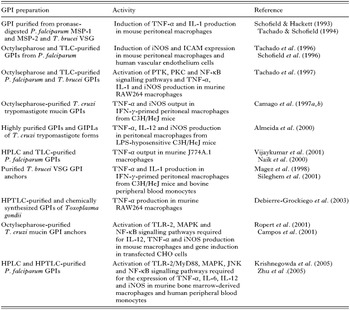
Table 1. Support for pro-inflammatory bioactivity of protozoal GPIs
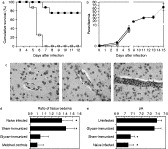
Fig. 1. Immunization against synthetic malaria GPI glycan substantially protects against murine cerebral malaria, pulmonary oedema and peripheral blood acidosis. (a), (b) Kaplan-Meier survival plots and parasitemia levels of KLH-glycan-immunized (filled circles) and sham-immunized (open squares) C57BL/6 mice challenged with P. berghei ANKA. (c) Haeomotoxylin and eosin-stained sections of brain tissue showing blood vessels from KLH-glycan immunized (left and centre panels) and sham-immunized (right panel) mice killed 6 days p.i. Pulmonary oedema and blood acidosis indices given as a proportion of the lung wet:dry weight ratio (d) or serum pH (e) form KLH-glycan-immunized and, sham-immunized and naïve infected mice at day 6 p.i. compared to age/sex-matched uninfected mice. Taken from Schofield et al. (1993). Permission pending.

Fig. 2. Schematic structure of parasitic GPI-anchors: (a) Leishmania mexicana GIPLs (free iM2, iM3, [EP]iM3 and iM4 GPI forms); Trypanosoma cruzi epimastigote (b) and trypomastigote (c) mucin-derived GPI anchors; (d) Toxoplasma gondii-derived GPI anchor (e) Trypanosoma brucei VSG-derived GPI anchor (f) immature (Man3-GPI) and mature MSP-1-derived (Man4-GPI) GPI anchors of Plasmodium falciparum. Abbreviations: EtN, ethanolamine; P, phosphate; Man, mannose; GlcN, unacetylated glucosamine; Gal, Galactose; GalNAc, acetylated galactosamine, Glu, glucose; m-Ins, myo-Inositol; O, ether and ester bonded Oxygen molecules; Cn:n, number of saturated/ unsaturated carbon molecules in the lipid chain.
 You have
Access
- 82
- Cited by