INTRODUCTION
Sponges (phylum Porifera) are considered the oldest extant animals and are among the main components of marine benthic communities (Van Soest et al., Reference Van Soest, Boury-Esnault, Vacelet, Dohrmann, Erpenbeck, De Voogd, Santodomingo, Vanhoorne, Kelly and Hooper2012). As sessile animals they interact in various ways with a wide variety of organisms (Bell, Reference Bell2008), playing a key role in many ecological processes, such as competition, symbiosis and predation (e.g. Sarà & Vacelet, Reference Sarà, Vacelet, Brien, Lévi, Sarà, Tuzet, Vacelet and Grassé1973; Ribeiro et al., Reference Ribeiro, Omena and Muricy2003; Wulff, Reference Wulff2006; López-Victoria et al., Reference López-Victoria, Zea and Weil2006; Swain & Wulff, Reference Swain and Wulff2007; Batista et al., Reference Batista, Muricy, Andréa and Villaça2012). Studies have shown that sponges' diversity patterns may result from their ecological interactions (e.g. Rützler, Reference Rützler1970; Wulff, Reference Wulff1997; Pawlik, Reference Pawlik1998; Engel & Pawlik, Reference Engel and Pawlik2005), which would affect their distribution, abundance and diversity in different sites (Wulff, Reference Wulff2006, Reference Wulff2012).
Space availability is often the most important limiting resource for the occurrence of sponges in marine hard substrata, leading to spatial competition with other sessile marine invertebrates and algae, or among individuals of the same species (Johnson, Reference Johnson, Lévi and Boury-Esnault1979; Engel & Pawlik, Reference Engel and Pawlik2005). The exploitation of micro refuges can minimize the problems of spatial competition, mitigating the stresses of living in highly dynamic environments, such as rocky shores (Walters & Wethey, Reference Walters and Wethey1996). Besides physical refuges, sponges may also gain protection against predators or competitors by the association with other organisms because of their chemicals and/or body shape (e.g. Waddell & Pawlik, Reference Waddell and Pawlik2000; Loh & Pawlik, Reference Loh and Pawlik2012; Padua et al., Reference Padua, Lanna and Klautau2013a), making the local environment more favourable (Stachowicz, Reference Stachowicz2001).
Such dynamic interactions between organisms and substrate occupation can influence the structure of a community. To really understand the processes underlying these observed patterns, it is necessary to evaluate the relationship between community components (Dayton, Reference Dayton1971). However, to demonstrate how interactions constrain or enhance distribution and abundance, long-term field observations are necessary (Wulff, Reference Wulff2012). Although the importance of these ecological relationships for demosponges has already been shown (Wulff, Reference Wulff2012), this knowledge is lacking for calcareous sponges (class Calcarea), with very few works regarding topics such as associated fauna (Frith, Reference Frith1976; Padua et al., Reference Padua, Lanna and Klautau2013a), symbiotic community (Santos et al., Reference Santos, Pontes, Santos, Muricy, Giambiagi-deMarval and Laport2010; Turque et al., Reference Turque, Batista, Silveira, Cardoso, Vieira, Moraes, Clementino, Albano, Paranhos, Martins and Muricy2010; Fromont et al., Reference Fromont, Huggett, Lengger, Grice and Schönberg2015) and competition (Rützler, Reference Rützler1970; Sarà, Reference Sarà1970; Johnson, Reference Johnson, Lévi and Boury-Esnault1979; Bell & Barnes, Reference Bell and Barnes2003; Longo et al., Reference Longo, Pontassuglia, Corriero and Gaino2012; Cavalcanti et al., Reference Cavalcanti, Skinner and Klautau2013).
Sponges belonging to the class Calcarea are, in general, small and inhabit cryptic habitats, together with some ascidians, echinoderms, bryozoans and other sponges (e.g. Sloan, Reference Sloan1979; Stoecker, Reference Stoecker1980; Klautau & Borojevic, Reference Klautau and Borojevic2001; Grischenko et al., Reference Grischenko, Dick and Mawatari2007). These sponges are considered weak space competitors (Rützler, Reference Rützler1970) and may present alternative strategies to survive and increase chances of survival. For example, some calcareous sponges are commonly found as epibionts, avoiding the risk of being excluded by other competitors (Rützler, Reference Rützler1970; Sarà, Reference Sarà1970), and may exploit micro refuges, such as small crevices, ensuring competitive advantage on the substrate occupation (Maldonado & Uriz, Reference Maldonado and Uriz1998).
The calcareous sponge Clathrina aurea Solé-Cava et al., 1991 (Clathrinidae, Calcinea) is very fragile, composed of thin-walled anastomosed asconoid tubes (Klautau & Borojevic, Reference Klautau and Borojevic2001). In Brazil this species is distributed in the south-eastern and north-eastern coasts and found especially in light protected environments such as ceilings and walls of small caves and burrows, where they are also protected from the action of waves (Klautau & Borojevic, Reference Klautau and Borojevic2001; Muricy et al., Reference Muricy, Lopes, Hajdu, Carvalho, Moraes, Klautau, Menegola and Pinheiro2011). Individuals of C. aurea are very often found in a patchy distribution (Monteiro & Muricy, Reference Monteiro and Muricy2004) and are commonly associated with other sponges, ascidians and algae but most frequently with coral polyps (authors' previous observations). The major association with coral polyps could, perhaps, represent a micro refuge for C. aurea, providing protection against substrate competition, which could influence its abundance, growth and survival.
In the present work, we aimed to investigate the influence of intra- and interspecific interactions in the abundance, growth and lifespan of the calcareous sponge C. aurea using a population from Cabo Frio (Rio de Janeiro State, Brazil) as a model.
MATERIALS AND METHODS
Study area
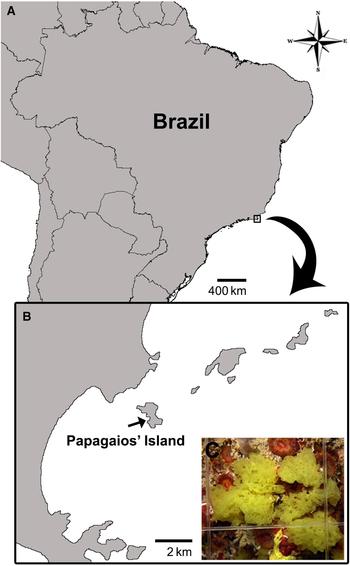
The present study was conducted in a small cave at Papagaios Island in Cabo Frio, Rio de Janeiro State, South-eastern Brazil (22°53′50″S 41°58′56″W; Figure 1). The entrance of the cave is located at a depth of 4 m and is 1.2 m wide, becoming narrower towards the interior.
Location of the study area. (A) Cabo Frio city (square) in South-eastern Brazil; (B) Papagaios Island with the black arrow showing the sampling location; (C) in vivo photograph of Clathrina aurea.

Quantitative and qualitative sampling
Sampling was undertaken monthly by scuba diving, from October 2012 to October 2013 (13 months). The benthic community of the cave was studied using permanent quadrats of 16 × 16 cm (total area of 256 cm2) (three replicates – Q1, Q2 and Q3). The study area was chosen according to the highest abundance of Clathrina aurea. Photographs of the quadrats were taken in situ using a Canon G11 camera and small pieces of some organisms were collected at the end of the study in order to identify them to the lowest taxonomic level possible. The sponges and other taxa were identified by experts in each group.
Image processing
The area coverage of all organisms on the three photoquadrats was calculated using the digital image processing software AxioVision 4.6.3 (Carl Zeiss Imaging Solutions). In each photoquadrat, every organism was defined manually with an external outline, using a freehand drawing tool. All defined surfaces were assigned to the corresponding taxa based on the taxonomic identifications. All individuals of C. aurea inside the three photoquadrats were monitored for variations in area coverage and abundance.
Statistical analyses
ABUNDANCE AND AREA COVERAGE
To test if abundance and total area coverage each have a specific variation pattern in time, a spectral density analysis was performed in order to obtain the mean wave period (λ) for each month. Then we fitted a linear model (LM) to abundance and total area with sinusoidal waves (abundance ~ sin(time × 2π/λ) + cos(time × 2π/λ)). A similar technique was applied to individuals' area coverage (from five selected individuals with the longest lifespans) but using a repeated measure procedure.
In order to identify a possible dependence of area coverage of Clathrina aurea individuals upon their abundance, we performed a linear mixed-effects model (LME) fitted by restricted maximum likelihood (REML), using monthly abundance of individuals as fixed variable (independent) and quadrats as random effects.
INFLUENCES OF THE BENTHIC COMMUNITY
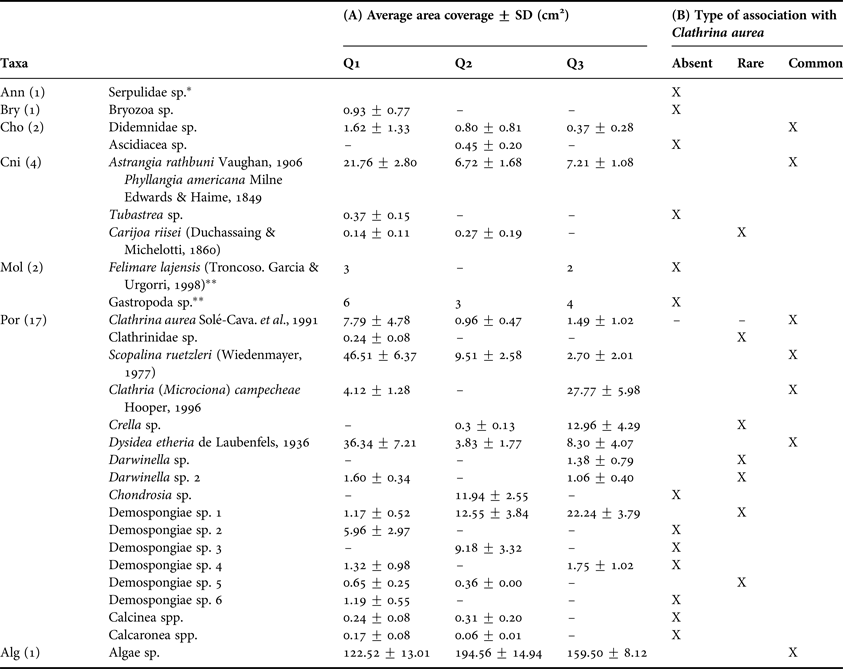
Some months were not included in the statistical analysis (Q1: Mar/2013; Q2: Nov, Dec/2012, Mar/2013; Q3: Apr, Jul, Sep, Oct/2013) because of inadequate photo quality caused by the sea conditions, hampering a precise analysis of the images. To detect possible effects of other benthic organisms on Clathrina aurea's area coverage variations, a LME model was used with only the coverage of the most common sessile taxa in direct contact with C. aurea within quadrats as fixed variables (Table 1B), monthly samples as fixed effects and quadrats as random effects. The taxa were selected as common when at least three different individuals were in direct contact with C. aurea. Model selection was performed to select the best variables that explain C. aurea variations, based on corrected Akaike's information criteria (AICc) using REML estimation. Models with AIC differences (Δ AICc) less than two were considered as indistinguishable and considered as best models.
Area coverage and type of association between Clathrina aurea and the benthic community.

SD, Standard deviation; Ann, Annelida; Bry, Bryozoa; Cho, Chordata; Cni, Cnidaria; Mol, Mollusca; Por, Porifera; Alg, Algae.
Number of taxa of each group within the parentheses.
*Not quantified but present in all quadrats. **Quantified by the number of months they appeared. Absent – never in contact with C. aurea. Rare – once or twice associated with C. aurea. Common – three or more individuals associated with C. aurea.
SURVIVAL ANALYSIS
A survival analysis of Clathrina aurea individuals was performed using a survival fit approach in order to compare the lifespan in two conditions: associated and non-associated with coral polyps of the species Astrangia rathbuni Vaughan, 1906 and Phyllangia americana Milne Edwards & Haime, 1849. In general, individuals of C. aurea were more frequently associated with these coral polyps than with any other taxa, substantiating our choice of these organisms for the survival analysis. We defined as associated the direct contact of the sponge with the coral polyp and survival time as the interval between the recruitment of the individual until its disappearance, interpreted as its death. It was not possible to determine the age for all individuals, because some individuals were already present at the beginning of the study and others did not die until after its end. Thus, these individuals were classified as censored data and owing to another study conducted 6 months before, we could obtain survival months before the beginning of the current study for some individuals (Padua et al., Reference Padua, Leocorny, Custódio and Klautau2016). Survival probabilities were estimated using the non-parametric Kaplan–Meier (KM) method (Kleinbaum & Klein, Reference Kleinbaum and Klein2012), and differences between fitted models for the two conditions were statistically compared through a chi-square test of the log-rank.
Spectral density and linear model (LM) analysis, linear mixed-effects model analysis (LME), model selection (AIC) and survival analysis were performed using R version 3.2.3® software for Windows, using the packages stats (R documentation), lme4 (Bates et al., Reference Bates, Mächler, Bolker and Walker2015), MuMIn (Kamil, Reference Kamil2016) and survival (Therneau, Reference Therneau2015), respectively.
RESULTS
Abundance and area coverage
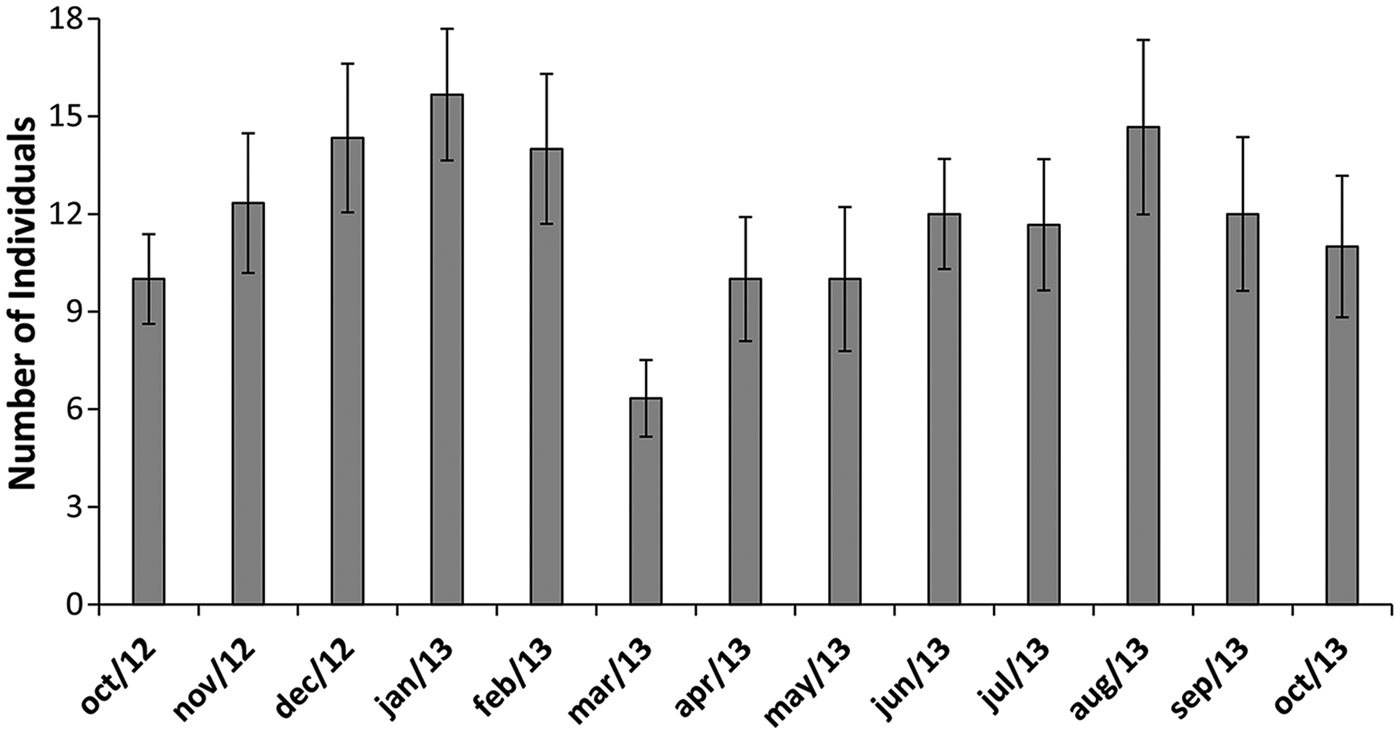
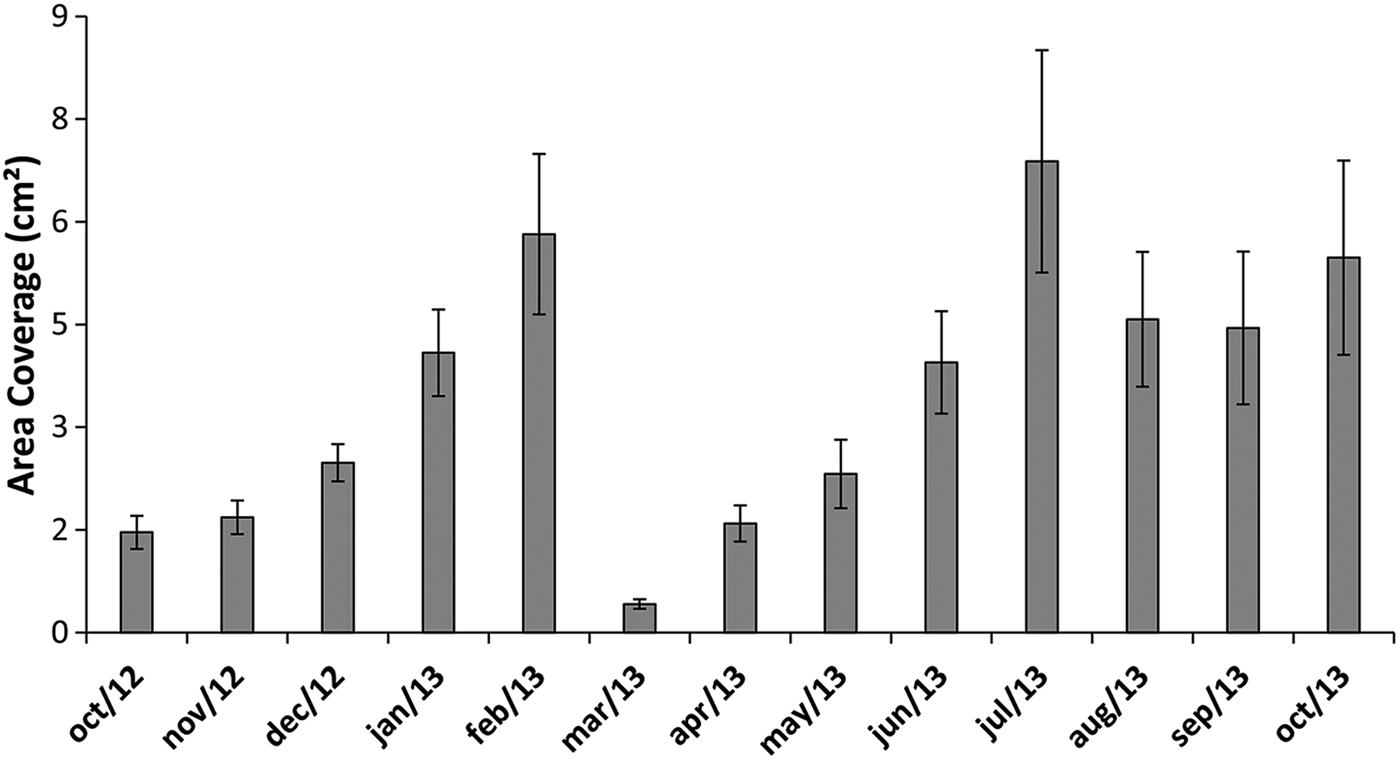
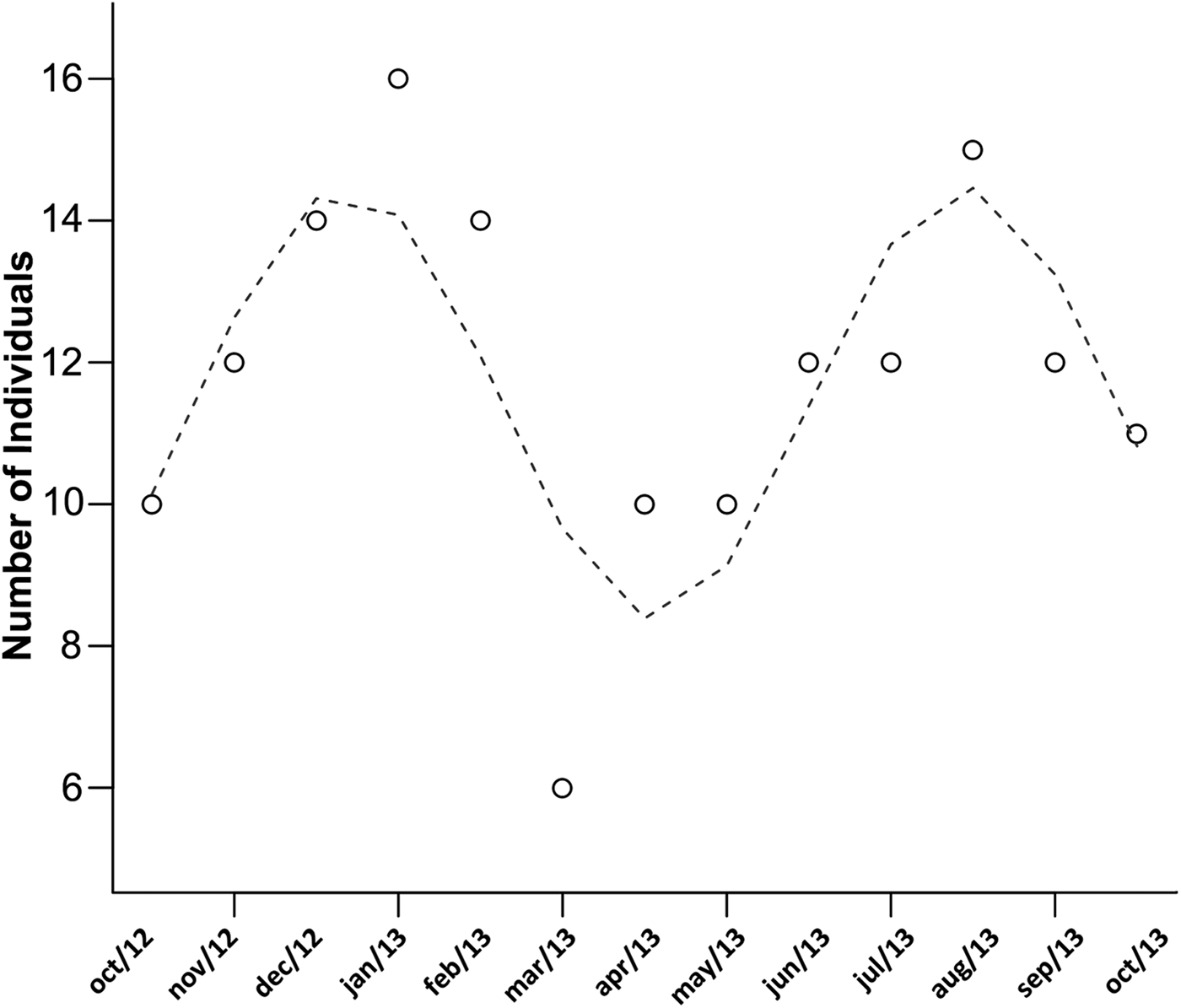
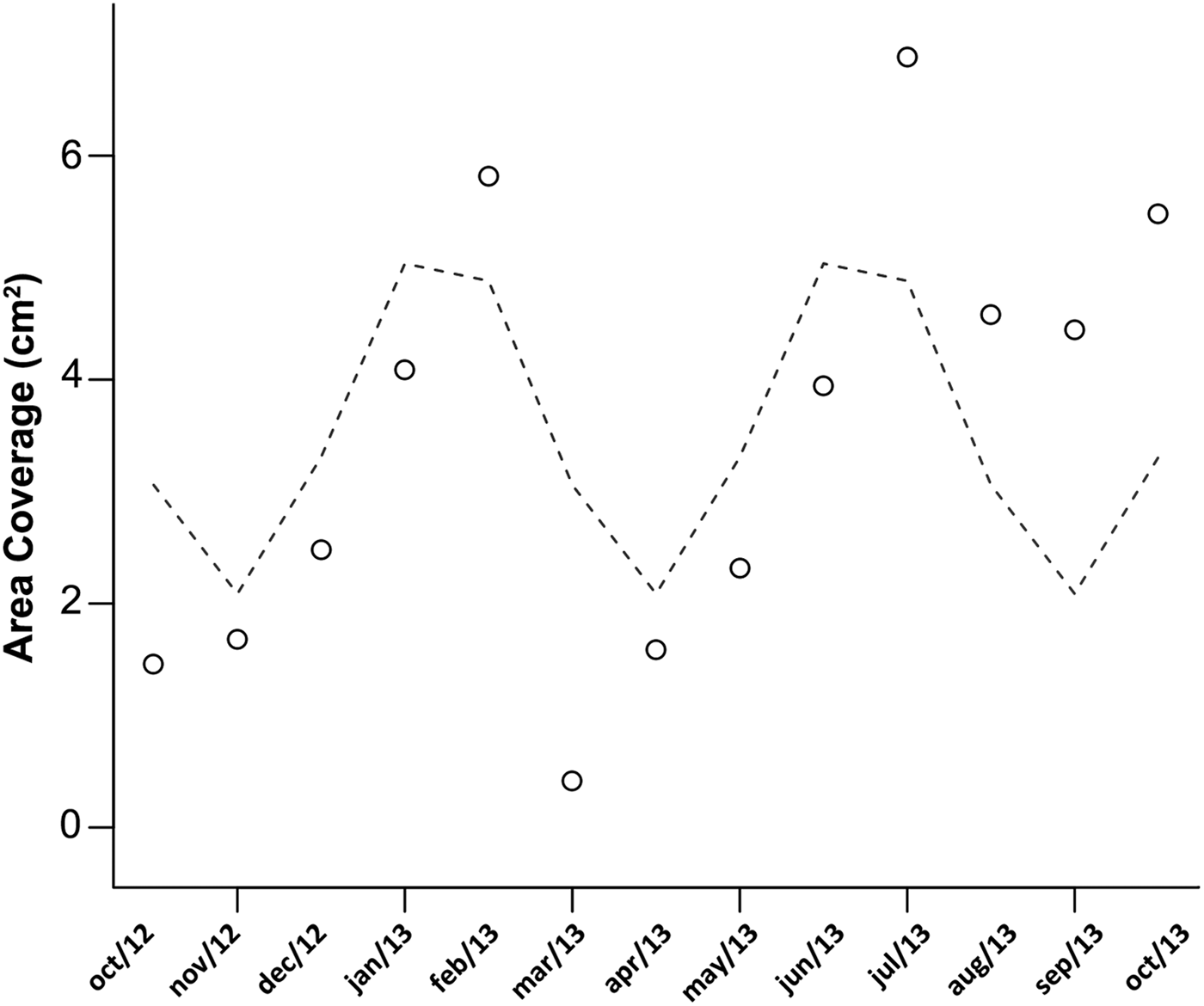
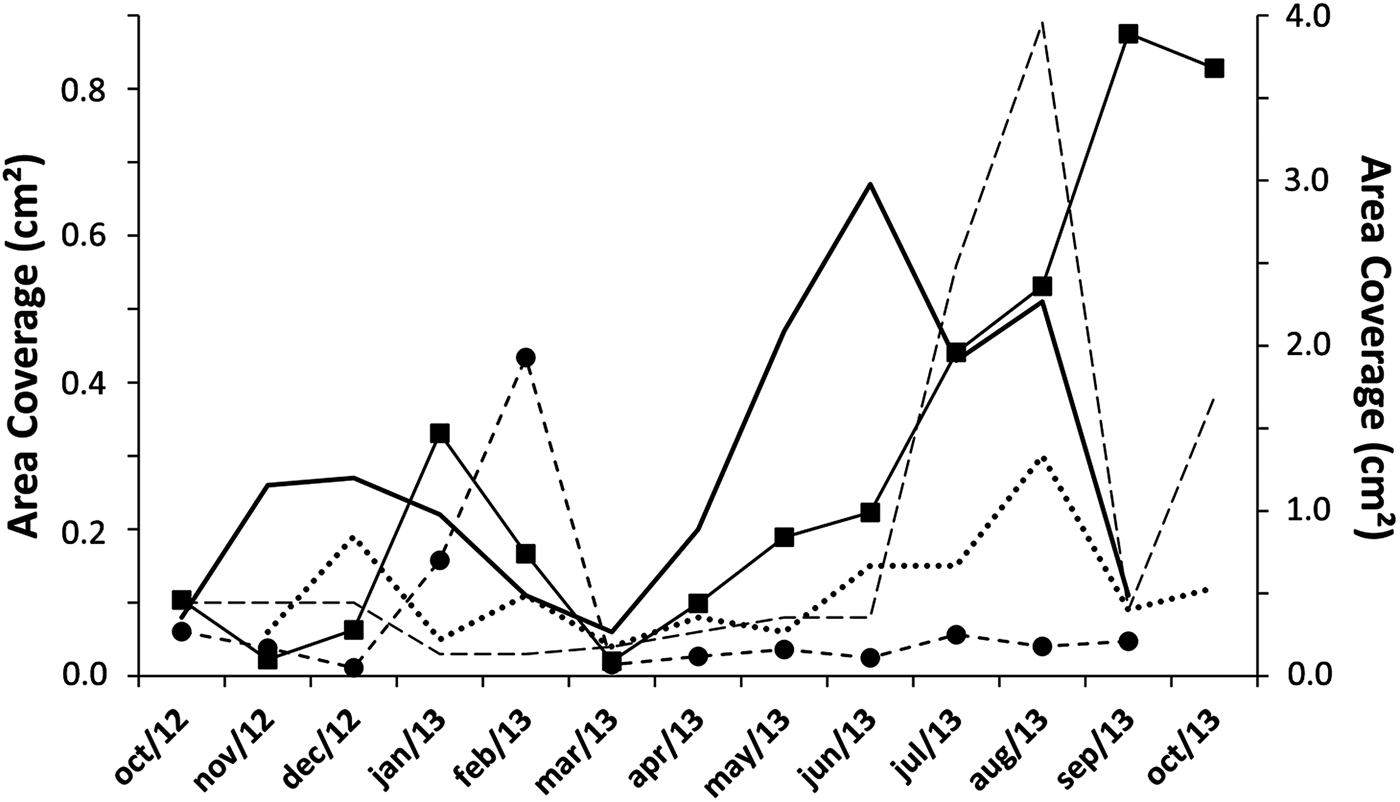
During the 13 months of the study, 138 individuals of Clathrina aurea were monitored and we observed a variation in the abundance (Figure 2) and area coverage (Figure 3) of this species along the year. Two peaks of abundance were observed, in January 2013 (16 ± 2 individuals) and August 2013 (15 ± 3 individuals), both followed by a slight decrease. The lowest number of individuals was observed in March 2013 (6 ± 1 individuals). The total area coverage increased during the first 5 months, achieving the first peak in February 2013 (5.82 ± 1.17 cm2) followed by a steep decrease in March 2013, which represented the lowest area in the study (0.42 ± 0.07 cm2). In April, the total area coverage started increasing again, accomplishing a second peak in July 2013 (6.88 ± 1.62 cm2). The mean abundance of individuals presented a significant sinusoidal pattern over time (LM, P = 0.0062; Figure 4), while total area coverage did not present any significant pattern (LM, P = 0.1368; Figure 5). Nevertheless, there was significant correlation between total area coverage and abundance (LME, P < 0.001). Besides abundance variation, individuals of C. aurea varied greatly in their area coverage on the substrate (Figure 6), but with no dependence of area coverage with months (LM, P = 0.347). Nevertheless, there was significant correlation between total area coverage and abundance (LME, P < 0.001).
Monthly abundance of Clathrina aurea in Cabo Frio. Mean density of the three analysed quadrats (bars: standard error). Significant dependence of abundance and months (P = 0.0062).

Monthly area coverage of Clathrina aurea in Cabo Frio. Mean area coverage of the quadrats (bars: standard error). No significant dependence of area coverage and months (P = 0.1368).

Monthly abundance of Clathrina aurea in Cabo Frio (circles) with sinusoidal wave adjusted for the data (dashed line).

Monthly area coverage of Clathrina aurea in Cabo Frio (circles) with sinusoidal wave adjusted for the data (dashed line).

Area coverage (cm2) per month of the five individuals of Clathrina aurea with the longest lifespan. Lines with markers (circles and squares) belong to the right axis scale, while the others belong to the left axis scale. No significant correlation of individuals' area coverage and months (P = 0.347).

Influences of benthic community
A total of 28 taxa were identified in the quadrats, representing six animal phyla plus Algae neighbouring Clathrina aurea (Table 1A). The three quadrats presented different benthic fauna composition, so they will be treated separately. We observed a mean of 19 ± 4 (standard deviation) taxa per quadrat, eight of which were shared among them: Serpulidae sp., Didemnidae sp., Astrangia rathbuni, Phyllangia americana, Algae sp., Scopalina ruetzleri (Wiedenmayer, 1977), Dysidea etheria de Laubenfels, 1936 and Demospongiae sp. 1. The most representative taxa was Algae sp., which covered more than 50% of the quadrats, followed by the phylum Porifera, with 17 taxa. The highest mean area coverage (cm2) was of Scopalina ruetzleri (46.51 ± 6.37) in Q1, Demospongiae sp. 1 (12.55 ± 3.84) in Q2, and Clathria (Microciona) campecheae Hooper, 1996 (27.77 ± 5.98) in Q3. Although two species of coral polyps had been identified, A. rathbuni and P. americana, they will be treated together as ‘Coral Polyps’ due to the difficulty of specific recognition in the photoquadrats.
Of all taxa identified in the study, 13 were never found in direct contact with C. aurea. The most common associations in direct contact were with Didemnidae sp., coral polyps, Scopalina ruetzleri, Clathria (Microciona) campecheae, Dysidea etheria and Algae sp. (Table 1B).
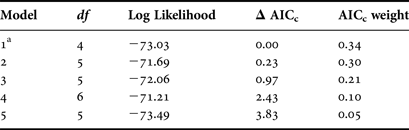
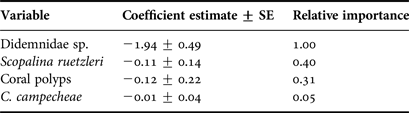
The linear mixed effect model that best explained the variation in area coverage of C. aurea included only Didemnidae sp. (Model 1 – AICc weight = 0.34; Table 2). The other models that also received substantial support (Δ AICc < 2) included Scopalina ruetzleri and coral polyps. The coefficient estimate showed a negative correlation with Didemnidae sp., being the most important variable as it was present in all models (Table 3).
Analysis of linear mixed effect models fitted by REML evaluated using the Akaike's Information Criteria (AIC). All the models included Intercept values.
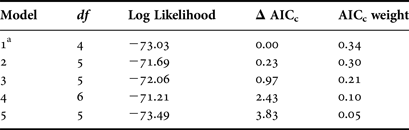
a AICc = 155.66.
(1) Didemnidae sp.; (2) Didemnidae sp. + Scopalina ruetzleri; (3) Didemnidae sp. + Coral Polyps; (4) Didemnidae sp. + Coral Polyps + Scopalina ruetzleri; (5) Didemnidae sp. + Clathria (Microciona) campecheae.
Coefficient estimate, standard error (SE) and the relative importance of the variables.

Survival analysis
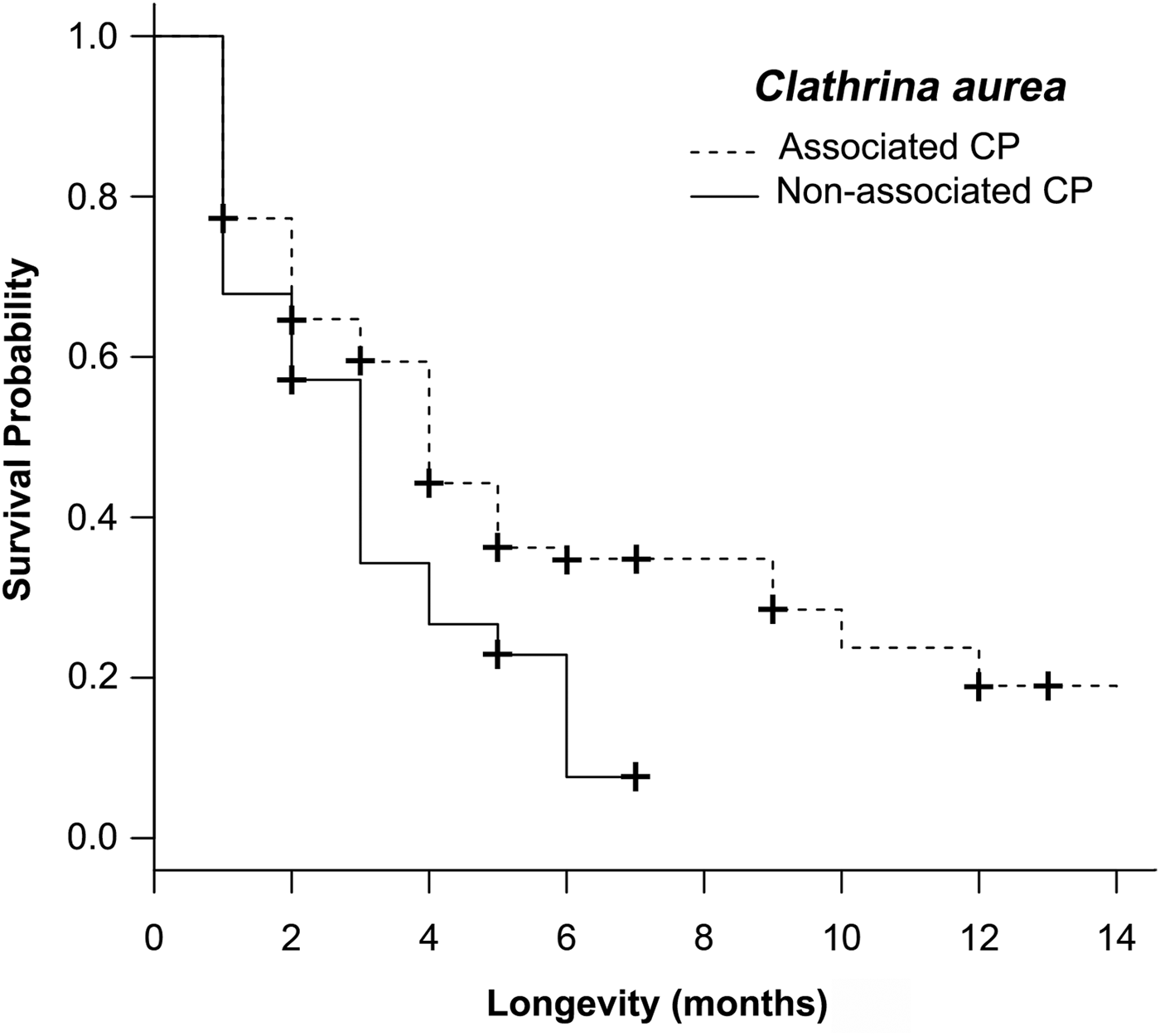
Individuals of Clathrina aurea associated with coral polyps (Astrangia rathbuni and Phyllangia americana) lived longer than the non-associated individuals, the longest lifespan being 14 months for one associated individual and 7 months for a non-associated individual. The difference in survival between the two groups was statistically significant (χ2 = 4.8, df = 1, P = 0.0279; Figure 7). Of the 138 individuals analysed, ~80% (110 individuals) were associated with coral polyps and the median survival time was 4 (Confidence Interval 95% 4–5) and 3 (CI 95% 2–5) months for associated and non-associated individuals, respectively (Table 4).
Kaplan–Meier survival function for individuals of Clathrina aurea associated and non-associated with coral polyp (CP). The two groups differed (P = 0.0279) and the ‘+’ in the step functions represents censored data.

Comparison between individuals of Clathrina aurea associated and non-associated with coral polyp (CP). Median lifespan (month) with 95% confidence interval (CI).

DISCUSSION
Abundance and area coverage
The calcareous sponge Clathrina aurea occurred throughout the year and was recruited continuously, as new individuals were seen arriving in the quadrats every month. Despite the continuous recruitment, two peaks of abundance and area coverage were observed, one in summer and another in winter (Figures 2 & 3). Continuous recruitment with peaks of abundance and area coverage has already been observed for other calcareous sponges. The congeners C. coriacea (Montagu, 1814) and C. blanca (Miklucho-Maclay, 1868) recruit during most of the year and reach their maximum abundance during winter, mainly due to asexual reproduction (Johnson, Reference Johnson, Lévi and Boury-Esnault1979), whereas the calcaronean Paraleucilla magna Klautau et al., 2004 reaches its maximum in summer, through sexual reproduction (Lanna et al., Reference Lanna, Monteiro and Klautau2007; Padua et al., Reference Padua, Lanna, Zilberberg, Paiva and Klautau2013b). Hence, although reproductive elements have never been seen in C. aurea (Lanna & Klautau, Reference Lanna and Klautau2016), the occurrence of two abundance peaks during the year, as observed in the present study, and the low rate of clonality among individuals of the same study area (Padua et al., Reference Padua, Leocorny, Custódio and Klautau2016), may suggest a double reproductive effort (one in summer and another in winter) with major participation of sexual reproduction. The most common cycle for calcareous sponges is only one reproductive season during the year (e.g. Johnson, Reference Johnson1978; Lanna et al., Reference Lanna, Monteiro and Klautau2007; Padua et al., Reference Padua, Lanna, Zilberberg, Paiva and Klautau2013b), but two breeding seasons have also been suggested for Leucosolenia sp. and Sycon ciliatum (Fabricius, 1780), one in summer and another in late autumn/winter (Orton, Reference Orton1914).
After the abundance peak in summer, a significant decrease in the number of individuals was observed, followed by a gradual recovery of the population during the next 4/5 months reaching a second peak in winter followed by a new decrease (Figures 2 & 4). A similar pattern was observed for total area coverage but it was not significant (Figures 3 & 5). During the life cycle of C. aurea, there was a wide variation in individuals' area coverage, but without significant correlation with months (Figure 4). The dynamics of increase and reduction in area coverage of calcareous sponges has already been documented, and usually it was attributed to the species' reproductive period (Johnson, Reference Johnson, Lévi and Boury-Esnault1979; Gaino et al., Reference Gaino, Bavestrello, Cerrano and Sàra1996). A high reproductive effort could result in the reduction in area coverage of some asconoid species (Lanna et al., Reference Lanna, Monteiro and Klautau2007), but we cannot state this for C. aurea, as the reproductive elements of this species remain unknown (Lanna & Klautau, Reference Lanna and Klautau2016). The survival of some individuals of C. aurea between seasonal peaks contribute to the increase in population in the next season, as already suggested for C. coriacea, C. blanca and Borojevia cerebrum (Haeckel, 1872) (Johnson, Reference Johnson, Lévi and Boury-Esnault1979; Gaino et al., Reference Gaino, Bavestrello, Cerrano and Sàra1996).
We observed a positive significant correlation between abundance and area coverage in individuals of C. aurea. In a previous study with C. blanca by Johnson (Reference Johnson, Lévi and Boury-Esnault1979) an increase in total area coverage associated with a decrease in abundance was observed, that might imply intraspecific competition, since faster-growing individuals could be eliminating the slower ones. Based on that, we could not suggest intraspecific competition for individuals of C. aurea is not important in our study, since the area coverage increased with the abundance.
Influences of benthic community
The accurate determination of competition for space between calcareous sponges and other sessile marine invertebrates can be difficult due to the wide variation in abundance and area coverage of these sponges, especially the ones with an amorphous body shape, such as C. clathrus (Gaino et al., Reference Gaino, Bavestrello, Cerrano and Sàra1996). Even though, no evidence of spatial competition was observed between C. aurea and other benthic organisms. Only the area coverage of the colonial ascidian of the family Didemnidae presented a higher relative importance with C. aurea (Tables 2 and 3). However, we cannot assign conclusively this negative correlation as a direct consequence of the association between these two taxa, since this relationship could also be explained and influenced by other abiotic factors (temperature) and differences in life cycle (e.g. Hirose et al., Reference Hirose, Adachi and Kuze2006, Reference Hirose, Kojima, Nogami and Teruya2007; McCarthy et al., Reference McCarthy, Osman and Whitlatch2007; Ritzmann et al., Reference Ritzmann, Rocha and Roper2009), which were not assessed here. In fact, the interaction between C. aurea and the didemnid ascidian showed no clear outcome, with only one case of overgrowth of the sponge over colonies of the ascidian. Standoff interactions between the congener C. coriacea and didemnid ascidians have already been observed, with only one case of overgrowth of the sponge (Bell & Barnes, Reference Bell and Barnes2003). The low frequency of overgrowth between calcareous sponges and species of the family Didemnidae may be explained by the acidic tunic present in this family, making these ascidians usually free of epibionts (Stoecker, Reference Stoecker1980).
It is common to find calcareous sponges living as epibionts (Rützler, Reference Rützler1970; Sarà, Reference Sarà1970; Johnson, Reference Johnson1980). In the present study, when not associated with coral polyps, C. aurea was observed in epibiosis with algae and the demosponges Scopalina ruetzleri, Crella sp., Clathria (Microciona) campecheae, Dysidea etheria and Darwinella sp. 2. Other calcareous sponges, like Ascandra falcata Haeckel, 1872, C. clathrus and C. coriacea, have already been observed growing upon other organisms, such as mollusc shells and algae (Johnson, Reference Johnson1980). They form a stratum of epibiotic species with a low degree of attachment on the basibionts and do not seem to cause any harm to the basibiont species (Rützler, Reference Rützler1970; Sarà, Reference Sarà1970). The clathrate body of C. aurea may favour the epibiosis on this species as it grows without suffocating the other organisms.
Survival analysis
The results of this study point to an increase of the lifespan of Clathrina aurea individuals when they are in direct contact with coral polyps (Figure 7). Eighty per cent (110) of all sponge individuals analysed (138) were within the interstices of corals (Table 4), which probably promote a micro refuge for C. aurea against predators and competitors. Calcareous sponges are not considered good competitors for space (Rützler, Reference Rützler1970; Sarà, Reference Sarà1970). Hence, the exploitation of micro refuges in association with other organisms could enhance their survival. Although this interaction does not ensure avoidance of predation over time, because in a few cases the sponge occasionally becomes larger than the polyp, making predators able to reach it, it seems to be an efficient strategy for the sponge survival and apparently there are no negative results for the polyps.
The azooxanthellate scleractinian corals, Astrangia rathbuni and Phyllangia americana, are widely distributed in the Brazilian coast and can be found in shallow waters (Cairns, Reference Cairns2000). These corals usually inhabit the same habitat as C. aurea, such as caves and crevices, making contact between them possible (Cairns et al., Reference Cairns, Jaap, Lang, Felder and Camp2009; Correia, Reference Correia2010). The sponge–coral association may be considered as a strategy to avoid risks of predation and competition, and indeed this strategy seems to enhance the lifespan of the sponge. The median lifespan of C. aurea was 3 months for non-associated individuals and 4 months for the associated ones (Table 4). The lifespan of calcareous sponges is usually short, ranging from weeks to one year (Orton, Reference Orton1914, Reference Orton1920; Johnson, Reference Johnson, Lévi and Boury-Esnault1979; Cavalcanti et al., Reference Cavalcanti, Skinner and Klautau2013; Padua et al., Reference Padua, Leocorny, Custódio and Klautau2016), while demosponges usually have a lifespan of months (Ereskovsky, Reference Ereskovsky2000), decades (Mercado-Molina et al., Reference Mercado-Molina, Sabat and Yoshioka2011) or even hundreds of years (Lehnert & Reitner, Reference Lehnert and Reitner1997; Wörheide et al., Reference Wörheide, Gautret, Reitner, Böhm, Joachimski, Thiel, Michaelis and Massault1997). Therefore, any strategy that increases even for one month the lifespan of a calcareous sponge may be important to maintain their populations.
Increase of the lifespan by interaction with other invertebrates or exploitation of protected areas has already been observed for demosponges and here we present the first example for the class Calcarea (e.g. Wilkinson & Vacelet, Reference Wilkinson and Vacelet1979; Fishelson, Reference Fishelson1981; Wulff, Reference Wulff1997; Maldonado & Uriz, Reference Maldonado and Uriz1998, Reference Maldonado and Uriz1999; Turon et al., Reference Turon, Tarjuelo and Uriz1998; Burns & Bingham, Reference Burns and Bingham2002). Ecological interactions may vary spatially and temporally (Palumbi, Reference Palumbi1985), meaning that the contact between C. aurea and these coral polyps in other habitats may have different results. Changes in the environment by the removal or extinction of species may disrupt ecological interactions, causing replacements of local species and affecting the potential of survival, recovery and permanence of previously established species (Dulvy et al., Reference Dulvy, Sadovy and Reynolds2003).
In conclusion, our study suggests that C. aurea is a dynamic species that recruits continually over the year, changes its area coverage during its short lifespan and uses survival strategies that allow it to live in highly variable habitats. Their pattern of distribution can be explained by epibiosis and exploitation of micro refuges, mainly represented by a positive interaction with coral polyps, which enhances their survival, probably by avoiding space competition with other sessile marine invertebrates and predation. More studies on the ecological interactions of calcareous sponges with other organisms are needed for a better understanding of their ecological niches and which species could influence their life dynamics.
ACKNOWLEDGEMENTS
We are very grateful to Pedro Leocorny, Báslavi Cóndor-Lujan, Fernanda Azevedo and Cássio Fonseca for helping during sampling and to the taxonomy specialists for helping us with identifications: Guilherme Muricy, Nicole Boury-Esnault (Demospongiae), Kátia Capel and Débora Pires (corals). We also would like to thank Eduardo Resende and the staff of LitoralSub for scuba diving support.
FINANCIAL SUPPORT
This study was supported by grants received from PADI Foundation (Grant number #7981) and the São Paulo State Research Foundation (FAPESP) (Grant 13/04084-4). MK was funded by fellowship and research grants from the Brazilian National Research Council (CNPq) (Grants 302459/2014-6 and 476597/2013-7). This paper is the undergraduate thesis of Bárbara Ribeiro at the Marine Biology Department of the Federal University of Rio de Janeiro.