

Introduction
Electricity in the USA is typically bought and sold in wholesale markets at a fluctuating price, but sold to end-use consumers in a way that obscures the true hourly cost. Despite increased attention to time-varying rates and widespread recent deployment of smart meters, the vast majority of US consumers still pay a fixed price (per kWh) for electricity. Demand flexibility could help reduce electricity prices during peak hours, which can have dramatic effects on total annual costs. As penetration of renewable resources grows, grid operators will increasingly seek to use elastic demand to promote more efficient outcomes. There are opportunities for significant economic gains and also environmental benefits (including reductions in carbon emissions).
Alert to those opportunities, Allcott and Mullainathan (Reference Allcott and Mullainathan2010) suggest that behavioral science could be enlisted to produce significant improvements in the energy sector, and Pollitt and Shaorshadze (Reference Pollitt and Shaorshadze2011) have suggested that behavioral economics could be an effective tool to increase the responsiveness of demand. Despite system-level welfare benefits and documented individual benefits, however, relatively few customers have opted in to TVPs in the electricity sector. A different design, with opt-out defaults, would be likely to increase participation substantially.
Existing empirical studies measure the effects of time-varying rates on electricity consumption. The high level of heterogeneity in program results suggests that program design and behavioral details greatly affect the overall impact of such rates on electricity use. Recent research shows that customers reduce peak consumption when they are defaulted to a time-varying rate, even when they would not have opted in to the same rate option (Cappers et al., Reference Cappers, Spurlock, Todd, Baylis, Fowlie and Wolfram2016). In light of similar results, Faruqui et al. (Reference Faruqui, Hledik and Lessem2014) argue that default time-varying rates could help reduce peak consumption and save consumers money. However, arguments continue with respect to the most effective time-varying policies for rate design.
The remainder of the introduction of this paper provides additional background on electricity tariffs. The next section presents research on current electricity tariffs in the USA. We next discuss the relevant literature in the field, encompassing behavioral economics, empirical studies and industry/consulting analyses. Following this, we introduce an analytical framework for consideration of TVPs in the electricity sector, which helps show why the cost-reflective tariff is not necessarily optimal in the presence of information costs and decision biases. Because of the high proportional cost of information in electricity markets, compared to the value of consumption decisions, outcomes can be profoundly affected by the electricity tariff. Thus, contrary to results based only on traditional economic analysis, a real-time price might not maximize efficiency. We then examine some of the trade-offs between rate designs for automated versus manually controlled devices. Finally, we detail a policy recommendation for flexible rate defaults to enable responsive demand, using the best available evidence.
Background: electricity tariffs
Electricity is typically bought and sold in wholesale markets on a per-unit (kWh or MWh) basis provided during fifteen-minute or hour-long periods. These wholesale markets are operated by independent system operators (ISOs) or regional transmission operators. The ISO receives supply bids from generators and demand bids from utilities, who forecast the demand of their customers and place bids on their behalf; the ISO calculates the optimal dispatch given supply and demand bids and relevant system and transmission constraints.
Because the demand for electricity changes in every period, but is highly inelastic, the price for electricity fluctuates significantly across all periods. Furthermore, the supply curve is non-linear, increasing sharply at high demand. Practical constraints can also raise the price for electricity, since many generators cannot ramp up their output quickly; others that can, like natural gas generators, tend to have higher marginal costs. For these reasons, hourly electricity prices feature high temporal variability and exceedingly high spikes (>10× the average) during some periods of the year.
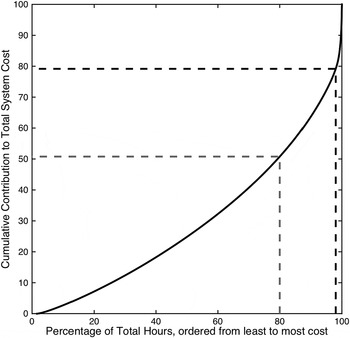
We collected price data for 2014 and 2015 in the Austin, TX, load zone, which highlights the variability in wholesale electricity prices. The mean price paid for electricity in Austin during that time was $32/MWh, and the maximum price paid in a single period was $5442/MWh. Figure 1 displays the contribution to total two-year energy costs of each hourly period as a cumulative distribution. Just under half of the total energy costs were incurred during 20% of total hours, and just 2% of hours were responsible for over 20% of total energy costs. The extreme steepness of the graph in the most expensive hours indicates the significance of their overall contribution to total system costs.
Contributions of individual hours to total energy costs in Austin, TX, USA. The dashed lines represent the contributions of the 20% and 2% most expensive hours. Demand and market price data obtained from ERCOT (2015).

Despite the temporal variability of wholesale electricity prices, customers have typically paid fixed, regulated rates to the utility for retail consumption. While some states allow customers to purchase their electricity from competitive retail electric providers, the vast majority of customers still use the regulated incumbent utility. For residential customers, a regulated utility provides the default service in every state except for Texas. In the thirteen states with deregulated electricity sectors, around 50% of commercial and industrial customers and 80% of residential customers remain on the default service (Morey & Kirsch, Reference Morey and Kirsch2016). Pricing plans provided by competitive retail providers may ultimately encourage demand shifting and peak conservation. However, we focus mainly on the tariffs applied to regulated utilities. There are two reasons for this. First, the vast majority of US customers pay for electricity according to regulated rates, and they will continue to do so in the foreseeable future. No new state has deregulated its electricity markets since 2001, and the fraction of customers buying electricity from competitive (non-regulated) providers has barely increased since 2007 in the deregulated states (Morey & Kirsch, Reference Morey and Kirsch2016). Second, the regulated rate provides an important benchmark, because it typically serves as the default and as a competitive baseline for consumers to compare competitive suppliers' rates. The electricity pricing tariffs set for customers by the incumbent regulated utility will continue to have outsized efforts on the market and on peak demand management.
Regulated rates represent pricing options offered to residential, commercial and industrial customers in the given utility's service area. These rates are typically designed by the utility, subject to the approval of a state regulatory body like a public utilities commission (PUC) or department of public utilities. The customer classes are divided by type and by size, and each class may be offered different rate options and a default rate. The rate can be divided, for assessment purposes, into two components. The first, the energy charge, is assessed for the procurement of electricity by the utility on behalf of the consumer. The second, the distribution charge, is assessed for costs associated with building and maintaining electricity distribution, and possibly also for costs related to meter-reading and customer assistance and billing.
There are several methods currently in use for charging electricity consumers based on their energy use. The five most common are as follows:
-
1. Fixed price (FP): the electricity price is constant over all hours in the month, for a fixed period of time. It may be reassessed, for instance, every three months or every six months, to allow for seasonal and long-term changes in energy costs. An example customer on a FP rate could pay $0.08/kWh for the energy portion of all energy consumed in a given month.
-
2. Time-of-use (TOU) price: the electricity price varies according to a set daily schedule. An example customer on a TOU rate could pay $0.06/kWh during off-peak hours, and $0.15/kWh during peak hours; for instance, set as 3 p.m. to 9 p.m. on weekdays.
-
3. Critical-peak price (CPP): the electricity price increases during declared critical-peak hours, decided by the utility with a required notice period (e.g., six hours or the previous business day). An example customer on a CPP rate could pay $0.07/kWh during off-peak hours, and $0.25/kWh during the declared critical-peak hours.
-
4. Time-of-use with critical peaks (TOU + CPP): this rate has the features of both TOU and CPP rates. For example, a customer could pay $0.06/kWh during off-peak hours, $0.15/kWh during scheduled peak hours and $0.25/kWh during the declared critical-peak hours.
-
5. Real-time price (RTP): this rate tracks the wholesale spot price of electricity for each hour in which electricity is consumed. For example, a customer could pay $0.038/kWh from 1 p.m. to 2 p.m. on some Tuesday, $0.042/kWh from 2 p.m. to 3 p.m. and $0.095/kWh from 4 p.m. to 5 p.m.
TOU, CPP, TOU + CPP and RTP tariffs are all different forms of time-varying prices (TVPs), and occasionally we refer to them collectively in this fashion.
Besides energy charges, customers typically pay other fees for the distribution of electricity. Distribution charges are frequently assessed to consumers as a demand charge on a per-kW basis, reflecting either the customer's peak consumption during a month or their coincident consumption during the system peak. In practice, this can also spur peak energy reductions, but based on the applicable economic theory, demand charges should only account for costs related to capacity or distribution (Faruqui, Reference Faruqui2016). The theoretical analysis and policy recommendations here are focused on energy charges. However, efforts to make distribution charges more reflective of costs could also help shift demand away from peak hours, and the principles described here could help inform rate design for those distribution charges. More detailed information regarding tariff structures can be found in reports by the Environmental Defense Fund (Badtke-Berkow et al., Reference Badtke-Berkow, Centore, Mohlin and Spiller2015) and by the Electric Power Research Institute (EPRI) (Flaim et al., Reference Flaim, Robinson, Holmes and Neehan2011).
Time-varying rates typically require a ‘smart’ meter that can transmit data instantly to the utility or that can log hourly data over the course of the month. For that reason, the historical prevalence of FPs might be partly an accident of history: only recently have digital meters, which can monitor consumption in real time, become widely available, allowing for the widespread introduction of TVPs. Smart meters have been installed at a very high rate in recent years in the USA, stemming initially from funds allocated for grid modernization as part of the American Recovery and Reinvestment Act of 2009 (DOE, 2016). According to data from the Energy Information Agency (EIA), 105 million electricity consumers had digital meters installed by 2013 (Tweed, Reference Tweed2016). By 2014, AMI smart meters, which monitor consumption at least once every hour, represented 40% of all US electricity meters. AMR meters, which allow for remote monitoring and often have hourly read capabilities, represent an additional 32% of all meters (EIA, 2016). Available metering infrastructure increasingly allows for the introduction of variable rates.
Broadly, there are two classes of benefits that policy makers or analysts consider when promoting time-varying rates. The first set of benefits is based on increasing economic efficiency. A more cost-reflective rate could encourage conservation during high-priced periods or substitution of consumption towards lower-priced periods. Consumer response to time-varying rates could help reduce overall system costs, especially since a large portion of total system costs are incurred during a few peak hours, but a thorough understanding of human behavior is necessary in order to maximize the efficiency benefits of time-varying rates. The second set of benefits is distributional: currently, customers who tend to use electricity at lower-priced hours pay more than the average cost of procurement for the electricity they use. For that reason, there are substantial cross-subsidies in electricity, where consumers with low-coincident demand subsidize the higher energy costs of consumers whose demand tends to be more closely timed with system peaks.
Current policies and tariffs
Researchers and analysts continue to make the case for TVPs, and utilities in the USA are increasingly including TVPs as a possible rate option. However, very few utilities have implemented TVPs as the default rate; for that reason, overall participation in TVPs is low. The ten largest US utilities, as identified using EIA data (EIA, 2016), service 20% of all US electricity customers. Nine of the ten offer at least some form of TVP to the majority of their customers, but nearly all of the time-varying rates, except for those aimed at the largest customers, are offered as alternative tariffs, attracting customers on an opt-in basis only. Of the ten largest utilities, none has default (opt-out) TVPs for residential customers. Studies suggest that enrollment vastly increases when a TVP is introduced as the default rate, and analysts from the Brattle Group argue that TVPs will ultimately need to be introduced as defaults in order to strengthen their effects on electricity consumption (Faruqui et al., Reference Faruqui, Hledik and Lessem2014).
Furthermore, while utilities frequently offer at least a TOU rate on an opt-in basis, they rarely offer other TVP rates. Only four of the ten largest utilities offer opt-in CPP, and only one offers opt-in RTP, but not to residential customers. This discrepancy – frequent offers of opt-in TOU rates, but rare opportunities for opt-in CPP or RTP – does not seem to be supported by any comparative studies of welfare benefits or of customer preference. It is not entirely clear why large utilities are so likely to offer opt-in TOU versus other time-varying rates (especially CPP). The Appendix section entitled ‘Electricity rate details: default rates' shows the default rate types for each of these utilities, alternative rate options and sources used for finding available tariff policies.
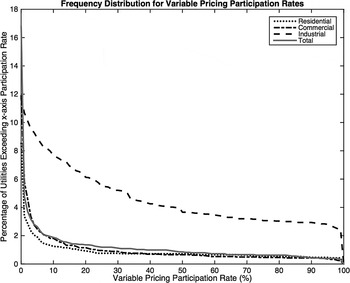
Additionally, we gathered EIA data (EIA, 2016) from 2014 in order to analyze TVP participation by all US utilities. For the purpose of analyzing these data, all time-varying rates (TOU, CPP, TOU + CPP and RTP) are counted in the same way, because the EIA's survey does not differentiate between various TVPs. The results show that customer participation in TVP is driven by high participation in a small portion of utilities. Figure 2 displays the proportion of utilities that achieve various participation rates in TVPs. Of the 3038 utilities in the USA, only 8.6%, 11.9% and 11.7% have TVP offerings for residential, commercial and industrial customers, respectively. However, these programs do not tend to be successful. Only 1.9%, 2.5% and 8.8% of utilities achieve at least 5% participation, and only 0.72%, 0.66% and 3.7% of utilities achieve at least 50% participation in TVP for residential, commercial and industrial customers, respectively. Overall, 3.56%, 6.79% and 10.13% of US residential, commercial and industrial electricity consumers are exposed to some form of TVP.
Fraction of US utilities exceeding varying levels of customer participation in time-varying rates, using data from the Energy Information Agency (EIA, 2016).

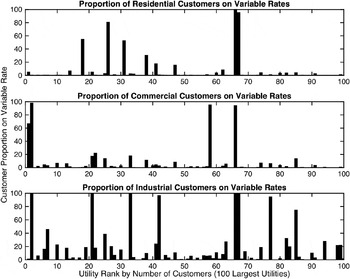
Figure 3 presents similar results on customer participation in TVPs for each customer rate class for each of the 100 largest utilities. This visualization suggests the same conclusion: participation in TVP is clustered among a very small number of high-performing utilities. The overall heterogeneity of customer participation reflects the importance of requirements, default tariffs and program details for TVP participation. The mere introduction of a TVP is not sufficient to generate participation among customers.
Proportion of each customer class on time-varying rates, using data from the Energy Information Agency (EIA, 2016).

The standing assumption of many economics and policy researchers is that commercial and industrial customers are increasingly exposed to RTPs, especially large consumers (Girouard, Reference Girouard2015). However, most utilities still do not have mandatory or default TVPs for commercial and industrial customers. The proportion of large customers enrolled in TVPs is still quite low, despite the fact that they have been shown to respond to TVP (Patrick & Wolak, Reference Patrick and Wolak2001; Boisvert et al., Reference Boisvert, Cappers, Goldman, Neenan and Hopper2007). For large customers located in the service territory managed by PJM, the regional transmission organization that serves many of the mid-Atlantic and Appalachian states, average cost savings were estimated at $14,000 per month for customers that enroll in TVP (Taylor et al., Reference Taylor, Schwartz and Cochell2005). The dichotomy between likely welfare benefits and low policy adoption suggests that further work is needed to identify political and economic reasons for the continued low adoption of TVP amongst commercial and industrial customers.
Overall, the evidence shows that the proportion of customers enrolled in TVP is exceedingly low and not well disbursed among utilities. There is significant room to expand enrollment in TVP, either through default or mandated rates. Behavioral research and the evidence from high-enrollment utilities suggest that defaults can be an effective means of spurring enrollment. Furthermore, few utilities have implemented successful programs with high levels of enrollment, so there is a lot of blank space for designing behaviorally informed programs that effectively reduce peak demand.
Behavioral economics and TVPs
TVPs can provide efficiency and distributional benefits for electricity consumers, reducing cross-subsidies and reducing the overall cost paid for electricity on the grid (and providing environmental benefits in the process). But the benefits of TVPs are ultimately contingent on the number of customers that enroll in time-varying rates, the short-term elasticity of their demand in response to rates, and information deficits and behavioral biases that affect their responses to the time-varying rates.
Time-varying rates are increasingly offered by utilities, but usually on an opt-in or voluntary basis, which (as we have seen) has not spurred significant adoption. Even with increased adoption rates, it is reasonable to worry that consumers might exhibit low responses to time-varying electricity demand due to information costs or behavioral biases. In principle, behaviorally informed approaches could help reduce energy costs and ease the integration of renewable resources by increasing the responsiveness of demand (Pollitt & Shaorshadze, Reference Pollitt and Shaorshadze2011) or by reducing the effects of information costs or behavioral biases associated with demand consumption. Furthermore, the high variance in pilot and study results suggests that program details can have a major effect on consumer response. If high transaction costs and behavioral biases limit the adoption of TVPs or affect consumer responses to these prices, there is hope that more effective policies can be initiated to reduce these costs and biases.
Ideas from behavioral economics can help inform efforts to change electricity tariffs in order to align consumption with the true costs and benefits of electricity purchases. Behavioral issues affect two different decisions made by electricity consumers in the context of time-varying rates:
-
1. Default bias: the initial rate choice, such as FP or TOU, if multiple options are present.
-
2. Consumption bias: electricity consumption choices in real time (e.g., whether to run the dishwasher or turn off the lights).
Both of these behavioral issues are explored in more detail below. Behavioral biases also could affect set-point decisions for automated devices, such as an acceptable air conditioning temperature range, when those devices are set to automatically respond to time-varying rates. This could have impacts on the values of automatically controlled devices, and this is covered briefly in the ‘Welfare benefits of TVPs' section.
Default bias
When customers are confronted with a menu of rate options, decision biases can affect rate choice. For example, the decision to switch away from a default rate might be affected by inertia or a lack of information, or customers might be drawn to simpler rates that are welfare-dominated. Experts have repeatedly documented default effects on consumer choices and behavior in areas as diverse as retirement savings participation (Madrian & Shea, Reference Madrian and Shea2001; Choi et al., Reference Choi, Laibson, Madrian and Metrick2004), organ donation (Abadie & Gay Reference Abadie and Gay2006), car purchase options (Park et al., Reference Park, Jun and MacInnis2000) and the selection of a ‘green’ energy option for electricity (Ebeling & Lotz, Reference Ebeling and Lotz2015).
Default effects can be explained by the power of inertia and the costs of effort when the costs of gathering information or making a complicated, active decision are high relative to the importance of the decision (Kressel & Chapman, Reference Kressel and Chapman2007; Pichert & Katsikopoulos, Reference Pichert and Katsikopoulos2007; Dinner, et al., Reference Dinner, Goldstein, Johnson and Liu2011). To overcome a default, customers must be willing to incur an ‘effort tax’. There are costs involved with actually making a switch to a new electricity rate (paperwork, etc.), and there are additional costs involved with gathering consumption data and weighing the decision about whether an alternative rate is preferred. Furthermore, humans frequently perceive a default to be the recommended option; the informational signal that it contains might be especially strong if the customer is unfamiliar with the context (Beshears et al., Reference Beshears, Choi, Laibson and Madrian2009), as is the case with electricity pricing.
Reference dependence also contributes to the default effect (Dinner et al., Reference Dinner, Goldstein, Johnson and Liu2011) because consumers frame decisions in terms of the default and avoid potential losses compared to the default case, which serves as the reference. ‘Loss aversion’ therefore interacts with the default rule, which establishes certain effects as losses or gains (Sunstein, Reference Sunstein2015). Behavioral psychology suggests that careful framing could help improve adherence to a new default in the rate-setting context. For instance, if a utility sets a TVP as the default rate and tries to minimize defection, it can remind consumers in its framing of the default rate that: (a) TVPs help reduce total electricity costs for the utility; and (b) the average consumer would spend more money on an FP than the default TVP (because of the additional risk carried by the utility in the case of an FP), establishing the new default TVP as the reference rate.
Large-scale studies in the electricity sector suggest, as expected, that consumers are much more likely to partake in a TVP when it is the default option. In a study of 174,000 households, Cappers et al. (Reference Cappers, Spurlock, Todd, Baylis, Fowlie and Wolfram2016) randomly sorted customers into opt-in and opt-out groups. They found that 19.5% of randomly sampled customers would opt in to TOU rates, but that 98% would remain on the TOU rate when it was offered as a default. Furthermore, in a survey of nine such studies by Faruqui et al. (Reference Faruqui, Hledik and Lessem2014), opt-in residential TOU programs achieve 28% participation on average, while default residential TOU programs achieve 85% participation on average. The difference is striking.
A change in defaults can clearly sway consumers towards a time-varying rate option, but the ultimate benefits of the plan depend on follow-on consumption behavior. The analysis of the Sacramento Municipal Utility District (SMUD) trial suggests that a change of default does indeed affect follow-on behavior. The study teased out the consumption patterns of ‘complacent’ consumers who did not opt out of a default TOU price, but who statistically would not have opted in to an opt-in TOU either, and found that they had statistically significant reductions. The complacent consumers reduced their peak energy consumption by about a fifth as much as the consumers who opted in (Cappers et al., Reference Cappers, Spurlock, Todd, Baylis, Fowlie and Wolfram2016). Due to the additional response of the complacent consumers for the default TOU tariff, the overall reduction was significantly larger when the TOU price was offered as the default.
A word of caution: another study failed to find statistically significant follow-on effects amongst the treatment group subjected to default TVPs. While the ComEd Customer Application Program did experience peak reduction effects of 22% and 11% for the responding customers in its CPP and TOU programs, respectively, a large number of customers defaulted into each program had no response; thus, the average peak reduction effect was statistically insignificant (Robinson et al., Reference Robinson and Flaim2014). This suggests two possibilities: first, the ComEd Customer Application Program could have simply been too small to achieve statistical power; alternatively, these divergent effects could illustrate the importance of program details, including messaging. Simply defaulting customers into a TVP may not be enough. Effective messaging, guided by principles of behavioral economics (e.g., by engaging intrinsic motivators and utilizing peer comparisons or follow-on feedback), might be necessary to reduce behavioral biases and to induce consumption response.
Consumption bias
Once customers are exposed to TVPs, behavioral biases can affect actual consumption decisions. Several behavioral tendencies could lead to bias in electricity consumption decisions, such as inattention, decision fatigue, present bias or hidden costs (often called ‘shrouded attributes'). Customers are not accustomed to paying much attention to electricity prices, so they could display inertia and fail to increase their attention in response to a TVP. Customer consumption might also be affected by a lack of information or by transaction costs for gathering and acting on price information. Transaction costs for electricity consumption decisions may be very high compared to the small price of short-term consumption decisions in the majority of purchase periods (turning on a light, running the dishwasher, etc.).
One of the striking features of a longitudinal assessment of TVP trials is the heterogeneity of measured effects across different trials. For example, a 2011 survey of 109 pilot programs found that consumers reduced peak demand by between 2% and 35%. Part of this is undoubtedly due to the price effect, since studies feature a range of peak/off-peak ratios. In that survey, however, Faruqui and Palmer (Reference Faruqui and Palmer2012) calculated that a logarithmic regression of pilot study peak effects explains only 53% of the variation in consumer response. This implies that up to nearly half of the measured effects of TVPs could be explained by something other than price. For small ratios between peak and off-peak prices, this variation is especially pronounced, with some studies achieving five times the response of others, despite similar price structures.
Another way to examine the range of consumer responses to TVPs, taking price effects into account, is to consider the variance in consumption elasticity or elasticity of substitution across studies. Elasticity of substitution refers to the substitution between energy use during high-price periods and energy use during low-price periods as the percentage change in the ratio of electricity usage between time periods, due to a 1% delta in the ratio of those periods’ electricity prices. Surveys by EPRI have measured the elasticity of substitution amongst surveyed programs (a smaller subset than in Faruqui and Palmer [Reference Faruqui and Palmer2012] based on high-quality programs as identified by EPRI) as ranging from 0.05 to 0.11 for programs that do not include automated technology, and as ranging from 0.10 to 0.25 for programs including automated technology (Robinson et al., Reference Robinson, Neenan, Flaim and Bosivert2012; Robinson & Flaim, Reference Robinson and Flaim2014). Even among high-quality programs, customers responded twice as much to some programs as others, or five times as much when automated devices were included.
This variation in demand effects could lead to two different hypotheses: either (1) there is large inherent variation in the average consumer profile in different areas; or (2) program details can have a large effect on consumer response (e.g., due to aspects of customer behavior that the program designers might not appreciate). The first hypothesis may explain a portion of the effects, but geographic trends in consumer response are not apparent. Within individual studies, researchers have failed to identify certain consumer traits or features that correspond to increased participation (Robinson et al., Reference Robinson, Neenan, Flaim and Bosivert2012).
The second hypothesis suggests that because of behavioral biases and transaction costs that affect decision making, program details can have a profound effect on consumer responses to TVPs. There are many reasons to believe that the second hypothesis is correct. For instance, different CPP programs might observe various substitution elasticities due to a difference in messaging type (i.e., email or text) or message content during critical peak periods. Information about neighbor/peer consumption during peak periods can help reduce energy use during those times, as it does more generally in terms of efficiency and conservation (Ayres et al., Reference Ayres, Raseman and Shih2009). Furthermore, heterogeneity across device types can affect the bias level for consumption decisions. Theoretically, an automated device that responds algorithmically to prices and to its estimated probability distribution of future prices will be essentially unbiased in the way it consumes electricity. Practically, survey studies both by Faruqui and Palmer and by EPRI found larger demand reduction effects when a TVP was paired with enabling technology for notification or automated price response (Faruqui & Palmer, Reference Faruqui and Palmer2012; Robinson et al., Reference Robinson, Neenan, Flaim and Bosivert2012; Robinson & Flaim, Reference Robinson and Flaim2014).
To be sure, some researchers have argued that the variability in results is due to scientific uncertainty and that this will fade away over time. Paul Joskow (Reference Joskow2012) writes, “Using randomized trials of smart grid technology and pricing, with a robust set of treatments and the ‘rest of the distribution grid’ as the control, would allow much more confidence in estimates of demand response, meter and grid costs, reliability and power quality benefits, and other key outcomes.” However, the outcome variability amongst different tests is longstanding, even after more than 100 pilot studies (Faruqui & Palmer, Reference Faruqui and Palmer2012). Variance in estimates of demand response is likely to remain large because program design details and their behavioral implications have significant effects on the measured response.
In considering framework models for behavioral economics, it is typical to assume potential heterogeneity of decisional biases across customers. In analyzing consumption bias, however, it is clear that biases are heterogeneous not only across consumers, but also for single consumers, based on the automated capabilities of the devices through which they consume. In the ‘Welfare benefits of TVPs' section, we will discuss how targeted default rates based on device type can reduce consumption biases and increase customer responses to time-varying rates.
Research gaps
A review of the literature suggests several unresolved issues with regards to the economics and policies of time-varying electricity prices. The backdrop of behavioral economics has informed policy design in energy efficiency, and some of the same lessons can be used in designing effective time-varying electricity rates. Empirical studies measure the effects of time-varying rates on consumption, which inherently take into account the biases that affect consumption. However, there is still high variability in measured results, which suggests that program details affect consumption bias and the eventual level of customer response.
Critically, there is an ongoing disagreement about the optimal policy for rate design. On the one hand, policy researchers and industry analysts tend to favor TOU and CPP prices because they are simpler for customers and because they introduce less price variance. They are also politically more feasible for these very reasons (Faruqui et al., Reference Faruqui, Hledik and Lessem2014). Most empirical tests come from utility pilot studies, and there is only one example that includes an RTP rate as an opt-in rate (Faruqui & Palmer, Reference Faruqui and Palmer2012; Robinson et al., Reference Robinson, Neenan, Flaim and Bosivert2012). Utility buy-in seems unlikely for RTP.
Economists argue that RTPs are more efficient than TOU and CPP rates because they are more cost-reflective of wholesale electricity prices. For example, Hogan (Reference Hogan2014) calculated that a TOU price has only 23% of the reflective cost variance in the PJM markets, missing out on a substantial portion of the benefits of an RTP. However, even putting aside the political issues associated with an RTP, they may not ultimately be the most efficient tariff from a purely economic perspective. The effects of rate type on behavioral biases are not well known, and when decisional biases and transaction costs are taken into account, it is no longer clear that an RTP is the most efficient policy.
The ‘Analytical model’ section develops a basic analytical framework in order to analyze the potential benefits and limitations of time-varying rates for electricity, following from the basic economic model proposed by Allcott and Sunstein (Reference Allcott and Sunstein2015). This model helps explain why electricity pricing might not be best when behavioral biases are taken into account. The section entitled ‘The regulator's decision’ describes the analytical model, and the ‘Simplified efficiency analysis’ section provides a theoretical counterexample where the cost-reflective RTP is not the most efficient rate.
Analytical model
The regulator's decision
This section presents a generalized analysis of the regulator rate-setting decision and of consumer decisions in the face of behavioral biases. The framework for consumer decision bias is based on the model previously proposed by Allcott and Sunstein (Reference Allcott and Sunstein2015) and is similar to the reduced-form model proposed by Mullainathan et al. (Reference Mullainathan, Schwartzstein and Congdon2012). This analysis suggests that the theoretically optimal policy option – passing through the wholesale price of electricity in a time-varying, cost-reflective tariff – is not necessarily optimal if transaction costs and decisional biases affect consumption decisions. This subsection presents an overview of the analysis, and the Appendix section entitled ‘The regulator's decision: technical exposition’ provides more technical details.
A utility purchases electricity in the wholesale market on behalf of consumers, paying the market-clearing price per unit of electricity (kWh). Then, the customer pays the relevant rate for electricity consumption according to the appropriate tariff for their customer class. The electricity tariff is typically developed by the utility, but is ultimately approved by a regulator, such as the state PUC.
The regulated tariff is essentially a function that maps the wholesale price to the retail price for each customer for the time periods under consideration. For instance, an FP maps any wholesale price to the same fixed retail price across all hours. A TOU price maps any wholesale price to one price during peak hours (say 3 p.m. to 8 p.m. on weekdays) and to another price during off-peak hours. On the other hand, the output of the CPP tariff does depend on the wholesale price input; it maps most wholesale prices to the typical price, but maps wholesale prices above a certain threshold to the higher CPP.
The actual rate paid by an electricity consumer typically features additional charges, including perhaps a fixed monthly charge for service, a distribution systems charge or a fixed demand charge. While some of these charges might be used in practice to cover the costs of procuring energy for the customer, as a matter of proper accounting they should be kept distinct. In many state jurisdictions, such as those with some retail electric providers, the line between energy charges and other charges is clearly drawn in this way.
When a user consumes electricity, they obtain a ‘behavioral’ utility that is different than the ‘true’ or ‘experienced’ utility. The difference between these values is due to behavioral biases, such as inertia, or reducible transaction costs, such as information-gathering costs that could be achieved at a lower level, but are not because of behavioral biases or ineffective defaults. For instance, we assume that the general RTP framework does not include automatic notifications about high prices. If customers prefer notifications but do not opt into them (e.g., due to default bias or to high costs or barriers associated with learning about the notification procedure), then the extra costs they incur as part of the information gathering can impact their ‘behavioral’ utility curve.
The regulator's goal is to choose a tariff policy that maximizes the difference between the ‘true’ utility obtained by consumers and the system-wide cost of producing that electricity. Assume that the supply side of the market is competitive (i.e., the market price accurately reflects the marginal cost of production). Then, assuming that consumers are price-takers, they consume at the level that maximizes their ‘behavioral’ utility. Essentially, consumers optimize their consumption decision in a pseudo-rational way, but they can still be affected by biases because their ‘behavioral’ utility can differ from their ‘true’ utility.
By making typical economic assumptions, such as requiring that customers’ utility curves be increasing and concave (more electricity is always good, but each additional unit of electricity is worth less than the preceding one) and that the supply curve is convex, we can characterize the economic equilibrium of the electricity market. If consumers are unbiased, the social welfare of the system is maximized at the standard efficient market-clearing quantity where marginal utility equals marginal cost.
If this is the case, where all consumers have ‘behavioral’ utility equal to their ‘true’ or ‘experienced’ utility, the optimal tariff is clearly the cost-reflective, time-varying wholesale price. Under this set of assumptions, the RTP is unequivocally the optimal tariff design. However, based on the internalities model proposed by Allcott and Sunstein (Reference Allcott and Sunstein2015), it is clear that a pass-through of the real-time wholesale price is no longer the optimal policy if some customers exhibit behavioral biases. In particular, a more optimal policy is one in which consumers receive internalities taxes or subsidies such that their quantity demanded is closer to what they would choose if they were optimizing consumption for their ‘experienced’ utility curve.
Therefore, when consumers have behavioral biases or reducible transaction costs, the pass-through of the RTP is not necessarily the optimal tariff. As a response, the idea of providing a tax or subsidy seems politically fraught in any realm. In any case, it is not of practical use in correcting behavioral biases associated with electricity consumption. Consumer demand is extremely inelastic in the short term, so taxes aimed at reducing consumption during peak periods may only have small effects on overall quantity demanded, unless the tax is very high. Moreover, it is difficult to separate the effects of behavioral biases and transaction costs for obtaining access to price information, since these costs are small and non-monetary. Furthermore, there is already a large amount of political opposition to cost-reflective prices, because of the risk to consumers in more variable prices; it is probably not feasible to increase price variance beyond the variance that would already occur from cost-reflective prices. However, because customer demand for electricity may have significant non-linearities, price variance from a TVP might be very helpful for reducing behavioral biases, if high prices attract consumer attention.
Given the presence of behavioral biases and transaction costs in electricity consumption decisions, pass-through of the wholesale RTP is unlikely to be the best policy for tariff design. One of the main goals of any tariff policy must be to reduce potential biases and associated information costs that affect the quantity of electricity consumed. In considering TVPs, the regulator must consider both the potential benefits of a more cost-reflective tariff and the potential benefits from a tariff or from program details due to the reduction of consumption biases. The next section provides a theoretical example in this vein that counters the traditional narrative in support of the efficiency of RTP.
Simplified efficiency analysis
Here, we present a theoretical economic analysis to show how behavioral biases, information costs and decision costs can affect the efficiency of the market-clearing quantity of electricity consumed. In particular, the example highlights how important it is for any TVP tariff to reduce potential consumption biases of consumers. In this example, the benefits of bias reductions in one example outweigh the benefits of a more cost-reflective tariff. This provides interesting insights about the best methods for dealing with behavioral biases in electricity purchases.
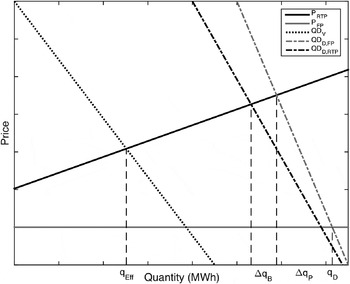
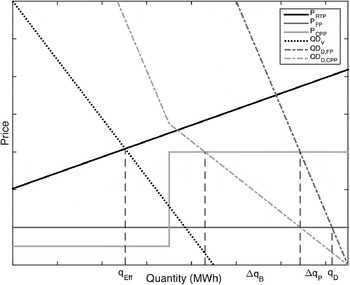
Figure 4 presents the demand curves for consumers under imagined FP or real-time tariffs. The optimal quantity demanded q Eff is determined by the intersection of the ‘experienced’ demand curve QD v with the RTP, P RTP . However, consumers display some bias in their electricity consumption decisions. For instance, they might display present bias, valuing present consumption more than a bill to be paid weeks in the future. They might also be biased by inattention, such that they leave on electricity-consuming devices that provide no utility to them. Therefore, the actual quantity consumed under the FP, q D is given by the intersection of the customers ‘decisional’ demand curve QD D,FP with the FP, P FP . This is a peak period, where P RTP > P FP , so given the price mismatch and the behavioral biases, q D > q Eff .
Benefits from a real-time price: price alignment and decisional bias reduction.

In this example, there are two separate benefits of moving to the RTP, as shown in Figure 4. The first is due to the change in price. When the price is increased to the wholesale RTP, quantity demanded decreases accordingly by ∆q P . The second benefit is due to a reduction in the behavioral bias exhibited by consumers, as evidenced by the fact that the demand curve under the RTPs QD D,RTP has moved closer to the demand curve derived from experienced utility. Behavioral benefits reduce the market-clearing quantity by ∆q B . This could happen if, for instance, an RTP increases attention towards the costs of electricity and provides a framing effect that increases the response to perceived high prices.
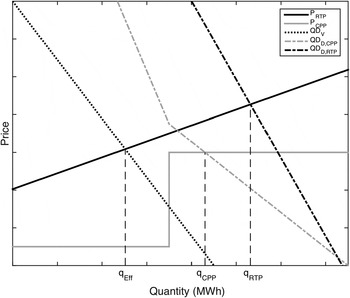
Next, consider a CPP mechanism, as shown in Figure 5. Imagine that under the CPP tariff, the utility sends out a text message a day in advance of estimated high-price periods. This text message reduces consumer inattention, and it reduces present bias and hidden cost because it directly reminds customers of the price they will pay for electricity consumed. For that reason, the consumption bias for many customers is reduced, and customers become more sensitive to a higher price, like the one they will face during the critical peak period, P CPP . The demand curve drawn from the decisional utility during the peak period is given by QD D,CPP .
Benefits from a critical-peak price: some price alignment and behavioral bias reduction.

In this example as well, there are two separate benefits of moving to the TVP, in this case modeled as a CPP. The first is due to the change in price. When the price is increased to be more reflective of the higher wholesale price, quantity demanded decreases accordingly by ∆q P . The second benefit is due to a reduction in the behavioral bias exhibited by consumers, as evidenced by the fact that the demand curve under the RTPs QD D,CPP has moved closer to the demand curve derived from experienced utility. Behavioral benefits reduce the market-clearing quantity by ∆q B .
Compared to the RTP, the price benefits of the CPP are lower in this period, because the wholesale price exceeds the CPP and is closer to the true cost of energy supply. However, compared to RTP, the benefits of the CPP rule of reducing behavioral biases are much higher. As a result, as shown in Figure 6, the resulting market-clearing quantity under the CPP is actually closer to the efficient quantity, q Eff < q CPP < q RTP . In this example of a peak period with biased consumers, the CPP is an improvement over the RTP, even though it is less cost reflective, because it is associated with greater benefits from a reduction in behavioral biases.
The consumption quantity demanded from a critical-peak price can be more efficient than from a real-time price if the critical-peak price is more effective at reducing behavioral biases.

To ground this example, consider an imagined but practical situation that illustrates the above scenario, where the average bias under an RTP is greater than that under a CPP tariff. Imagine that RTP and CPP options are introduced to consumers in January, when demand, which is dominated by air-conditioning load, is not particularly high. On the RTP rate, consumers are exposed to the RTP, and at the end of each month they receive the month's price history and a rate explainer as part of their bill. Automatic notifications for high-price periods are offered for free to consumers, but few customers enroll because of the default effect and poor advertising. On the CPP price, customers are alerted by default to ten to fifteen high-price events throughout the year.
Because the tariffs are introduced in the winter, when demand is not particularly high, there are no significant price spikes in the first few months; the price follows the typical pattern of demand, with peaks in the afternoons, but with no significant spikes. For that reason, many RTP customers notice and internalize a certain pattern in prices – the afternoons are more expensive. As the months go on, they reduce demand not in relation to the RTP, which would require high information-gathering costs, but rather in relation to the time of day, based on an approximate average price observed in each period.
Consequently, when the electricity price spikes, the learned bias prevents consumers from responding efficiently to the cost-reflective RTP. On the contrary, CPP customers simply reduce consumption during the hours in which they receive a notification, reflecting the simplicity of the tariff and the associated reduction in information costs. On a critical-peak day, like the one described above, the CPP consumers might actually respond in a more optimal way, even though their price does not reflect the true wholesale cost. (Note that behavioral biases can lead to under-consumption of energy as well, not just over-consumption.)
As shown in the section entitled ‘The regulator's decision’, the RTP is optimal for unbiased consumers with non-reducible transaction costs (i.e., customers for whom b it = 0). However, if the tariff design imposes superfluous transaction costs on individuals, such as through ineffective defaults, the RTP rate may no longer be optimal. For example, if the cost of receiving a price notification is less than the cost of gathering information about RTPs, then costs are reduced when individuals receive notifications automatically during periods when the price is high enough to affect their optimal consumption. The RTP, as it is typically described, does not include automatic high-price notifications, and they are not an intrinsic part of the rate design (as they are with CPP). Thus, if customers would benefit from price notifications, but do not sign up for them because of sign-up costs, default bias or inattention, the RTP price could be suboptimal unless it appropriately employs notifications, such as by default. Research should seek to measure the benefits of automatic notifications and quantify the optimal default notification frequency in order to inform electricity rate design.
If transaction costs have much larger effects than behavioral biases on energy demand, then an RTP rate, with the appropriate price notification policy, is likely to be optimal. But when considering a broader range of biases that consumers may exhibit in the purchase of a low-cost, sometimes relatively inconspicuous product such as energy, it is not clear that a price-reflective rate is the optimal solution to the regulator's tariff decision – at least if it is not accompanied by interventions designed to counteract those biases.
Welfare benefits of TVPs
Biases and targeting
As shown in the example above, a less cost-reflective tariff can be more efficient than the RTP if it provides extra benefits from a greater reduction of consumption bias. However, as shown in the section entitled ‘The regulator's decision’, the RTP is theoretically optimal, under certain standard system assumptions, for unbiased customers. It follows that efficiency can be improved if regulators or utilities are able to target customers, in a similar sense to subsidy targeting as described in existing work (Allcott et al., Reference Allcott, Knittel and Taubinsky2015; Allcott & Sunstein, Reference Allcott and Sunstein2015), in order to offer the most appropriate rate to each set of customers.
Moreover, it is important to consider the different biases a consumer exhibits while consuming electricity through different devices, including automated devices. While the consumer might be subject to some behavioral bias such as inattention with respect to use of household lighting, an automatic air conditioner would respond algorithmically to the price, house temperature and to a predicted probability distribution of future prices; it is fundamentally unbiased. The device through which electricity is consumed offers a natural way to target rate defaults in order to increase the overall efficiency of a package of electricity tariffs. Some utilities have offered separate rates for individual devices: as noted in the Appendix section ‘Electricity details: alternative rates’, Virginia Electric & Power Co. offers controllable water heater options, and several utilities offer separate metering and tariffs for electric car chargers.
The device used to consume electricity, and specifically the feature of whether or not that device is automated, can be used as a way to target consumer device pairs for the appropriate tariff rule and possible subsidy or tax. As shown in existing theoretical work, targeting can increase the efficiency of a subsidy program (Mullainathan et al., Reference Mullainathan, Schwartzstein and Congdon2012; Allcott et al., Reference Allcott, Knittel and Taubinsky2015). Any rate besides the RTP has an efficiency cost, because it is not fully reflective of the RTP. Thus, the appropriate tariff rule could target automated devices, and offer the RTP rate by default to those devices, while suggesting (through defaults, for instance) the bias-correcting rule to consumers for the non-automated devices they use.
Since every other rate besides a RTP is less cost reflective than the RTP, any non-RTP rate carries some opportunity cost compared to the RTP in terms of an efficiency loss from price substitution. As noted, the disadvantages of the RTP might be reduced or eliminated if it is possible to provide effective reminders or information to the relevant consumers, overcoming present bias or inattention. But if such an approach proves ineffective or too costly, some other rate can be superior because of its benefits for reducing consumer bias. However, if an alternative rate is used, it should be well targeted; that is, it should be marketed and focused at consumers without automatic control. Devices with automatic control should be served at the RTP, whenever possible, in order to maximize efficiency.
However, the costs of targeting different rates at automated and non-automated devices may themselves be significant, both in terms of program design and especially due to additional costs for metering. It may therefore become important to think about trade-offs in rate design, because the rates that best engage human consumers are not most efficient for automated devices, and vice versa.
Automated devices: potential benefits and concerns
In theory, automated devices can offer significant cost savings to consumers and to the electricity grid because of their ability to shift demand based on RTPs (Dyson et al., Reference Dyson and Mandel2015). However, there are several questions to be addressed with respect to automated devices and their long-term benefits for reducing average costs for electricity consumption. These questions matter because they affect the extent to which regulations should push for increased usage of such devices and because they affect the terms of trade-off between tariffs that best engage human consumers and tariffs that best engage automated devices.
First, the benefits of automated devices may be overstated. The energy-saving benefits of these devices have typically been measured only through engineering analyses, as in the Rocky Mountain Institute's study (Dyson et al., Reference Dyson and Mandel2015). But in energy efficiency research more broadly, it has become increasingly clear that engineering analysis can overstate the benefits of efficiency upgrades. Furthermore, it is understood that opt-in consumers are not generally representative in terms of their response to TVPs or use of efficiency devices. The most effective work researching consumer responses to TVPs uses empirical measurements in randomized controlled trials; similar research needs to be conducted to measure the effects of automated devices on consumer response to TVPs. Existing research on automated devices represents a promising start (Faruqui & Palmer, Reference Faruqui and Palmer2012), but ultimately these studies should randomly assign automated technologies to customers defaulted into time-varying rates as well, in order to ascertain more general effects. It is also not yet clear how behavioral psychology affects the set-point decisions consumers make for automated devices. For instance, loss aversion may limit the flexibility consumers grant to such devices, even when the set-point is welfare dominated in expectation. The tendency for engineering estimates to overstate the energy-saving value of automated devices and the potential for human behavior to limit their range suggest that the benefits of automated devices may be exaggerated with respect to electricity price response.
Second, snapback effects might be much higher for automated devices (Robinson & Flaim, Reference Robinson and Flaim2014), as opposed to general consumption by individuals. A snapback effect occurs when pricing outside of a peak period increases above the control group, as customers in the treatment group shift electricity away from the peak period into adjacent periods. Depending on the shape of prices throughout the day, snapback can greatly reduce the benefits associated with TVPs. However, no significant snapback effects have been measured for residential customers manually responding to time-varying electricity prices, and Allcott (Reference Allcott2009) estimates that customers respond to peak prices only through conservation, not through energy shifting. Snapback effects are expected to be much higher for automated devices, like air conditioners or car chargers, because of the fundamental requirements that affect their consumption patterns, given fixed set-points. Even though the overall response of manual consumers is lower than what could be expected with automated devices, the snapback effect should remind policy makers not to neglect the benefits of manual reductions in electricity usage when they are considering different rate options for TVPs. Because manual reductions are less likely to result in time-shifting of energy use, they have greater per unit benefits than peak reductions for automated devices.
Future empirical work should focus on automated devices and the benefits they could have in reducing peak consumption (for customers on TVP) and improving social welfare. While these devices undoubtedly aid customer response to TVP, they also increase snapback effects, and engineering estimates of their overall benefits might be overstated. Moreover, welfare calculations could help determine whether targeting different rates at consumer and automated devices could be effective, given additional costs for metering or program design.
Policy recommendations
Three major policy recommendations emerge naturally from the analysis thus far. First, opt-out default rules should be used much more widely to promote use of TVP and to improve customer welfare. For residential consumers, opt in remains the usual practice; opt out is the preferable default. Commercial and industrial customers are still not widely exposed to TVPs, despite well-documented welfare benefits and higher average short-run elasticity of demand than residential consumers. Utilities should work with researchers to see if the default effect also influences commercial and industrial customers, especially if framed in the appropriate context.
Second, the RTP may well turn out to be inferior to TOU prices or CPPs because the former can result in less peak conservation of manually controlled devices than the latter. For that reason, the RTP is not necessarily the most efficient rate option when behavioral biases are considered, though it remains the best rate option for unbiased customers. Notifications could reduce information costs associated with an RTP, so regulators should make sure the appropriate notification scheme and default settings are included as an integral part of rate design.
Third, since automated devices are essentially unbiased customers, a targeting process could be used to place automated devices on RTP rates while placing other consumers on rates more appropriate for their behavioral biases. Below are two practical examples for how this could occur.
In one scenario, residential customers are charged a TOU + CPP rate for all of their consumption. This rate takes into account the likely behavioral biases of customers and offers them a rate with low associated information costs. However, new EnergyStar appliances and electric vehicle chargers would automatically be fitted with a separate monitor that would communicate results to the central smart meter device. By default, these devices would be enrolled in a Contract for Differences with the utility, under which they would collect the difference between the wholesale RTP and the TOU + CPP rate for which they were originally charged. Under this scheme, the automatic device would respond directly to wholesale prices, and the customer would see an extra settlement line on their bill for each automated device. To avoid potential political objections, this settlement could be constrained so that it is only implemented when the customer saves money, which is expected to be the typical result because of the increased information received and flexibility afforded by the automated device. For this policy design to be useful, the cost of monitoring extra devices would need to be smaller than the extra benefits from enrolling the device on the RTP versus metering it at the TOU + CPP rate.
In a second scenario, all customers are charged an RTP, but the price is implemented in such a way that it provides many of the behavioral benefits of alternative price designs. For instance, by default, an RTP should notify consumers automatically of impending high prices, as if they were on a CPP. This type of notification procedure was used in the ComEd pilot study in order to increase consumer participation (Faruqui & Palmer, Reference Faruqui and Palmer2012). Furthermore, the frequency or price point for notifications could be empirically tested in order to determine the optimal notification strategy for reducing consumption bias; because of heterogeneity in consumer bias, the appropriate messaging procedure might be different across customers. This style of rate would not require additional metering costs, and automated devices would be encouraged to respond in an efficient way to the cost-reflective tariff.
Generally, utilities should also work to identify the specific program details that can maximize results. The high heterogeneity in measured values of peak reduction and demand elasticity suggest that program details have a major effect on how consumers respond to TVP. If a utility is considering implementing a TVP as a default, there may be a trade-off between increased notifications and defection; making the program more prominent can improve the customer response, but it could also lower reported customer welfare (if notifications are perceived as an annoyance) or increase drop-outs. If policy makers ultimately see clear welfare benefits in increased electricity conservation during peak hours, they should consider paying regulated utilities in part based on their success at implementing these programs and engendering customer response, as is frequently done in energy efficiency programs. While outside the scope of this work, lessons from those programs can be used to help design policy that provides natural incentives to utilities to develop successful TVP programs, so they incorporate the best behavior research and knowledge to maximize returns.
Conclusion
TVPs for electricity can help reduce cross-subsidies and significantly increase the efficiency of electricity consumption. While utilities increasingly offer forms of time-varying rates on an opt-in basis, overall consumer participation in time-varying rates is low, signaling the weakness of the opt-in design. In response, there is considerable current interest in default TVPs for consumers, which would undoubtedly increase participation. New research by Cappers et al. (Reference Cappers, Spurlock, Todd, Baylis, Fowlie and Wolfram2016) in SMUD suggests that an important set of customers – those who would not have opted in to TOU prices but who do not opt out from default TOU rates – respond to varying prices when defaulted into a TOU tariff. While the default rate argument is usually framed in terms of residential customers, it could also have benefits for commercial and industrial customers, especially if paired with subsidies reflecting system benefits or when carefully framed to emphasize additional hidden costs incurred under the FP rate.
In discussions about new default rates for TVPs, there is continuing disagreement over the preferred rate type: the RTP or a less cost-reflective tariff like TOU or a CPP. In part, this argument centers on politics, because TOU and CPP prices are deemed to be less variable and thus more palatable to consumers. The RTP is generally considered to be the most economically efficient policy. However, the RTP is not necessarily the optimal policy when the behavioral biases of consumers are taken into account.
The best alternative option is the one that maximizes the sum of price and bias-reduction benefits from moving to a more cost-reflective tariff and from reducing behavioral inefficiencies and informational costs for consumers. This can be the RTP, but only if price notifications are effectively designed and offered, such as by default, with behavioral considerations in mind. Notifications for high-priced periods should be considered to be a potentially important part of any RTP that is marketed to residential customers. Targeting should be used, if cost effective, so that unbiased automated devices are exposed to the RTP, even while human consumers pay an alternative tariff that reduces the cost of their biases.
Utilities should take into account the targeting of automated/non-automated devices in order to maximize future welfare gains from TVPs, and they should consider the confluence of program details and behavioral factors in order to develop effective TVP programs that maximize customer response. Regulators should, in turn, continue to improve rewards-based compensation for utilities to ensure that they receive the proper incentive to develop and promote effective programs for TVPs that reduce costs for electricity consumers.
Appendix
Electricity rate details: default rates

Electricity rate details: alternative rates

Electricity rate sources

The regulator's decision: technical exposition
The section entitled ‘The regulator's decision’ presents a generalized analysis of the regulator rate-setting decision and consumer decisions in the face of behavioral biases. Here, we provide additional technical details to supplement the analysis.
Let p t represent the wholesale price paid for one unit of electricity (kWh) during time period t. Then, let p’ it represent the per-unit rate paid by customer i for electricity during period t. The regulatory tariff is a function that maps the wholesale price to the retail price for each customer i for the T-length vector of time periods under consideration (i.e., u i : R T –> RT ). Then, in a given period t, the corresponding element of the function u i (x) is u it (x) and p’ it = u it (p t ).
This type of function could represent the various rate types described in the ‘Background: electricity tariffs’ section. For instance, the RTP is described as u it (p t ) = p t , the wholesale price for the corresponding period t, the CPP as u it (p t ) = {H if p t > α, L otherwise} for some threshold α, with H > L, and the TOU rate as u it (p t ) = e t , constant price in each period, not affected by the wholesale price p t , but with prices varying across periods.
The consumer i consumes q it units of electricity during period t and obtains utility v it , also called the ‘true’ or ‘experienced’ utility. In practice, however, the consumer faces some additional biases and transaction costs, so the consumer's ‘behavioral’ utility in period t is given by d it = v it – b it , where b it accounts for behavioral biases, such as inertia, and reducible transaction costs.
The consumption q it is the result of a mapping of the difference between p’ it and d it to a specific quantity demanded; the consumer apparently optimizes based on d it :
 $$q_{it} = \mathop {\arg \max} \limits_q d_{it}(q) - qp_{it}^{\prime} $$
Note that the consumer is a price taker, so their consumption level has no effect on the market price p
t
and no indirect effect on the tariff price p’
it
. Given the standard assumption that d
it
(q) is increasing and concave in q, the consumer will choose to consume at the level q
it
such that
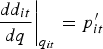 $\left. \displaystyle{dd_{it} \over dq} \right\vert_{q_{it}} = p_{it}^{\prime} $
.
The regulator's goal is to choose some tariff policy u i * that solves the following optimization problem:
 $$\mathop{\max}\limits_{u_i} \sum\limits_t \left(\sum\limits_i v_{it} (q_{it}) - c_t (Q_t) \right) $$
Here,
 $Q_t = \sum\limits_i {q_{it}} $
and q
it
is the amount of energy consumed by customer i in period t, according to equation (1). The cost function c
t
(x) represents the total system cost in period t as a function of the quantity of energy demanded. Assume that the supply side of the market is competitive (i.e., the market price accurately reflects the marginal cost of production), so
 $p_t = \displaystyle{{dc_t} \over {dq}}$
.
Assume that the cost for procuring electricity is increasing and convex in Q
t
(which is a reasonable assumption for the electricity supply stack). Also assume that the experienced or ‘true’ utilities of the consumers are increasing and concave in q
it.
Then, the social welfare in equation (2) is similarly maximized when each consumer i consumes q
it
during period t such that
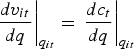 $\left. {\displaystyle{{dv_{it}} \over {dq}}} \right\vert_{q_{it}} = \left. {\displaystyle{{dc_t} \over {dq}}} \right\vert_{q_{it}}$
(i.e., the standard efficient market clearing quantity where marginal utility equals marginal cost at the equilibrium).
Then, if
 $d_{it}(x) = v_{it}(x)\forall x,i,t$
(i.e., if for all customers
 $b_{it} = 0\forall i,t$
), the optimal tariff is the cost-reflective RTP
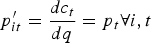 $p_{it}^{\prime} = \displaystyle{{dc_t} \over {dq}} = p_t\forall i,t$
.
However, based on the internalities model, it is clear that a pass-through of the real-time wholesale price is no longer the optimal policy during period t if
 $\exists $
i s. t. b
it
≠ 0 (Allcott & Sunstein, Reference Allcott and Sunstein2015). Assume that during this period the optimal quantity that could be chosen by a consumer i is
 $\hat q_{it}$
, so
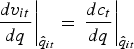 $\left. {\displaystyle{{dv_{it}} \over {dq}}} \right\vert_{{\hat q}_{it}} = \left. {\displaystyle{{dc_t} \over {dq}}} \right\vert_{{\hat q}_{it}}$
(i.e., at the optimal quantity the consumer's marginal experienced benefit equals the marginal cost). Then, the optimal tax/subsidy η
it
for the specific player in a competitive market is such that
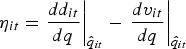 $\left. {\eta _{it} = \displaystyle{{dd_{it}} \over {dq}}} \right\vert_{{\hat q}_{it}} - \left. {\displaystyle{{dv_{it}} \over {dq}}} \right\vert_{{\hat q}_{it}}$
. In other words, consumer i is charged
 $p_{it}^{\prime} = p_t + \eta _{it}$
and therefore has the quantity demanded q
it
*, which is the efficient quantity that maximizes social welfare. When consumers have behavioral biases or reducible transaction costs (i.e., v
it
≠ d
it
), the pass-through of the RTP is not necessarily the optimal tariff.