INTRODUCTION
Differences in vertical distribution are commonly observed in marine bacteria, mesozooplankton and ichthyoplankton (Tanaka & Rassoulzadegan, Reference Tanaka and Rassoulzadegan2002; Yamaguchi et al., Reference Yamaguchi, Watanabe, Ishida, Harimoto, Furusawa, Suzuki, Ishizaka, Ikeda and Takahashi2002; Brugnano et al., Reference Brugnano, Granata, Guglielmo and Zagami2012; Siokou et al., Reference Siokou, Zervoudaki and Christou2013; de Macedo-Soares et al., Reference de Macedo-Soares, Garcia, Freire and Muelbert2014; Isla et al., Reference Isla, Scharek and Latasa2015; Munk et al., Reference Munk, Nielsen and Hansen2015; Rodriguez et al., Reference Rodriguez, Cabrero, Gago, Guevara-Fletcher, Herrero, Hernandez de Rojas, Garcia, Laiz-Carrion, Vergara, Alvarez, Piñero and Saborido-Rey2015). The heterogeneous distribution of aquatic organisms has been studied since the early 20th century (Maycas et al., Reference Maycas, Bourdillon, Macquart-Moulin, Passelaigue and Patriti1999; Tiberti & Iacobuzio, Reference Tiberti and Iacobuzio2013). Investigations have also been made concerning their diurnal movements in the water column (Roe, Reference Roe1974; Krause & Radach, Reference Krause and Radach1989). The vertical distribution of marine organisms is correlated with their physiological responses to several biological and physical factors. The former include visual predator avoidance, ontogenetic transport and dispersion regulation, and resource competition (Cha et al., Reference Cha, McGowan and Richards1994; Hill, Reference Hill1998; Williamson et al., Reference Williamson, Fischer, Bollens, Overholt and Breckenridge2011; Jung-Hoon et al., Reference Jung-Hoon, Minho, Youn and Woong-Seo2013; Palomares-Garcia et al., Reference Palomares-Garcia, Gómez-Gutiérrez and Robinson2013; Harris et al., Reference Harris, Young, Revill and Taylor2014). Environmental factors include the hydrographic structure of the water column, light intensity, water temperature, salinity, density, dissolved oxygen (DO), current speed and current direction (Cha et al., Reference Cha, McGowan and Richards1994; Williamson et al., Reference Williamson, Fischer, Bollens, Overholt and Breckenridge2011; Brugnano et al., Reference Brugnano, Granata, Guglielmo and Zagami2012; Jung-Hoon et al., Reference Jung-Hoon, Minho, Youn and Woong-Seo2013). Some mesozooplankton such as the Chaetognatha and Euphausiacea and larval fish families like Myctophidae and Gonostomatidae respond to light and other stimuli and are active migrators (Richards, Reference Richards2006; Lie et al., Reference Lie, Tse and Wong2012; Sogawa et al., Reference Sogawa, Sugisaki, Saito, Okazaki, Ono, Shimode and Kikuchi2016). The diel vertical migration of zooplankton is considered an anti-predatory response. It is triggered by changes in light intensity, but other factors are also involved in its regulation (Frost & Bollens, Reference Frost and Bollens1992; Hays, Reference Hays2003; Pearre, Reference Pearre2003; Isla e t al., Reference Isla, Scharek and Latasa2015). Zooplankton passively contribute to the carbon interchange along the water column with their own biomass when they die and sink along with faeces, mucous feeding webs, exoskeletons and carcasses (Angel, Reference Angel and Tyler2003; Conley & Hopkins, Reference Conley and Hopkins2004; Castro et al., Reference Castro, Richards and Bonecker2010; Mayzaud & Pakhomov, Reference Mayzaud and Pakhomov2014; Steinberg & Landry, Reference Steinberg and Landry2017). The vertical migration of zooplankton is an important component of the biological pump between the ocean surface and deeper waters (Steinberg & Landry, Reference Steinberg and Landry2017).
The western boundary current system is located on the continental slope of Brazil between latitudes 22°S and 30°S. The upper part of this system is the Brazil Current flowing south-west towards the subtropical South Atlantic gyre (Peterson & Stramma, Reference Peterson and Stramma1991). The lower part of the system consists of the Antarctic Intermediate Water (AAIW) with a variable circulation pattern along the Brazilian coast (Boebel et al., Reference Boebel, Schmid and Zenk1997; Müller et al., Reference Müller, Ikeda, Zangenberg and Nonato1998). The circulation has intense mesoscale activity (Gabioux, Reference Gabioux2008) with meandering, cyclonic and anticyclonic structures (Campos et al., Reference Campos, Gonçalves and Ikeda1995, Reference Campos, Ikeda, Castro, Gaeta, Lorenzzetti and Stevenson1996).
The complexity of the water mass circulation has a profound impact on the natural resource diversity and ecological vulnerability of some marine areas (Gonzalez-Silvera et al., Reference Gonzalez-Silvera, Santamaria-del-Angel, Garcia, Garcia, Millán-Nuñez and Muller-Karger2004). Some studies reported on the vertical distribution of mesozooplankton and ichthyoplankton in the South-west Atlantic Ocean (Berasategui et al., Reference Berasategui, Menu Marque, Gomez-Erache, Ramírez, Mianzan and Acha2006; Dias et al., Reference Dias, Araujo, Paranhos and Bonecker2010; Bonecker e t al., Reference Bonecker, Katsuragaewa, Castro, Gomes, Namiki and Zani-Teixeira2012, Reference Bonecker, Namiki, Castro and Campos2014a, Reference Bonecker, Araujo, Carvalho, Dias, Loureiro Fernandes, Migotto and Oliveirab). None, however, addressed diurnal variations in vertical distribution. The aim of the present study was to examine the distribution and abundance of mesozooplankton and larval fish along the water column to a depth of 1200 m and to correlate the plankton with environmental variables. We expected mesozooplankton distribution to vary with day/night period and water mass. The results of this study help to elucidate the diel vertical migration patterns of mesozooplankton and larval fish in a tropical oceanic region.
METHODS
Study area
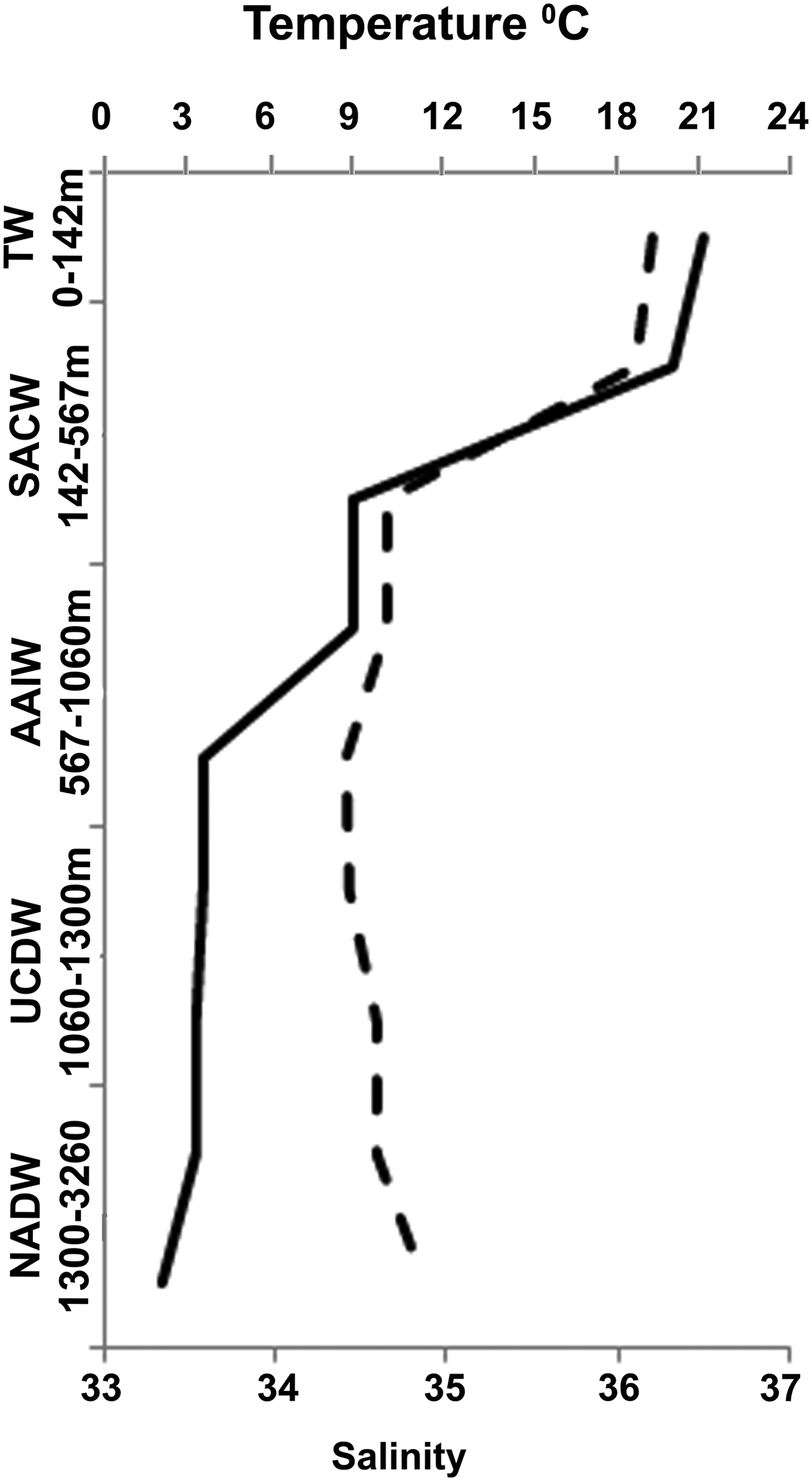
The northern region of Rio de Janeiro State has five water masses (Figure 1). The nutrient-poor Tropical Water (TW; temperature (T) >20 °C and salinity (S) >36.20) and the South Atlantic Central Water (SACW; 8.72 °C < T < 20 °C and 34.66 < S < 36.20) are found in the upper water column layers (Figure 1). At deeper levels, there are the cold waters of the Antarctic Intermediate Water (AAIW; 3.46 °C < T < 8.72 °C and 34.42 < S < 34.66), the Upper Circumpolar Deep Water (UCDW; 3.31 °C < T < 3.46 °C and 34.42 < S < 34.66) and the North Atlantic Deep Water (NADW; 2.04 °C < T < 3.31 °C and 34.59 < S < 34.87) (Mémery et al., Reference Mémery, Arhan, Alvarez-Salgado, Messias, Mercier, Castro and Rios2000; Silveira, Reference Silveira2007; Bonecker et al., Reference Bonecker, Katsuragaewa, Castro, Gomes, Namiki and Zani-Teixeira2012, Reference Bonecker, Araujo, Carvalho, Dias, Loureiro Fernandes, Migotto and Oliveira2014b).
Salinity and temperature of the five water masses (0–3260 m) in the Campos Basin, central Brazilian coast. Modified from Bonecker et al. (Reference Bonecker, Araujo, Carvalho, Dias, Loureiro Fernandes, Migotto and Oliveira2014b). Solid line, temperature; dashed line, salinity. SS, subsurface water; SACW, South Atlantic Central Water; AAIW, Antarctic Intermediate Water; UCDW, Upper Circumpolar Deep Water; NADW, North Atlantic Deep Water.

Sampling collection and processing
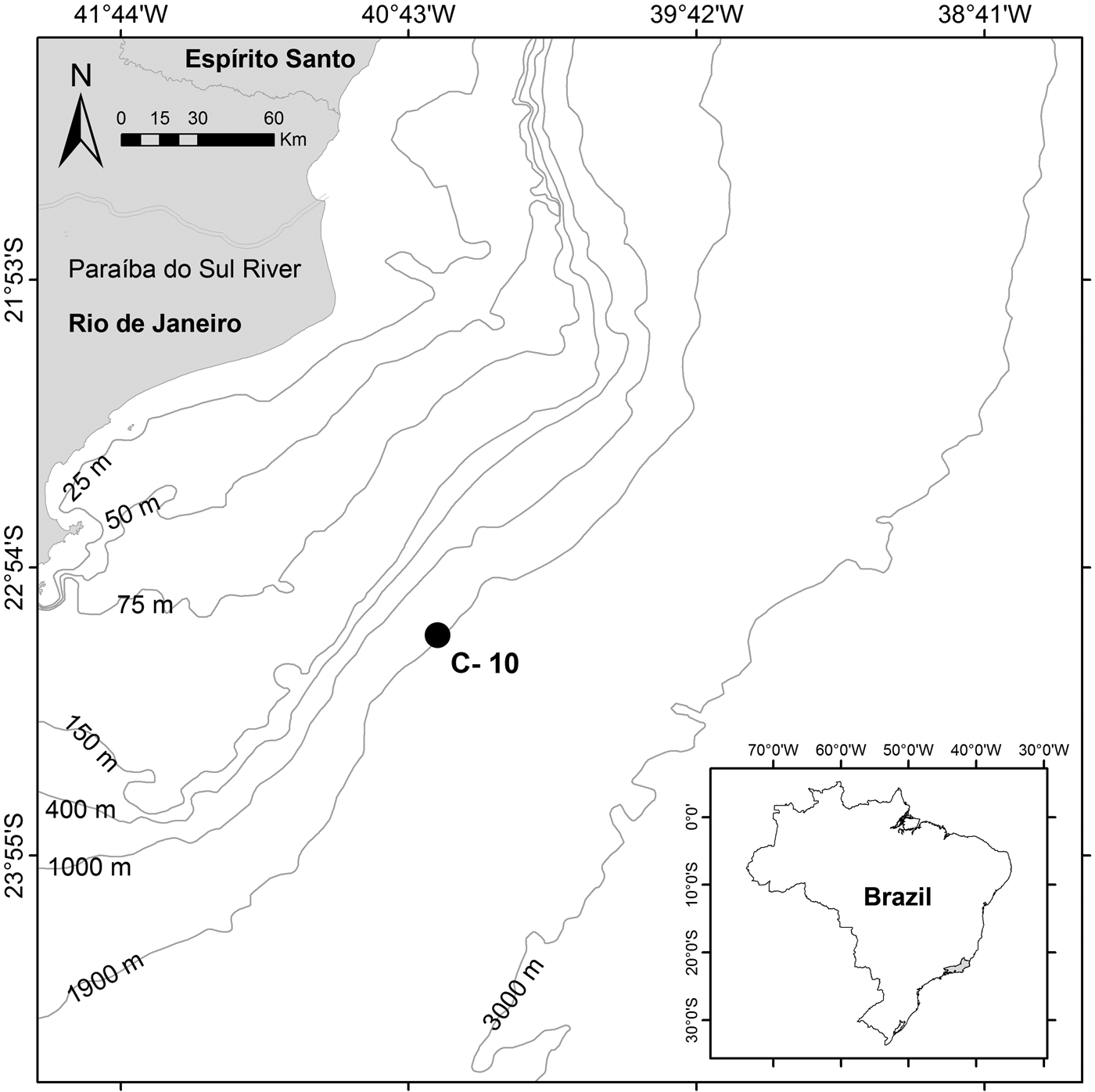
Water, heterotrophic bacteria and zooplankton samples were collected at an oceanographic station (23°14′1″S 40°42′19″W) at four depths corresponding to the previously defined water masses: TW (1 m), SACW (250 m), AAIW (800 m) and UCDW (1200 m) (Figure 2). These sampling depths represent each water mass nucleus. Samples were collected for eight consecutive days in the rainy season (February 2010) in the daytime (06:57 to 16:15 h) and at night (19:45 to 05:32 h) (GMT + 3). Fourteen samples were collected at night and 18 during the day. Diurnal samples were considered replicates, and the same was done with the samples collected at night.
Sampling station off the central Brazilian coast surveyed in this study. Lines indicate isobaths.

Water temperature and salinity were determined with a Rosette system fitted with a CTD profiler (Sea-Bird Electronics, Inc., Bellevue, WA, USA). Water samples were collected using a GO-FLO bottle (General Oceanics, Miami, FL, USA) for the analysis of inorganic nutrients (nitrate, silicate and orthophosphate). These were determined using standard oceanographic methods (Grasshoff et al., Reference Grasshoff, Ehrhardt and Kremling1999). DO in the water column was measured continuously using a sensor coupling in the CTD. Temperature, salinity and samples for nutrient analysis and DO were obtained at each collection. A total of 32 data points was determined for each variable. Detailed methodologies and discussions on the hydrochemistry of the study area have been presented elsewhere (Rodrigues et al., Reference Rodrigues, Marinho, Jonck, Gonçalves, Brant, Paranhos, Curbelo and Falcão2014; Bonecker et al., Reference Bonecker, Araujo, Carvalho, Dias, Loureiro Fernandes, Migotto and Oliveira2014b; Dias et al., Reference Dias, Araujo, Vianna, Loureiro Fernandes, Paranhos, Suzuki and Bonecker2015; Suzuki et al., Reference Suzuki, Rezende, Paranhos and Falcão2015).
Samples for the assessment of the abundance of bacteria (autotrophic and heterotrophic) were collected in Niskin bottles and then transferred to 2-ml Eppendorf vials. They were fixed in situ with a mixture of 1% v/v paraformaldehyde and 0.05% v/v glutaraldehyde, frozen in liquid nitrogen, and maintained there until analysis (Gasol & del Giorgio, Reference Gasol and del Giorgio2000; Andrade et al., Reference Andrade, Gonzalez, Araujo and Paranhos2003). In the laboratory, aliquots of heterotrophic bacterial samples were stained with SYBR Green I (Molecular Probes, Eugene, OR, USA) at a final concentration of 5 × 10⁻⁵ of the commercial stock solution (Gasol & del Giorgio, Reference Gasol and del Giorgio2000; Andrade et al., Reference Andrade, Gonzalez, Araujo and Paranhos2003). They were analysed using a FACSCalibur flow cytometer (BD Biosciences, San Jose, CA, USA) equipped with a 488-nm argon laser. Prokaryotic heterotrophic cells with high- or low nucleic acid content (HNA and LNA, respectively) were detected, identified and quantified based on their signatures in a side scatter plot (X-axis; correlated by size) against green fluorescence (Y-axis; SYBR Green I staining; correlated by nucleic acid content) (Gasol & del Giorgio, Reference Gasol and del Giorgio2000; Andrade et al., Reference Andrade, Gonzalez, Araujo and Paranhos2003). Autotrophic bacteria (Synechococcus and Phrochlorococcus) were analysed with the same instrument using the autofluorescence of pigments (chlorophyll on the red detector, and phycoerythrin on the orange detector). The abundance of heterotrophic bacteria was calculated by subtracting the autotrophic contribution (Gasol & del Giorgio, Reference Gasol and del Giorgio2000).
Horizontal hauls were performed using a Midi-type Hydro-Bios MultiNet® (aperture 0.25 m2) fitted with a set of two nets (mesh apertures 200 and 500 µm) used to sample each water mass separately to prevent cross-contamination. At each predetermined depth, hauls were performed at a speed of two knots with an open–close mechanism operated by electronically transmitted commands. The MultiNet was equipped with a depth sensor. The haul depth was controlled during the entire procedure to ensure that the net was towed horizontally. In TW and SACW, hauls were run for 10 min whereas in AAIW and UCDW the nets were towed for 15 min due to the low organism density in the deeper waters. Water volume and haul depth data were transmitted in real time to a computer on board the ship. Filtration efficiency and water volume were measured using flowmeters. The average water volumes filtered through the 200-μm mesh were 116.0 ± 40.4 m−3, 89.0 ± 31.3 m−3, 126.8 ± 42.1 m−3 and 104.5 ± 28.8 m−3 in TW, SACW, AAIW and UCDW, respectively. The mean water volumes filtered through the 500-μm net were 132.9 ± 39.2 m−3, 96.8 ± 27.9 m−3, 121.6 ± 29.6 m−3 and 112.0 ± 30.2 m−3 in TW, SACW, AAIW and UCDW, respectively.
The samples were immediately fixed in 4% v/v buffered formalin. Mesozooplankton were analysed in 29 samples collected with a 200-μm mesh net. A 500-μm net was used to harvest 32 larval fish samples. The difference in the numbers of mesozooplankton and larval fish samples was the result of logistical problems during the hauls. In the laboratory, the mesozooplankton were divided into subsamples using a Folsom's Plankton Sample Splitter (Hydro-Bios, Am Jägersberg, Altenholz, Germany) (McEwen et al., Reference McEwen, Johnson and Folsom1954). The degree of subsampling was adjusted according to the organism density so that 100 individuals per taxonomic group were allocated to each sample. The lots were sorted and counted from fractions of 1/16–1/1024 in TW and from 1/1–1/32 in SACW. Organisms present in all AAIW and UCDW samples were completely sorted. The samples collected using the 500-μm mesh were entirely sorted for larval fish. The mesozooplankton and larval fish catches were standardized to the number of individuals m−3. The mesozooplankton groups (Mollusca: Cephalopoda, Branchiopoda, Copepoda, Euphausiacea, Decapoda, Chaetognatha, Appendicularia, Salpida and Doliolida) and the larval fish were identified to the lowest taxonomic level possible using specialized literature (Boltovskoy, Reference Boltovskoy1999; Bonecker, Reference Bonecker2006; Bonecker & Castro, Reference Bonecker and Castro2006; Richards, Reference Richards2006; Bonecker et al., Reference Bonecker, Namiki, Castro and Campos2014a).
Data analysis
Daytime/night-time abundance, vertical density differences, and the interactions between these two factors were tested using generalized linear models (GLM) with gamma family (dispersion = 1). We used the densities of total mesozooplankton, mesozooplankton groups with >5% relative abundance (Copepoda, Branchiopoda, Mollusca, Euphausiacea, Chaetognatha, Appendicularia, Doliolida, Salpida), total larval fish, larval fish families comprising >10% of the total catch, heterotrophic bacteria, %HNA bacteria and %LNA bacteria. Because autotrophic bacterioplankton were only detected in the surface layers, they were not included in the data analyses. A low additive constant of one was added to the density data to eliminate zero values in the matrix because the gamma family does not allow for them. The results were considered significant only when P < 0.05. The analyses were performed using R v.2.12.1 (R Development Core Team, 2010; http://www.r-project.org).
Principal component analysis (PCA) was used to define the similarities between the samples according to environmental descriptors (continuous variables) and to define how the observed patterns relate to the environment. The environmental descriptors were temperature, salinity, DO, nitrate, silicate and orthophosphate. The environmental variables were standardized and normalized for the different water masses (TW, SACW, AAIW and UCDW) before the PCA was run. Mesozooplankton, larval fish, heterotrophic bacterial abundance, %HNA and %LNA were added as categorical supplements. The correlation matrix was used to calculate eigenvectors and principal components (PC) which were ranked in the order of significance. The broken-stick method was used as a stopping rule in the PCA (Jackson, Reference Jackson1993). This analysis was performed using PCORD v.5 (McCune & Mefford, Reference McCune and Mefford1999). Scores of the retained PCA axes were used as new variables to determine whether the environmental data varied with depth by using Gaussian ANOVA. The results were considered significant only when P < 0.05. The analyses were performed using R v.2.12.1 (R Development Core Team, 2010; http://www.r-project.org).
A hierarchical agglomerative cluster analysis was computed with the Sorenson similarity index based on the presence or absence of mesozooplankton groups with >5% relative abundance. The matrix was based on 90 species and 29 samples. A dendrogram was constructed using the weighted pair group of arithmetic averages method. Similarity percentages (SIMPER; Clarke & Warwick, Reference Clarke and Warwick1994) and the Euclidean distance index were used to identify the species that contributed the most to the average similarity and dissimilarity within each group. All analyses were run with PRIMER v.6.0 according to the method described by Clarke & Warwick (Reference Clarke and Warwick1994).
For the PCA and cluster analyses, three samples were excluded because they did not match the others obtained from the mesozooplankton collection using the 200-μm net deployment.
We performed an indicator species analysis (ISA; Dufrêne & Legendre, Reference Dufrêne and Legendre1997) to include species abundance data and identify the indicator taxa for each water mass (TW, SACW, AAIW and UCDW) and time period (day, night). The indicator value (IndVal) of a taxon is the product of the relative frequency of its occurrence and its relative average abundance in previously defined groups multiplied by 100. A 100% ISA index value is obtained when all representatives of a species are found within a single sample group and the species occurs in all the samples of that group. A species was considered an indicator of a particular water mass when its IndVal was >70% and significantly higher than that compared to one thousand random samples of plots with the same number of species occurrences. Species for which the IndVal was <70% were considered detectors (Van Rensburg et al., Reference Van Rensburg, McGeoch, Chown and Jaarsveld1999; McGeoch et al., Reference McGeoch, Rensburg and Botes2002). These values were statistically analysed using the Monte Carlo test to establish reliable significance levels (P < 0.05). The analysis was performed using PCORD v.5.
RESULTS
Environmental data
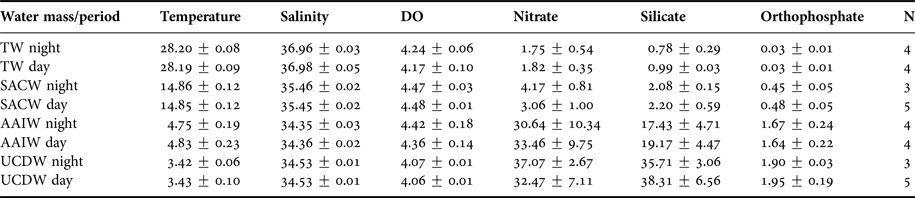
Temperature, salinity and DO were distributed along a typical oceanic gradient towards deeper waters, being more variable at the surface (Table 1). The mean water temperature ranged from 3.4 °C (UCDW) to 28.2 °C (TW). Salinity was relatively stable in deeper waters (mean < 34.6), as did DO (mean < 4.5 mg l−1). Nutrient concentrations were highest in deeper waters (mean > 30 µmol l−1 for nitrate, >17 µmol l−1 for silicate, and >1.6 µmol l−1 for orthophosphate (Table 1).
Means and standard deviations of the environmental variables (temperature, °C; salinity, dissolved oxygen (DO), ml l−1; nitrate, silicate, and orthophosphate, μmol l−1) measured in TW, SACW, AAIW and UCDW in the daytime and at night. N, number of samples.

Bacteria, mesozooplankton and larval fish distributions
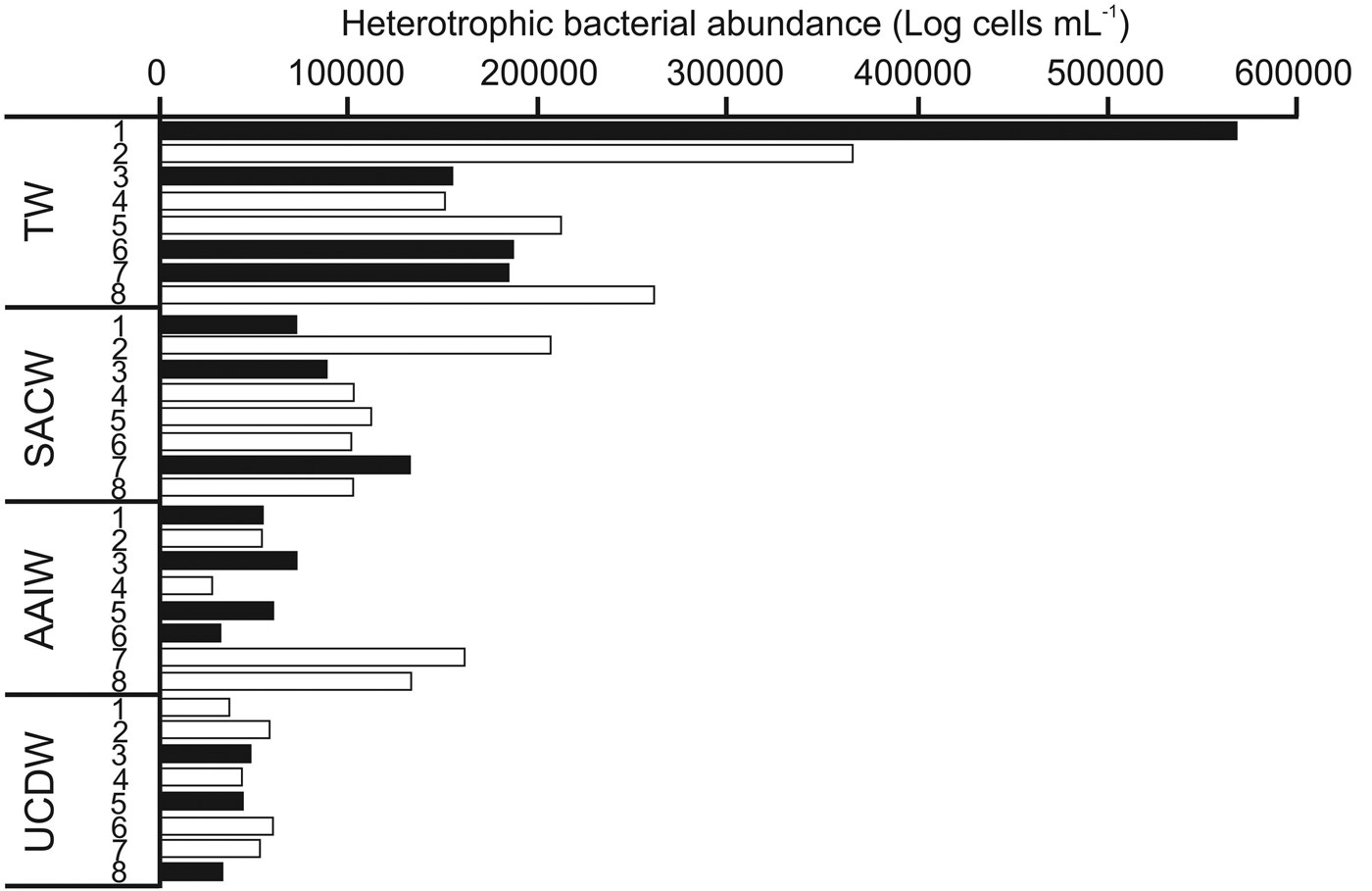
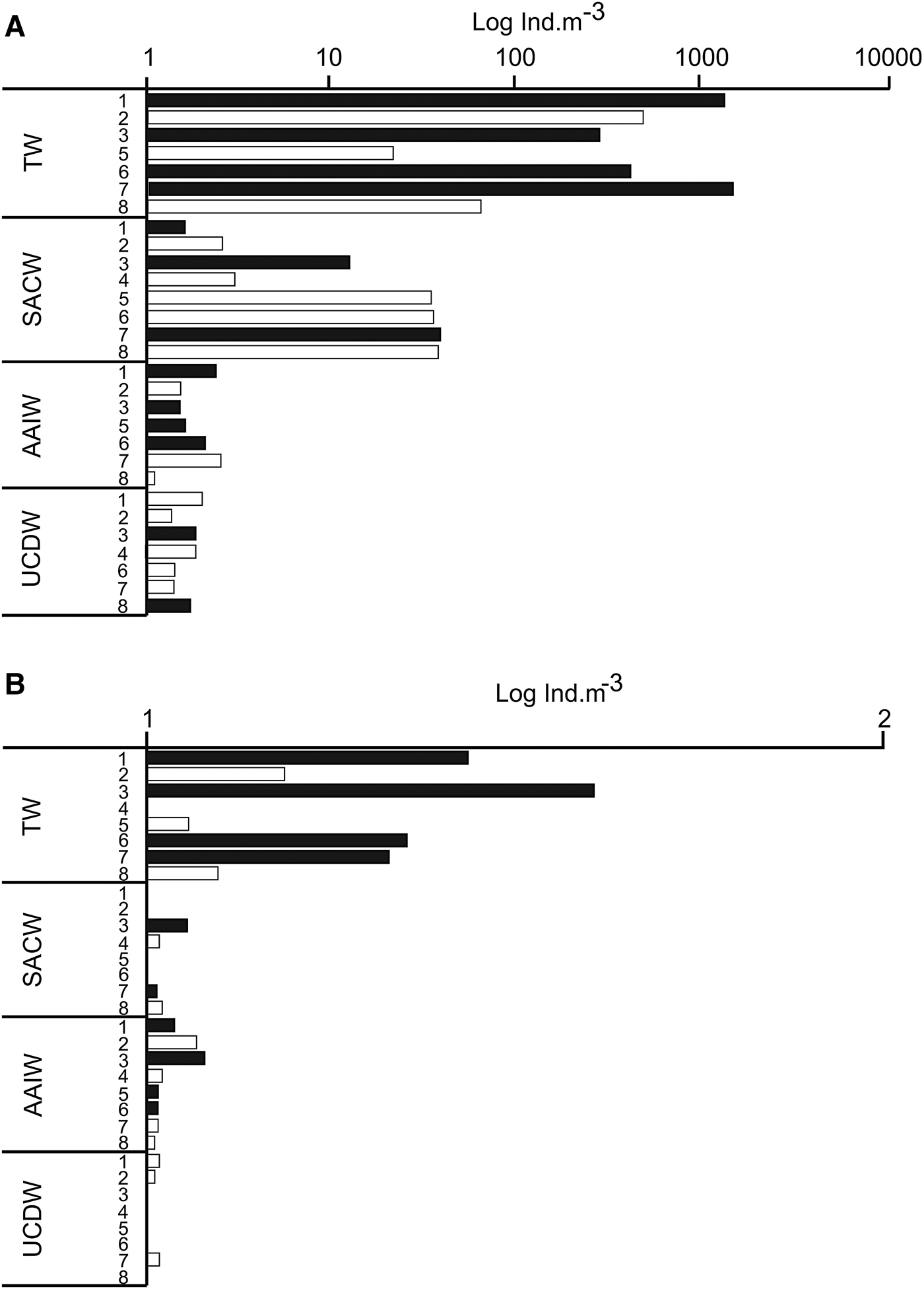
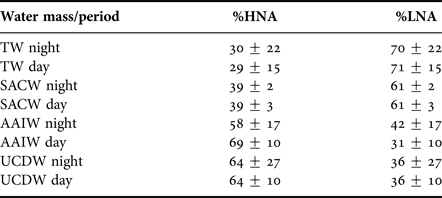
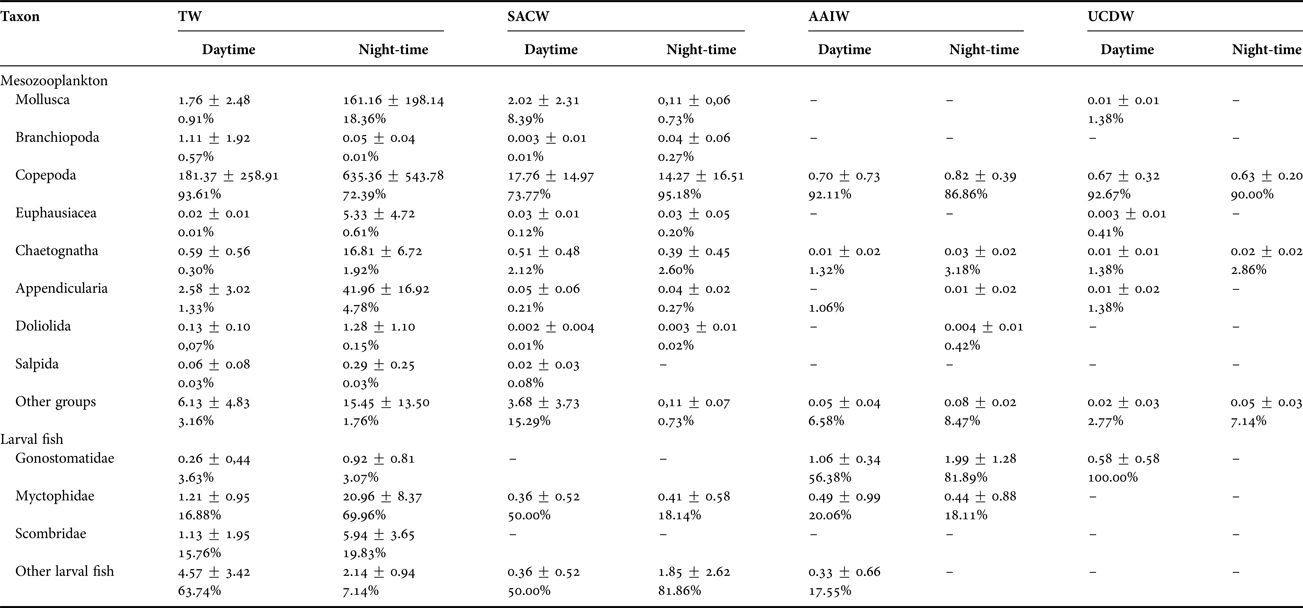
The autotrophic bacterioplankton group was dominated by Prochlorococcus (between 2.7 and 8.4 × 10⁴ cells ml−1), with smaller contribution of Synechococcus (between 0.8 and 3.5 × 10³ cells ml−1). The contribution of autotrophic bacteria to microbial biomass in the surface waters (TW) ranged from 7 to 18%, whereas its contribution was negligible below 200 m. The abundance of heterotrophic bacteria decreased one order of magnitude from the surface (1.5 to 5.7 × 10⁵ cells l−1) to deep waters (3.0 to 6.0 × 10⁴ cells ml−1; Figure 3), and these differences were significant (P < 0.05). No interaction was observed between the water masses and day/night period. Among heterotrophic bacterial subgroups, LNA bacteria dominated the euphotic zone constituting 80–90% of the total counts. Total heterotrophic bacteria decreased towards deep waters, however an increase in % HNA cells were observed and such bigger cells dominated microbial biomass at deep waters (Table 2). Similar to the results of heterotrophic bacterial abundance, significant differences were observed only for water masses (P < 0.05). The distributions of mesozooplankton and larval fish within each water mass followed the same pattern as that observed for bacteria. The highest abundance of total mesozooplankton and larval fish was observed in TW and SACW (Figure 4). The densities of each mesozooplankton group were highest in TW at night except for the Branchiopoda, which were more numerous in the daytime (Table 3). Copepoda and Chaetognatha were present in all water masses and in both sampling periods whereas Branchiopoda and Salpida occurred only in TW and SACW (Table 3). Gonostomatidae (TW to UCDW) and Myctophidae (TW to AAIW) larval fish showed wide vertical distributions whereas scombrids were detected only in TW. Myctophidae and Scombridae densities were highest in TW during the night whereas gonostomatids occurred mainly in AAIW at night (Table 3). Copepoda was the most abundant group (72–95%), followed by mollusc larvae (1–18%). The Gonostomatidae predominated (3–100%), and they were the only larval fish representatives in UCDW (Table 3).
Heterotrophic bacterial abundances collected in the daytime (white) and at night-time (black) in TW, SACW, AAIW and UCDW. Abundance is expressed as log10 cells ml−1. Consecutive sampling days are labelled from 1–8.

Total abundance of organisms collected during the day (white) and at night (black) in TW, SACW, AAIW and UCDW. Abundance is expressed as log10 of the number of specimens m−3 for mesozooplankton (a) and larval fish (b). Consecutive sampling days are labelled from 1–8.

Means and standard deviations of the heterotrophic bacteria groups (%HNA and %LNA) measured in TW, SACW, AAIW and UCDW in the daytime and at night.

Mean abundance, standard deviation (number of specimens m−3), and relative abundance (%) of the most abundant mesozooplanktonic groups and larval fish families collected during the day and at night from TW, SACW, AAIW and UCDW. –, absence of the organisms listed.

Despite what was described earlier no interaction was observed between the water masses and day/night period in terms of total mesozooplankton and larval fish abundance. Significant differences were detected only among the water masses (P < 0.05). Nevertheless, individual analyses of the most abundant mesozooplankton and larval fish families revealed significant (P < 0.05) differences in the interactions between vertical distribution and daytime/night-time abundance, but only for the Euphausiacea, Chaetognatha, Salpida and Doliolida.
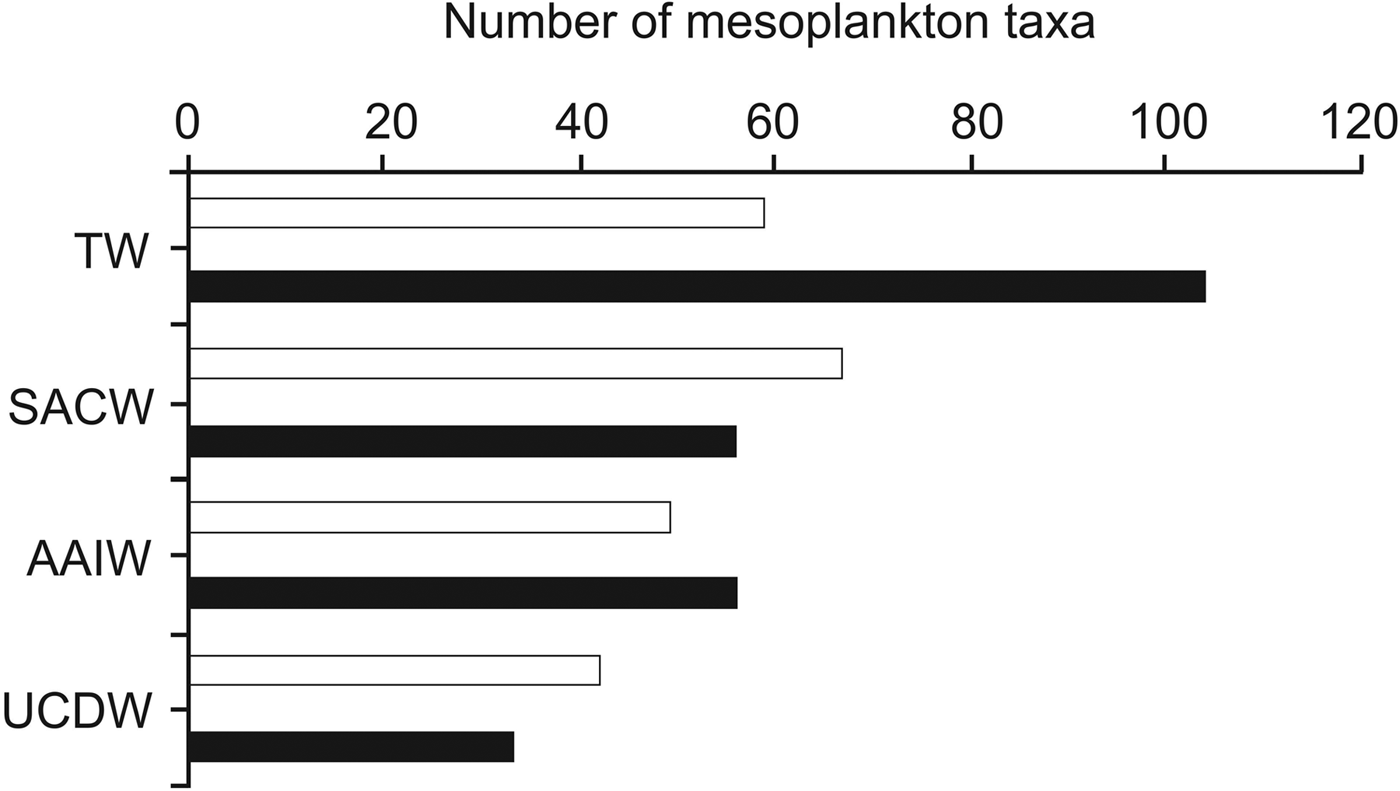
A total of 154 mesozooplankton species (two molluscs/cephalopods, two branchiopods, 112 copepods, three larval decapods, 12 euphausiids, 10 chaetognaths, eight appendicularians, two doliolids, and three salpids) and 18 larval fish species were identified. The highest number of taxa was obtained in TW at night (Figure 5). To the best of our knowledge, the present study is the first to report on the copepod Nullosetigera impar in the South-west Atlantic Ocean. This species occurred in AAIW during both time periods. Molluscs were the second most numerous group in TW (Table 3).
Number of mesozooplankton taxa collected during the daytime (white) and at night (black) from TW, SACW, AAIW and UCDW.

Influence of environmental variables
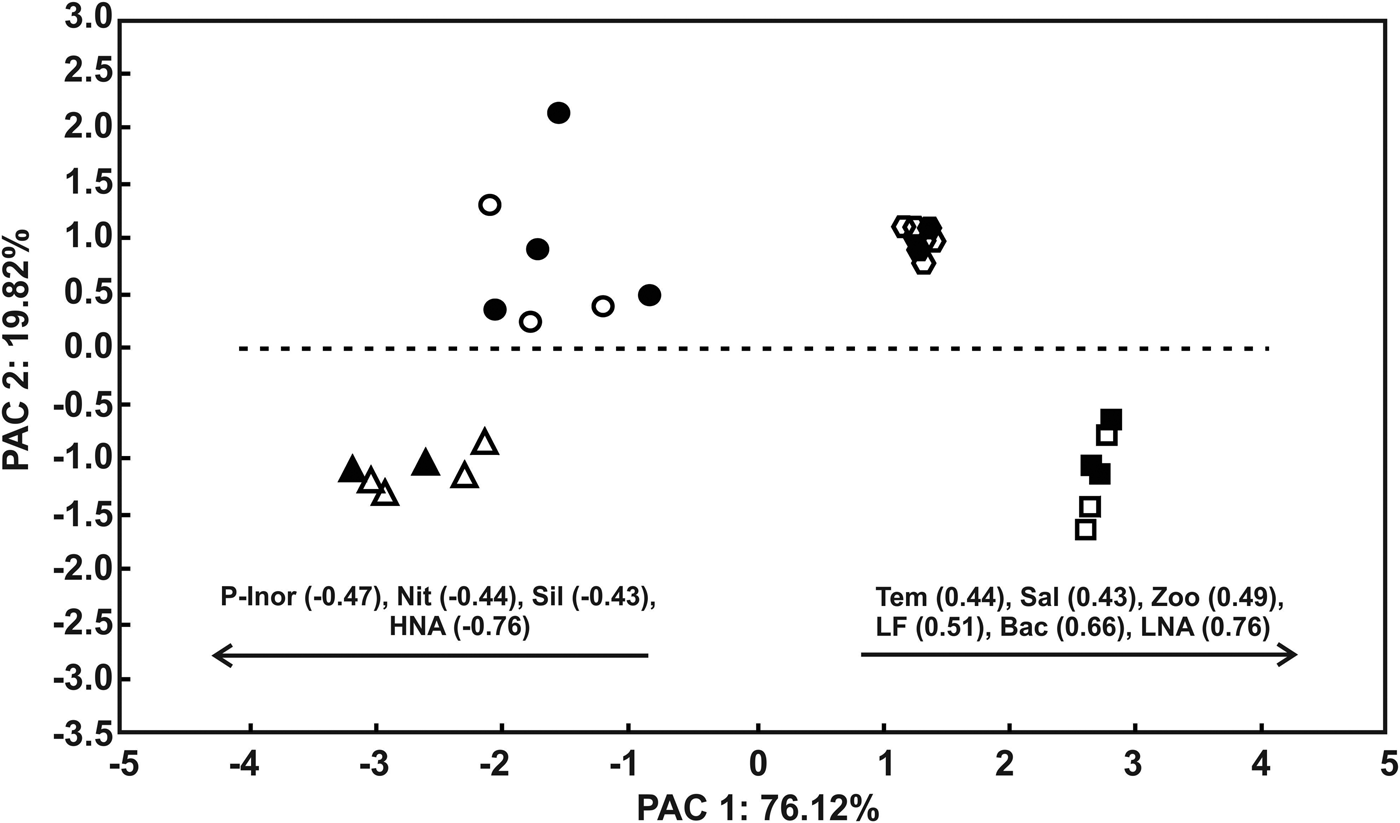
The first two axes of the PCA performed on the environmental factors accounted for 96% of the total variance. Only PC 1 (eigenvalue = 2.45) was retained in the analyses to explain the data variability (76%). The PCA showed that the four water masses were separated where the samples were drawn (axis 1). Temperature and salinity accounted for positive separation (0.44 and 0.43, respectively), whereas orthophosphate, nitrate and silicate explained negative separation (−0.47, −0.44 and −0.43, respectively). TW and SACW (right side of the plot) were influenced by the highest temperatures and salinities and by the lowest orthophosphate, nitrate and silicate concentrations. The deeper water masses (AAIW and UCDW; left side of the plot) showed the opposite trend to the shallower water masses (Figure 6). The scores of axis 1 indicated significant differences between depths (GLM; F = 19.18; df = 3; P < 0.05). Therefore, the variables related to axis 1 varied depending on the water mass characteristics. In TW, the mesozooplankton groups, larval fish, heterotrophic bacterial abundance and LNA bacteria increased as temperature and salinity increased and as inorganic nutrient (nitrate, silicate, and orthophosphate) concentrations decreased. Conversely, HNA bacteria increased with inorganic nutrient concentration in AAIW and UCDW.
PCA output used to summarize environmental and biological variables. Abiotic variables were as follows: temperature (Tem), salinity (Sal), dissolved oxygen (DO), nitrate (Nit), silicate (Sil) and orthophosphate (P-Inor). Mesozooplankton (Zoo), larval fish (LF), heterotrophic bacteria (Bac), LNA bacteria (LNA) and HNA bacteria (HNA) were added as categorical supplements. Samples collected from TW (black square, night; open square, day), SACW (black polygon, night; open polygon, day), AAIW (black circle, night; open circle, day), and UCDW (black triangle, night; open triangle, day) were arranged according to the first two principal components.

Mesozooplankton and larval fish communities
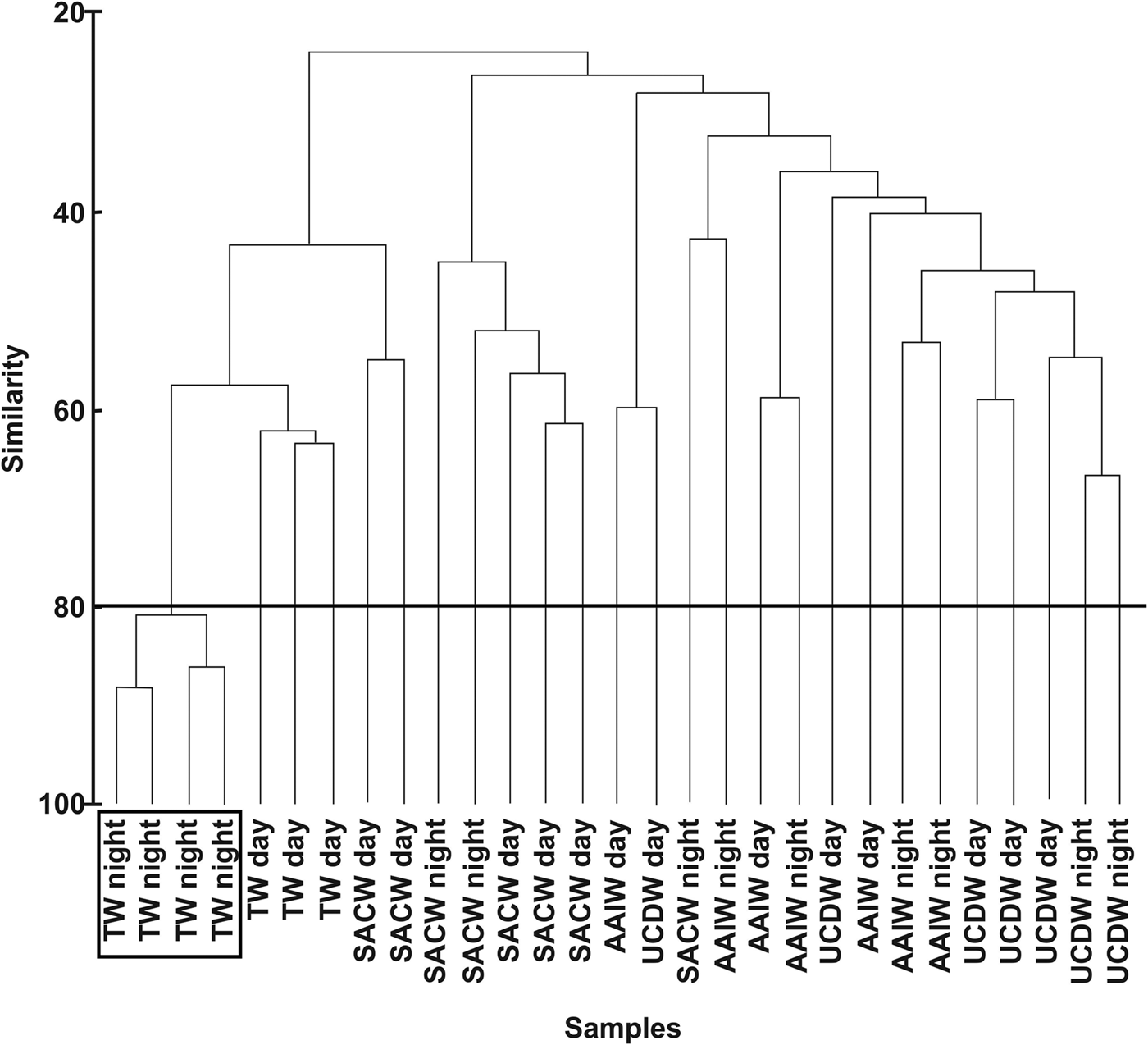
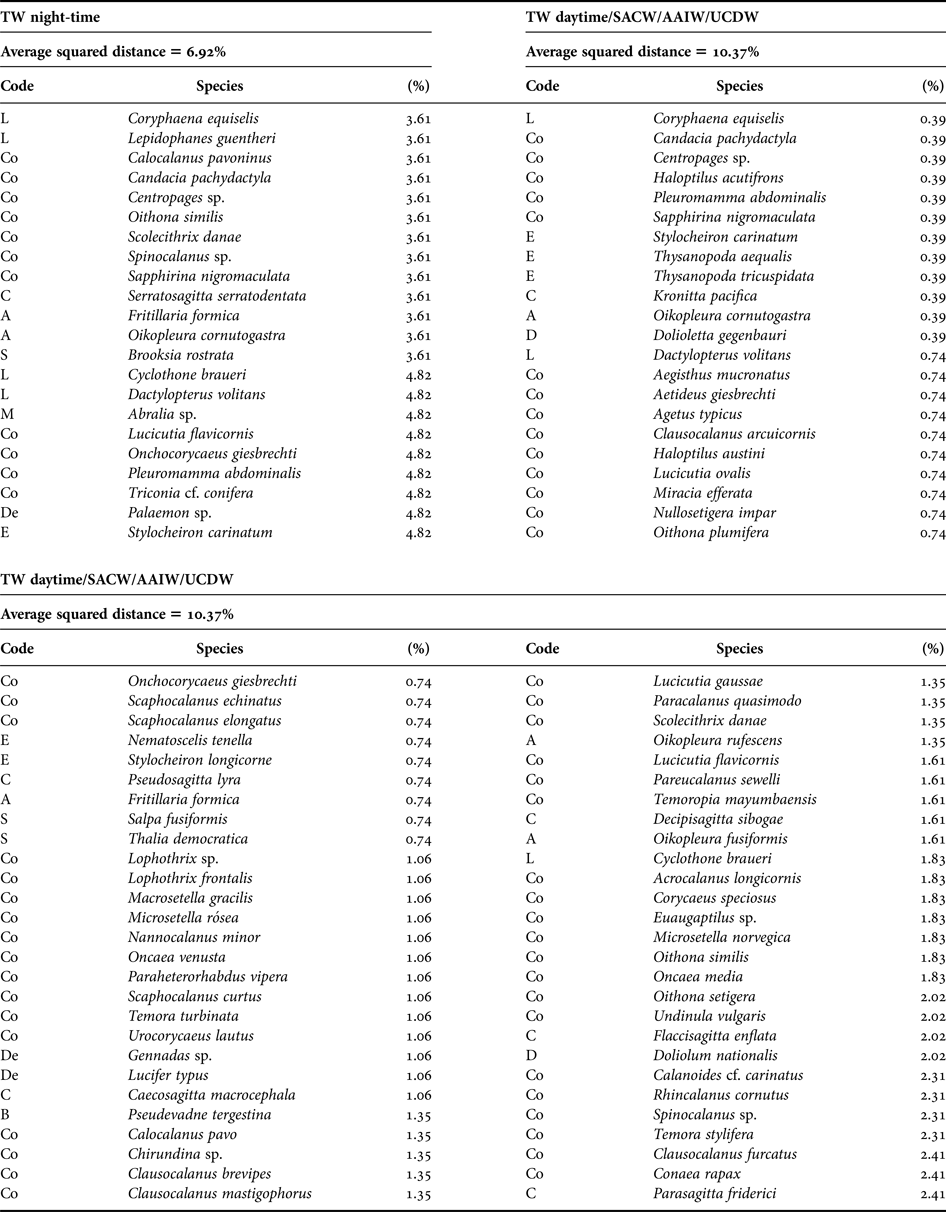
The cluster analysis showed two sample groups based on the composition of the mesozooplankton and larval fish communities at an 80% similarity level. Group I consisted of the night-time TW samples and Group II comprised all other samples (Figure 7). The mesozooplankton and larval fish species contributing to group similarity are shown in Table 4 (SIMPER test). The night-time TW group was composed of 22 species of which 13 contributed 3.61% each: four larval fish, 11 copepods, one chaetognath, two appendicularians, one salp, one mollusc, one decapod and one euphausiid. Two larval fish, one mollusc, four copepods, one decapod larva and one euphausiid each contributed 4.82% to the formation of this group (Table 4).
Cluster analysis based on species composition in the samples collected during the daytime and at night-time from TW, SACW, AAIW and UCDW. The Sørensen-Dice coefficient and the average linkage method were used. Different groups indicate faunistic zones defined at 80% similarity. Data labels: N, night-time; D, daytime; TW, Tropical Water; SACW, South Atlantic Central Water; AAIW, Antarctic Intermediate Water; UCDW, Upper Circumpolar Deep Water.

Mesozooplankton species and their contribution (%) to the similarity of the communities determined by SIMPER analysis of the two groups formed by the cluster analysis. The group formed by SACW, AAIW and UCDW included samples collected during the day and at night.

B, Branchiopoda; Co, Copepoda; E, Euphausiacea; De, Decapoda; C, Chaetognatha; A, Appendicularia; S, Salpida; D, Doliolida; M, Mollusca; L, Larval fish.
The samples collected in the other water masses (daytime TW, SACW, AAIW and UCDW) included 76 species (Table 4). Among them, copepods were the most representative, with 51 species. There were 15 species (including nine copepods, one euphausiid, two appendicularians and three larval fish) in common between the night-time TW and the other water masses (Table 4).
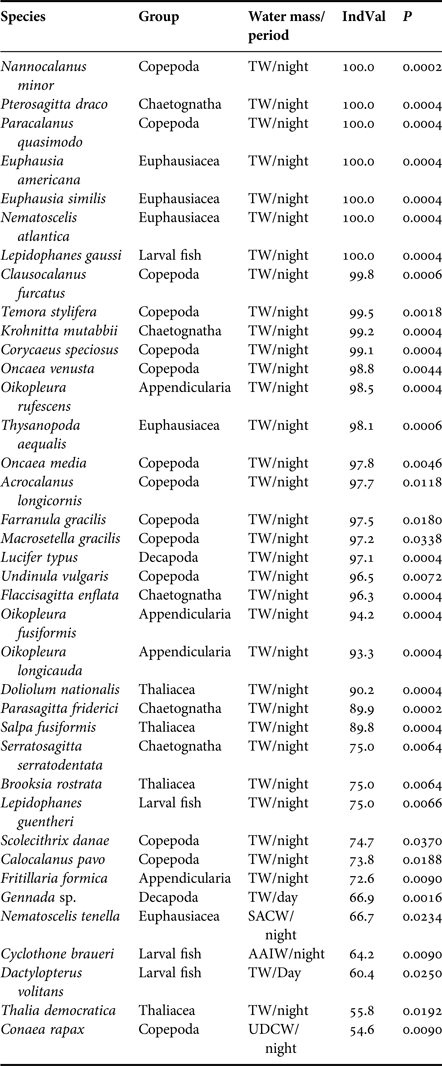
The ISA showed 32 indicator species exclusive to the night-time TW (Table 5). Two detector species were recorded in the daytime TW, and one each in the night-time TW, SACW, AAIW and UCDW (Table 5).
Indicator species, taxonomic group, water mass, period, IndVal (%) and Monte Carlo test significance (P).

DISCUSSION
Oceanographic conditions
The hydrological variables measured in this study resembled those of previous experiments along the Brazilian coast and were typical of the oligotrophic oceanic region (Rezende et al., Reference Rezende, Andrade, Suzuki, Faro, Gonzales, Paranhos and Valentin2007; Rodrigues et al., Reference Rodrigues, Marinho, Jonck, Gonçalves, Brant, Paranhos, Curbelo and Falcão2014). The environmental variables described for the water column reflected the unique hydrological signatures of the water masses. The regional temperature and salinity data are characteristics of the water masses there (Niencheski et al., Reference Niencheski, Baumgarten, Roso and Bastos1999; Rezende et al., Reference Rezende, Andrade, Suzuki, Faro, Gonzales, Paranhos and Valentin2007). These variables decreased from the subsurface (TW; depth 1 m) to the deep waters (UCDW; depth 1200 m). Average DO did not vary greatly in the study area and resembled other DO values obtained for this oceanic region of Brazil (Rezende et al., Reference Rezende, Andrade, Suzuki, Faro, Gonzales, Paranhos and Valentin2007; Suzuki et al., Reference Suzuki, Rezende, Paranhos and Falcão2015). Inorganic nutrient concentrations showed a typical oceanic vertical distribution pattern: they increased from the surface to deeper waters. In the study area, nutrients are usually depleted in the surface waters (Rezende et al., Reference Rezende, Andrade, Suzuki, Faro, Gonzales, Paranhos and Valentin2007; Rodrigues et al., Reference Rodrigues, Marinho, Jonck, Gonçalves, Brant, Paranhos, Curbelo and Falcão2014; Suzuki et al., Reference Suzuki, Rezende, Paranhos and Falcão2015). This pattern is attributed to the high consumption of nutrients by the primary producers during photosynthesis in TW (Rodrigues et al., Reference Rodrigues, Marinho, Jonck, Gonçalves, Brant, Paranhos, Curbelo and Falcão2014). The low nitrate, silicate and orthophosphate levels in TW are characteristic of the nutrient-poor oceanic waters carried by the Brazil Current (Rezende et al., Reference Rezende, Andrade, Suzuki, Faro, Gonzales, Paranhos and Valentin2007; Alves et al., Reference Alves, Meirelles, de Oliveira, Dutilh, Silva, Paranhos, Cabral, Rezende, Lida, de Moura, Kruger, Pereira, Valle, Sawabe, Thompson and Thompson2014; Rodrigues et al., Reference Rodrigues, Marinho, Jonck, Gonçalves, Brant, Paranhos, Curbelo and Falcão2014).
Diurnal and vertical variations over an eight-day period
Previous microbiological studies in the South-west Atlantic Ocean were conducted mainly on surface water sampled during transatlantic cruises (Zubkov et al., Reference Zubkov, Sleigh, Tarran, Burkill and Leakey1998, Reference Zubkov, Sleigh and Burkill2000a, Reference Zubkov, Sleigh, Burkill and Leakeyb, Reference Zubkov, Fuchs, Burkill and Amann2001; Andrade et al., Reference Andrade, Gonzalez, Araujo and Paranhos2003). They all employed flow cytometry to determine bacterial abundance and reported numbers ranging from 3.7 × 10⁴ to 5.5 × 10⁸ cells ml−1. This range resembled that obtained in the present study. Reduced nutrient concentrations in surface waters account for the low bacterial abundance and the dominance of LNA cells (80%) there (Andrade et al., Reference Andrade, Gonzalez, Araujo and Paranhos2003). Alves et al. (Reference Alves, Meirelles, de Oliveira, Dutilh, Silva, Paranhos, Cabral, Rezende, Lida, de Moura, Kruger, Pereira, Valle, Sawabe, Thompson and Thompson2014) studied the same sampling site of the South-west Atlantic Ocean as that of the present investigation and found that temperature, dissolved organic carbon (DOC) and depth strongly influence microbial abundance and diversity. They also discovered that microbial genes and metabolic pathways are stratified in the South-west Atlantic Ocean water column.
Microbial plankton biomass was dominated by heterotrophic bacteria (up to 85% in TW, and almost 100% in the lower water masses), with a small contribution (7–18%) of Prochlorococcus and Synechococcus in the surface waters only. Total (both auto- and heterotrophic) bacterial numbers decreased with depth, even though the cell size of individuals increased with depth (Buitenhuis et al., Reference Buitenhuis, Li, Vaulot, Lomas, Landry, Partensky, Karl, Ulloa, Campbell, Jacquet, Lantoine, Chavez, Macias, Gosselin and McManus2012). The increase of the availability of trophic resources (carbon, nitrogen and phosphorus) with depth was followed by the development of bigger cells with higher metabolic rates, as we observed with the increase of relative numbers of HNA bacteria. At 500–800 m, there were similar proportions of HNA and LNA bacteria, but at depths >1000 m, the relative quantity of HNA bacteria increased. The HNA play important roles in microbial metabolism (Lebaron et al., Reference Lebaron, Servais, Agogué, Courties and Joux2001; Vila-Costa et al., Reference Vila-Costa, Gasol, Sharma and Moran2012). In addition, most deep-sea bacteria have expressive amounts of rRNA and contribute to bathypelagic metabolism (Karner et al., Reference Karner, DeLong and Karl2001; Herndl et al., Reference Herndl, Reinthaler, Teira, van Aken, Veth, Pernthaler and Pernthaler2005). These findings are consistent with the elevated metabolic rates detected in bathypelagic microbes sampled near the seafloor (Nagata et al., Reference Nagata, Fukuda, Fukuda and Koike2000). Taken together, these facts help explain the dominance of HNA bacteria in the deep sea.
The dominance of HNA bacterial cells at deep waters can also be attributed to a significant decrease of 2–3 orders of magnitude in the abundance of flagellates, ciliates and mesozooplankton in comparison with the surface (Tanaka & Rassoulzadegan, Reference Tanaka and Rassoulzadegan2002; Koppelmann et al., Reference Koppelmann, Timm and Weikert2005). The lack of predation pressure could favour the establishment of bigger bacterial cells, usually the most preyed size fraction (Jürgens & Güde, Reference Jürgens and Güde1994). In the bathypelagic ocean conditions for sustaining the dominance of HNA bacteria were found: abundant supply of inorganic nutrients and detritic carbon, and small predation pressure. It is very probable that the bathypelagic bacterioplankton is controlled by bottom-up mechanisms. We did not access other microbial components as ciliates and flagellates, groups that are known being at very low abundances at 2000 m (Tanaka & Rassoulzadegan, Reference Tanaka and Rassoulzadegan2002; Koppelmann et al., Reference Koppelmann, Timm and Weikert2005).
Diurnal differences in mesozooplankton and larval fish abundance have been reported in several oceanic studies (Olivar & Sabatés, Reference Olivar and Sabatés1997; Thurman & Burton, Reference Thurman and Burton2001; Munk et al., Reference Munk, Nielsen and Hansen2015). Relative to deeper waters, most organisms, especially phytoplankton, occur on the surface layer, probably because of the comparatively rich food supplies there (Fernández-Álamo & Färber-Lorda, Reference Fernández-Álamo and Färber-Lorda2006). In the study area, although the highest densities were observed at night-time near the surface, they did not differ significantly from those observed during the daytime. This fact can be attributed to differences in the number of samples collected from each water mass during the day and night periods. Diel variations in epipelagic (0–200 m) mesozooplankton were not detected, most likely because of the distance between sampling depths (1 m vs 250 m). Sampling at discrete depths would improve our assessment of vertical migration, particularly for very small organisms. A study in the Irish Sea found that >70% of the zooplankton were distributed within the top 10 m on average, and were considered weak or non-migrating (Irigoien et al., Reference Irigoien, Conway and Harris2004). On the other hand, larger zooplankton tend to be more effective at vertical migration than smaller ones (Hayes et al., Reference Hays, Harris and Head2001) and cover greater distances in the water column.
We found no significant differences between day and night samplings in terms of the dominant copepod groups. Nevertheless, large migratory copepods like Calanoides carinatus and Rhincalanus cornutus were observed in the deep waters (SACW, AAIW and UCDW). Copepod dominance is reported in most mesozooplankton studies and demonstrates the importance of this group in transferring energy between different trophic levels (Turner, Reference Turner2004; Escribano et al., Reference Escribano, Hidalgo and Krautz2009; de Lira et al., Reference de Lira, de Teixeira, de Lima, de Santos, Neumann-Leitão and Schwamborn2014; Munk et al., Reference Munk, Nielsen and Hansen2015).
The copepod species identified in this study occur throughout all oceanic epipelagic, mesopelagic and bathypelagic zones (Cavalcanti & Larrazábal, Reference Cavalcanti and Larrazábal2004; Razouls et al., Reference Razouls, De Bovée, Kouwenberg and Desreumaux2005–2017; Bonecker, Reference Bonecker2006; Lopes et al., Reference Lopes, Katsuragawa, Dias, Montú, Muelbert, Gorri and Brandini2006; Dias et al., Reference Dias, Araujo, Paranhos and Bonecker2010; Brugnano et al., Reference Brugnano, Granata, Guglielmo and Zagami2012; Bonecker et al., Reference Bonecker, Araujo, Carvalho, Dias, Loureiro Fernandes, Migotto and Oliveira2014b). Nullosetigera impar, newly discovered in Brazilian waters, is mesopelagic to bathypelagic and was, until recently, only detected in the waters of the Central Atlantic, North-eastern Pacific and Indian Oceans (Deevey & Brooks, Reference Deevey and Brooks1977; Razouls et al., Reference Razouls, De Bovée, Kouwenberg and Desreumaux2005–2017). The novel findings of the present study may be explained by the relative lack of prior investigation into the deep waters of the South Atlantic. These findings also underscore the fact that zooplankton richness in our area is underestimated (Bonecker et al., Reference Bonecker, Araujo, Carvalho, Dias, Loureiro Fernandes, Migotto and Oliveira2014b).
The relative contributions of large copepods (Candacia spp. and Pleuromamma spp.) increased in night-time shallow waters and in deep waters. This pattern was also observed in the waters of the French Atlantic coast (Maycas et al., Reference Maycas, Bourdillon, Macquart-Moulin, Passelaigue and Patriti1999) and the Western Mediterranean (Brugnano et al., Reference Brugnano, Granata, Guglielmo and Zagami2012) and reflects the feeding habits of these organisms. Small omnivorous/herbivorous copepods tend to concentrate in the surface layer whereas larger detritivores/carnivores are usually found in deep waters. Large copepods feed and defecate throughout the water column, thereby regulating upward and downward carbon and nitrogen transfers (Maycas et al., Reference Maycas, Bourdillon, Macquart-Moulin, Passelaigue and Patriti1999). Maycas et al. (Reference Maycas, Bourdillon, Macquart-Moulin, Passelaigue and Patriti1999) noted that on the French Atlantic coast, larger copepods occurred at lower depths than the smaller ones. The authors proposed the small copepods migrated little or not at all. Ohman & Romagnan (Reference Ohman and Romagnan2016) found that small non-migratory copepods remain in shallow waters both night and day whereas larger non-migratory organisms stay deeper in subsurface waters.
We found large densities of organisms belonging to the genus Oithona. These organisms were responsible for the formation of assemblages in several water masses. Because of their small size, organisms of the genus Oithona were probably underestimated in the present study because of the mesh size used. In a study carried out in the South Atlantic comparing nets of 60, 100 and 330 µm mesh sizes, the 100 µm net had the highest efficiency; thus, this mesh is more suitable for sampling zooplankton, and is more efficient for collecting small organisms, including representatives of the genus Oithona (Makabe et al., Reference Makabe, Tanimura and Fukuchi2012). In comparison, other studies have shown the importance of organisms from the genus Oithona when using mesh sizes larger than 100 µm. In the waters off north-east Brazil, the species of this genus were qualitatively representative in samples collected with the net of 300 µm mesh size (Cavalcanti et al., Reference Cavalcanti, Neumann-Leitão and do Vieira2008). In a study developed in the Arctic region, where organisms collected with a net of 180 µm mesh size were identified, species of the genus Oithona dominated zooplankton assemblages (Gluchowska et al., Reference Gluchowska, Trudnowska, Goszczko, Kubiszyn, Blachowiak-Samolyk, Walczowski and Kwasniewski2017). Another study carried out in the Campos Basin showed that Oithona species collected with a net of 200 µm mesh size were frequent in several water masses, and were responsible for the formation of communities in some depths (Bonecker et al., Reference Bonecker, Araujo, Carvalho, Dias, Loureiro Fernandes, Migotto and Oliveira2014b). The great abundance of Oithona in our samples and the results obtained in the published literature confirm that Oithona are representatives of microzooplankton (20–200 µm), in addition to being important components of mesozooplankton (>200 µm). The present study aimed to collect several zooplankton groups, especially the largest mesozooplankton fractions; for this reason, we used a net of 200 µm mesh size, which is more suitable for these organisms (Sameoto et al., Reference Sameoto, Wiebe, Runge, Postel, Dunn, Miller, Coombs, Harris, Wiebe, Lenz, Skjoldal and Huntley2000).
In this study, the densities of Euphausiacea, Chaetognatha, Doliolida and Salpida were significantly higher in night-time TW than the other water masses. The most abundant species in these groups are well-known migrators, including the euphausiids Euphausia americana, E. similis and Nematoscelis atlantica, the chaetognath Flaccisagitta enflata, and the salpids Salpa fusiformis and Thalia democratica (Mauchline, Reference Mauchline1980; Hirota et al., Reference Hirota, Nemoto and Marumo1984; Madin et al., Reference Madin, Kremer and Hacker1996; Resgalla et al., Reference Resgalla, Carvalho, Pereira, Rörig, Rodrigues-Ribeiro, Tamanaha and Proença2004; Lie et al., Reference Lie, Tse and Wong2012; Nogueira et al., Reference Nogueira, Brandini and Codina2015).
The densities of Branchiopoda and Appendicularia did not significantly differ among the water masses in both sampling periods. The epipelagic Pseudevadne tergestina was detected in the top 100 m on the French Atlantic coast in the daytime (Maycas et al., Reference Maycas, Bourdillon, Macquart-Moulin, Passelaigue and Patriti1999) and in the coastal subtropical area (Miyashita et al., Reference Miyashita, Gaeta and Lopes2011). The appendicularians Oikopleura cornutogastra and Fritillaria formica were found from the surface down to 2300 m in the Campos Basin, Brazil (Bonecker et al., Reference Bonecker, Araujo, Carvalho, Dias, Loureiro Fernandes, Migotto and Oliveira2014b).
There was no significant difference between the day and night periods in terms of mollusc larva abundance. Nevertheless, the highest counts were obtained for the night-time TW and resemble those reported by Garland et al. (Reference Garland, Zimmer and Lentz2002). The authors stated that molluscs are concentrated near the surface at night to take advantage of increased food source availability. The high mollusc densities observed in our study confirm the dispersal ability of these organisms from the coastal region to the oceanic region, which lowers their risk of extinction (Sahara et al., Reference Sahara, Fukaya, Okuda, Hori, Yamamoto, Nakaoka and Noda2015).
The mesopelagic fish Lepidophanes guentheri was among those that grouped the night-time TW samples. Many myctophids undergo daily vertical migration and enrich the carbon stocks in deep waters as they feed on the surface and defecate in the mesopelagic and bathypelagic zones (Angel, Reference Angel and Tyler2003; Conley & Hopkins, Reference Conley and Hopkins2004; Castro et al., Reference Castro, Richards and Bonecker2010; Ariza et al., Reference Ariza, Garijo, Landeira, Bordes and Hernández-León2015 and references within). Lepidophanes guentheri and Lepidophanes gaussi migrate at night from the mesopelagic zone to the epipelagic zone, moving from depths of 700–950 and 425–850 m, respectively (Nafpaktitis et al., Reference Nafpaktitis, Backus, Craddock, Haedrich, Robinson, Karnella and Gibbs1977; Richards, Reference Richards2006; Santos & Figueiredo, Reference Santos and Figueiredo2008).
In this study, it was found that Cyclothone braueri larvae were widely distributed throughout the water column. In a study of the Sargasso Sea, Sutton et al. (Reference Sutton, Wiebe, Madin and Bucklin2010) reported that the larvae of this species were the most abundant. Samples were collected from 0–1000 m (47.5%) and from 1000–5000 m (41.0%).
The indicator species E. americana, E. similis, N. atlantica and Pterosagitta draco are usually found in surface waters (Sameoto et al., Reference Sameoto, Guglielmo and Lewis1987; Pierrot-Bults & Nair, Reference Pierrot-Bults, Nair, Bone, Kapp and Pierrot-Bults1991). Nannocalanus minor is considered an indicator of the Brazil Current (Dias et al., Reference Dias, Araujo, Paranhos and Bonecker2010) and is concentrated in the lower strata down to ~200 m (Björnberg, Reference Björnberg and Boltovskoy1981; Cavalcanti & Larrazábal, Reference Cavalcanti and Larrazábal2004). The presence of L. gaussi and L. guentheri in night-time TW can be explained by the fact that both of them undergo nocturnal vertical migration as previously discussed in this article. Indicator species analysis (ISA) is an important tool in mesozooplankton ecology evaluation. Nevertheless, it must be used with caution when regarding strong migratory species because the data may reflect diel migratory behaviour of the organisms only during a period of the day, as in this study. The fact that certain species known to occur at great depths are used as night-time TW indicators is evidence of their daily migration.
In conclusion, only a portion of the mesozooplankton and larval fish communities undergo diel vertical migration. These include the euphausiids E. americana, E. similis and N. atlantica, and the larval fish L. guentheri. To the best of our knowledge, this study was the first attempt to describe the daily vertical distribution of mesozooplankton and larval fish communities in an oceanic region of the Brazilian coast. We furnished new data and insights on deep water vertical distribution and reported the occurrence of a new species in the heretofore poorly explored South-western Atlantic Ocean. Our results showed significant variability in mesozooplankton, larval fish and bacterioplankton abundance and distribution along an oceanic water column. Further studies are required to assess the factors driving diel vertical migration in this oceanic region. In this research, more frequent daily sampling at narrower depth ranges is required, and all water masses and plankton trophic levels should be considered in the process.
ACKNOWLEDGEMENTS
This study is part of the Habitats Project – Campos Basin Environmental Heterogeneity by CENPES/PETROBRAS. We thank the team at the Zooplankton and Ichthyoplankton Integrated Laboratory of the Federal University of Rio de Janeiro for sorting the samples. We also thank the following researchers for their help with identifications: Michele Arruda (Chaetognatha); Paulo R.F.C. Costa and Marta C.C. Quintas (Branchiopoda); Suzanna C. Vianna (Copepoda); Patrícia Alpino, Lohengrin Fernandes, Ralf Schawmborn, Cíntia Cardoso and Ana Cecilia R. Resende (decapod larvae); and Andrea S. Freire (Euphausiacea).