

1. Introduction
Global digital transformation is a defining feature of contemporary economic and societal development, significantly reshaping traditional methods of managing economic processes and influencing all areas of human activity. The entrepreneurial approach to IT sector development has become critically important, promoting job creation, innovation, and competitiveness. This sector is not only a key component of the national economy but also a cornerstone for adapting to new market realities, fostering the development of start-ups, scaling existing businesses, and introducing new business models.
The impact of digitalization on Ukraine’s labor market (LMU) has gained urgency due to Russia’s military aggression, which has caused significant infrastructure losses, especially in information and communication technologies. These challenges are compounded by the forced emigration of IT professionals, leading to a brain drain that weakens one of Ukraine’s key economic drivers. The increasing demand for digital skills and the need to adjust the education system to these new realities further underscores the critical importance of fully leveraging the potential of digitalization for the country’s future.
The analysis of LMU points to systemic problems that complicate the alignment of labor supply and demand with contemporary global trends. These issues are particularly acute in the context of structural changes driven by the Fourth Industrial Revolution and digital transformations affecting various regions. In their research, Rumiansev et al. (Reference Rumiansev, Pobochenko, Pichkurova, Tolpezhnikova, Kovbych and Lyashov2022) emphasize that rapid changes in labor conditions, exacerbated by military actions, require adequate legal, institutional, and financial responses, which are currently lacking. This creates additional challenges for workforce adaptation to new conditions, further exacerbating structural imbalances in the labor market.
Special attention is given to the IT industry, which, despite economic instability and systematic power supply disruptions, remains a crucial element of Ukraine’s strategic development. As noted by Prokhorova et al. (Reference Prokhorova, Diachenko and Babichev2023), this sector makes a significant contribution to the country’s gross domestic product and export services. They highlight that even in difficult economic conditions, the IT industry demonstrates resilience, making it critically important for supporting the national economy.
However, significant challenges remain, particularly related to the integration of digital technologies across all economic sectors. Digital transformations are significantly altering employment structures, driving the demand for professionals with digital skills (Innola et al., Reference Innola, Roman, Nelia, Roman and Viktor2022). This is confirmed by the research of Kvitka and Kramarenko (Reference Kvitka and Kramarenko2019), who analyze the dynamics of job creation and destruction in connection with digital transformations. They note that the increasing demand for professionals with digital skills reflects a global trend where digital competencies are becoming a key element of professional development. This creates new employment opportunities but also imposes demands on the education and professional training systems, which must ensure the necessary skill levels for the modern labor market.
Another important aspect is strategic management in the context of transformations, which is necessary to maintain market stability and growth. Shevchuk and Shevchuk (Reference Shevchuk and Shevchuk2024) emphasize the importance of making strategic decisions that will prevent market decline and stimulate its development, particularly in the face of military actions and global economic recessions. Their analysis shows that without such decisions, the potential of the IT sector may be significantly reduced, which could have serious consequences for Ukraine’s economy as a whole. Management decisions must be focused on adapting to new conditions and creating a favorable environment for the development of innovation and technology. Among the obstacles to the development of the IT sector, outdated legislative frameworks and insufficient human resources are of particular importance.
Levchenko and Viunik (Reference Levchenko and Viunyk2023) note that for the successful development of the IT industry, it is necessary to update the legislation governing the digital economy and to invest in human capital, ensuring the continuous professional development of specialists in the field of digital technologies. They also stress the need to foster a digital culture and ensure cybersecurity, which are key factors for the sustainable development of the IT sector.
From the perspective of economic growth and increasing competitiveness, the digital economy offers Ukraine unique opportunities. Dovgal et al. (Reference Dovgal, Dovgal and Ishchenko2021) emphasize that the development of digital infrastructure and the transition to a digital economy are not only important steps for Ukraine’s integration into the global digital landscape but also essential elements for achieving a “digital leap” in key economic sectors. Their analysis indicates that digitalization can become a powerful tool for boosting productivity and competitiveness in the Ukrainian economy, which, in turn, will enhance its resilience to external and internal challenges.
In particular, Chala and Poplavska (Reference Chala and Poplavska2020) emphasize that the shift toward digitalization in the labor market and broader economic transformations requires strategic responses from both the government and businesses to fully leverage the potential of this sector. At the same time, traditional business models are gradually losing their relevance in the context of digitalization, as emphasized by Shostak et al. (Reference Shostak, Lipych, Anatolii, Volynets, Andrew and Morokhova2024). They note that maintaining competitiveness requires the adoption of new business approaches that fully leverage the possibilities of digital technologies.
This means that companies must be ready for change, invest in innovation, and adapt to new market conditions opened up by digitalization. Thus, the cumulative analysis of research unequivocally indicates the important role of digitalization and the IT sector in shaping Ukraine’s economic future, highlighting the need for strategic political interventions, innovative business models, and targeted investments in human capital to maximize the sector’s potential and ensure sustainable economic growth.
The research is highly relevant as it provides critical insights into how digitalization transforms Ukraine’s IT sector through freelancing and outsourcing models, offering valuable lessons for emerging economies navigating digital transformation while facing external challenges such as war and pandemic disruptions. This research seeks to explore the economic dimensions of business model development in Ukraine’s IT sector in the context of global digitalization. It will focus on how freelancing and outsourcing influence economic growth, job creation, investment attraction, and innovation. The study will identify the factors driving the success of these models, evaluate their economic efficiency, and offer strategic recommendations to bolster entrepreneurial ventures in the IT industry, using examples from successful Ukrainian companies.
2. Literature review
Ukraine’s labor market, much like in many other countries, has experienced substantial changes driven by global digitalization. Digital technologies have permeated all aspects of life, changed traditional employment models, and necessitated new approaches to workforce management. The IT sector, as the driving force of digital transformation, plays a crucial role in these changes, directly impacting labor market dynamics. Lyulyov and Moskalenko (Reference Lyulyov and Moskalenko2020) suggest a model for evaluating investment potential that takes into account institutional quality and the extent of the shadow economy. They explore how digital technologies can enhance institutional processes and reduce the shadow economy, which is crucial for stabilizing the labor market. This is particularly relevant for the IT sector, where transparent and efficient institutional frameworks can attract more investment and foster job creation.
Amidst structural shifts in the global economy, Dementyev et al. (Reference Dementyev, Dalevska and Kwilinski2021) emphasize the crucial role of innovation and information technology as key forces driving these changes. They emphasize that the IT sector contributes to creating new jobs and improving labor efficiency, which is vital for Ukraine’s economic development amid global digitalization. Blyzniuk and Yuryk (Reference Blyzniuk and Yuryk2019) explore the inconsistencies between the availability of labor and the demand in different Ukrainian regions, highlighting the disconnect between educational qualifications and the skills required by employers. They argue that digitalization, especially in the IT sector, can help reduce these disparities by expanding access to education and training, enabling a better alignment of skills with market needs. Lupak’s (Reference Lupak2019) analysis demonstrates that the advancement of information and communication technologies (ICT) in Ukraine greatly influences both the domestic market and the wider information society.
The IT sector, propelled by advancements in ICT, plays a vital role in generating employment and boosting labor productivity across different economic sectors. Consequently, investing in digital infrastructure and innovative initiatives is vital. O. Pyshchulina (Reference Pyshchulina2020) examines the risks associated with the digital economy, including potential social implications such as labor market inequality. This is particularly pertinent to the IT sector, where the rapid pace of technological change may exacerbate inequalities if access to digital skills and opportunities is not evenly distributed.
Szeles and Simionescu (Reference Szeles and Simionescu2020) explore the growth of the digital economy in EU countries, observing that digitalization facilitates job creation and improves production efficiency. The lessons drawn from these countries are particularly relevant to Ukraine as it integrates into the European digital market, with the IT sector playing a central role in this transition. Vlasova (Reference Vlasova2015) discusses the challenges and opportunities related to the international migration of highly qualified personnel, including those in the IT sector. Digitalization, by creating favorable conditions for talent development, can help Ukraine attract and retain skilled IT professionals, which is critical for sustaining the sector’s growth.
Shnyrkov et al. (Reference Shnyrkov, Mazurenko and Stakanov2021) conducted a study on the economic challenges that impact the IT labor market. Addressing these challenges through digital transformation initiatives in the IT sector can mitigate the brain drain and strengthen the domestic labor force. Karpenko et al. (Reference Karpenko, Plikus and Holovina2019) investigate the challenges confronting Ukraine’s education system and labor market amidst digitalization, particularly in the fields of accounting and finance. However, the findings apply to the IT sector as well, where enhancing education quality and improving employee qualifications are essential for meeting the demands of digitalization. Tul (Reference Tul2019) analyses the state of the Ukrainian labor market concerning digitalization and its prospects. The IT sector, as a central component of this market, is identified as a key area for job creation and labor efficiency improvements, underscoring the need for targeted digital policies.
Current labor market trends in the context of digital transformations are explored by Cheromukhina et al. (Reference Cheromukhina, Chaliuk and Kyrylenko2021), who note that digitalization can reduce unemployment and improve living standards. The IT sector, in particular, is poised to drive these positive changes by generating high-quality employment opportunities. Chorna and Chornyi (Reference Chorna and Chornyi2020) characterize the modern challenges facing the Ukrainian labor market and propose solutions, emphasizing the role of digitalization in boosting labor productivity and creating new jobs. The IT sector is crucial in implementing these solutions, offering innovative approaches to overcome labor market challenges. Expósito and Rodríguez-Díaz (Reference Expósito and Rodríguez-Díaz2024) explore the impact of digitalization on business processes, highlighting how IT-related technologies like AI, Big Data, and the Internet of Things (IoT) are transforming business sectors. These transformations are directly relevant to Ukraine’s IT sector, where companies engaging in digital transformation are likely to innovate, grow faster, and create high-quality jobs.
The role of AI (Artificial Intelligence) in public services, particularly in the context of the Swedish Public Employment Service, is discussed by Berman et al. (Reference Berman, de Fine Licht and Carlsson2024). Their insights into the challenges of AI-driven decision-making are relevant to Ukraine’s IT sector, which must navigate similar issues as it integrates advanced technologies into public and private sectors. The labor market in the Netherlands, analyzed by Ciff et al. (Reference Ciff, Brouwer, Ponsioen and Van Lieshout2024), reflects a shortage of IT professionals, a challenge also present in Ukraine. They recommend internal training and knowledge development as key strategies for addressing these shortages, applicable to Ukraine’s efforts in strengthening its IT workforce.
Qiao and Ao (Reference Qiao and Ao2024) examine how digital transformation affects the occupational mobility of rural workers, with lessons applicable to economically deprived regions of Ukraine. The IT sector, by providing remote work opportunities, can significantly enhance job mobility and improve working conditions in these areas.
The need for digital transformation leaders and relevant educational programs is addressed by Kopackova et al. (Reference Kopackova, Simonova and Reimannova2024). Their research underscores the importance of developing innovative curricula that meet the labor market demands, particularly in the IT sector, which is crucial for preparing the workforce for global digitalization. Finally, Pettas (Reference Pettas2024) explores the role of digital platforms in creating new forms of employment, relevant to the IT sector in Ukraine. These platforms, while generating opportunities, also introduce social challenges that need to be addressed through appropriate employment policies as part of the broader digital transformation.
In conclusion, the literature review demonstrates that digitalization, particularly within the IT sector, is transforming LMU by altering traditional employment models and creating new challenges and opportunities. Understanding these processes and adapting to new conditions is crucial for stabilizing and developing the labor market under global digitalization. The studies reviewed highlight the importance of integrating digital technologies across all economic areas and enhancing employee skills to meet new requirements. This will allow Ukraine to maintain its competitiveness in the global market while ensuring stable development during the digital transformation.
3. Materials and methods
The research relies on methods such as expert assessments, economic-mathematical modeling, comparative analysis, and statistical data analysis. The use of these methods made it possible to carry out a comprehensive analysis of the impact of digitalization on the development of the IT sector of Ukraine, in particular, in the freelance and outsourcing segments. The method of expert evaluations was used to collect and generalize the opinions of IT specialists. The choice of this method is due to the need for a qualitative analysis of current trends, as well as an assessment of the prospects for the development of business models of freelance and outsourcing. Experts from the IT industry provided assessments on the relevance of outsourcing and freelancing. The results of the survey were systematized and analyzed to determine the most important aspects affecting the economic performance of the IT sector.
Economic and mathematical modeling was used to analyze the impact of digitalization on the economic development of the IT sector of Ukraine. With the help of modeling, changes in the main macroeconomic indicators, such as the share of the IT sector in GDP, the volume of IT services exports, and the structure of employment in the freelance and outsourcing segments, were estimated. Modeling was carried out taking into account the available statistical data and the results of expert assessments, which ensured a high level of forecast accuracy and the validity of the conclusions obtained. Comparative analysis was used to evaluate the efficiency and economic indicators of two business models—freelancing and outsourcing. The method made it possible to compare key indicators, such as the volume of IT services exports, the share of the IT sector in GDP, the level of employee incomes, and the level of involvement of IT specialists. The comparison was made based on available statistical data and modeling results, which made it possible to identify the advantages and disadvantages of each of the models, as well as to determine their impact on the development of the national economy.
The analysis of statistical data became the basis for the research and included the processing of data from official sources, such as the Ministry of Digital Transformation of Ukraine, as well as analytical reports from IT institutions. The statistical analysis covered the period from the beginning of the digital transformation of Ukraine and made it possible to identify trends and dynamics of changes in the structure of the IT sector. The data was processed using correlation analysis and regression modelling, which made it possible to determine the main factors that influence the development of the sector and the efficiency of business models.
4. Results
At the G-20 summit (European Council, 2022) held on November 15–16, 2022, in Indonesia, the discussion of the directions for global digitization, alongside global system issues, healthcare, and the pandemic’s impact, and transition to sustainable energy, was added to the agenda as a major item. Digitization has significantly impacted the development of business structures within Ukraine’s IT sector. The implementation of technologies like big data, artificial intelligence, and machine learning has sparked the development of novel business models and opened up new avenues for entrepreneurship. For instance, the widespread adoption of remote work and the increasing demand for IT professionals have spurred the rapid growth of models like freelancing and outsourcing.
Freelancing allows specialists to work independently, offering services to multiple clients simultaneously, which can lead to higher income and greater flexibility in working hours (Kalyuzhna et al., Reference Kalyuzhna, Smutchak, Chorna, Chornyi, Baldyniuk and Chuba2024). Conversely, outsourcing enables companies to concentrate on their core business processes by delegating technical tasks to third-party specialists or organizations—an effective strategy in the highly competitive IT sector.
In particular, the summit specifically discussed such aspects of global digitalization as computer networks, IT technologies, electronic computing, the Internet, calculations, and programming, which now cover all branches of public life of the world’s population and, among other things, accelerate their economic growth (Use of information and communication…, 2024). The global digitization of the labor market is both a current trend and a future challenge for society, employers, employees of research institutions, and educational establishments in Ukraine. The development and proliferation of digital technologies are transforming the local labor market, requiring professionals to acquire new skills and changing the nature of work and demands for competencies (Oleksy-Gebczyk, Reference Oleksy-Gebczyk2023; Bronin et al., Reference Bronin, Kuchansky, Biloshchytskyi, Zinyuk and Kyselov2021).
According to the European Business Association (EBA), companies in Ukraine are becoming more flexible, establishing hybrid workspaces, and offering co-working spaces in convenient locations for employees (R&D personnel by occupation in 2010–2023 (2024)). Among the main trends within the job market are remote recruitment of personnel in conditions of remote work, increasing levels of digitization and demand for IT specialists, and the implementation of “reskilling and upskilling” training programs for employees to acquire new knowledge and skills (Development of the Ukrainian, 2018). These trends in the global digitization of economic processes also indicate the beginning of fundamental changes within the Ukrainian job market. Despite the shift toward digitization in the job market, regional labor markets encounter challenges stemming from the structural characteristics of the country’s economy and the ongoing transition to a fully developed market economy model.
Based on the analysis, several strategic recommendations can be proposed to support and develop entrepreneurial initiatives in Ukraine’s IT sector. First, it is crucial to establish an environment that supports the expansion of freelance platforms and marketplaces, which would aid IT professionals in finding work while also providing social protection. Second, supporting the development of outsourcing companies by offering tax incentives and improving access to international markets is important. Third, it is crucial to develop innovative infrastructure, such as technology parks and business incubators, to promote the growth of startups and provide support during their early stages. These measures will contribute to the expansion of the IT sector and the creation of new jobs in the country.
Given these considerations, there is a growing need for both theoretical and empirical research focused on global digital transformation, the advancement of an information society, and the development of a knowledge-based economy in Ukraine. The issues of global digital transformation of labor markets, training and retraining processes, and the enhancement of qualifications to develop digital and technical skills through new market-demanded competencies and professions, and the transfer of practical specialized knowledge by universities, are actively discussed in domestic and foreign literature. Employers note a constant shortage of highly skilled labor resources and specialists in emerging professions who are inclined toward continuous learning. From an economic perspective, both freelancing and outsourcing offer distinct advantages and disadvantages.
Studies show that freelancing can often lead to greater profitability for individual professionals, as it enables them to determine their rates and engage with multiple clients at the same time. However, freelancing generally has limited potential for attracting investment and expanding into larger business ventures. In contrast, outsourcing provides companies with a stable income stream and facilitates the attraction of investment and the development of long-term business relationships. Additionally, outsourcing tends to result in higher employment rates, as large companies can employ a significant number of IT professionals.
Among the key characteristics of the current WPU (Working Population of Ukraine), the increasing prevalence of remote work, particularly during the pandemic, and the rapid growth of the IT sector, driven by favorable compensation and working conditions, are noteworthy. Considering the present state of the WPU’s IT sector, particularly its scientific and technical, material, human resource potential, entrepreneurial, and financial support, it is essential to highlight the impact of Russia’s aggression against Ukraine, which has significantly diminished these resources, specifically:
1. Overall, the losses inflicted by Russia’s military aggression against Ukraine as of February 2023 are estimated to be USD 750 billion (R&D personnel by occupation in 2010–2023, 2024). This primarily includes the loss of population, economic, scientific, educational, and healthcare facilities located in territories temporarily occupied by the enemy, as well as the destruction of industrial enterprises, energy, resource, and transport infrastructure, and the near-total devastation of the housing stock, particularly in frontline areas. Undoubtedly, these consequences of the war have diminished the scope of the domestic labor market of the country, volumes of its export–import transactions, and consequently, the opportunities for IT sector development.
2. The population of Ukraine has significantly decreased as a result of Russia’s aggression, with a large number of people migrating primarily to the western regions of Ukraine and abroad. According to the United Nations, as of February 2023, the number of Ukrainian refugees abroad reached 8.1 million, meaning that one in three residents of Ukraine has migrated (Use of information and communication…, 2024). The majority of emigrants moved to EU countries. Poland escaped over 1.5 million Ukrainian people, Germany 1 million, the Czech Republic around 476,000, Italy 173,000, Spain approximately 164,000, the UK around 152,000, Bulgaria 148,000, France 119,000, Romania 106 000, and Slovakia 105,000. It should be noted that a significant emigration flow from Ukraine consisted of the labor force, including specialists in the field of digital technologies. As for internal migration, the total quantity of temporarily moved person is about 7 million people, of which only 4.5 million are registered (Kopackova et al., Reference Kopackova, Simonova and Reimannova2024). This has resulted in a rise in unemployment, especially among IT professionals.
3. The issues related to forced emigration of the highly educated labor force are primarily focused on employment in EU countries. For example, 28.1% of highly skilled specialists moved to Poland, 9.2% to Germany, 6.8% to Portugal, 6.6% to Spain, and 5.5% to the Czech Republic (McKinsey & Company, 2016). Women constitute the majority amongst highly educated professionals who emigrated to EU countries. As for the employment of Ukrainian IT specialists in the EU labor market, their professional training is in demand. Employment of these specialists in EU has proven to be successful since pre-war times.
4. Amid the digitalization of the ACS (Administrative and Civil Service), it is crucial to encourage the employment of IT professionals within Ukraine. This primarily involves expanding the use of business models that leverage digital technologies and remote work. Such an approach fosters the growth of Ukraine’s IT sector, thereby increasing its overall efficiency.
Restoring the full functionality of the IT sector in LMU requires the training of professionals in the digital field, the provision of innovative equipment, and the funding of digital projects. Significant progress in addressing this issue can be achieved through comprehensive economic cooperation with the international community. When assessing the impact of global digitization on structural shifts in the LMU, it’s essential to closely examine its innovative framework, including the operations of technology parks, the employment of highly skilled professionals within them, and the role of IT clusters.
Technology parks are economic activity zones that integrate the capabilities of universities, research institutions, industrial enterprises, and entities from regional, national, and international innovation infrastructures (Miethlich et al., Reference Miethlich, Kvitka, Ermakova, Bozhko, Dvoryankin, Shemshurina and Kalyakina2020; Breus & Khaustova, Reference Breus and Khaustova2016). In recent years, both in Ukraine and globally, technology parks or territorial-production scientific complexes have emerged as the most effective organizational and economic forms of integrating science and industry among various innovation structures. According to the Ministry of Education and Science of Ukraine, only 12 technology parks are officially registered in the country. However, their number and, more critically, their industrial and financial resources are insufficient to fully utilize the existing intellectual potential and meet the demand for innovative products.
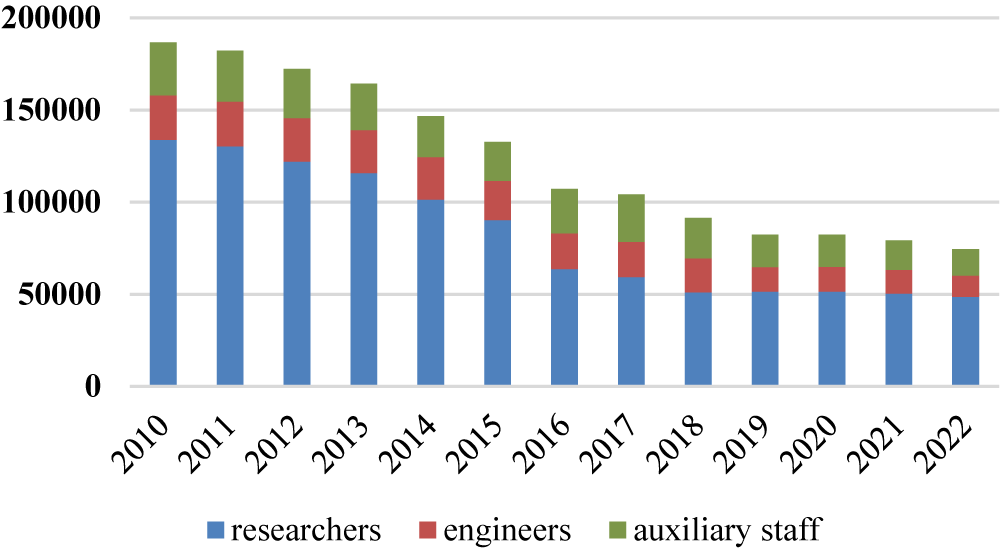
The lack of positive dynamics in the educational structure of the LMU, particularly in the branch of “higher education,” hinders this source of development for domestic scientific and technical potential. Recent times have shown that it has not adequately addressed the global challenges of the modern scientific and technological revolution. Over the past 10 years (from 2010 to 2020), the actual volume of research and development (R&D) in Ukraine has decreased by 45% (in US dollars at purchasing power parity), while the number of researchers has more than halved, with a 62% decline (Figure 1).
Trends in the number of personnel engaged in R&D by categories, as for 2010–2022. Source: Formed by the authors based on R&D personnel by occupation in 2010–2023 (2024).

Figure 1. Long description
A stacked bar chart displays the total number of personnel engaged in R and D on the Y-axis, ranging from 0 to 200,000 in increments of 50,000. The X-axis lists years from 2010 to 2022. Each bar is composed of three segments. From bottom to top, these are: blue for researchers, red for engineers, and green for auxiliary staff.
Data trends show a steady decline in total personnel over the period. In 2010, the total is approximately 185,000, with researchers making up the largest portion at roughly 135,000. By 2016, there is a significant drop to approximately 105,000 total personnel, with researchers falling to about 65,000. From 2018 to 2022, the numbers stabilize at a lower level, ending in 2022 with a total of approximately 75,000 personnel. Throughout the entire period, researchers remain the largest category, followed by auxiliary staff and then engineers.
The downward trend shown in the data in Figure 1 is driven by at least two factors. The first is the impact of Russia’s military aggression against Ukraine, which effectively began in 2014. Secondly, it is the COVID-19 pandemic and its consequences, including medical, psychological, financial, and material effects, among others. In 2018, 950 organizations in Ukraine were engaged in R&D, with 48.1% of them belonging to the public sector, 37.0% to the business sector, and 14.9% to higher education. The share of R&D personnel (including researchers, technicians, and support staff) in the total employed population was 0.54%, with researchers comprising 0.35% of that total. That year, organizations’ total R&D expenditure amounted to UAH 16773.7 million, with labor costs at UAH 8553.0 million, other current expenses at UAH 7456.3 million, and capital expenses totaling UAH 764.4 million, including UAH 588.0 million for equipment acquisition. Ukraine ranks among the countries with the lowest concentration of researchers, with 11 researchers per 10,000 people, compared to 55 in European and OECD (Organization for Economic Co-operation and Development) countries.
IT clusters are also pivotal in advancing the global digitization of LMU. These clusters contribute to the development of the IT industry in various cities across the country, uniting leading companies and partners involved in software development and export outsourcing. Overall, the analysis of data highlighting the regional characteristics of domestic IT clusters, their growth trends, production volumes, and collaboration with foreign IT companies is well-documented in scientific and statistical sources (Tul, Reference Tul2019). It is important to recognize that digital technologies offer distinct advantages in optimizing the work environment, from providing access to advanced tools to enabling flexible work schedules in many offices. In the LMU, the primary models of IT business organization are freelancing and outsourcing.
Some experts suggest that the private sector in Ukraine demonstrates the highest interest in digitalization, supporting the notion that the digitalization of economic activities and the extensive use of information technology enhance labor productivity and business efficiency. It is important to note that IT specialists’ engagement in the national economy primarily relies on civil law contracts with individual entrepreneurs (PPOs) whose activities focus on providing information technology services. Currently, these individual entrepreneurs constitute the majority of IT professionals in Ukraine, with relevant individual entrepreneurs accounting for 90% of registered programmers in the country.
Outsourcing is notably widespread in the Ukrainian IT market, with its primary role being the provision of services to foreign companies. Outsourcing firms can succeed and operate effectively even without robust state institutions or adequate infrastructure. The most prevalent type of outsourcing is business process outsourcing, which involves delegating routine tasks, such as customer call handling, to specialized call centers often situated in regions with lower labor costs.
In recent times, freelancing and outsourcing have increasingly become prominent forms of domestic business. It is worthwhile to comparatively model the characteristics of their practical operations. The goal of such modelling is to perform an economic-mathematical analysis of the comparative benefits of freelancing and outsourcing and to provide recommendations for expanding their application within the framework of global digitalization in LMU.
Real-life examples of successful Ukrainian companies that utilize entrepreneurial models in the IT sector can serve as valuable illustrations for analysis. For instance, SoftServe, one of the largest outsourcing providers in Ukraine, effectively employs this model to deliver services to clients worldwide. The company actively attracts investments and continuously expands its workforce, contributing significantly to the growth of Ukraine’s IT industry. Another example is the Upwork platform, which enables Ukrainian freelancers to find clients abroad. Through such platforms, Ukrainian specialists can participate in the international market, positively impacting the country’s economic development.
Additionally, Genesis, a successful Ukrainian company specializing in developing tech start-ups, uses a hybrid business model that includes outsourcing, freelancing, and investment in its products. Genesis has launched several successful projects in media, e-commerce, and fintech, such as BetterMe (a fitness app) and Headway (a reading platform). By leveraging its model, Genesis has attracted over USD 500 million in investments, created more than 1500 jobs in Ukraine, and expanded into new international markets. Examining the economic indicators of freelancing and outsourcing in Ukraine’s IT sector reveals how these models contribute to entrepreneurship and economic growth in the country (Table 1).
A comparison of economic metrics between freelancing and outsourcing within Ukraine’s IT sector

Table 1. Long description
The table consists of three columns: Indicator, Freelance, and Outsourcing.
* Share in G D P of the I T sector, %: Freelance is 1.4%, Outsourcing is 4.1%.
* Average income per specialist, U S D: Freelance is 35,000, Outsourcing is 25,000.
* Employment level, thousands of people: Freelance is 150, Outsourcing is 250.
* The volume of export of I T services, U S D billion: Freelance is 1.5, Outsourcing is 6.8.
* Investments in development, U S D million: Freelance is 200, Outsourcing is 800.
Source: Formed by the authors based on How many IT specialists are there in Ukraine: Counting according to the Ministry of Justice (2018).
As shown in Table 1, outsourcing contributes a larger portion to Ukraine’s IT sector GDP (4.1%) compared to freelancing (1.4%). This indicates that outsourcing is a more developed and influential sector of the economy, contributing significantly to national GDP. An entrepreneurial approach in outsourcing enables companies to attract more international customers, leading to higher income levels and sustainable sector growth. The export volume of IT services in outsourcing is USD 6.8 billion, significantly higher than the USD 1.5 billion generated by freelancing. This indicates that outsourcing companies have a stronger presence in the international market, thanks to their capacity to manage large contracts and deliver reliable, high-quality services. The entrepreneurial approach in outsourcing is export-oriented, allowing companies to attract foreign investments and contribute to economic development through export growth.
Investments in outsourcing companies total USD 800 million, four times higher than the USD 200 million invested in freelancing. This indicates that outsourcing companies are more attractive to investors due to their scalability, stability, and capacity to generate significant revenues. Thus, the entrepreneurial approach in outsourcing involves actively attracting capital for infrastructure development, service expansion, and innovation, enabling companies to remain competitive in the international market (Annual Report on the State of…, 2022).
In this specific context, the primary objective is to justify the selection of the most suitable form of work for IT professionals. To make a well-informed decision, it is essential to consider the problem’s multifaceted nature. To fully grasp the various aspects, it is advisable to identify a range of possible solutions and determine the set of criteria required for their implementation. It is crucial to consider as many relevant criteria as possible, as overlooking even one could result in an incorrect choice. The selected solution should be well-founded, comprehensive, adaptable, optimal, lawful, and clearly defined.
Given the current state of development in the national IT sector, it is important to employ a heuristic approach, particularly the expert evaluation method. This involves gathering insights from professionals, analyzing, and synthesizing this information to make informed, risk-based decisions. Based on the stages of collective expert research, the algorithm for modeling the comparative advantages of freelancing and outsourcing in Ukraine’s IT sector involves forming a group of experts.
First, it is essential to identify the number of experts who are directly involved in the IT field. The selected group of experts will participate in a survey regarding the importance of variables in each of the identified groups. According to existing recommendations and based on a specified level of confidence (95%), the number of experts should range from 5 to 15. For this problem, they were chose five experts. The second stage involves developing questionnaires to gather relevant information. Consequently, the third stage will involve surveying the experts regarding the factors that constitute the holistic problem and identifying criteria that influence the alternative selection process. The fourth stage involves defining the tasks that need to be addressed by searching for alternatives and obtaining evaluations from the five experts. To reach a decision, three key tasks must be addressed:
-
• identifying potential alternatives;
-
• categorizing these alternatives into solution classes;
-
• Select the most suitable alternative.
As specific objects of alternative options, two forms of business are proposed: freelancing and outsourcing, both in the LMU IT industry. Specific features, such as a limited number of alternatives and a large number of criteria, characterize the existing options. The task is to select the best and most profitable alternative. To accurately perform the modelling, an analysis of existing statistical data was conducted (Vlasova, Reference Vlasova2015), focusing on the proportion of Ukrainian citizens employed in the primary industries and sectors of the national economy. Only those sectors with the highest percentage of the total workforce were selected for this analysis. This criterion served as the foundation for creating a comparison table aimed at conducting a balanced evaluation of the application of two alternative IT business models within the LMU, specifically freelancing and outsourcing.
Based on the criteria and the selection of the highest percentage of enterprises employing IT professionals, a Comparison Table was created to properly analyze these two alternatives: freelancing and outsourcing (Table 2). Based on the selection criteria for the highest percentage of enterprises employing IT specialists within the total number of enterprises, a comparison table was constructed to accurately analyze the two alternatives: freelancing and outsourcing. According to the individual opinions of experts, who rated each criterion on a relative scale from 1 to 10 points based on its importance, the total points awarded for each alternative are as follows: outsourcing received 348 points, while freelancing received 345 points. Therefore, according to the experts’ opinion, outsourcing is considered the better alternative.
Expert industry assessment of the use of IT specialists in such proposed alternative forms—outsourcing (A) and freelancing (F)

Table 2. Long description
The table evaluates two alternative forms of work: Outsourcing (O) and Freelancing (F) on a rating scale of 1 to 10.
Header Structure:
Columns are organized by Expert Number (1 through 5), with each expert providing separate ratings for O and F. The final two columns are Total and Ranking.
Data Rows (Industry Criterion, Total, Ranking):
1. Information and communication technologies: Total 86, Ranking 1.
2. Advertising activities: Total 85, Ranking 2.
3. Professional, scientific, and technical activities: Total 79, Ranking 3.
4. Information and telecommunications: Total 78, Ranking 4.
5. Repair of computers and communication equipment: Total 77, Ranking 5.
6. Wholesale and retail trade: Total 73, Ranking 6.
7. Electricity supply: Total 58, Ranking 7.
8. Scientific research and development: Total 53, Ranking 8.
9. Legal activities: Total 51, Ranking 9.
10. Processing industry: Total 41, Ranking 10.
Individual Expert Ratings:
Ratings for Information and communication technologies are consistently high, ranging from 9 to 10 for both O and F across all experts. In contrast, the Processing industry received lower scores, including a 3 for F from Expert 3 and Expert 5.
Bottom Row (Best alternative):
This row provides a sum of ratings per expert for each category. Expert 1 rated O at 79 and F at 69. Expert 2 rated O at 65 and F at 66. Expert 3 rated O at 64 and F at 63. Expert 4 rated O at 70 and F at 69. Expert 5 rated O at 70 and F at 78.
Source: Formed by the authors based on R&D personnel by occupation in 2010–2023 (2024).
Following the data presented in Table 2, which highlights the initial survey of ranked importance for various variables, the total points assigned by selected experts for each criterion were considered. Experts identified 10 key criteria for companies in the information and communication technology sector, including information and communication technologies, advertising activities and market research, other professional, scientific, and technical activities, professional, scientific, and technical activities, information and telecommunications, computer and communication equipment repair, wholesale and retail trade, motor vehicle and motorcycle repair, electricity supply, scientific research and development, legal activities, head office operations, management consulting, architectural and engineering services, technical testing and research, and the manufacturing industry.
Based on the assessments provided by five experts on the relevance of outsourcing and freelancing in these economic sectors, it was observed that in five of these sectors, these factors hold the greatest importance. Variables deemed less significant for outsourcing and freelancing, as determined by calculations and ranked order, were excluded. These adjustments are documented in Table 3.
Ranking of job types based on the criterion of high ratings

Table 3. Long description
The table consists of three columns: No., Variables, and Overall rating.
Row 1: Number 1, Information and Communication Technologies, Overall rating 86.
Row 2: Number 2, Marketing activities and market analysis, as well as other professional, scientific, and technical services, Overall rating 85.
Row 3: Number 3, Specialized professional, scientific, and technical services, Overall rating 79.
Row 4: Number 4, Information and Telecommunications, Overall rating 78.
Row 5: Number 5, Repair of computers and telecommunication equipment, Overall rating 77.
The source is noted as formed by the authors based on McKinsey and Company 2016.
Source: Formed by the authors based on McKinsey & Company (2016).
Since the two alternatives being investigated can be interpreted as an unresolved part of the employment problem for IT professionals (which shows the highest parameter in the ranking group), this provides a basis for using the cognitive function of effectiveness according to individual-subjective preferences of the chosen alternatives.

The alternative is the function of individual-subjective preferences of alternatives;
$ Fi $
 is the function of the effectiveness of alternatives;
$ i $
 is the ith attainable alternative, which can be any specific alternative;
$ \unicode{x03B2} $
 is a structural parameter or cognitive coefficient, the value of the functional of which is equal to 0.3;
$ e $
 is a natural number (exponential) 2.71828;
$ n $
 is a set of alternatives (2—outsourcing and freelance);
$ a,X $
 is are necessary conditions (arguments) for finding the extremum of the function.


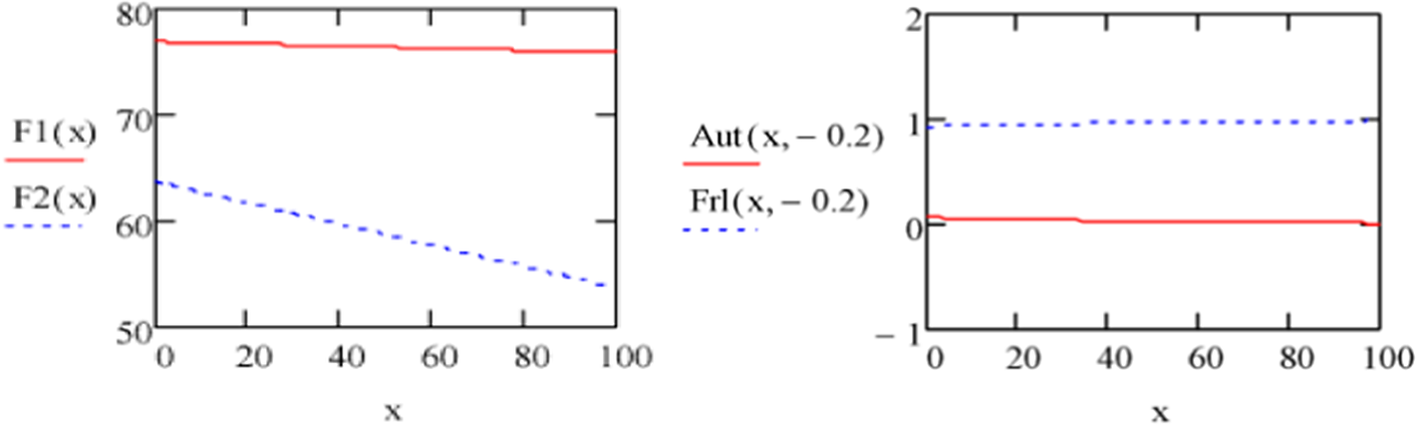
There are two alternative types of employment: outsourcing and freelance (Figure 2). Using the ranking of the importance of each variable for
$ Aut $
 and
$ Frl $
 companies, the most significant ones were identified based on the proportion of companies employing IT professionals relative to the total number of companies. This serves as the benchmark value. Next, were use the function of individual-subjective preferences for these two alternatives to understand which alternative’s qualities (advantages) are more convenient or which advantages can rely on when choosing employment.
$ F1 $
 is the effectiveness function of the outsourcing alternative (
$ Aut $
 ), which is a variable parameter (after ranking by a group of experts) for the criterion “Information and Communication Technologies” and equals 76.9%.
$ F2 $
 is the effectiveness function of the freelance alternative (
$ Frl $
 ), which is the variable parameter (after ranking by a group of experts) for the criterion “Information and Communication Technologies” and equals 63.7%.
Cartesian graph in (a) calculation of entrepreneurial forms activity and (b) comparison between outsourcing–freelance. Source: Formed by the authors.

Figure 2. Long description
The image contains two side-by-side Cartesian graphs.
Graph (a) on the left:
- The x-axis is labeled x and ranges from 0 to 100.
- The y-axis ranges from 50 to 80.
- A solid red line labeled F 1 (x) starts near 78 and shows a very slight downward trend, remaining nearly horizontal.
- A dashed blue line labeled F 2 (x) starts near 64 and shows a steady linear decrease, ending near 54.
Graph (b) on the right:
- The x-axis is labeled x and ranges from 0 to 100.
- The y-axis ranges from -1 to 2.
- A solid red line labeled Aut (x, -0.2) is positioned just above the 0 mark and remains horizontal across the entire range.
- A dashed blue line labeled Frl (x, -0.2) is positioned at the 1 mark and remains horizontal across the entire range.
Calculations using the individual-subjective preference function reveal that, between the two alternatives, the outsourcing sector is the preferred option for Ukrainian professionals in the “Information and Communication Technologies” field. This is clearly illustrated in the Cartesian graph, where the dashed blue line (representing the freelance option) is shifted along the x-axis (measured length). The analysis of digitization’s impact on structural changes within the national economy yields several important conclusions. First, Ukraine’s approach to digitalization, alongside the rapid development of its private IT sector and the expansion of IT clusters, is driving positive structural transformations in the national economy.
Regions hosting IT clusters, such as those in Lviv and Kyiv, are emerging as key hubs for attracting highly skilled talent, not only in IT but also in related industries (McKinsey & Company, 2016). The IT sector is facilitating the rise of new business models like freelancing/self-employment and outsourcing, which are positively affecting entrepreneurship and the development of human capital in Ukraine. European integration has supported decentralization, liberalization, and the easing of conditions for conducting business activities, helping transition towards a market-based digital economy. This, together with the accelerated digitalization of the public sector (including administrative services), is expected to create synergy in the structural changes of the national economy, boosting entrepreneurial activity, enhancing work flexibility, and driving up wage levels.
The analysis reveals that outsourcing emerges as a more advantageous business model compared to freelancing in Ukraine’s IT sector, demonstrating higher GDP contribution, greater export volumes, and stronger investment attraction capabilities. The impact of global digitization on Ukraine’s labor market has been significant, despite challenges from Russian aggression and the COVID-19 pandemic, with the IT sector showing resilience through the adoption of remote work, hybrid workspaces, and the development of IT clusters in major cities. The mathematical modelling and expert evaluation confirm outsourcing’s superiority for IT professionals in Ukraine, particularly in the Information and Communication Technologies field, while the overall digitalization trend continues to drive positive structural transformations in the national economy through increased entrepreneurship, enhanced work flexibility, and improved wage levels.
5. Discussion
The Ukrainian IT sector is experiencing substantial transformations, especially in the context of global digitalization. The swift advancement of digital technologies, coupled with the difficulties brought on by the ongoing war and the recent pandemic, has created a complex environment for companies and professionals within the industry. This study examines the intricacies of freelancing and outsourcing as the predominant work models in the Ukrainian IT industry, assessing their economic impact and potential to promote sustainable growth.
In recent years, digitalization has become a driving force for economic development worldwide (Abdullayev et al., Reference Abdullayev, Aliyeva, Ibrahimova, Badalova and Hajizada2024). Countries with strong IT infrastructure have experienced substantial economic gains, such as enhanced productivity, job growth, and increased investment opportunities (Aviv et al., Reference Aviv, Gafni, Sherman, Aviv, Sterkin and Bega2023). Ukraine, with its developing IT industry, is no exception. The country has been recognized as a significant player in the global IT outsourcing market, offering a competitive edge through its skilled workforce and cost-effective solutions. Additionally, this research seeks to advance the current discussion about the evolving nature of work in the digital era. As automation and artificial intelligence become more prevalent, conventional employment models are undergoing reassessment.
Freelancing and outsourcing have emerged as flexible alternatives to traditional full-time employment, offering businesses the ability to scale operations rapidly and access a global talent pool (Miethlich et al., Reference Miethlich, Beliakova, Voropaeva, Ustyuzhina and Yurieva2023; Abilpeissov & Adieva, Reference Abilpeissov and Adieva2024). However, these models also present challenges, such as job insecurity and the need for continuous skills development. A study by the EBA confirms that digitalization enhances the flexibility and productivity of businesses in Ukraine, aligning with this study’s conclusions on the importance of outsourcing in the IT sector. However, unlike this study, the EBA also highlights the risks to jobs posed by automation, which may create new challenges for the Ukrainian labor market.
Global digitization’s role in reshaping business models and labor markets has been extensively studied. For example, Ancín et al. (Reference Ancín, Pindado and Sánchez2022) investigated the impact of digital technologies on the agri-food sector, highlighting how innovations like AI, Big Data, and the IoT have reshaped business operations. These findings are mirrored in Ukraine’s IT sector, where the adoption of such technologies has driven the growth of freelancing and outsourcing, aligning with the broader trends of efficiency and adaptability seen worldwide. Comparing the digital transformation in Ukraine’s IT sector with that in China’s manufacturing sectors, as explored by Zhang et al. (Reference Zhang, Wei and Liu2023) and Yang et al. (Reference Yang, Feng and Yuan2023) reveals that the impact of digitization extends beyond business models to include environmental concerns.
Zhang et al. (Reference Zhang, Wei and Liu2023) found that digital technologies can reduce carbon intensity and energy consumption, a finding that, while focused on environmental impacts, echoes the increased efficiency and resource optimization observed in Ukraine’s IT sector. The shift towards freelancing and outsourcing in Ukraine reflects a broader trend of leveraging digital technologies to minimize costs and enhance competitiveness. The research of Wang (Reference Wang2024), Chinoracký and Čorejová (Reference Chinoracký and Čorejová2019) on the integration of digital technologies in the Chinese judicial system gives a different perspective, emphasizing the universality of digitization. Wang demonstrated how digital transformation improved litigation efficiency and reduced costs, similar to the increased flexibility and cost-effectiveness observed in Ukraine’s IT sector due to remote work and digital platforms. This comparison underscores the widespread applicability of digital transformation across various industries.
Economic indicators within Ukraine’s IT sector reveal a nuanced relationship between freelancing, outsourcing, and overall economic development. Vu and Asongu (Reference Vu and Asongu2023), Chekhovskoy et al. (Reference Chekhovskoy, Plaksiy, Nikiforov and Miloslavskaya2022) identified significant productivity and value-added growth driven by digital transformation in industrialized economies. Ukraine’s experience aligns with these findings, particularly in the more developed outsourcing sector, which has substantially contributed to GDP and attracted investment. This reflects a global pattern where digitalization not only boosts productivity but also drives economic convergence across regions.
However, Ukraine’s IT sector faces significant challenges due to external factors like Russia’s military aggression and the COVID-19 pandemic. These events have caused considerable losses in human capital and infrastructure, disrupting the digitization process. The resilience of Ukraine’s IT sector amidst these disruptions is comparable to the resilience seen in global supply chains of other industries, such as the steel sector. Research by He et al. (Reference He, Li, Zhang and Guo2024), Sun et al. (Reference Sun, Qu, Wu and Bold2024) underscores the critical role of digitalization in fostering resilience, a principle that is particularly pertinent to Ukraine’s IT industry.
Furthermore, the strategic importance of technology parks and IT clusters in Ukraine resonates with global discussions on innovation-driven economic development. Research by Ayalew et al. (Reference Ayalew, Chamberlin and Newman2022), Chinoracký and Čorejová (Reference Chekhovskoy, Plaksiy, Nikiforov and Miloslavskaya2022) highlights how digital technologies create new opportunities across various industries. However, the underutilization of such innovation structures in Ukraine points to a gap that needs to be addressed to fully harness the benefits of digital transformation. Lastly, the study’s observations regarding the dominance of outsourcing as the favored employment model in Ukraine’s IT sector are corroborated by the research of Li et al. (Reference Li, Zhou and Huang2021) and Luu et al. (Reference Luu, Nguyen and Nasir2023) who examined online outsourcing platforms. They found that skill certification systems significantly influence decision-making processes for freelancers and clients, reinforcing the strategic advantages of outsourcing, such as stability and scalability, in the global digital economy.
In conclusion, this research adds to the wider conversation about the economic impacts of digitalization and the evolving nature of work in Ukraine. By analyzing the impact of freelancing and outsourcing on economic growth, job creation, and investment attraction, the study provides valuable insights for policymakers, business leaders, and IT professionals. The results suggest that while outsourcing may be a more effective model for driving growth in the IT sector, a balanced approach that considers the benefits of freelancing and addresses the challenges posed by automation is essential for ensuring sustainable development.
6. Conclusions
The analysis of the IT sector’s evolution in LMU in the context of global digitalization has led to several important findings. Firstly, the impact of global digitalization on the IT industry is marked by the emergence of objective factors that drive the diversification of the sector and the preparation of specialists to address the increasing domestic demand. This is coupled with the modernization of the IT sector’s infrastructure within the labor market, facilitated by the adoption of advanced equipment that supports the efficient operation of computer networks, financial transactions, and internet resources.
Additionally, this modernization supports programmatic measures for developing the national market environment and facilitates trade agreements, including export–import deals. Furthermore, digital transformation within the domestic labor market and its IT sector, particularly regarding employer-employee relationships, is expanding significantly. This is evident through the adoption of hybrid workspaces, the promotion of remote recruitment and employment, the use of flexible business models, and the creation of attractive working conditions for IT professionals.
The Russian Federation’s military aggression against Ukraine has substantially disrupted the growth of the IT sector in the labor market. The consequences of this conflict include general losses within the domestic IT industry, a reduction in employment due to the emigration of IT professionals abroad, an increase in unemployment among highly skilled professionals because of internal migration, and challenges faced by Ukrainian IT specialists seeking employment overseas. Despite these obstacles, the war has also created an environment that supports the innovative growth of the IT sector in the labor market.
Regionally, the advancement of the IT sector in LMU is evident through the creation and operation of technoparks and IT clusters in Ukraine’s more scientifically and industrially developed regions. This regional progress is associated with a growing supply of skilled IT professionals and increasing collaboration between local experts and leading international IT companies. Additionally, the proportion of IT services, including those from regional centers, has significantly increased in overall exports. However, regional development is hindered by factors such as pronounced territorial differences in IT potential, a low density of IT specialists in certain areas, and insufficient funding for regional branches and the sector as a whole.
Economic-mathematical modelling of comparative advantages within entrepreneurial forms in the IT sector at LMU suggests that outsourcing offers a strategic advantage in ensuring the digitalization of entrepreneurial activities. This finding provides a foundation for expanding the use of outsourcing within the IT sector of LMU. Future research on the IT sector in LMU under the conditions of global digitalization should prioritize leveraging the cumulative IT potential of global partners in the digitization process, enhancing the quality segments of domestic export potential in information and communication services, and creating favorable conditions for attracting foreign investment into the IT sector of LMU.
Based on the research findings that outsourcing provides greater economic benefits (with a 4.1% GDP share vs. 1.4% for freelancing and $6.8B in IT service exports vs. $1.5B), policymakers should prioritize creating favorable conditions for IT outsourcing companies through tax incentives, international market access support, and investment attraction programs. The study also found some major problems, such as the loss of infrastructure, brain drain, and differences between regions. These problems suggest that targeted policies are needed to create technology parks and IT clusters in scientifically advanced areas. At the same time, programs should be put in place to keep and attract IT talent by offering better working conditions and chances for professional growth. The research exhibits notable limitations, primarily its narrow focus on just two business models (freelancing and outsourcing) and its reliance on a small expert panel of only five experts, which may not fully represent the diverse perspectives within Ukraine’s IT industry. Additionally, the study’s heavy reliance on pre-war data and limited analysis of regional differences within Ukraine’s IT sector constrains its applicability to current market conditions. Future research could overcome these limitations by expanding the scope to include other business models, utilizing a larger expert panel, conducting longitudinal studies that track changes over time, and incorporating more detailed regional analysis alongside international comparisons.