Introduction
A meta-analysis of 10 randomized controlled trials from high-income countries (HICs) found that early intervention services for psychosis yielded superior outcomes than regular care (Correll et al., Reference Correll, Galling, Pawar, Krivko, Bonetto, Ruggeri and Guloksuz2018). Such services emphasize engaging patients in 1–2 years of high-quality treatment to facilitate clinical and functional recovery (EPGWG and EPPIC National Support Program, 2016; Iyer, Jordan, MacDonald, Joober, & Malla, Reference Iyer, Jordan, MacDonald, Joober and Malla2015). Though substantially lower in early intervention services compared to regular care (Correll et al., Reference Correll, Galling, Pawar, Krivko, Bonetto, Ruggeri and Guloksuz2018), service disengagement remains concerning (rates of 20–40%) (Doyle et al., Reference Doyle, Turner, Fanning, Brennan, Renwick, Lawlor and Clarke2014; Kreyenbuhl, Nossel, & Dixon, Reference Kreyenbuhl, Nossel and Dixon2009; Lal & Malla, Reference Lal and Malla2015; Maraj, Iyer, & Shah, Reference Maraj, Iyer and Shah2018). As summarized by Doyle et al.'s (Reference Doyle, Turner, Fanning, Brennan, Renwick, Lawlor and Clarke2014) review, various factors – gender, age, absence of family involvement, ethnic minority status, low socioeconomic status, immigrant background, substance use, symptom severity, lower medication adherence, and forensic history – can increase the risk for disengagement, albeit not consistently.
Like most early psychosis research, service engagement research has been predominantly conducted in HICs (Reynolds, Brown, Tindall, & O'Donoghue, Reference Reynolds, Brown, Tindall and O'Donoghue2019). This is partly because there are few such services in low- and middle-income countries (LMICs). It remains unknown whether service disengagement poses a challenge for early intervention psychosis programs in LMICs like India. In India, a paucity of services and specialists has meant that families bear most of the burden of care, which occurs largely in the community (Avasthi, Reference Avasthi2010). Familial structures, values, and living arrangements also result in families being more involved in treatment in India (Nunley, Reference Nunley1998; Srinivasan & Thara, Reference Srinivasan and Thara2002; Stanhope, Reference Stanhope2002), which in turn may promote higher service engagement among early psychosis patients. However, the Indian phenomenon of high family involvement has not been systematically investigated in early psychosis.
In HICs, family involvement in early psychosis has been linked with relapse reduction (Camacho-Gomez & Castellvi, Reference Camacho-Gomez and Castellvi2020), medication adherence (Leclerc, Noto, Bressan, & Brietzke, Reference Leclerc, Noto, Bressan and Brietzke2015), social and vocational functioning (Claxton, Onwumere, & Fornells-Ambrojo, Reference Claxton, Onwumere and Fornells-Ambrojo2017), subjective recovery (Boydell, Stasiulis, Volpe, & Gladstone, Reference Boydell, Stasiulis, Volpe and Gladstone2010; Windell, Norman, Lal, & Malla, Reference Windell, Norman, Lal and Malla2015), a better quality of life (Oluwoye et al., Reference Oluwoye, Kriegel, Alcover, Compton, Cabassa and McDonell2020) and lower long-term unnatural-cause mortality (Ran et al., Reference Ran, Chui, Wong, Mao, Lin, Liu and Chan2016; Reininghaus et al., Reference Reininghaus, Dutta, Dazzan, Doody, Fearon, Lappin and Jones2014). The absence of family involvement was found to increase service disengagement in two early intervention studies in Australia and Canada (Conus et al., Reference Conus, Lambert, Cotton, Bonsack, McGorry and Schimmelmann2010; Stowkowy, Addington, Liu, Hollowell, & Addington, Reference Stowkowy, Addington, Liu, Hollowell and Addington2012). Racial-ethnic differences have been noted in the uptake of family interventions such as psychoeducation (Oluwoye et al., Reference Oluwoye, Stiles, Monroe-DeVita, Chwastiak, McClellan, Dyck and McDonell2018).
Notwithstanding the overwhelming evidence for family involvement being beneficial, little is known about how it evolves over the course of follow-up. Literature is generally restricted to a gross indicator of whether families are involved at a point in early psychosis treatment, typically upon entry (Conus et al., Reference Conus, Lambert, Cotton, Bonsack, McGorry and Schimmelmann2010; Stowkowy et al., Reference Stowkowy, Addington, Liu, Hollowell and Addington2012). This despite early intervention guidelines recommending at least once-monthly contact with families (EPGWG and EPPIC National Support Program, 2016; IRIS, 2012; Ministry of Health & Long-Term Care, 2011).
This study is the first to examine differences in the uptake of early intervention among patients and families in a HIC and a LMIC. Our primary aim was to investigate differences in patients' and families' service engagement in similarly structured first-episode psychosis programs in Montreal, Canada and Chennai, India. We hypothesized that fewer patients would drop out in Chennai. This hypothesis was consistent with our pilot study's findings at these sites (Iyer, Mangala, Thara, & Malla, Reference Iyer, Mangala, Thara and Malla2010). We also hypothesized that families would be engaged for more months in Chennai than in Montreal.
Our second aim was to explain inter-site difference in the rates of patient service disengagement. We hypothesized that this difference would be mediated by family involvement, after accounting for other established predictors of disengagement.
Methods
Settings
This prospective study was conducted from 2012 to 2018 at two early intervention sites – one comprising two McGill University-affiliated services in Montreal, and the other being the first-episode psychosis program of the Schizophrenia Research Foundation (SCARF) in Chennai, India. The Montreal site is part of a publicly funded healthcare system. The Indian site is a mental health-focused non-governmental organization. SCARF's early intervention service, adapted to its cultural context, was established under an NIH-funded collaboration with the Montreal service between 2006 and 2010.
Both sites have open referral systems, provide free services, follow a similar protocol based on international guidelines for early psychosis services (EPGWG and EPPIC National Support Program, 2016; IRIS, 2012; Ministry of Health and Long-Term Care, 2011), and offer treatment for 2 years. Treatment at both sites comprises low-dose antipsychotic medication, case management (ratio of 1:22–25 in Montreal and 1:30–35 in Chennai), family psychoeducation and other psychosocial interventions (Iyer et al., Reference Iyer, Mangala, Thara and Malla2010; Iyer et al., Reference Iyer, Jordan, MacDonald, Joober and Malla2015). Adaptations at the Indian site included significant family involvement in treatment; flexibility in accessing services in-person even without an appointment and on phone; and home-based cognitive retraining focused on household chores/activities (Rangaswamy, Mangala, Mohan, Joseph, & John, Reference Rangaswamy, Mangala, Mohan, Joseph and John2012).
This study was approved by both sites' ethics boards and all patients provided informed consent.
Participants
Admission criteria for the services were the same as study criteria, except for the Montreal site serving 14- to 35-year-olds but the study included only ⩾16-year-olds. All consecutive patients were approached for the study upon entering treatment. To be included, patients had to:
-
have a current primary DSM-IV diagnosis of a schizophrenia-spectrum or affective psychotic disorder, not substance-induced or secondary to a medical condition (e.g. epilepsy);
-
not have been treated with antipsychotic medication for 30+ days;
-
be between 16 and 35 years;
-
have an IQ > 70; and
-
be able to communicate in Tamil or English in Chennai and French or English in Montreal.
Patients with concurrent diagnoses of substance abuse/dependence were not excluded. Family members were parents, siblings, spouses/partners, grandparents, extended family members, friends, roommates, or legal guardians who had contact with the treating team.
Assessments
At both sites, assessments were administered by staff who were similarly rigorously trained. This study used well-established measures that have been deployed in prior research at both sites (Iyer et al., Reference Iyer, Mangala, Thara and Malla2010; Malla et al., Reference Malla, Iyer, Rangaswamy, Ramchandran, Mohan, Taksal and Joober2020). Quality assurance strategies included inter-rater reliability sessions, and centralized data management and verification.
Sociodemographic and clinical data. Sociodemographic data were collected using a purpose-designed questionnaire. The Circumstances of Onset and Relapse Schedule (CORS) (Norman, Malla, Verdi, Hassall, & Fazekas, Reference Norman, Malla, Verdi, Hassall and Fazekas2004), a semi-structured interview, was used to determine the duration of untreated psychosis (DUP) and the age of onset of psychosis. DUP was defined as the number of weeks between the onset of the present psychotic episode and the initiation of antipsychotic medication for at least 1 month. The intra-class coefficient between three raters (two from Chennai, one from Montreal) for CORS ranged from 0.89 to 0.97.
Symptoms were assessed using the Scale for the Assessment of Positive Symptoms (SAPS) (Andreasen, Reference Andreasen1984) and the Scale for the Assessment of Negative Symptoms (SANS) (Andreasen, Reference Andreasen1983). Symptom severity was determined using total scores at baseline. From the SANS total, we excluded scores on the items of ‘Inappropriate affect’ and ‘Poverty of content of speech’ and the ‘Attention’ subscale, following recommendations (Malla, Norman, Williamson, Cortese, & Diaz, Reference Malla, Norman, Williamson, Cortese and Diaz1993). Inter-rater reliability was established with videotaped patient interviews (two from each site), rated by all raters. The Cronbach's alpha for global subscale scores ranged from 0.93 to 0.98 on SAPS, and from 0.86 to 0.97 on SANS.
Primary (psychotic disorder) and secondary (substance abuse or dependence) diagnoses were established using the Structured Clinical Interview for DSM-IV (First, Spitzer, Gibbon, & Williams, Reference First, Spitzer, Gibbon and Williams2002). Using the Alcohol Use Scale and the Drug Use Scale (Drake, Mueser, & McHugo, Reference Drake, Mueser, McHugo, Sederer and Dickey1996), each patient's alcohol and drug use during the 6 months prior to entry was rated on a five-point Likert scale (from abstinent to dependence with institutionalization).
Medication adherence was recorded monthly based on information from patients and/or their families. Patients were considered adherent in any month if they took the antipsychotic medication 76–100% of the time in that month and overall adherence status (yes/no) was calculated for each patient based on their modal adherence over Months 1–23. This validated method has been previously used (Cassidy, Rabinovitch, Schmitz, Joober, & Malla, Reference Cassidy, Rabinovitch, Schmitz, Joober and Malla2010; Maraj, Veru, et al., Reference Maraj, Veru, Morrison, Joober, Malla, Iyer and Shah2018).
Service engagement
Patient engagement
Patients were deemed engaged if the treating team had been in contact with them in person (through clinic or community appointments) or at-distance (by phone/email). A monthly record of the presence (yes/no) and method (in-person/at-distance) of patient engagement was maintained. In months where both methods of contact were used, the contact was coded as ‘in-person’.
Consistent with prior research (Maraj et al., Reference Maraj, Mustafa, Joober, Malla, Shah and Iyer2019; Maraj, Veru, et al., Reference Maraj, Veru, Morrison, Joober, Malla, Iyer and Shah2018; Stowkowy et al., Reference Stowkowy, Addington, Liu, Hollowell and Addington2012), patients were considered disengaged if they had no contact with treating teams for three consecutive months before the completion of treatment, i.e. Month 24. Time to disengagement was recorded as the time from program entry to the first of the three consecutive months of no contact. Patients who re-engaged after having disengaged for at least three consecutive months were considered disengaged for the purpose of the analysis. The total number of months in which there was contact between the patient and their treating team from entry to Month 24 was also calculated (possible range: 0–25).
Family engagement
Families were deemed engaged if the treating team had been in contact with them in person or at distance.
A monthly record of family engagement was maintained. For each month without family contact, case managers also indicated whether they thought ‘contact would have been beneficial’ or ‘was not necessary’. To minimize burden, clinicians were not asked to provide reasons for their choice. The total number of months where there was contact between families and treating teams from entry to Month 24 was calculated (possible range: 0–25).
Data analysis
Statistical analyses were performed using SPSS 22.0. Descriptive data were presented as percentages for categorical data and as means, standard deviations and medians for continuous data. Statistical significance was set at p < 0.05 and Cohen's d values of 0.2, 0.5, 0.8 and 1.2 were considered small, medium, large and very large effect sizes, respectively (Cohen, Reference Cohen1988)
Analyses to address aims
To test inter-site differences in patient service disengagement rates (Aim 1), we conducted Kaplan-Meier time-to-event analyses using log-rank test. Patients who died, moved or were transferred were censored at that time. Patients who completed treatment were censored at 24 months.
To examine inter-site differences in the number of months with contact between the treating team and the family (Aim 1), we compared the two sites using independent samples t test and reporting Cohen's d effect size.
To identify intra- and inter-site predictors of patient disengagement (Aim 2), Cox proportional hazards regression analysis was planned. The analysis was to include site, family involvement, and known predictors of service disengagement (Doyle et al., Reference Doyle, Turner, Fanning, Brennan, Renwick, Lawlor and Clarke2014; Lal & Malla, Reference Lal and Malla2015) viz., schizophrenia-spectrum v. affective psychosis diagnosis; positive and negative symptom severity; substance use severity; modal medication adherence; gender; and age. Family involvement was defined as the number of months with contact between the treatment team and family or until time of disengagement for those who disengaged earlier. Results are presented as hazard ratios with 95% confidence intervals.
Additional analyses
We conducted independent samples t tests to examine inter-site differences in the number of months with contact between the treating team and patients; in the frequency of in-person v. at-distance patient contacts; and in family contact over time. Chi-square statistics were used to examine differences in whether case managers saw contact with families as potentially beneficial v. not necessary for months with no contact between the treating team and families.
Finally, we compared the amount of contact that families had relative to the amount of contact that patients had with the treating team at each site, using paired-samples t tests and reporting effect sizes. The amount of contact was calculated as the proportion of months with contact to the number of months for which data were available and expressed as a percentage.
Results
The study included data about 333 patients with first-episode psychosis (165 in Montreal, 168 in Chennai) and their family members (156 in Montreal, 168 in Chennai).
Sociodemographic and clinical characteristics of patients
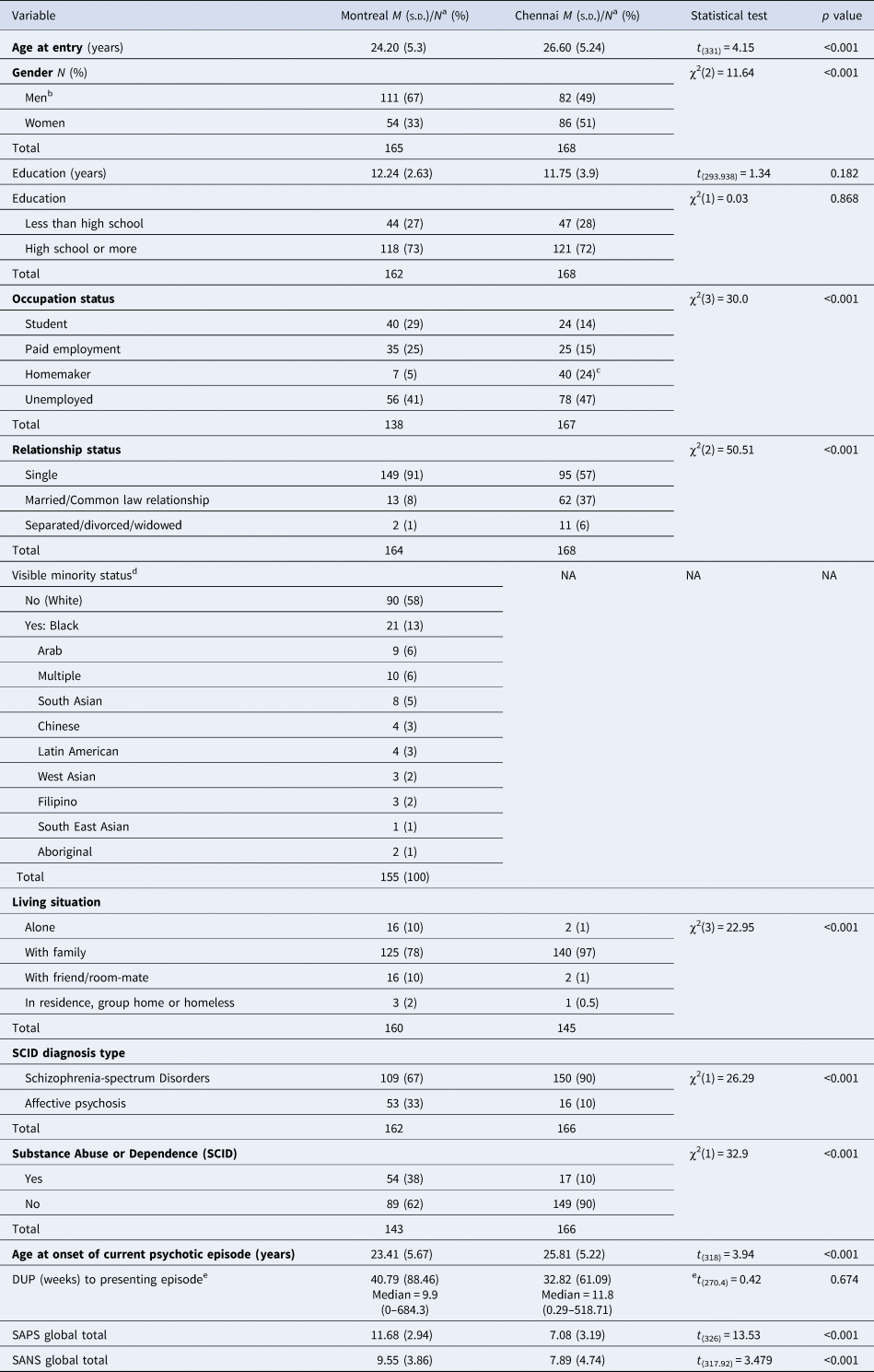
At both sites, most patients were in their mid-twenties; had completed high school; and lived with their families upon entry (78% in Montreal, 96% in Chennai) (see Table 1). The log-transformed average and range of DUP were comparable. Montreal patients had significantly more severe positive and negative symptoms at baseline. Chennai patients were significantly older upon entry and at the onset of psychosis; likelier to have schizophrenia-spectrum psychosis; and less likely to have comorbid substance use diagnoses. A significantly higher proportion in Chennai lived with their families; were women; and were likely to be homemakers.
Sociodemographic and clinical data of patients at baseline
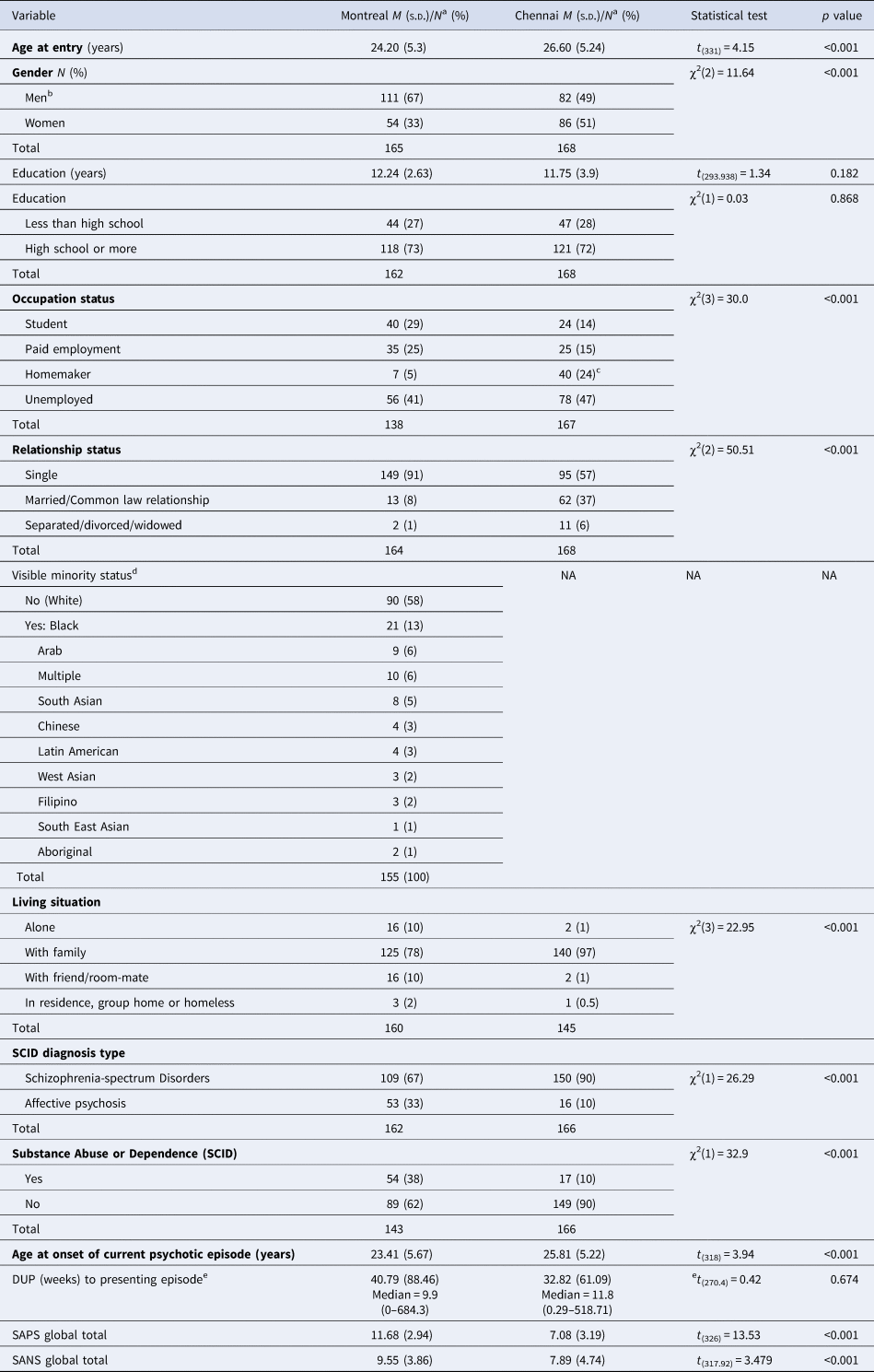
SAPS, Scale for Assessment of Positive Symptoms; SANS, Scale for Assessment of Negative Symptoms; DUP, duration of untreated psychosis; SCID, Structured Clinical Interview for DSM-IV; NA, not applicable.
p < 0.05 are significant; Bold indicates significant differences.
a The sample sizes vary because of missing data
b One transgender service-user in Montreal identified as male, and for purpose of analysis, their gender was coded as ‘male’.
c All women.
d Self-ascribed visible minority status coded either as non-white and non-Aboriginal, or as white, following official (Statistics Canada, 2011) definitions. Break-down of visible minority status as per Statistics Canada categories.
e analysis on log of mean
Mortality
Four women in the Chennai sample died within 3 months of the entry (one of thyroid cancer, three by suicide). Two of these patients and their families had been in contact with the treating team before the deaths. In one case, only the family but not the patient had contact in the preceding month and in the last case, neither the patient (the one with cancer) nor the family had contact in the preceding month. No Montreal patient is known to have died during the study.
Aim 1: site differences in patient and family engagement
Patient disengagement
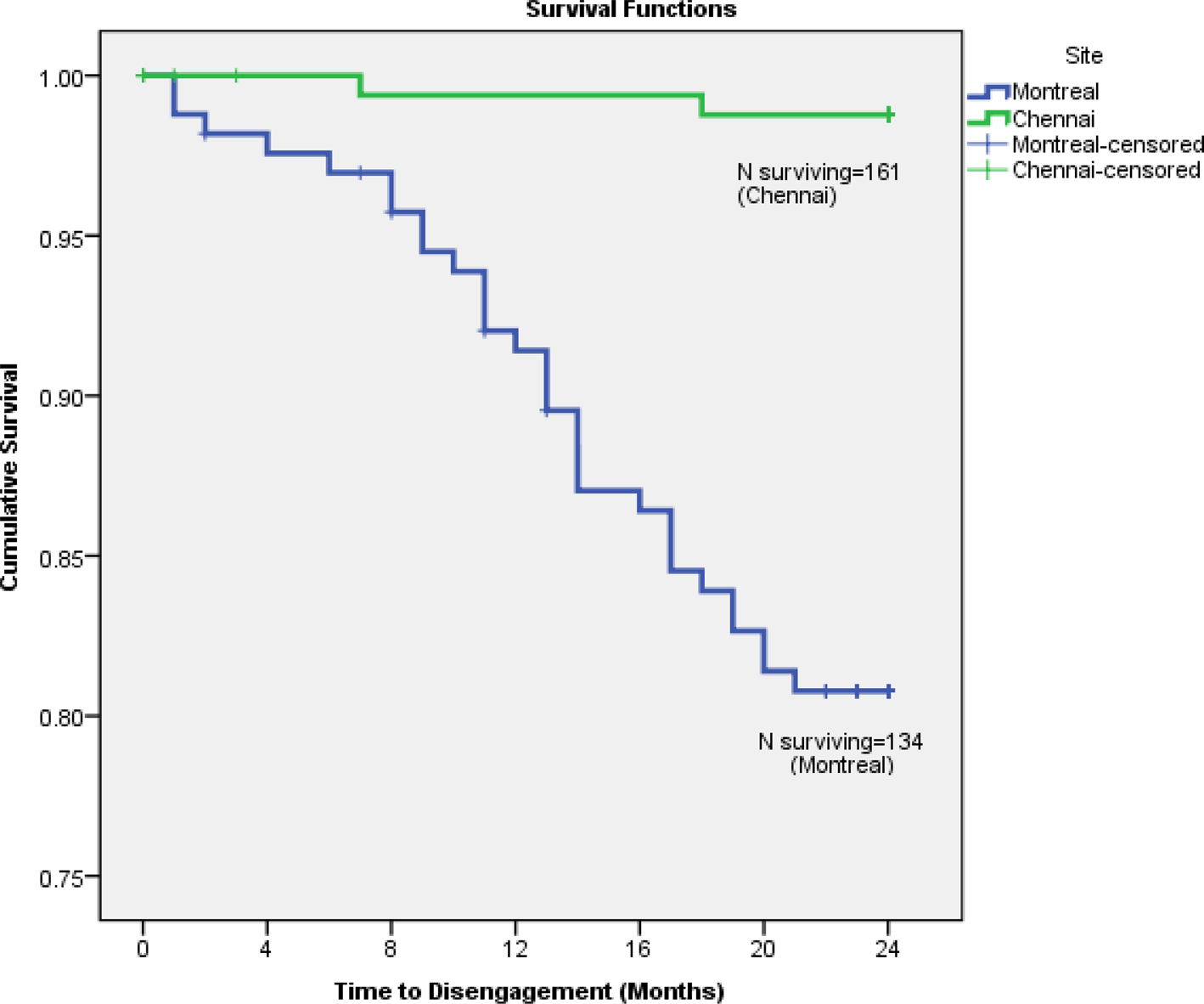
The Kaplan-Meier time-to-event analyses indicated that significantly more patients disengaged before completing treatment in Montreal (N = 31/165, 19%) than in Chennai (N = 2/168, 1%); χ2(1, N = 333) = 28.87, p < 0.001 (Fig. 1). The average time to disengagement for Montreal patients was 12.32 months (s.d. = 5.62; range 1–21 months). Two Chennai patients disengaged at Months 7 and 18.
Kaplan-Meier time-to-disengagement curve for patients.
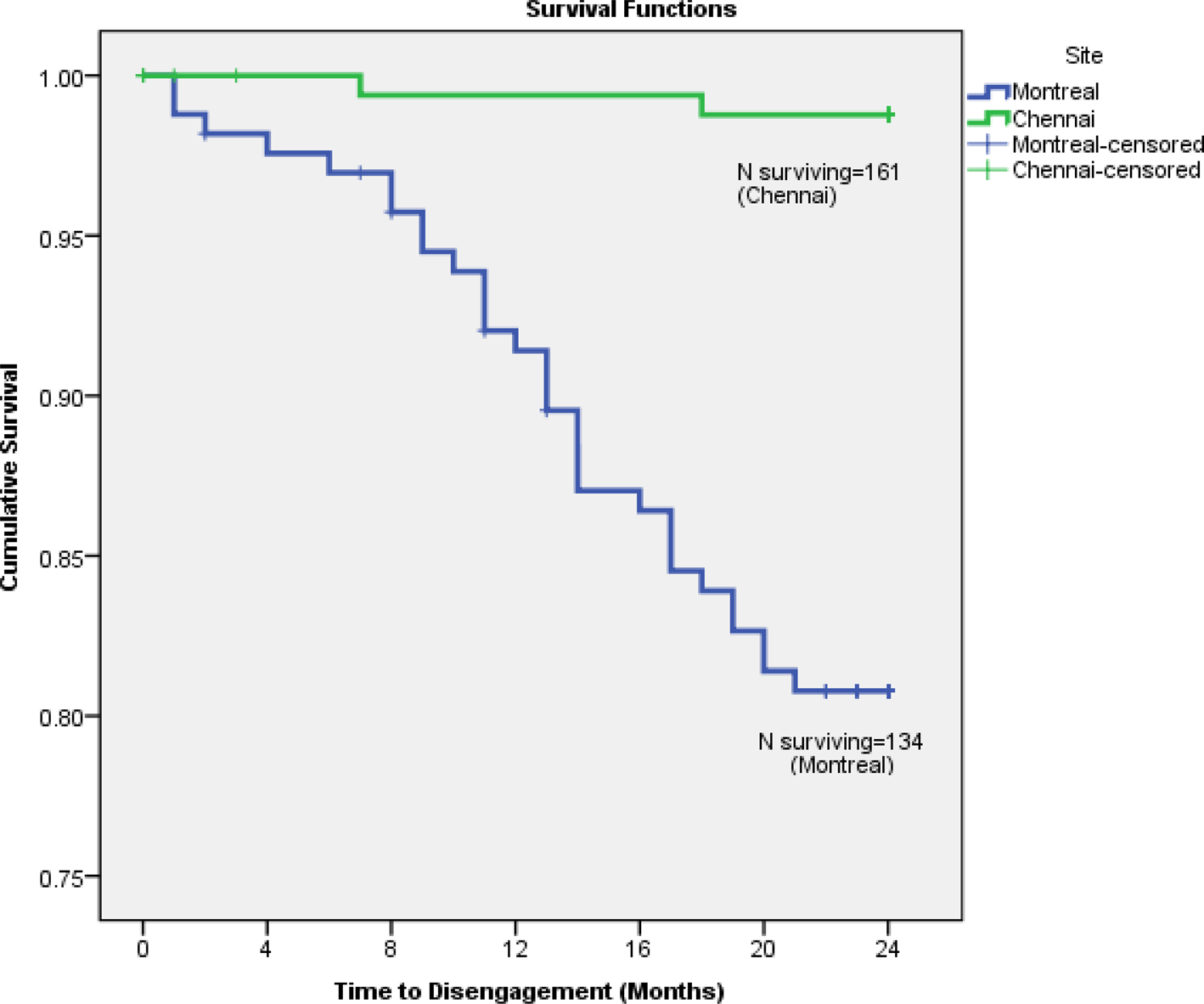
The sociodemographic and clinical characteristics of the disengaged Montreal and Chennai patients appear in online Supplementary Table S1. Both disengaged Chennai patients re-engaged, one after 6 months and the other after 5 months of no contact with the clinical team. Of the 31 disengaged Montreal patients, nine re-engaged after 3–5 months of no contact. At both sites, re-engagement did not coincide with hospitalization, change in positive or negative remission status, or relapse. Six of the nine Montreal patients who re-engaged disengaged again.
Family engagement
As hypothesized, treating teams had contact with families for significantly more months in Chennai (M = 22.82, s.d. = 5.77; N = 168) than in Montreal (M = 11.43, s.d. = 7.83; N = 156), t (246.26) = −16.68, p < 0.001, 95% CI −13.44 to −10.6; Cohen's d = −1.28.
The Chennai team had contact with the families of 140 patients (83%) every month during follow-up (Range: 4–25 and Median: 25 months). In Montreal, there was more variability (Range: 0–25), with a median of 10 months of contact over the course of follow-up, 33 families (21%) having less than 3 months of contact, and six families (4%) having contact every month. At both sites, most at-distance contacts with families were by phone (84–100% of at-distance contacts in Montreal; 100% at Chennai).
Among the 11 Montreal cases with no family contact, four had refused consent for families to be contacted. Barriers like language, parents living elsewhere, family deceased and family illness were noted for five cases.
Aim 2: predictors of patient service disengagement
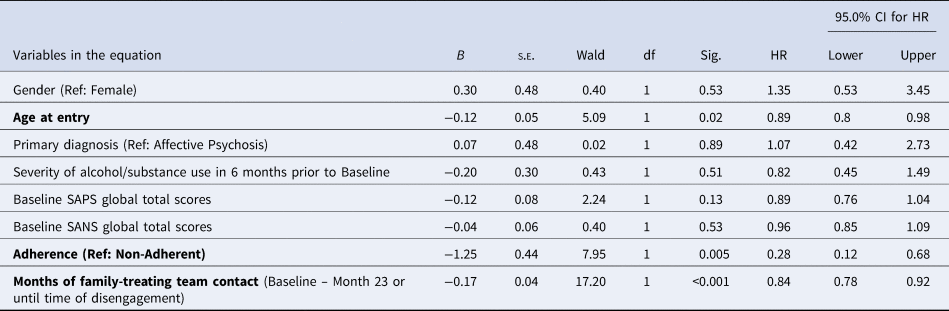
As only two patients disengaged in Chennai, the Cox-proportional hazards regression could not be conducted as originally planned (see Table 2). We conducted this analysis only with the Montreal sample. As hypothesized, more contact between families and treating teams independently contributed to lower risk of service disengagement (HR = 0.84, 95% CI 0.78–0.92). Age at entry (HR = 0.89, 95% CI 0.80–0.98) and medication adherence (HR = 0.28, 95% CI 0.12–0.68) were the only other independent predictors of disengagement.
Cox proportional hazards regression for Montreal (N = 142#)
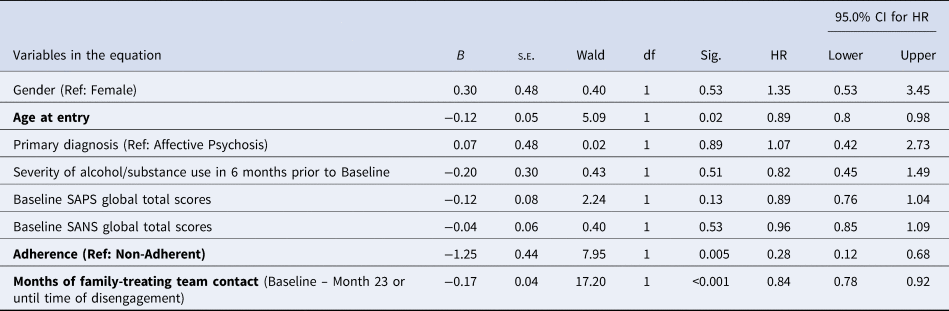
Bold indicates significant predictors. SAPS: Scale for Assessment of Positive Symptoms; SANS: Scale for assessment of Negative Symptoms; HR: Hazard Ratio.
#N < 165 is because of missing data on predictors. Individuals who disengaged v. remained in follow-up for 2 years were not more likely to be excluded (χ2 = 2.38, p = 0.12).
Additional analyses
Patterns of patient-treating team contact
Patients in Chennai had been in contact with their treating team for significantly more months (M = 24.04, s.d. = 4.07) than those in Montreal (M = 21.93, s.d. = 5.38), t (305.34) = −4.02, p < 0.001, 95% CI −3.14,-1.07; Cohen's d = −0.43. They also had contact nearly every month of their follow-up.
As seen in Table 3 and online Supplementary Fig. S1, both in-person and at-distance contacts were used in Chennai. Most contacts between the treating team and patients in Montreal were in-person. Montreal patients had significantly more months of in-person contact than Chennai patients.
Comparison of different methods of patient engagement across sites (Months Baseline-24)

** p < 0.001; Bold indicates significant differences.
Given the high proportion of at-distance contacts in Chennai, a question emerged whether patients moved to exclusively at-distance contact after a point in treatment, or whether they had at-distance contacts interspersed with in-person contacts. We analyzed this for 163 patients (as four had died and one transferred to another service at Month 1). Sixty-two patients (38%) maintained in-person contact throughout follow-up; 30 (19%) began with an in-person contact and moved to at-distance contact till the end of follow-up; and 71 (44%) had in-person contact interspersed with at-distance and no contact.
Patterns of family-treating team contact
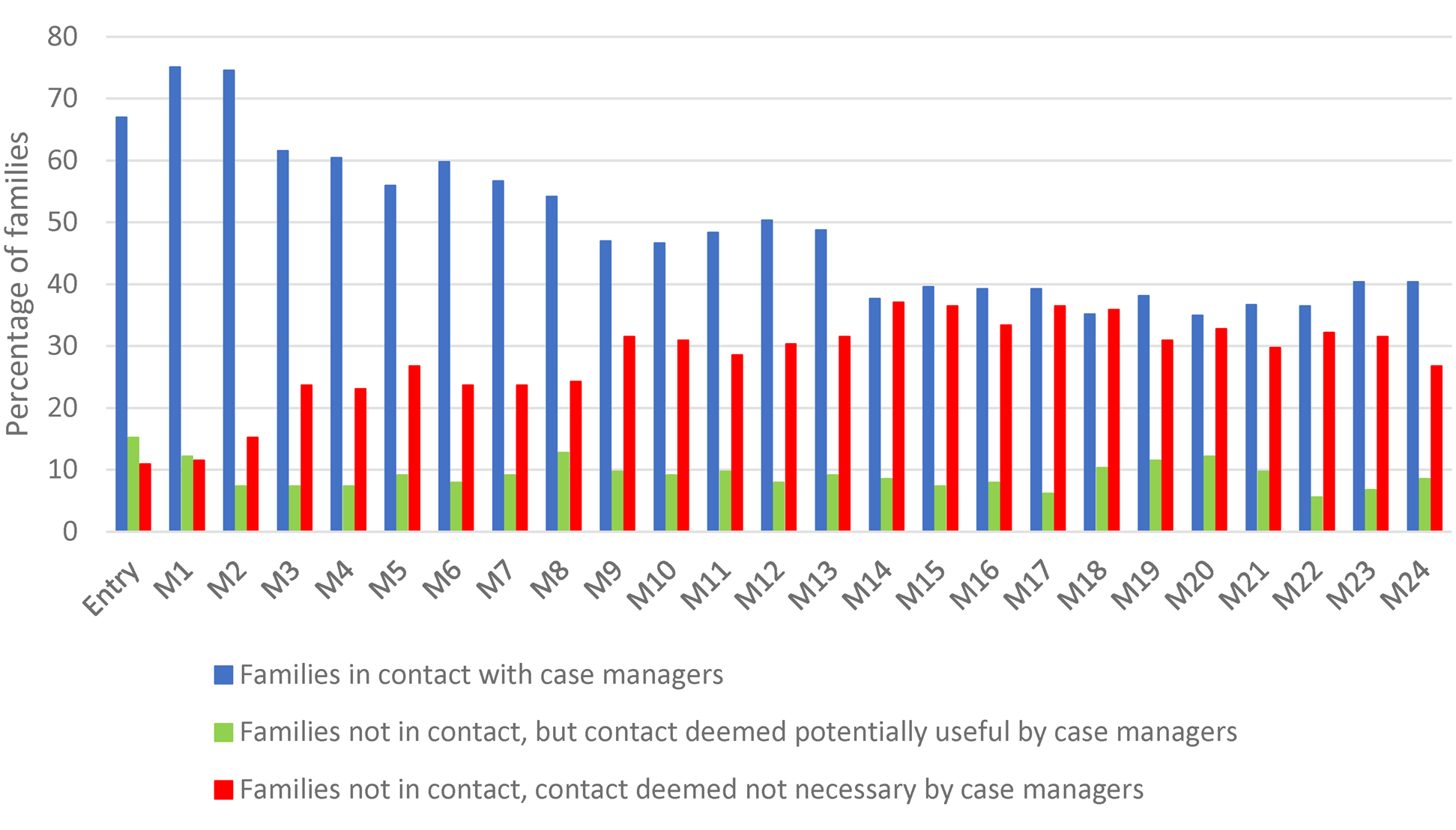
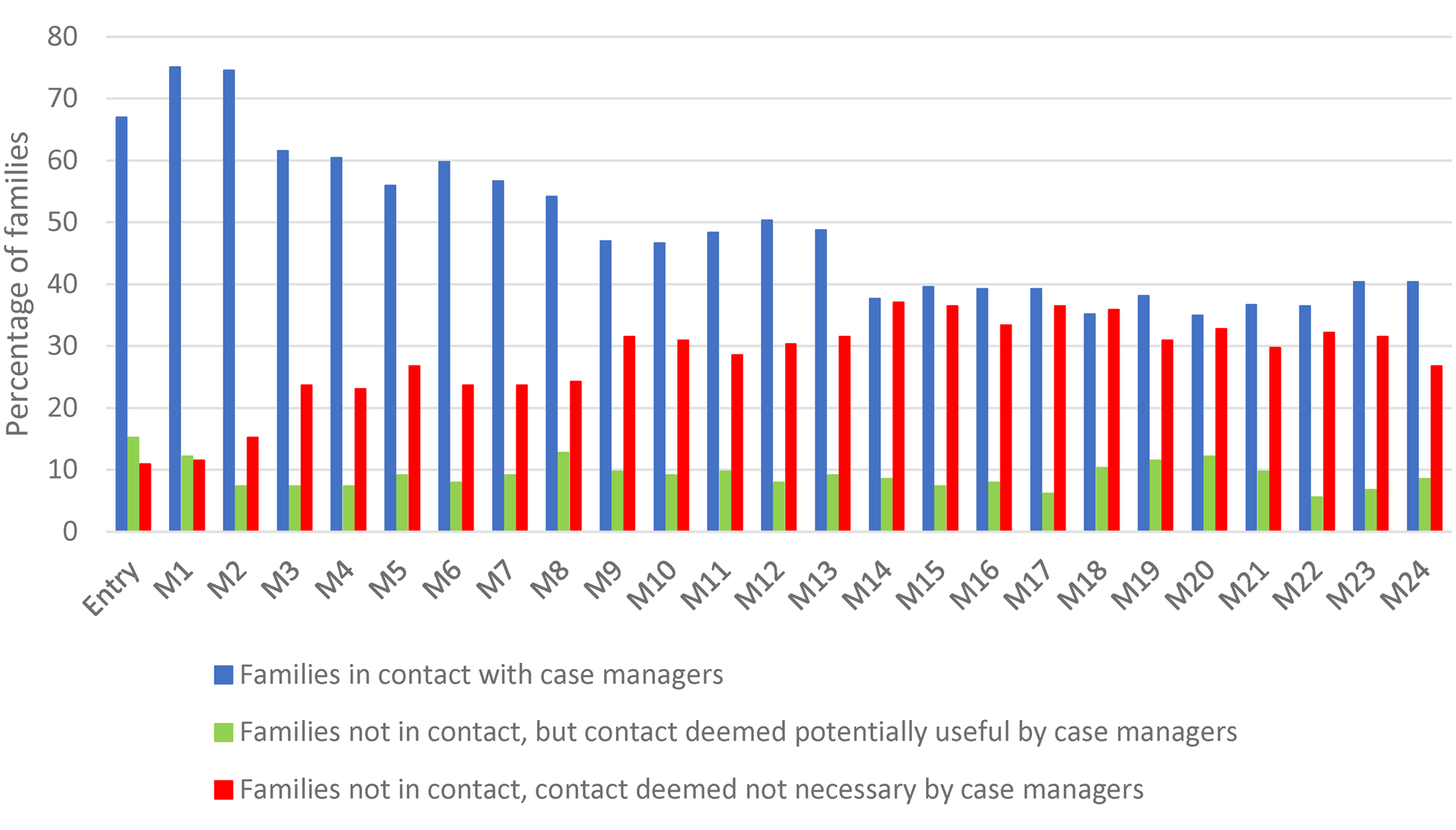
We examined how family contact evolved over time only in Montreal (this having been consistent in Chennai). As seen in online Supplementary Fig. S2, the Montreal team was in contact with 67% of families at entry. Comparisons of family contact at baseline and Months 6, 12, 18 and 24 indicated that this significantly declined over the 2-year follow-up, χ2(4, N = 728) = 40.35, p < 0.001 (Cramer's V effect size = 0.235), leaving only 40% of families in contact at Month 24. Further, as seen in Fig. 2, when families were not contacted, the team was significantly likelier to have deemed contact as being not necessary (M = 46.04, s.d. = 11.85) rather than potentially beneficial (M = 15, s.d. = 3.74), t (28.74) = 12.49, p < 0.001, 95% CI −36.12 to −25.95, Cohen's d = −1.73.
Montreal: comparison of contact with family; contact not necessary; contact would have been beneficial.
Comparing patient and family engagement
In Montreal, the percentage of months for which contact was maintained with families (M = 48.39%, s.d. = 32.61) was just under half of the percentage of months for which contact was maintained with patients (M = 91.23%, s.d. = 18.2), t (155) = 16.656, p < 0.001. Although the amount of family (94%) and patient (98%) contact was also significantly different in Chennai [t (167) = 3.148, p = 0.002)], the magnitude of this difference was much smaller than in Montreal (Cohen's ds of 0.34 and 1.26, respectively). Interestingly, at both sites, there were months in which treating teams had contact only with families, but not patients (23 patients in Montreal; 12 in Chennai).
Discussion
As hypothesized, we found that fewer patients with first-episode psychosis dropped out of treatment and more families were involved throughout the course of treatment in Chennai, India than in Montreal, Canada.
Nearly all Chennai patients retained contact with service providers throughout follow-up. Several factors could underlie this finding, including the much greater and more consistent family involvement (very large Cohen's d effect size of −1.28). Even in Montreal, every additional month of contact between families and the team reduced the risk of patients disengaging by 16%. There may be some bidirectionality in the relationship between patient and family engagement, with patient disengagement usually resulting in loss of contact with families, particularly in contexts like Montreal.
In Canada, where autonomy and rights-based frameworks are emphasized (Mental Health Commission of Canada, 2015), patients may see engaging or disengaging in services as an exercise of agency (Cowan et al., Reference Cowan, Pope, MacDonald, Malla, Ferrari and Iyer2020). This may have contributed to the higher rate of service disengagement in Montreal compared to Chennai, where there may have been greater acceptance of the treatment team's authority, as is known to be prevalent in certain cultures (Bond & Smith, Reference Bond and Smith1996; Neff & Helwig, Reference Neff and Helwig2002; Sousa, Reference Sousa2011).
To the best of our knowledge, ours is the first investigation of early psychosis service engagement in an LMIC. An often-cited, much-debated finding is that psychosis outcomes are better in economically developing countries than in developed ones (Cohen, Patel, Thara, & Gureje, Reference Cohen, Patel, Thara and Gureje2008). Compared to variations in outcomes, variations in patients' and families' service utilization have been neglected in cross-national studies of psychosis. By providing the first clear evidence for cross-context variation in engagement in early psychosis services, our study points to service utilization potentially underlying clinical and functional outcome differentials. Arguably, service engagement is in itself an outcome that lets individuals benefit from treatment for a longer period and thereby make therapeutic gains later on.
Patient engagement patterns
Even in Montreal, where 19% of patients disengaged (compared to 1% in Chennai), the rate of service disengagement is substantially lower than what has been reported for general services for schizophrenia (Correll et al., Reference Correll, Galling, Pawar, Krivko, Bonetto, Ruggeri and Guloksuz2018; Gilmer, van der Ven, Susser, Dixon, & Olfson, Reference Gilmer, van der Ven, Susser, Dixon and Olfson2020; Kreyenbuhl et al., Reference Kreyenbuhl, Nossel and Dixon2009). The Montreal sample's service disengagement rate was also at the lower end of the range of rates for early psychosis services (Doyle et al., Reference Doyle, Turner, Fanning, Brennan, Renwick, Lawlor and Clarke2014). This may be because the sample comprised 'involved' patients as evinced by their consent to participating in research.
In Montreal, the mean number of months during which patients were in contact was 21, indicating a high intensity of follow-up, consistent with early intervention guidelines (EPGWG and EPPIC National Support Program, 2016; IRIS, 2012; Ministry of Health and Long-Term Care, 2011). Chennai patients had even more consistent contact with treatment teams (medium-sized Cohen's d of 0.43). This additional granular observation is salient because early psychosis research has focused on disengagement rates (Doyle et al., Reference Doyle, Turner, Fanning, Brennan, Renwick, Lawlor and Clarke2014; Reynolds et al., Reference Reynolds, Brown, Tindall and O'Donoghue2019), and not the duration or consistency of engagement. Engagement is not simply the converse of disengagement as patients may be only intermittently engaged without dropping out.
Disengagement itself also need not be terminal. Both Chennai patients and nine of the 31 Montreal patients who disengaged later re-engaged in the service. This underscores the value of early psychosis guidelines that emphasize facilitating re-engagement (Kim et al., Reference Kim, Brown, Reynolds, Geros, Sizer, Tindall and O'Donoghue2019; Ministry of Health & Long-Term Care, 2011). Six Montreal patients who re-engaged disengaged again, suggesting the need for strategies to sustain the engagement of re-engaging patients.
In Chennai, where the general rate of engagement was higher, at-distance contact was used significantly more than in Montreal, where face-to-face contact predominated. Expanding the use of at-distance contacts where appropriate may help surmount such barriers to engagement as distance, travel costs, feasibility of offering contact in the community, patients' reluctance to adhere to clinic appointments, etc. It may also be a suitable means of maintaining patient engagement while minimally disrupting social and functional re-integration.
Medication non-adherence was the strongest predictor of service disengagement. In addition to independently reducing the risk of patients disengaging, family involvement in treatment may contribute to better medication adherence (Leclerc et al., Reference Leclerc, Noto, Bressan and Brietzke2015). Being non-adherent may result in worsening of the clinical state and eventually, disengagement. On the other hand, individuals who are more engaged in treatment may be more willing to adhere to medication. Thus, the relationship between medication adherence and service engagement may be bi-directional. That both engagement and medication adherence were measured monthly during treatment is a further reason for caution in drawing inferences about the direction of causality.
Patients who were older had a lower risk for disengaging from services, consistent with prior literature (Lau et al., Reference Lau, Chan, Hui, Lee, Chang, Chong and Chen2017).
Family engagement patterns
At both sites, most families had contact with the treating team, indicating consistency with the early intervention philosophy (EPGWG and EPPIC National Support Program, 2016; Ministry of Health and Long-Term Care, 2011). Nonetheless, there may be a fundamental difference between the sites in the extent to which families are seen as (and see themselves as) stakeholders in treatment. In Montreal, the engagement of families varied widely and depended on the phase of treatment (higher early on and declining over time; medium-large Cramer's V effect size of 0.235). The substantially less family contact relative to patient contact in Montreal (large-sized Cohen's d of 1.26) is indicative of the individual patient being the fundamental unit of therapeutic attention to which the relationship with the family is secondary. This is also apparent in the observation that during months when the Montreal treating team did not have contact with families, the team perceived such contact as not necessary (very large Cohen's d of 1.73).
In Chennai, families function as critical stakeholders, remaining as consistently engaged as patients over the entire treatment course. Treatment providers may see engaging families as necessary for engaging and treating patients.
These perceptions may stem from cultural variations in living situations (more Chennai patients lived with their families), and views about autonomy v. relatedness; independence v. interdependence; and the role of the family when a loved one is ill (Avasthi, Reference Avasthi2010; Chadda & Deb, Reference Chadda and Deb2013). The strong emphasis on the individual patient in Montreal may also stem from the greater preoccupation with consent and confidentiality in clinical practice in countries like Canada, compared to India (Chadda & Deb, Reference Chadda and Deb2013; Sousa, Reference Sousa2011; Stanhope, Reference Stanhope2002), .
Strengths and limitations
Our study has several strengths, including its prospective follow-up of similarly defined, well-characterized, previously untreated persons with first-episode psychosis and their families receiving similar early intervention in two contexts. The study participation rate was high (only 35 patients in Montreal and six in Chennai refused consent). Nearly complete data were available for monthly patient and family contact at both sites. Research staff at both sites received similar, rigorous training.
Our thorough, nuanced investigation of differences in patients' and families' service utilization is a novel, promising direction for cross-national/multi-site psychosis research. Our study also pushed the boundaries of early psychosis service engagement literature by examining not only patient disengagement rates but also the duration, methods and evolution of patient engagement; the duration and evolution of family engagement; and how patient and family engagement compare with one another.
Our definition of service engagement based on whether there was at least one contact with the treatment team per month is a limitation. The number of contacts per month and the duration of each contact was not recorded. Also, that patients disengage and re-engage calls into question the use of a somewhat arbitrary 3-month cut-off for defining disengagement. Such definitions, though prevalent in the field, miss important aspects of engagement such as participating in treatment planning and applying therapeutic gains. Further, while we asked clinicians whether they felt contact with families was needed or not, asking the same of families and patients may have yielded valuable insights. Moreover, while we recorded the presence or absence of contact, we did not record whether or why patients, families or clinicians initiated the contact, leaving us in the dark as to who bore the onus for maintaining contact and their reasons for doing so.
Finally, differences in service structures may have resulted in the Chennai sample being drawn from a larger population base and the Montreal sample being more representative of a treated catchment-area population. Patients with certain presentations may not be adequately represented in the Chennai sample, as the service does not have an emergency room. Notwithstanding the potential influence of these and other sampling differences (e.g. lower rates of substance use among and older age of patients in Chennai) on inter-site variations in patient disengagement and family engagement, our findings strikingly demonstrate the influence of ‘context’, comprising cultural and health system-related factors, on service utilization.
Clinical and research implications
The recommendation of most guidelines that early intervention services for psychosis maintain at least monthly contact with families throughout follow-up may not always be translated into practice, particularly in more individualistic contexts. As a first step, a monthly record of contact with families must be maintained and reported on in research and service evaluations.
Enhancing the treating team's contact with families will require changing service providers' perceptions about the very need for keeping families engaged. While contact with families may not be enough to produce therapeutic gains, it will facilitate greater uptake of more involved, evidence-based interventions such as multiple family group therapy (Claxton et al., Reference Claxton, Onwumere and Fornells-Ambrojo2017) and do much to dispel the sense of alienation and exclusion that families often report (Grácio, Gonçalves-Pereira, & Leff, Reference Grácio, Gonçalves-Pereira and Leff2016; Mui et al., Reference Mui, Chan, Chan, Hui, Chang, Lee and Chen2019). Monthly contact also represents a simple, feasible means of consistently involving families. Prior Canadian research showed that the consistency of family support is important, with concurrent (but not baseline) family support contributing to medication adherence and tending to decline over the course of follow-up (Rabinovitch, Cassidy, Schmitz, Joober, & Malla, Reference Rabinovitch, Cassidy, Schmitz, Joober and Malla2013).
Using multiple methods of contact (in-person, phone, text, virtual platforms, etc.) may help sustain patient and family engagement. Concerns around professional liability and risk may, however, impede openness to at-distance contact with patients for long periods in contexts like Canada. Future studies must examine the impact on service engagement of remote follow-up that is increasingly being used since the COVID-19 pandemic.
More research on thresholds for defining adequate engagement is warranted. Further, the considerable intra-site heterogeneity in engagement supports the need for research to examine which sub-groups of patients require more and less contact and of what intensity. More research is also needed on cross-contextual variations in service utilization; its underlying mechanisms, including differences in service structures, legal frameworks and value orientations; and its impacts on outcomes.
Supplementary material
The supplementary material for this article can be found at https://doi.org/10.1017/S0033291720003359
Acknowledgements
We would like to thank the Montreal and SCARF patients, families and teams. Specifically, we would like to thank Drs Mangala Ramamurthy, Shivaprakash Srinivasan and T.C. Rameshkumar, and Helen Martin, Sneha Natarajan, Arthy Jayavel, Shruthi Rao and Anjhana Krishnamoorthi who contributed to service delivery and data collection at SCARF. From the Montreal team, we would like to thank Megan Pope, Heleen Loohius, Nicole Pawliuk, Kevin MacDonald, Geraldine Etienne and Emily Schorr for supporting data collection, data management and project coordination. This Research was funded by an R-01 Grant from NIH 5R01MH093303-05. The funding source had no further role in study design, data collection and analysis, writing of the report, and in the decision to submit the report for publication.
Conflict of interest
Malla served as a research consultant to and gave lectures at conferences supported by Lundbeck and Otsuka and was on an advisory board meeting for the same two companies for which he received honoraria. Margolese reports grants from Acadia, Amgen, SyneuRx international; grants, honoraria and non-financial support from Janssen, Lundbeck, Otsuka; honoraria and non-financial support from Pfizer; honoraria from Sunovion, Purdue, HLS therapeutics, Mylan, Shire. All of these are unrelated to the present work. Joober served as speaker and member of advisory board committees for Pfizer, Janssen, BMS, Sunovian, Myelin, Otsuka, Lundbeck, shire and Perdue. He also received grants from Janssen, BMS, Otsuka, Lundbeck, Astra Zeneca and HLS. All of these are unrelated to the present work. Authors (Iyer, Rangaswamy, Ramachandran, Maraj, Taksal, Mohan, Schmitz) have no conflicts of interest to declare.