Introduction
Dementia is a leading cause of disability and disease burden among older people1 and the prevalence of dementia worldwide is expected to more than double every 20 years, due primarily to demographic ageing. In Australia, estimated numbers of people with dementia in 2009 were 249,000, predicted to increase to 591,531 in 2030–2031.2 This increase is expected to fuel unprecedented demand for health and aged care services and the cost of providing these services is predicted to increase by 364% from an estimated $3.85 billion in 2002–2003 to $17.84 billion in 2032–2033.Reference Goss3 Dementia will become the third greatest health and aged care expense, preceded only by cardiovascular and respiratory conditions. Currently, there is no proven ‘cure’ or way to slow the progression of dementia4 and considerable interest has arisen in prospects for prevention in order to avert a massive health and socio-economic challenge. For example, it has been estimated that if the average onset of Alzheimer's disease could be delayed by 5 months from 2005, potential savings of up to $1.3 billion might be achieved over a 15 year time frame.5
A growing number of countries have developed national dementia strategies that include population health (PH) approaches such as increased awareness of dementia, early diagnosis and intervention, social marketing aimed at potentially preventive lifestyle changes and health promotion (HP) initiatives aimed at ‘living well with dementia’.
In view of the magnitude of the challenge that dementia presents, there is surprisingly little mention of dementia or Alzheimer's disease in some national policies that focus on preventive health or health promotion. This paper provides some background information, examines the potential benefits, barriers to implementation and outlines some of the available options.
Dementia and preventive health
Dementia is a disorder characterized by a progressive decline in the ability to remember, learn and think, that is sufficiently severe to impair an individual's ability to perform activities of daily living.6 It is a terminal condition resulting from a disease of the brain and although there are a hundred or more causes, the underlying illness in the majority of cases (50–70%) is Alzheimer's disease (AD). Cerebrovascular disease (CbVD) is another important cause. Alone, or in combination with AD, CbVD accounts for approximately 20% of cases.1 Dementia primarily affects older people – the risk rises exponentially from around age 70 – but it is not a normal part of ageing.2
Because of the difficulty in detecting early pathological changes in the brain, the current diagnostic process emphasizes detection of the clinical features of dementia, rather than the underlying disease itself (e.g. AD). It usually revolves around determining whether a person's cognitive problems are consistent with normal ageing or sufficiently severe to warrant the term ‘dementia’, and if so, what the probable cause may be. Only recently has significant progress has been made towards the possibility of accurately diagnosing AD prior to the symptoms becoming apparent.Reference Ballard, Gauthier, Corbett, Brayne, Aarsland and Jones7 Once dementia has developed, people may also suffer physical and psychiatric complications including behavioural and psychological symptoms such as depression, psychosis, aggression and wandering that frequently complicate care.1 People with dementia are also at increased risk of delirium, falls and medication side-effects and other adverse events that can be costly and distressing.Reference Kurrle, Hogarth and Hill8 Other potential targets for preventive programmes include inappropriate use of psychotropic medication or physical restraints, use of residential care, excess disability or preventable hospitalization.
Because there are numerous causes of dementia, prevention of dementia is not the same as prevention of AD. To date, however, preventive approaches have generally focused on AD, and to a lesser extent CbVD, as these conditions have attracted the most research interest and compared with the other causes of dementia, their risk and protective factors are better understood. Disease prevention includes strategies to prevent illness or disease from occurring (primary prevention), strategies to identify disease early in its course before significant morbidity occurs (secondary prevention), and strategies to reduce complications once disease is established (tertiary prevention).9 The typology of interventions most frequently used in the dementia prevention literature derives from the Commission on Chronic Illness model (1957)10 and is readily applicable to AD.Reference Brodaty11 An alternative approach is the ‘prevention, promotion and early intervention’ approach developed by Mrazek and Hegarty,Reference Mrazek and Haggerty12 which in turn derives from Gordon’sReference Gordon13 operational classification of disease prevention:
• Universal: preventive interventions aimed at the whole population (e.g. encouraging retention in school which may increase cognitive reserve);
• Selective: targeted to individuals or subgroups at higher risk (e.g. social marketing around dementia risk to smokers or people with vascular disease);
• Indicated: minimal but detectable signs foreshadowing mental disorder (e.g. encouraging health checks and medication reviews for people with cognitive impairment not yet severe enough to be labelled dementia).
This type of PH approach was used in the landmark monograph Promotion, Prevention and Early Intervention for Mental Health 14 (see pages 30–31), which specifically addresses dementia (pages 107–108).
Population health approaches aim to promote health (health promotion) and reduce ill health (disease prevention) in the population as a whole. It is ‘the organised response by society to protect and promote health and to prevent illness, injury and disability’.15 Hence a comprehensive preventive PH approach to dementia implies not just the prevention of dementia, but may also encompass the prevention of complications, co-morbid conditions and other outcomes of interest. As with other conditions for which a PH approach has been employed, consideration of subpopulations is also required.
Dementia and health promotion
Health promotion (HP) is the process of enabling people to increase control over, and improve their health. Strategies include building healthy public policy, creating supportive communities and environments, and providing education so that people have the necessary information and support to make healthy choices.16 The most common causes of dementia share several characteristics common to other chronic diseases;17 they have complex causality, multiple risk factors, long latency periods, a prolonged course of illness and result in functional impairment or disability – so the health promotion interventions applied to other chronic diseases, e.g. diabetes, cancer and heart disease, may also be applicable to dementia. Health promotion strategies relevant to dementia include maintaining a lifestyle that may reduce the risk of developing dementia, living well with mild cognitive impairment or focusing on improving quality of life at different levels of severity of dementia.
Implicit in these discussions are strategies that enable the large numbers of people living with dementia to remain active and participate in society to the extent they are able. Similar strategies to those developed for people with physical disabilities to promote social inclusion could be implemented to promote the social inclusion of people with cognitive impairment. For example, verbal and visual signage could facilitate transport use or navigation of the built environment for people with dementia.
Methods
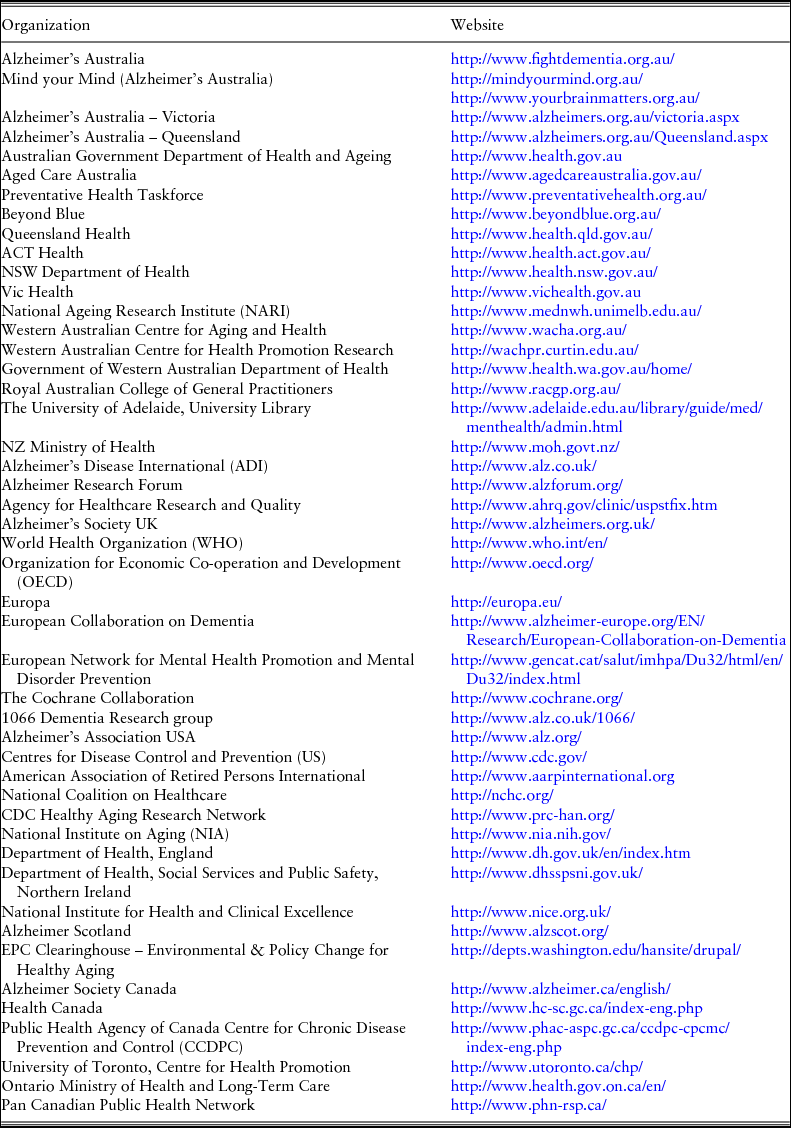
A literature search of national and international dementia frameworks and strategies was undertaken. Both peer-reviewed and grey literature were searched for English language publications. The search engines Google and Google Scholar and the databases PubMed, MEDLINE, PsychINFO and Health & Society were searched, as well as a large number of potentially relevant websites (see Table 1) for national strategies and relevant publications and reports. The search terms included combinations of the keywords: ‘dementia’ OR ‘Alzheimer's disease’ AND ‘framework’ OR ’strategy’ OR ‘national’ OR ‘plan’ OR ‘prevention’ OR ‘health promotion’.
Websites searched for relevant publications

Results
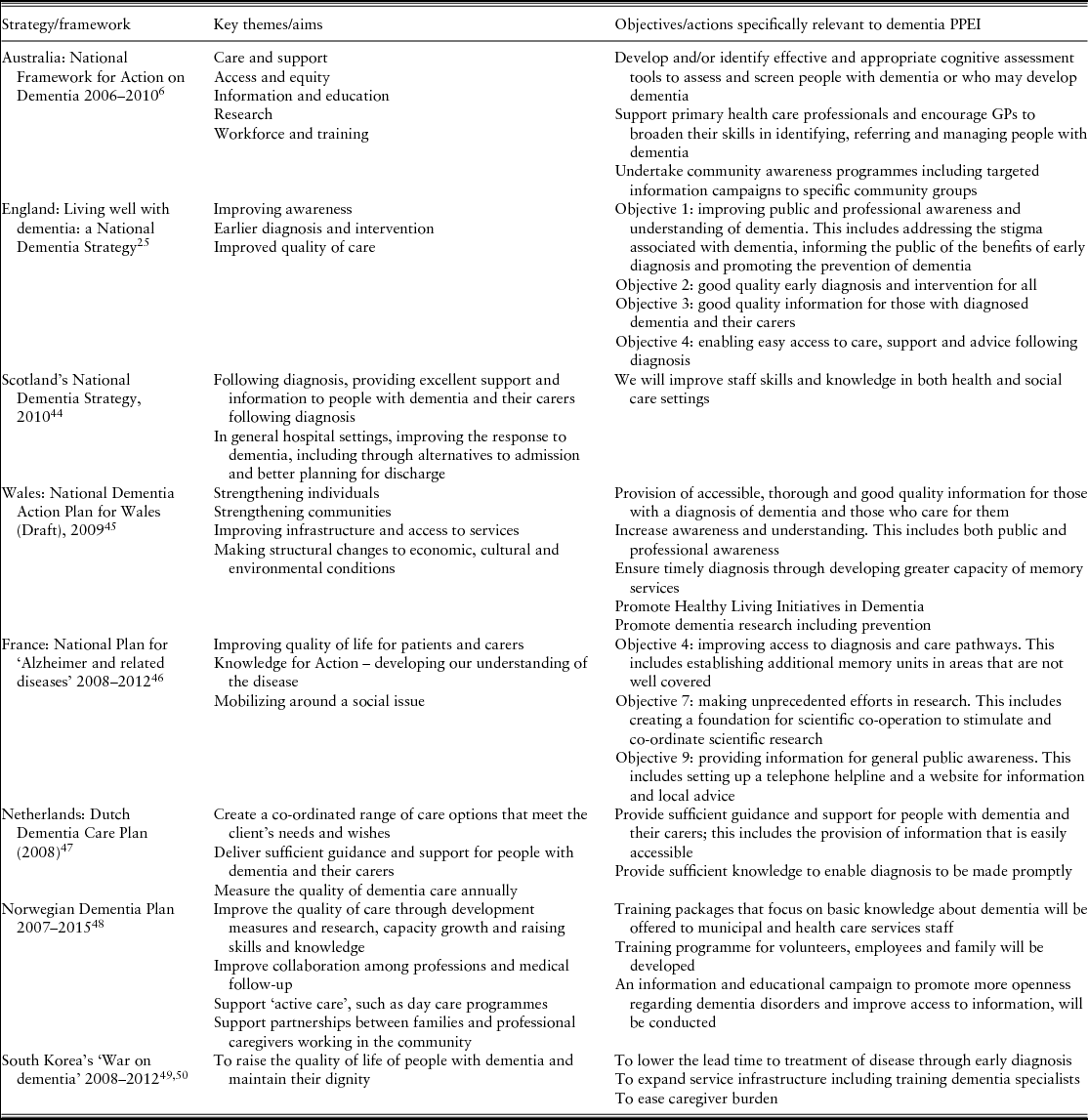
A growing number of countries and jurisdictions, including all Australian states, have developed dementia strategies, many of which include PH approaches. Our review identified eight current national dementia plans (see Table 2) although other countries including Belgium, Denmark, Ireland, Portugal18 and the USA19 have acknowledged the need for comprehensive strategies or are in the process of developing such a strategy. The identified plans have been analysed to identify PH options for inclusion in an Australian dementia framework. To obtain a wide range of views and develop consensus regarding the relevance of these options for the Australian context, a number of consensus development activities (workshops, forums) are planned.
International dementia frameworks and strategies
What population health activities have been proposed for dementia?
Prevention of dementia
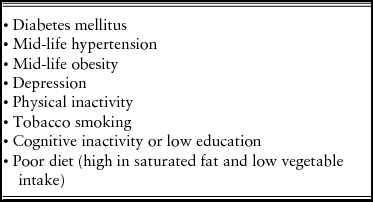
Many of these national dementia strategies include public awareness of the best-established risk and protective factors. Messages such as ‘what's good for your heart is good for your brain’ encourage individuals to eat a healthy diet, stop smoking, exercise regularly and drink alcohol in moderation. Table 3 lists the risk (and conversely, protective factors) for dementia that have the best support from scientific studies.Reference Daviglus, Bell, Berrettini, Bowen, Connolly and Cox20 As many other chronic diseases such as diabetes and cardiovascular disease share similar risk factors,Reference Eyre, Kahn and Robertson21 economies of effort could be achieved through cross-promotion of health promotion messages.
Potentially modifiable risk factors* for Alzheimer's disease
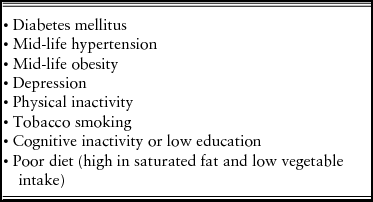
*These factors have the strongest evidence of association with Alzheimer's disease
One of the key priority areas of the ‘Pathways to the Future – 2006 and Beyond’ dementia framework for Victoria22 is the promotion of ‘healthy and active living, which may assist in preventing or reducing the risk of dementia’. Specific strategies/actions to achieve this goal include raising awareness about dementia and risk reduction by promoting lifestyle messages around the theme ‘healthy body and health heart make for a healthy mind’. These include stopping smoking, reducing high blood pressure and high cholesterol, maintaining mental and physical activity, having a healthy diet and maintaining an appropriate weight. Additional strategies include encouraging partnerships with and between organizations that promote similar risk reduction messages for other chronic diseases.
As with many other chronic diseases, preventive efforts have relevance throughout the lifespan, e.g. encouraging secondary or higher education early in life, vascular risk reduction in mid-life and maintenance of physical and cognitive activity in later years. To date, little attention has been paid to models of prevention of co-morbid behavioural or psychiatric conditions in people with dementia, although there is potential crossover from initiatives to reduce the incidence of falls or improve the quality use of medicines.
Timely diagnosis and post-diagnostic support
Early diagnosis and intervention are identified as important issues and are included as key objectives within four national strategies (England, Wales, The Netherlands and South Korea) with the provision of adequate information and support following diagnosis articulated as a key objective within two of these strategies (England and The Netherlands). In the UK, evidence suggested that less than half of people with dementia ever receive a diagnosis, and consequently they and their families may receive inadequate assistance or support.23
While acknowledging the evidence base is poor regarding good models of dementia care, some of the best evidence supports multicomponent non-pharmacological interventions for people with dementia and their caregiver(s).Reference Olazarán, Reisberg, Clare, Cruz, Peña-Casanova and Del Ser24 Evidence has been strongest for outcomes such as delaying time to institutionalization, improving caregiver quality of life and reducing cost, and reviews of the effectiveness of non-pharmacological interventions have shown effect sizes equal or superior to those for medications.Reference Olazarán, Reisberg, Clare, Cruz, Peña-Casanova and Del Ser24
For optimal early intervention to occur, however, people living with dementia and their caregivers must be aware that dementia may be present in the first place and that better outcomes are possible. However, it is ethically problematic to create greater public awareness without also ensuring access to informational, diagnostic or post-diagnostic services. Various models for increasing the availability of dementia diagnosis and post-diagnostic support have been proposed.Reference Banerjee and Wittenberg25
Dementia awareness and stigma reduction
All of the frameworks listed in Table 2 promote increased knowledge and awareness of dementia among health workers as a key objective, while several strategies also include increasing awareness of dementia among the general public as an objective. The English strategy23 recommends this be achieved through public education campaigns to improve the understanding and awareness of dementia and its symptoms, address stigma and promote appropriate help-seeking and help provision. To address the likely increased demand for assistance, the strategy also recommends that new specialist services be commissioned to provide good quality early diagnosis and intervention as noted previously.
Towards a whole-of-community approach to dementia
National policies are yet to embrace wholesale adaptation of communities to cope with a high prevalence of cognitive impairment, although some strategies are available. Examples of strategies that may be adopted are provided by Japan, the fastest ageing nation on earth. Their goal is ‘to build a society without delay, where people can live life safely without anxiety even after being affected by dementia. . .’.Reference Takeda, Tanaka and Chiba26
These include:
• accessible transport (see also California State Plan27);
• education about dementia in primary and high school;
• mass enrolment and training of citizens in dementia literacy;
• building networks between people living with dementia (also see English Plan23);
• employment support networks;
• improved signage and wayfinding.
Australian National Framework for Action on Dementia
The Australian National Framework for Action on Dementia (NFAD) was released in 2006 and a formal review released in 2011.28 The review recommended a reiteration of NFAD following expiration of the current framework. Actions that relate to promotion, prevention or early intervention include:
• develop and/or identify effective and appropriate cognitive assessment tools to assess and screen people with dementia or who may develop dementia;
• support primary health care professionals and encourage GPs to broaden their skills in identifying, referring and managing people with dementia;
• undertake community awareness programmes including targeted information campaigns to specific community groups;
• research into prevention, risk reduction and delaying the onset of dementia.
Challenges in applying the population health model to dementia
Prevention
A major problem in advocating for preventive health programmes for dementia is that the evidence base for prevention of dementia is less robust than for some other chronic conditions (e.g. cardiovascular disease, diabetes). In 2010, the US National Institute of Health stated that the research conducted to date regarding risk and protective factors for AD and cognitive decline was inadequate to make recommendations regarding preventive interventions. It also concluded that, while there was some evidence of associations between some factors and AD and cognitive decline, in most cases the level of evidence was low.Reference Williams, Plassman, Burke, Holsinger and Benjamin29 Factors that showed a consistent association with an increased risk of both AD and cognitive decline were diabetes, epsilon 4 allele of the apolipoprotein E gene (APOE e4), tobacco smoking and depression, while factors that showed a fairly consistent decreased risk of AD and cognitive decline were cognitive engagement and physical activities. The authors were careful to point out that a consistent association did not mean strong evidence and that in most cases, evidence of the association was weak, that too few studies had been conducted and that more research was needed.
Conversely, others have also reviewed the literature using different methodologies and have concluded that there is good evidence to support a range of lifestyle strategies to reduce the risk of dementia.Reference Qiu, Xu and Fratiglioni30,Reference Woodward, Brodaty, Budge, Byrne, Farrow and Flicker31 For instance, Qiu and colleaguesReference Qiu, Xu and Fratiglioni30 recently concluded that there was moderately strong evidence from epidemiological studies that a range of vascular risk factors (tobacco smoking, hypertension, obesity, diabetes and hyperlipidaemia at mid-life) increase the risk of dementia in later life, while a range of psychosocial factors (higher education, a socially engaged lifestyle, mentally stimulating activity, regular physical activity) protect against the disease. They further suggest that interventions targeting all of these modifiable risk and protective factors are likely to reduce the risk of developing dementia.
This argument over the strength of evidence for prevention creates a dilemma in determining the level of investment in dementia prevention. On the one hand, preventive health interventions may be less effective than is hoped. On the other hand, the sheer magnitude of the problem and societal implications suggest that even a marginal preventive effect might produce a significant return on investment. To cite the example of tobacco and lung cancer, if we wait for the evidence base to catch up, the opportunity to intervene may be missed.
At a personal level, in the absence of effective treatments for dementia, many people are interested in what they can do, rather than wait for the latest epidemiological evidence. Much of the advice around risk factor reduction for dementia is consistent with other health messages and is unlikely to produce harm. This is especially true of the overlapping risk factors for cardiovascular and cerebrovascular disease.Reference Woodward, Brodaty, Budge, Byrne, Farrow and Flicker31,Reference O’Brien, Erkinjuntti, Reisberg, Roman, Sawada and Pantoni32 In other words, people might be willing to take a ‘best bets’ approach to risk reduction even if the evidence is insufficient to make categorical statements about prevention. The high prevalence of these risk factors within the Australian population (an estimated 97% of adults have at least one modifiable risk factor for vascular disease and 50% have two)33 means there is considerable scope for intervention. Having said this, age itself is the most powerful risk factor for the major causes of dementia and it has been estimated that between 50 and 79% of attributable risk is non-modifiable.Reference Gatz, Reynolds, Fratiglioni, Johansson, Mortimer and Berg34
Diagnosis
The aim of secondary prevention or early intervention in the case of dementia is to promote the early diagnosis of, and reduce the impact of, dementia on patients and carers. However, this is complicated by the difficultly in establishing a diagnosis, particularly in the early stages. The majority of cases of dementia begin insidiously with subtle memory and other cognitive deficits, making it difficult to detect the difference between dementia and commonplace reasons for cognitive complaints including normal ageing. The diagnosis of dementia is challenging, both clinically and pathologically, even for experienced clinicians as there is marked individual variation in symptom manifestation and progression of diseaseReference Iliffe and Drennen35 and there is no definitive diagnostic tool. Rather, the diagnosis is based on clinical criteria, of which several sets exist.36.Reference McKhann, Drachman, Folstein, Katzman, Price and Stadlan37 Exclusion of other possible causes is required, especially major depression and other psychiatric disorders. For these reasons and the lack of effective treatments, routine screening for dementia has not been advocated.38
The limitations of the current diagnostic approach have led to considerable efforts to develop biomarkers (diagnostic ‘tests’, mainly for AD). However, the utility of these tests remains limited by acceptability (e.g. lumbar puncture for cerebrospinal fluid), inaccuracy (e.g. blood markers), accessibility (e.g. advanced forms of brain imaging) or interpretation (the specialist workforce that can interpret the findings and provide clinical advice).
Although there are many complaints from carers and families around delays in diagnosis or failure to diagnose, expansion of diagnostic services will bring risks as well as benefits. The advantages, in terms of carer relief, access to services and early intervention as well as benefits from medications such as cholinesterase inhibitors are often mentioned.Reference Moodie, Harper and Oldenburg41 Less well described are the potential risks to the person including misdiagnosis, exposure to unnecessary medication, reactive depression and the stigma of dementia itself.Reference Milne40 To improve the availability of diagnostic and post-diagnostic support, various forms of specialist diagnostic centres or programmes have been proposed such as memory clinics.Reference Banerjee and Wittenberg25 These have been championed in national strategies (e.g. England, France, Korea) although the evidence base for the superiority of any model over usual care is in its infancy.
Finally, assuming that technical issues around diagnosis can be overcome, there is the problem of scaling up the workforce to provide the advice, support and individualized interventions following diagnosis. For countries with widely spread populations like Australia, there is the additional challenge of equity of access for populations living outside major metropolitan areas. The difficulty of providing equitable access to diagnostic and support services is a major barrier to establishing early intervention programmes for dementia in many countries.
Driving population health approaches for dementia
In addition to deciding which PH initiatives to adopt, important enablers will be required including funding and governance, e.g. what will the policy framework be? Who will be responsible for co-ordination and implementation? How will financial and human resources be found? How will PH measures be evaluated?
In many countries, for example Australia, population level responses to dementia have almost always been delivered within specific dementia policy and have received scant coverage in chronic disease, mental health or healthy ageing policies to date. It is likely that a greater prominence for the application of the PH model to dementia will rely on standalone dementia policy.
Synergy between initiatives will also be important as the amount of money for prevention and promotion is not limitless and because of the overlap of risk factors among chronic diseases. Additional benefits of synergy include minimizing the burden of data collection and management required for programme evaluation.
Relevant policy vehicles for PH initiatives and dementia include:
• dementia policy;
• chronic disease policy;
• mental health policy;
• healthy ageing initiatives;
• policies relating to certain populations at increased risk of dementia, e.g. indigenous, intellectual disability, injury (including head injury) prevention, vascular disease, drug and alcohol, and diseases particularly affecting the brain e.g. stroke;
• policies in relation to specific settings of healthcare and welfare where the presence of dementia presents particular challenges, e.g. aged care, acute care and palliative care.
Conclusion
It has been stated that ‘illness prevention and health promotion services must become an essential part of our nation's shared infrastructure, just like hospitals, schools, roads and communications’.Reference Moodie, Harper and Oldenburg41
The current inadequate evidence base for prevention and the availability and accuracy of diagnosis will be significant challenges to adopting a more comprehensive PH approach to dementia while important enablers include finance, policy development and research.
Dementia presents such a challenge to healthcare and society that such approaches must be considered, researched and trialled as part of our national response to dementia. In the absence of effective treatments, there may be little other choice.
Acknowledgements
We would like to acknowledge the Dementia Collaborative Research Centre – Prevention, Early Intervention and Risk Reduction (DCRC2) at the Australian National University in Canberra who funded this work. The Centre was established under the Commonwealth Government Initiative: Dementia: A National Health Priority Initiative.
We would also like to acknowledge members of this project's steering group who provided valuable input regarding the project. Acknowledgements go to Ms Lynne Halliday, Ms Cathie Gillan and Dr Simone Caynes of Queensland Health, Professor Kaarin Anstey (Australian National University), Dr Maree Farrow and Mr Jack Sachs from Alzheimer's Australia – Victoria, and Professor Graham Martin from The University of Queensland.
Conflicts of interest
None