


Introduction
Polyphenolic compounds have been demonstrated to play vital roles against several diseases and health risks, including tumor cell proliferation, carcinogenesis, bronchial asthma, peptic ulcer, atherosclerosis, spasmogenic disorders, apoptosis, ischaemic heart disease, hyperglycemia, hepatotoxicity, depression, cataract, poor sperm motility and metastasis, in addition to roles as powerful antioxidant, anti-allergy, anti-microbial, anti-carcinogenic and anti-inflammatory agents (Bulgakov et al., Reference Bulgakov, Inyushkina and Fedoreyev2012; Karthikkumar et al., Reference Karthikkumar, Sivagami, Vinothkumar, Rajkumar and Nalini2012).
Rosmarinic acid (RA) is considered one of the most important polyphenols. It is an ester of 3, 4-dihydroxyphenyllactic and caffeic acids. RA is present in herbal plants such as rosemary (Rosmarinus officinalis L.), basil (Ocimum basilicum), oregano (Origanum vulgare), sage (Salvia officinalis), Melissa officinalis and many others (Corral-Lugo et al., Reference Corral-Lugo, Daddaoua, Ortega, Espinosa-Urgel and Krell2016).
Several studies have shown biologic activities and protective efficacies of RA, including anti-bacterial, anti-oxidant, anti-cancer, anti-inflammatory, immunomodulatory and health-enhancing activities (Chun et al., Reference Chun, Kundu, Chae and Kundu2014; Alagawany and Abd El-Hack, Reference Alagawany and Abd El-Hack2015; Rocío-Teruel et al., Reference Rocío-Teruel, Garrido, Espinosa and Linares2015). Similarly, several studies also reported the dietary supplementation of certain herbs (e.g., rosemary, thyme and garlic), and their products such as cold pressed oil, essential oil or bioactive components such as RA, carvacrol, thymol, resveratrol and curcumin, in animals and poultry to improve performance, immune responses, anti-oxidant parameters, carcass criteria and quality, and to lower morbidity and mortality rates (Yesil-Celiktas et al., Reference Yesil-Celiktas, Sevimli, Bedir and Vardar-Sukan2010; Kim et al., Reference Kim, Um, Kim and Hong2013; Alagawany and Abd El-Hack, Reference Alagawany and Abd El-Hack2015).
In this review, we have described the natural sources, chemical structure, modes of action, beneficial applications and biological activities of RA in animal and poultry health, nutrition and production, as well as covering some of its important aspects for safeguarding human health. The information presented here is expected to be useful for students, nutritionists, researchers, veterinarians, medical professionals, pharmacists and livestock producers. Additionally, this information can help to popularize and propagate the multidimensional health benefits of this molecule with its multitude of beneficial applications. The source of information presented herein has been retrieved and compiled from different database searches such as ScienceDirect, SCOPUS and PubMed.
RA sources
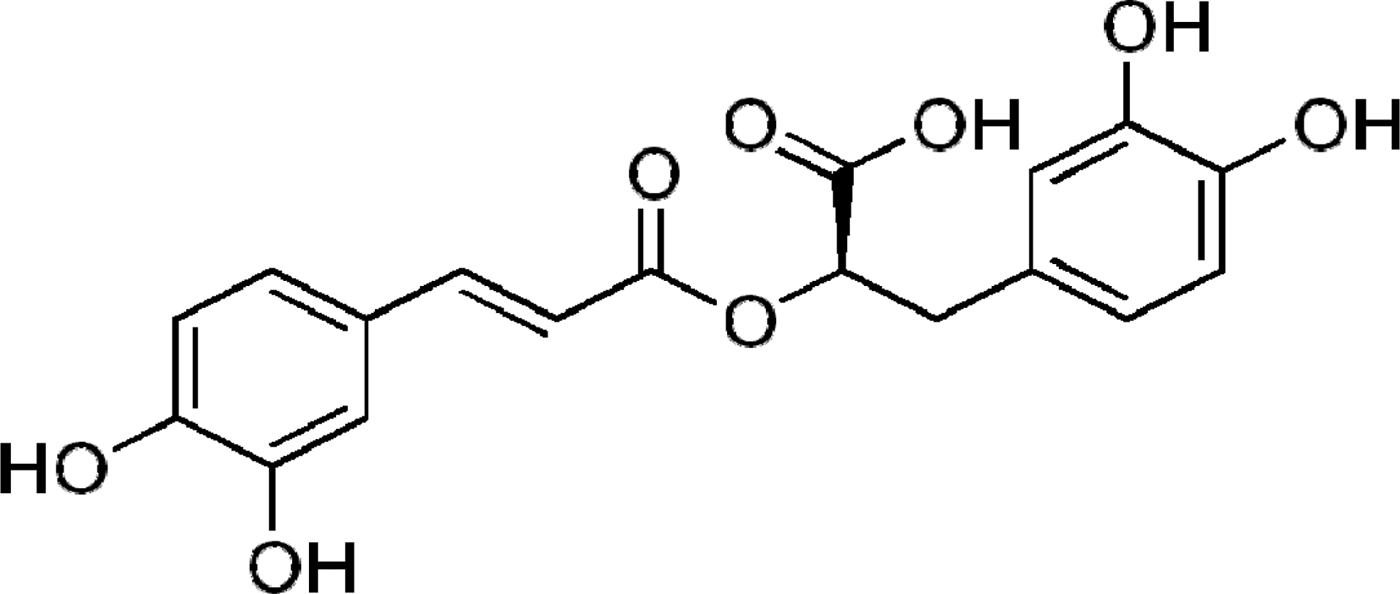
Rosmarinic acid, which was first isolated from R. officinalis, is a polyphenolic compound that is an ester of caffeic acid and 3, 4-dihydroxyphenyllactic acid (Scarpati and Oriente, Reference Scarpati and Oriente1958; Petersen et al., Reference Petersen, Abdullah, Benner, Eberle, Gehlen, Hücherig, Janiak, Kim, Sander, Weitzel and Wolters2009). Its structure is derived from two amino acids, caffeic acid from phenylalanine and 3, 4-dihydroxyphenyllactic acid from tyrosine (Ellis and Towers, Reference Ellis and Towers1970). The structure of RA was first described by Scarpati and Oriente in 1958 (Petersen, Reference Petersen2013). RA is present in certain family Lamiaceae (=Labiatae) herbs, such as Perilla frutescens, which are the richest source of RA (Hossain et al., Reference Hossain, Rai, Brunton, Martin-Diana and Barry-Ryan2010; Vladimir et al., Reference Vladimir-Knežević, Blažeković, Kindl, Vladić, Lower-Nedza and Brantner2014). Also, the presence of RA in spices, herbs and medicinal plants has health-promoting and other beneficial properties. The other sources of RA are marjoram, lemon balm, sage (S. officinalis L.), thyme (Thymus vulgaris), rosemary (Rosmarinus officinalis), Artemisia capillaris, Calendulla officinalis, basil (O. basilicum L.), Salvia miltiorrhiza, S. officinalis (sage tea), oregano (O. majorana), Cordia sinensis, Sanicula europaea, Salvia euphratica, mint (Mentha arvense L.), M. officinalis, Prunella vulgaris, Symphytum officinale and Heliotropium foertherianum (Petersen et al., Reference Petersen, Abdullah, Benner, Eberle, Gehlen, Hücherig, Janiak, Kim, Sander, Weitzel and Wolters2009; Rossi et al., Reference Rossi, Jullian, Pawlowiez, Kumar-Roiné, Haddad, Darius, Gaertner-Mazouni, Chinain and Laurent2012; Corral-Lugo et al., Reference Corral-Lugo, Daddaoua, Ortega, Espinosa-Urgel and Krell2016). A study with 29 species of family Labiatae revealed that Mentha spicata possessed the highest amount of RA among the studied species, hence this herb can be considered for extracting RA in good quantity (Shekarchi et al., Reference Shekarchi, Hajimehdipoor, Saeidnia, Gohari and Hamedani2012).
Chemical structure and physical characteristics
The chemical structure of RA (3, 4-dihydroxyphenyllactic acid) derived from hydroxycinnamic acid (Rossi et al., Reference Rossi, Jullian, Pawlowiez, Kumar-Roiné, Haddad, Darius, Gaertner-Mazouni, Chinain and Laurent2012) is shown in Fig. 1. A natural anti-oxidant isolated from many plants, RA is a molecule of highly lipophilic and slightly hydrophilic properties, which is usually in the form of a red-orange powder. Solubility of this molecule is higher in most organic solvents. The melting point of RA is 171–175°C (340–347°F) and the molar mass is 360.32 g mol−1 (Petersen et al., Reference Petersen, Abdullah, Benner, Eberle, Gehlen, Hücherig, Janiak, Kim, Sander, Weitzel and Wolters2009).
Basic st Basic structural formula of rosmarinic acid (C18H16O8).

Metabolism and excretion
Biosynthesis of RA begins with amino acids such as L-tyrosine and L-phenylalanine (Petersen and Simmonds, Reference Petersen and Simmonds2003). Information about absorption, metabolism, degradation and excretion of RA are limited. RA and its related metabolites (caffeic acid, methylated RA, m-coumaric acid and ferulic acid) were observed in human urine after intake of 200 mg of RA. In plasma, peak levels of RA and ferulic acid were observed 0.5 h after RA intake, while the highest level of methylated RA was detected after 2 h and related compounds were excreted through 6 h after RA intake. The excreted amount in the urine from RA and its derivatives was 6.3% of the total dose (Baba et al., Reference Baba, Osakabe, Natsume, Yasuda, Muto, Hiyoshi, Takano, Yoshikawa and Terao2005).
Compounds related to RA, including m-coumaric and m-hydroxyphenylpropionic acids as well as caffeic and ferulic acids, were detected in urine of rats after oral administration of RA (Nakazawa and Ohsawa, Reference Nakazawa and Ohsawa1998). RA was absorbed percutaneously and entered to many parts of the body such as skin, blood, bone, and meat after its topical application to the skin of rats. After intravenous administration, RA residue was detected in certain tissues like spleen, lung, liver and heart (Ritschel et al., Reference Ritschel, Starzacher, Sabouni, Hussain and Koch1989). Also, in rats, RA could be absorbed from gastrointestinal tract and skin and distributed in different tissues. Nakazawa and Ohsawa (Reference Nakazawa and Ohsawa2000) found that there were some differences in metabolism of RA between rats and human beings. They pointed out that human intake of RA resulted in 2, 4, 5-trimethoxycinnamoyl being excreted in the urine, which is derived from RA. To improve the bioavailability of RA, nanoparticle-based RAs were recently studied to bypass gastric degradation. RA loaded on Witepsol and Carnauba waxes were tested both in vitro and in vivo (in rats), and, without affecting the activity of RA, these results confirmed that there was no cytotoxicity or genotoxicity (Madureira et al., Reference Madureira, Nunes, Campos, Fernandes, Marques, Zuzarte, Gullón, Rodríguez-Alcalá, Calhau, Sarmento, Gomes, Pintado and Reis2016). Chitosan-based nanoparticle delivery was also evaluated for ocular delivery of RA (da Silva et al., Reference da Silva, Ferreira, Pintado and Sarmento2016).
Modes of action, biological activities and beneficial aspects
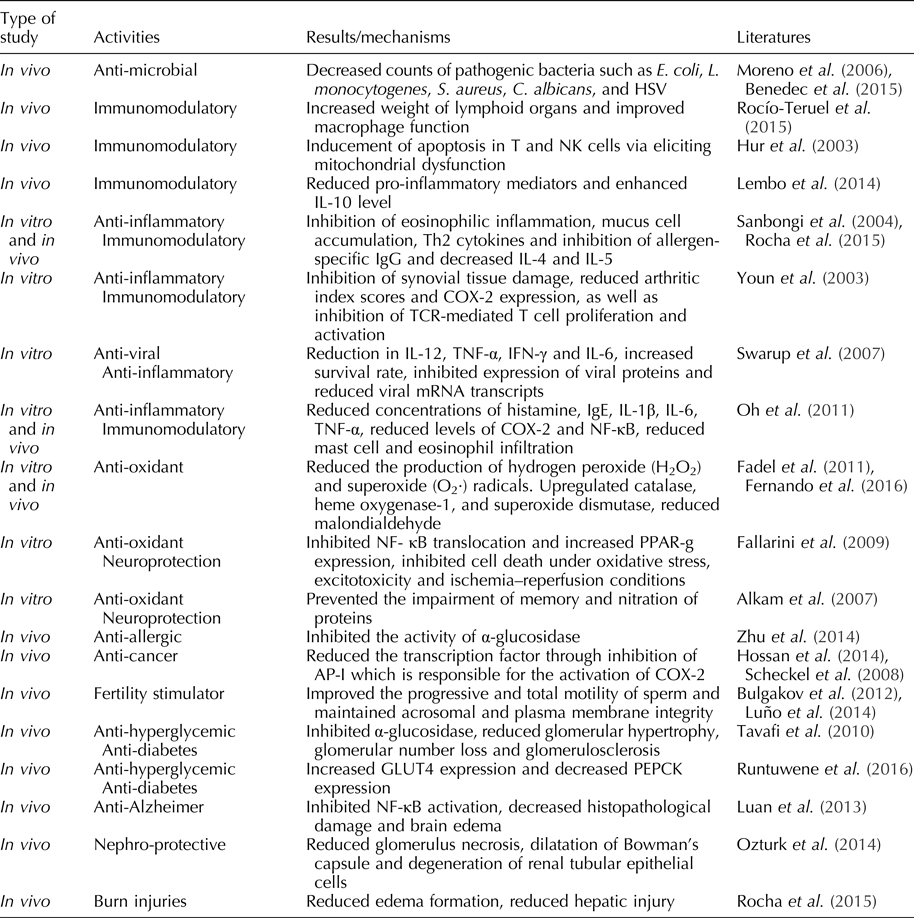
The modes of action and beneficial activities of RA are presented in Table 1. Using RA as natural feed additive/supplement has been described to exert multiple beneficial activities on health. These reports include use of RA as an antioxidant, anti-microbial, anthelminthic, coccidiostat and anti-inflammatory agent, and as an endocrine and immune stimulant. In addition, improving the secretion of endogenous digestive enzymes, motility of the gut, motility of sperm, enhancing growth and production, as well as proven anti-allergy, anti-diabetic anti-angiogenic, anti-tumor and neuroprotective functions (Bulgakov et al., Reference Bulgakov, Inyushkina and Fedoreyev2012; Petersen, Reference Petersen2013; Hossan et al., Reference Hossan, Rahman, Anwarul Bashar, Jahan, Al-Nahain and Rahmatullah2014; Stansbury, Reference Stansbury2014; Kim et al., Reference Kim, Park, Jin and Park2015; Nabavi et al., Reference Nabavi, Tenore, Daglia, Tundis, Loizzo and Nabavi2015). RA also affects feed conversion and utilization, growth and reproductive performance in addition to egg and meat quality of poultry (Bulgakov et al., Reference Bulgakov, Inyushkina and Fedoreyev2012). Gao et al. (Reference Gao, Wei, Zhao, Xiao and Zheng2005) and Abd El-Hack et al. (Reference Abd El-Hack, Mahgoub, Alagawany and Dhama2015) confirmed the anti-microbial, anti-bacterial and anti-oxidant activity of the bioactive compounds and oils (cold pressed and essential) extracted from medicinal plants in a large number of experiments (in vitro and in vivo), but certain queries still remain unanswered concerning the optimal level, mode of action, absorption and metabolism of these additives in animals. Many trials were carried out to determine the dependency and functionality of RA and its supplementation in animal and poultry diets. There are many studies on the anti-oxidant and anti-cancer effects of RA; however, reports on its activities as an anti-inflammatory, anti-Alzheimer, anti-allergy or anti-diabetic agent are few (Ferreira et al., Reference Ferreira, Celotto, Capellini, Albuquerque, Nadai, Carvalho and Evora2013). Ozturk et al. (Reference Ozturk, Ozturk, Terzi, Ozgen, Duran and Uygun2014) reported a reduction in circulatory levels of creatinine, blood urea nitrogen, focal glomerular necrosis, dilatation of Bowman's capsule, degeneration of tubular epithelium and tubular dilatation in unilaterally nephrectomized rats treated with RA.
Mechanisms of action and activities of rosmarinic acid

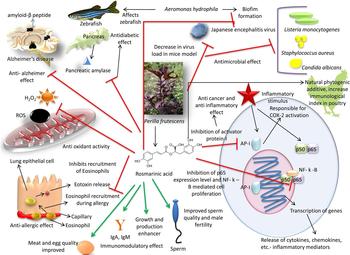
Advances in science and especially the field of biotechnology by employing new high-throughput techniques have provided newer trends and avenues for achieving better production and exploiting the useful applications of RA to its full potential (Kim et al., Reference Kim, Park, Jin and Park2015). The salient beneficial applications of RA are presented in Fig. 2.
Mechanisms of action and beneficial effects of rosmarinic acid.

Anti-microbial effects
RA is used in animal and poultry nutrition, in particular as a natural phytogenic additive to enhance the general health, performance parameters, activation of digestive system structure and function, as well as its ability to alter the gut microbiota and to reduce numbers pathogenic bacteria such as Escherichia coli, Salmonella spp. and many other harmful bacteria species (Yesilbag et al., Reference Yesilbag, Eren, Agel, Kovanlikaya and Balci2011; Chung et al., Reference Chung, Hsieh, Lin, Wu, Lin, Lin, Tang and Jinn2015). RA may be the main bioactive anti-microbial compound present in rosemary extracts. However, a methanol extract containing 30% carnosic acid, 16% carnosol and 5% RA was an effective anti-microbial against Gram-positive and -negative bacteria, while water extract containing 15% RA showed narrower effects (Moreno et al., Reference Moreno, Scheyer, Romano and Vojnov2006).
In the present era of emerging and rising drug resistance of pathogenic microorganisms to common anti-microbials, medicinal plants, herbs and their oils have gained wide attention as novel and alternative drugs, such as RA, on account of their potent anti-microbial activities (Ekambaram et al., Reference Ekambaram, Perumal, Balakrishnan, Marappan, Gajendran and Viswanathan2016). Benedec et al. (Reference Benedec, Hanganu, Oniga, Tiperciuc, Olah, Raita, Bischin, Dumitrescu and Vlase2015) reported that RA showed higher in vitro anti-oxidant activity (DPPH method) and expressed profound activity against Gram-positive bacteria, inhibition by R. officinalis extract was even higher than the Gentamicin control, and RA also suppressed fungal growth (Candida albicans). However, the same group reported that this extract was ineffective against Gram-negative organisms like E. coli and S. Typhimurium. RA extracted from O. vulgare L., M. officinalis L., R. officinalis L., O. basilicum L., S. officinalis L. and Hyssopus officinalis L. had an anti-microbial effect against L. monocytogenes, S. aureus and C. albicans (Benedec et al., Reference Benedec, Hanganu, Oniga, Tiperciuc, Olah, Raita, Bischin, Dumitrescu and Vlase2015). The mortality rate of mice infected with Japanese encephalitis virus was reduced with RA supplementation. The viral load was significantly (P < 0.001) decreased in infected rats treated with RA in comparison with infected animals without RA treatment at 8–9 days after infection (Swarup et al., Reference Swarup, Ghosh, Ghosh, Saxena and Basu2007). Aeromonas hydrophila is an important pathogenic bacterium of zebra fish, and A. hydrophila can cause biofilm formation. RA was found to inhibit biofilm formation in vitro, due to quorum sensing activity of A. hydrophila, at a concentration of 750 µg ml−1 (Rama Devi et al., Reference Rama Devi, Srinivasan, Kannappan, Santhakumari, Bhuvaneswari, Rajasekar, Prabhu and Veera Ravi2016). RA has synergistic activity with antibiotics like vancomycin, to act against methicillin-resistant Staphylococcus aureus (MRSA) under in vitro conditions (Ekambaram et al., Reference Ekambaram, Perumal, Balakrishnan, Marappan, Gajendran and Viswanathan2016). In this context, further exploitation of the anti-microbial properties of RA has been suggested for finding a useful role against several other important pathogens affecting animals.
Immunomodulatory effects
Beneficial polyphenols such as RA, carnosic acid and carnosol present in the rosemary herb also have immunomodulatory effects (Chun et al., Reference Chun, Kundu, Chae and Kundu2014; Rocío-Teruel et al., Reference Rocío-Teruel, Garrido, Espinosa and Linares2015). The immunomodulatory impacts of RA may also make it a novel agent for the treatment of autoimmune disorders (Friedman, Reference Friedman2015). The use of RA at a concentration of 100 or 200 mg oil kg−1 of broiler chicken diet, increased immunologic indices like phagocytic activity and phagocytic index along with the concentrations of some biochemical blood parameters like triglycerides, total cholesterol, low density lipoprotein and high-density lipoprotein. It has also been reported to improve the immune function by reducing pro-inflammatory mediators and increasing IL-10 levels (Lembo et al., Reference Lembo, Balato, Di Caprio, Cirillo, Giannini, Gasparri and Monfrecola2014).
Analgesic and anti-inflammatory effects
RA was reportedly beneficial against colon cancer, owing to its anti-inflammatory activities and ability to suppress cyclooxygenase-2 (COX-2) activation via activator protein-1 inducing factors (Ferrández et al., Reference Ferrández, Prescott and Burt2003). The beneficial aspects of RA as an anti-inflammatory agent have been also reported against skin cancer after topical use (Roland et al., Reference Roland, Dineen, Toombs, Carbon, Smith, Brekken and Barnett2010). The analgesic and anti-inflammatory activities of the acetyl ester derivative of RA were evaluated by employing abdominal constriction and carrageenan-induced paw edema in rats, respectively, revealing significant effects via a peripheral-mediated mechanism and reduced the number of paw licks, which also indicated a potential role for the management of pain and inflammation (Lucarini et al., Reference Lucarini, Bernardes, Ferreira, Tozatti, Furtado, Bastos, Pauletti, Januário, Silva and Cunha2013). The anti-inflammatory activities and protective effect of RA against local and systemic inflammation in the rats have been evaluated by Rocha et al. (Reference Rocha, Eduardo-Figueira, Barateiro, Fernandes, Brites, Bronze, Duarte, Serra, Pinto and Freitas2015). RA also showed anti-inflammatory effects against chronic and acute inflammation, particularly at doses of 50, 100 and 150 mg kg−1 (Boonyarikpunchai et al., Reference Boonyarikpunchai, Sukrong and Towiwat2014). Inhibitory effects of rosemary (R. officinalis) ethanolic extract on Propionibacterium acnes-induced inflammation has been documented in vitro, and attributed to suppression of pro-inflammatory cytokines (interleukin [IL]-8, IL-1β and tumor necrosis factor [TNF]-α) in the monocytic THP-1 cell line, along with in vivo attenuation of the P. acnes-induced ear swelling and granulomatous inflammation in an intradermally injected mouse model, via suppression of nuclear factor kappa-B (NF-κB) and Toll-like receptor -2 (TLR-2) mediated signaling pathways (Tsai et al., Reference Tsai, Chuang, Lien, Liing, Chen and Tsai2013). In the same context, Friedman (Reference Friedman2015) pointed out that the concentrations of TNF-α, interferon-γ, IL-6 and IL-12 were decreased in infected animals treated with RA when compared with infected animals without RA. Neuropathic pain due to chronic constriction injury of sciatic nerves in rats was tested with RA, and it was found that there was pain relief due to the anti-inflammatory effect of RA (Ghasemzadeh Rahbardar et al., Reference Ghasemzadeh Rahbardar, Amin, Mehri, Mirnajafi-Zadeh and Hosseinzadeh2017).
Rocha et al. (Reference Rocha, Eduardo-Figueira, Barateiro, Fernandes, Brites, Bronze, Duarte, Serra, Pinto and Freitas2015) observed that pretreatment of male Wistar rats with 25 mg kg−1 R. officinalis extract reduced inflammation and paw edema formation by 60%, suggesting anti-inflammatory activity of this plant extract. These preparations also possessed anti-inflammatory activity, resulting from ischemic reperfusion and decreased hepatic injury. The administration of RA also reduced the inflammatory response during thermal or burn injuries. RA reduced the release of cytokines into general circulation during the periods of burn and scald injuries, which affect various vital organs in the system, including lungs, kidney and liver; hence, this administration protects the entire system. In addition to its other anti-inflammatory actions, the oxidative burst from the neutrophils was also reduced (Rocha et al., Reference Rocha, Eduardo-Figueira, Barateiro, Fernandes, Brites, Bronze, Duarte, Serra, Pinto and Freitas2015). The anti-allergenic effect of RA shows high potential for allergy treatments via suppressing inflammatory activity by decreasing IgE and COX-2 levels (Zhu et al., Reference Zhu, Asada, Sato, Koi, Nishiwaki and Tamura2014, Reference Zhu, Xu, Yonekura, Yang and Tamura2015). RA also exhibits anti-inflammatory and anti-allergic inhibition of seasonal allergic rhinoconjunctivitis (Osakabe et al., Reference Osakabe, Takano, Sanbongi, Yasuda, Yanagisawa, Inoue and Yoshikawa2004) via reduced IgE and COX-2 levels (Oh et al., Reference Oh, Park, Ahn, Park and Kim2011).
Anti-cancer effects
Rosemary herb use has spread widely due to its high content of many important constituents such as carnosic acid, caffeic acid, ursolic acid and carnosal, as well as its derivatives like RA, which were mainly used as a food additive (spice, flavoring and coloring agent) in food processing (Alagawany and Abd El-Hack, Reference Alagawany and Abd El-Hack2015; Ramanauskiene et al., Reference Ramanauskiene, Raudonis and Majiene2016). These constituents provide the rosemary plant with powerful antioxidant and therapeutic effects in prevention and treatment of several diseases, and inhibiting the development of tumors in many organs such as the colon, liver, stomach and breast, as well as leukemia and melanoma cells (Hossan et al., Reference Hossan, Rahman, Anwarul Bashar, Jahan, Al-Nahain and Rahmatullah2014; Wu et al., Reference Wu, Hong, Klauck, Lin and Efferth2015).
It has been suggested that the RA molecule can reduce rectum and colon cancer, as well as increase tumor regression, in animal models of colorectal cancer. Hossan et al. (Reference Hossan, Rahman, Anwarul Bashar, Jahan, Al-Nahain and Rahmatullah2014) reported that the administration of RA in colon cancer cell lines (HT-29) reduced a transcription factor through inhibition of activator protein-I (AP-I), which is responsible for the activation of COX-2 (Scheckel et al., Reference Scheckel, Degner and Romagnolo2008). Karthikkumar et al. (Reference Karthikkumar, Sivagami, Viswanathan and Nalini2015) supplemented RA in colon cancer-induced rats. These authors found that RA reduced the levels of p65 protein expression and NF-kB-mediated cell proliferation during the treatment regimen. The spectrum of RA's anti-cancer activity was not restricted only to the colon, but also included skin cancer and melanoma (Osakabe et al., Reference Osakabe, Takano, Sanbongi, Yasuda, Yanagisawa, Inoue and Yoshikawa2004), pancreatic cancer (Roland et al., Reference Roland, Dineen, Toombs, Carbon, Smith, Brekken and Barnett2010), breast cancer (Chen et al., Reference Chen, Zhang and Massagué2011), lung cancer (Tao et al., Reference Tao, Wang, Zhao, Sheng, Wang, Zheng and Lu2014), leukemia, hepatoma and ovarian cancer (Inyushkina et al., Reference Inyushkina, Bulgakov, Veselova, Bryukhanov, Zverev, Lampatov, Azarova, Tchernoded, Fedoreyev and Zhuravlev2007). RA at a concentration of 5 mg kg−1 BW in rats showed good effect against colon cancer induced by 1, 2-dimethylhydrazine, suggesting it could be considered as a chemotherapeutic agent candidate for colon cancer (Venkatachalam et al., Reference Venkatachalam, Gunasekaran, Jesudoss and Namasivayam2013). A subsequent study reported that RA could reduce lipid peroxidation byproducts and expression of pro-apoptotic proteins in rats with colon cancer (Venkatachalam et al., Reference Venkatachalam, Gunasekaran and Namasivayam2016).
RA could play a crucial role against skin, breast and pancreatic cancer and melanoma. The beneficial roles of this compound may be advanced by topical uses, with reports that RA acted against skin cancer by exerting antioxidant and anti-inflammatory effects (Roland et al., Reference Roland, Dineen, Toombs, Carbon, Smith, Brekken and Barnett2010). RA improved the expression of an enzyme, tyrosinase, and increased melanin content in melanoma cells, suggesting melanin plays a role against skin cancer (photocarcinogenesis). Also, there is an increasing appreciation of the importance of RA in melanogenesis (melanin formation), and RA was found to increase the activity and expression of tyrosinase in B16 melanoma cells (Lin et al., Reference Lin, Zhang, Zhang, Shen, Zhang, Wang and Tu2014). Diterpenes from R. officinalis were also shown to possess potent anti-cancer activities (Petiwala and Johnson, Reference Petiwala and Johnson2015). Moreover, Xu et al. (Reference Xu, Yang, Zhang and Shen2016) reported that RA has a radioprotective impact in animals. RA is therefore a promising anti-cancer factor with potential radioprotective and chemopreventive impacts.
Antioxidant effects
The RA molecule is a polyphenolic compound that is considered a powerful free-radical scavenger, which enhances the anti-oxidant defense mechanism against oxidative reactive oxygen species (ROS) (Kuo et al., Reference Kuo, Su, Chiu, Peng, Chang and Sung2011; Ramanauskiene et al., Reference Ramanauskiene, Raudonis and Majiene2016). Gao et al. (Reference Gao, Wei, Zhao, Xiao and Zheng2005) studied the anti-apoptotic and anti-oxidant effects of RA on H2O2-induced apoptosis in astrocytes, and these authors found that RA reduced levels of ROS, malondialdehyde (MDA) and H2O2-induced cell injury. They showed the effectiveness of RA as an antioxidant and anti-apoptotic agent. In this context, RA strongly decreased ROS generation and apoptosis (Lee et al., Reference Lee, Cho, Park, Kim, Lee, Kim, Kim, Kim and Chun2008). Fadel et al. (Reference Fadel, El Kirat and Morandat2011) investigated the efficacy of RA as a natural antioxidant in reducing and preventing the alterations (lipid peroxidation) of lipid membranes by oxidative stress. There was negative correlation between RA and concentration of lipid peroxidation, including MDA (P < 0.05) (Luño et al., Reference Luño, Gil, Olaciregui, González, Jerez and de Blas2014).
RA was shown to have both anti-oxidant and anti-inflammatory action by inhibiting lipoxygenase activity (Stansbury, Reference Stansbury2014). In animals, Bacanli et al. (Reference Bacanli, Aydın, Taner, Göktaş, Şahin, Başaran and Başaran2016) assessed the ability of RA to attenuate sepsis-induced oxidative stress by improving anti-oxidant indices and DNA repair capacity. In serum, total anti-oxidant capacity was improved (P < 0.05) in groups that received RA, while MDA was reduced with RA treatment (Hajhosseini et al., Reference Hajhosseini, Khaki, Merat and Ainehchi2013). This antioxidant activity is attributed to the phenolic hydroxyl (–OH) group (Rice-Evans et al., Reference Rice-Evans, Miller and Paganga1996). The supplementation of RA in aged mice elevated the activity of anti-oxidant enzymes superoxide dismutase, catalase and glutathione peroxidase, and reduced malonaldehyde production in liver and kidney (Zhang et al., Reference Zhang, Chen, Yang, Zu and Lu2015), and these responses seemed to be dependent on the dose of RA.
Regarding the cytoprotective effect of RA against ultraviolet B (UVB) radiation, Fernando et al. (Reference Fernando, Piao, Kang, Ryu, Hewage, Chae and Hyun2016) showed that RA is an effective eliminator of intracellular ROS induced by UVB and improves the activities of anti-oxidant enzymes such as catalase, heme oxygenase-1, superoxide dismutase and their transcription factor Nrf2, which are lowered by the radiation of UVB.
RA augments the D-galactosamine and lipopolysaccharide-induced injuries in liver through their effect on superoxide dismutase and COX-2 production (Won et al., Reference Won, Hur, Hur, Park, Kang and Choi2003). Pérez-Fons et al. (Reference Pérez-Fons, Garzón and Micol2010) reported that the presence of diterpenes and RA were responsible for rosemary leaf extract's anti-oxidant activity. Makino et al. (Reference Makino, Ono, Muso, Yoshida, Honda and Sasayama2000) observed that RA exhibited an anti-proliferative effect in murine mesangial cells.
Anti-diabetic effect
Herbal preparations that include RA play an important role in the treatment of diabetes. The main goals of diabetes treatment are to maintain the concentration of blood glucose, to reduce insulin resistance and to improve β-cell function. Meanwhile, medications used to treat diabetic problems must not only reduce the levels of blood glucose, but also improve insulin sensitivity and glucose homeostasis (Wilcox, Reference Wilcox2005; Runtuwene et al., Reference Runtuwene, Cheng, Asakawa, Amitani, Amitani, Morinaga, Takimoto, Kairupan and Inui2016). Hasanein and Zaheri (Reference Hasanein and Zaheri2014) reported that RA is a bioactive component and a good strategy for diabetic neuropathic treatment in animals. Pancreatic amylase inhibitors seemed to be good option to control hyperglycemia by preventing the release of glucose from starch, hence these inhibitors can be used as a drug for treatment for diabetes. RA has the potential to inhibit pancreatic amylase, which can be used as anti-diabetic drug (McCue and Shetty, Reference McCue and Shetty2004).
RA reduced glomerular hypertrophy, glomerular loss, glomerulosclerosis and also attenuated serum creatinine and urea levels in rats with diabetes (Tavafi et al., Reference Tavafi, Ahmadvand, Khalatbari and Tamjidipoor2010). A group receiving 10 mg kg−1 of RA had significantly attenuated lipid peroxidation in the hippocampus, cortex, and striatum by 28, 38 and 47%, respectively, of diabetic rats in comparison with the control group. Moreover, RA played important role as an anti-hyperglycemic agent, and the acetylcholinesterase activity was increased in the hippocampus, cortex and striatum by 58, 46, and 30%, respectively, with hyperglycemia in diabetic rats compared with the control rats, but the use of RA reduced this effect to control levels after 3 weeks (Mushtaq et al., Reference Mushtaq, Schmatz, Pereira, Ahmad, Stefanello, Vieira, Abdalla, Rodrigues, Baldissarelli and Pelinson2014). The inhibitory activity of α-glucosidase is a potential mechanism behind the control of diabetes mellitus, which was also exhibited by RA, thus it could be considered as a hypoglycemic agent (Zhu et al., Reference Zhu, Asada, Sato, Koi, Nishiwaki and Tamura2014). Runtuwene et al. (Reference Runtuwene, Cheng, Asakawa, Amitani, Amitani, Morinaga, Takimoto, Kairupan and Inui2016) observed that RA reduced hyperglycemia and ameliorated insulin sensitivity by increasing GLUT4 expression and decreasing PEPCK expression. In diabetic animals, Sotnikova et al. (Reference Sotnikova, Okruhlicova, Vlkovicova, Navarova, Gajdacova, Pivackova, Fialova and Krenek2013) and Jayanthy and Subramanian (Reference Jayanthy and Subramanian2014) reported that RA may control blood glucose by regulating SGLT1 trafficking to the intestinal brush-border membrane to mitigate hyperglycemia.
Neuroprotective and anti-Alzheimer effects
RA has a beneficial role as a neuroprotective agent that helps to reduce or prevent cell damage and disorders caused by free radicals and other factors (Zhang et al., Reference Zhang, Wang, Feng, Song and Liu2011; Hasanein and Mahtaj, Reference Hasanein and Mahtaj2015). The neuroprotective effects of RA at cellular levels, with a special focus on effects against neuroinflammation, neurodegeneration, neurotoxicity and oxidative stress, were recently reviewed by Nabavi et al. (Reference Nabavi, Tenore, Daglia, Tundis, Loizzo and Nabavi2015). Ghaffari et al. (Reference Ghaffari, Venkataramana, Ghassam, Nayaka, Nataraju, Geetha and Prakash2014) studied the neuroprotective effect of RA against oxidative stress in N2A cells and found that hydrogen peroxide-induced cytotoxicity in N2A cells was inhibited by RA treatment. Also, they recommended that RA can be potentially used as a factor for reduction of human neurodegenerative diseases which are caused by oxidative stress. In another human study, Lee et al. (Reference Lee, Cho, Park, Kim, Lee, Kim, Kim, Kim and Chun2008) investigated the neuroprotective impacts of RA against H2O2-induced apoptotic cell death, and they pointed out that RA significantly (P < 0.05) reduced H2O2-induced ROS generation and apoptosis. Furthermore, RA enhanced heme oxygenase-1 as an anti-oxidant enzyme. In rats, Pereira et al. (Reference Pereira, Tysca, Oliveira, da Silva Brum, Picada and Ardenghi2005) investigated the effect of RA administration at levels of 1, 2, 4 or 8 mg kg−1 on behavioral alterations and its genotoxic impact on brain tissue. They noted that the level of 8 mg kg−1 of RA was enough to increase the motivation and locomotion of the rats, but the lower levels (1, 2, and 4 mg kg−1) of this acid produced anxiolytic-like impact without any alterations in locomotor or DNA damage in brain.
Oxidative stress plays an important role in the development of Alzheimer's disease. Amyloid beta peptides are deposited, interacting with mitochondria, leading to free radical production, dysfunction of the mitochondria and death of the cell. In one study, RA reduced amyloid beta-induced nitrite and malondialdehyde production, suggesting a beneficial effect of RA (Baluchnejadmojarad et al., Reference Baluchnejadmojarad, Roghani and Kazemloo2014). Memory impairments may be mediated by daily consumption of RA, due to a protective effect against neurotoxicity of Aβ25–35 that may be attributed to scavenging of Peroxynitrite (Alkam et al., Reference Alkam, Nitta, Mizoguchi, Itoh and Nabeshima2007). Luan et al. (Reference Luan, Kan, Xu, Lv and Jiang2013) pointed out that using of RA at 50 mg kg−1 decreased histopathological damage, brain edema and high-mobility group Box1 protein expression and inhibited NF-κB activation. They also observed that RA at levels of 25, 50, 100 and 200 mg kg−1 reduced cerebral infarct volume, neurological deficit scores and water content in brain, but did not decrease concentration of blood glucose.
Fertility stimulator
Rosemary herb and its extracts reportedly improved sperm quality and male fertility (Uyeturk et al., Reference Uyeturk, Firat, Cetinkaya, Kin Tekce and Cakir2014). Progressive and total motility of sperm were statistically increased (P < 0.05) by experimental treatments with RA (26.25, 52.5 and 105 µM) compared with controls. Acrosomal and plasma membranes were enhanced by RA (at 105 µM), while spermatozoa numbers were unaffected by the different treatments (Luño et al., Reference Luño, Gil, Olaciregui, González, Jerez and de Blas2014). In rats, Hajhosseini et al. (Reference Hajhosseini, Khaki, Merat and Ainehchi2013) studied the protective effect of RA against sertoli cell apoptosis caused by electromagnetic fields. The concentration of testosterone and total anti-oxidant capacity were improved (P < 0.05) in a treatment group that received RA at a level of 5 mg per rat. Moreover, RA administration had an increasing effect on lowered testosterone caused by an electromagnetic field. In animals, using RA in food or feed was reportedly effective for overcoming problems and side effects caused by environmental pollution via electromagnetic waves (Farsi et al., Reference Farsi, Khaki, Fathiazad, Afshari, Hajhossini and Kahki2013). Khaki et al. (Reference Khaki, Imani and Golzar2012) demonstrated that herbal plants and their derivatives, like RA, have useful roles in enhancing sex hormones, including testosterone; these benefits may be attributed to antioxidant activity and flavonoids, which have beneficial effects on androgenic hormones and increase sperm counts.
Conclusion and future perspectives
RA appears to be an effective candidate for inclusion in functional foods and pharmaceutical plant-based products. The benefits of dietary RA supplementation as a phytogenic additive are promising. RA acts as a powerful anti-oxidant, which could protect the cell membrane and decrease the induction of ROS by enhancing the activity of the antioxidant defense mechanism through multiple enzymes throughout the body. It also has an advantageous role in promoting growth and improving both productive and reproductive performance due to its beneficial effect on nutrient absorption. RA also exhibits many nutritional benefits by lowering the lipid peroxidation in eggs, meats and sera. Additionally, RA, as a natural antioxidant, showed many healthy and pharmacologic activities such as anti-spasmodic, anti-microbial, anti-fungal, neuroprotective, anti-cancer, immunomodulatory, anti-allergy, anti-inflammatory and anti-Alzheimer disease effects. Further studies are warranted to further define the growth enhancing activity of RA, to evaluate its safety and toxicity in different animal species, and to provide new approaches for its use in human and veterinary medicine. A better understanding of RA's practical applications for various health issues and the exact mechanisms of its action will further add to its acception. Advances in biotechnology to improve utilization of RA for animal production will help determine in vivo applications of RA in safeguarding animal health.
Acknowledgments
All the authors thank and acknowledge support of their respective Universities and Institutes.
Disclosure statement
Authors would hereby like to declare that there is no conflict of interests that could possibly arise, and all authors have contributed significantly.