Introduction
Butyrate is used as a feed additive for broiler chickens and reported responses are mostly favourable in terms of maintaining optimal gut health and stimulating growth performance. Butyrate effects on growth performance, however, are sometimes inconsistent and its mode of action is not yet fully understood (Cerisuelo et al., Reference CERISUELO, MARIN, SANCHEZ-VIZCAINO, GOMEZ, DE LA FUENTE, DURAN and FERNANDEZ2014). In human medicine, butyrate has been advocated as a promising molecule for the prevention or amelioration of a number of human diseases such as inflammatory bowel disease and colon cancer (Segain et al., Reference SEGAIN, RAINGEARD DE LA BLETIERE, BOURREILLE, LERAY, GERVOIS, ROSALES, FERRIER, BONNET, BLOTTIERE and GALMICHE2000; Sengupta et al., Reference SENGUPTA, MUIR and GIBSON2006). However, it has not always achieved all the expected multifarious, positive effects in a consistent manner. As a result, reviews related to this molecule often contain interrogative titles, e.g. ‘The butyrate story: old wine in new bottles?’ (Scheppach and Weiler, Reference SCHEPPACH and WEILER2004) and ‘Butyrate: what is the future for this old substance?’ (Sossai, Reference SOSSAI2012). Regarding its use as a feed additive for broilers, factors such as inclusion level, diet composition, age and health status of the birds should be taken into account when assessing the effects of butyrate derivatives (Cerisuelo et al., Reference CERISUELO, MARIN, SANCHEZ-VIZCAINO, GOMEZ, DE LA FUENTE, DURAN and FERNANDEZ2014). Several reviews have been published on this subject, describing endogenous production and effects on gastrointestinal epithelial cell function in mammals (Guilloteau et al., Reference GUILLOTEAU, MARTIN, EECKHAUT, DUCATELLE, ZABIELSKI and VAN IMMERSEEL2010a), butyrate metabolism (Astbury and Corfe, Reference ASTBURY and CORFE2012) and its modulating effects on immunity in humans (Meijer et al., Reference MEIJER, DE VOS and PRIEBE2010).
The present review describes the response of broiler chickens to dietary butyrate supplementation, with emphasis on the importance of release location in relation to the various effects of this molecule. The first section of this review briefly describes the different butyrate derivatives currently used in the animal feed industry. In addition, discrepancy in the literature regarding avian responses to dietary butyrate supplementation is discussed. Finally, proven modes of action in poultry of butyrate are discussed and putative modes of actions derived from research on mammals are presented. In this review, information from other species is used where there data on avian species is lacking. No distinctions between endogenous synthesised or exogenous dietary butyrate are made in the present review, as the microbial or dietary origin of the molecule does not change its activity at the gut level. Butyrate can be present as an anion, as a salt or as an acid (Kato et al., Reference KATO, SATO, CHIDA, ROH, OHWADA, SATO, GUILLOTEAU and KATOH2011). It is widely accepted that the anionic form (CH3-CH2-CH2-COO-) mediates the effects reported in literature (Guilloteau et al., Reference GUILLOTEAU, MARTIN, EECKHAUT, DUCATELLE, ZABIELSKI and VAN IMMERSEEL2010a). The term ‘butyrate’ used here encompasses the acid, salts and anionic forms. Concerning the description of dietary inclusion rates in the present contribution, g/kg refers to g of butyrate, corrected for coating material, per kg of diet.
Butyrate derivatives used in animal nutrition
unprotected butyrate
Unprotected butyrate will be mainly present in a protonated form due to the low pH in the stomach of monogastric animals, due to its pKa of 4.82. Butyrate is taken-up by non-ionic, passive absorption in the stomach (Ichikawa et al., Reference ICHIKAWA, SHINEHA, SATOMI and SAKATA2002). As such, supplementation of unprotected forms leads to a significant increase in butyrate concentration in the gastric region but not in the jejunal chyme of broilers (Hu and Guo, Reference HU and GUO2007) nor in the caecum, colon and rectum of pigs (Manzanilla et al., Reference MANZANILLA, NOFRARIAS, ANGUITA, CASTILLO, PEREZ, MARTIN-ORUE, KAMEL and GASA2006). As a consequence, unprotected butyrate is supposed to exert mainly effects on epithelial cells and microbiota of the crop, proventriculus and gizzard of broiler chickens. It is unclear whether delivery at these segments of the GI tract is effective in eliciting effects on growth performance, gut morphology and immune system regulation. Much research has been conducted to ‘protect’ the butyrate to achieve release in the more distal GIT, where it is also produced by microbiota.
mono-, di- and tributyrins
Butyrins include mono-, di- and tri-glycerides of butyrate. As chickens have very limited pre-duodenal lipolytic activity (Moreau et al., Reference MOREAU, GARGOURI, LECAT, JUNIEN and VERGER1988), it is assumed that butyrate will mostly be released in the small intestine under the action of pancreatic lipase. Pancreatic lipase can also be present in the gizzard of poultry due to reflux (Sklan et al., Reference SKLAN, SHACHAF, BARON and HURWITZ1978). It is, however, known that pancreatic lipase activity on tributyrin is compromised at low pH (Borgström, Reference BORGSTRÖM1975). Endogenous lipases are solely able to cleave ester bonds of triacylglycerol at the sn-1 and sn-3 position (Doreau and Chilliard, Reference DOREAU and CHILLIARD1997). As a consequence, part of the butyrate is inevitably absorbed as sn-2 monobutyrin in the duodenum and jejunum.
butyrate-loaded matrices
Butyrate can be embedded in a continuous matrix which are characterised by the type of embedding material used and by the average bead diameter. Although commonly referred to as fat coated or microencapsulated butyrate in the literature, these description are innacurate as in microencapsulated or coated products an outer shell can be distinguished from an inner core. Vegetable fat seems to be the most common embedding material for use in animal nutrition (Smulikowska et al., Reference SMULIKOWSKA, CZERWINSKI, MIECZKOWSKA and JANKOWIAK2009; Zhang et al., Reference ZHANG, GAO, ZHU, LI, JIANG, DAI and ZHOU2011a; Czerwinski et al., Reference CZERWINSKI, HOJBERG, SMULIKOWSKA, ENGBERG and MIECZKOWSKA2012; Jerzsele et al., Reference JERZSELE, SZEKER, CSIZINSZKY, GERE, JAKAB, MALLO and GALFI2012), however fat source and bead diameters of products are often not reported in published research. In addition, butyrate inclusion percentages in the matrix are variable. Most trials have been conducted with matrices loaded at a concentration of 30% w/w (e.g. Smulikowska et al., Reference SMULIKOWSKA, CZERWINSKI, MIECZKOWSKA and JANKOWIAK2009). The use of matrices loaded at 70% w/w has been reported (Jerzsele et al., Reference JERZSELE, SZEKER, CSIZINSZKY, GERE, JAKAB, MALLO and GALFI2012). Release kinetics can be affected by general parameters such as the type of embedding material used or inclusion level (De Brabander et al., Reference DE BRABANDER, VERVAET, FIERMANS and REMON2000; Vervaeck et al., Reference VERVAECK, SAERENS, DE GEEST, DE BEER, CARLEER, ADRIAENSENS, REMON and VERVAET2013). The aforementioned characteristics may vary from one feed additive supplier to the other. As a consequence, the GIT segment wherein butyrate is released is difficult to predict. It is generally accepted that fat matrices provide partial protection from gastric absorption, thus increasing the delivery of butyrate to the small intestine. Concerning the availability at colonic and caecal level, information is scarce. However, it has been shown that feeding vegetable-fat based matrices does increase the butyrate concentration in the colon of pigs (Mallo et al., Reference MALLO, BALFAGON, GRACIA, HONRUBIA and PUYALTO2012), and similar results have been observed in the caeca of broilers (Onrust, unpublished data).
Effects of butyrate on growth performance, gut morphology, carcass traits and nutrient digestibility in broilers chickens
effect on growth performance
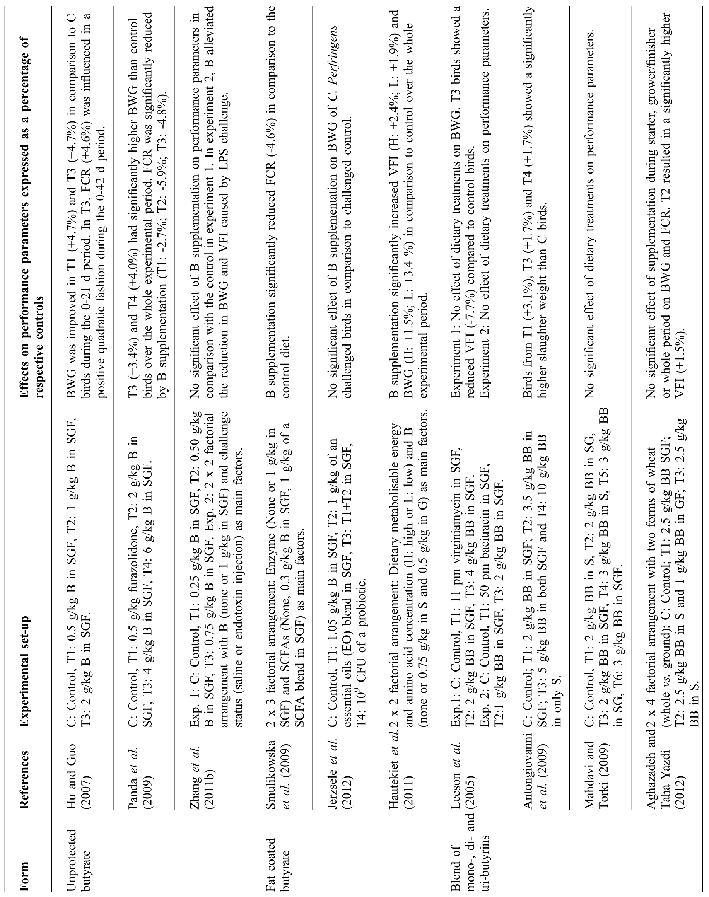
As indicated in Table 1, butyrate can improve body weight gain, voluntary feed intake and FCR of broiler chickens, although the literature shows large discrepancies in the effect of butyrate on growth performance, both among and within derivatives. It has been reported that health status of the animal, diet composition and environmental conditions influence the response of the broilers to butyrate supplementation, thereby explaining part of these inconsistencies (Cerisuelo et al., Reference CERISUELO, MARIN, SANCHEZ-VIZCAINO, GOMEZ, DE LA FUENTE, DURAN and FERNANDEZ2014). In the case of unprotected butyrate supplementation, dose effects appear to play a role. Indeed, Hu and Guo (Reference HU and GUO2007) and Panda et al. (Reference PANDA, RAO, RAJU and SUNDER2009) used larger doses than Zhang et al. (Reference ZHANG, JIANG, ZHU, GAO, DAI, CHEN and ZHOU2011b) and the latter authors could not find any effect of butyrate on growth performance of broilers. Concerning fat coated butyrate, discrepancies may be due to differences in matrix characteristics, as those used in published studies originated from various suppliers.
effect on gut morphology
Long villi and short crypts are generally regarded as indicators of a healthy and functional small intestine. However, these parameters only provide partial information on the intestinal surface and function. Additional read-out parameters such as mucosal enzyme activity, mucus layer thickness and composition, or number and quality of goblet cells should be included to elaborate on gut health and digestive capacities (Van Dijk et al., Reference VAN DIJK, HUISMAN and KONINKX2002). In this section, only villus height (VH) and crypt depth (CD) are used as indicators of intestinal health.
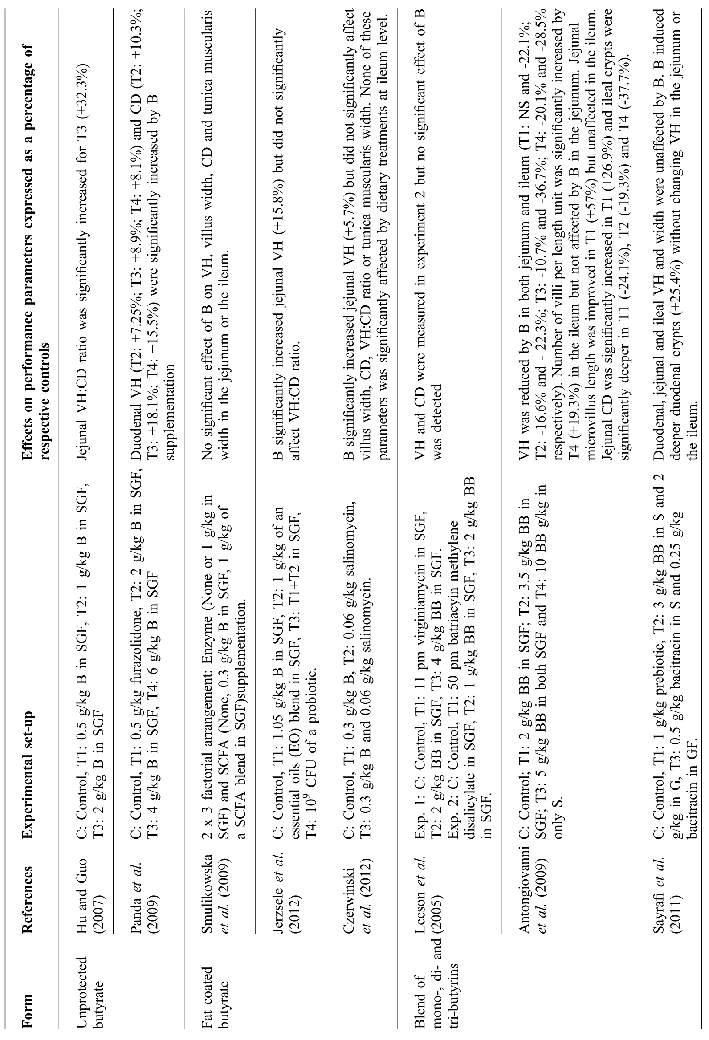
As shown in Table 2, effects of butyrate derivatives on gut morphology are inconsistent. Unprotected butyrate seems to improve duodenal as well as jejunal morphology when fed at levels equal to, or higher than, 2 g/kg during the 0-35 day growing period (Hu and Guo, Reference HU and GUO2007). Concerning fat coated butyrate, information originating from the literature is inconsistent. Jerzsele et al. (Reference JERZSELE, SZEKER, CSIZINSZKY, GERE, JAKAB, MALLO and GALFI2012) and Czerwinski et al. (Reference CZERWINSKI, HOJBERG, SMULIKOWSKA, ENGBERG and MIECZKOWSKA2012) found positive effects of supplementation on jejunal VH using 1.05 and 0.3 g/kg inclusion levels, respectively. Conversely, Smulikowska et al. (Reference SMULIKOWSKA, CZERWINSKI, MIECZKOWSKA and JANKOWIAK2009) did not find any significant effect of 0.3 g/kg supplementation on jejunal morphology.
Butyrate glycerides show conflicting effects on gut morphology. Leeson et al. (Reference LEESON, NAMKUNG, ANTONGIOVANNI and LEE2005) did not find any effect of butyrate glycerides on VH or CD. Antongiovanni et al. (Reference ANTONGIOVANNI, BUCCIONI, PETACCHI, LEESON, MINIERI, MARTINI and CECCHI2009) found that butyrate glycerides significantly reduced ileal and jejunal VH but increased ileal CD. Sayrafi et al. (Reference SAYRAFI, SOLTANALINEJAD, SHAHROOZ and RAHIMI2011) reported a significant increase in duodenal CD when butyrate glycerides were fed to broilers. Antongiovanni et al. (Reference ANTONGIOVANNI, BUCCIONI, PETACCHI, LEESON, MINIERI, MARTINI and CECCHI2009) showed that high levels of butyrate glycerides supplementation significantly increased the number of villi per length unit and the number of jejunal microvilli.
effects on carcass traits
Supplementation of a broiler chicken diet with 2, 4 and 6 g/kg of unprotected butyrate resulted in a significant reduction of abdominal fat percentage and in an increase of dressed carcass weight (Panda et al., Reference PANDA, RAO, RAJU and SUNDER2009). In another study, using butyrins at inclusion levels ranging from 2 to 10 g/kg and measuring carcass traits such as dressing percentage, breast, thigh, drumstick and abdominal weights, no significant effects with supplementation were detected (Antongiovanni et al., Reference ANTONGIOVANNI, BUCCIONI, PETACCHI, LEESON, MINIERI, MARTINI and CECCHI2009). Similarly, Leeson et al. (Reference LEESON, NAMKUNG, ANTONGIOVANNI and LEE2005) did not find any significant effect of the inclusion of 2 or 4 g/kg of butyrins in both starter and grower/finisher diets on breast meat percentage in 42 d old broilers. Zhang et al. (Reference ZHANG, GAO, ZHU, LI, JIANG, DAI and ZHOU2011a) reported that supplementation of broiler diets with 0.4 g/kg of fat coated butyrate did not result in significantly different carcass characteristics in comparison to non-supplemented diets. However, in the same experiment, butyrate supplementation reduced drip loss of the breast muscle. Based on these studies it can be concluded that carcass characteristics are inconsistently affected by butyrate supplementation. Carcass quality might be influenced by an interaction between the presence of nutritional, environmental and immunological stressors and butyrate supplementation, as explained below.
Effects of different butyrate derivatives on the growth performance of broiler chickens

B: Butyrate; BB: Butyrins Blend; BWG: Body Weight Gain; Exp.: Experiment; F: Finisher feed; FCR: Feed Conversion Ratio; G: Grower feed; LPS: Lipopolysaccharide; S: Starter feed; T: Treatment; VFI: Voluntary Feed Intake
Effects of different butyrate derivatives on gut morphology of broiler chickens.
B: Butyrate; BB: Butyrins Blend; CD: Crypt Depth; Exp.: Experiment; F: Finisher feed; G: Grower feed; S: Starter feed, T: Treatment; VH: Villus Height
effects on nutrient digestibility
Information is scarce regarding the effect of dietary butyrate supplementation on nutrient digestibility in broiler chickens. Smulikowska et al. (Reference SMULIKOWSKA, CZERWINSKI, MIECZKOWSKA and JANKOWIAK2009) reported that dietary inclusion of fat coated butyrate at 0.3 g/kg significantly increased apparent total tract digestibility of nitrogen and organic matter without affecting crude fat digestibility in broiler chickens. In the same study, nitrogen retention was improved while apparent metabolisable energy content of the diet was unaffected by butyrate supplementation. Such improvements in nitrogen digestibility were in line with the findings of Qaisrani (Reference QAISRANI2014), who reported a trend for higher proventricular proteolytic activity in broilers fed the same butyrate derivative. Finally, Swiatkiewicz et al. (Reference SWIATKIEWICZ, ARCZEWSKA-WLOSEK and JOZEFIAK2014) reported that inclusion of 0.7 g/kg of fat coated butyrate in broiler chicken diets containing high levels of dried distillers grains with solubles did not improve apparent total tract digestibility of the various measured nutrients. Collectively, these results indicate that butyrate might improve protein digestibility whereas improvements in energy digestibility are uncertain.
Modes of action of butyrate derivatives on the avian gastrointestinal tract
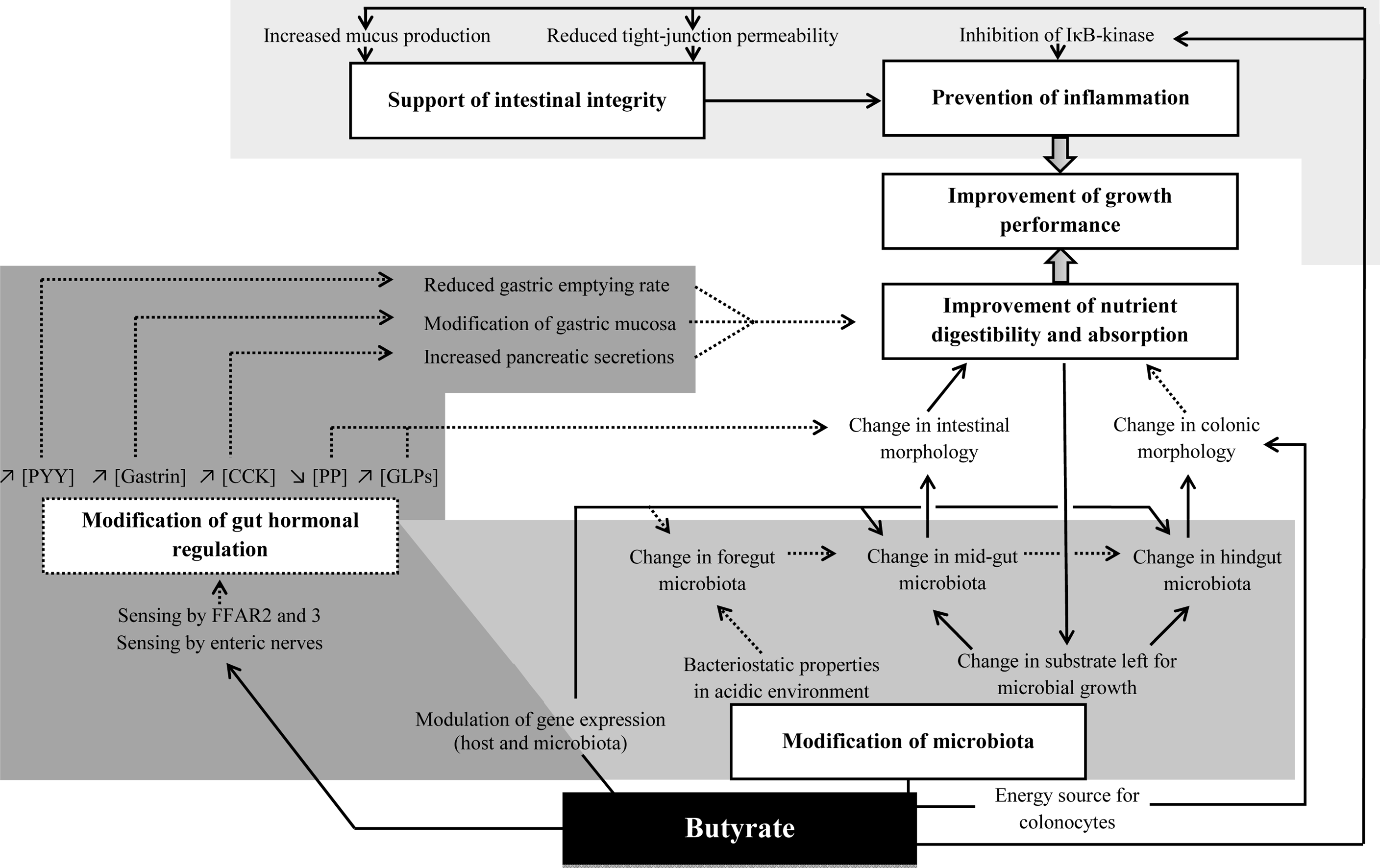
Figure 1 depicts putative and confirmed modes of action of butyrate on the GIT. It can be concluded that butyrate affects immune responses and gut integrity, elicits shifts in microbiota composition and might influence the endocrine control of digestive processes. Each category of effect will be discussed below.
Putative (broken lines) and confirmed (solid lines) effects of butyrate on endocrine system, immune response, intestinal integrity and microbiota composition might contribute to improved growth performances.
immuno-modulatory properties
Butyrate down-regulates pro-inflammatory pathways by inhibiting cytoplasmic IκB kinase (IKK) (Moeinian et al., Reference MOEINIAN, FARNAZ GHASEMI-NIRI, MOZAFFARI and ABDOLLAHI2013). IKK initiates the translocation of a transcription factor from the cytoplasm to the nucleus, the nuclear factor κB (NF-κB), resulting ultimately in the production of pro-inflammatory cytokines such as tumour necrosis factor α (TNF-α) or interleukins (IL) 1β, 2 and 6 (Barnes and Karin, Reference BARNES and KARIN1997). In poultry, these pro-inflammatory cytokines induce a homeorhetic response that modifies nutrient partitioning. During inflammatory responses, dietary nutrients are used to support immune responses and disease resistance via numerous metabolic processes while skeletal muscle deposition and growth are reduced (Klasing and Johnstone, Reference KLASING and JOHNSTONE1991). Additionally, inhibiting NF-κB activation reduces the level of reactive oxygen species and up-regulate the expression of genes involved in antioxidant synthesis (Hamer et al., Reference HAMER, JONKERS, BAST, VANHOUTVIN, FISCHER, KODDE, TROOST, VENEMA and BRUMMER2009; Maa et al., Reference MAA, CHANG, HSIEH, CHEN, YANG, CHEN, LI, YEN, WU and LEU2010; Moeinian et al., Reference MOEINIAN, FARNAZ GHASEMI-NIRI, MOZAFFARI and ABDOLLAHI2013). Such changes might protect the organism from DNA, lipid and protein damage induced by reactive oxygen species upon oxidative stress (Canani et al., Reference CANANI, COSTANZO, LEONE, PEDATA, MELI and CALIGNANO2011). Butyrate may therefore contribute to an improved nutrient utilisation while protecting the organism from oxidative stress.
Butyrate appears to affect mammalian immune cell chemotaxis in a species, dose and immune cell-dependent manner (Meijer et al., Reference MEIJER, DE VOS and PRIEBE2010). Until now, the influence of dietary butyrate supplementation on avian cell chemotaxis has never been studied. However, Sunkara et al. (Reference SUNKARA, ACHANTA, SCHREIBER, BOMMINENI, DAI, JIANG, LAMONT, LILLEHOJ, BEKER, TEETER and ZHANG2011) demonstrated that feeding 1 g/kg unprotected butyrate to broiler chicken led to a significant increase in expression of genes encoding for antimicrobial peptides (AMPs), which could subsequently induce chemotaxis of avian innate immune cells. These results should be nuanced by the fact that correlation between mRNA and protein abundances is sometimes poor (Maier et al., Reference MAIER, GÜELL and SERRANO2009). Butyrate is an epigenetic modulating agent inhibiting nuclear histone deacetylase (HDAC) enzymes, resulting in hyperacetylation of histones (Smith et al., Reference SMITH, YOKOYAMA and GERMAN1998). Pre-treatment of human antigen-presenting cells with butyrate reduces their capacity to stimulate T-cell responses in a dose-dependent manner due to effects on cell adhesion and production of stimulatory molecules (Böhmig et al., Reference BÖHMIG, KRIEGER, SÄEMANN, WENHARDT, POHANKA and ZLABINGER1997). Modulation of T-cell function by dietary butyrate supplementation varies depending on the type of butyrate derivative considered (Böhmig et al., Reference BÖHMIG, KRIEGER, SAEMANN, ULLRICH, KARIMI, WEKERLE, MUHLBACHER and ZLABINGER1999). It can be concluded that butyrate can prevent inflammation and infiltration of immune cells in peripheral tissues by influencing cell adhesion and chemotaxis (Meijer et al., Reference MEIJER, DE VOS and PRIEBE2010). Such changes are associated with differences in gene expression that could indicate that the observed effects are mediated through the known inhibitory activity of butyrate on HDAC.
Once converted in any of its intermediate metabolites in the mitochondria, butyrate cannot return to the cytosol. On the other hand, a sufficient intracellular concentration of butyrate is required to induce effects on gene expression (Astbury and Corfe, Reference ASTBURY and CORFE2012) and NF-κB inhibition (Moeinian et al., Reference MOEINIAN, FARNAZ GHASEMI-NIRI, MOZAFFARI and ABDOLLAHI2013). Current research on human colon cell carcinoma strongly suggests that mitochondrial oxidation of butyrate plays a crucial role in the regulation of its intracellular concentration (Andriamihaja et al., Reference ANDRIAMIHAJA, CHAUMONTET, TOME and BLACHIER2009). As a consequence, both the favoured energy substrate of the cell type and type of metabolic substrates available might influence the gene-modulating properties of butyrate. Chicken enterocytes do not favour butyrate as an energy source but benefit from the availability of other energy sources such as glucose, glutamate or glutamine (Watford et al., Reference WATFORD, LUND and KREBS1979). In contrast, butyrate is known to be the primary energy substrate of colonocytes in mammals (Sunkara et al., Reference SUNKARA, ACHANTA, SCHREIBER, BOMMINENI, DAI, JIANG, LAMONT, LILLEHOJ, BEKER, TEETER and ZHANG2011). For these reasons it can be hypothesised that the GIT segment wherein butyrate is released modulates the observed immuno-modulatory properties.
Literature on the ability of butyrate to regulate the innate immune response of broiler chickens is relatively scarce. Unchallenged broiler chickens given 1 g/kg unprotected butyrate had reduced serum TNF-α and IL-6 levels at 21 d of age, while serum antioxidant indices were increased (Zhang et al., Reference ZHANG, JIANG, ZHU, GAO, DAI, CHEN and ZHOU2011b). At 42 d of age, only IL-6 levels were significantly reduced while serum antioxidant indices were increased. When the entire growth period was considered, there was no significant effect of butyrate supplementation on growth performance. This is not unexpected, because any positive effect of butyrate on growth performance is likely to be more evident when chickens are subjected to a stressor. Loss of body weight induced by a subcutaneous injection of corticosterone at 42 d of age can be partially alleviated in broiler chickens fed 0.4 g/kg fat coated butyrate (Zhang et al., Reference ZHANG, GAO, ZHU, LI, JIANG, DAI and ZHOU2011a). A shift from an antioxidant to a pro-oxidant system under stressor exposure can be prevented by butyrate supplementation, thus illustrating the ability of butyrate to decrease catabolism and oxidative injury of tissues. Similarly, body weight gain and feed intake could be maintained in broilers challenged by LPS injection at 16, 18 and 20 d of age due to the prevention of a rise in pro-inflammatory cytokines (Zhang et al., Reference ZHANG, JIANG, ZHU, GAO, DAI, CHEN and ZHOU2011b).
As indicated by Klasing and Johnstone (Reference KLASING and JOHNSTONE1991), pro-inflammatory cytokines such as IL-1, IL-6 or TNF-α have a pronounced effect on avian lipid metabolism. Immunological challenges are associated with fatter carcasses (Klasing et al., Reference KLASING, LAURIN, PENG and FRY1987, cited by Klasing and Johnstone, Reference KLASING and JOHNSTONE1991). Due to its ability to decrease TNF-α and IL-6 levels, butyrate might alleviate adipose tissue accumulation when broilers are subjected to environmental and immunological stressors. As indicated earlier, butyrate supplementation affects carcass characteristics in an inconsistent manner. Discrepancies might be explained by the occurrence of subclinical infections or mild environmental stressors in certain experiments.
intestinal integrity support
In addition to its effects on immunity, butyrate is able to improve the integrity of the epithelial cell layer (Canani et al., Reference CANANI, COSTANZO, LEONE, PEDATA, MELI and CALIGNANO2011; Ploger et al., Reference PLOGER, STUMPFF, PENNER, SCHULZKE, GABEL, MARTENS, SHEN, GUNZEL and ASCHENBACH2012). This epithelial barrier is essential for a normal intestinal function and impairment may lead to inflammation, because bacterial components will activate inflammatory signalling cascades after binding to toll like receptors at the basolateral surface of the epithelial cells (Yilmaz et al., Reference YILMAZ, SHEN, ADELSON, XAVIER and ZHU2005; Lewis et al., Reference LEWIS, LUTGENDORFF, PHAN, SODERHOLM, SHERMAN and MCKAY2010). Two structures are important to maintain intestinal integrity: tight junctions (TJ), forming a seal between adjacent epithelial cells, and the mucus layer, covering the epithelial cell luminal surface (Canani et al., Reference CANANI, COSTANZO, LEONE, PEDATA, MELI and CALIGNANO2011; Ulluwishewa et al., Reference ULLUWISHEWA, ANDERSON, MCNABB, MOUGHAN, WELLS and ROY2011). Butyrate has been reported in the literature to affect barrier function by increasing the formation of mucin glycoproteins, which improves the protection against luminal agents (Willemsen et al., Reference WILLEMSEN, KOETSIER, VAN DEVENTER and VAN TOL2003). Increased expression of MUC2 gene has been shown in vitro (Barcelo et al., Reference BARCELO, CLAUSTRE, MORO, CHAYVIALLE, CUBER and PLAISANCIE2000) and the effect is dose dependent (Gaudier et al., Reference GAUDIER, JARRY, BLOTTIERE, DE COPPET, BUISINE, AUBERT, LABOISSE, CHERBUT and HOEBLER2004). Mentschel and Claus (Reference MENTSCHEL and CLAUS2003) described an increase in thickness of the mucous layer after administration of butyrate. AMPs such as cathelicidin, heat shock proteins and trefoil factors, produced by epithelial cells, are induced by butyrate, influencing the viscoelasticity of the mucous layer (Hamer et al., Reference HAMER, JONKERS, VENEMA, VANHOUTVIN, TROOST and BRUMMER2008). Up-regulation of antimicrobial peptides by butyrate has been reported in chicken jejunal and caecal explants (Sunkara et al., Reference SUNKARA, ACHANTA, SCHREIBER, BOMMINENI, DAI, JIANG, LAMONT, LILLEHOJ, BEKER, TEETER and ZHANG2011). Like in piglets and humans, butyrate has been reported in chickens to affect TJ (Peng et al., Reference PENG, LI, GREEN, HOLZMAN and LIN2009; Ma et al., Reference MA, FAN, LI, QIAO, ZHANG and LI2012; Wang et al., Reference WANG, WANG, WANG, WAN and LIU2012). Butyrate increases the expression of TJ proteins and, therefore, improves intestinal epithelial integrity (Peng et al., Reference PENG, LI, GREEN, HOLZMAN and LIN2009). The permeability of TJ is measured by transepithelial electrical resistance (TEER) (Schneeberger and Lynch, Reference SCHNEEBERGER and LYNCH2004). In the presence of 2 mM butyrate, an increase in TEER can be measured in Caco-2 cell monolayers (Peng et al., Reference PENG, LI, GREEN, HOLZMAN and LIN2009). Wang et al. (Reference WANG, WANG, WANG, WAN and LIU2012) reported increased TEER and stimulation of the transcription of TJ protein claudin-1 by 4mM sodium butyrate in a cdx2-IEC cell monolayer. In summary, butyrate has beneficial effects in maintaining the intestinal integrity and barrier through its effect on TJ and mucin production. These phenomena in turn will reduce inflammation and possibly microbial translocation (Lewis et al., Reference LEWIS, LUTGENDORFF, PHAN, SODERHOLM, SHERMAN and MCKAY2010). Increased mucin production, however, may lead to increased requirements of specific amino acids.
shifts in microbiota composition
Butyrate is a weak acid with a pKa equal to 4.8 (Guilloteau et al., Reference GUILLOTEAU, MARTIN, EECKHAUT, DUCATELLE, ZABIELSKI and VAN IMMERSEEL2010a). The foregut of broilers is acidic, with pH values ranging from 4.5 (crop) to 2.5 (gizzard) (Denbow, Reference DENBOW2015). As a consequence, butyrate is mainly protonated rather than in an ionic form in the crop, proventriculus and gizzard of birds (Smith et al., Reference SMITH, BARRI, HERGES, HAHN, YERSIN and JOURDAN2012). Cherrington et al. (Reference CHERRINGTON, HINTON, PEARSON and CHOPRA1991) hypothesised that the dissociation of SCFAs in a bacterial cytoplasm disrupts the proton motive force across the membrane and lowers the cytoplasmic pH, resulting in bacteriostatic or bactericidal effects. Nevertheless, some bacterial species have evolved to become acid-tolerant and are commonly characterised by an important internal potassium pool that can be used as a countercation to balance the effects of organic acids dissociation (Russell and Diez-Gonzalez, Reference RUSSELL and DIEZ-GONZALEZ1998).
The control exerted by butyrate on the microbial population in the proximal part of the GIT may sustain the development of a beneficial microbiota in the more distal segments, as seen in studies in rabbits (Ribeiro et al., Reference RIBEIRO, GASPAR, PINHO, FREIRE and FALCÃO-E-CUNHA2012). Finally, it has been suggested that butyrate-induced enhancements of digestibility and absorption processes can affect microbial diversity in the caecum and distal colon of pigs by modulating the nature and quantity of substrate left for microbial growth (Castillo et al., Reference CASTILLO, MARTIN-ORUE, ROCA, MANZANILLA, BADIOLA, PEREZ and GASA2006).
Panda et al. (Reference PANDA, RAO, RAJU and SUNDER2009) found that supplementation of broiler diets with 4 and 6 g/kg unprotected butyrate has a similar effect to the use 0.5 g/kg furazolidone in reducing Escherichia coli counts in the crop and small intestine. In addition, supplementation of broilers with 2 g/kg unprotected butyrate from one to 21 days of age significantly reduced Lactobacillus spp. counts in jejunal chyme (Hu and Guo, Reference HU and GUO2007). Supplementation of broilers with 3 g/kg fat coated butyrate from one to 30 days of age, however, did not result in significant changes in total numbers of bacteria nor in Lactobacillus spp. and Enterococcus spp. counts in ileal and caecal digesta (Czerwinski et al., Reference CZERWINSKI, HOJBERG, SMULIKOWSKA, ENGBERG and MIECZKOWSKA2012). Butyrate is known to down-regulate the expression of genes involved in the pathogenicity of Salmonella typhimurium (Lawhon et al., Reference LAWHON, MAURER, SUYEMOTO and ALTIER2002) and can reduce caecal colonisation and faecal shedding of Salmonella enteritidis (Van Immerseel et al., Reference VAN IMMERSEEL, BOYEN, GANTOIS, TIMBERMONT, BOHEZ, PASMANS, HAESEBROUCK and DUCATELLE2005).
Most of the studies concerning the effects of butyrate on microbiota of the broiler are focused on the reduction of specific pathogenic bacteria, as a consequence literature on the effect of butyrate on the entire microbiome composition using molecular methods is scarce. Supplementation of a rapeseed meal-based diet with 2 g/kg fat coated butyrate from one to 34 days of age had a significant effect on the broiler caecal microbiota as 16S rRNA analysis showed a reduced Shannon's diversity index (Qaisrani, Reference QAISRANI2014). Furthermore, analysis revealed that butyrate supplementation promoted the relative contribution of Clostridium lactifermentans and Ruminococcus bromii while reducing the relative abundance of Clostridium perfringens. It is unclear what the contribution of these specific microbes to the overall beneficial effects of butyrate might be.
modifications of endocrine control of digestive processes
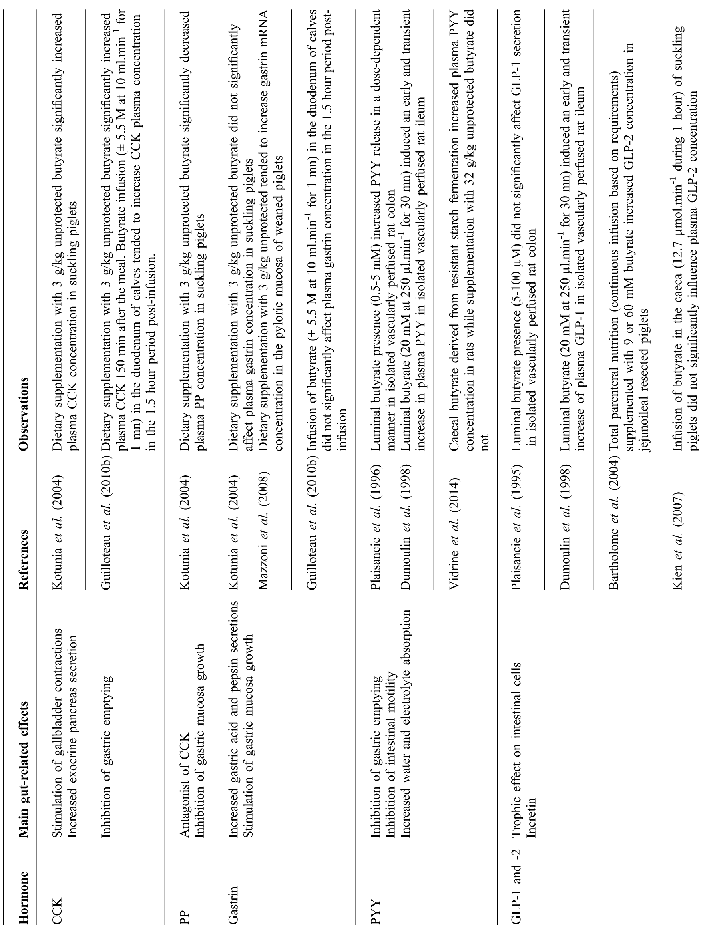
There are no publications addressing the effects of dietary butyrate supplementation on endocrine control of digestive processes in poultry. There is, however, a body of evidence indicating that butyrate can influence several key gut hormones in mammals, as indicated in Table 3.
Summarising this data, butyrate presence in the GIT can lead to a rise in cholecystokinin (CCK), peptide YY (PYY) and glucagon-like peptide (GLP) 2 levels and a decrease in pancreatic peptide (PP). Such changes could support intestinal and gastric mucosa development, increase gastric retention time and stimulate gastric and pancreatic secretions. As a consequence, nutrient digestibility and absorption could be improved. Such putative changes in endocrine regulation would be consistent with improvements in growth performance, intestinal morphology, proteolytic activity and nutrient digestibility observed in broiler chickens fed butyrate.
Butyrate has the potential to affect neuro-hormonal control of the gut in different ways. It can bind to free fatty acid receptors 2 and 3 (FFARs) that are present at the apical membrane of several types of enteroendocrine cells (Sykaras et al., Reference SYKARAS, DEMENIS, CASE, MCLAUGHLIN and SMITH2012; Nohr et al., Reference NOHR, PEDERSEN, GILLE, EGEROD, ENGELSTOFT, HUSTED, SICHLAU, GRUNDDAL, POULSEN, HAN, JONES, OFFERMANNS and SCHWARTZ2013). It is worth noticing that FFARs can be expressed without necessarily inducing functional cellular responses to SCFAs sensing (Liou, Reference LIOU2013). For instance, butyrate-induced regulation of GLP-1 appears to be FFAR3 independent (Lin et al., Reference LIN, FRASSETTO, KOWALIK, NAWROCKI, LU, KOSINSKI, HUBERT, SZETO, YAO, FORREST and MARSH2012). Nevertheless, FFARs sensing pathways might influence hormone production and release. Secreted hormones can have multiple functions including paracrine functions on adjacent cells or reach general circulation to exert endocrine functions (Engelstoft et al., Reference ENGELSTOFT, EGEROD, HOLST and SCHWARTZ2008) as well as a direct influence on efferent nerve endings that express FFARs (Lal et al., Reference LAL, KIRKUP, BRUNSDEN, THOMPSON and GRUNDY2001; Nohr et al., Reference NOHR, PEDERSEN, GILLE, EGEROD, ENGELSTOFT, HUSTED, SICHLAU, GRUNDDAL, POULSEN, HAN, JONES, OFFERMANNS and SCHWARTZ2013). It has been postulated that, in rats, the autonomic nervous system can transmit a butyrate-induced nerve signal from the caecum or colon to the central nervous system, resulting in the release of trophic signals such as gastrin (Sakata, Reference SAKATA1989; Reilly et al., Reference REILLY, FRANKEL, BAIN and ROMBEAU1995). Vidrine et al. (Reference VIDRINE, YE, MARTIN, MCCUTCHEON, RAGGIO, PELKMAN, DURHAM, ZHOU, SENEVIRATHNE, WILLIAMS, GREENWAY, FINLEY, GAO, GOLDSMITH and KEENAN2014) suggested that butyrate release location affects the release of gut hormones. This could be due to the localisation of the various specialised enteroendocrine cells. It is likely that butyrate-induced modifications of endocrine regulation are local and not systemic. SCFA (70 mM acetate, 20 mM butyrate, 20 mM butyrate at 1.5 ml/h) infusions in the colon of rats results in an increase in jejunal gastrin concentration (Frankel et al., Reference FRANKEL, ZHANG, SINGH, KLURFELD, DON, SAKATA, MODLIN and ROMBEAU1994; Reilly et al., Reference REILLY, FRANKEL, BAIN and ROMBEAU1995) without significantly affecting plasma gastrin concentration (Reilly et al., Reference REILLY, FRANKEL, BAIN and ROMBEAU1995). Similarly, Kotunia et al. (Reference KOTUNIA, WOLINSKI, LAUBITZ, JURKOWSKA, ROME, GUILLOTEAU and ZABIELSKI2004) could not find any effect of unprotected butyrate supplementation on plasma gastrin in piglets whereas Mazzoni et al. (Reference MAZZONI, LE GALL, DE FILIPPI, MINIERI, TREVISI, WOLINSKI, LALATTA-COSTERBOSA, LALLES, GUILLOTEAU and BOSI2008), using a similar dose, reported a trend for increased gastrin mRNA in piglet gastric mucosa.
Conclusions
This review summarises results originating from recent poultry studies and proposes putative mechanisms derived from research in mammals. Improvements in growth performance observed in broilers fed butyrate may be attributed to a lower pro-inflammatory response to nutritional, environmental and immune challenges, associated with improved digestibility and absorption of dietary nutrients. The latter can be explained by the modulating effects of butyrate on gut microbiota and perhaps by assumed effects of butyrate on gut endocrine regulation. Most of the mechanisms are likely to be affected by the delivery site of butyrate within the GIT, for example bacteriostatic properties require an acidic environment. Additionally, an elevated intracellular butyrate concentration is required to observe modulating effects on gene expression and immune response. Thus, both the favoured energy substrate of the cell and type of energy available may have an influence on butyrate-induced effects.
In addition, neuro-hormonal mechanisms might also play a role. Each enteroendocrine cell type is defined by its location within the GIT and by its response to FFARs stimulation. Therefore, neuro-endocrine responses to luminal butyrate presence may vary depending on the GIT segment considered. Factors such as inclusion level, diet composition, age and health status of the bird are known to modulate the effects of dietary butyrate supplementation. The GIT segment wherein butyrate is released may also modulates the observed effects. Unfortunately, commercially available butyrate derivatives offer poorly documented release kinetics. In order to better understand the effect of butyrate on avian GIT physiology, development of targeted-release butyrate formulations as well as characterisation of commercially available products appears to be an inevitable step.
Effects of butyrate on gut hormonal regulation.
CCK: Cholecystokinin; PP: Pancreatic Peptide, PYY: Peptide YY, GLP: Glucagon Like Peptide
Acknowledgements
T. Goossens and M. Marien are gratefully acknowledged for their constructive comments on this review.