INTRODUCTION
Organophosphorous (OP) compounds comprise both organophosphate esters (OPEs) and organophosphorous pesticides (OPPs). The OPEs are a versatile class of chemical compounds that have been utilized as flame retardants, plasticizers, stabilizers, antifoaming and wetting agents, and additives in lubricants and hydraulic fluids. It is well-known that indoor environments are often contaminated by volatilization, leaching or particle erosion of these compounds. For example, Marklund et al. (Reference Marklund, Andersson and Haglund2003) reported the detection of OPEs in house dust from 15 tested indoor environments and in numerous wipe test samples from computer screens and covers. Furniture and household goods containing OPEs are routinely dumped in waste disposal sites and OPEs are eluted to the adjacent environment from these waste materials. Kawagoshi et al. (Reference Kawagoshi, Fukunaga and Itoh1999) reported that a relatively higher concentration of OPEs was detected in water and sediment from a sea-based solid waste disposal site. These papers emphasize the possibility of OPE contaminations in coastal areas. However, there are few papers on the distribution of OPEs in the marine environment.
Organochlorine compounds were used as pesticides for a long time, but the use of these compounds was banned in the 1970s in many countries worldwide, due to their high toxicity to organisms, their persistence in the environment and high bioconcentrations. Because OPPs can be used as alternative compounds to organochlorine compounds, the banning of organochlorine compounds has dramatically increased the use of OPPs.
Maizuru Bay is an inlet in which chemical oxygen demand (COD), total nitrogen (N) and total phosphorus (P) are all above the environmental standard of Japan (COD, 2 mg/l; total N and total P, 0.3 mg/l), because untreated sewage is discharged into this bay. As a result, red tides have often occurred in Maizuru Bay. Furthermore, Eguchi et al. (Reference Eguchi, Harino and Yamamoto2009a) reported that Maizuru Bay has been contaminated by alternative biocides of organotin compounds. Relatively high concentrations of lead in sediment and biological samples were detected in a closed-off section of Maizuru Bay (Eguchi et al., Reference Eguchi, Inaba, Shiraishi, Ueno, Masuda, Yamashita and Yamamoto2009b, Reference Eguchi, Usumoto, Yamamoto, Yoshimura, Ueno, Masuda, Yamashita and Yamamotoc). Thus, Maizuru Bay is considered to be contaminated by various chemical compounds, and its contamination by OP compounds is a concern.
The aims of this study are to investigate the concentrations of OPEs and OPPs (diazinon, fenitrothion, chlorpyrifos and iprobenfos) in water, sediment and mussels from Maizuru Bay and the distributions of these compounds in the bay are also discussed.
MATERIALS AND METHODS
Sampling description
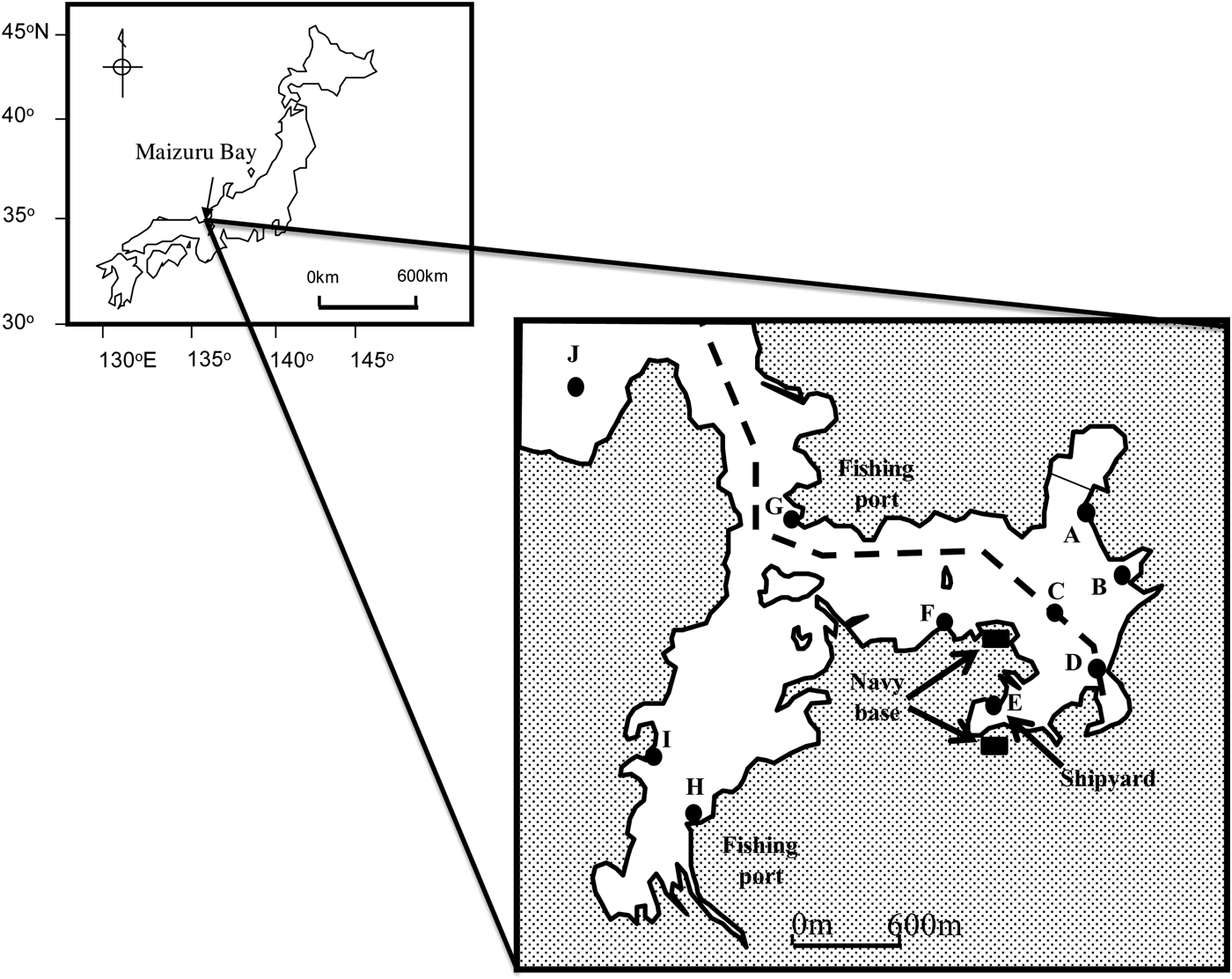
Maizuru Bay is an inlet located at the centre of the Honshu coast, facing both the Sea of Japan and the Pacific Ocean (Figure 1). The bay has an average depth of 20 m and is very calm, as its entrance is only 700 m wide. In addition, as the tidal variation is extremely small (no more than 30 cm), so the water exchange is not good. This bay once flourished as a military port. In the present day, the bay is used by the fishing, shipping and travel industries, and there is a battery reclamation plant. There is a waste disposal facility and wastewater purifying plant at sites I and D, respectively (Figure 1).
A map of sampling stations.

Water, sediment and mussel samples (Mytius galloprovincialis) in Maizuru Bay were taken from 7 to 15 July 2009. Subsurface water samples were taken at seven sites and surface sediment samples (0–5 cm) were taken using an Ekman–Birge grab sampler at 13 sites. The mussel samples were taken at nine sites. The shell lengths of the mussels were in the range of 38–75 mm. These mussel samples from each site were homogenized before analysis. Water samples were stored in a refrigerator at 4oC and were analysed within a few days. Sediment and mussel samples were stored in a freezer at −20°C until chemical analysis.
Chemical analysis
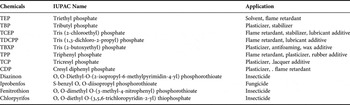
The method used to determine the OPs in water samples was based on that of Sato & Kadokami (Reference Sato and Kadokami1995) with some modification. The structures and applications of the analysed OPs are shown in Table 1. A litre of each water sample was added to a separatory funnel. Dichloromethane (50 ml) was added to the solution and the mixture was shaken for 10 min. The analytes in the aqueous layer were extracted by shaking again for 10 min with 50 ml of dichloromethane. The combined organic layers were dried with anhydrous Na2SO4 and were concentrated up to 0.5 ml after the addition of 100 µl of acetone solution containing 1 µg ml−1 of atradine-d25 as an internal standard. The final solution was adjusted to 0.5 ml.
Application of organophosphate esters.

One gram of sediment or soft tissues of mussel was added to a centrifuge tube. The analytes were extracted by shaking for 10 min with 10 ml of acetone. After centrifuging, the supernatant was transferred to a flask. The residue was then extracted and centrifuged again in the same way. After centrifuging, the combined supernatants were cleaned by addition of 60 ml of distilled water, 0.5 g of celite and 1 g of zinc acetate. After removal of suspended matter by filtration, the liquid phase was transferred to a 100 ml separation funnel. The analytes were extracted twice with 10 ml of dichloromethane and the organic layer was combined. The organic layer was dried with anhydrous Na2SO4 and concentrated up to a trace level by a rotary evaporator after the addition of 25 ml of hexane. After the addition of 100 µl of atradine-d25 as an internal standard, the final solution was concentrated up to 0.5 ml.
A Hewlett-Packard 6890 series gas chromatograph equipped with a mass spectrometer (5973 N) was used for analysis of the OP. The separation was carried out in a capillary column coated with 5% phenyl methyl silicone (J &W Scientific Co., 30 m length × 0.25 mm i.d., 0.25 µm film thickness). The column temperature was held at 45oC for the first 1 min, then increased to 200oC at 10oC min−1, then to 280oC at 5oC min−1. Finally, the column temperature was held at 280oC for 7 min. The interface temperature, ion source temperature and ion energy were 280oC, 230oC and 70 eV, respectively. Selected ion monitoring was operated under this programme. The monitoring ions of 155 (127) for TEP, 211 (155) for TBP, 249 (251) for TCEP, 191 (381) for TDCPP, 199 (125) for TBXP, 326 (325) for TPP, 368 (367) for TCP, 179 (304) for diazinon, 91 (204) for iprobenfos 277 (125) for fenitrothion and 314 (197) for chlorpyrifos, were used to quantify the concentrations of the OPs, respectively. The parentheses show the qualifier ions. 1 µl of the sample was injected with splitless injection.
RESULTS AND DISCUSSION
Evaluation of the analytical procedure
The quality of the data obtained by the analytical procedure of OPs was examined. When 0.5 µg of OPs was spiked to 1 l of water samples, recoveries of the OPs in water samples were in the range of 84–96% and the relative standard deviations (RSDs) of the OPs were in the range of 3–11% for water samples (Table 2). When 0.5 µg of OPs were spiked to 5 g of sediment samples, the recoveries of OPs were in the range of 73–103%, and their RSDs were in the range of 5–17%. When 0.5 µg of OPs were spiked to 5 g of mussel samples, the recoveries of OPs were in the range of 68–97%, and their RSDs were in the range of 1–11%.
Recovery rates of organophosphorous compounds. Relative standard deviations are presented in parentheses.

The detection limits were calculated from a signal-to-noise ratio of 3. Each OP's detection limit was 1 ng l−1, 1 µg kg−1 dry weight (dw) and 1 µg kg−1 wet weight (ww) for the water, sediment and biological samples, respectively.
Concentrations of organophosphoric acid triesters
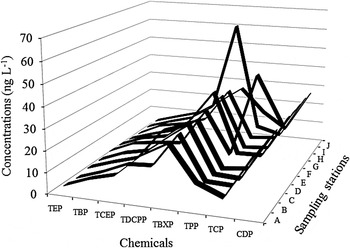
The concentration ranges of OPEs detected in water samples from Maizuru Bay were as follows (Figure 2): TEP, 7–4.6 ng l−1 (average 3.7 ng l−1); TBP, 6.6–9.6 ng l−1 (average 8.0 ng l−1); TCEP, 11–12 ng l−1 (average 11 ng l−1); TDCPP, 12–25 ng l−1 (average 18 ng l−1); TBXP, 26–62 ng l−1 (average 33 ng l−1); TPP, 5.5–14 ng l−1 (average 8.5 ng l−1); TCP, 6.3–49 ng l−1 (average 11 ng l−1); and CDP, 26–27 ng −1 (average 26 ng l−1). The LC50 values of most OPEs are over 1 mg l−1 (Yamada, 1987). Therefore, it can be predicted that the OPEs do not adversely affect aquatic organisms. The concentrations of TBXP were the highest among OPEs except for at Site E (Figure 1). Fries & Puttmann (Reference Fries and Puttmann2003) reported concentrations of TBXP went in the ranges of 120–1236 ng l−1 (mean, 33 ng l−1) and 154–410 ng l−1 (mean 60 ng l−1) in the river water and ground water of Oder, Germany. Fukushima & Kawai (Reference Fukushima and Kawai1986) reported that TBXP was detected in the range of 50–6000 ng l−1 in the river water from Osaka, Japan. Kawagoshi et al. (Reference Kawagoshi, Fukunaga and Itoh1999) reported that concentrations of TBXP in water samples at a sea-based solid waste disposal site were in the range of 800–6300 ng l−1. Sheldon & Hites (Reference Sheldon and Hites1978) detected TBXP in the range of 300–3000 ng l−1 in the Delaware River of Hallond. The concentrations of TBXP in the seawater of Maizuru Bay were lower than in those areas. Subsequently, high concentrations of TDCPP or CDP were reported. Fukushima & Kawai (Reference Fukushima and Kawai1986) detected TDCPP in the range of 9–900 ng l−1 in river water from Osaka, Japan. Kawagoshi et al. (Reference Kawagoshi, Fukunaga and Itoh1999) reported that the concentrations of TDCPP in water samples at the sea-based solid waste disposal site were 600–6200 ng l−1. The concentrations of TDCPP in the seawater of Maizuru Bay were lower than those in the river water of Osaka. The TCPs were detected in the range of 16–176 ng l−1 in river and seawater from Japan (Ishikawa et al., Reference Ishikawa, Taketomi and Shinohara1985). The concentrations of TCPs in Maizuru Bay were lower than these reported values. The concentration of TCPs at Site E (Figure 1) from Maizuru Bay was higher than at the other sampling sites. TCP is used as an additive agent of lacquer, and it is considered that lacquer containing TCP is used on the ships which are moored, because there are shipyard and mooring facilities for Japan's Self-Defense Force in the adjacent area. TCEP was present at high concentration levels in precipitation even though TCPP has been substituted for TCEP throughout Europe (Regnery & Puttmann, Reference Regnery and Puttmann2010). TCEP is not used indoors by a voluntary agreement of industry in Japan. In spite of this lack of in indoor TCEP usage, TCEP was detected in water samples from Maizuru Bay, as was the case in Europe.
The concentrations of organophosphoric acid ester in water samples from Maizuru Bay.

The concentrations of organophosphorous compounds in water (ng L−1), sediment (μg kg-1 dry weight) and mussel samples (μg kg−1 wet weight) from Maizuru Bay. Mean concentrations are presented in parentheses.

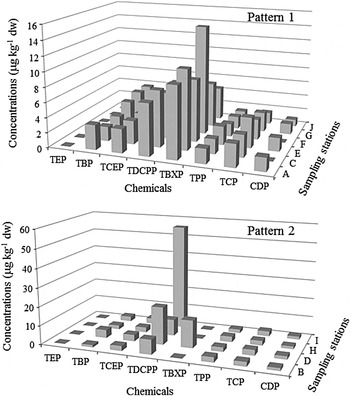
Although TEP was not detected in sediment samples from Maizuru Bay, the seven species of OPEs were detected in the range of 1.2–56 µg kg−1 dw. It has been reported that TCP was detected in the range of 0.02–130 mg kg−1 in soil samples of a US air base; its presence was ascribed to the use of flame-retardant hydraulic fluids and fluid additives (David & Seiber, Reference David and Seiber1999). However, the putative effect of hydraulic fluids and fluid additives was not observed in Maizuru Bay, where TCP concentrations in sediment were low. The patterns of OPEs in sediment are classified into two groups (Figure 3). In one group, OPEs concentrations are present in the order of TBXP > TDCPP or TBP while the other OPEs have similar, lower concentrations. The OPEs levels at Sites A, C, E, F, G and J (Figure 1) belong to this pattern. The areas adjacent to these stations are residential and forested. There is a navy base near Site F (Figure 1) where TBXP is used as a plasticizer, antifoaming agent and wax additive. Human sewage containing these compounds also enters the seawater. The patterns of OPEs concentrations in the other group are that the TDCPP concentration is the highest among OPEs. The concentrations of OPEs at Sites B, D, H and I (Figure 1) belong to this pattern. There are some villages in the areas adjacent to these stations. The TDCPP is used as lubrication. It is presumed that lubrication is used in these villages, because fishing is the main industry. Waste disposal facilities are also located nearby. In particular, there is a waste disposal facility which has been operated for 30 years near Site I and a wastewater purifying plant near Site D (Figure 1). Furthermore, there is a big plant near Site B. The elution of TECPP from these facilities and factories may be a reason for the difference in OPE patterns between Sites A, C, E, F, G and J (first group) and Sites B, D, H and I (second group) (Figure 1).
The concentrations of organophosphoric acid ester in sediment from Maizuru Bay.

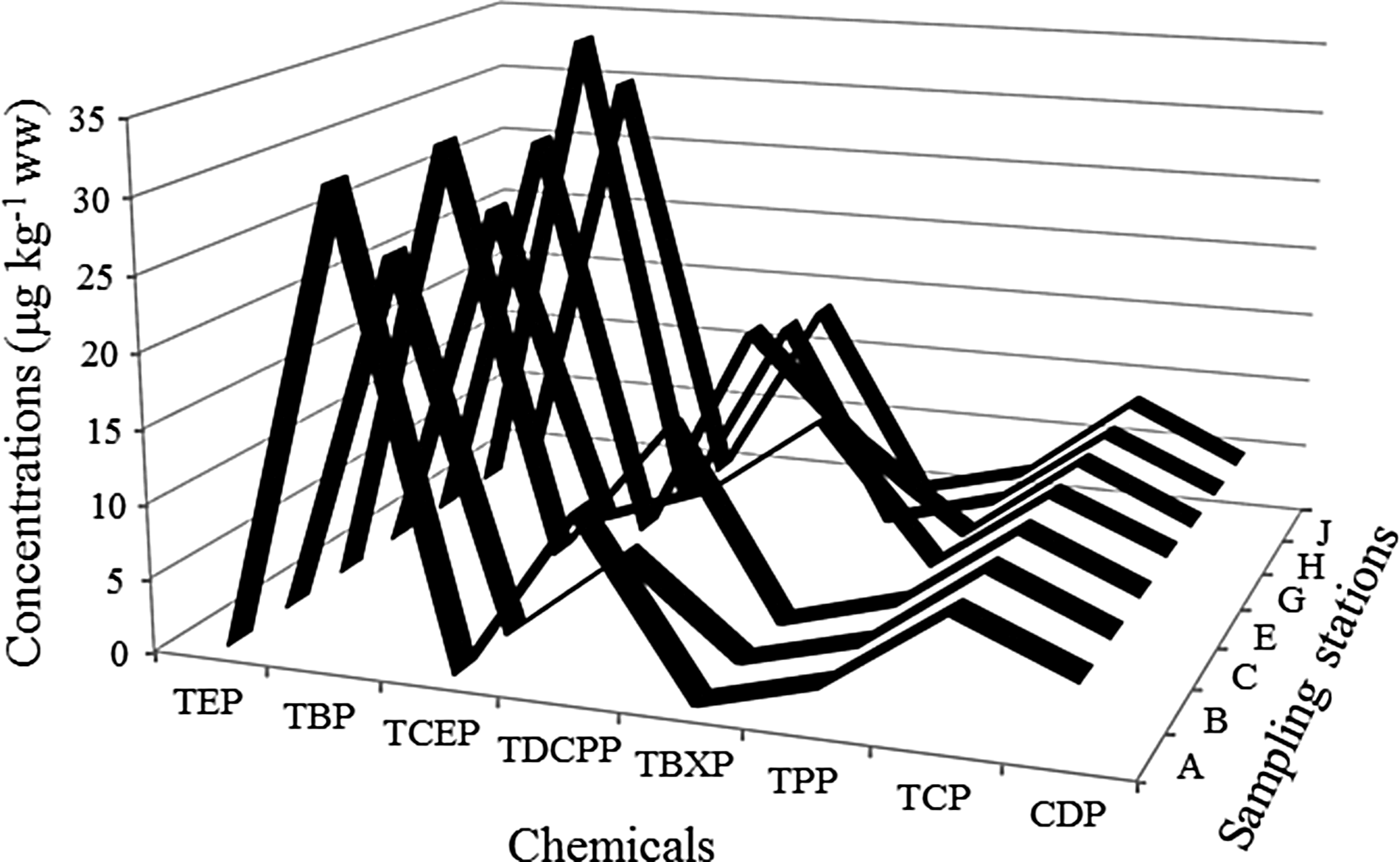
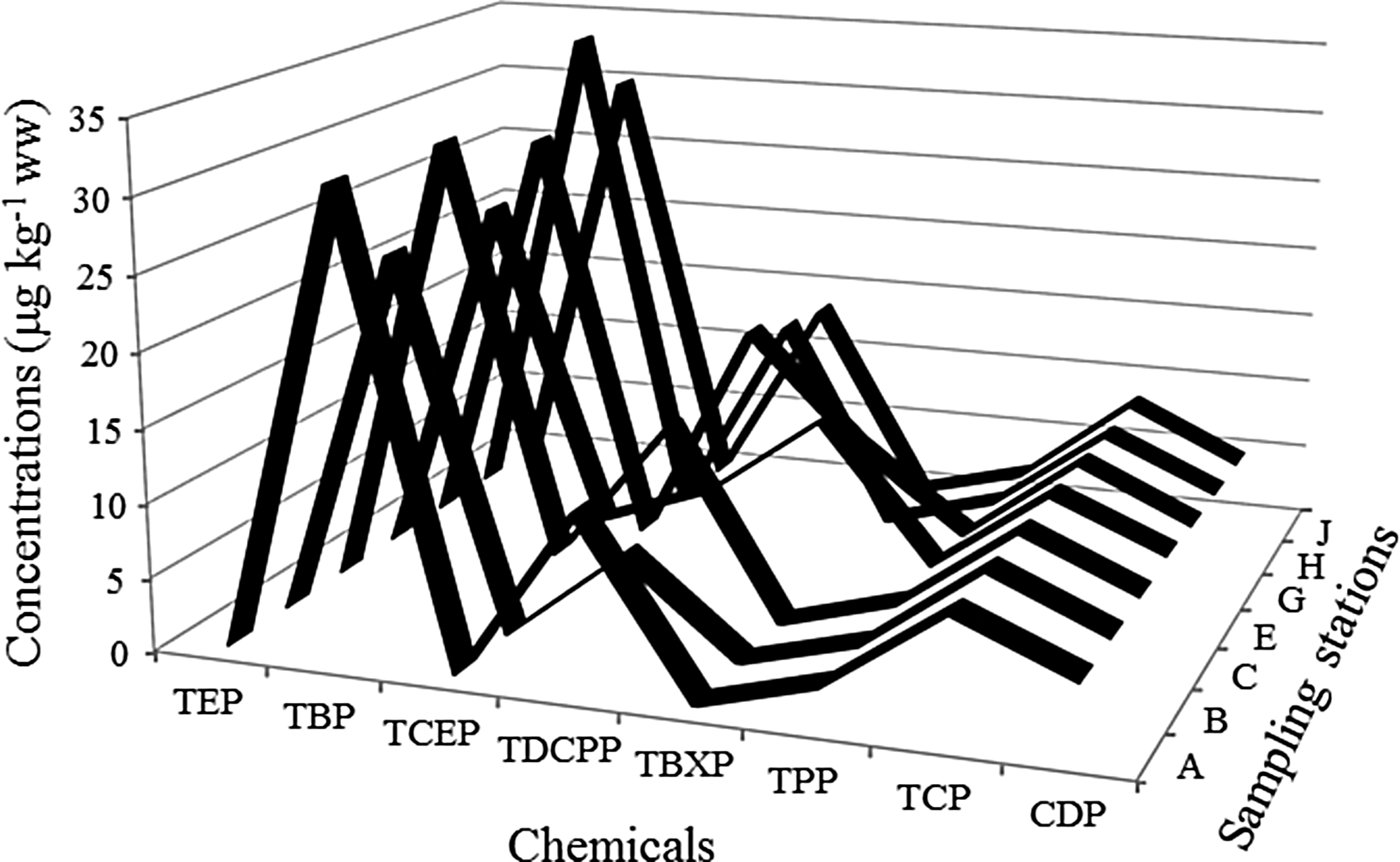
TEP was not detected in mussel samples and the detection frequencies of TCEP and TBXP in mussels were low. The concentrations of TBP and TDCPP were in the range of 23–34 µg kg−1 and 6–16 μg kg−1, respectively (Figure 4). The concentrations of TBP are the highest among OPEs, thus a TDCPP is high at all sampling stations except for Site E. A different pattern of OPEs was observed at Site E, with OPE concentrations in the order of TBP > TBXP > TDCPP. In spite of lower concentrations of TBP in water samples there, the concentrations of TBP in mussel samples were high, because the Log Pow of TBP is high.
The concentrations of organophosphate ester in mussels from Maizuru Bay.
Concentrations of organophosphorus pesticides
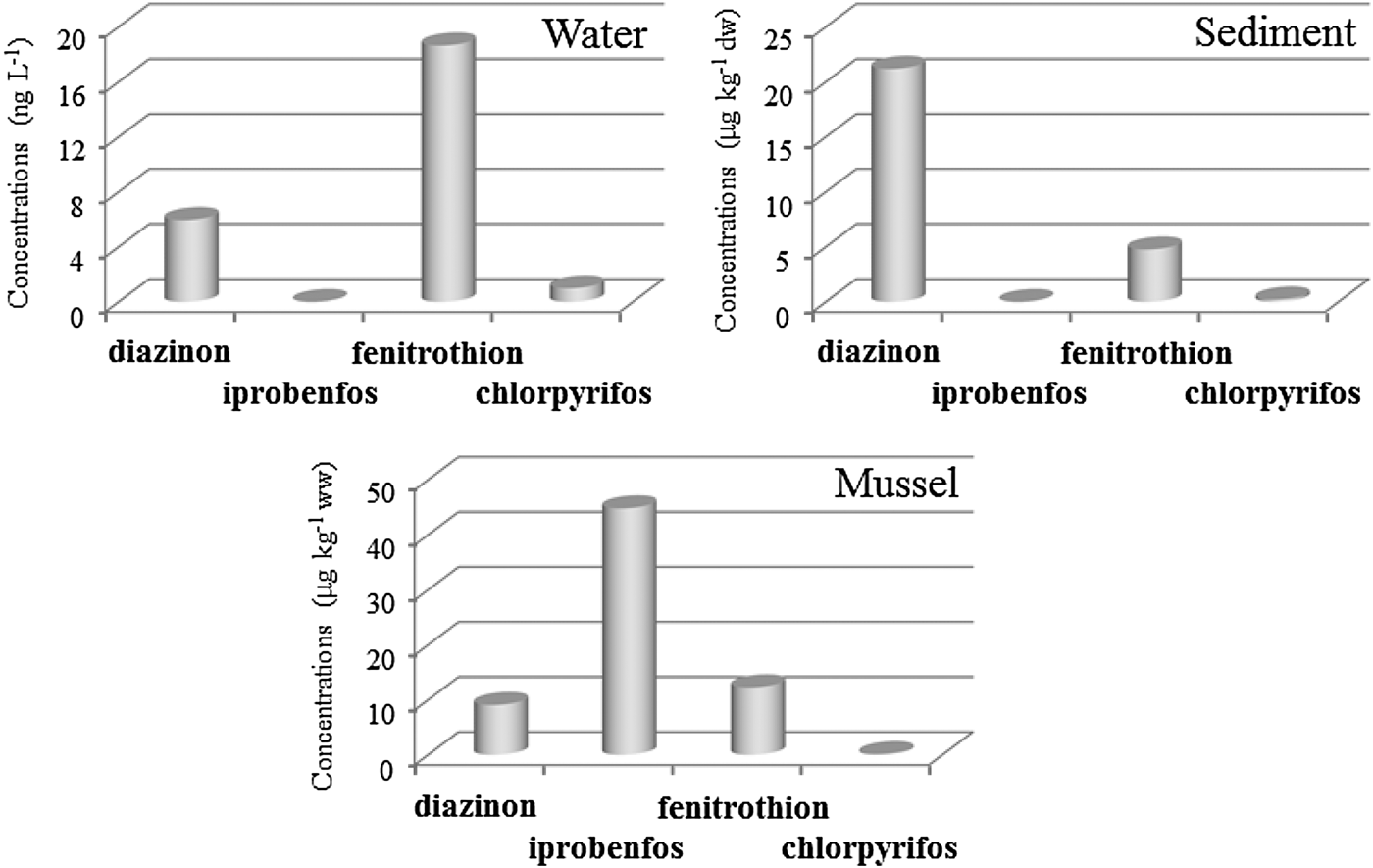
The concentrations of diazinon, fenitrothion and chlorpyrifos in water samples from Maizuru Bay were 3.6–9.3 ng l−1, 18–21 ng l−1 and <0.1–5.1 ng l−1, respectively, and iprobenfos was not detected in the water (Figure 5). Diazinon has been detected in the range of <2–2850 ng l−1 in the rivers and lakes of Japan (Tsuda et al., Reference Tsuda2007). The concentrations of diazinon in water samples from Orestimba Creek and the San Joaquin, Sacramento, Feather, Yuba and Bear Rivers in the USA were in the range of 4–2000 ng−1 (Domagalski, Reference Domasgaski1996, Reference Domasgaski1997). Diazinon in water samples from the River Po in Italy was detected in the range of <2–13 ng l−1 (Agradi et al., Reference Agradi, Baga, Cillo, Ceradimi and Heltai2000). These papers show that the concentration of diazinon in Maizuru Bay is relatively low. Fenitrothion in Lake Biwa, Japan, was detected in the range of <5–19,300 ng l−1 (Tsuda et al., Reference Tsuda2007). The concentrations of fenitrothion in Greece were in the range of <3–39 ng l−1 (Lekkas, Reference Lekkas, Kolokythas, Nikolaou, Kostopoulou, Kotrikla, Gatidou, Thomaidis, Golfinopoulos, Makri, Babos, Vagi, Stasinakis, Petsas and Lekkas2004). The concentration of fenitrothion in water from Maizuru Bay was lower than these concentrations. No differences in OPP concentrations were observed among sampling stations. Yamaguchi et al. (Reference Yamaguchi, Fukushima, Fujita and Yamada1991) reported that iprobenfos is a pesticide used in paddy fields, and the change of concentrations by season is remarkable. No detection of iprobenfos in Maizuru Bay reflects the fact that the water samples were taken in the season during which iprobenfos is not used.
Mean concentrations of organophosphate pesticide in water, sediment and mussel samples from Maizuru Bay.
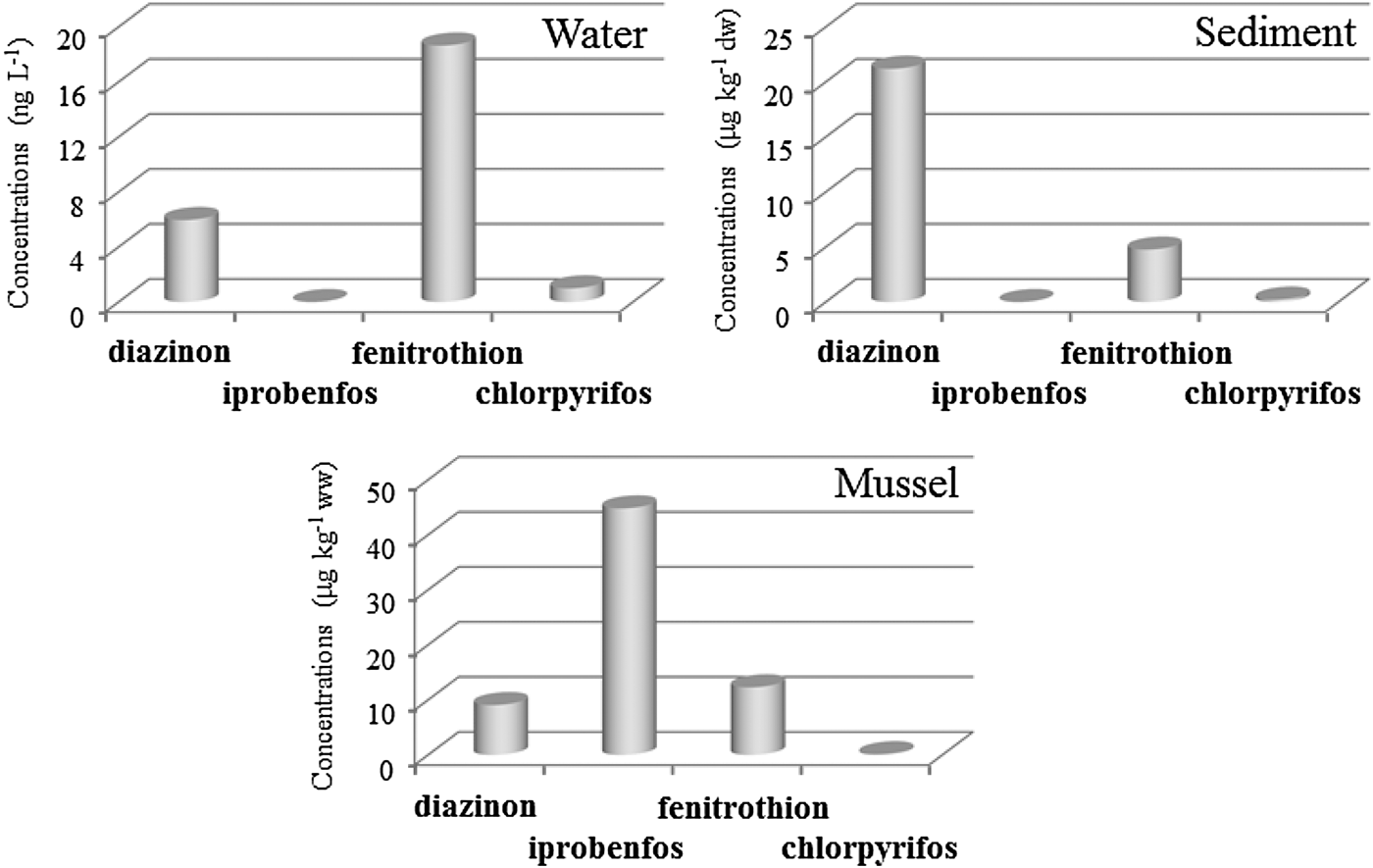
Although diazinon in sediment was detected in the range of 1.8–71 µg kg−1 dw, the detection frequencies of fenitrothion and chlorpyrifos were low (Figure 5). Diazinon and fenitrothion are used as an insecticide. As these samples were taken in summer season, when the insecticide may be used in order to eliminate mosquitoes and flies, iprobenfos was detected in these sediment samples.
The concentrations of diazinon, iprobenfos and fenitrothion in mussel samples were 4.3–25, 22–60 and 9.2–13 µg kg−1, respectively (Figure 5). Chlorpyrifos was only detected at the concentration of 1.0 µg kg−1 at Site E (Figure 1). There are a few papers in which the pesticide was concentrated in biological samples. Diazinon in pale chub from Japanese rivers was detected in the range of <5–45 µg kg−1 ww (Tsuda et al., Reference Tsuda, Aoki, Kojima and Fujita1992). Fenitrothion has been detected in fish from rivers of Japan in the range of <5–1511 µg kg−1 ww (Tsuda et al., Reference Tsuda, Aoki, Kojima and Fujita1992, Reference Tsuda, Aoki, Kojima and Fujita1994). The concentrations of diazinon and fenitrothion in Maizuru Bay were higher than those from other reported sampling areas. In particular, in spite of lower concentrations of diazinon in water, higher concentrations of diazinon were observed in sediment samples, while the concentrations of diazinon were low in mussel samples. These results show that diazinon was used in the past rather than currently.
The mussels in the present study are an important source of food. Therefore, the health risk to persons from OPP in mussels is of concern. The acceptable daily intake (ADIs) of diazinon, IBP, fenitrothion and chlorpyrifos have been set at 2 mg kg−1 body weight, 0.035 mg kg−1 body weight, 0.005 mg kg−1 body weight and 0.001 mg kg−1 body weight, respectively, by the Ministry of Environment Japan and the World Health Organization (FAO/WHO, 1982). These values are based on the observed toxic effects of these compounds in rats, with a safety factor of 100 to extrapolate the toxicity test from rats to humans. The tolerable average residue levels (TARL) were calculated from ADI based on the formula below:
 $$\eqalign{{\rm TARL} = & \lpar {\rm ADI} \times 60 \, {\rm kg \, body \, weight}\rpar / \cr & {\rm average \, daily \, seafood \, consumption}\rpar}$$
The TARL for seafood in Japan were estimated to be 617 µg kg−1 ww for an average person weighing 60 kg and consuming 194.5 g of seafood a day (Belfroid et al., 2000). The acceptable concentration of OPP was calculated from formula (1) above. Acceptable concentrations of diazinon, iprobenfos, fenitrothion and chlorpyrifos are 0.61 µg kg−1, 11 µg kg−1, 1.5 µg kg−1 and 0.31 µg kg−1, respectively. The concentrations of these pesticides in mussel samples from Maizuru Bay were lower than the TARL.
Partition coefficients between water and sediment or biological samples
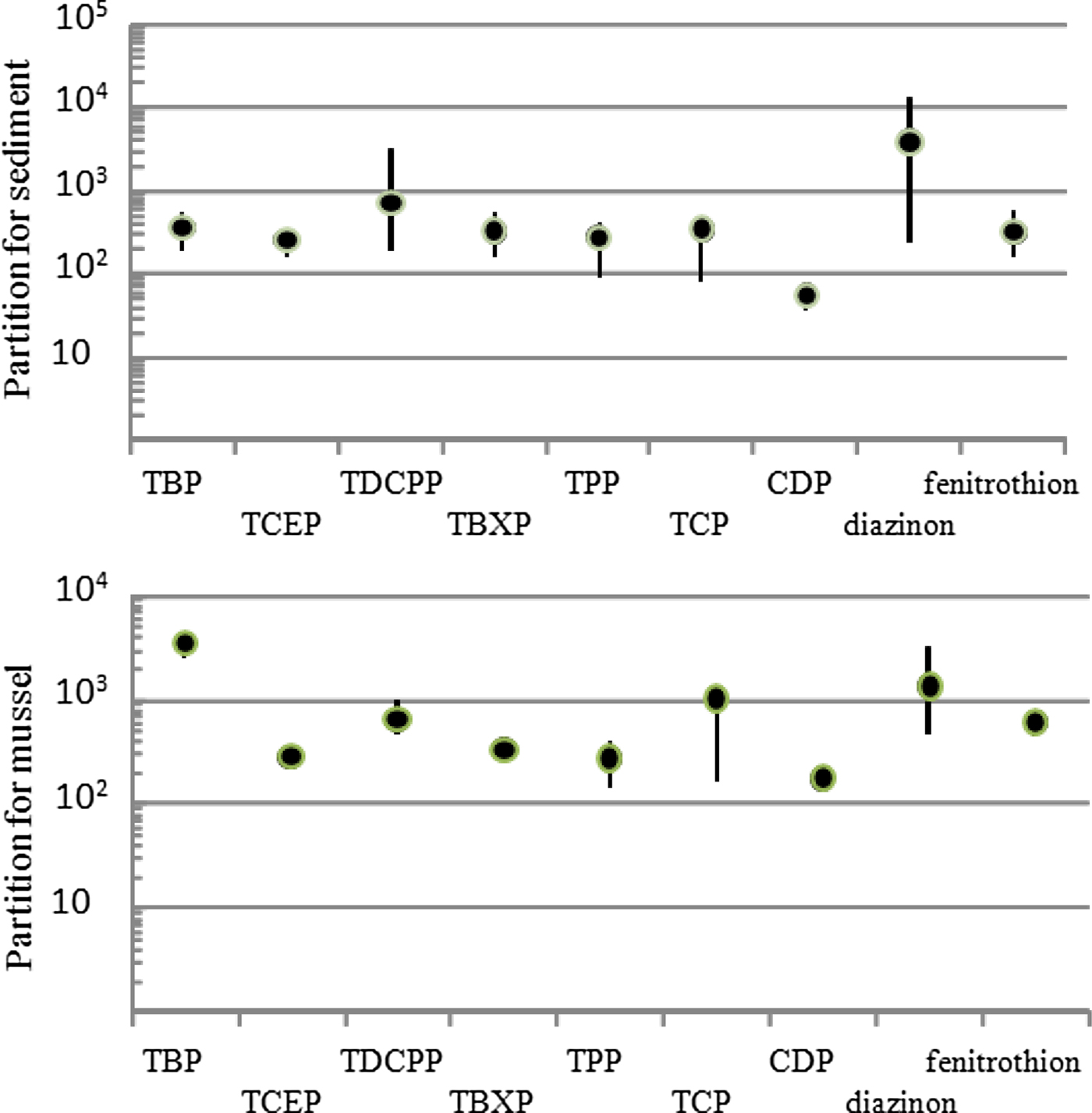
The partition coefficients between sediment and mussel samples (Kws and Kwb) were calculated by dividing the OPs concentrations in the sediment or mussel by the OPs concentrations in the water (Figure 6). The mean log Kws of TBP, TCEP, TDCPP, TBXP, TPP, TCP and CDP were 2.6, 2.4, 2.9, 2.5, 2.4, 2.5 and 1.8, respectively. The mean log Kws values of diazinon and fenitrothion were 3.6 and 2.5, respectively.
The partition coefficients of organophosphorous compounds between water and sediment or mussels.
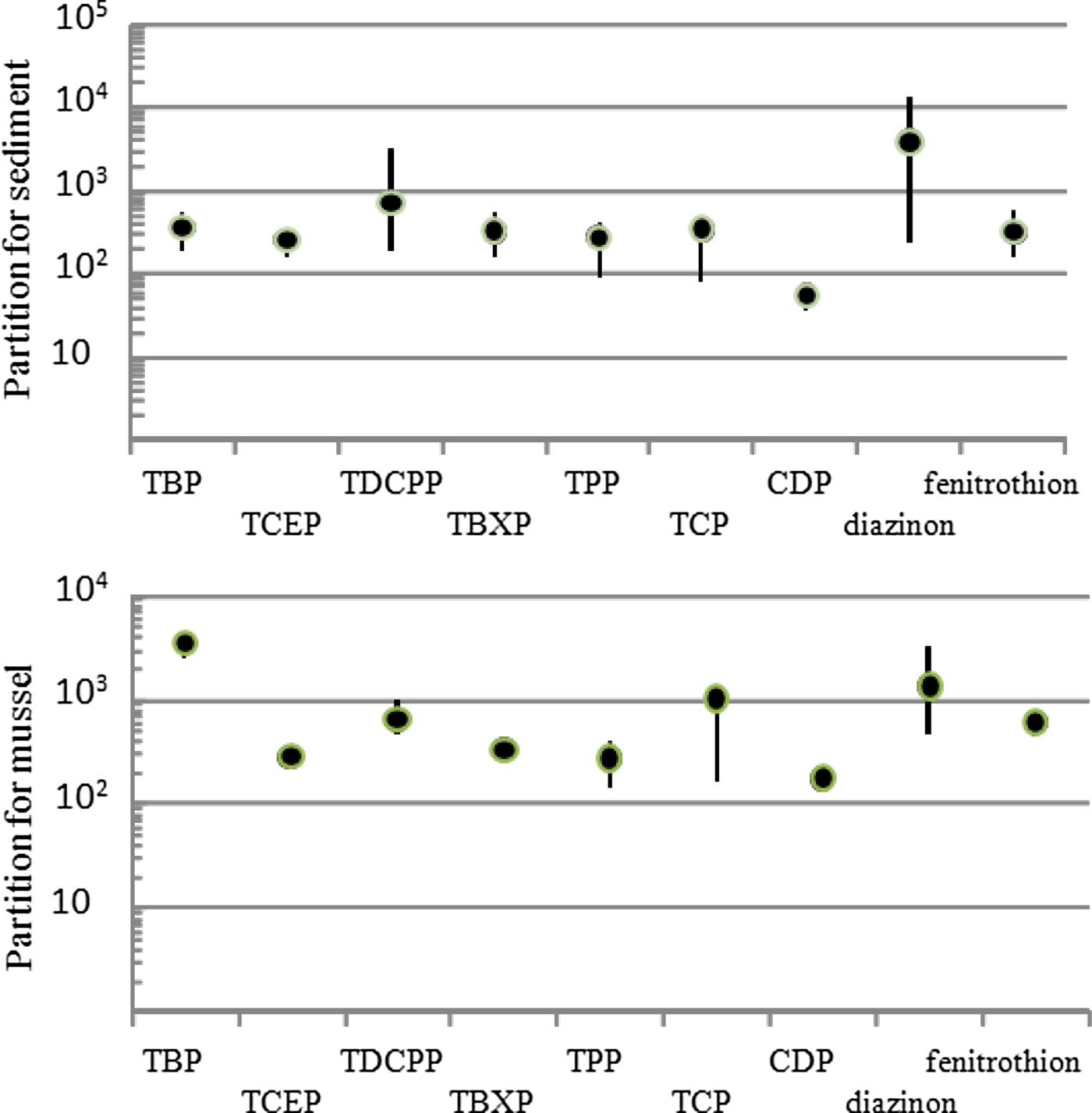
The mean log Kwb of TBP, TCEP, TDCPP, TBXP, TPP, TCP and CDP were 2.5, 2.4, 2.8, 2.5, 2.4, 3.0 and 2.2, respectively. The mean log Kwb values of diazinon and fenitrothion were 3.1 and 2.8, respectively. Tsuda (2009) reported that the Kwb of fenitrothion and diazinon between water and fish were 2.6 and 1.9, respectively. The Kwb calculated from field data of Maizuru Bay was higher than these reported values, suggesting a difference between mussels and fish. Furthermore, the log BCF of heptachlor, pp'DDE and PCB compounds described as POPs (persistence organic pollutants) were in the range of 3.98–5.29, so that the Kwb values of OPs were lower than those of POPs (Gilman et al., Reference Gilman, David and Barbara1979). This means that the risk of OPs in Maizuru Bay for humans through bioconcentration is low.
CONCLUSIONS
The distribution of OPs in Maizuru Bay was surveyed. Although the concentrations of OPs in water samples were low, OPs were detected at higher levels in sediment and mussel samples. Furthermore, it was found that diazinon and fenitrothion accumulated at greater rates in biological samples than in sediment. In Japan, the use of OPs is not banned, so an increase of OP accumulations in sediment is predicted. Further research into the concentrations of OP compounds in environmental samples is required.