







1. Introduction
Let  $\mathbb{K}$ be a field of characteristic zero. In [Reference Kats and Palyutkin5] (see also [Reference Masuoka6]), Kac and Paljutkin introduced an eight-dimensional semisimple Hopf algebra
 $H_8$ given by generators
 $x,y,z$ subject to the relations
 \begin{equation} zx=yz, \quad zy=xz, \quad xy=yx, \quad x^2=y^2=1, \quad z^2=\frac{1}{2}\left(1+x+y-xy\right),\end{equation}
such that  $x$ and
 $y$ are group-like and
 \begin{equation}
\Delta(z)=\frac{1}{2}\left(1\otimes 1 + x\otimes 1 + 1\otimes y - x\otimes y\right)(z\otimes z).\end{equation}
The antipode of  $H_8$ is the identity map. The algebra
 $H_8$ can be seen as a quotient of a skew polynomial ring
 $R[z;\sigma]/I$, where the ring of coefficients is the group ring
 $R=\mathbb{K}[\mathbb{Z}_2\times \mathbb{Z}_2]$, with an automorphism
 $\sigma$ that interchanges the generators
 $x$ and
 $y$ of
 $\mathbb{Z}_2\times \mathbb{Z}_2$ and
 $I$ is the ideal generated by the relation of
 $z^2$ in Equation (1). In [Reference Pansera9, Reference Pansera10], Pansera introduced a
 $2n^2$-dimensional semisimple Hopf algebra
 $H_{2n^2}$ as
 $R[z;\sigma]/I$, where
 $R=\mathbb{K}[\mathbb{Z}_n\times \mathbb{Z}_n]$, for a given integer
 $n\geq 2$. The comultiplication of
 $z$ is given by
 \begin{equation}
\Delta(z) = \frac{1}{n} \left(\sum_{i,j=0}^{n-1} q^{-ij} x^i\otimes y^j\right)(z\otimes z),
\end{equation}
where  $q$ is a primitive
 $n$th root of unity in
 $\mathbb{K}$. The group algebra
 $R$ is a Hopf subalgebra of
 $H_{2n^2}$ and the antipode
 $S$ of
 $H_{2n^2}$ is extended from
 $R$ by setting
 $S(z)=z$. Motivated by Etingof–Walton’s Theorem, which says that if a semisimple Hopf algebra acts on a commutative domain then its action factors through a group algebra, Pansera showed in [Reference Pansera9] that
 $H_{2n^2}$ admits an action on a quantum plane
 $A$ that does not factor through a group algebra, i.e.
 $H_{2n^2}$ acts inner-faithfully on
 $A$.
The purpose of this note is to extend Pansera’s construction and to provide further examples of non-trivial semisimple Hopf algebras acting inner-faithfully on non-commutative domains. The basic observation is that, in the construction of  $H_{2n^2}$, the action of the automorphism
 $\sigma$ of order
 $2$ can be regarded as the action of the symmetric group
 $\Sigma_2$ on the tensor product
 $\mathbb{K}[\mathbb{Z}_n] \otimes \mathbb{K}[\mathbb{Z}_n] = \mathbb{K}[\mathbb{Z}_n\times \mathbb{Z}_n]$. As a generalization, we consider
 $\Sigma_m$ acting on the
 $m$-fold tensor
 $R=B^{\otimes m}$, for some bialgebra
 $B$.Footnote 1 The standard generators
 $s_1, \ldots, s_{m-1}$ of
 $\Sigma_m$, i.e. the transpositions
 $s_i=(i, i+1)$, generate a free monoid
 $M=\langle \overline{s}_1, \ldots, \overline{s}_{m-1}\rangle$ that acts on
 $R$ and allows to consider the skew monoid algebra
 $R\# M$, which in the case
 $m=2$ corresponds to the skew polynomial ring
 $R[z;\sigma]$. The comultiplication of
 $\overline{s_i}$ can be defined as
 $\Delta(\overline{s}_i) = J_i (\overline{s}_i \otimes \overline{s}_i )$, for a suitable twist
 $J_i\in R\otimes R$. Under further assumptions on these twists
 $J_i$, we define a Hopf structure on the quotient
 $R\# M / I$, where
 $I$ is the ideal generated by the usual relations of the symmetric group,
 $\overline{s}_i\overline{s}_{i+1}\overline{s}_i = \overline{s}_{i+1}\overline{s}_i\overline{s}_{i+1}$ and
 $\overline{s}_i\overline{s}_j=\overline{s}_j\overline{s}_i$ for
 $|i-j| \gt 1$, but with
 $\overline{s}_i^2 = t_i := \mu_R(J_i)$, where
 $\mu_R$ is the multiplication of
 $R$. The obtained Hopf algebra
 $H$ is an extension of
 $\mathbb{K}\Sigma_m$ by
 $R$ and can be considered a crossed product
 $R\#_{\gamma} \Sigma_m$ for a suitable
 $2$-cocycle
 $\gamma:\Sigma_m\times \Sigma_m \to R^\times$. For
 $B=\mathbb{K}[\mathbb{Z}_n]$ and
 $\mathbb{K}$ containing a primitive
 $n$th root of unity, we provide twists
 $J_i$ that satisfy all our assumptions and yield a family of semisimple Hopf algebras
 $H_{n,m}=\mathbb{K}[\mathbb{Z}_n]^{\otimes m}\#_{\gamma} \Sigma_m$ of dimension
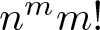
 $n^m m!$. The original Kac–Paljutkin Hopf algebra appears as
 $H_{2,2}$, while Pansera’s algebras appear as
 $H_{n,2}$.
In the last section we examine actions of  $H_{n,m}$ on a quantum polynomial algebra
 $A$ in
 $m$ generators
 $u_1, \ldots, u_m$. We will show that there exists an
 $mn^m$-dimensional semisimple Hopf subalgebra
 $H$ of
 $H_{n,m}$ that acts inner-faithfully on
 $A$ and whose ring of invariants
 $A^H$ is the subring of cyclic polynomials in
 $u_1^n, \ldots, u_m^n$, in case
 $n$ is even.
2. Constructing Hopf algebras via twists
An invertible element  $J\in B\otimes B$ of a bialgebra
 $B$ is called a twist for
 $B$ if
 \begin{equation}
(\Delta_B \otimes \mathrm{id}_B)(J)(J\otimes 1_B) = (\mathrm{id}_B \otimes \Delta_B)(J)(1_B\otimes J)
\end{equation}
and  $(\epsilon \otimes \mathrm{id} )(J)=1=(\mathrm{id}\otimes\epsilon)(J)$ hold. Writing symbolically
 $J=J^{(1)} \otimes J^{(2)}$, Equation (4) means
 \begin{equation}
J_1^{(1)} j^{(1)} \otimes J_2^{(2)} j^{(2)} \otimes J^{(2)}
=
J^{(1)} \otimes J_1^{(2)} j^{(1)} \otimes J_2^{(2)} j^{(2)},
\end{equation}
where  $j^{(1)} \otimes j^{(2)}$ is another copy of
 $J$ and where
 $\Delta_B(J^{(i)})=J_1^{(i)}\otimes J_2^{(i)}$ denotes the comultiplication of one of the legs of
 $J^{(i)}$ of
 $J$. Clearly
 $1_B\otimes 1_B$ is a twist for
 $B$. For
 $B=\mathbb{K}\mathbb{Z}_n$, with generator
 $x$, the element
 $J=\frac{1}{n} \sum_{i,j=0}^{n-1} q^{-ij} x^i \otimes x^j$ is a twist for
 $B$. We will use twists to deform the comultiplication of a group-like element of a bialgebra as they appear naturally in our construction. Suppose
 $R\subseteq S$ is an extension of bialgebras with
 $x\in S\setminus R$ an element such that
 $Rx$ is a free
 $R$-module. Suppose further that
 $J\in R\otimes R$ is an invertible element, such that
 $\Delta_S(x)=J(x\otimes x)$ and
 $\epsilon_S(x)=1$. Then the coassociativity for
 $\Delta_S(x)$ and the freeness of
 $Rx$ imply Equation (4), while the counity will imply
 $(\epsilon_R \otimes \mathrm{id}_R)(J)=(\mathrm{id}_R \otimes \epsilon_R)(J)=1$. Hence
 $J$ is a twist for
 $R$. Since our aim is to extend the bialgebra structure of some algebra
 $R=B^{\otimes m}$ to a skew monoid algebra
 $R\# M$, where
 $M$ is generated by some elements
 $\overline{s}_1, \ldots, \overline{s}_k$, such that
 $\Delta(\overline{s}_i) = J_i (\overline{s}_i \otimes \overline{s}_i)$ holds for some
 $J_i\in R\otimes R$, we will need that
 $J_i$ is a twist for
 $R$.
For two bialgebra-twist pairs  $(B,J)$ and
 $(B',J')$, the element
 $(\mathrm{id}_B \otimes \tau_{B,B'} \otimes \mathrm{id}_{B'})(J\otimes J')$ is a twist for
 $R=B\otimes B'$, where
 $\tau_{B,B'}:B\otimes B' \to B'\otimes B$ denotes the usual flip map. Hence, given a twist
 $J=J^{(1)}\otimes J^{(2)}$ for
 $B$, we could consider
 \begin{equation*}J' = \left(J^{(1)}\otimes 1_B \right)\otimes \left(J^{(2)} \otimes 1_B\right) = (\mathrm{id}_B \otimes \tau_{B,B} \otimes \mathrm{id}_B)(J \otimes 1_{B^{\otimes 2}}),\end{equation*}
which is a twist for  $B\otimes B$. However, we would like to embed
 $J$ differently into
 $(B\otimes B) \otimes (B\otimes B)$. For this, let
 $m\geq 2$ and denote by
 $e_i^m: B \to B^{\otimes m}$, the embedding of
 $B$ into the
 $i$th tensorand of
 $B^{\otimes m}$. We would like that
 $(e_i^m\otimes e_j^m)(J) \in B^{\otimes m} \otimes B^{\otimes m}$ is a twist for
 $B^{\otimes m}$, for any
 $1\leq i \lt j\leq m$. For
 $m=2$, we need in particular that
 $ (e_1^2\otimes e_2^2)(J)$ is a twist for
 $B\otimes B$. For
 $J=J^{(1)} \otimes J^{(2)}$, this condition is equivalent to the condition that
 \begin{equation*}J' = (e_1^2\otimes e_2^2)(J) = \left(J^{(1)}\otimes 1_B\right) \otimes \left(1_B\otimes J^{(2)}\right)\end{equation*}
satisfies Equation (4) for the ring  $B\otimes B$, which boils down to
 \begin{equation}
J_1^{(1)}j^{(1)} \otimes J_2^{(1)} \otimes j^{(2)} \otimes J^{(2)}
=
J^{(1)} \otimes j^{(1)}\otimes J_1^{(2)} \otimes J_2^{(2)}j^{(2)},
\end{equation}
where  $j^{(1)} \otimes j^{(2)}$ is another copy of
 $J$. Conversely, Equation (6) is actually equivalent to
 $ (e_1^2\otimes e_2^2)(J)$ being a twist for
 $B\otimes B$, because the counit condition is automatically verified. Comparing (6) and (5) shows that the difference lies in the middle tensorands. If
 $J$ is central in
 $B\otimes B$, then Equation (6) implies (5). It remains unclear whether the converse holds.
Lemma 1. Let  $J$ be a twist for
 $B$. Suppose
 \begin{equation} (e_1^2\otimes e_2^2)(J) \ \mbox{is a twist for } B \otimes B.\end{equation}
Then  $(e_i^m\otimes e_{j}^m)(J)$ is a twist for
 $B^{\otimes m}$, for any
 $1\leq i \lt j\leq m$.
Proof. Set  $R=B^{\otimes m}$. To ease notation, we will drop the superscript
 $m$ from
 $e_i^m$. Let
 $J'=(e_i\otimes e_{j})(J) \otimes R\otimes R$. Note that
 $\Delta_R e_i = (e_i\otimes e_i) \Delta_B$ and
 $1_R = e_i(1_B)$. Then
 \begin{align*}
( \Delta_R \otimes id_R)(J')(J' \otimes 1_R)
&=
( \Delta_R e_i \otimes e_j) (J) (e_i\otimes e_j \otimes e_j)(J\otimes 1_B)\\
&=
(e_i\otimes e_i \otimes e_j) ( \Delta_B\otimes \mathrm{id}_B)(J) (e_i\otimes e_j \otimes e_j )(J\otimes 1_B)\\
&=
e_i(J^{(1)}_1j^{(1)}) \otimes e_i(J^{(1)}_2)e_j(j^{(2)}) \otimes e_j(J^{(2)})\\
&=
(e_i\otimes e_{i,j}\otimes e_j)\left(J^{(1)}_1j^{(1)} \otimes J^{(1)}_2 \otimes j^{(2)} \otimes J^{(2)}\right),
\end{align*}
where  $j^{(1)}\otimes j^{(2)}$ is another copy of
 $J$ and
 $e_{i,j}: B^{\otimes 2} \to R$ denotes the embedding of
 $B\otimes B$ into the
 $i$th and
 $j$th tensorands of
 $R$. Similarly one shows
 $( \mathrm{id}_R \otimes \Delta_R )(J')(1_R\otimes J' ) = (e_i\otimes e_{i,j}\otimes e_j)\left(J^{(1)} \otimes j^{(1)}\otimes J_1^{(2)} \otimes J_2^{(2)}j^{(2)}\right).$ Since
 $J$ satisfies Equation (6),
 $J^{(1)}_1j^{(1)} \otimes J^{(1)}_2 \otimes j^{(2)} \otimes J^{(2)} =
j^{(1)}\otimes J_1^{(2)} \otimes J_2^{(2)}j^{(2)}$ and therefore
 $( \Delta_R \otimes id_R)(J')(J' \otimes 1_R) = ( \mathrm{id}_R \otimes \Delta_R )(J')(1_R\otimes J' ).$
The main idea of this note is to use the action of the symmetric group  $\Sigma_m$ on the tensor product
 $R=B^{\otimes m}$ and to extend the bialgebra structure of
 $R$ to that of a suitable quotient of a skew monoid algebra. The comultiplication of the newly added generators, however, shall be twisted by some twists of
 $R$. A pair
 $(\sigma, J)$ of an algebra homomorphism
 $\sigma:R\to R$ and a twist
 $J$ is called a twisted homomorphism (see [Reference Davydov1]) if
 $\epsilon \sigma = \epsilon$ and
 $\Delta \sigma (h) = J(\sigma \otimes \sigma)\Delta(h)J^{-1}$, for
 $h\in R$. We will be mostly interested in the case where
 $J$ commutes with the elements of the image of
 $\Delta$, in which case
 $(\sigma, J)$ is a twisted homomorphism if and only if
 $\sigma$ is a coalgebra homomorphism. Pansera showed in [Reference Pansera9] that if
 $R$ is a bialgebra with twisted homomorphism
 $(\sigma ,J)$, then the bialgebra structure of
 $R$ can be extended to the skew polynomial ring
 $R[x;\sigma]$, such that
 $\Delta(x)=J(x\otimes x)$ and
 $\epsilon(x)=1$. We will extend this result to
 $R= B^{\otimes m}$ and a twist
 $J$ for
 $B$ that satisfies (7). Here the skew polynomial ring will be replaced by a skew monoid algebra.
Each permutation  $s \in \Sigma_m$ acts on
 $R=B^{\otimes m}$ by
 $\sigma_{s}: R\to R$, with
 $\sigma_{s} (a_1\otimes \cdots \otimes a_n) = a_{s(1)} \otimes \cdots \otimes a_{s(n)}$. Note that
 $\sigma_{s}$ is a bialgebra homomorphism of
 $R$. Thus
 $\Delta \sigma_{s} = (\sigma_{s} \otimes \sigma_{s})\Delta$ and
 $\epsilon\sigma_{s} = \epsilon$. Given a twist
 $J$ for
 $B$, such that
 $(e_1^2\otimes e_2^2)(J)$ is a twist for
 $B \otimes B$, we define for each transposition
 $s = (i j)\in \Sigma_m$, with
 $i \lt j$, the element
 $J_s = (e_i^m \otimes e_j^m)(J)\in R\otimes R$, which is a twist for
 $R$ by Lemma 1.
Theorem 2. Let  $B$ be a bialgebra with central twist
 $J$ of
 $B$ that satisfies (7). Let
 $m\geq 2$ and
 $X\subseteq \Sigma_m$ a set of transpositions. Then the free monoid
 $M$, generated by
 $\{\overline{s} : s\in X\}$, acts on
 $R=B^{\otimes m}$ and the bialgebra structure on
 $R$ extends to a bialgebra structure on the skew monoid algebra
 $R\# M$, such that
 $\Delta(\overline{s}) = J_{s} (\overline{s} \otimes \overline{s})$ and
 $\epsilon(\overline{s})=1$, for all
 $s\in X$. Moreover,
 $\pi:R\# M \to \mathbb{K}[M]$ with
 $\pi(a\# \overline{w}) = \epsilon(a)\overline{w}$ is a homomorphism of bialgebras.
Proof. Denote by  $\mathrm{Aut}(R)$ the group of algebra automorphisms of
 $R$. Since
 $M$ is the free monoid on
 $X$, the map
 $X\to \mathrm{Aut}(R)$ given by
 $s\mapsto \sigma_s$ extends to a map of monoids
 $M\to \mathrm{Aut}(R)$, which allows us to consider the skew monoid ring
 $H=R\# M$, whose basis as a left
 $R$-module is given by the words in
 $\{\overline{s}: s\in X\}$. We identify elements
 $a\in R$ with elements
 $a\#1_M$, where
 $1_M$ is the identity of
 $M$. In particular, for each
 $s\in X$ and
 $a\in R$, we have
 $ \overline{s}a = \sigma_s(a)\overline{s}.$ To define
 $\Delta_H: H\to H\otimes H$, we set
 \begin{equation}
\Delta_H(a\overline{w}) := \Delta_R(a) J_{s_1}(\overline{s}_1\otimes \overline{s}_1) \cdots J_{s_k}(\overline{s}_k\otimes \overline{s}_k),
\end{equation}
for  $a\in R$ and
 $w=s_1\ldots s_k$ a word in
 $X$, In particular,
 ${\Delta_H}_{\mid_R}=\Delta_R$ and
 $\Delta_H(\overline{s}) = J_s (\overline{s}\otimes \overline{s})$, for
 $s\in X$. Since
 $J$ is central in
 $B^{\otimes 2}$,
 $J_s$ is also central in
 $R\otimes R$, and since
 $\sigma_s$ is a bialgebra homomorphism we have
 \begin{equation} \Delta_H(\overline{s})\Delta_R(a)
= J_s(\overline{s}\otimes \overline{s})\Delta_R(a)
= J_s (\sigma_s\otimes \sigma_s)\Delta_R(a) (\overline{s} \otimes \overline{s})
= \Delta_R(\sigma_s(a)) \Delta_H(\overline{s}).\end{equation}
Thus,  $\Delta_H$ is a well-defined algebra homomorphism. The coassociativity follows from the fact that
 $J_s$ is a twist for
 $R$, by Lemma 1:
 \begin{align*}
(\Delta_H\otimes \mathrm{id}_H)\Delta_H(\overline{s})
&= (\Delta_R\otimes \mathrm{id}_R)\Delta_R(J_s) \left(\Delta_H(\overline{s})\otimes \overline{s}\right)\\
&= (\Delta_R\otimes \mathrm{id}_R)\Delta_R(J_s) (J_s\otimes 1_R) (\overline{s} \otimes \overline{s}\otimes \overline{s})\\
&= (\mathrm{id}_R\otimes \Delta_R)\Delta_R(J_s) (1_R\otimes J_s) (\overline{s}\otimes \overline{s})\otimes \overline{s})\\
&= (\mathrm{id}_R \otimes \Delta_R)\Delta_R(J_s) \left(\overline{s}\otimes \Delta_H(\overline{s})\right)\\
&=(\mathrm{id}_H\otimes \Delta_H)\Delta_H(\overline{s})
\end{align*}
Furthermore, set  $\epsilon_H(a\overline{w})=\epsilon_R(a)$, for all
 $a\in R$ and
 $w\in M$. Since
 $\epsilon_R\sigma_s=\epsilon_R$, we conclude that
 $\epsilon_H$ is an algebra homomorphism. For any
 $a\in R$ and
 $s\in X$:
 \begin{equation*}(\epsilon_H\otimes \mathrm{id}_H)\Delta_H(a\overline{s})
= (\epsilon_H\otimes \mathrm{id}_H) \left(\Delta_R(a) J_s (\overline{s}\otimes \overline{s})\right)
= a (\epsilon_R\otimes \mathrm{id}_R)(J_s) \overline{s} = a\overline{s},\end{equation*}
since  $(\epsilon_R\otimes \mathrm{id}_R)(J_s) = (\epsilon_B\otimes id_B)(J)=1$. Similarly, one checks
 $(id_H\otimes \epsilon_H)$
 $\Delta_H(a\overline{s}) =1$.
Remark 3. Note that  $R\# \overline{1}~=\{\gamma \in R\#M \mid (id\otimes \pi)\Delta(\gamma) = \gamma \otimes 1\}.$ Hence
 $R\#M$ is a bialgebra extension of
 $\mathbb{K}[M]$ by
 $R$.
Remark 4. Let  $s\in \Sigma_m$ be an element of order
 $2$. Then
 $s$ is a product of disjoint transpositions, say
 $s=s_1\cdots s_k$. Since the elements
 $ J_{s_1}, \ldots, J_{s_k}$ commute pairwise, the product
 $J_s := J_{s_1}\cdots J_{s_k}$ is also a twist for
 $R$ and one could also prove a version of Theorem 2 for subsets
 $X\subseteq \Sigma_m$ of permutations of order
 $2$.
Denote by  $\mu_R$ the multiplication of
 $R$.
Theorem 5. Let  $B$ be a bialgebra with
 $J$ a central twist for
 $B$ that satisfies (7). Let
 $m\geq 2$,
 $X\subseteq \Sigma_m$ a set of transpositions,
 $M$ the free monoid generated by
 $\{\overline{s} : s\in X\}$ acting on
 $R=B^{\otimes m}$.
(1) Suppose
 $J$ satisfies
(10)\begin{equation}
\Delta_{B\otimes B}(J) = (e_1^2 \otimes e_2^2)(J)(e_2^2 \otimes e_1^2)(J)(J\otimes J).
\end{equation}
Then the ideal
$I=\langle \overline{s}^2 - t_s \: : \: s\in X\rangle$ is a biideal of
$R\# M$, where
$t_s = \mu_{R}(J_s)$.(2) Suppose moreover that
$B$ is a Hopf algebra with antipode
$S$, such that
$(S\otimes S)(J)=J$ and
$(S\otimes \mathrm{id})(J) = J^{-1}= (\mathrm{id}\otimes S)(J).$ Then
$H=(R\#M)/I$ is a Hopf algebra with
$S(\overline{s}+I) = \overline{s}+I$ in
$H$, for
$s\in X$.


Proof. (1) Let  $s = (i j) \in X$, with
 $i \lt j$. Note that
 $e_{ij}^m:=\mu_R (e_i^m\otimes e_j^m):B\otimes B\to R$ is an algebra homomorphism that satisfies
 \begin{equation}
\Delta_R\circ e_{ij}^m = (e_{ij}^m\otimes e_{ij}^m)\circ \Delta_{B\otimes B},
\end{equation}
as well as  $e_{ij}^me _1^2 = e_i^m$ and
 $e_{ij}^m e_2^2 = e_j^m$. Set
 $J_s := (e_i^m \otimes e_j^m)(J)\in R^{\otimes 2}$ and
 $t_s = \mu_R(J_s)=e_{ij}^m (J)\in R$. Since
 $J$ is central in
 $B\otimes B$, so is
 $t_s$ in
 $R$. Then Equations (10) and (11) imply
 \begin{align*}
\Delta_{R}(t_s) = \Delta_R(e_{ij}^m(J))
&= e_{ij}^m\otimes e_{ij}^m \left(\Delta_{B\otimes B}(J)\right) \\
&= e_{ij}^m\otimes e_{ij}^m \left((e_1^2\otimes e_2^2)(J) (e_2^2\otimes e_1^2)(J)(J\otimes J)\right) \\
&=
(e_i^m\otimes e_j^m)(J) (e_j^m\otimes e_i^m)(J) (e_{ij}^m(J) \otimes e_{ij}^m(J)) \\
&= J_s (\sigma_s\otimes \sigma_s)(J_s)(t_s\otimes t_s).
\end{align*}
Hence,  $\Delta(\overline{s}^2 - t_s)
= J_s(\overline{s}\otimes \overline{s})J_s(\overline{s}\otimes \overline{s}) - \Delta(t_s)
= J_s(\sigma_s\otimes \sigma_s)(J)\left(\overline{s}^2\otimes \overline{s}^2 - t_s\otimes t_s\right)
$ is an element of
 $I\otimes (R\# M) + (R\# M)\otimes I$. Since
 $\epsilon_H(t_s)=\epsilon_R(\mu_R(J)))=1=\epsilon_H(\overline{s}^2)$, we conclude that
 $I$ is a coideal of
 $R\# M$.
(2) Set  $H=(R\# M)/I$ and assume that
 $B$ is a Hopf algebra with antipode
 $S$. Then
 $R$ is a Hopf algebra with antipode
 $S^{\otimes m}$, which we will also denote by
 $S$. Since
 $(S\otimes S)(J)=J$ holds, we have
 $S(t_s) = S(e_{ij}^m(J))=e_{ij}^m(S\otimes S)(J) = t_s.$ Hence,
 $S(\overline{s})=\overline{s}$ modulo
 $I$ is well defined. We also set
 \begin{equation}
S(a\overline{s}_1\cdots \overline{s}_k +I)=\overline{s}_k\cdots \overline{s}_1 S(a)+I,
\end{equation}
for all  $a\in R$ and
 $s_1,\ldots, s_k \in X$. Since
 $S\sigma_s = \sigma_s S$, definition (12) leads to a well-defined algebra anti-homomorphism
 $S:H\to H$. Writing
 $J$ again symbolically as
 $J=J^{(1)} \otimes J^{(2)}$, we calculate modulo
 $I$:
 \begin{align*} \mu_H(\mathrm{id}_H \otimes S)\Delta_H (\overline{s})
&= \mu_H(\mathrm{id}_H \otimes S) J_s (\overline{s}\otimes \overline{s})\\
&= e_i^m(J^{(1)})\overline{s} S(\overline{s}) S(e_j^m(J^{(2)}))\\
&= e_i^m(J^{(1)})S(e_j^m(J^{(2)}))t_s\\
&= e_{ij}^m\left( (id\otimes S)(J)\right) e_{ij}^m(J)
= e_{ij}^m\left( J^{-1}J\right) = 1
\end{align*}
Similarly  $\mu_H(S \otimes \mathrm{id}_H)\Delta_H (\overline{s}) = 1$ holds modulo
 $I$, because of
 $(S\otimes \mathrm{id})(J) = J^{-1}$. Thus
 $S$ defines an antipode for the bialgebra
 $H$.
Since our aim is to construct semisimple Hopf algebra quotients of  $R\# M$, they must be necessarily finite dimensional over
 $\mathbb{K}$. Thus we will consider quotients of
 $R\# M$, by using the usual Coxeter presentation of
 $\Sigma_m$ with generators
 $s_i = (i, i+1)$.
Theorem 6
(Extension by the symmetric group). Let  $B$ be a Hopf algebra with antipode
 $S$ and
 $J$ a central twist for
 $B$ that satisfies (7) and (10), such that
 $(S\otimes S)(J)=J$ and
 $(\mathrm{id}\otimes S)(J)=J^{-1}=(S\otimes \mathrm{id})(J)$. For any
 $m\geq 2$, let
 $X = \{s_1, \ldots, s_{m-1}\}$ be the set of transposition
 $s_i = (i, i+1)$ that generates
 $\Sigma_m$ and let
 $M$ be the free monoid generated by
 $\{\overline{s_i} : 1\leq i \lt m \}$, which acts naturally on
 $R = B^{\otimes m}$. Consider the ideal
 $I$ of
 $R\# M$ generated by
 \begin{equation*} \overline{s}_i^2 - t_{s_i}, \qquad \overline{s}_i\overline{s}_{i+1}\overline{s}_i - \overline{s}_{i+1}\overline{s}_i\overline{s}_{i+1}, \qquad \overline{s}_i\overline{s}_{j} - \overline{s}_j\overline{s}_i,\qquad\forall i,j \ \mbox{with } |i-j| \gt 1.\end{equation*}
Then  $H=(R\# M)/I$ is a Hopf algebra of dimension
 $\dim(B)^{m} m!$ with Hopf subalgebra
 $R=B^{\otimes m}$ and Hopf quotient
 $\mathbb{K} \Sigma_m$. Furthermore,
(1)
$\{\overline{w}: w\in \Sigma_m\}$ is an
$R$-basis of
$H$;(2) there exists a
$2$-cocycle
$\gamma:\Sigma_m\times \Sigma_m \to Z(R)^\times$ such that
$H \simeq R \#_\gamma \Sigma_m$ with multiplication given by
(13)for all\begin{equation}
(a\# \overline{w})(b\# \overline{v}) =
a\sigma_w(b) \gamma(w,v)\# \overline{wv}.
\end{equation}
$a,b \in R$ and
$w,v\in \Sigma_m$, where
$\gamma(w,v)$ is a product of elements
$\sigma_u(t_s)$, for some
$u\in \Sigma_m$ and
$s\in X$.(3)
$\epsilon(\gamma(w,v))=1$, for all
$w,v\in \Sigma_m$.(4) if
$B$ is semisimple, then
$H$ is semisimple with integral
$\int \sum_{w\in \Sigma_m} \overline{w}$, where
$\int$ is the integral of
$R$.


Proof. From Theorem 5 we know already that  $\langle \overline{s}_i^2-t_{s_i}: 1\leq i \lt m\rangle$ is a coideal of
 $R\# M$. Furthermore, for
 $i,j$ such that
 $|i-j| \gt 1$, the transpositions
 $s_i$ and
 $s_j$ are disjoint. Hence
 $J_{s_i}$ and
 $\overline{s}_j\otimes \overline{s}_j$, as well as
 $J_{s_j}$ and
 $\overline{s}_i\otimes \overline{s}_i$ commute in
 $R\# M$. Thus
 \begin{equation*}\Delta(\overline{s}_i\overline{s}_j - \overline{s}_j\overline{s}_i)
= J_{s_i}J_{s_j}
\left(\overline{s}_i\overline{s}_j\otimes \overline{s}_i\overline{s}_j - \overline{s}_j\overline{s}_i\otimes \overline{s}_j\overline{s}_i\right) \in (R\#M)\otimes I + I \otimes (R\#M).\end{equation*}
For  $i \lt m-1$, we have
 ${\sigma_{s_i}}e_i^m = e_{i+1}^m$ and
 ${\sigma_{s_i}}e_{i+1}^m = e_{i}^m$, while
 ${\sigma_{s_i}}e_j^m = e_j^m$ if
 $j\not\in\{i, i+1\}$. Hence
 \begin{equation}(\sigma_{s_i}\otimes \sigma_{s_i})J_{s_{i+1}}
= (e_{i}^m \otimes e_{i+2}^m)(J)
= (\sigma_{s_{i+1}}\otimes \sigma_{s_{i+1}})J_{s_{i}}
\end{equation}
In particular,  $(\sigma_{s_i}\sigma_{s_{i+1}}\otimes \sigma_{s_i}\sigma_{s_{i+1}})(J_{s_{i}}) = J_{s_{i+1}}$ and
 $
(\sigma_{s_{i+1}}\sigma_{s_{i}}\otimes \sigma_{s_{i+1}}\sigma_{s_{i}})(J_{s_{i+1}}) = J_{s_i}$. Thus,
 \begin{equation}
J_{s_i}(\sigma_{s_i}\otimes \sigma_{s_i})(J_{s_{i+1}})(\sigma_{s_i}\sigma_{s_{i+1}}\otimes \sigma_{s_i}\sigma_{s_{i+1}})(J_{s_{i}})
=
J_{s_i}(\sigma_{s_i}\otimes \sigma_{s_i})(J_{s_{i+1}}) J_{s_{i+1}}
\end{equation}
 \begin{equation}
J_{s_{i+1}}
(\sigma_{s_{i+1}}\otimes \sigma_{s_{i+1}})(J_{s_{i}})
(\sigma_{s_{i+1}}\sigma_{s_{i}}\otimes \sigma_{s_{i+1}}\sigma_{s_{i}})(J_{s_{i+1}}) =
J_{s_{i+1}}(\sigma_{s_{i}}\otimes \sigma_{s_{i}})(J_{s_{i+1}}) J_{s_i}
\end{equation}
Since  $J$ is central, the values in (15) and (16) are equal; call it
 $\gamma$. Then
 \begin{equation*}
\Delta(\overline{s}_{i}\overline{s}_{i+1}\overline{s}_{i})
= J_{s_1}(\overline{s}_{i}\otimes \overline{s}_{i}) J_{s_{i+1}} (\overline{s}_{i+1}\otimes \overline{s}_{i+1})J_{s_1}(\overline{s}_{i}\otimes \overline{s}_{i})
= \gamma(\overline{s}_{i}\overline{s}_{i+1}\overline{s}_{i}
\otimes \overline{s}_{i}\overline{s}_{i+1}\overline{s}_{i})
\end{equation*}
and similarly  $
\Delta(\overline{s}_{i+1}\overline{s}_{i}\overline{s}_{i+1})
= \gamma(\overline{s}_{i+1}\overline{s}_{i}\overline{s}_{i+1}
\otimes \overline{s}_{i+1}\overline{s}_{i}\overline{s}_{i+1}).
$ Hence
 $\Delta(\overline{s}_{i}\overline{s}_{i+1}\overline{s}_{i}-\overline{s}_{i+1}\overline{s}_{i}\overline{s}_{i+1})$ is an element of
 $I\otimes (R\#M) + (R\#M) \otimes I$. Defining
 $S(\overline{s}_i)=\overline{s}_i$, for all
 $i$, we obtain that
 $H=(R\# M)/I$ is a Hopf algebra. Note that
 $R\# M$ is graded by the length of words in
 $M$. Since elements of the form
 $\overline{s}_i\overline{s}_{j}-\overline{s}_j\overline{s}_{i}$ and
 $\overline{s}_{i}\overline{s}_{i+1}\overline{s}_{i}-\overline{s}_{i+1}\overline{s}_{i}\overline{s}_{i+1}$ are homogeneous of degree
 $2$ and
 $3$ respectively, the only possible
 $a\in R\cap I$ must be of the form
 $a=\sum_{i=1}^{m-1} a_i(\overline{s}_i^2-t_i)$. Since words in
 $M$ form an
 $R$-basis of
 $R\# M$, we must have
 $a_i =0$, for all
 $i$; hence
 $R\cap I=0$ and
 $R$ embeds into
 $H=(R\# M)/I$ as a Hopf subalgebra of
 $H$. Actually,
 $R$ is a normal Hopf subalgebra and
 $HR^+=R^+H$ is a Hopf ideal of
 $H$, where
 $R^+ = R\cap \mathrm{Ker}(\epsilon)$.
(1) Since  $s_1,\ldots, s_{n-1}$ generate
 $\Sigma_m$, we choose for each
 $w\in \Sigma_m$ a representation
 $w = s_{i_1}\cdots s_{i_{k}}$, with
 $k$ minimal. We will write
 $\overline{w}= \overline{s}_{i_1}\cdots \overline{s}_{i_{k}}$, for the corresponding element in
 $R\# M$. Since the
 $s_i$ satisfy
 $s_is_{i+1}s_i = s_{i+1}s_is_{i+1}$ and
 $s_is_j = s_js_i$, for
 $|i-j| \gt 1$, any word in
 $\overline{s}_1, \ldots, \overline{s}_{m-1}$ reduces to an element
 $\overline{w}$ modulo
 $I$. Thus
 $\{\overline{w}+ I : w\in \Sigma_m\}$ generates
 $H$ as a left
 $R$-module. On the other hand, an element of the form
 $\sum_{w\in \Sigma_m} a_w \overline{w} $, with
 $a_w\in R$ belongs to
 $I$ if and only if
 $a_w=0$, for any
 $w\in \Sigma_m$. Thus
 $H$ is free over
 $R$ with basis
 $\{\overline{w} : w\in \Sigma_m\}$ and
 $\dim(H)=\dim(R)^m m!$ follows.
(2) Let  $w,v \in \Sigma_m$ then there exists a unique element
 $\gamma(w,v)\in R$ such that
 $\overline{w}\:\overline{v} = \gamma(w,v)\overline{wv}$. More precisely, let
 $w= s_{i_1}\cdots s_{i_k}$ and
 $v= s_{j_1}\cdots s_{j_l}$ be the chosen minimal presentations of
 $w$ and
 $v$. If
 $wv$ has length
 $k+l$, then set
 $\gamma(w,v)=1$. If the length of
 $wv$ is less than
 $k+l$, then some reduction occurred, which means that some relations of the type
 $s_i^2=\mathrm{id}$ must have reduced the length of
 $wv$. In
 $H$, the reduction takes the form of replacing
 $\overline{s}_i^2$ by
 $t_{s_i}\in R^\times$. Depending on where in
 $wv$ the replacement takes place, some automorphism of the form
 $\sigma_u$ is applied to shift
 $t_{s_i}$ to the ‘left’ of
 $\overline{wv}$. Hence
 $\overline{w}\:\overline{v} = \gamma(w,v) \overline{wv}$, where
 $\gamma(w,v)$ is a product of elements of the form
 $\sigma_u(t_{s_i})$, for some
 $u\in \Sigma_m$ and some
 $i$.
(3) Since  $J_{s_i}$ is central in
 $R\otimes R$, also
 $t_{s_i} = \mu_R(J_{s_i})$ is central in
 $R$. Furthermore, as
 $(\epsilon_B\otimes \mathrm{id}_B)(J)=1$, also
 $\epsilon(t_{s_i})=1$ and therefore
 $\epsilon(\sigma_u(t_{s_i}))=1$. Thus
 $\epsilon(\gamma(w,v))=1$, for any
 $w,v\in \Sigma_m$.
(4) If  $B$ is semisimple, then
 $R$ is semisimple and the antipode of
 $R$ is an involution. Since
 $S^2(\overline{w})=\overline{w}$, for
 $w\in \Sigma_m$, the antipode of
 $H$ is an involution and
 $H$ is semisimple. Let
 $\int_B$ be the integral of
 $B$, then
 $\int = \int_B\otimes \cdots \otimes \int_B\in R=B^{\otimes m}$ is an integral for
 $R$. Note that
 $\int$ is invariant under the action of
 $\Sigma_m$. Hence, for
 $v\in \Sigma_m$, we have
 \begin{equation}
\overline{v}\int\sum_{w\in \Sigma_m}\overline{w} = \sigma_v(\int)\sum_{w\in \Sigma_m} \gamma(v,w)\overline{vw} = \sum_{w\in \Sigma_m}\int\epsilon(\gamma(v,w)) \overline{vw} = \int \sum_{w\in \Sigma_m} \overline{w}.
\end{equation}
3. Generalized Kac–Paljutkin algebras
The group algebra of a finite cyclic group provides a twist that satisfies all the requirements of the last Theorem. Let  $n,m\geq 2$,
 $q$ a primitive
 $n$th root of unity and
 $\mathbb{Z}_n=\langle x : x^n=1\rangle$ the cyclic group of order
 $n$. For each
 $0\leq k \lt n$ set
 \begin{equation*} e_k = \frac{1}{n} \sum_{i=0}^{n-1} q^{-ik} x^i.\end{equation*}
Then  $\{e_0, \ldots, e_{n-1}\}$ is a complete set of orthogonal idempotents of
 $B=\mathbb{K} \mathbb{Z}_n$.
Lemma 7. Let  $B=\mathbb{K}\mathbb{Z}_n$. Then
 $J=\sum_{k=0}^{n-1} e_k\otimes x^k \in B\otimes B$ is a twist for
 $B$ satisfying (7) and (10), such that
 $(S\otimes S)(J)=J$ and
 $(\mathrm{id}\otimes S)(J)=J^{-1} = (S\otimes \mathrm{id})(J)$ hold.
Proof. It is well-known that  $J$ is a twist for
 $B$. We calculate
 $(S\otimes S)(J) = \frac{1}{n}\sum_{i,k=0}^{n-1} q^{-ik} x^{-i} \otimes x^{-k} = J$. Moreover,
 \begin{equation}
(\mathrm{id}\otimes S)(J) J = \sum_{k,l=0}^{n-1} e_ke_l \otimes x^{l-k} = \sum_{k=0}^{n-1} e_k \otimes 1_B = 1_B\otimes 1_B,
\end{equation}
shows  $(\mathrm{id} \otimes S)(J)=J^{-1}$. Since
 $S^2=\mathrm{id}$ and
 $(S\otimes S)(J^{-1})=J^{-1}$, also
 $(S\otimes \mathrm{id})(J)=J^{-1}$ holds. Next we show that
 \begin{equation*}J' =(e_1^2\otimes e_2^2)(J) = \sum_{k=0}^{n-1} e_k \otimes 1_B \otimes 1_B \otimes x^k =
\sum_{k=0}^{n-1} x^k \otimes 1_B \otimes 1_B \otimes e_k\end{equation*}
is a twist for  $B\otimes B$:
 \begin{align*}
&(\Delta_{B\otimes B} \otimes \mathrm{id}_{B\otimes B})(J')(J'\otimes 1_{B\otimes B})\\
&\quad =
\sum_{k,l} (\Delta_{B\otimes B}(x^k\otimes 1)\otimes 1\otimes e_k) (e_l\otimes 1\otimes 1 \otimes x^l \otimes 1\otimes 1)\\
&\quad = \sum_{k,l} x^ke_l \otimes 1 \otimes x^k \otimes x^l \otimes 1 \otimes e_k\\
&\quad =
\sum_{k,l} e_l \otimes 1 \otimes x^k \otimes x^l \otimes 1 \otimes x^le_k\\
&\quad =
\sum_{k,l} \left(e_l \otimes 1 \otimes \Delta_{B\otimes B}(1\otimes x^l)\right) (1\otimes 1 \otimes x^k \otimes 1 \otimes 1\otimes e_k)\\
&\quad = (\mathrm{id}_{B\otimes B} \otimes \Delta_{B\otimes B}(J')(1_{B\otimes B} \otimes J')
\end{align*}
where we use  $x^ke_l =q^{kl}e_l$ and
 $q^{kl}e_k = x^le_k$. Lastly, we will verify Equation (10). For this consider
 \begin{align*}
(e_1\otimes e_2)(J) (e_2\otimes e_1)(J) (J\otimes J)
&=
\sum_{k,l,s,t} (e_k\otimes x^l \otimes e_l \otimes x^k)(e_s\otimes x^s\otimes e_t \otimes x^t)\\
&=\sum_{k,l} e_k\otimes x^{k+l} \otimes e_l \otimes x^{k+l}\\
&= \sum_{k,j} e_k \otimes x^{j} \otimes e_{j-k} \otimes x^{j}
= \Delta_{B\otimes B}(J),
\end{align*}
because  $ \Delta_B(e_j)=\sum_{k} e_k \otimes e_{j-k}$ holds.
From Theorem 6 and Lemma 7, we deduce that there exists a non-trivial semisimple Hopf algebra  $H_{n,m} = \left(\mathbb{K}\mathbb{Z}_n\right)^{\otimes m} \#_\gamma \Sigma_m$ of dimension
 $n^m m!$, for any integers
 $n,m\geq 2$ (provided
 $\mathbb{K}$ contains a primitive
 $n$th root of unity).
Theorem 8
(Generalized Kac–Paljutkin algebras). For any  $n,m \geq 2$,
 $\mathbb{K}$ a field of characteristic zero with primitive
 $n$th root of unity
 $q$, there exists a semisimple Hopf algebra
 $H_{n,m} = \mathbb{K}\mathbb{Z}_n^{\otimes m} \#_\gamma \Sigma_m$ of dimension
 $n^m m!$ that is an extension of
 $\mathbb{K} \Sigma_m$, by
 $\mathbb{K}\mathbb{Z}_n^{\otimes m}$, which is generated by elements
 $x_1,\ldots, x_m, z_1,\ldots, z_{m-1}$ such that
 \begin{equation*}x_i^n=1, \qquad x_ix_j=x_ix_j, \qquad z_k x_i = x_{s_k(i)} z_k, \qquad \forall \:i,j,k,\end{equation*}
where  $s_k$ is the transposition
 $s_k=(k, k+1)$. Furthermore, for all
 $k,l$ with
 $|k-l| \gt 1$:
 \begin{equation}
z_kz_l=z_lz_k, \qquad z_kz_{k+1}z_k = z_{k+1}z_kz_{k+1}, \qquad z_k^2=\frac{1}{n} \sum_{i,j=0}^{n-1} q^{-ij} x_{k}^i x_{k+1}^j.
\end{equation}
The elements  $x_i$ are group-like, while
 \begin{equation}
\Delta(z_k) = \left(\frac{1}{n} \sum_{i,j=0}^{n-1} q^{-ij} x_{k}^i \otimes x_{k+1}^j \right) (z_k\otimes z_k), \quad \epsilon(z_k)=1, \quad S(z_k)=z_k.
\end{equation}
As before, we write  $t_k:=\frac{1}{n} \sum_{i,j=0}^{n-1} q^{-ij} x_{k}^i x_{k+1}^j$ and
 $J_k := \frac{1}{n} \sum_{i,j=0}^{n-1} q^{-ij} x_{k}^i \otimes x_{k+1}^j $. Since
 $(\mathrm{id}\otimes S)(J_k) = J_k^{-1}$, we also have
 \begin{equation*}t_k^{-1} = \frac{1}{n} \sum_{i,j=0}^{n-1} q^{-ij} x_{k}^i x_{k+1}^{-j}.\end{equation*}
Remark 9. Let  $G:=\mathbb{Z}_n^m$. Then
 $\mathbb{K} G \simeq \mathbb{K}\mathbb{Z}_n^{\otimes m}$. By construction,
 $\mathbb{K} G$ is a Hopf subalgebra of
 $H:=H_{n,m}$ and
 $\mathbb{K} \Sigma_m$ is a Hopf quotient algebra of
 $H$. Since the ring of
 $\mathbb{K} \Sigma_m$-coninvariants of
 $H$ is
 $\mathbb{K} G$ and since
 $\mathbb{K} G \simeq \mathbb{K}^G$ as Hopf algebras,Footnote 2 as
 $G$ is finite Abelian, the Hopf algebra
 $H$ is an extension of
 $\mathbb{K} \Sigma_m$ by
 $\mathbb{K}^G$ and hence equivalent to an element of
 $\operatorname{Opext}(\mathbb{K} \Sigma_m, \mathbb{K}^G)$, the set of equivalence classes of all extensions of
 $\mathbb{K}\Sigma_m$ by
 $\mathbb{K}^G$, associated with a matched pair
 $(\Sigma_m, G)$. Here the matched pair is given by
 $\Sigma_m$ acting on
 $G$ by permutations of its components and
 $G$ acting trivially on
 $\Sigma$. The set
 $\operatorname{Opext}(\mathbb{K} \Sigma_m, \mathbb{K}^G)$ forms a group with identity element being the group ring
 $\mathbb{K}[G\rtimes \Sigma_m]$ of the semidirect product of
 $G$ and
 $\Sigma_m$. Since
 $H_{n,m}$ is not cocommutative,
 $H_{n,m}$ is equivalent to a non-trivial element of
 $\operatorname{Opext}(\mathbb{K}\Sigma_m, \mathbb{K}^G)$. By [Reference Masuoka8, Proposition 1.5], elements of
 $\operatorname{Opext}(\mathbb{K}\Sigma_m, \mathbb{K}^G)$ are equivalent to a bicrossed products
 $\mathbb{K}^G {\#^\tau_\gamma}\: \mathbb{K}\Sigma_m$, for cocycles
 $\gamma: \Sigma_m \times \Sigma_m \to \mathbb{K}^G$ and
 $\tau: G\times G\to \mathbb{K}^{\Sigma_m}$. From the multiplication of
 $H_{n,m}$, we see that
 $\tau$ is constant
 $1_{K^{\Sigma_m}}$, while
 $\gamma$ depends on the chosen twist
 $J$.
For  $m=2$, the elements of
 $\operatorname{Opext}(\mathbb{K}\Sigma_2, \mathbb{K}^{\mathbb{Z}_n\times \mathbb{Z}_n })$ have been classified in [Reference Masuoka7, Theorem 2.1] and are in bijective correspondence with all
 $n$th roots of unity in
 $\mathbb{K}$. Thus, the Hopf algebras
 $H_{n,2}$ had already been discovered in [Reference Masuoka7], prior to [Reference Pansera10]. In particular, for each root of unity
 $q$, there exists a twist
 $J$ (as defined above) that determines the comultiplication of such an extension via
 $\Delta(z)=J(z\otimes z)$. The cocycle
 $\gamma $ is determined by the element
 $t=\mu(J)$, where
 $\gamma(s,s)=t$ for the generator
 $s$ of
 $\Sigma_2=\mathbb{Z}_2$.
For  $m\geq 3$, it would be interesting to classify
 $\operatorname{Opext}(\mathbb{K}\Sigma_m, \mathbb{K}^G)$ in general, whereas
 $H_{n,m}$ provides a non-trivial example of it. Again, for each
 $n$-th root of unity
 $q$, we use the same twist
 $J$ of
 $B=\mathbb{K}\mathbb{Z}_n$ as above. For each Coxeter generator
 $s_{i}$ of
 $\Sigma _{m}$, we deform the comultiplication of
 $z_i = \overline{s_i}$ by defining
 $\Delta(z_i)=J_i(z_i\otimes z_i)$, where
 $J_i = (e_i^m\otimes e_{i+1}^m)(J) \in R\otimes R$ for
 $R=B^{\otimes m}=\mathbb{K} G$ means that
 $J$ is placed into the
 $i$-th and
 $(i+1)$-st components, respectively. As Example 11 illustrates, the cocycle
 $\gamma $ is determined by
 $t=\mu(J)$, which is embedded suitably into
 $R$ such that
 $\gamma(s_i,s_i)=t_i:=\mu(J_i)$ and
 $\gamma(s_i,s_j)=1$ for
 $i\neq j$. Hence, the non-triviality of
 $H_{n,m}$ as an element of
 $\operatorname{Opext}(\mathbb{K}\Sigma_m, \mathbb{K}^G)$ stems essentially from the non-triviality of the Kac–Paljutkin algebra
 $H_{n,2}$ and has just been placed into an
 $m$-fold tensor product of
 $\mathbb{K}\mathbb{Z}_n$.
Note that it is shown in [Reference Halbig and Lomp4] that  $H_{n,m}$ is isomorphic, as an algebra, to the group ring
 $\mathbb{K}[\mathbb{Z}_n \wr \Sigma_m]$ of the wreath product of
 $\mathbb{Z}_n$ and
 $\Sigma_m$. Since the wreath product
 $\mathbb{Z}_n\wr \Sigma_m$ is the semidirect
 $\mathbb{Z}_n^m \rtimes \Sigma_m$, the Hopf algebra
 $H_{n,m}$ is isomorphic as an algebra to the smash product
 $\mathbb{K}^G \#\: \mathbb{K}\Sigma_m$ (without cocycle). However, due to the fact that
 $H_{n,m}$ is not cocommutative, this isomorphism is not an isomorphism of Hopf algebras.
Example 10 (Case
$m=2$)

Write  $x$ for the generator of
 $B=\mathbb{K}\mathbb{Z}_n$ and write the elements of
 $R=B^{\otimes 2} = \mathbb{K} \mathbb{Z}_n \otimes \mathbb{K}\mathbb{Z}_n$ as linear combinations of elements
 $x^iy^j$, where
 $x$ stands for
 $x\otimes 1$ and
 $y$ for
 $1\otimes x$. Since
 $m=2$, we have only one transposition, which is
 $s=(12)$. Hence
 $\sigma_s(x)=y$,
 $\sigma_s(y)=x$ and the twist
 $J=\sum_{j=0}^{n-1} e_j\otimes x^j$ for
 $B$ becomes the twist
 \begin{equation*}J_s = \sum_{j=0}^{n-1} e_j \otimes y^j = \frac{1}{n} \sum_{i,j=0}^{n-1} q^{-ij} x^i \otimes y^j \end{equation*}
for  $R$. Instead of
 $\overline{s}$ write
 $z$ for the generator of the monoid
 $M=\langle \overline{s}\rangle$. Set
 $t:= \mu(J_s) = \frac{1}{n}\sum_{i,j=0}^{n-1} q^{-ij} x^iy^j$. The Hopf algebra
 $H_{n,2}=(R\#M)/\langle z^2-t\rangle$ has therefore generators
 $x,y,z$ subject to
 \begin{equation*} xy=yx, \quad x^n=1=y^n, \quad zx=yz, \quad zy=xz, \quad z^2= t.\end{equation*}
While  $x$ and
 $y$ are group-like,
 \begin{equation*}\Delta(z) = \left( \frac{1}{n} \sum_{i,j=0}^{n-1} q^{-ij} x^i \otimes y^j \right)(z\otimes z).\end{equation*}
A basis for  $H_{n,2}$ are the monomials
 $\{x^iy^jz^k : 0\leq i,j \lt n, k\in\{0,1\}\}$. Hence
 $H_{n,2}$ is precisely the generalized Kac–Paljutkin algebra
 $H_{2n^2}$ considered by Pansera. In particular,
 $H_{2,2}$ is the Kac–Paljutkin Hopf algebra itself. Note that
 $H_{n,2} = \mathbb{K}[\mathbb{Z}_n\times \mathbb{Z}_n] \#_\gamma \Sigma_2$, for
 $\gamma:\Sigma_2 \times \Sigma_2 \to R^\times$ given by
 \begin{equation*}\gamma(\mathrm{id},\mathrm{id})=\gamma(\mathrm{id}, (12)) = \gamma((12),\mathrm{id}) = 1, \qquad \gamma((12),(12)) = t.\end{equation*}
Example 11 (Case
$m=3$)

Let  $q$ be a primitive third root of unity. Write
 $x$ for the generator of
 $B=\mathbb{K}\mathbb{Z}_n$ and
 $R=B^{\otimes 3} = \mathbb{K} \mathbb{Z}_n \otimes \mathbb{K}\mathbb{Z}_n\otimes \mathbb{K}\mathbb{Z}_n$. Elements of
 $R$ are linear combinations of monomials
 $x_1^ix_ 2^jx_3^k$, where
 $x_1$ stands for
 $x\otimes 1\otimes 1$,
 $x_2$ stands for
 $1\otimes x\otimes 1$ and
 $x_3$ stands for
 $1\otimes 1\otimes x$. The transpositions
 $s_1=(12)$ and
 $s_2=(23)$ are generators of
 $\Sigma_3$. Write
 $\sigma_i = \sigma_{s_i}$ for the corresponding automorphism of
 $R$. The twist
 $J=\sum_{j=0}^{n-1} e_j\otimes x^j$ for
 $\mathbb{K} \mathbb{Z}_n$ yields two twists
 \begin{equation*}J_{s_1} = \frac{1}{n} \sum_{i,j=0}^{n-1} q^{-ij} x_1^i \otimes x_2^j \qquad \mbox{ and } \qquad
J_{s_2} = \frac{1}{n} \sum_{i,j=0}^{n-1} q^{-ij} x_2^i \otimes x_3^j\end{equation*}
for  $R$. Set
 $z_1:= \overline{s_1}$ and
 $z_2:= \overline{s_2}$ for the generator of the free monoid
 $M=\langle \overline{s_1}, \overline{s_2}\rangle$. The Hopf algebra
 \begin{equation}
H_{n,3}=(R\#M)/\langle z_1^2-t_{1}, z_2^2-t_{2}, z_1z_2z_1-z_2z_1z_2\rangle = \left(\mathbb{K} \mathbb{Z}_n\right)^{\otimes 3} \#_\gamma \Sigma_3\end{equation}
has therefore generators  $x_1,x_2,x_3,z_1,z_2$ subject to
 $x_ix_j=x_jx_i$ and
 $x_i^n=1$, for all
 $i,j$ and
 \begin{equation*} z_1x_1=x_2z_1, \quad z_1x_2=x_1z_1, \quad z_1x_3=x_3z_1\end{equation*}
 \begin{equation*} z_2x_1=x_1z_2, \quad z_2x_2=x_3z_2, \quad z_2x_3=x_2z_2\end{equation*}
 \begin{equation*}z_1z_2z_1 = z_2z_1z_2, \qquad z_1^2=t_1:=\frac{1}{n} \sum_{i,j=0}^{n-1} q^{-ij} x_1^ix_2^j, \qquad z_2^2=t_2:=\frac{1}{n}\sum_{i,j=0}^{n-1} q^{-ij} x_2^ix_3^j.\end{equation*}
While the  $x_i$ are group-like, we have
 \begin{equation*}\Delta(z_1) = \left( \frac{1}{n} \sum_{i,j=0}^{n-1} q^{-ij} x_1^i \otimes x_2^j \right) (z_1\otimes z_1) \qquad
\Delta(z_2) = \left(\frac{1}{n} \sum_{i,j=0}^{n-1} q^{-ij} x_2^i \otimes x_3^j \right) (z_2\otimes z_2).\end{equation*}
 $H_{n,3}$ has dimension
 $6n^3$ and basis
 $ \left\{x_1^i \ x_2^j \ x_3^k \ \overline{w} : 0\leq i,j,l \lt n, \:\overline{w} \in \{1, z_1, z_2, z_1z_2, z_2z_1, \right.$
 $\left. z_1z_2z_1\} \right\}$. The
 $2$-cocycle
 $\gamma$ is determined by the multiplication in
 $H_{n,3}$ and given by
 $\gamma(\mathrm{id}, w)=\gamma(w,\mathrm{id})=1$, for
 $w\in \Sigma_3$, and the following table. Note that
 $t_2=\sigma_1\sigma_2(t_1)=t^{\sigma_2\sigma_1}$ and
 $\sigma_1(t_2)=\sigma_2(t_1) = \frac{1}{n}\sum_{i,j=0}^{n-1} q^{-ij} x_1^ix_3^j =t^{\sigma_2}$. The values of the
 $2$-cocycle
 $\gamma$ can be calculated and are as follows:
 \begin{equation*}\begin{array}{r|ccccc}
\gamma & s_1 & s_2 & s_1s_2 & s_2s_1 & s_1s_2s_1\\\hline
s_1 & t_1 & 1 & t_1 & 1 & t_1 \\
s_2 & 1 & t_2 & 1 & t_2 & t_2 \\
s_1s_2 & 1 & t_3 & t_1 & t_1t_3 & t_1t_3 \\
s_2s_1 & t_3 & 1 & t_2t_3 & t_2 & t_2t_3 \\
s_1s_2s_1 & t_2 & t_1 & t_2t_3 & t_1t_3 & t_1t_2t_3
\end{array}\end{equation*}
Remark 12. We see that  $H_{n,2}$ embeds into
 $H_{n,3}$ by sending
 $x,y, z$ of
 $H_{n,2}$ to the corresponding elements
 $x_1,x_2,z_1$ in
 $H_{n,3}$. More generally, for
 $n,m\geq 2$, the algebra
 $R=\mathbb{K}\mathbb{Z}_n^{\otimes m}$ embeds into
 $R' = \mathbb{K}\mathbb{Z}_n^{\otimes m+1}$ by sending
 $a_1\otimes \cdots \otimes a_m$ into
 $a_1\otimes \cdots \otimes a_m \otimes 1_B$. Similarly,
 $\Sigma_m$ can be considered a subgroup of
 $\Sigma_{m+1}$, where we identify the generators
 $s_1,\ldots, s_{m-1}$ with the first
 $m-1$ generators of
 $\Sigma_{m+1}$. Hence, if
 $x_1,\ldots, x_m$ denotes the basis of
 $R=\mathbb{K}\mathbb{Z}_n^{\otimes m+1}$ and
 $z_1,\ldots, z_{m-1}$ the remaining algebra generators of
 $H_{n,m}$ and if
 $x_1', \ldots, x_{m+1}'$ denote the basis of
 $R'$ and
 $z_1',\ldots , z_{m+1}'$ the remaining generators of
 $H_{n,m+1}$, then mapping
 $x_i$ to
 $x_i'$ and
 $z_i$ to
 $z_i'$ yields an algebra embedding of
 $H_{n,m}$ into
 $H_{n,m+1}$, which is also an embedding of Hopf algebras.
Remark 13. Let  $H=H_{n,m}$ and
 $w\in \Sigma_m$. We claim that the comultiplication of
 $\overline{w}$ in
 $H$ looks like
 $\Delta(\overline{w}) = J(w) (\overline{w}\otimes \overline{w})$ for an invertible element
 $J(w)\in R\otimes R$ with
 $\epsilon(\mu_R(J(w)))=1$. We will prove this by induction on the length of the chosen representation
 $w=s_{i_1}\ldots s_{i_k}$ in the generators
 $s_1,\ldots s_{m-1}$. For
 $k=1$, we have
 $w=s_i$, for some
 $i$ and by definition
 $\Delta(z_i)=J_i(z_i\otimes z_i)$ for
 $z_i=\overline{s_i}$ and
 $J_i = J_{s_i} = (e_i^m\otimes e_{i+1}^m)(J)$, which is invertible, since
 $J$ is invertible. Moreover,
 $\mu_R(J_i)=e_{i, i+1}^m(J) = t_i$ and
 $\epsilon(t_i)=1$. Now suppose that
 $w=s_iv$ has length greater than
 $1$, where
 $v\in \Sigma_m$ and there exists
 $J(v)\in R\otimes R$ such that
 $\Delta(\overline{v})=J(v)(\overline{v}\otimes \overline{v})$. Then
 \begin{equation}
\Delta(\overline{w}) = J_i (z_i\otimes z_i) J(v) (\overline{v}\otimes \overline{v}) = J_i J(v)^{\sigma_i} (\overline{w} \otimes \overline{w}),
\end{equation}
where we denote by  $J(w)^{\sigma_i} = (\sigma_i\otimes \sigma_i)(J(w))$. Setting
 $J(w)=J(s_iv)=J_iJ(v)^{\sigma_i} $ proves our claim, since also
 $\mu_R(J(w)) = t_i \sigma_i( \mu_R(J(v)))$ has counit
 $1$.
Thus, given a subgroup  $N$ of
 $\Sigma_m$, we can consider the Hopf subalgebra of
 $H$ generated by
 $R$ and
 $\{\overline{w} : w\in N\}$, which we shall denote by
 $R\#_\gamma N$. Since for any
 $w\in N$,
 $\Delta(\overline{w})=J(w)(\overline{w}\otimes \overline{w}) \in (R\#_\gamma N) \otimes (R\#_\gamma N)$ we conclude that the subalgebra
 $R\#_\gamma N$ is a semisimple Hopf subalgebra of
 $H$.
Example 14. Consider  $H_{n,m}=R\#_\gamma \Sigma_m$ with generators as above and consider
 $\theta$, the product of all
 $z_i's$, i.e.
 $\theta =z_1 \cdots z_{m-1}$. Let
 $H$ be the subalgebra of
 $H_{n,m}$ generated by
 $R$ and
 $\theta$. We claim that
 $H$ is equal to
 $R\#_{\gamma} \langle s\rangle$, where
 $s=(12\cdots m)$ is the cycle of length
 $m$. Clearly,
 $\theta = \overline{s}$ and we claim that
 $\theta^k = \left(\prod_{i=1}^{k-1} \gamma(s^i,s)\right) \overline{s^k}$, for
 $2\leq k\leq m$, since inductively, if
 $\theta^k = c_k \overline{s^k}$, for some
 $c_k\in R^\times$, then
 $\theta^{k+1} = c_k \overline{s^k} \: \overline{s} = c_k\gamma(s^k,s) \overline{s^{k+1}}$. Thus
 $H=R\#_{\gamma} \langle s\rangle$, as
 $\left(\prod_{i=1}^{k-1} \gamma(s^i,s)\right) \in R^\times$. Note that
 $\theta^m = \left(\prod_{i=1}^{m-1} \gamma(s^i,s)\right) =:t \in R^\times$. Hence
 $H\simeq R[\theta;\sigma]/\langle \theta^m-t\rangle$, where
 $\sigma = \sigma_s$. In particular,
 $H$ is generated by
 $x_1,\ldots, x_m$ and
 $\theta$ subject to
 $\theta x_i = x_{s(i)} \theta$ and
 $\theta^m=t$. While
 $\Delta(\theta) = J(s)(\theta\otimes \theta)$, with
 $J(s)$ as in Remark 13. Note that
 $ \theta^{m-1} = \tilde{t}\: \overline{s}^{m-1}$, for
 $\tilde{t} = t \gamma(s^{m-1},s)^{-1}$. Since
 $s^{-1} = s^{m-1}$ we obtain
 \begin{equation}
\theta^{m-1} = \tilde{t} \:\overline{s} ^{ -1} =\tilde{t} \:z_{m-1} \cdots z_1 = \tilde{t} S(\theta).
\end{equation}
Hence  $S(\theta) = \tilde{t}^{-1} \theta^{m-1} = t^{-1} \gamma(s^{m-1},s) \theta^{m-1}$. The dimension of
 $H$ is
 $mn^m$. For
 $m=2$, we obtain
 $H'=H_{n,2}$.
4. Actions of the generalized Kac–Paljutkin algebra
As before, let  $H=H_{n,m} = R\#_\gamma \Sigma_m$, with
 $R=B^{\otimes m}$ and
 $B=\mathbb{K}\mathbb{Z}_n$, for some
 $n,m\geq 2$.
The aim of this section is to define an action of  $H$ on a non-commutative algebra
 $A$ such that the action does not factor through a group algebra – in other words, the action is inner-faithful. To achieve this, we first examine
 $m$-dimensional simple
 $H$-modules
 $V$ (Lemma 15) in order to define a quantum polynomial algebra
 $A$ generated by the basis
 $u_1,\ldots, u_m$ of
 $V$, such that
 $V$ is an
 $H$-submodule of
 $A$. After introducing commutation relations between the generators
 $u_i$, we obtain a Noetherian domain with an inner-faithful
 $H$-action (Theorem 20).
Let  $q$ be the primitive
 $n$th root of unity used in the definition of the twist
 $J$ of
 $B$. Since
 $\mathbb{K} \Sigma_m$ is a factor ring of
 $H$, any irreducible representation over
 $\Sigma_m$ is a simple module over
 $H$. As above, let
 $x_1, \ldots, x_m$ and
 $z_1,\ldots, z_{m-1}$ be the generators of
 $H$. For each transposition
 $s_i = (i, i+1)$ we have
 $z_i=\overline{s}_i$ and set
 $\sigma_i := \sigma_{s_i}$.
Assume that there exists a square root  $p$ of
 $q$. Given
 $0\leq a,b \lt n$ we define a left
 $H$-module structure on an
 $m$-dimensional vector space
 $V_{a,b}$ with basis
 $u_1,\ldots, u_m$ by letting
 $x_i$ and
 $z_k$ respectively act as
 $m\times m$-matrices:
 \begin{equation}
X_i = \left[\begin{array}{cccccc}
q^b & & & & & \\
& \ddots & & & &\\
& & q^a & & & \\
& & & &\ddots & \\
& & & & & q^b
\end{array}\right]
\qquad
Z_k = \left[\begin{array}{cccccc}
p^{b^2} & & & & & \\
& \ddots & & & &\\
& & 0 & 1 & & \\
& & q^{ab} & 0 & &\\
& & & &\ddots & \\
& & & & & p^{b^2}
\end{array}\right]
\end{equation}
where  $X_i$ has on its diagonal the value
 $q^b$, except on the
 $i$th row, where it has
 $q^a$. The matrix
 $Z_k$ has on its diagonal the value
 $p^{b^2}$ except for the
 $k$th and
 $k+1$st rows (resp. columns), where one has a
 $2\times 2$ block of the form
 $\left[\begin{array}{cc} 0 & 1 \\ q^{ab} & 0\end{array}\right]$. It is clear, that if
 $1\leq k \lt l \lt m$ such that
 $|k-l| \gt 1$, then
 $Z_k$ and
 $Z_l$ commute, since their
 $2\times 2$-block is in different rows and columns. Hence
 $z_kz_l\cdot u_j=z_lz_k\cdot u_j$ holds, for
 $|k-l| \gt 1$.
For the braid relation  $z_kz_{k+1}z_k = z_{k+1}z_kz_{k+1}$ it is enough to look at the
 $3\times 3$-submatrix of the rows and columns of index
 $k,k+1$ and
 $k+2$ of the product
 $Z_kZ_{k+1}Z_k$, i.e.
 \begin{equation}
\left[\begin{array}{ccc}
0 & 1 & 0\\
q^{ab} & 0 & 0\\
0 & 0 & p^{b^2}
\end{array}\right]
\left[\begin{array}{ccc}
p^{b^2} & 0 & 0\\
0 & 0 & 1\\
0 & q^{ab} & 0
\end{array}\right]
\left[\begin{array}{ccc}
0 & 1 & 0\\
q^{ab} & 0 & 0\\
0 & 0 & p^{b^2}
\end{array}\right]
= p^{b^2}
\left[\begin{array}{ccc}
0 & 0 & 1\\
0& q^{ab} & 0\\
q^{2ab}&0 & 0
\end{array}\right]
\end{equation}
Similarly, for  $Z_{k+1}Z_kZ_{k+1}$ one obtains:
 \begin{equation}
\left[\begin{array}{ccc}
p^{b^2} & 0 & 0\\
0 & 0 & 1\\
0 & q^{ab} & 0
\end{array}\right]
\left[\begin{array}{ccc}
0 & 1 & 0\\
q^{ab} & 0 & 0\\
0 & 0 & p^{b^2}
\end{array}\right]
\left[\begin{array}{ccc}
p^{b^2} & 0 & 0\\
0 & 0 & 1\\
0 & q^{ab} & 0
\end{array}\right]
= p^{b^2}
\left[\begin{array}{ccc}
0 & 0 & 1\\
0& q^{ab} & 0\\
q^{2ab}&0 & 0
\end{array}\right]
\end{equation}
It is not difficult to check that  $Z_kX_i = X_{s_k(i)}Z_k$ holds for all
 $i$ and
 $k$. Moreover, using
 $p^2=q$,
 \begin{equation}
Z_k^2 = \left[\begin{array}{llllll}
q^{b^2} & & & & & \\
& \ddots & & & &\\
& & q^{ab} & & & \\
& & & q^{ab} & &\\
& & & &\ddots & \\
& & & & & q^{b^2}
\end{array}\right] = \frac{1}{n}\sum q^{-st} X_k^s X_{k+1}^t,
\end{equation}
since the latter matrix is a diagonal matrix with  $\frac{1}{n}\sum_{s,t} q^{-st+bs+bt} = q^{b^2}$ on its
 $i$th row, for
 $i\notin\{k,k+1\}$, and
 $\frac{1}{n}\sum_{s,t} q^{-st+as+bt} = q^{ab}$ on its
 $k$th and
 $k+1$st row. Thus,
 $V_{a,b}$ is a left
 $H$-module.
Lemma 15.  $V_{a,b}$ is a simple left
 $H_{n,m}$-module, if
 $a\neq b \:(\mathrm{mod}\: n)$.
Proof. Let  $H=H_{n,m}$ and assume
 $a\neq b\:(\mathrm{mod}\: n)$. Let
 $v=\sum_{i=1}^m \lambda_i u_i$ be a non-zero element of
 $v$ with
 $\lambda_k \neq 0$. Then
 $\lambda_k^{-1}(x_k-q^b)\cdot v = (q^a-q^b)u_k \neq 0$. Thus,
 $u_k\in H\cdot v$. However, since
 $\Sigma_m$ acts transitively on
 $\{1,\ldots, m\}$, any basis element
 $u_j$ of
 $V_{a,b}$ can be obtained by multiplying
 $u_k$ by a suitable product of
 $Z_i's$. Hence
 $V_{a,b}$ is simple.
Lemma 16. Let  $m\geq 3$ and
 $a\neq b \:(\mathrm{mod}\: n)$ and
 $a'\neq b' \:(\mathrm{mod}\: n)$. Then
 $V_{a,b} \simeq V_{a',b'}$ as left
 $H_{n,m}$-module if and only if
 $(a,b) = (a',b')$ in
 $\mathbb{Z}_n^2$.
Proof. Suppose  $f: V_{a,b} \to V_{a',b'}$ is an isomorphism of
 $H_{n,m}$-modules and
 $(\lambda_{ij})_{1\leq i,j\leq m}$ is a scalar matrix such that
 $f(u_i)=\sum_{j=1}^m \lambda_{ij} u_j'$, where
 $\{u_1,\ldots, u_m\}$ respectively
 $\{u_1', \ldots, u_m'\}$ is a basis for
 $V_{a,b}$ respectively
 $V_{a',b'}$. We will show that
 $(\lambda_{ij})$ is a diagonal matrix. Suppose there exists
 $i\neq j$ with
 $\lambda_{ij}\neq 0$. Let
 $l\neq i,j$ (using
 $m\geq 3$) and consider the following equations:
 \begin{equation}
\sum_{r=1}^m \lambda_{ir}q^b u_r' = q^b f(u_i) = x_j\cdot f(u_i) = \lambda_{ij} q^{a'} u_j' + \sum_{r\neq j}^m \lambda_{ir}q^{b'} u_r'
\end{equation}
 \begin{equation}
\sum_{r=1}^m \lambda_{ir}q^b u_r' = q^b f(u_i) = x_l\cdot f(u_i) = \lambda_{il} q^{a'} u_l' + \sum_{r\neq l}^m \lambda_{ir}q^{b'} u_r'.
\end{equation}
Comparing the coefficients of  $u_j'$ on both sides of each equation, we conclude
 $b=a' \:(\mathrm{mod}\: n)$ and
 $b=b' \:(\mathrm{mod}\: n)$, which contradicts the assumption
 $a'\neq b' \:(\mathrm{mod}\: n)$. Hence
 $f(u_i)=\lambda_{ii} u_i'$ and
 $\lambda_{ii}\neq 0$, for all
 $i$. Thus
 $\lambda_{ii}q^au_i' = q^af(u_i)=x_i \cdot f(u_i)=\lambda_{ii}q^{a'}u_i'$ and
 $ \lambda_{ii}q^bu_i' = q^bf(u_i)=x_j \cdot f(u_i)=\lambda_{ii}q^{b'}u_i'$, for any
 $j\neq i$ shows
 $a=a'$ and
 $b=b'$ modulo
 $n$. The converse statement holds, since the map
 $f:V_{a,b}\to V_{a',b'}$ with
 $f(u_i)=u_i'$ is an isomorphism of
 $H_{n,m}$-modules, in case
 $(a,b)=(a',b')$ in
 $\mathbb{Z}_n^2$.
Denote by  $M_{m,a,b}\in M_{m}(\mathbb{Z})$ the
 $m\times m$-matrix, such that the diagonal entries are all equal to
 $a$ and all other entries are equal to
 $b$. For example, for
 $m=2$ and
 $m=3$, we have the matrices
 \begin{equation}
M_{2,a,b} = \left[\begin{array}{cc} a & b \\ b & a \end{array}\right], \quad
M_{3,a,b} = \left[\begin{array}{ccc} a & b& b \\ b & a &b \\ b & b& a \end{array}\right]. \quad
\end{equation}
The determinant of such matrices are  $\det(M_{2,a,b}) = a^2-b^2$ and
 $\det(M_{3,a,b}) = a^3+2b^3-3ab^2$. More generally, if
 $e_i$ denotes the canonical basis of
 $\mathbb{K}^m$, then
 $v_1=\sum_{i=1}^m e_i$ is an eigenvector of
 $M_{m,a,b}$ with eigenvalue
 $a+(m-1)b$ and the vectors
 $v_i := e_{i-1}-e_{i}$, for
 $2\leq i \leq n$ are eigenvectors with eigenvalue
 $a-b$. Hence,
 \begin{equation}
\det(M_{m,a,b}) = (a+(m-1)b)(a-b)^{m-1}.
\end{equation}
An  $H$-module
 $V$ is inner-faithful if the only Hopf ideal that annihilates
 $V$ is the zero ideal.
Lemma 17.  $V_{a,b}$ is an inner-faithful
 $R$-module if
 $\gcd((a+(m-1)b)(a-b)^{m-1}, n)=1$.
Proof. Let  $I$ be a Hopf ideal of
 $R$. Since
 $R$ is a group algebra, there exists a subgroup
 $N\subseteq G=\mathbb{Z}_n^m$ such that
 $I = \mathbb{K} G (\mathbb{K} N)^+$ (see [Reference Farnsteiner2, Lemma 4] or [Reference Passman and Quinn11, p. 329]). Suppose
 $I\cdot V_{a,b}=0$. Then
 $\omega= 1-x_1^{\alpha_1} \cdots x_m^{\alpha_m}\ \in I$, for some
 $x_1^{\alpha_1} \cdots x_m^{\alpha_m}\in N$. For any
 $1\leq j \leq m$ we obtain an equation
 $\omega\cdot u_j = 0$, i.e.
 $1 = q^{\alpha_j a + \sum_{l\neq j} \alpha_l b}$. Thus,
 $\alpha_j a + \sum_{l\neq j} \alpha_l b = 0 \: (\mathrm{mod}\: n),$ or in matrix notation
 $\alpha M_{m,a,b} = 0 \: (\mathrm{mod}\: n)$. If
 $\gcd(\det(M_{m,a,b}), n)=1$, then
 $M_{m,a,b}$ is invertible modulo
 $n$. Thus
 $\alpha_i=0$, for all
 $i$, which means that
 $N$ is trivial and so is
 $I$.
Next we show that  $H_{n,m}$ acts on a quantum polynomial algebra
 $A$ in
 $m$ variables, such that
 $V_{a,b}$ is its degree one space.
Theorem 18. Let  $a\neq b \:(\mathrm{mod}\: n)$,
 $q$ a primitive
 $n$th root of unity in
 $\mathbb{K}$ and a square root
 $p$ of
 $q$. Set
 $\lambda = q^{b^2-ab}$ and
 $\mu = p^{b^2-a^2}$ and let
 $(r_{ij})$ be the
 $m\times m$-matrix such that
 $r_{ii}=1$,
 $ r_{ij} = \lambda^{j-i-1} \mu$ for
 $i \lt j$ and
 $r_{ij}=r_{ji}^{-1}$ for
 $j \lt i$. Consider the quantum polynomial algebra in
 $m$ variables
 $u_1,\ldots, u_m$ subject to
 $u_i u_j = r_{ij} u_ju_i$, for all
 $i,j$.
 \begin{equation}
A_{a,b} = \frac{\mathbb{K}\langle u_1,\ldots, u_m\rangle}{\langle u_iu_j - r_{ij}u_ju_i :i,j\rangle}.
\end{equation}
Then  $A_{a,b}$ is a left
 $H$-module algebra for the semisimple Hopf algebra
 $H=\mathbb{K}\mathbb{Z}_n^{\otimes m}\#_\gamma \Sigma_m$, where
 $V_{a,b}$ determines the
 $H$-action on the generators
 $u_i$, i.e.
 \begin{equation*}x_i\cdot u_i = q^a u_i, \qquad x_j\cdot u_i = q^b u_i, \quad \mbox{ for } i\neq j\end{equation*}
 \begin{equation*}z_i\cdot u_i = q^{ab} u_{i+1}, \qquad z_i\cdot u_{i+1} = u_i, \qquad z_i \cdot u_j = p^{b^2} u_j, \qquad \mbox{ for } j \neq \{i,i+1\}.\end{equation*}
Proof. We claim that  $A$ is a left
 $H$-module algebra. As before,
 $R=\mathbb{K}\mathbb{Z}_n^{\otimes m}$. Since the group-likes
 $x_i$ act as scalars on
 $u_j$, we conclude that
 $A$ is an
 $R$-module algebra. Recall that
 \begin{equation}
\Delta(z_i) = J_i (z_i \otimes z_i) = \frac{1}{n} \sum_{s,t} q^{-st} x_i^sz_i \otimes x_{i+1}^tz_i.
\end{equation}
Hence for  $1\leq i \lt m$:
 \begin{align*}
z_i\cdot (u_iu_{i+1})
&=
\frac{1}{n} \sum_{s,t} q^{-st} \left(x_i^sz_i\cdot u_i \right)\left( x_{i+1}^tz_i\cdot u_{i+1}\right)
= q^{ab} q^{b^2} u_{i+1}u_i \\
z_i\cdot (u_{i+1}u_i) &=
\frac{1}{n} \sum_{s,t} q^{-st} \left(x_i^sz_i\cdot u_{i+1} \right)\left( x_{i+1}^tz_i\cdot u_{i}\right)
= q^{ab} q^{a^2} u_{i}u_{i+1} = q^{ab} q^{a^2} \mu u_{i+1}u_{i},
\end{align*}
where  $r_{i,i+1} = \mu=p^{b^2-a^2}$. Thus
 $z_i\cdot(u_iu_{i+1}) = q^{ab} q^{b^2}u_{i+1}u_i = q^{ab}\mu^2 q^{a^2} u_{i+1}u_i = z_i\cdot ( r_{i,i+1} u_{i+1}u_i).$
A similar calculation for  $j \gt i+1$ shows
 \begin{align*}
z_i\cdot (u_iu_j) &= p^{b^2} q^{ab+b^2} u_{i+1}u_j\\
z_i\cdot (u_ju_i) &= p^{b^2} q^{2ab} u_{j}u_{i+1} = p^{b^2}q^{2ab} r_{j,i+1} u_{i+1}u_j
\end{align*}
Since  $r_{ij}r_{j,i+1} = r_{ij}r_{i+1,j}^{-1} = \lambda = q^{b^2-ab}$ we obtain
 \begin{equation}
z_i\cdot(u_iu_j)
= p^{b^2}q^{ab+b^2} u_{i+1}u_j = p^{b^2} r_{ij}r_{j,i+1}q^{2ab}u_{i+1}u_j =
z_i\cdot(r_{ij} u_{j}u_i).
\end{equation}
Similar calculations show  $z_i \cdot (u_lu_k) = r_{lk}z_i\cdot(u_ku_l)$, for all
 $i,k,l$.
Proposition 19. Let  $H_{n,m} = R\#_\gamma \Sigma_m$ and
 $A_{a,b}$ as above, for some
 $a\neq b \:(\mathrm{mod}\: n)$. If
 $\gcd(\det(M_{m,a,b}), n)=1$ and
 $n$ is even, then
 $A_{a,b}^{H_{n,m}}$ is contained in the commutative polynomial ring
 $A_{a,b}^{R}=\mathbb{K}[u_1^n, \ldots, u_m^n]$.
Proof. Set  $A=A_{a,b}$. Clearly,
 $A^H\subseteq A^R$. Let
 $u_1, \ldots, u_m$ be the algebra generators of
 $A$. The monomials
 $u^\alpha := u_1^{\alpha_1}\cdots u_m^{\alpha_m}$, with
 $\alpha = (\alpha_1,\ldots, \alpha_m)\in {\mathbb{N}}^m$, form a
 $\mathbb{K}$-basis for
 $A$. Let
 $w = \sum a_{\alpha} u^\alpha \in A^R$, with only finitely many non-zero
 $a_{\alpha}\in \mathbb{K}$. Denote by
 $\sup(w) = \{\alpha : a_\alpha\neq 0\}$ the support of
 $w$. For any
 $1\leq i \leq m$ we have
 \begin{equation*}w = x_i \cdot w = \sum a_{\alpha} q^{\alpha_i a + \left(\sum_{j\neq i}\alpha_j\right)b} u^\alpha.\end{equation*}
Hence  $\alpha_i a + \left(\sum_{j\neq i}\alpha_j\right)b = 0 \:(\mathrm{mod}\: n)$, for any
 $\alpha \in \sup(w)$ and for any
 $i$, which means that
 $\alpha M_{m,a,b} = 0 \:(\mathrm{mod}\: n)$. Since
 $\gcd(\det(M_{m,a,b}),n)=1$,
 $M_{m,a,b}$ is invertible modulo
 $n$ and
 $\alpha = (0,\ldots, 0) \:(\mathrm{mod}\: n)$, i.e.
 $n\mid \alpha_i$, for all
 $i$. Note that if
 $n$ is even, then
 $r_{ij}^{n^2} = q^{n^2(b^2-ab)} p^{n^2(b^2-a^2)} = (-1)^{n(b^2-a^2)}=1$. Hence
 $u_i^n u_j^n=u_j^nu_i^n$ and
 $A^R \subseteq \mathbb{K}[u_1^n, \ldots, u_m^n]$. The converse inclusion is clear.
The condition  $\gcd(\det(M_{m,a,b}), n)=1$ is obviously satisfied when
 $a=1$ and
 $b=0$. Then
 $\lambda = q^{b^2-ab}=1$ and
 $\mu = p^{b^2-a^2}=p^{-1}$. Thus the matrix
 $(r_{ij})$ satisfies
 $r_{ji}= p$ for
 $i \lt j$.
Theorem 20. Let  $n,m\geq 2$,
 $H=R\#_\gamma \Sigma_m$ and
 $R=\mathbb{K}\mathbb{Z}_n^{\otimes m}$. Let
 $q$ be the primitive
 $n$th root of unity used in the definition of the twist
 $J$ and assume there exists a square root
 $p$ of
 $q$. Then
 \begin{equation*}A = \frac{\mathbb{K}\langle u_1,\ldots, u_m\rangle}{\langle u_ju_i - pu_iu_j : i \lt j\rangle}\end{equation*}
is a left  $H$-module algebra with action of the generators
 $x_i$ and
 $z_i$ of
 $H$ given by
 \begin{equation*}x_iu_i=qu_i, \quad x_iu_j = u_j \: \mbox{ for}\ j\neq i, \quad z_i u_i = u_{i+1}, \quad z_i u_{i+1}=u_i, \quad z_iu_j=u_j \mbox{ for } j\neq i, i+1.\end{equation*}
Moreover,  $A$ is an inner-faithful
 $R$-module and if
 $n$ is even then
 $A^H\subseteq \mathbb{K}[u_1^n, \ldots, u_m^n]$.
In [Reference Ferraro, Ellen Kirkman and Won3], Ferraro et al. showed that Pansera’s Hopf algebras  $H_{n,2}$ act inner-faithfully on an Artin-Schelter regular algebra
 $A$, such that its ring of invariants is again Artin-Schelter regular – an analogous property to the Chevalley–Shephard–Todd Theorem for group actions on polynomial algebras. The authors of [Reference Ferraro, Ellen Kirkman and Won3] termed such Hopf algebras ‘reflection Hopf algebra’ for
 $A$.
Example 21. Like in Example 14, consider the Hopf subalgebra  $H=R\#_\gamma \langle s\rangle$ of
 $H_{n,m}$ generated by
 $R$ and
 $\theta=z_1z_2\cdots z_{m-1}$, where
 $s=(12\cdots m)$. Then
 $H$ has dimension
 $mn^m$ and is generated as algebra by
 $x_1,\ldots, x_m$ and
 $\theta$. By Theorem 20,
 $H_{n,m}$ and hence
 $H$ acts on
 \begin{equation*}A =A_{1,0}= \frac{\mathbb{K}\langle u_1,\ldots, u_m\rangle}{\langle u_ju_i - pu_iu_j : i \lt j\rangle},\end{equation*}
where  $\theta$ acts cyclically on the generators of
 $A$, i.e.
 $\theta \cdot u_j =u_{s(j)}$, for all
 $j$. We claim that
 $A$ is an inner-faithful
 $H$-module algebra. Suppose
 $I$ is a Hopf ideal of
 $H$ with
 $I\cdot A = 0$ and let
 $\omega = \sum_{i=0}^{m-1} a_i \theta^i \in I$, with
 $a_i \in R$. Then
 $\omega \cdot u_j = \sum_{i=0}^{m-1} a_i \cdot u_{s(j)} = 0$, for all
 $1\leq j \leq m$. Since the spaces
 $\mathbb{K} u_j$ are stable under the action of
 $R$, we get
 $a_i \cdot u_j = 0$, for all
 $i$ and
 $j$. Thus
 $a_i \in I\cap R$, for all
 $i$. As
 $I$ is also a Hopf ideal of
 $R$, we conclude by Lemma 17,
 $I\cap R=0$. Hence
 $\omega = 0$, which means that
 $H$ acts inner faithfully on
 $A$.
If  $n$ is even, then by Theorem 20,
 $A^H\subseteq \mathbb{K}[u_1^n, \ldots, u_m^n]$. Since
 $\theta$ acts cyclically on the generators
 $u_i$, it also acts cyclically on the elements
 $u_i^n$. Hence
 $A^H$ consists of the cyclic polynomials in
 $u_i^n$, i.e.
 $A^H = \mathbb{K}[u_1^n, \ldots, u_m^n]^{\langle s \rangle}$.
Note that the quantum polynomial algebra  $A=A_{1,0}$ is an Artin-Schelter regular ring. In case
 $m=2$,
 $H=H_{n,2}$ and
 $A^H=\mathbb{K}[u_1^n, u_2^n]^{\langle (12) \rangle} = \mathbb{K}[u_1^n+u_2^n, u_1^nu_2^n]$ is a polynomial algebra, hence Artin-Schelter regular and
 $H$ is a reflection Hopf algebra for
 $A$. In case
 $m\geq 3$, the ring of invariants
 $A^H = \mathbb{K}[u_1^n, \ldots, u_m^n]^{\langle s \rangle}$ is not a polynomial ring and
 $H$ is not a reflection Hopf algebra for
 $A$ in the sense of [Reference Ferraro, Ellen Kirkman and Won3].
Acknowledgments
I dedicate this paper to the cherished memory of my father. Parts of this research were conducted in 2024 during a visit to the Technical University of Dresden, supported by a DAAD grant. I am especially grateful to Uli Krähmer and his team – Zbigniew Wojciechowski, Ivan Bartulović and Tony Zorman – for their warm hospitality and for making my stay in Dresden both productive and enjoyable. My thanks go also to the anonymous referee for her/his valuable comments. Furthermore, I was partially supported by CMUP, member of LASI, which is financed by national funds through FCT – Fundação para a Ciência e a Tecnologia, I.P., under the projects with reference UIDB/00144/2020 and UIDP/00144/2020.


 Open access

