INTRODUCTION
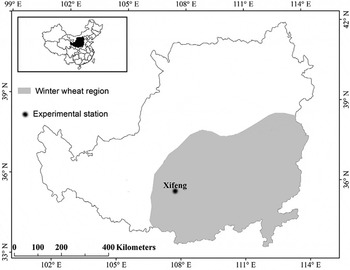
The Loess Plateau, a large geographic region in north-west China, covers an area of approximately 640 000 km2 centred on the middle reaches of the Yellow River (Fig. 1). This region is historically one of the most intensive agricultural production areas in China, characterized by semi-arid climate conditions, severe soil erosion and ecological fragility. Annual precipitation typically ranges from 200 to 650 mm/year, distributed mainly between July and September. Additionally, it has been reported that annual precipitation in this region has declined at an average rate of 7·51 mm/10 year during 1961–2014 (Yan Reference Yan2015), and the Intergovernmental Panel on Climate Change (IPCC) also indicated the highest precipitation reduction of 5% per decade in north-west China during 1951–2010 (IPCC Reference Stocker, Qin, Plattner, Tignor, Allen, Boschung, Nauels, Xia, Bex and Midgley2013). Despite the challenging environmental conditions and limited economic resources on the Loess Plateau, there is a rural population of about 80 million people operating traditional rain-fed farming systems and making an important contribution to the Chinese and even the global food supply and economy. With the rapid increase of population growth, accelerating energy consumption and depletion of natural resources, it is crucial to produce food in a climate-smart and sustainable manner, particularly in water-limited semi-arid regions such as the Loess Plateau in China.
Location of the Loess Plateau in China and the Loess Plateau Research Station of Lanzhou University located at Xifeng, Gansu, China.

China is currently the largest wheat (Triticum spp.) producing country in the world, with a total growing area of 2·43 × 107 ha, of which approximately 0·27–0·29 is under dryland production systems in the Loess Plateau region (Gao et al. Reference Gao, Li, Zhang, Liu, Dang, Cao and Qiang2009; Turner et al. Reference Turner, Li, Xiong and Siddique2011). In the west Loess Plateau of China, winter wheat is typically sown in middle or late September and harvested from late June to early July of the following year. Land is then fallowed or used for a short-season maize growth until wheat is planted again in autumn. The cover crop is rarely incorporated in wheat monoculture, leading to limited rainfall infiltration as well as severe soil erosion caused by wind or rain (Zhu et al. Reference Zhu, Stewart and Fu1994). Soil productivity and water availability are the two major limiting factors controlling crop production in this region (Nielsen et al. Reference Nielsen, Vigil, Anderson, Bowman, Benjamin and Halvorson2002; Schillinger et al. Reference Schillinger, Schofstoll and Alldredge2008; Zhang et al. Reference Zhang, Sadras, Chen and Zhang2013). Thus, to better conserve soil and water, conservation and reduced tillage practices have been promoted since the early 1990s (Xie et al. Reference Xie, Li, Jin, Li, Tang, Wang and Gao2008). Conservation tillage is defined as continuous minimum mechanical soil disturbance of not more than 0·25 of the soil surface in bands no wider than 15 cm, leaving at least 0·30 mulch from crop residues in the field (FAO 2011). It has been widely adopted in many different bio-physical environments and cropping systems indicating great potential for increasing soil water holding capacity and crop yield (Fabrizzi et al. Reference Fabrizzi, Garcia, Costa and Picone2005; Su et al. Reference Su, Zhang, Wu, Cai, Lv, Jiang, Huang, Gao, Hartmann and Gabriels2007; Zhang et al. Reference Zhang, Sadras, Chen and Zhang2013, Reference Zhang, Wei, Wang, Wang, Meng, Mou, Zhang, Jia and Han2015b ). However, its use in the Loess Plateau region is very limited due to the competing use of crop residues, increasing labour demand and additional cost of no-till machinery inputs. Some researchers have also found that certain conservation tillage practices, such as no tillage, had no effect on soil water storage, water productivity (WP) or crop yield compared with conventional tillage (Merrill et al. Reference Merrill, Black and Bauer1996; Lampurlanes et al. Reference Lampurlanes, Angas and Cantero-Martınez2002; Tan et al. Reference Tan, Drury, Gaynor, Welacky and Reynolds2002; Guzha Reference Guzha2004; Taa et al. Reference Taa, Tanner and Bennie2004; Licht & Al-Kaisi Reference Licht and Al-Kaisi2005). This is mainly because the effectiveness of conservation tillage might depend greatly on other environmental and management factors. In addition, the contribution of reduced tillage on environmental sustainability, such as soil tilth, microbial activity and nutrient cycling, might require a much longer period of time before it can be detected compared with economic viability (Zentner et al. Reference Zentner, Wall, Nagy, Smith, Young, Miller, Campbell, McConkey, Brandt, Lafond, Johnston and Derksen2002; Camara et al. Reference Camara, Payne and Rasmussen2003).
There is a lack of systematic long-term research and insufficient data to evaluate the effects of different conversation tillage practices on winter wheat growth, WP and economic return, particularly in the semi-arid Loess Plateau region of China. Many researchers have conducted economic analyses on water harvesting and supplemental irrigation-based efficiency/profitability studies in this region (Li et al. Reference Li, Cook, Geballe and Burch2000; Tian et al. Reference Tian, Li and Liu2003; He et al. Reference He, Cao and Li2007b ). Little attention has been given to the agronomic and economic impacts of adopting conservation tillage practices in winter wheat production systems. Thus, the objectives of the current study were to: (1) compare WP and winter wheat yield under different tillage and stubble retention practices; (2) mathematically quantify the grain yield of winter wheat and determine yield-limiting factors; (3) assess the economic benefits of various tillage and stubble retention practices and identify the optimal system using farm-level economic analysis.
MATERIALS AND METHODS
Site description
This study was conducted from 2001 to 2008 at the Loess Plateau Research Station of Lanzhou University (35°40′N, 107°51′E, 1298 m a.s.l.) located at Xifeng, Gansu province, north-west China (Fig. 1). The region is characterized by a semi-arid climate, with mean annual precipitation of 548 mm falling mainly between July and September. The annual mean temperature is 8·3 °C. Average annual solar radiation intensity is 5489 MJ/m2. The mean length of the annual growing season for winter wheat is about 260–288 days. The dominant soil type is sandy loam with an average field water-holding capacity of 0·223 cm3/cm3 and permanent wilting point of 0·07 cm3/cm3. Soil water holding capacity was determined using soil, the core method described by Cassel & Nielsen (Reference Cassel, Nielsen and Klute1986) and Colla et al. (Reference Colla, Mitchell, Joyce, Huyck, Wallender, Temple, Hsiao and Poudel2000). Permanent wilting point was estimated using the pressure outflow apparatus approximation method described by Cassel & Nielsen (Reference Cassel, Nielsen and Klute1986).
Experimental design and crop management
The experiment was designed as a factorial randomized complete block design (RCBD) with four blocks. Four treatments (two types of tillage practices × two types of stubble retention practices) included: conventional tillage (T), conventional tillage followed by stubble retention (TS), no-till (NT) and no-till followed by stubble retention (NTS). Thus, there were 16 (4 × 4) treatment plots. Treatments were assigned randomly within each block. Each plot was 4 × 13 m and adjacent plots were separated by a 1 m wide buffer zone to minimize edge effects.
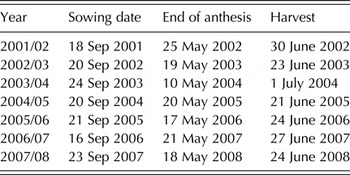
Winter wheat (Triticum aestivum L. cv. Xifeng No. 24) was planted into a dry seedbed at a seeding rate of 187 kg/ha using a small no-till seeder (5–6 rows in 1·2 m width) shortly after harvesting of short-season summer maize in September each year. This seeder, originally designed by the China Agricultural University (Beijing, China, 100083), was capable of seeding and fertilizing at the same time. Plants were harvested manually and the cobs and stalks were manually separated in the barn. For conventional tillage treatments (T and TS), a rotary cultivator-type tiller was used to cultivate the soil at 25 cm depth between maize harvest and wheat planting. For maize stubble retention treatments (NTS and TS), half of the maize stalks were chopped into 20 cm long pieces and spread uniformly on the plots before wheat planting. All plots were maintained without irrigation and with periodic weed removal by hand. The dates of planting, end of anthesis and harvesting of wheat are listed in Table 1. All plots were fertilized according to standard soil test recommendations for winter wheat production. Diammonium phosphate was applied annually at a rate of 300 kg/ha (equivalent to 72·4 kg N/ha and 80·2 kg P/ha) during planting. Urea was applied at the jointing stage (GS 32, Zadoks et al. Reference Zadoks, Chang and Konzak1974) at a rate of 69 kg/ha (equivalent to 31·7 kg N/ha). Plant density was evaluated after emergence stage (GS 11) during each year by manually counting the number of plants from three randomly selected 0·5 m long rows within each treatment plot. Grain yield was determined by manually harvesting, threshing and air-drying grains (moisture content ⩽ 12·5%) from the whole plot (46·99 m2), excluding the peripheral rows to minimize edge effects.
Planting, end-of-anthesis, and harvesting dates of winter wheat planted during 2001–2008 at Xifeng, Gansu, China

Measurements and calculation
The pre-growing season volumetric soil water content (SWC) was measured monthly using a neutron moisture meter (NMM, Campbell Pacific, CPN 503). A 2 m aluminium access tube was set in the centre of each plot and soil moisture was measured by NMM at 5, 15, 25, 45, 75, 105, 135 and 175 cm deep. Calibration procedures described by Greacen & Hignett (Reference Greacen and Hignett1979) were followed before any measurement.
Meteorological data were recorded using a meteorological observation system installed at the centre of the experiment field. Particularly, ambient air temperature and relative humidity were measured using a HMP-50 Probe (Campbell Sci. Inc., Logan, Utah, USA). Net radiation was measured by a net radiometer (CNR-I, Kipp and Zonen Inc., Saskatoon, Saskatchewan, Canada). Rainfall was recorded using a rain gauge (TE525MM, Campbell Sci. Inc., Logan, Utah, USA). All variables were measured every 10 s and 30 min average values were stored by a CR5000 data-logger (Campbell Sci. Inc., Logan, Utah, USA). Rainfall during the vegetative period (RVP, mm) and reproductive period (RRP, mm) was the total rainfall from germination (GS 00) to anthesis (GS 62) and from anthesis (GS 63) to maturity (GS 92), respectively. Ratio of rainfall/evapotranspiration (R/ET) was the ratio between growing season rainfall and evapotranspiration (ET). The photo-thermal quotient (PTQ, MJ/m2 °C) was calculated for the critical period of 1 month before anthesis using estimated incoming radiation and average daily temperature above a base temperature of 4·5 °C (Magrin et al. Reference Magrin, Hall, Baldy and Grondona1993). The soil available water storage (SAW, mm), change of SAW (∆S, mm) and ET (mm) of each individual plot for the entire growing season were estimated by Eqns (1) to (3) (Huang et al. Reference Huang, Shao, Zhang and Li2003; Liu et al. Reference Liu, Li, Chen, Yang and Chen2010):
 $${\rm SAW} = v \times h$$
 $$\Delta S = {\rm SAW}_{{\rm Sowing}} - {\rm SAW}_{{\rm Harvest}} $$
 $${\rm ET} = P + \Delta S$$
where v is the volumetric SWC measured by an NMM; h is soil depth (mm); and P represents precipitation (mm). On the Loess Plateau, the groundwater table remained at a depth of about 50 m below the surface, so the upward flow into the root was negligible. Runoff was never observed as the experimental field was flat. There were no heavy rains or waterlogging events during the growing season, so the drainage was assumed to be insignificant (Shen et al. Reference Shen, Li, Chen, Robertson, Unkovich, Bellotti and Probert2009). WP for grain yield (kg/ha) was calculated using Eqn (4) (Hussain & Al-Jaloud Reference Hussain and Al-Jaloud1995):
 $${\rm WUE}({\rm kg}/{\rm m}^3 ) = {\rm Grainyield}/{\rm ET}{\rm.} $$
Statistics
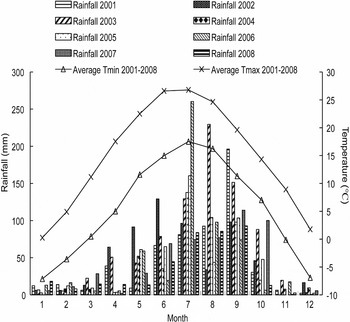
The grain yield, WP and initial SWC were analysed as RCBD using the MIXED procedure in SAS release 9.2 (SAS Institute 2003). Great variations were observed in the total quantity and distribution of annual precipitation during the research period at the Loess Plateau Research Station (Fig. 2). Additionally, effects of precipitation on grain yield and WP were of great interest for the current study. It was also anticipated that tillage treatment effect might take much longer before it could be detected than other types of treatment, such as fertilization. Thus, year was classified as a fixed effect instead of random, so statistical inference would not be generalized or averaged across years. Additionally, because wheat is an annual crop, which needs to be replanted every year; plants grown in the same plot (experimental unit) would differ from one year to another. Thus, correlations between two adjacent yearly measurements on the same experimental unit (e.g. yield) should be weak. Therefore, correlation structures were not considered and year was not analysed as a repeated measure effect. Means were separated using the PDMIX800 macro based on pair-wise differences at P ⩽ 0·05 (Saxton Reference Saxton1998). All graphs were generated using SigmaPlot 10.0 (Systat Software).
Monthly rainfall (2001–2008), long-term average rainfall and air temperature at the Loess Plateau Research Station of Lanzhou University located at Xifeng city, Gansu, China.

Sensitivity analysis and yield prediction
The entire experimental data set from the current study were used to evaluate the contribution of SAW (mm), RVP (mm), RRP (mm), R/ET and PTQ (MJ/m2 °C) on grain yield (t/ha) using multiple linear regression (MLR) analysis (Alvarez Reference Alvarez2009; Emamgholizadeh et al. Reference Emamgholizadeh, Parsaeian and Baradaran2015). The identified MLR equation would be the best-fitting equation to all experimental data and was also used as a baseline equation for conducting sensitivity analysis. The fitting of all linear equations was evaluated using three indices, including mean absolute error (MAE), root mean square error (RMSE) and coefficient of determination (R 2), as given in Eqns (5) to (7) (Smith et al. Reference Smith, Smith, Addiscott, Powlson, Smith and Smith1996; Emamgholizadeh et al. Reference Emamgholizadeh, Parsaeian and Baradaran2015):
 $${\rm MAE} = \displaystyle{1 \over n}\mathop \sum \limits_{i = 1}^n \left \vert {O_i - P_i} \right \vert $$
 $${\rm RMSE} = \sqrt {\displaystyle{{\sum\nolimits_{i = 1}^n {(O_i - P_i )^2}} \over n}}. $$
 $$R^2 = \displaystyle{{\mathop \sum \nolimits_{i = 1}^n (O_i - \bar O)(P_i - \bar P)} \over {\sqrt {\mathop \sum \nolimits_{i = 1}^n (O_i - \bar O)^2 \mathop \sum \nolimits_{i = 1}^n (P_i - \bar P)^2}}} $$
where n is the number of observations, O i is the observed values, P i is the MLR predicted values and the bar denotes the mean of a certain variable.
Second, leave-one-out parameter/variable MLR-based sensitivity tests were performed on the entire experimental data set to determine the relative importance of each input variable in determining final grain yield. Specifically, during each test, one independent variable (SAW, RVP, RRP, R/ET or PTQ) from the best-fitting equation was omitted and a new MLR equation was constructed and evaluated using the whole data set. This process was repeated five times until all independent variables were evaluated and ranked according to their R 2 values. The smallest R 2 value indicated the greatest importance of the omitted parameter/variable in yield determination.
Last but not least, to evaluate and validate the predictability of the MLR-based equation fully, a tenfold cross-validation (tenfold CV) paradigm was adopted. That is, the entire data set were evenly and randomly split into ten disjointed sub-sets. Each sub-set contained similar proportions of data from each treatment compared with the entire data set. Ten training-and-testing trials were conducted. During each trial, nine sub-sets were selected for building the MLR-based equation and the remaining sub-set was used for testing. This process was carried out ten times and the final result calculated from a composite of the ten trials. Therefore, the final combined predicted results were obtained from ten different MLR-based equations. The overall performance was measured by comparing the measured yield data v. predicted yield data in a scatter plot and checking whether the best-fitting simple linear regression line was significantly different from the 1 : 1 line or not.
Economic analysis
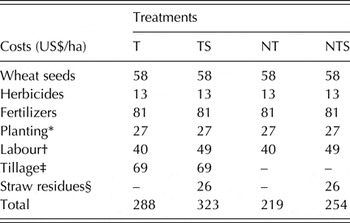
The current study considered the production budget for the establishment, treatment implementation and harvest of winter wheat production. Large equipment-based farming operations (e.g. planting and tillage) were mainly carried out by regional Farmers’ Cooperative and Extension Service agencies near the Loess Plateau Research Station. The hourly service charge included costs associated with labour, fossil fuel, capital recovery of equipment (depreciation and interest), insurance, machine storage, as well as repairing and maintenance of equipment. Therefore, all these input costs had already been included in the service charges (planting and tillage costs). Material costs (seeds, fertilizers, herbicides and straw residues) were calculated based on purchasing records from local farming supply companies or regional farmers’ Cooperative and Extension Service agencies. Costs for labour-based operations such as fertilization, herbicide application, residual spreading and harvesting were calculated based on standard individual hourly earnings at US$ 3.64/day at Xifeng, China and number of days required to complete the task. A detailed breakdown of costs is presented in Table 2. Output value/ha was calculated based on wheat grain yield (kg/ha) under each treatment and market price of wheat grain obtained from China's National Agricultural Market Service Database (http://datacenter.cngrain.com) averaging at US$ 0·18/kg.
A 7-year average cost breakdown of winter wheat production under different tillage treatments during 2001–2008 at Xifeng, Gansu, China

T, conventional tillage; TS, conventional tillage followed by stubble retention; NT, no-till; NTS, no-till followed by stubble retention.
* Planting cost includes rental charge of planter, driver's wage and fuel costs.
† Labour cost includes manual labour inputs for fertilization, harvesting, and application of herbicides and plant residues.
‡ Tillage cost includes rental charge of tractors and tillage equipment, driver's wage and fuel costs.
§ Straw residue cost includes material cost estimated according to the market value during the experimental period.
RESULTS
Weather conditions and pre-growing season soil water content characteristics
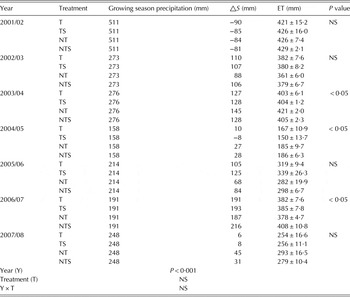
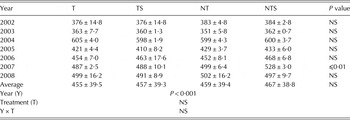
The quantity and distribution of precipitation varied greatly within the years 2001–2008 (Fig. 2). The long-term (1961–2008) average annual precipitation was 339 mm at the Loess Plateau Research Station (Tian et al. Reference Tian, Bell, Shen and Whish2012). The year 2002 was wet, with 50·7% above-average precipitation. Years 2005 and 2007 were dry, with 53·4 and 43·7% below-average annual precipitation, respectively (Table 3). However, maximum and minimum temperatures were not significantly different in the experimental years. Pre-growing season SWC (0–200 cm depth) varied greatly from year to year (Table 4; P < 0·001) and was not significantly affected by tillage treatments. No two-way interactions were detected between year and tillage treatment.
Seasonal precipitation, ΔS and ET of different tillage treatments of a winter wheat field during 2001–2008 at Xifeng, Gansu, China

△S, soil water storage change; ET, evapotranspiration; T, conventional tillage; TS, conventional tillage followed by stubble retention; NT, no-till; NTS, no-till followed by stubble retention; NS, not significant.
Pre-planting soil water storage (measured in mm at the depths of 0–200 cm) under different tillage treatments of a winter wheat field following short-season maize growth during 2002–2008 at Xifeng, Gansu, China

T, conventional tillage; TS, conventional tillage followed by stubble retention; NT, no-till; NTS, no-till followed by stubble retention; NS, not significant.
Grain yield and water productivity
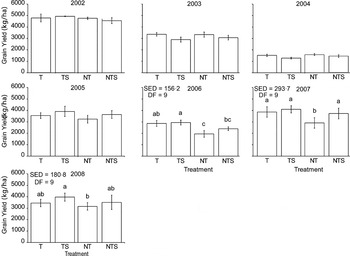
Plant density was evaluated after the germination stage, and no statistical differences were detected among treatments in any year. Grain yield was significantly affected by both tillage treatment (P < 0·001) and year (P < 0·001). A significant two-way interaction between year and treatment was found. Therefore, data were analysed by year. No significant treatment effects were present from 2002 to 2005 (Fig. 3). In 2006, both T and TS treatments increased grain yield compared with NT treatment (P < 0·05). Additionally, the TS treatment produced greater yield than NT and NTS treatments (Fig. 3). In 2007, the NT treatment produced lower yield compared with all other tillage treatments (Fig. 3). In 2008, the TS treatment increased yield compared with NT (Fig. 3). Overall, annual yield ranged from 1279 to 4894 kg/ha.
Grain yield under different tillage treatments during 2002–2008 at Xifeng, Gansu, China. Letters separate means based on a significance level of P < 0·05 by pair-wise comparison. Error bars indicate the s.e. of mean. T, conventional tillage; TS, conventional tillage followed by stubble retention; NT, no-till; NTS, no-till followed by stubble retention.

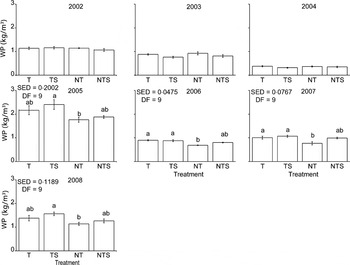
Water productivity was affected by tillage treatment and year. The treatment effects also depended on year (a two-way interaction). Therefore, treatment effect was analysed within each year. No treatment effects were detected from 2002 to 2004 (Fig. 4). In 2006 and 2007, plots assigned to the T or TS treatments had greater WP than those under NT (Fig. 4). In 2005 and 2008, TS treatments increased WP compared with NT (Fig. 4). Water productivity ranged from 0·32 to 2·41 kg/m3 over different treatments in the project period.
Water productivity (WP) under different tillage treatments during 2002–2008 at Xifeng, Gansu, China. Letters separate means based on a significance level of P < 0·05 by pair-wise comparison. Error bars indicate the s.e. of mean. T, conventional tillage; TS, conventional tillage followed by stubble retention; NT, no-till; NTS, no-till followed by stubble retention.

Variable sensitivity and yield predictability
Based on the entire data set and MLR analysis, the following equation was the best-fitting form for all experimental data:
 $$\eqalign{& Y = 32 {\cdot} 07\;{\rm RRP} + 772 {\cdot} 8\;{\rm PTQ} + 453\;{\rm R/ET} \cr & \;\; - 2 {\cdot} 03\;{\rm SAW} - 5 {\cdot} 99\;{\rm RVP} + 600} $$
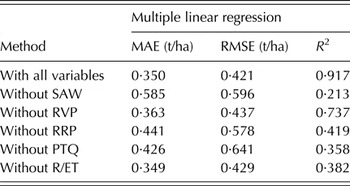
which yielded R 2 = 0·917, MAE = 0·350 t/ha and RMSE = 0·421 t/ha (Table 5).
Sensitivity analysis based on multiple linear regression and leave-one-out approach to evaluate the contribution of different variables on predicting winter wheat yield under different tillage treatments during 2002–2008 at Xifeng, Gansu, China

MAE, mean absolute error; RMSE, root mean square error; SAW, soil water storage at planting; RVP, rainfall of vegetative period (total rainfall from germination to anthesis); RRP, rainfall of reproductive period (total rainfall from anthesis to maturity); PTQ, photo-thermal quotient (the critical period of one month before anthesis using esteemed incoming radiation and average daily temperature above a base temperature of 4·5 °C); R/ET, ratio of entire growing rainfall/evapotranspiration.
The leave-one-out MLR-based sensitivity test indicated that the MLR equation without SAW had the greatest MAE and RMSE, as well as the smallest R 2. Overall, the importance of these independent variables in determining the final wheat yield can be ranked from highest to lowest as SAW, PTQ, R/ET, RRP and RVP (Table 5).
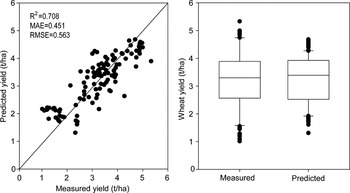
The results of the tenfold CV-based prediction evaluation are presented in Fig. 5. The performance in each trial varied from one to another but the overall performance was very satisfactory. During the tenfold CV process, the best equation provided R 2 = 0·82, MAE = 0·334 t/ha and RMSE = 0·431 t/ha. When predicted yield values were plotted against the corresponding harvested field data (Fig. 5), these data points tended to lie along the 1 : 1 line, indicating great predictability and accuracy of MLR-based equations derived in the current study. The best-fitting regression line explained 70·8% of the total variability (R 2 = 0·708, MAE = 0·451 t/ha and RMSE = 0·563 t/ha) and was not significantly different from the 1 : 1 line.
Measured and predicted wheat yield (t/ha) using multiple linear regression equations and tenfold cross validation. Independent variables include soil water storage (mm), rainfall during vegetative period (mm), rainfall during reproductive period (mm), the ratio of rainfall/evapotranspiration and photo-thermal quotient (MJ/m2 °C). The solid diagonal line represents the 1 : 1 line.

Economic benefits
For the different tillage systems, the total input costs ranged from US$ 219/ha in NT practice to US$ 323/ha in TS practice (Tables 2 and 6). The output value resembles the grain yield. The TS treatment provided the greatest average output revenues compared with others, and the NT treatment provided the lowest. The total input costs for TS practice were higher than others. No-till provided lower yield but required significantly lower inputs, leading to higher economic return (expressed as an output/input ratio) than other treatments. The NTS treatment provided similar economic benefits compared with T and NT treatments, and slightly greater economic benefit than TS (US$ 41/ha higher).
Cost and revenue values of winter wheat production under different tillage treatments during 2002–2008 at Xifeng, Gansu, China

AGY, 7-year average grain yield (kg/ha); YT, yield advantage (%); ATGW, 7-year average thousand grain weight (g); AWP, 7-year average water productivity (kg/m3); OV, output value (US$/ha); IV, input value (US$/ha); O/I, output/input; EB, economic benefit (US$/ha); BD, benefit difference (US$/ha); T, conventional tillage; TS, conventional tillage followed by stubble retention; NT, no-till; NTS, no-till followed by stubble retention; NS, not significant.
* OV was calculated based on market grain price (US$ 0·18/kg).
† EB = OV − IV.
‡ BD was calculated as EB difference from T treatment.
DISCUSSION
Wheat is an important food source for human consumption as well as providing high-quality forage for livestock. As a cool-season annual crop which undergoes the C3 photosynthetic pathway, winter wheat features both high crude protein concentration and great demand for soil water (Nielsen et al. Reference Nielsen, Lyon, Higgins, Hergert, Holman and Vigil2016). Therefore, conserving soil water and increasing crop WP are becoming tremendously important for successful wheat production in semi-arid regions.
The results of the current study indicated that precipitation is always the primary contributing factor in determining the grain yield of winter wheat under the studied conditions. However, in the semi-arid Loess Plateau region of China, the quantity and pattern of precipitation could be very different from one year to another. The annual grain yield data from the current study agreed well with total annual precipitation records.
Tillage plays an important role in altering soil water holding capacity, and ultimately affecting crop root growth conditions (Huggins & Pan Reference Huggins and Pan1991; Hou et al. Reference Hou, Li, Jia and Han2013). Conventional tillage, which was widely adopted for hundreds of years, has led to severe soil erosion, soil organic matter loss, increased evaporation and surface runoff in Chinese agriculture (Feng et al. Reference Feng, Huang, Chai and Yu2010). With the increasing incidence of extreme weather conditions and water scarcity, incorporating reduced/conservation tillage practices into dryland agricultural production is becoming more important for winter wheat cropping systems in the semi-arid regions of the world (Hansen et al. Reference Hansen, Munkholm, Olesen and Melander2015). In the North China Plain, the double cropping system consisting of winter wheat and maize under no or minimum irrigation and various levels of stubble retention has become very popular in recent decades. However, limited long-term research has been conducted in the Loess Plateau region integrating traditional agronomic studies with in-season water status monitoring, economic analysis and modelling. The results from the current project verified that conservation tillage practices preserve within-season SWC better than conventional tillage, which agrees with findings reported by other previous studies (Machado et al. Reference Machado, Petrie, Rhinhart and Ramig2008; Feng et al. Reference Feng, Huang, Chai and Yu2010).
In the current study, the average grain yield across all treatments was very similar to another wheat study conducted by Zhang et al. (Reference Zhang, Wei, Wang, Wang, Meng, Mou, Zhang, Jia and Han2015b ) in the Loess Plateau region. Additionally, no statistical differences in grain yield were detected in the first 2 years, because the effect of tillage on grain production might require a long period of time (>2 year) before it can be detected (Halvorson et al. Reference Halvorson, Peterson and Reule2002). Previous studies also suggested that traditional winter wheat cropping systems (winter wheat followed by summer fallow using conventional tillage) could be replaced by no-till or sweep-tillage practices followed by herbicide application, which should provide increased WP and comparable grain yield (Riar et al. Reference Riar, Ball, Yenish, Wuest and Corp2010; Machado et al. Reference Machado, Pritchett and Petrie2015). The current results indicated that conservation tillage practices consistently provided comparable or lower yield than conventional tillage practices, as NT and NTS treatments had lower yield than T, a result that is quite different from many studies conducted in the dryland areas of North China (He et al. Reference He, Li, Wang, McHugh, Li, Gao and Kuhn2007a ; Su et al. Reference Su, Zhang, Wu, Cai, Lv, Jiang, Huang, Gao, Hartmann and Gabriels2007; Zhang et al. Reference Zhang, Sadras, Chen and Zhang2013; Shao et al. Reference Shao, Xie, Wang, Yue, Yao, Li, Liu, Zhu and Guo2016). However, according to a global meta-analysis study using 5463 yield observations from 610 studies, crop yield usually declines when no-till practice is implemented alone (−9·9%; Pittelkow et al. Reference Pittelkow, Liang, Linquist, Van Groenigen, Lee, Lundy, van Gestel, Six, Venterea and van Kessel2014). This is highly consistent with the results of the current study (NT production is 10% lower than T). Pittelkow et al. (Reference Pittelkow, Liang, Linquist, Van Groenigen, Lee, Lundy, van Gestel, Six, Venterea and van Kessel2014) also found that stubble retention could alleviate the negative impacts on yield of no-till alone, by 4·8%. Likewise, the NTS production in the current study is 3·8% lower than T. Similar findings were also reported from other long-term studies conducted by Camara et al. (Reference Camara, Payne and Rasmussen2003) and Machado et al. (Reference Machado, Petrie, Rhinhart and Ramig2008). However, the limited productivity reported by Machado et al. (Reference Machado, Petrie, Rhinhart and Ramig2008) was caused mainly by weed encroachment in the Pacific Northwest environment. This does not apply to the current study, because weeds were intensively managed throughout the growing season. Again, it is suspected that the limited productivity of the NTS was mainly caused by the tillage impact on root growth, emphasizing the importance of incorporating root phenotyping work into future projects. Previous studies also found that NTS tends to provide better yield and WP within various wheat cropping systems compared with other conservation tillage practices in the arid and semi-arid region (Li et al. Reference Li, Gao, Wu, Li, Wang and He2007). In the current study, however, grain yield under NTS was lower than anticipated. This was unlikely to be caused by germination differences because no statistical significance was detected in plant counts among treatments (data not shown). Beneficial effects on soil health, such as increased soil carbon reserve and soil microbial diversity, were consistently observed from previous research. Yang et al. (Reference Yang, Wang, Shen and Philp2013a , Reference Yang, Wang and Shen b ) found that NTS significantly enhanced soil microbial metabolic capacity, compared with no tillage, within the same field. Therefore, NTS has the potential to improve soil fertility and improve agricultural sustainability. Future studies should incorporate molecular soil microbiological approaches and advanced instrumentation techniques, such as eddy-covariance towers and spectroscopy-based soil respiration systems to quantify soil microbial activity and diversity in the semi-arid Loess Plateau region.
Wheat WP was affected by tillage treatment and year-by-year variation in pre-sowing soil water storage and growing season precipitation. In the current study, the average value of WP was 1·07 kg/m3, which was similar to the values reported by Wang & Shangguan (Reference Wang and Shangguan2015; 1·06 kg/m3) but was lower than those reported by Zhu et al. (Reference Zhu, Stewart and Fu1994; 1·48 kg/m3) and Su et al. (Reference Su, Zhang, Wu, Cai, Lv, Jiang, Huang, Gao, Hartmann and Gabriels2007; 1·17 kg/m3) in Northern China. Great similarities were found between wheat grain yield and WP because none of the plots were irrigated during the growing season and the spatial distribution of precipitation tended to be uniform under small-plot systems. Neither NT nor NTS treatment provided increased WP, suggesting the importance of incorporating other managerial practices, such as rotational tillage (Hou et al. Reference Hou, Li, Jia and Han2013) or fertilizer management regime (Zhang et al. Reference Zhang, Yao, Zhao, Wang, Yu, Cao, Cao and Gao2015a ), into the existing wheat production systems in this region when conservation tillage practices are used.
The ability of the MLR equation to predict grain yield is significantly degraded without including SAW at planting time, indicating that SAW has the most significant effect on determining grain yield. This observation is in agreement with findings from other previous studies (Chen et al. Reference Chen, Payne, Smiley and Stoltz2003; Alvarez Reference Alvarez2009; Ding et al. Reference Ding, Feng, Zhao, He, Zou and Jin2016). Particularly, Chen et al. (Reference Chen, Payne, Smiley and Stoltz2003) found that grain yield was greatly influenced by planting date in the inland Pacific Northwest region as a primary response to SAW. Likewise, Ding et al. (Reference Ding, Feng, Zhao, He, Zou and Jin2016) indicated that delayed planting date of winter wheat could significantly increase yield and WP on the Loess Plateau by improving the soil water conditions.
The MLR-based analysis approach allows the rate of variation of estimated wheat yield to be assessed with changes in each influential variable. This could help researchers and producers understand how estimated wheat yield varies with SAW, RVP, RRP, R/ET and PTQ and to what extent these variables should be altered to reach the accurate predicting value. The MLR equation used in the current study explained the majority of the variation from the yield data (R 2 = 0·917). The overall prediction performance of the equation (R 2 = 0·708) based on tenfold CV is satisfactory, particularly considering only six variables were included in the MLR equation and there are many other important environmental and physiological factors (e.g. soil) that could also greatly impact crop yield but were not included in this equation. This cross-validated result was comparable to other studies including those using advanced computational methods for predicting wheat yield, such as artificial neural networks (Alvarez Reference Alvarez2009).
The economic profitability of adopting conservation tillage practices in the semi-arid region can be greatly affected by many factors, such as planting density, presence or encroachment of weeds, and variety selection (Janosky et al. Reference Janosky, Young and Schillinger2002). The use of conservation tillage is generally considered profitable in terms of yield advantages and resource savings on farm inputs (Zentner et al. Reference Zentner, Wall, Nagy, Smith, Young, Miller, Campbell, McConkey, Brandt, Lafond, Johnston and Derksen2002; Lithourgidis et al. Reference Lithourgidis, Dhima, Damalas, Vasilakoglou and Eleftherohorinos2006); Pittelkow et al. (Reference Pittelkow, Liang, Linquist, Van Groenigen, Lee, Lundy, van Gestel, Six, Venterea and van Kessel2014) used meta-analysis and observed limited response of grain yield, but dramatic reduction in diesel input costs associated with reduced tillage, indicating that the economic benefits of conservation agriculture was strongly driven by cost reductions rather than increased yields. A seven-growing-season-wheat study on the Loss Plateau also supported this (Su et al. Reference Su, Zhang, Wu, Cai, Lv, Jiang, Huang, Gao, Hartmann and Gabriels2007). In the current study, particularly, the NTS treatment generated similar or slightly greater economic benefits despite of its low grain yield compared with all other treatments. Overall, the farm-level economic analysis provided great insights into trends and tendencies that are likely to be observed across populations of farmers and helping make recommendations for future policy initiatives.
CONCLUSION
China is by far the leading wheat-producing country in the world, and the Loess Plateau is one of the primary wheat cultivation areas nationwide with more than four million hectares planted each year. Therefore, identifying the optimal practices for wheat production in this water-limited region is of paramount importance. No-till treatment-based winter wheat production combined with stubble retention of the summer maize residue appeared to offer a possible solution to maintain adequate grain yield and great WP. Additionally, it also provided similar or slightly greater economic benefit among all other tillage practices primarily due to the reduction in input costs, but at a lower benefit difference than NTS. The sensitivity analysis approaches indicated that pre-season soil water storage contributes greatly to the final predicted grain yield. Therefore, to improve grain production and economic benefit of winter wheat production in the water-limited Loess Plateau region, efficient managerial strategies should include (1) increasing soil water storage during the wheat sowing season and (2) encouraging the use of conservation tillage practices (NTS).
The current study was one of a few long-term integrated studies conducted in the Gansu Province region on the Loess Plateau. It demonstrated that a period of at least 3–4 years was required before wheat yield started to respond to different tillage treatments. This emphasizes the importance of conducting long-term agronomic research related to conservation tillage practices.
This research was funded by the Australian Centre for International Agricultural Research (LWR/2007/191), Key grant Science and Technology Project of Gansu Province (1203FKDA035), and the Program for Changjiang Scholars and Innovative Research Team in University (IRT13019). Authors are grateful to Ms Jing Yang, Ms Mingming Wang and Dr Caiyun Luo for their contributions to the field data collection.