Introduction
Many plant genera in the Northern Hemisphere have species with range disjunctions among North America, Europe and/or Asia. These genera provide an opportunity to study the evolution of species and their traits since they are reproductively isolated (Wen, Reference Wen1999) and grow in similar habitats – mostly in temperate broadleaf and mixed forests (sensu Olson et al., Reference Olson, Dinerstein, Wikramanayake, Burgess, Powell, Underwood, D'Amico, Itoua, Strand, Morrison, Loucks, Allnutt, Ricketts, Kura, Lamoreux, Wettengel, Hedao and Kassem2001). Several studies have compared the seed dormancy and germination characteristics among these intercontinental congeneric species, and have found that while some characteristics of these seed traits are similar, others are different at the species (Walck et al., Reference Walck, Hidayati and Okagami2002; Adams et al., Reference Adams, Baskin and Baskin2005; Vandelook et al., Reference Vandelook, Bolle and Van Assche2007; Vandelook and Van Assche, Reference Vandelook and Van Assche2008) or population (Walck et al., Reference Walck, Karlsson, Milberg, Hidayati and Kondo2012) level. An aspect that these species have in common is that they all experience warm, (mostly) moist conditions during summer and/or cold, moist conditions during winter. These conditions are within the temperature range for warm (20–35°C) or cold (0–10°C) stratification, respectively (Baskin and Baskin, Reference Baskin and Baskin1998). Hence, cold stratification, sometimes in combination with warm stratification, is the primary mechanism overcoming dormancy in seeds of these species.
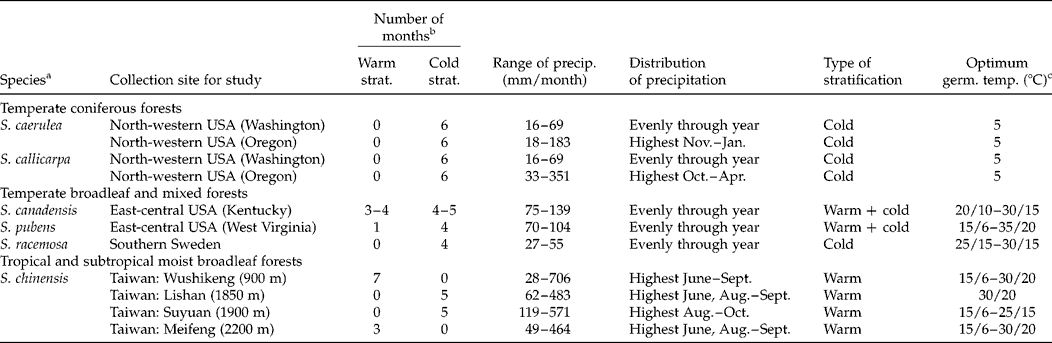
Germination studies conducted on members of the genus Sambucus growing in the temperate broadleaf and mixed forest of eastern North America or Europe, or in the temperate coniferous forest of north-western North America, showed them to require warm + cold or only cold stratification to overcome dormancy (Table 1). The climates associated with the habitats in which seeds were collected have 0–4 or 4–6 months of summer-stratifying or winter-stratifying temperatures, respectively. Species that are exposed primarily to long periods of cold temperatures require cold stratification and those exposed to both warm and cold temperatures need warm + cold stratification (Table 1). In these forests, precipitation is either evenly distributed throughout the year or is highest during late autumn to early spring, enabling both warm and/or cold stratification to occur.
Climate variables associated with collection sites, and stratification and germination characteristics, for seeds of Sambucus species (Hidayati et al., Reference Hidayati, Baskin and Baskin2000, 2010; and this study) organized by ecoregion (Olson et al., Reference Olson, Dinerstein, Wikramanayake, Burgess, Powell, Underwood, D'Amico, Itoua, Strand, Morrison, Loucks, Allnutt, Ricketts, Kura, Lamoreux, Wettengel, Hedao and Kassem2001; World Wildlife Fund, 2006)

a See reference for nomenclature.
b Based on average monthly temperatures between 20 and 35°C for warm stratification (strat.) and 0–10°C for cold stratification at the nearest weather station to the collection site (Baskin and Baskin, Reference Baskin and Baskin1998; Weather Channel, 2012; World Climate, 2012).
c Based on statistically highest germination (germ.) percentages achieved over a range of temperatures (temp.) for non-dormant seeds: constant 5 and 25°C and alternating 15/6, 20/10, 25/15 and 30/20°C for S. chinensis and at constant 1 and/or 5°C and alternating 15/6, 20/10, 25/15, 30/15 and 35/20°C for all other species.
Trait similarities among species in different climates or vegetation types can occur as a result of phylogenetic relatedness or of common selection forces (Westoby, Reference Westoby, Pugnaire and Valladares1999). For example, Adams et al.'s (Reference Adams, Baskin and Baskin2005) investigation into Aristolochia found that seeds of three species in temperate broadleaf and mixed forests of east-central North America and north-eastern Asia, and of one species in chaparral in western North America, required cold stratification. On the other hand, species growing in different environments might be expected to exhibit adaptive divergence in their physiological traits (Ackerly et al., Reference Ackerly, Dudley, Sultan, Schmitt, Coleman, Linder, Sandquist, Geber, Evans, Dawson and Lechowicz2000). As such, many Northern Hemispheric temperate genera have members in subtropical or tropical regions. Here, these temperate members are usually confined to the higher elevations of mountains and the climates or vegetation types differ from those in northern latitudes (e.g. Van Steenis, Reference Van Steenis1964; Gehrke and Linder, Reference Gehrke and Linder2009). Until now, no studies have examined the germination responses of a species – within a predominantly Northern Hemispheric temperate genus – growing in a substantially different environment (mostly subtropical region).
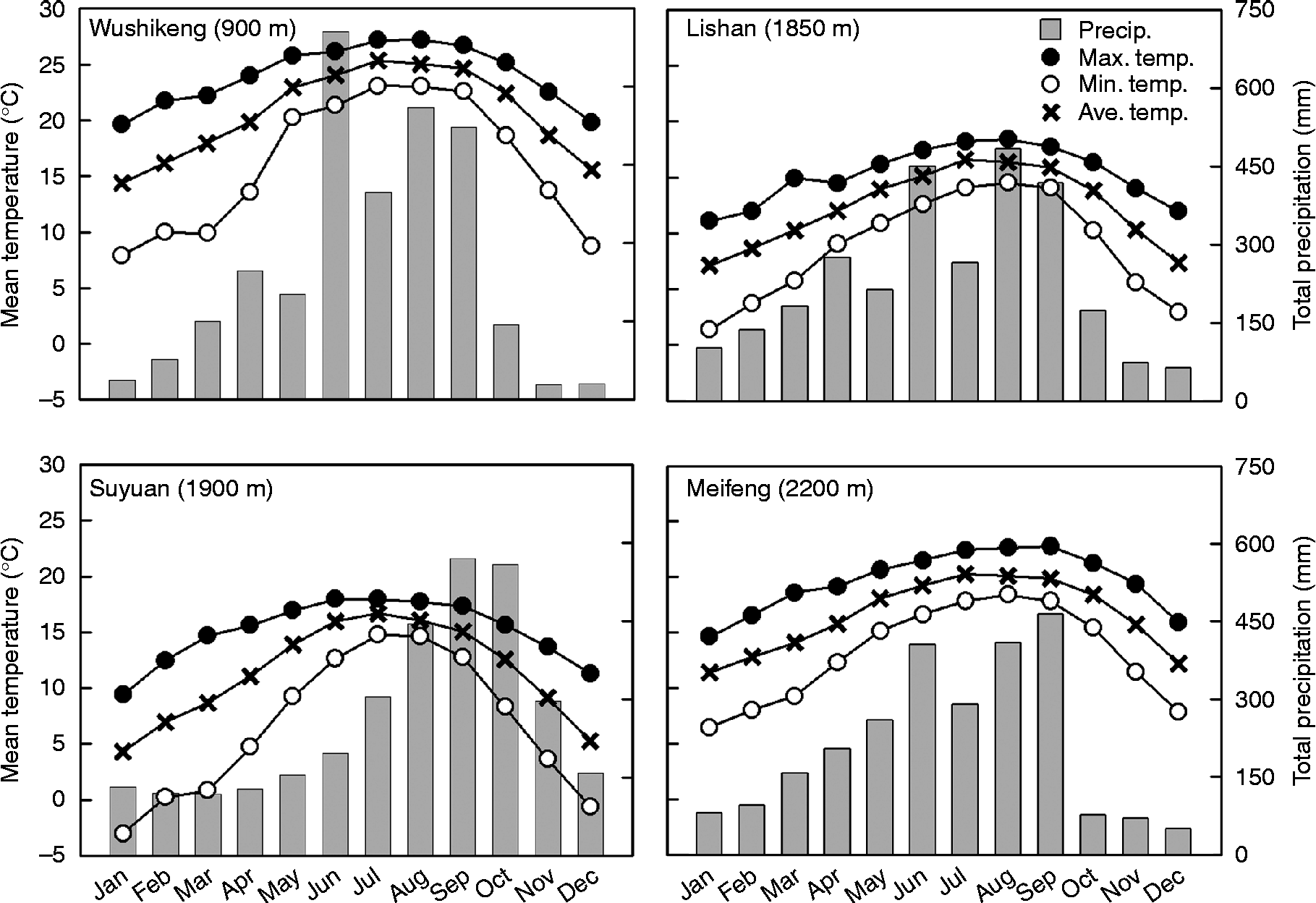
One of these species – the suffrutescent herbs or low shrubs of the complex ‘Sambucus javanica/chinensis’ – is found throughout the Indo-Malay region. In Taiwan, it is commonly found in thickets and natural forests from low elevations [ < 1000 m above sea level (asl)] up to 2500 m asl (Fukuoka, Reference Fukuoka1967; Yang and Chiu, Reference Yang and Chiu1998). We collected seeds of this species from populations at 900, 1850, 1900, 2200 m asl. These sites range from subtropical (500–1500 m) to warm-temperate (1500–2000 m asl) to temperate (2000–2500 m asl) climates and correspond to submontane Machilus–Castanopsis, montane Quercus lower zone, and montane Quercus upper vegetation zones, respectively (Hsieh et al., Reference Hsieh, Shen and Yang1994). The climate at our collection sites in Taiwan contrasts strongly with that of collection sites of Sambucus species in previous studies in three aspects: (1) populations could be exposed to only warm temperatures or to only cold temperatures within the range for warm or cold stratification, respectively; (2) maximum precipitation is up to 706 mm (versus up to 351 mm in Oregon); and (3) precipitation is highest in summer (Table 1, see Fig. 1).
Mean minimum and maximum temperatures, average temperature and mean total precipitation for each month at the four collection sites in Taiwan. Data were compiled from 2007 to 2010 (Wushikeng, Lishan) or to 2011 (Suyuan, Meifeng). Climate information was collected from Shuangci and Lushan, the closest weather stations to Wushikeng and Meifeng, respectively; information for Lishan and Suyuan was collected on-site.

Given that many studies have shown population-level variation in seed traits (reviewed in Baskin and Baskin, Reference Baskin and Baskin1998), we hypothesized that (1) seeds from populations exposed to warm temperatures would require warm stratification, and (2) seeds from populations exposed to cold temperatures need cold stratification. Thus, we investigated the germination responses of fresh seeds over a range of temperatures (alternating 15/6–30/20°C and/or constant 25°C). This response was for both the short term (up to 4 weeks) and long term (up to 30 weeks), with the latter response at temperatures ≥ 20°C being considered warm stratification. We also tested the effects of 0–8 weeks of cold stratification at 5°C on germination for up to 25 weeks at 25/15°C. Embryos were examined to determine if any growth occurred prior to radicle emergence by measuring them in fresh seeds and for seeds in which the embryo had grown enough to split the endocarp but the radicle had not yet emerged. From these temperature responses, along with the effects of gibberellic acid (GA3 and GA4) on germination, we could classify the class and level of dormancy (sensu Baskin and Baskin, Reference Baskin and Baskin2004) in the seeds and compare them to other studies conducted on the genus (Hidayati et al., Reference Hidayati, Baskin and Baskin2000, Reference Hidayati, Walck and Taylor2010).
Materials and methods
Study species
Three races have been recognized in the javanica/chinensis complex of Sambucus (Hutchinson, Reference Hutchinson1909; Fukuoka, Reference Fukuoka1967, Reference Fukuoka1976; Bolli, Reference Bolli1994): javanica occurs in north-eastern India, Thailand, Malaysia and Indonesia and as predominantly shrubs or small trees with black fruits; chinensis is found in northern Thailand, central to southern China, Taiwan and Japan as perennial herbs with red fruits; and formosana grows in Taiwan and the Philippines. Formosana differs from typical chinensis in the shape of the extrafloral nectaries (Bolli, Reference Bolli1994). The three races in this complex are very variable and deviations from the character sets of the taxa occur regularly, and hence, all three entities were considered as S. javanica in the most recent treatment of the genus (Bolli, Reference Bolli1994). However, the geographical distributions of javanica and chinensis do not overlap (Fukuoka, Reference Fukuoka1967). Recent floristic manuals treat formosana as conspecific with S. chinensis (Yang and Chiu, Reference Yang and Chiu1998; Hu et al., Reference Hu, Chunlin, Murrell and Keming2008). As such, we follow the Flora of Taiwan (Yang and Chiu, Reference Yang and Chiu1998) and use the name S. chinensis.
Seed sources
Fruits were collected from four sites in Taiwan: (1) Wushikeng (24°17′N, 120°56′E), Taichung County, at an elevation of 900 m asl in November 2011; (2) Lishan (24°15′N, 121°16′E), Taichung County, at an elevation of 1850 m asl in October 2009; (3) Suyuan (24°25′N, 121°20′E), Yilan County, at an elevation of 1900 m asl in October 2007; and (4) Meifeng (24°02′N, 121°08′E), Nanto County, at an elevation of 2200 m asl in October 2009. Mean monthly maximum/minimum temperatures were 24/16, 15/9, 15/6 and 20/13°C for Wushikeng, Lishan, Suyuan and Meifeng, respectively, and mean monthly total precipitation was 259, 236, 265 and 213 mm, respectively (Fig. 1).
The germination unit (hereafter, seed) consists of the endocarp, seed coat and a linear-shaped embryo surrounded by endosperm. Ripe red fruits were collected from ≥ 6 plants in each population. The berry-like fruit (drupe) contains one to three seeds (pyrenes), averaging 2.8–2.9 mm long (n= 50), in which the number of good (with viable embryo) seeds are 2.68 per fruit. Moisture contents of fresh seeds (from three of the sites) were 9.6–9.8% (as determined by oven drying for 17 h at 103°C, International Seed Testing Association, 2007). Following collection, fruits were depulped in water by hand to remove the exocarp and mesocarp. Seeds were placed into water and only seeds that sank were used in experiments. These seeds were then air-dried at room temperature for 24 h under newspaper and used for subsequent tests.
Germination studies
Germination tests were conducted in four alternating temperature- and light-controlled incubators, set at 30/20, 25/15, 20/10 and 15/6°C; two other incubators were set at constant temperatures of 25°C (with light) and at 5°C (without light). The light source was cool white fluorescent tubes, and photon irradiance was about 60–80 μMm− 2s− 1. The daily photoperiod was 12 h in the incubators with light. Seeds were mixed with moist sphagnum moss and sealed inside polyethylene bags (0.04 mm in thickness). Moisture content of the sphagnum moss was about 400% of its dry mass. Each treatment consisted of three replicates of 100 seeds each. Protrusion of the radicle was the criterion used for germination. Seeds were monitored weekly, and if a germinated seed (radicle ≥ 2 mm long) was present, it was removed from the bag and scored.
Effects of temperature regimes on seed germination
Germination responses of fresh seeds over a range of temperatures from all populations were determined. Seeds were incubated at alternating temperatures of 30/20, 25/15, 20/10 and 15/6°C and at a constant temperature of 25°C for 4 weeks.
These fresh seeds remained at 30/20, 25/15, 20/10, 15/6 and 25°C for an additional 26 weeks. Since these temperatures are above those needed for cold stratification, we considered incubation after the 4-week period to be warm stratification. We did not warm stratify seeds at one temperature and then move them to a range of temperatures, particularly low ones, since preliminary work found that many seeds germinated at warm temperatures.
Fresh seeds from all populations were cold stratified at 5°C for 0, 2, 4 and 8 weeks, and then incubated at 25/15°C for 25 weeks. Before incubation, seeds were placed at room temperature for 4 h.
Seed and embryo lengths
To determine whether embryos elongate in seeds before radicle emergence, we measured the lengths of seeds and their embryos when freshly matured (n= 10 per population) and when the embryo had grown to its maximum length (n= 10 per population), i.e. endocarp had split but the radicle had not yet emerged. Wushikeng, Lishan and Meifeng populations were used for this aspect of the study. Fresh seeds were placed on moist filter paper at ambient laboratory conditions for 24 h before measurement. We did not know a priori which temperatures would promote embryo growth. Thus, c. 25 fresh seeds were mixed with moist sphagnum moss, placed in sealable polyethylene bags, and incubated at 15/6, 20/10, 25/15 and 30/20°C (incubation conditions as for the germination test, see above). Seeds were examined each week and split (non-germinated) seeds were selected, regardless of temperature regime, until measurements had been obtained for 10 seeds. Embryos were dissected from seeds using a razor blade, and both seeds and embryos were measured under a dissecting microscope equipped with a calibrated micrometer.
Effects of GA3 and GA4 on seed germination
Fresh seeds from all populations were soaked in double-distilled water (control) or in solutions of GA3 (95% purity, Sigma, St. Louis, Missouri, USA) and GA4 (>90% purity from Prof. Lewis N. Mander, Australian National University) at concentrations of 25, 250 or 2500 μM for 24 h at room temperature (about 25°C). The control and GA-treated seeds were mixed with moist sphagnum moss and incubated in light at 25/15°C for 4 weeks.
Statistical analyses
Means and standard deviations of germination percentages (for three replicates) were calculated based on the 100 seeds per replicate. Repeated-measures analyses of variances (RMANOVAs) were used to test incubation time as the within-subject effect, and population and temperature regime, population and length of cold stratification, or population and GA condition (control + six GA type and concentration combinations) as between-subject effects (SPSS, 2010). Greenhouse–Geisser corrected probabilities are reported since Mauchly's test of sphericity was not met in the three RMANOVAs. Means were then compared by protected least significance difference (PLSD) tests at the 5% level of significance. Percentage data were arcsine square-root transformed before analyses, but only non-transformed data are shown in figures.
Results
Effects of temperature regimes on seed germination
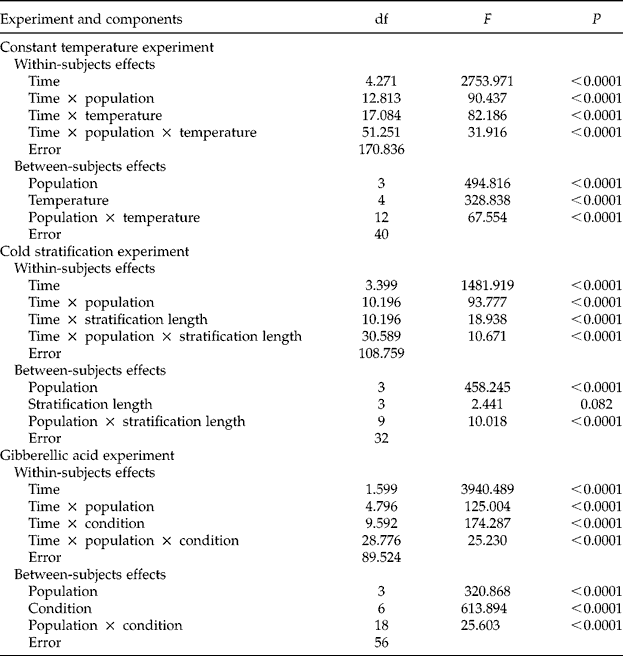
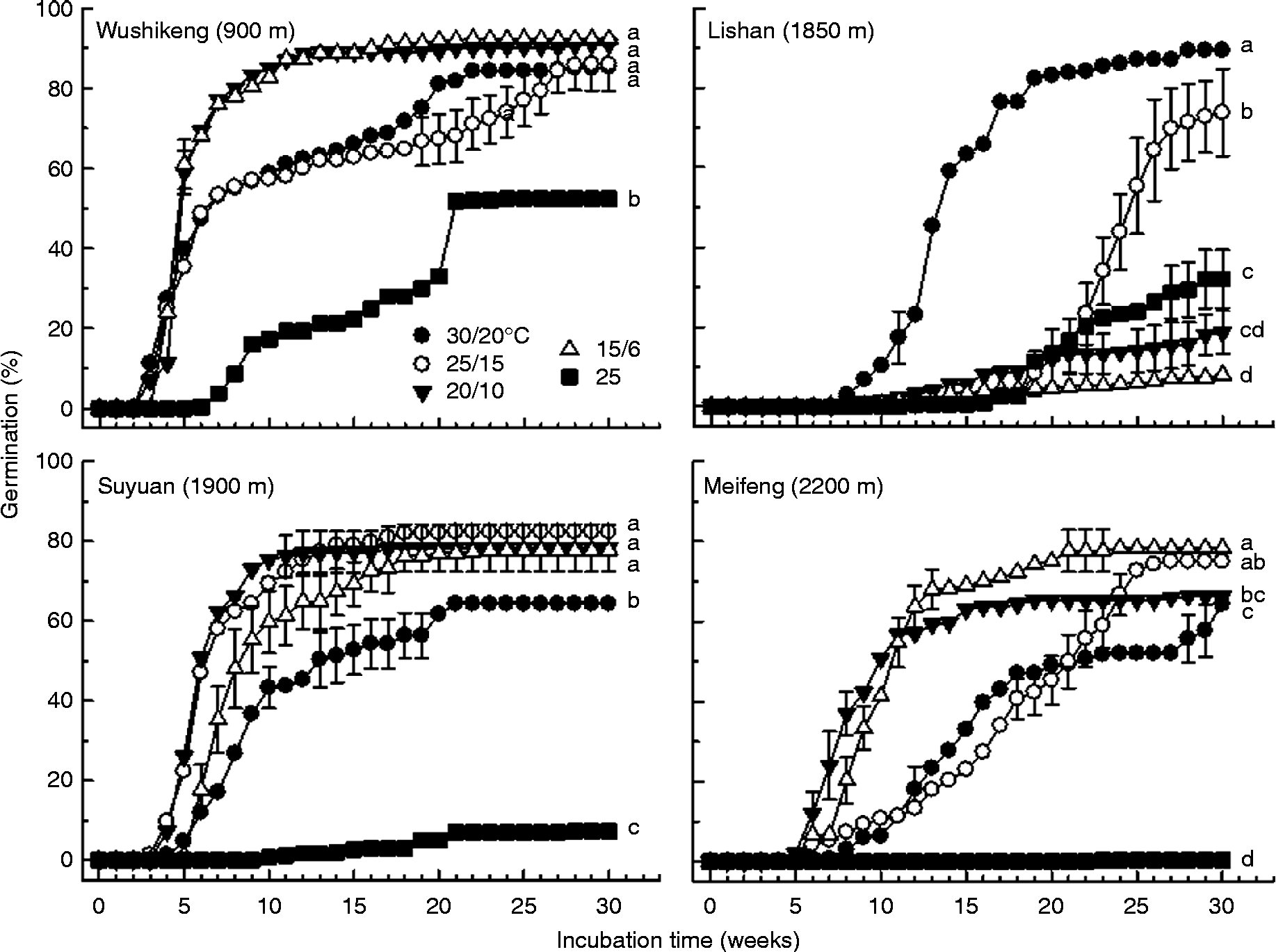
Germination varied significantly over incubation time, and this temporal response depended highly on the population and temperature regime (time and all factor interactions with time as well as population, temperature and their interaction, Table 2). During 4 weeks of incubation, no seeds from the Lishan and Meifeng populations germinated (Fig. 2). Seeds from the Wushikeng population germinated to 11–27% at 30/20–15/6°C and those from the Suyuan population germinated to 1–10% at 30/20–20/10°C; no seeds from the Wushikeng and Suyuan populations germinated at 25°C and at 15/6 and 25°C. Thus, the majority of seeds from all populations were dormant at maturity.
Results of repeated-measures analyses of variances (with Greenhouse–Geisser corrected probabilities) showing the effects of various factors on germination of Sambucus chinensis seeds

Cumulative germination percentages (mean ± SD, SD shown if ≥ 5%) of Sambucus chinensis seeds collected at four sites in Taiwan and incubated at five temperature regimes for 30 weeks. For each population, final means (n= 3, 100 seeds/n) with a dissimilar letter differ significantly and those with the same letter do not (PLSD, P= 0.05).

During an additional 26 weeks of incubation, seeds from Wushikeng, Suyuan and Meifeng populations germinated to 64-92% at 30/20-15/6°C but to only 0–52% at 25°C (Fig. 2). In contrast, Lishan seeds germinated to ≥ 74 at 30/20 and 25/15°C and to ≤ 32% at 20/10, 15/6 and 25°C. Thus, for all four populations temperatures of 30/20 and 25/15°C, within the range of warm stratification, were effective in overcoming dormancy.
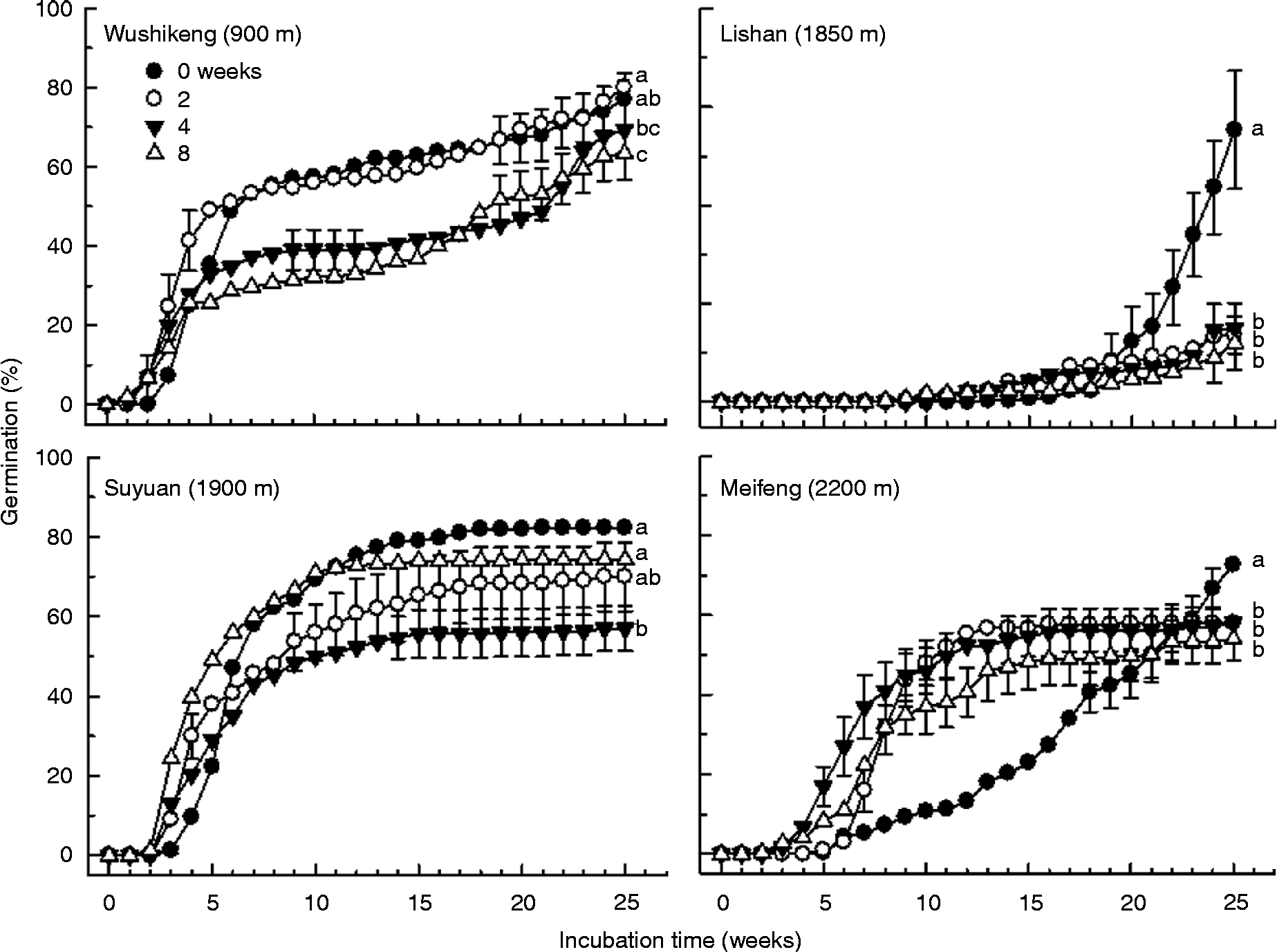
For cold stratification, germination varied significantly over incubation time and this temporal response depended highly on the population and length of stratification (time and all factor interactions with time, Table 2). Although population responses varied significantly among the lengths of stratification, the factor population was significant but stratification length was not. Seeds from Wushikeng, Suyuan and Meifeng populations germinated to 54–82% during 25 weeks of incubation at 25/15°C following 0–8 weeks of cold stratification (Fig. 3). In contrast, Lishan seeds germinated to 55% with no cold stratification and to 12–15% with 2–8 weeks of cold stratification. Thus, cold stratification was not effective at overcoming dormancy.
Cumulative germination percentages (mean ± SD, SD shown if ≥ 5%) of Sambucus chinensis seeds collected at four sites in Taiwan incubated in light at 25/15°C for 25 weeks following 0 (fresh)–8 weeks of cold stratification at 5°C. For each population, final means (n= 3, 100 seeds/n) with a dissimilar letter differ significantly and those with the same letter do not (PLSD, P= 0.05).

Seed and embryo lengths
Embryos in fresh seeds were linearly shaped, and they occupied nearly the entire length of the seed (Fig. 4A, C). Mean ( ± SD) lengths of fresh seeds and their embryos were 2.15 ± 0.11 and 1.15 ± 0.11 mm, respectively, from Wushikeng; 2.32 ± 0.13 and 1.25 ± 0.08 mm, respectively, from Lishan (not shown); and 2.16 ± 0.14 and 1.06 ± 0.22 mm, respectively, from Meifeng. Embryo length/seed length (E:S) ratios were 0.54 ± 0.05 (Wushikeng), 0.54 ± 0.04 (Lishan) and 0.49 ± 0.12 (Meifeng). The length of an embryo in a seed with a split endocarp (immediately before radicle emergence) was 1.53 ± 0.20 mm (Wushikeng) (Fig. 4B), 1.51 ± 0.12 mm (Lishan) (not shown) and 1.29 ± 0.06 mm (Meifeng) (Fig. 4D). Thus, embryos in seeds from Wushikeng, Lishan and Meifeng elongated about 24, 21 and 22%, respectively, between their length in fresh seeds and their length in seeds with split endocarps.
(colour online) Embryo growth in seeds of Sambucus chinensis collected from two sites in Taiwan: longitudinal section of fresh seeds with a linear-shaped embryo (A, C) and of seeds with an elongated embryo prior to radicle emergence (B, D). Embryo (em), endosperm (es), seed coat (sc), endocarp (ec). One segment (grid square) of the scale bar = 0.1 mm.

Effects of GA3 and GA4 on seed germination
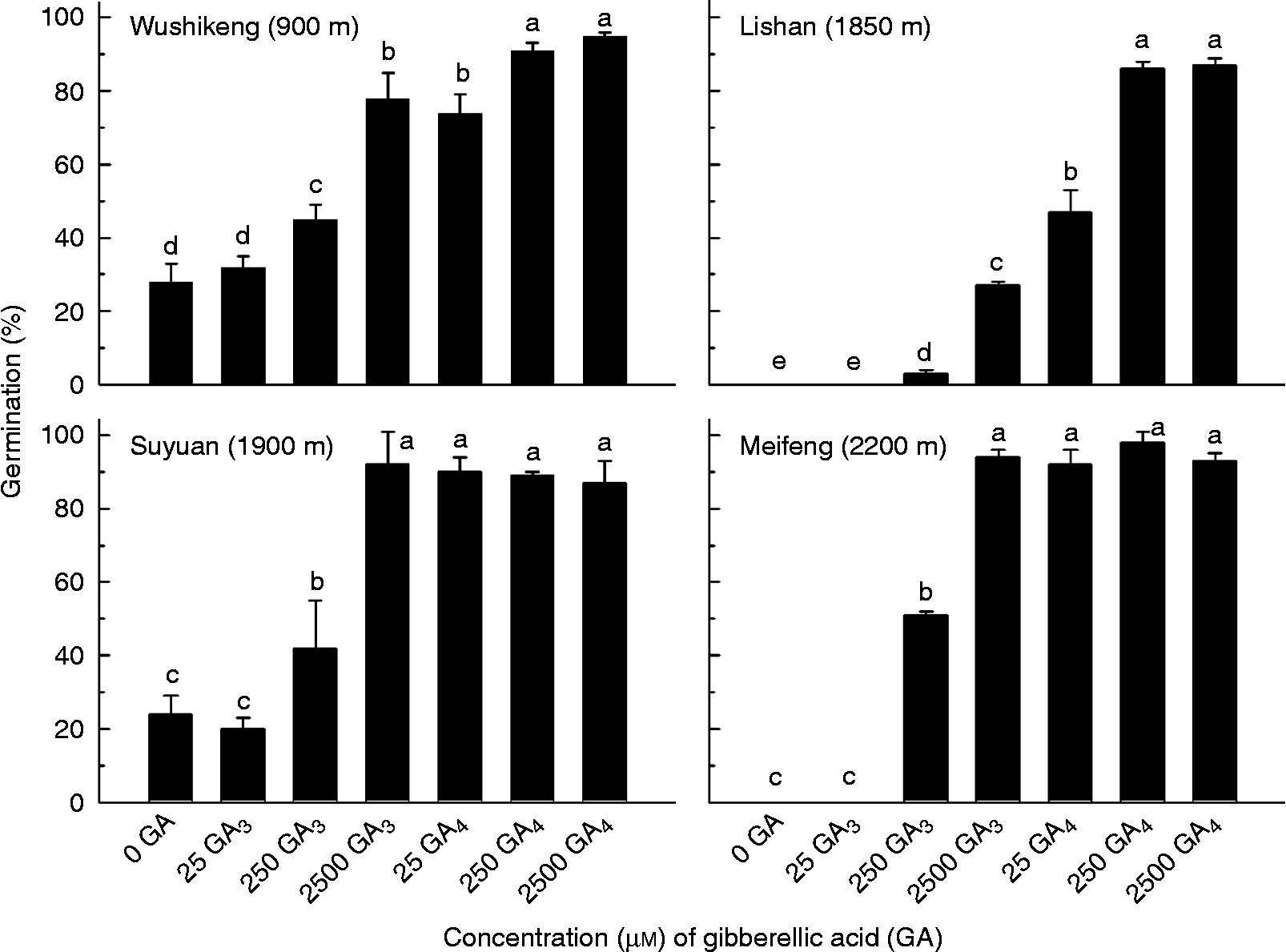
Germination varied significantly over incubation time, and this temporal response depended highly on the population and GA condition (time and all factor interactions with time as well as population, GA condition and their interaction, Table 2). For Wushikeng, Suyuan and Meifeng populations, ≥ 78% germination occurred on 2500 μM GA3 and on 25, 250 and 2500 μM GA4 but ≤ 45% on water and on 25 and 250 μM GA3 (Fig. 5). On the other hand, seeds from the Lishan population germinated to 86–87% on 250 and 2500 μM GA4 and ≤ 47% on water and on all other concentrations of GA3 and GA4.
Effects of gibberellic acids (GA3 and GA4) on germination percentages (mean ± SD) of Sambucus chinensis seeds collected at four sites in Taiwan during 4 weeks of incubation at 25/15°C. Control seeds were incubated on double-distilled water (i.e. 0 μM GA) under the same conditions as the GA-treated seeds. For each population, means (n= 3, 100 seeds/n) with a dissimilar letter differ significantly within columns and those with the same letter do not (PLSD, P= 0.05).

Discussion
We hypothesized that (1) seeds from the Wushikeng and Meifeng populations of S. chinensis exposed to warm temperatures (c. 20–35°C, Baskin and Baskin, Reference Baskin and Baskin1998) would require warm stratification, and (2) seeds from the Lishan and Suyuan populations of S. chinensis exposed to cold temperatures (0–10°C) need cold stratification. The first hypothesis was substantiated. If cold stratification effectively overcame dormancy in seeds from the Wushikeng and Meifeng populations, we would have expected germination of cold-stratified seeds to be much higher than that of control seeds (i.e. 0 weeks of cold stratification). This was not observed. Instead, control seeds from these two populations germinated higher than, or on par with, cold-stratified seeds during 25 weeks of incubation at 25/15°C, regardless of the length of cold stratification. We cannot rule out completely that some cold stratification occurred at 15/6°C, since the night-time temperature is within the range of cold stratification. However, highest germination in both populations occurred at 25/15, 20/10 and/or 15/6°C during 30 weeks of incubation without a cold stratification treatment. These results further substantiate that seeds of these populations do not require cold stratification.
The second hypothesis was not supported. Although the Lishan and Suyuan populations grow in locations receiving mostly cold-stratifying temperatures, their seeds required warm temperatures for dormancy break and germination. Control seeds (0 weeks of cold stratification) from these two populations germinated to higher percentages than seeds that received 2–8 weeks of cold stratification. Highest germination for seeds in the Lishan and Suyuan populations occurred at 30/20 or 25/15°C, respectively. Thus, warm temperatures were more effective than cold temperatures for breaking dormancy and promoting germination in all four populations, regardless of the ambient habitat temperatures. The similarity in all studied populations – requiring warm (and not cold) temperatures – is probably due to phylogenetic relatedness (i.e. it is one species), despite diverging selection forces (i.e. populations are exposed to different climatic conditions).
Warm stratification is usually tested by placing seeds at a moist, warm-temperature condition that approximates natural summertime conditions (e.g. at least 12 weeks) and then incubating them over a range of temperatures, particularly at low temperatures. However, moderate to high percentages of S. chinensis seeds from Wushikeng, Lishan and Suyuan populations germinated during 12 weeks of incubation at warm temperatures. Moreover, the temperature range over which germination occurred gradually widened during incubation. We suggest that the seeds were warm stratified during incubation and dormancy loss occurred. Similarly, in Cyclospermum leptophyllum, a species with non-deep simple morphophysiological dormancy (MPD), a high percentage of fresh seeds germinated over a narrow range of temperatures but the range increased when seeds were incubated continuously in light, indicating the presence of conditional physiological dormancy (Walck et al., Reference Walck, Baskin, Hidayati and Baskin2008).
At maturity, seeds of S. chinensis from the Wushikeng, Lishan and Meifeng populations contain embryos that occupy approximately 50% of the seed length. Like embryos in other species of Sambucus (Tylkowski, Reference Tylkowski1982; Hidayati et al., Reference Hidayati, Baskin and Baskin2000, Reference Hidayati, Walck and Taylor2010), they are relatively large when compared with seeds of other species containing underdeveloped embryos (i.e. usually much less than 50%) (Baskin and Baskin, Reference Baskin and Baskin2007). Between the size at initial stages of growth (i.e. in freshly matured seeds) and at the time when embryos had grown enough to start splitting the seed coat and endocarp, embryo length in seeds of S. chinensis increased by approximately 20%, consistent with other studies on Sambucus (Hidayati et al., Reference Hidayati, Baskin and Baskin2000, Reference Hidayati, Walck and Taylor2010). Following the reasoning in Hidayati et al. (Reference Hidayati, Walck and Taylor2010), we consider the embryos in S. chinensis to be ‘underdeveloped.’
Seeds with morphological dormancy (MD) have an underdeveloped embryo, and those with MPD have MD and a physiological block to germination. Baskin and Baskin (Reference Baskin, Baskin, Smith, Dickie, Linington, Pritchard and Probert2003) suggested a 30-day period to distinguish between MD versus MPD dormancies. Seeds that germinated in < 30 d would have MD, whereas those that did so in >30 d would have MDP. Up to about 25% of fresh seeds from Wushikeng and Suyuan populations germinated within 4 weeks (28 d), showing that they have MD; the majority of seeds from these populations required >7 weeks to germinate to high percentages and therefore have MPD. On the other hand, no seeds from the Lishan and Meifeng populations germinated until week 5 or 8, respectively, and high germination did not occur until week 16 or 17, respectively. Thus, all freshly matured seeds from these two populations have MPD.
Several levels of MPD are recognized and are initially divided into simple and complex on the basis of temperature at the time of embryo growth (Baskin and Baskin, Reference Baskin and Baskin2004). Embryos in seeds with simple MPD need relatively warm temperatures (20–35°C) for growth, whereas those with complex MPD require low temperatures (0–10°C). Because embryo growth in seeds of S. chinensis occurred at warm temperatures, they have a simple type of MPD. Further classification of the simple type of MPD into non-deep, intermediate or deep depends on conditions conducive for dormancy release: temperature requirements and GA3. Non-deep simple MPD is broken by warm or cold stratification, and GA3 overcomes dormancy. In contrast, intermediate simple and deep simple MPDs are broken by warm stratification followed by cold stratification, with GA3 substituting for the warm stratification requirement (Baskin and Baskin, Reference Baskin and Baskin2004). For S. chinensis, GA3 and GA4 increased speed and percentages of germination. Accordingly, seeds of this species have non-deep simple MPD. The present study is the first to report a non-deep simple level of MPD in seeds from a member of Sambucus. Until now, only intermediate complex MPD or deep simple MPD has been reported (Hidayati et al., Reference Hidayati, Baskin and Baskin2000, Reference Hidayati, Walck and Taylor2010).
Considering that seeds were collected during different years, we must be cautious about comparing germination among populations. However, there were some interesting population differences in germination among the alternating temperatures as well as the constant temperature and in the timing of germination, which may have important ecological implications. (1) Seeds from Wushikeng, Suyuan and Meifeng populations germinated to high percentages over the entire range of alternating temperatures. In contrast, high germination of Lishan seeds occurred at the highest alternating temperatures and low germination at the lowest alternating temperatures. (2) Germination at the constant temperature varied among populations: Wushikeng (moderate), Lishan and Suyuan (low) and Meifeng (none). (3) Finally, populations differed in the time when seeds started to germinate substantially: week 3 or 5 in Wushikeng, Suyuan and Meifeng versus week 8 in Lishan. Overall, the germination characteristics of Lishan are different from those of Wushikeng, Suyuan and Meifeng, with these last three populations being fairly similar. The population differences in germination percentages and in germination timing appear to be unrelated to elevation (Lishan at 1850 m and the others at 900–2200 m), average temperature (Lishan with 12°C and the others with 11–21°C), or total annual precipitation (Lishan receives 2828 mm and the others 2559–3183 mm). Thus, aside from year effects, we are uncertain about the underlying basis of these germination dissimilarities.
From an ecological perspective, germination of most S. chinensis seeds from all populations would be delayed for 1–2 months, since very few germinated during incubation at any temperature. Following this delay, seeds from Wushikeng, Suyuan and Meifeng could potentially germinate in nature nearly throughout the rest of the year, especially during the wet season, since moderate to high germination occurred during incubation at ≥ 15/6°C. These temperatures mostly match habitat temperatures: the range in maximum/minimum is 14–27/4–23°C. The exception would be Suyuan population, where December–February temperatures average 12/ − 1°C. On the other hand, high ( ≥ 70%) germination occurred in Lishan seeds during 17 and 27 weeks of incubation at 30/20 and 25/15°C, respectively, which do not occur in this habitat. Lishan habitat temperatures throughout the year are ≤ 18/14°C, and germination only reached 19% during 30 weeks of incubation at 20/10 and 15/6°C. Thus, seeds would remain ungerminated in the soil for a relatively long time, until May–October when habitat temperatures average 17/13°C, and then only a few seeds are capable of germinating.
Altogether, our study showed that seeds of S. chinensis collected at several elevations require warm temperatures for dormancy break and germination. Seeds have non-deep simple MPD, which has not previously been reported in any members of Sambucus. The amount and timing of germination among populations varied substantially in response to temperature treatments, but the differences may be confounded by a (collection) year effect. Following a 1- to 2-month delay, seeds from all populations mostly have a broad range of time during a year to germinate. The seed dormancy and germination characteristics of the subtropical S. chinensis are different from those of temperate members of the genus in which cold stratification (sometimes combined with warm stratification) is the predominant treatment to overcome dormancy.
Acknowledgements
The authors thank Yen-Wei Chang, Chang-Yen Chen and Wen-Yu Hsu for technical assistance.
Financial support
This research was supported by a grant (100AS-8.1.2-F1-G2) from the Council of Agriculture, the Executive Yuan, Taiwan.
Conflicts of interest
None.