





Impact statement
AlgaMatrix proposes a modular, digitally fabricated microalgae photobioreactor that integrates living biological systems into interior architectural components, demonstrating sustained growth and localized CO2 reduction under ambient indoor conditions. By combining membrane fabrication, circulation logic, and real-time sensing, the project establishes a measurable and replicable framework for biologically informed interior environments.
Introduction
As climate change intensifies and urban environments become increasingly exposed to extreme heat, air pollution, and resource scarcity, the regulation of indoor environments has emerged as a critical architectural challenge. Contemporary life is increasingly interiorized: people in industrialized societies spend approximately 90% of their time indoors (Allen and Macomber, Reference Allen and Macomber2020; Satish et al., Reference Satish, Mendell, Shekhar, Hotchi, Sullivan, Streufert and Fisk2012), making indoor environmental quality central to human health and well-being. Since the mid-twentieth century, buildings have increasingly depended on mechanical systems to regulate indoor temperature and air quality. While these systems have enabled standardized comfort conditions, they also entail significant energy demand, generate waste heat and contribute to greenhouse gas emissions, thereby intensifying the climatic pressures they seek to mitigate. Architectural theory has long framed interior environments as artificially stabilized systems, insulated from external climatic variability through technological mediation. Banham’s Architecture of the Well-Tempered Environment (Reference Banham1984) describes this condition as one in which environmental performance is delegated to mechanical infrastructure rather than embedded within architectural form or material logic. In this framework, comfort is maintained through continuous mechanical buffering, allowing the architectural envelope to become increasingly indifferent to climate as long as energy supply remains uninterrupted. As climate instability increases, the separation between architecture and environmental regulation becomes increasingly untenable. This challenge calls for a reduction in energy demand alongside a reconceptualization of buildings as operative elements within environmental processes. Within this context, living materials have gained renewed attention as potential mediators between biological processes and architectural systems. Microalgae, among the earliest photosynthetic organisms, have played a foundational role in regulating Earth’s atmospheric composition. Their capacity to absorb carbon dioxide and release oxygen through photosynthesis positions them as promising agents for biologically integrated environmental regulation (Barsanti, Reference Barsanti and Gualtieri2022). Unlike ground-based plant systems, microalgae are cultivated within enclosed and controlled photobioreactor environments that can be directly integrated into building envelopes, enabling regulated growth conditions and optimized productivity for architectural applications (Arora et al., Reference Arora, Sudhakar and Rana2024; Razzak et al., Reference Razzak, Bahar, Islam, Haniffa, Faruque, Hossain and Hossain2024). Recent architectural research has explored algae-based systems primarily at the scale of façades or exhibition-oriented installations. While these projects demonstrate the conceptual potential of integrating living systems into architecture, they often rely on large infrastructural investments, complex maintenance regimes or lack systematic long-term performance validation under real-world conditions. There remains a lack of experimentally validated, small-scale systems designed specifically for indoor environments, where constraints of space, light, maintenance, and fabrication are more stringent. Addressing this gap requires a shift from symbolic or display-driven bio-integration toward fabrication-driven, performance-tested architectural systems. This paper presents AlgaMatrix, a digitally fabricated, modular microalgae photobioreactor designed for indoor architectural integration. The system cultivates Chlorella vulgaris within ultrasonically welded thermoplastic polyurethane (TPU) membranes supported by 3D-printed structural frames, enabling controlled experimentation with biological performance and environmental interaction. This research contributes in three ways: (1) by developing a fabrication-driven framework for integrating living microalgae into modular architectural assemblies; (2) by evaluating microalgal growth and fluid behavior under indoor conditions through embedded sensing and Multiphysics simulation; and (3) by positioning bio-integrated systems as reproducible material infrastructures for adaptive interior environments.
State of the art
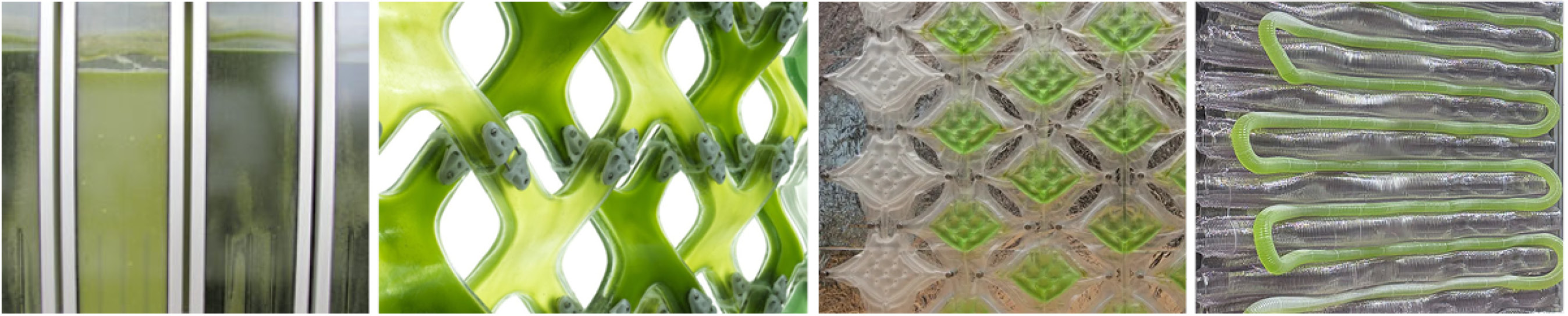
Microalgae integration in architecture has been explored through façades, modular systems, and bio-design prototypes that position buildings as hosts for metabolic processes. While these approaches demonstrate technical feasibility, challenges remain in scalability, fabrication complexity, user interaction, and long-term maintenance. The BIQ House in Hamburg exemplifies a large-scale bioreactor façade integrating biomass production, shading, and thermal regulation (Arup, 2013), though its infrastructural complexity limits broader replicability. EcoClosure (Kim, Reference Kim2022) investigates photobioreactor glazing at the component scale through rigid panelized envelope systems. Other projects, such as the WaterLilly microalgae wall (Peters, Reference Peters2014), deploy membrane assemblies as façade skins within exhibition contexts, using continuous planar surfaces to contain algae cultures. More recent studies investigate 3D-printed façade-integrated algae modules combining tubular cultivation and air-driven circulation to interact with indoor air at the building envelope scale (Chen et al., Reference Chen, Zhou, Chai, He and Hua2025) (Figure 1). Within this body of work, fewer studies have explored interior-scale algae systems that combine bio-integration with sensing technologies, environmental monitoring, and user interaction at the room scale. Existing systems primarily focus on façade performance, energy exchange or biomass production, while questions related to algae viability, maintenance, and environmental responsiveness within everyday indoor environments remain less developed. Parallel research on indoor environmental sensing has demonstrated how accessible interfaces can translate invisible environmental conditions into intuitive feedback for occupants (Jo et al., Reference Jo, Jo, Kim, Kim and Han2020; Zuccarelli et al., Reference Zuccarelli, Xiong, Margain and Chen2025). Comparable approaches remain limited in bio-integrated architectural systems, particularly in relation to monitoring, environmental awareness, and user engagement. This direction is aligned with recent work in bio design and bio fabrication, where biological systems are increasingly framed as materially and environmentally interdependent assemblies in which geometry, fabrication, and biological activity are closely coupled (Andréen and Goidea, Reference Andréen and Goidea2022; Armaly et al., Reference Armaly, Iliassafov, Kirzner, Kashi, Barath, Turrin, Andriotis and Rafiee2023). In this context, AlgaMatrix is positioned as an alternative approach for hosting living microalgae within interior architectural space. The project investigates how inflatable membrane architectures can support algae viability, circulation, sensing, and user interaction through freestanding and modular interior components. Unlike façade-integrated photobioreactors embedded within the building envelope, the system operates independently from façade infrastructure under indoor environmental conditions. Positioned near natural light sources, it uses inflatable TPU membranes with continuous welded channels for fluid circulation. Existing algae systems commonly rely on rigid panels, glazing units, tubular reactors or continuous membrane surfaces. AlgaMatrix employs welded inflatable membrane assemblies, where internal flow paths are integrated directly within a continuous TPU volume. This strategy draws from bag-based cultivation methods used in aquaculture and translates them into architectural components designed for interior environments (Arora et al., Reference Arora, Sudhakar and Rana2024; Razzak et al., Reference Razzak, Bahar, Islam, Haniffa, Faruque, Hossain and Hossain2024). The project also integrates sensing technologies that monitor environmental and biological conditions while enabling forms of user feedback and interaction. Interior deployment introduces constraints related to lower light availability, closer user proximity, and accessible maintenance requirements. The system therefore relies on low-pressure circulation, compact modular assemblies, and embedded sensing strategies that support algae survival alongside environmental awareness. Within this framework, biological performance is closely linked to fabrication and interaction, where membrane geometry, welding precision, channel topology, sensing feedback, and user engagement collectively influence flow behavior, system stability, and algae viability.
State of the art (from left to right: BIQ by Arup, EcoClosure by Kyoung Hee Kim, Micro-Algae Wall by Cesare Griffa, and Alga Reactor by Chen).

Figure 1. Long description
The image contains four separate photos showcasing different architectural integrations of microalgae systems. Panel A: A tall building with vertical strips of green microalgae growing on its facade. Panel B: A close-up view of a geometric pattern made of green microalgae within a structured framework. Panel C: A detailed view of a modular system with green microalgae integrated into a grid-like structure. Panel D: A close-up of green microalgae growing in a series of connected, transparent tubes.
Methods
Biological constraints and material selection
Microalgal species selection
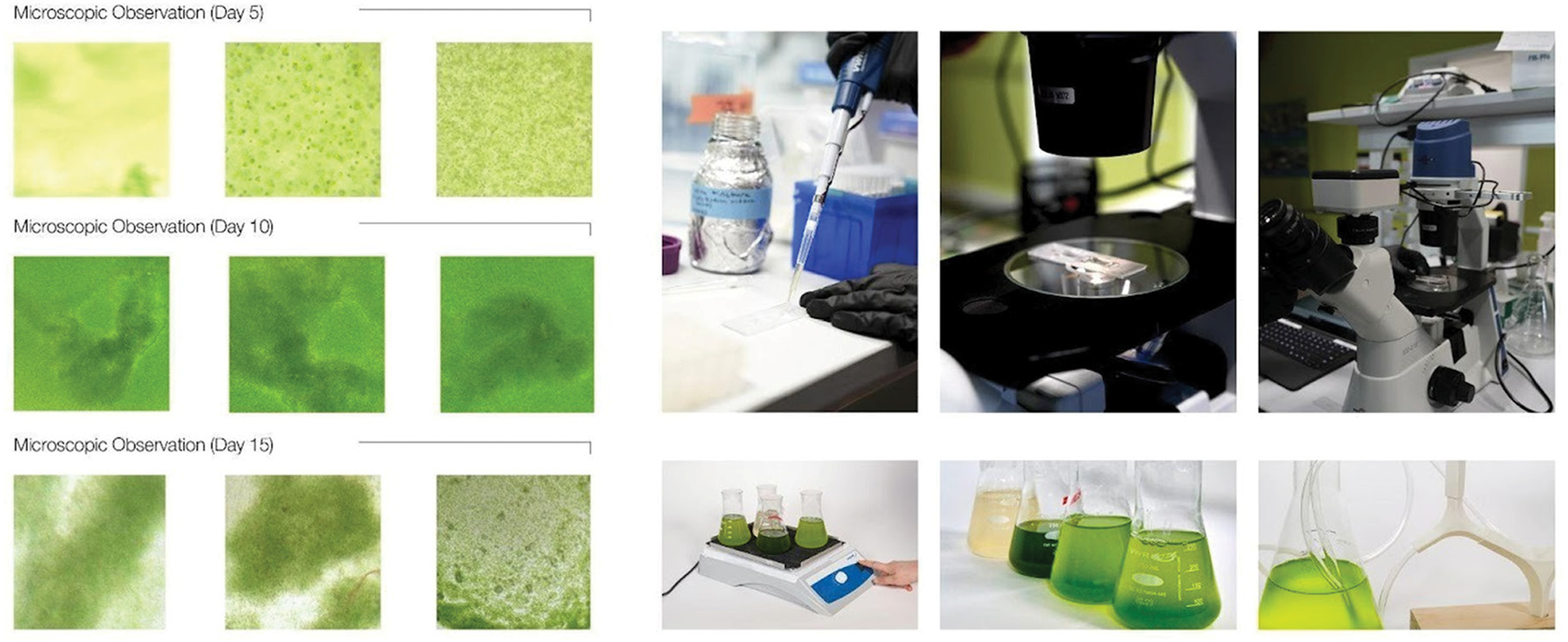
The integration of microalgae into thin-film membrane systems imposes biological constraints related to growth rate, environmental tolerance, and compatibility with synthetic materials (Castro-Muñoz et al., Reference Castro-Muñoz and García-Depraect2021; Masojídek and Torzillo, Reference Masojídek, Torzillo, Jørgensen and Fath2008). To identify a species suitable for indoor membrane-based cultivation, a comparative study was conducted between two widely studied microalgae: Chlorella vulgaris and Dunaliella salina. Both species are recognized for their resilience and have been explored in bioregenerative life-support research in enclosed environments (Revellame et al., Reference Revellame, Aguda, Gatdula, Holmes, Fortela, Sharp, Gang, Chistoserdov, Hernandez and Zappi2024). C. vulgaris is a freshwater microalga characterized by rapid growth, efficient nutrient uptake, and high photosynthetic activity, with extensive applications in environmental remediation and carbon sequestration studies (Masojídek and Torzillo, Reference Masojídek, Torzillo, Jørgensen and Fath2008). It also exhibits high nutritional value and significant carbon sequestration potential (Politaeva et al., Reference Politaeva, Ilin, Velmozhina and Shinkevich2023). In contrast, D. salina is a halophilic species adapted to high-salinity and environmentally stressful conditions. Both species were cultured using equivalent initial concentrations to evaluate comparative growth performance. During the preliminary screening phase, C. vulgaris and D. salina cultures were obtained from Algae Research Supply. C. vulgaris cultures and modified f/2 nutrient media were supplied through the manufacturer’s algae culture kit and maintenance formulations (Algae Research Supply, n.d.-a), advertised as a complete medium modified from the Guillard and Ryther f/2 formulation for freshwater and seawater algal cultures (Guillard, Reference Guillard, Smith and Chanley1975), while D. salina was maintained using the supplier’s recommended seawater medium for halophilic microalgae (Algae Research Supply, n.d.-b). No formal strain identifiers or accession numbers were provided by the supplier. Due to limited access to wet-lab facilities, cultivation was conducted in a semi-controlled indoor studio environment in Cambridge, MA, during April. Culture flasks were positioned near a west-facing window under mixed natural and artificial illumination, with supplemental lighting operating on a 16:8 h light/dark cycle. Ambient temperatures ranged between approximately 20–26°C. Light intensity and spectral composition were not quantitatively measured. Cultures were continuously agitated on a laboratory shaker at an estimated 100–110 rpm to maintain suspension, support gas exchange, and reduce sedimentation of C. vulgaris cells. Continuous mixing promotes circulation and improves light and nutrient distribution within the culture volume (Ahmad et al., Reference Ahmad, Husain, Hassan, Khan, Zahmatkesh and Ni2024; Akhtar et al., Reference Akhtar, Ali and Park2020). The cultivation environment was intended as an early-stage assessment of biological compatibility and material integration within the AlgaMatrix membrane system rather than a fully standardized physiological growth study. Cultures were monitored over a ten-day period. Hemocytometer observations supported qualitative comparison of culture development; however, limitations in sampling homogeneity, starting cell density and biological replication constrained interpretation of cell counts as precise whole-culture density measurements. The study therefore focused primarily on culture viability, handling stability and suitability for membrane-based prototype cultivation (Figure 2).
Documentation of C. vulgaris growth in the laboratory.

Membrane material selection
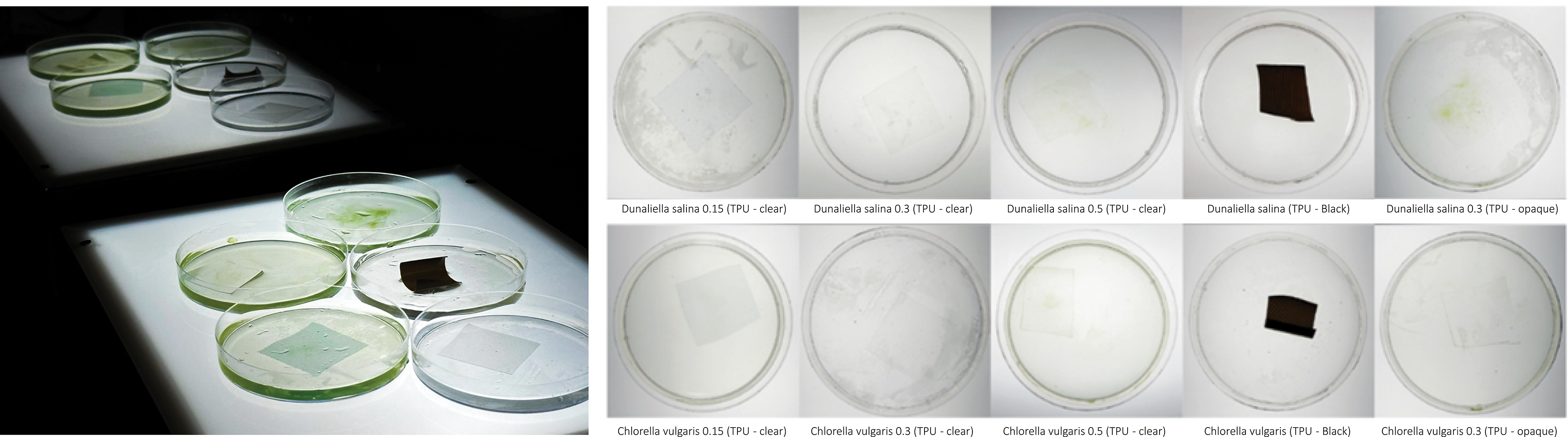
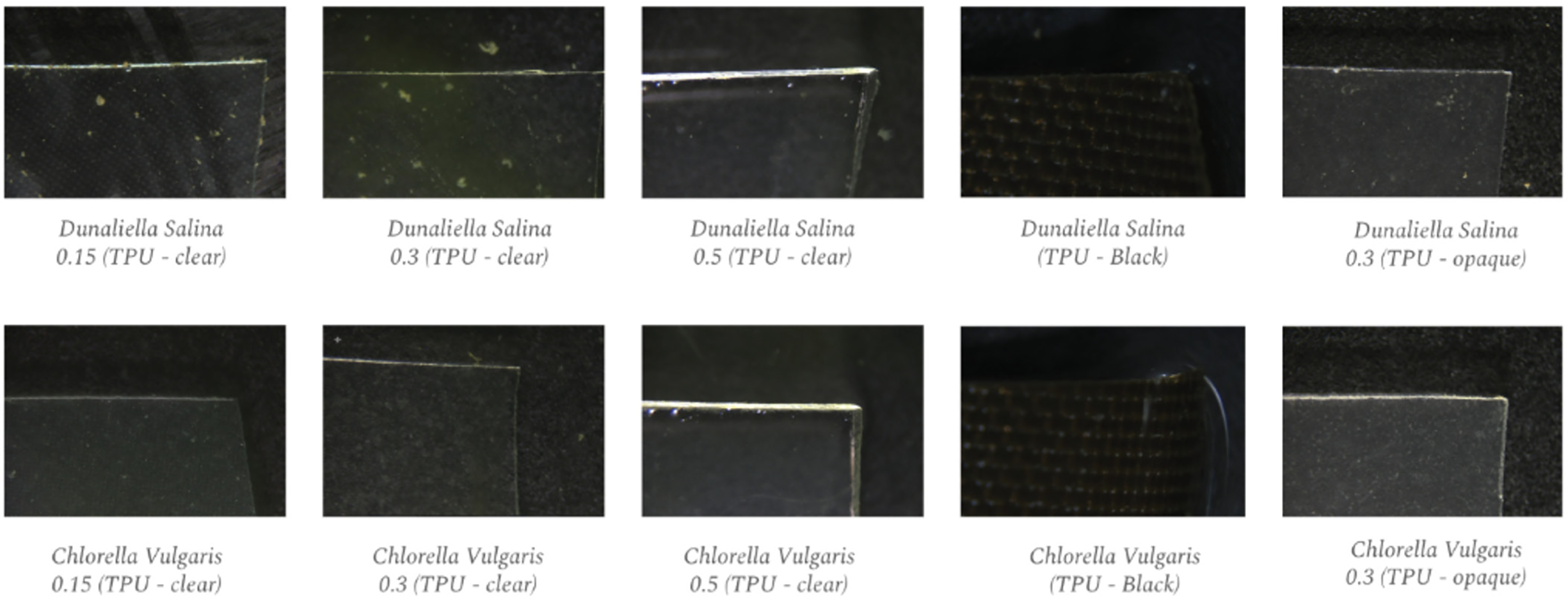
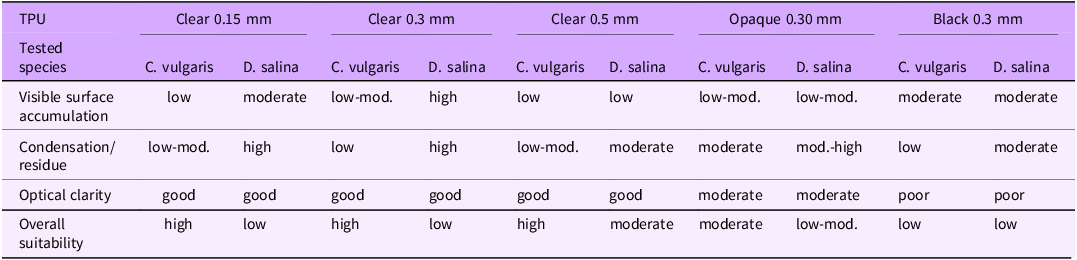
The membrane serves as the primary interface between biological processes and architectural fabrication, requiring a balance of optical clarity, mechanical flexibility, chemical stability, and long-term durability. The system demands a material capable of withstanding repeated inflation cycles, maintaining sealed fluid channels and supporting sustained biological activity without excessive biofouling. TPU was selected over bioplastics and other polymer alternatives due to its superior tensile strength, elasticity, and resistance to chemical degradation (Shin et al. Reference Shin, Prasad and Choi2025). Although TPU carries a higher embodied carbon than some biodegradable polymers, its extended lifespan and resistance to cracking and delamination reduce the frequency of replacement, mitigating environmental impact over the system’s operational life. TPU exhibits limited gas permeability. As passive diffusion through the membrane is insufficient to support controlled gas exchange, CO2 supply and O2 release are regulated through integrated 3D-printed air filters and inlet/outlet interfaces (see Joint Design and Fluid Connectivity section). Microalgae can operate under multiple metabolic modes, including photo-autotrophy (light-driven growth), mixotrophy (combined light and organic carbon uptake), and heterotrophy (growth without light) (Verma et al., Reference Verma, Kumari, Srivastava and Kumar2020). As photosynthetic activity depends on light availability, optical transmission was evaluated as a key parameter in the membrane system. Clear TPU allowed visible light transmission under indoor cultivation conditions. A material compatibility experiment was conducted to evaluate TPU–microalgae interactions under semi-controlled cultivation conditions. Membranes were tested using a full-factorial design combining three thicknesses (0.15, 0.3, and 0.5 mm) with three surface finishes (clear, opaque, and black). Different surface finishes were included to examine how variations in membrane optical properties and pigmentation affected cultivation behavior and surface interaction during the testing period. Cultures of C. vulgaris and D. salina were monitored over a seven-day period to evaluate optical transmission, surface-associated accumulation, condensation/residue formation, and growth consistency across TPU material variants (Figure 3). Qualitative compatibility assessments were conducted through photographic observation of membrane surface behavior, optical transparency, and cultivation stability under semi-controlled indoor conditions. Comparative ratings (low, moderate, high) were used to support early-stage material selection and prototype evaluation.
Compatibility test of TPU membranes with C. vulgaris and D. salina, evaluating viability and surface adhesion.

Fabrication and computational design
Membrane fabrication
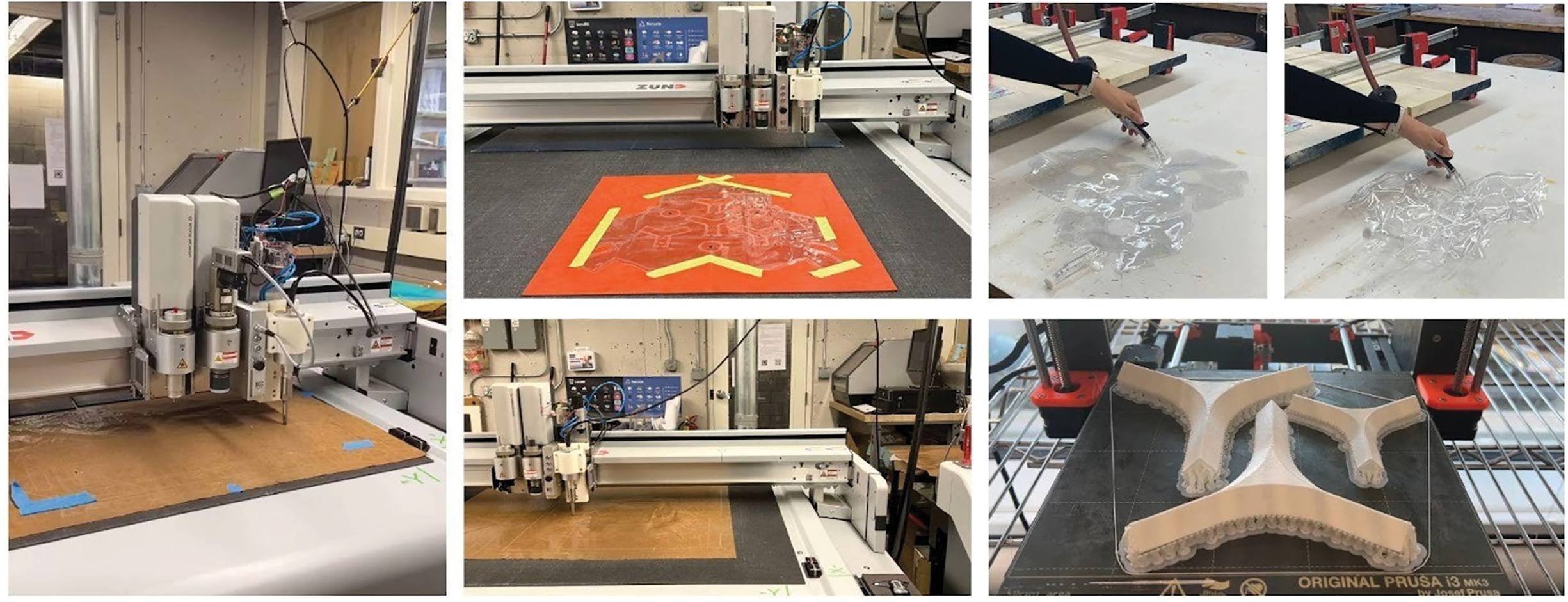
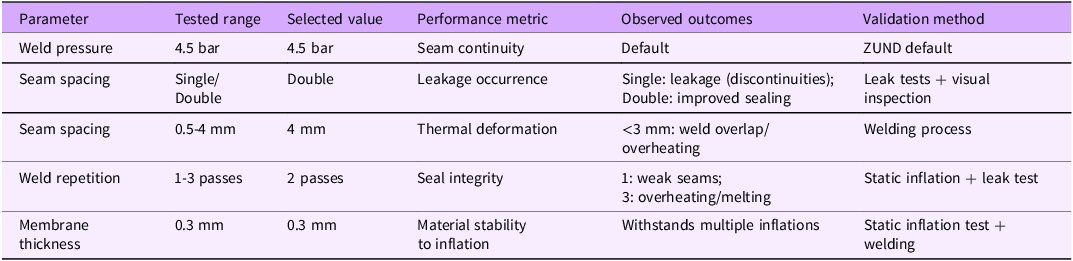
AlgaMatrix membrane system is fabricated through CNC-controlled ultrasonic welding of dual-layer TPU sheets. An ultrasonic welding head mounted on a ZUND cutting platform generates localized heat through high-frequency vibration, fusing layers along predefined seams without adhesives, enabling precise control of geometry while preserving flexibility and optical clarity (Figure 4). Welding tests were conducted to optimize seam integrity, leak resistance, and transparency by maintaining a constant pressure of 4.5 bar while varying weld spacing from 0.5–4 mm and the number of welds passes from one to three. The welding process enabled the fabrication of internal channel geometries that define fluid routing and influence fluid circulation, with constraints such as minimum seam spacing and curvature radius informing the design. Multiple geometric configurations were iteratively tested to evaluate flow distribution, structural behavior, and scalability across modular assemblies (Figure 5). Fabrication accuracy was validated through prototype testing, while digital reference points informed seam alignment and inlet positioning adjustments, reducing material waste and minimizing the need for full re-fabrication when discrepancies emerged. Observed issues informed iterative refinements, reinforcing the link between design, fabrication, and performance.
TPU module set up on ZUND supersonic welding head machine, inflation test, and 3D printing.

Figure 4. Long description
Panel A: A photo of a TPU module being set up on a ZUND supersonic welding head machine. The machine has various components and wires attached. Panel B: A photo of the ZUND machine in operation, with the TPU module in place. Panel C: A photo of a person conducting an inflation test on a TPU module. The person is using a tool to inflate the material. Panel D: A photo of a person conducting another inflation test on a different TPU modulel. The person is using a similar tool. Panel E: A photo of the ZUND machine with a control panel and a screen displaying settings. Panel F: A photo of a 3D-printed object on the ZUND machine. The object has a complex shape and is placed on a grid.
AlgaMatrix initial base module iterations.

Computational design and flow simulation
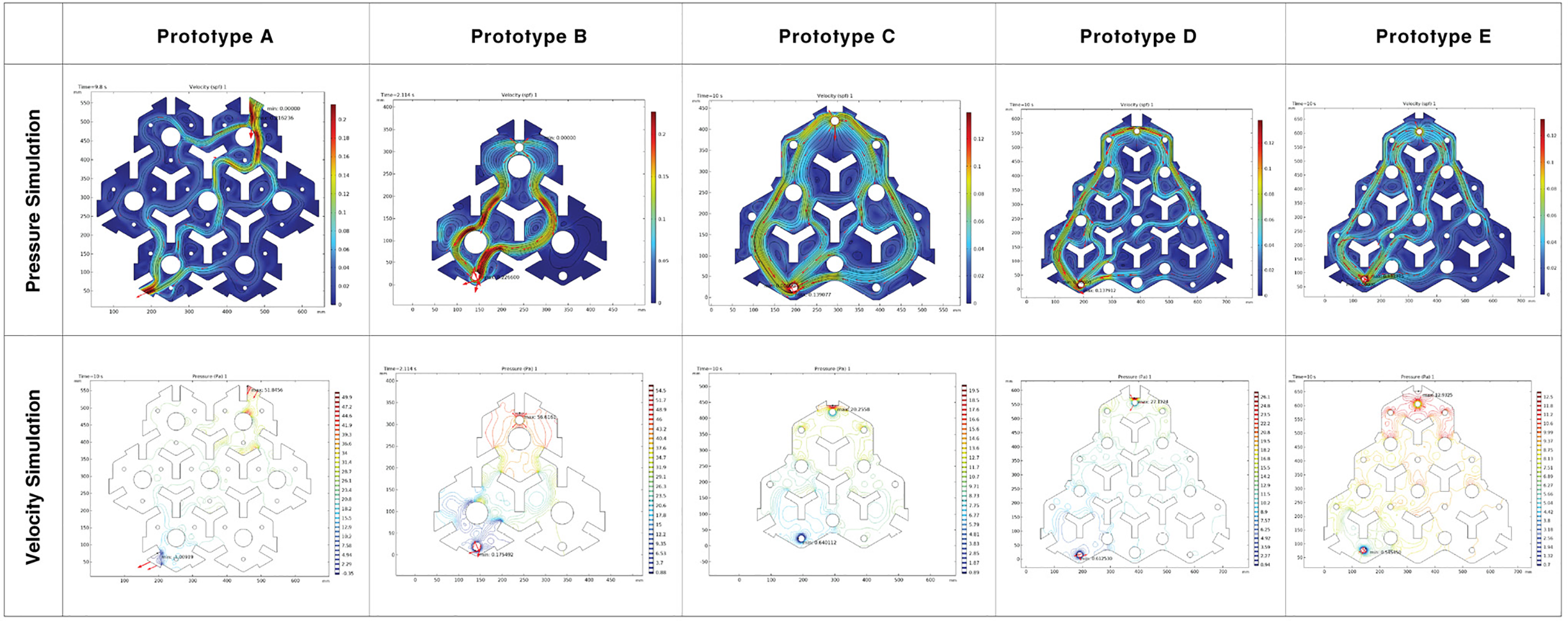
Computational fluid dynamics (CFD) simulations are widely used to model flow behavior and inform the design of photobioreactor systems (Ahmad et al., Reference Ahmad, Husain, Hassan, Khan, Zahmatkesh and Ni2024; Luzi and McHardy, Reference Luzi and McHardy2022). In this study, CFD simulations informed membrane geometry and circulation strategy. Internal fluid dynamics were modeled in COMSOL Multiphysics using a laminar flow interface, with an inflow velocity of 0.108 m/s derived from pump testing and applied consistently across scenarios. These simulations enabled early-stage evaluation of flow behavior prior to fabrication, reducing reliance on trial-and-error prototyping. Five geometric configurations (Prototypes A–E) were evaluated to compare pressure distribution, velocity profiles, and scalability under modular aggregation. All configurations were based on a tetrahedral unit, with variations in channel routing, inlet positioning, and aggregation logic. Both single modules and multi-layered assemblies were simulated to assess interconnected flow behavior. Maintaining consistent flow distribution is essential for stable nutrient transport and gas exchange within membrane-based microalgae systems. Circulation influences the growth dynamics of C. vulgaris by regulating mass transfer within the culture medium, including nutrient diffusion, CO2 availability, and oxygen removal. In static conditions, boundary layers form at the membrane–fluid interface, limiting dissolved inorganic carbon transport and allowing localized oxygen supersaturation, which can inhibit photosynthetic efficiency (Becker, Reference Becker1994; Torzillo and Vonshak, Reference Torzillo, Vonshak, Richmond and Hu2013). Hydrodynamic mixing disrupts these gradients, enhancing gas–liquid exchange, and improving biomass productivity through more uniform carbon delivery and reduced sedimentation (Ugwu et al., Reference Ugwu, Aoyagi and Uchiyama2008). In membrane-based photobioreactors with constrained flow paths, controlled circulation therefore supports a more consistent photosynthetic performance and biomass accumulation. At a methodological level, computational modeling functioned as a feedback mechanism linking hydraulic analysis, biological requirements, and fabrication strategy throughout the prototyping process. This approach aligns with recent discussions in biologically informed design and bio fabrication, which describe biological systems as materially and environmentally interdependent design environments where geometry, fabrication, and organism behavior are closely coupled (Andréen and Goidea, Reference Andréen and Goidea2022; Armaly et al., Reference Armaly, Iliassafov, Kirzner, Kashi, Barath, Turrin, Andriotis and Rafiee2023).
Prototype architecture
The AlgaMatrix prototype translates membrane-based cultivation into a modular architectural system capable of spatial deployment, continuous operation, and environmental monitoring. Structure, fluid circulation, sensing, and biological processes are integrated within a repeatable module (Figure 6). This section outlines the system’s architectural logic, focusing on modular geometry, structural components, joint design, and the integration of pumps and sensors for sustained operation.
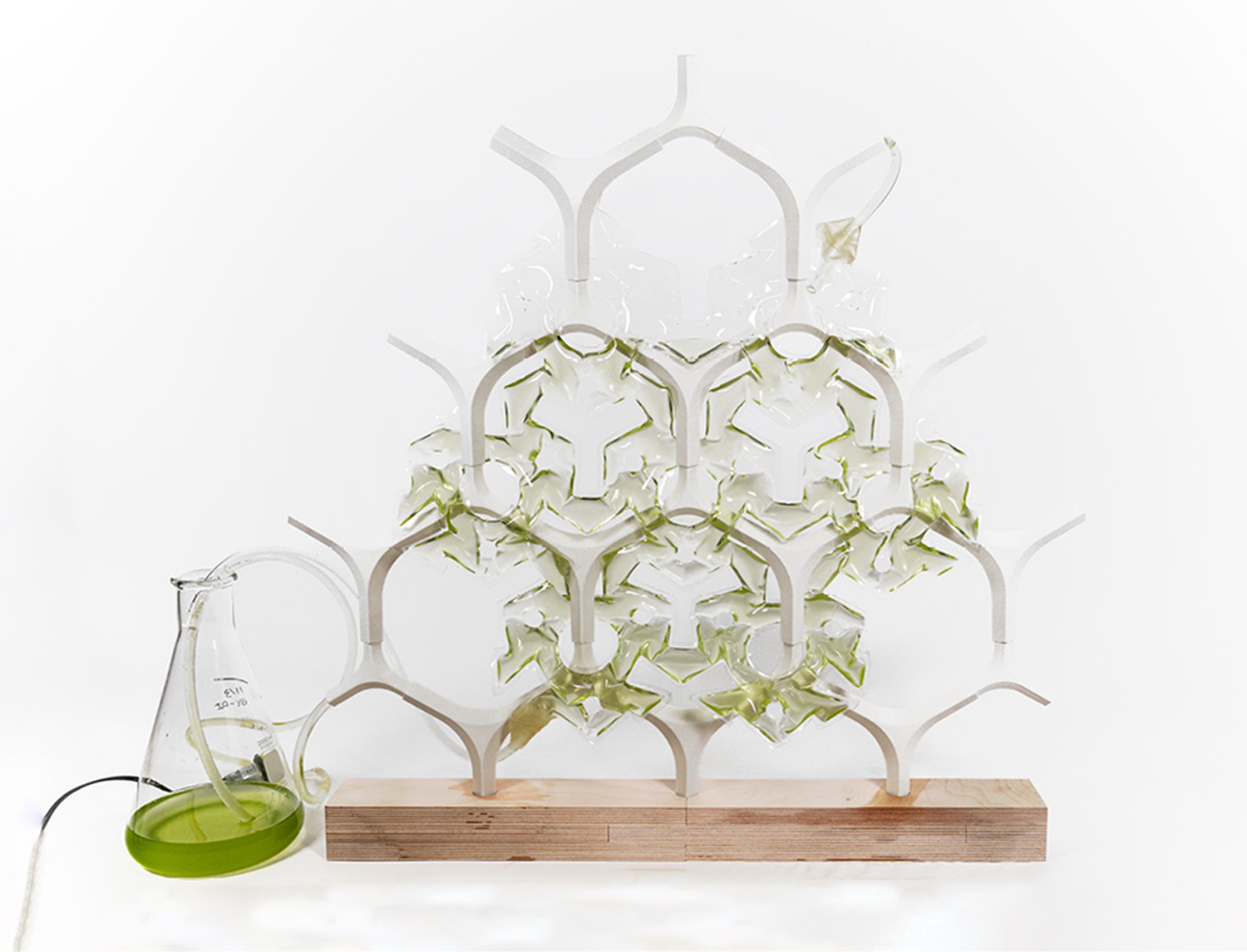
AlgaMatrix prototype.

Figure 6. Long description
Panel A: The image shows an AlgaMatrix prototype consisting of an inflatable membrane structure with multiple channels for fluid circulation. The structure is mounted on a wooden base and connected to algae culture reservoir on the left side. The inflatable membrane is transparent with visible internal channels that form a geometric pattern. The algae culture reservoir includes a glass container with a label and a pump that circulates the liquid through the membrane structure.
Modular geometry and structural system
The fundamental architectural unit of AlgaMatrix is a tetrahedral module composed of a dual-layer TPU membrane supported by a rigid structural frame. The tetrahedral geometry was selected for its inherent structural stability, spatial efficiency, and ability to aggregate into larger assemblies without requiring additional secondary support. When combined, individual tetrahedral units form hexagonal patterns that enhance structural cohesion while enabling flexible and freestanding installations. The structural frame is fabricated through additive manufacturing using polylactic acid (PLA), a biodegradable thermoplastic chosen for its balance between mechanical strength, dimensional stability, and environmental responsibility. Frames are produced in two interlocking sizes, with hollow interiors designed to accommodate tubing for microalgae circulation, effectively integrating structure, and infrastructure within a single component. Additive manufacturing further enables rapid iteration and customization of module dimensions, supporting adaptation to different spatial conditions and scales through low-setup and highly customizable fabrication processes.
Joint design and fluid connectivity
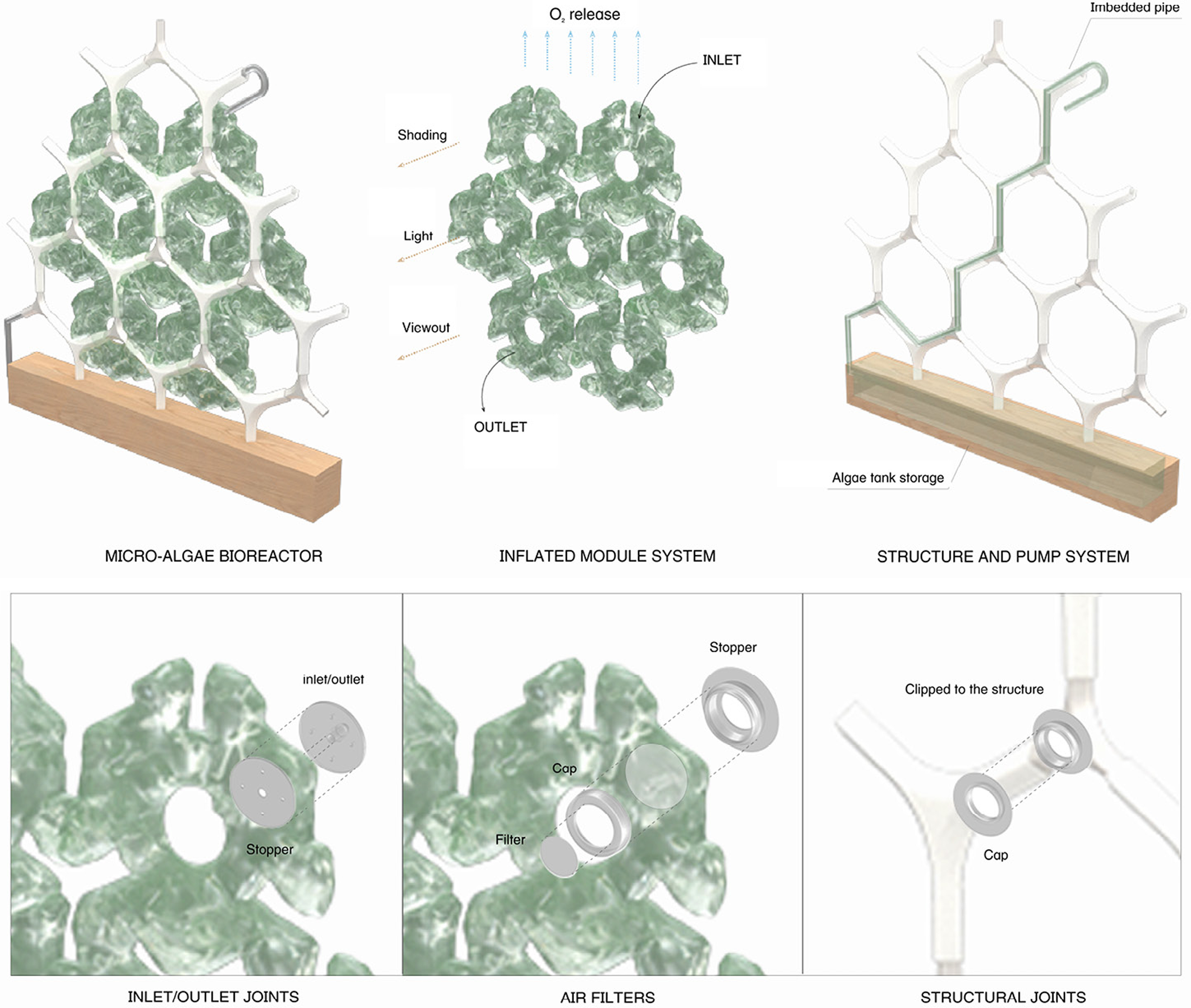
At the interface between membrane and structure, AlgaMatrix employs snap-fit joints that regulate fluid flow, enable modular connectivity, and ensure watertight integration (Figure 7). The joints are fabricated using a high-resolution PolyJet 3D printing process on a Stratasys J55 platform, utilizing VeroClear resin for its transparency, chemical stability, and dimensional precision. Each joint is designed with a standardized 20 mm base that anchors it to the PLA structural frame, while the opposing end accommodates inlets, outlets, air filters or tubing connections. The transparency of the joints was intended to support visual inspection of flow behavior at critical connection points during operation. Joints can be replaced or reconfigured without damaging the membrane or structural frame, allowing the system to adapt to different algae strains, flow rates or experimental setups. Air filters are embedded directly into the membrane at designated locations to enable gas exchange while preserving a sealed liquid environment. The filter housings were custom-designed and fabricated via 3D printing (Ø 20 mm) to integrate with the membrane joints. A gas-permeable film was inserted between two transparent 3D-printed joint components, forming a sealed interface that allows CO2 and O2 transfer while preventing liquid leakage. During fabrication, extended membrane edges were left unsealed to allow insertion of the filter assembly, after which the edges were cut and re-welded to restore watertight integrity.
AlgaMatrix system diagram and joints details.

Pumping system and circulation logic
Continuous fluid circulation is a core operational requirement of the AlgaMatrix system, supporting nutrient distribution, preventing biomass sedimentation, and enhancing photosynthetic efficiency (Akhtar et al., Reference Akhtar, Ali and Park2020; Razzak et al., Reference Razzak, Bahar, Islam, Haniffa, Faruque, Hossain and Hossain2024). Circulation is achieved through low-voltage water pumps connected to the membrane modules via integrated tubing housed within the structural frames. Pump selection and calibration were informed by early testing to establish flow rates compatible with both biological viability and membrane durability. Circulation was driven by a pump calibrated to deliver an average internal flow velocity of approximately 0.108 m/s, consistent with values used in computational simulation. This velocity was selected to maintain nutrient distribution and minimize sedimentation while limiting internal pressure to levels compatible with membrane seam integrity.
Sensor integration and monitoring infrastructure
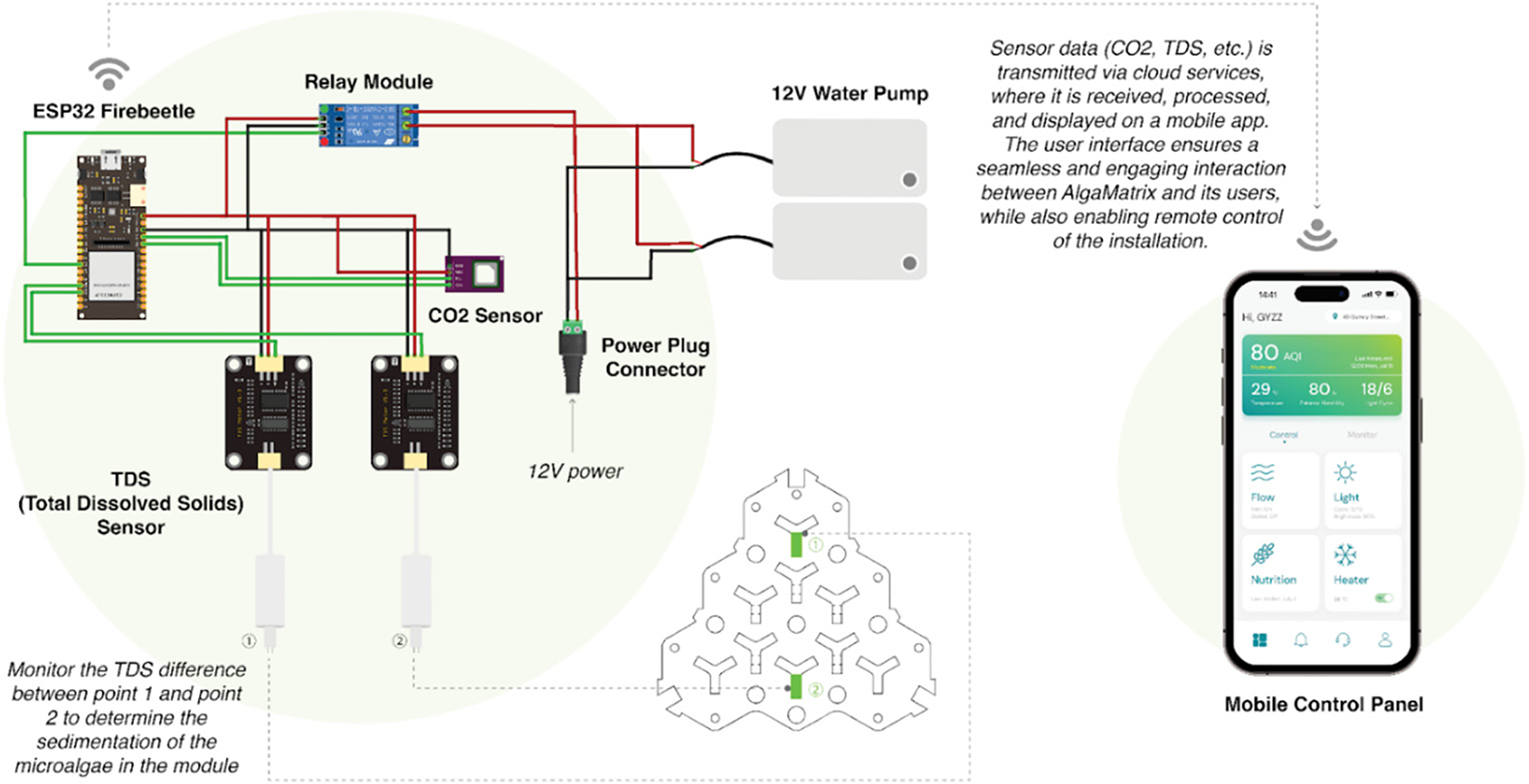
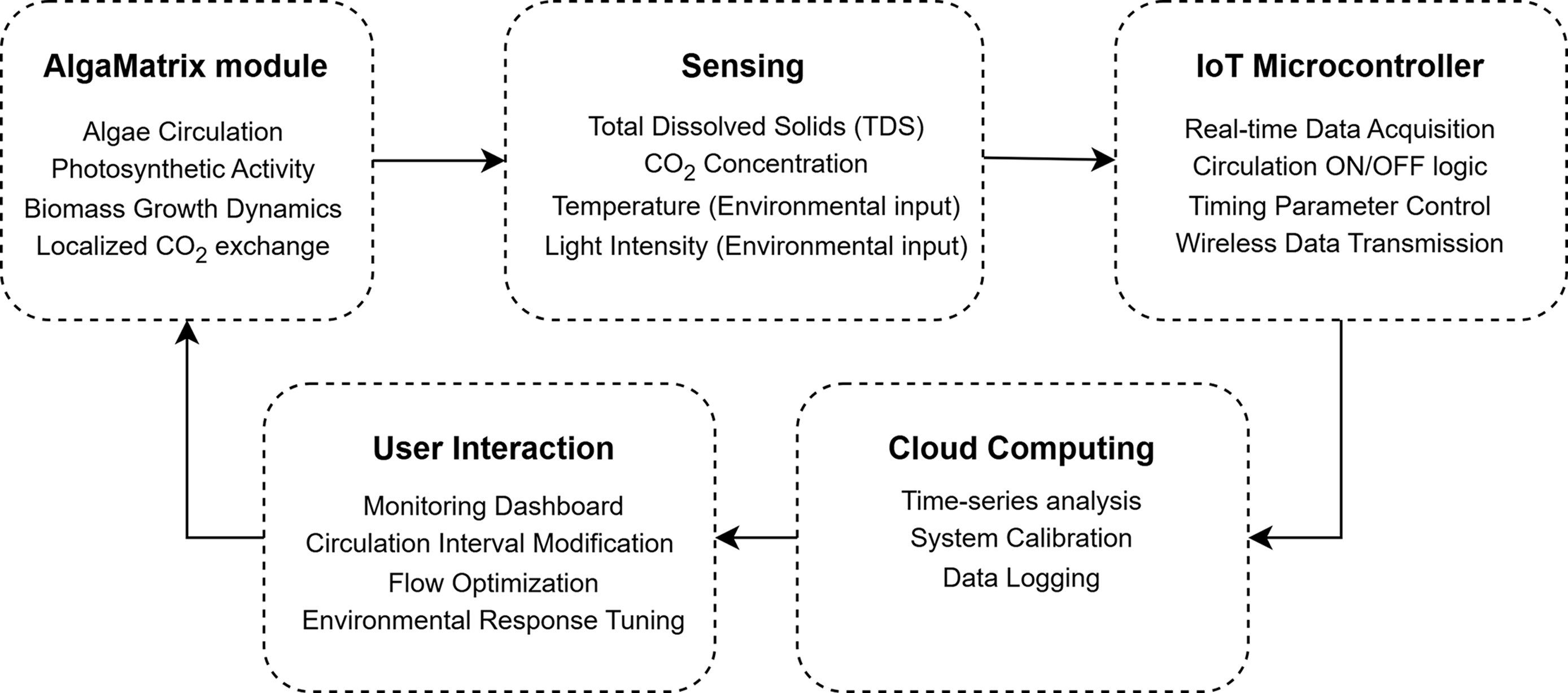
AlgaMatrix integrates embedded sensors within an Internet of Things (IoT) framework to evaluate biological performance and environmental interaction. This monitoring system supports both experimental analysis and future user interaction with bio-integrated architectural systems. The prototype incorporates total dissolved solids (TDS) sensors to track microalgae growth (Biechele et al., Reference Biechele, Busse, Solle, Scheper and Reardon2015; Rostam et al., Reference Rostam, Malim, Abdullah, Ahmad, Ooi and Chan2021) and CO2 sensors positioned near the membrane to detect localized concentration changes. Data is collected via microcontrollers and transmitted wirelessly using the Message Queuing Telemetry Transport protocols to a centralized cloud platform, enabling continuous logging and remote access to performance metrics (Figure 8). A mobile interface allows users to visualize real-time data, track trends over time, and adjust system parameters such as pump intervals. By externalizing system intelligence through a digital interface, AlgaMatrix extends architectural agency beyond static material form, allowing occupants to engage with biological processes as part of the built environment. Sensor integration also enables the identification of system limitations, including flow irregularities and sensor drift, informing iterative refinement of both fabrication and operation.
Integration of sensors to collect data from the AlgaMatrix prototype.

Figure 8. Long description
A diagram of the AlgaMatrix prototype system. Panel A: The diagram shows the components and their connections. The ESP32 Firebeetle module is connected to a relay module, a CO2 sensor, and a TDS (Total Dissolved Solids) sensor. The relay module is connected to a 12V water pump and a power plug connector. The TDS sensor monitors the TDS difference between two points to determine the sedimentation of microalgae in the module. Panel B: The mobile control panel displays sensor data such as CO2, TDS, and other environmental parameters. The data is transmitted via cloud services, processed, and displayed on a mobile app, allowing users to interact with and control the AlgaMatrix system remotely.
Experimental setup
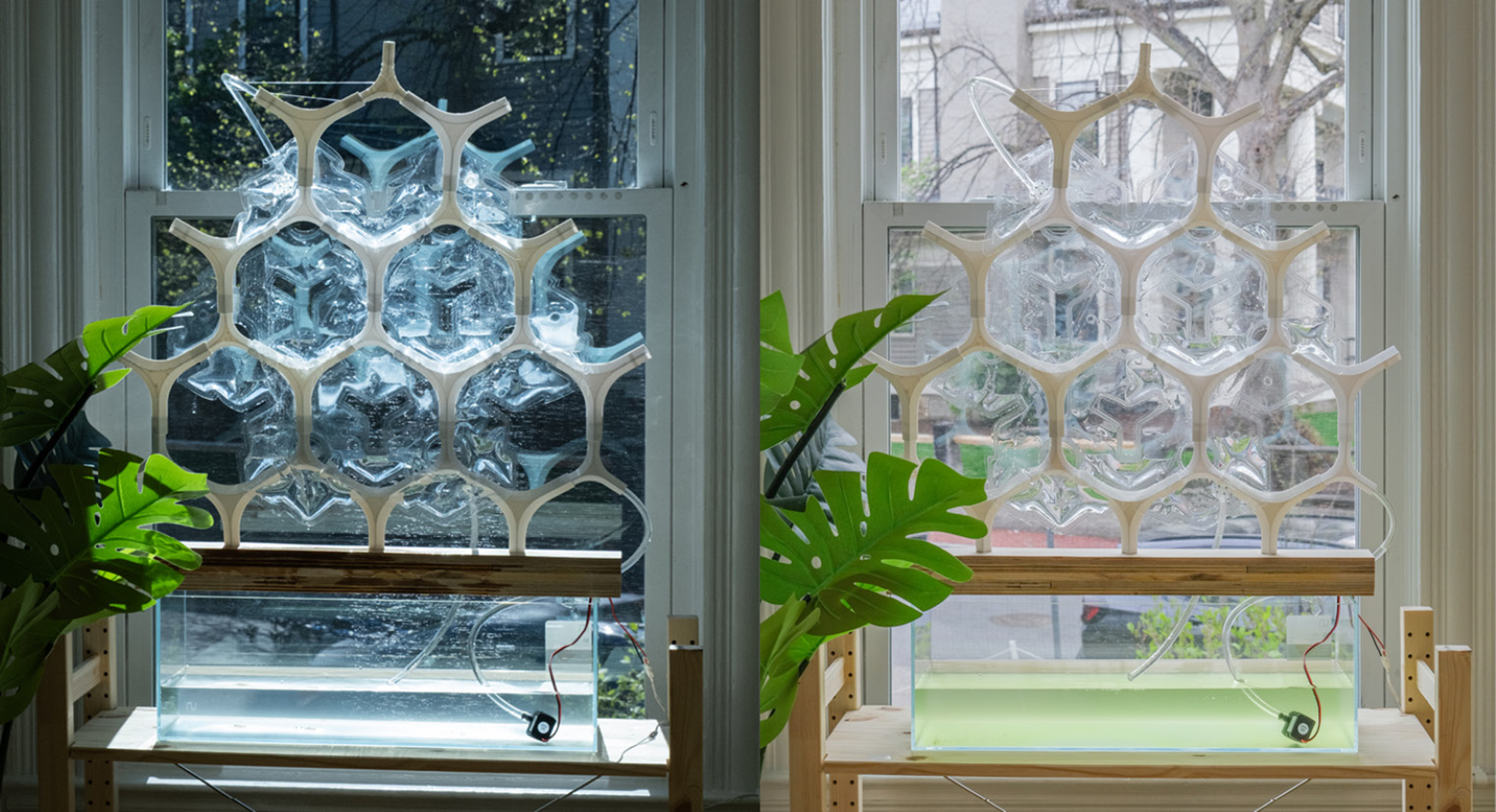
Biological viability and environmental interactions of the AlgaMatrix system are assessed through a controlled in-situ experiment comparing microalgae growth within the fabricated membrane to a static control culture. The evaluation focused on two primary performance indicators: biomass accumulation, measured through TDS and localized carbon dioxide variation in the immediate vicinity of the membrane-integrated air filters. The prototype was positioned approximately 25 cm from a west-facing window in Cambridge, MA, under natural daylight conditions in April, resulting in direct afternoon sunlight exposure (Figure 9).
AlgaMatrix prototype at different daylight conditions and cultivation stages, showing variation in biomass density.

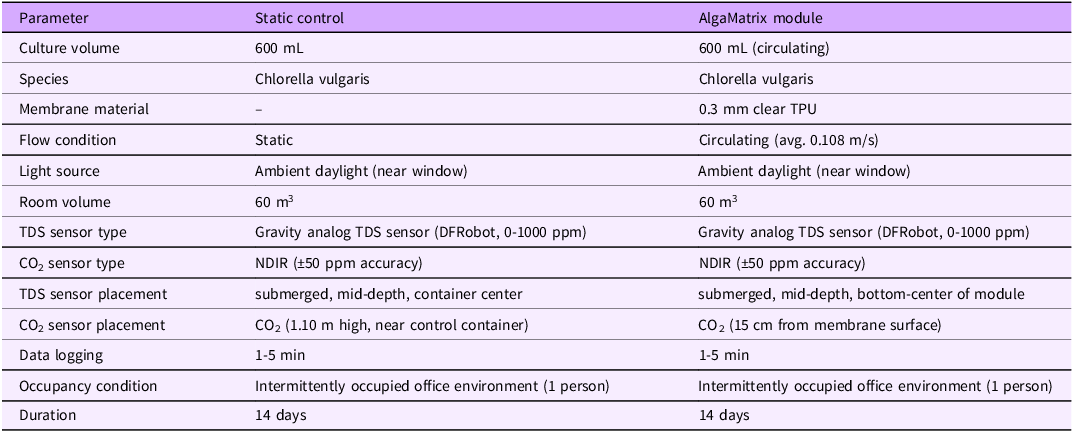
The experimental protocol consisted of two identical cultures of C. vulgaris prepared using the same growth medium, initial concentration and incubation conditions (Table 1). One culture served as a static control and was maintained in a conventional 600 mL laboratory vessel equipped with a gas-permeable membrane. The second culture was circulated continuously through a fully assembled AlgaMatrix membrane module. Both systems were placed within the same indoor environment under ambient light and stable temperature conditions throughout the testing period. The AlgaMatrix module was connected to an external incubation reservoir via integrated tubing and operated with a programmable pump calibrated to maintain consistent flow velocity. Circulation was set to ensure continuous nutrient exchange while avoiding excessive mechanical stress on the membrane. Biological growth was monitored over a 14-day period to demonstrate the system’s feasibility and functionality. TDS sensors were deployed to record changes in dissolved solids as a proxy for biomass accumulation, while CO2 sensors were positioned near the membrane-integrated air filter to capture localized variations in carbon dioxide concentration. Measurements were conducted in an occupied indoor room during the spring season in Cambridge, MA, with the building’s heating, ventilation, and air conditioning system operating under typical conditions. Ventilation rates and occupancy were not experimentally controlled. Sensor data were logged continuously via the IoT infrastructure (Figure 10).
Experimental setup.

Table 1. Long description
A table comparing parameters of static control and AlgaMatrix module for Chlorella vulgaris culture. The table has 12 rows and 3 columns. The columns are labeled Parameter, Static control, and AlgaMatrix module. The rows are labeled Culture volume, Species, Membrane material, Flow condition, Light source, Room volume, TDS sensor type, CO2 sensor type, TDS sensor placement, CO2 sensor placement, Data logging, Occupancy condition, and Duration. Row 1: Culture volume, 600 mL, 600 mL (circulating). Row 2: Species, Chlorella vulgaris, Chlorella vulgaris. Row 3: Membrane material, dash, 0.3 mm clear TPU. Row 4: Flow condition, Static, Circulating (avg. 0.108 m/s). Row 5: Light source, Ambient daylight (near window), Ambient daylight (near window). Row 6: Room volume, 60 m3, 60 m3. Row 7: TDS sensor type, Gravity analog TDS sensor (DFRobot, 0-1000 ppm), Gravity analog TDS sensor (DFRobot, 0-1000 ppm). Row 8: CO2 sensor type, NDIR (±50 ppm accuracy), NDIR (±50 ppm accuracy). Row 9: TDS sensor placement, submerged, mid-depth, container center, submerged, mid-depth, bottom-center of module. Row 10: CO2 sensor placement, CO2 (1.10 m high, near control container), CO2 (15 cm from membrane surface). Row 11: Data logging, 1-5 min, 1-5 min. Row 12: Occupancy condition, Intermittently occupied office environment (1 person), Intermittently occupied office environment (1 person). Row 13: Duration, 14 days, 14 days.
AlgaMatrix device workflow.

Results
Material and fabrication performance
Material and biological compatibility results
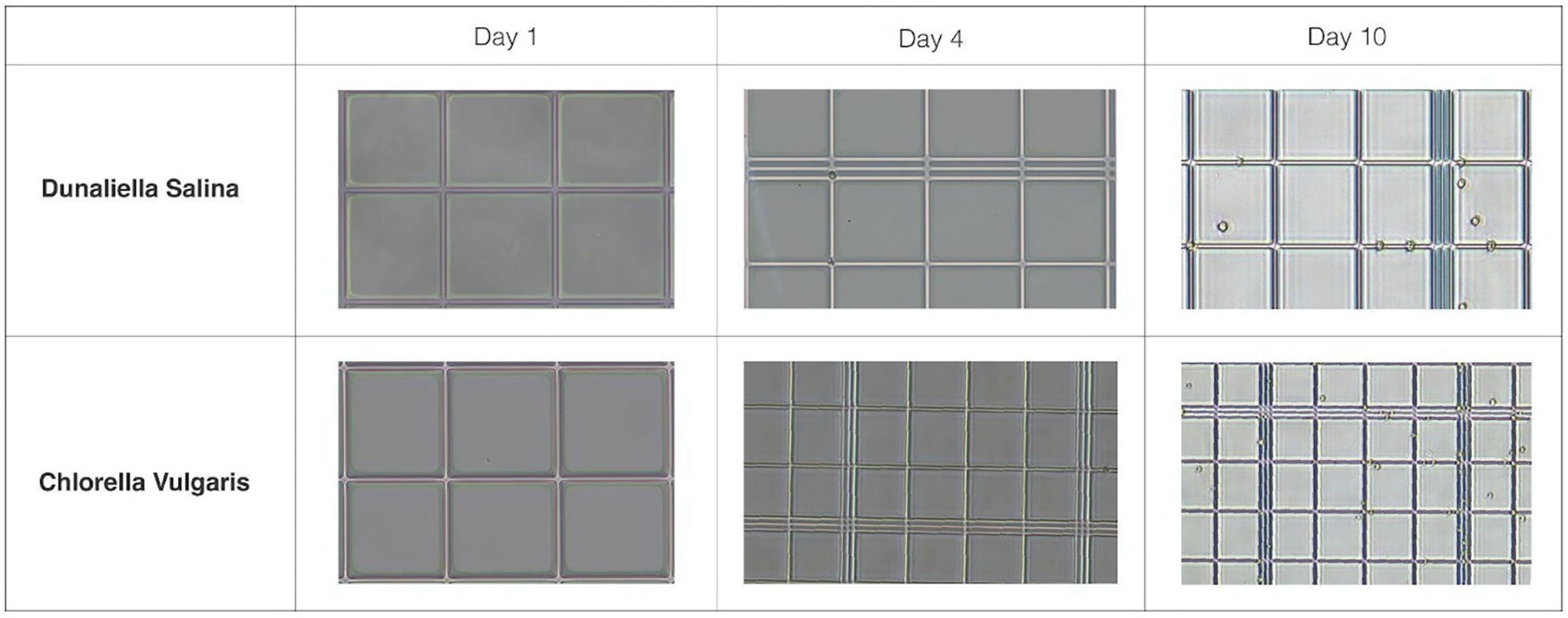
Initial material compatibility and cultivation tests revealed distinct differences between the two microalgae species under membrane-based conditions. Over the ten-day observation period, C. vulgaris demonstrated more robust visible culture development than D. salina under the semi-controlled indoor cultivation conditions used in this study. Hemocytometer observations supported a qualitative comparison of culture behavior and provided approximate cell-density estimates. Based on Day 10 images and standard large-square conversion, C. vulgaris was estimated at approximately 8 × 10⁴ cells/mL, while D. salina reached approximately 3 × 10⁴ cells/mL, assuming no dilution (Figure 11). These values should be interpreted as approximate visual estimates as sampling homogeneity and biological replication were limited. Consistent with these observations, C. vulgaris developed denser green coloration and a more stable suspension within the membrane-compatible flask system, whereas D. salina exhibited comparatively weaker visible growth under the same conditions. As the experiment was intended as an early-stage assessment of biological compatibility with the AlgaMatrix membrane system, these observations are interpreted as comparative indicators of culture viability and prototype suitability, not as definitive measurements of species-specific growth performance.
Microscopic imaging on Day 1, Day 4, and Day 10 of C. vulgaris and D. salina cultivation.

TPU membrane variants were evaluated through a full-factorial comparison of three thicknesses (0.15, 0.3, and 0.5 mm) and three surface finishes (clear, opaque, and black) to assess compatibility with indoor microalgae cultivation (Figure 12). The study focused on optical transmission, visible surface-associated accumulation, condensation or residue formation, and cultivation stability under semi-controlled indoor conditions. Because photosynthetic activity depends on light availability, membrane transparency, and optical behavior were treated as key parameters in evaluating material suitability for integration within the AlgaMatrix system. Qualitative assessments were conducted through photographic documentation over a seven-day cultivation period using C. vulgaris and D. salina. Ratings for surface-associated accumulation, condensation/residue, optical clarity, and overall prototype suitability were assigned through visual inspection and intended to support early-stage material selection and prototype evaluation. “Low,” “moderate,” and “high” ratings describe the relative extent and visibility of biological accumulation, residue formation or condensation on membrane surfaces (Table 2). Optical clarity was evaluated according to the degree to which membrane transparency was maintained throughout cultivation. Overall prototype suitability integrated combined visual, optical, and material observations. For visible surface-associated accumulation, “low” indicated minimal detectable cellular material, haze or residue on the membrane surface; “moderate” indicated visible but localized or discontinuous accumulation; and “high” indicated pronounced surface-associated material visibly affecting membrane appearance. For condensation/residue, “low” indicated minimal visible droplets, moisture haze or salt residue; “moderate” indicated localized condensation or residue formation; and “high” indicated extensive condensation or residue interfering with optical clarity. Optical clarity ratings were categorized as “good” when the membrane remained visually transparent, “moderate” when partial obstruction occurred and “poor” when opacity or visibility reduction substantially limited visual assessment. Clear TPU variants generally maintained higher optical clarity and more stable cultivation visibility than opaque or black membranes, supporting continued light transmission under indoor conditions. Black TPU limited visual interpretation because the dark surface reduced the ability to distinguish biological accumulation from membrane texture or lighting artifacts. Across the tested conditions, membrane thickness and surface finish influenced visible residue formation, condensation behavior, and perceived cultivation stability, indicating that membrane optical and surface properties directly affected the integration of biological growth within fabricated membrane assemblies. These observations informed the subsequent selection of TPU configurations used in the AlgaMatrix prototype.
Microscopic imaging of C. vulgaris and D. salina growth on various TPU sheets over a 10-day period.

TPU material test.

Table 2. Long description
A table with six columns and seven rows, including a header row. The columns are labeled TPU, Clear 0.15 mm, Clear 0.3 mm, Clear 0.5 mm, Opaque 0.30 mm, and Black 0.3 mm. The rows are labeled Tested species, Visible surface accumulation, Condensation/residue, Optical clarity, and Overall suitability. The table compares the performance of different TPU materials for two species, C. vulgaris and D. salina, under various conditions. Each cell contains a rating such as low, moderate, high, or good, indicating the extent of visible surface accumulation, condensation/residue, optical clarity, and overall suitability. Notable trends include higher optical clarity and overall suitability for clear TPU variants compared to opaque or black membranes.
Fabrication performance
Fabrication testing demonstrated that ultrasonic welding parameters significantly influenced membrane integrity, inflation behavior, and circulation stability. Variations in welding pressure, seam spacing, and weld repetition produced observable differences in leakage resistance and membrane deformation during inflation and fluid circulation tests. The most reliable welding configuration consisted of a double weld executed at 4.5 bar pressure with a 4 mm seam spacing. Single welds frequently produced seam discontinuities and localized leakage, while seam spacing below 3 mm resulted in weld overlap and thermal deformation due to localized overheating. Similarly, a single weld pass generated weaker seams, whereas three passes caused partial melting and material distortion. A configuration of two weld passes provides the best balance between seal integrity and material stability. The selected 0.3 mm TPU membrane maintained structural stability across repeated inflation cycles without rupture or significant deformation, supporting consistent circulation performance and repeatable assembly behavior (Table 3). These fabrication optimizations directly informed the integration of the membrane system with the structural and hydraulic assembly. The hollow structural frame enabled continuous circulation between the external incubation reservoir and the membrane channels, maintaining nutrient distribution across the system while reducing sedimentation during operation. Embedding fluid routing within the frame minimized external tubing exposure and supported a more cohesive architectural assembly. The snap-fit joint system further enabled repeated assembly, disassembly, and module replacement during experimental iterations without damaging the membrane structure. Transparent joint components allowed direct visual inspection of flow behavior, air accumulation, and circulation continuity at critical connection points, while integrated air-filter assemblies maintained liquid containment while supporting gas exchange during cultivation tests.
Ultrasonic welding parameters and sealing performance.

Table 3. Long description
A table with six rows and five columns. The columns are labeled Parameter, Tested range, Selected value, Performance metric, Observed outcomes, and Validation method. The rows detail the parameters of weld pressure, seam spacing, weld repetition, and membrane thickness. For weld pressure, the tested range is 4.5 bar, the selected value is 4.5 bar, the performance metric is seam continuity, the observed outcome is default, and the validation method is ZUND default. For seam spacing, the tested range is single/double, the selected value is double, the performance metric is leakage occurrence, the observed outcomes are single: leakage (discontinuities); double: improved sealing, and the validation method is leak tests + visual inspection. For seam spacing, the tested range is 0.5-4 mm, the selected value is 4 mm, the performance metric is thermal deformation, the observed outcomes are <3 mm: weld overlap/overheating, and the validation method is welding process. For weld repetition, the tested range is 1-3 passes, the selected value is 2 passes, the performance metric is seal integrity, the observed outcomes are 1: weak seams; 3: overheating/melting, and the validation method is static inflation + leak test. For membrane thickness, the tested range is 0.3 mm, the selected value is 0.3 mm, the performance metric is material stability to inflation, the observed outcome is withstands multiple inflations, and the validation method is static inflation test + welding.
Flow simulation and circulation behavior
Results showed clear differences in hydraulic performance across the tested configurations. Among the five evaluated geometries (Figure 13), Prototypes B and C exhibited stronger pressure accumulation near inlet regions and pronounced localized velocity gradients at module junctions, indicating increased risk of uneven nutrient transport and stagnation under multi-module deployment. Prototype E demonstrated improved flow continuity relative to B, C, and D but retained localized pressure concentrations near peripheral branches. Prototype A showed the most balanced circulation behavior, with more distributed flow pathways and reduced pressure concentration across interconnected modules and was therefore selected for fabrication and subsequent sensing experiments. Although localized low-velocity regions remained present near peripheral nodes, these areas were spatially limited and did not produce complete flow interruption during circulation testing. The CFD analysis identified localized low-velocity regions and potential hydraulic dead zones within portions of the membrane geometry. The simulations served as an exploratory design-guiding tool for comparing flow behavior across prototype configurations and identifying circulation constraints within the system. Internal flow simulations were conducted using an average inlet velocity of approximately 0.108 m/s derived from pump testing. The membrane system operated with an approximate internal fluid volume of 600mL. Residence time distribution and flow turnover were not experimentally characterized in this early-stage prototype study. Alternative inlet configurations, including bottom-fed up-flow circulation strategies, may reduce stagnation regions and will be investigated in future iterations. Simulation outputs of Prototype A were compared with physical circulation experiments and showed general agreement with observed flow behavior, with deviations primarily associated with membrane deformation under pressure. Circulation testing confirmed continuous fluid propagation across interconnected membrane channels within the fabricated assembly. The system operated through a recirculating closed-loop configuration that maintained stable circulation throughout the experimental period while limiting seam stress and excessive membrane deformation under low-pressure conditions. These observations informed fabrication and circulation guidelines, including positioning inlets at least 2 inches below integrated air filters and orienting inlet geometry perpendicular to membrane surfaces to improve flow distribution. Collectively, the results establish a CFD-informed workflow linking pressure and velocity fields to channel routing, inlet placement, membrane constraints, and modular aggregation within the AlgaMatrix system.
COMSOL fluid simulation for iterative design.

Biomass growth results (TDS) and local environmental measurements
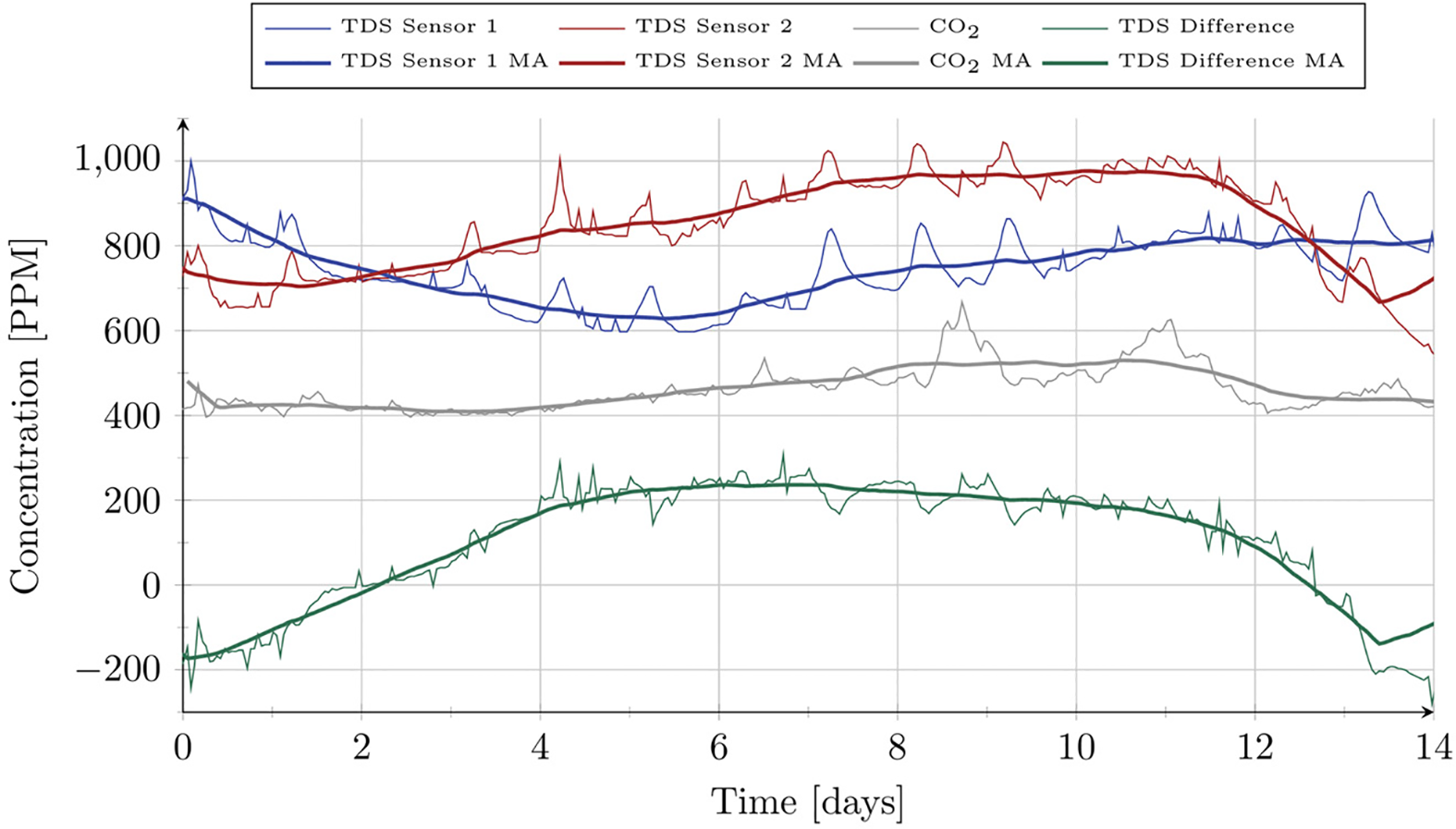
TDS measurements revealed distinct growth trajectories between the static control culture and the AlgaMatrix system. During approximately the first 2–2.5 days of the experiment, both cultures exhibited a similar decline in TDS values, consistent with an acclimation phase commonly observed when microalgae are transferred to new cultivation environments. Following this initial period, the two systems diverged. The static control showed a gradual decline or stabilization in TDS levels, indicating limited biomass accumulation and reduced nutrient exchange typical of non-circulating systems. In contrast, the AlgaMatrix culture demonstrated a sustained increase in TDS values beginning at approximately Day 2.5, as indicated by both the raw measurements and the moving average (MA) trend (Figure 14). Quantitatively, the AlgaMatrix culture increased from a post-acclimation baseline of approximately 750 ppm (Day 2.5) to peak values exceeding 1,000 ppm between Days 8–11, corresponding to a net gain of approximately 250–300 ppm (33-40%). On the other hand, the static control exhibited a slight net decrease of approximately 6–13%. This separation in TDS trajectories emerged during the mid-experiment phase, with AlgaMatrix TDS consistently exceeding the control from Days 5–11, indicating sustained biomass growth under circulating conditions. The AlgaMatrix prototype exhibited regular diurnal fluctuations in TDS measurements, with cyclical increases and decreases broadly aligned with daily light exposure patterns. These oscillations suggest photosynthetic activity, biomass turnover, and dynamic dissolved solids behavior under circulating conditions. While the photobioreactor (PBR) supported sustained microalgal activity, it did not consistently exceed the static culture across the full test period; by Day 14, the static culture reached higher biomass proxy values. These results indicate that system performance is sensitive to batch conditions and resource availability, rather than demonstrating a clear advantage in biomass accumulation. The slight decline toward the final days is consistent with typical limitations of batch cultivation, including nutrient depletion and reduced light penetration at higher cell densities; sustained operation would require periodic nutrient replenishment or partial medium replacement. In parallel with biomass monitoring, localized carbon dioxide concentrations were measured in the immediate vicinity of the AlgaMatrix membrane. Ambient indoor CO2 levels remained within background ranges throughout the experiment. Localized reductions in CO2 concentration were consistently detected near the membrane-integrated air filters during periods of peak photosynthetic activity, with measured reductions ranging between approximately 20–40 ppm relative to baseline values. These variations were spatially constrained to the area immediately adjacent to the membrane surface and were not observed at greater distances within the room.
Comparison of TDS measurements in the static control (Sensor 1) and AlgaMatrix prototype (Sensor 2), including moving average (MA) trends, TDS difference (AlgaMatrix − Control) and CO2 concentrations.

Figure 14. Long description
A line graph comparing TDS measurements from two sensors and CO2 concentrations over a period of 14 days. The horizontal axis represents time in days, ranging from 0 to 14. The vertical axis represents concentration in parts per million (PPM), ranging from -200 to 1000. The graph includes six data lines: TDS Sensor 1, TDS Sensor 2, CO2, TDS Sensor 1 MA, TDS Sensor 2 MA, and TDS Difference MA. TDS Sensor 1 and TDS Sensor 2 show fluctuating trends with Sensor 1 generally decreasing and Sensor 2 generally increasing over time. CO2 concentrations show a steady increase. The moving averages for TDS Sensor 1 and TDS Sensor 2 smooth out the fluctuations, showing clearer trends. The TDS Difference MA line indicates the difference between the AlgaMatrix prototype and the static control, showing an overall increase and then a decrease.
Discussion
This study examines a membrane-based microalgae system at the interior scale, where biological performance is shaped by the interaction between geometry, membrane fabrication, and fluid circulation. The results demonstrate that the AlgaMatrix system can sustain biological activity under ambient indoor conditions while maintaining stable circulation within a fabricated membrane assembly. A central outcome of the study is the role of fabrication precision in governing hydraulic and biological behavior. Ultrasonically welded TPU membranes enabled the formation of sealed circulation channels, while welding tolerances, seam spacing, and inlet positioning directly influenced flow continuity, pressure distribution, and membrane stability. Earlier prototypes exhibited leakage, localized stagnation, and uneven inflation behavior, demonstrating how small fabrication inconsistencies can propagate into larger operational effects. Iterative refinements to seam geometry and circulation routing improved hydraulic stability across inflated and aggregated modules, positioning welding logic as both a structural and circulation-defining mechanism within the system. The circulating AlgaMatrix cultures achieved a 33–40% increase in biomass concentration, while the static control declined over the same period. Temporal fluctuations in TDS measurements reflected continued responsiveness to daylight cycles, indicating sustained photosynthetic activity under interior conditions. At the same time, the transition toward a resource-limited phase near the end of the testing period highlights constraints inherent to batch cultivation and underscores the importance of longer operational studies for evaluating sustained productivity, material durability, and biofouling behavior. Localized CO2 reductions of 20–40 ppm near the membrane-filter interface further indicate that environmental effects remain spatially confined. These findings suggest that systems such as AlgaMatrix operate most effectively as distributed architectural elements integrated within proximity-based conditions, including partitions, interior surfaces or window-adjacent assemblies. In this context, the membrane functions as an active environmental interface that spatially links occupants, airflow, and biological processes at the local scale. More broadly, the study positions membrane-based cultivation systems as fabrication-driven architectural assemblies in which biological growth, circulation behavior, sensing, and material organization are closely coupled. By integrating computational simulation, ultrasonic welding, environmental sensing and living microalgae within a modular bag-based system, the project establishes a framework for evaluating bio-integrated architectural components under realistic indoor conditions.
Limitations and next steps
This study presents a prototype-scale implementation of a microalgae-integrated architectural membrane system. The findings are specific to the current experimental configuration and should be interpreted within the scope of this prototype-scale study. Biological growth was monitored over a 14-day period under controlled indoor conditions, demonstrating sustained microalgal activity and stable circulation behavior. This timeframe establishes initial feasibility and system functionality, but does not capture long-term performance, membrane durability or maintenance requirements. Extended operational testing is necessary to evaluate material stability, biofouling, and sustained biological activity over time. The observed environmental effects remained localized. Variations in CO2 concentration occurred near the air filter region and did not influence room-scale air quality. Accordingly, the system should not be interpreted as a replacement for mechanical ventilation. Its contribution lies in providing a framework for embedding biological processes within architectural assemblies and enabling localized environmental interaction. Results are also tied to the selected membrane material, welding configuration, circulation strategy, and algae species. While this specificity supports reproducibility, it limits broader generalization.
Further studies are needed to evaluate how variations in material thickness, seam geometry, flow regimes, and biological inputs influence system behavior and fabrication reliability. Future work will focus on longer-duration cultivation studies, refinement of fabrication parameters, and additional sensing to better characterize system behavior over time. Further investigation may also explore alternative geometries, distributed module configurations, and the relationship between biomass production, material performance, and operational energy demand. A preliminary life cycle assessment will also be necessary to evaluate embodied impacts and assess the broader environmental viability of membrane-based microalgae systems. These efforts aim to support continued development of bio-integrated membrane systems within architectural research.
Conclusion
This study demonstrates the feasibility of integrating microalgae cultivation within membrane-based architectural systems at the interior scale. The AlgaMatrix prototype combines membrane fabrication, hydraulic circulation, sensing, and biological activity within a single architectural assembly, where performance is shaped by the relationship between geometry, welding logic, and fluid flow. Fabrication testing showed that welding parameters directly influenced membrane integrity and circulation behavior. The most reliable configuration consisted of a double weld at 4.5 bar with 4 mm seam spacing and two welding passes, which reduced leakage, and improved seam continuity during inflation and circulation tests. Seam spacing below 3 mm caused weld overlap and localized overheating, while single-pass welds produced weaker seam integrity. Iterative refinements to seam geometry, inlet positioning, and channel continuity reduced stagnation zones and improved pressure distribution across inflated membrane modules. Computational fluid simulations guided geometric refinement prior to fabrication, while physical testing verified circulation stability during operation and module aggregation. Circulating cultures achieved a 33–40% increase in biomass concentration (250–300 ppm TDS), while the static control declined by 6–13% over the same period. Temporal variation in TDS measurements reflected continued photosynthetic response to daylight exposure, while localized CO2 reductions of 20–40 ppm near the membrane-filter interface indicated spatially confined environmental effects. Although evaluated within a limited experimental timeframe, the study demonstrates that membrane-based cultivation systems can be spatially deployed, hydraulically stabilized, and empirically monitored within interior environments. The contribution of this work lies in establishing a fabrication-driven framework for bag-based microalgae cultivation in which ultrasonic welding defines both structural continuity and internal circulation behavior, integrating digital simulation, membrane fabrication, sensing, and biological growth within a cohesive architectural system.
Data availability statement
The data supporting the findings of this study are available within the article and its supplementary materials.
Acknowledgments
We are grateful to Daniel Tish for technical guidance, to the Harvard Graduate School of Design FabLab for fabrication resources and support, and to the Harvard John A. Paulson School of Engineering and Applied Sciences for providing research facilities and technical support.
Author contributions
Conceptualization: Zuccarelli B., Zhang A.; Methodology: Yan L., Gao S., Zuccarelli B., Zhang A.; Software: Zuccarelli B., Gao S.; Investigation: Yan L., Gao S., Zuccarelli B., Zhang A.; Formal analysis: Zuccarelli B., Gao S.; Data curation: Yan L.; Visualization: Zuccarelli B., Zhang A.; Writing – original draft: Zuccarelli B., Yan L., Zhang A., Gao S.; Writing – review & editing: Zuccarelli B., Tish D.; Supervision: Tish D. All authors approved the final submitted draft.
Financial support
This work was supported by the Harvard Office for Sustainability Student Grant.
Competing interests
None.
Ethical standards
This study did not involve human participants or animals and therefore did not require ethical approval.


 Open access

