The psychological well-being of inmates is a matter for concern (Steadman et al., Reference Steadman, Osher, Robbins, Case and Samuels2009), although the predictive validity of psychiatric disorders for later incarceration is a controversial subject (Fazel and Danesh, Reference Fazel and Danesh2002). A recent systematic review (Fazel et al., Reference Fazel, Hayes, Bartellas, Clerici and Trestman2016) highlighted the high representation of psychiatric disorders among prison inmates, especially, but not exclusively, with severe mental illness (SMI). Studies, mainly in North America and Europe, have shown high levels of non-affective psychotic disorders, bipolar disorder, substance use disorders, antisocial personality, self-harm, post-traumatic stress disorder, depression and anxiety (Black et al., Reference Black, Gunter, Loveless, Allen and Sieleni2010; Fovet et al., Reference Fovet, Geoffroy, Vaiva, Adins, Thomas and Amad2015; Maccio et al., Reference Maccio, Meloni, Sisti, Rocchi, Petretto, Masala and Preti2015; Bebbington et al., Reference Bebbington, Jakobowitz, Mckenzie, Killaspy, Iveson, Duffield and Kerr2017; Baranyi et al., Reference Baranyi, Cassidy, Fazel, Priebe and Mundt2018; Vinokur and Levine, Reference Vinokur and Levine2019). In addition, findings have suggested that these high rates may be more prevalent among prisoners in low- and middle- income countries (Fazel and Seewald, Reference Fazel and Seewald2012). Kinner and Young (Reference Kinner and Young2018) suggested that ‘prisoner health is public health’ and that understanding the health needs of prisoners is essential for reducing societal health inequalities.
Prospective studies on psychiatric disorders as a risk factor for incarceration are limited in number. Existing studies have been mainly retrospective and cross-sectional in nature, and have relied on overall population prevalence rates of psychiatric disorders as a comparison group (Greenberg and Rosenheck, Reference Greenberg and Rosenheck2014). As a result, findings cannot distinguish between psychiatric disorders which may have been present prior to incarceration and those that may be subsequent, possibly as a result of incarceration. A rare prospective population-based study (Copeland et al., Reference Copeland, Miller-Johnson, Keeler, Angold and Costello2007) found an association between child psychiatric history (emotional disorders, substance use, and conduct disorder) with later criminal offending. Criminal offenses in the study were limited to the teen ages and young adulthood (i.e. 16–20 years), thus limiting the predictive capacity of the findings.
Additional longitudinal studies (Baillargeon et al., Reference Baillargeon, Binswanger, Penn, Williams and Murray2009; Chang et al., Reference Chang, Larsson, Lichtenstein and Fazel2015; Dirkzwager and Nieuwbeerta, Reference Dirkzwager and Nieuwbeerta2018) have focused on prison cohorts, and examined future criminal and psychiatric trajectories. For example, a cohort study of prison inmates in the largest US state corrective system in the state of Texas found that prisoners diagnosed with major depressive disorder, bipolar disorder, schizophrenia, and non-schizophrenic psychosis were at increased risk of subsequent repeat incarcerations (Baillargeon et al., Reference Baillargeon, Binswanger, Penn, Williams and Murray2009). In Sweden, a population-based longitudinal study of released prisoners reported that violent reoffending was predicted by the existence of any psychiatric disorder both in men and women, even when criminological and familial variables were taken into account (Chang et al., Reference Chang, Larsson, Lichtenstein and Fazel2015). Interestingly, a recent prospective cohort study of prisoners in the Netherlands indicated that levels of psychiatric symptoms decreased during the first year and a half in prison though still remained higher than levels in a representative population sample in the country (Dirkzwager and Nieuwbeerta, Reference Dirkzwager and Nieuwbeerta2018). In addition, a well-known Danish birth cohort study (Hodgins, Reference Hodgins1998; Brennan et al., Reference Brennan, Mednick and Hodgins2000) that examined the relationship between psychiatric hospitalization and arrests, found an association between psychiatric disorders, in particular, schizophrenia, and subsequent arrests for violent crime, which was only partially explained by substance use.
Some studies cast doubts as to whether there is indeed an association between incarceration and psychiatric disorders. In the USA, a representative national sample reported an association between past incarceration and substance use disorders, but not with affective disorders (Greenberg and Rosenheck, Reference Greenberg and Rosenheck2014). The longitudinal MacArthur Violence Risk assessment study, which followed up patients discharged from acute inpatient facilities, as compared with a community sample, found that once levels of substance use were controlled, there were no differences in violent behavior between the two groups (Steadman et al., Reference Steadman, Mulvey, Monahan, Robbins, Appelbaum, Grisso, Roth and Silver1998), although some findings of the study have recently been contested (Torrey et al., Reference Torrey, Stanley, Monahan and Steadman2008). An overestimation of the prevalence rates of disorders has also been attributed to heterogeneity in diagnostic interviewing (e.g. who conducts the interview and ascertains the diagnoses) and instruments, as well as small sample sizes (Fazel et al., Reference Fazel, Hayes, Bartellas, Clerici and Trestman2016).
The current study
Based on a prospective birth cohort, this study provides a rare opportunity to examine the association between psychiatric diagnoses in young adults with subsequent incarceration throughout the life span. Data based on psychiatric interviews performed in the 1980s in Israel (Dohrenwend et al., Reference Dohrenwend, Levav, Shrout, Schwartz, Naveh, Link, Skodol and Stueve1992; Levav et al., Reference Levav, Kohn, Dohrenwend, Shrout, Skodol, Schwartz and Link1993) were merged with data from the Israel Prison Service (IPS) and National Vital Statistics Registry. This unique data set enabled us to examine the relationship between psychiatric disorders and incarceration while controlling for relevant socio-demographic variables (i.e. education level and ethnicity).
The relationship between social disadvantage, including levels of schooling and ethnicity, and incarceration is a controversial and political issue (Western and Pettit, Reference Western and Pettit2010). Lower levels of schooling have been found to be related to higher levels of arrest and incarceration (Lochner and Moretti, Reference Lochner and Moretti2004), and, conversely, involvement in education whilst in prison has been found to decrease the risk of re-incarceration (Vacca, Reference Vacca2004). As for ethnicity, empirical studies have focused mainly on the issue of race-ethnicity and sentencing in the USA, and suggest that Hispanic and African American minority offenders are more likely to be incarcerated and re-incarcerated (Harris et al., Reference Harris, Steffensmeier, Ulmer and Painter-Davis2009). In the UK, Blacks and other ethnic minorities are over-represented in all stages of the criminal justice process (Ndegwa and Johnson, Reference Ndegwa, Johnson, Wilson and Cumming2010), while in Australia indigenous offenders are more likely to be incarcerated, though incarceration rates may be confounded by additional factors, such as past criminality (Bond and Jeffries, Reference Bond and Jeffries2011). In Israel, still lingering though decreasing prejudice and perceived discrimination among Jews are due to historical ethnic divisions between European and North African former immigrants (Schwartz et al., Reference Schwartz, Link, Dohrenwend, Naveh, Levav and Shrout1991). Those from the latter region perceive higher levels of discrimination and disadvantage. Previous studies suggest that adversity and stressors present in persons of low socio-economic status among ethnic minorities may help explain the relationships between ethnic minority status and negative outcomes (Dohrenwend et al., Reference Dohrenwend, Levav, Shrout, Schwartz, Naveh, Link, Skodol and Stueve1992). As a result, we hypothesized that both low levels of education, as an indicator of low socio-economic status, and disadvantaged ethnic minority status (i.e. Jews of North African ancestry) would predict higher rates of incarceration.
Aims of the study
The study investigated whether incarceration over the life course is predicted by psychiatric disorders diagnosed in early adulthood while controlling for socio-demographic variables. Specifically, we aimed to distinguish between psychiatric disorders which were present prior to incarceration and those that were a by-product of it. Based on empirical and theoretical work pointing to the distinction between one-time incidence of crime and recidivism (Blumstein and Cohen, Reference Blumstein and Cohen1987), we examined both incarcerations ever and repeat incarcerations. Study hypotheses were that psychiatric disorders prior to incarceration, would predict both incarceration during the life span and repeated incarceration; and lower levels of education and North African ancestry would predict higher levels of incarceration (ever and repeat), though the effects of North African ancestry would be decreased by controlling socio-economic status.
Methods
Study population
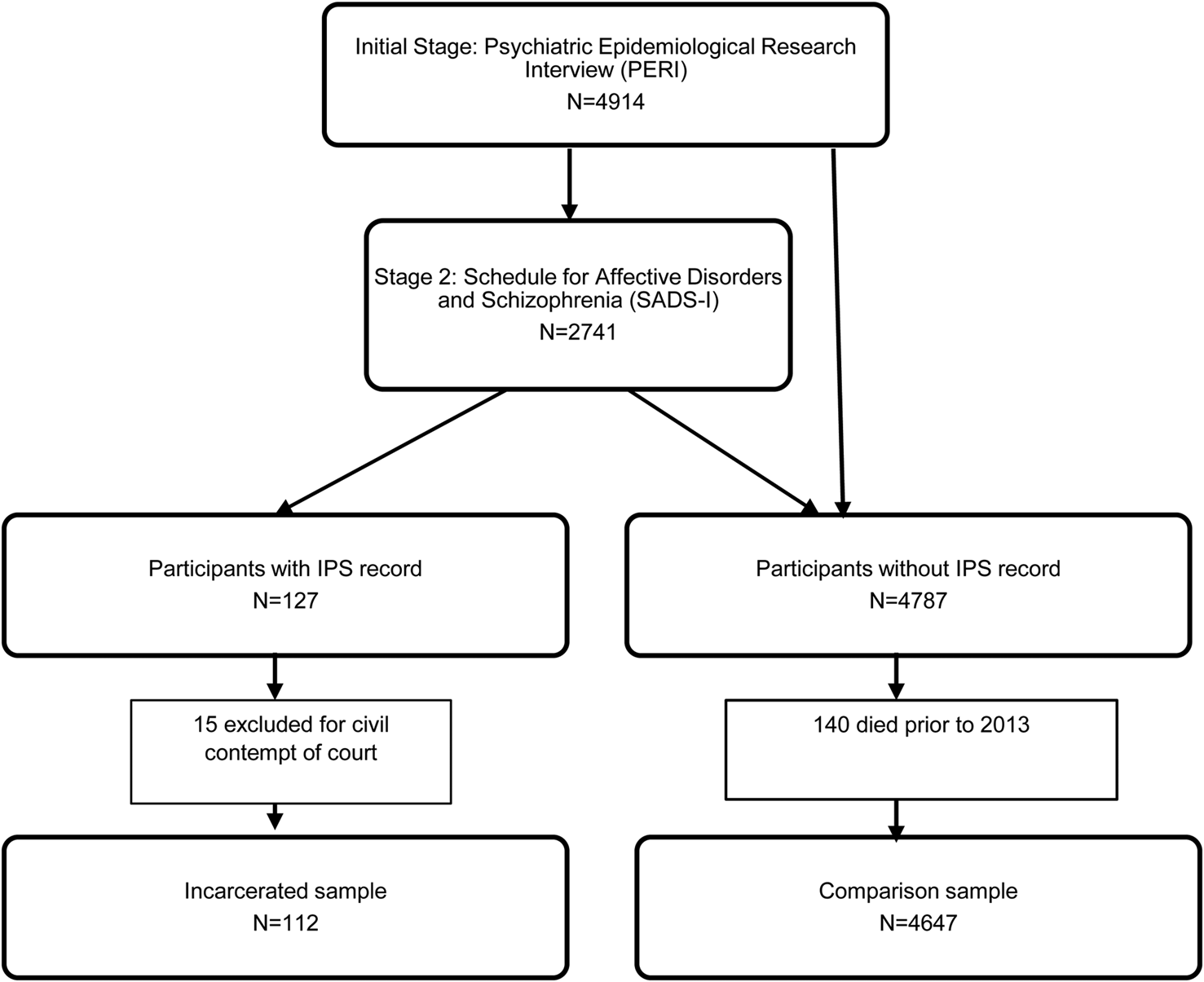
The analysis utilized data from an epidemiological survey that examined participants from a 10-year birth cohort of young adults in Israel. The methods of data collection have been described in detail elsewhere (Dohrenwend et al., Reference Dohrenwend, Levav, Shrout, Schwartz, Naveh, Link, Skodol and Stueve1992; Levav et al., Reference Levav, Kohn, Dohrenwend, Shrout, Skodol, Schwartz and Link1993), and are briefly reviewed here. During 1982 and 1983, a random stratified sample of Israel-born Jews aged 25–34 (29.4 ± 3.1 years) (mean ± s.d.), weighted for parental origin (European or North African) was screened using a two-stage procedure. Of the initial 5200 participants contacted for screening, 4914 were interviewed by health professionals using a questionnaire that included the Psychiatric Epidemiology Research Interview (PERI) (Dohrenwend et al., Reference Dohrenwend, Levav, Shrout, Weissman, Meyers and Ross1986; Shrout et al., Reference Shrout, Skodol, Dohrenwend, Barrett and Rose1986; Dohrenwend et al., Reference Dohrenwend, Levav, Shrout, Schwartz, Naveh, Link, Skodol and Stueve1992). In the second stage, 2643 participants were referred for an interview with psychiatrists, based either on an empirically developed criteria for ‘caseness’ (Shrout et al., Reference Shrout, Skodol, Dohrenwend, Barrett and Rose1986) or because of being unable to complete the screening procedure, along with 416 randomly chosen participants who did not meet the criteria (controls for false negatives).
Research diagnostic criteria
Of all those referred to this second stage, N = 2741 (89.6%) were subsequently interviewed using a modified version of the Schedule for Affective Disorders and Schizophrenia, Israeli version (SADS-I), in order to arrive at a Research Diagnostic Criteria (RDC) (Levav et al., Reference Levav, Kohn, Dohrenwend, Shrout, Skodol, Schwartz and Link1993). RDC criteria were forerunners of the DSM-III and were used as the initial basis for the specified diagnostic criteria for the major diagnostic categories of DSM-III (Williams and Spitzer, Reference Williams and Spitzer1982). Final diagnoses, which were reviewed and confirmed using a taped version of the interview (Dohrenwend et al., Reference Dohrenwend, Levav, Shrout, Schwartz, Naveh, Link, Skodol and Stueve1992; Levav et al., Reference Levav, Kohn, Dohrenwend, Shrout, Skodol, Schwartz and Link1993), were made at both the ‘RDC-probable’ and ‘RDC-definite’ levels (Spitzer et al., Reference Spitzer, Endicott and Robins1978). The study showed excellent completion rates of 94.5% for phase one (PERI) and 89.6% for phase two (SADS-I) (Dohrenwend et al., Reference Dohrenwend, Levav, Shrout, Schwartz, Naveh, Link, Skodol and Stueve1992).
In this study, we applied lifetime prevalence of ‘RDC definite’ criteria for the following diagnostic categories:
(a) Schizophrenia and other non-affective psychotic disorders – included schizophrenia, schizoaffective (manic and depressive), unspecified psychosis, and schizotypal personality disorder (PD).
(b) Affective disorders – included major depression, minor depression, intermittent depressive disorder, mania, hypomania, bipolar-I, bipolar-II, cyclothymic disorder and labile PD.
(c) Anxiety disorders – included generalized anxiety disorder, panic disorder, obsessive-compulsive disorder, and phobia.
(d) Substance abuse – included alcohol and drug abuse.
(e) Antisocial personality
(f) Other psychiatric disorders (see appendix 1)
We further analyzed the antisocial personality items according to the factors of aggression-callousness and disinhibition proposed by Kendler et al. (Reference Kendler, Aggen and Patrick2012). Two items of the SADS-I were included in the aggression-callousness factor, and six items were included in the disinhibition factor (see Appendix 2). For each participant, we counted the number of items which were met with regard to these factors, with scores of 0–2 and 0–6, respectively.
The IPS. The system houses inmates in 33 prisons. Data extracted from the IPS's registry for the current study consisted of all the recorded incarcerations of each participant which took place after the PERI screening stage. Data on incarceration prior to PERI was collected as part of the interview and relied on self-report. IPS data included the cause and dates of incarcerations and discharge.
National Vital Statistics Registry. The data are maintained by the Ministry of Health and included dates and causes of death.
Merging procedure
After obtaining permission from the Internal Review Board of Bar-Ilan University and the Research and Ethics Board of the IPS, data from the epidemiological survey were linked with IPS and National Vital Statistics registries using the national identification number as the linking variable. Before the linked file was transferred to the investigators for analysis, the national identification number was removed to preserve confidentiality. The files were merged on January 2013, thus including all recorded data throughout the participants’ lives (age at 2013 was 58.4 ± 3.1 years) and enabling a follow-up period of up to 30 years.
The merging procedure yielded n = 127 (2.6%) participants with IPS records (Fig. 1). Among the participants not later incarcerated, 140 died prior to 2013 and were excluded from the analysis. We removed these participants as their early death meant that we could not know their potential prison trajectories had they stayed alive. Suicide was the cause of death for eight participants (0.2%). Among them, seven had no incarceration records and one had been incarcerated. Among the incarcerated, 15 participants were excluded since they were admitted to prison for civil contempt of court (e.g. non-compliance of a court order to pay child support). The final sample included 112 incarcerated participants (12 had death records), while the other participants (n = 4647) served as comparisons.
Study population. (IPS- Israel Prison Service)

Incarcerated sample
Among the 112 incarcerated participants there were a total of 433 incarcerations, of which 164 (38%) were for violent crimes (including assault, sexual crimes, manslaughter, and robbery), 53 (12%) for property-related crimes (including theft and holding stolen goods), 88 (20%) for drug-related (e.g. use of dangerous drugs and selling), and 128 (30%) for miscellaneous crimes (including disruption of the public order, blackmail and crimes against the justice system). The number of incarcerations ranged from 1 to 17 (3.9 ± 3.8, median 2.0 incarcerations). The proportion of men was higher among incarcerated participants (92.9%) than in the comparison sample (48.2%) (p < 0.001), and, upon interview in the screening (PERI) stage, incarcerated participants were on average 1-year younger (28.4 ± 2.8 years) than comparison participants (29.4 ± 3.1 years) (p < 0.01). The prevalence rate of participants from North African origin among the incarcerated (83.0%) was higher than among non-incarcerated participants (50.7%) (p < 0.01).
Statistical analysis
The analysis was carried out in the first stage combining together the ‘RDC probable’ and ‘RDC definite’ diagnoses. Since the significant results were the same as those when including the ‘RDC definite’ only, we chose to use the more conservative ‘RDC-definite’ diagnoses in the current analysis so as to increase the robustness and reliability of the findings. We examined the prevalence rates of ‘RDC definite’ disorders among incarcerated participants and compared them with those among the comparison sample using univariate logistic regression models. The outcomes are presented in terms of odds ratios (OR) and 95% confidence intervals (95% CI). Adjusted logistic regression models followed, with the addition of socio-demographic characteristics: gender, age, family status (single/other), ethnic origin (North African/European), education (not high-school graduate/ high-school graduate/academic), and incarceration prior to the PERI screening stage. We applied a hierarchical logistic regression model with a forward stepwise (conditional) selection of predictors to test for independent associations with incarceration. Socio-demographic characteristics were introduced in the first stage and statistically significant RDC disorders in the second stage. Finally, among incarcerated participants, we tested the association between RDC disorders and the number and maximal length of incarcerations. The number of incarcerations was set as 0 for persons with single and 1 for those with repeated incarcerations. Logistic regression models were applied to test for associations with RDC disorders. The maximal length of incarceration (16.3 ± 27.1 months) did not show a normal distribution and therefore was analyzed using the Mann–Whitney U test. To control for incarcerations prior to PERI, we performed two sensitivity analyses. The first consisted of participants who reported no incarceration prior to PERI. For this group, we analyzed the associations between RDC diagnoses and future incarceration according to IPS data using logistic regression models. The second sensitivity analysis consisted of those who reported that they were incarcerated prior to PERI. Among these participants, we compared socio-demographic characteristics as well as RDC diagnoses of those who did or did not have future incarceration according to IPS data using chi-square tests and logistic regression models. The level of significance was set at p = 0.05. All analyses were performed using SPSS version 25 (IBM Inc).
Results
Associations between RDC disorders and incarceration
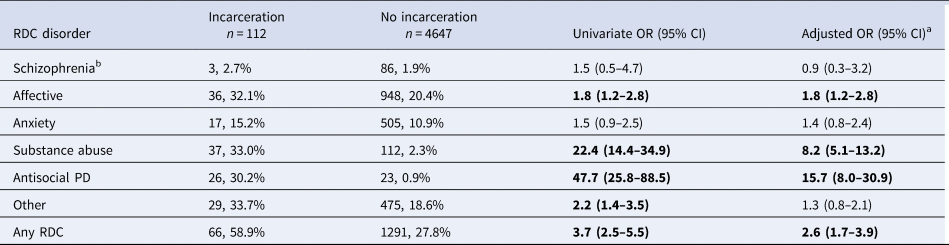
The prevalence rate of ‘RDC-definite’ disorders among incarcerated participants was higher (58.9%) than among their counterparts (27.8%). Using logistic regression, affective disorders, substance abuse, antisocial personality, and any RDC disorder were found as significant risk factors for incarceration in the univariate as well as in the adjusted models (Table 1). ‘Other psychiatric disorders’ (see appendix) constituted a significant risk factor in the univariate model and of marginal significance in the adjusted model (p = 0.1).
Lifetime prevalence rate at the time of the diagnostic interview (SADS-I) of ‘definite RDC disorders’ among incarcerated (IPS data) and comparison participants

aAdjusted models included gender, age, family status, ethnic origin, education, and incarceration prior to the PERI screening stage.
bSchizophrenia and other non-affective psychotic disorders.
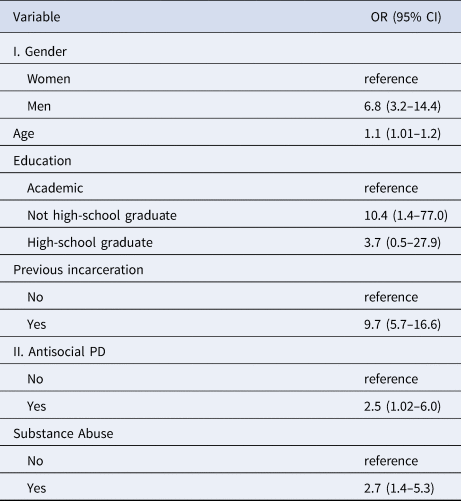
To select the best set of independent predictors, we applied a hierarchical logistic regression model, with background variables entered in the first stage and RDC disorders which were found to be significantly associated with incarceration in the second stage. The variables which were significant in the first stage included gender, age, education, and incarceration prior to PERI (Table 2). In the second stage, antisocial personality and substance abuse were shown to significantly add independent association with incarceration and were included in the final model.
Independent background variables and definite RDC diagnoses predictors of subsequent incarceration (IPS data)a

a Affective disorders, ‘Other disorders’, ethnic origin and family status were not included in the final adjusted logistic regression model.
Additional analysis of antisocial personality indicated that incarceration was associated with significantly higher scores on both aggression-callousness and disinhibition factors. At least one aggression-callousness item was met by n = 46 (41.1%) of incarcerated and n = 148 (6.1%) non-incarcerated, and at least one disinhibition item by n = 62 (72.1%) incarcerated as compared to n = 479 (18.7%) non-incarcerated counterparts (U = 163 763, p < 0.001; U = 174 647, p < 0.001).
Associations between RDC disorders and incarceration characteristics
The associations between the number (single or repeated) and maximal length of incarceration (i.e. longest incarceration) for participants with affective disorders, anxiety disorders, substance abuse, antisocial personality, and ‘other psychiatric diagnoses’ were examined, and compared to incarcerated participants with no diagnosed RDC disorder (n = 40). Substance abuse was found as a significant risk factor for repeat incarcerations (OR = 2.8, 95% CI 1.0–8.1), antisocial personality showed marginal significance (OR = 2.8, 95% CI 0.96–8.3), while affective disorders, anxiety disorders, and ‘other psychiatric disorders’ showed no association (ps > 0.15). Longer periods of incarceration were associated with substance abuse and to some extent with antisocial personality. The median maximal incarceration length among participants with RDC substance abuse disorder (12 months) was longer compared to participants with no RDC disorder (4 months) (U = 982, p = 0.003), while the difference for participants with antisocial personality (11 months) showed marginal significance (U = 643, p = 0.064). No significant differences were found for affective disorders, anxiety disorders, and ‘other psychiatric disorders’ (p > 0.1). Correlations between number and maximal length of incarceration and aggression-callousness and disinhibition scores were not statistically significant (all p > 0.15).
Sensitivity analyses
We identified 129 (2.8%) participants who reported incarceration prior to the PERI screening stage. Among those, 49 (44%) had records of later incarcerations in the IPS data. Data on the previous incarceration based on PERI were missing for 83 (1.7%) participants, among whom three were registered with later incarceration. Thus, 60 participants (112 total incarcerated sample minus 49 with self-reported incarcerations prior to PERI, and minus three for whom data on incarceration prior to PERI was missing) with IPS records who reported that they were not incarcerated previous to the PERI screening stage as well as 4490 with no IPS records were included in the first sensitivity analysis.
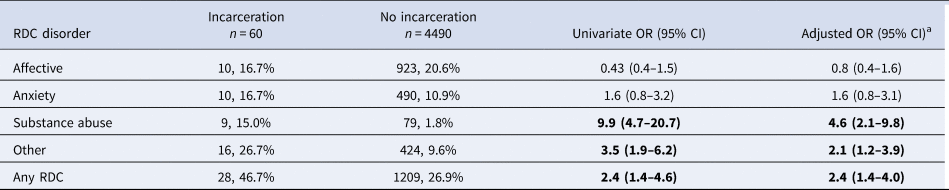
Among participants who reported no incarceration prior to PERI with later IPS records (N = 60), higher prevalence rates of any RDC disorder, substance abuse, and ‘other psychiatric disorders’ were seen, compared to those with no later incarceration (see Table 3). The prevalence rates of affective and anxiety disorders did not differ between incarcerated participants and their counterparts. Interestingly, only a single participant (1.7%) incarcerated for the first time following the PERI screening stage was diagnosed with antisocial personality.
Lifetime prevalence rate at the time of the diagnostic interview (SADS-I) of ‘definite RDC disorders’ among incarcerated (IPS data) and comparison participants who reported no incarceration prior to PERI

aAdjusted models included gender, age, family status, ethnic origin, education, and incarceration prior to the PERI screening stage.
Bold - significant at p < . 05.
Analysis of aggression-callousness and disinhibition factors of antisocial personality indicated that both scores were risk-factors for future incarceration. The disinhibition score was significantly associated with incarceration on both the univariate and adjusted models (OR 1.8, 95% CI 1.5–2.2; OR 1.5, 95% CI 1.1–1.9, respectively), while the aggression-callousness score showed a significant association on the univariate model only (OR 4.2, 95% CI 2.5–7.2; OR 1.1, 95% CI 0.5–2.2).
A second sensitivity analysis was restricted to the 129 participants who reported incarceration previous to the PERI screening stage, comparing between background characteristics and RDC disorders of those with (n = 49) and without (n = 80) later IPS records. The rate of women among the participants with no further incarceration (12.5%) was higher compared to those with further incarceration (2.0%) (p = 0.039). The rate of participants from European origin among the participants with no further incarceration (22.5%) was higher compared to those with further incarceration (6.1%) (p = 0.014). The rate of participants with high-school graduation among the participants with no further incarceration (25.0%) was higher compared to those with further incarceration (8.2%) (p = 0.026). No differences of age and family status were observed between the groups (both ps > 0.15). The prevalence rates of affective disorders (49.0%), substance abuse (53.1%), and antisocial personality (43.9%) were higher among those with further incarceration compared to those with no further incarceration (22.5%; 23.8%; and 11.3%, respectively). In contrast, the prevalence rate of ‘other psychiatric disorders’ tended to be lower among those with further incarceration (26.5%) compared to those with no further incarceration (43.5%) (p = 0.067). Univariate logistic regression models indicated significant associations between the diagnoses of affective disorders (OR 3.3, 95% CI 1.5–7.1), substance abuse (OR 3.6, 95% CI 1.7–7.8), and antisocial personality (OR 7.0, 95% CI 2.9–17.0) with future incarceration. No differences were seen for any RDC and anxiety disorders (both ps > 0.3).
Discussion
This study used a unique prospective longitudinal cohort sample merged with high-quality data from the IPS and the Vital Statistics Registry to examine the association between psychiatric diagnoses in early adulthood and subsequent incarceration throughout the life span. Findings indicated that controlling for socio-demographic confounders, affective disorders, substance abuse, antisocial personality, and any RDC disorders were significant risk factors for subsequent incarceration. These results corroborated previous cross-sectional studies showing increased levels of psychiatric disorders among the incarcerated in comparison to overall population rates (Roberts and Coid, Reference Roberts and Coid2007; Black et al., Reference Black, Gunter, Loveless, Allen and Sieleni2010; Fovet et al., Reference Fovet, Geoffroy, Vaiva, Adins, Thomas and Amad2015; Maccio et al., Reference Maccio, Meloni, Sisti, Rocchi, Petretto, Masala and Preti2015; Bebbington et al., Reference Bebbington, Jakobowitz, Mckenzie, Killaspy, Iveson, Duffield and Kerr2017). However, when the different RDC disorders were introduced together in a multivariate analysis, only the diagnoses of substance abuse and antisocial personality had an independent association with future incarceration, in the combined group of those with and without incarceration previous to diagnosis. Affective disorders were not included as independent predictors in the multivariate model, contrasting with previous reports of an association between those disorders and incarceration (Fovet et al., Reference Fovet, Geoffroy, Vaiva, Adins, Thomas and Amad2015). Anxiety disorders and schizophrenic disorders were also not significant predictors of future incarceration, though caution is required because of the small numbers of incarcerated persons with schizophrenic-related disorders. Results cast doubt on the role of affective and anxiety disorders as predicting incarceration (Baillargeon et al., Reference Baillargeon, Binswanger, Penn, Williams and Murray2009), and suggest that higher prevalence of such disorders in prison populations may result from the incarceration experience and not due to a prior vulnerability.
In addition to their significant predictive role for incarceration, the RDC diagnoses of substance abuse and antisocial personality were found to predict repeated and longer incarcerations among those who were already incarcerated. These findings strengthen previous results showing a marked association between substance use and antisocial personality and incarceration (Fazel et al., Reference Fazel, Bains and Doll2006; Black et al., Reference Black, Gunter, Loveless, Allen and Sieleni2010) and re-offending (Chang et al., Reference Chang, Larsson, Lichtenstein and Fazel2015). Indeed ORs in the current study were higher than those previously found among re-offending prisoners (Chang et al., Reference Chang, Larsson, Lichtenstein and Fazel2015). We further analyzed the data according to scores for aggression-callousness and disinhibition (Kendler et al., Reference Kendler, Aggen and Patrick2012). Differences in items between the DSM-III associated RDC and the DSM-4 based items used by Kendler et al. (Reference Kendler, Aggen and Patrick2012) limited the number of items which could be included. Nevertheless, the finding that disinhibition, which involves behaviors which are not explicitly illegal, but rather characterize an unstable or non-permanent lifestyle, was an independent predictor of future incarceration both among those who were and were not previously incarcerated is notable and novel. This finding reinforces a multi-dimensional construct perspective of ASPD (Kendler et al., Reference Kendler, Aggen and Patrick2012). Results also support studies which have shown substance use to be a mediator or explanatory factor in the relationship between psychiatric disorders and incarceration as well as violent offenses (Hodgins, Reference Hodgins1998; Steadman et al., Reference Steadman, Mulvey, Monahan, Robbins, Appelbaum, Grisso, Roth and Silver1998; Brennan et al., Reference Brennan, Mednick and Hodgins2000; Baillargeon et al., Reference Baillargeon, Penn, Knight, Harzke, Baillargeon and Becker2010). Findings also showed only one person diagnosed with antisocial personality was incarcerated for the first time following the initial screening. Most persons diagnosed with antisocial personality (68%) reported they were already incarcerated, and all of them (100%) reported they were arrested before that time. Manifestations of antisocial personality begin early in life (with diagnostic criteria including evidence of conduct disorder prior to age 15), which may explain why antisocial personality was not a predictor of incarceration for those who with no incarceration prior to the PERI screening. Our findings suggest that criminal careers begin early for offenders with antisocial personality. This is in line with Hodgins et al.’s (Reference Hodgins, Côté, Toupin and Cooke1998) differentiation between two types of offenders with mental disorders: one with a stable pattern of antisocial behavior across the life span and the other showing later involvement in offending due to mental disorders.
Gender and education, but not ethnic origin, were independent predictors of incarceration, confirming previous findings of higher rates of incarceration among persons with lower education levels (Lochner and Moretti, Reference Lochner and Moretti2004), and over representation of men in prisons in Israel and elsewhere. According to the Israeli Bureau for Statistics, 92% of those convicted of criminal crimes were menFootnote 1. While studies in other countries have suggested increased rates of incarceration among ethnic and racial minorities (Harris et al., Reference Harris, Steffensmeier, Ulmer and Painter-Davis2009), the current results suggest that, in Israel, higher prevalence of North African origin participants among the incarcerated may, at least partially, be explained by lower levels of education.
Of those who reported incarceration prior to the initial screening, rates of women, high school graduation, and European origin were higher among participants with no future incarceration than those with future incarceration. These results suggest that female status, higher education, and European origin may be resilience factors against subsequent incarceration.
Limitations
Despite the relatively large and unique cohort sample, there were small numbers of participants with certain rare psychiatric diagnoses, notably schizophrenia, who were later incarcerated, making it difficult to assess to what extent these diagnoses may predict later incarceration. There was a small mismatch between participants' report of previous incarceration and the official IPS records of past incarceration. However, the IPS records were computerized in the mid-1980s, and past incarcerations were not entered as a routine procedure. Only in some cases of future incarceration were past incarcerations entered. This implies that while IPS data on future incarcerations following the PERI can be assumed to be fairly reliable, the official IPS data on past incarcerations are limited. The analysis included people who had been incarcerated prior to initial screening. However, it is important to note that the sensitivity analysis showed the same patterns for those who were and were not prior incarcerated. In addition, although we did take into account deaths of those who were not imprisoned, we were unable to include details of those members of the cohort who may have emigrated from Israel, subsequent to the PERI stage. However, a governmental report released in 2006 with details on those who left Israel in the decade prior, reported low levels of emigration in the Israeli-born population (between 1 and 1.5 per 1000 a year)Footnote 2.
Lastly, the study took place in Israel, and further prospective cohort studies would be needed to see whether results are similar in countries with different incarceration levelsFootnote 3. In addition, higher levels of incarceration among individuals with psychiatric disorders may occur in countries with a lack of treatment and psychosocial rehabilitation options, and with limited legal representation for persons with SMI (Vinkers et al., Reference Vinkers, Van De Vorst and Hoek2012). Strengths of the study include diagnosis on the basis of RDC criteria which have been found to be highly reliable (Spitzer et al., Reference Spitzer, Endicott and Robins1978) and the nature of the study as, to the best of our knowledge, the first prospective cohort study to examine the predictive nature of adult psychiatric diagnoses for future incarceration.
Implications
Our results corroborate previous understandings of a strong predictive role of substance use and antisocial personality in future, repeat, and longer incarcerations. They also suggest that criminal careers for offenders with antisocial personality start early (Hodgins et al., Reference Hodgins, Côté, Toupin and Cooke1998). This may suggest that resources should be invested in particular among prisoners with these diagnoses to try to prevent repeat incarcerations. Results also point to investment in programs helping the development of more effective coping strategies among prisoners with substance use issues.
A main contribution of the findings is the lack of association between affective and anxiety disorders as predicting incarceration, once controlling for other diagnoses and other relevant variables. Results suggest that certain psychiatric diagnoses may not involve increased vulnerability for criminal behavior, unless in interaction with substance use, and that higher rates of such disorders among prisoners may be a by-product of distress resulting from the prison experience (Maccio et al., Reference Maccio, Meloni, Sisti, Rocchi, Petretto, Masala and Preti2015).
On a practical level, our results point to a need to address the psychiatric well-being of prisoners and to understand further the ‘pains of imprisonment’ (Sykes, Reference Sykes1958) that may lead to depression and anxiety. By doing so, these results may also support the need for rehabilitation and clinical treatment for prisoners with affective and anxiety disorders in Israel. Our results strengthen recent literature on the relationship between levels of rehabilitation and treatment settings, on the one hand, and incarceration, on the other (Priebe et al., Reference Priebe, Badesconyi, Fioritti, Hansson, Kilian, Torres-Gonzales, Turner and Wiersma2005; Bebbington et al., Reference Bebbington, Jakobowitz, Mckenzie, Killaspy, Iveson, Duffield and Kerr2017). Overall, these results strengthen findings of previous studies that cast doubts on a causal association between a wide range of psychiatric disorders and incarceration.
Supplementary material
The supplementary material for this article can be found at https://doi.org/10.1017/S0033291719002009.
Acknowledgements
The authors thank the Prison Service and the Ministry of Health for their cooperation and collaboration in the process of writing the manuscript, and the original US-Israel research team of the epidemiological study. This research received no specific grant from any funding agency, commercial or not-for-profit sectors.
Conflict of interest
None of the authors has any conflict of interest.
Availability of data and materials
Due to the sensitivity of the data, further use of the data set demands approval by the Israel Prison Service and by the team of the original epidemiological study.
Appendix
Appendix 1: RDC criteria for other psychiatric disorder
This category is for psychiatric conditions which cannot be classified in any of the previous specific diagnoses and which do not appear to be part of prodromal period or residual symptoms of a specific disorder. It is possible for a subject to have a period of illness which is considered Other Psychiatric Disorder followed or preceded by an episode which can be diagnosed as one of the other specific diagnoses (personality disorders classifiable according to DSM-III should be given: Other Psychiatric Disorders).
There are two criteria:
(A) One of the following is required:
(1) The clinical picture suggests a specific disorder not covered in this instrument (e.g. Anorexia Nervosa, Transsexualism, Paranoid Personality)
(2) One or more of the disorders is suspected but the symptoms are too minimal to meet the criteria
(3) The chronology of important symptom clusters is not known e.g. Alcoholism and hallucinations and lack of knowledge as to which came first
(4) There is inadequate information about the phenomenology to establish a specific diagnosis
(5) A know organic factor is a likely etiology, e.g. alcohol abuse, amphetamine intoxication, ingestion of a hallucinogen, fever
At least one of the above is true
(B) The condition was of sufficient severity that it resulted in either seeking or being referred for help from someone, taking medication (other than occasional night-time hypnotic for insomnia), or caused impairment in functioning socially, with family, at home, at school, or at work
Appendix 2: Aggression callousness and disinhibition factors of anti-social personality (RDC criteria)