Introduction
The lichen family Teloschistaceae, with more than 1000 species published worldwide (Søchting & Lutzoni Reference Søchting and Lutzoni2003; Gaya et al. Reference Gaya, Högnabba, Holguin, Molnar, Fernández-Brime, Stenroos, Arup, Søchting, van den Boom and Lücking2012), is currently receiving considerable attention in order to subdivide the family into molecularly-based genera (Arup et al. Reference Arup, Søchting and Frödén2013). The traditional genus Caloplaca has thus been divided into multiple genera based on phylogenetic analyses of DNA data. In many cases, the monophyletic genera defined by molecular characters are not easy to circumscribe with classical morphological, anatomical and secondary chemical characters. However, in some cases, secondary metabolites provide synapomorphic characters, such as in the genus Shackletonia (Arup et al. Reference Arup, Søchting and Frödén2013).
Tierra del Fuego and southern Patagonia have recently been subjected to intensive lichenological studies in connection with several Spanish research projects. In particular, the family Teloschistaceae has been the focus, resulting in the discovery of several new species (Lumbsch et al. Reference Lumbsch, Ahti, Altermann, Amo de Paz, Aptroot, Arup, Peña, Bawingan, Benatti and Betancourt2011; Søchting & Sancho Reference Søchting and Sancho2012).
The present study describes a new genus with three species, two of them new to science, within Teloschistaceae. They form a distinct molecular clade, have a characteristic reddish brown pigmentation, and the thallus or disc contains 7-chlorocatenarin, a secondary compound new to lichens. The genus is so far known only from the southernmost part of the Southern Hemisphere, viz. Antarctica, southern Patagonia and Kerguelen Island.
Material and Methods
The study includes material from southern Patagonia, collected by the fifth author in 1998 and 1999, and by the first and the second authors in 1998, 2005 and 2008 within the framework of the Spanish project “Biocomplexity of Antarctic and Subantarctic ecosystems: sensitivity to global change (ANT-COMPLEX)”. The collections are deposited at the Botanical Museum in Copenhagen (C), unless stated otherwise.
Morphology and anatomy
Macroscopic descriptions are based on observations made with a Wild Heerbrugg M5-53204 dissecting microscope. Measurements were made using a mounted Nikon DS-Fi1 camera combined with the software NIS-Elements. Sections were made by hand or using a Reichert-Jung Cryostat 2800 Frigocut E microtome. Measurements were performed using an Olympus BX60 microscope. All measurements were made on material mounted in water. Spores were measured outside the asci.
PCR amplification and alignment
Nine specimens of the genus Catenarina were used to produce nine new nuclear rDNA sequences of the internal transcribed spacer regions (nrITS), and two sequences of the small subunit of the mitochondrial ribosomal RNA gene (mrSSU). The PCR amplifications were produced using direct PCR following Arup (Reference Arup2006). The primers used were ITS1F (Gardes & Bruns Reference Gardes and Bruns1993), ITS4 (White et al. Reference White, Bruns, Lee, Taylor, Innis, Gelfand, Sninsky and White1990), mrSSU1 (Zoller et al. Reference Zoller, Scheidegger and Sperisen1999) and mrSSU7 (Zhou & Stanosz Reference Zhou and Stanosz2001). The PCR settings followed Ekman (Reference Ekman2001) for the ITS and Arup et al. (Reference Arup, Søchting and Frödén2013) for mrSSU. The primers used for the PCR were also used in the sequencing reaction, which was carried out by Macrogen Inc., Korea.
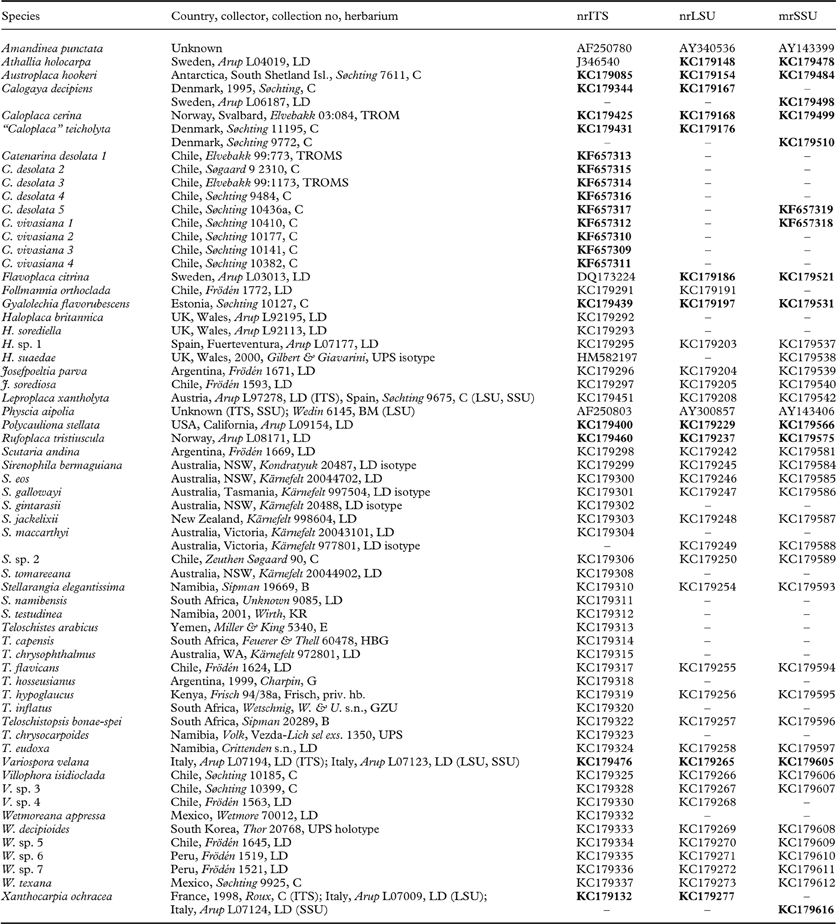
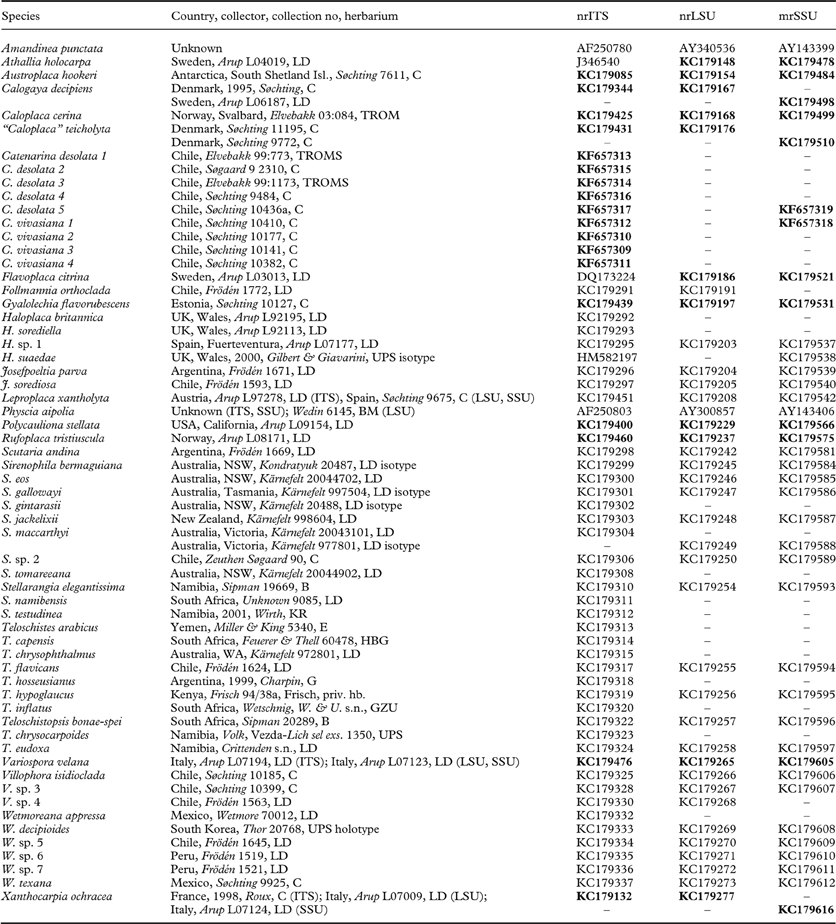
Two alignments were produced, one combined alignment with 41 species including three loci, nrITS, nrLSU and mrSSU, representing the three subfamilies in Teloschistaceae, and one alignment with 48 ITS sequences of the subfamily Teloschistoideae (Arup et al. Reference Arup, Søchting and Frödén2013). In addition to the newly produced sequences, additional sequences were downloaded from GenBank. Voucher information and GenBank accession numbers are indicated in Table 1. For the combined analysis, Amandinea punctata (Hoffm.) Coppins & Scheid. was used as an outgroup, with Physcia aipolia (Ehrh. ex Humb.) Fürnr. as internal outgroup. For the ITS analysis, Caloplaca cerina (Hedw.) Fr. of the subfamily Caloplacoideae was used as outgroup and Leproplaca xantholyta (Nyl.) Nyl. and Variospora velana (A. Massal.) Arup et al. as internal outgroup. Ambiguously aligned regions were removed from all alignments before analyses.
Sequences used in either of the two analyses; those newly produced are in bold and the others were downloaded from Genbank.
Phylogenetic analysis
The alignments of the three different genes were first analyzed separately to check for incongruence between genes, but no incongruences were found. A conflict was assumed to be significant if two different relationships (one monophyletic and one non-monophyletic) were both supported with posterior probabilities 0·95 or higher (Buckley et al. Reference Buckley, Arensburger, Simon and Chambers2002). A suitable model of molecular evolution for each of the loci was selected, using BIC as implemented in the software jModeltest version 0.1.1 (Guindon & Gascuel Reference Guindon and Gascuel2003; Posada Reference Posada2008; Darriba et al. Reference Darriba, Taboada, Doallo and Posada2012), evaluating only the 24 models available in MrBayes (Ronquist et al. Reference Ronquist, Teslenko, van der Mark, Ayres, Darling, Höhna, Larget, Liu, Suchard and Huelsenbeck2012). The HKY+G+I was found to be optimal for the nrITS dataset for the combined analysis, SYM+G+I for the nrLSU dataset, and K80+G for the mrSSU dataset. The ITS alignment was also analyzed separately using the evolutionary model GTR+G+I. Bayesian tree inference was carried out using Markov chain Monte Carlo (MCMC) as implemented in MrBayes ver. 3.2 (Ronquist et al. Reference Ronquist, Teslenko, van der Mark, Ayres, Darling, Höhna, Larget, Liu, Suchard and Huelsenbeck2012). In the combined analysis, the three genes included were treated as separate partitions. Parameters used in the analyses followed those of Arup et al. (Reference Arup, Søchting and Frödén2013), except for the branch length prior that was set to an exponential with mean 1/10. Three parallel runs of Markov chain Monte Carlo were performed, each with 8 chains, 7 of which were incrementally heated with a temperature of 0·10. Analyses were diagnosed every 100 000 generations and automatically halted when convergence was reached. Convergence was defined as a standard deviation of splits (with frequency ≥0·1) between runs below 0·01. Every 1000th tree was sampled and the first 50% of runs were removed as burn-in. Majority-rule consensus trees were constructed from the post burn-in tree samples, using FigTree 1.4 (http://tree.bio.ed.ac.uk/software/figtree/).
Secondary chemistry
The secondary metabolite patterns were identified using HPLC, and analyzed separately for the thallus and apothecia. The relative composition of the secondary compounds was calculated based on absorbance at 270 nm according to Søchting (Reference Søchting1997).
Catenarin identification
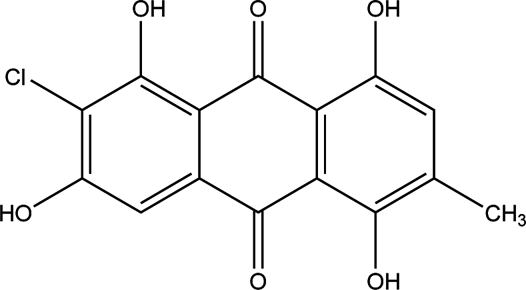
Catenarin was first isolated from cultures of Helminthosporium catenarium Drechsler, and subsequently also isolated from various other microfungi including species of Aspergillus and Penicillium (Raistrick et al. Reference Raistrick, Robinson and Todd1934). The structure of this anthraquinone was ultimately established by synthesis (Anslow & Raistrick Reference Anslow and Raistrick1941) (Fig. 1).
Structure of 7-chlorocatenarin.
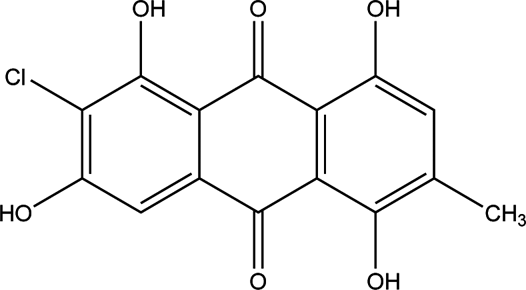
In the present work, the occurrence of catenarin in the Catenarina species was established by HPLC comparisons of the lichen extracts with authentic material. The HPLC was coupled to a photodiode array detector for ultraviolet spectroscopic comparisons. By this means the ultraviolet spectra observed for natural catenarin eluting in the HPLC chromatogram was recorded, and computer-matched against the ultraviolet spectrum recorded for authentic catenarin under identical conditions. The correlation of ultraviolet spectra of the synthetic and natural material was >99·9%.
Results and Discussion
Molecular phylogeny
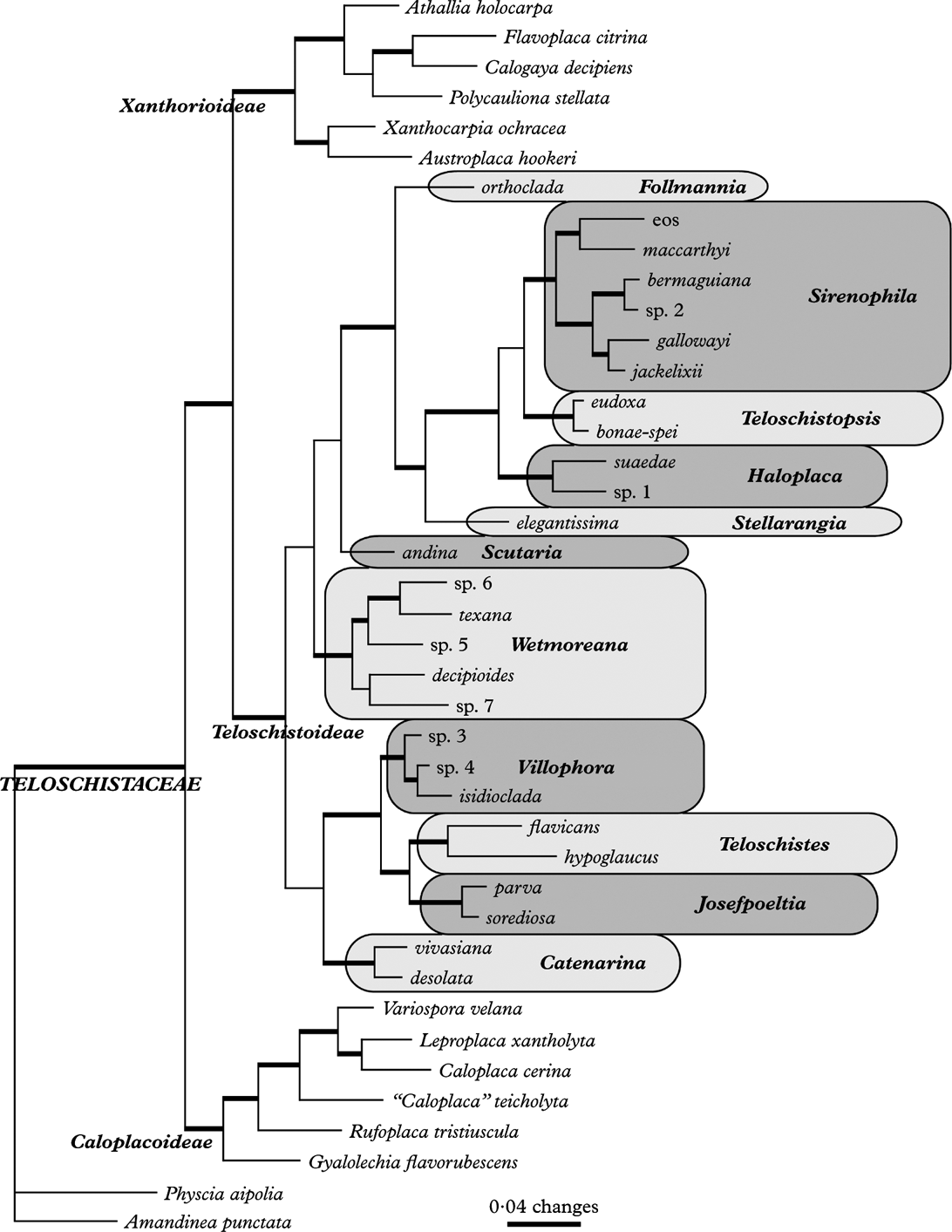
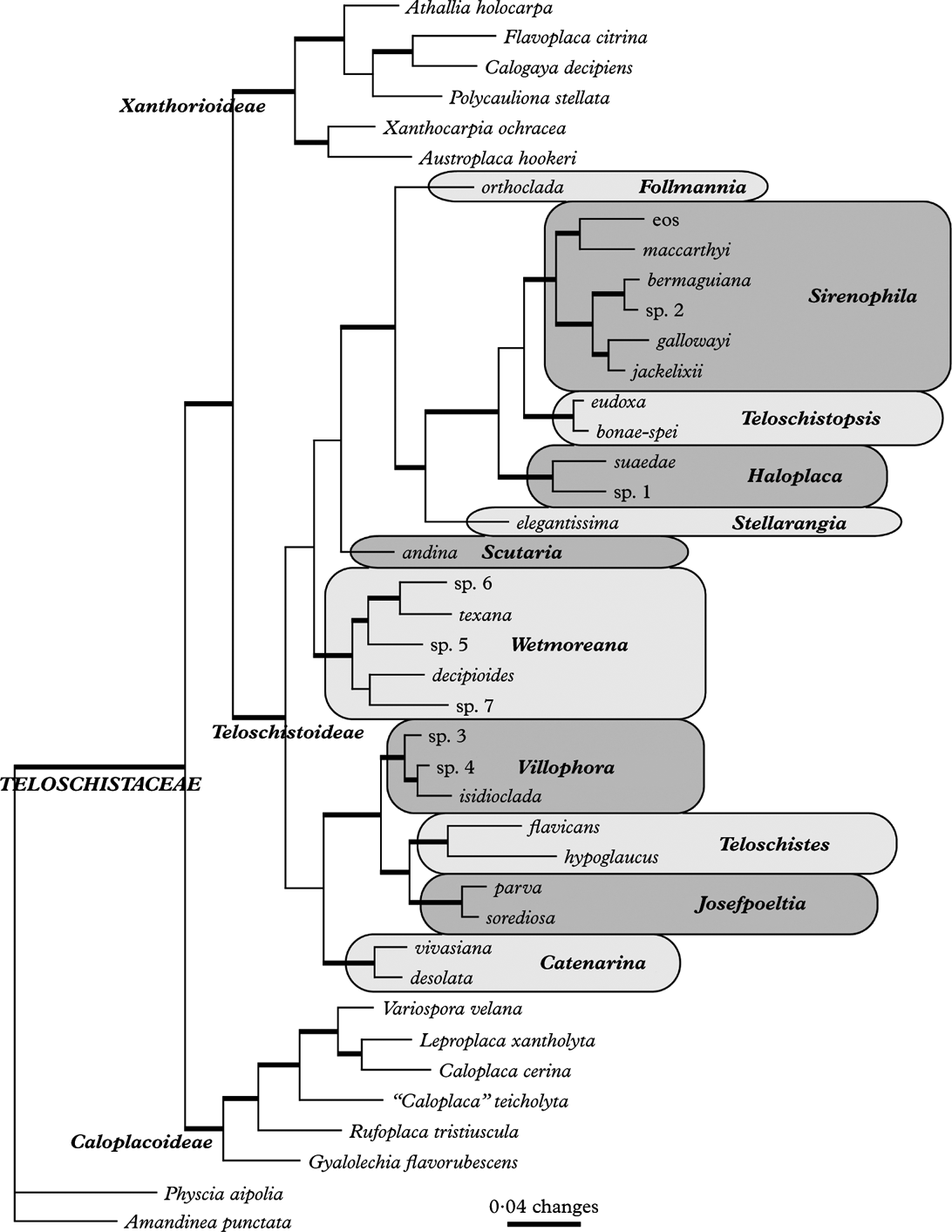
The combined analysis of the nrITS, nrLSU and mrSSU dataset included 41 terminal species and a total of 2088 positions. A Bayesian majority-rule consensus tree is presented in Figure 2. The tree splits into three main clades corresponding to the three subfamilies proposed by Arup et al. (Reference Arup, Søchting and Frödén2013), all with strong support. The genus Catenarina is nested within the subfamily Teloschistoideae, where it forms a sister clade to a group of three genera: Villophora, Teloschistes and Josefpoeltia, but this relationship is not supported.
Majority-rule consensus tree of nrITS, nrLSU and mrSSU data using Bayesian MCMC. Nodes with posterior probabilities >=0·95 are shown in bold.
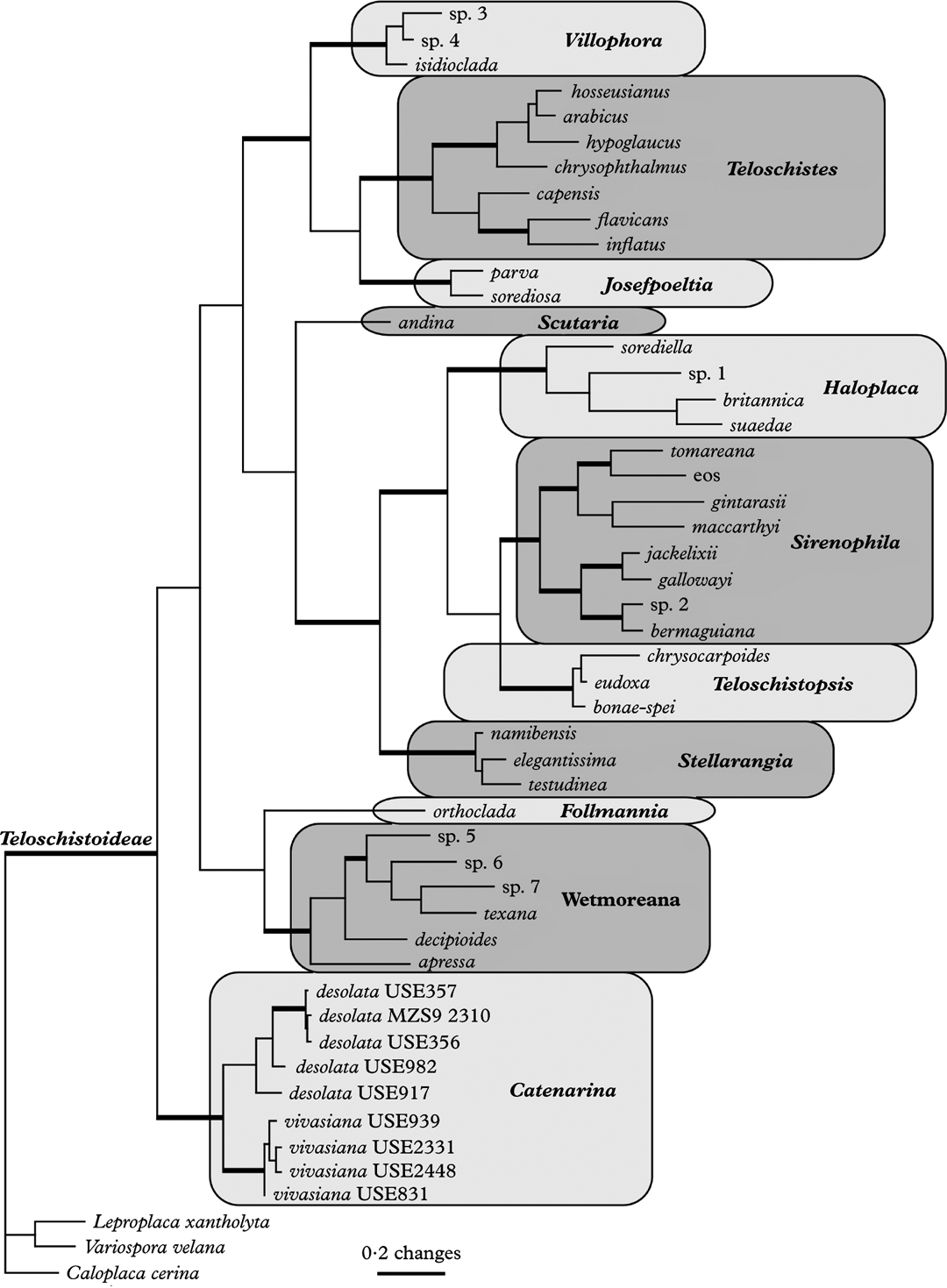
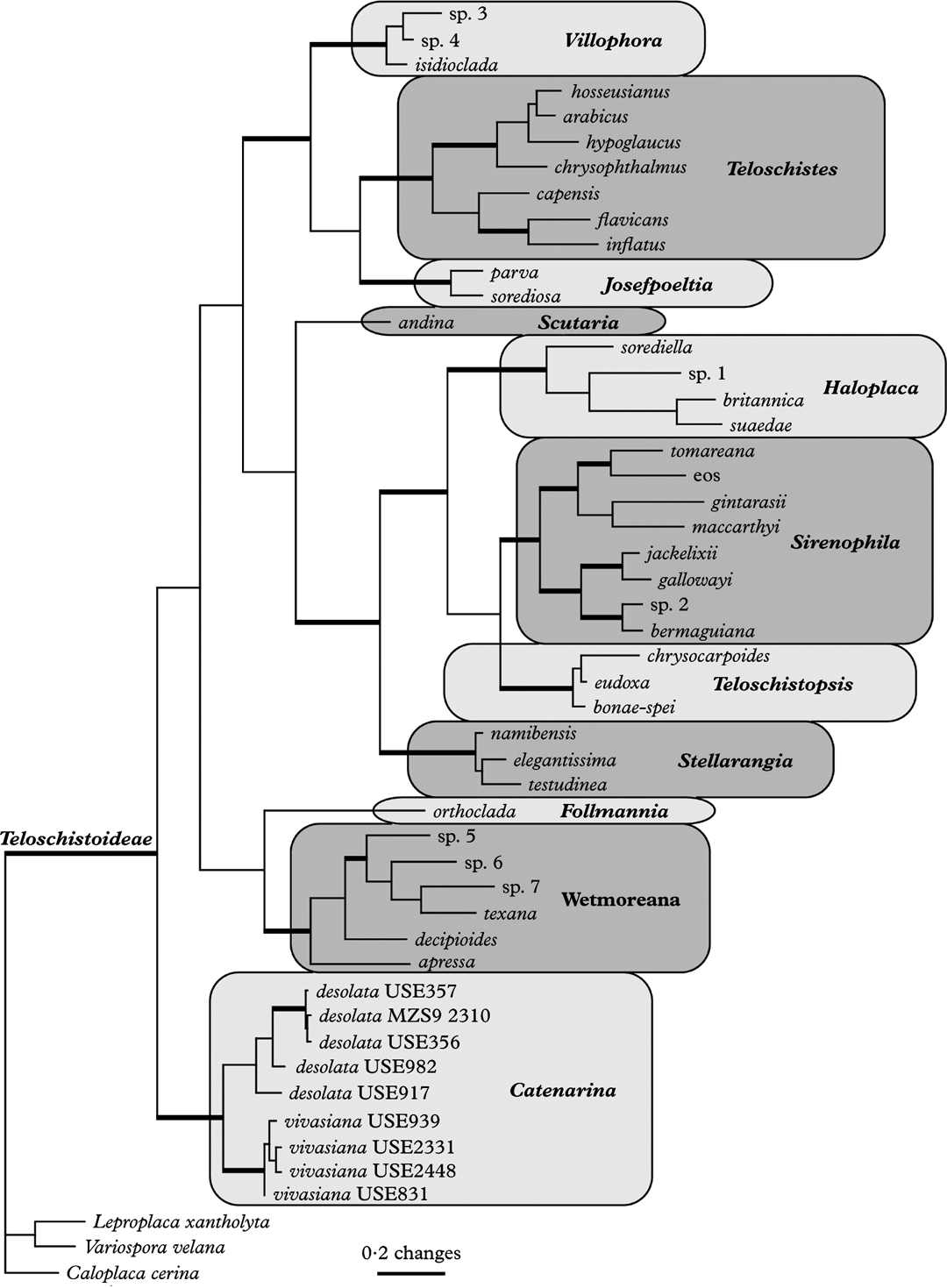
The analysis of only ITS sequences included 48 species and a total of 532 positions. A Bayesian majority-rule consensus tree is presented in Figure 3. As in the combined analysis, the subfamily Teloschistoideae forms a monophyletic clade with full support. In addition, all genera included are also supported, including the proposed genus Catenarina. Within the genus, the sequences of the species C. desolata form a monophyletic group, but without support, whereas C. vivasa is fully supported.
Majority-rule consensus tree of nrITS data using Bayesian MCMC. Nodes with posterior probabilities >=0·95 are shown in bold.
Distribution and ecology
The recent study by Arup et al. (Reference Arup, Søchting and Frödén2013) showed that Teloschistaceae has an amazingly rich diversity in austral areas. Several new or newly reinstated southern genera founded on molecular data point out a strong southern diversification in the family, which is supplemented here with yet another new genus, Catenarina. Several of the austral genera (Austroplaca, Gondwania, Shackletonia) have a strong Antarctic affinity, either growing in present-day Antarctica or in adjacent territories. Antarctica has also been highlighted as a centre of evolution for vascular plants (e.g. Wagstaff et al. Reference Wagstaff, Breitwieser and Ito2011; Nicolas & Plunkett Reference Nicolas and Plunkett2012).
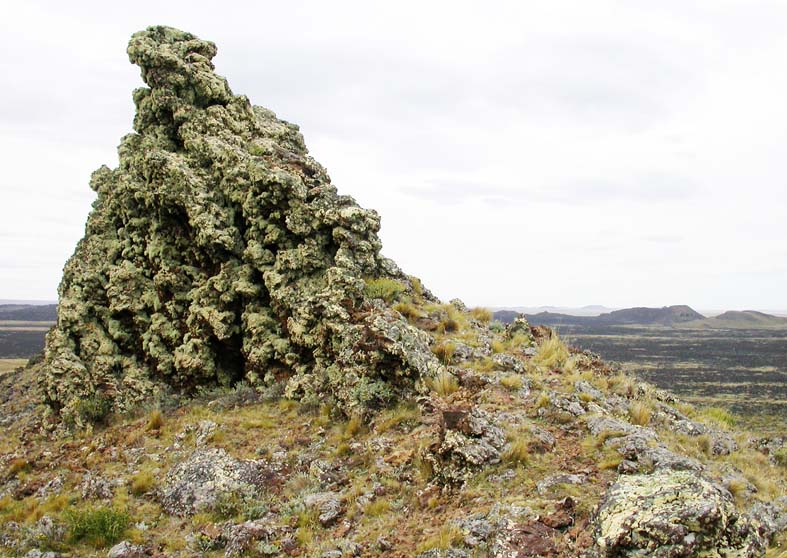
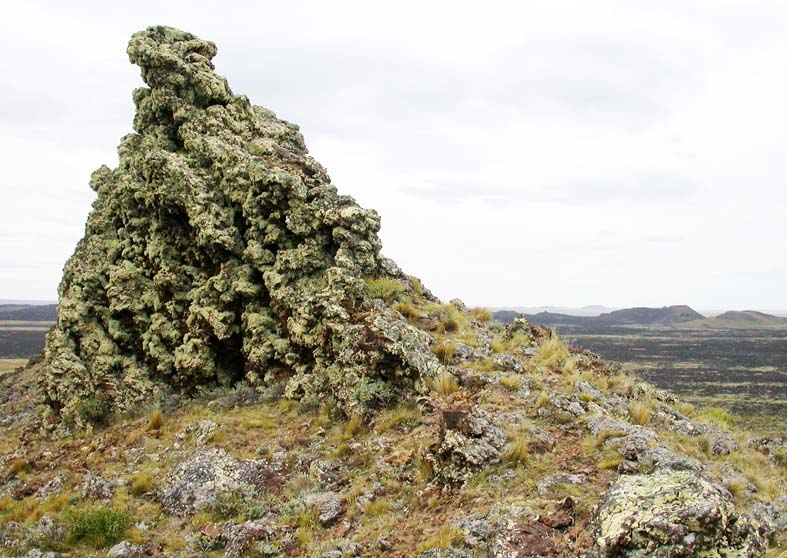
Many of the austral species are also ecologically specialized, being confined to maritime rocks influenced by saline spray water and/or bird manure. The three species recognized in Catenarina share this pattern, showing a transition of species occurring on maritime rocks in Antarctica (C. iomma), to occurrence on rocks near the sea or outcrops in Nothofagus forests and near the tree line (C. vivasiana). Catenarina desolata is restricted to rocks in the dry Patagonian steppe (see map in Elvebakk & Moberg Reference Elvebakk and Moberg2002) or in transitional grasslands adjacent to the true steppes; in addition it occurs on Kerguelen Island on volcanic inland rock. The locality on Kerguelen is under maritime influence due to extremely strong winds from the ocean and, although seemingly very different, the steppe habitat of C. desolata might have ecological conditions surprisingly close to those of supra-littoral habitats along the coast. The basaltic rocks of Morro Chico and the volcanic rocks of Pali Aike (Fig. 4) are dominated by lichens with a coastal Antarctic affinity, such as Usnea trachycarpa (Stirt.) Müll. Arg., Ramalina terebrata Hook. f. & Taylor, Haematomma erythromma (Nyl.) Zahlbr., Flavoparmelia gerlachei (Zahlbr.) Hale, and several undescribed species of Austroplaca (U. Søchting, unpublished data). Even Mastodia tessellata (Hook. f. & Harv.) Hook. f. & Harv. grows at Morro Chico. The reason for this may be the extremely strong winds which transport saline dust from the numerous saline lakes that dry out late in the season. This saline influence is ecologically equivalent to the sea spray that affects coastal rocks.
Pali Aike, Chile. In colour online
The new genus
The proposed genus Catenarina is genetically well separated from the other genera of the subfamily Teloschistoideae, but its exact position within the subfamily cannot be firmly established at present. The results of the phylogenetic analyses, together with the unique chemistry of the three species of Catenarina, support recognition of a new genus within Teloschistaceae which is described below.
Catenarina Søchting, Søgaard, Arup, Elvebakk & Elix gen. nov.
MycoBank No.: MB 805510
Type: Catenarina desolata Søchting, Søgaard & Elvebakk.
Thallus crustose, saxicolous or lichenicolous, thick or disappearing, grey or reddish brown. Apothecia sparse or abundant, zeorine with reddish disc. Spores polar-diblastic.
Secondary chemistry
Apothecia and non-grey thalli contain 7-chloroemodin (dominant) and small proportions of emodin, 7-chlorocitreorosein, 7-chloroemodinal and 7-chloroemodic acid. In addition, all species contain 7-chlorocatenarin and sometimes a smaller proportion of catenarin.
Etymology
The genus is named after its secondary compound catenarin.
Distribution
The genus is so far known from southernmost Chile, Antarctica, and Kerguelen Island.
The Species
Catenarina desolata Søchting, Søgaard & Elvebakk sp. nov.
MycoBank No.: MB 805511
Thallus lichenicolous, forming necrotic patches, primarily on Aspicilia. Thallus inconspicuous; apothecia deep red, containing mainly 7-chloroemodin and 7-chlorocatenarin.
Type: Chile, XII Región de Magallanes y de la Antártica Chilena, Provincia de Magallanes, Morro Chico, 52°03′S, 71°28′W, 200 m, lichenicolous on Aspicilia (cfr.) rocks on a NW-facing boulder slope, 28 November 1999, A. Elvebakk 99:773 (C—holotype; LD, TROM—isotypes).
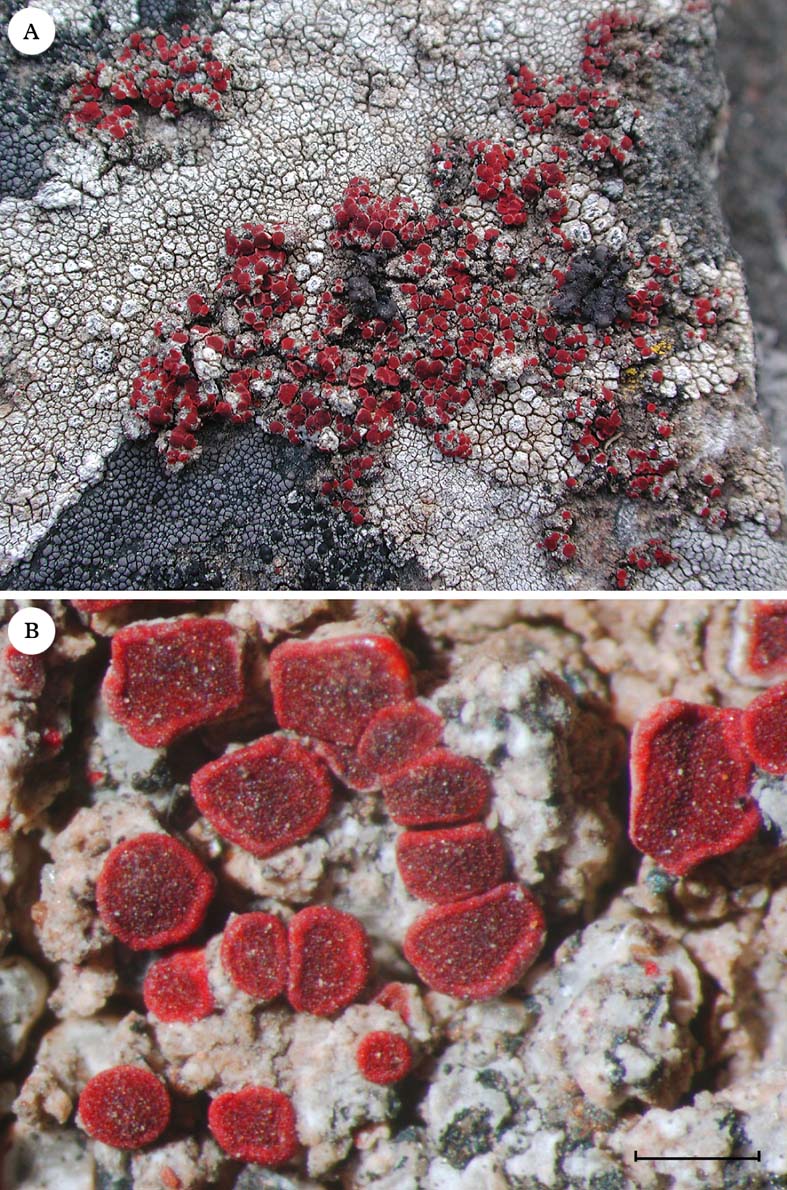
(Fig. 5)
Catenarina desolata. A, photographed in the field at Morro Chico, Chile (A. Elvebakk); B, habitus (M. Z. Søgaard 9). Scale: B=0·5 mm. In colour online.
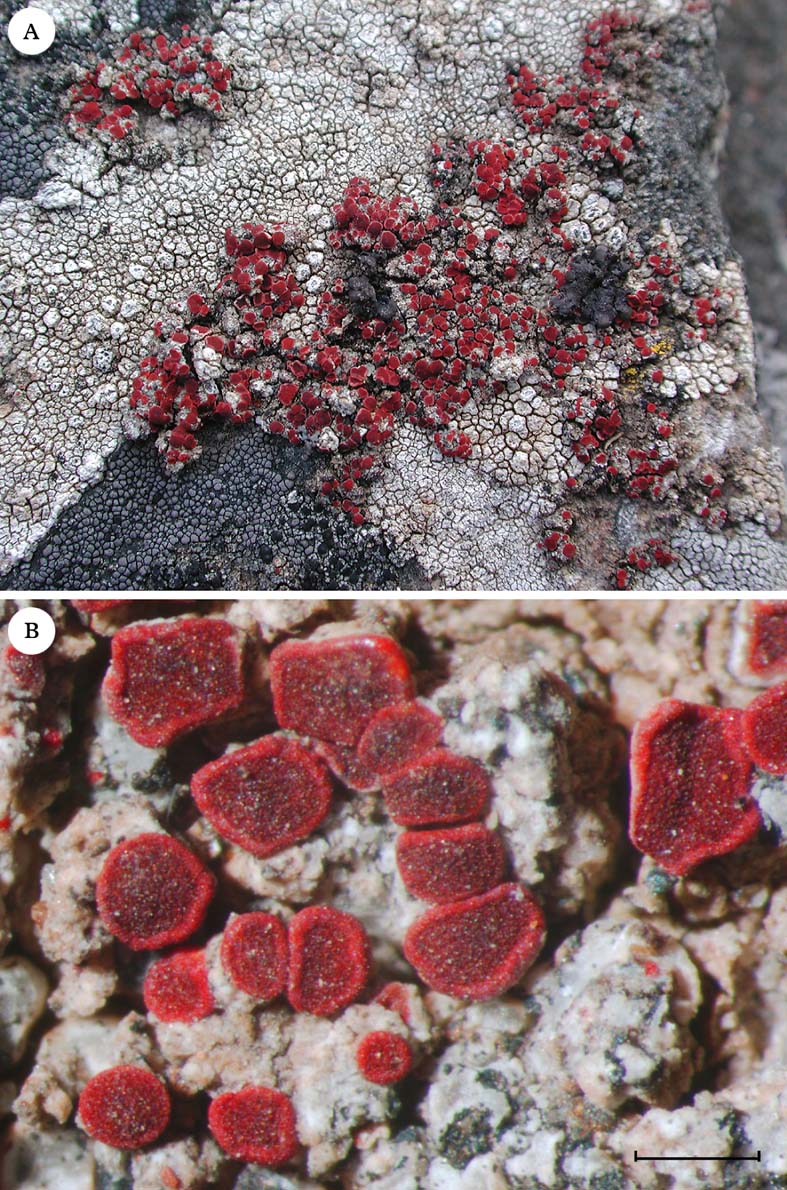
Thallus lichenicolous, inconspicuous or producing effuse, necrotic, mauve patches on the host, c. 3 mm diam. but mostly confluent.
Apothecia numerous, dispersed, adnate to sessile, regular to angular, zeorine, 0·2–0·9 mm diam. Thalline margin concolorous with thallus, often whitish, thin, soon excluded, with cupular algal layer, c. 15 µm thick and paraplectenchymatous cortex. Proper margin prominent to level with and slightly brighter than the disc, occasionally shiny, up to 150 µm thick, consisting of fan-shaped, prosoplectenchymatous tissue in outer parts. Disc plane to convex with coarse epipsamma, deep red. Hypothecium thin, 40–80 µm. Hymenium 80–90 µm. Paraphyses simple to apically branched, with apical cells up to 4 µm thick. Asci with 8 spores; ascospores broadly ellipsoid, 14·5±1·3×8±1 µm; septum 5·5±1·0 µm (n=10).
Pycnidia not seen.
Secondary chemistry
All pigmented parts K+ red. The apothecia contain 0–1% 7-chlorocitreorosein, 0–1% 7-chloroemodinal, 8–11% emodin, 63–79% 7-chloroemodin, 1–4% catenarin, and 13–22% 7-chlorocatenarin. No secondary metabolites were detected in the thallus.
Etymology
The species is named after the locality where it was first found, Pali Aike in Chile (Fig. 4), which means ‘desolate place of bad spirits’ in the traditional regional Aonikaish or Tehuelche language.
Ecology and distribution
The thallus is lichenicolous on white crustose Aspicilia sp. growing on volcanic rock and soft sedimentary rock in the Patagonian steppe or in dry grassland bordering the steppe, 190–300 m. So far it is known from southernmost Chile in XII Región of Magallanes (Provincia de Magallanes and Provincia de Última Esperanza), where it is very spectacular and abundant at the known localities. Although the specimens known from Kerguelen Island and Antarctica are much less conspicuous, it is not assumed to be common in those regions.
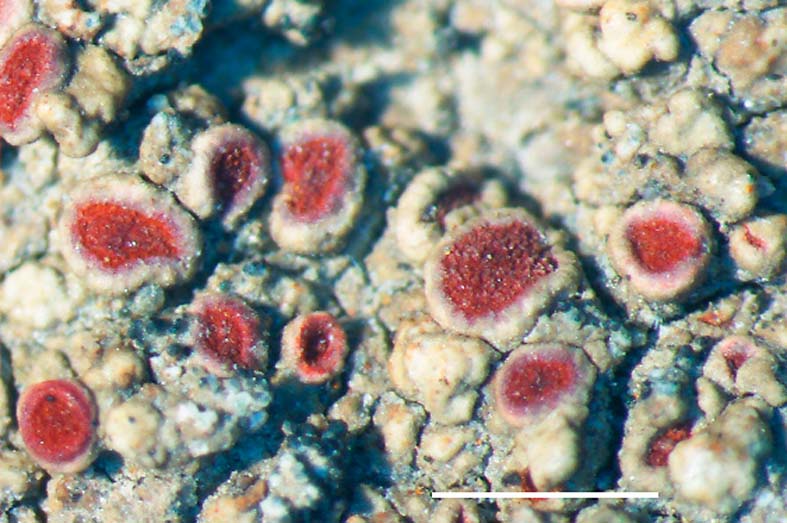
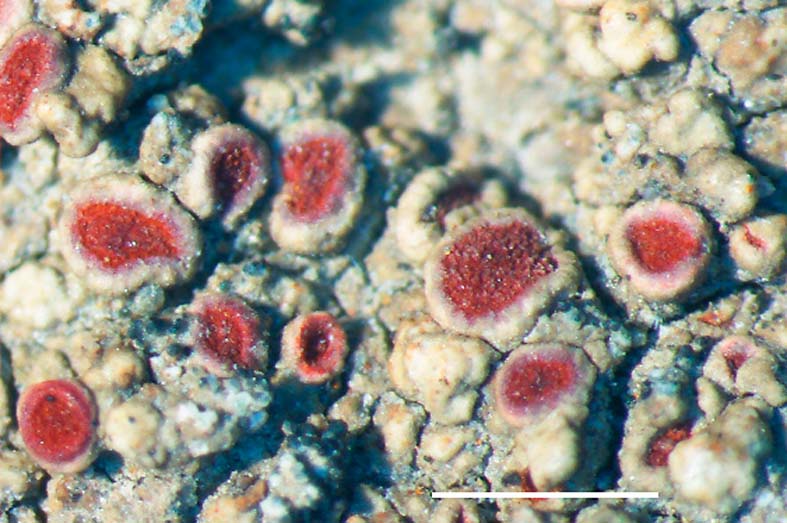
Note. Catenarina desolata is easily distinguished from other lichens in southern Patagonia by its dark reddish brown to almost purple apothecia, combined with its lichenicolous life habit and lack of thallus. The high proportion of 7-chlorocatenarin is diagnostic and supports the conspecificity of specimens from Patagonia, Kerguelen Island and Antarctica. The collections from Kerguelen Island have more dispersed apothecia. The Antarctic specimens were published by Søchting & Øvstedal (Reference Søchting and Øvstedal1992) and Øvstedal & Smith (Reference Øvstedal and Smith2001) as Caloplaca aff. anchon-phoeniceon Poelt & Clauzade. Until further studies can be undertaken, we believe they belong in C. desolata, even though they differ in having narrower spores (13–15×4·5–6·0 µm, septum 4·0–5·5 µm) (Søchting & Øvstedal Reference Søchting and Øvstedal1992). Catenarina desolata shares chemistry with another Antarctic species, Caloplaca iomma Olech & Søchting, which is combined into Catenarina (see below). Caloplaca iomma differs in having deeper reddish orange apothecia that eventually turn reddish brown, greyish to beige apothecial margins (Fig. 6), a narrower spore septum [2·5±0·6 µm (n=10)], and a coastal occurrence with seasonal streams of water (Olech & Søchting Reference Olech and Søchting1993; Olech Reference Olech2004).
Catenarina iomma, habitus, Olech A081-14 (C). Scale=0·5 mm. In colour online.
Additional specimens examined. Chile: XII Region de Magallanes, Provincia Última Esperanza: Sierra Baguales, 3–4 km S of Estancia Tres R., 50°48′S, 72°25′W, 1999, A. Elvebakk 99:1173. Provincia de Magallanes: Parque Nacional Pali Aike, 52°66·8′S, 69°41·8′W, 2005, U. Søchting 10436a; Parque Nacional Pali Aike, Cueva Pali Aike, 52°06·8′S, 69°42·8′W, 2001, P. Frödén (LD); Parque Nacional Pali Aike, Escorial del Diablo, 52°07·1′S, 69°42·2′W, 2001, P. Frödén (LD); 30 km N of Punta Delgada, Parque Nacíonal Pali Aike, 52°07′S, 69°42′W, 2008, M. Z. Søgaard 9; Morro Chico, 52°03′S, 71°28′W, 1999, A. Elvebakk 99:771 (C; TROM), 99:772, 99:820, 99:855 (TROM).—Kerguelen Island: Peninsule Courbet: SW corner of plateau between Rivière du Sud and Rivière du Chateau, 49°18′S, 70°07′E, 1998, R. S. Poulsen 188; Val Studer, Canyon 1 km NW of Cabane Val Studer, 49°17′S, 70°03′E, 1998, U. Søchting 9484, R. S. Poulsen 405.
Catenarina iomma (Olech & Søchting) Søchting & Søgaard comb. nov.
MycoBank No.: MB 805512
Basionym: Caloplaca iomma Olech & Søchting Lichenologist 25: 264 (1993).
(Fig. 6)
Note. Catenarina iomma is known only from very few collections from King George Island (Olech Reference Olech2004), Signy Island and the Antarctic Peninsula (Øvstedal & Smith Reference Øvstedal and Smith2001). Based on morphology and secondary chemistry, it is certainly closely related to C. desolata but it is easily distinguished by, for example, its narrow spore septum.
Catenarina vivasiana Søgaard & Søchting sp. nov.
MycoBank No.: MB 805513
Thallus bullate to lobate, dark reddish brown, containing mainly 7-chloroemodin and a small proportion of 7-chlorocatenarin.
Type: Chile, XII Región de Magallanes y de la Antártica Chilena, Provincia Última Esperanza, Parque Nacional Torres del Paine, walk from Lago Grey, 51°07′20″S, 73°07′27″W, moss and detritus on rock, 16 January 2008, M. Z. Søgaard 42 (C—holotype; LD—isotype).
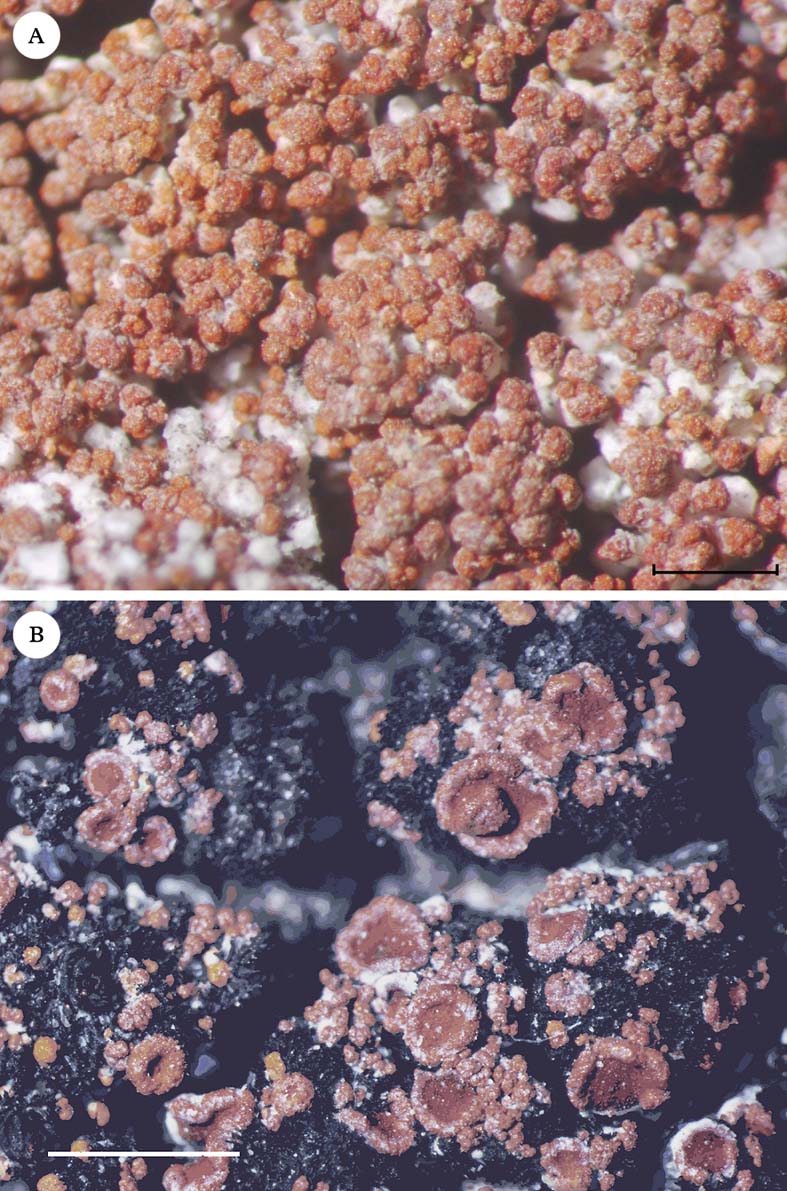
(Fig. 7)
Catenarina vivasiana. A, thallus (U. Søchting 10414); B, apothecia (M. Z. Søgaard 42 – holotype). Scales: A=0·5 mm; B=1 mm. In colour online.
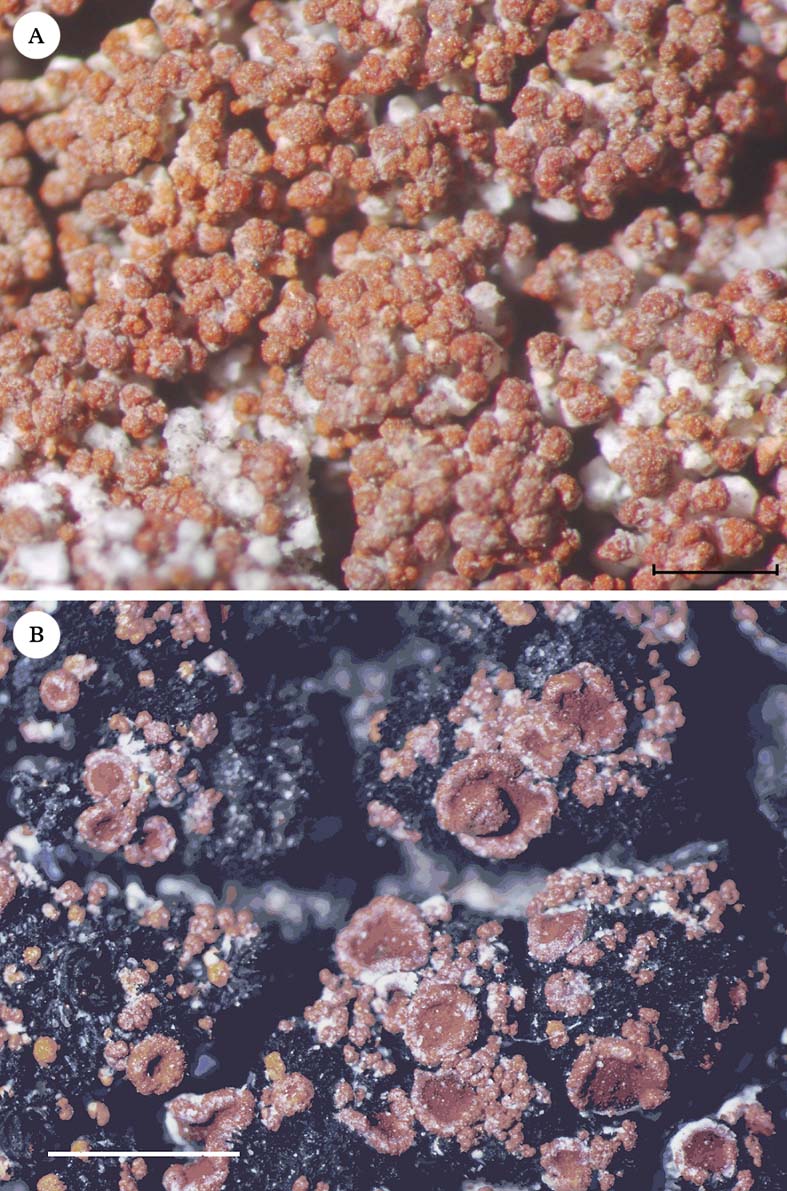
Thallus crustose, dispersed bullate to rarely continuous with irregular marginal lobes, deep reddish brown; areoles up to 0·3 mm wide but mostly smaller, strongly convex to coralloid, up to 1 mm high particularly when growing on detritus; surface rugulose with or without a white epinecral layer.
Apothecia often absent, rarely numerous, sessile, lecanorine to zeorine, up to 0·5 mm diam. Thalline margin regular to flexuous, with age strongly furrowed, prominent, concolorous with thallus, with algal layer that does not extend below the hymenium; exterior part up to 90 µm thick. Proper margin concolorous with the disc, shiny; disc flat to slightly concave, darker than thallus, intense to deep reddish brown, with coarse epipsamma. Hypothecium up to 100 µm in the centre, with oil droplets. Hymenium 75–85 µm; paraphyses branched; apical cells not enlarged. Asci with 8 spores; ascospores narrowly ellipsoid and slightly bifusiform, 13–16×5·0–6·5 µm; septum 1·5–2·0 µm, c. 1/8 of the length of the spore.
Pycnidia not seen.
Secondary chemistry
All parts K+ red. Anthraquinone composition of the thallus is: 1–2% 7-chlorocitreorosein, c. 8% 7-chloroemodinal, 0–1% emodin, 90–91% 7-chloroemodin, and small amounts (<1%) of 7-chlorocatenarin.
Etymology
The species is named after the Spanish lichenologist Mercedes Vivas.
Ecology and distribution
Most of the samples are from light-exposed rock outcrops in lowland anti-boreal Nothofagus forests, both in deciduous and the more moist evergreen types, between altitudes of 45 and 145 m. In Isla Navarino, the species has been collected once on maritime rocks in the zone above the yellow Caloplaca zone, and once on rocks in low-andine heathland close to the tree line. The species can grow directly on rocks, but also occurs on detritus among bryophytes (e.g. Grimmia), lichens [e.g. Psoroma buchananii (Knight) Nyl.] and cyanobacteria. It is so far known only from southernmost South America, in the Chilean XII Región of Magallanes (Provincia de Última Esperanza, and Provincia de la Antártica Chilena, Isla Navarino), but may be expected to turn up further north in South America.
Additional specimens examined. Chile: XII Región de Magallanes y de la Antártica Chilena, Provincia de Última Esperanza: Parque Nacional Torres del Paine, 51°04′S, 73°07′W, 1998, A. Elvebakk 98:072; 1 km W of Guardería Lago Grey, 1999, A. Elvebakk 99:1081 (TROM); N of Puerto Natales, Rio Serrano, 51°21·2′S, 72°48·1′W, 2005, U. Søchting 10.410 & 10.414; 15 km N of Puerto Natales, Cueva de Milodón, 51°34·1′S, 72°37·2′W, 2005, U. Søchting 10.402. Provincia de la Antártica Chilena: Isla Navarino, 37 km W of Pto. Williams, Caleta Honde, 54°55·8′S, 68°16·9′W, 2005, U. Søchting 10.177; 25 km W of Pto. Williams, Paso Mladineo, 55°0·3′S, 68°05·9′W, 2005, U. Søchting 10.382.
Lisbeth Knudsen is thanked for technical assistance in the HPLC and molecular laboratories, and Victoria Gordon Friis for linguistic revision. The project was supported by a grant to the first author from the Carlsberg Foundation (2008_01_0645) and to the last author by Spanish Ministerio de Economia (CTM 2012-38222-C02-01).