


A. Introduction
COVID-19 was the cause of over 6 million deaths globallyFootnote 1 and provoked a widespread concern that national health systems would collapse due to the exponential increase in the demand for hospital care. In some countries, this risk materialized, and respiratory support treatment was not available to all patients.Footnote 2
To reduce deaths and alleviate the burden on health systems, governments around the world imposed severe public health measures to control the spread of the virus. These measures —including: economic shutdowns, lockdowns, travel limitations, and vaccine mandates—were unprecedented in most countries and were often met with fierce opposition. They were also challenged in national and international courts, often on the grounds that they were an abuse of administrative powers or a disproportionate interference with civil rights.Footnote 3
The judicial control of governmental discretion during the pandemic raised dilemmas for the courts. On the one hand, judicial oversight is particularly important where the administrative state is taking unprecedented and urgent measures, and legislative oversight is lacking or insufficient. There were also concerns that the pandemic could be used as a pretext to expand state control over the population to achieve goals unrelated to the containment of COVID-19. As stated by the US Supreme Court Justice Neil Gorsuch, “[e]ven in times of crisis—perhaps especially in times of crisis—we have a duty to hold governments to the Constitution.”Footnote 4
On the other hand, judicial intervention can reduce the flexibility and agility governments need to act during times of uncertainty about the disease and the consequences of the responses to the health crisis. These policy choices also involve trade-offs that arguably should not be second-guessed by courts with limited democratic legitimacy and institutional capacity. As put by the India Supreme Court Justice Sharad Bobde, the executive “is the most suitable organ of governance to deal with the problems arising out of the COVID-19 pandemic and lockdown.”Footnote 5
Two op-eds by Brazilian Supreme Court Justice Luiz Fux illustrate the conflicting pressures on the Judiciary. The first, from March 2020, urged judges to exercise their “passive virtues and judicial humility to recognize that, in many cases, they lack expertise on COVID-19.”Footnote 6 The second, from April 2020, presents the Judiciary as the “lifeline to guarantee … the mitigation of the harms caused by the crisis” and justifies “the flexibilization of the law” if necessary to achieve the right outcomes.Footnote 7 Courts, therefore, were expected to be both cautious and heroic.
This dilemma is further accentuated by legal claims that challenged the government’s inaction—rather than its overaction—and sought remedies for the implementation of policies against COVID-19. These claims aimed to address what Pozen and Scheppele called executive underreach: “[A]national executive branch’s willful failure to address a significant public problem that the executive is legally and functionally equipped (though not necessarily legally required) to address.”Footnote 8
The adjudication of claims for the fulfilment of positive duties—particularly when they aim to address issues that affect large groups—tends to be more complex than that of claims seeking to void a norm, to determine the meaning of legislation, or to stop the government from acting. Judges may find themselves blurring the distinction between controlling and making policy. They must engage with social facts, conflicting policy goals, and the competing means to achieve them. Courts may also end up bearing the political costs of the negative effects of policies they mandated. These cases also force courts to face the limits of their powers to induce compliance and risk exposing them to conflict with governments that may retaliate or simply refuse to comply.
Legal claims against executive underreach during the pandemic, an under-researched topic, will be the focus of this Article, which is a single-case study of the Brazil Supreme Court (STF). Brazil is a substantively important and paradigmatic case for comparative studies of the law, politics, and policies during the pandemic.Footnote 9 This is due to (a) the impact of COVID-19 on its population, (b) the President’s opposition to several public health measures to contain it, and (c) the pivotal role of the STF, whose policy preferences were manifestly divergent from those of the federal government. Therefore, any analysis of the policies regarding COVID-19 in Brazil would be severely incomplete without considering the STF’s judgments in this period.
Brazil is not the only major federal country where the central government underplayed the gravity of COVID-19 and opposed measures to contain it. The United States under President Trump is a comparable example.Footnote 10 However, in the United States, public health measures—including restrictive legislation— are mostly under the competence of the states.Footnote 11 In Brazil, the federal government has always had prominent legislative and administrative powers in public health issues; thus, its actions and inactions are more consequential.
This Article analyses the STF’s decisions in structural cases involving policies of the highest importance during the health crisis: restrictive social distancing measures, protection of indigenous populations, and vaccination. The complexity and relevance of these cases in this context highlight the dilemmas involved in the judicial control of administrative underreach, where both judicial action and inaction can be highly consequential. The description of each case will cover the policy issue involved, the context that motivated the filing of the lawsuit, the remedies sought by the claimants, and the STF’s rulings. The STF’s behavior in each case is analyzed according to three dimensions: the rights affirmed in the decision, the remedies granted, and the judicial monitoring of government compliance.
Based on this analysis, this Article will make two arguments. First, in these cases, the Court showed “selective assertiveness” in the control of administrative underreach. It refrained from making strong injunctions that ordered the government to act despite condemning its omissions in strong terms and ruling quickly and decisively to limit its legislative and administrative powers.Footnote 12 Second, drawing from the literature on judicial behavior, this Article argues that the STF’s selective assertiveness, rather than demonstrating the court’s inconsistency or incoherence, can be better understood as the strategic calculation of a court aiming to advance its policy preference while minimizing the risk of being ignored or openly defied.
This case study not only contributes to the literature on the behavior of courts in moments of crisis, but also to the broader scholarship on social rights and structural litigation. This literature has focused on classifying and assessing the different forms of judicial intervention to protect social rights.Footnote 13 However, comparatively less work has been done to explain the incentives that affect a court’s choice on whether to order the government to act and, if so, the appropriate form of intervention in a case. Covering this gap helps review both the potential and the limits of structural litigation to compel governmental action.
B. COVID-19, the President and the Supreme Court: A General Context
By the end of 2022, COVID-19 caused the death of over 690,000 people in Brazil, which is second only to the United States in the total number of confirmed deaths.Footnote 14 Brazil has also caught the attention of the world due to the attitude of President Jair Bolsonaro.
In February 2020, Brazil declared a public health emergency and approved legislation (Federal Law n. 13.979) granting wide powers for the federal and subnational governments to impose measures against COVID-19, including quarantine and compulsory treatment. However, once subnational governments started imposing restrictive measures, President Bolsonaro began to oppose them, particularly those that affected business activities. He called the fearful reaction to the virus “hysteria” and claimed that restrictions were more harmful than the virus itself.Footnote 15
In April 2020, Bolsonaro dismissed his first Ministry of Health, Henrique Mandetta, who advocated for the imposition of social distancing measures and publicly criticized the President for denying the gravity of the health crisis. Bolsonaro also openly advocated the use of treatments, such as hydroxychloroquine—with unproven efficacy against COVID-19. His second Minister of Health, Nelson Teich, resigned after less than a month for not endorsing the introduction of these drugs as part of the national protocol for treating COVID-19.
Bolsonaro also shed doubts about the efficacy and safety of COVID-19 vaccines. He spread misinformation about mRNA vaccines and questioned the quality of CoronaVac. CoronaVac was developed and produced by a Chinese company in partnership with a company owned by the State of São Paulo, then governed by one of Bolsonaro’s most vocal political opponents. He was also reluctant to include CoronaVac in the national immunization program, despite the shortage of vaccines, at a time when the number of deaths peaked in Brazil.
Due to the President’s reluctance to adopt the necessary measures, state governors and city mayors started to implement them.Footnote 16 Brazil has a federal system with three levels of government: the Federal government, states and the Federal District, and municipalities. The Federal government controls a large share of the public budget, has wide executive powers, and plays a key role in the formulation, funding, and national coordination of important policies, including the National Health System. The President, as head of the Federal government, has significant control over the legislative agenda, including the power to issue provisional presidential decrees (medidas provisórias—MP). These decrees have the same normative hierarchy as federal legislation.
There are other jurisdictions where subnational governments have acted when the central government was unwilling or unable to.Footnote 17 However, Brazil is likely a unique case in which the federal government tried to undermine subnational policies. It was in this context that the STF became a key decision-maker during the pandemic. The confrontation between state governors and President Bolsonaro frequently became constitutional federative disputes that had to be settled by the STF. Moreover, many saw the STF as an effective and accessible institution to oppose the federal government’s policies—or the lack thereof—during the crisis.Footnote 18
Although the extent of the STF’s role during the pandemic was potentialized by this political context, the involvement of the court was expected to a certain degree. The STF is the supreme court—the last court of appeal in cases involving constitutional issues—and the constitutional court that decides actions filed directly at the STF challenging the constitutionality of legislation and policy, or the absence of legislation or policy to fulfil positive duties to protect rights. In the last decades, the STF has gained political centrality through the review of key executive and legislative decisions. This is due to, among other reasons, its independence, the wide jurisdiction of the court, and the rules of standing that make it accessible.Footnote 19
STF justices also hold significant individual powers. When presiding over a case, individual justices can alter the status quo through preliminary injunctions. Justices can also maintain the status quo by not including a case in the Court’s agenda. At that time, a justice could also interrupt a judgment for an indeterminate period to further consider the issue.Footnote 20 These powers are relevant in a pandemic when facts change quickly, and issues may be a fait accomplit before a full court decision.
Lastly, the relationship between President Bolsonaro and the STF was one of open confrontation. Bolsonaro threatened several times to disobey STF decisions, hinted at the possibility of a military intervention against the Court, tried to impeach a STF justice and called another justice an “imbecile” and an “idiot”.Footnote 21 However, he never managed to get sufficient support to impeach justices or curb the court’s powers. Eventually, the STF also ended up cornering Bolsonaro through criminal investigations against him and his supporters. This fractured relationship cannot solely be attributed to the disputes concerning COVID-19,Footnote 22 but the Court’s decisions curtailing the President’s authority in handling the pandemic often triggered heated reactions from Bolsonaro.
In sum, the combination of federal disputes, the opposition to the President’s actions and omissions, and an independent, accessible, and powerful STF led to the judicialization of several policies related to the pandemic. The STF’s decisions on these issues reflected and contributed to its antagonism with Bolsonaro. It is within this broader context that the STF decisions during the pandemic should be understood.
C. Administrative Underreach and the Supreme Court’s Selective Assertiveness
This Article analyzes STF decisions in direct constitutional actions—which have an erga omnes effect—that sought structural remedies with positive obligations in three key issues regarding the COVID-19 pandemic: restrictive social distancing measures, protection of indigenous populations, and vaccination (see Annex).
The analysis of the cases is primarily based on the documents produced during the course of the legal proceedings, including those submitted by litigants, experts, and stakeholders involved in the litigation. These materials were retrieved using the search tools and database available on the STF websiteFootnote 23 which provides access to full case records. The temporal scope of the analysis was restricted to documents generated during the COVID-19 pandemic, which was officially declared over in Brazil on April 22, 2022.
I. Restrictive Social Distancing Measures
Restrictive social distancing measures, including economic shutdowns, lockdowns, curfews, etc., are restrictions imposed on the freedom of individuals. They limit physical human interaction and thus reduce the spread of an infectious disease. Before vaccines became available, they were the most effective means to reduce contagion and thus avoid mortality and the collapse of health systems.
In Brazil, subnational governments imposing these measures were met with fierce opposition from President Bolsonaro, who tried to use his legislative powers and mobilize political opposition against them. Through a provisional presidential decree—MP 962—Bolsonaro granted himself the power to determine the essential services that would be allowed to function even when social distancing measures were imposed. Accordingly, Bolsonaro would have the power to weaken the restrictions imposed locally by inflating the list of essential services. Indeed, subsequent presidential decrees contradicted many state and municipal norms and classified religious services, gyms, hair salons, and lottery shops as essential services.
Bolsonaro campaigned against restrictive measures through public statements and demonstrations he endorsed and promoted.Footnote 24 His government also attempted to launch a public campaign called “Brazil Cannot Stop” to “inform” the population about the harms of social distancing measures to freedom and the economy. If successful, this campaign could have reduced compliance with restrictions and encouraged popular opposition against them.
Bolsonaro, however, was challenged in and by the STF. The Brazilian Bar Association filed a case against the President in April 2020 claiming that he was “irresponsibly” minimizing the effects of the pandemic, failed to enact federal legislation imposing social distancing measures, and encouraged people to boycott the measures imposed by subnational governments.Footnote 25 The claimant sought orders for the President to impose social distancing measures nationally and to refrain from interfering with those imposed locally.
A few days later, the STF made a preliminary decision finding that it could not substitute its discretionary power for that of the Executive or order the implementation of specific administrative measures. However, it ruled that the Federal government had no power to displace social distancing measures imposed by state governors and city mayors. This meant that subnational rules should prevail over federal norms.Footnote 26 This ruling was later confirmed by the full Court.Footnote 27 The STF was unequivocal about its policy preference and affirmed that social distancing measures were “necessary,” “important,” and “effective.”Footnote 28
The overlap between a formal analysis of legislative competence and a substantive policy assessment was even clearer in its decision on a case in which an opposition party challenged the provisional decree that granted the President power to determine the essential services. A few days after the case was filed, the STF suspended this decree and declared that subnational authorities had the power to determine the essential services within their jurisdiction.Footnote 29 The STF openly criticized the federal government for its failure to act and to follow the World Health Organization’s recommendations despite the increasing number of deaths. Justice Mendes said that the powers of the President do not include that of “implementing a policy of a genocidal nature.”Footnote 30
In this case, the question of who has the power to decide was answered by considering who would make the best policy. The STF affirmed that, in federalism disputes about legislative competence, it would “traditionally” determine the topic within which a given legislation falls and then identify which level of government has the constitutional power to legislate on it.Footnote 31 However, according to the Court, applying this method in this case risked “rewarding” the inaction of the authority that has the power but refuses to legislate.Footnote 32 Therefore, “the solution for the conflicts about the allocation of powers [within a federation] should be guided by what best realizes the right to health.”Footnote 33
STF’s policy preference was also explicit in two cases, one filed by a trade union, and the other by an opposition party that challenged the “Brazil Cannot Stop” campaign. The Court made a preliminary decision one day after the actions were filed, suspending what it called a “disinformation” campaign that threatened life and health. The decision argued that restrictive measures to reduce the spread of the disease were “necessary”, “urgent” and should be “rigorous.”Footnote 34
Dissent in the pro-social distancing stance appeared on April 3, 2021, when the first Bolsonaro-appointed Justice, Nunes Marques, granted a preliminary injunction allowing in-person collective religious services, nationally grounded on the right to religious freedom.Footnote 35 This decision was made in the context of a case filed nine months earlier by an association of evangelical jurists challenging a state ban on in-person religious services. The case had not been on the Court’s agenda until Justice Marques was appointed.
However, the other justices responded almost immediately. Two days later, in another case related to the ban on in-person religious services by a state government, Justice Mendes made a preliminary decision to confirm the constitutionality of such bans.Footnote 36 He said that only a “denialist” would think that these restrictions breach the right to religious freedom when the number of COVID-19 deaths was at its peak.Footnote 37 The full court confirmed Justice Mendes’s decision on April 08, 2021.Footnote 38 That is, no more than five days after Justice Marques’s decision.
The STF was clear and vocal in expressing its policy preference for the imposition of stricter social distancing measures, and in its criticism of the Federal government’s reluctance to adopt them. These statements were not just obiter dicta, but central to the Court’s legal reasoning. The STF also acted promptly to remove obstacles preventing state governments from imposing restrictive measures.
Nevertheless, in what can be seen as an instance of selective assertiveness, the STF fell short of making orders that would exert pressure on the federal government to impose nationwide restrictions. This conclusion can be inferred from its decisions, but also from what the Court avoided deciding. For instance, the case ADPF No. 822 was filed in April 2021 by trade unions seeking orders for the imposition of a national lockdown. The STF never decided this case, possibly making it an example of judicial avoidance, when a court sits on the case until the issue dies out.Footnote 39
II. Protection of the Indigenous Populations
Indigenous populations in Brazil are epidemiologically vulnerable and many live in remote areas with limited access to public services. The threat of the pandemic added to those long-standing problems related to the lack of legal recognition and effective protection of their lands, further exposing them to deprivation and violence.
Despite their need for special protection, this protection was unlikely to happen by the initiative of President Bolsonaro. He had previously described indigenous populations as an “obstacle” to economic development and regretted that they had not been decimated.Footnote 40 He made and kept promises of not demarcating indigenous land during his government and restricting the actions of the National Indian Foundation (FUNAI), the federal body responsible for protecting indigenous populations.Footnote 41
It is against this background that the case ADPF No. 709 was filed in July 2020 alleging that the government’s denialism, institutional racism, and omissions would lead to the genocide of indigenous populations.Footnote 42 The claimants argued that the then-existing federal plan to protect indigenous groups lacked concrete measures, was poorly implemented, and failed to involve the indigenous population.Footnote 43 Claimants sought orders for the Federal government to (i) set up health barriers (cordon sanitaires) to protect isolated groups, (ii) activate a “situation room” that included indigenous people to oversee the policies to protect them against COVID-19, (iii) remove invaders from indigenous lands, and (iv) create and implement, with the involvement of indigenous people and experts, a comprehensive plan to protect indigenous populations against COVID-19.
A week later, a preliminary decision, later confirmed by the full Court, recognized the gravity and urgency of the situation and noticed Bolsonaro’s expressions of disregard for the indigenous populations.Footnote 44 Yet, the STF opted for a dialogical solution, arguing that there was uncertainty about the facts and that multiple actions by different public bodies and the expenditure of substantial public resources were needed to tackle this complex situation.
The STF mandated the creation of a multi-stakeholder situation room. It also ordered the government to formulate a comprehensive plan for protecting indigenous people, including health and social care measures. Instead of ordering the immediate expulsion of invaders, it ruled that this should be one of the goals of this comprehensive plan. Moreover, it ordered the creation of a second plan for the implementation of health barriers, instead of ordering them to be immediately installed. Both plans had to be approved by the STF.
The STF’s speed in deciding the injunction was not matched by that with which the government complied with the orders. Regarding the situation room, indigenous groups complained to the STF about the information and power asymmetry between participants. Indigenous groups also reported the intimidatory environment in the meetings, and the government’s reluctance to consider their inputs.Footnote 45 Observers suggested that the government was using the situation room to give a veneer of legitimacy to its foregone decisions. Over time, many stopped their engagement with the situation room, as it was not a truly deliberative forum.Footnote 46
Regarding the plan for installing health barriers, the first version presented to the court—as admitted by the government—merely reflected what was already being done.Footnote 47 This was also noticed by stakeholders, who saw the plan as vague and failing to consider the inputs from the situation room.Footnote 48 The STF ordered the government to present another version of the plan, which stakeholders judged did not advance much compared to the previous version.Footnote 49 Yet, the STF approved the plan in August 2020, despite conceding that it was disappointing.Footnote 50
At the implementation stage, indigenous groups complained to the STF that not all barriers were in operation. They also complained that those in operation were insufficient and inadequate, and that there was limited information about the execution of the plan. The indigenous groups further complained that the measures proposed were limited to what the government itself considered feasible, thus frustrating the purpose of the litigation.Footnote 51 According to analysts, one year after the decision, there was still no evidence that permanent and adequate health barriers were installed.Footnote 52
Concerning the comprehensive plan for protecting indigenous populations, the STF refused three versions on the grounds that they were vague, insufficient, and failed to consider stakeholders’ inputs. In March 2021, eight months after the injunction, the fourth version was partially approved by the STF due to the pressing urgency of the situation.Footnote 53 The Court, echoing the claimants’ unsatisfaction, expressed its frustration with the government’s “managerial collapse” and “precarity” that made it incapable of formulating a detailed plan.Footnote 54
In a follow-up decision, the Court reproached the government’s lack of transparency and delaying tactics. It then ordered the government to “adopt all the necessary measures to protect the indigenous populations’ life, health and safety.”Footnote 55 Nevertheless, stakeholders kept informing the Court that the problems persisted, including the increasing violence and invasions in indigenous lands, and high levels of malnutrition and disease within the communities.Footnote 56
The STF made several follow-up orders for the government to address these issues, to which the government responded by listing the existing and planned actions. A few months later, stakeholders informed the STF that the problems persisted or worsened, which was then followed by further orders for the government to address them.Footnote 57 This cycle persisted throughout the pandemic and—according to analysts directly involved in the case—this structural litigation produced more documents than results.Footnote 58
In sum, the court was assertive in recognizing the imminent threat the pandemic posed to the indigenous population and in mandating the government to design and implement policies for their protection. It also continuously monitored the government’s compliance with its rulings. However, despite the disappointment with the government’s behavior and the results achieved, the STF insisted on its dialogical approach instead of mandating more concrete administrative actions.
III. COVID-19 Immunization Policy
In 2020, Brazil had secured three procurement agreements for COVID-19 vaccines. One through the COVAX Facility, an international pooled procurement scheme led by the WHO. The second was between the federal government and AstraZeneca, which included technology transfers for local production. The third involved Sinovac and a company owned by the State of São Paulo to produce the CoronaVac vaccine. The governor of São Paulo, João Doria, was a vocal opponent of Bolsonaro’s policies regarding COVID-19 and a likely adversary in the following presidential election.
Despite this political dispute, members of the Federal government were negotiating with the State of São Paulo for the purchase of 46 million doses of CoronaVac. These doses would then be included in the national COVID-19 immunization program. However, when the negotiations became public, Bolsonaro declared on social media that the Federal government would not buy CoronaVac.Footnote 59 This would have been a highly consequential decision because the doses secured through the other two agreements were insufficient to vaccinate the entire population. There were also doubts about whether subnational governments had legal power and the financial means to run their own immunization programs.
One day after Bolsonaro’s social media posts, two cases were filed by opposition political parties to compel the Federal government to sign a memorandum of understanding with the commitment to buy the 46 million CoronaVac doses, to present a national plan for the procurement of vaccines, and to buy all the vaccines that eventually receive regulatory approval. The case rapporteur, Justice Lewandowski, issued his legal opinion ordering the Federal government to present a national plan for COVID-19 immunization. However, he considered that it was beyond the powers of the STF to compel the government to buy any given vaccine.Footnote 60 A few days later, the Federal government voluntarily presented a national plan, and the judgment was suspended.
The court kept the cases open and, what was initially a claim for the presentation of a plan and the purchase of vaccines, became a tool for the continuous monitoring of the federal policy. For instance, the STF requested the government to inform the expected date for the beginning of immunization and to clarify the priority order for receiving a shot.Footnote 61 Yet, the court avoided interfering with the governments’ discretion.
In light of the concerns about the Federal government’s insufficient commitment to implementing a national immunization policy, the Brazilian Bar Association sought a judicial order for the Federal government to increase national funds for procuring vaccines. The Court, instead of granting this request, declared that subnational entities have the power to run their own vaccination programs, which included procuring vaccines from abroad if the federal policy is insufficient or tardy.Footnote 62 Similar to cases related to social distancing measures, the Court transformed a case aimed at compelling the Federal government to act into a federalism issue. The Bar Association also sought an order for the Federal government to procure all the vaccines necessary to immunize the population. In what seems to be another instance of judicial avoidance, the Court never ruled on this case, which was terminated almost one year later because it had become moot.Footnote 63
Subsequently, the STF was requested to quash guidance from the Ministry of Health that recommended against the vaccination of teenagers in exceptional circumstances, despite the regulatory approval of a vaccine for this age group. The STF did not quash the federal guidance but, on the basis that the scientific evidence weighed heavily in favor of vaccinating this age group, declared that subnational entities have the authority to decide on this issue.Footnote 64 Again, the STF conflated issues of rights and federalism.
Bolsonaro’s opposition to vaccine mandates also triggered legal disputes. In December 2020, the STF ruled against the Federal government and decided that mandatory vaccination is constitutional, and it can be imposed by subnational governments.Footnote 65 The Court was clear that, if circumstances require, mandatory vaccination should be implemented to protect public health. In a message likely aimed at Bolsonaro, the Court criticized the “radical,” “ideological,” and “obscurantist” discourses against COVID-19 vaccination.Footnote 66
The STF also prevented other attempts by the Federal government to block mandatory vaccination. In a case related to the vaccination of infants, the STF affirmed that mandatory vaccination protects the right to health and life and that subnational governments have the power to mandate vaccination if the federal government fails to act.Footnote 67 The Court also suspended a federal norm prohibiting employers from firing or not hiring employees who refuse COVID-19 vaccination.Footnote 68 The Court also quashed another norm that forbade federal educational institutions to require proof of vaccination for in-person activities.Footnote 69 The STF ruled that these norms contradicted scientific evidence and discouraged the uptake of vaccines, in addition to breaching the autonomy of employers and educational institutions. Lastly, the STF interpreted a federal norm as requiring proof of vaccination to enter the country.Footnote 70
In sum, the STF made its divergence from—and even its distrust of—the Federal government clear. The STF was assertive in invalidating federal norms that could reduce vaccine uptake. The STF also facilitated decentralized decision-making to allow subnational governments to circumvent the federal government, if necessary. However, the STF refrained from issuing strong orders directed to the Federal government, such as mandating the procurement of vaccines or increasing federal public funding for immunization. Instead, it adopted a monitoring role over the implementation of the national COVID-19 vaccination program.
IV. STF’s Selective Assertiveness: Strong Rights, Weak Remedies, and Strong Monitoring
The analysis of the cases at the STF involving social distancing, indigenous populations, and vaccination reveals a certain pattern. This pattern can be best understood through the lens of the literature that proposes that judicial behavior in structural litigation, which aims to compel governments to address social problems affecting large groups, should be analyzed across three dimensions.
First, the strength of the rights involved: weak rights do not create justiciable duties and strong rights are immediately enforceable. Second, the strength of the remedies: weak remedies include mere declarations of rights breach; weak-to-moderate remedies encompass experimental/dialogical approaches in which courts set goals and require authorities to engage with them and with stakeholders but allow governments significant discretion. Strong remedies, conversely, are command-and-control orders, detailing the measures governments must undertake and specify who should do what and when. Finally, the strength of the court monitoring: it is weak if courts do not follow compliance with its orders or are unwilling to enforce them via sanctions; it is strong when they request continuous reports on implementation, elaborate on previous rulings, and threaten to sanction non-compliance.Footnote 71
The STF’s behavior during the COVID-19 pandemic can be characterized as combining strong rights, weak remedies and moderate to strong monitoring. Throughout the pandemic, and across the three issues discussed in this Article, the STF made clear its policy preferences and that they differed from those of the federal government—and of President Bolsonaro in particular. Moreover, the Court acted quickly to find that the Federal government’s policies were breaching or threatening to breach constitutional rights. The STF also closely monitored the federal policies and their compliance with its decisions in the case of the indigenous groups and of vaccination and frequently made follow-up decisions.
However, it refrained from making strong structural injunctions that determined the specific measures the Federal government had to take, and how and when to take them. Instead of strong remedies, the STF opted for weaker remedies and a dialogical approach. The STF also chose to obstruct the Federal government’s policies by decentralizing decision-making power to state governments or by directly ruling them illegal.
D. Explaining Selective Assertiveness: Policy Preferences, the Cost of the Decisions and Strategic Considerations
It is beyond the scope of this Article to provide a normative evaluation or a doctrinal analysis of the STF’s selective assertiveness during the COVID-19 pandemic. It aims, however, to explain why the STF opted for strong rights and moderate to strong enforcement, but refrained from granting strong remedies.
One possible explanation builds on the literature on social rights and structural litigation. This literature suggests that the attitude of the government and the doctrinal and political inclinations of judges explain why courts decide to declare that the government’s inaction breaches rights and how they choose the remedy and the level of monitoring. Accordingly, the less committed the government is to protecting rights, the more inclined committed-to-rights courts will be to interfere with administrative decisions, and the stronger will be their intervention.Footnote 72
This view echoes the attitudinal model to explaining judicial behavior. This model, which is a reaction to legalistic approaches that see judicial decision-making as finding the “correct” meaning of legal norms, proposes that judges decide according to their political preferences and thus their decisions reflect their ideological attitudes.Footnote 73 From this perspective, it follows that courts strongly intervene when they dislike the status quo and/or are suspicious and disapprove of the attitudes of the defendant government.
If this hypothesis is correct, then the STF should have opted for strong remedies against the Federal government during the COVID-19 pandemic to advance its preferred policies. Yet, no such orders were made even when it became clear that the government was uncooperative and that weaker remedies were not producing the expected results. Therefore, the STF’s political inclination and evaluation of the attitude of the government cannot fully explain the decisions discussed in this Article.
Another possible hypothesis, which builds on the “equilibrist approach,”Footnote 74 is that judges in contexts of institutional instability—such as in Latin America— are primarily concerned with protecting their own courts. Judicial decisions in structural cases of high visibility are thus a function of the public support for their decision and the risk of retaliation. Therefore, courts will strategically adjust the level of assertiveness in their decisions to balance the aims of gaining public support and avoiding confrontation with a strong government. Courts will thus be more assertive on salient issues if the risk of public backlash and political retaliation is low.
This hypothesis can explain why the STF openly confronted president Bolsonaro on the issue of COVID-19 by making strongly worded decisions and removing decision-making power from the Federal government. As will be discussed later, Bolsonaro had little public support on COVID-19 issues and lacked political force for retaliating against the STF. However, the question of why the STF refused to grant requests for strong remedies remains.
This Article argues that a better explanation can be found by looking at the specificities of structural cases through the lens of a strategic account of judicial behavior. Strategic accounts accept the premise that judges are motivated to maximize their policy preferences. However, they propose that judges have a more diverse set of goals, including personal—for example, income, work satisfaction and security, and reputation—and institutional preferences —such as the prestige and power of the courts. Moreover, instead of solely acting on their preferences, judges are aware that their ability to achieve their goals depends on the preferences and choices of other actors as well as the institutional context in which they act.Footnote 75
Courts will consider the risk of backlash and retaliation, as proposed by the “equilibrist approach.” This may take the form of public criticism, legislative or constitutional change, and court-curbing measures—for example, budget cuts, court packing, or the impeachment of antagonistic justices. However, even when the risk of retaliation and backlash are low, courts are still aware that they rely on the other branches to implement their decisions. Therefore, they will also consider the risk of non-compliance, insufficient compliance, or mock compliance seriously.Footnote 76 Being ignored can damage their reputation and reduce their authority, which affects their capacity to induce compliance in future cases.
Even Supreme Court Justices—a special class of bureaucrats that are less concerned about job stability, income, and promotion—are subject to constraints common to other professions. They will worry about their reputation before the public and the specific audiences they care about, which may affect how they decide.Footnote 77 Justices will also consider the resources available to them—for example, expertise, personnel, and time—to perform their job and advance their preferences. All things being equal, judges will prefer smaller rather than larger workloads. They will choose cases and modulate the time spent on each case to focus on the judicial work that they consider more important, or to free up time for other activities—depending on what affects more their satisfaction and reputation.Footnote 78
Strategic accounts of judicial behavior offer more tools to explain why courts do not always decide to maximize their political preferences, even when no legal norms or precedents are preventing them from doing so. Yet, the literature on strategic accounts of judicial behavior has rarely focused on structural litigation aiming to address administrative underreach.Footnote 79 Structural claims, which often seek multiple orders for various authorities to achieve several policy objectives, raise a different combination of strategic considerations as they tend to be more costly and complex for courts to make, monitor, and enforce.
Approximating the literature on the strategic accounts of judicial behavior and on social rights aims to fill this gap and thus explain the STF’s selective assertiveness during the COVID-19 pandemic. The argument this Article puts forth is that the STF, like any court acting strategically in such cases, combined various levels of strength across different dimensions of adjudication to strike a balance between advancing their political preferences and avoiding the various costs associated with making and enforcing structural decisions.
To advance this argument, this section will identify key considerations that likely influence the strategic behavior of courts in two stages of adjudication involving structural cases (Table 1). These stages correspond to the three dimensions identified in the social rights scholarship on structural litigation: rights, remedies, and monitoring. For reasons of scope, the latter two dimensions are analyzed jointly because—as will be argued—concerns about monitoring and compliance affect the choice of remedy.
Stages of adjudication and strategic considerations
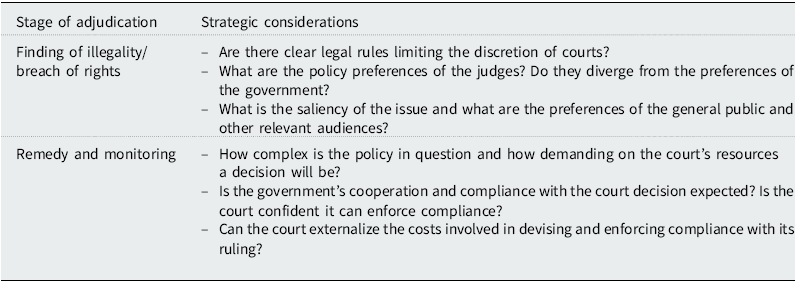
Table 1 is not intended to be exhaustive or predictive. It highlights factors that are likely to affect judicial behavior and thus helps explain the STF’s different responses to claims against the government during the pandemic. Apart from explaining this relevant case, the framework developed in this section can help advance our understanding of why, when, and how courts in other contexts intervene in highly complex policies when adjudicating structural claims against administrative underreach.
I. Finding of Illegality/Breach of Rights
A declaration that a government’s action or omission is illegal or breaches rights depends on whether there are clear legal rules that limit the discretion of the court. It also depends on the degree of policy divergence between the court and the government, the salience of the issue, and the preferences of the public and of the audiences that judges care about.
Due to the political and argumentative burden of deciding contrary to the law, a court’s discretion to decide one way or another is more constrained in cases where clear rules or established legal precedents apply. This applies to higher courts, whose legitimacy and prestige within the legal and the political communities rely, in part, on their observance of the law and their protection of the legal system’s integrity. In cases involving constitutional rights, which often appear in the form of principles, courts tend to have wider discretion. Moral reasoning and analyses of expediency and consequences can play an even larger role in cases involving social rights that require positive action from the state to be realized.Footnote 80
The incentives for ruling against a policy or legislation are also affected by the depth of the divergence in policy preference between the court and the government, as well as the importance they give to the issue in question. Courts are more likely to intervene if they consider the issue important and they strongly disagree with the government’s preferences. However, if the issue is part of the government’s core agenda, one the government is willing to invest significant political capital to advance the issue, then the threat of retaliation increases. This threat, if credible, may constrain a court.
The salience of the issue for the general public or specific audiences—for example, the legal professions, scholars, and political elites,— and the approval or criticism that courts expect to receive for their decision, should also weigh on the court’s decision about the illegality of governmental action or inaction.Footnote 81 The more salient the issue and the less popular the policy challenged in court, the higher the incentives for courts to rule against it as they can expect more praise than criticism for doing so. Moreover, the risk of retaliation and backlash diminishes if the court decision has public and political support.
This framework applies well in the case of STF during the COVID-19 pandemic in Brazil. First, no clear legal rules were limiting the discretion of the STF. The constitutional norms and the existing case-law do not offer unambiguous solutions for federalist disputes about the distribution of legislative powers.Footnote 82 Second, the claims were grounded on human rights norms—the rights to health and life, in particular—which appear in the form of principles that may be interpreted to create extensive positive duties.
The policy divergence between the Court and the federal government—and Bolsonaro in particular—was explicit in the judgments. The STF was critical of Bolsonaro’s lack of commitment to protecting the rights to health and life during COVID-19. Some justices also criticized Bolsonaro outside the courtroom and publicly affirmed that the Court had to step in due to the “irresponsible recalcitrance” and “denialism” of Bolsonaro’s administration and that the STF “prevented a genocide” by confronting his policies.Footnote 83 The saliency of the issue was obvious and, although Bolsonaro felt very strongly about it, the risk of retaliation and backlash was low because Bolsonaro lacked public and political support.
The President had no support from Congress for his policies regarding COVID-19.Footnote 84 The speaker of the House of Representatives, Rodrigo Maia, and of the Senate, Davi Alcolumbre, made a joint declaration criticizing Bolsonaro for underplaying the health crisis and urged him to overturn his stance against restrictive social distancing measures.Footnote 85 Alcolumbre also declared that Bolsonaro was in the wrong direction regarding the pandemic.Footnote 86 Maia affirmed that Bolsonaro’s behavior would lead the country to a “collapse” and blamed Bolsonaro for the deaths caused by COVID-19.Footnote 87 These disputes came against the backdrop of Bolsonaro’s incapacity to gather sufficient political support in Congress, which forced his government to frequently resort to administrative measures instead of legislative changes to advance its agenda.Footnote 88 The Congress also turned a deaf ear to the several attempts by Bolsonaro and his supporters to impeach STF justices.
Bolsonaro also had little public support. The Brazilian Bar Association filed many of the claims against Bolsonaro discussed in this Article (see Annex) and advocated that he should be held accountable for the high death toll.Footnote 89 A survey by the Brazilian Medical Association in 2021 showed that 50% of physicians considered that the performance of the Federal government during the pandemic was either bad or very bad, and only 21% approved it.Footnote 90 Approval ratings among the general population were also low. In May 2020, 50% of the population considered that Bolsonaro’s handling of COVID-19 was bad or very bad. In March 2021, this number reached 54%.Footnote 91 Bolsonaro was criticized in the editorials of important newspapers in Brazil and abroad.Footnote 92 The STF’s popularity, however, increased significantly during the pandemic.Footnote 93
In sum, there was considerable public support for the STF to rule against the Federal government and to make bold judicial statements highlighting its disagreement with the federal policy on the issue of COVID-19. The threats of retaliation by a politically weak and unpopular government against the Court or individual justices were not credible.
II. Remedies and Monitoring
Courts tend to have discretion when choosing remedies and strategic considerations will likely affect how it is exercised. This is particularly true in cases that aim to address administrative underreach through structural remedies. It is one thing to order the government to stop doing something or to interpret and apply the law. It is another to induce a government to address structural problems with complex causes, which demand multiple actions over a long period by multiple bodies and authorities whose actions a court can hardly monitor.
As mentioned, remedies can be very weak—for example, a mere declaration of illegality; weak to moderate—for instance, experimental/dialogical approaches— or strong—such as “command-and-control” approaches. The choices between the different options will be a function of the complexity of the issue, the risk of non-compliance by the defendant government, and the possibility of the court externalizing the costs of its decisions.
Strong remedies that mandate the creation or reform of policy can be resource and time-consuming depending on the complexity of the issue and the level of detail in the court ruling. They require judges to examine—often incomplete and disputed—evidence about social facts; deliberate with litigants and other stakeholders about the interests involved and the desired goals; think prospectively about the expediency and feasibility of competing solutions to achieve these goals; monitor the actions of multiple authorities responsible for implementing the decision; and assess the results and the need for adjustments in their rulings or follow-up orders.
These tasks will be demanding on judges who lack the training, practical knowledge, and personnel to perform them. Courts may also get things wrong if, for instance, they misunderstand the facts, focus on the wrong aim, or choose inadequate means. Moreover, due to the uncertainties and trade-offs inherent to policymaking, a court-created policy may not promote the intended aims or may produce negative externalities, for which courts may be blamed and end up bearing the political costs.
It has been argued that courts will be willing to bear the costs of making a strong remedy if they attach importance to the issue involved and see the government as deliberately obstructing or being hostile to the change courts want.Footnote 94 Very specific orders offer the advantage of making non-compliance or mock compliance easier to detect and sanction, which facilitates the monitoring and enforcement of the decision.Footnote 95
This reasoning, however, fails to consider the challenges of monitoring and enforcing compliance with structural remedies when the government is uncooperative. These can be very demanding on a court’s resources, time, and political energy.Footnote 96 It involves evaluating a series of decisions by multiple public bodies over a long period, and mediating conflicts. All this is permeated by the principal-agent problem, with the Court as the principal and the government as the agent. Additional permeating problems include: information asymmetry and conflicting interests, priorities, evidence, and perspectives. While non-compliance or mock compliance affects the reputation and legitimacy of courts, enforcing compliance via contempt orders and sanctions potentializes the risk of escalating conflict, open defiance, and retaliation.
Weaker remedies reduce this risk by allowing officials and bureaucrats wider discretion to formulate and implement policy.Footnote 97 They reduce the judicial work involved in designing structural orders and the political costs of undesirable or underwhelming policy outcomes. They reduce the resistance from the government, which has more leeway to reconcile its policy preferences with those of the court, and help hide defiance from the public view. When the court does not expect voluntary compliance with a structural injunction and is not confident it can enforce it, it may prefer to mask its limited capacity to compel action and promote change by deliberately avoiding specific and detailed orders.Footnote 98
It is thus understandable why the STF hesitated to grant requests for strong structural injunctions even when it recognized the threat of the Federal government’s inaction during the pandemic and the risk of retaliation and backlash was low. It did not order specific and detailed measures that were more complex to make and implement, such as the imposition of lockdown, the procurement of vaccines, or the expulsion of thousands of invaders from indigenous lands. This hesitancy persisted even when it became clear that the court’s weaker remedies were not delivering the expected results, as found in the case of the indigenous populations and—to a certain extent—of restrictive social distancing measures, which were unevenly implemented across the country.Footnote 99 Strong remedies were avoided not in spite of the concern that the government was unwilling or unable to fully comply with the decision, but possibly because of it.
Had the STF ordered strong remedies, it would have ended up internalizing the costs involved in creating, monitoring, and enforcing complex policies when compliance by the government could not be taken for granted and could not be easily enforced. This conclusion helps explain why the STF preferred weaker remedies and deliberately conflated federalism-based and rights-based reviews, as in cases related to vaccination and social distancing. Instead of ordering concrete actions from the federal government, the court sidelined it and gave decision-making power to subnational governments that had policy preferences more convergent with those of the STF.
Thus, on the one hand, the Court promoted its preferred policies against an unpopular and politically weak government. On the other hand, the Court externalized the costs of making and implementing policy to subnational governments while avoiding those involved in monitoring and enforcing compliance with its rulings.
E. Conclusion
The STF has been praised for quickly and effectively opposing the Federal government’s attempts to obstruct and undermine public health measures to contain COVID-19. Many, however, were critical of the inconsistency and selectivity of the STF and of the lack of more decisive decisions to force the federal government to effect desperately needed policies.Footnote 100
Putting normative evaluations aside, the purpose of this Article is to provide a clearer understanding of the type of selective assertiveness that characterized the STF’s behavior on some of the most important issues during the COVID-19 pandemic. Furthermore, it aims to explain this “inconsistency” and “selectivity,” particularly the lack of stronger remedies. Courts balance different goals, such as advancing their preferred policies, affirming their commitment to rights, avoiding backlash, retaliation, and non-compliance, as well as controlling workload and optimizing resources, and protecting their reputation and authority. Courts will use the decision-making options at their disposal at different stages of adjudication to accomplish the greatest coherence among these goals. This can explain why a court that uses strong rhetoric to condemn the government’s inaction and deliberately reduce the federal government’s legislative competence may refrain from issuing strong structural remedies compelling the government to act.
The case study of the STF during the pandemic shows the strength of an independent and cohesive court (there was little dissent within the court on the issue of COVID 19 – see Annex) when confronting a hostile government with very divergent policy preferences but low political support and popularity. It also brings attention to the strategy of making rights-based decisions in federalism disputes to advance its policy preferences. Yet, it also shows the limits of structural litigation to protect rights against governmental inaction. If the government is uncooperative, weaker remedies are unlikely to produce change; but a court’s’ awareness of their limitations to make policy and enforce their decision constrains stronger alternatives.
This Article covers a period in which key confounding variables were held constant. There was minimal change in the set of STF members and the President and the state governors remained the same during the period.Footnote 101 Moreover, the court decided several cases across different issues but in the same context and on a single category of executive behavior: the federal government’s underreach on the dominant topic of COVID-19. This eliminates much of the noise surrounding studies that build explanatory hypothesis based on loosely related cases decided over a long period in which key actors and the political context have changed considerably.
Kapiszewski used the term “selective assertiveness” to express the idea that courts challenge the exercise of government power in some cases, but endorse it in others, depending on their tactical balance of a range of considerations in each case.Footnote 102 As the case-study of the STF during the COVID-19 pandemic shows, in structural litigation, strategic considerations related to the complexity of making orders and enforcing them are also relevant to explain a court’s level of assertiveness at different stages of adjudication within the same case.
Supplementary material
To view supplementary material for this article, please visit https://doi.org/10.1017/glj.2026.10205
Acknowledgements
The author is grateful to Matthew Taylor, Jacqueline Leite, Luiz Alberto da Silva Schonholzer, Karin Leijon and all the participants in the panel Judicial Review of Administrative and Political Decision at the ECPR General Conference for comments on previous versions of this paper. The usual disclaimer applies.
Competing Interests
The author declares none.
Funding Statement
No specific funding has been declared in relation to this Article.


 Open access

