Introduction
Although most maternal deaths are preventable, every day approximately 800 women worldwide die from preventable causes related to pregnancy and childbirth. About 99% of all maternal deaths occur in developing countries with more than half of these occurring in sub-Saharan Africa (World Health Organization, 2015, 2018).
The Sustainable Development Goals (SDGs) have kept the spotlight on the unfinished agenda of ending preventable maternal mortality as SDG 3.1 aims to reduce the global Maternal Mortality Ratio (MMR) to less than 70 per 100,000 live births by 2030, and to have no country with an MMR above 140 per 100,000 live births (United Nations, 2013). Ensuring universal access to safe, acceptable, good-quality sexual and reproductive health care, particularly maternal health care, can dramatically reduce global rates of maternal morbidity and mortality (White Ribbon Alliance, 2010; World Health Organization, 2014). One key way to achieve this is by promoting births by skilled health professionals, whose competent management can improve maternal and child health outcomes (World Health Organization, 2015). This has necessitated the emphasis on promoting childbirths in health facilities with skilled maternal health professionals and the enabling environment to provide positive childbirth experiences for women (Tunçalp et al., Reference Tunçalp, Were, MacLennan, Oladapo, Gülmezoglu and Bahl2015). In spite of this, utilization of skilled maternal health care services in developing continues can be suboptimal, with disrespect and abuse during childbirth sometimes acting as more powerful deterrents than other more commonly recognized barriers such as lack of geographic and financial access (Bowser & Hill, Reference Bowser and Hill2010).
Disrespectful and abusive treatment of women during childbirth in facilities was initially described as a blind spot because it evaded the attention of the global health community and of national and local health authorities.(Freedman & Kruk, Reference Freedman and Kruk2014) However, in recent times there has been significant advancement in knowledge and understanding of the phenomenon, its nomenclature and typology and strategies for prevention and elimination (Bowser & Hill, Reference Bowser and Hill2010; White Ribbon Alliance, 2010; Freedman & Kruk, Reference Freedman and Kruk2014; Freedman et al., Reference Freedman, Ramsey, Abuya, Bellows, Ndwiga and Warren2014; Bohren et al., Reference Bohren, Vogel, Hunter, Lutsiv, Makh and Diniz2015; Vogel et al., Reference Vogel, Bohren, Tunçalp, Oladapo and Gülmezoglu2016; Sando et al., Reference Sando, Abuya, Asefa, Banks, Freedman and Kujawski2017). Disrespect and abuse, mistreatment and obstetric violence have been used to describe the humiliating or undignified experience of women during childbirth. Various categories and classifications have been proposed to cover maternal childbirth experiences related to failure to meet professional standards of care, poor rapport between women and providers and health system conditions and constraints (Bowser & Hill, Reference Bowser and Hill2010; Freedman et al., Reference Freedman, Ramsey, Abuya, Bellows, Ndwiga and Warren2014). Regardless of the classification used, only few studies have quantitatively provided insight into the maternal and related characteristics that predict the occurrence of mistreatment during childbirth in resource-constrained setting such as Nigeria.
Parity, type of health worker, socioeconomic strata, time of child birth, maternal age, marital status, HIV status and marital status have been found to be associated with the likelihood of the occurrence of disrespect and abuse during childbirth (Sando et al., Reference Sando, Kendall, Lyatuu, Ratcliffe, McDonald and Mwanyika-Sando2014; Abuya et al., Reference Abuya, Ndwiga, Ritter, Kanya, Bellows, Binkin and Warren2015a, b; Sudhinaraset et al., Reference Sudhinaraset, Treleaven, Melo, Singh and Diamond-Smith2016; Azhar et al., Reference Azhar, Oyebode and Masud2017; Raj et al., Reference Raj, Dey, Boyce, Seth, Bora and Chandurkar2017; Sethi et al., Reference Sethi, Gupta, Oseni, Mtimuni, Rashidi and Kachale2017). This study determined the predictors of mistreatment during facility-based childbirth in two high-patronage referral health facilities in south-east Nigeria. Findings from this study can contribute to existing knowledge and have important implications for the design of policy and practice interventions to eliminate mistreatment during childbirth in health facilities.
Methods
Study area and study population
The cross-sectional study was conducted in Ebonyi State, south-east Nigeria. The population of Ebonyi State is approximately 2,176,947 and it has an area of 5935 km2 (National Population Commission, 2006). There are three senatorial zones, and thirteen Local Government Areas (LGAs) in the state. Infants constitute 4%, the under-five children 20%, and women of childbearing age 22% of the population (Ebonyi State Ministry of Health, 2010). About 75% of the population are involved in subsistence agriculture, with rice and yam being the most commonly grown crops in the state.
Two apex specialist health facilities (one public tertiary, one private faith-based) located in the two major urban cities (Abakaliki and Afikpo) in Ebonyi State were used for the study. These were selected because they are two out of the three health facilities with the highest patronage for maternal health services in the state. Also, both facilities have large numbers and a mix of maternal health providers (doctors and midwives). Both facilities are departmentalized and offer specialist obstetric services. On a monthly basis, an average of 85–150 births occur in both hospitals. The study population were mothers whose childbirth occurred in the selected facilities and were at most 14 weeks post-childbirth. The respondents were recruited through the immunization clinics of the study facilities. These clinics run on a weekly basis and attract an average of 80–100 caregiver–child pairs per immunization session. One of the hospitals devotes 2 days per week to providing immunization services while the other runs only once a week. The inclusion criteria were biological mothers who were 14 weeks or less post-childbirth and whose childbirth occurred in the specific facility where they were recruited from. Also, only women who provided written informed consent after meeting the inclusion criteria participated in the study.
Sample size determination
The sample size formula for comparing two proportions (Lachenbruch et al., Reference Lachenbruch, Lwanga and Lemeshow1991; Araoye, Reference Araoye2004) was used considering a significance level of 5%, desired power of 80%, proportion of women who experienced mistreatment during childbirth in a teaching hospital taken as 93% and proportion of women who were mistreated during childbirth in a faith-based hospital taken as 98%. To compensate for non-response, a non-response rate of 10% was to arrive at a minimum sample size of 299 women. Three hundred and ten participants were recruited in each hospital. This formula was used because the study was initially designed as a comparative study of the birth experiences of women in public and private health facilities. Thus 310 participants were recruited per facility, but the results in this study are presented for the 620 respondents in the two facilities.
Sampling technique
Multistage sampling was used to select respondents. In the first stage, the systematic random sampling method was used to select the study participants in the two health facilities. Using the immunization attendance registers, an average estimate of attendees to each immunization clinic (100 attendees in the private hospital and 80 attendees in the public hospital) was taken and this served as the number of attendees for that immunization day. The duration of participant recruitment was 10 weeks per facility. The number of participants to be recruited every immunization clinic day was determined by dividing the sample size (310) by 10 weeks (duration of participant recruitment). Therefore 31 participants were recruited per immunization clinic day for 10 weeks in the private hospital. Since the immunization clinics in the public hospital were held twice a week, 15 participants were recruited per immunization day in the public hospital. The sampling interval (K) was calculated by dividing the average number of attendees by the number of study participants to be recruited that day. In the private hospital, this was calculated as 100/31 = 3.2, while in the public hospital the sampling interval was calculated to be 80/15 = 5.3. Thus the sampling interval in the private hospital was 4 while that in the public hospital it was 6.
The simple random sampling technique (ballot method) was used to select the first participant in the two hospitals. The first participant selected at random was the 2nd attendee in the private hospital and 4th attendee in the public hospital. Thereafter the systematic random sampling technique was used to recruit subsequent participants at intervals of 6 and 4 in the public and private hospitals, respectively. This method was used for the respective immunization clinics until 310 study participants were recruited in each hospital (Nwaze, Reference Nwaze2002; Denscombe, Reference Denscombe2010). When the selected participant using the systematic scheme was not eligible, she was dropped and the next eligible participant recruited until the desired sample size was realized.
Data collection
Data were collected in July–September 2018 using interviewer-administered questionnaires. The first section of the questionnaire was used to collect information on the socio-demographic, household and clinical characteristics of the respondents. The second section explored the categories of disrespect and abuse (mistreatment) during childbirth, as proposed by Bowser and Hills and Bohren and colleagues (Bowser & Hill, Reference Bowser and Hill2010; Bohren et al., Reference Bohren, Vogel, Hunter, Lutsiv, Makh and Diniz2015). The seven categories of disrespect and abuse during childbirth proposed by Bowser and Hill are: physical abuse, non-consented care, non-confidential care, non-dignified care, discrimination, abandonment of care and detention in the health facility following childbirth (Bowser & Hill, Reference Bowser and Hill2010). These categories were used in a previous study in south-east Nigeria (Okafor et al., Reference Okafor, Ugwu and Obi2015), and items from this were used when designing the questionnaire for the present study. The typology of mistreatment during childbirth defined by Bohren include physical abuse, sexual abuse, verbal abuse, stigma and discrimination, failure to meet professional standards of care, poor rapport between women and providers and health system conditions and constraints (Bohren et al., Reference Bohren, Vogel, Hunter, Lutsiv, Makh and Diniz2015).
For each of these categories, the occurrence of the various forms of disrespect and abuse were assessed using a yes/no answer. The option of ‘other forms’ accompanied each category. The forms of physical abuse assessed (four questions) included: episiotomy given or sutured without anaesthesia; beaten, slapped or pinched; tied down or restrained during labour; and sexual abuse. Non-consented care (six questions) included the conduction of the following procedures without consent: episiotomy, shaving of pubic hair, augmentation of labour, Caesarean birth, blood transfusion and sterilization. The forms of non-confidential care explored (five questions) were: provision of care without privacy and disclosures of medical history disclosure, age, child’s paternity and HIV status without consent. Discriminatory care forms assessed (six questions) were: denial of needed attention because of low social class or socioeconomic status, being a teenager (≤19 years), single motherhood status, HIV-seropositive status, low educational status and ethnicity. The domains of abandonment/neglect examined (four questions) were: denial of companionship in labour by the husband or close relatives, being left alone unattended to in the second stage of labour, birth attendant failed to intervene or call for help from experienced staff in life-threatening conditions and not granting requested attention because staff were exhausted. Non-dignified care was defined to include: being threatened with Caesarean section or poor pregnancy outcome in order to discourage patient from shouting in labour, scolding, being shouting at or called ‘stupid’ while in labour, slanderous remarks (aspersions) from birth attendants during labour and being blamed or intimidated during childbirth (four questions). Detention in the health facility following childbirth due to the inability to pay for their own or their baby’s hospital bill at discharge was also assessed using three questions.
Mistreatment during childbirth was said to have occurred if the respondent answered ‘yes’ to any of the specific questions concerning the forms of the seven categories of disrespect and abuse during childbirth. Pre-testing of the study questionnaire was done among women who met the inclusion criteria in another health facility in Abakaliki. Issues detected from the pre-test, such as rephrasing of questions and typographic errors, were addressed. Data were collected by the researcher and five trained research assistants who were resident doctors in Community Medicine and who were totally uninvolved in the care of women during pregnancy and childbirth in the study facilities.
Variables
The independent variables included the socio-demographic characteristics of the participants (age, marital status, educational status, employment status, place of residence, religion, socioeconomic status) and clinical characteristics (parity, mode of childbirth, time of childbirth, HIV status, number of antenatal care (ANC) visits attended, ‘sameness’ of ANC and childbirth facility). These characteristics were further dichotomized, for ease of bivariate and regression analyses, into the following: age: < 30 years/≥30 years; level of education: secondary and less/post-secondary; employment status: employed/unemployed; socioeconomic status: low/high; religious denomination: Catholic/other; marital status: currently married/not currently married; residence: rural/urban; parity: primipara/multipara; mode of childbirth: vaginal/Caesarean section; time of childbirth: day time/night time; HIV status: negative/other; ANC facility same as birth place: yes/no; type of skilled birth attendant: doctor/midwife; decision on childbirth facility: individual-based/joint as couple.
Mistreatment during childbirth was said to have occurred if a respondent answered ‘yes’ to any of the questions on the seven categories of disrespect and abuse (Okafor et al., Reference Okafor, Ugwu and Obi2015). The dependent variable was therefore ‘ever experienced at least one type of mistreatment during childbirth’.
The datasets used in this study are available from the corresponding author on reasonable request.
Statistical analyses
Data entry and analysis were performed using SPSS version 20. Proportions, means and standard deviations were calculated for the appropriate variables and STATA version 12 (StataCorp, 2011) was used to develop the socioeconomic status index using Principal Component Analysis (PCA). The input to the PCA included information on estimated monthly family income and ownership of eight household items. Quartiles (Q) were used to calculate distribution cut-off points. Each participant was assigned a wealth index score for her household. The quartiles were Q1 = poorest, Q2 = very poor, Q3 = poor and Q4 = least poor (Uzochukwu & Onwujekwe, Reference Uzochukwu and Onwujekwe2004). This was further dichotomized into a ‘low’ socioeconomic class comprising the poorest and very poor groups and a ‘high’ socioeconomic class made up of the poor and least poor groups (Anyait et al., Reference Anyait, Mukanga, Oundo and Nuwaha2012).
The prevalence of disrespect and abuse during childbirth was cross-tabulated with socio-demographic characteristic and clinical characteristics of the respondents using the Chi-squared test. The independent variables that were significant at 20% (p < 0.2) were selected and modelled in multiple logistic regression to isolate factors that predict the dependent variables at the 5% level of significance (p < 0.05). The adjusted odds ratios (AORs), level of significance and confidence intervals (CIs) for the independent variables were recorded and interpreted.
Results
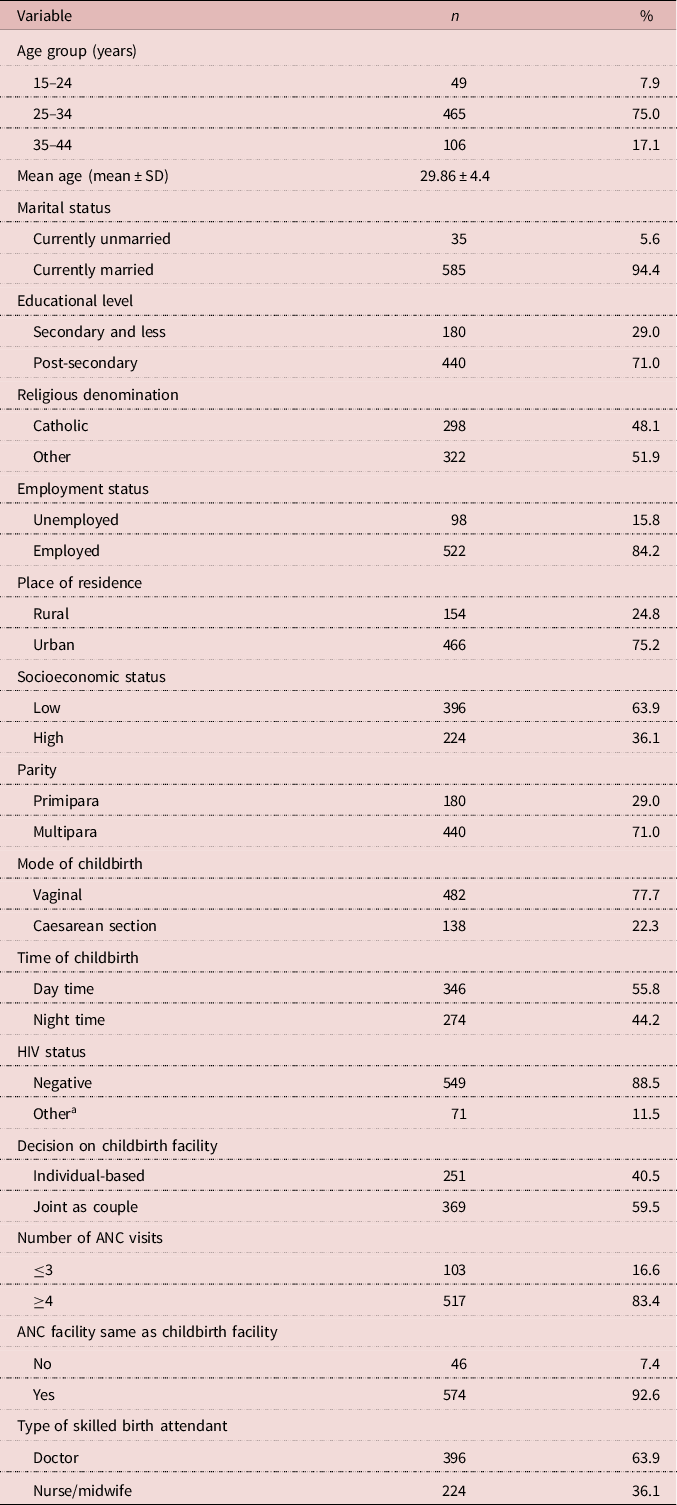
The mean age of the respondents was 29.9 ± 4.4 years. Most had post-secondary education (71.0%), employed (84.2%) and resided in urban areas (75.2%). The majority of the women were multiparous (71.0%), had had at least four ANC visits (83.4%) and used the same facility for childbirth and ANC (Table 1).
Socio-demographic and other characteristics of respondents, N=620

a Other: ‘positive’, ‘don’t know’ and ‘prefer not to disclose’.
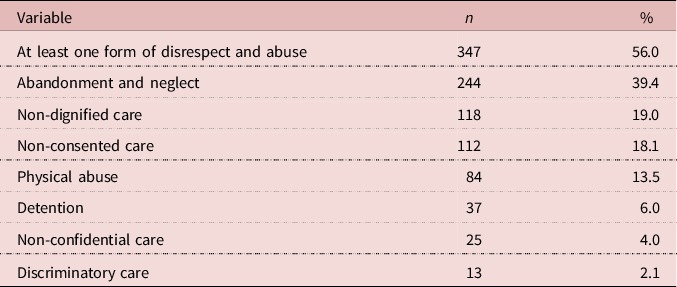
Almost three-fifths (56%) of respondents had experienced at least one type of disrespect and abuse during childbirth. Abandonment and neglect and non-dignified care were experienced by 39.4% and 19.0% of the respondents respectively (Table 2).
Prevalence of experiencing at least one type of disrespect and abuse, and the different types of disrespect and abuse, during childbirth among respondents

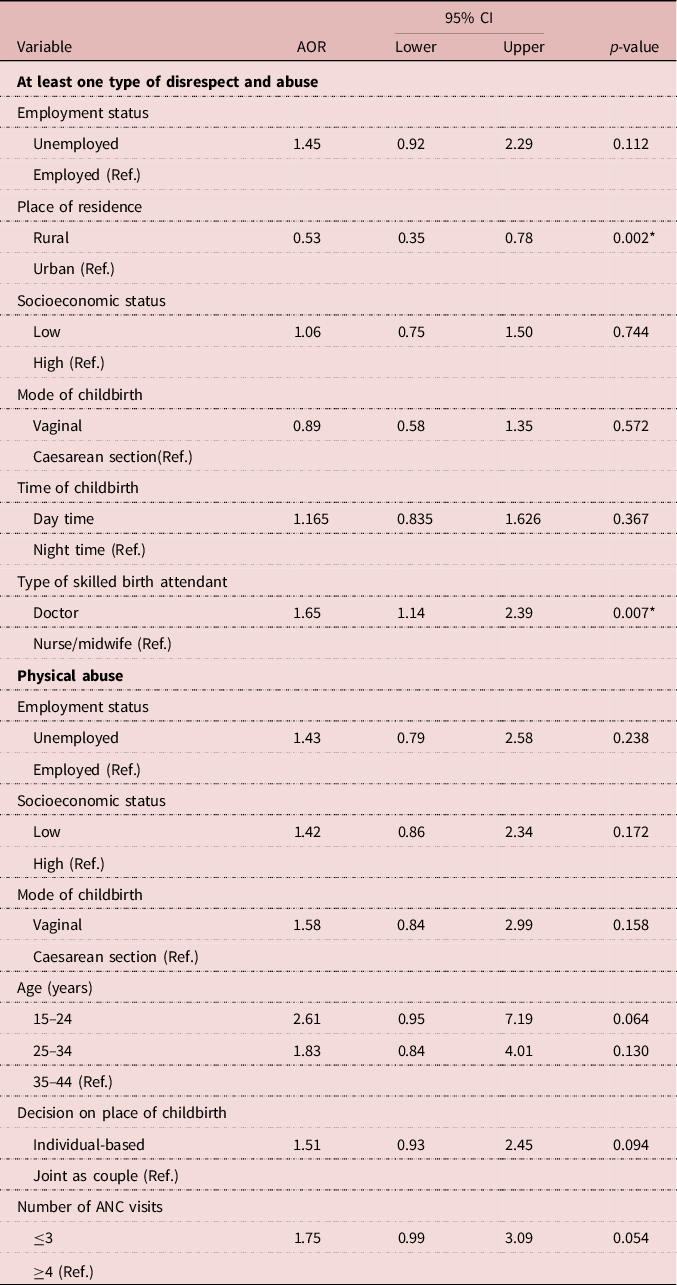
Respondents who resided in rural areas had 47% lower odds of reporting at least one form of disrespect and abuse during childbirth than those residing in urban areas (AOR: 0.53; CI: 0.35, 0.78, p = 0.002). Women whose childbirth was conducted by a doctor were 1.7 times more likely to report at least one form of mistreatment during childbirth than those whose childbirth was conducted by a midwife (AOR: 1.7; CI: 1.14, 2.39, p = 0.007). There was no predictor of physical abuse during childbirth among the respondents (Table 3).
Predictors of ever experiencing at least one type of disrespect and abuse during childbirth and physical abuse among respondents

*p < 0.05.
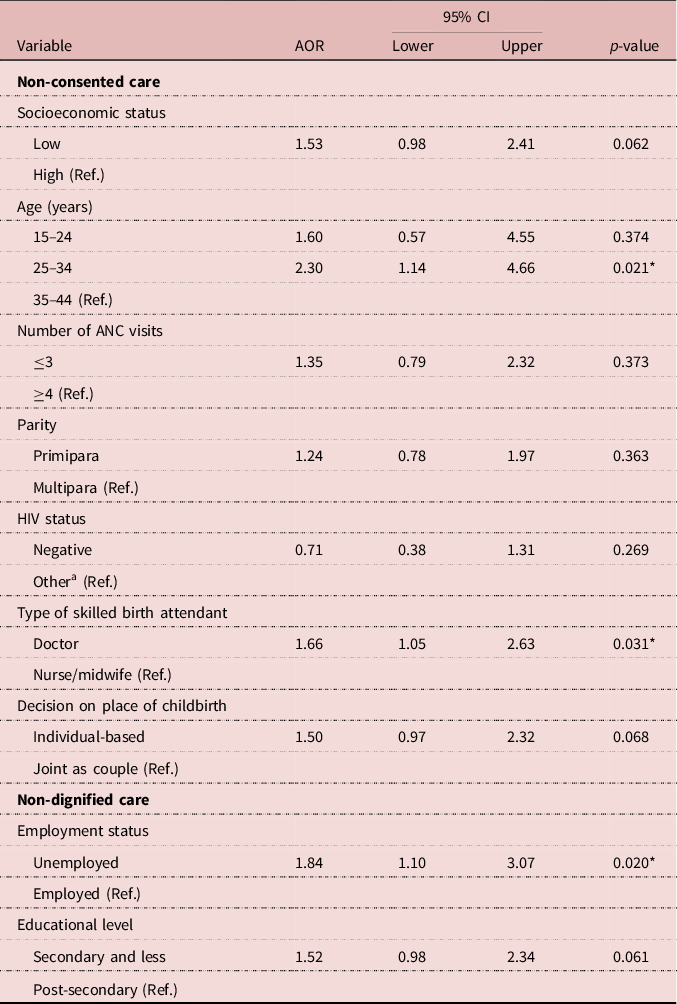
Participants aged 25–34 years had 2.30 times higher odds of reporting mistreatment during childbirth (AOR: 2.30; CI: 1.14, 4.66, p = 0.021) than those aged 35–44. Respondents whose childbirth was conducted by a doctor were 1.66 times more likely to report non-consented care during childbirth than those whose childbirth was conducted by a midwife (AOR: 1.66; CI: 1.05, 2.63, p = 0.031). Unemployment increased the odds of non-dignified care, as the unemployed were 1.8 times more likely to report non-dignified care than the employed (AOR: 1.84; CI: 1.01, 3.07, p = 0.011) (Table 4).
Predictors of ever experiencing non-consented care and non-dignified care among respondents

a Other: ‘positive’, ‘don’t know’ and ‘prefer not to disclose’.
*p < 0.05.
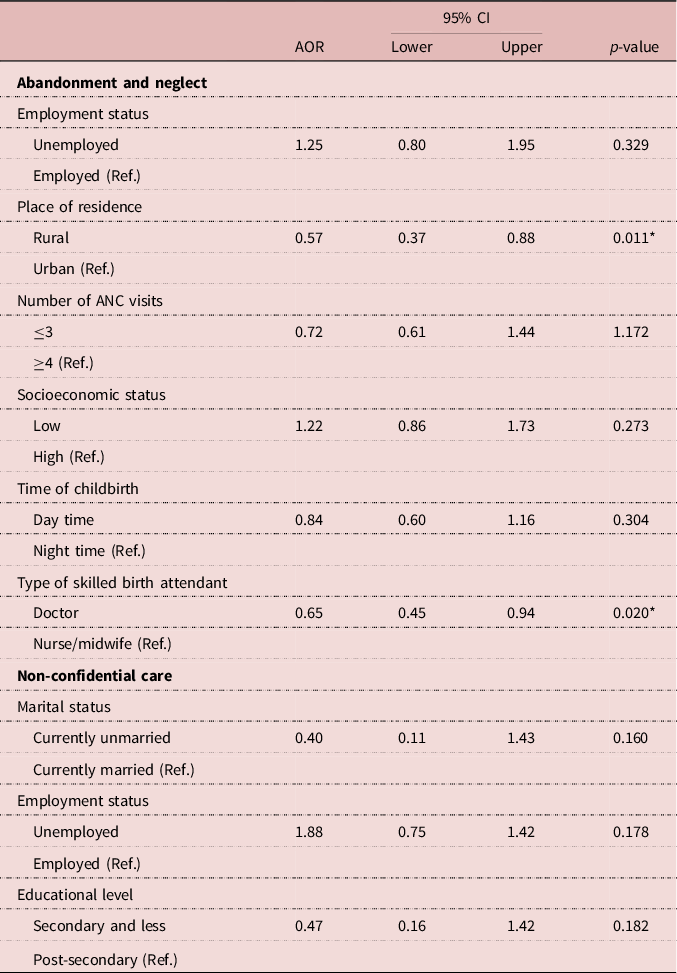
Rural residents were 43% less likely to report abandonment during childbirth compared with urban residents (AOR: 0.57; CI: 0.37, 0.88, p = 0.011). Respondents whose childbirth was conducted by a doctor had 0.35% lower odds of being abandoned/neglected during childbirth than those whose childbirth was conducted by a midwife (AOR: 0.65; CI: 0.45, 0.94, p = 0.020) (Table 5).
Predictors of experiencing abandonment and neglect and non-confidential care among the respondents

*p < 0.05.
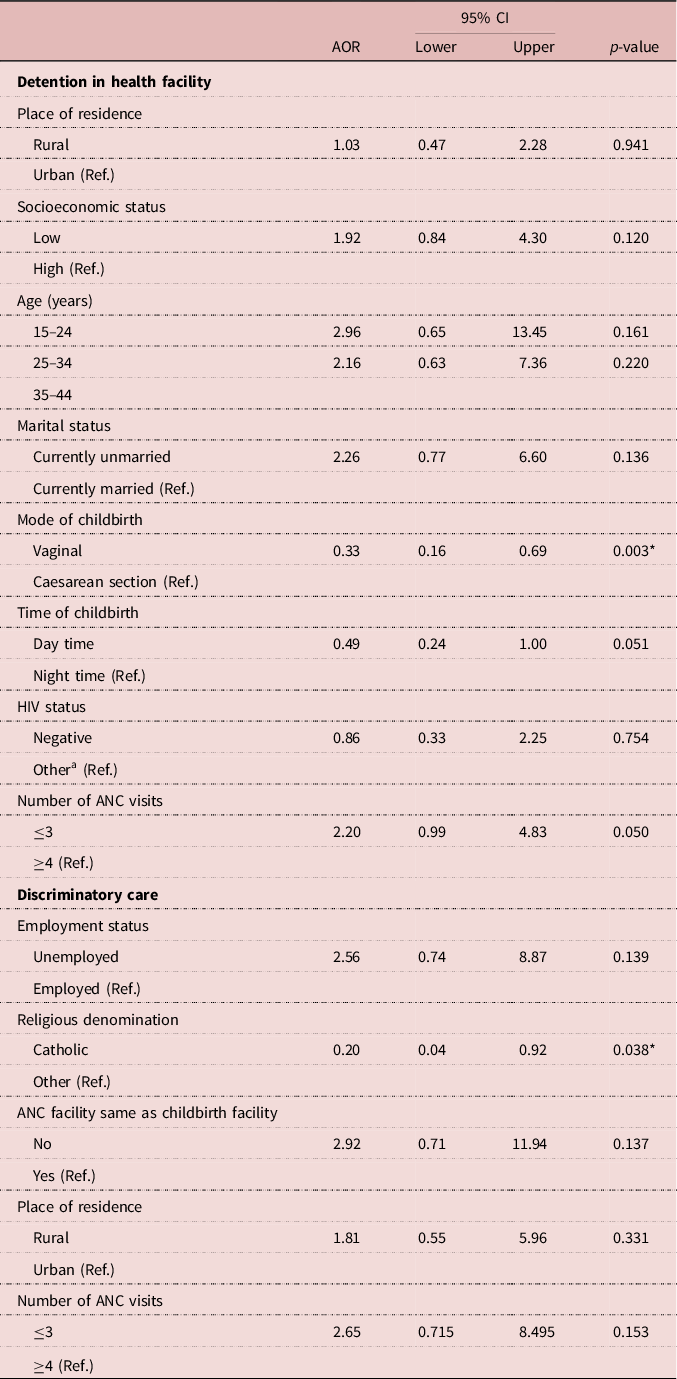
Respondents who had vaginal births had 0.67% lower odds of reporting detention in the health facility following childbirth than those who had Caesarean section births (AOR: 0.33; CI: 0.16, 0.69, p = 0.003). Respondents who were Catholics had 80% lower odds of experiencing discriminatory care during childbirth than those who belonged to other denominations (AOR: 0.20; CI: 0.04, 0.92, p = 0.038) (Table 6).
Predictors of discriminatory care and detention after childbirth among the respondents

a Other: ‘positive’, ‘don’t know’ and ‘prefer not to disclose’.
*p < 0.05.
Discussion
This study found that 56% of the respondent women reported having experienced at least one form of disrespectful or abusive treatment during facility-based childbirth. Women whose childbirth was conducted by a doctor were more likely to report at least one form of mistreatment during childbirth than those whose childbirth was conducted by a midwife. A previous study found that midwives had more respectful maternity care practices compared with other health workers such as doctors and health officers (Sheferaw et al., Reference Sheferaw, Bazant, Gibson, Fenta, Ayalew and Belay2017). This could be because their training focuses primarily on midwifery proper and they tend to spend more informal time with clients. Another study carried out in India showed that mistreatment was more likely from staff nurses and unskilled birth attendants than from physicians and midwives. This was adduced to be due to the desire of staff nurses to exert power over their often ‘less-privileged’ clients (Raj et al., Reference Raj, Dey, Boyce, Seth, Bora and Chandurkar2017). Interestingly, in a study among maternal health providers in one of the present study facilities, the participants asserted that midwives were more prone to perpetrating mistreatment during childbirth than doctors (Okedo-Alex et al., Reference Okedo-Alex, Akamike, Nwafor, Abateneh and Uneke2020). Although more research is needed to understand the professional variations in perpetrating mistreatment during childbirth (in order to guide targeted interventions), an inclusive approach involving all clinical and non-clinical staff and other relevant non-health sectors has been advocated (Okedo-Alex et al., Reference Okedo-Alex, Akamike, Nwafor, Abateneh and Uneke2020).
Rural residence and childbirth by a doctor were found to be protective against abandonment and neglect during childbirth. Rural-dwelling women may be more accustomed to the culture-related patriarchal system peculiar to African settings. Such cultural norms discourage autonomy and spousal bonding (in most cases, spouses are birth companions) and contribute to the normalization of acts of mistreatment during childbirth, leading to lower expectations of respectful care during childbirth, with the attendant reduction in recognition and reporting. The role of provider type may be related to the dynamics of the provider–parturient relationship, which in the context of the study area requires that midwives have longer contact time with patients and have to balance the use of this time to attend to oftentimes multiple women in labour given the specialized and referral nature of the study facilities. The high workload faced by the midwives could lead to inadvertent or perceived abandonment and neglect during childbirth. Also, the heightened sense of vulnerability and pains associated with the labour process could undermine the real and/or perceived attention received leading to feelings of being neglected and abandoned (Bhattacharyya et al., Reference Bhattacharyya, Srivastava and Avan2013).
Remarkably, the converse was the case with non-consented care as childbirth by doctors increased the likelihood of receiving care without the consent of the parturient. Midwives/nurses usually have more informal interactions and rapport with women in labour and their relatives and this could explain why they were perceived to offer more consented care than doctors (Madhiwalla et al., Reference Madhiwalla, Ghoshal, Mavani and Roy2018). Women who interact well with health providers and who are acquainted with the hospital processes receive a better quality of care and less mistreatment from health providers (Ratcliffe et al., Reference Ratcliffe, Sando, Lyatuu, Emil, Mwanyika-Sando and Chalamilla2016; Sudhinaraset et al., Reference Sudhinaraset, Treleaven, Melo, Singh and Diamond-Smith2016). Regardless of the predispositions of professional types, these findings reinforce the importance of regular provider training, and institutionalized mechanisms that discourage mistreatment during childbirth. Women who were in their mid-twenties to early thirties were more likely to report non-consented care. Participants in this age group may be more self-accomplished (have completed education and/or are employed) and socially exposed such that they can easily identify that consent wasn’t taken before a procedure. Thus these women may have been more vocal in reporting non-consented care. The converse may apply to younger women, who may not know any better for various reasons, such as being first-time mothers and having limited access to information. Older women, who are likely to be multigravidas, may have become used to non-consented care and don’t see it as wrong. Non-consented care has been shown to be higher among unmarried, younger women (Bohren et al., Reference Bohren, Mehrtash, Fawole, Maung, Balde and Maya2019).
The study found that unemployment increased the likelihood of experiencing non-dignified care during childbirth. This could be because unemployment is associated with low socioeconomic status and poorer women have been shown to experience more disrespect and abuse during childbirth from both provider and maternal perspectives (Moyer et al., Reference Moyer, Adongo, Aborigo, Hodgson and Engmann2014; Azhar et al., Reference Azhar, Oyebode and Masud2017; Wassihun et al., Reference Wassihun, Deribe, Worede and Gultie2018; Okedo-Alex, et al., Reference Okedo-Alex, Akamike, Nwafor, Abateneh and Uneke2020). Also, the low self-esteem resulting from being unemployed could predispose clients to being blamed or feeling intimidated or verbally abused during childbirth.
Regarding discriminatory care, belonging to the Catholic denomination exerted a protective effect. Religion and spirituality play key roles in health and well-being from both the client and provider perspectives (Pulchalski, Reference Pulchalski2001). Nigeria has the twelfth largest population of Catholics in the world and the second largest in Africa. Most of these reside in south-east Nigeria, where this study was conducted (College of the Holy Cross, 2017). The fact that one of the study facilities was a Catholic-owned mission hospital may have contributed to this finding as it is probable that the hospital may attract clients and staff of Catholic denomination. The mutual feeling of belonging to a common faith among providers and clients could unconsciously discourage discriminatory behaviour towards parturients. The same explanation may not apply to the public tertiary hospital, however, as a previous study among providers in the teaching hospital showed that they were predominantly Christians, but their denominational affiliation was not assessed (Okedo-Alex et al., Reference Okedo-Alex, Akamike, Nwafor, Abateneh and Uneke2020). Nonetheless, it may be safe to assume that Catholics would be in the majority given their predominance in the south-eastern region of Nigeria (College of the Holy Cross, 2017).
Detention in the health facility following childbirth was associated with Caesarean section births, childbirth at night and suboptimal antenatal attendance. Vaginal births cost far less compared with Caesarean section, thus patients who had vaginal births are more readily bale to clear their hospital bills and allowed to go home. The cost of a Caesarean section may constitute a health shock for poor families and lead to catastrophic spending (mostly out-of-pocket), especially when it is an emergency (Ushie et al., Reference Ushie, Udoh and Ajayi2019). Subsidies and/or user-fee exemptions for Caesarean sections would help to reduce detention in the health facility after childbirth due to the inability to pay. This finding highlights the need for the provision of financial assistance, typically insurance and subsidies, for women during childbirth, especially those who having Caesarean births, in order to facilitate hospital bill settlements for both the mother and baby.
The findings from this study may have limited generalizability because the research was conducted in a limited number of health facilities. Interviewing participants in the birthing facility could have introduced courtesy bias. Nonetheless, recruiting the participants from the immunization clinics (minimizing contact with their primary providers during childbirth), use of researchers not involved in care provision during childbirth and reassurance of confidentiality and anonymity could have improved the veracity of the responses. Although the relatively long recall period may raise concerns of recall bias, it has been suggested that a longer post-childbirth recall period may allow time for mental processing of the birth experience and thus improve recall (Sando et al., Reference Sando, Abuya, Asefa, Banks, Freedman and Kujawski2017).
In conclusion, almost three-fifths of the women whose childbirths occurred in the surveyed facilities experienced at least one form of disrespectful intrapartum care. Women mostly reported being abandoned or neglected during labour and childbirth. The place of residence and type of health professional involved in childbirth were predictors of reporting abandonment/neglect and at least one form of mistreatment during childbirth. Childbirth by a doctor and age were the predictors of experiencing non-consented care among the women. Vaginal birth was protective against detention in the health facility following childbirth. Patient-targeted strategies such as female education and empowerment, rights-awareness creation and the provision of free/subsidized maternal health services, including antenatal care, is advocated. Additionally, maternal health providers should be given regular training, supportive supervision and an enabling work environment that discourages mistreatment during childbirth.
Acknowledgments
The authors acknowledge Drs Edmund Ossai and Collins Ugwu for their invaluable assistance in the course of this research.
Funding
This research did not receive any external funding and was completely funded by the authors.
Conflicts of Interest
The authors declare that they have no conflict of interests.
Ethical Approval
Ethical clearance for this study was obtained from Research and Ethics Committee of Alex-Ekwueme Federal University Teaching Hospital Abakaliki, Ebonyi State of Nigeria (approval number: 06/10/2017-23/20/2017). Written informed consent was obtained and confidentiality of responses ensured.
Author Contributions
All authors made a significant contribution to this study, in its conception, design, execution, acquisition of data, analysis and interpretation. They all participated in drafting, revising and critically reviewing the article; gave final approval to the version to be published; agreed on the journal to which the article was to be submitted; and agreed to be accountable for all aspects of the work