“The history of man for the nine months preceding his birth would, probably, be far more interesting, and contain events of greater moment than all the three score and ten years that follow it.” —Samuel Taylor Coleridge
This paper seeks to extend research focusing on the early origins of psychopathology into the prenatal period, by exploring the association between maternal depression during pregnancy and the functioning of hypothalamic–pituitary–adrenal (HPA) axis-governed neurobehavior in offspring, both within and outside the womb. It questions the generalization of established associations between maternal depression and offspring behavior and invites discussion into context-dependent intrauterine programming of neurobehaviors by exploring the association between maternal depression and child behavior in a socioeconomically disadvantaged cohort from a low- and middle-income country. It does so by reporting on the findings of the Solur Mother and Baby Project, the first ever, longitudinal study into maternal depression, fetal neurobehavior, and infant temperament from such a setting.
Background
Understanding the long-term consequences of early perturbations in development
In its first series on early child development, the Lancet estimated that 250 million children (43%) younger than 5 years in low-income and middle-income countries (LMICs) are at risk of not achieving their developmental potential (Grantham-McGregor et al., Reference Grantham-McGregor, Cheung, Cueto, Glewwe, Richter and Strupp2007). It is widely acknowledged that today's children will drive the growth and development of the societies of tomorrow (Chan, Lake, & Hansen, Reference Chan, Lake and Hansen2017); nevertheless, the importance of early child development as the single most significant predictor of human capital development had remained, until recent years, largely underappreciated by political, health, and social authorities across the world. In its third and most recent series on child development, the Lancet emphasized the cost of inaction, highlighting that if children are not helped to fulfill their social and developmental potential as early as possible, the harm done is not only limited to their futures but also extends to those of the societies in which they live (Richter et al., Reference Richter, Daelmans, Lombardi, Heymann, Boo, Behrman and Darmstadt2017; see also Monk, Myers, Sloan, Ellman, & Fifer, Reference Monk, Myers, Sloan, Ellman and Fifer2003).
In most scientific communities, there is a general consensus that “early” child development refers, grossly, from the period of conception to the child's second birthday, in other words, the impressionable and influential period of the first 1,000 days of life. The accumulation of adversities, whether intrinsic (genetic and/or biological) or extrinsic (environmental), beginning before conception and continuing through the prenatal period and early childhood, may disrupt brain development and responsivity to surroundings in such a way as to deem an individual “unfit” (in a purist Darwinian sense; Black et al., Reference Black, Walker, Fernald, Andersen, DiGirolamo, Lu and Grantham-McGregor2016). These disturbances in neurodevelopment, evident from as early as the first few months of life, often become more apparent during early childhood with effects magnifying through adolescence and adult life, resulting in a situation where infants who appeared to possess minor differences in developmental skills during early life acquire very different life-course trajectories during late adolescence and adulthood, especially when compared with their normally developing peers (Murray et al., Reference Murray, Fernandes, Fazel, Kennedy, Villar and Stein2015). This observation has been elegantly illustrated in the Dunedin Multidisciplinary Health and Development Study, an ongoing longitudinal birth cohort that began more than four decades ago and is located in the southern coastal region of New Zealand's South Island. In one analysis, the study demonstrated that toddlers classified as “undercontrolled” at 3 years were, at 21 years of age, 2.9 times more likely to be diagnosed with antisocial personality disorder, 2.2 times more likely to be diagnosed with alcohol dependence, and 16.8 times more likely to attempt suicide when compared with their well-adjusted peers (Caspi, Moffitt, Newman, & Silva, Reference Caspi, Moffitt, Newman and Silva1996). Inhibited 3-year-olds were 2.2 times more likely to suffer from depression, 2.9 times more likely to have a criminal record, and 6.5 times more likely to have attempted suicide at 21 years when compared to age- and gender-matched well-adjusted controls (Caspi et al., Reference Caspi, Moffitt, Newman and Silva1996). Of importance is that the categorization of toddlers as undercontrolled and inhibited at 3 years of age was based on behavioral classifications and not on clinical diagnostic assessments. A second analysis found that reported levels of a child's self-control during early and middle childhood predicted not just mental health, but physical health, wealth, family, and social outcomes at 32 years of life (Moffitt et al., Reference Moffitt, Arseneault, Belsky, Dickson, Hancox, Harrington and Caspi2011). Moreover, although the study did not have a nested intervention arm, it showed that children with poor self-control levels, who developed better self-control as they aged, had better outcomes than their peers who did not ascend in self-control rank.
Hypotheses-driven approaches explaining the effects of early environments on development
Clues as to the reason why the first 1,000 days of life may be both a period of vulnerability and opportunity to environmental influences, in the context of development, lie in the embryological processes underpinning neurological and somatic development. The majority of embryological cells are fast dividing and fast differentiating cells, and as such, their high turnover makes them susceptible to a variety of environmental influences, both positive and adverse. One well-recognized evolutionary hypothesis suggests that embryological cells shape their development according to clues about the extrauterine environment gleaned from various molecules and processes in their intrauterine environment in an effort to be optimally adapted (at the time of birth and also during later life) for survival, function, and subsequently for procreation, in the extrauterine environment. This hypothesis, often referred to as fetal programming or the Barker hypothesis, explains disease as the consequence of a mismatch between the intrauterine and extrauterine environment resulting in the birth of an offspring that is not adequately adapted for survival, function, and/or procreation in the extrauterine environment (Barker, Reference Barker2001; Barker, Osmond, Golding, Kuh, & Wadsworth, Reference Barker, Osmond, Golding, Kuh and Wadsworth1989). Nevertheless, it has long been observed that individuals exposed to the same environmental circumstance often do not respond in a similar way. This holds true in the context of brain development, and in recent years researchers have made significant progress in understanding how environmental exposures interact with genotypes and phenotypes to differentially shape human development. While the hypotheses seeking to explain individuals’ differential susceptibility to the environment are many, they appear to converge on three common baselines: (a) an individual's sensitivity to its environment is, to an extent, determined by both genetics and intra-uterine programming; (b) this enhanced sensitivity extends to both negative (risk-promoting) and positive (development-enhancing) environments; and (c) the interaction between the individual's inherent sensitivity and environmental exposure is a dynamic process occurring throughout the individual's life span, and therefore it is possible that such individuals experience developmental changes through their life. One of the paradigms, the diathesis-stress or dual-risk paradigm, suggests that two individuals, who may appear to function similarly in baseline conditions, may have varying response patterns during conditions of stress. The central viewpoint of this paradigm is that certain individuals possess a “vulnerability characteristic” (which may be behavioral, psychological, biological, or genetic) that makes them either exclusively or disproportionately likely to be adversely affected by an environmental stressor (Ellis, Boyce, Belsky, Bakermans-Kranenburg, & van Ijzendoorn, Reference Ellis, Boyce, Belsky, Bakermans-Kranenburg and van Ijzendoorn2011). Two extant evolutionary models, biological sensitivity to context theory and differential susceptibility theory, extend this framework to encompass individual responses to both positive and negative environmental influences, by suggesting that some individuals are more susceptible than others to both negative (risk-promoting) and positive (development-enhancing) environmental conditions (Ellis et al., Reference Ellis, Boyce, Belsky, Bakermans-Kranenburg and van Ijzendoorn2011). These theories contend that heighted responsivity of some individuals to both positive and negative environmental influences confer them with increased developmental receptivity to their environments, and consequently they experience sustained (rather than transient) developmental change throughout their life span (Ellis et al., Reference Ellis, Boyce, Belsky, Bakermans-Kranenburg and van Ijzendoorn2011). The theories suggest that the substrate for this susceptibility is neurobiological in origin and that genetic susceptibility factors operate through neurobiological processes, the final outcome being additionally influenced by developmental processes and experiences. From an evolutionary perspective, this heightened sensitivity (to both positive and negative environmental stimuli) could be considered to be adaptive in nature (Ellis et al., Reference Ellis, Boyce, Belsky, Bakermans-Kranenburg and van Ijzendoorn2011).
Moreover, the primate brain is known to produce synapses in such abundance that the number of synapses in a newborn's brain vastly outnumbers that in an adult's brain. This period of excessive synaptogenesis is followed by a period of synaptic reduction, or pruning, in an effort to optimize brain function. The time course of the synaptogenesis and pruning processes vary between different brain regions, and it is possible that disruptions in them at different windows of sensitivity in the developmental process may confer differential delays in neurodevelopment.
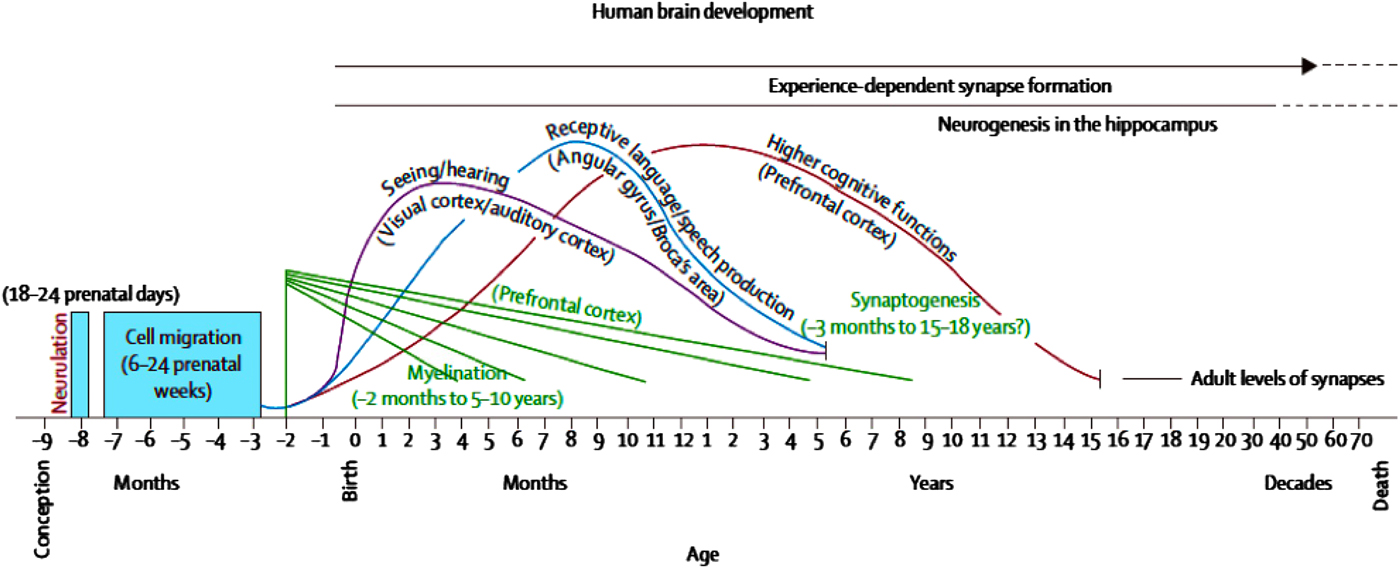
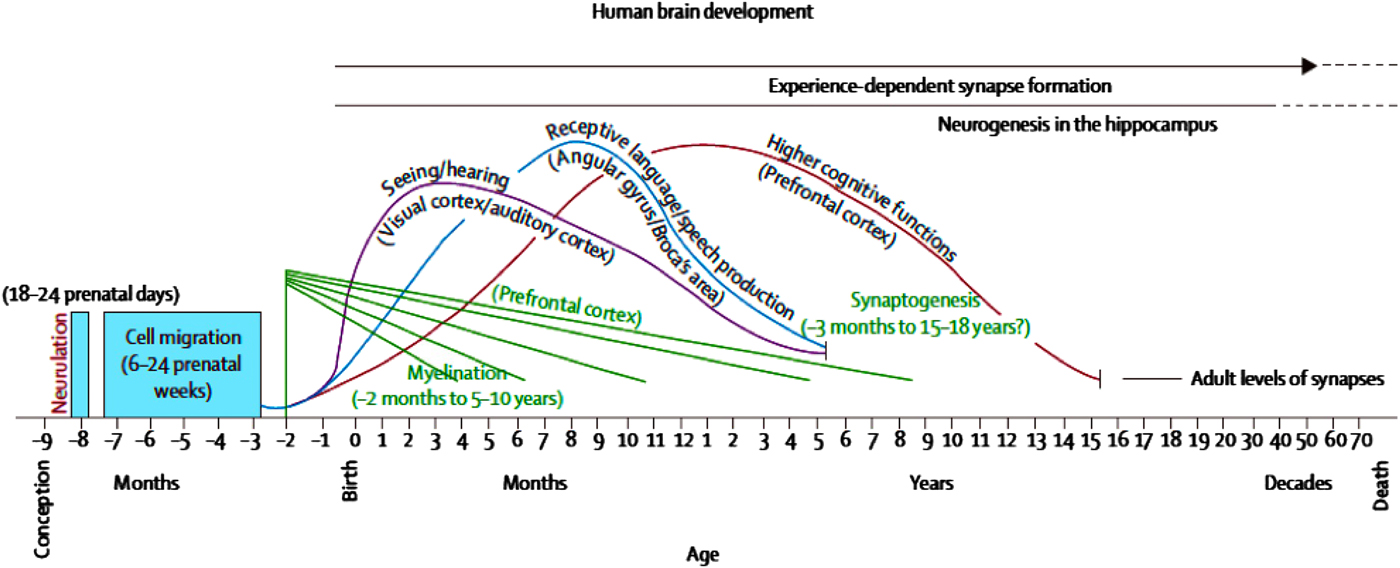
Finally, a large number of developmental processes occur simultaneously and synergistically during the first 1,000 days of life (Figure 1; Thompson & Nelson, Reference Thompson and Nelson2001). As such, an insult during this time point is likely to harm the developmental processes of multiple neurodevelopmental pathways, each possibly in different stages of development, resulting in differential levels of delay across a number of domains, some of which may only be identified as the child ages.
(Color online) Human brain development across the life span. Taken from Thompson, R. A., and Nelson, C. A. (Reference Thompson and Nelson2001). “Developmental science and the media: Early brain development.” American Psychologist, 56, 5.
Prenatal antecedents of human brain development and function
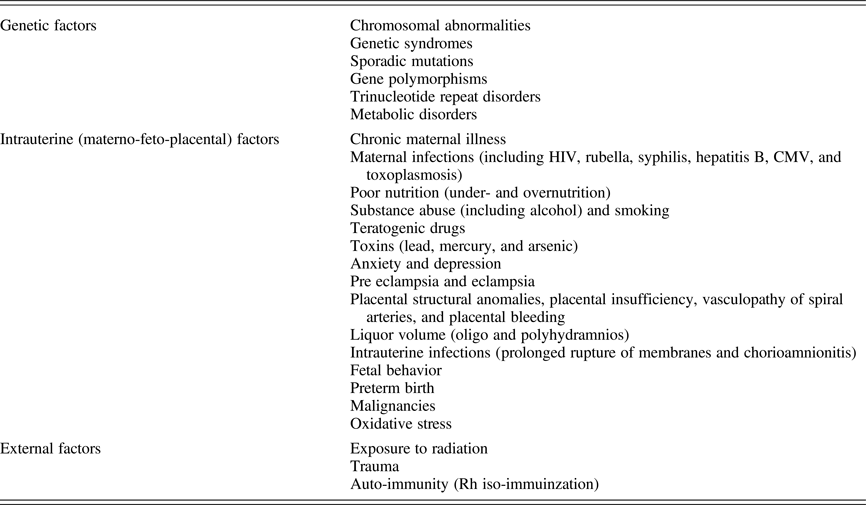
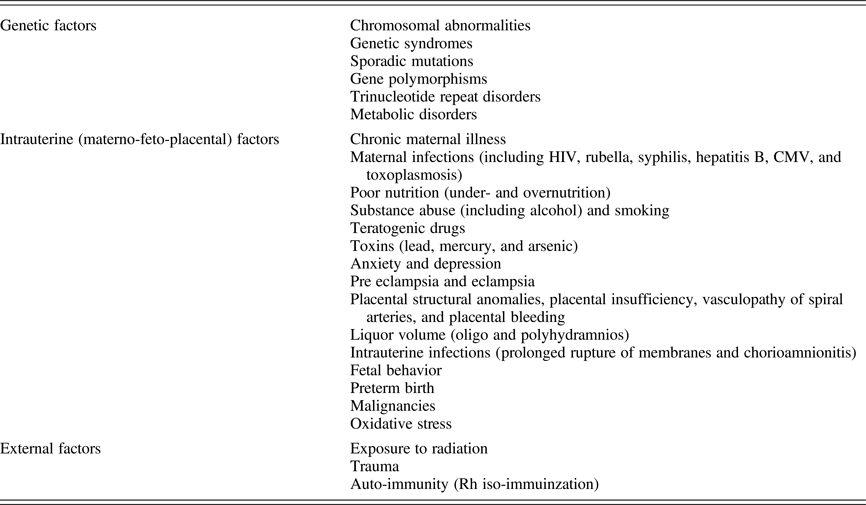
A number of genetic, biological (matero-feto-placental) and environmental risk factors, operating in the prenatal period, with effects on early brain development and function, have been proposed (Fernandes, Stein, Newton, et al., Reference Fernandes, Stein, Newton, Ismail, Kihara, Wulff and Villar2014; Murray et al., Reference Murray, Fernandes, Fazel, Kennedy, Villar and Stein2015; Olness, Reference Olness2003; Rutter, Kim-Cohen, & Maughan, Reference Rutter, Kim-Cohen and Maughan2006). These are summarized in Table 1. More often than not, these factors do not act in isolation but interact with each other resulting in a multifactorial etiological matrix contributing to disturbances in early child development and their downstream effects of psychopathology, poor social functioning, and educational disadvantage in later life (Fernandes, Stein, Newton, et al., Reference Fernandes, Stein, Newton, Ismail, Kihara, Wulff and Villar2014; Olness, Reference Olness2003; Rutter et al., Reference Rutter, Kim-Cohen and Maughan2006). The interaction between environmental influences and molecular level changes in genetic material (known as epigenetics) further complicates this matrix, and while its discussion is beyond the scope of this paper, it is important to acknowledge its role in any attempts at piecing together the puzzle of early neurodevelopment.
Summary of potential prenatal factors contributing to adverse early brain development
Prenatal depression and its influence on offspring brain development
Depression is the most common psychiatric condition occurring in women of childbearing age. With estimates from high-income countries ranging from 5% in France to 19.6% in the United States (Bennett, Einarson, Taddio, Koren, & Einarson, Reference Bennett, Einarson, Taddio, Koren and Einarson2004; O'Heron, Reference O'Heron1991) and estimates from low- and middle-income countries ranging from 8.7% in China to 37.9% in Brazil (Chung, Lau, Yip, Chiu, & Lee, Reference Chung, Lau, Yip, Chiu and Lee2001; Da-Silva, Moraes-Santos, Carvalho, Martina, & Teixeira, Reference Da-Silva, Moraes-Santos, Carvalho, Martina and Teixeira1998), prenatal depression is the most prevalent of all prenatal risk factors contributing to impaired early brain development.
A considerable body of evidence, drawing from animal and human literature, has reported an association between prenatal maternal depression and multiple aspects of offspring development. Prenatal maternal stress has been associated with short attention spans, poor motor development, and increased distress to novelty in nonhuman primates (Schneider, Reference Schneider1992a, Reference Schneider1992b; Schneider & Coe, Reference Schneider and Coe1993; Schneider, Roughton, Koehler, & Lubach, Reference Schneider, Roughton, Koehler and Lubach1999). Increased aggression, anxiety, and fearfulness have been noted in the offspring of pregnant rodents exposed to laboratory-induced stress (Chapillon, Patin, Roy, Vincent, & Caston, Reference Chapillon, Patin, Roy, Vincent and Caston2002). The offspring of prenatally stressed rodents have been found to display higher ACTH and cortisol at baseline and elevated responses in hormonal profiles following exposure to laboratory-induced stressors (Egliston, McMahon, & Austin, Reference Egliston, McMahon and Austin2007; Henry & Kabbaj, Reference Henry and Kabbaj1994; Takahashi, Haglin, & Kalin, Reference Takahashi, Haglin and Kalin1992; Takahashi & Kalin, Reference Takahashi and Kalin1991; Takahashi, Kalin, Parksdale, Burgt, & Brownfield, Reference Takahashi, Kalin, Parksdale, van den Burgt and Brownfield1988).
Similar associations have been reported in humans: prenatal maternal stress (sometimes characterized as comorbid depression and anxiety) has been associated with more difficult temperament, poorer cognitive and language skills, and an increase in behavioral and emotional problems during childhood (Austin, Hadzi-Pavlovic, Leader, Saint, & Parker, Reference Austin, Hadzi-Pavlovic, Leader, Saint and Parker2005; Glover & O'Connor, Reference Glover and O'Connor2002; Talge, Neal, & Glover, Reference Talge, Neal and Glover2007; Van den Bergh & Marcoen, Reference Van den Bergh and Marcoen2004). Children of prenatally depressed mothers have been reported to have higher baseline cortisol levels during infancy and at 10 years of age (Field et al., Reference Field, Diego, Dieter, Hernandez-Reif, Schanberg, Kuhn and Bendell2004; Lundy et al., Reference Lundy, Jones, Field, Nearing, Davalos, Pietro and Kuhn1999; O'Connor et al., Reference O'Connor, Ben-Shlomo, Heron, Golding, Adams and Glover2005), and prenatal maternal depression has been found to predict elevated infant cortisol responses to stressful tasks in different samples at 0.5, 3, 5, and 10 years of age (Brennan et al., Reference Brennan, Pargas, Walker, Green, Newport and Stowe2008; de Bruijn, van Bakel, Wijnen, Pop, & van Baar, Reference de Bruijn, van Bakel, Wijnen, Pop and van Baar2009; Gutteling et al., Reference Gutteling, de Weerth, Willemsen-Swinkels, Huizink, Mulder, Visser and Buitelaar2005; O'Connor et al., Reference O'Connor, Ben-Shlomo, Heron, Golding, Adams and Glover2005). More recently, the effects of prenatal depression on the fetus have been studied, and associations with disturbances in fetal growth, fetal neurodevelopment, and fetal stress reponsivity have been reported (Allister, Reference Allister2001; Dieter et al., Reference Dieter, Field, Hernandez-Reif, Jones, Lecanuet, Salman and Redzepi2001; DiPietro, Costigan, & Gurewitsch, Reference DiPietro, Costigan and Gurewitsch2003; DiPietro et al., Reference DiPietro, Kivlighan, Costigan, Rubin, Shiffler, Henderson and Pillion2010; Sandman et al., Reference Sandman, Glynn, Wadhwa, Chicz-DeMet, Porto and Garite2003).
Although the understanding of the mechanisms underlying the association between prenatal depression and offspring brain development is limited, there is evidence to support a number of potential mechanisms:
1. Prenatal depression is associated with a cortisol-rich intrauterine environment, and this exerts a programming effect on the fetus. Various explanations exist as to why prenatal depression is associated with increased fetal exposure to cortisol, these include increased maternal cortisol secretion (Lundy et al., Reference Lundy, Jones, Field, Nearing, Davalos, Pietro and Kuhn1999), increased placental secretion of corticotrophin releasing hormone (Sandman et al., Reference Sandman, Wadhwa, Glynn, Chicz-Demet, Porto and Garite1999), the downregulation of the placental enzyme 11 beta hydroxy steroid dehydrogenase 2, and increased placental permeability to cortisol (Glover, Bergman, Sarkar, & O'Connor, Reference Glover, Bergman, Sarkar and O'Connor2009).
2. Activation of the sympathetic nervous system in prenatally depressed mothers results in decreased uteroplacental blood flow, which adversely affects fetal neurological and somatic growth (Copper et al., Reference Copper, Goldenberg, Das, Elder, Swain, Norman and Meier1996).
3. Heritability in HPA axis functioning (Bartels, Van den Berg, Sluyter, Boomsma, & de Geus, Reference Bartels, Van den Berg, Sluyter, Boomsma and de Geus2003; Young, Aggen, Prescott, & Kendler, Reference Young, Aggen, Prescott and Kendler2000).
4. Increased levels of high-risk behaviors (including substance abuse) and lower levels of health-seeking and health-promoting behavior are observed in depressed mothers compared with nondepressed mothers (Goldenberg, Reference Goldenberg and Merkatz1991).
5. Continuation of prenatal depression into the postnatal period and the influence of postnatal depression on maternal–infant interaction and mothering (Murray & Cooper, Reference Murray and Cooper1997; Patel, Rodrigues, & DeSouza, Reference Patel, Rodrigues and DeSouza2002).
6. Lower levels of healthy nutrition and higher levels of unhealthy nutrition reported in mothers with prenatal depression, which is associated with detrimental effects on offspring neurodevelopment manifested as cognitive disturbances during later life (Barker, Kirkham, Ng, & Jensen, Reference Barker, Kirkham, Ng and Jensen2013; Lukose et al., Reference Lukose, Ramthal, Thomas, Bosch, Kurpad, Duggan and Srinivasan2014).
Prenatal depression, fetal neurobehavior, and infant temperament: Disentangling effects
Initial enquiries into the association between prenatal depression and offspring development reported linear, and at times dose-dependent, associations with the level of offspring impairment proportionate to the level of prenatal depression. Recent literature has evidenced that it is possible that this explanation may represent an oversimplification of a series of complex interactions. Exposure to mild stress during intrauterine life has been associated with better neuronal differentiation, enhanced spatial learning, and improved exploratory behavior in rodents when compared to exposure to no stress at all (DiPietro et al., Reference DiPietro, Kivlighan, Costigan, Rubin, Shiffler, Henderson and Pillion2010; Fujioka, Fujioka, Ishidab, Maekawa, & Nakamura, Reference Fujioka, Fujioka, Ishidab, Maekawa and Nakamura2006; Fujioka et al., Reference Fujioka, Fujioka, Tan, Chowdhury, Mouri, Sakata and Nakamura2001; Meek, Burda, & Paster, Reference Meek, Burda and Paster2000). In humans, exposure to moderate levels of prenatal maternal stress have been associated with accelerated neurological maturation in fetuses (DiPietro et al., Reference DiPietro, Kivlighan, Costigan, Rubin, Shiffler, Henderson and Pillion2010) and better cognitive scores in children at 24 months of age (DiPietro, Novak, Costigan, Atella, & Reusing, Reference DiPietro, Novak, Costigan, Atella and Reusing2006). Given that development occurs in the context of the environment, could it be possible that in certain contexts, where the postnatal environment is expected to be moderately stressful (such as in laboratory testing environments for rodents or in a city where a fifth of the population live below the poverty line; US Bureau of the Census, 2017), exposure to moderate amounts of prenatal stress might be facilitative to developmental processes? Further investigation in this area is needed; however, there are ethical and methodological challenges both to iatrogenically introducing prenatal stress to mothers and to not alleviating stressors suspected to be detrimental to fetal development for the purpose of research.
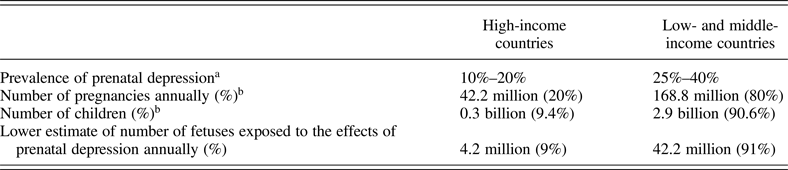
More than 90% of the world's children live in low- and middle-income countries (Parsons, Young, Cooper, & Stein, Reference Parsons, Young, Cooper, Stein, Fitzgerald, Puura, Tomlinson and Campbell2011). This large population of children, together with a higher prevalence of prenatal depression in these settings, result in a predicted population of offspring vulnerable to the effects of prenatal depression that is 10 times higher than expected in high-income countries (Table 2).
Comparison of the prevalence of prenatal depression, number of births, and number of fetuses exposed to the effects of prenatal depression between high-income and low- and middle-income countries
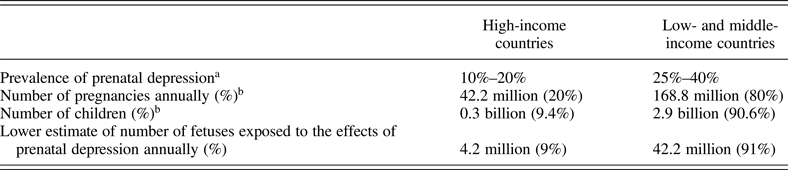
aBennett et al., Reference Bennett, Einarson, Taddio, Koren and Einarson2004; Patel et al., Reference Patel, Rodrigues and DeSouza2002; Rahman, Iqbal, & Harrington, Reference Rahman, Iqbal and Harrington2003. bUnited Nations Report; World Fertility Data, 2008 (United Nations, Department of Economic and Social Affairs, Population Division. 2009).
Objectives
Three interrelated questions stem from the summary of previous literature and contemporary hypotheses presented: (a) is prenatal depression damaging to the optimal development of offspring (fetal and infant) neurobehavior) and if so, is the effect (b) dose and (c) context dependent?
The Solur Mother and Baby Project sought to address these questions using two approaches. The first approach is to extend the research into the association between prenatal depression and offspring responsivity by measuring neurobehavior, in the same study sample, within and outside the womb (i.e., in the fetus and in the infant), and exploring dose-dependent associations between prenatal depression and offspring neurobehavior in the fetus and in the infant. The second approach is to base the project in a location where the sample would be different from those reported on in previous literature (i.e., samples from high-income countries) while simultaneously addressing the gap in literature from LMICs (Table 2). It is important to note that, at the time at which the Solur Mother and Baby Project was designed and executed, no human studies exploring the association between prenatal depression and offspring neurobehavior existed from LMICs, despite 80% of the world's pregnancies occurring annually and over 90% of the world's children residing here (Table 2). The aims of this project are therefore to examine the effect of prenatal depression on (a) fetal neurobehavior, (b) infant temperament, and (c) infant cortisol responsivity.
Materials and Method
Study location
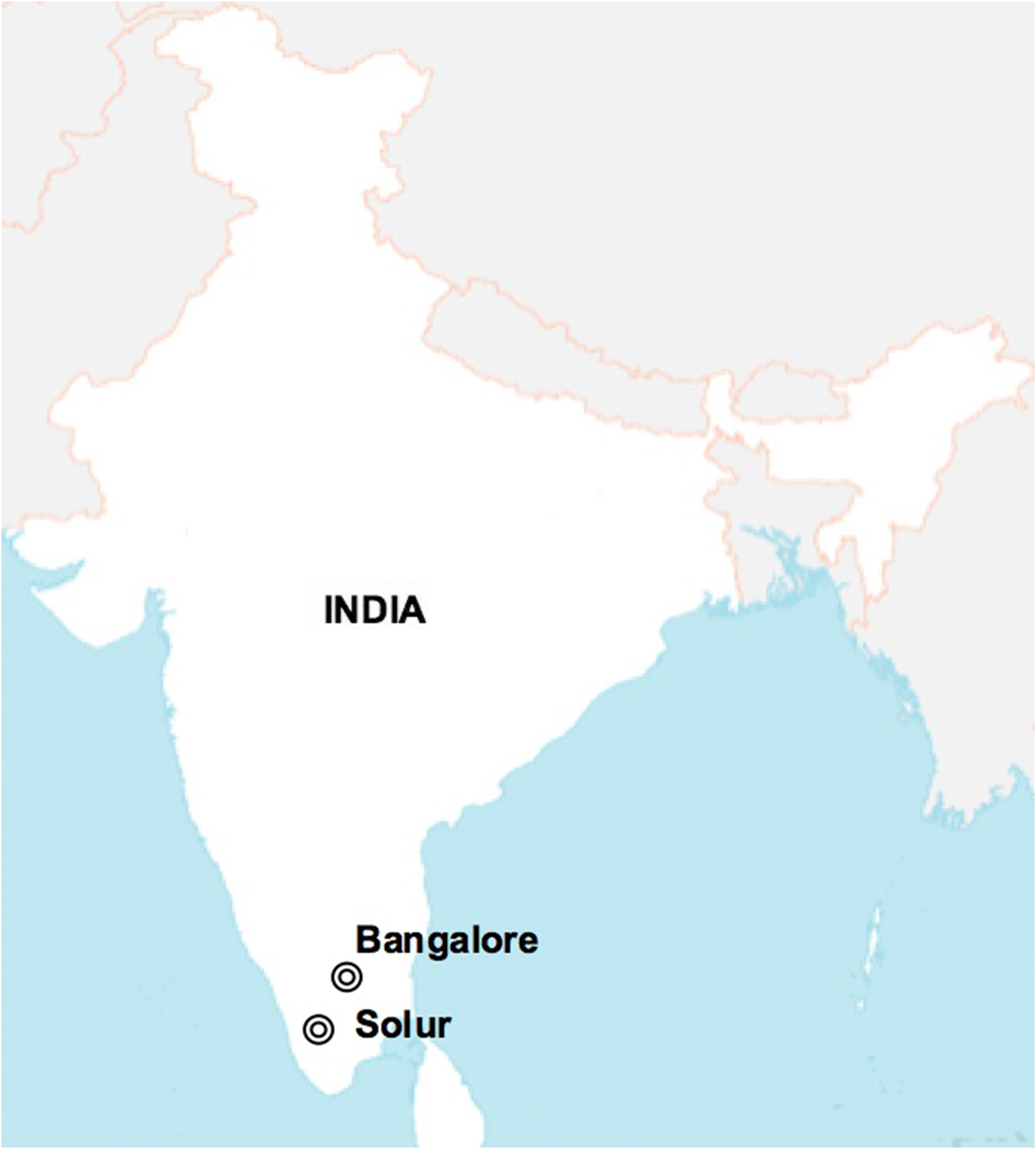
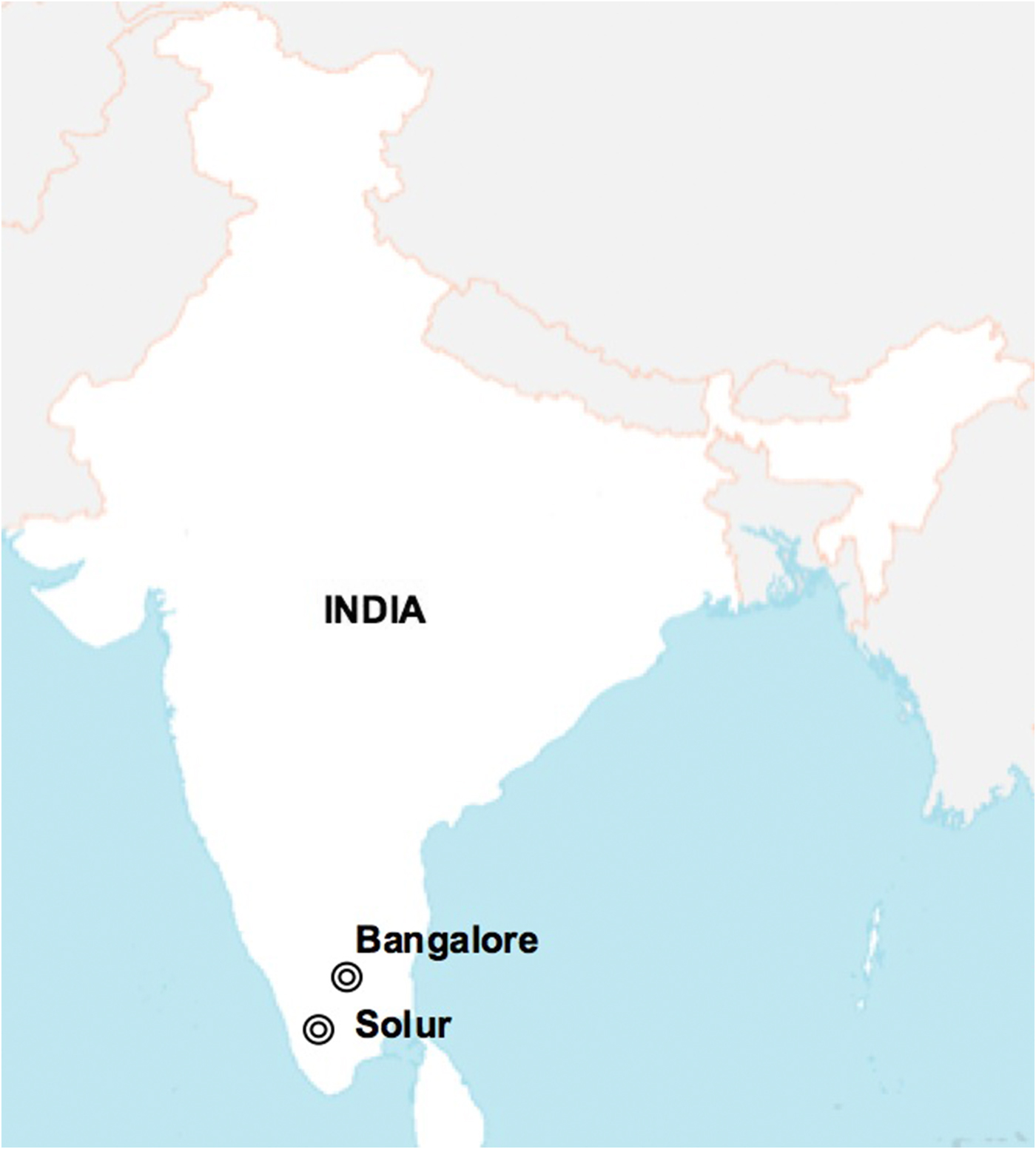
The Solur Mother and Baby Project was carried out between 2009 and 2011 in the village of Solur. Solur, an agrarian village of 4,700 inhabitants (male to female ratio = 712.16 females per 1,000 males), is located in the South Indian state of Karnataka (Figure 2). The annual income of its residents ranges between INR10,000 and INR15,000 (GBP 125–187.5). The main occupations are agriculture, sericulture (the rearing of silk worms), and unskilled manual labour. The predominant religions are Hinduism (60%), Islam (25%), and Christianity (15%). Karnataka is the eighth most populous state in the Republic of India with a total population of 52.73 million, 66% of whom live in villages (Registrar General & Census Commissioner, India, New Delhi, Ministry of Home Affairs, Government of India, 2010–11). The state's official and most widely spoken language is Kannada.
(Color online) Representation of map of India, showing the location of Solur.
Healthcare providers in India may grossly be categorized as (a) publicly funded government organizations providing healthcare services that are free at the point of care, (b) privately funded commercially managed hospitals that follow a corporate healthcare model, and (c) mission hospitals, run by charitable trusts providing free or subsidized healthcare. For a small village, Solur has two healthcare organizations, one government-funded primary healthcare center providing basic prenatal and immunization services and one mission hospital providing specialist services in obstetrics and gynecology. The Solur Mother and Baby Project was hosted at the latter, a 40-bedded general and maternity hospital known as Snehalaya Hospital. In addition to providing specialist maternity services, Snehalaya Hospital also provides basic pediatric (including neonatal), general medical, and general surgical services to Solur and its surrounding villages, catering to the healthcare needs of a catchment population of approximately 90,000. Founded and managed by the religious congregation of the Sisters of Charity of Capitanio and Gerosa, Snehalaya Hospital heavily subsidizes the healthcare costs of its patients through donations, and also manages an associated orphanage, school of nursing, and rural women's empowerment unit.
Sample and recruitment
Women present to the prenatal clinic at Snehalaya Hospital for a minimum of three clinical appointments: the first at booking for the confirmation of pregnancy and the establishment of care (in the first trimester), the second at approximately 20 weeks of gestation (which involves a second trimester ultrasound scan to screen for fetal anomalies), and the third at around 28 weeks of gestation for a thorough clinical examination, including screening for pregnancy-induced hypertension and gestational diabetes.
Women in the third trimester of pregnancy (≥28 weeks of gestation), with singleton pregnancies, who were fluent in the local language (Kannada), and who had not suffered from major depression during their pregnancy or prior to its onset (ascertained through interviews, and corroborated with medical records) were recruited from the prenatal clinic of Snehalaya Hospital. Those whose fetuses were suspected, through prenatal obstetric ultrasound examinations, to have congential anomalies; women with previous or ongoing psychotic illnesses or schizophrenia (ascertained through interviews, and corroborated with medical records); and women on psychotropic medication before or during their pregnancy were excluded from participating. Pregnancy dating was based on the last menstrual period and confirmation by ultrasound (M gestation age at assessment = 35.5 weeks, SD = 2.9 weeks).
Procedure
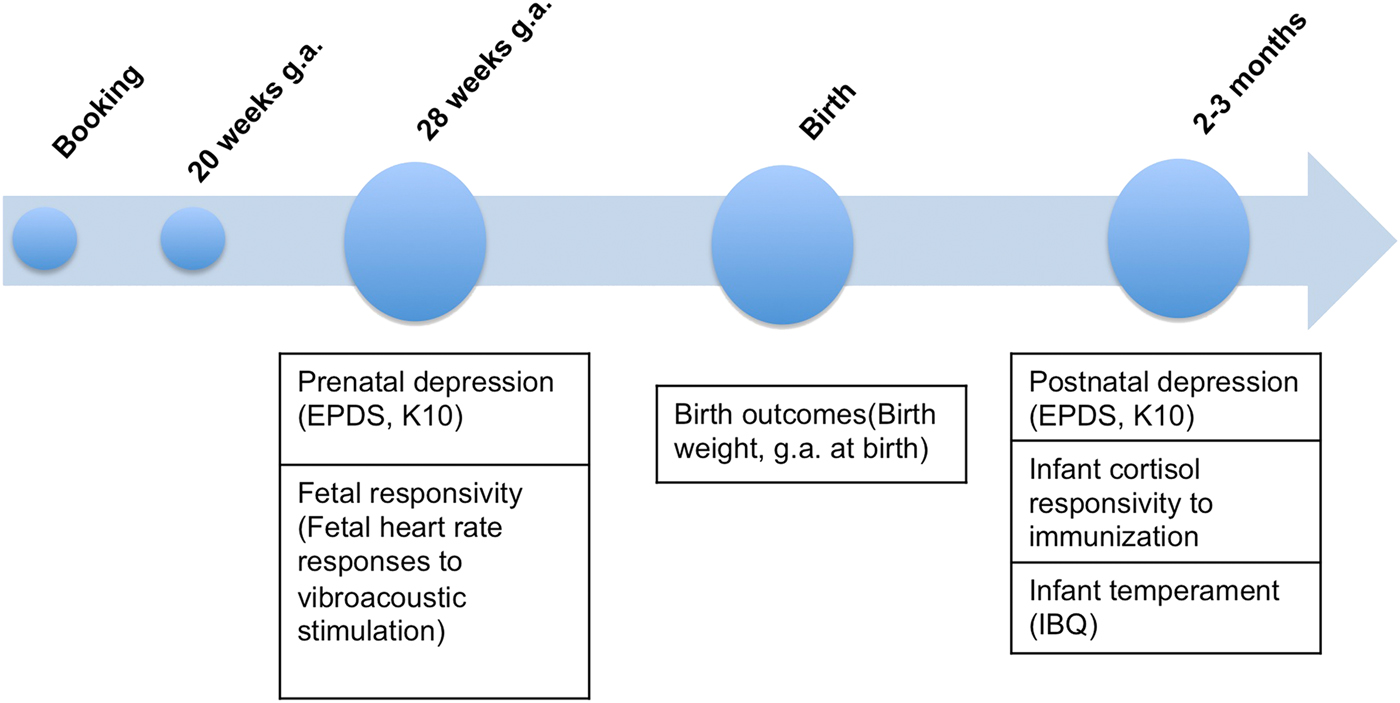
The project's design and measures used are summarized in Figure 3. Following recruitment, women who consented to participate in the study underwent a prenatal assessment in which they reported on their experience of symptoms of depression and psychological stress (including anxiety) during pregnancy on the Edinburgh Postnatal Depression Scale (EPDS; Cox, Holden, & Sagovsky, Reference Cox, Holden and Sagovsky1987) and the Kessler 10 Scale (K10; Kessler et al., Reference Kessler, Barker, Colpe, Epstein, Gfroerer, Hiripi and Zaslavsky2003; Kessler, Zhao, Blazer, & Swartz, Reference Kessler, Zhao, Blazer and Swartz1997), respectively. They then underwent a period of fetal heart rate (FHR) monitoring using a conventional fetal monitor (the Philips Avalon FM20) to assess their fetus’ responsivity to a novel vibroacoustic stimulus (VAS) by measuring changes in fetal FHR before, during, and after exposure to the stimulus. FHR was recorded continuously under baseline resting conditions (duration = 10 min), during fetal exposure to the VAS (duration = 10 min), and post stimulation (duration = 10 min; Fernandes, Stein, Srinivasan, et al., Reference Fernandes, Stein, Srinivasan, Menezes, Renton, Zani and Ramchandani2014). The acoustic specifications of the VAS and the experimental procedure are described in detail elsewhere (Fernandes, Reference Fernandes2011; Fernandes, Stein, Srinivasan, et al., Reference Fernandes, Stein, Srinivasan, Menezes, Renton, Zani and Ramchandani2014). Information on maternal health, nutritional status, socioeconomic status, and social support was also collected at this assessment. Women scoring 13 and above on the EPDS or 4 and above on the K10 were classified as “high scorers” for prenatal depression, while those scoring 12 and below on the EPDS and 3 or and below on the K10 were classified as controls (Fernandes et al., Reference Fernandes, Srinivasan, Stein, Menezes, Sumithra and Ramchandani2011). The first 67 high scorers for symptoms of prenatal depression and the first 66 controls were invited to return for a follow-up assessment at 2 months after birth. Power calculations revealed that this sample size would power the study at 80% to detect a moderate effect size of 0.6 at a significance level of .05, while accounting for 20% attrition (Fernandes, Stein, Srinivasan, Menezes, & Ramchandani, Reference Fernandes, Stein, Srinivasan, Menezes and Ramchandani2015).
(Color online) Summary of the design, outcomes, and measures of the Solur Mother and Baby Project. g.a., gestational age. EPDS, Edinburgh Postnatal Depression Scale. K10, Kessler 10 Scale. IBQ, Infant Behavior Questionnaire.

For the mothers who returned to Snehalaya Hospital for the birth of their child, information on the type of delivery; the baby's gender, birth weight, and gestational age at birth; and maternal puerperal complications was extracted from the hospital's birth records.
At the 2-month follow-up assessment, mothers reported on their experience of symptoms of depression and psychological stress after pregnancy, and on the temperament of their infants (the Infant Behavior Questionnaire; IBQ; Gartstein & Rothbart, Reference Gartstein and Rothbart2003; Rothbart, Reference Rothbart1986). A small amount of infant saliva was collected from infants before (T1) and after (T2) they were immunized intramuscularly with their first dose of the Diphtheria–Pertussis–Tetanus (DPT) combined vaccine and assayed for cortisol. Maternal saliva was collected at the time of collection of the infant's first sample, and assayed for cortisol (Fernandes et al., Reference Fernandes, Stein, Srinivasan, Menezes and Ramchandani2015).
Of note, although the EPDS, K10, and IBQ were designed to be caregiver reported, the unfamiliarity of the study population with the use of Likert scales made it necessary for the questionnaires to be administered to the participating mothers by a trained researcher.
Measures
Maternal depression and psychological stress
Maternal depression and psychological stress were assessed using the regional language translations of the EPDS (Cox et al., Reference Cox, Holden and Sagovsky1987) and the K10 (Kessler et al., Reference Kessler, Barker, Colpe, Epstein, Gfroerer, Hiripi and Zaslavsky2003). The EPDS is a 10-item self-report instrument based on a 7-day recall, specifically designed to filter out the biological symptoms of pregnancy (such as changes in sleep and appetite) that might confound an assessment of perinatal depression. It has been found to be a well-accepted screening measure for pre- and postnatal maternal depression in both high-income countries and LMICs with a sensitivity and specificity of 100% and 87% at a threshold score of 13 and above (Murray & Cox, Reference Murray and Cox1990). The K10 is an established measure of general psychological distress, measuring both anxiety and depression, and has been shown to be effective in screening for maternal postnatal depression in LMICs (sensitivity and specificity of 59% and 91%, respectively, at a cutoff score of 4 and above; Baggaley et al., Reference Baggaley, Ganaba, Filippi, Kere, Marshall, Sombié and Patel2007).
Fetal responsivity
Fetal responsivity was assessed by computing three key variables: total fetal response to stimulation (TFR), fetal habituation, and the change in FHR from baseline to recovery levels (delta FHR). The first two variables represent the fetal response to the VAS, while the third variable quantifies the extent of FHR recovery to baseline following stimulation. Details on the computing of these variables and their definitions are published elsewhere (Fernandes, Stein, Srinivasan, et al., Reference Fernandes, Stein, Srinivasan, Menezes, Renton, Zani and Ramchandani2014). Fetal responsivity, particularly fetal habituation, to external non-noxious stimuli has been studied extensively as a proxy marker of fetal central nervous system integrity and maturity (Leader, Baillie, Martin, & Vermeulen, Reference Leader, Baillie, Martin and Vermeulen1982a, Reference Leader, Baillie, Martin and Vermeulen1982b), and of fetal states of well-being including fetal oxygenation (Tucker, Miller, & Miller, Reference Tucker, Miller and Miller2009a, Reference Tucker, Miller and Miller2009b). Fetal habituation has been found to predict postnatal behavior at 18 and 36 months (Leader & Dore, Reference Leader and Dore1979), and has been studied in the context of maternal prenatal depression and anxiety (DiPietro et al., Reference DiPietro, Costigan and Gurewitsch2003; DiPietro, Hodgson, Costigan, Hilton, & Johnson, Reference DiPietro, Hodgson, Costigan, Hilton and Johnson1996a, Reference DiPietro, Hodgson, Costigan, Hilton and Johnson1996b; Monk et al., Reference Monk, Fifer, Myers, Sloan, Trien and Hurtado2000, Reference Monk, Myers, Sloan, Ellman and Fifer2003).
Infant temperament
Infant temperament was assessed using the Infant Behavior Questionnaire (IBQ; Gartstein & Rothbart, Reference Gartstein and Rothbart2003; Rothbart, Reference Rothbart1986). The IBQ was developed following rigorous item analysis of 463 questionnaires administered to the parents of 3-, 6-, 9-, and 12-month-olds (Rothbart, Reference Rothbart1981, Reference Rothbart1986). With a mean item scale correlation ranging between .41 and .77, and an internal consistency between 0.67 and 0.84 (Rothbart, Reference Rothbart1986), the IBQ has been shown to have good convergence with observer-rated home assessments of infant temperament and other temperament questionnaires such as Carey and McDevitt's Revised Infant Temperament Questionnaire and Bates Infant Characteristics Questionnaire (Goldsmith & Rothbart, Reference Goldsmith, Rothbart, Strelau and Angleitner1991). Furthermore, it has been reported to have good stability from 3 to 6 months, 6 to 9 months, and 3 to 9 months of age (Rothbart, Reference Rothbart1986). Finally, the IBQ has been shown to be an effective instrument for assessing temperament even in very young infants less than 3 months of age with good stability from 2 weeks to 2 months, and 2 months to 12 months of age (Worobey & Blajda, Reference Worobey and Blajda1989). The IBQ measures six dimensions of infant temperament based on the caregiver's recall of the infant's behavior over the previous week. The dimensions with positive loadings (i.e., smiling and laughter, duration of orienting, and soothability) are averaged to yield a positive reactivity composite while the dimensions with negative loadings (i.e., activity level, distress, and latency to approach novel and sudden stimuli, and distress to limitations) are averaged to yield a negative reactivity composite (Miceli, Whitman, Borkowski, Braungart-Rieker, & Mitchell, Reference Miceli, Whitman, Borkowski, Braungart-Rieker and Mitchell1998). These can be used to determine a global reactivity score, representing the infant's overall negative reactivity relative to his/her positive reactivity (Miceli et al., Reference Miceli, Whitman, Borkowski, Braungart-Rieker and Mitchell1998). Although the IBQ had not previously been administered in the Indian subcontinent at the time of this study, it was selected as the infant outcome measure of choice because of its well-established validity in Western settings (Davis et al., Reference Davis, Glynn, Schetter, Hobel, Chicz-Demet and Sandman2007; Kaplan, Evans, & Monk, Reference Kaplan, Evans and Monk2008; Werner et al., Reference Werner, Myers, Fifer, Cheng, Fang, Allen and Monk2007) and because, at the time of the study, it was the only temperament measure known to be validated for the assessment of children less than 3 months of age (Worobey & Blajda, Reference Worobey and Blajda1989).
Infant cortisol responsivity
Saliva was collected from the participating infants 10 min before (T1) and 20 min after (T2) immunization using sorbettes and assayed for cortisol (Egliston et al., Reference Egliston, McMahon and Austin2007). The difference between T1 and T2 levels corresponded to the infant's cortisol reactivity to immunization (ΔT; Fernandes et al., Reference Fernandes, Stein, Srinivasan, Menezes and Ramchandani2015). Maternal saliva was collected using the passive drool method at the time of T1 and assayed for cortisol. The saliva collection, storage, and transport procedures, and the technical details of the cortisol assay performed (including inter- and intra-assay coefficients), are described elsewhere (Fernandes et al., Reference Fernandes, Stein, Srinivasan, Menezes and Ramchandani2015). All cortisol levels are reported in mmol/l.
Maternal and infant characteristics
Maternal age and sociodemographic characteristics were obtained using demographic questionnaires. Medical and obstetric information were extracted from hospital records onto standardized proforma.
Ethics
The Solur Mother and Baby Project was approved by the University of Oxford Tropical Research Ethics Committee and the Institutional Ethics Review Board of St. John's Medical College, Bangalore, India. Written informed consent was obtained from all participating mothers in the local language (Kannada). Mothers also provided written consent on behalf of their infants. All consent forms, study protocols, and questionnaires were translated into Kannada according to the World Mental Health Initiative Interview Translation Guidelines (Harkness et al., Reference Harkness, Pennell, Villar, Gebler, Aguilar-Gaxiola, Bilgen, Kessler and Üstün2008).
Statistical analysis
All statistical analyses were performed using the Statistical Package for Social Sciences v.10.0.0.
Aim 1: Fetal responsivity was compared between high scorers and controls using independent sample t tests, Mann–Whitney tests and χ2 tests as appropriate. The pattern of association between prenatal EPDS scores and fetal response variables was analyzed by plotting the means of total fetal response and delta FHR in each quintile of maternal depression, and applying curve estimation techniques (Fernandes, Stein, Srinivasan, et al., Reference Fernandes, Stein, Srinivasan, Menezes, Renton, Zani and Ramchandani2014).
Aim 2: The association between prenatal depression and infant temperament was assessed using continuous correlations, and infant temperament composites were compared between high scorers and controls using independent sample t tests and Mann–Whitney tests as appropriate. A covariate analysis of variables evidenced to be associated with infant temperament in previous literature (postnatal depression, birth weight, infant age and sex, weight percentile, breastfeeding status, and infant health status at assessment) was also carried out using independent sample t tests and Mann–Whitney tests as appropriate. Prenatal EPDS scores were categorized into quintiles, and infant positive and negative reactivity composite scores in each of these quintiles were plotted. Curve estimation techniques were used to examine whether a linear or quadratic solution explained the relationship between prenatal depression and the positive and negative composites of infant temperament.
Aim 3: Infant cortisol (T1, T2, and ΔT) was compared between high scorers and controls using independent sample t tests and Mann–Whitney tests. A covariate analysis was carried out to determine significant predictors of infant cortisol at T1, T2, and ΔT following which a hierarchical linear regression analysis was conducted to examine whether the association between prenatal depression and ΔT remained significant after controlling for these confounders. A dose-dependent relationship between prenatal depression scores and ΔT was explored by determining ΔT values in each quintile of prenatal depression (measured on the EPDS) and applying a curve estimation technique.
For curve estimation analyses, EPDS scores were selected over the K10 scores to characterize prenatal depression quintiles because the EPDS is specific to perinatal maternal stress and depression, whereas the K10 is a measure of general psychological distress (Fernandes, Stein, Srinivasan, et al., Reference Fernandes, Stein, Srinivasan, Menezes, Renton, Zani and Ramchandani2014).
Results
Of the 133 women enrolled in the project, 131 (98%) women underwent 30 min of FHR monitoring (2 women declined vibroacoustic fetal stimulation); 108 (81%) delivered at the study center in Solur, and 58 mothers and infants (44%) of the recruitment sample) returned for the postnatal assessment. The reasons for attrition were not ascertained, as the mothers could not be contacted because of lack of telephones and complete postal addresses in rural India at the time of the study. There were no differences in sociodemographic variables and depression scores between the attrition sample and the sample who returned for the follow-up assessment (Fernandes et al., Reference Fernandes, Stein, Srinivasan, Menezes and Ramchandani2015).
The sample represents a population of young (M maternal age = 21.5 years, SD = 2.6 years), moderately educated (M years of education = 9.3, SD = 3.1), and married (98%) women. Most women were expecting their first child (62%) and were not employed outside their homes (84%). The sociodemographic characteristics of the sample, including mean pre- and postnatal EPDS and K10 scores are published elsewhere (Fernandes et al., Reference Fernandes, Stein, Srinivasan, Menezes and Ramchandani2015) and are reflective of the broader expected sociodemographic characteristics of the Solur and rural Karnataka community (Dwarkanath et al., Reference Dwarkanath, Vasudevan, Thomas, Anand, Desai, Gupta and Srinivasan2018).
Association between prenatal depression and fetal responsivity
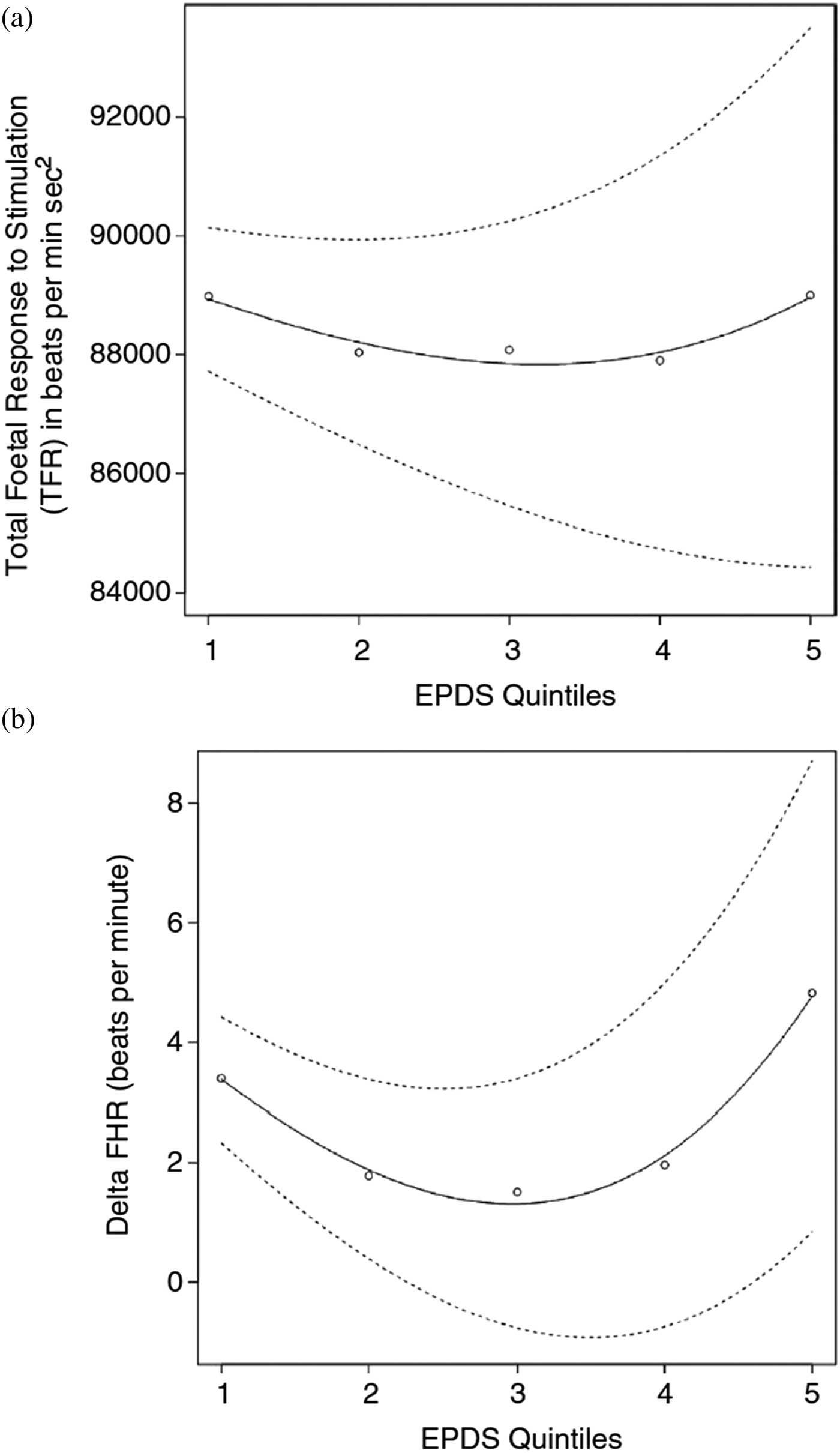
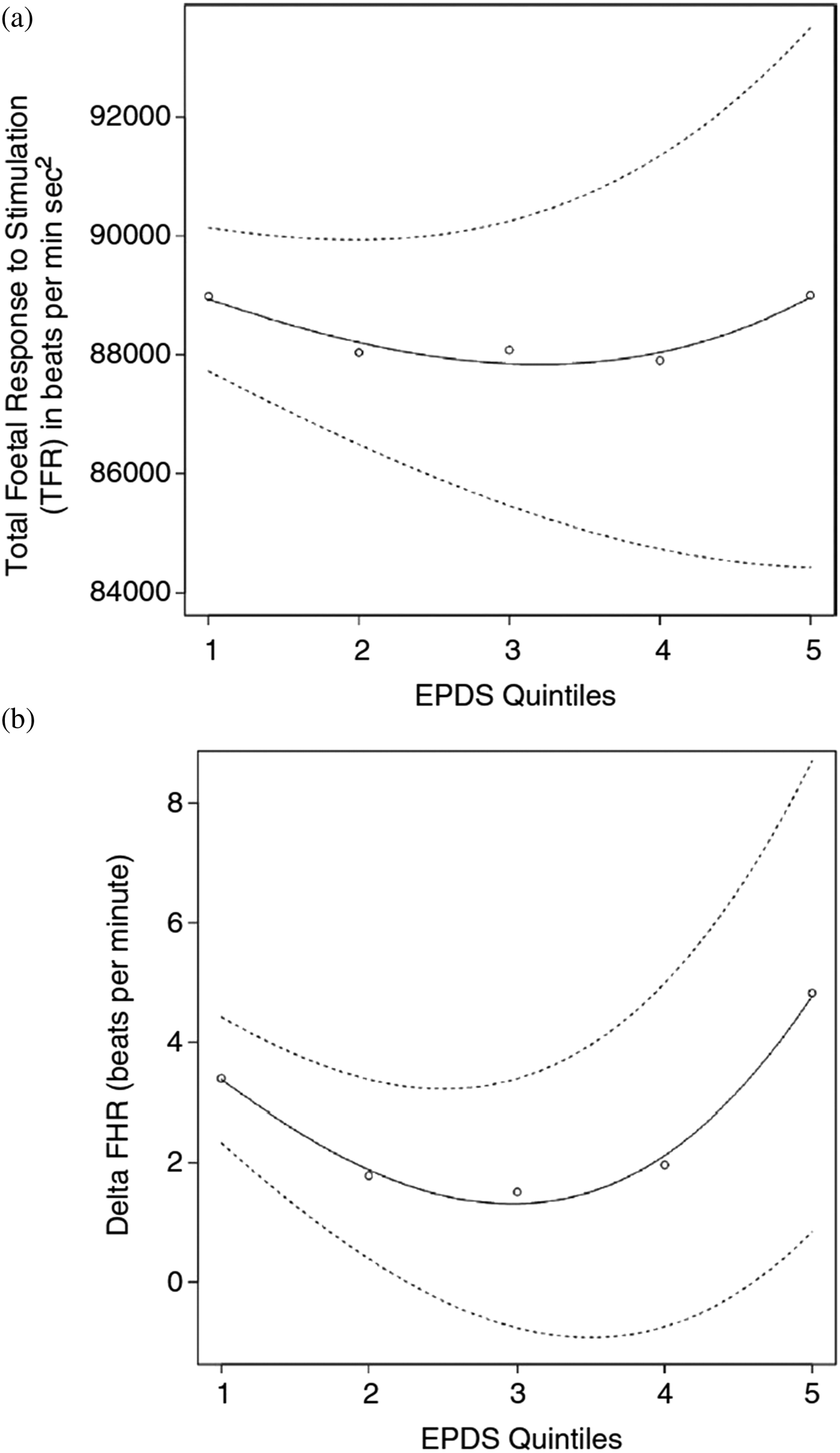
The results of the association between prenatal depression and fetal responsivity in the Solur Mother and Baby Project are published elsewhere (Fernandes, Stein, Srinivasan, et al., Reference Fernandes, Stein, Srinivasan, Menezes, Renton, Zani and Ramchandani2014). In summary, although 31 (67%) fetuses in the control group habituated to the VAS compared with 28 (56%) fetuses in the depressed group, this difference was not significant (χ2 = 1.31, p = .27; Fernandes, Stein, Srinivasan, et al., Reference Fernandes, Stein, Srinivasan, Menezes, Renton, Zani and Ramchandani2014). There were also no statistically significant differences in TFR and delta FHR between groups. The association between EPDS quintiles and TFR (and delta FHR), reproduced from a previous publication, are presented in Figure 4 (Fernandes, Reference Fernandes2011). These illustrations show that the fetuses of mothers in the first and fifth prenatal depression (EPDS) quintiles (corresponding to EPDS scores of 0–1 and 16–27, respectively) showed higher TFR and increased delta FHR compared with the fetuses of mothers in the second to fourth quintiles (corresponding to EPDS scores of 2–15). Curve estimation techniques revealed that a cubic solution explained these associations significantly better than a linear model (Fernandes, Reference Fernandes2011).
Curvilinear association between maternal prenatal depression and fetal response and recovery variables. The figure shows the curvilinear association between maternal prenatal depression and (a) total fetal response to stimulation (TFR; solid line) and (b) delta fetal heart rate (FHR; solid line) flanked by the upper and lower limits of standard deviation (broken line). This figure is reproduced with permission from Fernandes, M., Stein, A., Srinivasan, K., Menezes, G., Renton, M., Zani, J., & Ramchandani, P. (2014). “Maternal depression and foetal responses to novel stimuli: Insights from a socio-economically disadvantaged Indian cohort.” Journal of Developmental Origins of Health and Disease, 5, 178–182 © Cambridge University Press and the International Society for Developmental Origins of Health and Disease 2014.
Association between prenatal depression and infant temperament
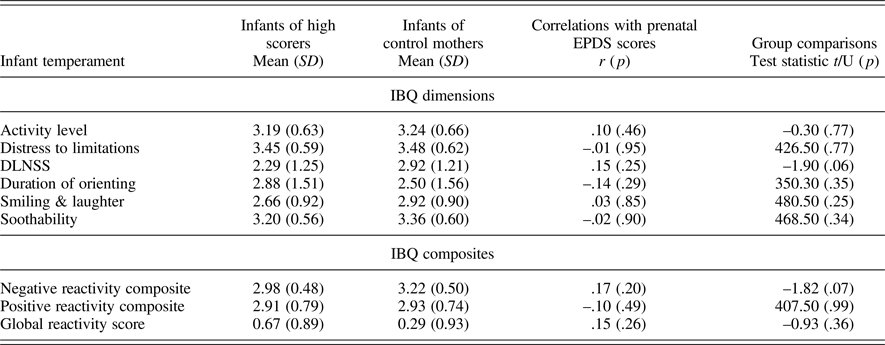
The results of comparisons in infant temperament scores between the groups of infants born high scorers and controls are presented in Table 3. No statistically significant differences were observed between the groups for either the six dimensions or the three composites of the IBQ, although the IBQ scores of the infants of controls were higher than those of the infants of high scorers on five of the six IBQ dimensions (except duration of orienting), and both positive and negative reactivity composites. Infants of control mothers had lower global reactivity scores than infants of high scorers, suggesting that their global temperament was relatively less negative; however, this difference was also not significant.
Associations between prenatal depression (EPDS) and infant temperament (IBQ)
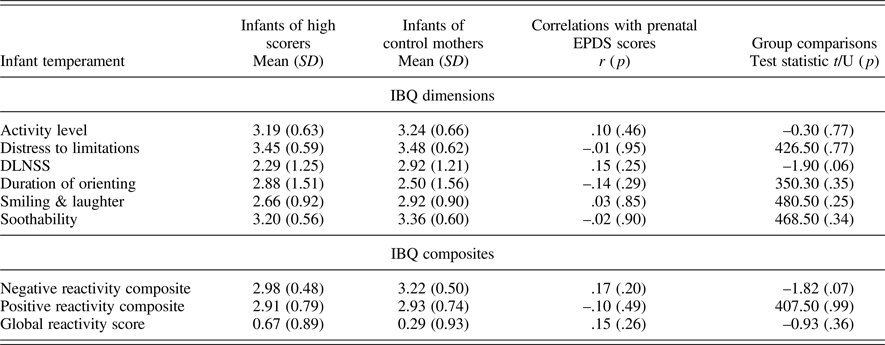
Notes: EPDS, Edinburgh Postnatal Depression Scale. IBQ, Infant Behavior Questionnaire. DLNSS, distress and latency to approach novel and sudden stimuli.
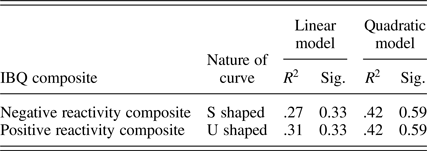
The pattern of association between prenatal EPDS scores and (a) positive and (b) negative reactivity composite scores appeared to be U shaped and S shaped, respectively (Fernandes, Reference Fernandes2011). Curve estimation analyses suggested a quadratic solution might explain these associations best; however, this did not reach significance for either composite (Table 4).
Curve estimation analyses of EPDS Quintiles × IBQ Composites
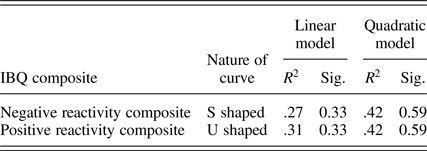
Notes: EPDS, Edinburgh Postnatal Depression Scale. IBQ, Infant Behavior Questionnaire.
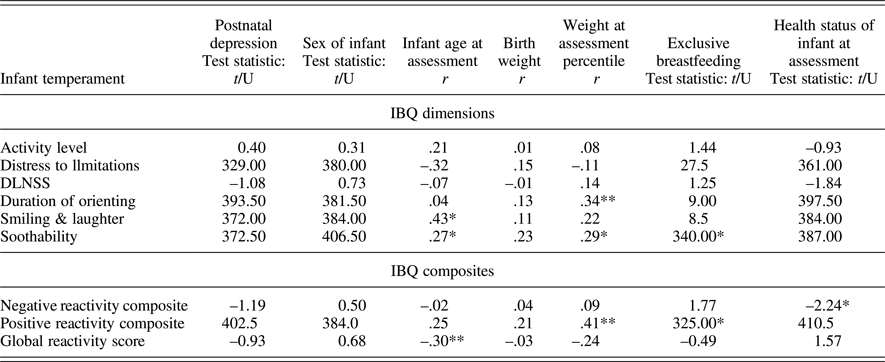
The results of the covariate analyses are presented in Table 5. Positive IBQ dimension scores and positive reactivity composite scores were associated with older infant age, higher weight percentile, and exclusive breastfeeding at the time of the assessment. The negative reactivity composite score was associated with poor health status of the infant (fever, vomiting, diarrhea, and/or coryzal illness) in the 2 weeks preceding the assessment. There was a negative correlation between global reactivity and birth weight, suggesting that less negative (or more positive reactivity) was seen in infants with higher birth weights. Postnatal depression was not associated with infant temperament.
Postnatal covariate analysis

Notes: IBQ, Infant Behavior Questionnaire. DLNSS, distress and latency to approach novel and sudden stimuli. *p < .05. **p < .01.
Association between prenatal depression and infant cortisol repsonsivity
The results of the association between prenatal depression and fetal responsivity in the Solur Mother and Baby Project are published elsewhere (Fernandes et al., Reference Fernandes, Stein, Srinivasan, Menezes and Ramchandani2015). In summary, the infants of mothers who scored high for prenatal depression showed significantly higher levels of T2 and ΔT cortisol (mean = 35.98 mmol/l, SD = 15.62 and mean = 26.71 mmol/l, SD = 14.14, respectively) than the infants of control mothers (mean = 24.16 mmol/l, SD = 12.86 and mean = 14.19 mmol/l, SD = 19.79, respectively; t = 12.59, p = .01 and t = –2.07, p = .05 for T2 and ΔT, respectively). T1 levels were lower in the infants of mothers who scored high for prenatal depression (mean = 7.74 mmol/l, SD = 10.09) than in the infants of control mothers (mean = 10.63 mmol/l, SD = 10.41); however, this difference was not statistically significant (U = 284.00, p = .19). There were no differences in maternal cortisol levels between the groups of high scoring mothers and controls (U = 293.00, p = .46).
Covariate analysis revealed that ΔT was higher in female infants and was not associated with birth weight, infant age at assessment, infant weight percentile at the time of assessment, infant health status in the 2 weeks preceding the assessment, postnatal maternal depression, and postnatal maternal cortisol levels (Fernandes et al., Reference Fernandes, Stein, Srinivasan, Menezes and Ramchandani2015). Linear regression analysis revealed that prenatal EPDS scores remained a significant predictor of ΔT after controlling for infant sex (ß = 0.53, p = .04; Fernandes et al., Reference Fernandes, Stein, Srinivasan, Menezes and Ramchandani2015). The association between EPDS quintiles and ΔT was U shaped with infants of mothers in EPDS quintiles 1, 4, and 5 (corresponding to EPDS scores of 0–1 and 10–27) showing elevated ΔT compared with infants of mothers in quintiles 2 and 3 (corresponding to EPDS scores of 2–9; M. Fernandes et al., Reference Fernandes, Stein, Srinivasan, Menezes and Ramchandani2015). Curve estimation techniques found a quadratic solution to best explain this association (quadratic R 2 = .20, p = .02; linear R 2 = .07, p = .12; Fernandes et al., Reference Fernandes, Stein, Srinivasan, Menezes and Ramchandani2015).
Discussion
There are three principal findings from this study in accordance with its three aims. These are:
(1) The association between maternal prenatal depression, and fetal cardiac measures of response and recovery to potentially stressful VAS in singleton, third trimester fetuses is U shaped. More specifically, the fetuses of mothers with moderate levels of prenatal depression (measured on the EPDS) demonstrated lower levels of response and recovery when compared with the fetuses of mothers with very high and very low prenatal EPDS scores.
(2) There are no significant associations, either linear or curvilinear, between prenatal maternal EPDS scores and infant temperament at 2 months postbirth. Postnatal maternal depression was also not associated with infant temperament.
(3) Maternal prenatal depression is associated with increased cortisol reactivity (ΔT) to immunization at 2 months postbirth, the association being dose dependent and U shaped. The infants of mothers with moderate levels of prenatal depression (measured on the EPDS) demonstrated lower levels of ΔT when compared with the children of mothers with very high and very low levels of prenatal depression.
Findings (1) and (3) are consistent with evidence from previous literature of associations between moderate levels of prenatal stress and offspring neurobehavior. Notably, DiPietro et al. (Reference DiPietro, Kivlighan, Costigan, Rubin, Shiffler, Henderson and Pillion2010) report positive associations between pregnancy specific hassles, and heightened FHR variability and fetal motor activity. The association between neuroendocrinological markers of prenatal psychopathology and delayed fetal habituation to a stressor has been reported to be nonlinear (cubic) rather than linear (Sandman et al., Reference Sandman, Wadhwa, Glynn, Chicz-Demet, Porto and Garite1999, Reference Sandman, Glynn, Wadhwa, Chicz-DeMet, Porto and Garite2003). In the context of infant cortisol responsivity to immunization, previous literature has reported maternal perinatal depression to predict elevated infant cortisol reactivity at 6 months (Brennan et al., Reference Brennan, Pargas, Walker, Green, Newport and Stowe2008), 3 years (de Bruijn et al., Reference de Bruijn, van Bakel, Wijnen, Pop and van Baar2009), and 5 years (Gutteling et al., Reference Gutteling, de Weerth, Willemsen-Swinkels, Huizink, Mulder, Visser and Buitelaar2005) to a variety of stressors ranging from stressful laboratory tasks to the child's experience of the first day at school. These findings have been found to be independent of the influence of postnatal maternal mood. Similar findings associating prenatal maternal stress and elevated ACTH responses to stressors in offspring have been reported in animal literature (Takahashi et al., Reference Takahashi, Kalin, Parksdale, van den Burgt and Brownfield1988, Reference Takahashi, Haglin and Kalin1992; Takahashi & Kalin, Reference Takahashi and Kalin1991). Nevertheless, we acknowledge that the fetal results of the Solur Mother and Baby Project differ from a number of studies on Western populations that have reported linear associations between prenatal depression (and anxiety), and disturbances in FHR responsivity to a stressor (Allister, Reference Allister2001; DiPietro et al., Reference DiPietro, Costigan and Gurewitsch2003; Monk et al., Reference Monk, Fifer, Myers, Sloan, Trien and Hurtado2000, Reference Monk, Myers, Sloan, Ellman and Fifer2003). Moreover, we are not aware of any other studies directly reporting a U-shaped association between prenatal maternal depression and infant cortisol responsivity. Similar patterns of association have, however, been reported between other biological processes, for example, between (a) birth weight and non-insulin dependent diabetes mellitus (McCance et al., Reference McCance, Pettitt, Hanson, Jacobsson, Knowler and Bennett1994), (b) prenatal maternal nutrition and fetal growth (Wu, Bazer, Cudd, Meininger, & Spencer, Reference Wu, Bazer, Cudd, Meininger and Spencer2004), and (c) stress and productivity in adult life (Wilke, Gmelch, & Lovrich, Reference Wilke, Gmelch and Lovrich1985). Furthermore, in a sample of 190 British 9-year-olds, the association between birth weight and urinary excretion of glucocorticoid metabolites was reported to be U shaped (Clark et al., Reference Clark, Hindmarsh, Shiell, Law, Honour and Barker1996). In our project, children with both very low and very high birth weights showed increased adrenocortical function compared to those of moderate birth weight after controlling for sex, age, and current weight. There is also support from animal literature where nonlinear relationships between stress and optimal functioning in response to challenging situations have been reported (Yerkes & Dodson, Reference Yerkes and Dodson1908). Although these findings may appear counterintuitive, they are consistent in that they suggest that some exposure to stimulation is necessary to promote neural development both before and after birth (DiPietro et al., Reference DiPietro, Kivlighan, Costigan, Rubin, Shiffler, Henderson and Pillion2010).
The curvilinear association between prenatal depression and offspring neurobehavioral responses also appears to be consistent with the theory of biological sensitivity to context. This theory contends that in both extremely supportive and unsupportive developmental conditions, children maintain high levels of stress reactivity (Belsky & Pluess, Reference Belsky and Pluess2009; Boyce & Ellis, Reference Boyce and Ellis2005). The authors argue that these responses may be considered to be a susceptibility factor and reflect organismic plasticity with a “curvilinear or U shaped relation emerging between levels of supportiveness versus stressfulness in early childhood environments” (Belsky & Pluess, Reference Belsky and Pluess2009, p. 887). In such a situation, high reactivity profiles emerge in both highly stressful and highly supportive postnatal social contexts. It is important to emphasize that, to date, the idea of biological sensitivity has been considered in a postnatal context (Fernandes, Reference Fernandes2011). It is plausible that such sensitivity may exist during (and therefore the theory extended to) intrauterine life, and our findings do provide some evidence to support this. It could thus be hypothesized that intrauterine exposure to moderate amounts of prenatal stress would result in the matching of intrauterine and extrauterine environmental influences. Such an intrauterine milieu confers a developmental advantage to the developing fetus by way of optimal functionality in a postnatal environment, which will often involve exposure to multiple moderately stressful life experiences. It is possible that the explanation for such findings, as described in (1) and (3) of the Solur Mother and Baby Project above, might lie at the intersection between the theories of biological sensitivity to context and the fetal programming (Barker) hypothesis.
Finding (2) of the Solur Mother and Baby Project is in contrast to 14 inquiries from high-income countries, which report associations between maternal prenatal depression and infant temperament (Austin et al., Reference Austin, Hadzi-Pavlovic, Leader, Saint and Parker2005; Brouwers, van Baar, & Pop, Reference Brouwers, van Baar and Pop2001; Davis et al., Reference Davis, Glynn, Schetter, Hobel, Chicz-Demet and Sandman2007; Diego, Field, & Hernandez-Reif, Reference Diego, Field and Hernandez-Reif2005; Farber, Vaughn, & Egeland, Reference Farber, Vaughn and Egeland1981; Field et al., Reference Field, Diego, Dieter, Hernandez-Reif, Schanberg, Kuhn and Bendell2001, Reference Field, Diego, Dieter, Hernandez-Reif, Schanberg, Kuhn and Bendell2004; Field, Diego, & Hernandez-Reif, Reference Field, Diego and Hernandez-Reif2008; Huizink, Robles De Medina, Mulder, Visser, & Buitelaar, Reference Huizink, Robles De Medina, Mulder, Visser and Buitelaar2002; Kaplan et al., Reference Kaplan, Evans and Monk2008; Lundy et al., Reference Lundy, Jones, Field, Nearing, Davalos, Pietro and Kuhn1999; McGrath, Records, & Rice, Reference McGrath, Records and Rice2008; Mohler, Parzer, Brunner, Wiebel, & Resch, Reference Mohler, Parzer, Brunner, Wiebel and Resch2006; Rieger et al., Reference Rieger, Pirke, Buske-Kirschbaum, Wurmser, Papousek and Hellhammer2004; Van den Bergh, Reference Van den Bergh1990; Werner et al., Reference Werner, Myers, Fifer, Cheng, Fang, Allen and Monk2007). However, two studies report no independent effect of prenatal depression on infant temperament (Austin et al., Reference Austin, Hadzi-Pavlovic, Leader, Saint and Parker2005; Kaplan et al., Reference Kaplan, Evans and Monk2008). Moreover, in two studies from LMICs, prenatal mental disorders was not associated with Bayley cognitive scores in 12-month-old Ethiopian infants (Kaplan et al., Reference Kaplan, Evans and Monk2008), and prenatal maternal psychological distress was not associated with maternal reports of difficult infant temperament on the Early Infant Temperament Questionnaire at 1–4 months in a sample of 100 mother–infant dyads from Bangalore, India (Bhat et al., Reference Bhat, Chowdayya, Selvam, Khan, Kolts and Srinivasan2015). There are a number of possibilities that may account for the lack of association between prenatal depression and infant temperament in the Solur sample. First, the sample size at follow-up was small, and infant temperament data was available for only 58 infants. Second, infants were assessed at a very young age (i.e., 2 months). It is possible that, despite the established validity of the IBQ at 2 weeks and 2 months of life (Worobey & Blajda, Reference Worobey and Blajda1989), this is too early for the nuances of infant behaviors assessed by the IBQ to become evident to the mother. In addition, a single postnatal assessment limits opportunities for tapping into the narrow repertoire of behavioral patterns in very young infants. Third, the Solur sample of mothers did not smoke, consume alcohol, and/or use recreational drugs before or during their pregnancy, raising the questions of whether the association between prenatal depression and infant temperament reported in Western literature is influenced by low to moderate levels of smoking and alcohol consumption (which has been reported in 18%–20% of the prenatal population in these settings (Brouwers et al., Reference Brouwers, van Baar and Pop2001; Huizink et al., Reference Huizink, Robles De Medina, Mulder, Visser and Buitelaar2002; Werner et al., Reference Werner, Myers, Fifer, Cheng, Fang, Allen and Monk2007). Fourth, despite rigorous efforts at translation, back-translation, and piloting as per the WHO World Mental Health Initiative Interview Translation Guidelines (Harkness et al., Reference Harkness, Pennell, Villar, Gebler, Aguilar-Gaxiola, Bilgen, Kessler and Üstün2008), it is possible that the IBQ did not function appropriately in non-Western settings. Difficulties were experienced in the comprehension of certain culture-specific items by rural women such as item 45, “In the last 2 weeks, how often have you tried the following method to soothe your baby: offering baby his/her dummy or security object?” Difficulty was also experienced with Item 44 under soothing techniques, “In the last 2 weeks, how often did you try to soothe your baby by offering him/her food or liquid?” This is because breastfeeding as a method of soothing is culturally encouraged and widely practiced among rural Indian women regardless of their mood, nutrition, and sociocultural adversity. In addition, low levels of literacy in the study population necessitated an interviewer-administered design although the IBQ was designed to be self-reporting in nature. Further, a cultural bias against reporting behavioral problems in children, especially to persons in authority such as healthcare personnel, may exist among rural Indian women. Fifth, it is possible that in the studies reporting associations between prenatal depression and offspring temperament, maternal depression may have biased the mother's perception of her infant's behavior, especially in inquiries employing caregiver reports to measure infant temperament. Sixth and finally, the possibility that there is no association between prenatal depression and infant temperament in this setting cannot be ignored, and further research is needed to replicate (or refute) this finding.
Insights on early neurodevelopment from a socioeconomically disadvantaged Indian cohort
Before enumerating the insights gleaned from our research into the associations between prenatal depression, fetal stress responsivity, infant stress responsivity, and infant temperament in a rural LMIC setting in South India, it is important to consider the context in which the study was conducted and the factors that differentiated our sample and methodology from preexisting related work. First, the characteristics of the study population reveal that the mothers (and fetuses) recruited live(d) in an environment that may reasonably be considered to be moderately stressful in today's world: this includes daily exposure to stressors pertaining to poverty, food insecurity, relatively low income, infectious agents, and manual labor during pregnancy (Dwarkanath et al., Reference Dwarkanath, Vasudevan, Thomas, Anand, Desai, Gupta and Srinivasan2018). Another differentiating feature of the study population is that none of the mothers reported smoking, any alcohol consumption, and/or recreational drug use either before or during their pregnancies. Second, several methodological aspects differentiate the Solur Mother and Baby Project from previous work: (a) during the prenatal assessment, fetuses were directly stimulated using a vibroacoustic device, rather than indirectly through maternal cognitive stressors; (b) attempts were made to quantify total fetal response and recovery to the stimuli by measuring areas under the fetal responses curves rather than mean changes in the rate or variability of the fetal heart; and (c) intramuscular immunization was used as the stressful stimulus in the postnatal stress-response paradigm to explore infant cortisol responsivity. The use of the first intramuscular immunization as a stress-inducing stimulus represents a more standardized approach to the “dose of stress” administered to the children when compared to laboratory-induced frustration tasks that may be influenced by the infant's age, temperament, and previous exposure to similar toys/tasks. Furthermore, the measurement of cortisol responses rather than baseline or poststressor cortisol levels are not confounded by the time of sample collection in relation to the circadian cycle (Egliston et al., Reference Egliston, McMahon and Austin2007).
Keeping the aforementioned features of the Solur Mother and Baby Project in mind, the primary insight provided by study is that, for both fetal and infant neurobehavioral results, the curvilinear association between prenatal depression and responsivity was not evident during baseline conditions but emerged as significant upon the presentation of a stressor. This relationship held true in the context of responsivity measured in two different environments (i.e., intra- and extrauterine), at two different time points (i.e., at approximately 35 weeks of gestation and 2 months postbirth; a net time different of approximately 3 months), and using two different biological measures of stress (FHR, a proxy marker of the autonomic nervous system's control over cardiac function in times of stress; and cortisol responsivity, a proxy marker of the functioning of the HPA axis in response to stress). This finding is in concordance with the diathesis-stress or dual-risk paradigms, which suggests that individuals who may appear to function similarly in baseline conditions may have varying response patterns during conditions of stress. The finding is also in concordance with the Barker hypothesis, which considers fetal programming to be a result of a matching between intra- and extrauterine environments, so as to confer an offspring with a developmental advantage in terms of adaptation, survival, and functioning into the environment into which it will eventually be born. In the case of the Solur and Mother and Baby Project, it is therefore possible that fetuses exposed to moderate amounts of maternal prenatal stress were programmed, as per the Barker hypothesis, to function more optimally in a moderately stressful postnatal environment than fetuses exposed to both very low and very high amounts of prenatal maternal stress. In the latter, the situation would represent, theoretically, a “mismatch” between the intra- and extrauterine environments (Glover, Reference Glover2011). Moreover, it is possible that the elevated stress responses observed in the fetuses of mothers with very low levels of pregnant depression could represent an exaggerated startle response to the stressor, while the elevated stress responses observed in the fetuses of mothers with high levels of prenatal depression may be attributed to the programming effect of maternal prenatal depression on the fetal HPA axis. Belsky and Pluess (Reference Belsky and Pluess2009) suggest that high reactivity profiles of child development emerge in both extremely stressful and extremely supportive postnatal environments and are indicative of a U-shaped relationship between environmental stress and child functioning. Furthermore, it is possible that this curvilinear association is observed not only in the context of the programming influence of prenatal depression but, as Calabrese and Baldwin suggest (Reference Calabrese and Baldwin2001), the U-shaped association may be woven into the fabric of all biological processes.
A second insight, provided by the results of the Solur Mother and Baby Project is that it may not be necessary for the birth events to take place to appreciate the programming effects of prenatal maternal depression; this may be observed and measured by an assessment of fetal behavioral profiles and response patterns. The findings of the project that exposure to small to moderate amounts of stimulation in utero is necessary for the development of the fetal stress response mechanism is suggestive of a programming effect of maternal depression on offspring stress responsivity even before birth and despite employing indirect measures of fetal responsivity.
A final insight is one that has been widely reported in previous literature but whose importance warrants mention. The findings of the Solur Mother and Baby Project highlight the dual risk of maternal prenatal depression: to the mother and to the fetus. At the time of the project, there was no routine screening protocol for prenatal depression in place in rural South India. The findings of the project suggest that exposure to certain threshold amounts of prenatal depression may be associated with disturbances in offspring function, hinting that above a certain level, prenatal stress may be regarded to have a damaging effect on fetal development. Conversely, the findings of the curvilinear association, rather adventitiously, stimulate discussion about whether the treatment of mild to moderate prenatal stress or depression is beneficial, or not, to the fetus in the medium and long term.
Implications of the U-shaped curve: How one size may not fit all
In the context of early child development, the Solur Mother and Baby Project provides initial evidence that unlike the linear relationship between prenatal maternal depression (or stress) and child neurobehavior observed in Western populations, the association between prenatal maternal depression (or stress) and child neurobehavior observed in rural LMIC populations is U shaped. While further research in these settings is required to corroborate these findings, especially in the context of the small postnatal sample size of the project, the results of the Solur Mother and Baby Project provide a preliminery stand-alone example that the patterns of association between exposure to intrauterine stress and postnatal stress responsivity may not be identical in different settings. These results highlight the importance of further understanding into this association in a variety of different contexts, but also, more broadly, highlight the importance of understanding what the terms “normal,” “typical,” or “optimal” mean in the context of early child development. More specifically, the results of the project suggest that a single “bell curve” or “standard” for early child development obtained on a single, or a small group of populations, may not be amenable to direct export to other global settings; rather, the results of this project emphasize the need to understand that early child development is an adaptive, dynamic process that is, more likely than not, context dependent and driven, to an extent, by prevalent environmental risk factors. It may therefore not be entirely prudent to categorize children as developmentally delayed or maladapted based on a single standard or curve, without a full appreciation of the context in which the child is living and without a more detailed understanding of what constitutes optimal adaptation, on the part of the child, to survive, and thrive, in that environment. As explained by Glover in 2011 in a number of elegant examples, a child with shorter attention spans and what may be considered more aggressive, risk-taking behavior might be optimally adapted for survival in areas of conflicts, violence, and insecurity; but the same child would be maladapted to function in a conventional classroom setting where emphasis is placed on attention to detail, completion of tasks, and obedience (Glover, Reference Glover2011). Our finding of a U-shaped association between prenatal maternal depression and stress responsivity, both in the fetus and in the young infant, may represent genetically derived responsivity patterns that aid survival and reflect an optimization in the nature–nurture interface; however, given the small postnatal sample size and other limitations (detailed below) of the project, we acknowledge that further exploration of these associations in LMICs, and in rural samples, is needed before these relationships may be fully understood (Calabrese & Baldwin, Reference Calabrese and Baldwin2001). Nevertheless, should the pattern of association between prenatal depression and offspring neurobehavior differ as a function of context and environment, the question as to whether interventions aimed at changing neurobehaviors in children to bring them in line with preestablished norms may be inappropriate, or perhaps even detrimental, if the environment of the child is not modified so as to be supportive and adaptive to these neurobehavioral changes, would be significant. Hence, we reiterate the need for a greater understanding of the programming of early neurobehaviors in the context of intrauterine exposures and the stressors likely to be encountered in the postnatal environment before such questions, and their implications, may be addressed.
The Solur Mother and Baby Project sought to answer three interrelated questions: (a) is prenatal depression teratogenic to the optimal development of offspring (fetal and infant) neurobehavior, and if so, (b) is the effect dose and (c) context dependent? In summary, (a) the association between prenatal depression and offspring (fetal and infant) neurobehavior was found to be complicated and U shaped, with very high and very low levels of prenatal depression being counterproductive and moderate levels of prenatal depression being facilitative to development; (b) the effect appears to be dose dependent, but it is U shaped rather than linear as previously thought; and (c) context does appear to play an important role in determining the pattern of association between prenatal depression and offspring (fetal and infant) neurobehavior with different patterns of association observed in Western, high-income settings, and LMIC settings.
Strengths and limitations
There are a number of limitations to the project's methodology to consider in the interpretation of its findings. First, the pre- and postnatal assessments occurred at one time point in the pre- and postnatal period and, as such, their cross-sectional nature limited the amount of information about fetal and infant neurobehaviors that could have been obtained from serial pre- and postnatal assessments. Second, only 44% of the prenatal sample returned for follow-up, and hence the postnatal assessment was only performed on 58 mother–infant dyads. Third, prenatal maternal cortisol levels and maternal temperament were not ascertained and therefore not be controlled for in the cortisol responsivity and temperament analyses, respectively. Fourth, the postnatal assessment was carried out on very young infants (2 months), and it is possible that the IBQ did not function optimally in this age group and/or in the rural LMIC setting. Fifth and finally, it is important to clarify that the Solur Mother and Baby Project was observational in design, and therefore, while it addresses association between prenatal depression and offspring neurobehavior, it is unable to determine causality (Hill, Reference Hill1965).
Nevertheless, the Solur Mother and Baby Project remains, to our knowledge, the first inquiry into the association between prenatal maternal depression and offspring (fetal and infant) neurobehavior in a LMIC and particularly in a rural (rather than urban or peri-urban) setting. The latter is of consequence as in the Indian subcontinent, over 70% of the population reside in villages and as such findings from metropolitan populations may not necessarily be generalizable to the rural populace (Dyson & Visaria, Reference Dyson, Visaria, Dyson, Casses and Visaria2004; Ratna, Reference Ratna, Dutt and Thakur2007). Furthermore, the study was conducted in a prenatal population that reported no smoking, alcohol consumption, or recreational drug use before or during their pregnancy, and therefore the results are free from the confounding influences of these exposures on fetal brain development. There were a number of methodological strengths to the project that built upon preexisting literature in the field: (a) the prenatal assesment involved direct stimulation of the fetus with a VAS rather than the indirect stimulation of the fetus using maternal cognitive stressors utilized in previous work (DiPietro et al., Reference DiPietro, Costigan and Gurewitsch2003; Monk et al., Reference Monk, Fifer, Myers, Sloan, Trien and Hurtado2000, Reference Monk, Myers, Sloan, Ellman and Fifer2003); (b) the fetal responsivity analysis utilized the measurement of areas under fetal responsivity curves rather than fluctuations in fetal heart rate and variability and as such were a more robust measure of total fetal response to stimulation than transient heart rate fluctuations; and (c) the use of immunization as a stressor represented a standardization of the “stress dose” without unnecessarily exposing infants to a painful procedure (such as blood sampling).
Conclusions
The association between maternal prenatal depression and fetal responses to a potentially stressful stimulus and infant cortisol responses to immunization, in a socioeconomically disadvantaged population from a LMIC, is U shaped as evidenced by the findings of the Solur Mother and Baby Project. This raises the possibility that exposure to some amount of intrauterine stress may be facilitative to offspring development in certain environmental contexts. The project did not find any significant associations between maternal prenatal depression and infant temperament at 2 months. The Solur Mother and Baby Project represents the first attempt to investigate the programming of fetal and infant neurobehavioral responses in the context of maternal stress in a rural LMIC setting and highlights the need for further research into the programming of early child development in these regions.