For political science and legal scholars, politicians, interest groups, and, perhaps most importantly, litigants themselves, the question over and over again has been whether the identity of a case’s assigned judge or judges matters. By now, the evidence points clearly to judge ideology playing an important role in decision making in US courts (e.g., Epstein and Knight Reference Epstein1998; Segal and Spaeth Reference Segal and Spaeth2002; Hettinger, Lindquist, and Martinek Reference Hettinger, Lindquist and Martinek2004; Kaheny, Haire, and Benesh Reference Kaheny and Benesh2008), but for many other judicial characteristics, the story is far more complicated. One of these characteristics that has fascinated judicial scholars for years has been the sex of the judge. And with good reason. In many of this country’s business, professional, legal, and political arenas, the number of women involved in high-profile positions continues to rise, and the judiciary has been no exception. This has led many to ponder whether the presence of females leads to different judicial decisions, outcomes, and process, the results of which have been far less than homogeneous.
Surprisingly, within this large body of gender-centric judging work, little examination of judge sex has been done beyond merits voting that leads to published opinions. This is understandable for appellate court judges, whose decision-making role largely revolves around reviewing lower-court decisions and interacting very little with a case’s participants. However, it likely is not suitable for trial courts, where regular and often years-long interaction between judges, litigants, and lawyers takes place while a case dynamically develops.
Indeed, trial judges are case managers across time, rather than being decision makers at a single point, meaning that the trial court setting’s characteristics call for a more process-oriented research design. This is particularly true with federal trial courts (called US district courts). These institutions, along with politicians, now encourage district judges to actively manage their cases and foster more intracourt settlements—rather than allow cases to advance toward trial—whenever possible (Resnik Reference Resnik1982; Kritzer Reference Kritzer1986; Galanter Reference Galanter2004).
Ultimately, however, the discretion lies with individual district judges to determine how hands-on they wish to be in supervising their cases and informally mediating disputes assigned to them. Because of this discretion, judges are free to develop or adopt case management styles, and it is here that their sex is perhaps most likely to play a role in determining whether they take the initiative to actively promote a settlement environment. A large body of research on females serving in leadership and management positions indicates that they are more likely to adopt a democratic, participative, and collaborative managerial style than similarly situated males, who tend to be more authoritative managers (e.g., Eagly and Johnson Reference Eagly and Johnson1990; Eagly, Makhijani, and Klonsky Reference Eagly, Makhijani and Klonsky1992; Burke and Collins Reference Burke and Collins2001). If these styles of management map onto district judges serving in a management position over the parties in a trial court case, female judges should be more likely to provide an “affirmative push toward convergence” (Galanter Reference Galanter1985) than their male district court colleagues. And, as a result, cases assigned to female district court judges rather than male district court judges should be affected in two ways: (1) they should be more likely to settle, and (2) they should settle more quickly. If present, this gendered effect will go above and beyond any judge-sex-related effect on case winners and outcomes that may be present in certain types of cases.
To examine whether this expectation holds, I compile data from nearly 18,000 cases terminated in four federal district courts across 9 years and two major issue areas. The logistic regression and competing-risks duration analyses provide confirmation that the sex of a case’s assigned judge matters. Settlement is very common in all circumstances, something that should come as no surprise to court watchers, but in both civil rights and personal injury tort cases, female judges are more likely to successfully foster settlement for their cases than male district judges. Cases assigned to female federal trial court judges also settle more quickly than those assigned to their male colleagues in both types of cases. Robustness checks confirm that these judge sex effects on case settlement are not solely due to litigation strategy in the face of a female assigned judge. These results have broad implications for a number of areas relevant to judicial politics, including the importance of the sex of a case’s judge and the process of judicial decision making in trial courts.
The Female Judge Voice?
The scholarly quest to uncover whether modern women behave and make decisions differently from men—from communication to problem solving to leadership and beyond—has been ongoing for years. Those expecting these differences have posited a variety of rationales, from the “different voice” of men and women (Gilligan Reference Gilligan1982), to female decision makers’ service as high-profile representatives of other women working to advance their group’s interests (Pitkin Reference Pitkin1967), to female development of expertise in certain areas (like traditional “women’s issues”) because of the unique environment, challenges, and experiences that they face (Gryski, Main, and Dixon Reference Gryski, Main and Dixon1986; Sullivan Reference Sullivan2002). Laying the groundwork for much debate and scholarship, this work has led researchers to examine female behavior and compare it to men’s in a variety of contexts. One of these regards the potential differences between males and females serving in the judiciary, an area that has substantive implications for the outcome of litigation. In the sizable literature on this topic, scholars have connected the above general gender theory to the judicial profession, arguing, for example, that the social and professional backgrounds of women judges may lead them to make different decisions and otherwise behave differently on the court than their male colleagues (Slotnick Reference Slotnick1984; Songer, Davis, and Haire Reference Songer1994), with “differently” meaning, for example, more empathetically (Brudney, Schiavoni, and Merrit Reference Brudney and Merrit1999) or more sensitively (Martin, Reynolds, and Keith Reference Martin and Reynolds2002).
The list of quantitative gender-judging studies is long, and the findings have been decidedly mixed. The majority of these studies focus on appellate court judicial decision making, where support for women judging differently than men has been commonly found with traditional women’s issue-type cases like sexual discrimination and sexual harassment (e.g., Crowe Reference Crowe1999; Farhang and Wawro Reference Farhang2004; Peresie Reference Peresie2005; Boyd, Epstein, and Martin Reference Boyd and Martin2010) but rarely elsewhere (e.g., Segal, Spaeth, and Benesh Reference Segal, Spaeth and Benesh2005; Cox and Miles Reference Cox and Miles2008). Notably, in those studies focusing of trial courts, outside of criminal cases, where some have found that female judges are more punitive than males (Steffensmeier and Herbert Reference Steffensmeier1999; Fox and Van Sickel Reference Fox2000), very little evidence of differences in decision making between male and female judges has been found (Kritzer and Uhlman Reference Kritzer and Uhlman1977; Walker and Barrow Reference Walker and Barrow1985; Ashenfelter, Eisenberg, and Schwab Reference Ashenfelter and Schwab1995; Sisk, Heise, and Morriss Reference Sisk and Morriss1998; Segal Reference Segal2000; Kulik, Perry, and Pepper Reference Kulik2003; Schanzenbach and Tiller Reference Schanzenbach and Tiller2006). Nearly all of these quantitative studies, including those that center solely on trial courts, focus on recorded (published) outcomes—or judge “votes”—to search for sex differences (but see Ashenfelter et al. Reference Ashenfelter and Schwab1995; Boyd and Hoffman, forthcoming).Footnote 1
Why Judge Sex and Settlement?
Why might female federal trial court judges be more likely to successfully encourage case settlement and do so more quickly than their male counterparts?Footnote 2 The answer to this question lies at the intersection of the management and leadership styles most likely to be held by females in positions of authority, the unique function of federal district courts, and the large degree of discretion afforded to district judges as to how to manage their cases.
Gendered Management and Leadership Styles
We can look first to insight from research analyzing the actions of females serving in leadership and management roles. Those working in this research area have long debated whether and to what degree women should be expected to behave differently than men while serving as leaders and managers in positions of authority. The generalized expectation of difference here is that women and men, armed with gender-specific qualities, upbringing, or experiences, bring a unique style to their management roles, and this style “offers a way to understand why managers, faced with seemingly identical situations, use such different decision processes” (Nutt Reference Nutt1990, 174). Because “women do not use or perceive their positions of power like their male counterparts” (Kathlene Reference Kathlene1994, 561), a number of differences should emerge from management and leadership settings regarding communication, problem solving, and, ultimately, outcomes.
What differences in management and leadership style should we expect between men and women? When given discretion as to how to lead and manage, female decision makers should be more likely to adopt management styles that can be generally described as democratic, whereas similarly situated males ought to tend toward autocratic styles (Eagly and Johnson Reference Eagly and Johnson1990, 236). These styles of management will differ from one another on a number of dimensions. Under this theory, a female style of management is characterized by a decision-making environment that is more likely to encourage participation among subordinates, democratic communication, collaboration, consensus building, and the drawing of multiple voices into deliberative processes (Eagly and Johnson Reference Eagly and Johnson1990; Rosener Reference Rosener1990; Rosenthal Reference Rosenthal1998). In other words, in their position of authority, women managers will look for ways to build bridges, empower participants, and reach conclusions that will meet the needs of those individuals that are involved (Rosenthal Reference Rosenthal1998; Burke and Collins Reference Burke and Collins2001). Conversely, a traditional male style of management is one that disfavors this type of participative environment and instead sees the male decision maker seizing opportunities to exercise his authority over outcomes (Eagly and Johnson Reference Eagly and Johnson1990).
Quantitative studies have confirmed the presence of these gender-specific management styles in a variety of workplace settings, including in US politics. Scholars of legislative behavior have found that women in leadership positions in legislatures have more collaborative and team-oriented styles than similarly situated male leaders, evidence of gender differences that is often not visible at the legislative voting stage (Kathlene Reference Kathlene1994; Rosenthal Reference Rosenthal1998). In state legislatures, women committee chairs are more likely to moderate and facilitate discussion rather than use their position to control outcomes, while males use “their position of power to control hearings in ways that we commonly associate with the notion of positional power and leadership” (Kathlene Reference Kathlene1994, 572).
District Court Judging and Managerial Discretion
For many judges, particularly those serving on appellate courts, opportunities to serve in management and leadership positions are few and far between, resting perhaps only with chief judges and justices. Even there, judges generally serve as leaders over peers rather than subordinates, not to mention that the number of women serving in these leadership positions over time has been limited. Due to unique institutional design and job descriptions, however, trial courts and the judges that sit on them serve as an important exception to this and, as such, provide an excellent opportunity to examine gendered management theory within the judiciary.
Federal trial courts are the courts of first instance, where litigation commences, develops a factual record through discovery, and provides the initial application of law to those facts. Within these courts, there is regular and often years-long interaction between trial judges and case participants (i.e., case management), while the case dynamically develops. Like US Supreme Court justices and courts of appeals judges, federal district court judges are nominated by the president and confirmed by the Senate and, under Article III of the Constitution, receive life tenure. However, unlike their brethren in the federal appellate courts, district court judges decide cases almost exclusively alone, rather than in a collegial setting, and have a unique job description.
As a result of this design, federal district court judges engage in many diverse activities—from presiding over trials, to hearing and ruling on pre- and posttrial motions, to conferring and advising the parties in the stages before a trial is scheduled to take place. Through this role, the trial judge has an enormous amount of discretion to affect how a case develops and is resolved. In recent years, federal trial judges have been actively encouraged by their district courts and by politicians (through legislation like the Civil Justice Reform Act of 1990) to adapt their role to changing institutional pressures such as a rapidly growing caseload (growing from approximately 50,000 civil cases filed in 1962 to 283,000 in 2010; Galanter Reference Galanter2004; US Courts 2010), by facilitating more intracourt settlements.
Viewed in a more global way, this push has been toward trial judges engaging in a new style of case management and judging called “managerial judging.” Managerial judging contrasts sharply with the traditional or classical style of judging, which advocates judges taking a very neutral stance toward their cases, so much so that they avoid direct involvement in the disputes and adopt a “disinterested pose” (Resnik Reference Resnik1982). However, with the new style of managerial judging, judges are actively involved in cases, wherein they are now “not only adjudicating the merits of issues presented to them by litigants, but also are meeting with parties in chambers to encourage settlement of disputes and to supervise case preparation. Before and after the trial, judges are playing a critical role in shaping litigation and influencing results” (376–77).
For trial judges that do choose to engage in the newer managerial style of case management, judicial case supervision is much more hands-on and geared toward encouraging the parties to find common ground. As a result, settlement negotiations can be actively encouraged or even brokered by the case’s assigned judge (Galanter Reference Galanter1985). To help achieve and implement settlement-friendly case management, managerial judges may use staff and even case-assisting magistrate judges (over whom district judges serve as principals; see Boyd and Sievert, forthcoming), or they may rely on more implicit measures such as the contents of their case management and scheduling orders.
Not surprisingly, attorneys practicing litigation before district judges recognize these different case management styles among their judges and how these styles affect the resulting settlement environment. For example, a judge in an Illinois district court was lauded by an attorney for her people skills and patience that were “ideal to achieve settlement,” while an attorney in New York noted that his case’s judge was “no good at settlement. He’s a bully. That’s not the attitude that gets cases settled” (Johnson et al. 2005, 55, 114).
Despite the institutional encouragement toward more managerial judging, the decision of how involved to be as managers ultimately lies within the discretion of the judges, meaning that some trial judges can (and do) continue to practice traditional case management rather than choosing to be managerial judges (a.k.a. “settlement judges”). And should this be their choice, there is little to no institutionalized enforcement power in place to prevent it. The adoption of a judicial management style is likely to affect the resulting litigation environment, with a major consequence of this being the underlying likelihood of case settlement. As such, this wide grant of judicial independence provides for the application of generalized gendered leadership and management theory to trial court judges and their case management duties, such that we can begin to see more concrete expectations emerge on the basis of the sex of a case’s assigned judge.
Per gender management theory, female district judges, with management styles that are inclined toward collaboration and participation and the discretion that their job offers to actively implement these things, should be more likely to fit the mode of a managerial judge. As such, female judges should be inclined to foster negotiation and consensus between the parties in their cases. The resulting environment created by this case management style should increase the overall likelihood that cases will settle when assigned to a female judge. It should also hasten the timing of settlement in those cases in which compromise is successfully reached.
Conversely, the above theory would predict that male district court judges will be more likely to behave autocratically and provide less promotion of a collaborative environment while managing cases. In other words, male judges should be more likely to adopt a more traditional model of case management and resist the move toward managerial judging. The result of this should be less encouragement of collaboration and informal negotiation under the watch of the judge, while simultaneously leaving the judge in a stronger position to control the outcome of the case, whether that be through a trial or ruling on a dispositive motion like summary judgment or involuntary dismissal. Like Resnik’s (1982) traditional, detached judge or the “bully” judge described by a lawyer above, this style of judicial case management, since it places the burden much more squarely on the parties to broker a pretrial settlement if they choose to do so, should decrease the likelihood of case settlement and, when settlement happens, increase the time that it takes to achieve it.
Data and Method
To examine whether judge sex affects the likelihood and timing of settlement in federal trial court cases, this project studies cases terminated in four federal district courts (District of Massachusetts, Eastern District of Missouri, Western District of Washington, and the Northern District of Texas) from 1996 to 2004. The data include all cases in two large issue civil law areas: civil rights disputes (including jobs, accommodations, and welfare) and personal injury torts (e.g., those involving motor vehicles, airplanes, and boats).Footnote 3 The examined data include observations from these four districts from the Administrative Office of the US Court’s (AO) terminations database, which compiles information on every case that is filed in the federal district courts. For each case, the assigned judge’s name was then collected from the individual district court’s case filing materials available for purchase through PACER (Public Access to Court Electronic Records).Footnote 4 Cases that had nonterminal outcomes or were irrelevant to the project were dropped from the analysis, with the resulting full (prematched) database including 17,689 cases.Footnote 5
The dependent variable for the question of whether a case settles (i.e., settlement or not) was coded dichotomously on the basis of a recoding of the AO’s case outcome (disposition) variable. For purposes of this dependent variable, cases are considered to have “settled” when their AO termination method was coded as judgment on consent, dismissed: voluntarily, or dismissed: settled, a classification that conforms with the auditing of the AO termination codings done by Hadfield (2004).Footnote 6 For the second question of interest, whether female judges’ cases settle more quickly than male judges’ cases, the dependent variable is the time to case termination. This variable is measured from the AO’s filing and termination dates and is coded at the month level.
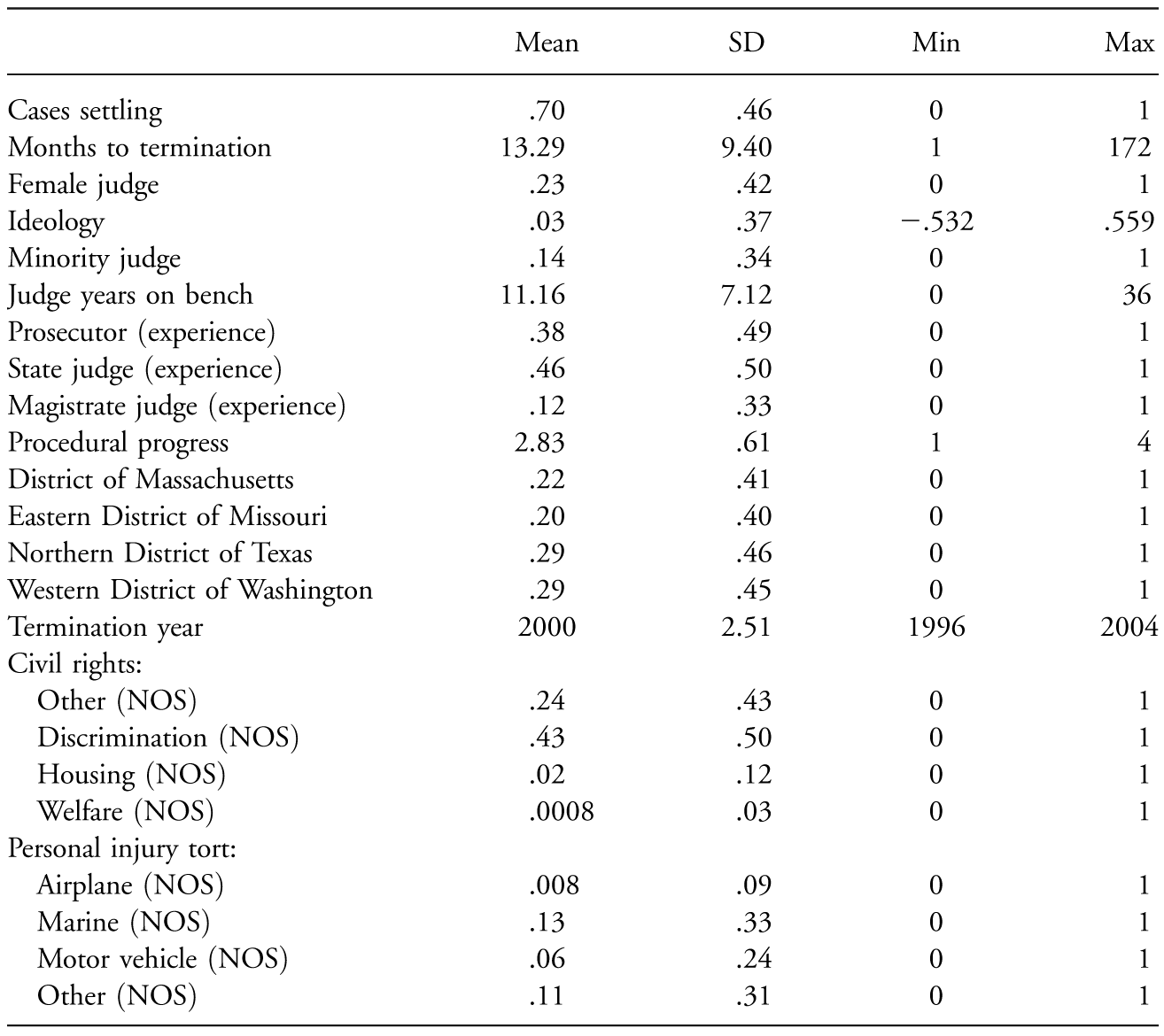
The data on this study’s key covariate—judge sex (female = 1)—as well as other judicial characteristic control variables (race, number of years on the bench, and previous experience as a prosecutor, state judge, and magistrate judge) were collected from the Federal Judicial Center’s Biographical Database (2011). Judicial ideology was tabulated using the Judicial Common Space methodology (Giles, Hettinger, and Peppers Reference Giles and Hettinger2001; Epstein et al. Reference Epstein, Martin and Segal2007). Case characteristics including the procedural progress of a case, year of termination, and subissues (coded via NOS codes) were retrieved from the AO database. The procedural progress variable, which captures the types of procedural events that have taken place in a case before its termination, was recoded into a four-category variable: (1) no judge involvement and issue never joined, (2) issue never joined, (3) issue joined but no trial activity recorded, and (4) issue joined and case has at least some trial activity.Footnote 7 Table 1 provides key summary statistics for the dependent and independent variables within the study.
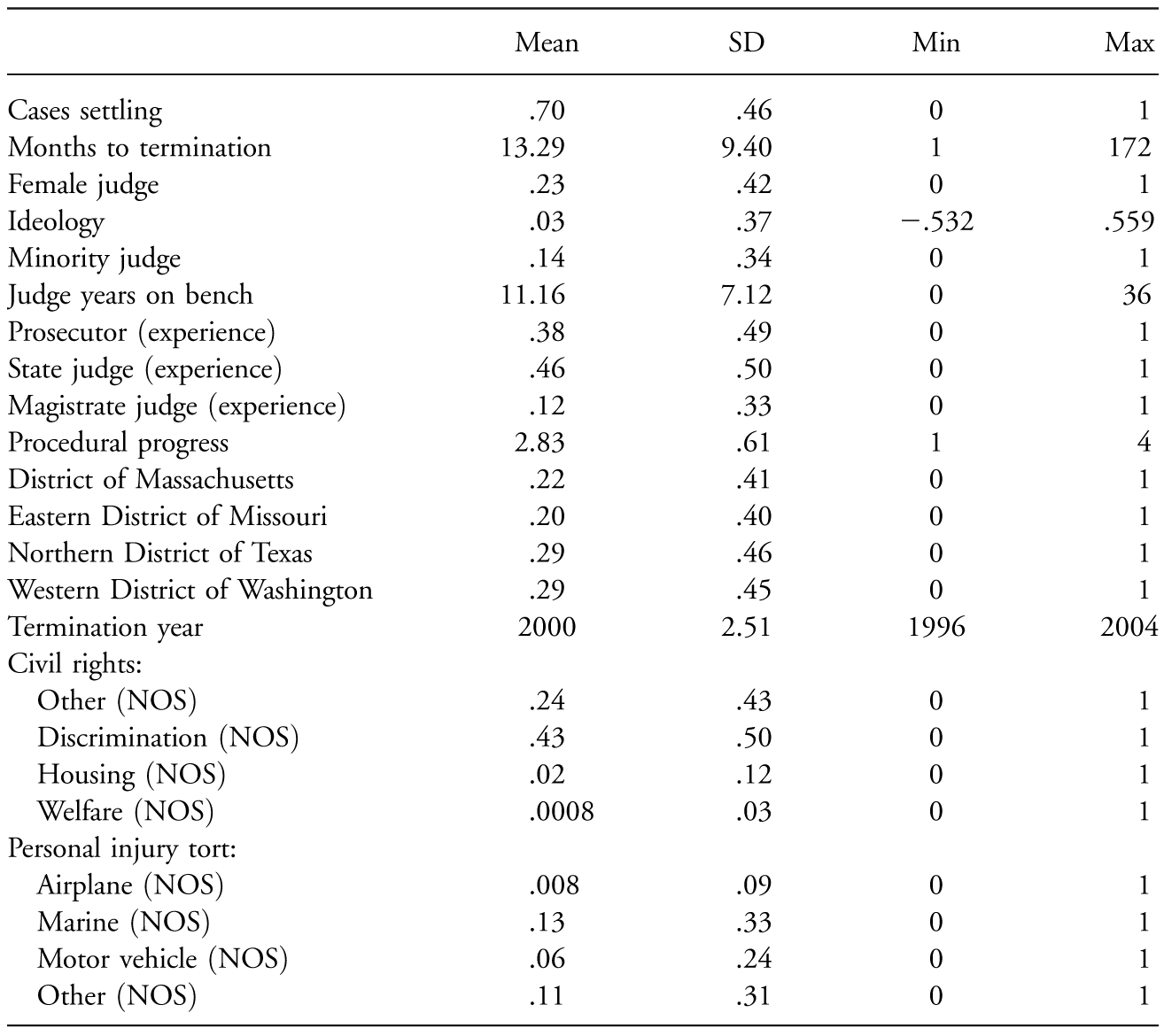
Note.—Statistics provided for full (unmatched) data. To conserve space, variable details on termination year are reported (rather than individual variables for each year of termination). The competing-risks models exclude cases with termination times of 50 or more months. Excluding these cases, the mean months to case resolution falls to 12.92, with a standard deviation of 8.22. NOS = nature of suit.
Unfortunately, many other case and actor characteristics that could be relevant to settlement incidence and timing are not present in these data (see Kritzer Reference Kritzer1986; Boyd and Hoffman, forthcoming). To ameliorate concerns from this, the data were examined to ensure that the assignment of cases to judges within the analyzed district courts approximates random assignment. The appendix provides details on this examination, the results of which reveal evidence of random assignment. The presence of the equivalent to random assignment of cases within district courts allows this study to assume that differences within cases that could be potentially important to their likelihood of settlement—like “hard” cases or cases with repeat player litigants or attorneys—are randomly distributed among judges (Ashenfelter et al. Reference Ashenfelter and Schwab1995).
Analyses
With these newly collected federal district court data in hand, the next step is to estimate the effect of judge sex on the likelihood that a case settles and the timing of case settlement. Since the baseline probability of case settlement in district courts varies greatly among different issue areas (Eisenberg and Lanvers Reference Eisenberg2009), tort and civil rights issue areas are separately examined in the estimations below. In addition, the data from each issue area will be analyzed twice: once for the full data and once for a smaller, balanced subset of those data. As described in greater detail in the appendix, the reduced data result from a propensity score matching exercise, a practice that is encouraged by recent studies of judging and judicial diversity (Epstein et al. Reference Epstein, Ho and Segal2005; Greiner Reference Greiner2008; Boyd et al. Reference Boyd and Martin2010). Matching helps reduce imbalances in the data and better permits the performance of inference (here, descriptive rather than causal) and the determination of the residual effect that a judge’s sex has on the outcome of case proceedings. To account for a lack of independence, the robust standard errors in the models below are clustered on individual judge.
Model 1: Whether a Case Settles
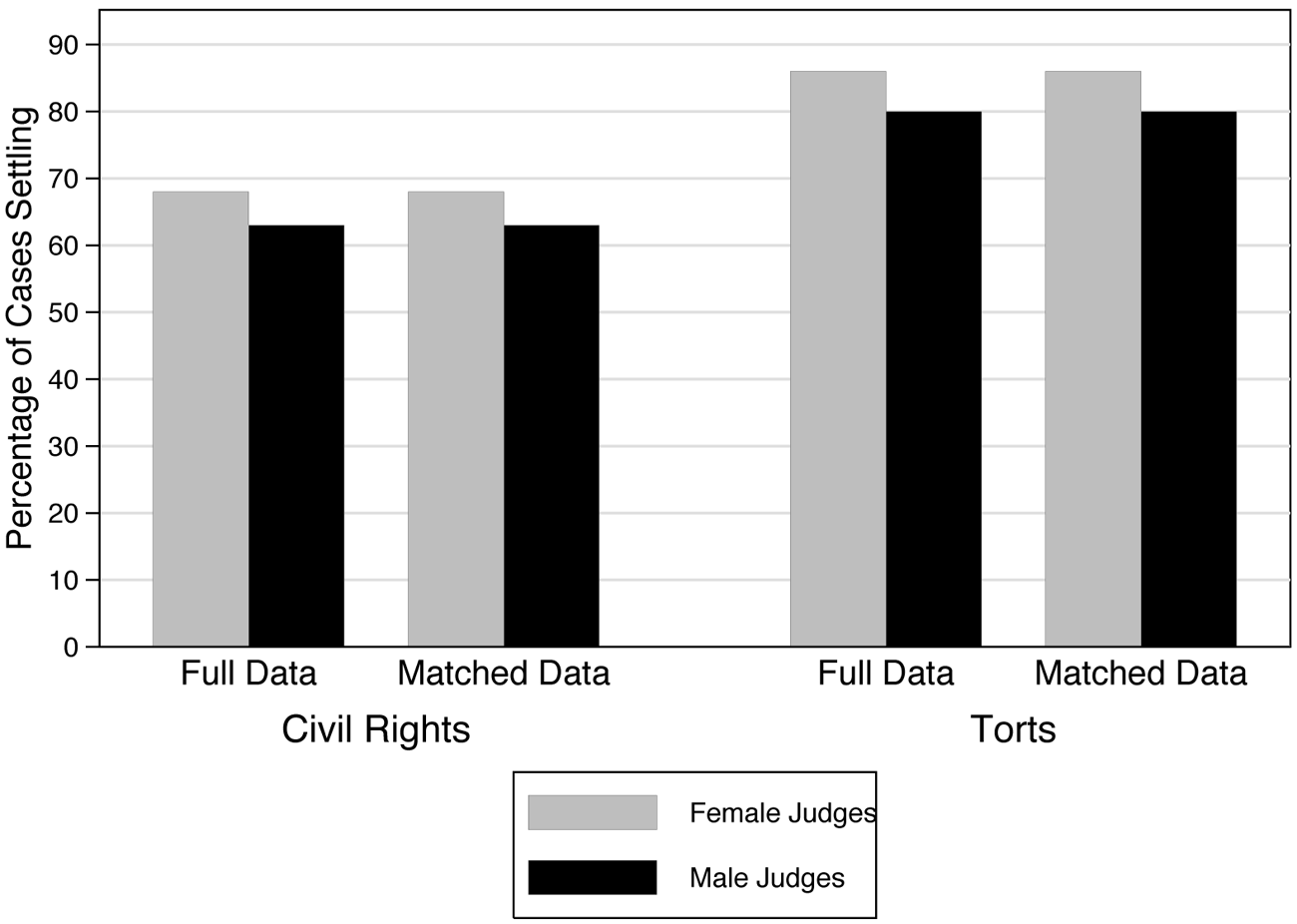
Figure 1 provides an initial descriptive answer to whether female district judges see their cases settle more frequently than male judges. As the figure indicates, in both civil rights and tort cases, cases assigned to female judges do indeed settle at a higher rate than those assigned to males. In civil rights cases (for both the full and the matched data), female-assigned cases settle 68% of the time, whereas those assigned to males do so 63% of the time. In personal injury tort disputes, the percentages of cases settling favor females again—86% compared to 80% for males. Since these descriptive results do not account for the potentially confounding effects of other variables on the dependent variable, the next step is to turn to a multivariate analysis.
Percentage of cases settling, by judge sex, issue area, and data set (full or matched).
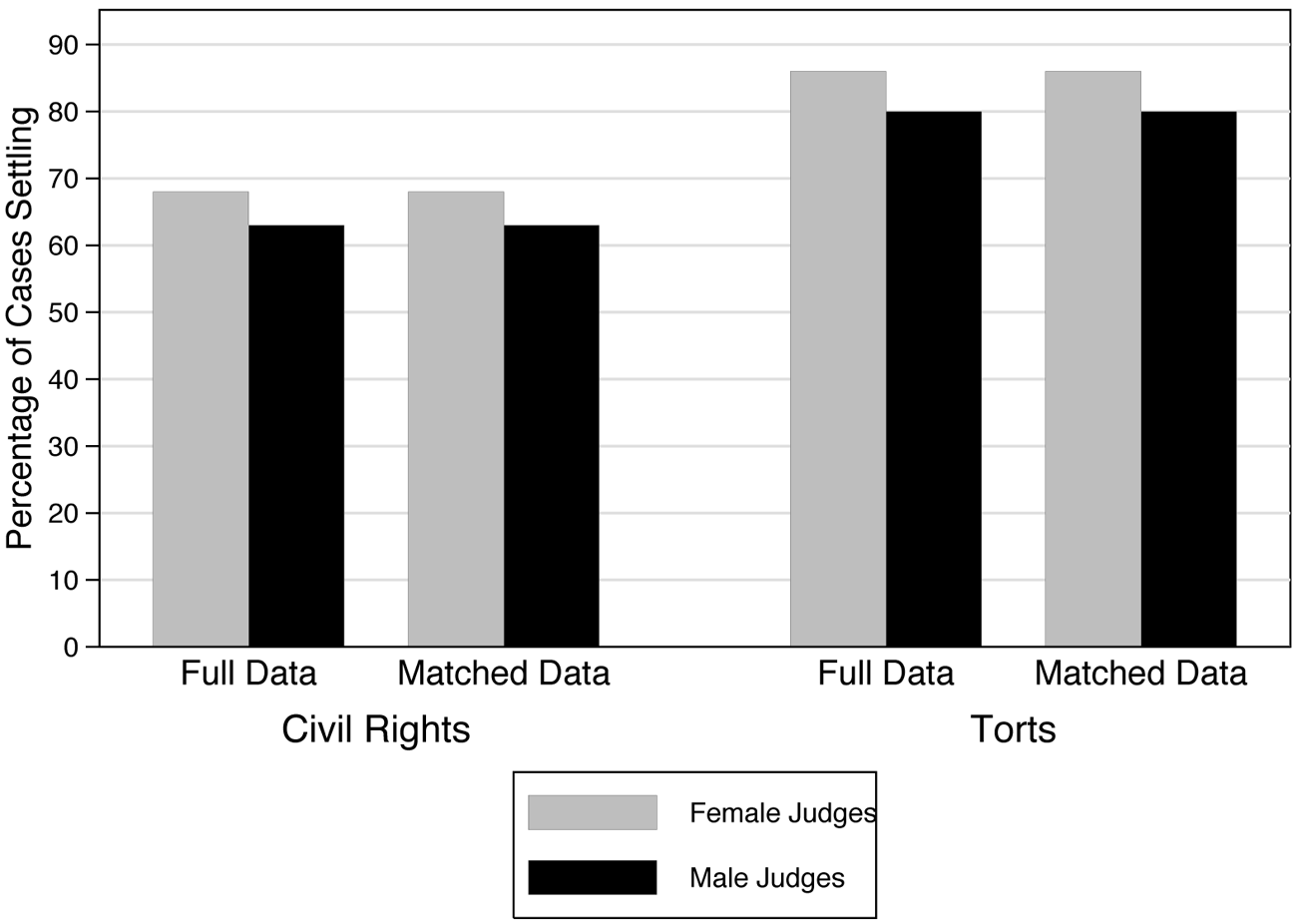
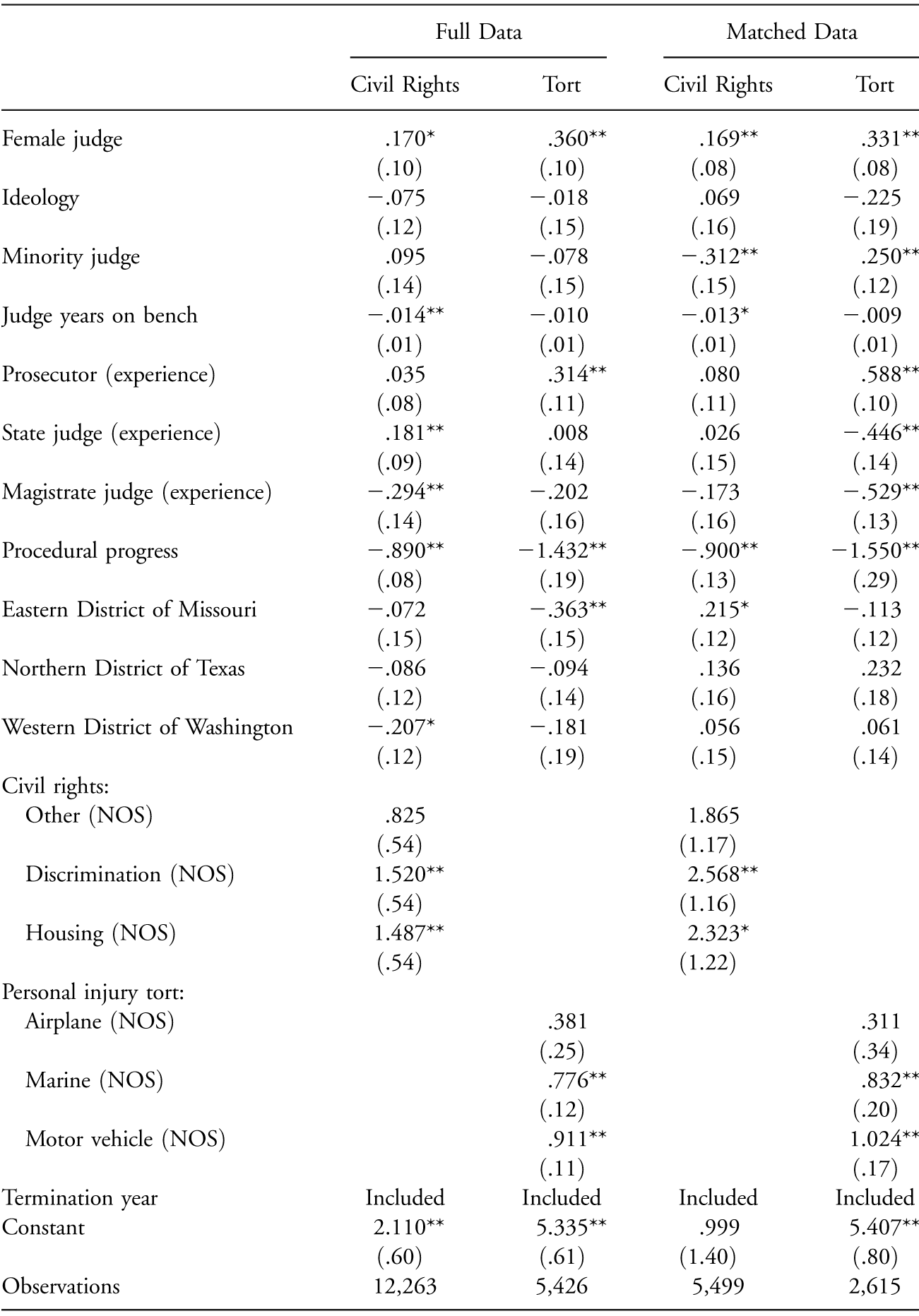
Table 2 reports the results of logistic regressions for whether a case settles for civil rights and personal injury tort cases in the full and the matched data. As the table indicates, the results for the analyses of the full and the matched data are very similar. As such, for ease of discussion, the remaining text regarding model 1 will focus primarily on the matched data results.
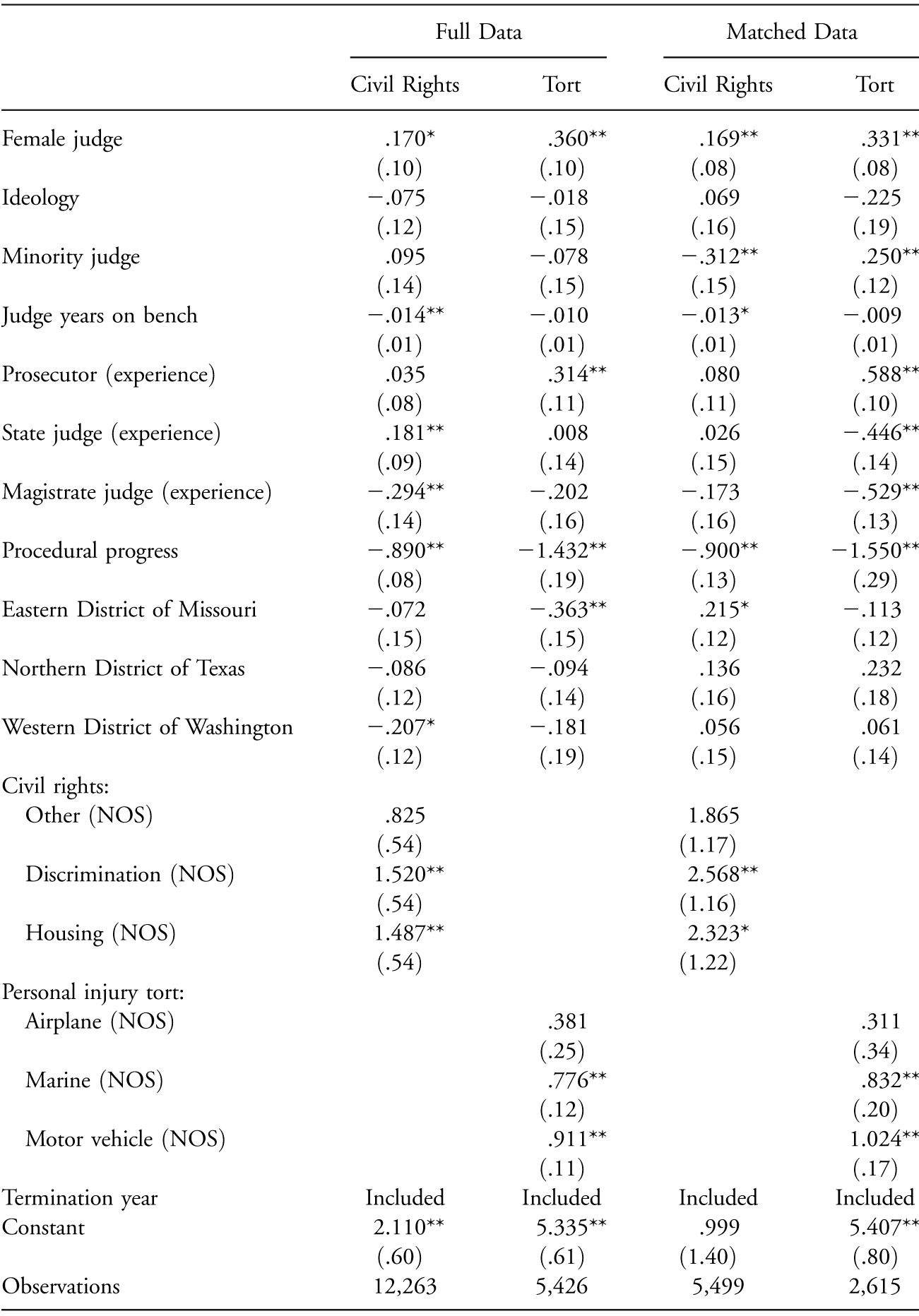
Note.—Robust standard errors clustered on case judge are included in parentheses. The full data have 75 judges, and the matched data have 40 judges. Omitted baseline categories are the District of Massachusetts, year 2000 terminations, and NOS (nature of suit) codes 444 (civil rights) and 360 (torts). To conserve space, estimates for year of case termination are omitted.
* p ≥ .10.
** p ≥ .05.
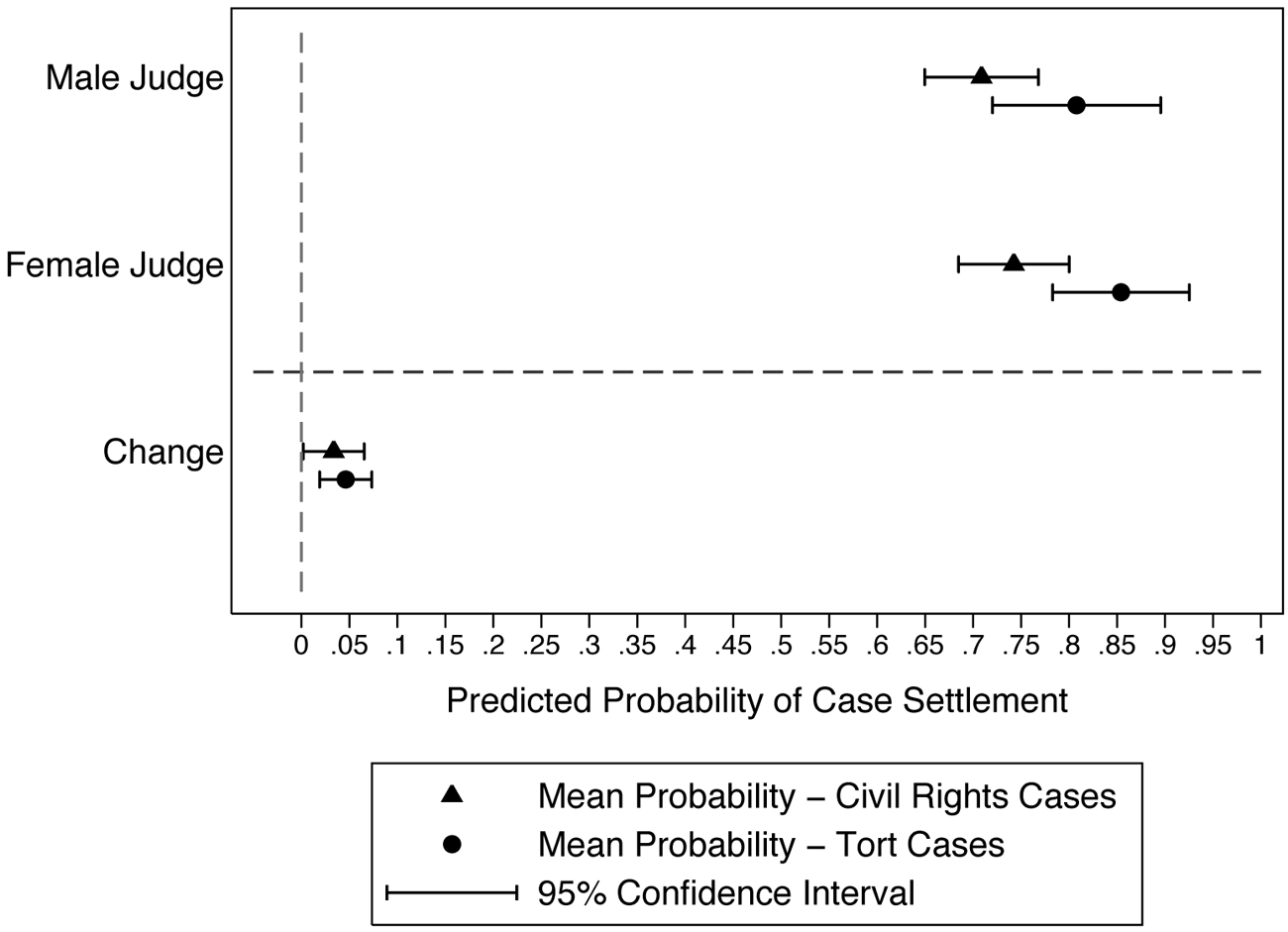
Within each model, the presence of a female judge has the expected effect—positive and significant—on whether a case will settle in a federal district court. The predicted probability of case settlement based on the presence of a male or female judge is plotted in figure 2. For civil rights cases, denoted in the figure with a triangle, the presence of a male assigned judge leads to a predicted probability of settlement of around 0.70 in the modal case. For similar cases assigned to a female judge, the probability of settlement rises to over 0.74. As the bottom portion (“change”) of figure 2 indicates, this amounts to a modest increase of 0.04 in the likelihood of settlement due to the added presence of a female assigned district judge in a civil rights case. Because the 95% confidence interval around this change does not intersect with zero, this increase is, statistically speaking, meaningful and different from zero (Austin and Hux 2002; Epstein, Martin, and Schneider 2006).
Predicted probability of case settlement, by judge sex and case issue area. All other variables are held at their modal and median values.
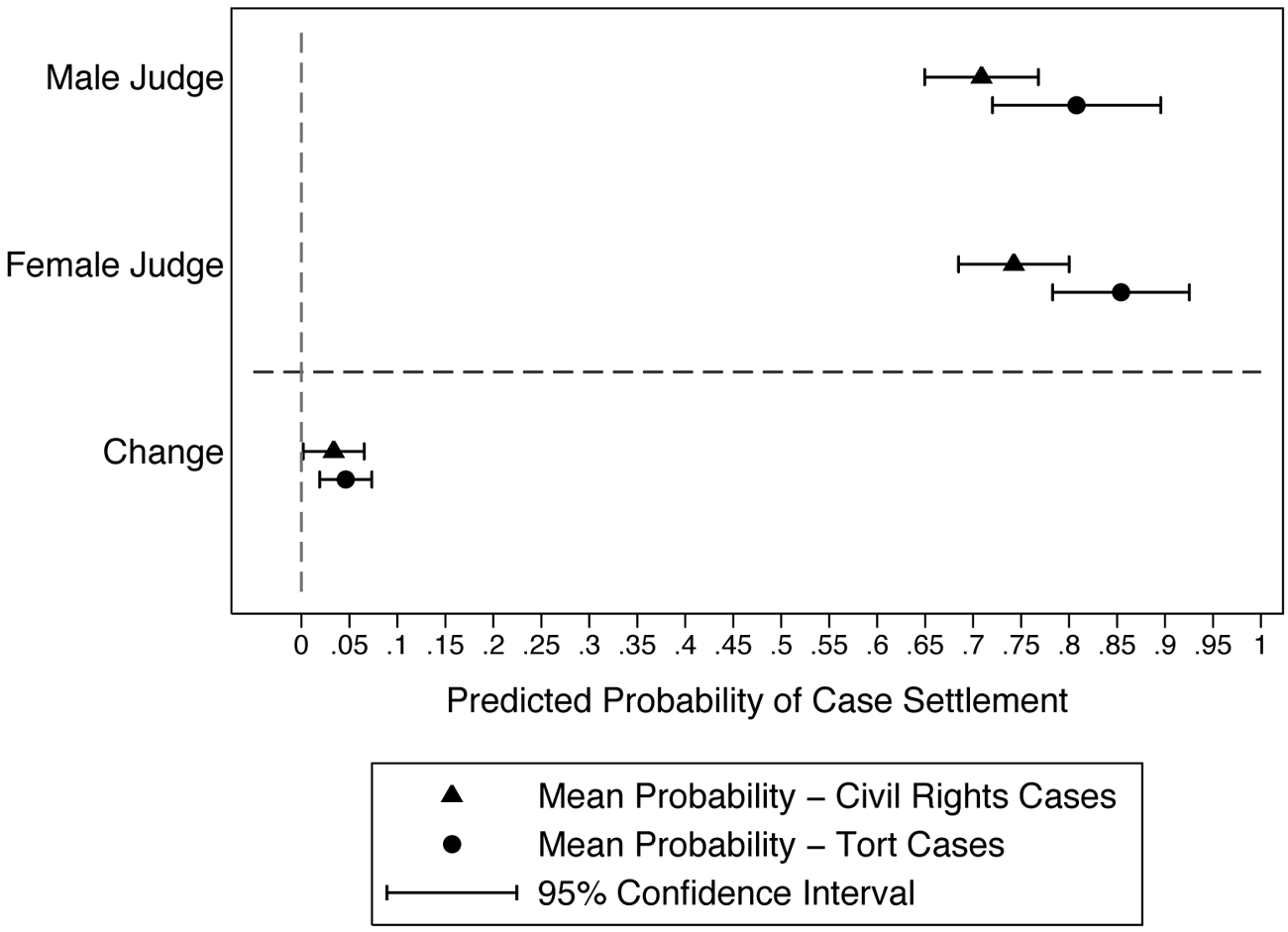
The probability of case settlement for personal injury tort cases is also depicted in figure 2, this time with circles. The first, most apparent finding for these tort cases is that no matter the sex of the judge, the baseline probability of case settlement is exceedingly high—over 0.80. The difference between settlement probabilities between male- and female-assigned cases, however, is also meaningful. Modal female-assigned cases settle over 85% of the time; male-assigned cases, around 80% of the time. This difference, as the bottom of figure 2 indicates, is around 0.05 and, again, is statistically different from zero.Footnote 8
While a female judge effect ranging between 0.04 and 0.05 is not huge, it is consistently present and can have real implications for litigants. The results thus support the theory that a female district judge is more likely to provide a litigation environment that, through urging consensus and participation among the opposing parties, leads to intracourt case settlement of litigation. While a sizable number of the male-assigned cases are also settling, they are doing so at a significantly lower rate than female-assigned cases, thus indicating that male judges may be more likely than female judges to avoid taking an active, managerial role in the case that is designed to foster settlement.
Model 2: Time to Case Settlement
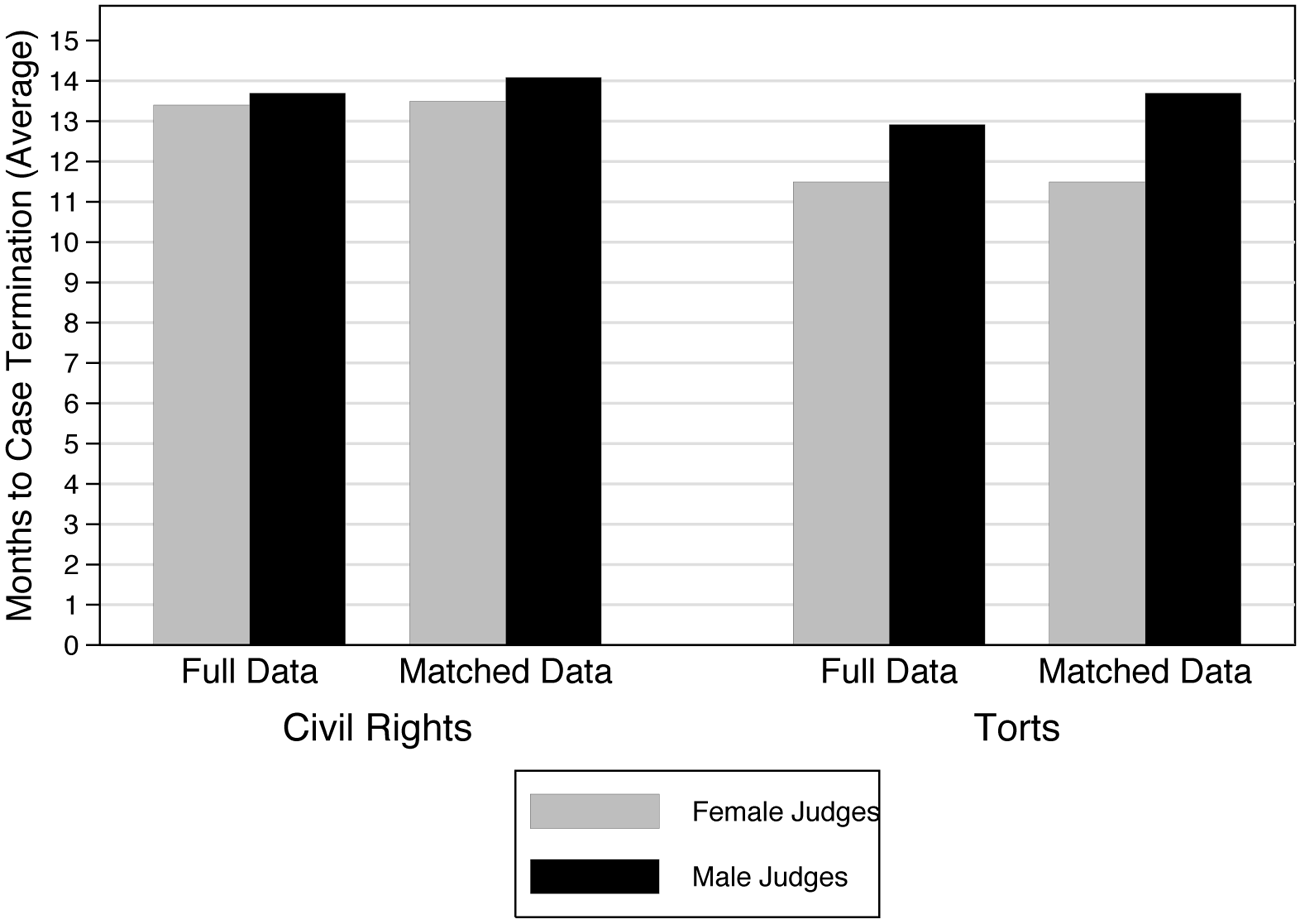
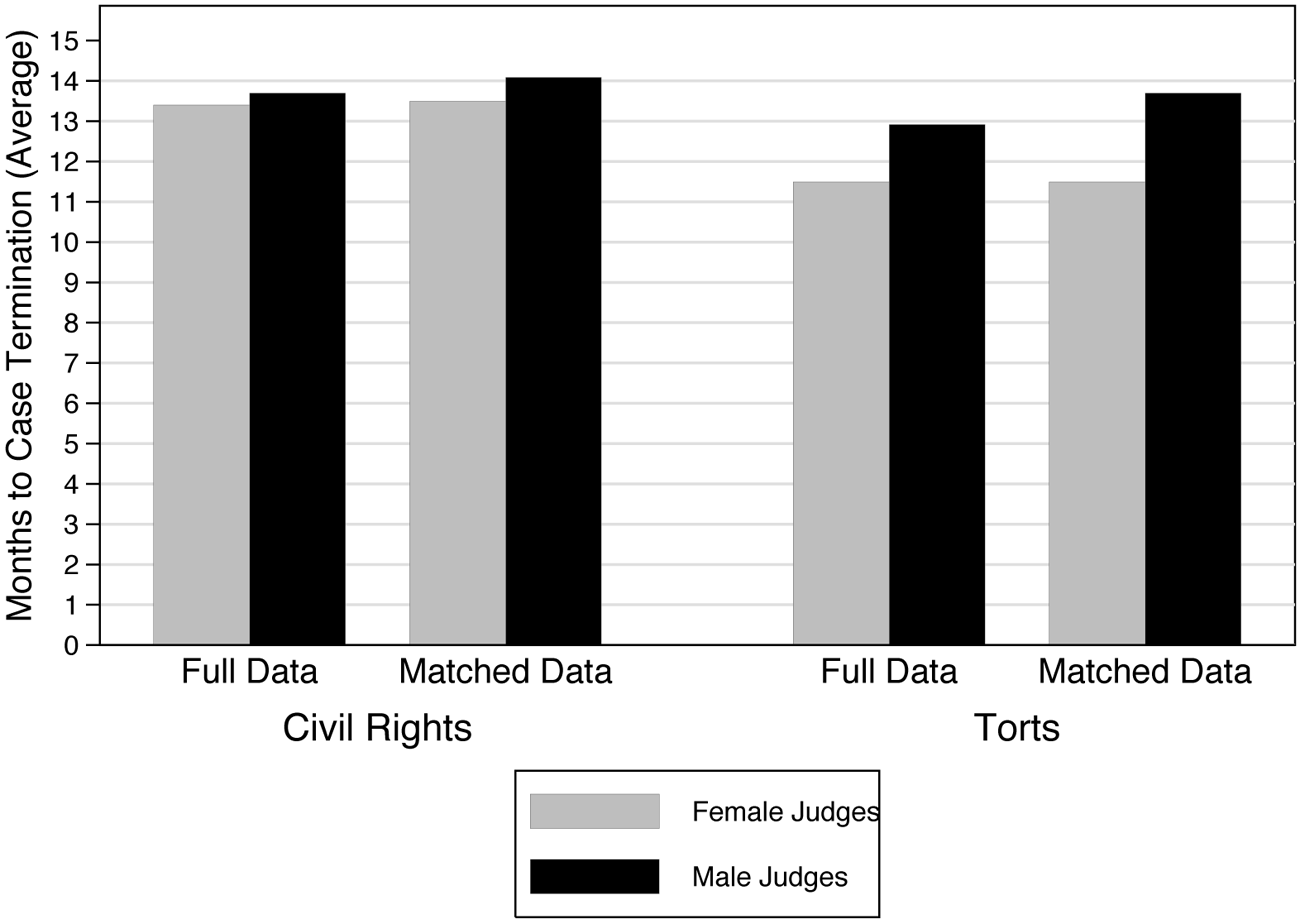
Turning now to the question of whether the sex of a case’s assigned judge affects the time to case settlement, figure 3 depicts the average time to case termination by judge sex for both issue areas. In civil rights and tort cases, the descriptive statistics on this provide initial evidence to support the expectation that female-judge-assigned cases will terminate more quickly than those assigned to males. Once again, however, these effects need to be more carefully examined in a multivariate environment.
Average time to case termination, by judge sex, issue area, and data set (full or matched).
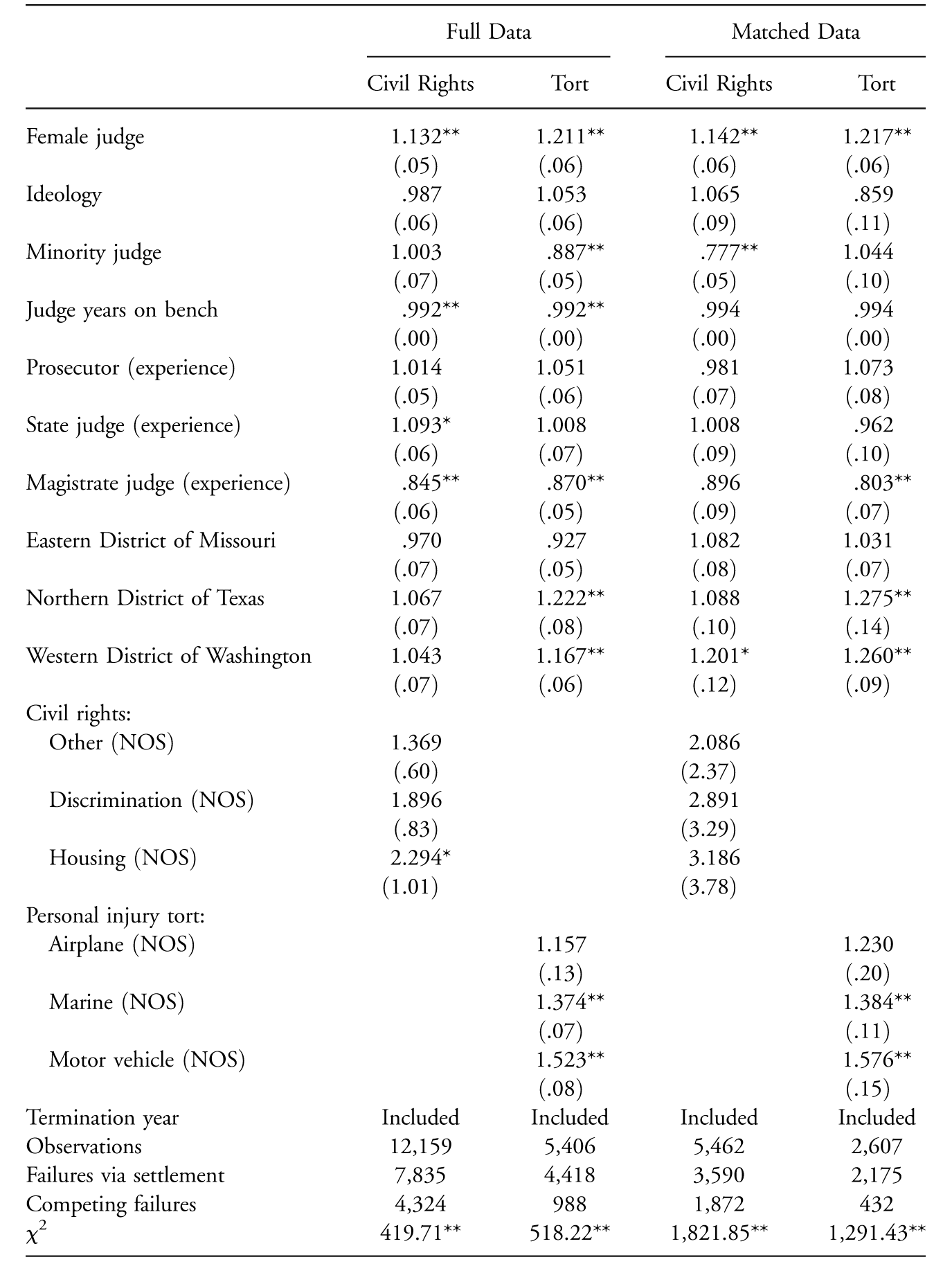
To further examine the effect that the presence of a female assigned judge has on time to case settlement, a competing-risks regression duration model is estimated for civil rights and tort cases.Footnote 9 While focusing primarily on time to case failure (termination) by settlement, to avoid biasing the results, the competing-risks model also accounts for other types of case dispositions like trials and granted dispositive motions (Fine and Gray Reference Fine and Gray1999; Box-Steffensmeier and Jones Reference Box-Steffensmeier and Jones2004). The results of these estimations are reported in table 3. Rather than coefficients, the table lists subhazard ratios (exponentials of the estimated coefficients). Subhazard ratios over 1 indicate that a covariate has a positive effect on settlement speed; those below 1 have a negative effect.
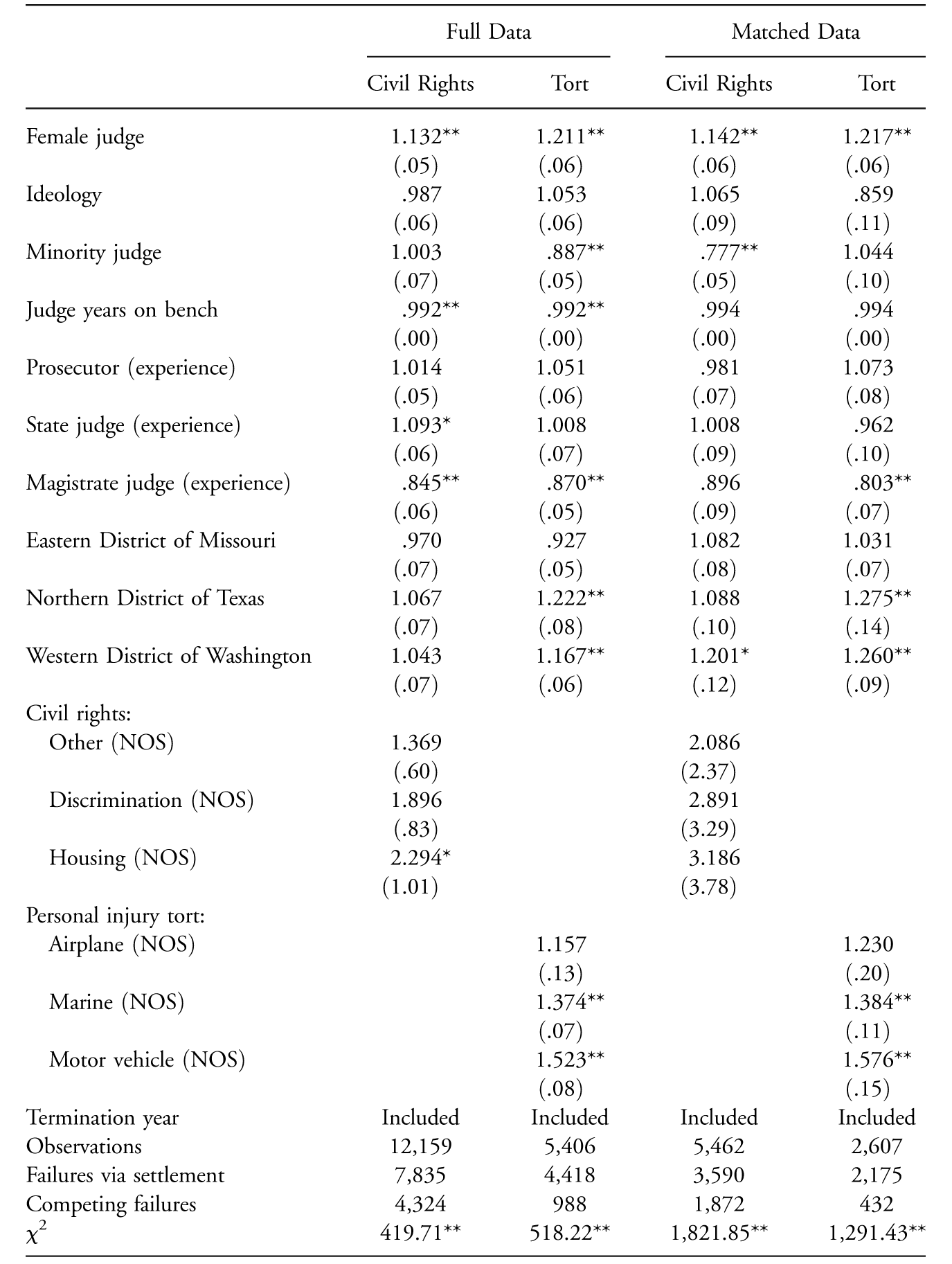
Note.—Robust standard errors clustered on case judge are included in parentheses. Omitted baseline categories are the District of Massachusetts, year 2000 terminations, and NOS (nature of suit) codes 444 (civil rights) and 360 (torts). To conserve space, estimates for year of case termination are omitted.
* p ≥ .10.
** p ≥ .05.
As table 3 reports, the presence of a female assigned district judge has a positive and statistically significant effect on the speed of case settlement in both civil rights and tort cases. For civil rights cases, female judges account for approximately a 14% increase in the settlement rate. In personal injury tort cases, the effect is even more impressive—a 22% increase in the speed of case settlement. Notably, these positive and statistically meaningful competing-risks results are similar to those found in recent empirical work examining the effects of judge sex on settlement timing in federal district court lawsuits in another distinct issue area: attempts to pierce the corporate veil (Boyd and Hoffman, forthcoming).
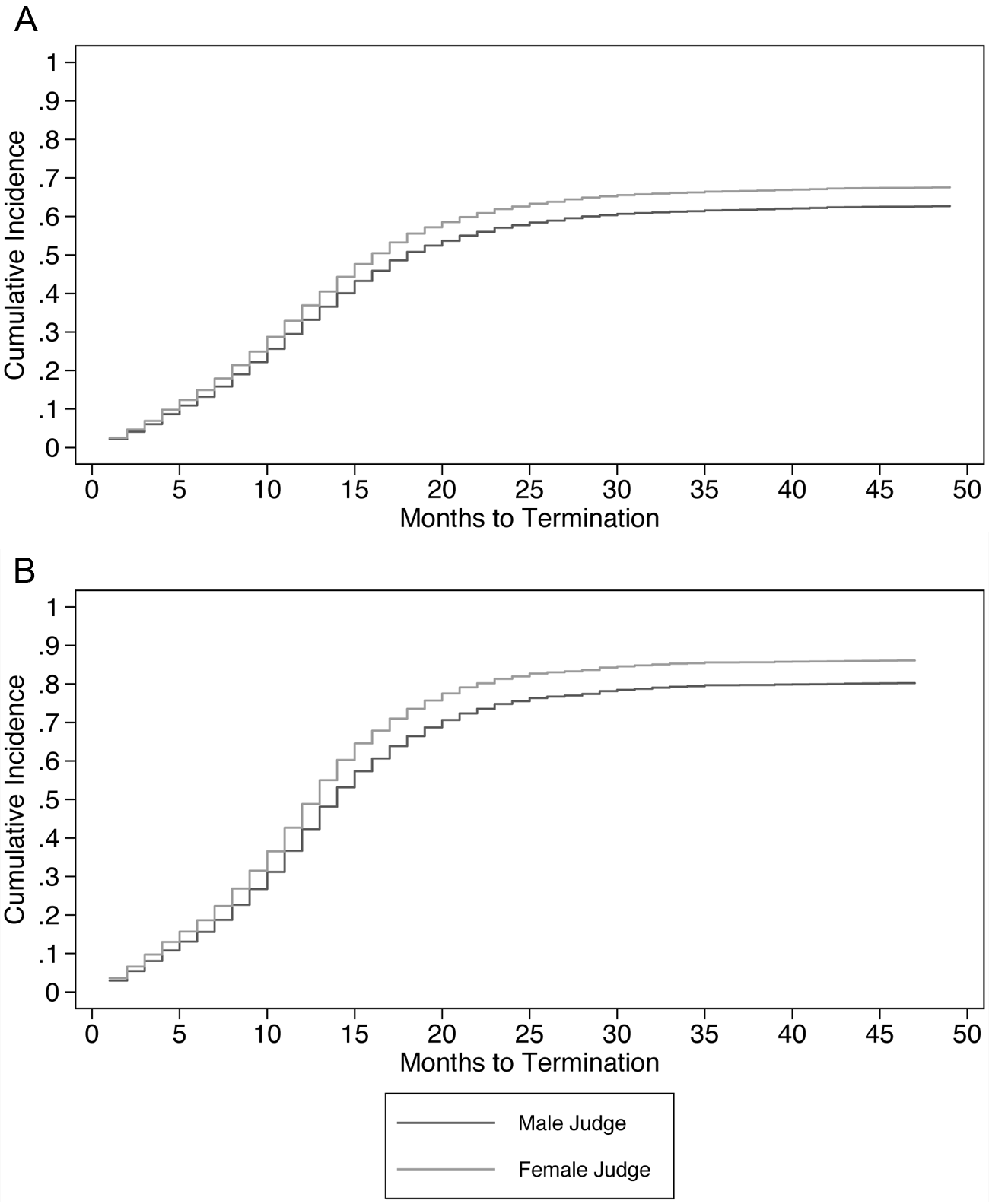
To capture the substantive effect on settlement timing from the presence of a female judge in tort and civil rights cases, figure 4 plots the cumulative incidence function (CIF) curves for male and female assigned judges in tort and civil rights cases. The CIF depicts, for each type of judge, the probability of settlement in a given month after filing, while accounting for the potential for other termination methods (Coviello and Boggess Reference Coviello2004; Kim Reference Kim2007).
Cumulative incidence function for cases assigned to male and female judges in civil rights (A) and tort (B) cases. All other variables are held at their modal and mean values.
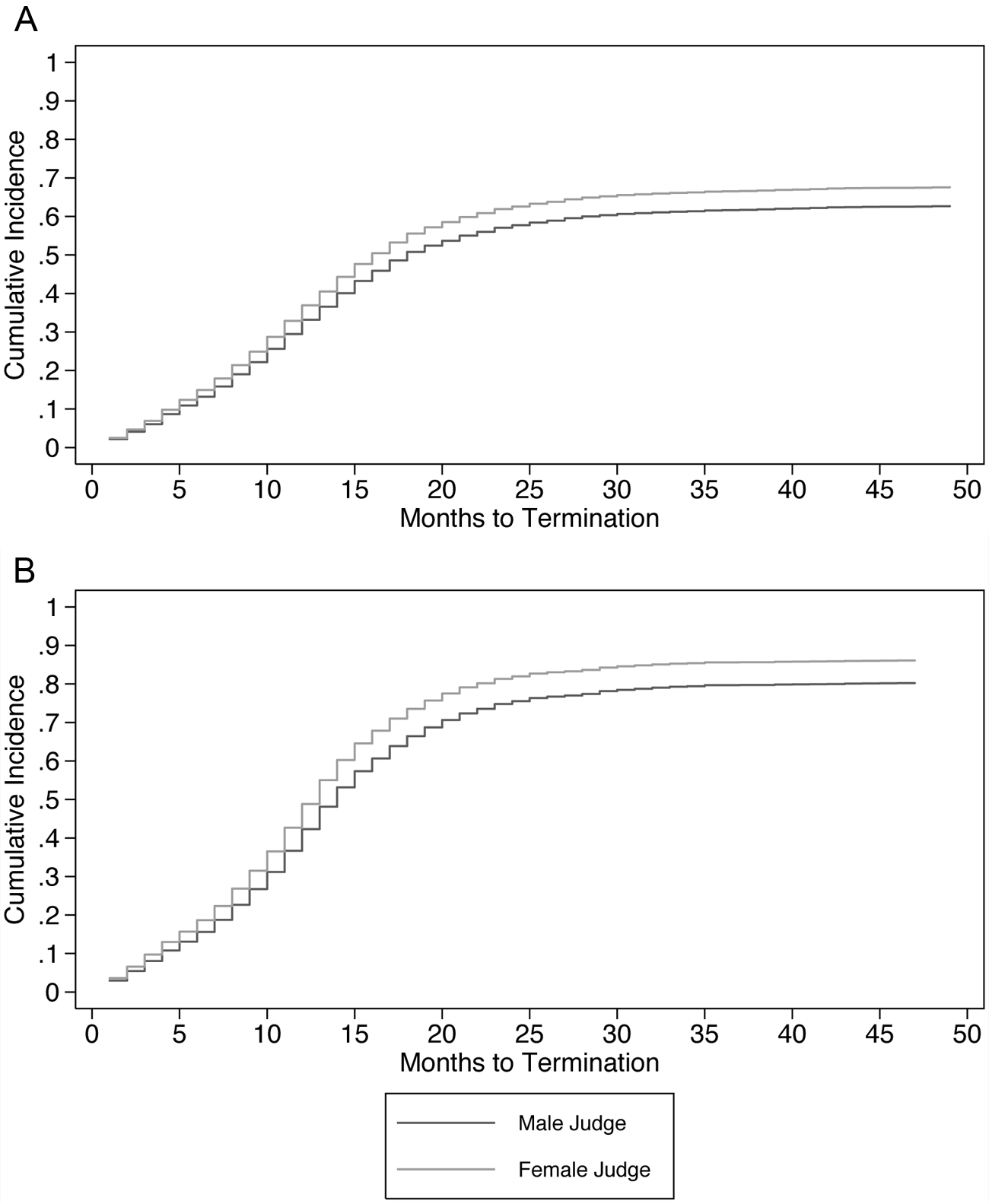
The CIF for tort cases is plotted in figure 4B . As it indicates, in the early months of a case, there is very little difference between male and female judges in the probability that their case will settle. As time goes by, however, judge identity grows in importance. Tort cases with a female assigned judge reach a 50% chance of settlement about 2–3 months earlier than those assigned to male judges. And, even more impressively, these female-assigned cases reach a 70% probability of settlement up to 5 months faster than male judges’ cases.
For civil rights cases, the CIF in figure 4A also indicates differences in settlement timing, albeit more modest in size than for tort cases, between male- and female-judge-assigned cases. For example, for civil rights cases, female-assigned cases reach a 50% chance of settlement 1–2 months sooner than male-assigned cases and a 60% chance of settlement 2–3 months faster.
This gendered timing effect is particularly notable when viewed in the context of the results in model 1 and table 1 above. Recall that the results indicated that judge identity matters a relatively small amount (around a 0.04 or 0.05 difference between male and female judges) when considering whether a case ultimately settles. Indeed, for these cases, the vast majority will settle, no matter who the judge is or what his or her sex is. But when judge identity and sex does matter—and rather appreciably—is on the timing of case settlement. In other words, while a tort or civil rights case may ultimately still settle with a male judge, the same case will settle much faster with a female judge who is likely more actively encouraging consensus building and settlement.
Assessing an Alternative Theory
The primary theory driving this study has been one of females, as managerial district judges, actively encouraging their assigned cases to settle (more frequently and more quickly). While the results from models 1 and 2 seem to provide positive evidence to support this, could these same results also be explained by an alternative theory? The most likely alternative theory that would anticipate similar results is one driven by litigant strategy. Such a litigant-strategy-driven theory would go something like this: “When faced with a presiding district judge who is anticipated to disfavor their merits position, attorneys should settle more often and more quickly, thereby avoiding the risk of a negative outcome at trial or through a dispositive motion.” Viewing this current project through this theoretical lens, litigants (likely defendants) will push settlement to avoid a female judge but will not do so with the same sense of urgency when their assigned judge is a male.Footnote 10
While the litigant strategy theory produces a number of expectations regarding cases assigned to female judges that mirror those founded in managerial judging, the two are not entirely aligned in their expectations. In particular, there are two areas in which these two theories greatly diverge, and it is in these differences that this project’s chosen theoretical account particularly shines. These differences center on judge involvement and issue areas.
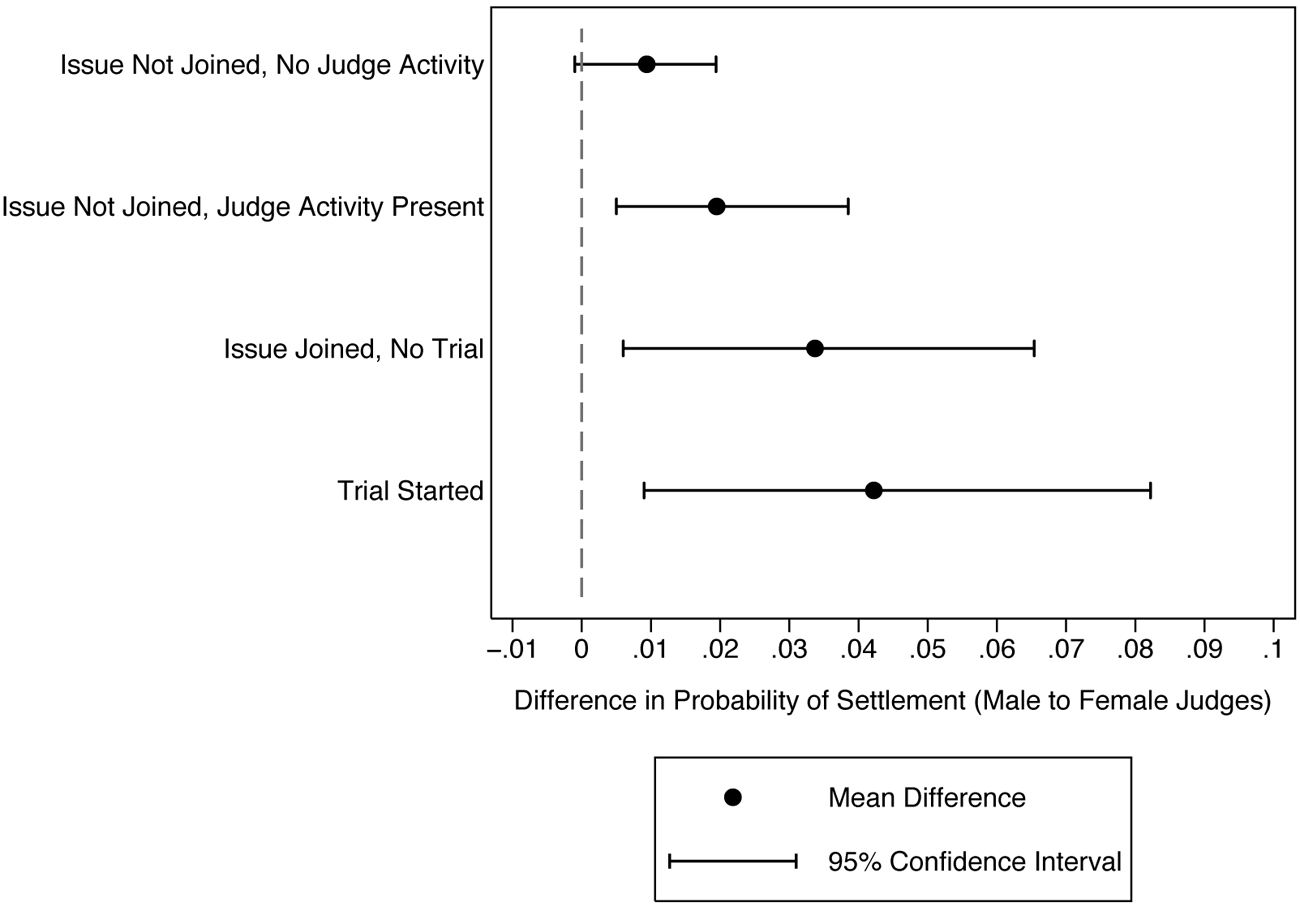
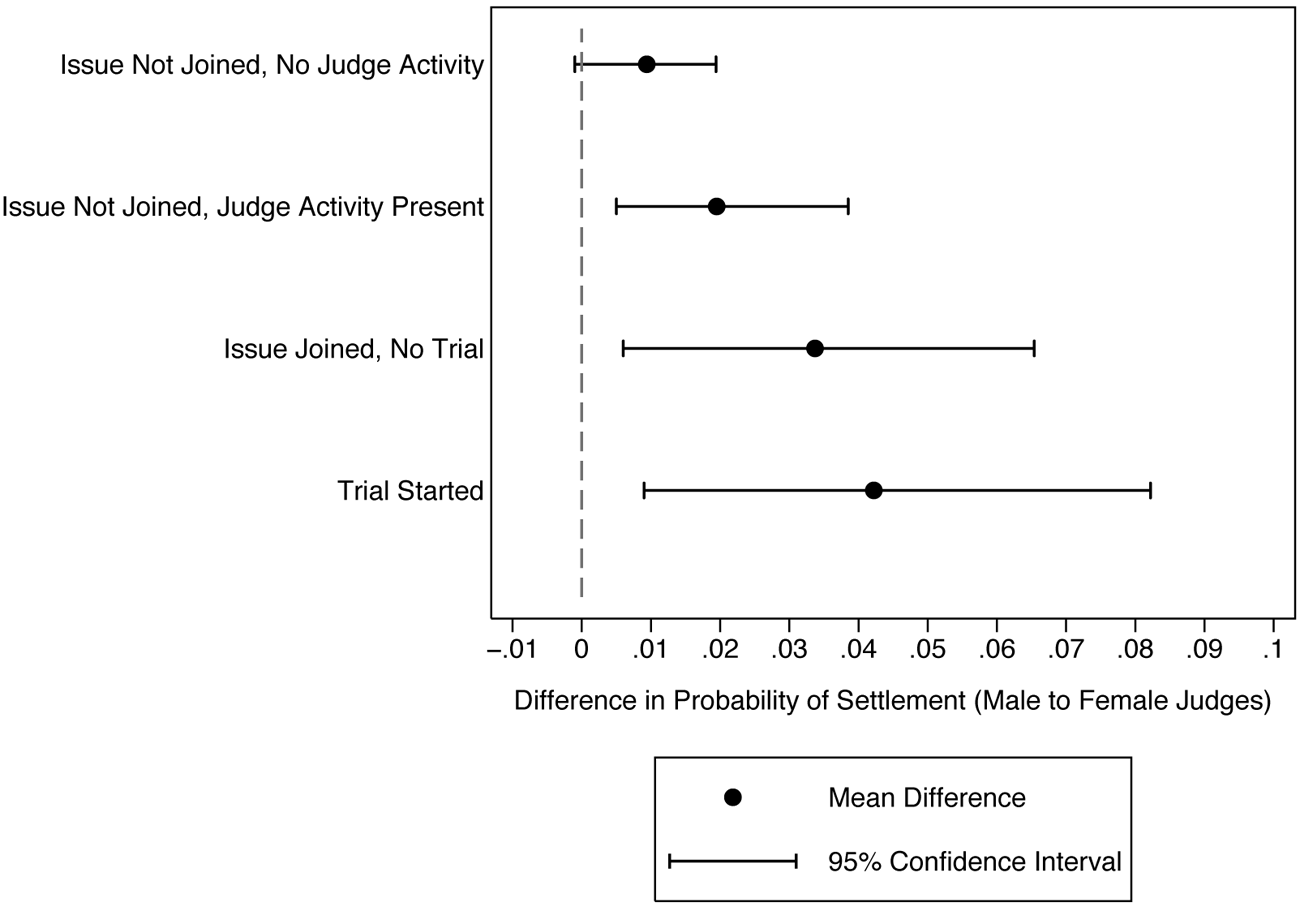
The first major difference between the theories lies in the need for formal judge interaction in a case before settlement. Managerial judging necessitates the presence of judge activity and guidance of the parties toward settlement. In litigant strategy, however, such judge activity is not necessary. Indeed, under the latter theory, parties concerned about a female judge may start pursuing settlement as soon as the judge assignment is announced. The procedural progress variable—which includes a category for no judge involvement—permits this to be examined within the results of model 1 above. Figure 5 depicts, for each level of procedural progress, the change in the predicted probability of case settlement between civil rights cases assigned to male judges and those assigned to female judges. Of particular note is the result for those cases with no judge activity. As figure 5 indicates with the top vertical line crossing 0, there is not a statistically significant difference in the probability of settlement between cases assigned to male or female judges when there is no judge involvement. This provides evidence to support the managerial judging theory.
Change in predicted probability of settlement for cases assigned to male judges versus those assigned to female judges for each level of the procedural progress variable. Depicted probabilities were estimated for civil rights cases, with all other variables set at their median and modal values.
In addition, litigant strategy theory is issue area specific, but managerial judging is not. Under litigant strategy theory, litigants should only anticipate that female district judges will uniformly disfavor their merits positions in certain types of cases. As discussed above, when evidence does exist in the literature that female judges decide cases differently from males, it generally only involves cases dealing with “women’s issues.” To the contrary, managerial judging predicts that female district judges should be more likely to adopt a pro-managerial judging stance, regardless of the case in front of them. Applied here, litigant strategy theory would likely expect settlement effects in civil rights cases (or some subset of civil rights cases involving gendered issues) but certainly not in personal injury tort cases (in which no gender connection is apparent). In the results from models 1 and 2 above, there is statistical evidence of all types of female-assigned cases settling more often and more quickly than those assigned to male judges. This is true even in personal injury tort cases—that is, the issue area in this project’s data that has no apparent connection to “women’s issues.”Footnote 11 This consistency of the gendered effect across so many issue areas is simply not anticipated by litigant strategy theory.
Discussion
This article has offered new insight into the important effect that female judges can have in the judiciary. While a great many pages have been written and models have been estimated on the impact and importance of judge sex, the previous focus has been rather limited in scope. This current work provides some of the first evidence that judge sex can affect the litigation environment and, particularly, the likelihood and timing of settlement, regardless of whether the cases deal with, for example, traditional “women’s issues.” As the literature on females in leadership and management positions predicts, female district judges, like other women serving in managerial and leadership positions, should be more likely than their male colleagues to foster collaboration, bridge building, and negotiation in their case management environments. With the inherent discretion given to district court judges regarding the style that they use in the management of their cases, this should lead to more and faster settlements for female-assigned cases than male-assigned cases. And, indeed, the results of analyses of federal district court case dispositions in four districts over 9 years indicate that, for the female district judge, “she’ll settle it” more often and more quickly than her male colleagues.
As with many empirical studies, this project is faced with its limitations. As noted above, the assessment of the litigant strategy theory is limited by a lack of variables on the attorneys and litigants in the data. Attorneys have, unquestionably, their greatest ability to influence processes and outcomes in the legal system before and during trial court litigation (e.g., Bebchuk Reference Bebchuk1984; Priest and Klein Reference Priest1984; Watanabe Reference Watanabe2010), and when it comes to this, not all attorneys (or litigants) are created equally (Galanter Reference Galanter1974). For future empirical projects on gender-related settlement effects that are able to collect attorney-specific data, one particularly relevant inquiry will certainly be on the effect that female lawyer participation has and whether it serves to modify the judge gender effect observed in this project (e.g., Menkel-Meadow Reference Menkel-Meadow1989; Pierce Reference Pierce1995; Mather, McEwen, and Maiman Reference Mather, McEwen and Maiman2001). The data also lack many case-specific variables, although concerns about this deficiency may be mitigated by the inclusion of a variable like procedural progress, the modeling of issue areas separately, and the presence of the equivalence of random assignment. Nonetheless, future work may find the modeling of judges’ contents of scheduling and management orders or their uses of and requirements for settlement conferences or alternative dispute resolution to be critical in explaining exactly how male and female judges differ in their behavior—the results of which affect the settlement probabilities observed here. Finally, while this article’s models control for certain prior employment judge characteristics, other relevant judge-related variables, such as those related to education, family life, and settlement-related employment (like being an arbitrator), are potentially quite relevant to whether and to what degree a judge adopts a managerial style.
Setting these limitations aside, the results from this article point to some broader conclusions. For one, they indicate that when their job provides them the opportunity, female judges bring a different perspective to the role of judging—one that likely fosters increased party participation and voice in their case outcomes and actively encourages compromise, even within the walls of a courthouse. Viewed in combination with other recent findings regarding female judges, including, for example, that women can affect their male colleagues’ decisions while serving on panels with them (Farhang and Wawro Reference Farhang2004; Boyd et al. Reference Boyd and Martin2010), these findings seem to hint at a trend that an increase in the number of women serving in the judiciary may not only affect outcomes in certain cases but actually may be responsible for helping to alter the very profession of judging. The potential consequences of this, including for parties litigating cases and politicians selecting judges, are immense (Kenney Reference Kenney2012).
Looking at these findings regarding female judges in light of the larger gender-management literature also provides new insight into the broader study of women in leadership positions. Within many organizations, research has posited that women leaders seeking effectiveness may be less likely to exercise their preferred collaborative, feminine leadership styles in favor of more accepted and traditional authoritative ones (Eagly and Johnson Reference Eagly and Johnson1990, 248). The results here, however, show no apparent signs of this in federal district courts, something that could be attributed in large part to not only the independence that federal trial judges are afforded under Article III of the Constitution but also the modern federal courts’ active institutionalized encouragement of settlement, compromise, and collaboration. Participating in settlement is now, as Galanter (Reference Galanter1986, 257) puts it, “a respectable, even esteemed, feature of judicial work.” Under these circumstances, it is no surprise that female judges show no empirical signs of being constrained in their management style over cases. With evidence like this that institutional support works for female judges, other organizations may see value in adopting this model in their unique settings. And because of its effectiveness, we may start to see male district judges increasingly closing the gap on female judges as settlement judges.
We can also begin to see the addition of a new layer of complexity to the ongoing debate over the continued move toward trial-court-encouraged settlements. The above discussion reiterates something that we may have already known about the case management stage of judicial decision making: settlement dominates. As we can see from all of the models’ estimates, judges, no matter their sex, are far more likely to dispose of cases by settlement than by any other means. This, combined with the growing overall numbers of women serving in federal courts and the evidence that female judges are more successful at fostering settlements than men, is likely to be encouraging to some. This includes politicians and court reformers who have, over the last 30 or more years, tried to bolster the attractiveness of managerial judging and court-induced settlement options. In a different way, it will likely provide support to those scholars who favor consensual legal outcomes and the procedural justice and fairness that they promote (Lind et al. Reference Lind, Maccoun, Ebener, Felstiner, Hensler and Tyler1990). On the other side, however, those who have long argued against the normative benefits of removing judges from their traditional neutral position during litigation will undoubtedly be concerned with the trend emerging from these results and what it hints at for the future of trial courts.
Finally, this work provides some of the first systematic evidence in the political science literature on trial judge actions beyond final, published votes on the merits of cases. This further points to what the majority of political scientists have long ignored—that trial court judges, via case management, have very different job descriptions than appellate court judges and that these differences, along with the vast degree of discretion that trial judges hold in carrying out their responsibilities, provide an excellent new arena for examining judicial behavior. While terminations-level data that include settlements are now systematically available electronically—something that was not the case less than 10 years ago—the gathering of these data across a sizable sample of cases and judge-specific variables remains expensive and technologically onerous. Overcoming this hurdle, as attempted in this study, helps to reduce concerns about selection bias, while simultaneously opening up the examination of many new questions about, among other things, judges, litigation, and judge sex by political scientists.
Appendix
Random Assignment
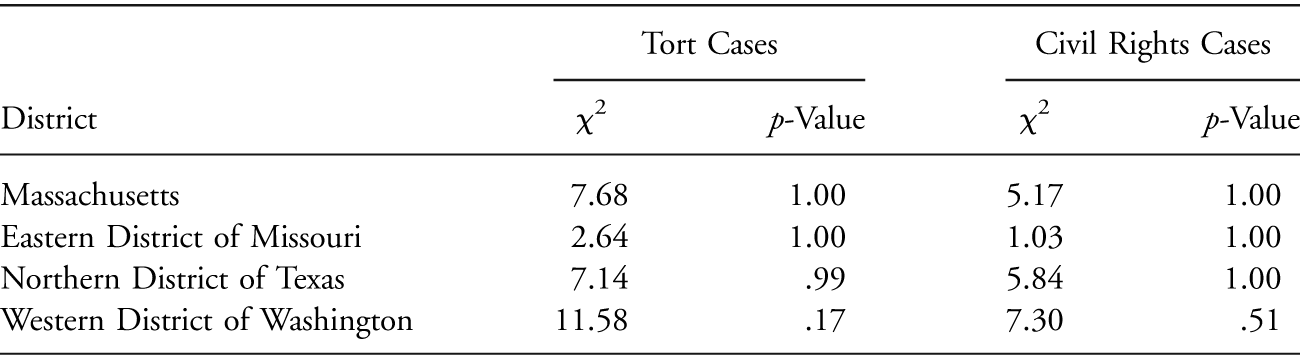
To ensure that the assignment of cases to judges within the four districts of this study approximates random assignment, I test for random assignment in 1999 filings for two different case characteristics in my data set—namely, personal injury cases and civil rights cases—for each of the four districts. Using the chi-squared test statistic, I compare the number of cases heard by individual judges in each category to the expected number of cases that those judges would hear if assignment was indeed random. The results, reported in table A1, indicate that for none of the categories in any of the districts can we reject the null hypothesis that assignment of cases to judges is independent of the case being a personal injury case or a civil rights case. Thus, short of being in the clerk’s office when case assignment is taking place in these districts, this test provides some evidence, at least for the case types in this study, that random assignment has taken place in the four districts of interest in this study.
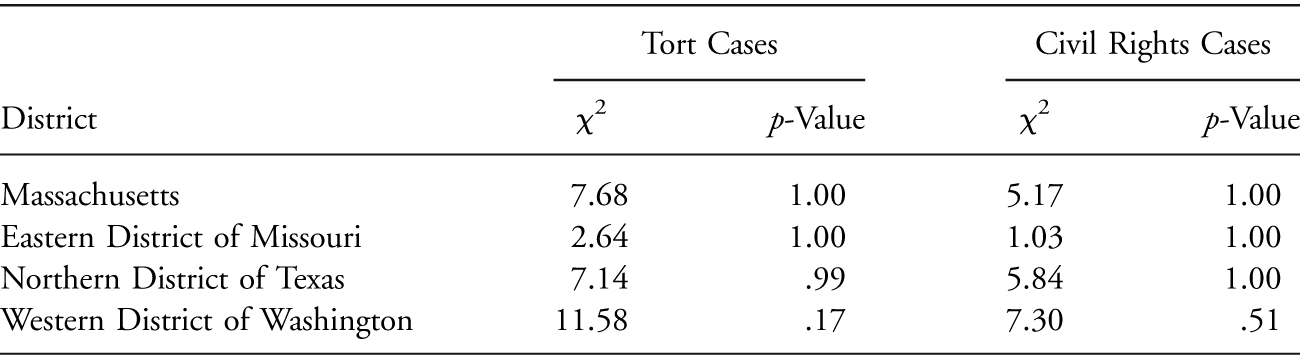
Note.—Chi-squared statistic represents how close the number of cases heard by individual judges in that district comes to the number they would be expected to hear if assignment were random.
Matching Methods
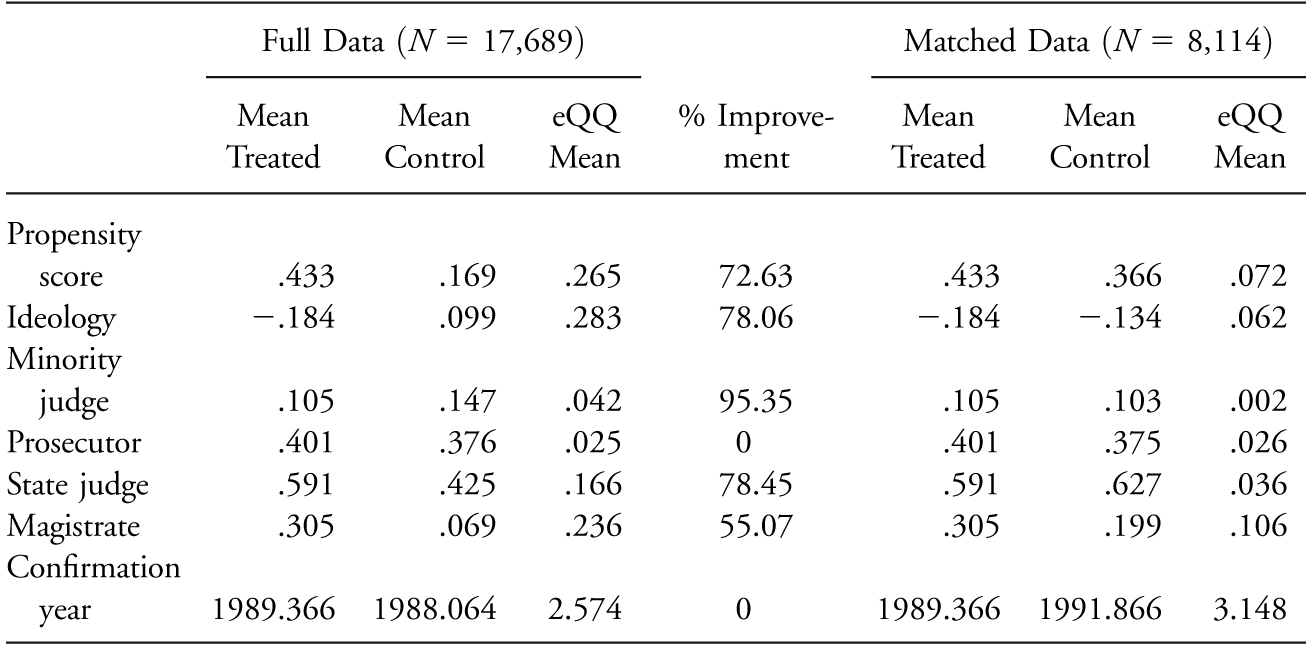
As noted in the main text, the data in this project were analyzed twice for each question: once with the full data and once with a smaller, balanced version of the data. The smaller version of the data was developed through the preprocessing of the data with nearest-neighbor matching on propensity scores (Ho et al. 2006, 2007).Footnote 12 While this procedure leads to a smaller data set and discarded data points (here, N drops from 17,689 to 8,114), by yielding a balanced data set, it also may better permit the statistical comparison of male and female judge behavior in cases, while netting out the effects of other judge characteristics like age, ideology, and race. Because of the historical realities about the diversity of judges in the United States (Scherer 2005), there is ample evidence as to why imbalances in the data might be particularly problematic when the treatment is the sex of the judge.
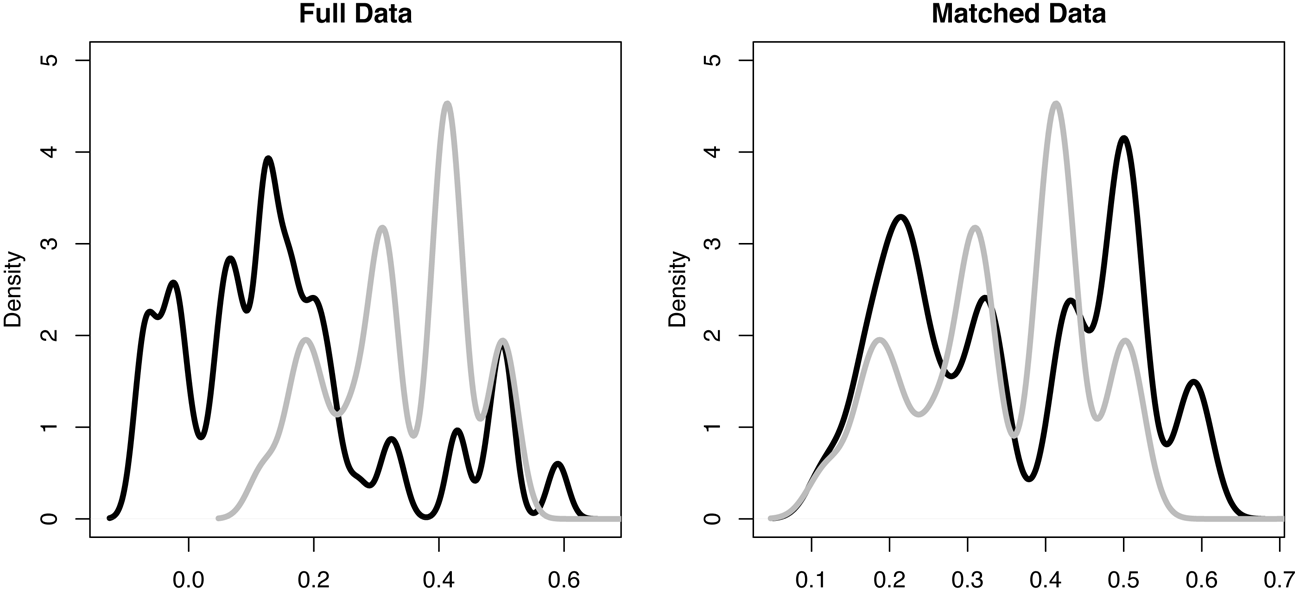
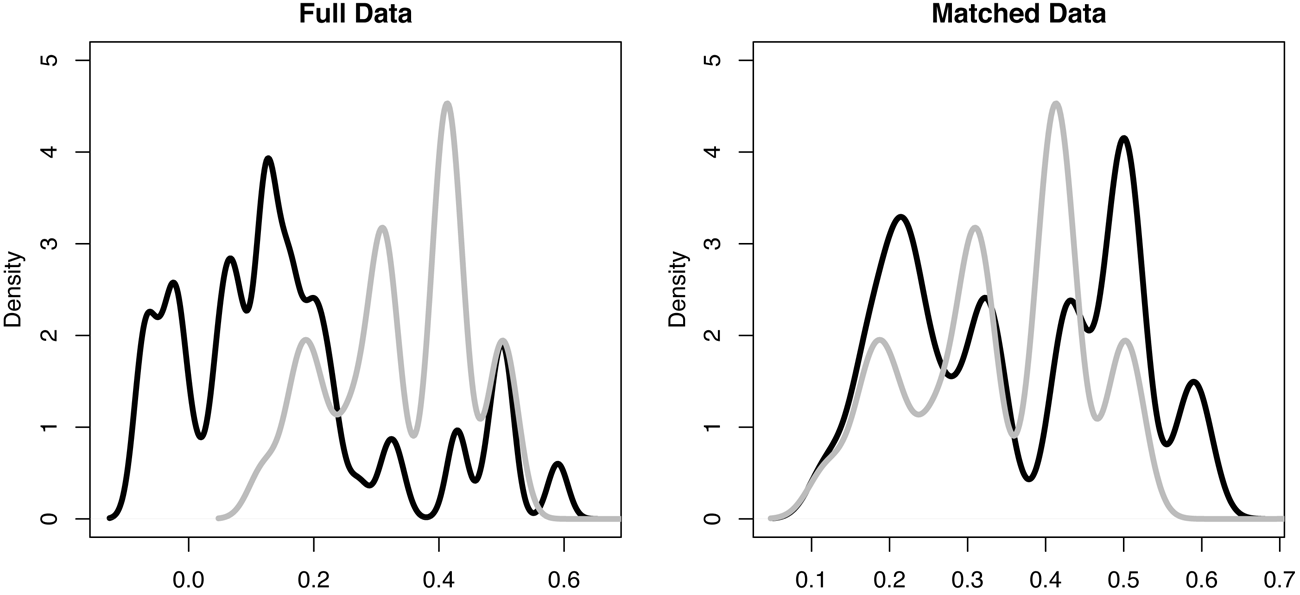
Although causal inference is not possible when the treatment is the sex of the judge, the balanced data set achieved through matching is thought to better enable descriptive inference (Rubin 2006; Boyd et al. 2010) and provide insight into the residual effect that a judge’s sex has on the outcome of case proceedings.Footnote 13 Figure A1 depicts the distribution of propensity scores in the data analyzed here, before and after matching.Footnote 14 As expected, the matching exercise largely addresses the data imbalances that are apparent in the left panel of the figure. Further summary statistics on the data, pre- and postmatching, and the improvements in the data’s balance due to the matching are provided in table A2.
Estimated propensity score for the full and the matched data. Black lines depict the density for the male-judge-assigned cases; gray lines, for female-judge-assigned cases. Left, full data set; right, matched data only.
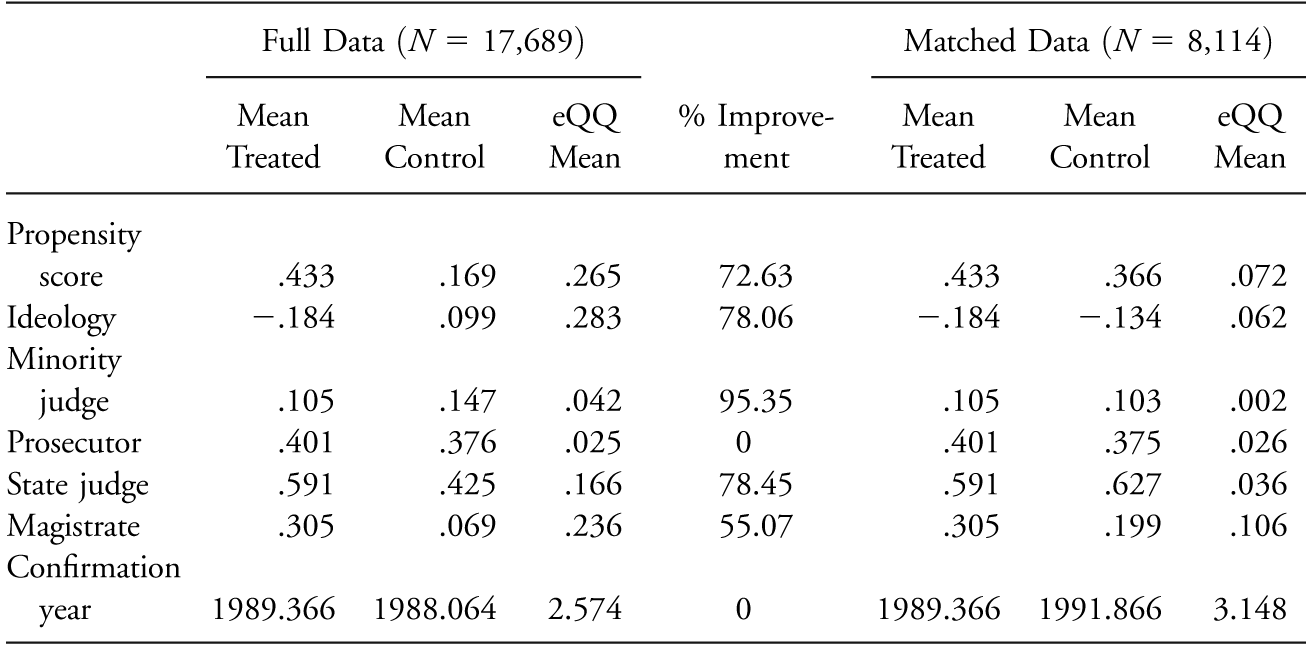
Note.—eQQ mean is the mean difference in the empirical quantile-quantile plot. Percentage improvement is the balance improvement between the eQQ means for the full and the matched data.