INTRODUCTION
Application of nitrogen (N) by mineral fertilizers is the dominant and main source of N input and an indispensable component of agriculture today. But the use of chemical fertilizers has drastically declined following the energy crisis, which has immensely affected most developing countries. In addition, the high cost of mineral N fertilizers and their availability when required are the two major constraints responsible for low fertilizer N input in most developing countries. In the State of Azad Jammu and Kashmir (AJK) in northeast Pakistan, the hilly and sloping landscape with high rainfall during both the major cropping seasons (rabi and kharif, i.e. summer and winter) may cause inefficient utilization of an expensive input because of surface runoff and leaching losses. Moreover, reduced use of inorganic fertilizers has largely been aggravated by the removal of fertilizer subsidies by the government resulting in low crop yields due to deteriorating land productivity. Soil fertility depletion is considered to be the fundamental biophysical root cause for declining per capita food production in smallholders’ fields of the region. The predominant reasons for low nutrient status in these soils are: (i) loss of the finer fraction of top soils, organic matter and nutrients because of soil erosion and runoff; and (ii) almost no or little addition of organic sources, i.e. manures, crop residues, green manuring and plant litter.
A possible way for restoring these soils is to add organic matter to improve soil health and quality, thereby enhancing biogeochemical nutrient cycles (Dutta et al., Reference Dutta, Pal, Chakraborty and Chakrabarti2003). The importance of the use of organic manures under low input agricultural systems in order to improve the quality and fertility status of soil is well documented (DeJager et al., Reference DeJager, Onduru, VanWijk, Vlaming and Gachini2001; Palm et al., Reference Palm, Gachengo, Delve, Cadisch and Giller2001). Manure is considered as key to restoring the productivity of degraded soils as it supplies multiple nutrients, raises soil pH and improves soil organic matter (SOM), which in turn improves the physical and microbial properties of the soil (Zingore et al., Reference Zingore, Delve, Nyamangara and Giller2008). Among organic manures, the nutrient content of poultry manures (PM) is among the highest of all manures, and the use of PM as a soil amendment for agricultural crops provides appreciable quantities of all important plant nutrients (Sims and Wolf, Reference Sims and Wolf1994). Adediran et al. (Reference Adediran, Taiwo and Sobulo2003) compared PM, household, market and farm waste, and found that PM had the highest nutrient contents and gave the greatest increased yield of the crops and soil macro and micronutrients content. Akande and Adediran (Reference Akande and Adediran2004) found that PM significantly increased soil pH, N, phosphorous (P), potassium (K), calcium (Ca) and magnesium (Mg) and nutrient uptakes in plants. Addition of PM to cultivated land helps to recycle nutrients and reduce fertilizer costs in crop production systems. In addition, application of PM or other organic wastes may also generate a positive residual effect that should be taken into account for the succeeding crops (Eghball et al., Reference Eghball, Ginting and Gilley2004; Hirzel et al., Reference Hirzel, Walter, Undurraga and Cartagena2007). Use of PM or other animal manure not only increases the soil inorganic N pool (Abbasi et al., Reference Abbasi, Hina, Khalique and Khan2007) but also increases the seasonal soil N mineralization available to the crops (Ma et al., Reference Ma, Dwyer and Gregorich1999).
Organic sources of N alone may not be able to provide sufficient nutrients in readily available form to plants and also cannot fulfil the immediate requirements of plants. To overcome this problem, a judicious and integrated use of organic and inorganic sources of nutrients is recommended to maintain soil health, augment the efficiency of applied and native nutrients and sustain required crop production. Keeping in view the importance of the integrated use of organic and inorganic nutrient sources in today's agriculture, the availability of PM in the region and the unique position of maize in the country's economy, a study was carried out over two years (2006 and 2007) to examine the effect of PM and urea N alone or in combination in changing soil properties, yield and nutrient uptake of maize.
MATERIALS AND METHODS
The study site
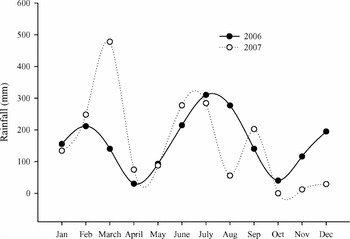
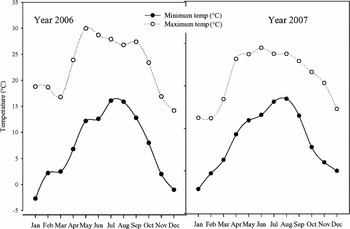
This study was carried out during 2006 and 2007 on an experimental field at the Research Farm, Faculty of Agriculture, University of Azad Jammu and Kashmir, Rawalakot, Poonch division, AJK, Pakistan. The study area lies between 1800 and 2000 m asl, and latitude 33–36°N and longitude 73–75°E, under the foothills of the great Himalayas. The study area is characterized by annual rainfall ranging from 500 to 2000 mm, most of which is irregular and falls as intense storms during the monsoon and sometimes in winter. The monthly precipitation and temperature of the experimental area are presented in Figures 1 and 2. Detailed characteristics of the site and area are explained by Abbasi et al. (Reference Abbasi, Majeed, Sadiq and Khan2008).
Monthly rainfall (mm) of the experimental area during the growing period of maize.

Monthly mean temperature (°C) of the experimental area during the growing period of maize.

Field operations, experiment description and treatments
Before the actual experiment, soil samples from the experimental field were collected for physical and chemical characterization. The 0–15 cm soil layer contains, on average, 29% clay, 44% silt and 27% sand, with a pH of 7.25 (1:2.5 in water), 0.56% organic carbon, 0.05% total N, 9.35 mg kg−1 available (Olsen) P, 2.21 cmol kg−1 K, 30.1 cmol kg−1 Ca, 9.41 cmol kg−1 Mg, 1.02 cmol kg−1 sodium (Na), with 54.6 cmol kg−1 cation exchange capacity and 1.16 t m−3 bulk density (BD). A field of 15 m × 13 m was selected where maize and wheat had been grown for the previous two years. For proper seed bed preparation, the field was ploughed thoroughly twice by tractor and left for the next two weeks. The individual plots were prepared according to the treatments and the net plot size was 2.5 m × 2.5 m. The plot was levelled for even and efficient fertilizer/water distribution.
The treatments comprised two sources of N, i.e. mineral and organic N from urea and PM, respectively, used alone or in combination, and a control (no N). A total of eight treatments with three replications were used in the experiment. The treatments were: N0: control (no fertilizer or manure); N120U: 120 kg N ha−1(from urea); N150U: 150 kg N ha−1 (from urea); N120PM: 120 kg N ha−1from PM; N150PM: 150 kg N ha−1 from PM; N90U+30PM: 90 kg N ha−1 mineral N (from urea) + 30 N kgha−1 organic N (from PM); N60U+60PM: 60 kg N ha−1 mineral N + 60 kg N ha−1 organic N; N30U+90PM: 30 kg N ha−1 mineral N + 90kg N ha−1 organic N.
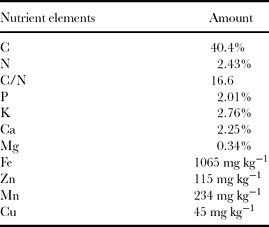
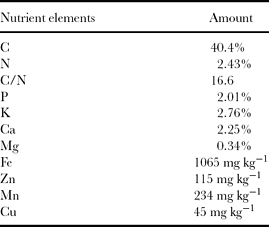
The treatments were established in the same plots each year. Poultry manure was applied on the basis of N content 15 days before sowing. The chemical composition of PM is presented in Table 1. The full dose of N mineral fertilizer was applied by the broadcast method at the time of sowing. Similarly, a basal dose of P and K was applied to all plots, including control, at the time of sowing at the rate of 90 kg P2O5 ha−1 and 60 kg K2O ha−1 as single super phosphate and sulphate of potash, respectively, by the broadcast method. All the fertilizers were well mixed into the soil.
The selected nutrient composition of the poultry manure used for the cultivation of maize.
Maize (Zea mays) variety Poonch white was used in the experiment. Seeds were collected from the maize section, Agriculture Research Farm, Tarar, Rawalakot. Maize was sown in rows on 20 May 2006 and 24 May 2007. After germination the distance between the plants was maintained at 23 cm, while the row-to-row distance was 45 cm and four rows per plot were established. All standard local cultural practices were followed when required throughout the growth period. No irrigation was provided, and manual weeding was carried out on three occasions. There were no major pests or diseases that required chemical control methods.
Measurements
The morphological characteristics of the crop (plant height, number of leaves per plant, flag leaf surface area and chlorophyll content) were recorded in the standing crop. Plant height was determined by measuring the height of 10 randomly selected plants per plot from the soil to the top of the tassel at silking and obtaining an average value for each plot. The number of leaves was determined by counting the number of leaves in 10 plants per plot at silking. The flag leaf area was determined by measuring the width and length of each flag leaf and multiplying by 0.75 (Yi et al., Reference Yi, Wang, Zhang, Shen, Liu and Dai2006). Chlorophyll content readings were taken with a handheld dual-wavelength meter (SPAD 502, Chlorophyll meter, Minolta Camera Co., Ltd., Japan). For each plot 30 younger fully expanded leaf blades per plot were used when the plants were at silking stage. The instrument stored and automatically averaged these readings to generate one reading per plot.
After crop harvest, grain weight per cob was determined by weighing the grain weight from each cob from the selected 10 plants. One thousand grain weight was determined by weighing the weight of 200 randomly selected kernels from each plot and multiplying it by 5 to express it as 1000 kernels.
Soil and plant analysis
In order to determine the effect of organic and inorganic N fertilizer on the changes in their major nutrient contents, soil and plant samples were collected after harvesting. Soil samples from the 0–15 cm depth were collected from each plot, mixed well and air dried for 2–3 days. Samples were lightly ground and subsequently sieved through a 2-mm mesh to remove stones, roots and large organic residues. Soil organic carbon was determined by oxidizing organic matter in soil samples with K2Cr2O7 in concentrated sulphuric acid for 30 min followed by titration of excess K2Cr2O7 with ferrous ammonium sulphate (Nelson and Sommer, Reference Nelson, Sommers, Page, Miller and Keeney1982). Total N was determined by sulphuric acid digestion using selenium, CuSO4 and K2SO4 as catalyst. N in the digest was determined by Kjeldahl distillation and titration method (Bremner and Mulvaney, Reference Bremner, Mulvaney, Page, Miller and Keeney1982), available P by the Olsen extraction method (Olsen and Sommers, Reference Olsen, Sommers, Page, Miller and Keeney1982) and available K was extracted with 1 N ammonium acetate, adjusted to pH 7, and determined by flame photometry (Simard, Reference Simard and Carter1993). K+ in solution was determined by flame photometry. Electrical conductivity was determined on a saturation extract.
For plant analysis, the maize shoots of five plants from the central rows were sampled randomly from each plot. The samples (stalk + leaves only) were washed, cleaned, air dried and then oven dried at 65 °C to a constant weight. The oven-dried samples were ground to pass through a 4-mesh sieve in a Micro Wiley Mill. The N content in plant samples was determined by the Kjeldahl method (Jackson, Reference Jackson1962). The samples were digested with perchloric acid and nitric acid, and their P concentration was determined colorimetrically (Murphy and Riley, Reference Murphy and Riley1962). The K concentration in plant samples was determined by flame photometry according to Winkleman et al. (Reference Winkleman, Amin, Rice and Tahir1990).
The N data of samples were used for calculating the following N efficiency parameters following the methods used by Sangakkara et al. (Reference Sangakkara, Attanayake and Stamp2008). The percentage of N in plant tissue was determined as a function of inorganic N applied in fertilizer and manure (Nyiraueza and Snapp, Reference Nyiraneza and Snapp2007).
Agronomic efficiency of applied fertilizer N (NAE) = (Grain yield in plots with fertilizer – grain yield of control plots) / Quantum of applied N fertilizer.
Apparent fertilizer N recovery (ANR) = (N uptake by the fertilized plant – N in the control plants) / Quantum of applied N fertilizer × 100%.
Physiological efficiency of applied N (NPE) = (Grain yield in plots with fertilizer – Grain yield of control plots) / (N uptake by the fertilized plant – N in the control plants).
N-use efficiency (NUE) = Ratio between yield and total N uptake by the plant.
Statistical analysis
For the determination of significant effect of treatments on the growth and yield of crop and on soil and plant characteristics, analysis of variance (ANOVA) and least significant difference (LSD) tests among means were conducted for each character separately using a MSTAT-C statistical analysis package. Comparison of means for the individual treatments was done at the 5% probability level based on the F-test of the analysis of variance (Steel and Torrie, Reference Steel and Torri1980).
RESULTS
Morphological characteristics
Statistical analysis indicated significant difference (p ≤ 0.01) between the years for plant height, flag leaf area and chlorophyll content while number of leaves showed a non-significant difference. Similarly, significant year × treatment interactions were recorded for plant height and flag leaf area but not for number of leaves and chlorophyll content. Where no significant interaction between years was seen, data for two years was combined and analysed to calculate the significance of differences between combined-year means for each variable. In case of significant year × treatment interactions, data for each year is presented for those variables.
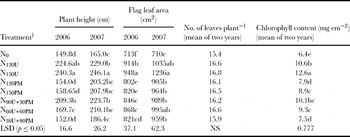
Plant height was significantly greater for all the treatments with urea N than those for the control and PM treatments (Table 2). Manure was not able to increase plant height when applied alone and the difference between control and PM treatments in both years was non-significant. Plant height in two combined treatments, N90U+30PM and N60U+60PM, was also significantly greater than the control but lower than the urea N. Averaged over two years, increase in plant height due to urea N, PM and urea N + PM was 44–55%, 13–16%, and 7–38%, respectively, over the control.
Effect of poultry manure, urea N and their combinations on growth and growth components of maize during 2006 and 2007.

LSD: least significant difference.
† N0: control without N fertilizer; N120U: urea N: 120 kg N ha−1; N150U: urea N: 150 kg N ha−1; N120PM: poultry manure (PM): 120 kg N ha−1; N150PM: PM: 150 kg N ha−1; N90U+30PM: UN: 90 kg N ha−1+ PM: 30 kg N ha−1; N60U+60PM: UN: 60 kg N ha−1+ PM: 60 kg N ha−1; N30U+90PM: UN: 30 kg N ha−1+ PM: 90 kg N ha−1.
Means in the same column and year followed by the same letter do not differ significantly according to the LSD test (p ≤ 0.05)
All the treatments showed significant increase in leaf surface area (LSA) compared with the control. In general, at equivalent rates of application, urea N resulted in higher LSA followed by plants treated with urea N + PM; the least increase was in plants treated with PM alone. In the second year of the experiment, LSA in PM treatments was statistically equivalent to urea N treatment N120U. The increase in LSA was 37–53% with urea, 20–25% with PM and 25–31% with urea + PM treatments compared with the control.
The number of leaves per plant was not affected either by added amendments or by the years, ranging from 15.4 in the control to 16.8 in N150U. Application of urea N and PM alone or in combination significantly increased the chlorophyll content of maize plants. Averaged over two years, the maximum chlorophyll content of 12.6 mg cm−2 was recorded in N150U. Combined application of urea N + PM in N90U+30PM exhibited chlorophyll content similar to that recorded for N120U. The average increase in chlorophyll content due to urea N, PM and urea + PM, respectively, was 66–97%, 23–39% and 17–58% over the control treatment.
Both plant height and flag leaf area of maize were significantly higher in 2007 than 2006.
Yield and yield components
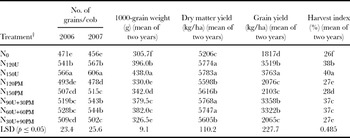
Analysis of variance for yield and yield components of maize indicated significant differences (p ≤ 0.01) between the two years and for year × treatment interaction only for number of grains per cob while 1000-grain weight, dry matter yield, grain yield and harvest index showed non-significant differences. Therefore, data for these parameters were pooled together and analysed on the basis of average values of two years. Results indicated that application of the highest rate of urea N (N150U) resulted in a significantly higher number of grains per cob over the other treatments (Table 3). The number of grains in integrated treatments of N90U+30PM and N60U+60PM were statistically similar to those recorded for N120U. Averaged over two years, the increase in number of grains per cob due to urea, PM, urea + PM was 20–26%, 5–10% and 9–16% compared with the control. A similar trend was observed for the 1000-grain weight as urea N and integrated use of urea + PM significantly increased 1000-grain weight of maize. For the combined treatments N90U+30PM and N60U+60PM 1000-grain weight was similar to that for UN applied alone at the rate of 120 N kg−1. Average increase in 1000-grain weight following the application of urea N, PM and urea N + PM was 30–43%, 8–12% and 7–24%, respectively over the control.
Effect of poultry manure, urea N and their combinations on yield and yield components of maize during 2006 and 2007.

LSD: least significant difference.
†N0: control without N fertilizer; N120U: urea N: 120 kg N ha−1; N150U: urea N: 150 kg N ha−1; N120PM: poultry manure (PM): 120 kg N ha−1; N150PM: PM: 150 kg N ha−1; N90U+30PM: UN: 90 kg N ha−1+ PM: 30 kg N ha−1; N60U+60PM: UN: 60 kg N ha−1+ PM: 60 kg N ha−1; N30U+90PM: UN: 30 kg N ha−1+ PM: 90 kg N ha−1.
Means in the same column and year followed by the same letter do not differ significantly according to the LSD test (p ≤ 0.05).
All treatments significantly increased dry matter yield (DMY) (Table 3) while the difference in DMY between the two years was non-significant. Dry matter yield was 5206 kg ha−1 in the control and significantly increased to a range of 5700–5800 in N120U, N150U, N90U+30PM and N60U+60PM, but the difference among these four treatments was non-significant. Averaged over two years, increase in DMY due to urea N, PM and their combination was 11, 8 and 8–11%, respectively.
Grain yield recorded for different N treatments was significantly greater than the control (Table 3) while no significant difference was observed between the two years. Grain yield in urea N was significantly higher than that recorded for the PM and urea + PM treatments. The treatment that consistently led to the greatest maize productivity was the application of the highest rate of urea N, i.e. N150U. Average increase in grain yield following the application of urea N, PM and urea N + PM was 100, 15 and 60%, respectively over the control.
Harvest index (HI) of maize during both years was almost the same while application of different N treatments significantly increased HI. The HI in the control was 26% and increased to 38% and 39% with urea N120U and N150U, respectively. Similarly, HI in the integrated treatments of N90U+30PM and N60U+60PM was about 37% but significantly lower in N30U+90PM, i.e. 27%.
Nutrient concentration and uptake
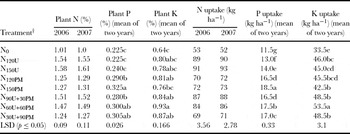
The effect of different N treatments on nutrient concentration and uptake of maize is presented in Table 4. Analysis of variance indicated significant differences (p ≤ 0.01) between the years for N content of maize shoot and N uptake of maize while P and K contents and uptake by plants showed non-significant difference. The average increase in N contents following the application of urea N, PM and urea N + PM was 53–59, 24–29 and 24–50%, respectively over the control, with highest concentration in urea N treatments.
Concentration of NPK in plant shoot (%) and uptake of NPK (kg ha−1) by maize following the application of urea N, poultry manure (PM) and urea N + PM during 2006 and 2007.

LSD: least significant difference.
†N0: control without N fertilizer; N120U: urea N: 120 kg N ha−1; N150U: urea N: 150 kg N ha−1; N120PM: poultry manure (PM): 120 kg N ha−1; N150PM: PM: 150 kg N ha−1; N90U+30PM: UN: 90 kg N ha−1+ PM: 30 kg N ha−1; N60U+60PM: UN: 60 kg N ha−1+ PM: 60 kg N ha−1; N30U+90PM: UN: 30 kg N ha−1+ PM: 90 kg N ha−1.
Means in the same column and year followed by the same letter do not differ significantly according to the LSD test (p ≤ 0.05)
In contrast to N concentration, P content in plants treated with PM alone or combination with urea N was significantly higher than the P content in control and urea N treatments. The maximum P content was found in PM treatments of N120PM and N150PM followed by the integrated treatments of N60U+60PM and N30U+90PM. The difference among these treatments was non-significant. Averaged over two years, the increase in P content due to urea N, PM and urea N + PM was 11–19, 39–56 and 21–47%, respectively.
Uptake of N and P was significantly affected by the application of different N sources (Table 4). Uptake of N in the control was 52 and 53 kg ha−1 during 2006 and 2007, respectively. Addition of N fertilizer as urea significantly increased N uptake by 90–94 kg ha−1, a 70–77% increase. Similarly, N uptake in PM treatments was in the range 69–73 kg ha−1, a 33–39% increase, while uptake of N in urea N + PM treatments was in the range 70–88 kg ha−1, a 34–67% increase over the control. The uptake of N in urea + PM treatments of N90U+30PM and N60U+60PM was statistically similar to that recorded for N120U.
In contrast to N, uptake of P was higher in PM treatments applied alone or in combination with urea N. Averaged over two years, increase in P uptake, due to different quantities of urea N, PM and urea N + PM was 11 and 19%, 39 and 56%, and 21, 47 and 46% over the control.
K content among different N treatments showed an inconsistent pattern, with higher values in integrated N treatments. K uptake in N added treatments was significantly higher than in the control. The maximum value of 53.5 kg ha−1 was recorded in N60UN+N60PM significantly higher than the remaining N treatments.
Nitrogen recovery and efficiency
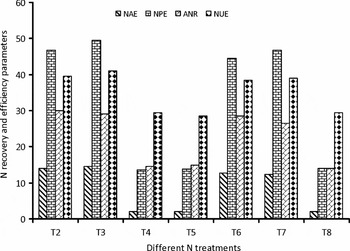
Averaged over two years, ANR and NUE were in the range 14–30% and 29–41%, respectively (Figure 3). The highest recovery and efficiency of N was recorded in the treatments where the full dose of N was applied as urea N followed by the combined treatments of urea N + PM. The difference between the two was very small. The agronomic and physiological efficiency of applied N, i.e. NAE and NPE, also showed similar trends to that recorded for ANR and NUE. The highest NAE and NPE, i.e. 15 and 50 kg kg−1, was recorded for N150U. Application of urea + PM in N90U+30PM and N60U+60PM showed N efficiency values in the range 12–13 and 46–47 kg kg−1 similar to those recorded for urea alone. Application of PM alone exhibited the minimum NPE and NPE, i.e. 2 and 14 kg kg−1, respectively.
Effect of poultry manure, urea N and their combinations on the Agronomic efficiency (NAE), Physiological efficiency (NPE), Apparent fertilizer N recovery (ANR), and N-use efficiency (NUE) of N applied to maize (average of two years). T2 urea N (UN): 120 kg N ha˗1; T3 UN: 150 kg N ha˗1; T4 poultry manure (PM): 120 kg N ha˗1, T5 PM: 150 kg N ha˗1; T6 UN: 90 kg N ha˗1 + PM: 30 kg N ha˗1; T7 UN: 60 kg N ha˗1 + PM: 60 kg N ha˗1; T8 UN: 30 kg N ha˗1 + PM: 90 kg N ha˗1.

Changes in soil properties
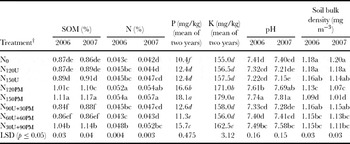
Analysis of variance of changes in soil properties (due to N treatments, years and N × years) indicated significant difference for soil BD, soil pH, SOM and soil N while soil P and soil K did not show significant responses. Soil BD was reduced significantly in PM and urea + PM treatments compared with urea and control (Table 5). The lowest BD was recorded in the treatment where PM was applied at the higher rate (NPM150). The reduction in BD due to application of PM was higher in the second year than the first year of study.
Changes in physical and chemical characteristics of soil following the application of urea and poultry manure during two years, i.e. 2006 and 2007.

LSD: least significant difference.
†N0: control without N fertilizer; N120U: urea N: 120 kg N ha−1; N150U: urea N: 150 kg N ha−1; N120PM: poultry manure (PM): 120 kg N ha−1; N150PM: PM: 150 kg N ha−1; N90U+30PM: UN: 90 kg N ha−1+ PM: 30 kg N ha−1; N60U+60PM: UN: 60 kg N ha−1+ PM: 60 kg N ha−1; N30U+90PM: UN: 30 kg N ha−1+ PM: 90 kg N ha−1.
Means in the same column and year followed by the same letter do not differ significantly according to the LSD test (p ≤ 0.05).
Soil pH increased significantly in all the plots treated with PM compared with urea and control. Among the PM treatments, NPM150 registered the highest soil pH, i.e. 7.74 and 7.81 compared with pH of 7.40 and 7.41 in the control. Soil organic matter was also significantly increased in PM and urea + PM treatments over those in urea and control.
Among the PM treatments, NPM150 resulted in the highest SOM, especially in the second year of study. The increase in SOM due to application of NPM120 and NPM150 was 16 and 28% in 2006 and 28 and 36% in 2007. The SOM under urea N was relatively higher than the control but the overall effect was non-significant.
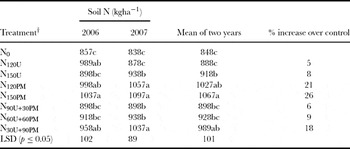
Total N of soil after crop harvest showed a similar trend to that recorded for SOM. In both years, application of PM significantly increased total soil N compared with the urea and control treatments. The concentration of N in soil increased with increasing rate of PM application. With regard to changes in soil N, calculation was made on a hectare basis and the values are given in Table 6. Increase in soil N due to application of different N treatments ranged between 878 and 1097 kg ha−1 compared with 838 and 857 kg N ha−1 in the control treatment. Averaged over two years, the highest values, 1027 and 1067 kg N ha−1, was recorded in PM120 and PM150. The increase in soil N due to urea N, PM and PM + urea N was 5 and 8%, 21 and 26%, and 6, 9 and 18%, respectively.
Changes in soil N concentration (kg ha−1) after applying urea N, poultry manure and urea N + PM during two years, i.e. 2006 and 2007.

LSD: least significant difference.
† N0: control without N fertilizer; N120U: urea N: 120 kg N ha−1; N150U: urea N: 150 kg N ha−1; N120PM: poultry manure (PM): 120 kg N ha−1; N150PM: PM: 150 kg N ha−1; N90U+30PM: UN: 90 kg N ha−1+ PM: 30 kg N ha−1; N60U+60PM: UN: 60 kg N ha−1+ PM: 60 kg N ha−1; N30U+90PM: UN: 30 kg N ha−1+ PM: 90 kg N ha−1.
Means in the same column and year followed by the same letter do not differ significantly according to the LSD test (p ≤ 0.05)
Averaged over two years, P concentration in control soil was 10.4 mg kg−1 and it significantly increased following the application of N treatments. Addition of PM alone or in combination with urea N significantly increased P concentration and the highest value of 18.1 mg kg−1 was recorded in N150PM. Increase in available P due to urea N, PM and PM + urea N was 10 and 11%, 44 and 55%, and 14, 20 and 35%, respectively.
Soil K showed similar trends to that recorded for soil P: the increase in available K due to urea N, PM and PM + urea N was 1 and 6%, 10 and 15%, and 3, 5 and 5%, respectively.
Correlations
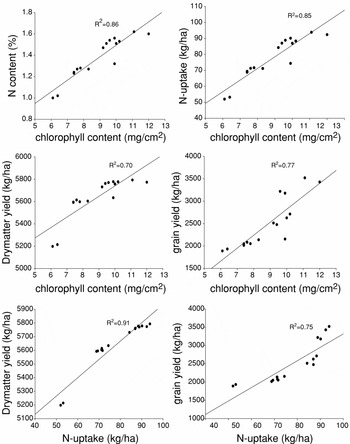
The grain yield of the maize showed some correlations with the shoot DM yield (R2 = 0.88, p ≤ 0.05) and N uptake of maize crop (R2 = 0.84, p ≤ 0.05) (Figure 4). Similarly, a significant correlation was developed between DM yield and N uptake of maize crop (R2 = 0.94, p ≤ 0.05). Chlorophyll content of plant also showed significant correlation with N content of plant shoot (R2 = 0.86, p ≤ 0.05); N uptake by plants (R2 = 0.85, p ≤ 0.05); dry matter yield (R2 = 0.70, p ≤ 0.05) and grain yield (R2 = 0. 77, p ≤ 0.05).
Correlations between chlorophyll content of plant vs. N content, N uptake and grain and DM yield of maize and correlation between N-uptake and grain and DM yield of maize.

DISCUSSION
Growth and yield attributes of maize
Application of urea N and poultry manure alone or in combination affected most of the growth and yield characteristics of maize compared with the control treatment, demonstrating the importance of mineral fertilizer or application of PM and their combination for crop productivity in nutrient-poor soil. Response of growth parameters to different N treatments was variable, which indicates that PM or urea N application can be used with significant difference on plant growth, and N has a direct effect on leaf emergence, growth and development of maize. Growth of cotton showed similar response to PM application under greenhouse conditions (Tewolde et al., Reference Tewolde, Sistani and Rowe2005). The increase in growth characteristics is attributed to the stronger role of N in cell division, cell expansion and enlargement, which ultimately affect the vegetative growth of maize. Sharma and Mittra (Reference Sharma and Mittra1988) reported that application of organic manures influences plant growth physiologically by providing growth-regulating substances. However, Dordas et al. (Reference Dordas, Lithourgidis, Matsi and Barbayiannis2008) reported that liquid manure or mineral N application did not show any significant change in the growth characteristics of maize. Chlorophyll contents in plant leaves can be used as an alternative measure to determine the N status of the plant where tissue or soil analysis cannot be used (Schepers et al., Reference Schepers, Franscis, Vigil and Below1992). In the present study, chlorophyll content showed a highly significant correlation with N content of the plant shoot, N uptake, dry matter yield and grain yield, thus confirming the findings of Dordas et al. (Reference Dordas, Lithourgidis, Matsi and Barbayiannis2008) that determination of chlorophyll content can be used as an indication of plant N concentration during the growing season. Our results further suggested that chlorophyll content also represent a measurement criterion for changes in dry matter and grain yield in maize. It was noticed that the response of most growth characteristics of maize in NU60+PM60 was equivalent to the response found in NU120, which supplied the same total amount of N.
Averaged across two years, DM/grain yield ratio for the urea N treatments NU120 and NU150 was 0.55 and 0.60, and for the PM treatments was NPM120 and NPM150. For the control and the integrated treatments of NU90+NPM30 and NU60+NPM60, the ratio was 0.37, 0.43 and 0.46, respectively. These ratios were comparable to those reported by Eghball et al. (Reference Eghball, Ginting and Gilley2004) for maize. Application of PM alone resulted in lower maize grain yields than the equivalent amount of urea N. The reduction in yield in PM was 41 and 44% compared to the equivalent amount of urea N. This indicated that N applied through PM alone may not be adequately available to the crop when it is needed because of lower rates of manure decomposition and subsequent N release (mineralization) to the maize crop. Therefore, PM alone was not able to produce a maize yield equivalent to urea N. Mugwe et al. (Reference Mugwe, Mugendi, Kungu and Muna2009) also reported similar results while Connor (Reference Connor2008) stated that organic agriculture alone cannot feed the world. Similarly, all the combined nutrient use treatments where mineral N was applied with PM resulted in lower maize grain yields when compared to 100% mineral application of 120 kg N ha−1. These results were in contrast to those of Ayoola and Adeniyan (Reference Ayoola and Adeniyan2006) who reported that cassava, maize and melon performed best in terms of growth and yield under poultry manure plus NPK fertilizer treatments in both years of the study. Adeniyan and Ojeniyi (Reference Adeniyan and Ojeniyi2005) reported that the highest values were recorded with combined use of 3 t ha−1 poultry manure and 200 kg ha−1 NPK fertilizer with respect to dry matter yield, grain yield and nutrient uptake of maize.
Plant nutrient content and nutrient uptake
The uptake of NPK recorded in the control plots was similar for the two years, suggesting that the N supply from the soil was stable over this period. Fertilizer application of urea N, PM and urea + PM significantly increased NPK concentrations in maize, indicating increased uptake of these elements. Increased NPK uptake with N fertilization could be attributed to increased dry-matter production as this uptake followed a pattern similar to that for plant biomass and a significant correlation (R2 = 0.91) existed between the two. N uptake in different N treatments (average) was 72 kg ha−1 for PM, 82 kg ha−1 urea + PM and 91 kg ha−1 while the uptake of P was 17, 16 and 13 kg ha−1, respectively, and uptake of K was 44, 50 and 46 kg ha−1, respectively, showing that response of P and K uptake to PM application was more evident than the uptake of N. Uptake of NPK in the integrated treatments with relatively reduced levels of mineral N was equivalent or higher than the NPK uptake in full recommended mineral N application, indicating that PM increased the efficiency of applied and native nutrient sources. Similar results regarding increased NPK uptake with manure application were reported for cotton by Khaliq et al. (Reference Khaliq, Abbasi and Hussain2006), maize by Dordas et al. (Reference Dordas, Lithourgidis, Matsi and Barbayiannis2008), rice by Satyanarayana et al. (Reference Satyanarayana, Prasad, Murthy and Boote2002), sorghum by Bayu et al. (Reference Bayu, Rethman, Hammes and Alemu2006) and wheat by Gopinath et al (Reference Gopinath, Saha, Mina, Pande, Kundu and Gupta2008). According to Ruttunde et al. (Reference Ruttunde, Zerbini, Chandra and Flower2001), N content of maize stover is an indicator of the stover feed quality. Thus, the increase in N uptake of the stover with manure application would mean an improvement in the nutritive value of the stover, which in turn would have major implications for resource-poor farmers to whom maize is a major feed source for their animals.
Nitrogen use efficiency
The agronomic and physiological efficiency (NAE and NPE) of maize was affected by different treatments and lower in PM than with the urea treatments. However, integration of urea + PM in NU90+NPM30 and NU60+NPM60 showed values almost the same as recorded for application of full mineral N (NU120). Dry matter yield of maize in the present study showed a strong relationship with the physiological efficiency and is confirmed by a positive correlation between the two traits. Abbasi et al. (Reference Abbasi, Kazmi and Hussan2005) also reported similar relationship between DMY and physiological efficiency in grasslands. Vanlauwe et al. (Reference Vanlauwe, Tittonell and Mukalama2006) reported that the recovery of applied N by maize was 42, 10 and 27% following the application of 90 kg N as urea, organic treatments and organic + urea N, respectively. In contrast, apparent N recovery efficiency of silage maize was 20 and 33% by mineral N and 40, 26 and 43% by PM (Hirzal et al., Reference Hirzel, Walter, Undurraga and Cartagena2007) while Adeli et al. (Reference Adeli, Sistani, Rowe and Tewolde2005) reported that ANR in soyabean was greater for broiler litter than commercial fertilizer. Our results indicated that: i) the NUE in our conditions was very low ranging (29–40%); ii) recovery efficiencies in PM treatments were markedly lower than the efficiencies recorded for urea N and urea + PM treatments; and iii) the N recovery efficiencies of maize following the application of PM with 90 and 60 kg N ha−1 mineral N were equivalent to those recorded by applying higher rate of mineral N at the rate of 120 kg N ha−1 indicating that PM could save 30–60 kg mineral fertilizer.
Soil properties
Soil bulk density was significantly decreased with the application of PM alone or in combination with urea N. The decrease in BD might be due to the accumulation of organic matter due to addition of PM. Reduction in soil BD due to the application of PM and organic manures was previously reported by several workers (Ewulo et al., Reference Ewulo, Ojeniyi and Akanni2008; Hati et al., Reference Hati, Mandal, Misra, Ghosh and Bandyopadhyay2006). Application of PM exhibited significantly higher pH relative to the remaining treatments. The higher pH in PM-treated soil than the control and the urea soil is due to the release of OH− ions during decomposition of manure and the buffering from organic compounds released from manure (Whalen et al., Reference Whalen, Chang, Clyton and Carefoot2000; Zingore et al., Reference Zingore, Delve, Nyamangara and Giller2008). Poultry manures generally contains significant amounts of Ca, Mg and K as observed in the analysis of PM as reported in Table 1, and this led to the increase in exchangeable bases in soil resulting in high pH (Zingore et al., Reference Zingore, Delve, Nyamangara and Giller2008). Application of urea N resulted in reduction in soil pH. This acidification is attributable to nitrification of applied fertilizer N and subsequent leaching of nitrate (NO3−) formed during mineralization of urea N (Abbasi and Adams, Reference Abbasi and Adams1998, Graham et al., Reference Graham, Haynes and Meyer2002). Similarly, SOM was significantly higher in PM and urea + PM soils than in those under mineral fertilizer (urea) and control. Addition of organic matter through PM and enhanced crop growth and microbial activity could explain the increase in organic carbon concentration in PM and urea + PM treatments. Sherma et al. (Reference Sharma, Neelaveni, Katyal, Srinivasa, Srinivas, Grace and Madhavi2008) reported similar results in sunflower.
In both years, application of PM significantly increased total soil N, compared with the urea and control treatments. The concentration of both N and P in soil increased with increase rate of PM application.
The elevated plant available P concentration in the soil surface as a result of PM application may remain for several years. This has both agronomic and environmental implications since it can contribute to crop P uptake and resulted in higher seed yield (Eghball et al., Reference Eghball, Ginting and Gilley2004). Bationo and Mokwunye (Reference Bationo and Mokwunye1991) reported that application of 20 t manure ha−1 in one season led to substantial increases in SOM (from 0.29% to 0.58%), total N, available P and soil pH. In soil with low concentration of available P, the effects of manure on P availability are directly related to the release of available phosphates during decomposition (Kaihura et al., Reference Kaihura, Kullaya, Kilasara, Aune, Singh, Lal and Arshad1999). The soil in the present study contained 29% clay and therefore has a high P sorption capacity. Therefore, in addition to direct P supply, organic anions released during the decomposition of manure can compete with P sorption sites and increase the availability of P (Reddy et al., Reference Reddy, Rao, Reddy and Takkar1999; Zingore et al., Reference Zingore, Delve, Nyamangara and Giller2008). Increases in soil nutrient contents adduced to PM are consistent with analysis recorded for manure in the present work. Increase in soil organic carbon, total N, available P and exchangeable K after addition of PM was previously reported by Adesodun et al. (Reference Adesodun, Mbagwu and Oti2005) and Agbede and Ojeniyi (Reference Agbede and Ojeniyi2009).
CONCLUSIONS
The results obtained in the present study indicated that application of PM alone did not increase the yield and yield components and N uptake of maize compared with urea N or urea N + PM treatments. However, application of PM increased SOM, total N, available P, exchangeable K and soil pH while the BD was reduced showing improvement in soil fertility and soil quality. Integrated use of urea N + PM not only increased crop yield but also increased nutrient uptake and N recovery efficiencies in maize. The N recovery efficiencies and NPK uptake by maize following the application of PM either with 90 or 60 kg N ha−1 (urea N) were almost equivalent to those recorded by applying the higher rate of urea N (NU120), indicating that integrated use of PM with mineral N can save 30–60 kg mineral fertilizer with potential effects on sustainable agricultural production in soils low in organic matter. The results of the present study can be used for better N management practices to improve maize yield, nitrogen use efficiency and nutrient uptake. Poultry manure with reduced levels of mineral N fertilizer is recommended for maize in the hilly and mountain region of Azad Jammu and Kashmir for soil fertility and productivity conservation.