Introduction
In 2006, the Gardaí were informed of the discovery of human remains in Croghan Bog, County Offaly, Republic of Ireland. The Irish state pathologist, Marie Cassidy, and Det. Sgt Eadaoín Campbell were sent to photograph the remains and launch a forensic investigation (Grice Reference Grice2006, 19). They fully expected this to be the beginning of a murder enquiry – they were aware both of the disappearance of several local women from the area, and of the fact that in other counties these desolate places, with their dark pools of limpid water, had been used to hide victims of the ‘Troubles’ of the 1970s and 1980s (the ‘disappeared’: Brothwell and Gill-Robinson Reference Brothwell, Gill-Robinson, Haglund and Sorg2002, 120; Farrell Reference Farrell2001). However, the body that lay under the black plastic sheeting was the leather-coloured corpse of a much older individual, who has since become known as ‘Oldcroghan Man’ (Kelly Reference Kelly2006).
The circumstances of this discovery are not unique. In 1983, in Cheshire, the partial remains of a human skull were discovered on a processing line amongst milled peat at Lindow Moss (Stead, Bourke and Bothwell Reference Stead, Bourke and Brothwell1986). The police were also involved in this case, since they were concerned about the disappearance of a local woman from the area nearly twenty years earlier (Turner Reference Turner, Turner and Scaife1995b, 13). When confronted with the discovery, her husband confessed to her murder, yet the remains were subsequently dated to between A.D. 20 and A.D. 90 (Stead, Bourke and Brothwell Reference Brothwell1986), indicating that this was a crime he could not possibly have committed (Stead and Turner Reference Stead and Turner1987, 1).
These two case studies epitomize the problems faced by archaeologists and forensic scientists when dealing with human remains from bogs. First, they are found in circumstances which frequently lead the public and the police to believe they are dealing with a modern – or at least historically recent – murder. Second, they are often discovered as part of mass peat extraction, which has removed all trace of the original landscape in which the bodies were interred. For both reasons, exhumation is mandatory, to avoid the complete despoliation of the remains (many are already significantly damaged) and aid forensic investigation. However, their analysis and display have become the source of increasing concern from many different groups: professional archaeologists, modern pagans and members of the general public. Some are perturbed and unnerved by the sight of these remains in a museum case and others argue that not only is their display disrespectful, but also their disturbance from the site of burial or interment.
These are complex issues which archaeologists and museum curators increasingly have to address (Restell Orr and Bienkowski Reference Restell Orr and Bienkowski2006). This article arises from my experience of the consultation process on the display of Lindow Man at the Manchester Museum (2008–9). Throughout, it highlights both the policies of this institution, the opinions of consulting partners (particularly HAD: Honouring the Ancient Dead) and the broader reception of this process (by bodies such as English Heritage), as a way of exploring these issues. (These are offered as a specific case study and are not meant to typify the views of a much broader body of interested communities, professional or public). In this article – as in my collaboration with the museum – I wish to defend the archaeological analysis of bog bodies, while suggesting ways in which the exhumation, interpretation and display of such remains might be designed to respond to the above concerns.
Bog bodies: exploring the phenomenon
Human remains from bogs across northern Europe have been dated to periods from later prehistory up to the nineteenth century (see Van der Plict et al. Reference Van der Plict, van der Sanden, Aerts and Streurman2004). For example, when Graubelle Man was found in Denmark, there was debate over whether the remains were those of a local peat-cutter, Red Christian, who had disappeared in the region around 1887. Apparently fond of his drink, it had long been assumed he had fallen into the bog and drowned (Glob Reference Glob1969, 60). Such a fate had indeed befallen two Cheshire men, ‘Nat Bell, and Radcliffe’, who in 1853 had returned home across Lindow Moss, apparently ‘loaded with ale’, and drowned in the bog before morning (Turner Reference Turner, Turner and Scaife1995b, 10). Meanwhile, in 1758, Thomas Wormald, vicar of Hope in Derbyshire, recorded that the remains of a couple who had died crossing the Peaks in midwinter in 1674 were re-exhumed from the bog for burial in 1724, at which time he noted the extraordinary preservation of those limbs which had not been exposed to the air (Van der Sanden Reference Van der Sanden1996, 19).
Many bog bodies are therefore the result of accidental death in a treacherous environment and include formal burials of those who have died of exposure, who are subsequently interred in situ (Turner Reference Turner, Turner and Scaife1995a, 119). Others may represent more deliberate murders and the dumping of the body in a remote environment, such as those found at Quintfall in Caithness and Arnish Moor on Lewis, both of whom had received heavy blows to the head (Turner Reference Turner, Turner and Scaife1995a, 117). In contrast, several of the late medieval and historic bog bodies from Ireland have been interpreted as the burials of suicides (Van der Sanden Reference Van der Sanden1996, 72) or those excluded for other reasons from burial in consecrated ground, such as unbaptized infants, or victims of a particular disease, or of murder, drowning or shipwreck elsewhere. In this period, bogs seem to have been perceived as appropriate liminal spaces (defined in relation to the domestic parish with its bounded sacred space of church, kirk or chapel) in which to inter the troubled or dangerous dead. Importantly, such acts remind us of the continued agency ascribed to the deceased, and the ways in which such communities sought to deal with deaths which fell outside the Christian framework.
Estimates of the number of individuals represented vary: Turner cites 106 from England and Wales (1999, 231), while Van der Sanden suggests that when Scotland is also considered Britain possesses no fewer than 130 bog bodies (1996, 73). Another 89 discoveries are noted in Ireland (Van der Sanden Reference Van der Sanden1996, 71). However, many of these exist merely as ‘paper records’, since the remains were discovered in the nineteenth century and the early twentieth, before long-term preservation techniques had been developed. The height of discovery of such remains occurred between the 1900s and the 1990s, before methods for the mass extraction of peat made recovery more unlikely (Brothwell and Gill-Robinson Reference Brothwell, Gill-Robinson, Haglund and Sorg2002, figure 6.1). The bodies derive primarily from raised and blanket bogs in Ireland (ibid., 72) and lowland raised mires and fenlands in Britain (Van der Sanden Reference Van der Sanden1996, 74). Two of the most famous examples include Gallagh Man (exhibited in the National Museum of Ireland, Dublin) and Lindow Man (exhibited in the British Museum, London). Both of these individuals have been radiocarbon dated, respectively to the later prehistoric and the early Roman period, along with at least 10 other examples from Britain and Ireland (Van der Sanden Reference Van der Sanden1996, 76). They are therefore part of a later prehistoric phenomenon also found in Germany and Denmark (ibid.).
Why do these remains in particular attract such attention? Undoubtedly, these bodies have become iconic images of the Iron Age due to their extraordinary degree of preservation. Fen peat, which has a high calcareous content, will preserve skeletons but bog peat preserves soft tissues much better (Van der Sanden Reference Van der Sanden1996, 18). If fully submerged, anaerobic conditions will halt decay, and the presence of a polysaccharide, sphagnan, in the decaying Sphagnum moss forms a humic acid which both selectively removes calcium and causes a melanoidin or ‘tanning’ reaction in the skin (Painter Reference Painter, Turner and Scaife1995). Sphagnan reacts with the digestive enzymes of putrefying bacteria, immobilizing them and further inhibiting decay (ibid., 99). This can lead to the preservation of skin, hair and nails and the major organs, as well as food and parasitic remains in the stomach (Stead, Bourke and Brothwell Reference Brothwell1986) and garments or objects made of wool, skin, leather and metal. Whilst clothing made of plant fibres such as linen does decay (Van der Sanden Reference Van der Sanden1996, 18), good environmental information can be retrieved from the pollen and macrobotanical remains preserved in the surrounding peat (Brothwell Reference Brothwell1986; Blackford Reference Blackford2000; Plunkett et al. Reference Plunkett, Whitehouse, Hall, Charman, Blaauw, Kelly and Mulhall2009). In addition, bog bodies have helped forensic archaeologists investigate the relationship between environmental conditions and taphonomic processes which lead to particular states of preservation (Sledzik and Micozzi Reference Sledzik, Micozzi, Haglund and Sorg1997; Brothwell and Gill-Robinson Reference Brothwell, Gill-Robinson, Haglund and Sorg2002). The archaeological potential of this phenomenon is therefore very rich. However, it is the appearance of these remains, particularly the faces of the dead, which attract our imagination.
Their arresting effect was first conjured by the stark black-and-white photographs of P.V. Glob's book The bog people (1969). In the plates of this volume, the reader could see Tollund Man's closed eyes, still fringed with eyelashes, and his tightly pressed lips, or the perfect whorls on the fingers of Graubelle Man. Museum displays – from the British Museum to the National Museum of Ireland and the Silkeborg Museum in Denmark – trade on this experience of literally coming ‘face-to-face’ with the past. Indeed, ‘facial reconstruction’ provided the interpretive framework for the exhibition of Worsley Man at the University of Manchester Museum – now removed from display. Poets, writers and film-makers have responded evocatively to the drama and pathos of these encounters (Finn Reference Finn and Russell2006), as have members of the general public. A recent review of the new display of Lindow Man at the British Museum noted how this victim embodied a moral message for the present, in his defenceless posture:
His eyes are clenched and lowered in infinite sadness, his neck bent so his head rests helplessly on his chest, as if in final surrender . . . This treasure . . . confronts us with the seduction of violence and death, the monstrosity we're inches from, the belief that a person might make a good sacrifice (Jones Reference Jones2007, 24–25).
However, some members of the general public have found such displays disturbing or unsettling (O'Sullivan Reference O'Sullivan2007, 18). Increasingly, archaeologists are being asked to justify why their attitude towards prehistoric bog bodies differs from those of more recent remains, which would not be displayed in this manner (Restell Orr Reference Restell Orr2005). As a result, the profession is itself beginning to question whether such exhumation, extensive analysis and public presentation are appropriate for those who have often died a violent death (Swain Reference Swain2002; O'Sullivan Reference O'Sullivan2007).
The Ancient Dead: legal practice and ethics
The archaeological excavation of human remains in Britain is framed by national legislation (such as the Burial Act 1857, Section 25; the Disused Burial Grounds (Amendment) Act 1981; the Pastoral Measure 1983; and Planning Policy Guidance: PPG 16 1990; as well as by the Ministry of Justice's advice on Burial Law and Archaeology 2008). In addition, there are guidelines for best practice relating to the excavation and analysis of human remains as well as legal matters, issued by the Institute of Field Archaeologists (see Garratt-Frost Reference Garratt-Frost1992; McKinley and Roberts Reference McKinley and Roberts1993; Brickley and McKinley Reference Brickley and McKinley2004). A general principle of preservation in situ is advocated: if the remains have to be removed for rescue and/or research purposes, their discovery must be reported to the Ministry of Justice before a licence for excavation is granted. Those of Christian provenance also fall under the additional guidance of English Heritage and the Church of England (2005). This latter document again endorses a policy of nondisturbance unless there is ‘good and proper reason’ (ibid., 19), specifying that archaeologists must be able to demonstrate that the ‘accrual of knowledge’ outweighs the value of preserving human remains undisturbed (ibid., 31). It also prescribes methods of reburial following analysis. In terms of curatorial practice, the use of human remains now also falls under the DCMS (Department for Culture, Media and Sport, UK) guidelines (2003 and 2005) and Chapter 3 of the the Human Tissue Act 2004, as well as the Code of Ethics for Museums (Museums Association 2008), and many museums have developed their own institutional ethics policy on retention and display.
Such institutions are increasingly asked to address concerns that archaeology fails to treat ‘pagan’, prehistoric remains with the same dignity and respect that Christian remains receive (eg Restell Orr Reference Restell Orr2007). Whilst the concepts of both ethics and respect are rather nebulous and culturally contingent, these can be defined and negotiated on a case-by-case basis (Tarlow Reference Tarlow2001). Wylie defines ethics as ‘standards that apply to a particular sub-group . . . by virtue of their special expertise, authority, powers and responsibilities’ (Reference Wylie, Zimmerman, Vitelli and Hollowell-Zimmer2003, 5). HAD have argued that the remains of ancient British individuals are treated unethically since they tend to be regarded as archaeological objects (this is indeed literally the case under Irish law; O'Sullivan Reference O'Sullivan2001, 126), robbing them of any individuality or humanity (ibid.). Both HAD and CoBDO (the Council of British Druid Orders) argue that their very disturbance is objectionable: they stress the importance of the original place of burial and argue that the process of decay in situ is a vital way in which ancestral remains are returned to a broader cycle of life and regeneration (CoBDO 2008). Such groups also abhor the way in which they are exhumed and displayed in very public settings with little reverence: ‘exhibited to gawping spectators’ (Scarre Reference Scarre2003, 242).
These objections have led to various campaigns for reburial of ancient British human remains, such as the current consultation between English Heritage, the National Trust and CoBDO over the fate of material held at the Avebury museum (Thackray and Payne Reference Thackray and Payne2008). Selective surveys conducted in both Ireland and Britain suggest that even when the general public appreciate the scientific value of archaeological analysis, there is a general feeling that skeletons should be returned to an appropriate place of rest afterwards (O'Sullivan Reference O'Sullivan2001, 131; Carroll Reference Carroll2005, 12). Some curators support this move on practical as well as ethical grounds (see Oliver Reference Oliver2004). They are increasingly wary of ‘warehousing’ remains whose potential has never been realized, due to either a lack of funding or loss of primary records (Levitt and Hadland Reference Levitt and Hadland2006). In contrast, other surveys reveal an overwhelming support for the presence of human remains in museum displays, arguing that they not only remind us of our common humanity but prompt a connection with the past that would otherwise be weakened (see comments in Cleal Reference Cleal2008, Appendix A). Specialist interest groups such as osteoarchaeologists also perceive the call for reburial as a threat to current analysis and to the teaching value of such material, as well as to its future research potential (see Oliver Reference Oliver2004; Jones and Harrris Reference Jones and Harris1998; Mays Reference Mays2008).
Archaeologists have begun to consider whether the dead themselves have any legal or moral ‘rights’ (see Bahn Reference Bahn1984; Jones and Harris Reference Jones and Harris1998; Wilkinson Reference Wilkinson2002; Scarre Reference Scarre2003; McEvoy and Conway Reference McEvoy and Conway2004). Whilst Bahn and Paterson (Reference Bahn and Paterson1986) conclude that the dead have no moral status and therefore no post-mortem rights, a recent change in government policy threatened this notion. In 2007 the Ministry of Justice announced that Section 25 of the Burial Act 1857 did not apply to burial grounds which were not apparent on the surface of the land, and thus precautions regarding their excavation, retention and study could not be attached to planning applications. In other words, they would not licence their removal and analysis, leaving archaeologists without statutory protection. Under common law, ‘indignities to a corpse’ are regarded as an offence (Gallagher Reference Gallagher2008), and the archaeological community swiftly petitioned the Ministry of Justice for a clarification of this policy (see Ministry of Justice 2008).
Scarre frames the issue of post-mortem rights in a different light. As the above case illustrates, since it is possible to ‘wrong’ the dead through both defamation and undignified treatment (causing ‘retrospective harm’), he argues that we have a moral obligation to the dead as custodians of their remains (2003, 246). O'Sullivan and Killgore go further, arguing that the dead should be seen as ‘human subjects with residual rights and innate dignity’ (Reference O'Sullivan and Killgore2003, 3–4). Whilst it is by no means universally accepted, the ‘Vermillion Accord on Human Remains’ (adopted by the World Archaeological Congress in 1989), Statement 2, notes that ‘Respect for the wishes of the dead concerning disposition shall be accorded whenever possible, reasonable and lawful, when they are known or can be reasonably inferred’ (World Archaeological Congress 2006).
Since archaeology has become sensitized to the importance of place in the construction of social memory, it could be inferred that most formal burials were made with the intention that the deceased should remain where they were interred. This would support the views of bodies such as HAD and CoBDO, but this is where most archaeologists would part company from such interest groups, on sociological grounds. It is now commonly accepted that the dead do not bury themselves: the living bury them (Leach Reference Leach, Burnham and Kingsbury1979). The grave and its contents and markers or memorials are the work of mourners for whom the deceased represented strategic political and social capital as well as the beloved or lamented remains of the departed individual. It is therefore extremely difficult – if not impossible – to infer the original intentions of the deceased. This is particularly the case with bog bodies, many of whom appear to have died a violent death at the hands of others; surely the circumstances of their death deserve to be revealed. Certainly, we can know little of the ‘wishes’ of the dead and the communities from which they came unless we learn more about funerary practice from different periods. In addition, the pragmatic pressures of modern development and extraction processes mean that the original land surface in which human remains were interred is often removed. Excavation is therefore often necessary to avoid both their desecration and destruction, and to address the forensic concerns raised above.
It is clear that in the absence of any formal policy on the rights of the dead within the UK and Ireland, their interests are vested in, and administered through, the communities that claim to represent them. As this section has highlighted, such communities are diverse, with frequently conflicting or competing claims, occupying very different positions of power and influence. From my perspective as an archaeologist, I believe that excavation offers a way of understanding and respecting cultural difference in the past, and this is the guiding principle which informs my work with the ancient dead: an ethic supported by UNESCO's mandate to promote cultural diversity (see Koïchiro Matsuura's Foreword to Lohman and Goodnow Reference Goodnow, Lohman and Goodnow2006). Arguably, the scientific quest for further knowledge could be seen as a precondition for the respectful treatment of the dead. However, as Tarlow notes (2006), even this notion of the importance of researching and disseminating knowledge is not an ethic shared by all cultures.
The following section of this paper therefore sets out an argument to defend the exhumation and analysis of later prehistoric bog bodies, both to preserve their dignity and to investigate the lives of past communities. I would contend that these cannot be deduced solely from the writings of classical authors (who had their own agendas), nor from the assumption of a continuity in ‘Celtic’ beliefs which survives into the medieval or early modern period. Instead, the paradigm I work within can be broadly described as a contextual or interpretive approach (Barrett Reference Barrett1987; Shanks and Hodder Reference Shanks, Hodder, Shanks, Alexandri, Buchli, Carmen, Last and Lucas1997). It is based on the analysis of material practice in the past, and assumes that this is the result of meaningful actions by knowledgeable people, working within a particular view of the world, generated by their relationships with it. Many archaeologists would therefore see their role as an ethical one of representation – of advocacy – for those who can no longer speak, or were even marginalized by the dominant discourses of the day (Tarlow Reference Tarlow, Scarre and Scarre2006). I believe this is particularly relevant for the phenomenon of bog bodies. Whilst I recognize that my objectives differ from other interest groups, I believe this is still in keeping with the general sentiment expressed by groups such as HAD, that past people's ‘actions are honoured through stories retold’ (Restell Orr Reference Restell Orr2004, 39).
Interpreting bog bodies: case studies
The stories I want to tell in this article are those of four bog bodies. In keeping with the geographic focus of this article's discussion, two are from England and two are from Ireland. They have been chosen to highlight the potential for gaining knowledge from bog bodies, as well as for the recent date of their discovery and analysis. In addition, they have been the subject of debate in both countries over the presentation of human remains. This section will review the date and character of the remains discovered and the results of archaeological analysis upon them, in order to critically examine contrasting interpretations of their lives and deaths.
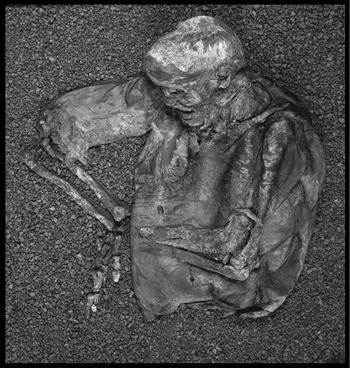
Lindow Man Lindow Moss is located between the parishes of Mobberley and Wilmslow in Cheshire, in the north-west of England. The bog body which has become known as Lindow Man comprises the torso and head identified as Lindow II (figure 1), discovered in 1984, and probably the lower abdomen, buttocks and left leg identified as Lindow IV, found in 1988 (Turner Reference Turner, Turner and Scaife1995b). Radiocarbon dates for this body have been extensively debated (Housley et al. Reference Housley, Walker, Otlet, Hedges, Turner and Scaife1995; Turner Reference Turner, Coles, Coles and Jørgensen1999) but place the event somewhere between the Late Iron Age and the late Roman period. Analysis of the remains reveals that he was an adult male in his early to mid-20s (Turner Reference Turner, Coles, Coles and Jørgensen1999, 228), with no evidence of disease, apart from parasitic worms contained in his stomach (Stead, Bourke and Brothwell Reference Brothwell1986). Forensic analysis of his hair, beard and moustache revealed that the latter had been neatly trimmed with small shears shortly before his death, and his nails were well-rounded with little surface scratching or pitting (Brothwell Reference Brothwell1986). He had consumed a last meal of unleavened bread and also ingested a small amount of mistletoe pollen (Scaife Reference Scaife, Turner and Scaife1995). He was found naked apart from a band made of fox fur around his upper left arm (Brothwell Reference Brothwell1986). However, analysis of the skin of both Lindow II and Lindow III suggests that both bodies may have been decorated with clay-based copper-, zinc- and possibly iron-rich pigments (Pyatt et al. Reference Pyatt, Beaumont, Buckland, Lacy, Magilton, Storey, Turner and Scaife1995). The injuries found on his body suggest he was initially stunned with two blows to his skull from an implement with a narrow, weighty blade (such as an axe). These fractured the skull in two places, causing swelling around the wound (indicating that he was still alive at this time) and driving sherds of bone into the brain (Stead and Turner Reference Stead and Turner1987, 7). Next, he was garrotted with a tight cord of animal sinew, which was twisted into four ‘crepes’ (convolutions where the knot overtwisted and doubled back on itself; ibid.). This resulted in a fracture of the neck, between the third and fourth vertebrae (Brothwell Reference Brothwell1986, 27–28). In addition, his throat had been cut just to the right of the larynx, but not deeply, and Brothwell suggests this was designed to exacerbate bleeding in the victim as the climax of the ritual (ibid., 29; Stead and Turner Reference Stead and Turner1987, 7). A fractured rib and broken jaw may also be evidence of further violence, though this damage may have occurred post-mortem, perhaps during excavation (Brothwell Reference Brothwell1986, 28). He was deposited in a shallow pool in the bog some 200 metres away from the nearest dry land (Turner Reference Turner, Coles, Coles and Jørgensen1999, 228).
Lindow Man (© The Trustees of the British Museum. All rights reserved).

Worsley Man In contrast, all that was discovered of Worsley Man was the head of an adult male, again aged between 20 and 30 years (Garland Reference Garland, Turner and Scaife1995, 107). He was found in the eastern part of Chat Moss, near Worsley, within Greater Manchester, northern England. Initially discovered by peat diggers in 1958, his remains were entrusted to the Manchester Medical School, and were only fully examined in 1987, due to the interest generated in bog bodies. Inevitably, by this time, some of the forensic and contextual information from this bog body had been lost. However, the post-morterm examination revealed that he had suffered a skull fracture to the top of his head, and had again been strangled with a garrotte which had become embedded in the flesh of the right-hand side of his face (ibid.). Afterwards, his head had been severed at the second cervical vertebra, with a sharp instrument. The remains of Worsley Man provide an illustration of a phenomenon common to bog bodies: frequently, the body is dismembered and either selective parts are interred or the remains are deposited in separate places (Van der Sanden Reference Van der Sanden1996, 91–92). Amongst the British finds alone, Turner notes seven examples of isolated heads and two of headless bodies (1999, 231). This rite evidently occurred to Lindow II (separated from the remains known as Lindow IV), as well as to the skull Lindow I (Turner Reference Turner, Coles, Coles and Jørgensen1999, 228–29), which may or may not be related to the headless torso of Lindow III (cf. Van der Sanden Reference Van der Sanden1996, 90–91).
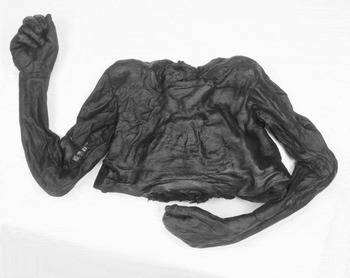
Oldcroghan Man This practice of dismemberment also occurred with the latest bog bodies to be discovered in Ireland. Oldcroghan Man (figure 2) and Cloneycavan Man were both discovered in 2003, in the Irish midlands boglands of counties Offaly and Meath respectively, to the west of Dublin. Both were dated to the Mid-Iron Age (c.4th–2nd centuries B.C.; Mulhall and Briggs Reference Mulhall and Briggs2007). Only the upper torso and arms of Oldcroghan Man were deposited in the bog but these were sufficient to indicate that the body was that of an adult male of large stature, 6 feet 3.5 inches in height, with ‘enormous arms’ and powerful hands (Grice Reference Grice2006, 19). Despite this, his body bore few signs of physical exertion or labour in the months preceding his death. The analysis of his stomach contents revealed a last meal of buttermilk and finely milled flour, and generally high protein levels preserved in his nails may indicate he died during the winter, when more meat was being consumed (ibid.). He was naked apart from a plaited leather armband, decorated with copper alloy fittings (Mulhall and Briggs Reference Mulhall and Briggs2007, 73). The remains attest to another violent death, with a fatal stab wound to the chest, which he had tried to deflect with his left arm, causing a deep cut before the knife punctured the lung. He had then been disembowelled and dismembered, removing the lower body below the ribs, as well as the head. Distressingly, he also seems to have been tortured: both nipples were sliced through, leaving the skin hanging in flaps (Grice Reference Grice2006). Two withies were pushed through holes in his upper arms, possibly whilst still alive (to pinion his arms) but more probably post-mortem, to stake him into the bog.
Oldcroghan Man (© The National Museum of Ireland).

Cloneycavan Man Whilst Oldcroghan Man was found in situ, projecting from the side of a recently cleaned drainage ditch, Cloneycavan Man was discovered on the peat conveyor belt, thus losing any detailed contextual information. Again, the remains consisted of an adult male upper torso (the lower half of the body having been removed by the peat-cutting machine), but this time the head was intact, indicating a slighter stature of 5 feet 9 inches. An elaborate topknot hairstyle was kept in place by a plant-based oil mixed with pine resin from France or Spain (Mulhall and Briggs Reference Mulhall and Briggs2007, 74). This has been interpreted as an attempt to exaggerate his height (Joann Fletcher, honorary research fellow in archaeology, University of York, cited in Grice Reference Grice2006, 20), although Aldhouse-Green (Reference Aldhouse-Green2004b) argues that the plaiting, pinning or setting of hair during this era may be part of how adult, virile, male status was represented and performed. A number of the female bog bodies from Denmark have had their hair cut off or partly shaved, shortly before their death (see below), and Grice records (2006, 19) that the front part of Cloneycavan Man's head was similarly shaved short. This attention to his hair and its lavish adornment before mutilation may also therefore have been an integral part of the preparatory sacrificial rituals (Aldhouse-Green Reference Aldhouse-Green2004b). From the remains that were interred, Cloneycavan Man appears to have been killed by several shattering blows to the skull, a wound to the chest from an implement such as an axe, and a 40-centimetre gash to the abdomen area, which may indicate disembowelling (Mulhall and Briggs Reference Mulhall and Briggs2007, 74).
Interpretations
Four stories of violent death and dismemberment: how have they been interpreted? Brothwell has commented (1986, 28) on the ‘overkill’ present in the demise of these individuals: it is evident that these are not simply incidents of accidental death or manslaughter. Aldhouse-Green (Reference Aldhouse-Green2001) has suggested that this kind of multiple wounding is typical of participatory violence, where a group takes communal responsibility for the death of an individual. The first explanation of this kind of communal violence is that it represents judicial punishment for individual transgressions. This draws directly on the classical sources, particularly the writing of Tacitus (c. A.D. 55–c.120), who stated that amongst the Germanic tribes ‘the coward, the shirker and the disreputable body are drowned in miry swamps under a cover of wattled hurdles’ (Germania Chapter 12, cited in Aldhouse-Green Reference Aldhouse-Green2001, 117). There is certainly ample evidence for binding (e.g. Kayhausen Boy) or blindfolding (e.g. Windeby Girl): acts of restraint and degradation which would have disabled and disorientated the victim (Aldhouse-Green Reference Aldhouse-Green2004a). Many bog bodies were also pinned down using withies or stakes and poles (e.g. Gallagh Man from Ireland, Windeby Man and the Haraldskær individual; Van der Sanden Reference Van der Sanden1996, 98–99). This may have prevented the body rising to the surface of the bog, whilst also symbolically binding it in place (Aldhouse-Green Reference Aldhouse-Green2004a). The partial shaving of hair alluded to earlier is found in examples such as the Windeby Girl and the Yde Girl, whereas the hair of the Huldremose Woman was cut off and placed alongside the body, with one strand apparently placed around her neck (Van der Sanden Reference Van der Sanden1996, 164). Such acts are interpreted as an act of public shaming: part of humiliating ceremonies preceding the killing of a sacrifice or prisoner. They are often related to Tacitus’ comment on adultery, in which he states, ‘A guilty wife is summarily punished by her husband. He cuts off her hair, strips her naked, and in the presence of her kinsmen turns her out of his house and flogs her through the village’ (Germania, 1970, Chapter 19, 117). Taylor has argued that such ‘crimes against honour’ were punished by ritual killing, banishing the individual to an in-between world – ‘neither heaven nor earth’ – a place in which the body would not rot, nor would the soul be released into the ancestral realm, but instead was deliberately trapped in a liminal zone (cited in Grice Reference Grice2006, 21; also Taylor Reference Taylor2003, 165). An alternative explanation is that these individuals had not necessarily committed any personal crime but had been chosen by the community to symbolically take on collective guilt, fear or misfortune, as a scapegoat figure (Aldhouse-Green Reference Aldhouse-Green2001). Such an incident is recorded from southern Gaul by Petronius (Aldhouse-Green Reference Green1998, 183), and Turner argues that such individuals may well have expected their sacrifice to be rewarded with reincarnation (1999, 233).
Notably, several of the bog bodies are distinguished by some aspect of deformity or unusual physiognomy, such as Lindow III's vestigal thumb or the Yde Girl's curved spine and deformed gait, affected by scoliosis (Van der Sanden Reference Van der Sanden1996, 138), or the body asymmetry and shortened legs of Zweeloo Woman (Taylor Reference Taylor2003, 155). It is possible that these physical differences set them apart from the rest of the community, leading to their selection as appropriate scapegoats at a time of communal crisis (Aldhouse-Green Reference Aldhouse-Green2004a). The ergot found in Graubelle Man's stomach (Glob Reference Glob1969) was probably derived from a fungus which grows on rye and other cereals. It would have induced painful symptoms known as ‘St Anthony's fire’: convulsions and burning sensations in the mouth, hands and feet (Taylor Reference Taylor2003). Whilst it may have been deliberately administered to induce hallucinations and a coma-like status before his death, it is more likely that the naturally ingested toxin caused a range of bizarre behaviour which may have been attributed to possession by a malign and dangerous force, occasioning his violent death.
In the writings of the classical author Strabo, there is another explanation of this rite, which might also explain the disembowelling seen in the two most recent Irish bog bodies. He notes that such groups ‘used to strike a human being, devoted to death, in the back with a sword, and then divine from his death struggle’ (Geographia IV, 4.5, cited in Aldhouse-Green Reference Aldhouse-Green2001, 83) and Diodorus Siculus noted of the Gauls that they used to ‘kill a man by a knife-stab in the region above the midriff, and after his fall they foretell the future by the convulsions of his limbs and the pouring of his blood’ (Histories V, 31, 2–5). Clearly, we should be cautious of accounts which may seek to deliberately exaggerate or exoticize the ‘barbaric’ traits of those whom they were keen to colonize. However, the need for augury and prediction may well have motivated some of these killings.
Finally, the well-fed and manicured appearance of many bog bodies, alongside a lack of evidence for manual labour in the months immediately preceding their death, has led to the suggestion that we are looking at high-status captives or hostages, who were deliberately executed after their seizure in tribal warfare or following insurrection against a chief (Aldhouse-Green Reference Green1998, 181). Kelly (Reference Kelly2006) has argued that many of the Irish bog bodies were buried close to barony or parish boundaries which may preserve the trace of much older underlying tribal boundaries. He notes that other objects – wooden yokes, weapons, cauldrons, personal ornaments, headdresses and gold collars – were found in similar locations (ibid.). He has therefore interpreted the human remains as part of a deliberate series of sacrifices and prestigious offerings of regalia made to gods of fertility, to ensure successful kingship, as well as perhaps removing rivals from the political field (cited in Grice Reference Grice2006, 21). Rituals of inauguration, and events associated with claims of sovereignty, may therefore have occasioned such gifts. Kelly's interpretation is novel for the way in which he notes parallels between the treatment of things and of people. His argument is that such offerings tend to be deposited at boundaries – a practice found across the Iron Age in the deposition of objects and human remains at thresholds and entranceways, and in enclosure ditches (Hill Reference Hill1995; Hingley Reference Hingley1990). However, continuity between later prehistoric and medieval boundaries needs to be carefully demonstrated; it is possible, instead, that natural phenomena which once attracted votive deposits (such as the edges of the land: fens or bogs, rivers, streams or shorelines) later become natural foci for political boundaries.
It is clear that northern European bog bodies are the result of many different events and intentions, including accident, murder and expulsion from communities of the sanctified dead. Yet the four explanations discussed above – punishment, scapegoating, augury and sacrifice – have dominated archaeological interpretation of later prehistoric bog bodies. My aim as an archaeologist is to use a contextual approach to understand such violent acts. First, it is necessary to reconstruct the environment in which they were deposited, in terms of its significance for later prehistoric communities. Bogs are all too often seen as bleak and desolate places, a view which is exaggerated by the denuded and desiccated surfaces left following peat extraction. However, excavations at sites such as Glastonbury and Meare on the Somerset Levels (Coles and Minnet Reference Coles and Minnitt1995), the bog trackways of Ireland (Raftery Reference Raftery1996) and Somerset (Coles and Coles Reference Coles and Coles1986), or the fenlands of eastern England (Pryor Reference Pryor2005), reveal that they were used extensively in later prehistory. Fordable crossings were made using brushwood hurdles or more complex planked paths. Abundant natural resources, such as the carr woodland found at their edge, reeds, sedges and mosses, were used for manufacturing and medicinal purposes. Seasonal fishing, fowling and gaming supplemented a diet based on mixed agriculture. In addition, there may well have been a specialist aspect to their use: sites like Glastonbury appear to have been episodically used craft centres, for working metal, glass and wood (Coles and Minnit Reference Coles and Minnitt1995). Bogs are one of the primary sources of iron ore (Salter and Ehrenreich Reference Salter, Ehrenreich, Cunliffe and Miles1984), as well as peat for fuel. The bogs would therefore have been places associated with production, fertility and seasonal abundance. This may explain why they were also often associated with depositional activity, interpreted as ritual or votive offerings (cf. Field and Parker Pearson Reference Field and Pearson2004). Moreover, as places which grew year on year, swelling with new layers of peat formation, subsuming features which were once visible, and occasionally bursting to spew peat over settlements and farmland (Meredith Reference Meredith2002; Taylor Reference Taylor2003, 151), they may have been accorded some animacy or even identity.
These were liminal places where land met water, where the ground beneath one's feet was insubstantial and often treacherous. Bogs are often associated with phenomena such as the flickering and luminescent ‘will-o’-the-wisp’ (Stead and Turner Reference Stead and Turner1987, 12; malign or mischievious ignis fatuus, sometimes referred to as ghost or corpse lights), which are probably a gaseous by-product of decaying organic matter. The quality of the standing bodies of water in a bog – still and limpid, reflective – may also have been important. In ethnographic case studies of small-scale communities, an explicit analogy is often drawn between the properties of such pools and the surface of mirrors, which are both seen as points of access to the underworld, or realms of the ancestors and spirits (Giles and Joy Reference Giles, Joy and Anderson2007). Prehistoric people would probably have known about the miraculous preservative qualities of this water, as well as the healing properties of the Sphagnum moss. In contrast to Taylor's argument (2003), I would suggest that it is possible that those deposited in the bog were being sent directly into the next realm, where people and things were renewed or regenerated, through a portal used on other occasions to make appeals for intercession, aversion of misfortune or blessing.
This brings us back to the identity of the deceased: who were these individuals? They may well have been slaves or captives: people who were considered less than fully human, or were seen as objectified property, making them acceptable offerings for sacrifice (cf. Green Reference Green1998). This discomforts and challenges both our image of these small-scale communities and our conception of categories of being in the past. Notably, people and things are treated in comparable ways: weapons, personal objects, tools, cauldrons and food (such as tubs of bog butter) are often deliberately damaged, twisted or broken before being pinned or weighed down, as with the bog bodies. Such individuals may have been seen as analogous to objects or, at a deeper metaphorical level, were even conceptualized as people–object amalgams (cf. Latour Reference Latour1993), ‘vessels’ of the communities’ fears, appeals or desires, gifted to the spirits or ancestors which inhabited such places.
The fact that many of the bodies were dismembered is in keeping with other funerary rites in regions such as Wessex, where, following excarnation or selective exhumation, parts of the body were selectively interred in ditches and pits (Hill Reference Hill1995; Sharples Reference Sharples2008). Both may indicate a radically different concept of personhood, in which people were conceived of as ‘partible’ or relational beings (cf. Fowler Reference Fowler2004; Brück Reference Brück2004). Upon death, they may have been separated into constituent elements and interred in a series of places which were meaningful to them or to their depositors.
Finally, it is interesting to note that all four of the case studies discussed above were notable for the fact that they appear to have been well fed, lacking evidence for disease or stress, and with few signs of having led a life of heavy manual labour shortly before death (Rolly Reed, head of conservation at the National Museum of Ireland, cited in Grice Reference Grice2006, 20).Valerie Hall (professor of palaeoecology at Queen's University Belfast) therefore interprets Oldcroghan Man as ‘the golden boy of his tribe [with] . . . big, capable hands . . . even in death, he oozes confidence, status, presence’ (cited in Grice Reference Grice2006, 20). Whether these were members of the community or captives from a rival group, such individuals may well have been revered and honoured, as people of exceptional importance, skill, wisdom or prowess. Amongst these small-scale communities, secular and sacred authority may have combined in such individuals, who may have orchestrated important social and ritual events. Their distinguishing features and appearance, which we see as deformities or anomalies, might have already set them apart as being marked, touched or favoured by the gods: with one foot already in the next realm. This may have made them appropriate intercessors with spirits or ancestors, in times of exceptional crisis or need. (The fact that many of the deaths date to the Late Iron Age and early Roman period, when identities, beliefs and political autonomy were in a state of flux, may be significant here). In other words, it is possible that despite the excessive violence visited upon them, some of these individuals made an offering of themselves. The drugs or blows which rendered them unconscious may have been strategies to limit their suffering and/or ensure their compliance during the atrocious experience. This alternative interpretation puts a rather different complexion on these societies, suggesting that authority and power came with responsibilities and consequences. It reveals the possibility that such communities had a different world view and economic logic, in which personal sacrifice was an essential part of the cycle of fertility and renewal. Whether they intended their remains to stay in the bog, as a spiritual realm, is impossible to determine, but it is only through archaeological analysis that these alternative interpretations are made possible.
Encounter and transformation
This article has defended the analysis of bog bodies by arguing that these remains have the potential to reveal very different understandings of what it meant to be human in the past. However, I also want to suggest that the acts of exhumation and analysis transform those who undertake them, due to the visceral nature of these experiences (Turner Reference Turner, Coles, Coles and Jørgensen1999, 233).
Exhumation is a sensitive process, which ideally affords respect to the deceased and protects them from obtrusive attention (cf. O'Sullivan Reference O'Sullivan2001, 129). Many archaeologists have therefore experienced the ‘personal amity’ thus engendered between excavator and excavated (O'Sullivan Reference O'Sullivan2007, 19). However, the reality of handling and cleaning such remains can induce conflicting emotions: whilst many specialists feel privileged (Brothwell Reference Brothwell2006, 13), they can also be concerned about violating the dead (cf. Cox Reference Cox1994, 8) and question their right to remove them from their burial place (Stutz Reference Stutz2003). This is particularly the case with well-preserved remains, which may be perceived as frightening or intimidating, whilst also reminding archaeologists of their common humanity. Such feelings were explicitly articulated in the Timewatch programme on the Irish bog bodies (2006) and its associated publicity:
I was freaked . . . On a personal level I had trouble . . . I had a vision of those enormous arms [of Oldcroghan Man] coming round the back of my neck. I was getting flashbacks for a fortnight. I was having nightmares . . . What hit me hardest, I think, was the fingerprints – perfect fingerprints – the same as a guy's from today. He could have been anybody off the streets of Dublin . . . it was like touching your own skin (Rolly Reed, head of conservation at the National Museum of Ireland, in Grice Reference Grice2006, 19 and 21).
These emotional responses – feelings of being haunted and troubled, whilst also touched and honoured – inevitably vie with any notion of professional detachment (cf. Reeve and Adams Reference Reeve and Adams1993; Boyle Reference Boyle, Downes and Pollard1999; Kirk and Start Reference Kirk, Start, Downes and Pollard1999). Conservators and forensic scientists working with the Irish bog bodies also expressed the particular responsibility they felt to these individuals, due to the brutal and violent nature of their deaths:
You have a genuine affection for who these people were and how they died. One has a relationship and one treats the person with great respect and genuine tenderness.
On the second occasion [in the laboratory], a number of us were gathered round in white coats and gloves and masks. Nothing was said, but I noticed how we all reached out and held Oldcroghan man's hand. It was a reassurance across the aeons that we intended no harm. The harm done to those men in their lives was heart-wrenching (Prof. Valerie Hall, environmental archaeologist, in Grice Reference Grice2006, 20).
These vivid first-person accounts are part of a growing self-reflexivity in archaeology which makes the process of analysis and interpretation more transparent (Hodder Reference Hodder1997; Chadwick Reference Chadwick1998). By analysing our response to exhumation and forensic analysis, we are beginning to reflect on the way in which our own emotions about death are culturally constructed, and identify attitudes from the past which may differ considerably from our own (Stutz Reference Stutz2003, 61). Arguably, these reflections should become part of both our publications and displays, so that we reveal how we are affected or transformed by our encounter with the past. In funerary archaeology, this can result in a strong sense of advocacy: of speaking on behalf of those who have been robbed of their voice in their own lives. Whilst we acknowledge that this can be disturbing or unsettling for both ourselves and the communities we serve (cf. Crossland Reference Crossland2000; Hunter and Cox Reference Hunter and Cox2005), part of the ethical discharge of our responsibilities is to tell the stories of such people from the past who were beaten, brutalized and hidden. Our archaeological stories hold out the promise that ‘what has been experienced cannot disappear as if it had never been’ (after Berger Reference Berger1984, 21). Moreover, I would argue that it is by conjuring the historical and environmental context of these violent events that we begin to understand them not as alien or barbaric acts, but as meaningful – if brutal – strategies, adopted by people in times of social crisis.
Exhibiting the dead
Reviewing current practice amongst exhibits of bog bodies reveals a particular archaeological aesthetic at work in these displays. Since the process of preservation results in a ‘tanned’ or leather-like appearance, the bodies are presented as if freshly exposed. A textured peat background often enhances this impression. They are usually presented prone, lower than the viewer, establishing a particular relationship of power with the deceased. The public are therefore encouraged to adopt the stance of those who are watching the body sink from view, or that of the archaeologist, following its discovery. As visitors and voyeurs, we witness time fold: seeing both the moment of deposition and its revelation.
Certain features may be highlighted through the use of mirrors, the careful positioning of the corpse or close-up images, such as the slit throat of Lindow Man or the noose around Tollund Man's neck. Their nakedness is apparent but not exaggerated: instead, attention is often drawn to small items of clothing – Tollund Man's leather cap and belt, the fox-fur armband of Lindow Man or Oldcroghan Man's leather and metal armlet. Curators of these exhibitions use these as devices to endear us to the deceased, by revealing intimate traces of stitching, wear and repair. Such objects prompt us to think of the life behind the moment of death. Many of the bodies are accompanied by facial reconstructions which additionally humanize the remains. Coupled with the analysis of last meals, disease, body adornment, and the preparation of hair and nails, we are encouraged to literally re-member the dead (Crossland Reference Crossland2006) – piecing these bodies back together by looking and reading closely. Our textual narratives are important here. Normally, exhibitions are written in the authoritative voice of the specialist or expert, speaking with hindsight, perhaps complemented by quotes from the classical authors (as in ‘The mysterious bog people. Rituals and sacrifice in ancient Europe’; see review by Gill-Robinson Reference Gill-Robinson2004). In contrast, we might use multiple, competing explanations from different perspectives, to encourage visitors to form their own interpretation (a perspective adopted after the consultation process on the new Lindow Man exhibition in Manchester; Bryan Sitch, head of Human Cultures and curator of archaeology at the Manchester Museum, quoted in Taylor Reference Taylor2008). More radically, we can conjure a sense of perceived agency of the dead by giving them a voice, as in Heaney's poetry (Reference Heaney1990), where the bog bodies exude fertility and potency, speaking to us of their dreams, crimes or relationships.
By conjuring both the broader social context of any death, and revealing the process of archaeological interpretation, we can therefore make our contribution to understanding past humanity more transparent. We can reveal the ways in which the past was palpably different to the present, inhabited by people with motives and concerns which may shock us, but which we attempt to understand. This is not to pretend that our values and experiences are commensurable with those of the past – they are not – but this goal of recognizing difference is important in the face of a homogenizing and totalizing present, where humanity tends to be universalized.
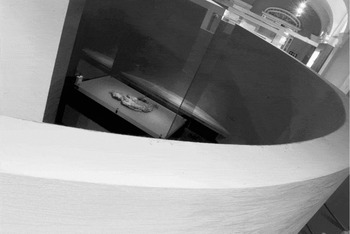
By thoughtful design, we can also create a particular kind of encounter between visitors and the dead: enabling them to choose whether to actually view the remains (see Lohman Reference Lohman and Goodnow2006; Mulhall and Briggs Reference Mulhall and Briggs2007, 75; also Vaswani Reference Vaswani2001; and criticisms voiced over the eventual display in Manchester; Schofield Reference Schofield2008). This might include displaying them within a dedicated space, using lighting and the height of presentation cases to permit a more intimate ‘meeting’ between past and present (figure 3) (Ned Kelly, personal communication). The new British Museum display of Lindow Man ensures that the remains are ‘gently shielded in a dark bower’, although the reviewer noted that ‘discretion won't stop the crowds gathering to stare’ (Jones Reference Jones2007, 24). However, the 2006 ‘Kingship and sacrifice’ exhibition of the Irish bog bodies at the National Museum of Ireland, Dublin, achieved greater intimacy in these encounters (Mulhall and Briggs Reference Mulhall and Briggs2007) through ‘high-walled cylindrical cells, dimly lit and large enough for only a handful of people to enter at one time’ (O'Sullivan Reference O'Sullivan2001, 135). O'Sullivan notes (ibid.) that the effect of these spaces was almost sepulchral, encouraging a quiet and respectful encounter. Aesthetic notions of what is ‘appropriate’ are inevitably culturally and temporally specific, but this exhibition does at least create a reflective space in which to view the remains or offer the choice not to see them at all. Such care is also part of our ethical obligation towards contemporary visitors.
‘Kingship and sacrifice’: the exhibition of Irish bog bodies and associated artefacts at the National Museum of Ireland, in Dublin (© The National Museum of Ireland).

Representing the dead?
However, within major British and Irish museums, archaeologists are currently debating whether any display of human remains is justified (Merriman Reference Merriman, McManamon and Hatton2000; Swain Reference Swain2002; O'Sullivan Reference O'Sullivan2007; Burch Reference Burch2008). Swain notes that there were no objections to the ‘London Bodies’ on display in the Museum of London's exhibition (2002), a report supported both by Cleal's survey of visitors to the Avebury museum in 1999 (2008) and Carroll's interview survey in Cambridgeshire (2005) which suggested that 79% of the general public expected to see human remains in museum contexts. Notwithstanding this apparent endorsement, individual responses to ‘Kingship and sacrifice. An exhibition on Iron Age bog bodies and related finds’ at the National Museum of Ireland were less positive (O'Sullivan Reference O'Sullivan2007, 18). Gill-Robinson notes (2004) that responses vary culturally according to prevailing attitudes about the display of human remains: a travelling exhibition on ‘The mysterious bog people’ which attracted few complaints in northern Europe was much more contentious when exhibited in Ottawa, Canada. She attributes this to the virtual embargo on displaying ancient human remains in countries where living descendants regard this as morally repugnant. In contrast, in countries where the display of human remains – such as catacomb saints or religious relics (Johnson Reference Johnson1996) – are more common, such tensions have not arisen. Johnson argues (ibid.) that they are instead seen as vital visible manifestations of mortality: ideological memento mori designed to induce piety and awe at the mystery of human existence.
Goodnow (Reference Goodnow, Lohman and Goodnow2006) makes the convincing case that the special status of fleshed and virtually complete bodies is due to the way in which they flout the norms of display. Rather than being fragmented, sanitized and stripped bare, such remains force the viewer to face the ‘abject’ (a concept she draws from the work of Kristeva). They threaten the sense of distance and containment which a museum normally promises the viewer. This is the source both of their power as an exhibit and of the unsettling emotions they engender in the viewer. During the review and design of its archaeological collections, the Manchester Museum has had to address both positive and negative feedback about its display of such remains, particularly its egyptology collection (Exell, personal communication). Based on this material, Merriman, Bienkowski and Chapman note that such audiences ‘have deep, sophisticated, complex and often contradictory feelings . . . missed by most superficial surveys’ (2008, 53). The Manchester Museum's ongoing dialogue with these users has resulted in a revised human-remains policy (Manchester Museum 2007) and the decision to remove the ‘bog head’ of Worsley Man from its display. It noted that this policy ‘states that human remains should always be displayed in a way that is culturally appropriate, sensitive and informative’, yet the busy, narrow corridor in which he was exhibited was not large enough to create a respectful encounter, supported by sufficient contextual information to make sense of this violent death (source: case label – Worsley Man, 2007).
As a result of such cases, O'Sullivan therefore cautions curators who refuse to ‘enter into dialogue’ with public opinion, arguing that consultation beforehand and communication afterwards should be an integral part of the excavation and exhibition process (O'Sullivan Reference O'Sullivan2001, 132). (These discussions are now taking place within the context of international debates over the repatriation of remains to indigenous communities from North America, Australia and New Zealand – Morris Reference Morris2003; Besterman Reference Besterman2004.) Yet such forums have not met with universal approval from the broader archaeological and museological community. The Manchester Museum has been criticized for the suggestion that they will use such dialogues to inform future policy on collection, curation and retention; some have interpreted this as a proactive move towards repatriation or reburial (see Restell Orr and Bienkowski Reference Restell Orr and Bienkowski2006; cf. Payne Reference Payne2007; Keys Reference Keys2008). Mays questions the ‘weight’ attached to particularly vocal minority interest groups (such as modern pagans in the UK), whose calls for the reburial of ancient British human remains (e.g. Randerson Reference Randerson2007) threaten what he sees as an irreplaceable scientific resource (Keys Reference Keys2008, 8). Using the DCMS criteria which states that such groups must be able to demonstrate positive ‘genetic links [or] cultural continuity’, he seriously queries the validity of these claims. Some members of the pagan community agree with this assessment (Diedriech Reference Diedriech2006), whilst other archaeologists are more open to the idea of reinterring remains with limited research potential (Lohman Reference Lohman, Lohman and Goodnow2006, 22). In response to criticism of Manchester's policy, Bienkowski questions the superior weight normally attributed to professional scientific opinion (cited in Randerson Reference Randerson2007, 3), arguing that the key issue is ‘whether or not local communities have a legitimate claim to participate in decision-making about the fate of human remains from their localities’ (Bienkowski Reference Bienkowski2007, 18). The Manchester Museum has therefore called (2008) for a new policy which defines those ancient human remains without demonstrable genetic or cultural descendants as ‘the collective responsibility of all that area's modern residents’.
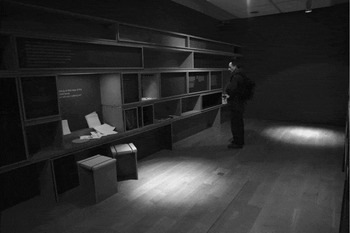
Whether such an initiative is adopted elsewhere remains to be seen, but the strength of local attachment to such remains is clearly evident in the public support for the ‘regional’ repatriation of Lindow Man to Manchester, both in the past (see Merriman, Bienkowski and Chapman Reference Merriman, Bienkowski and Chapman2008, 53 and photograph) and present (Lindow Man blog 2008; Taylor Reference Taylor2008). In addition to their scientific and historical importance, the value of human remains will always be assessed in light of the cultural capital they represent for contemporary communities (regional and national), and the use of the past to define senses of identity, place and history. In an ideal world, wide consultation will not only enrich such a research agenda (Merriman, Bienkowski and Chapman Reference Merriman, Bienkowski and Chapman2008, 53), but it may also help influence the content and design of such exhibitions. For example, the new display of Lindow Man at the Manchester Museum utilizes seven complementary and sometimes conflicting views about this individual and his fate: interpretive ‘voices’ that arose out of the consultation process with a variety of participants, which foreground this debate (figure 4) (Bryan Sitch quoted in Taylor Reference Taylor2008, 9; Burch Reference Burch2008, 50).
‘Lindow Man. A bog body mystery’: the exhibition of Lindow Man, on loan to the Manchester Museum in 2008–9 (© The Manchester Museum, The University of Manchester).

It is now incumbent upon curators to be able to articulate the value of human remains to different users, and to defend the reasons behind their display. In contemporary Britain (in contrast to Catholic communities in Ireland), I would argue that one of the main justifications for this is that museums are the context in which we normally encounter our first corpse (Swain Reference Swain2002, 99), usually at primary-school age – a time when we have very few preconceptions or inhibitions about the bodies of the deceased. Since the next corpse we are likely to see may well be a close family member, museums provide a vital arena in which ideas about death, and contrasting beliefs concerning the afterlife, can be discussed. They can also provide important biological information about our shared mortal condition, and the process of death itself (see Stutz Reference Stutz2003). Whether we think it is a positive thing for society or not, in an era in which we have become distanced from death, museums provide an important arena in which such encounters can be encouraged and sensitively managed, to raise issues of vital importance to all humanity.
Conclusion
‘I'm glad they think she's been there all this time.’
‘Why?’
‘It makes it further away. Less to do with us. With now.’
Siobhan Dowd, Bog child (Reference Dowd2008, 25)In Siobhan Dowd's novel, the discovery of a young Iron Age girl's body in an Irish bog becomes the meeting point for a collision of violent worlds: prehistoric and modern, both contending with notions of sacrifice and honour. The above conversation between Dowd's characters embodies the key challenge set out in this paper: to explain the importance and meaning of ancient human remains to contemporary society.
In this article, I have used the phenomenon of bog bodies to explore the debate over the treatment of the dead. I have evaluated the legal context in which British and Irish archaeologists work, explored the notion of post-mortem rights and discussed the ethics of exhuming and exhibiting their remains. The analysis of four case studies has revealed how such bodies will not simply ‘speak’ to us, and that their wishes cannot be simply divined or intuited: both their identity and their materiality is constructed through the interpretive process of excavation, analysis and display (Mclean Reference McLean2008). It has therefore defended their archaeological investigation, as the means through which preconceptions about the past can be radically transformed. But it has also tried to illustrate the social relations of exhumation: how this process in turn affects the archaeologists who deal with the ancient dead (see Yarrow Reference Yarrow2003; Edgeworth Reference Edgeworth2006). In sum, it has argued that the violent events of two thousand years ago can encourage us to explore different understandings of the world and alternative kinds of humanity, which can challenge our own attitudes towards life and death.
Acknowledgements
The author wishes to acknowledge her grateful thanks to Zoe Crossland, for her organization of the 2006 Leverhulme-funded workshop on ‘The social relations of exhumation’ at the MacDonald Institute, University of Cambridge, where this paper was first delivered. It benefited greatly from the discussion at this most rewarding forum, and has also developed significantly through the consultation meetings, workshops and dayschools, organized as part of the Lindow Man exhibition at the University of Manchester in 2008. Special thanks are due to colleagues at the Manchester Museum (Bryan Sitch, Piotr Bienkowski), the British Museum (J.D. Hill and Jody Joy), and particularly the National Museum of Ireland (Ned Kelly, Isabella Mulhall, Maeve Sikora and Finbarr Connolly) for generously sharing ideas, advice and information. All three institutions have also kindly granted permission to reproduce the images presented here. In addition, the article benefited greatly from the comments of two anonymous reviewers and the editorial board. All errors and omissions remain the sole responsibility of the author.