Introduction
This review will examine the demographic changes, the epidemiology of mental disorders and suicides, the potential risk and protective factors, access to secondary care old age psychiatry services (OAPSs) and the policy context pertaining to older people from ethnic minority groups in the United Kingdom (UK). Ethnic minority groups in the UK are usually referred to as Black and Minority Ethnic (BME) groups. They will be the primary focus, although many issues may be potentially applicable to ethnic minority groups in other countries.
Search methods
An electronic search with Medline, Embase, Psychinfo and Cinahl was performed. The search terms used included:
1 Ethnic minority, Black and ethnic minority, Indian, Indian sub-continent, Asian, south Asian, Chinese, African Caribbean, Afro Caribbean, Black Caribbean, West Indian and Jamaican.
2 Mental illness, mental disorder, dementia, Alzheimer's disease, vascular dementia, depression, schizophrenia, anxiety.
3 Elderly, old people, old age.
4 United Kingdom, England, Wales, Scotland, Northern Ireland and British.
References listed in the papers retrieved from the search and those known to the author were also considered.
Definitions
The definition of ethnic minority older people is a composite of the definitions of ethnic minority and older people.
Some ethnic groups, particularly those from developing countries, have a shorter lifespan, retire early and assume the role of an older person at a younger age.Reference Rajkumar, Kumar and Thara1 Therefore a younger age cut-off (40–55 years) was used in some earlier studies of ethnic minority groups in the UK.Reference Barker2–Reference Manthorpe and Hettiaratchy4 This review will examine studies that have used varying definitions of older people. Also, there are difficulties in ascertaining the precise age in some ethnic groups.Reference Chandra, Ganguli and Ratcliff5–7
The terms race, culture and ethnicity are sometimes, but erroneously, used interchangeably. Race is a phenomenological description primarily referring to physical appearance.Reference Bhopal8 Culture refers to shared features that bind individuals together into communities. The definition and identification of ethnicity can be problematicReference Lloyd9–Reference Pringle and Rothera11 because ethnicity includes aspects of race and culture, and other characteristics including historical traditions, language, religion, upbringing, nationality and ancestral place of origin.Reference Rait and Burns12 It may also be personal expression of identity influenced by life experiences and place of habitation, and it is dynamic and changes over time.Reference Senior and Bhopal13 A useful working definition of ethnic minority individuals is ‘those with a cultural heritage distinct from the majority population’.Reference Manthorpe and Hettiaratchy4 This definition is appropriate in countries like the UK, where the indigenous population forms the majority, although it creates difficulties in countries like Australia, where the indigenous population is a minority. The definition of BME groups used in the British governmental document Delivering Race Equality in Mental Health Care 14 was ‘. . . all people of minority ethnic status in England’. It does not only refer to skin colour but to people of all groups who may experience discrimination and disadvantage, such as those of Irish origin, those of Mediterranean origin and East European migrants. Some studies have used country of birth as a proxy for ethnicity.Reference Livingston, Leavey and Kitchen15–Reference Dennis, Shah and Lindesay17 There is a close match, with concordance rates ranging from 85 to 96%, between the country of birth and ethnicity in those aged 65+ years in England and Wales.18, Reference Wild, Fischbacher, Brock, Griffiths and Bhopal19
This review will examine studies using any of the above definitions of ethnicity.
Epidemiology of mental disorders
The proportion of older people over the age of 65 years from BME groups in the general population has progressively increased from 1% in 1981,20 to 3% in 1991,21 to 8.2% in the 2001Reference Shah, Oommen and Wuntakal22, Reference Shah23 population censuses in England and Wales. Moreover, 7.1% of all older people in England and Wales were from BME groups in the 2001 population census.Reference Shah, Oommen and Wuntakal22, Reference Shah23 The total number of older people from all BME groups combined was 531,909. Similarly the proportion of older people in other countries, including the United States,Reference Markson24, Reference Mui, Kang, Chen and Domanski25 is also increasing.
There are only a few population-based prevalence studies of mental disorders among older people from BME groups in the UK. The two most common mental disorders in old age are dementia and depression.
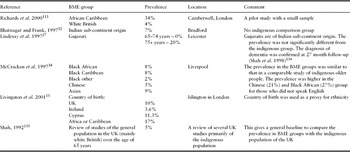
Table 1 illustrates the community prevalence of dementia in different BME groups in the UK. The community prevalence of dementia is either similar or higher in the different BME groups compared with the indigenous group. Vascular dementia has been reported to be over-represented in those born in Africa or the Caribbean when compared with those born in the UK.Reference Stevens, Leavey and Livingston26
The prevalence of dementia in BME groups in the UK

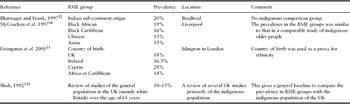
Table 2 illustrates the community prevalence of depression in different BME groups in the UK. The community prevalence of depression among older people from BME groups, in general, was similar to that among indigenous older people; the main exception was a higher prevalence among those born in Cyprus compared with those born in the UK.Reference Livingston, Leavey and Kitchen15 Although the prevalence of depression was not measured, depression scores were not significantly different between Gujarati and indigenous older people in Leicester.Reference Lindesay, Jagger and Mlynik-Szmid27 The prevalence of depression in convenience samples of older Bengalis and Somalis in east London was higher than in older white British individuals,Reference Silveira and Ebrahim28–Reference Silveria and Ebrahim30 but lower in a convenience sample of older Gujaratis in north London.Reference Silveria and Ebrahim29–Reference Ebrahim, Patel and Coats31
The prevalence of depression in BME groups in the UK

A population-based study of older people originating from the Indian sub-continent in Bradford reported prevalence rates of 2% for anxiety neurosis.Reference Bhatnagar and Frank32 The Leicester study reported prevalence rates of 22, 1 and 4% for agoraphobia, simple phobia and panic attacks, respectively, among older Gujaratis;Reference Lindesay, Jagger and Mlynik-Szmid27 simple phobias were less prevalent among the Gujarati than British-born white controls.Reference Lindesay, Jagger and Mlynik-Szmid27
There are no population-based studies of late-onset schizophrenia in older people from BME groups, but an increased rate of new contacts with OAPSs by African Caribbean older people was reported in London; the incident contact rate for men and women was 172 and 323 per 100,000 of the population, respectively.Reference Reeves, Sauer, Stewart, Granger and Howard33
Risk and protective factors
The vast majority of studies examining risk and protective factors are cross-sectional and based on prevalence studies. There is a paucity of longitudinal case-control or cohort studies and studies using incident rates.
Dementia and cognitive impairment
Potential risk factors for dementia identified in cross-sectional prevalence studies included increasing age, years of education, inability to speak English, living in residential care and being born in Africa or the Caribbean,Reference Livingston, Leavey and Kitchen15, Reference McCracken, Boneham and Copeland34 although the association with inability to speak English may be a methodological artefact, because poorly validated instruments to measure dementia were used.Reference Shah, Lindesay, Nnatu, Burns, O’Brien and Ames35 Dementia in those born in Africa or the Caribbean was associated with a history of hypertension or current untreated hypertension;Reference Stevens, Leavey and Livingston26 this study did not find an association between dementia and diabetes, past or present smoking and alcohol consumption.Reference Stevens, Leavey and Livingston26 Among African Caribbean older people with low levels of education, cognitive impairment (as opposed to a diagnosis of dementia) was associated with hypertension, diabetes and raised triglyceride levels.Reference Stewart, Richards, Brayne and Mann36 Among African Caribbean older people with normal or higher levels of education, cognitive impairment was associated with high cholesterol levels and manual occupation.Reference Stewart, Richards, Brayne and Mann36 Physical exercise offered protection against cognitive impairment in older African Caribbeans.Reference Stewart, Richards, Brayne and Mann36
Cognitive decline, over a 3-year period, in older African Caribbeans was associated with ageing and this decline was significantly stronger in those with diabetes mellitus, but lower in those reporting vigorous physical exercise at baseline.Reference Stewart, Prince and Mann37 Shorter leg length (a marker for early life environment and childhood nutritional status), independent of age, gender and education, was associated with cognitive impairment but not cognitive decline in older African-Caribbeans.Reference Mak, Kim and Stewart38
Genetic studies have only been conducted in older African Caribbeans in the UK. Cognitive impairment was negatively associated with the APOE E2 allele and positively, but more weakly, with the APOE E4 allele.Reference Stewart, Russ, Richards, Brayne, Lovestone and Mann39 The effect of both alleles was greater after the age of 70 years and in those with hypertension, diabetes mellitus and lower levels of educational attainment. There was no direct association between Angiotensin I converting enzyme (ACE) genotype and cognitive decline, although the ACE DD genotype strengthens the association between cognitive decline over 3 years and age.Reference Stewart, Powell, Prince and Mann40
Raised levels of one inflammatory marker (IL-6) were associated with cognitive decline over 3 years among African Caribbean older people;Reference Jordanova, Stewart, Davies, Sherwood and Prince41 no association was found with C-reactive protein or serum amyloid A. Raised levels of homocysteine levels were associated with cognitive impairment in older African Caribbeans with low educational attainment.42
Depression
Potential risk factors for depression identified in cross-sectional studies included lack of social contact, functional disability, being female, subjective ill health, chronic health problems, housing conditions, low family support, low income and reported need for community services.Reference Livingston, Leavey and Kitchen15, Reference Silveira and Ebrahim28–Reference Silveria and Ebrahim30, Reference McCracken, Boneham and Copeland34 Elderly Hindu grandmothers in London were psychologically better adjusted if they lived in extended households and had grand-daughters with exclusively ‘Indian’ or ‘Hindu’ ethnic identity;Reference Guglani, Coleman and Sonuga-Barke43 this scenario may afford protection against depression.
Subjective memory impairment in older African Caribbeans was associated with depression, self-reported physical impairment and APOE E4 allele;Reference Stewart, Russ, Richards, Brayne, Lovestone and Mann44 the effect of APOE E4 allele was stronger in those with depression and lower cognitive scores on the Mini-Mental State Examination.
Suicides
Only five studies have examined suicides in older people from BME groups in the UK.Reference Shah, Dennis and Lindesay16, Reference Dennis, Shah and Lindesay17, Reference Raleigh, Bulusu and Balarajan45–Reference McKenzie, Bhui, Nanchahal and Blizard47 Traditionally, suicide rates were thought not to increase with ageing amongst those originating from the Indian sub-continent in England and Wales and that the suicide rates were low amongst older people in this group.Reference Raleigh, Bulusu and Balarajan45 However, an increase in suicide rates with ageing among Asian females has been reported in London.Reference Neeleman, Mak and Wessely46 Moreover, a more recent unpublished study by the author's group observed an increase in suicide rates with ageing among male migrants from the Indian sub-continent and female migrants from Africa and China in England and Wales. Also, suicide rates have increased among older women originating from the Indian sub-continent between 1993 and 2003.Reference McKenzie, Bhui, Nanchahal and Blizard47
A study comparing suicide rates in older people from BME groups in England and Wales to those in their country of origin observed wide variations in standardized mortality ratios among different BME groups compared with those born in England and Wales and in their country of origin.Reference Shah, Dennis and Lindesay16 Moreover, suicide rates converged towards suicide rates in older people born in England and Wales in some BME groups and diverged in other BME groups. Furthermore, males aged 75+ years from most migrant groups had higher rates than those born in England and Wales. The general heterogeneity in suicide rates for older people across different BME groups has been observed in older people in Australia,Reference Burvill48 and in all ages combined in Australia, Canada, England and Wales and the United States.Reference Burvill, Woodings, Stenhouse and McCall49–Reference Burvill53
A study examining the methods of suicide used by older people from BME groups in England and Wales observed that: hanging, strangulation and suffocation, poisoning by drugs, and drowning and submersion were the most frequent methods of suicide in older males and females in most BME groups; suicide by smoke, fire and flames was significantly more frequent in older women in the Indian sub-continent group; and suicide by unspecified means was significantly more frequent in older men born in Ireland, the Indian sub-continent and Western Europe.Reference Dennis, Shah and Lindesay17 The excess of suicides by smoke, fire and flames in older women in the Indian sub-continent group is consistent with previous reports in younger women in the Indian sub-continent group in England and Wales,Reference Raleigh, Bulusu and Balarajan45, Reference Raleigh and Balarajan52, Reference Prosser54, Reference Hunt, Robinson and Bickley55 in India,Reference Adityanjee56, Reference Bhatia, Kahn and Medirrata57 and of Indian origin in Israel.Reference Modan, Nissenkorn and Lewkowski58 This may be a cohort effect sustaining traditional cultural practices, because the older victims in the recent study were likely to have belonged to the same cohort as the younger victims in the earlier studies from the 1970s and 1980s. The excess of suicide by unspecified means among older males born in Ireland, the Indian sub-continent and Western Europe is of concern because potentially preventable methods of suicide may be hidden behind unidentified methods of suicide.
Scale of the problem
Recent studies have estimated the absolute number of cases of dementia in the BME population to be 11,860 in the UK in 200459 and between 7270 and 10,786 based on the 2001 population census.Reference Shah60 A recent study estimated the absolute number of cases of depression among BME older people to be between 33,559 and 52,980.Reference Shah60
Inequity of access to old age psychiatry services
Older people from several different BME groups, including the African Caribbean, Asian, Chinese and Vietnamese groups, are well aware of services provided by general practitioners (GPs).Reference Barker2, Reference McCallum3, Reference Bhalia and Blakemore61 They also have high general practice consultation rates.Reference Donaldson62–Reference Livingston, Leavey and Kitchen66 Despite high general practice consultation rates and the prevalence of both dementia and depression in different BME groups being comparable with the indigenous group, the prevalence of BME older people in contact with OAPSs is generally low;Reference Rait and Burns12, Reference Lindesay, Jagger and Hibbert65, Reference Blakemore and Boneham67–Reference Jagger69 this has also been observed in other countries like Australia.Reference Hassett and George70
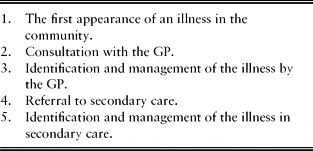
The pathway to reach secondary care OAPS encompasses several sequential stages, listed in Table 3. Possible explanations for the poor representation of BME older people in OAPSs include: the influence of factors related to patients and their families, to general practice and to secondary care.Reference Shah, Lindesay, Nnatu, Burns, O’Brien and Ames35
Pathways into care (adapted from Goldberg and Huxley, 1991)Reference Goldberg and Huxley136

Patient and family factors
Potential older patients and their family members may be unfamiliar with symptoms of mental disorder.Reference Adamson71–Reference Purandare, Luthra, Swarbrick and Burns74 They may not recognize symptoms of mental disorder and dismiss them as a function of old age.Reference Shah, Lindesay, Nnatu, Burns, O’Brien and Ames35 These reasons may be amplified if the potential patient is unable to communicate symptoms of mental disorder to family members and the GP, either due to lack of appropriate vocabulary or fluency in English;Reference Shah75–Reference Thomas, Thornton and Shah79 also, family members may not be able to communicate their concerns to the GP for similar reasons. Potential patients and family members may: believe that nothing can be done; have lack of awareness of available services;Reference Barker2, Reference McCallum3, Reference Bhalia and Blakemore61, Reference Lindesay, Jagger and Hibbert65, 80 have lack of awareness of access procedures for available services;Reference Lindesay, Jagger and Hibbert65 believe that available services are inadequate, inaccessible and culturally insensitive;Reference Lindesay, Jagger and Hibbert65, Reference Hopkins and Bahl81, Reference Lawrence, Banerjee, Bhugra, Sangha, Turner and Murray82 have had previous poor experience of services;Reference Lindesay, Jagger and Hibbert65, Reference Bowes and Wilkinson73 and may fear of stigma attached to mental disorder.Reference Barker2, Reference Manthorpe and Hettiaratchy4, Reference Livingston, Leavey and Kitchen66, Reference Marwaha and Livingston72 Some patients may choose to consult traditional healers rather than GPs for their mental disorder.Reference Bhatnagar83 Family members may also feel that it is their duty to continue to look after older people.Reference Lawrence, Murray, Samsi and Banerjee84
General practice factors
High awareness of general practice services, high general practice registration and high consultation rates should theoretically enable easier diagnosis and access to OAPSs. Moreover, the statutory offer of an annual physical and mental state examination for those over 75 years85 and the emphasis on the single assessment process and shared care protocols for dementia and depression in the National Service Framework for Older People86 should further facilitate this. However, relatively few BME older people receive the annual physical and mental state examinationReference Lindesay, Jagger and Hibbert65 and the number of BME individuals over the age of 75 years is small.
GP consultations may not identify mental disorder in BME older people for several reasons.Reference Shah, Lindesay, Nnatu, Burns, O’Brien and Ames35 First, the prevalence of mental disorder in those consulting the GP may be low, as discussed above. Second, the severity of the mental disorder in those consulting GPs may be lower, although there is no clear evidence for this. Third, symptoms of mental disorder, including behavioural and psychological signs and symptoms of dementia that often precipitates clinical presentation, may be less frequent, less severe or different in BME older people consulting GPs than in indigenous older people.Reference Shah87 The behavioural and psychological symptoms of dementia have been shown to be different in older people originating from the Indian sub-continent attending a dementia day hospital compared with indigenous older people.Reference Haider and Shah88 Fourth, data on the clinical presentation, diagnostic features and natural history for mental disorder in BME older people are sparse,Reference Shah87–Reference Patel90 and individual GPs may see relatively few BME older people with mental disorders from individual BME groups. Therefore, GPs may lack clinical experience and expertise and diagnostic skills needed for BME older people. Even psychiatrists experience this difficulty.Reference Lindesay91, Reference Shah92 Fifth, these difficulties may be exaggerated by language and communication difficulties,Reference Patel90 age and gender of the assessor, the context and setting of the assessment, and the attitudes and expectations of the patient and the family.Reference Lindesay91 Sixth, there is a paucity of screening and diagnostic instruments for mental disorder in BME older people.Reference Shah, MacKenzie, Bhugra and Bhui93 Seventh, bias and prejudice of clinicians can also complicate consultations.Reference Solomon94 Finally, well-intentioned family members may withhold information if they feel that it will present the patient in a ‘bad light’.Reference Shah92, Reference Shah, MacKenzie, Bhugra and Bhui93
If mental disorder is identified by the GP it may or may not be treated. It may not be treated because the GP may: believe that nothing can be done; believe that ethnically sensitive secondary care and social services are not available; and may have had previous experience of poor response to referrals made to secondary care and social services.Reference Shah, Lindesay, Nnatu, Burns, O’Brien and Ames35 If the mental disorder presenting to the GP is less severe or, in the case of dementia, it lacks troublesome behavioural and psychological signs and symptoms of dementia, the GP may consider referral to secondary care unnecessary.Reference Shah, Lindesay, Nnatu, Burns, O’Brien and Ames35 The GP may feel that s/he can communicate with the patient better, particularly if they have the same ethnic background as the patient; up to 70% of Asians in the UK are registered with Asian GPs.Reference Johnson, Cross and Cardew95 Also, the GP may wish to refer the patient to secondary care, but the patient or the family may be reluctant due to some of the reasons discussed above.Reference Shah, Lindesay, Nnatu, Burns, O’Brien and Ames35 However, these reasons are speculative and epidemiological data to support these explanations are absent.
Secondary care factors
Only three published studies have examined BME older people in OAPSs.Reference Redelinghuys and Shah96–Reference Bhatkal and Shah98 These studies have included older people of Polish and Indian sub-continent origin. Theoretically, all the factors described in the section on general practice factors above may equally apply to secondary care.Reference Shah, Lindesay, Nnatu, Burns, O’Brien and Ames35
Access to OAPSs by BME older people originating from Poland and the Indian sub-continent appears to be improving in some UK services. In three cross-sectional evaluative studies of two OAPSs in West London, Indian sub-continent originReference Redelinghuys and Shah96, Reference Odutoye and Shah97 and PolishReference Bhatkal and Shah98 older people received individual components of health and social services at the same frequency as indigenous older people, and they had equitable access to the OAPSs because their prevalence in the OAPSs was consistent with the local population demography. This was despite the household size and the number of children being higher in the Indian sub-continent group compared with the indigenous group; this was also observed in older migrant groups in Australia.Reference LoGiudice, Hassett, Cook, Flicker and Ames99 These studies undermined the traditional myth that, in some BME groups, extended families look after their older people.
Reasons for improved service access in these three studies may have been the design, development and delivery of OAPSs being culturally capable, appropriate and sensitive. This included the ethnicity of staff members reflecting the ethnicity of the local population, employment of bilingual nurses on the wards and in the day hospitals, employment of an Indian community psychiatric nurse to specifically cater for patients of Indian sub-continent origin and locating the two dementia day hospitals in the heart of the community, close to population clusters of Indian sub-continent origin and Polish older people.Reference Hoxey, Mukherjee and Shah100
There are other examples of good practice reported by Care Services Improvement Partnership's (CSIP) Older People's Mental Health Programme (www.olderpeoplementalhealth.csip.org.uk/mental-health-and-well-being-of-black-and-minority-ethnic-elders/showcase-event-presentations.html) (viewed 11 July 2009).
A population-based study of a mixed group of BME older people in Islington reported similar findings for the use of primary care, secondary care and social services resources, but OAPSs were not specifically considered.Reference Livingston, Leavey and Kitchen66 Cholinesterase inhibitors used in the treatment of Alzheimer's disease are less frequently prescribed to BME individuals.Reference Purandare, Swarbrick, Fischer and Burns101
‘Count Me In’ census
The findings of four annual (2005–2008) censuses of all psychiatric in-patients in England and Wales have been published. The findings from the 2007 and 2008 ‘Count Me In’ census of all psychiatric in-patients specifically reported age-standardized admission rates for different BME groups over the age of 65 years.102 In the 2008 census, the standardized admission ratio (with the total population aged 65 years and over in England and Wales as the standard population) for those aged 65 years and older in different BME groups was: higher in the white Irish, other white, white and black Caribbean, other Asian, black Caribbean, black African and other black groups; lower in the white British and Chinese groups; and there was no difference with the standard population in the white and black African, white and Asian, Indian, Pakistani and Bangladeshi groups. Superficially, this suggests that nationally there may be equitable access to inpatient OAPSs among BME older people and this requires careful examination.Reference Shah103
The ‘Count Me In’ censuses were undertaken on a single census day and thus they do not measure admission rates; they actually measured bed occupancy on the census day.Reference Shah103 Therefore, the use of the term standardized admission rates in the ‘Count Me In’ census report is misleading.Reference Shah103 Bed occupancy is a function of the number of admission rates and length of stay in hospital after the admission; bed occupancy will be higher if the admission rates are higher and/or the length of stay is longer.Reference Shah103 Therefore, factors that either increase admission rates or length of stay will also increase the bed occupancy.Reference Shah103
Admission rates for BME older people may be influenced by several factors.Reference Shah103 First, the prevalence of mental disorder may be higher among BME older people than among indigenous older people. The prevalence of dementia was higher in black Caribbean and black African older people than in indigenous older people in LiverpoolReference McCracken, Boneham and Copeland34 and higher in those born in Africa and the Caribbean in Islington.Reference Stevens, Leavey and Livingston26 The prevalence of depression was higher among those born in Cyprus than in the UK.Reference Livingston, Leavey and Kitchen66 Second, the severity of the mental disorder and/or the resultant disability may be greater in BME groups. Mini-Mental State Examination scores were lower among a community sample of African Caribbean older people compared with the general population,42 suggesting greater cognitive impairment. African Caribbean older people, compared with indigenous older people in a small community study with a high refusal rate, were more likely to have functional impairment.Reference Richards, Abas and Carter104 Higher depression scores have been reported in older Somalis.Reference Silveira and Ebrahim28 These observations may, in part, explain higher admission rates in the black Caribbean and black African groups.Reference Shah103 Third, the potential risks as a consequence of mental disorder may be higher in older people in some BME groups, but there are no data supporting this assertion.Reference Shah103 Fourth, service components designed to enable patients to remain at home may not be culturally appropriate or sensitive and may lead to admission by default, but there are no data supporting this assertion.Reference Shah103 Fifth, many BME elders do not speak English and a significant number are illiterate in their mother tongue.Reference Shah, MacKenzie, Bhugra and Bhui93 This will result in diagnostic difficultiesReference Shah87 and may lead to higher admission rates for assessment, but if this were true then it should apply equally to all BME groups that lack fluency in English. Finally, there is an absence of matching vocabulary for psychiatric symptoms in some languages spoken by BME older people,Reference Shah87, Reference Shah92, Reference Shah, MacKenzie, Bhugra and Bhui93 and this too may lead to diagnostic difficulties resulting in admission for assessment.
Following admission, the length of stay in hospital may be influenced by several factors.Reference Shah103 First, the assessment process may be prolonged if the in-patient clinical team has difficulty in communicating with the patient due to language barriers.Reference Shah87 Second, the well-recognized difficulties in securing professional interpreters may further contribute to delays in completing the assessment and formulation of a treatment plan.Reference Shah103 Third, there is an absence of matching vocabulary for psychiatric symptoms in some languages spoken by BME older people,Reference Shah87, Reference Shah92 and this too may lead to diagnostic difficulties resulting in longer length of admission. Fourth, lack of culturally appropriate and sensitive ward environment, meals and therapeutic activities may also lead to delays in recovery.Reference Shah103 Fifth, paucity of culturally appropriate and sensitive community services (e.g. day centres) may further prolong length of stay despite the patient being clinically fit for discharge.Reference Shah103 Finally, it is possible that older people from some BME groups may genuinely respond more slowly to treatment; however, due to paucity of intervention studies in BME groups and their general exclusion from intervention studies of indigenous elderly populations,Reference Shah, Doe and Deverill105 data supporting or refuting this point are absent.
The ‘standardized bed occupancy ratio’ measured in the ‘Count Me In’ censuses needs to be interpreted cautiously as it may be an artifact of increased length of stay, rather than a genuine increase in uptake of in-patient services, and it only represents one component of a comprehensive OAPS.Reference Shah103 The vast majority of patients are cared for in the community.
Screening and diagnostic instruments
There is a paucity of both screening and diagnostic instruments for dementia, depression and other mental disorders for use in older people from BME groups.
The Mini-Mental State Examination (MMSE)Reference Folstein, Folstein and McHugh106 has been developed in the UK in Gujarati, Bengali, Punjabi, Hindi and Urdu,Reference Lindesay, Jagger and Mlynik-Szmid27, Reference Rait, Burns and Baldwin107, Reference Rait, Morley and Burns108 and in English for use in the African Caribbean group.Reference Rait, Burns and Baldwin107 The Abbreviated Mental Test (AMT) scoreReference Quereshi and Hodkinson109 has been developed in several Asian languages for use among Gujarati and Pakistani elders and in English for use among older African Caribbeans in the UK.Reference Rait, Morley, Lambat and Burns7, Reference Rait, Burns and Baldwin107, Reference Rait, Morley and Burns108 The MMSE, selected items from the Consortium to Establish a Registry for Alzheimer's Disease (CERAD) neuropsychological test batteryReference Morris, Heyman and Mohs110 and the CAMCOG component of the CAMDEX interviewReference Roth, Tym and Mountjoy111 have been evaluated in older African Caribbeans in the UK.Reference Richards and Brayne112, Reference Richards, Brayne and Dening113 Orientation items of the MMSE, selected items of the CERAD battery and the clock drawing test have been evaluated also in older African Caribbeans in the UK.Reference Stewart, Richards and Brayne114
Three depression screening instruments, including the 15-item Geriatric Depression Scale (GDS),Reference Sheikh and Yesavage115 Brief Assessment Schedule Cards (BASDEC)Reference Adshead, Cody and Pitt116 and Caribbean Culture Specific Screen (CCSS)Reference Abas, Phillips, Carter, Walker, Banerjee and Levy117 for use in African Caribbean older people in the UK were successfully evaluated against a ‘gold standard’ diagnosis of depression on the Geriatric Mental State Examination (GMS).Reference Rait, Burns and Baldwin118 All three instruments showed satisfactory sensitivity and specificity in detecting depression in older Jamaicans with little difference between the three scales. The CCSS was developed ‘a priori’ by ascertaining terminology used to describe emotional distress,Reference Abas, Phillips, Richards, Carter and Levy119 because older African Caribbeans rarely use the terms ‘sad’ or ‘unhappy’ to describe emotional distress, but they use other terms including ‘being low spirited’, ‘fed up’ and ‘weighed down’.Reference Abas, Phillips, Carter, Walker, Banerjee and Levy117, Reference Abas, Phillips, Richards, Carter and Levy119, Reference Abas120 In general, lower cut-off scores have been suggested on some scales like the GDS for African Caribbean older people in the UK.Reference Abas, Phillips, Carter, Walker, Banerjee and Levy117
The Symptoms of Anxiety and Depression ScaleReference Bedford, Foulds and Sheffield121 was used as a diagnostic instrument for depression in Gujarati, Somali and Bengali older people in London,Reference Silveira and Ebrahim28, Reference Ebrahim, Patel and Coats31 but data on its psychometric properties are not available. The Short Care InterviewReference Gurland, Golden and Teresi122 was used as a diagnostic instrument for depression and dementia in elders born in Cyprus, Africa and the Caribbean living in Islington,Reference Livingston, Leavey and Kitchen66 but data on its psychometric properties in these groups are not available. The GMSReference Copeland, Kelleher and Kellett123 was used to diagnose mental illness in Hindi among Indian sub-continent origin elders in Bradford,Reference Bhatnagar and Frank32 but data on its psychometric properties are not available. However, the concordance between the GMS and clinical diagnosis was high.Reference Bhatnagar and Frank32
Normative data on some cognitive batteries, including the MMSE, the CERAD battery and clock drawing, are available for African Caribbean older people.42, Reference Stewart, Richards, Brayne and Mann124
The difficulty with all the screening instruments for depression and dementia is that they can only be used by bilingual clinicians, because the questions are in the individual's language. There are no instruments that can be administered by English-speaking clinicians in English, with an interpreter translating the question to the patient and the answer to the clinician, and with the clinician scoring. Furthermore, development of self-rated screening instruments, like the GDS, is problematic in subjects who are unable to read their mother tongue. There are no diagnostic instruments for use with older people from BME groups.
The policy context
Governmental reports and national guidelines and policies can broadly be divided into those relating to BME mental health in general and those relating to mental health of older people with specific mention of BME groups. Similar policies are being developed in other countries.Reference Shah125
The National Service Framework (NSF) for Mental Health,126 primarily covering working age adults (16–65 years), was one of the first governmental policy documents to acknowledge ethnic inequalities in mental health service provision. The NSF for Older People86 set standards for the health and social care of older people. This document recognized that ‘older people from BME communities need accessible and appropriate mental health services’, assessments may be ‘culturally biased’, assumptions are sometimes made about the willingness of families to act as primary carers for their older relatives, and information about services may not be readily available in an accessible form, tending to rely on translated leaflets and posters. This document emphasized that mental health services should ‘take account of the social and cultural factors affecting recovery and support’, but made few specific suggestions as to how cultural awareness might be improved amongst mental health and social care professionals.
Forget Me Not, the Audit Commission's analysis of mental health services for older people in England and Wales,127, 128 challenged the commonly held erroneous assumption that BME families ‘look after their own’ and have less need for services. It recognized that services ‘may be insensitive to cultural norms and may threaten carer's well-being if they do not reinforce the carer's role in an appropriate manner’. Despite the extensive recommendations in this report, there was little addressing these issues other than suggesting that information for users and carers is distributed ‘in languages and formats that can be understood easily by local people’.
Everybody's Business,129 a service development guide, aimed to build on the service models outlined in the NSF for Older People. Although this guide highlighted the needs of a number of special groups, including those with early-onset dementia, learning disabilities and older prisoners, there was no specific reference to BME elders other than mentioning that religious and cultural needs should be taken into account when providing service.
The Inside Outside report130 recognized the ethnic mental health inequalities both inside and outside of services, and that they had not been adequately addressed by existing mental health initiatives such as the NSF for Mental Health and the NSF for Older People. This report outlined key components to eliminate mental health inequalities: ensuring accountability and ownership in relation to BME communities; developing a culturally capable service; setting national standards to improve access, care experience and outcome; and enhancing the cultural relevance of research and development.
Delivering Race Equality in Mental Health Care is a 5-year action plan for achieving racial equality and tackling discrimination in mental health services in England.14 It recommends three building blocks: more appropriate and responsive services – specifically mentioning the improvement of clinical services for groups including older people, asylum seekers and children; community engagement – aiming to engage communities in planning services; better information – improved monitoring of ethnicity, better dissemination of information and good practice and a new regular census of mental health patients. The document acknowledged that older people from BME communities face the double jeopardy of old age and ethnic minority status, that they can be marginalized in society and have specific needs. Potential difficulties around communication and particularly written language were highlighted, as was the need for services to provide adequate interpretation facilities.
One of the key principles of care outlined in the National Institute for Clinical Excellence's (NICE) clinical guidance on dementia related to diversity (sex, ethnicity, age or religion) with a strong emphasis on ‘person centred care’.131 Although there was no mention of specific BME groups, this guidance advocated that the needs and preferences of dementia-sufferers relating to diversity must be identified and, where possible, accommodated. There was also recognition of language as a possible barrier to care with recommendations that interpreters are readily available and that written information is provided in the preferred language and/or an accessible format. NICE's technical appraisal on drugs in the category cholinesterase inhibitors used in the treatment of dementia132 was found to be unlawful because it breached the Race Discrimination Act. It discriminated against people from different ethnic backgrounds, particularly those whose first language was not English, because it relied heavily on an asessment tool developed in English.
The recently published National Dementia Strategy for England also recognizes the importance of ethnicity, culture and religion in the systematic development of services for dementia.133
Conclusion
The number of older people from BME groups is increasing. The prevalence of mental disorders in older people from BME groups is either similar to, or higher than, that in indigenous older people. Therefore, the number of older people from BME groups with psychiatric morbidity is also increasing. There is evidence that BME older people have inequity of access to secondary care OAPSs. Moreover, there is clear recognition in policy documents that older people from BME groups face particular challenges and are especially vulnerable to exclusion, marginalization and inequality in mental health promotion and mental health service access. Furthermore, there is guidance in the policy documents to facilitate equitable access by older people from BME groups to services. There is an urgent need to develop and implement practical strategies that will improve access by older people from BME groups to OAPSs.
Conflicts of interest
The author has no conflicts of interest to report.