Introduction
Psychiatric epidemiological surveys in China have demonstrated an increasing trend in the prevalence of mental disorders during the last decades (Guo et al. Reference Guo, Tsang, Li and Lee2011). Two early national surveys of mental health in China in 1982 and 1993 showed lifetime prevalence estimates of 3.3% and 2.9%, respectively, for the presence of any mental disorder (Twelve-Region Psychiatric Epidemiological Study Work group, 1986; Shen et al. Reference Shen, Zhang, Huang, He, Liu, Cheng, Tsang, Lee and Kessler2006). After 1993, several regional surveys have shown overall lifetime prevalence estimates of DSM-IV mental disorders ranging from 2.3% to 21.9% (The WHO World Mental Health Survey Consortium, 2004; Pan et al. Reference Pan, Jiang, Yang, Na, Zeng, Yu, Yu, Liu, Liu, Wang, Li, Yan and Zhang2006; Shen et al. Reference Shen, Zhang, Huang, He, Liu, Cheng, Tsang, Lee and Kessler2006; Phillips et al. Reference Phillips, Zhang, Shi, Song, Ding, Pang, Li, Zhang and Wang2009; Wei et al. Reference Wei, Liu, Hu, Duan, Gao, Yang, Zhang, Lu, Shu and Yang2010). Moreover, the Global Burden of Disease Study in 2010 estimated that mental and behavioral disorders accounted for 23.6% of all years lived with disability (YLD) and for 9.5% of all disability-adjusted life-years (DALYs) in China (Yang et al. Reference Yang, Wang, Zeng, Gao, Liang, Zhou, Wan, Yu, Jiang, Maghavi, Vos, Wang, Lopez and Murray2013).
The increased prevalence rates of mental disorders together with the high associated disease burden pose important challenges to the mental health services in China (Phillips, Reference Phillips2004; Liu et al. Reference Liu, Ma, He, Xie, Xu, Tang, Li, Hao, Wang, Zhang, Ng, Goding, Fraser, Herrman, Chiu, Chan, Chiu and Yu2011; Xiang et al. Reference Xiang, Yu, Sartorius, Ungvari and Chiu2012). These challenges coincide with rapid economic growth and social changes, such as ongoing urbanization and large-scale migration from rural to urban areas. The resulting socioeconomic and demographic changes need to be taken into account when trying to gain insight into the correlates of mental health problems and possible approaches to preventive measures and mental-healthcare services in modern China. However, to effectively shape such healthcare policy, up-to-date, representative epidemiological data on psychiatric disorders and their possible sociodemographic correlates are needed.
To collect such data, the Tianjin Mental Health Survey (TJMHS; Yin et al. Reference Yin, Phillips, Wardenaar, Xu, Ormel, Tian and Schoevers2016) was conducted in the Chinese municipality of Tianjin, an area that has undergone rapid economic development since the 1990s and represents a typical example of what is happening in many quickly changing urban regions in China (Tianjin Municipal Statistics Bureau and NBS Survey Office in Tianjin, 2011). Ongoing urbanization and migration have been associated with many sociodemographic developments such as growing rates of divorce, the weakening of family ties, the increasing number of migrants to urban areas, the increasing social and economic gaps between rich and poor, and farmers’ lower socioeconomic status compared with those with other occupations (Phillips et al. Reference Phillips, Liu and Zhang1999; Feng et al. Reference Feng, Ji and Xu2015). These social issues have been shown to be associated with increased rates of mental illness (Lee et al. Reference Lee, Tsang, Zhang, Huang, He, Liu, Shen and Kessler2007; Gong et al. Reference Gong, Liang, Carlton, Jiang, Wu, Wang and Remais2012; Hidaka, Reference Hidaka2012; Liao et al. Reference Liao, Wang, Ding, Wen, Hong and Chen2014; Feng et al. Reference Feng, Ji and Xu2015) and are therefore an important focus of the TJMHS.
Ultimately, the TJMHS is aimed to provide information that can guide better allocation of mental health care and/or prevention resources in Tianjin and that may also serve policy makers in other (Chinese) regions that have seen comparable rapid social and demographic developments. This paper presents (1) estimates of the lifetime and 1-month prevalence rates, persistence and age of onset (AOO) of a wide range of DSM-IV disorders in the TJMHS sample, and (2) information about the associations between mental disorders and a range of important socio-economic and demographic correlates.
Methods
Sample and procedures
Data came from the TJMHS (n = 11 748), which included a sample of respondents aged 18 and older, representative of the Tianjin population. Sampling was conducted using a multi-stage sampling design and data was collected between July 2011 and March 2012. A detailed account of the study rationale, design and methods is given elsewhere (Yin et al. Reference Yin, Phillips, Wardenaar, Xu, Ormel, Tian and Schoevers2016). The study protocol was approved by the medical ethics committee of the Tianjin Mental Health Center and all respondents signed informed consent prior to participation. Of the initially selected 15 538 respondents, 11 748 individuals were successfully included (response rate: 75.6%) and screened with an expanded version of the General Health Questionnaire (GHQ; Phillips et al. Reference Phillips, Zhang, Shi, Song, Ding, Pang, Li, Zhang and Wang2009). Based on this screening, respondents were stratified into low, medium and high-risk groups. A risk-proportional subsample of 4438 subjects was selected for the second phase, which consisted of an interview with the Structured Clinical Interview for the Diagnostic and Statistical Manual – fourth edition (DSM-IV) axis I disorders (SCID).
In analyses, the sample was weighted to have the same gender by age by residence (urban v. rural) distribution as that of the 2010 Tianjin population reported in the sixth National Population Census of China. In the final weighted sample, 46.6% was female (Tianjin census: 46.6%), 81.0% was living in urban communities (Tianjin census: 80.5%) and the weighted mean age was 42.1 (s.d. = 16.2) years (Tianjin census: 41.6 years. The sample had a weighted mean of 10.8 years of education (s.d. = 4.0) (Tianjin census: 10.6 years). The weighted median per capita family monthly income was ¥1333 [Interquartile range (IQR): ¥950–¥2000], lower than the average income in the Tianjin census data (¥1825).
Measures
Sociodemographic factors
The following sociodemographic factors were assessed: age, gender, residential area (urban v. rural), education level (0–6 years, 7–9 years, 10–12 years, 13+ years), marital status (never married, married, divorced/widowed), perceived living condition (good, moderate, poor), perceived economic status (good, moderate, and poor), living alone (yes or no), occupation (housewife, employed, retired, unemployed, and farmer), and per capita family income (low, medium, and high). Note that in this particular survey farmers were classified as a separate category because farmers in China have a lower socio-economic status than other occupations. Finally, having a Tianjin Hukou (yes or no) was used as an indicator of immigrant status. A Hukou is a government record of a person's household registration in China. New-generation migrants have a Hukou that remains in their place of origin (Chen & Wang, Reference Chen and Wang2015).
Psychiatric diagnostics
The Chinese version of the SCID (First et al. Reference First, Spitzer, Gibbon and Williams2002; Phillips & Liu, Reference Phillips and Liu2011) is a structured interview to assess all common diagnoses in the DSM-IV and also includes the Chinese version of the Mini Mental State Examination (MMSE; Wang et al. Reference Wang, Xiong and Phillips1991) to assess cognitive impairment in respondents complaining about longstanding cognitive or memory problems. Previously, the Chinese SCID has been shown to be reliable and valid (Phillips & Liu, Reference Phillips and Liu2011). Both lifetime and 1-month diagnoses were assessed. For a few disorders only 1-month diagnoses were assessed [dysthymic disorder, generalized anxiety disorder (GAD), somatoform disorders, and adjustment disorder]. For each specific mental disorder, the AOO was recorded. AOOs were not recorded for not otherwise specified (NOS) disorders and dysthymic disorder.
The assessed mental disorders were divided into six groups: mood disorders [including major depressive disorder (MDD), bipolar disorder, dysthymia, depressive disorder NOS], anxiety disorders [panic disorder, agoraphobia without panic, social phobia, specific phobia, obsessive-compulsive disorder, post-traumatic stress disorder (PTSD), GAD, and anxiety disorders NOS], substance-use disorders (alcohol-use and sedative/hypnotic drug-use disorders), organic mental disorders [mental retardation, dementia and mental disorders due to a general medical condition (GMC), or due to substance use], psychotic disorders (schizophrenia, schizophreniform disorder, delusional disorder, brief psychotic disorder, and psychotic disorder NOS), and other mental disorders (somatoform disorders, adjustment disorder, compulsive control disorders, and other DSM-IV axis I disorder).
Statistical analyses
All analyses were conducted using procedures for complex samples. Results of participants who completed the SCID assessment were weighted up to project the total number of individuals in the different research sites. In addition, post-stratification was used to weight the data and make sure that the sociodemographic distribution (i.e. gender, age, urban v. rural) of the sample matched census data (see above). Cross-tabulation was used to estimate the prevalence rates for different mental disorders. The standard errors were estimated with Taylor-series linearization (Wolter, Reference Wolter1985) to adjust for unequal sampling fractions within each risk stratum and possible homogeneity within sampling clusters. The ratio of the lifetime to 1-month prevalence rate (including NOS cases) was calculated as a measure of relative persistence for each disorder class (range: 1–∞), with lower ratios indicating higher persistence. Associations between mental disorders and sociodemographic variables were investigated with univariate logistic regression analyses, followed by multivariable logistic regression with all variables that showed significant univariate associations. Associations between mental-disorder persistence and sociodemographic factors were analyzed with logistic regression using the presence of a 1-month diagnosis among those with a lifetime diagnosis as outcome and AOO and the years since onset as covariates. NOS disorders, GAD and dysthymia were not included in the latter analyses. All analyses were conducted with IBM SPSS (version 19.0).
Results
Prevalence
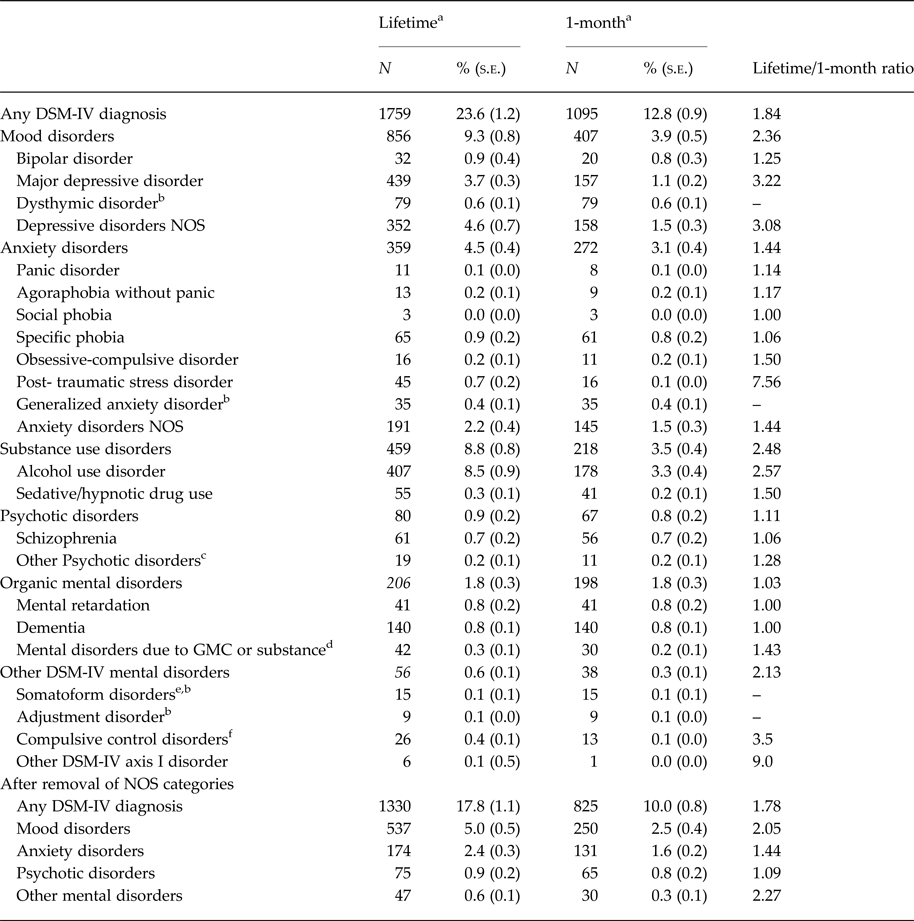
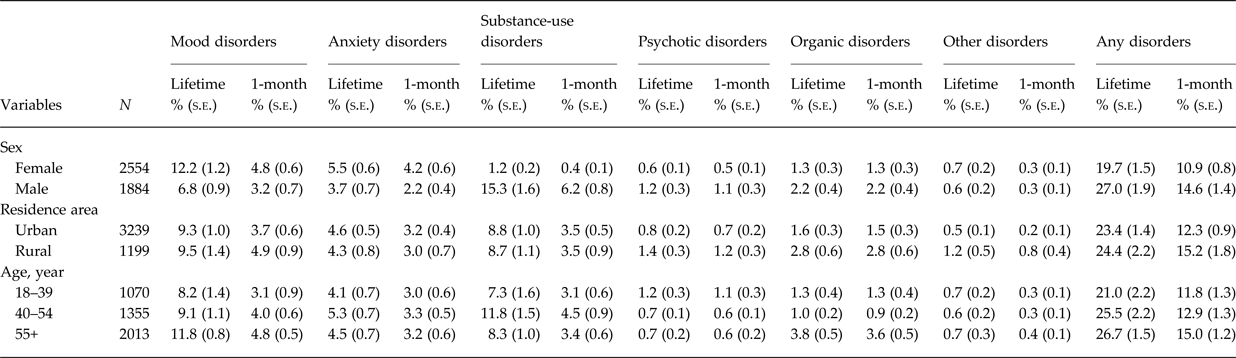
Prevalence estimates are presented in Tables 1 and 2. The lifetime prevalence of any mental disorder was 23.6% and the 1-month prevalence of any mental disorder was 12.8%. After removal of NOS categories, the estimated lifetime and 1-month prevalence rates decreased to 17.8% and 10.0%, respectively. The two most common mental disorders were alcohol-use disorder and MDD.
The lifetime and 1-month prevalence of mental disorders in a representative sample of 4438 individuals aged 18 years or older from Tianjin in China

DSM, Diagnostic and Statistical Manual; GMC, general medical condition; NOS, not otherwise specified; s.e., standard error.
a All diagnoses were taken into consideration for individuals with more than one diagnosis.
b Only 1-month diagnoses were assessed for these disorders.
c Includes schizophreniform disorder, delusional disorder, brief psychotic disorder, and psychotic disorder NOS.
d Includes mood disorder due to GMC, substance-induced mood disorder, anxiety disorder due to GMC, substance-induced anxiety disorder, psychotic disorder due to GMC, psychotic disorder due to GMC, psychotic disorder due to GMC, and substance-induced psychotic disorder.
e Includes somatization disorder, pain disorder, somatoform disorder NOS, hypochondriasis, and body dysmorphic disorder.
f Includes intermittent explosive disorder, pathological gambling and compulsive control disorder NOS.
The lifetime and 1-month prevalence of main groups of mental disorders in different sex, residence area and age groups a

a N is the unweighted number and prevalence and s.e. were adjusted for sampling design and post-stratified to the sampling frame.
The substance-use disorders and mood disorders showed the highest lifetime prevalence rates (8.8% and 9.3%, respectively). Anxiety disorders showed a lifetime prevalence rate of 4.5%. The 1-month prevalence rates of substance-use, mood, and anxiety disorders were more similar, ranging from 3.1% to 3.9%. For psychotic disorders, lifetime and 1-month prevalence estimates were notably lower (0.9% and 0.8%, respectively). For organic mental disorders, lifetime and 1-month prevalence estimates were 1.8% and 1.7%, respectively.
Persistence
The ratio of lifetime to 1-month prevalence for all disorders combined was 1.84. The lowest ratios (highest persistence) were observed for organic disorders (1.01) and psychotic disorders (1.11). Higher ratios were found for anxiety disorders (1.44), mood disorders (2.36), and substance-use disorders (2.48).
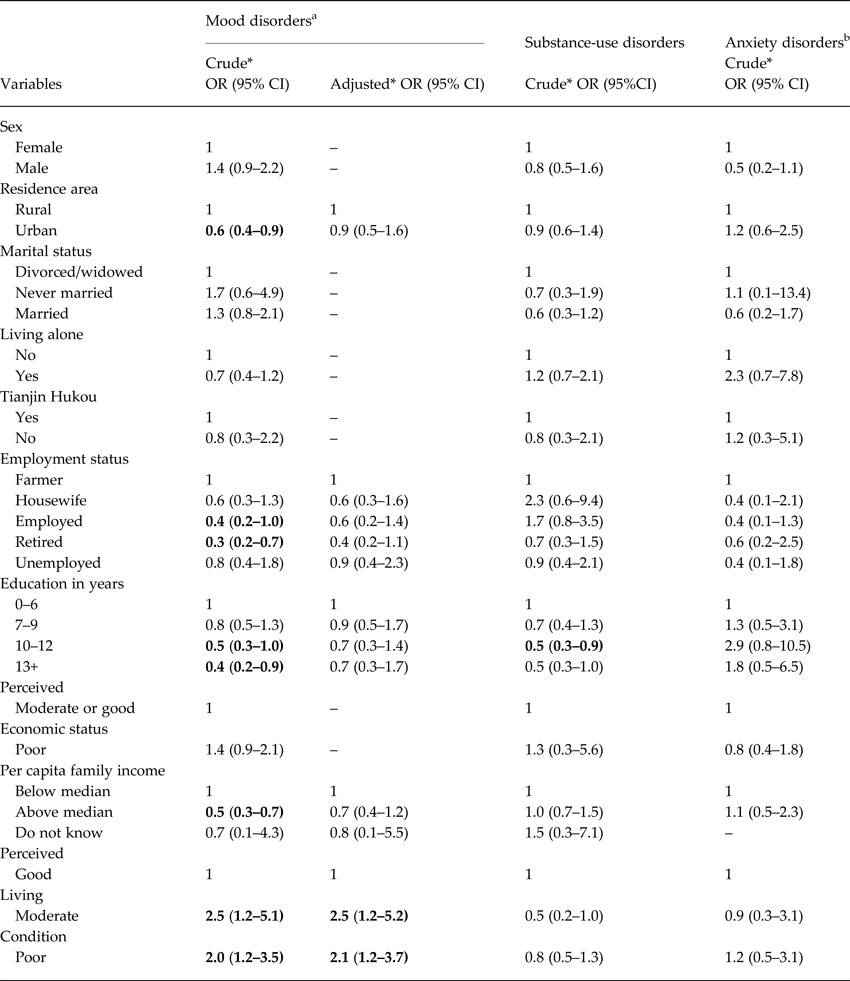
Sociodemographic correlates of persistence are shown in Table 3. Adjusted multivariate logistic regression showed that the persistence of mood disorders was only associated with living condition. Patients who rated their living condition as moderate or poor had a higher risk of a persistent mood disorders than individuals who rated their living condition as good. The persistence of substance-use disorders was only associated with education level, showing that those with 10–12 years of education had lower risk of persistence than those with 0–6 years of education. Persistence of anxiety disorders was not associated with any of the selected factors.
The crude/adjusted odds ratios (ORs) of persistence of mood, substance-use and anxiety disorders by sociodemographic correlates

Confidence intervals in bold type as statistically significant at the p < 0.05 level;
* AOOs and number of years after onset were included as covariates in the analyses.
a Dysthymic disorder and depressive disorder NOS were not included in the analyses.
b GAD and anxiety disorder NOS were not included in the analyses.
Age of onset
The median AOO for mood disorders (including MDD and bipolar disorders) was 36 years [interquartile range (IQR): 24–50 years], with the median AOO being earlier for bipolar (I or II) disorders (20 years, IQR: 24–50) than for MDD (39 years, IQR: 25–53 years). The median AOO for anxiety disorders (excluding anxiety disorders NOS) was 31 years (IQR: 18–45 years), with the median AOO being much younger for specific phobia (15 years, IQR: 10–34 years) than for GAD (34 years, IQR: 31–40 years), agoraphobia (36 years, IQR: 30–71 years), PTSD (36 years, IQR: 29–47 years), OCD (37 years, IQR: 26–37 years), and panic disorder (42 years, IQR: 40–48 years). The median AOO for substance-use disorders was 25 years (IQR: 22–33 years) and the median AAO for psychotic disorders was 28 years (IQR: 23–32 years).
Sociodemographic correlates of lifetime mental disorders
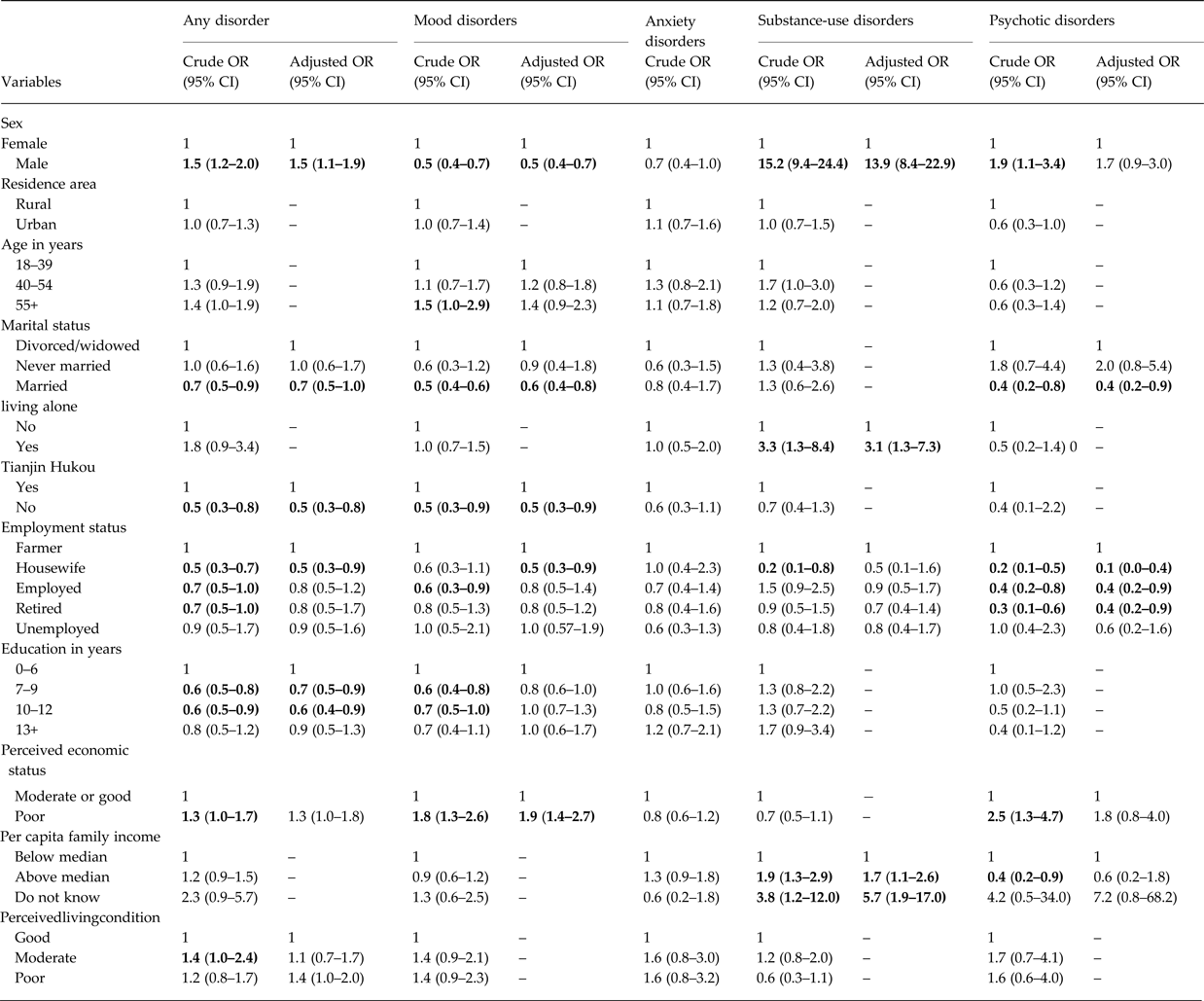
Associations between sociodemographic correlates and lifetime mental disorders (including NOS disorders and the disorders for which only 1-month prevalence were assessed) are shown in Table 4. In the multivariate analyses, only male gender was associated with an increased risk of any lifetime mental disorder [odds ratio (OR) 1.5]. The risk was decreased in married persons compared with divorced/widowed persons (OR 0.7), in immigrants with a non-Tianjin Hukou compared with locals (OR 0.5), in housewives compared with farmers (OR 0.5), and in persons with 7–12 years of education compared with 0–6 years (OR 0.6–0.7).
The crude/adjusted odds ratios (ORs) of lifetime mental disorders by sociodemographic correlates

Confidence intervals in bold type as statistically significant at the p < 0.05 level.
The risk of a lifetime mood disorder was higher in those rating their perceived economic status as poor compared those rating it as moderate or good (OR 1.9). The risk of a lifetime mood disorder was lower in males compared with females (OR 0.5), in married persons compared with divorced/widowed persons (OR 0.6), in immigrants with a non-Tianjin Hukou compared with locals (OR 0.5), and in housewives compared with farmers (OR 0.5). The risk of a lifetime substance-use disorder was higher in males than in females (OR 13.9), in those living alone compared with those living together (OR 3.1), and those with an above-median income compared with those with a below-median income (OR 1.7). The risk of a lifetime psychotic disorder was lower in married compared with divorced/widowed persons (OR 0.4), and lower in those being a housewife, employed or retired compared with farmers (OR 0.1–0.4).
Sociodemographic correlates of 1-month mental disorders
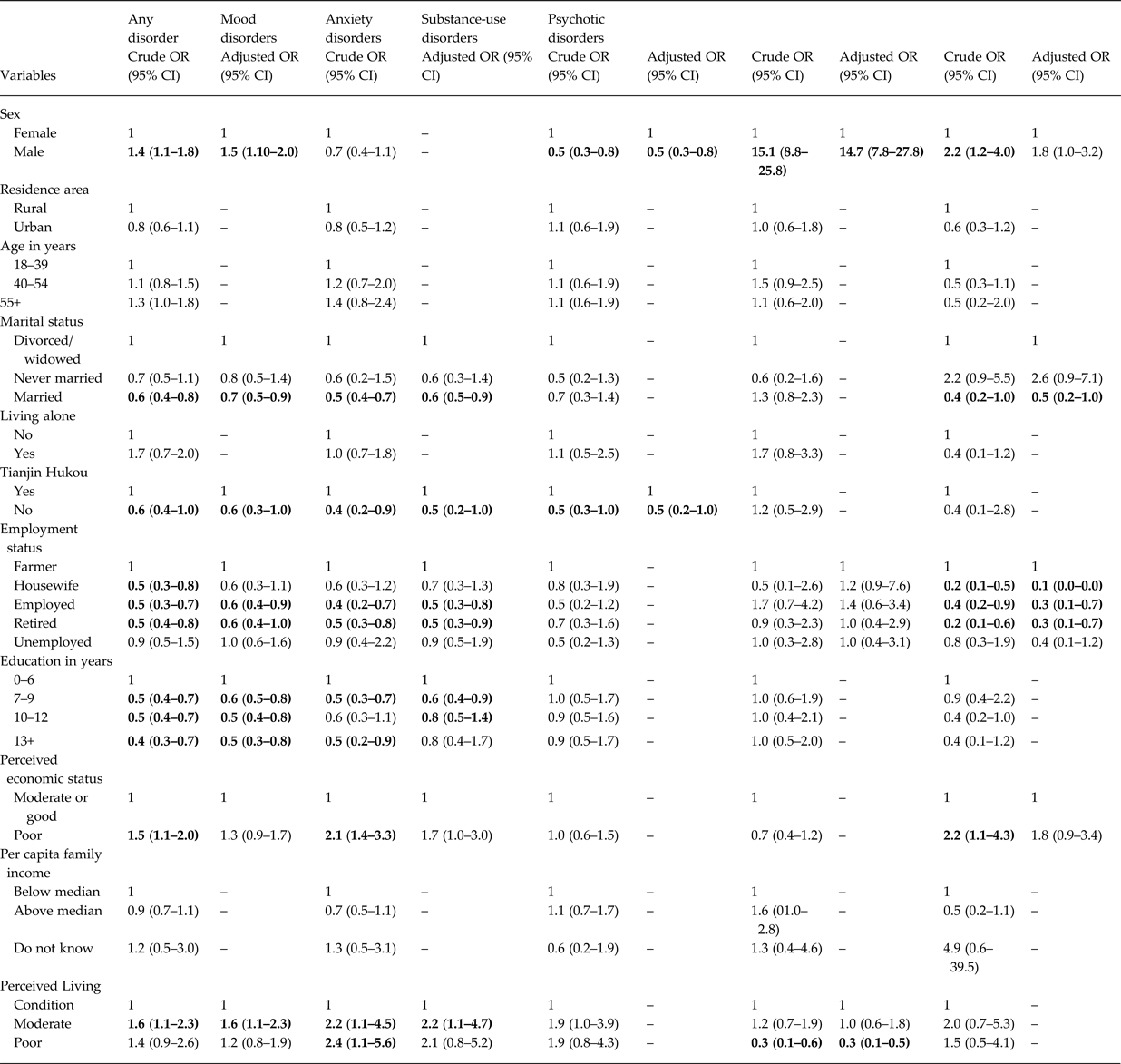
Associations between sociodemographic correlates and1-month mental disorders (including NOS disorders) are shown in Table 5. In the multivariate analyses, the risk of any 1-month mental disorder was increased in males compared with females (OR 1.5) and those rating their perceived living conditions as moderate compared with good (OR 1.6). The risk was decreased in married persons compared with divorced/widowed persons (OR 0.7), in immigrants with a non-Tianjin Hukou compared with locals (OR 0.6), employed and retired persons compared with farmers (OR 0.6) and in persons with more than 7 years of education compared with persons with 0–6 years of education (OR 0.5–0.6). The risk of a 1-year mood disorder was increased in those rating their perceived living conditions as moderate compared with good (OR 2.2), and was decreased in married persons compared with divorced/widowed persons (OR 0.6), in employed/retired persons compared with farmers (OR 0.5), and in persons with 7–12 years of education compared with persons with 0–6 years of education (OR 0.6–0.8). The risk of a 1-month anxiety disorder was decreased in immigrants with a non-Tianjin Hukou compared with locals (OR 0.5) and in males compared with females (OR 0.5). The risk of 1-month substance-use disorders was increased in males compared with females (OR 14.7) and decreased in those rating their perceived living conditions as poor compared with those rating their living conditions as good (OR 0.3). The risk of a 1-month psychotic disorder was decreased in housewives, employed persons and retired persons, compared with farmers (OR 0.1–0.3).
The crude/adjusted odds ratios (ORs) of 1-month mental disorders by sociodemographic correlates

Confidence intervals in bold type as statistically significant at the p < 0.05 level.
Discussion
Several limitations should be considered when interpreting the results. First, TJMHS results will not be completely generalizable to the whole of China because of the regional differences in e.g. population composition and culture. Second, for some disorders, only the current (1-month) prevalence can be assessed in the used version of the SCID, possibly leading to an underestimation of the pooled lifetime prevalence rates for mood and anxiety disorders. According to a previous study the average ratio of lifetime to 1-month prevalence was 2 (Regier et al. Reference Regier, Boyd, Burke, Rae, Myers, Kramer, Robins, George, Karno and Locke1988). If we assume that this same ratio applies to the disorders for which we only have 1-month prevalence and the four disorders never co-occur with any of the other disorders, we arrive at a maximum estimated lifetime prevalence of 1.2% for dysthymic disorder, 0.8% for GAD, 0.2% for somatoform disorders and 0.2% for adjustment disorder. Given the overall prevalence, it is unlikely that such increases in estimated lifetime prevalence would have strongly influenced the overall lifetime prevalence estimations, but this is based on rather strong assumptions. In next surveys, lifetime prevalence should therefore ideally be assessed for all disorders. Third, all data about lifetime mental disorder and AOO was collected retrospectively, which could have led to recall bias. Also, reporting bias could have arisen due to forgetfulness, stigma-induced concealment, or other unknown sources (Wells & Horwood, Reference Wells and Horwood2004; Moffitt et al. Reference Moffitt, Caspi, Taylor, Kokaua, Milne, Polanczyk and Poulton2010). Fourth, the AOOs and number of years since onset are both important in determining the persistence of mental disorders. However, the AOOs were not assessed for NOS disorders and dysthymic disorder. As a result, the correlates of persistence of NOS disorders could not be analyzed.
Despite these limitations, the present study has several strengths and provides a range of relevant epidemiological insights. First, the study is the first to provide a relatively up-to-date insight into the mental health epidemiology of the region of Tianjin, which is typical for the many rapidly developing and/or changing urban areas in China. As such, the results and observed trends in this survey can also be relevant for other areas that go through the same rapid (economic) development and urbanization. Second, the prevalence rates were estimated based on psychiatrist-rated, SCID-based diagnoses, whereas many previous surveys have used lay-administered interviews. By comparing the results of this study with other studies using the same or different diagnostic instruments, more information can be obtained about the influence of assessment method on the stability of prevalence estimates. Third, the reported sociodemographic correlates of mental disorders can be compared with those from other regions and/or countries to gain insight into possible influences of culture- and/or income-related factors. Fourth, this study investigated the prevalence of NOS mental disorders, which are often not assessed in large surveys despite the fact that they are considered to have clinical relevance. In fact, the results show that NOS diagnoses are comparatively common. Finally, the presented results apply to a low-income region of the world and can be a reference for surveys in other low-income and middle-income countries, for which up-to-date data on mental health are comparatively scarce but urgently needed to develop mental health (care) policies. The results are discussed in more detail below.
Mental disorder prevalence
Comparison with previous surveys in China shows that the observed lifetime prevalence of any disorder (23.6%) in the TJMHS was substantially higher than that found in the 1982 and 1993 national surveys (prevalence rates were 3.3% and 2.9%, respectively; Twelve-Region Psychiatric Epidemiological Study Work group, 1986; Shen et al. Reference Shen, Zhang, Huang, He, Liu, Cheng, Tsang, Lee and Kessler2006) and was also higher than the lifetime prevalence of 13.2% in a recent regional surveys in China (Lee et al. Reference Lee, Tsang, Zhang, Huang, He, Liu, Shen and Kessler2007). However, the current results were more similar to the lifetime prevalence rate of 21.2% that was found in the Shenzhen survey in 2006 (Wei et al. Reference Wei, Liu, Hu, Duan, Gao, Yang, Zhang, Lu, Shu and Yang2010) and to the lifetime prevalence rate of 20.0% that was found in the four provinces study (Phillips et al. Reference Phillips, Zhang, Shi, Song, Ding, Pang, Li, Zhang and Wang2009). The currently observed 1-month prevalence of any disorder was higher than the 1-month prevalence that was found in Guangzhou (4.3%; Zhao et al. Reference Zhao, Huang, Li, Deng, Huang, Su, Dang, Yang, Huang, Zhang, Deng, Zhou, Qiu, Lu, Chen, Zhong, Chen, Zeng and Mei2009) and was considerably lower than that found in the four provinces survey (17.5%; Phillips et al. Reference Phillips, Zhang, Shi, Song, Ding, Pang, Li, Zhang and Wang2009). Differences between the current and previous surveys could be explained by: (1) sociodemographic/cultural differences across regions (Guo et al. Reference Guo, Tsang, Li and Lee2011), (2) changes over time due to rapid social and economic changes (Goldman-Mellor et al. Reference Goldman-Mellor, Saxton and Catalano2010; Lee et al. Reference Lee, Guo, Tsang, Mak, Wu, Ng and Kwok2010), and (3) methodological factors (e.g. sampling methods, sample population, fieldwork procedures, and quality control methods; Guo et al. Reference Guo, Tsang, Li and Lee2011).
The TJMHS results can also be compared with those from other countries. The lifetime prevalence of any disorder was lower than that in many other countries, including the USA (Kessler et al. Reference Kessler, Mcgonagle, Zhao, Nelson, Hughes, Eshleman, Wittchen and Kendler1994, Reference Kessler, Chiu, Demler and Walters2005) and most other countries that participated in the World Health Organization World Mental Health Surveys with lifetime prevalence rates ranging from 12.0% in Nigeria to 39.3% in New Zealand (Kessler et al. Reference Kessler, Angermeyer, Anthony, De Graaf, Demyttenaere, Gasquet, De Girolamo, Gluzman, Gureje, Haro, Kawakami, Karam, Levinson, Medina Mora, Oakley Browne, Posada-Villa, Stein, Adley Tsang, Aguilar-Gaxiola, Alonso, Lee, Heeringa, Pennell, Berglund, Gruber, Petukhova, Chatterji and Ustün2007b ). Likewise, the observed 1-month prevalence of any disorder in the current study (12.9%) was lower than observed in several other countries (e.g. USA: 15.4%; Regier et al. Reference Regier, Farmer, Rae, Myers, Kramer, Robins, George, Karno and Locke1993; the Netherlands: 16.3%; Brazil: 17.2%; Andrade et al. Reference Andrade, Caraveo-Anduaga, Berglund, Bijl, Kessler, Demler, Walters, Kýlýç, Offord, Üstün and Wittchen2000), although lower 1-month prevalence rates were also found in Canada (10.4%), Germany (10.9%; Andrade et al. Reference Andrade, Caraveo-Anduaga, Berglund, Bijl, Kessler, Demler, Walters, Kýlýç, Offord, Üstün and Wittchen2000) and Australia (13.2%; Andrews et al. Reference Andrews, Henderson and Hall2001). Random fluctuations and methodological factors could partly explain the lower observed prevalence rates in the current study compared with many surveys in Western countries. However, characteristics of Chinese culture could also play an important role in underreporting of mental problems during face-to-face interviews, as respondents may fear discrimination and/or stigmatization (Lee et al. Reference Lee, Chiu, Tsang, Chui and Kleinman2006). In addition, Chinese respondents may show a stronger tendency to somatization of psychological symptoms (Kleinman, Reference Kleinman2004; Shen et al. Reference Shen, Zhang, Huang, He, Liu, Cheng, Tsang, Lee and Kessler2006) than respondents in other countries, leading to the reporting of less psychological symptoms on assessment instruments. Although several strategies were used to build a good interview relationship with the respondents (Yin et al. Reference Yin, Phillips, Wardenaar, Xu, Ormel, Tian and Schoevers2016), it is possible that some participants still concealed their psychological symptoms.
Disorder persistence
The results indicated that anxiety disorders were more persistent than substance-use disorders and mood disorders. These results were in line with previous Chinese surveys in Beijing (Liu et al. Reference Liu, Huang, Xi, Hui and Luo2013) and Hebei (Li et al. Reference Li, Ze, Cui, Jiang, Shi, Wu, Huang, Zhang, Xu, Zhang, Zhang, Jin, Wang, Tao, Zhang, Hou, Geng and Zhao2008), and with results from surveys in other countries, such as the NCS (Kessler et al. Reference Kessler, Mcgonagle, Zhao, Nelson, Hughes, Eshleman, Wittchen and Kendler1994) and NCS-R (Kessler et al. Reference Kessler, Chiu, Demler and Walters2005, Reference Kessler, Angermeyer, Anthony, De Graaf, Demyttenaere, Gasquet, De Girolamo, Gluzman, Gureje, Haro, Kawakami, Karam, Levinson, Medina Mora, Oakley Browne, Posada-Villa, Stein, Adley Tsang, Aguilar-Gaxiola, Alonso, Lee, Heeringa, Pennell, Berglund, Gruber, Petukhova, Chatterji and Ustün2007b ). This indicates that irrespective of the observed prevalence differences, disorders seem to show rather consistent patterns of persistence. Interestingly, persistence showed limited associations with sociodemographic factors. This might indicate that these factors play a limited role in disorder persistence and that other (clinical) factors are more important. Indeed, previous studies have found that persistence of anxiety disorders was predicted by childhood trauma, clinical, and personality characteristics (Albor et al. Reference Albor, Benjet, Méndez and Medinamora2017; De et al. Reference De, Van, Pattyn, Wouters, Veltman, Penninx and Sabbe2017) and that mood and anxiety disorder persistence was associated with factors such as physical and mental health comorbidity, suicide attempts, and treatment seeking (Mackenzie et al. Reference Mackenzie, El-Gabalawy, Chou and Sareen2014). Such clinical factors should ideally be investigated in future research on persistence.
Prevalence of NOS diagnoses
The current results showed a high prevalence of NOS DSM classifications, especially NOS depressive and anxiety disorders. NOS categories, which are also sometimes referred to as ‘subthreshold disorders’ (Safer et al. Reference Safer, Rajakannan, Burcu and Zito2015; Rajakannan et al. Reference Rajakannan, Safer, Burcu and Zito2016) have been of increasing interest to many researchers because they are very common (Lee et al. Reference Lee, Sagayadevan, Vaingankar, Chong and Subramaniam2015) and are associated with reduced quality of life and functional impairment. Moreover, patients with a NOS diagnosis are at a substantially elevated risk for developing full-blown psychiatric disorders (Cuijpers et al. Reference Cuijpers, De Graaf and Van Dorsselaer2004; Lee et al. Reference Lee, Sagayadevan, Vaingankar, Chong and Subramaniam2015; Topuzoğlu et al. Reference Topuzoğlu, Binbay, Ulaş, Elbi, Tanık, Zağlı and Alptekin2015). It has been suggested that the incidence-rates of mental disorders could be reduced by offering treatment to people with subthreshold mental disorders (Craske & Zucker, Reference Craske and Zucker2002; World Health Organization, 2004; Cuijpers et al. Reference Cuijpers, Van Straten and Smit2005, Reference Cuijpers, van Straten, Smit, Mihalopoulos and Beekman2008; Zhang et al. Reference Zhang, Lewis, Araya, Tang, Mak, Cheung, Mercer, Griffiths, Woo, Lee, Kung, Lam, Yip and Wong2014). The current results support the notion that subthreshold mental disorders are common, and suggest that preventive programs to target persons with subthreshold diagnoses would have to be large-scale endeavors.
Age of onset
Knowledge about the AOO of mental disorders is important because it helps to determine the appropriate age range to target preventive interventions (Klosterkötter et al. Reference Klosterkötter, Ruhrmann, Schultze-Lutter, Salokangas, Linszen, Birchwood, Juckel, Morrison, Vázquèz-Barquero, Hambrecht and Von Reventlow2005; Kessler et al. Reference Kessler, Amminger, Aguilar-Gaxiola, Alonso, Lee and Ustün2007a ). The TJMHS results showed that the first onset of most mental disorders occurs relatively early in life, suggesting that preventive measures should ideally be targeted at young people. Interestingly, compared with previous studies, the observed AOO for anxiety disorders in the current survey (median 31 years) was markedly higher than that in other Chinese surveys (median: 15–17 years; Lee et al. Reference Lee, Tsang, Zhang, Huang, He, Liu, Shen and Kessler2007; Liu et al. Reference Liu, Huang, Xi, Hui and Luo2013) and surveys in other countries (median: 15 years in the ICPE survey, 11 years in the NCS-R survey; Kessler et al. Reference Kessler, Chiu, Demler and Walters2005, Reference Kessler, Amminger, Aguilar-Gaxiola, Alonso, Lee and Ustün2007a ). The median AOOs for mood disorders (36 years) and substance-use disorders (25 years) were within the range of median AOO's found in other Chinese surveys (respectively: 38–40 years and 25–28 years; Lee et al. Reference Lee, Tsang, Zhang, Huang, He, Liu, Shen and Kessler2007; Liu et al. Reference Liu, Huang, Xi, Hui and Luo2013) and the WMHS, (respectively: 25–45 years and 18–29 years; Kessler et al. Reference Kessler, Amminger, Aguilar-Gaxiola, Alonso, Lee and Ustün2007a ). However, the currently observed AOOs for mood and substance-use disorders were older than those observed in other countries (Andrade et al. Reference Andrade, Caraveo-Anduaga, Berglund, Bijl, Kessler, Demler, Walters, Kýlýç, Offord, Üstün and Wittchen2000; Kessler et al. Reference Kessler, Chiu, Demler and Walters2005; Morgan et al. Reference Morgan, Waterreus, Jablensky, Mackinnon, McGrath, Carr, Bush, Castle, Cohen, Harvey, Galletly, Stain, Neil, McGorry, Hocking, Shah and Saw2012). The sizable variation in AOOs across the current and previous surveys fits in with the previous observations that AOO findings generally vary considerably across surveys, without a clear link to sociodemographic or regional factors (Kessler et al. Reference Kessler, Angermeyer, Anthony, De Graaf, Demyttenaere, Gasquet, De Girolamo, Gluzman, Gureje, Haro, Kawakami, Karam, Levinson, Medina Mora, Oakley Browne, Posada-Villa, Stein, Adley Tsang, Aguilar-Gaxiola, Alonso, Lee, Heeringa, Pennell, Berglund, Gruber, Petukhova, Chatterji and Ustün2007b ).
Correlates
Several sociodemographic factors were found to be associated with the prevalence of mental disorders. Consistent with previous surveys (Shen et al. Reference Shen, Zhang, Huang, He, Liu, Cheng, Tsang, Lee and Kessler2006; Phillips et al. Reference Phillips, Zhang, Shi, Song, Ding, Pang, Li, Zhang and Wang2009; Gu et al. Reference Gu, Xie, Long, Chen, Chen, Pan, Yan, Wu, Liang, Tan, Xie, Wei and Su2013; Young & Pfaff, Reference Young and Pfaff2014; Cheng et al. Reference Cheng, Deng, Xiong and Phillips2015), women were found to be more likely to have mood disorders and anxiety disorders than men. Conversely, men were found to be much more likely to have substance-use disorders than women. Residential area and age were not related to the prevalence of any group of common mental disorders in this study. This aligns with some previous results (Zhang et al. Reference Zhang, Lu, Tang, Qiu, Liu and Wang2010) but not with others (Shi et al. Reference Shi, Zhang, Xu, Phillips, Xu, Fu, Gu, Zhou, Wang, Zhang and Yu2005; Zhao et al. Reference Zhao, Huang, Li, Deng, Huang, Su, Dang, Yang, Huang, Zhang, Deng, Zhou, Qiu, Lu, Chen, Zhong, Chen, Zeng and Mei2009), raising the possibility of urban–rural, regional, or socioeconomic differences that need to be explored more deeply. An intriguing result of current survey is that migrant adults in Tianjin (without a Tianjin Hukou) reported lower lifetime and 1-month prevalence rates for any mental disorder, mood disorders, and anxiety disorders. One explanation for this could be that most of the migrants in this survey are relatively permanent migrants because only household members who had lived in the household for more than 3 months in the past 6 months were eligible for selection. Permanent migrants are more likely to have stable jobs, higher incomes and are more likely to have adapted to city life than circular or temporary migrants (Mou et al. Reference Mou, Griffiths, Fong and Dawes2014). Another explanation could be that migrants are relatively healthy selected group of people. Indeed, there is evidence showing that healthier individuals are more likely to migrate and that those with poorer health are more likely to return to their communities of origin (Lu & Qin, Reference Lu and Qin2014). In line with other studies (Liao et al. Reference Liao, Wang, Ding, Wen, Hong and Chen2014; Feng et al. Reference Feng, Ji and Xu2015), in this survey, being a farmer was found to be a risk factor for having psychiatric disorders. This could be explained by the fact that farmers in China enjoy low social status, have less access to health care, less access to education for their children, and less access to housing benefits than non-farmers. In addition, many farmers are faced with the loss of their land and livelihood due to rapid urbanization (Gong et al. Reference Gong, Liang, Carlton, Jiang, Wu, Wang and Remais2012). The observation that education level is related to the prevalence of any mental disorder and mood disorders is consistent with other studies that have shown lower education to be associated with higher mental-disorder prevalence (Andrews et al. Reference Andrews, Henderson and Hall2001; Shen et al. Reference Shen, Zhang, Huang, He, Liu, Cheng, Tsang, Lee and Kessler2006). Interestingly, perceived economic status was found to be independently associated with lifetime mood disorder prevalence. In addition, a moderate perceived housing condition was found to be associated with higher prevalence of any mental disorder and mood disorders. This indicates that high economic status and good living conditions could be protective factors against mental disorders. However, it was also observed that high per capita family income was related to higher lifetime prevalence of substance-use disorders, possibly because of the relatively high costs of substances such as alcohol. In addition, poor perceived housing conditions were related to lower 1-month prevalence of substance-use disorder. These results align with a previous work and indicate that perceived economic status could be more strongly related to mental disorders than objective socioeconomic status and could therefore be more responsive to interventions (McLaughlin et al. Reference McLaughlin, Costello, Leblanc, Sampson and Kessler2012; Ochi et al. Reference Ochi, Fujiwara, Mizuki and Kawakami2014).
Conclusion
The TJMHS results show DSM-IV disorders to be highly prevalent in Tianjin and that their prevalence is associated with a range of sociodemographic risk factors. Although more work is needed, the current findings suggest that early preventive interventions should be targeted at specific at-risk groups, such as divorced or widowed individuals, persons with low education levels, farmers, and/or those that have a low perceived economic status. Eventually, such measures could help to improve targeted treatment and to reduce the incidence of mental disorders.
Acknowledgements
This study was supported by a fund from the Tianjin Finance Bureau and the Tianjin health and Family Planning Commission (grant number 13KG119).
Declaration of Interest
None.