Introduction
The growth in the number of older people and the aging of the population is a well-recognized and worldwide phenomenon. The demographic shift will affect all facets of society, but the challenges of increasing numbers of aged people are especially clear in the planning of health and long-term care services. One consequence of an aging population is an increase in the numbers of people with cognitive impairment. In 2009, it was estimated that 5.3 million Americans had Alzheimer's disease (AD), and it was projected that another 10 million people would be diagnosed with it by 2050 (Alzheimer's Association, 2009). Using the original Framingham population study, researchers estimate the lifetime risk for AD is approximately 17% in men and above 20% for women, presumably because women live longer on average than men (Alzheimer's Association, 2009).
Dementia is a debilitating progressive disease, and those with dementia eventually require supervision and assistance with personal care. While families provide informal care to people with dementia residing in the community for years, an estimated 2.7 million paraprofessional workers (American Health Care Association, 2009) provide formal care as certified nursing assistants in nursing homes; home health aides; and personal and home care aides. The National Clearinghouse on the Direct Care Workforce (2009) estimates that direct care workers provide 70–80% of paid hands-on care to elders and disabled people who receive in-home care, adult day care, and hospice services; or who live in assisted living facilities (ALFs) and nursing homes. As the population ages, another 1 million workers in the U.S.A. are projected to be needed by 2016.
The purpose of this paper is to: (1) document via a literature review the need for training among direct care workers for those with dementia; (2) delineate the legislative requirements in Florida that mandate specific curricula content for workers in a variety of care settings to address this need for training; (3) describe the University of South Florida (USF) Training Academy curriculum review process; (4) present the results of a review of curricula that were submitted to the USF Training Academy to meet the training requirements over a 4.5-year period; and (5) discuss the results of this review as providing evidence to validate the need for a credentialing process of educational training in dementia for direct care workers.
Need for training in dementia care
Direct care worker training requirements vary by certification. Federal regulations require only certified nursing assistants and home health aides who work in agencies or facilities that bill Medicare or Medicaid (about 70% of total) to receive any training, and these regulations do not specify the amount of dementia training or specific content to be covered. Facility-specific staff training is common but is generally focused on orientation to the facility, employee policies and procedures, specific care responsibilities, and on provision of basic personal care skills. Unfortunately, direct care workers rarely receive formal training on person-centered dementia care, how the disease progresses, how to cope with behavioral issues, and how to manage the personal stress of direct care giving. Thus, direct care workers are expected to help cognitively impaired adults across the long-term care continuum to bathe, dress, and toilet, to deal with behavioral outbursts, and to provide ongoing compassionate help without specific training on how to care for cognitively impaired patients or residents.
As part of its quality campaign, the Alzheimer's Association asserts that training in dementia care should not be limited to direct care staff, and thereby has developed a workshop for long-term care staff (Gould and Reed, Reference Gould and Reed2009). It is clear that all employees who interact with individuals with dementia need to have basic knowledge about dementing illnesses, an understanding of the philosophy of the dementia program, and to be able to use communication skills and behavior management techniques. This includes housekeeping and dietary staff, rehabilitation therapists, activity coordinators, social workers, and office staff (Kaplan, Reference Kaplan, Hoffman and Kaplan1996). Direct care staff need more than the above basics; they need strategies to manage the care of residents with dementia and to recognize how to adapt strategies as the disease progresses. Without knowledge and training, staff can quickly become frustrated and discouraged. The negative effects of this stress include emotional exhaustion, decreased feelings of personal achievement, and increased resentment and detachment toward residents. If allowed to continue, this emotional state can lead to continual frustration and burnout, which can result in lack of commitment to job and facility, increased levels of resident behavioral disturbances, poor resident care, abuse of residents, and staff turnover (Mobily et al., Reference Mobily, Maas, Buckwalter and Kelly1992; Novak and Chappell, Reference Novak and Chappell1994; Kaplan, Reference Kaplan, Hoffman and Kaplan1996; Kovach and Krejci, Reference Kovach and Krejci1998; Beck et al., Reference Beck, Ortigara, Mercer and Shue1999; Cocco et al., Reference Cocco, Gatti, Augosto De Mendonca Lima and Campus2003).
Fortunately, educational interventions have proven benefits for the long-term care facility. A study conducted by Beck et al. (Reference Beck, Ortigara, Mercer and Shue1999) established that dementia training led to a reduction in staff stress and burnout, an increase in staff knowledge and abilities, and to a positive effect on the staff's ability to manage resident behaviors. Although the time and resources required to train staff in dementia care are important concerns for facilities faced with financial reimbursement and staff issues, the effort can result in higher staff morale, improved teamwork, and lower staff turnover (Austrom, Reference Austrom, Hoffman and Kaplan1996; Vance and Davidhizer, Reference Vance and Davidhizer1997; Grant et al., Reference Grant, Potthoff, Ryden and Kane1998; Teresi et al., Reference Teresi, Grant, Holmes and Ory1998; Brodaty et al., Reference Brodaty, Draper and Low2003).
Research examining the effects of staff training on residents’ behaviors suggests that the benefits may be lasting in reduction in the prevalence and/or the severity of behavioral problems and in increases in appropriate behaviors (Mentes and Ferrario, Reference Mentes and Ferrario1989; Feldt and Ryden, Reference Feldt and Ryden1992; Austrom, Reference Austrom, Hoffman and Kaplan1996; Maxfield et al., Reference Maxfield, Lewis and Cannon1996). A study by Bourgeois et al. (Reference Bourgeois, Dijkstra, Burgio and Allen2004), designed to measure the effects of training staff in communication skills, found a decrease in communication difficulty between staff and residents, an increase in positive exchanges between staff and residents, and improvement in residents’ feelings of well-being following the training. A decrease in staff turnover rates was also reported. A test administered three months after the training showed staff still performing above the baseline in all of the main skills that were taught in the training class.
State regulations for dementia training
Because the Federal Government has not required specific dementia training for long-term care staff, states have elevated their standards to try to assure that the Certified Nursing Assistant (CNA) training programs that are offered in their state exceed the minimum Omnibus Budget Reconciliation Act (OBRA) requirements. Twenty-six states and the District of Columbia require CNA training beyond the federally mandated minimum of 75 hours. Several of those states, including Alaska, Arizona, California, Connecticut, Idaho, Illinois, Indiana, Missouri, New Hampshire, Oregon, Rhode Island, South Carolina, Virginia, Washington, and West Virginia, have added extra hours of training in dementia care (Alzheimer's Association, 2003).
There are few states that currently have standards and regulations that mandate formal training programs specifically for staff that care for persons with dementia. In addition to Florida, California, Iowa, Kentucky, Louisiana, Minnesota, Missouri, New Jersey, Tennessee, and Texas, have passed dementia training laws. Illinois, New Mexico, Oklahoma, and West Virginia have also introduced legislation requiring dementia training for long-term care staff (Gerdner and Buckwalter, Reference Gerdner and Buckwalter1996; Alzheimer's Association, 2003). However, Florida's legislation is unique in that it mandates dementia training for all direct care staff across the continuum, i.e. all direct care staff must have dementia training in nursing homes, ALFs, hospice, adult day care, and home health care agencies. As detailed below, it also requires that all training curricula pass muster via a credentialing process.
Florida legislation
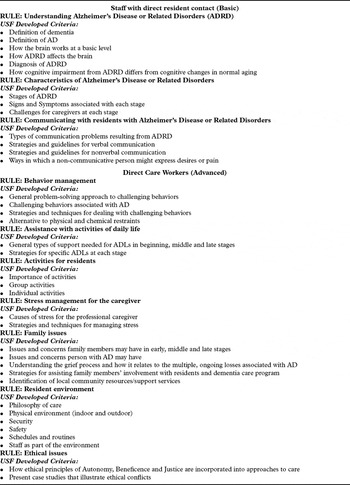
In 1998, Florida's legislature required Alzheimer's training for direct care staff who worked in ALFs that advertised the provision of “dementia care”. Florida's standards for ALFs comply with the five “necessary dementia training requirements” recommended by the Alzheimer's Association (Splaine, Reference Splaine2008). In addition to certifying the training program and requiring the curriculum components outlined in Table 1, Florida monitors facility adherence to staff training when inspectors review personnel files during annual surveys. Florida also requires that all trained staff receive a formal certificate signed by the certified trainer which enhances the portability of training (i.e. staff trained in a credentialed program can transfer from one facility to the next without the need to repeat the training). As recommended by the Alzheimer's Association, Florida's legislation also requires that all staff having some “direct contact” with residents complete four hours of basic training (understanding AD and dementia; characteristics of the disease and communication issues). Direct care staff providing personal care to residents receive four additional hours of training (behavior management, providing personal care, activities, caregiver stress management, family issues, resident environment and ethical issues).
Dementia training topics required by Florida law

In 2001 the legislature extended the training requirements to nursing home staff but reduced the required training from eight to four hours for direct care nursing home staff and from four to one hour for staff with some direct contact. Over the next three years, the adult day care and hospice staff were required to train their direct care staff. Home health direct care staff were the last group to be required to have training, with their opposition to the required training resulting in a further reduction to a total of two hours of training. The Legislature remained steadfast in its insistence that training be “portable” (i.e. a worker's training can be transferred to another facility or setting), surveyors monitor facility compliance with staff training requirements, and that curricula be certified. Curricula must be updated every three years.
It should be noted that research has consistently indicated that it is not effective to provide classroom instruction on the care of persons with dementia through lecture format only (Burgio and Burgio, Reference Burgio and Burgio1990; Orr-Rainey, Reference Orr-Rainey, Sloane and Mathew1991). Applicants developing training curricula in all long-term care settings are therefore encouraged to utilize videotapes, case examples, and role-playing to reinforce lessons learned in classroom lectures. They are required to submit these teaching tools for approval as part of their curriculum.
USF Training Academy review process
Florida's Department of Elder Affairs (DOEA) was named as the agency responsible for implementing the credentialing process and the department awarded the contract to credential curricula to the Training Academy of USF's Policy Exchange Center on Aging. As part of the contract, the Training Academy conducted information sessions across the state announcing the program, created a website with appropriate forms, and sought to be helpful by responding to inquiries and phone calls.
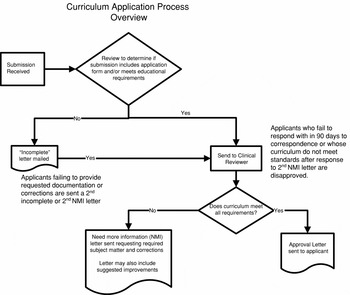
Figure 1 displays the current review process which has evolved over time and continues to evolve within legislative constraints. By rule, USF must respond to all submitted materials within 30 days. However, the time between requests for changes or more information and resubmission of materials is also tracked. No author is allowed more than 90 days to resubmit requested revisions. By monitoring applicants’ response time, decisions about submitted curricula are either approved or not approved expeditiously, and no curriculum languishes in the “under review” category.
Curriculum application process flow chart.

The first step, after receiving the curriculum and logging by date, is an administrative review of the educational components of the curriculum. The Training Academy requires that curricula must include learning objectives, how materials will be presented (i.e. which didactic approach is to be utilized) and the specific amount of time curriculum authors plan for each major topic. The total training time must also sum to the Legislature's required time for the training. Because an approved curriculum can be used by many trainers, we require the complete curriculum to be submitted. All teaching materials (videos, case studies and handouts) must be included as part of the review package. Outlines or short bulleted teaching slides without specific detailed notes are returned with requests for more information.
Curriculum preparers who do not provide all required educational materials are sent an “incomplete” letter specifying what needs to change to make the curriculum eligible for clinical review. If all basic materials are present, the curriculum is sent for clinical review. Reviewers are at least masters-level licensed mental health clinicians who have had education or experience caring for dementia patients. Since the program's inception, reviewers have included PhDs in clinical psychology (63%), clinical social workers (25%) and mental health nurse practitioners (12%).
Our program seeks to review curricula carefully and in a fair and consistent manner. All reviewers sign an ethics statement and are instructed to return a curriculum if the reviewer believes that there is any potential conflict of interest. A dementia expert outside the state is assigned to review applications from within the University or any curriculum for which internal reviewers might believe to be a conflict of interest (e.g. existence of a working or financial relationship with the applicant). Reviewers receive training on the criteria to be used and on the review process. They are instructed to be careful to check for inaccurate, disparaging and unclear statements, in addition to noting topics that are not addressed sufficiently.
Inter-rater reliability has been tested by having at least two members of the clinical review team independently review the initial submission of randomly selected curriculum applications. If inter-rater agreement was not 0.7 or greater, reviewers met to discuss areas of disagreement. Our policy is that if significant discrepancies in recommendations for approval/request for more information are found with a specific reviewer, additional training is provided to that reviewer. We also have convened half-day meetings with all reviewers to discuss and compare the specific areas of inter-rater disagreement. These meetings have helped us to promote more consistent standards, to refine our review forms, and to encourage reviewers to distinguish an incorrect fact or statement from something that is missing, inadequate or requires further explanation. Nonetheless, one of the challenges of the review process is to maintain consistent timely review standards, given that reviewers are busy professionals who come from different disciplines and knowledge bases.
Reviewers read the curriculum to determine if the material is complete, correct, and appropriate for the audience. Table 1 identifies the rules of Florida, and includes the specific elements we have developed to implement the rule and to be certain that the required training helps staff understand the various dementias. For example, the legislature stated “[Alzheimer's Disease and Related Disorders] training must include, but is not limited to, an overview of dementias.” Currently, our reviewers expect the following minimum components to be included within the “Understanding Alzheimer's Disease and Related Disorders section”: definition of dementia, definition of AD, basic review of brain and how ADRD affects the brain; how ADRD is diagnosed and how cognitive impairment from ADRD differs from normal aging. As noted above, curriculum developers may cover the material in multiple formats (videos, cartoons, pictures) but all of these topics must be addressed.
The rest of this paper will present and discuss an evaluation of the USF Training Academy's first four-and-a-half years of curricula reviews. Our major goal was to evaluate an attempt at standardizing a reliable and valid procedure for reviewing training curricula in accordance with the requirements of the Florida legislature. We expected that this effort would ensure, despite a wide latitude regarding format and presentation style, that curricula covered the essential components of what direct care workers need to know in those varied settings where they provide care to patients with dementia. Although specific content areas have been mandated by one state legislature, there is no reason why different states cannot adopt similar criteria for review. Our hope is that, ultimately, the training process that we have adopted and tested will serve as a model for national and international dementia training programs for direct care workers.
Methods
All curricula submitted for approval from February 2002 through April 2006 were examined. A total of 445 curricula received during the first 54 months of operation are included in this review. An Access database, used to create administrative reports, supplemented the review and allowed us to identify all curricula received and to reconstruct our processes and reasons for acceptance, rejection or request for more information. The systematic review consisted of examining the initial curriculum submitted and all subsequent revisions. We also reviewed all correspondence with the authors, reviewers’ worksheets and state reports to create the categories for rejections. After an initial review by an intern, a second reviewer (SJ) reviewed the materials again and worked with a clinical reviewer (MK) and administrator of the program (KH) to reconcile disagreements and to ensure the data were consistently coded.
Results
During the first 54 months 445 curricula were received: 269 (60%) were designed for nursing homes, 24 (5%) for adult day care, 35 (8%) for hospice staff, 78 (18%) were designed for ALF staff, and 39 (9%) were designed to meet the home health staff requirements. The dominance of nursing home curricula is attributable to: (1) a legislative mandate requiring the 670 community-based nursing homes in Florida to hire and to train approximately 4,700 additional para-professional staff during the same reporting period (Hyer et al., Reference Hyer, Thomas, Mehra, Johnson and Harman2009); and (2) the phase-in of AD required training over the reporting period that results in a longer time frame for nursing home providers to submit curricula.
Of the 445 curricula submitted, 401 curricula (92%) did not have the basic elements for sound curricula. Some did not even pass initial administrative review (a stage which we devised at a point when we recognized that it would simply take too much effort to review a curriculum that was destined to fail anyway because of such errors), and were returned to the authors as incomplete. For example, one nursing home provider submitted colored PowerPoint slides that appeared to have been copied but due to technical difficulties came across as large black areas that were totally unreadable. Some assisted living and nursing home applicants submitted documents with hand-written notes at various angles in the margins or even over text. Gross spelling, grammatical and organizational errors are other issues that may cause a curriculum not to pass basic muster, but such errors became less common as developers learned that the Training Academy would return curricula that were poorly presented.
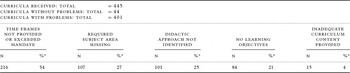
Table 2 displays the main reasons why the 401 curricula did not comply with minimum standards. Because these curricula can have more than one error, the percentages sum to more than 100%. As noted in Table 2, the most common error was not submitting time frames for the training, or the time frames did not sum to the state requirements. Approximately 27% completely omitted subject areas that are clearly requested in the Administrative Rule; 25% did not specify the didactic approach that they were using to teach materials; and 21% had no learning objectives identified. Several curricula had multiple format/orientation errors such as disorganized materials, lack of table of contents and some had a mismatch between the outline presented and the topics actually covered in the curriculum. In some curricula, required material was interspersed through discussion of other topics which made content difficult to follow and assess for accuracy.
Specific curriculum errors, February 2002 to April 2006

*Percentage of the curricula with problems.
Error type did vary by the type of curriculum submitted but the differences also coincided with the ability of the Training Academy to clarify and publicize criteria as newer providers were required to implement training. For example, 83% of the nursing home curricula did not have appropriate time frames when first submitted, but that error rate declined to only 5% for hospice providers and 4% for home health because we provided better guidance as the latter programs were introduced. These lower rates of errors over time also suggest that complying with format is more straightforward than other aspects of curriculum development. Importantly, despite our efforts to publicize all required content, 13% of home health curricula and 11% of the hospice curricula did not cover all required training areas. We continue to believe that a review for form as well as accuracy of facts remains important.
Reviewers noted 667 inaccurate statements found in the 445 curricula reviewed between February 2002 and April 2006. Training developers across all curricular types sometimes included old statistics or used broad generalizations. Several curriculum review worksheets noted incorrect information with regard to the general topic of “Understanding ADRD”, ranging from the definition of dementia, to signs and symptoms at each stage, to using the terms “dementia” and “AD” synonymously. In some instances, the problem is the use of outdated medication such as the inclusion of Cognex (which is no longer a drug of choice because of side effects and the need for lab tests to check for liver damage). Other examples, by curricular type of incorrect information, include:
• “Another prevalent theory is that aluminum causes AD.” (Hospice)
○ This theory is not prevalent – no solid link has been found.
• “Average age of onset seems to be approximately 80 years old. AD also appears at this time to be somewhat hereditary.” (Hospice)
○ Discussion of onset of AD should be written in terms of risk of developing AD as a percentage at a certain age. The risk is slightly higher for people with family members who have been diagnosed – but only 5–10% considered to be familial AD.
• “Essentially, Alzheimer's disease consists of two types, familial and sporadic. The familial type of the disease accounts for about 75% of cases while the sporadic type accounts for the remaining 25% of the diagnosed cases.” (Adult Day Care)
○ This is an example of non-documented statistics which are also incorrect.
• “Normally, the end stage of Alzheimer's disease consequences from an infection, which eventually leads to coma and death.” (Nursing Home)
○ The reviewer noted that there are other causes of death (aspiration, malnutrition), and that the end stage is not brought about by infection as the above statement indicates.
Reviewers also note components that are not clear and make recommendations for improvement. A common problem across all curricular types is that the information presented on behaviors, assistance with ADLs, family issues or grief processes merely provides a few general examples of behavior management and does not indicate how to adjust responses as the disease progresses. Surprisingly, because the hospice philosophy is so patient-centered, a curriculum developed for hospice staff encouraged staff members to “provide structure to the confused patient” but failed to reflect how to adapt their response to high levels of anxiety as the disease progressed, especially as the end of life approached. Some developers contradict themselves within the same statement:
“There is no medically acceptable treatment for dementia or Alzheimer's disease. Although Alzheimer's disease and some other types of dementia cannot be cured, they can be treated.” (Nursing Home)
Some comments are inappropriate in that they are demeaning to residents. A common concern is the use of terms such as “the Alzheimer's patient” or “the demented residents” which strip the person afflicted with dementia of personal identity. Broad, and sometimes stereotypical, statements that do not account for individualized progression are also made. Our goal is to conduct careful screening to confirm that person-centered, accurate, and clear terminology is provided to staff who work directly with individuals afflicted with AD.
Discussion
The first step in improving the ability of direct care workers to cope with dementia is requiring training for all workers. However, the Florida experience suggests that a review of required educational material is an important part of developing comprehensive training programs. Based on our findings of consistent deficits in both form and content in our review of 445 curricula across different long-term care settings submitted for approval over a four-and-a-half year period, we recommend that states and regulatory agencies credential required curricula and trainers. Developing educationally sound curricula is not a trivial task. Legislators and regulatory agencies should not assume that all curricula developed to meet regulations actually comply with required areas of training and provide accurate information. Florida is the first U.S. state to require approval of curricula and training providers and we believe our results support the conclusion that credentialing is an important component for entities developing regulations to improve direct care worker training requirements.
Keeping curriculum content current with scientific advances is a challenge. Earlier we presented the curriculum requirement of “understanding dementia.” Since the program's inception in 2001 many aspects of state-of-the-art Alzheimer's care have been modified to take account of the emerging evidence base. Medications recommended for treatment have changed and the capability to diagnose AD has become more precise. For recertification especially, our reviewers expect current statistics on the prevalence of AD and medications to be updated. Furthermore, we expect scientific material to be accurate. To the extent that curriculum developers present information regarding new diagnostic techniques, such as PET scans or neuro imaging (but this is not a requirement), the material must be presented accurately. Reviewers discuss the challenge of balancing basic presentations about diagnosis and treatment against the desire of some curriculum developers to provide detailed data on new techniques that are well beyond the “understanding” that we believe is necessary for paraprofessional staff.
Credentialing dementia training faces other challenges as well. There is the need to adapt review standards for new learning methodologies such as online learning, video training and self-directed studies. We have worked to develop methods – such as the use of pre- and post-tests – to gain confidence that all aspects of training are covered. We review test questions to be certain that a number of questions are asked for every required content area and that the questions are multiple choice or short essays and thereby ensure that learners have actually perused and understood the content. Recently we have recommended that learners sign a statement attesting to the fact that they have read all the materials and completed the required post-test without outside help. Finally, we recommend that training be linked to job expectations and incorporated into competency ratings, employment evaluations, and perhaps job bonuses for staff. However, we are not able to monitor whether facilities actually use performance as part of their employee evaluation process or use continuing education required training as a way to improve dementia care in the facility.
For future research, additional studies should be conducted: (1) to identify what modifications are needed for the Florida AD training curriculum process to be exported to different U.S. states and to different countries; (2) to evaluate whether the Florida AD training of nursing home staff addresses the needs of both formal and informal caregivers (cf. Eayrs, Reference Eayrs2009); (3) to determine the optimal qualifications of reviewers and how to ensure an efficient, cost-effective, fair, reliable, and valid review process; (4) to document whether implementation of this training is indeed related to improvement in quality of patient care, which was the original impetus for the Florida legislature to mandate the training; and (5) given that this study's design did not allow us to determine adequately the reasons for the varied errors across curricula type, to investigate whether the training curricula for different long-term care settings are inherently susceptible to certain errors which can then be more closely monitored, targeted, and remedied. Indeed, as was noted by Kuske et al. (Reference Kuske, Hanns, Luck, Angermeyer, Behrens and Riedel-Heller2007), more methodologically sophisticated studies are sorely needed to document the effect of nursing home staff training on long-term care programs for dementia residents.
Conflict of interest
None.
Description of authors’ roles
K. Hyer developed the credentialing dementia training project, designed the study, analyzed the data, and co-wrote the paper. V. Molinari helped to analyze the data and co-wrote the paper. M. Kaplan assisted with the development of the credentialing dementia training project. S. Jones conducted the data collection and assisted with data analysis.
Acknowledgments
The “Alzheimer's Disease Training Curriculum and Training Provider Review and Approval Program,” for which data are presented in this paper, is funded by the Florida Department of Elder Affairs. We thank USF student intern Richard Klein for his assistance with data collection, and Janelle Gordon for her editorial guidance.