Introduction
At the opening ceremony for the 2018 Asian Games held at Gelora Bung Karno Stadium in Jakarta, 1,600 high school girls performed a choreography that had users on Twitter, Instagram, and YouTube sharing and discussing videos of the performance for weeks.Footnote 1 The online news outlet, Liputan6, even described it as one of the seven most memorable moments at the 2018 Asian Games, following Indonesian president Joko Widodo’s flashy entrance astride a chic black motorbike.Footnote 2 They performed ratoeh jaroe, a sitting dance form with traditional origins in the religiously conservative province of Aceh on the Indonesian island of Sumatra. Despite the province’s often antagonistic historical and cultural relationship to Jakarta—Indonesia’s cosmopolitan capital on the island of Java—this understudied dance has recently become very popular among Jakartan youth, especially high school girls from socio-economic middle class families. Particularly at the opening ceremony of the 2018 Asian Games, the young female dancers of ratoeh jaroe made a strong impression on international and domestic audiences alike.
In this paper, I explore the allure of ratoeh jaroe in Jakarta to show how this popular dance form has empowered young women, especially high school students, who are shaping their own youth culture by taking centre stage in one of the largest metropolitan cities in the world. Acutely aware of institutions of higher education, governmental bodies, and parental perceptions of appropriateness and credibility, I argue that young female cultural practitioners take advantage of the positive reputation of ratoeh jaroe in Jakarta. The roles of ratoeh jaroe in young female dancers’ lives are rather unique. Unlike some of the dance forms found in Indonesia, such as Central Java’s golek, bedhaya, and srimpi Footnote 3 which are often practised as methods of self-discipline (Morrison Reference Morrison1975) and mystical connection with higher spiritual beings (Hughes-Freeland Reference Hughes-Freeland2008), I illustrate that young female dancers leverage perceptions of ratoeh jaroe to channel self-expression and confidence, maintain their physical and mental health, and enrich their social lives, religious identity, education, and future. Ratoeh jaroe is a medium for what young female students in Jakarta consider to be “success.” Furthermore, it is Jakarta’s cosmopolitan engagement with consumerism and industry, along with the goal-oriented mindset of Jakartan youth, which has created a fertile social space for the popularisation of ratoeh jaroe.
To examine this phenomenon of ratoeh jaroe, I first trace the network of Acehnese practitioners and the culture of competition that drives the circulation and economics of a ratoeh jaroe industry. I then draw upon my own ethnographic fieldwork to describe the significance of Acehnese dance for Jakartan female youth. Lastly, I consider the role of Islam in the practice of ratoeh jaroe to argue that Jakartan understandings of the Acehnese dance’s historical roots in Islam promotes the acceptance of the dance form, and allows young, mainly female, Muslim dancers to maintain their religious identities when performing on a public stage.
I situate this work at the intersection of studies on the role of traditional performing arts among contemporary youth, on popular cultures in Muslim contexts in Indonesia, and on the impact of today’s socio-religious climate on the performing arts. Until recently, scholars of Indonesia had largely overlooked the intersection between traditional performing arts and Islam. Harnish and Rasmussen’s (Reference Harnish, Rasmussen, Harnish and Rasmussen2011) recent collection of essays was an important step into this new terrain. It broadened scholarship on Islam’s impact upon Indonesian performing arts, particularly in relation to recent contestation of indigenous performing arts (e.g., Sunardi Reference Sunardi and Daniels2013; Ishiguro Reference Ishiguro2019; Harnish Reference Harnish, Harnish and Rasmussen2011); historical and contemporary processes of cultural synthesis and modification (e.g., Sumarsam Reference Harnish and Rasmussen2011; Ross Reference Ross and Daniels2013); and the roles of traditional performing arts within Islamic contexts (e.g., Cohen Reference Cohen, Harnish and Rasmussen2011; Berg Reference Berg, Harnish and Rasmussen2011; van Zanten Reference Van Zanten, Harnish and Rasmussen2011).
At the same time, scholarship on Indonesian popular musical culture has also expanded in the last two decades. Barendregt and van Zanten (Reference Barendregt and van Zanten2002) explore a wide scope of popular music in the post-Suharto period to show the complexity of fluid political symbolism in specific musical genres. Wallach (Reference Wallach2008), Sen and Hill (Reference Sen and Hill2006) and Varela (Reference Varela2014) focus on various genres such as rock, punk, and hip-hop, which largely attract young urban audiences in large cities such as Jakarta and Yogyakarta. Barendregt (Reference Barengdregt2008) and Arps (Reference Arps, Sprel and Shackle1996) examine syncretic popular music genres of nasyid (religious group singing) and qasidah (poetic vocal tradition) and their appeal to Indonesian Muslim youth. Schmidt (Reference Schmidt2013) gives particular attention to a Bandung-based band for how they negotiate commercial success and Islamic popular cultures in their music videos. Finally, Daniel (Reference Daniel and Daniels2013) and Weintraub (Reference Weintraub2008; Reference Weintraub2010) discuss the controversy surrounding Inul Daratista, a popular dangdut singer, due to her sensual performances of female sexuality. Both authors show that the objections of various Islamic organisations to Daratista’s provocative style signal an increasingly conservative Islamic socio-cultural climate in contemporary Indonesia. My study on ratoeh jaroe adds a detailed consideration of female youth to this growing literature on the performing arts and popular cultures in Jakarta and Islam.
Ratoeh Jaroe as a Dance Form
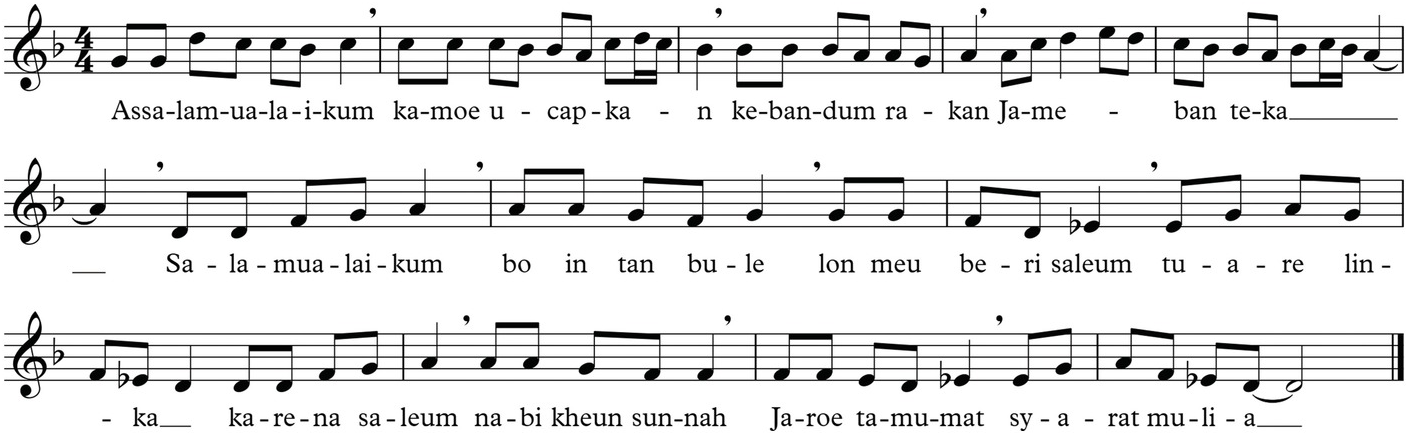
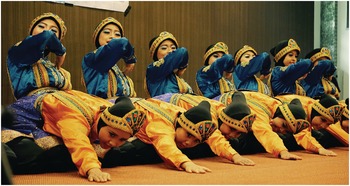
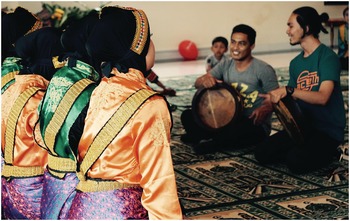
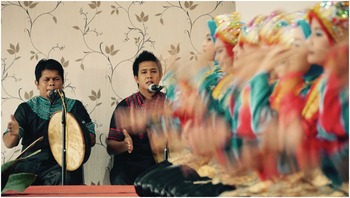
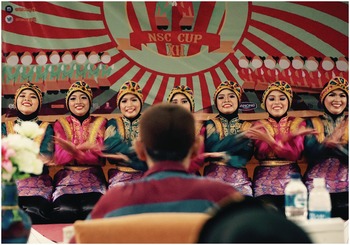
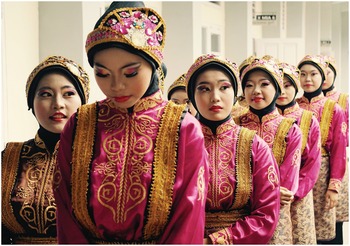
The name, ratoeh jaroe, comes from an Acehnese choreographer, Khairul Anwar, who has closely worked with the creator of ratoeh jaroe, Yusri Saleh (known as Degam).Footnote 4 Ratoeh in Acehnese means “chatting around” and jaroe means “fingers.” (Khairul Anwar, pers. comm., June 2015). Ratoeh jaroe is a prime example of kreasi baru, meaning “new creation,” a category of Indonesian arts that is based on traditional forms, but integrates new elements and innovations. The basic structure and elements of ratoeh jaroe are drawn from traditional sitting dances of Aceh such as ratoeh duek, likok pulo, rateb meuseukat, and rapai geleng. Footnote 5 Dancers exclusively use their upper bodies—especially hands, arms, and heads—to execute the choreography in a sitting position. They sing songs in Acehnese to accompany their movements (see Figure 1), which consist of complex hand and arm gestures incorporating percussive sounds by clapping or slapping parts of the body. Two drummers typically lead the singing and set the tempo for the dancers using the rapai, a traditional Acehnese frame drum.Footnote 6 Around 15–25 female dancers typically perform ratoeh jaroe with mesmerisingly fast movements, virtuosic synchronicity, and highly spirited singing. The tempi of performances tend to be much faster than those of traditional Acehnese dances, impacting rapai playing technique as much as the aesthetic qualities of dance movements, and distinguishing ratoeh jaroe from other traditional Acehnese dancesFootnote 7 (see Figure 2). In short, ratoeh jaroe is a mixture of Acehnese traditional dance with distinct modifications to movement, aesthetics and musical accompaniment (see Figure 3).
Notation for Degam’s opening salam.

Young women performing ratoeh jaroe dance. Working together as a team is the key to winning competitions (Jakarta, February 2016).

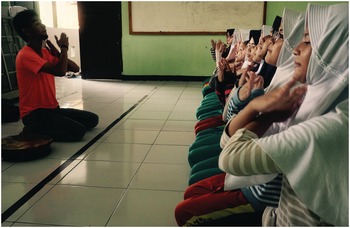
Practice sessions with pelatih: (right) Adriansyah and Indra Maulana, both holding the rapai (Jakarta, January and February 2016).

Jakartan practitioners and Acehnese teachers in Jakarta recognise ratoeh jaroe as “Acehnese” because of its movement vocabularies, song repertoires, and language. While the dance was created by Degam, an Acehnese choreographer and teacher, ratoeh jaroe is more popular in Jakarta than in Aceh (Marzuki Hasan, pers. comm., February Reference Marzuki2016). Many Acehnese pelatih Footnote 8 even argue that the dance form belongs to Jakarta for this reason (Indra Maulana, pers. comm., January Reference Marzuki2016).Footnote 9 Today, most high schools in Jakarta, whether private or public, have atleast one ratoeh jaroe team, and sometimes even up to three teams operating in their after-school programmes. By contrast, in 2015 and 2016 there were only a handful of schools and sanggar (performing art clubs) in Banda Aceh that had ratoeh jaroe teams (Rizka, pers. comm., October 2015).
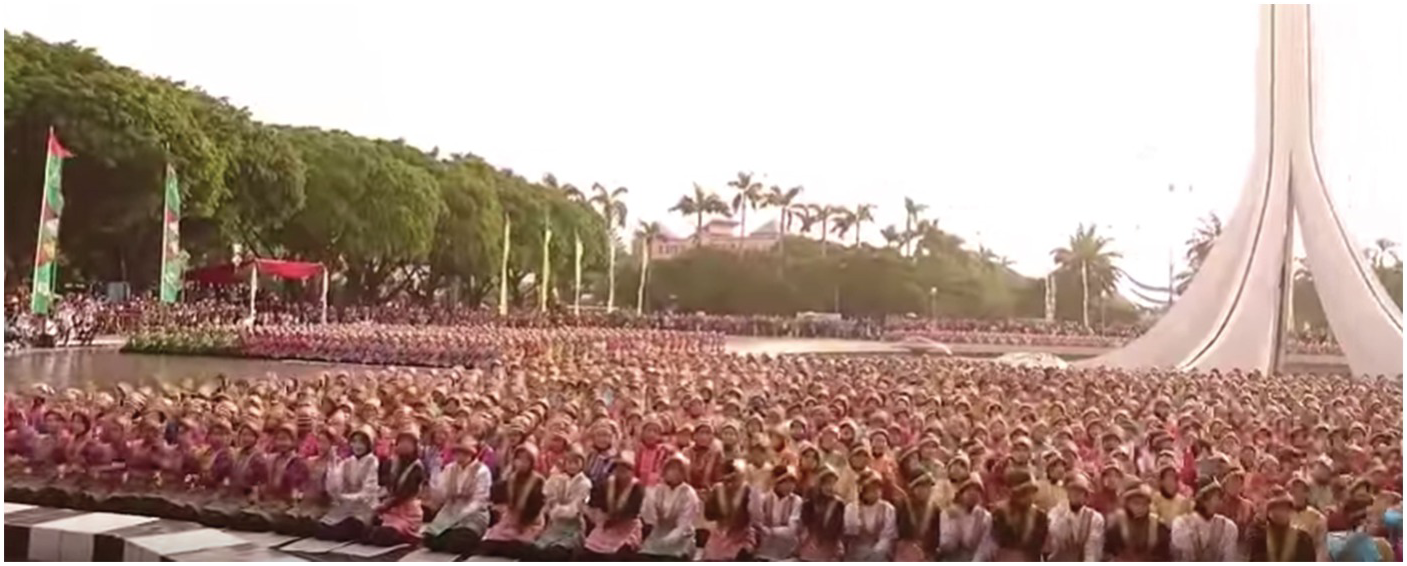
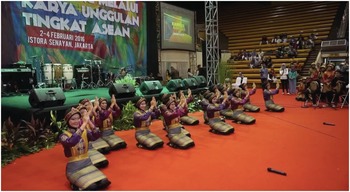
Large and spectacular performances, like the 1,600 ratoeh jaroe dancers at the 2018 Asian Games or the 6,000 dancers at the anniversary for the Taman Mini Indonesia Indah (TMII) cultural parkFootnote 10 in 2016 (Figure 4), are special events and not witnessed every day, though they are becoming more common.Footnote 11 Instead, Jakartan female high school students typically engage with the dance form during weekly practice sessions and special preparations for frequently held competitions in Jakarta (Fadhil, pers. comm., January 2016).Footnote 12 Finally, I have sometimes witnessed young female students in Jakarta, practising their hand movements while waiting for the bus, demonstrating how ratoeh jaroe suffuses their everyday lives.
A performance at TMII anniversary in 2016 (Jakarta, April 2016).

The Presence of Acehnese Performing Arts in Jakarta
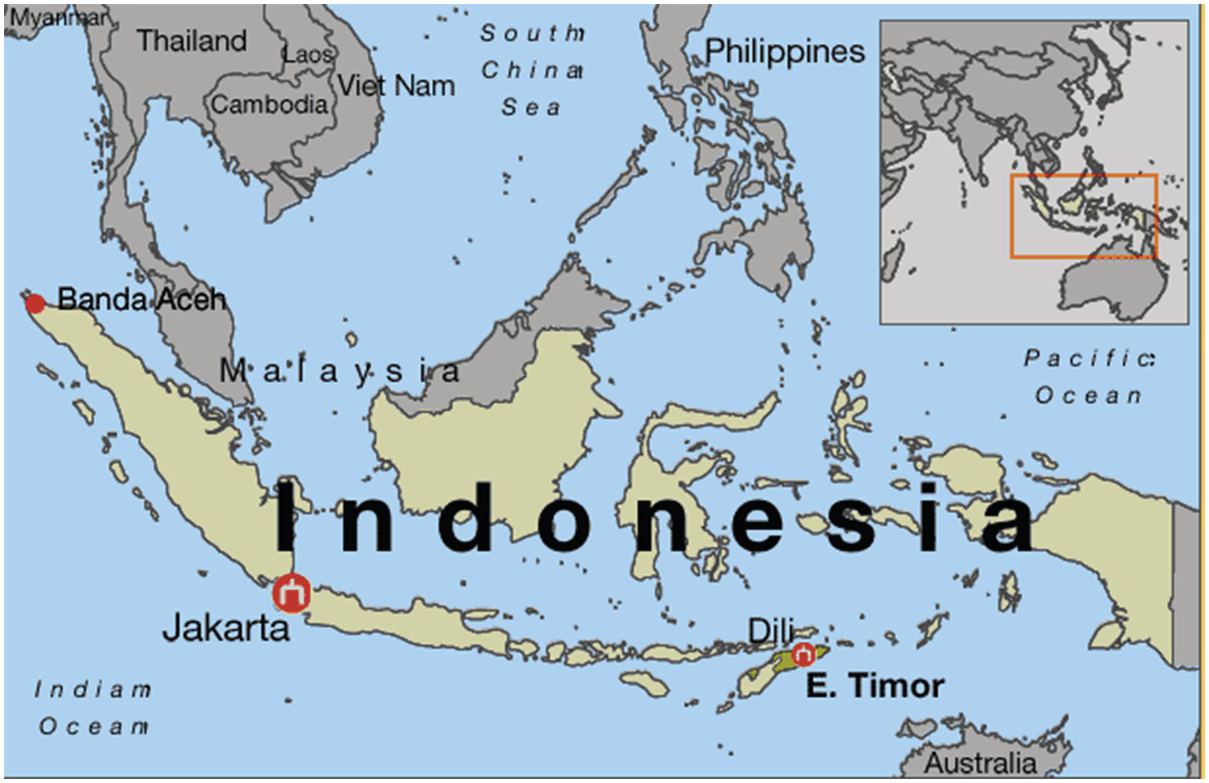
Before ratoeh jaroe became popular in Jakarta, Marzuki Hasan, an Aceh native and professor of Acehnese performing arts at Institute Kesenian Jakarta (IKJ), the Jakarta Institute of Arts, played a central role in developing Acehnese dance communities outside of Aceh (see map in Figure 5). In the 1970s, a handful of small communities of Acehnese dancers began moving to Jakarta to practise merantau, a common practice among Acehnese men of travelling away from their hometown to earn money and support their families back home. Marzuki helped foster these communities by hosting informal practice sessions at the IKJ. Then in the 1990s, he began teaching Acehnese dance at local high schools with support from the Ford Foundation (Marzuki Hasan, pers. comm., January Reference Marzuki2016). In the early 2000s, several more Acehnese dance practitioners left Aceh due to violent conflicts between Gerakan Aceh Merdeka, the Free Aceh Movement, and the Indonesian government, which prevented the dancers from practising the arts in Aceh province (Yusri Saleh, pers. comm., December 2015).
Geographic locations of Jakarta and Banda Aceh on Indonesian Archipelago

One of these Acehnese practitioners was Degam, who is widely recognised as the creator of ratoeh jaroe. Taking advantage of Marzuki’s programmes at Jakartan high schools, Degam began teaching ratoeh jaroe, among other Acehnese traditional dance forms.Footnote 13 It was in 2005, after wide media coverage of the Aceh tsunami disaster in 2004, Aceh and its performing arts became more visible to the general population of Jakarta (Indra Maulana, pers. comm., January 2016) (see Figure 6).Footnote 14 Since then, the popularity of ratoeh jaroe has continued to grow among Jakartan high school students, motivating Degam to encourage other dance practitioners in Aceh to practise merantau in Jakarta. At the time of my research in 2016, there were around fifteen pelatih participating in Acehnese performing arts events in Jakarta, providing musical accompaniment at ratoeh jaroe competitions, and teaching in various schools. These Acehnese pelatih who joined Degam’s network are based in Anjungan Aceh, the Acehnese sector of the TMII cultural park, where they share workloads, exchange information, and organise cultural events.
Degam (left) and Apon (right) performing with their team of dancers at SMA KOPRI (Bekasi, January 2016).

There are now three different groups of pelatih in Jakarta: Degam’s immediate network of instructors who work with him on lessons, competitions, and other performances; pelatih who used to be affiliated with Degam’s network and are now more or less independent, although they still create choreographies that are loosely based on Degam’s original sequences; and non-Acehnese pelatih from Jakarta who learned the movements, repertoire of songs and rapai playing of ratoeh jaroe primarily from online resources like YouTube.
The Ratoeh Jaroe Industry: Degam’s Pelatih Networks and Competition Culture
Competitions of ratoeh jaroe are held every weekend throughout the year, and sometimes on weekdays as well, except during school exams and the month of Ramadhan. When I conducted my fieldwork in 2014 and 2016, there were often multiple competitions in one day, especially on weekends, typically hosted by high schools or university campuses. Three jurors usually sit at a desk between a raised performance stage and the audience area to evaluate each team’s performance. The smallest competition I attended included five teams while the largest included around fifty and ran over two days (see Figure 7). A typical competition opens with an MC from the hosting school introducing the event, the sponsors, and the jurors. Then the first team enter with their pelatih and immediately start their performance. Each performance lasts about fifteen minutes with the next performance beginning within three minutes of the preceding one. Audiences cheer for their teams and casually come and go from the performance venue throughout the competition. After all teams have performed, jurors go into a room for about an hour to make their decisions, after which the MC announces the winning team and presents the prize money and trophy, concluding the event.
A competition of ratoeh jaroe, a view from judges’ table, SMA 1 Tangsel (Tangsel, January 2016).

A number of ethnomusicological publications detail how competition culture is a major force driving the popularisation of certain performing arts genres, shaping them in various ways (Dudley Reference Dudley2003; Nannyonga-Tamusuza Reference Nannyonga-Tamusuza2003; Williams Reference Williams2003; Rasmussen Reference Rasmussen2010). Nannyonga-Tamusuza’s work on Baakisimba (Reference Nannyonga-Tamusuza2003), a traditional Ugandan dance form, shows how competitions create spaces and opportunities for innovation. At school competitions, students foster creativity through innovative stage design, costume design, musical performance, movement, and drumming. Because student participation is required by the Ministry of Education, such competitions impact ethnic, cultural, and national identities. Dudley (Reference Dudley2003), on the other hand, explores how competition culture affects carnival practices and steel band music across various time periods of Trinidadian history. At one point, steel band music and carnival practice were standardised, turning once community-oriented carnivals into spectacles, effacing political and social roots in the process. But more recently, competition sponsors have focused on marginalised styles and communities by creating specific categories of competition to cultivate and recognise aesthetic diversity.
The competition culture of ratoeh jaroe shares many aspects with case studies in this body of scholarly work, particularly with William’s discussion (Reference Williams2003) of Sundanese music competitions that are sponsored by various branches of local government. The regional government mobilises competitions as spaces to display cultural pride and educate locals. Williams argues that competitions motivate younger generations, who may not be exposed to traditional music otherwise. On the other hand, the development of individual innovations, a characteristic of Sundanese music, is often foregone. For example, cassette recordings of winning singers tend to become the “correct way” of performing at competitions, attracting followers and resulting in standardisation.
Competition culture has played a pivotal role in the popularisation of ratoeh jaroe, impacting its aesthetic of movement alongside the economics of performance. For example, Mohammad Taufik (known as Taufik) and Zulfikar (known as Fikar)Footnote 15 are two of the most active Acehnese pelatih in Jakarta. They have attempted unsuccessfully to popularise other Acehnese sitting dance forms, such as rapai geleng, wherein each dancer combines rapai drumming and ranup lampuan, a female standing dance frequently used to welcome guests in Aceh (Muhammad Taufik and Zulfikar, pers. comm., February 2016). However, according to a number of other Acehnese pelatih, these repertoires never attracted students in the ways ratoeh jaroe has because there were rarely any competitions or performance opportunities. Taufik describes how competition culture plays a significant role in motivating young female dancers: “They are really driven by the competitive feelings and want to know how they can win!” (Muhammad Taufik, pers. comm., February 2016)Footnote 16 (see Figure 8).
A practice session with Fadhil at SMP 4 Tangerang (Tangerang, February 2016).

Degam’s network—the group of Acehnese teachers who operate out of the TMII cultural park under his leadership—play a significant part in driving this competition culture while shaping the aesthetic of movement in current ratoeh jaroe. As a cultural authority, the network dominates the ratoeh jaroe industry by maintaining a tight grip over many competitions, including their juries, and practice sessions across Jakarta, greatly influencing dance sequences across Jakarta.Footnote 17 For example, ratoeh jaroe is an example of kreasi baru, which allows practitioners to integrate new styles of movement and songs. Nevertheless, most practitioners primarily practise Degam’s original sequences or spin-offs by members of his network. At the competitions I have attended, about 80–90% of the teams typically perform Degam’s original sequences. Audiences and practitioners, furthermore, demonstrate their great familiarity with Degam’s sequences by singing along or following the movements in the audience. As a last observation, at a practice session at SMA 105 (a local high school in East Jakarta) in March 2016, I witnessed a pelatih teaching a new sequence to a group of high school students. Quickly recognising that it came from Degam’s repertoire, the dancers were ecstatic as they felt that including the songs and movement would add prestige to their dance team. The observations I have given suggest that Degam’s style of sequencing ratoeh jaroe has attained a brand-like status among most practitioners and audiences.
The predominance of ratoeh jaroe among Jakartan high school students also stems from an economic strategy and system that Degam’s network employs. When Acehnese pelatih move to Jakarta, Degam typically takes them under his wing and they spend a couple of months following other pelatih in his network. In this way, Degam seeks to ensure that newcomers learn only his teaching techniques and sequences. Mastering Degam’s original sequences, however, brings certain advantages to pelatih. When a team of ratoeh jaroe dancers needs a lesson, and one pelatih who belongs to the network is not available, then another pelatih can replace them at short notice as both are familiar with the same versions, with minimal variation between them. In addition, when pelatih are called upon to perform at competitions with a group they have never worked with, they can perform flawlessly with only a couple of rehearsals on account of this shared familiarity with Degam’s original sequences. For pelatih, performing as an accompanist at competitions in this way can generate payments of 600,000 to 1,000,000 rupiah (or $40 to $66 USD) a time, a substantial income for most Indonesians. In turn, for most dancers, each lesson can be expensive, costing about 400,000 to 600,000 rupiah (or $27 to $40 USD) a time. As a result, dance teams typically transmit choreographies they have learned from a pelatih to several generations of team members to cut down on costs. With a large number of pelatih sharing the same iconic sequences of ratoeh jaroe, Degam’s network can cater to a large body of interests in a greater number of competitions per week.
Another economic strategy of Degam’s network consists of overseeing costume rentals. For each competition, a team rents a set of twenty to twenty-five colourful Acehnese costumes from a pelatih; individual dancers typically do not own costumes of their own. At competitions, a pelatih is able to earn about 2,000,000 rupiah (around $133 USD) per rental to a dance team. While acquiring sets of costumes from Aceh are expensive for pelatih, they consider it an important investment that will very likely generate significant profit (Indra Maulana, pers. comm., January 2016). Without the rental system administered by Degam’s network, it would likely be impossible to hold the large numbers of weekly competitions.
Furthermore, Marzuki states that Degam himself wants to maintain this system in order to consolidate the large body of “customers,” by which Marzuki means dance teams (Marzuki Hasan, pers. comm., February Reference Marzuki2016). Maintaining Degam’s ratoeh jaroe as the predominant model of practice is economically advantageous for both pelatih and dance teams in various ways. However, Marzuki has also repeatedly expressed a concern that Acehnese pelatih are commercialising ratoeh jaroe while the competition circuit is increasingly discouraging improvisation and modification, both of which are key features of traditional Acehnese music and dance.
A final element of the rateoh jaroe industry concerns competition juries, whose members tend be affiliated with Degam’s network. Competition committees even typically ask Degam to recommend jurors for competitions. For example, one large competition in March 2016, featured Marzuki Hasan, Ujung, and Ratna as jurors, all affiliated to Degam’s network in some capacity: Marzuki serves as a mentor and advisor to most of the Acehnese pelatih in Jakarta; Ujung formerly taught in Degam’s network; and Ratna is Degam’s wife. Pelatih often call the committee prior to competitions to find out who the jurors will be in order to learn the specific aesthetics preferred by specific jurors, giving their team an advantage. For example, pelatih in Degam’s network know that Marzuki, as a juror, will penalise performers for certain types of movements, say, if dancers bounce enthusiastically while they sit on the floor, which Marzuki tends to regard as kelebihan (or “excessive”), potentially costing the team to lose several points. Taufik, in response, relayed this knowledge to his students at SMAN 2 Tangerang, a high school which has won several first places at recent competitions, before a January 2016 competition in which Marzuki was a juror.
In some cases, pelatih even change the music and choreography depending on who will be at the juror’s table. From transmission to performance, costume rentals and jury evaluation, Degam’s network not only dominates, but itself constitutes the competition culture, aesthetics, and industry of ratoeh jaroe in Jakarta.
Ratoeh Jaroe from the Perspective of Female Youth in Jakarta
“Their brains are wired differently.” This is how Taufik (pers. comm., January 2016) and a number of other Acehnese pelatih described their exclusively teenaged, female students. While observing a number of their practice sessions, I was similarly struck by the students’ remarkable level of commitment and hunger to learn. In addition to the competition culture and industry discussed above, ratoeh jaroe’s popularity in Jakarta can be attributed to desires of agency and autonomy among young female dancers. Scholars of music and dance have explored how the performing arts offer agency and autonomy to practitioners. Reed (Reference Reed2010), for example, examines how the transformation of a local, ritual-based Kandyan dance among Sinhala people into an ethnic and national symbol shaped the role of women in traditional dance communities during Sinhala Buddhist nationalism movements in the 1960s. Practising this form of dance became a way for a traditional dance caste to elevate their social status as Kandyan dance became recognised as a Sri Lankan national heritage. Mack (Reference Mack2004) shows how Hausa women actively take part in a Hausa poetry tradition. Because Hausa poetry has al-Qur’an as its structural model, and because education and literacy are respected in Muslim cultures, Hausa poetry empowers women by allowing them to share and more equally participate in public life as well as political and social movements with their fellow men. In my study, for young female dancers in Jakarta, ratoeh jaroe is an opportunity-filled activity that provides them with a platform for the youth in Jakarta to strive academically, socially and culturally. Below, I focus on five aspects of ratoeh jaroe performance that offer these practitioners various benefits and opportunities, while contributing to the dance form’s popularisation alongside competition culture and the industry. These aspects are (1) popular youth culture; (2) prestige; (3) widened worldviews; (4) parents; and (5) self-improvement.
Popular Youth Culture
As in many parts of the world, internet and social media have become highly accessible and widespread in Jakarta in the last decade. Social media plays a significant role in the case of ratoeh jaroe trends among Jakartan youth. Most announcements for events—including registration deadlines and fees, dates of the events, and the amount of prize money—are made using Twitter. While dancers focus fully on preparation and performance during competitions, afterwards they schedule lengthy photo sessions with their mobile phones. After a large-scale competition comes to an end, Jakartan Facebook, Twitter, and Instagram networks buzz with snapshots of participating dance teams and selfies with fellow teammates announcing their connections to ratoeh jaroe culture. By posting photos of themselves dressed up in brightly coloured costumes, with full make-up and with many of their friends dressed alike on social media, dancers take part in a Jakartan youth culture. Aria Danaparamita, a Jakartan native in her mid-twenties who witnessed the beginnings of this youth culture at her school, discussed how “all the girls on ratoeh jaroe teams were popular at my school” (pers. comm., 2012) (see Figure 9).
Dancers in their full make-up and costumes at a competition at SMA Lab school Kebayoran (Jakarta, February 2016).

Sponsors are well aware of ratoeh jaroe youth culture, as their large banners displaying their names and logos at a number of competitions I attended demonstrated. These sponsors included make-up and fashion brands, phone service and cellphone providers, and fast food companies. Companies understand that dancers prefer high-resolution cameras and a fast internet service to share their activities online and that they use a considerable amount of make-up and many accessories for each performance.
On the other hand, no other special equipment or instruments are required for dancers, a fact that allows many young female youth to participate. On average, it takes a team approximately one to two months to learn a choreography and prepare for performances or competitions (Indra Maulana, pers. comm., January 2016). In comparison to other dance or music practices, such as Central Javanese court dance, mastering ratoeh jaroe takes very little time and materials. But once dancers reach their final year of high school, they tend to cease participating in dance teams as they begin studying for national exams to enter universities (Alex, pers. comm., March 2016). Some continue to practise ratoeh jaroe in their college years, but this is rare. Despite their often feverish passion for the dance form, dancers only briefly participate in ratoeh jaroe youth culture when in high school as opposed to developing their practice over a lifetime. Some of the pelatih consider this in relation to the quick-paced metropolitan life style, which demands convenience, fast service, and quick results (Fikar, pers. comm., February 2016).
Prestige
Dancing ratoeh jaroe exudes a sense of not only being popular and trendy, but also intelligent (Indra Maulana and Muhammad Taufik, pers. comm., January 2016). Dancers, for example, must sing in Acehnese, a foreign language to most Jakartans, while performing complex movements synchronously at extraordinarily fast tempi. As one young pelatih from Jakarta discussed, success at ratoeh jaroe performance is often considered evidence of a student’s responsibility, discipline, and intelligence (Findo, pers. comm., February 2016).Footnote 18 This has led a number of universities in Jakarta hosting ratoeh jaroe competitions to attract students to their campuses. This was evident, for example, at one competition I attended at the Kalbis Institute, a relatively young university founded in 1992, which focuses on business management and the sciences. As a less-renowned university in Jakarta, the institute has sought to bring high school students by hosting a ratoeh jaroe competition. Some universities, such as Trisakti University in East Jakarta, even offer scholarships to winning teams (Muhammad Taufik, pers. comm., January 2016).
The Ministry of Education itself has begun paying attention to ratoeh jaroe as well by organising its own competition to attract students to a college fair attended by prestigious universities and high-achieving students from across Indonesia. At the three-day event, called Kampus-Kampus Favorit, which I attended in February of 2016, there were competitions for ratoeh jaroe and other performing arts every day. The dancers, as well as their parents and friends who came to watch them, walked around after the performance to check out the university booths. Not only a cultural trend among Jakartan youth, ratoeh jaroe has also become a magnet for high-achieving students and the higher education organisations that seek to attract them (see Figure 10).
Competition at Kampus-Kampus Favorit, hosted by the Ministry of Education (Jakarta, February 2016).

Ratoeh jaroe shapes education in Jakartan high schools in other ways as well. For example, some dancers commented that one of their motivations for participating in ratoeh jaroe was to bring fame to their schools by winning competitions (Yusri Saleh, pers. comm., December 2015). A number of public and private high schools I visited have display cases at the entrance of their schoolyards exhibiting trophies earned by students at competitions. It is hard for school visitors and students to miss these displays of success. The presence of winning teams at a high school, in turn, can be associated with a high quality of education as evidenced by the skills needed for dance team members to work together, focus, and cultivate discipline (Firman, pers. comm., February 2016).Footnote 19 Prospective middle school students even consider the presence of good ratoeh jaroe teams at a high school as a reason to choose the school over another (Indra Maulana, pers. comm., February 2016). High schools thereby gain various benefits—prestige, a reputation for high-quality education, and competitive students—by having winning ratoeh jaroe teams.
Widened Worldviews
In addition to winning competitions and raising the reputation of their schools, ratoeh jaroe dance teams perform at arts festivals abroad. After receiving invitations from overseas festivals, schools apply for funding from cultural or educational organisations, such as Dinas Kebudayaan dan Pendidikan, which is a local administration that oversees local cultural or educational activities, to raise money for overseas presentations (Aulia Rahani, pers. comm., May 2016). Performing arts tours abroad often provide certificates of participation for dancers, which eventually help them to get into prestigious universities or acquire desirable jobs (Sona Anjana, pers. comm., February 2015).
For most Indonesians, it is often difficult to travel to nations that are not part of the Association of South East Asian Nations due to the expensive and time-consuming process of acquiring a proper visa. But for dancers of ratoeh jaroe, there are now many international festivals that have become interested in the dance form. In the context of these festivals, young dancers seize a rare chance to travel outside of Indonesia, interact with a diversity of peoples, and become cultural ambassadors (Aulia Rahani, pers. comm., June 2016). For international folk music and dance festivals, ratoeh jaroe is visually exciting and inexpensive to present. Unlike Javanese dances and gamelan ensembles that have long represented Indonesian performing arts in the past (Lindsay Reference Lindsay2010), ratoeh jaroe dance teams do not require large instruments or musicians. When I was conducting my fieldwork in Jakarta in early 2016, there were several teams practising for festivals in Spain, the United Kingdom, and Taiwan.
Parents
In a conversation with Rizka, an Acehnese dancer and art teacher in Banda Aceh, I inquired as to why parents are rarely at any performing arts events. According to her, in Aceh, performing arts activities are considered a pastime for children (Rizka, pers. comm., August 2015). In contrast, the Jakartan parents of dance team members are highly visible. Parents help prepare their children before competitions by bringing them food, driving them around, and helping them apply make-up. During performances, the audience consists mainly of parents cheering for their children’s teams. Parents also take videos and photographs so that dancers can review their performances for future competitions. At the end of performances, parents also typically approach the pelatih supervising their children’s team to give them monetary bonuses for their hard work (Bukti, pers. comm., December 2015).Footnote 20 Parents’ presence and enthusiasm, approval, and pride further motivate dancers to learn and perform (Bella and Putri Camilla, pers. comm., February 2016).
Aside from ratoeh jaroe’s reputation as an activity for high-achieving students, parental support for the dance form stems from their approval of its associated activities and the general cultural environment surrounding it (Leila Erlina Dewi, pers. comm., January 2016).Footnote 21 As we have seen, many parents link sponsorship of dance events by educational institutions with the educational worth of the dance form. Synchronous dancing additionally suggests to many parents that the dance form cultivates a capacity for gotong royong, an essential ideal of participating in communal activity or working together, which many cultures and communities in Indonesia share.Footnote 22 Thus, parents tend to consider the dance not only as an art form, but also correlate it with the moral education of their daughters (Firman, pers. comm., February 2016).
Self-Improvement
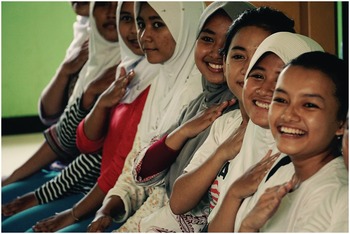
Although dancers of ratoeh jaroe are almost exclusively female, the genre allows for male performance. In Aceh, for example, the energy, fast-paced tempo, and powerful movements required of Acehnese dance similar to ratoeh jaroe attracts many male dancers (Zulkifli, pers. comm., August 2015).Footnote 23 In Jakarta, on the other hand, these same features attract young female dancers as a way to cultivate physical strength and mental discipline (Putri Camilla and Bella, pers. comm., February 2015).Footnote 24 The young female students of pelatih Fadhil, who attend SMP 4 Tangerang, a middle school outside of Jakarta, for example, described other dances available to them, such as Javanese court dance, and tari piring from West Sumatra,Footnote 25 as “soft,” “slow,” and “smooth” (pers. comm., February 2016). Jaipongan dance, another dance form which is often offered in schools, is sometimes considered sensual as their movements include swaying of hips and spreading legs.Footnote 26 In contrast, ratoeh jaroe consists of quick movements, crisp sounds, and powerful singing styles, which the dancers find athletic rather than artistic. As male students dominate most of the athletic activities in school (e.g., soccer and basketball), female students seek other activities with which to challenge themselves physically and mentally. Ratoeh jaroe has become one such opportunity to demonstrate a powerful and high-spirited character in a metropolitan city that otherwise presents few other options (Janette Suherli, pers. comm., February 2016). By investing hard work into building a team of friends who give 100% of what they have to each performance, these young Jakartan women foster confidence and trust among themselves in what they can achieve as a team and as individuals (see Figure 11).
A practice session with great enthusiasm at SMAN 105 Jakarta (Jakarta, February 2016).

Islam in Ratoeh Jaroe and the Performing Arts Scenes of Aceh and Jakarta
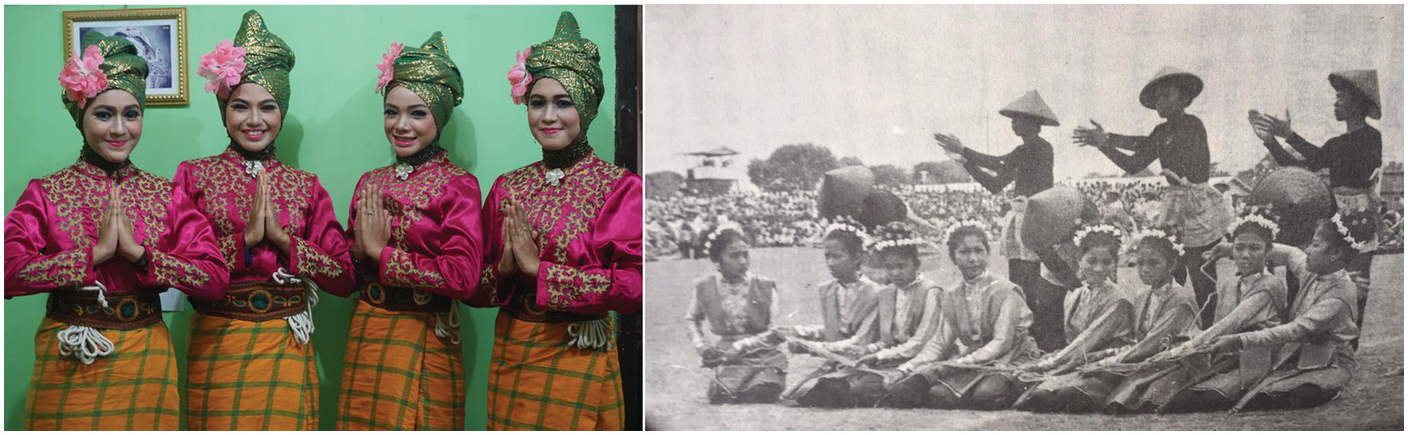
In addition to the economic, social, cultural, and personal considerations, the recognisable Islamic elements of ratoeh jaroe in the increasingly conservative religious climate of Indonesia also contribute to the dance form’s popularisation and acceptance in Jakarta. Over the past decade, Indonesia has seen an intensification of conservative Islam in politics, social and cultural life, and its international relations. These changes are the result of Islam’s global reform since the 1970s (Lapidus Reference Lapidus2004) as well as the balance between politics and religion in Indonesia at the end of Suharto’s presidency in late 1990s. Such changes in religious climate have impacted performing arts in Indonesia. In the case of the performing arts scene in Aceh, female performers now face many obstacles. For example, a himbauan Footnote 27 advisory in Lhokseumawe, a major Acehnese city, now prohibits women over the age of seventeen from performing music or dance in public (Ma Reference Ma2013). In order to maintain their practices, both male and female Acehnese practitioners employ several strategies, including self-censorshipFootnote 28 (see Figure 12).
Left, female dancers of Sanggar Rampoe in Banda Aceh wearing jilbab in year 2016. Right, female dancers without jilbab in 1972 (Dewan Redaksi Buku PKA II 1972).

Siti and PitaFootnote 29 are two Acehnese female dancers in their late twenties who have practised merantau in Jakarta for the last four years. When I asked whether they would perform on stage when they returned to Aceh, they gave me a definite no, yet they felt comfortable appearing on stage in Jakarta. They explained how in Aceh, because of their marital status, age, and religious, moral, and social expectations, their presence on stage would be heavily criticised. They worried that it could even trigger religious or governmental organisations to issue a regulation to lawfully prohibit women from dancing on stage entirely (Siti Murhamah and Yufita “Pita” Aprilla, pers. comm., February 2016).
In addition to local socio-cultural factors, the reasons for these different relationships between Islam, women’s presence on stage and performing arts in Aceh versus Jakarta stem from differences in local institutions and of customs. Siti and Pita, for example, discussed how family and neighbourhood structures in Aceh provide support when they are not able to support themselves. On the other hand, there is no similar safety net in Jakarta. As Siti points out, in a city where they practise merantau on their own and live without their kinship network, “You have to perform, earn and eat, you know. And you should not be punished for that” (Siti Murhamah, pers. comm., February 2016). The financial and economic needs of an individual override his or her religious moral in Jakarta, the capitalism centre of the nation.
Secondly, the nature of sponsorship for the performing arts and the sponsors’ reasons for supporting the arts vary greatly between Aceh and Jakarta. In Aceh, artists have limited sources of income from performances at private weddings and bank opening events, and these events only tend to support brief performances. Regional governmental bodies called dinas, particularly Dinas Kebudayaan dan Pendidikan (local administrative body that deals with the culture and education sectors) are the major funders of any event involving the performing arts, from small district-level music events to large-scale festivals, national-level competitions, and international tours. These events are free and open to the public on temporary outdoor stage events, but dinas closely supervise them to check that they reflect the local government’s views and policy, including that which pertains to performances by women on stage.Footnote 30 In Aceh’s administrative system, unlike that of other regions in Indonesia, the local government has also created Dinas Syariat Islam, a local administrative body that is tasked with overseeing the core institutions of sharia law: the courts, ulama (Islamic scholars) councils, and the police. These Dinas Syariat Islam help to determine the permissibility of performing arts at events sponsored by Dinas Kebudyaan dan Pendidikan (Ishiguro Reference Ishiguro2019).
In Jakarta, by contrast, sponsors of performing arts events, particularly for ratoeh jaroe, are primarily educational institutions, like high schools or universities, or corporations and businesses in the phone, cosmetic, or clothing industries. In addition, the young dancers in Jakarta are neither morally and lawfully obliged to maintain their cultural identity nor challenged by religious principles, as are the Acehnese, due to the governmental structure and its engagement with Islam. In Aceh, it is obligatory that religious leaders read verses from al-Qur’an during the opening of performing arts events. The audience also prays, holding their palms up and lowering their heads, while prayers are recited on stage (ibid.). Furthermore, in Aceh, local governments could shut down or cancel performing arts events if their agendas do not accord with Islam (ibid.). In Jakarta, I rarely encountered a ratoeh jaroe event that had Qur’anic readings. As there was no visible Islamic element or rarely any governmental bodies engaged in sponsoring ratoeh jaroe events, there were no major religious or political ideologies that impact artistic expression and women’s presence on a Jakartan stage. In general, ratoeh jaroe performances and practitioners do not seem to emphasise Islamic principles, piety, and moral obligation, and instead reflect more the agendas and values of Jakartan youth culture, educational institutions, and commercial industries.
Jakarta’s Perceptions of Islam in Ratoeh Jaroe
Nevertheless, the dance form’s Islamic elements have played a key role in popularising ratoeh jaroe in Jakarta by securing the approbation of students, parents, and institutions. A handful of ethnomusicological studies have addressed the relationship between religion and popular music. Sarkissian (Reference Sarkissian2005), for example, discusses how the Malaysian government banned a number of Western popular music genres in the 1990s due to fears of a decline in morality among youth. The popular music genre of nasyid, however, was not banned because it was seen as an appropriate form of entertainment that promoted Islamic values to Malaysian youths. In a similar study, Yoon (Reference Yoon2016) discusses how Korean boy band music enabled the Christian churches to transmit religious messages directly to young audiences. Tan (Reference Tan, Weintraub and Barengdregt2017) and Barendregt (Reference Barengdregt, Weintraub and Barengdregt2017), on the other hand, discuss how female Muslim Malay singers and music industry leveraged displays of Malay custom and Islamic teaching to facilitate their participation in the popular music scene. For example, Barendregt writes how Siti Nurhaliza transitioned successfully from an “ethnic pop diva” to “the pious superstar of Asia” by carefully choosing which artists to collaborate with, what costumes to wear, and what kind of sounds, language, instrumentation, and lyrics to employ in her songs to gain commercial success, even despite criticism of an affair she had out of wedlock. While Sarkissian and Yoon illustrate how popular music is used as a vehicle to engage youth and promote religious discourse and activities, Tan and Barendregt discuss how Siti Nurhaliza strategically incorporated Islamic elements to gain acceptability as a Muslim pop star. In the case of ratoeh jaroe, both kinds of strategy and engagement play out: the dance form’s Islamic elements in ratoeh jaroe make it acceptable for young female students to get involved with, and further, the practice of ratoeh jaroe promotes some level of Islamic principles among the youth.
While the majority of Jakartan practitioners do not understand the Acehnese lyrics sung in ratoeh jaroe performance, they are aware of their Islamic contents (Bukti, pers. comm., December 2015). A number of Acehnese sitting dances have their roots in dakwah, an Islamic proselytisation practice, and dhikr, a Sufi devotional practice. The common sitting position, body movements, and synchronicity all derive from dhikr, wherein Muslims sit in a line and sway as they chant or sing. A genre of songs called shalawatan, which are sung to praise the Prophet Muhammad, typically accompany these dances. For many Muslims, the lyrics of shalawatan are recognisable as they use Arabic words which they are familiar with through reading al-Qur’an and using Islamic greetings to their Muslim fellows. Although ratoeh jaroe is only practised as an art form and not as a religious act, visual and sonic Islamic elements that the dance form gained from its parent genres are still recognisable for Jakartan practitioners (Putri Camilla and Bella, pers. comm., February 2016).
Students of pelatih Fadhil at Madrasah Aliyah Pondok Pesantren Modern Sahid, an Islamic boarding school in the city of Bogor, West Java, commented that ratoeh jaroe is in accordance with their religious identity and beliefs (pers. comm., February 2016).Footnote 31 Other Islamic schools, such as Insan Cendikia Mandani in the city of Tangerang on the outskirts of Jakarta, do not have any dance activities other than ratoeh jaroe (Yusri Saleh, pers. comm., February 2016). For some schools, ratoeh jaroe is even considered to be more appropriate and acceptable for female Muslim students than other dances indigenous to Java, such as jaipong or Javanese court dance, and are offered at local schools and dance studios (Leila, pers. comm., January 2016).Footnote 32 This preference is due to how costumes in jaipong and Javanese court dance typically expose areas of the body along with movements considered to be “inappropriate,” such as hip swaying (Putri Camilla and Bella, pers. comm., February 2016). In the increasingly conservative religious climate of Jakarta in recent years, young dancers tend to avoid some of the local dances for these reasons.
Leila, a female teacher of Acehnese dance, relates a common observation from the parents of young female dancers: ratoeh jaroe dance costumes consist of loose and long pants and tops, a scarf that goes over the performer’s chest, and a skirt that covers the performers’ bodyline, covering everything but the face, hands, and feet of the dancer. This highly conservative attire suits the views of parents who are relieved to have ratoeh jaroe as an alternative to cheerleading, which has also become popular in recent years and whose costumes expose more of the body (Leila, pers. comm., January 2016). Ratoeh jaroe’s exclusively female participation in Jakarta (aside from Acehnese teachers being almost exclusively male) further marks the activity as safe. After-school programmes, such as theatre, science, or English debate clubs, are usually co-educational. With regard to ratoeh jaroe, Islamic elements in lyrics, movements, and costumes allow them to maintain their religious principles while exploring opportunities for success outside of the realms of religion.
The dancers of Islamic schools like Madrasah Aliyah Pondok Pesantren Modern Sahid and Insan Cendikia Mandani feel that ratoeh jaroe presents opportunities for young female students to participate in the performing arts while observing institutional notions of acceptable behaviour and activities for female Muslim youth. Such schools also believe that ratoeh jaroe promotes a sense of umat or Muslim community, and communal spirituality in everyday life among students, reminding them of their faith even when they are busy with their everyday tasks (Leila, pers. comm., January 2016). In addition to mastering choreographies and singing difficult melodies in a foreign language, dance team members also reflect and maintain their religious identity.
While I argue that Islamic elements in ratoeh jaroe and Jakarta’s religious climate in relation to Jakarta’s position as the nation’s financial and economic centre place Islam as the secondary force in the process of the popularisation of ratoeh jaroe, religion certainly plays a significant part in promoting the acceptance of the dance form in Jakarta. The practitioners, their parents, and both religious and non-religious schools all come together enthusiastically to support the practice of ratoeh jaroe because of the historic background of ratoeh jaroe’s parent genres in the Islamic practices of dhikr and dakwah; its conservative clothing and non-suggestive movements; its exclusively all-female practices; and the sense of umat that the dance form encourages. Promoting Islamic principles and imbued with Islamic elements, ratoeh jaroe works in tandem with the socio-cultural scene in Jakarta which is part of a nation of increasingly conservative religious climate.
Conclusion
Today, the social, economic, cultural, and personal agendas of young female students, Acehnese dance instructors, parents, educational institutions, and corporate industries in Indonesia’s financial and economic centre, Jakarta, play the primary role in the popularisation of ratoeh jaroe. Islam, which is recognised in the practice of ratoeh jaroe, plays the secondary role in the process of the popularisation as it promotes the acceptance of the dance form among young Muslim women. Not only a medium for practising Islamic principles and maintaining Muslim identities, ratoeh jaroe is the result of powerful social, cultural, and economic force in an increasingly conservative religious climate. On the one hand, practitioners and parents in religious and non-religious schools come together enthusiastically to create a ratoeh jaroe youth culture. On the other, the dance form suits conservative Islamic ideals of dress, public appearance, social behaviour, and religious observance.
Degam’s network of Acehnese dancers, young female dancers, parents and their perceptions of appropriateness, educational institutions, and Jakarta’s particular socio-economic conditions have together fostered an environment that encourages young Muslim women to use ratoeh jaroe as a platform for success in their academic, social, and religious lives. The 1,600 young dancers from Jakartan high schools who performed spectacularly at the 2018 Asian Games earned their places by going through competitive auditions and three months of practice sessions. They eagerly paved their own paths to this international stage to perform their hearts out. While in Aceh, ratoeh jaroe is simply seen as one of many sitting dance repertoires, conditions particular to Jakarta promote ratoeh jaroe to its height of popularity and make it appropriate for young, female, Muslim dancers. Belonging to a dance team allows them to participate in an urban youth culture of their own, to bring prestige to their schools, to make their parents proud, to expand their chances of higher education, and to widen their worldviews.
Acknowledgements
This article is written based on my fieldwork in Jakarta in 2014 and 2016 which were supported by the Fulbright Hays DDRA and Small Grant from the Society of Asian Music. I would like to give thanks to AMINEF in Jakarta, my sponsor, ibu Ubiet Reuseki at IKJ, and pak Marzuki Hasan for all their help and support for during my fieldwork in Jakarta. I am also grateful to all the Acehnese pelatih in Jakarta who took me under their wing and brought me on the back of their bikes to practice sessions and competitions. I would like to thank Ender Terwilliger, Sean Norton, Max Gibson and Peter Ludwig for editing this article at its early stage, and Andrew Colwell for excellent advice and editorial work at its final stages, which gave much more clarity, articulation, and direction to this article. Finally, I am grateful for the enormous support and encouragement from the general editor, Tong Soon Lee, throughout the course of revising this article.