Introduction
Antibiotics have been added to poultry and pig diets to maintain health and production efficiency in the last few decades (Rosen, Reference ROSEN1995). However, because of the development of resistance by pathogenic bacteria, which can impact on public health, antibiotics are being taken out of poultry and pig diets around the world, beginning in Sweden in the year 1986 (Dibner and Richards, Reference DIBNER and RICHARDS2005). The search for alternatives to replace IFAs has gained increasing interest in animal nutrition in recent years. Bedford (Reference BEDFORD2000) pointed out that the growth-promoting effects of antibiotics in animal diets are clearly related to the gut microflora because they exert no benefits on the performance of germ-free (GF) animals.
Gut microflora has significant effects on host nutrition, health, and growth performance (Barrow, Reference BARROW1992) by interacting with nutrient utilization and the development of gut system of the host. This interaction is very complex and, depending on the composition and activity of the gut microflora, it can have either positive or negative effects on the health and growth of birds. For example, when pathogens attach to the mucosa, gut integrity and function are severely affected (Droleskey et al., Reference DROLESKEY, OYOFO, HARGIS, CORRIER and DELOACH1994) and immune system threatened (Neish, Reference NEISH2002). Chicks grown in a pathogen-free environment grow 15% faster than those grown under conventional conditions where they are exposed to bacteria and viruses (Klasing, 1987). Furthermore, it is generally agreed that gut microflora is a nutritional “burden” in fast-growing broiler chickens (Dibner and Richards, Reference DIBNER and RICHARDS2005; Lan et al., Reference LAN, VERSTEGEN, TAMMINGA and WILLIAMS2005) since an active microflora component may have an increased energy requirement for maintenance and a reduced efficiency of nutrient utilization.
The focus of alternative strategies has been to prevent proliferation of pathogenic bacteria and modulation of indigenous bacteria so that the health, immune status and performance are improved (Ravindran, Reference RAVINDRAN2006). In this review, we will evaluate dietary modulation of gut microflora through the use of fibre-degrading enzymes, probiotics, prebiotics, MOS, phytobiotics, as well as their mechanisms of action and effectiveness in promoting growth in broiler chickens.
Fibre-degrading enzymes
Enzymes are naturally occurring and are produced by all living organisms for catalyzing chemical reactions. Enzymes were discovered in the later part of the 19th century and have been used in industry and food processes since the early 1900s (Clarkson et al., Reference CLARKSON, JONES, BOTT, BOWER, CHOTANI and BECKER2001). The majority of enzyme products are fermentation products of basophilic micro-organisms (Clarkson et al., Reference CLARKSON, JONES, BOTT, BOWER, CHOTANI and BECKER2001). Ferket (Reference FERKET1993) defined enzymes as special proteins that catalyse or accelerate the rate of specific chemical reactions in which the enzyme activity may be dependent on the substrate in a random manner or it may be through very specific sites on substrates such as fat, protein, or carbohydrates. In monogastric animal diets, exogenous enzymes are used to improve digestibility of a wide range of feed components such as fibre, phytate, protein, etc. Fibre-degrading enzymes are used to break down specially non-starch polysaccharides (NSP), which are large polymers, to smaller polymers to alleviate their anti-nutritive activities (Choct and Annison, Reference CHOCT and ANNISON1992).
The effects of enzymes on gut microflora were classified by Bedford (Reference BEDFORD2000) into two phases: an ileal phase and a caecal phase. In the ileum, enzymes simply reduce the number of bacteria by increasing the rate of digestion and limiting the amounts of substrates available to the microflora. In the caecal phase, enzymes produce soluble, poorly absorbed sugars which feed beneficial bacteria. The volatile fatty acids (VFAs) produced by such bacteria may be of benefit not only in controlling populations of Salmonella, and perhaps, Campylobacter species, but also in providing an energy source for the bird (Snel et al., Reference SNEL, HARMSEN, VAN DE WIELEN and WILLIAMS2002).
However, the effects of enzymes on the gut microflora may be far more than those two phases. The composition of gut microflora in the proximal small intestine as well as those associated with the gut wall was shown to be changed by the addition of xylanase (Vahjen et al., Reference VAHJEN, GLASER, SCHAFER and SIMON1998; Danicke et al., Reference DANICKE, VAHJEN, SIMON and JEROCH1999; Hubener et al., Reference HUBENER, VAHJEN and SIMON2002). The authors correlated those effects of xylanase on the gut microflora with its effects on the viscosity of diet, which is well known as one of the major modes of action of enzymes. Inclusion of cereals rich in NSP increases the viscosity of the digesta, reduces apparent nutrient digestibility, alters bacterial profiles and gut physiology. By adding enzymes into a diet, the viscosity of the content is reduced and nutrient uptake and animal performance are improved (Bedford, Reference BEDFORD2001). Elimination of cell wall encapsulation is another major mode of action of enzymes (Bedford, Reference BEDFORD2001). It relies on the fact that the feed manufacturing process of grinding and pelleting does not break open all the cell walls of the endosperm. The addition of enzymes can remove such “encapsulated” material in the gut and hence improve nutrient utilization by the birds.
Therefore, the responses of birds to enzymes depend mainly on dietary cereal quality and quantity. However, quantity and quality of fat, microbial status, bird age and antimicrobial agents can also modify the effects of enzymes (Bedford, Reference BEDFORD2001). Furthermore, because of cereal quality (e.g. the complexity of carbohydrate) and the thermolabile characteristic of enzymes, improvements are not always observed (Acamovic, Reference ACAMOVIC2001).
Supplementation of enzymes generally can lead to 2-5% improvement in feed/gain ratio and 2-3% improvement in growth rate (Broz and Beardsworth, Reference BROZ and BEARDSWORTH2002). Reduced incidence of sticky excreta and improved litter conditions are also the benefits of using enzymes, which makes the problem of NSP and associated increased ingesta viscosity more manageable (Morrow, Reference MORROW2001). The development of enzymes is towards a specially-designed stage to use NSP as energy sources and to deactivate anti-nutrients in feed (Choct, Reference CHOCT2006).
Prebiotics
Gibson and Roberfroid (Reference GIBSON and ROBERFROID1995) defined a prebiotic as a non-digestible food ingredient which beneficially affects the host by selectively stimulating the growth of and/or activating the metabolism of one or a limited number of health-promoting bacteria in the intestinal tract, thus improving the host's microbial balance. The growth of endogenous microbial population groups such as bifidobacteria and lactobacilli is specifically stimulated and these bacteria species are perceived as beneficial to animal health. Prebiotics have the advantage, compared with probiotics, that bacteria are stimulated which are normally present in the GIT of that individual animal and therefore already adapted to that environment (Snel et al., Reference SNEL, HARMSEN, VAN DE WIELEN and WILLIAMS2002). The dominant prebiotics are fructo-oligosaccharide products (FOS, oligofructose, inulin) (Patterson and Burkholder, Reference PATTERSON and BURKHOLDER2003); gluco-oligosaccharides, stachyose, malto-oligosaccharides, and oligochitosan have also been investigated in broiler chickens (Zhang et al., Reference ZHANG, LI, LU and YI2003; Gao and Shan, Reference GAO and SHAN2004; Jiang et al., Reference JIANG, GONG, MA, HE, LI and ZHAI2006; Huang et al., Reference HUANG, YIN and LI2007).
Compared to the application of prebiotics in human and pet food, the use of prebiotics in broiler chicken diets does not have a long history. Reports on the effects of prebiotics on the activity of the microflora of broilers are limited and the effects are variable, depending on the type of prebiotic. Fructo-oligosaccharides were shown to support the growth of beneficial bacteria, such as lactobacilli (Xu et al., Reference XU, HU, XIA, ZHAN and WANG2003; Yusrizal and Chen, Reference YUSRIZAL and CHEN2003; Zhan et al., Reference ZHAN, HU and XU2003), but failed to stimulate the growth of bifidobacteria (Vidanarachchi et al., Reference VIDANARACHCHI, MIKKELSEN, SIMS, IJI and CHOCT2006). When supplemented into a dextrose-isolated soy protein diet, short-chain fructo-oligosaccharides decreased caecal populations of C. perfringens (Biggs et al., Reference BIGGS, PARSONS and FAHEY2007). Reduced susceptibility to Salmonella colonization was noticed in birds on fructo-oligosaccharide treatments compared to controls (Bailey et al., Reference BAILEY, BLANKENSHIP and COX1991; Fukata et al., Reference FUKATA, SASAI, MIYAMOTO and BABA1999). The addition of isomalto-oligosaccharides and stachyose did not affect crop and/or caecal bacterial populations such as lactobacilli, E. coli and total aerobes (Zhang et al., Reference ZHANG, LI, LU and YI2003; Jiang et al., Reference JIANG, GONG, MA, HE, LI and ZHAI2006). It was shown that prebiotics can bring about “bifidogenic” effects and a shift in microbial metabolism from “proteolytic” to the more favourable “saccharolytic” in mice (Gibson and Roberfroid, Reference GIBSON and ROBERFROID1995). A combination of various substances with different rates of fermentation will be effective in mimicking some of the antibiotic effects in pigs (Williams et al., Reference WILLIAMS, VERSTEGEN and TAMMINGA2001). However, no similar research has been reported in broiler chickens.
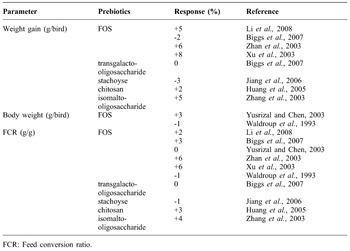
Among the prebiotics examined in chicken, fructo-oligosaccharides were shown to improve growth performance of birds but positive effects are not always observed (Table 1).
Effects of prebiotics on growth performance of broilers .

FCR: Feed conversion ratio.
Also, dietary supplementation of fructo-oligosaccharide (0.3% dose) or oligochitosan (0.1% dose) showed growth-promoting effects similar to antibiotic treatments based on flavomycin (Huang et al., Reference HUANG, YIN, WU, ZHANG, LI, LI, LI, TANG, ZHANG, WANG, HE and NIE2005) or aureomycin (Li et al., Reference LI, LIU and XU2008). The optimal dose for prebiotics to exert growth-promoting effects is not easy to define; however feeding a higher level (0.8%) of inulin and short-chain fructo-oligosaccharide depressed growth performance, digestibility of amino acids as well as metabolisable energy of birds (Biggs et al., Reference BIGGS, PARSONS and FAHEY2007). Some positive changes in digestive enzymes, gut morphology, and immune system were noticed in birds given prebiotic-supplemented feed (Xu et al., Reference XU, HU, XIA, ZHAN and WANG2003; Zhang et al., Reference ZHANG, LI, LU and YI2003; Huang et al., Reference HUANG, YIN and LI2007).
However, there are many considerations in supplementing prebiotics in animal feed. These include the type of diet (i.e., the content of non-digestible oligosaccharides); the type and inclusion level of the supplements; the animal characteristics (species, age, stage of production); and the hygiene status of the farm (Verdonk et al., Reference VERDONK, SHIM, VAN LEEUWEN and VERSTEGEN2005). The primary ones are the type and inclusion level of the supplement as high dosage of prebiotics can have negative effects on the gut system and retard the growth rate of birds as observed by Biggs et al. (Reference BIGGS, PARSONS and FAHEY2007). It is reported that rapid fermentation of prebiotics, leading to high concentrations of organic acids, impaired the barrier function, which reduced the ability of rats to resist salmonella infection (Ten Bruggencate et al., Reference TEN BRUGGENCATE, BOVEE-OUDENHOVEN, LETTINK-WISSINK and VAN DER MEER2003). It may also be worthwhile to examine the interaction between prebiotics(s) and bird sex. In the report by Yusrizal and Chen (Reference YUSRIZAL and CHEN2003), body weight and feed conversion ratio (FCR) of female birds were improved by 10% and 9%, respectively, on oligofructose treatment but no such effects were observed in males.
Probiotics
In animal nutrition, probiotics are defined as viable micro-organisms used as feed additives, which lead to beneficial effects for the host by improving its microbial balance (Fuller, Reference FULLER1989) or the properties of the indigenous microflora (Havenaar and Huis In ’t Veld, Reference HAVENAAR and HUIS IN ’T VELD1992). A variety of microbial species have been used as probiotics, including species of Bacillus, Bifidobacterium, Enterococcus, Escherichia, Lactobacillus, Lactococcus, Streptococcus, a variety of yeast species, and undefined mixed cultures. Lactobacillus and Bifidobacterium species have been used most extensively in humans, whereas species of Bacillus, Enterococcus, and Saccharomyces yeast have been the most common organisms used in livestock (Simon et al., Reference SIMON, JADAMUS and VAHJEN2001). There has been an increase in research on feeding Lactobacillus to broiler chickens (Jin et al., Reference JIN, HO, ABDULLAH and JALALUDIN2000; Kalavathy et al., Reference KALAVATHY, ABDULLAH, JALALUDIN and HO2003).
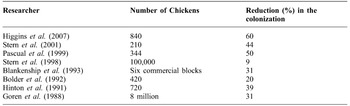
The possible modes of action of probiotics were extensively reviewed (Jin et al., Reference JIN, HO, ABDULLAH and JALALUDIN1997; Simon et al., Reference SIMON, JADAMUS and VAHJEN2001; Ghadban, Reference GHADBAN2002; Edens, Reference EDENS2003). Two basic mechanisms by which probiotics act to maintain a beneficial microbial population include “competitive exclusion” and immune modulation. Competitive exclusion involves competition for substrates, production of antimicrobial metabolites that inhibit pathogens, and competition for attachment sites. Based on this mechanism, probiotics have been tested for their efficacy at controlling Salmonella colonization in broilers and the results are positive and consistent (Table 2).
Effectiveness of probiotics in the prevention of Salmonella colonization in broilers in research station and/or commercial field tests.

Further, a product of competitive exclusion specially designed at gut mucosal level showed much stronger effectiveness than a general competitive exclusion product; the number of affected birds was reduced by 50% and 10%, respectively (Stern et al., Reference STERN, COX, BAILEY, BERRANG and MUSGROVE2001). Probiotic supplementation, especially with lactobacillus species, has also shown beneficial effects on resistance to the other infectious agents such as Clostridium population (Decroos et al., Reference DECROOS, VERCAUTEREN, WERQUIN and VERSTRAETE2004) and Campylobacter (Stern et al., Reference STERN, COX, BAILEY, BERRANG and MUSGROVE2001). Regarding the gut microbiota of normal birds, the results of probiotics supplementation are variable because of the difference in origin, strain as well as species of probiotics. Reduced caecal coliform populations were noticed in chickens given a diet supplemented with lactobacilli strains, isolated from chicken intestine, but the populations of other kinds of bacteria were not affected (Watkins and Kratzer, Reference WATKINS and KRATZER1984; Jin et al., Reference JIN, HO, ABDULLAH, ALI and JALALUDIN1998a, Reference JIN, HO, ABDULLAH and JALALUDIN1998b). In contrast, Murry et al. (Reference MURRY, HINTON and BUHR2006) reported that birds supplemented with botanical probiotic containing lactobacilli had higher lactobacilli but lower C. perfringens compared to the control birds. When multi-strain and/or multi-species probiotics were applied, no significant change(s) in bacterial populations was noticed (Priyankarage et al., Reference PRIYANKARAGE, SILVA, GUNARATNE, KOTHALAWALA, PALLIYAGURU and GUNAWARDANA2003; Mountzouris et al., Reference MOUNTZOURIS, TSIRTSIKOS, KALAMARA, NITSCH, SCHATZMAYR and FEGEROS2007).
By directly interacting with gut mucosal immune system, probiotics can modulate either innate or acquired immunity, or both (Dugas et al., Reference DUGAS, MERCENIER, LENOIR-WIJNKOOP, ARNAUD, DUGAS and POSTAIRE1999). Further, specific immune modulatory effects of probiotics are dependent on the strain or species of bacteria included in the probiotics (Edens, Reference EDENS2003; Huang et al., Reference HUANG, CHOI, HOUDE, LEE, LEE and ZHAO2004). Lactobacilli, the most studied strain of probiotic in both animal and human, have been implicated to increase the activity of certain innate immune functions, specifically the activity of macrophages and natural killer cells (McCracken and Gaskins, Reference MCCRACKEN and GASKINS1999). In accordance with this notion, Koenen et al. (Reference KOENEN, KRAMER, VAN DER HULST, HERES, JEURISSEN and BOERSMA2004) reported that feeding L. paracasei to broilers enhanced the phagocytic activity of the gut cells (caecum, ileum). However, L. plantarum, rather than L. paracasei, exerted stronger stimulating effect on antigen-specific titre (Koenen et al., Reference KOENEN, KRAMER, VAN DER HULST, HERES, JEURISSEN and BOERSMA2004). In general, feeding probiotics could improve antibody titres against Newcastle disease; infectious bursal disease virus and/or sheep red blood cell (SRBC, Panda et al., Reference PANDA, REDDY, RAMARAO, RAJU and PRAHARAJ2000; Zulkifli et al., Reference ZULKIFLI, ABDULLAH, AZRIN and HO2000; Huang et al. Reference HUANG, CHOI, HOUDE, LEE, LEE and ZHAO2004) but no responses were also observed by Panda et al. (Reference PANDA, RAMARAO, REDDY and PRAHARAJ1999). The results from Zulkifli et al. (Reference ZULKIFLI, ABDULLAH, AZRIN and HO2000) further indicated that these effects of probiotics could be affected by the age and strain of broilers. In addition, Lactobacillus-based probiotic may strengthen gut defence function via activation and enhancement of local cell-mediated immunity to against certain enteric pathogen (Dalloul et al., Reference DALLOUL, LILLEHOJ, SHELLEM and DOERR2003). However the exact mechanisms for probiotics to enhance immune function remain largely unknown.
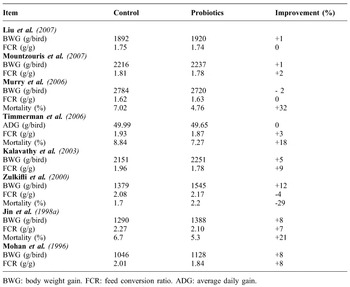
Probiotics did not consistently improve growth performance and/or mortality rate of birds (Table 3).
Growth performance and/or mortality rate of birds to probiotic supplementation.

BWG: body weight gain. FCR: feed conversion ratio. ADG: average daily gain.
The inconsistency may become more complex because of rearing environment. For example, under heat stress condition, lactobacilli probiotic supplementation improved body weight gain (BWG) of female birds by 12% but increased FCR and mortality rate by 4% and 29%, respectively (Zulkifli et al., Reference ZULKIFLI, ABDULLAH, AZRIN and HO2000). However, growth-promoting effects of certain probiotics were reported to be comparable to antibiotic treatments (virginiamycin, Cavazzoni et al., Reference CAVAZZONI, ADAMI and CASTROVILLI1998; oxytetracycline, Zulkifli et al., Reference ZULKIFLI, ABDULLAH, AZRIN and HO2000; avilamycin, Mountzouris et al., Reference MOUNTZOURIS, TSIRTSIKOS, KALAMARA, NITSCH, SCHATZMAYR and FEGEROS2007); a meta-analysis of 35 studies involved in probiotics across Brazil between 1995 and 2005 seems to indicate that probiotics are a technically viable alternative to IFA in broiler feeding (Faria Filho et al., Reference FARIA FILHO, TORRES, FARIA, CAMPOS and ROSA2006). However, the growth-promoting effects of probiotics are dependent on the specific probiotics, the application level of probiotics, the age of birds as well as the delivery method (i.e. via water and/or feed). Moreover, there are many factors from nutrition, environment (sanitary condition), to management that could compromise the effectiveness of probiotics (Edens, Reference EDENS2003). This can probably explain the inconsistent results in the growth performance and gut bacterial responses described above.
Mannanoligosaccharides
Mannanoligosaccharides, derived from yeast cell wall, are more complex than the name suggests; they are components of the outer layer of yeast cell walls and their components include proteins, glucans and phosphate radicals as well as mannose (Klis et al., Reference KLIS, MOL, HELLINGWERF and BRUL2002). The basic composition of the wall consists of mannan (30%), glucan (30%) and protein (12.5%). While the ratio of one component to another remains relatively constant from strain to strain, the degree of mannan phosphorylation and the interaction among the mannan, glucan and protein components vary (Lyons, Reference LYONS1994). Mannanoligosaccharides contain protein which has relatively high proportions of serine, threonine, aspartic and glutamic acids, and a paucity of methionine (Song and Li, Reference SONG and LI2001).
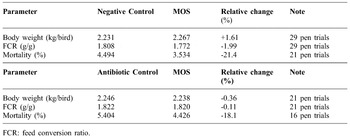
Hooge (Reference HOOGE2004a) reviewed pen trials conducted with a commercially available dietary MOS (Bio-MOS, Alltech Inc.) from 1993 to 2003 and the meta-analysis showed that Bio-MOS improved the growth performance of birds compared to the negative control (Table 4).
Effects of MOS on growth performance of broiler chickens (adapted from Hooge, Reference HOOGE2004a).

FCR: feed conversion ratio.
Compared to a wide range of antibiotics (including avilamycin, bacitracin, bambermycin or virginiamycin at prophylactic concentrations), a significant decrease in mortality was observed for Bio-MOS treatment (Table 4). The optimal dose of Bio-MOS for broiler production appears to be around 2 g/kg, depending on the production stage of birds (Rosen, Reference ROSEN2007; Yang et al., Reference YANG, IJI and and CHOCT2007b). Three major modes of action by which broiler performance is improved by MOS are proposed: 1) control of pathogenic or potential pathogenic bacteria which possess type-1 fimbriae (mannose-sensitive lectin), 2) immune modulation, and 3) modulation of intestinal morphology and expression of mucin and brush border enzymes (Ferket, Reference FERKET2004).
Mannanoligosaccharides not only prevent those pathogenic bacteria possessing type-1 fimbriae, such as E. coli, from attaching to gut wall but also displace them from the gut wall. This reduces sub-clinical or lethal infection. Pathogens possessing type-1 fimbriae are much more virulent than non-fimbriated bacteria. Duguid et al. (Reference DUGUID, DAREKAR and WHEATER1976) demonstrated that fimbriation in S. typhimurium significantly increases both the number of infections (a 26% increase) and deaths (a 40% increase) in mice inoculated orally compared to non-fimbriated organisms from the same parent strain.
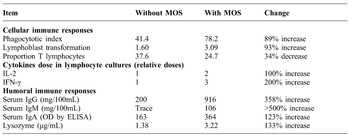
The immune modulatory effects of MOS are based on the following two aspects: 1) its mannan and glucan components have antigenicity characteristics, and 2) MOS prevents colonization of specific pathogens but allow them to be presented to immune cells as attenuated antigens (Ferket, Reference FERKET2004). The immuno-stimulatory effects of MOS were demonstrated by Privulescu (Reference PRIVULESCU1999) in GF vs. conventional piglets (Table 5). A unique character of MOS in immune modulation is that it enhances the protective antibody response to enhance disease resistance while at the same time suppress the acute phase (fever) response (Ferket et al., Reference FERKET, PARKS and GRIMES2002). Mannanoligosaccharides have also been shown to enhance macrophage response in different animal species (Spring and Privulesu, 1998).
Effects of MOS (Bio-MOS) on immune responses of conventional and germ-free piglets. (Adapted from Privulescu, Reference PRIVULESCU1999)

Positive effects of MOS on growth performance and gut physiology are observed; however, the information available is limited or/and variable. A number of studies demonstrated that MOS are effective in reducing Salmonella infection of birds (Fernandez et al., Reference FERNANDEZ, HINTON and VAN GILS2000; Spring et al., Reference SPRING, WENK, DAWSON and NEWMAN2000; Fernandez et al., Reference FERNANDEZ, HINTON and VAN GILS2002; Kumar et al., Reference KUMAR, VIJAYASARATH, GOWDA and SATYANARAYANA2002). A few studies investigated the effect of MOS on intestinal and faecal microbial populations of broilers (Spring et al., Reference SPRING, WENK, DAWSON and NEWMAN2000; Song and Li, Reference SONG and LI2001; Jamroz et al., Reference JAMROZ, WILICZKIEWICZ, ORDA, WERTELECKI and SKORUPINSKA2004; Kocher et al., Reference KOCHER, RODGERS and CHOCT2004) but the results are inconsistent. Yang et al. (Reference YANG, IJI, KOCHER, THOMSON, MIKKELSEN and and CHOCT2008a, Reference YANG, IJI, KOCHER, MIKKELSEN and CHOCT2008b, Reference YANG, IJI, KOCHER, MIKKELSEN and CHOCT2008c) showed that MOS inhibited the development of lactobacilli and coliforms; in particular the colonization of mucosa-associated coliforms was inhibited by MOS as early as 7 days of age. In addition, MOS reduced the abundance of C. perfringens in the caeca of birds at 21 days of age (Yang et al., Reference YANG, IJI, KOCHER, MIKKELSEN and CHOCT2008c), which is in agreement with the report from Jamroz et al. (Reference JAMROZ, WILICZKIEWICZ, ORDA, WERTELECKI and SKORUPINSKA2004) and Kocher et al. (Reference KOCHER, RODGERS and CHOCT2004). The effect of MOS on the development of mucosa-associated bacteria appears to closely relate to the age of birds and rearing environment but less independent of the type of diet; whereas the effect of MOS on luminal bacteria mainly interacts with the type of diet and the age of birds.
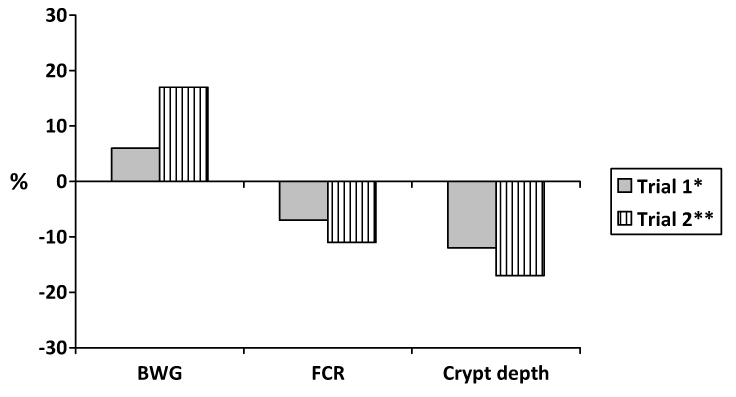
Mannanoligosaccharides, specifically Bio-MOS, were shown to alter mucosal architecture and longer villi were noticed in birds fed MOS-supplemented diets (Iji et al., Reference IJI, SAKI and TIVEY2001; Loddi et al., Reference LODDI, MORAES, NAKAGHI, TUCCI, HANNAS, ARIKI and BRUNO2002; Yang et al., Reference YANG, IJI and and CHOCT2007b). Further, Bio-MOS consistently reduced the crypt depth of the mucosa of the small intestine where its growth-promoting effects were observed (Figure 1). Also, this effect was dependent on the age of birds.
Relative change (%) of jejunal crypt depth and growth performance of birds supplemented with Bio-MOS compared to a negative control.
BWG: Body weight gain (g/bird), FCR: Feed conversion ratio (g/g). BWG and FCR were measured from day 8 to day 21. Crypt depth (µm) was measured with 7-day-old birds.
*The experiment was conducted with day-old broilers under a challenge model of pathogenic E. coli. The basal diet was mainly composed of wheat, sorghum and barley (Yang et al., Reference YANG, IJI, KOCHER, MIKKELSEN and CHOCT2008b).
**The experiment was conducted with day-old broilers fed on a wheat basal diet (Yang et al., Reference YANG, IJI, KOCHER, MIKKELSEN and CHOCT2008c).

There is scant information on the effect of MOS on nutrient digestion, availability and retention of birds. Studies by Kumprecht and Zobac (Reference KUMPRECHT and ZOBAC1997) showed that total tract digestibility of fibre was increased by MOS but the digestibility of fat, nitrogen-free extract and crude protein was not affected. Similarly, Yang et al. (Reference YANG, IJI, KOCHER, THOMSON, MIKKELSEN and and CHOCT2008a) did not observe any effect of MOS on total tract digestibility of starch, protein, fat and NSP in birds given a sorghum-wheat based diet but MOS significantly improved apparent metabolisable energy and numerically improved the net energy value of the diet, which agrees with the reports from Samarasinghe et al. (Reference SAMARASINGHE, WENK, SILVA and GUNASEKERA2003) that energy utilization was improved by MOS. However, the results on protein utilization are variable; while Shafey et al. (Reference SHAFEY, AL-MUFAREJ, SHALABY and JARLENABI2001a) reported that MOS supplementation had no effect on nitrogen utilization of birds, Samarasinghe et al. (Reference SAMARASINGHE, WENK, SILVA and GUNASEKERA2003) noticed that MOS increased protein utilization. Yang et al. (Reference YANG, IJI, KOCHER, MIKKELSEN and CHOCT2008c) also observed that MOS largely increased ileal starch digestibility in birds on a wheat-based diet. This effect of MOS seemed to be related to its modulatory effects on gut microflora but the exact working mechanism(s) is unclear.
The development of brush-border membrane bound enzyme activities and mucin mRNA expression was influenced by MOS (Smirnov et al., Reference SMIRNOV, PEREZ, AMIT-ROMACH, SKLAN and UNI2005; Yang et al., Reference YANG, IJI, KOCHER, MIKKELSEN and CHOCT2007a, Reference YANG, IJI, KOCHER, MIKKELSEN and CHOCT2008c). However, the information is too limited to draw any conclusion(s). The effects of MOS on the immune organ or response were observed by Kumar et al. (Reference KUMAR, VIJAYASARATH, GOWDA and SATYANARAYANA2002), Kocher et al. (Reference KOCHER, RODGERS and CHOCT2004) but not Shafey et al. (Reference SHAFEY, AL-MUFAREJ, SHALABY and JARELNABI2001b), an area that requires more research.
However, based on the available information, it can be concluded that the responses of birds to MOS supplementation are influenced by the type of diet, rearing conditions as well as the age of birds. Therefore, these factors need to be carefully considered in order to obtain maximal growth-promoting effects of MOS in broiler production.
Symbiotics
A symbiotic is, in its simplest definition, a combination of probiotics and prebiotics (Collins and Gibson, Reference COLLINS and GIBSON1999; Schrezenmeir and De Vrese, Reference SCHREZENMEIR and DE VRESE2001). This combination could improve the survival of the probiotic organism, because its specific substrate is available for fermentation. This could result in advantages to the host through the availability of the live micro-organism and the prebiotic. Bengmark (Reference BENGMARK2001) regards symbiotics as products of fermentation. Since in mixtures of pre- and probiotics, the prebiotics will be fermented when the appropriate choice of products is used, this definition may also be plausible. Examples of symbiotics are FOS and bifidobacteria, and lactitol and lactobacilli (Collins and Gibson, Reference COLLINS and GIBSON1999). Bailey et al. (Reference BAILEY, BLANKENSHIP and COX1991) used a combination of FOS and competitive exclusion flora to reduce Salmonella colonization in chickens. The combination was more effective in reducing Salmonella colonization than FOS or competitive probiotic alone. While applying the combination of FOS and bacillus to a corn-soybean basal diet, Li et al. (Reference LI, LIU and XU2008) observed that average daily gain (ADG) and FCR were improved by 6% and 2 %, respectively; diarrhoea and mortality rate were reduced by 58% and 67%, respectively, which were very comparable to aureomycin treatment (the relative changes are 4% for ADG, 2% for FCR, 69% for diarrhoea rate and 33% for mortality rate). To our knowledge, this is the only experiment published regarding the growth-promoting effects of symbiotic in broiler chickens thus far. Therefore more research is warranted on this kind of products in order to achieve the application significance in the industry.
Phytobiotics
Plant products have been used for centuries by humans as food and to treat ailments. Natural medicinal products originating from herbs and spices have also been used as feed additives for farm animals in ancient cultures for the same length of time. To differentiate from the plant products used for veterinary purposes (prophylaxis and therapy of diagnosed health problems), phytobiotics were redefined by Windisch and Kroismayr (Reference WINDISCH and KROISMAYR2006) as plant-derived products added to the feed in order to improve performance of agricultural livestock. Around the world, phytobiotics have been investigated as natural sources of biologically important chemicals since efforts are being made to ban all types of IFAs in many countries. Compared with synthetic antibiotics or inorganic chemicals, these plant-derived products have proven to be natural, less toxic, residue free, and are thought to be ideal feed additives in food animal production (Wang et al., Reference WANG, LI and BOURNE1998).
With respect to biological origin, formulation, chemical description and purity, phytobiotics comprise a very wide range of substances and four subgroups may be classified: 1) herbs (product from flowering, non-woody and non-persistent plants), 2) botanicals (entire or processed parts of a plant, e.g., root, leaves, bark), 3) essential oils (hydro distilled extracts of volatile plant compounds), and 4) oleoresins (extracts based on non-aqueous solvents) (Windisch and Kroismayr, Reference WINDISCH and KROISMAYR2006). The active compounds of phytobiotics are secondary plant constituents.
Antimicrobial activity and immune enhancement probably are the two major mechanisms by which phytobiotics exert positive effects on the growth performance and health of animals. Compounds (phytochemicals) in phytobiotics are well known to have antimicrobial ability (Cowan, Reference COWAN1999). Polysaccharide components are considered to be the most important immunoactive components (Xue and Meng, Reference XUE and MENG1996). In diseased chickens (either infected with avian Mycoplasma gallisepticum or Eimeria tenella), Guo and his colleagues (Guo et al., Reference GUO, KWAKKEL and WILLIAMS2004a, Reference GUO, WILLIAMS, KWAKKEL and LI2004b, Reference GUO, KWAKKEL and WILLIAMS2004c) demonstrated that plants and their extracts could improve the growth performance, reduce the populations of coliforms and/or C. perfringens, and enhance both cellular and humoral immune responses of chickens. Some herbal extracts have also been shown to possess a coccidiostatic activity (Allen et al., Reference ALLEN, LYDON and DANFORTH1997; Youn and Noh, Reference YOUN and NOH2001; Christakia et al., Reference CHRISTAKIA, FLOROU-PANERIA, GIANNENASA, PAPAZAHARIADOUB, BOTSOGLOUA and SPAISA2004).
A common feature of phytobiotics is that they are a very complex mixture of bioactive components. For example, hawthorn fruit, a common growth-enhancing and digestion modifier, has been shown to contain more than 70 kinds of organic chemicals along with some unidentified factors and active bio-active compounds (Wang et al., Reference WANG, LI and BOURNE1998). Therefore they may exert multiple functions in the animal body. Increased feed intake and digestive secretions are also observed in animals offered phytobiotic-supplemented feed (Windisch and Kroismayr, Reference WINDISCH and KROISMAYR2006). Growth enhancement through the use of phytobiotics is probably the result of the synergistic effects among complex active molecules existing in phytobiotics (Gauthier, Reference GAUTHIER2002). However, the exact growth-promoting mechanisms of phytobiotics in broiler chickens are poorly understood.
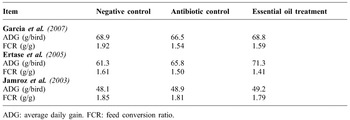
Among phytobiotics, essential oils (EO) have been applied into chicken feed in Europe and USA (Hooge, Reference HOOGE2004b). However, bird growth responses to EO supplementation are still controversial. No EO effects on growth performance were reported by Botsoglou et al. (Reference BOTSOGLOU, FLOROU-PANER, CHRISTAKI, FLETOURIS and SPAIS2002); Zhang et al. (Reference ZHANG, YAN, KEEN and WALDROUP2005), Jang et al. (Reference JANG, KO, KANG and LEE2007); whereas improved growth performance were observed at different ages of birds fed certain EO-supplemented diet(s) by Jamroz et al. (Reference JAMROZ, ORDA, KAMEL, WILICZKIEWICZ, WERTELECKI and SKORUPINSKA2003), Hernandez et al. (Reference HERNANDEZ, MADRID, GARCIA, ORENGO and MEGIAS2004), and Cross et al. (Reference CROSS, MCDEVITT, HILLMAN and ACAMOVIC2007). On the other hand, some EO(s) induced growth improvements similar to or even better than an antibiotic treatment (Table 6).
Effects of essential oils on growth performance in broilers.

ADG: average daily gain. FCR: feed conversion ratio.
While comparing the effects of various herbs and oils on broiler performance, Cross et al. (Reference CROSS, MCDEVITT, HILLMAN and ACAMOVIC2007) concluded that the quality as well as the quantity of active chemicals in plant extract determines bird response. In addition, the efficacy of dietary EO can be affected by intrinsic and extrinsic factors such as nutritional status of animals, infection, diet composition and environment (Giannenas et al., Reference GIANNENAS, FLOROU-PANERI, PAPAZAHARIADOU, CHRISTAKI, BOTSOGLOU and SPAIS2003; Lee et al., Reference LEE, EVERTS, KAPPERT, VAN DER KUILEN, LEMMENS, FREHNER and BEYNEN2004b). Essential oils function mainly as antimicrobials and antioxidants; their antimicrobial ability may modulate the gut ecosystem to affect fat digestibility (Lee et al., Reference LEE, EVERTS and BEYNEN2004a), starch or/and protein digestibility of feeds (Jamroz et al., Reference JAMROZ, ORDA, KAMEL, WILICZKIEWICZ, WERTELECKI and SKORUPINSKA2003; Hernandez et al., Reference HERNANDEZ, MADRID, GARCIA, ORENGO and MEGIAS2004). A commercial preparation of essential oil components reduced faecal C. perfringens counts of broilers in a field study (Mitsch et al., Reference MITSCH, KOHLER, GABLER, LOSA and ZITTERL-EGLSEER2002). In addition, dietary supplementation of EO reduced the intestinal populations of E. coli (Jamroz et al., Reference JAMROZ, ORDA, KAMEL, WILICZKIEWICZ, WERTELECKI and SKORUPINSKA2003; Jang et al., Reference JANG, KO, KANG and LEE2007) and increased digestive enzymes in either pancreas and/or intestinal mucosa (Lee et al., Reference LEE, EVERT, KAPPERT, FREHNER, LOSA and BEYNEN2003; Jang et al., Reference JANG, KO, KANG and LEE2007); however intestinal mucosal morphology was not affected by EO supplementation (Garcia et al., Reference GARCIA, CATALA-GREGORI, HERNANDEZ, MEGIAS and MADRID2007).
Four factors may affect the effectiveness of phytobiotic additives: 1) plant parts and their physical properties, 2) source, 3) harvest time, and 4) compatibility with the other ingredient (s) in the feed (Wang et al., Reference WANG, LI and BOURNE1998), which may also explain why 50% difference in BWG and 63% difference in FCR could happen when different kinds of phytobiotics are used in chicken diet (Xing, Reference XING2004). Although phytobiotics are a group of natural additives, research into their mechanisms of action, compatibility with diet, toxicity and safety assessment (based on the fact that some phytobiotic might have harmful substance(s)) needs to be done before they can be applied more extensively in poultry feed.
Conclusions
The withdrawal of IFAs from poultry feed requires the industry to look for various alternatives to maintain or improve the health and performance of birds. Although the efficacy of antibiotic substitutes needs to be assessed by setting up standards and comprehensive multi-factorial models (Rosen, Reference ROSEN2003), it is encouraging to know that most of the alternatives reviewed in the context can exert growth-promoting effects; also some of the effects are comparable to those of IFAs. However the other side of the coin is these growth-promoting effects are (very) variable; under certain circumstances the alternatives can even negatively affect the performance. Further, the effects of the alternatives on gut microflora and/or digestive physiology are often inconsistent. These facts require us to carefully examine the modes of action of the alternatives.
By increasing the growth of beneficial microbes or by reduction and removal of potential pathogens, the alternatives to IFAs possibly can improve the health and performance of birds. However, their effects on gut microflora interact with digestive physiology and thus growth in many complex ways, which can be further influenced or even determined by many other factors such as the compatibility between the diet and the alternative, hygiene standards and animal husbandry practices. There possibly remain many questions to be answered or barriers to be overcome so that the alternatives can be applied (more) successfully in the industry in future.