Academics often become involved in community work through their research. This is recognised as one of the criteria for tenure and ad hominem promotion at universities in South Africa and Nigeria. It is referred to as “Social Responsiveness” in South Africa and “Community Service” in Nigeria. These activities can include public or professional services and have been referred to variously in academia as “engaged scholarship,” “scholarship of engagement,” “scholarship for action,” or “community engaged scholarship,” amongst others. Engaged scholarship is an emerging practice in universities that cuts across all disciplines, faculties, and departments. Faculties that are particularly keen on this kind of research engagement are the Humanities and Health Sciences but colleagues from various disciplines are attracted to the notion of engagement through their academic research. One of the key concepts concerning the university is the idea of educating students for democratic citizenship and developing a moral sense of social justice. In fact, in its Social Responsive Policy Framework, the University of Cape Town declares that “[T]he university aims to produce graduates whose qualifications are internationally recognized and locally applicable, underpinned by values of engaged citizenship and social justice” (UCT Social Responsiveness Policy Framework Senate 2012:1). Questions of social justice and institutional responsibility came into full force in the South African student protests of 2015 and 2016 in which students interrogated the relevance of Western epistemologies and academic knowledge. Given this, the academe’s relevance in developing economies, like South Africa and Nigeria, appears hinged on its social responsiveness. In this article we briefly investigate the histories of engaged scholarship and applied ethnomusicology. We want to assert at this stage that while engaged scholarship cuts across all disciplines and fields, applied ethnomusicology as a form of engaged scholarship has emerged as a field specific to the discipline of ethnomusicology. Following this investigation, we cite two projects as models of engaged scholarship, one in Cape Town, South Africa and the other in Badagry situated in Lagos State, Nigeria, which animate workable approaches in different socio-cultural and political contexts within Africa. We also contribute a perspective on the multifunctional nature of reciprocity and applied works performed by native ethnographers with these projects.
Engaged Scholarship
According to David Cooper (Reference Cooper2011) the notion of engaged scholarship entered international and South African academia in the 1970s as the third mission of the university, related to the idea that academics use their scholarship for external and non-academic audiences (the first and second missions are related to teaching and research, respectively). The third mission emerged during the global economic crisis of the 1970s as an appeal from industry to universities to respond to the economic crisis, thereby initiating an interactive relationship between the university and industry (ibid.). Boyer’s much-quoted article, “Scholarship Reconsidered” (Reference Boyer1990), not only coined the term “scholarship of engagement” but also linked this kind of scholarship to civic engagement and introduced four broad categories of scholarship through discovery, integration, transmission and application. Nonetheless, Boyer and others, referring to universities in the United States, claim that the academy was historically always “engaged” in its scholarship, as integral to its mission was to serve society and the nation. Knowledge was thus always used in the interest of public service for the betterment of humanity and society.Footnote 1
Engaged scholarship addresses the questions of what scholarship entails, the relevance of scholarship, as well as notions about the “appropriate uses for knowledge” in society (Cooper Reference Cooper2011:6). Thus, engaged scholarship encompasses teaching, research, and service for the direct benefit of external audiences. Boyer (Reference Boyer1990) suggests multiple forms of scholarship: scholarship of discovery, i.e., research; scholarship of integration, i.e., interdisciplinarity; scholarship of sharing knowledge; and scholarship of application, i.e., reflexivity, moving from theory to practice and back to theory (Boyer Reference Boyer1996:26–28, passim). In terms of the South African situation, one institution of higher learning, the University of Cape Town, implemented the concept of social responsiveness since the early 2000s. Since 2003, reports on the socially engaged activities of academics have been published on the university’s website (http://www.socialresponsiveness.uct.ac.za/reports-0). Various institutional initiatives of public engagements have been implemented over the years since 2004 for the public good, to promote active citizenship among students, to enhance the university’s contribution to the development challenges faced by the country, and to overcome the historical barriers between the university and poor black communities in Cape Town (see Favish et al. Reference Favish, McMillan and Ngcelwane2012). The institutionalising of social responsiveness has led to a proliferation of projects in various faculties and departments and an annual award was established in 2009. The award “recognises UCT academics who demonstrate how social engagement can enhance the teaching and learning process––one of the university’s priorities” (https://www.uct.ac.za/main/explore-uct/awards/social-responsiveness). According to Ngcelwane, Head of the UCT Social Responsiveness Unit from 2008–2016 and a board member of SAHECEF (South African Higher Education Community Engagement Forum) from 2010, “UCT had been ahead of its peers…in thinking about engagement and the purpose of that engagement” (Ngcelwane Reference Ngcelwane2018:69). For many years, the UCT community, up to Senate level, discussed the merits and processes involved in Social Responsiveness (SR) and whether the term adequately reflected what academics were involved with. David Cooper, head of Sociology at the time and responsible for input in the annual reports, was adamant that the word scholarship reflects the core of engagement; academics involved in SR were deeply informed by their scholarship in a particular field. He thus advocated for the use of engaged scholarship over social responsiveness (see Ngcelwane Reference Ngcelwane2018:97).
It strikes us that the current interest in engaged scholarship is akin to that of the neo-Marxists’ critique of the role of universities and academic knowledge in the1980s, which was understood in terms of the relevance of academic knowledge.Footnote 2 Although the terminology has changed, the substance of this interest and critique (i.e., questioning the power implications in knowledge production) is comparable to that of the interests and sub-disciplines of public sector folklore and applied anthropology, which in turn gave rise to applied ethnomusicology.
Applied Ethnomusicology
Harrison (Reference Harrison2012:505) suggests that applied ethnomusicology is a dynamic and increasingly complex field in its early stages of theorisation, reacting to social and cultural changes. It is also becoming increasingly part of the ethnomusicology curriculum and establishing its own literary canon. Although seemingly a recent subfield of ethnomusicology, one of the earliest articles was written by Charles Seeger (Reference Seeger1939:18) in which he openly supports the applied branch, which “integrate[s] music knowledge and music practice.” Daniel Sheehy (Reference Sheehy1992:325) suggests that even though there has been an “explosion of applied work over the past fifteen years,” ethnomusicologists “have neglected to share” their “insights and experiences with the field at large.” Some ethnomusicologists claim that by virtue of the methodology of the discipline of ethnomusicology, i.e., fieldwork, ethnomusicologists have always been engaged scholars. Fieldwork consists of constant negotiation and engagement with the researched community in rather sensitive and subtle ways in order to do meaningful research on music cultures.Footnote 3 Thus, fieldwork affords a unique training that “articulates an activist awareness” and the question of relevance, or “the societal usefulness of academic work” (Harrison Reference Harrison and Harrison2016:1) of ethnomusicological research, is integral to the discipline. Often, ethnomusicologists are involved in assisting the researched community in various projects, the most pressing of which have been the preservation of declining music cultures, promoting marginal musics, negotiating the music industry on behalf of subaltern musicians or around issues of copyright and intellectual property. Latterly, issues around preservation have been linked to the notion of sustainability, which is “guided by principles drawn from ecology, not economy” (Titon Reference Titon2009:119). This discourse shifts our notions of culture as a thing in the past or culture as heritage to something “here, living a renewable daily resource among us” (ibid.:135). Inherent in this discourse is the concept of cultural revitalisation, which has been a constant preoccupation since the mid-twentieth century. The notion of music as a “renewable biocultural resource” (ibid.:5) has given rise to another sub-discipline: ecomusicology. Nonetheless, the concerns of ecomusicology and applied ethnomusicology are about the cultural and social impact of the discipline of ethnomusicology (Harrison Reference Harrison and Harrison2016). As Seeger puts it, “[k]nowledge should be used in ways that are ethically appropriate and beneficial at the very least to the people we study” (quoted in Mengel Reference Mengel2013).
There has been a considerable debate about the notion of applied ethnomusicology, which has been thoroughly explicated by Harrison (Reference Harrison2012, Reference Harrison and Harrison2016). Applied ethnomusicology, not surprisingly, has to some extent been influenced by applied anthropology and public sector folklore. Yet the perception of applied ethnomusicology has for many years been around community work nested within the public sector rather than in the academy. The two largest and most influential ethnomusicological scholarly bodies, the Society of Ethnomusicology (SEM) and the International Council for Traditional Music (ICTM) both have subgroups devoted to applied ethnomusicology founded in 1998 and 2007, respectively. From the onset of the SEM’s Applied Ethnomusicology Section, there seemed to be a dichotomy between those colleagues engaged in public sector work and those involved in the academy. Although this dichotomy has since been abandoned, dichotomies are rife within the debates around “engaged” and “applied” scholarship; other dichotomies prevalent in these discussions are pure/applied or theoretical/applied research and knowledge production/practical action (see Harrison Reference Harrison2012: passim). So initially, the understanding of applied ethnomusicology was in the sense of public sector musicology, i.e., those trained as ethnomusicologists but working in the public sector, such as archives, NGOs and state institutions. However, there has been a shift in the understanding of the sub-discipline and its descriptor to include all ethnomusicologists both within the academy and in the public sector who are concerned with and use their research to improve the social conditions of the researched community. One notable example is the work of Anthony Seeger (Reference Seeger1981 and Reference Seeger1987) whose research with an indigenous Brazilian community assisted them in securing rights to their ancestral lands (Mengel Reference Mengel2013). Although not initially planned as an applied research project, when the audio and videotapes were repatriated to the community, they used them as leverage in their negotiations with the Brazilian state.
While the SEM subgroup takes a broader approach of “ethnomusicology that puts music to use in a variety of contexts,” the ICTM subgroup has a more focused interest “in solving practical problems via research and practical interventions” (Harrison Reference Harrison and Harrison2016:5–6). The founding chair of the ICTM group proffered this collated definition, “Applied ethnomusicology is the approach guided by principles of social responsibility” (in Harrison Reference Harrison2012:507). Jeff Todd Titon, who edited the Oxford Handbook on Applied Ethnomusicology insists that it is a music-centred intervention that is also people-centred, based on collaborative partnerships that arise out of fieldwork and driven towards reciprocity (see Harrison Reference Harrison and Harrison2016:7). Although robust debates characterise ethnomusicological writings around the appellation, whether applied, engaged or public or even active and action ethnomusicology, some researchers prefer one term above the others. While some ethnomusicologists assert that we apply ethnomusicology all the time, for instance, when designing a syllabus or teaching a course (Seeger in Mengel Reference Mengel2013:22) i.e., teaching about music to increase cultural understanding, Harrison (Reference Harrison and Harrison2016:10) claims that theoretical writings on applied ethnomusicology have been more prevalent and the name seems to have taken root and still remains. Whereas these deliberations have emerged within the last two decades after the formation of the first SEM subgroup, they have also been prevalent in the founding of the modern discipline in the 1950s. Merriam, one of the founding fathers, noted that the ultimate aim of any study of humans involves the question of whether one is searching out knowledge for its own sake, or is attempting to provide solutions to practical problems (Merriam Reference Alan1964:42–43 in Harrison Reference Harrison2012:507). Reciprocity seems to have been an inherent principle of applied ethnomusicology (maybe even ethnomusicology) read in terms of the researcher’s social responsibility to the researched community.
While the scholarly works discussed thus far capture the broad conceptualisation of engaged scholarship and applied ethnomusicology, subsequent sections of the article focus on applying the core principles of these fields in different African contexts, nuanced along economic, demographic, racial, religious, and cultural lines. The thesis here is that the nuances in the lived conditions and cultural norms in different study sites translate into various forms of engagement and definitions of engaged scholarship and applied ethnomusicology (see also Pettan Reference Pettan, Pettan and Titon2015:20). In other words, there are no culturally cross-cutting engaged scholarship and applied ethnomusicology approaches, and the two creative approaches discussed below, which engaged with two African musical formations justify this reasoning. There are different ways of approaching engaged scholarship. The most collaborative way is in the joint conception and design of a community-based project by both the community and the university department or academic and students. In this co-creation of the project, both partners should have equal input and control over the project, which could result in collaborative ethnographies, such as some early texts produced by anthropologists working for the Bureau of American Ethnology (see Lassiter Reference Lassiter2005). Another way is a more reciprocal collaboration emerging from the fieldwork and resultant scholarship where the scholar returns the generosity of the researched community by involving them in a beneficial project. It is this latter type of collaboration that we engage in with our research communities, veering towards applied/action research and the production of popular materials.
Engaging with the Christmas Bands Movement of the Western Cape Province, South Africa
In her research on the Christmas Bands Movement,Footnote 4 a parading cultural practice in the Western Cape Province of South Africa, Bruinders has been personally and socially engaged and would like to reflect on her role in the Christmas Bands Movement through the notion of engaged scholarship and her social responsiveness as an academic. Her reflections are thus connected to the idea of public service and engagement with the bands over several years, attempting to fulfill Cooper’s (Reference Cooper2011) idea of the third mission of the university, related to the socio-economic and cultural development of society, or Boyer’s (Reference Boyer1990) notion of “scholarship of application.” In this understanding, engaged scholarship can include the notion of reciprocity to the communities with whom academics conduct research.
Firstly, the Christmas bands are heterogenous wind bands with a small accompanying string section that have been in existence informally roughly since the mid-nineteenth century and formalised in the second and third decades of the twentieth century. They are voluntary organisations, based on familial connections and friendships, that are most prominent during the summer season (December-February) in the Western Cape Province of South Africa through street parades in their communities and competitions at various stadiums. They are ensconced within working- and lower middle-class coloured communities,Footnote 5 are cosmopolitans and nominally Christians, but are quite marginal to the national cultural landscape. Although they operate all year round, the parades and competitions are the highlight of their activities, with competitions being particularly fraught, and all members are expected to play their part and contribute towards the most expedient outcome. As a member of the St Joseph’s Christmas Band, even though she had suggested a limited membership for the period of her participant-observation field research, and as a schooled musician, the researcher was expected to contribute towards the favourable outcome of the musical item in the competition. The role assigned to her was to rehearse and conduct the band for the competition piece, usually a light classical work, referred to as the Solo. In this role, she reluctantly became integrally involved in the leadership of the band, taking control of the musical direction for the competitions for several years. Although she was cognizant of the fact that as a fieldworker, one can never avoid leaving “shadows in the field” (Barz and Cooley Reference Gregory and Cooley2008), her reluctance was tempered by the need to create a balance between participation and observation. This seeming intimacy with the research community was often questioned by reviewers of her early publications who inferred that her considered and intimate involvement with the band must be detrimental to her objectivity. Koning (Reference Koning1980) writes interestingly on the roles assigned to him during his research on Irish music. These roles shifted from visiting musician, to student, to teacher, and eventually to insider the longer he stayed with the community. Burnim (Reference Burnim1985) also comments on the contentious nature of her role as researcher/insider/outsider in the two African American congregations she studied. Similarly, Bruinders had to negotiate roles assigned or expected of her during her research with the Christmas bands.
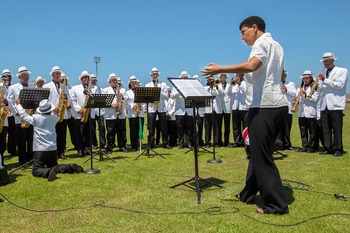
After her involvement in the first competition, in which the band received a very favourable position, she was elected as assistant bandmaster, a newly created position. However, she left the arrangement of the pieces to the bandmaster who had been in that position for several years and was recognised widely for his musical prowess, particularly his inimitable band arrangements (Audio 1: St Joseph’s Christmas Band Album [2021]). Even though she had intended to be involved with the band for two years to cover her field research, she was called upon for several years afterwards to rehearse and conduct the band for their annual competitions. In this position, she also became involved in the federal structures of the bands and was called upon for guidance to the entire Christmas Bands Movement, which she often resisted as she did not feel it would be beneficial to her role as researcher. This tension between the roles identified for her as a competent musician-leader and her role as researcher required a fine negotiated balance between herself and the St Joseph’s Christmas Band which, as time elapsed, no longer perceived her as a researcher/outsider but as one of the band members who had an important role to play within it. The band was open to the idea that she was a fully participating member assisting with the musical performances, and did not always understand her reservations. They jealously guarded her participation in their band and forbade her to be musically involved with other bands as competition prizes were at stake (see Bruinders Reference Bruinders2017). She declined to be a member of the executive of the St Joseph’s band due to her reservations outlined above (Figure 1).
St Joseph’s performing the prescribed piece at the 2011 annual competition. Photo © Paul Grendon.

Although the nature of her collaboration was not in the classic sense of engaged scholarship where two parties, the academy and the community, come together to agree on and plan a collaborative project beneficial to both, her involvement in the bands benefitted both in terms of firstly, her scholarship,Footnote 6 and secondly, an increase in band members’ musical knowledge and musical skills. Not unlike most ethnographers, her mere presence in the field required of her humanity to be “strongly rooted in the real-world social dilemmas” (Brown-Luthango Reference Brown-Luthango2012:313) of the Christmas bands community through the best means possible as perceived by the band community. She also involved the bands in formal collaborations with the university and the academic world more broadly. For several years, she assisted in finding suitable adjudicators amongst her colleagues for the annual competitions and adjudicated herself for federal structures with which she was less familiar. In 2005, Bruinders involved the St Joseph’s Christmas Band, as well as other local musical formats, in a concert at the national musicological annual conference held at the University of Cape Town (UCT). Again in 2016, as part of the cultural and photographic exhibition of the biennial conference of the Association of Contemporary Ethnography Across the Disciplines held at UCT, she included a small photographic exhibition and video display of the Christmas bands along with a short talk, and invited the Wynberg Progress Christmas Band to perform at the exhibition. An essential aspect for Bruinders regarding publications, was that the band members did not feel alienated by the language of the text written about them and their practice, that they felt included in the conception thereof and not just subjects in the quest for knowledge production and scholarly pursuit. She duly presented the band with copies of the articles, book chapters, and finally the monograph written on the practice. She invited them to be part of the book launch, hosted at UCT, through performances and a speech by the band owner, using the opportunity to celebrate the cultural practice as much as the new book. Some members of the larger band fraternity attended, and several band members or supporters still request to buy the book, which has become a source of band pride. Similarly, St Joseph’s and the band federations invited her for many years to participate as a special guest and through speech-making at important celebrations.
Since the Christmas bands activities offer a rich audio-visual feast, her final project on the Christmas bands is to showcase their activities through a series of outputs that are not academic in nature, such as a multimedia package consisting of a book of photographs with texts and a short documentary film exhibited at a photographic exhibition/book launch, as well as establishing a website. This project is therefore focused on an aspect of engaged scholarship that emerged from the research and the outputs reflect the objective of reciprocity. These productions should also assist in raising the profile of the bands in communities beyond the limitations of the Christmas Bands Movement.
Collaborative Music Production with Gogoke (a Repository of Ogu Music in Badagry, Lagos State, Nigeria)
This section highlights the knowledge gleaned throughout the duration of a collaborative music production involving a creative method of engaging with local musicians from an underserved community in Badagry, Lagos State, Nigeria. Badagry is a historically significant border town in Lagos State bounded in the south by the Atlantic Ocean and in the north by Ado-Odo Ota Local Government in Ogun State. Badagry borders the Republic of Benin on the west and Morogbo (a doorway to hinterland communities in Lagos State) on the east (Olaide-Mesewaku et al. Reference Olaide-Mesewaku, Olaide-Mesewaku and Adeyemi2000). It hosts numerous heritage sites, including museums housing slave trade relics, the first storey building in Nigeria, and the famous pre-colonial Vlekete slave market.Footnote 7 Paradoxically, the historical facts that create some tourist attractions for Badagry have minimal impact on the lived conditions and economies of the populace, particularly those in the suburbs like Igbogbole, where peasantry and youth emigration persist.Footnote 8
Within this context, Gogoke emerged fortuitously as a repository of Ogu musical heritage, and this band would become the subject for a doctoral study (Kunnuji Reference Kunnuji2020a). Gogoke consists mainly of young artisans, farmworkers, construction site workers and other blue-collar workers, to whom musicking provides an outlet for self-expression and an opportunity for after-work camaraderie.Footnote 9 The band performs indigenous Ogu genres characterised by pentatonic melodies, homophonic singing and various combinations of local percussive instruments. Negotiations of commensurate acts of reciprocity for Gogoke’s contribution to the study prompted a collaborative music production aimed at preserving the band’s music while recontextualising and presenting it in marketable formats. This would be a more significant intervention than a “short term remuneration for services rendered by informants” (Sheehy Reference Sheehy1992:335). The processes, creative choices, and ethical considerations involved in the collaborative music production with Gogoke address some of the concerns on what engaged scholarship or applied ethnomusicology might entail in previously colonised, underserved, and rural communities.Footnote 10
The thought to reimagine Gogoke’s music in a manner presentable within different digital marketing platforms stems from the band’s query on how the study may benefit them, to forestall being “use[d] and dump[ed]” (in the words of a sceptical member). The issues of cultural appropriation, the wielding of power by researchers in privileged positions, ethical correctness, and reflexivity continue to be significant concerns in ethnographic studies (Lipsitz Reference Lipsitz and Hale2008; Kiang Reference Kiang and Hale2008). And this is understandable in the light of the years of colonial repression, resulting in uneven development, marginalisation of minority groups and the impoverishment of many within the modernist capitalist system characteristic of the twenty-first century Africa. Moreover, as Ostashewski et al. (Reference Ostashewski, Johnson, Marshall and Paul2020:27) observed, indigenous and previously colonised peoples continue to “deal with individual and intergenerational impacts of traumatic experience.” Against this backdrop, we may better understand Gogoke’s initial reluctance to collaborate with the researcher. Therefore, the research approach involving respect, reciprocity, and local relevance of the work, which Ostashewski et al. (ibid.) describe as the Trauma-Informed Care, was inevitable in working with Gogoke.
Yet, within Gogoke’s socio-cultural context, a contract between the researcher and the band was ill-advised for at least two reasons. First, many subscribe to indigenous methods of agreement as they are quite suspicious of documents and Western legal systems. Secondly, Meintjes (Reference Meintjes1990:47) noted that “[t]he music industry is organized in a way that promotes hierarchical, competitive, profit-oriented work and does not readily accommodate collaboration.” This is opposed to Gogoke’s communal ethos, which engenders the emergence of songs through collective efforts, thus complicating the legal documentation of songs. As a result, the researcher’s options of documenting agreements were limited to video and audio recording of verbal communications in accordance with the band members’ consent.
More specific concerns relate to the appropriateness and acceptability of the innovations that come with reimagining traditional art forms and the intangible cultural and musical Ogu heritage in Igbogbele Badagry. The fundamental sociocultural and spiritual underpinnings to Gogoke’s music would likely determine the local acceptance of artistic novelty. Hence, the application of widespread modern musical aesthetics on Gogoke’s songs would have to be moderated. At the same time, the music production had to be negotiated around the social values of Ogu people. For instance, Gogoke opens every performance with songs that pay homage to the elders and spiritual forces, failing which the band risks disapproval within its local context. Therefore, it was only reasonable that “Avale” (lit. “Homage”) was the first song and the title of Gogoke’s debut album. This and other creative choices in recontextualising Gogoke’s music had to be cognizant of both musical, spiritual, and social values inherent in Ogu musical culture.
Avale : Reimagining Gogoke’s Songs Within the Ambit of Contextual Permisiveness
Following a series of meetings and negotiations, members of Gogoke agreed to collaborate in a mutually beneficial music production with the researcher, archiving the band’s music and making it more widely accessible through its distribution on digital platforms.Footnote 11 On the other hand, the project would provide the researcher’s study data. Again, the trajectory of hesitance and negotiation leading to a mutually beneficial study that occurred in this case is typical in marginalised, underserved, or rural sites in the Global South. As in Bendrups’ (Reference Bendrups, Pettan and Titon2015) study, in some cases, ethnographers who are new in a study site may initially experience significant resistance and threats from community members, particularly those who perceive themselves as custodians of the people’s cultural heritage. While Bendrups refers to this opposition as a “trial by fire” (ibid.:78) for which ethnographers in the third world must be prepared, we add that this kind of resistance to ethnographers might be an indication of the inevitability of applied works and an invitation for engaged scholarship in such study sites. There are cases where individuals who initially resisted ethnographic studies have welcomed and advocated researchers’ commensurate reciprocal actions (see Bendrups Reference Bendrups, Pettan and Titon2015). In Igbogbele, reciprocity was imperative and non-negotiable. While the collaborative album potentially served the researcher’s purposes, the band would also retain access to the encoded material, which would lessen the feeling of detachment from their work. However, as it will become apparent, reassuring Gogoke of the study’s benignity was only a first step in honouring the culture and performers, likely to engender the acceptance of the recontextualised songs within Gogoke’s socio-cultural context.Footnote 12
Gogoke’s original compositions epitomise a few secular traditional Ogu genres, such as kaka and wale, which are densely percussive with a monophonic call-and-response vocal layer. These Ogu genres feature different lead drums over an ensemble of auxiliary instruments including ogan,Footnote 13 aya or saya,Footnote 14 alekle,Footnote 15 and apesi. Footnote 16 Gogoke’s preferred lead drums, probably for their versatility, are pawhle,Footnote 17 and agome daho,Footnote 18 which the band combines with various mixes of auxiliary percussion in performing different genres.
In November 2017, Gogoke’s songs were recorded live in Badagry, Lagos State, Nigeria in two studio sessions. Without the typical studio recording drudgeries such as multiple takes and playing to a click track, the recording strategy minimised the contrast between Gogoke’s live performances and the studio recording, thus making the songs retain the band’s live performance vitality (Audio 2). The click track, among other recording utilities, was ill-advised as it would potentially undermine the band’s time fluidity (as opposed to quantised metronomic precision) resulting from an artistic strategy, in which band members feed off each other’s energy. This artistic strategy, which often results in a gradual tempo change, underscores the interdependence and conviviality in gbenopo, a social capital ethos within Gogoke’s cultural context, similar to the Southern African concept of ubuntu (Müller et al. Reference Müller, Eliastam and Trahar2019), a traditional mechanism of individual and collective wellbeing.
Contrary to the expected lack of enthusiasm resulting from a sudden change in music-making contexts (see Greene and Porcello Reference Greene and Porcello2005; Lysloff and Gay Reference Lysloff and Gay2003), Gogoke’s excitement about their debut studio recording engendered a vitality palpable through the recorded songs. After recording ten of Gogoke’s songs and studying them for a few months, the researcher identified Ogu music’s core idiomatic expressions—its infectious rhythms, a unique vocal style, vocables and, as mentioned earlier, monophonic call-and-response singing. These would be central in the composite sound following the researcher’s additional arrangements for selected popular instruments to ensure that the recontextualised music remains relatable to the more conservative listeners among Badagry’s Ogu people.
The hegemony and potentially domineering character of Western harmony (Nzewi Reference Nzewi1991; Agawu Reference Agawu2016) complicate its application within a project that aimed to centralise Gogoke’s core musical elements mentioned above. An unwitting application of Western harmony was capable of undermining the essence of Ogu traditional aesthetics in Gogoke’s music, resulting in its overt transformation. This and several other considerations determined the artistic choices involved in the project, such as the instrumentation and harmonic choices. For instance, the electric guitar was preferred to the piano for its minimalist harmonic style and adaptability for melodic lines. The guitar and electric bass made up the minimal addition to the rhythm section, ensuring a Gogoke-centred composite sound with a complementary horn section. The additional rhythm section parts (on the guitar and electric bass) define the arranged harmonic structures and chord progressions. In contrast, the horn section, ranging from two (on Avale) to six parts (on Ano whlen) and written in homophonic and contrapuntal styles, complements Gogoke’s vocal parts (Audio 3; Audio 4 ).
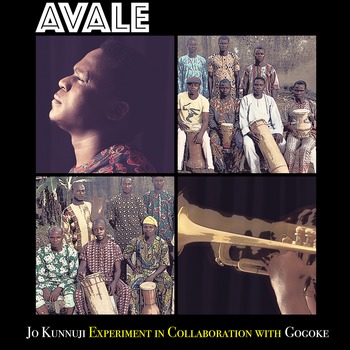
The choice guitarist was Sylvester Aklamavo, a Badagry-born musician, now residing in Johannesburg, South Africa. Aklamavo has mastered Lionel Loueke’s (idiomatically Fon) guitar style, which has considerable similarities with Ogu musical inflexions and subtleties (Audio 5). Dady Mbuyamba, a Cape-Town-based Congolese, adept in various African dance genres, played the bass for the project. Other collaborating musicians in South Africa include William Haubrich (a classically- and jazz-trained trombonist and the head of the brass unit at the South African College of Music at the UCT, originally from the USA); and Rick Deja (jazz-trained alto saxophonist and ethnomusicology lecturer at the UCT, also originally from the USA). Included in the horn section were South Africans: Tatiana Thaele (classically-trained flautist), Zeke Le Grange (jazz-trained tenor saxophonist), Georgia Jones (jazz-trained baritone saxophonist), and Jesse Julies (jazz-trained tenor saxophonist). These musicians collaborated remotely with Gogoke, recording the additional arrangements between September and October 2018. We analyse some of the insights derived from the collaborative project next (Figure 2).
Avale album artwork designed in Lagos by Oluwadamilare Akinyede. Photo credits: Joseph Kunnuji took Gogoke’s band picture, while Keegan Mofatt took Joseph Kunnuji’s headshot and hands with trumpet.

First, the project brought together musicians with diverse social and musical backgrounds and orientations, who understand and conceptualise music using different systems. Besides, their socio-economic statuses are at variance; for instance, some of the collaborating musicians in South Africa have the option of international travel, whereas such possibilities are not remotely feasible to the members of Gogoke. In other words, each of these musicians fit Unruh’s (Reference Unruh1979:120) description of “insiders” within different “social worlds” with minimal shared musical methods.Footnote 19 These musicians were unlikely to have crossed paths without a mediated project such as this applied ethnomusicology project/study. The study facilitated an “intercultural dialogic” (Hornabrook Reference Hornabrook2018:141) experience for these musicians, which revealed some of the subsequently highlighted dynamics of a modern African sphere of artistic creativity.
The project upended the typical postcolonial hierarchical power structure, which privileges Western ideation, by centralising Gogoke. In a collaboration involving Gogoke members (with no formal music education), and University graduates and lecturers, it is expected that the hegemony of Western ideation will come to the fore. Conversely, the project was on Gogoke’s terms; it revealed Western-trained musicians’ vulnerability, particularly regarding the music’s rhythmic fluidity. Again, the absence of a strict metronomic precision posed a significant challenge for the classically- and jazz-trained musicians, who initially (and for a considerable part of the study) struggled to find “beat 1” while engaging with unfamiliar rhythms and tonal inflexions. In William Haubrich’s words:
What we found challenging, as Western musicians, was to know where 1 was. In other words, to know where the beginning of the bar was. So that right away indicated that us as Western musicians are used to boxing our music into bars. This has been an issue in Western music since Beethoven. Beethoven spoke of the tyranny of the bar line […] But here we are, in quite a long time later, we are still sectioning our music into bars both when we play it and when we listen to it. We want to know somehow where 1 is [but in Gogoke’s music] things are diced up even more so that everything that is perceived is perceived in terms of one beat at a time, which I find kind of scary […] it was significantly different from the other types of music I performed with and I’d say, probably even more different for the other musicians who may not have had an extended experience with African music in general as I have had as a performer and arranger. (Haubrich, interview, 3 December Reference Haubrich2018).
On the other hand, Gogoke members felt largely empowered and overjoyed at the culmination of the process, which retained the musical subtleties derived from their social ethos. On 22 December 2018, the band gathered to listen to their music following the completion of the studio production. Their expressions included joyful tears, laughter, dancing, and moments of thoughtful silence, culminating in an impromptu performance. Dele Gbisu (Gogoke’s lead vocalist) was the first to comment. He said “I am so excited. In fact, based on what I just heard, I am so glad. We never played the trumpet on this recording neither was there any saxophones. I am grateful; it sounds very good” (Gbisu, interview, 22 December Reference Gbisu2018).Footnote 20 Fideyon Tanimowo (the band’s Chair) added that “the final product is uplifting; it makes me very happy” (Tanimowo, interview, 22 December Reference Tanimowo2018).
Again, the overall power structure in the project contrasts with a typical studio-production power structure in which the producer (the researcher, in this case) would be responsible for the major creative decisions (Meintjes Reference Meintjes1990). Instead, significant choices stemmed from the band and, as mentioned earlier, the researcher constantly checked his creative decisions with the band throughout the project’s stages. In essence, the project underscores a decolonial approach to applied ethnomusicology as it privileged an indigenous system of ideation within a shared realm of modern artistic innovations.
Unlike Paul Simon’s collaboration with South African musicians in Graceland with an “ambiguity of […] political orientation” (Meintjes Reference Meintjes1990:39), the collaboration in this study is multifunctional for the researcher, who is a native of Badagry raised within the politics of Ogu marginality (see Senayon Reference Senayon2016, Reference Senayon2018). Apart from reciprocity to Gogoke for their role in the study, the collaborative work also contributed to the researcher’s interest in foregrounding his musical heritage. Thus the reciprocal action in this project has personal significance for the researcher beyond merely paying back Gogoke for their contribution to the study.
Lastly, the study seemed futuristic with its remote collaborative design, which would later gain traction in 2020 during the COVID-19 lockdown and travel restrictions in many countries. The collaborating musicians in this project, who are of various nationalities and reside in different countries, have yet to meet in person. However, they have interacted musically on an album. Since the COVID-19 pandemic, this form of remote collaboration has become expedient (see Kunnuji Reference Kunnuji2020b), and it appears like an option which will remain popular for many years. Suppose this becomes widely embraced as an applied ethnomusicology method, the study presents a paradigm for academic engagement in rural, underserved, and previously colonised contexts within Africa and further afield. The project’s outputs include distributing the collaborative album on digital music marketing platforms including Amazon, Spotify, iTunes, Deezer and a few others. Moreover, Gogoke launched the collaborative album Avale in January 2020, repatriated in mass-produced CDs. The album has since become symbolic of a milestone achievement and an effective bargaining tool for the band.
In a nutshell, the earlier mentioned socio-cultural considerations for academe/public engagement in contexts similar to Gogoke’s are less pliable, and reciprocal actions are primary to gaining the studied community’s approval and continued support. On the other hand, artistic interventions in engaged works may be susceptive to the researcher’s innovations. If centred around the researched community, such designs epitomise a decolonial engagement method that empowers the researched within their local contexts and beyond. Therefore, this section submits a need for ethnographic and artistic convergence for engaged works in underserved communities with high retentions of traditional beliefs and practices.
Conclusion
As the Cape Town and Badagry cases in this study have shown, engaged scholarship and applied ethnomusicology essentially take on different interpretations and methods in various African contexts. Although researchers may adopt similar approaches in identical contexts, each milieu’s specifics should be central considerations in determining the nuances of individual approaches. In rural settings like Gogoke’s, a crucial four-step trajectory makes applied work potentially acceptable locally: entry into the field; negotiations of reciprocity and collaborations; ethnographic study and understanding the socio-cultural context; and social engagement. More importantly, the last three steps listed above intersect with each other and may be multi-directional. Accordingly, it is essential for researchers to regularly subject their innovations and choices to the studied community’s critical review. In contrast with isolated periods of ethnographic studies depictive of snapshots, this process alludes to a continuous process of studying and reassessing the community within which researchers engage. The overarching contribution of the collaborative project with Gogoke is supplemental to the methodological considerations for research located in rural, underserved, and marginalised communities with significant retention of pre-colonial traditional practices.
In both cases, the prolonged collaboration (more so in the case of the Christmas bands) with the researched communities have yielded fruitful collaborative projects that emerged out of doctoral fieldwork research and guided by the imperative of reciprocity. Each project has necessitated a different approach to reciprocity and engagement, emerging out of the socio-cultural and economic conditions prevalent. In the case of the Christmas bands, which is culturally a marginal practice within the national South African landscape, the focus on the practice through an in-depth study and knowledge production through academic and other forms of publications is bringing it to the attention of a much wider audience than the local communities that support it. The project with Gogoke has benefitted the band through its promotion and economic gain with the sale of its digitised music, while the album remains a landmark achievement and a significant bargaining tool for the band.