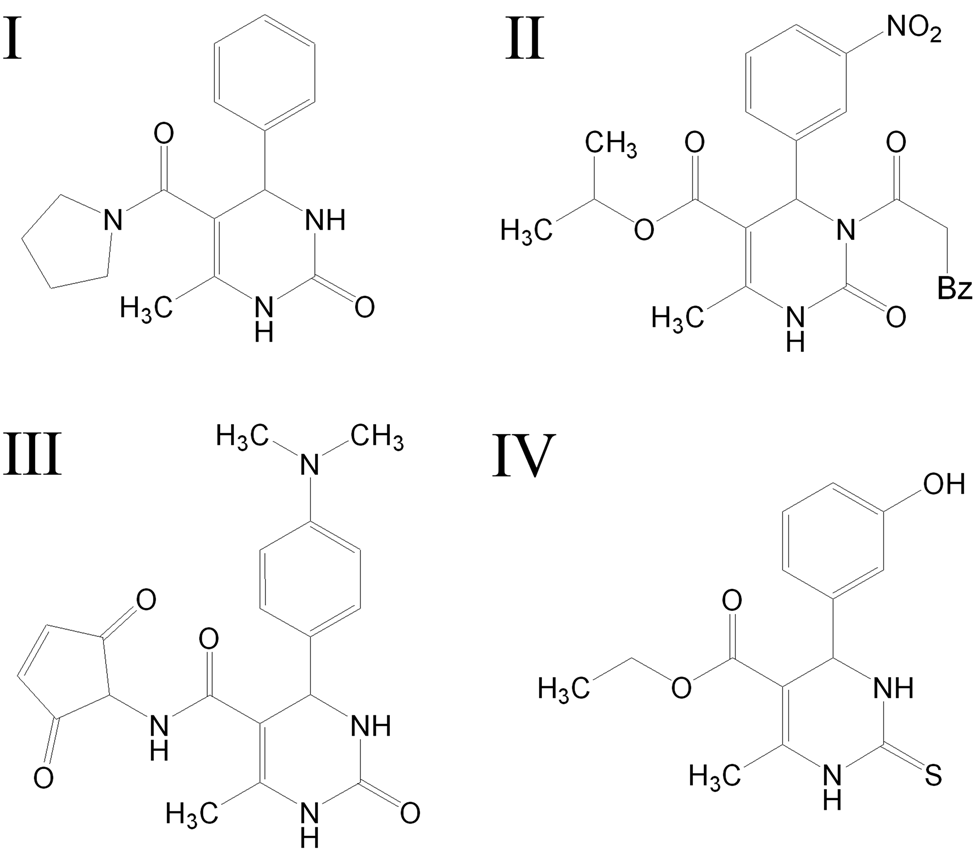
The Biginelli reaction (Fig. 1) is a one-pot multicomponent reaction between a 1,3-dicarbonyl, an aromatic aldehyde and urea catalyzed by Lewis acids, which forms dihydropyrimidinones (Panda et al., Reference Panda, Khanna and Khanna2012). Minerals such as hydroxylapatite may also catalyze the Biginelli reaction according to a recent report (Moussa et al., Reference Moussa, Mehri and Badraoui2020). This family of compounds has biological activities which offer promise as possible calcium-channel inhibitors and as anticancer, anti-inflammatory, antimicrobial and antioxidant agents (de Fátima et al., Reference de Fátima, Braga, Neto, Terra, Oliveira, da Silva and Modolo2015). This type of Biginelli adduct has attracted significant recent attention in terms of anticancer activity and in vivo treatment of oxidative stress when they are embedded in a polymeric matrix (Mao et al., Reference Mao, Yang, Liu, Wei, Gou, Wang and Tao2019; Li et al., Reference Li, Tan, Zhao, Wei, Wang, Chen and Tao2020).
Representative Biginelli compounds with anticancer (I, II) calcium channel inhibitory (III) and antimicrobial activity (IV) based on an extensive review by de Fátima et al. (Reference de Fátima, Braga, Neto, Terra, Oliveira, da Silva and Modolo2015).

The recent development of ionic liquids, and of homogeneous, heterogeneous and chiral catalysts for the Biginelli reaction was reviewed by Chopda & Dave (Reference Chopda and Dave2020). Usually, the Lewis acids employed to catalyze the reaction are strong acids such as metal triflimides (Ni, Cu, Zn, Yb) (Suzuki et al., Reference Suzuki, Suzumura and Takeda2006), iron (III) trifluoroacetate and trifluoromethanesulphonate (Adibi et al., Reference Adibi, Samimi and Beygzadeh2007), ionic liquids that require strong acidic media (Bahekar et al., Reference Bahekar, Kotharkar and Shinde2004; Legeay et al., Reference Legeay, Eynde, Toupet and Bazureau2007; Gui et al., Reference Gui, Liu, Wang, Lu, Lian, Jiang and Sun2009; Singh et al., Reference Singh, Kaur, Ratti, Kad and Singh2010) or salts of rare and expensive elements such as SnI2 and SnCl2 (Roy & Bordoloi, Reference Roy and Bordoloi2006), InBr3 (Fu et al., Reference Fu, Yuan, Cao, Wang, Wang and Peppe2002), Bi(NO3)3 (Khosropour et al., Reference Khosropour, Khodaei and Beygzadeh2007), SbCl3 (Desai et al., Reference Desai, Dallinger and Kappe2006), Yb(OTf)3 (Wang et al., Reference Wang, Qian, Tian and Ma2003). Some of these methods require long reaction times and have limited or no recyclability; hence, more efficient, mild, robust and recyclable catalysts for the Biginelli reaction are needed. Among the aforementioned approaches, the use of copper is especially attractive because this transition metal has good Lewis acidity, is abundant, cheap, and has low toxicity (Sibi & Cook, Reference Sibi, Cook and Yamamoto2000). By preparing a heterogeneous copper catalyst using low-cost and readily available materials, the problems with such catalysts could be overcome.
The present study takes advantage of heterogeneous catalysis, an active area of research that generally involves the design and development of solid materials to catalyze reactions in a different phase, normally a liquid solution or a gaseous mixture. Furthermore, this method facilitates the synthesis and isolation of intricate organic compounds under milder conditions and where the catalyst can be recycled, compared to non-catalyzed reactions (Ertl et al., Reference Ertl, Knözinger, Schüth and Weitkamp2008). Frequently, clays and clay minerals are employed as catalysts and inert supports in heterogeneous catalysis due to their low cost, worldwide availability, large specific surface area, thermal stability, cation exchange capacity and acid-base properties (Nagendrappa, Reference Nagendrappa2011).
Vermiculite (Vrm) is a natural 2:1 clay mineral which consists mainly of SiO2, MgO and Al2O3 (Li et al., Reference Li, Wen, Yu, Zhu, Guo, Han, Kang, Huang, Dan, Ouyang and Dai2016). Τhe global reserves of vermiculite of high exfoliation quality are estimated to be 50 million tones with 57% being in the USA and Brazil and ~40% in South Africa (Crowson, Reference Crowson and Crowson1996). Production of vermiculite has increased steadily over the past ~ 5 years (Tanner, Reference Tanner and van Oss2017). Recently, vermiculite in catalysis has been used as a support for palladium nanoparticles in the hydrogenation of α,β-unsaturated aldehydes (Divakar et al., Reference Divakar, Manikandan, Rupa, Preethi, Chandrasekar and Sivakumar2007), support for nickel in the methanation reaction (Li et al., Reference Li, Wen, Yu, Zhu, Guo, Han, Kang, Huang, Dan, Ouyang and Dai2016) and support for metal-based photo-Fenton catalysts (Chen et al., Reference Chen, Wu, Dang, Zhu, Li, Wu and Wang2010).
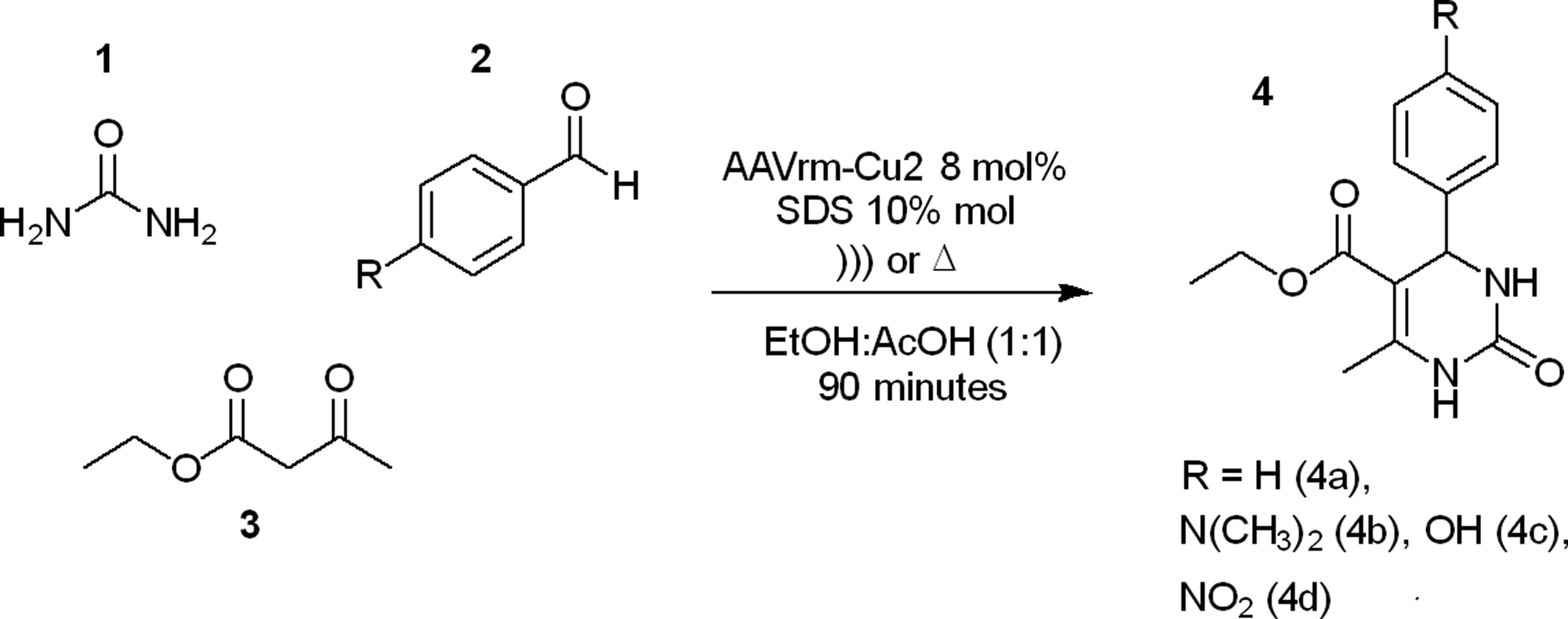
Considering the relevance of Biginelli compounds as bioactive molecules and the current limitations of catalysts employed in their synthesis, the present study aimed to describe the use of easily available and low-cost vermiculite and copper to prepare a recyclable and efficient catalyst for the Biginelli reaction by coordinating copper with citrate ligands which interact with the surface of acid-activated vermiculite to enhance the fixation and stability of the catalyst. The preparation, characterization, activity testing and recyclability of this catalyst are explored and described. The development of a catalyst based on a clay mineral is presented as a green approach for performing useful conversions to obtain a series of dihydropyrimidinones with electron-withdrawing and electron-donating moieties under mild conditions (Fig. 2).
Biginelli reaction conditions using AAVrm-Cu2 catalyst.

Materials and methods
Materials
Vermiculite was obtained from Inverflohorsa (Guatemala) and ground with a mortar and pestle to produce a fine powder. All other chemicals were obtained from Sigma Aldrich and used as received.
Characterization of materials
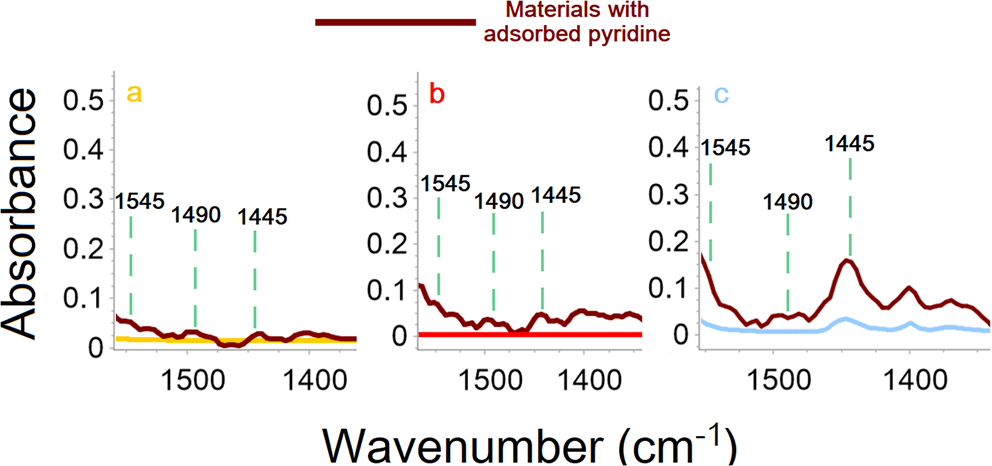
Acid sites were identified by pyridine adsorption and Fourier Transform Infrared (FTIR) spectroscopy following the method described by Kabadagi et al. (Reference Kabadagi, Chikkamath, Kobayashi and Manjanna2020). 0.5 g of each sample was placed in a porcelain capsule, dried at 110°C for 3 h, transferred to a desiccator to cool to room temperature, and equilibrated with a dissolution of pyridine located at the bottom of the desiccator for 1 h. Then, the samples were transferred to a vacuum chamber for 1 h to remove physically sorbed pyridine molecules and the FTIR spectra of the samples were recorded in the 400–4000 cm–1 range in transmission mode using a Perkin Elmer Frontier FTIR spectrometer in Attenuated Total Reflectance (ATR) mode (Fig. 3). The acidity of the materials was determined according to the method of Moraes et al. (Reference Moraes, Miranda, Angélica, Rocha Filho and Zamian2018) and Dijs et al. (Reference Dijs, van Ochten, Van der Heijden, Geus and Jenneskens2003), namely, 0.500 g of material was added to an aqueous 0.10 M KCl solution (50 mL) followed by gentle stirring for 20 min. The mixture was titrated with an aqueous 0.20 M KOH solution in the presence of three drops of phenolphthalein indicator (standardized with potassium hydrogen phthalate).
FTIR spectra of pyridine adsorbed onto (a) Vrm, (b) AAVrm and (c) AAVrm-Cu2.

The chemical composition of the materials was determined by X-ray fluorescence (XRF) spectroscopy using a Rigaku NexQC+ XRF spectrometer (supplementary Fig. S1). 3 g of sample was weighed and placed in a sample holder with two Teflon rings and a thin film of polypropylene TF-240 (4 μm). The XRF spectrometer was operated in air atmosphere at 6.5 keV (light elements) and 30 keV (heavier elements) with automatic current for 30 s. To evaluate the possible leaching of copper into the mixture after the Biginelli reaction, 5 mL of liquid filtrate was placed in a sample holder with two Teflon rings and a thin film of polypropylene TF-240 (4 μm). A calibration curve for Cu solutions was used (76, 229, 382, 534, 687 and 7635 mg/L) to determine the Cu content (supplementary Figure S2). The X-ray diffraction (XRD) data were recorded using a Panalytical Empyrean X-ray diffractometer with 1 g of sample, CuKα radiation (1.540598 Å) in the range 5–85°2θ with scanning speed of 2° min–1. Thermogravimetric Analysis (TGA) was performed using a Mettler Toledo TGA 1 Stare System with 10 mg of sample under N2 atmosphere in the range 25–1000°C with a ramp of 10°C min–1. Scanning Electron Microscope (SEM) analysis was performed using a JEOL JSM-IT500 SEM instrument at a working distance of 10 mm, high vacuum at 30 Pa and a voltage of 15 kV. Melting points of compounds 4a, 4b, 4c and 4d were taken using a Mel-Temp® apparatus. Mass spectra of the compounds were recorded using a Perkin Elmer Clarus 580/MS-SQ8s/HS40 gas chromatograph coupled to mass detector (EI) or to a JEOL AccuTOF JMS-T100LC (DART+) instrument. Nuclear Magnetic Resonance (NMR) spectra were collected from samples dissolved in CDCl3 using a Bruker Avance 300 NMR spectrometer.
Vermiculite activation
Activation was carried out according to Kour et al. (Reference Kour, Gupta, Paul and Gupta2014). In a typical experiment, 15 g of Vrm and 300 mL of 6 M HCl were added to a round-bottomed flask and the mixture was stirred and heated under reflux conditions for 12 h. The white solid product (AAVrm) was filtered and washed with distilled water until a neutral pH was reached and dried in an oven at 110°C for 5 h.
Synthesis of catalyst (AAVrm-Cu2)
A method used to support nickel on vermiculite (Li et al., Reference Li, Wen, Yu, Zhu, Guo, Han, Kang, Huang, Dan, Ouyang and Dai2016) was adapted by using a copper (II) citrate complex instead of Ni2+ ions to take advantage of carboxylate moieties of citrate that may interact with SiO2 surfaces and therefore strengthen the immobilization of copper onto the support. The copper (II) citrate complex was formed in a flask containing 10.0 g of acid-activated vermiculite by adding 150 mL of an aqueous solution containing 3.0686 g of CuCl2·2H2O (18 mmol), 1.1997 g of NaOH (30 mmol) and 3.026 g of monohydrated citric acid (14.4 mmol). The mixture was stirred at 80°C for 12 h and the pale blue solid obtained, was filtered, washed with distilled water until the washings were colorless and dried in an oven at 110°C for 12 h.
Catalytic activity
Optimized synthesis of compounds 4a–4d
General conditions are summarized in Fig. 2. A mixture of 7.5 mmol of urea (compound 1), 5 mmol of ethyl acetoacetate (compound 3), 5 mmol of aromatic aldehyde (compounds 2a–2d), 400 mg of AAVrm-Cu2 (8 mol.% of Cu2+), 3 mL of solvent and 0.5 mmol (10 mol.%) of sodium dodecyl sulfate (SDS) were added to a round-bottomed flask. The mixture was either irradiated in an ultrasound bath at 50°C (42 kH, 50 W) or heated under reflux at 120°C for 90 min. The reaction was monitored by TLC using hexane and ethyl acetate (3:2) as a mobile phase. After completion, the reaction mixture was filtered and poured into ice to precipitate the corresponding dihydropyrimidinone compounds (4a–4d), the solid was recrystallized from a mixture of ethanol-water (1:1). Products were characterized using melting point, FTIR spectroscopy, mass spectrometry and 1H and 13C NMR spectroscopy.
Recycling of AAVrm-Cu2
Recycling of AAVrm-Cu2 was evaluated using the reaction with compound 4a, after separation of the catalyst by filtration: AAVrm-Cu2 was washed with ethanol, dried at 105°C for 5 h and used for the next cycle (Fig. 2). No lixiviation of copper to the reaction mixture between cycles was detected by XRF.
Results and discussion
Modification of vermiculite
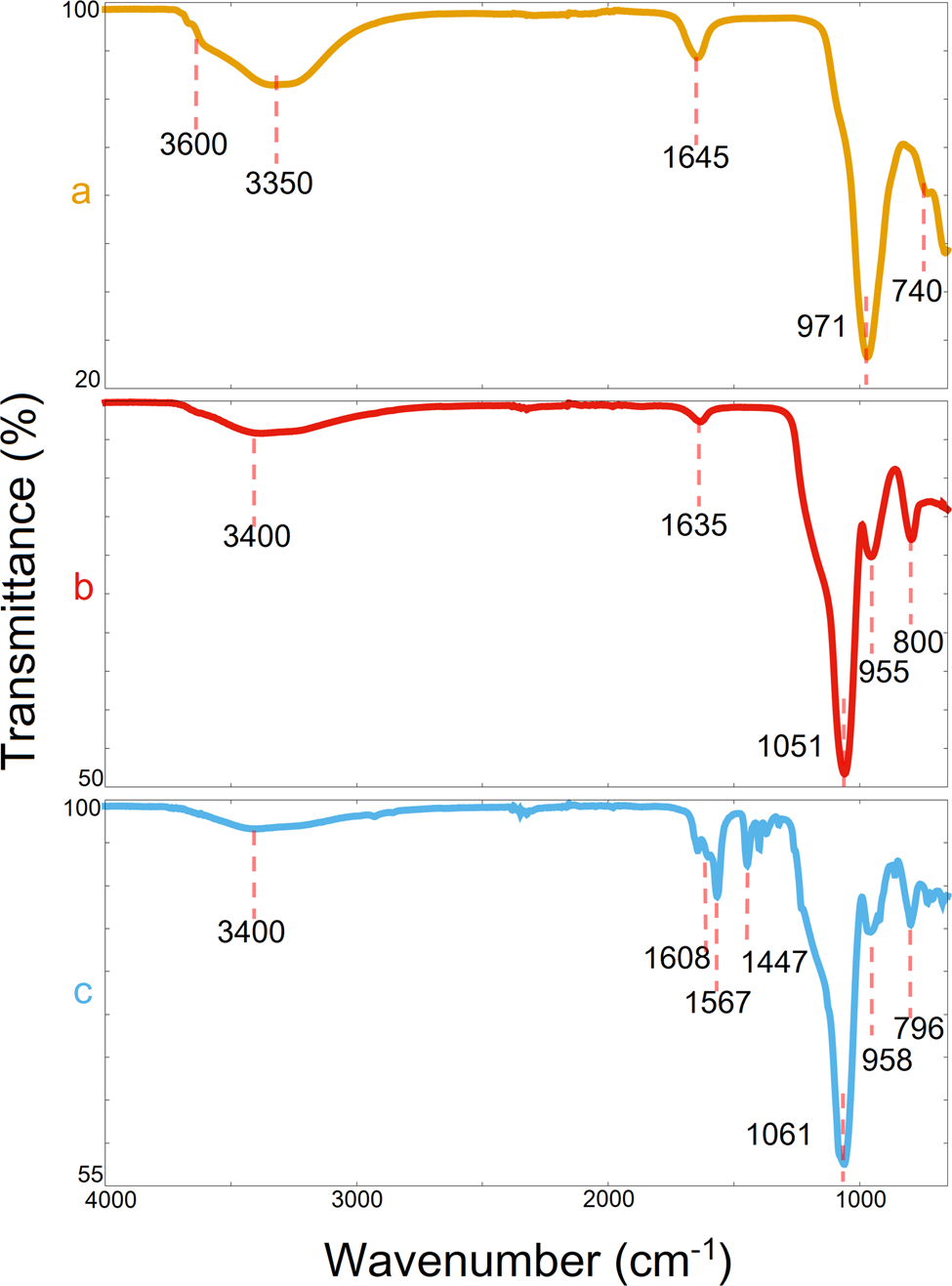
The main objective of acid activation of Vrm was to increase the specific surface area of the mineral (Marosz et al., Reference Marosz, Kowalczyk and Chmielarz2020), to facilitate the anchoring of the active copper complex into the surface of SiO2. This was achieved by leaching cations from the layers of the clay mineral. The increase in the SiO2 content determined by XRF in addition to the disappearance of bands corresponding to Al-O-Si (Fig. 4b) in the FTIR spectra of AAVrm and the amorphous characteristics of the material (Fig. 5b) suggest that acid activation was effective. The next step was to fix the hydrated copper citrate complex by taking advantage of the interactions between free carboxylate groups of citrate which interact with SiO2 surface. Similar work has been reported previously by using benzoic acid moieties in nickel complexes supported on SiO2 (Key et al., Reference Key, Tengco, Smith and Vannucci2019). The FTIR, TGA and XRD data suggest that the copper complex was immobilized on the surface of AAVrm.
FTIR spectra of Vrm (a), AAVrm (b) and AAVrm-Cu2 (c).

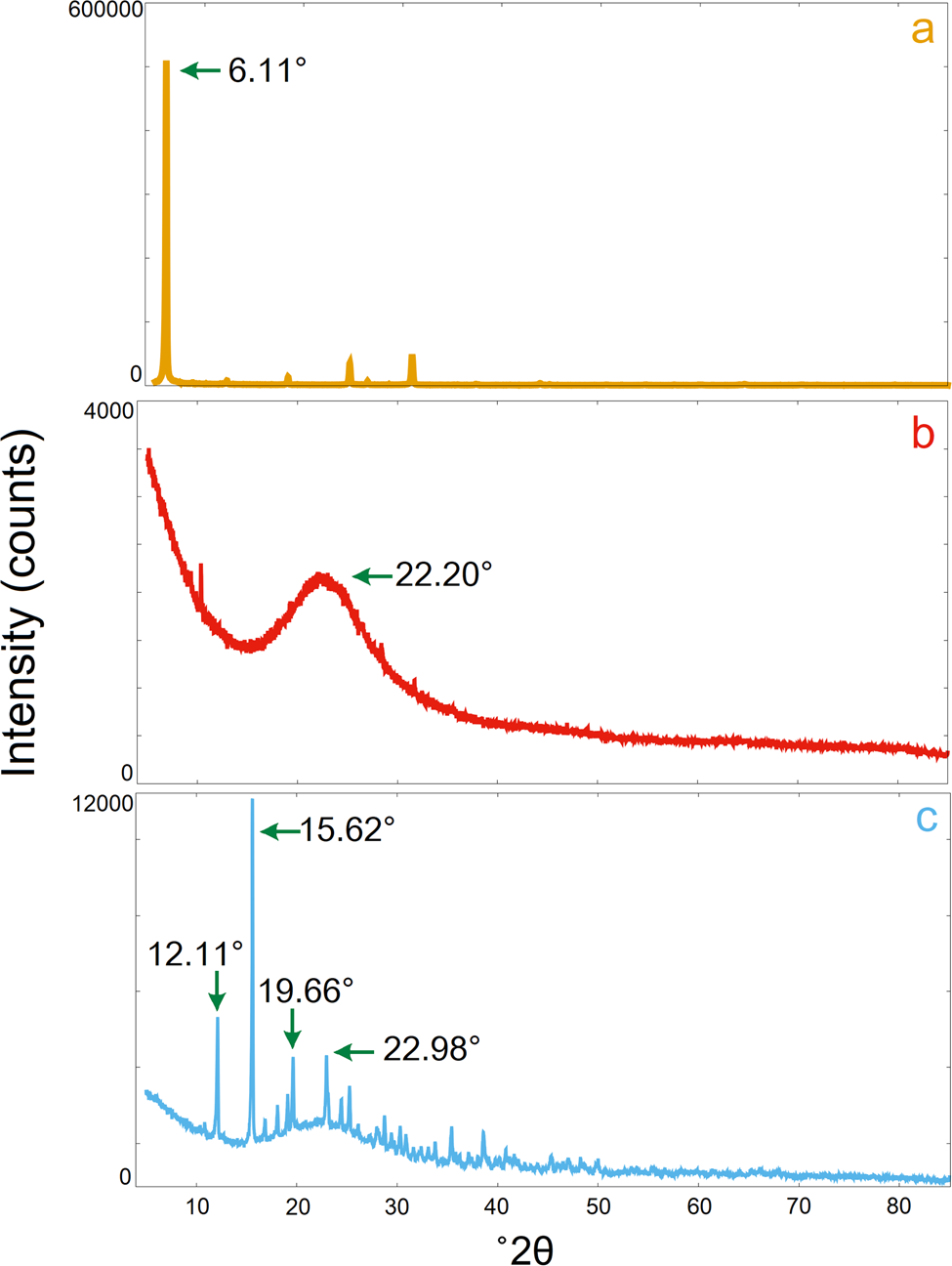
XRD traces of Vrm (a), AAVrm (b) and AAVrm-Cu2 (c).

Characterization of vermiculite (Vrm), activated vermiculite (AAVrm) and catalyst (AAVrm-Cu2)
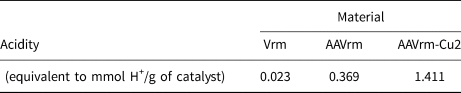
Fourier Transform infrared spectroscopy in combination with the adsorption of pyridine as a probe molecule has been used extensively for the identification of acid sites in solid materials (da Silva & da Silva, Reference da Silva and da Silva2017). The bands at 1545 cm–1 and 1445 cm–1 have been established for the identification of Brønsted and Lewis sites, respectively, whereas the band at 1490 cm–1 is used for mutual contribution of Brønsted and Lewis sites. The FTIR spectra of pyridine adsorbed on the samples (Fig. 3) suggest that natural Vrm does not have a significant number of acid sites. Acid activation increased slightly the amount of Brønsted and Lewis sites as was observed by the increase in the absorption band at 1545 cm–1 corresponding to pyridine adsorbed onto AAVrm. Furthermore, the fixation of copper citrate complex onto acid-activated vermiculite increased significantly the number of Lewis acid sites, shown by the increase in the band at 1445 cm–1.
The acid sites of the materials were measured by titration using standardized NaOH solution (Table 1). Acid activation with HCl and fixation of copper complex increased the acidity of the materials and therefore enhanced the catalytic activity of AAVrm-Cu2 in the preparation of dihydropyrimidinone compounds. In comparison to materials reported in the literature, AAVrm-Cu2 shows greater acidity than raw vermiculite, vermiculite activated with sulfuric acid and vermiculite modified with sulfonic groups (Moraes et al., Reference Moraes, Miranda, Angélica, Rocha Filho and Zamian2018) but the acidity is less than in some ionic exchange resins with superficial sulfonic groups (Dijs et al., Reference Dijs, van Ochten, Van der Heijden, Geus and Jenneskens2003) and less than bentonite polystyrene nanocomposites functionalized with sulfonic groups (Kalbasi et al., Reference Kalbasi, Massah and Daneshvarnejad2012).
Acidity of the materials used in this study.

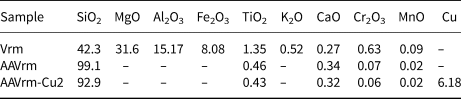
The results of chemical analyses of the materials are listed in Table 2. As expected (e.g. Li et al., Reference Li, Wen, Yu, Zhu, Guo, Han, Kang, Huang, Dan, Ouyang and Dai2016), Vrm consists mainly of Mg, Al and Fe; TiO2, K2O, CaO, MnO and Cr2O3 are secondary components. The chemical composition of Vrm is similar to those of other vermiculites reported in previous studies (Campos et al., Reference Campos, Moreno and Molina2009; Chmielarz et al., Reference Chmielarz, Kowalczyk, Michalik, Dudek, Piwowarska and Matusiewicz2010). AAVrm is composed mainly of SiO2 and minor CaO, TiO2, Cr2O3 and MnO, suggesting that the acid treatment leached most of the chemical components of the original vermiculite. Finally, the Cu content in AAVrm-Cu2 was 6.18%, slightly greater than that of Cu nanoparticles supported over hydrotalcite (Mitsudome et al., Reference Mitsudome, Mikami, Ebata, Mizugaki, Jitsukawa and Kaneda2008) and of Cu supported over chitosan (Baig & Varma, Reference Baig and Varma2013). However, it is comparable to the Cu content reported for other heterogeneous catalysts (Nasresfahani & Kassaee, Reference Nasresfahani and Kassaee2018; Yao et al., Reference Yao, Lu, Liu, Tan and Hu2018).
Chemical composition of materials determined by XRF (mass %).

The FTIR spectra of Vrm (Fig. 4) showed absorption bands at 3350 cm–1 and 1645 cm–1 assigned to water molecules in the interlayer of Vrm (Madejová et al., Reference Madejová, Gates, Petit, Gates, Kloprogge, Madejová and Bergaya2017). The small shoulder at 3600 cm–1 is assigned to stretching of octahedral OH groups (Madejová et al., Reference Madejová, Gates, Petit, Gates, Kloprogge, Madejová and Bergaya2017). The strong band at 971 cm–1 is assigned to Si–O–Al stretch and is shifted in comparison to other clay minerals in which it appears at a wavenumber of >1000 cm–1. This suggests that the octahedral sheets of vermiculite are trioctahedral and are composed of a combination of three divalent cations such as Mg2+ and Fe2+ without substitution of Al3+ in octahedral sites (Madejová et al., Reference Madejová, Gates, Petit, Gates, Kloprogge, Madejová and Bergaya2017). The bands at 740 cm–1 and 666 cm–1 are assigned to Al–O–Si out-of-plane bending (Pazourková et al., Reference Pazourková, Martynková, Hundáková and Barošová2014), implying some degree of substitution of Si4+ for Al3+ in the tetrahedral sheets. The FTIR spectra of AAVrm were simple and showed bands at 1051 and 800 cm–1 corresponding to Si–O–Si stretching and bending in amorphous SiO2, suggesting that acid treatment altered the layer structure of Vrm to form amorphous silica (Madejová, Reference Madejová2003), in good agreement with the XRF analysis. In addition, the AAVrm-Cu2 FTIR spectra showed a broad band at 3400 cm–1 assigned to O–H stretching, weak bands at 2930 cm–1 and 2859 cm–1 corresponding to C–H stretching of citrate moiety, another band at 1643 cm–1 assigned to H–O–H bending of water molecules, and two bands at 1608 cm–1 and 1567 cm–1 assigned to C=O groups coordinated to Cu2+ in the copper citrate complex. These bands are in accord with those reported in the literature for copper citrate (Eremin et al., Reference Eremin, Stenger, Huang, Aspuru-Guzik, Betley, Vogt, Kassal, Speakman and Khandekar2008). In addition, two bands at 1061 and 796 cm–1 were assigned to stretching and bending modes of amorphous SiO2. Pure copper citrate complex was also synthesized without being supported over AAVrm and the FTIR spectra of this material showed the same bands as observed in AAVrm-Cu2 which had been assigned to the copper citrate complex (supplementary Fig. S4).
The XRD trace of Vrm (Fig. 5) has five sharp peaks similar to a vermiculite from Brazil (Moraes et al., Reference Moraes, Miranda, Angélica, Rocha Filho and Zamian2018). The 001 basal reflection at 6.11°2θ corresponds to a d 001 spacing of 14.46 Å, in accord with similar works on other vermiculites (Chmielarz et al., Reference Chmielarz, Wojciechowska, Rutkowska, Adamski, Węgrzyn, Kowalczyk, Dudek, Boron, Michalik and Matusiewicz2012; Ma et al., Reference Ma, Su, Xi, Wei, Liang, Zhu and He2019). The XRD trace of AAVrm showed a unique broad peak corresponding to amorphous silica (Chmielarz et al., Reference Chmielarz, Kowalczyk, Michalik, Dudek, Piwowarska and Matusiewicz2010) due to the amorphization of the structure of Vrm during acid activation. On the other hand, the XRD trace of AAVrm-Cu2 had a more complex pattern showing sharp peaks; this trace matches that reported for a complex of hydrated copper citrate (Zhang et al., Reference Zhang, Yang and Ma2006).
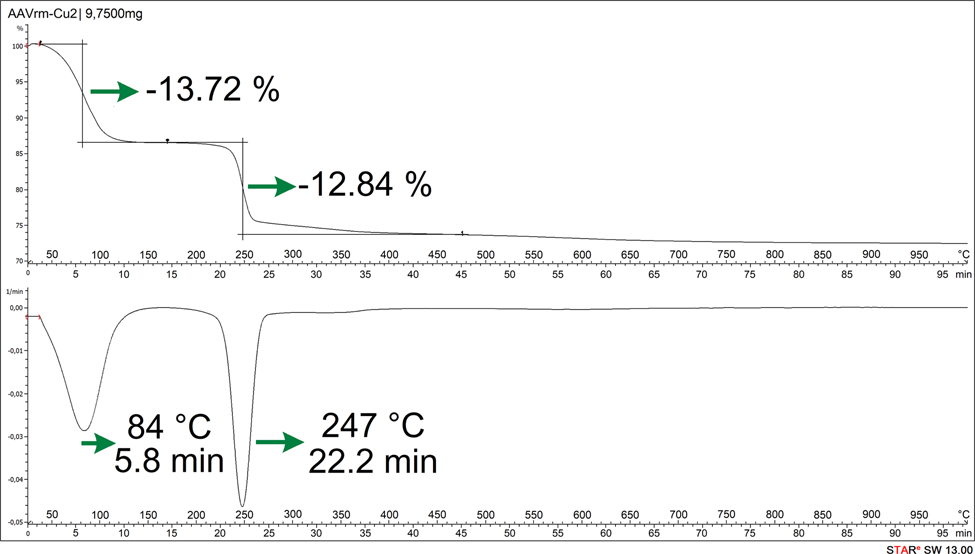
The TGA curves (Fig. 6) of AAVrm-Cu2 showed a mass loss at 84°C attributed to physisorbed water molecules during the storage of AAVrm and loss of water molecules weakly bonded and coordinated to one Cu2+ atom in the hydrated copper citrate complex (Zhang et al., Reference Zhang, Yang and Ma2006). Another mass-loss event at 247°C attributed to the decomposition of the citrate ligands (Zhang et al., Reference Zhang, Yang and Ma2006) was detected. The loss of water molecules is reversible in copper citrate; the AAVrm-Cu2 catalyst may, therefore, be considered a stable material in the temperature range 0–247°C.
Thermogravimetric analysis of the catalyst AAVrm-Cu2 under N2 atmosphere.

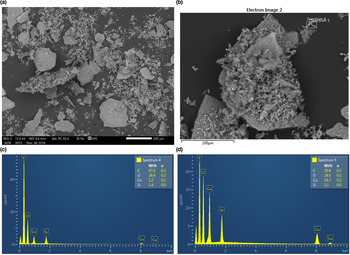
The SEM images of AAVrm-Cu2 (Fig. 7) showed that the catalyst particles are flaky with sizes in the range 5–500 μm. Moreover, EDS analysis of the catalyst surface detected the presence of C, O, Cu and Si supporting the hypothesis of the formation and fixation of copper citrate into amorphous SiO2; other elements originally present in Vrm were not detected.
SEM images (a, b) and EDS spectra (c, d) of AAVrm-Cu2 catalyst.

Catalytic activity in the Biginelli reaction
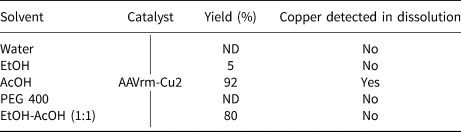
Due to extensive work on the Biginelli reaction over recent years, solvents with significant toxicity should be avoided (Alvim et al., Reference Alvim, Lima, de Oliveira, de Oliveira, Silva, Gozzo, Souza, da Silva and Neto2014). Because the objective of the present study was to maintain a green approach to the Biginelli reaction, five green solvents were evaluated. Reaction monitoring through TLC after 90 min showed total consumption of reactants when pure acetic acid and a 1:1 mixture of ethanol and acetic acid were used. As a result, compound 4a was isolated to measure yield (Table 3), sodium dodecyl sulfate (SDS) was used as a phase-transfer agent to facilitate the solubilization of benzaldehyde into the mixture as aryl aldehydes have low solubility in polar systems (Ghosh et al., Reference Ghosh, Saha, Ghosh, Mukherjee and Saha2013). This approach assisted the diffusion of the aldehyde into the liquid phase and the subsequent contact with the catalyst. When pure AcOH was used as a solvent, copper was detected in the final reaction mixture by XRF, indicating leaching of copper from AAVrm-Cu2. The EtOH-AcOH mixture was thus selected as an appropriate solvent.
Solvent optimization in the Biginelli reaction under ultrasound

ND = Not detected
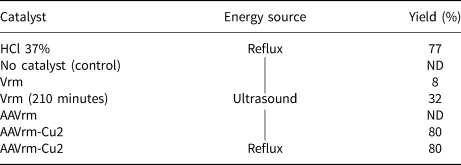
The yield of the Biginelli reaction using AAVrm-Cu2 as a catalyst was similar, regardless of the energy source used (Table 4). In comparison, using HCl under reflux resulted in a slightly lower yield. When using Vrm, the yield was small even after increasing the reaction time to 3.5 h. AAVrm showed no catalytic activity in the Biginelli reaction.
Catalytic activity in the Biginelli reaction.

ND: not detected
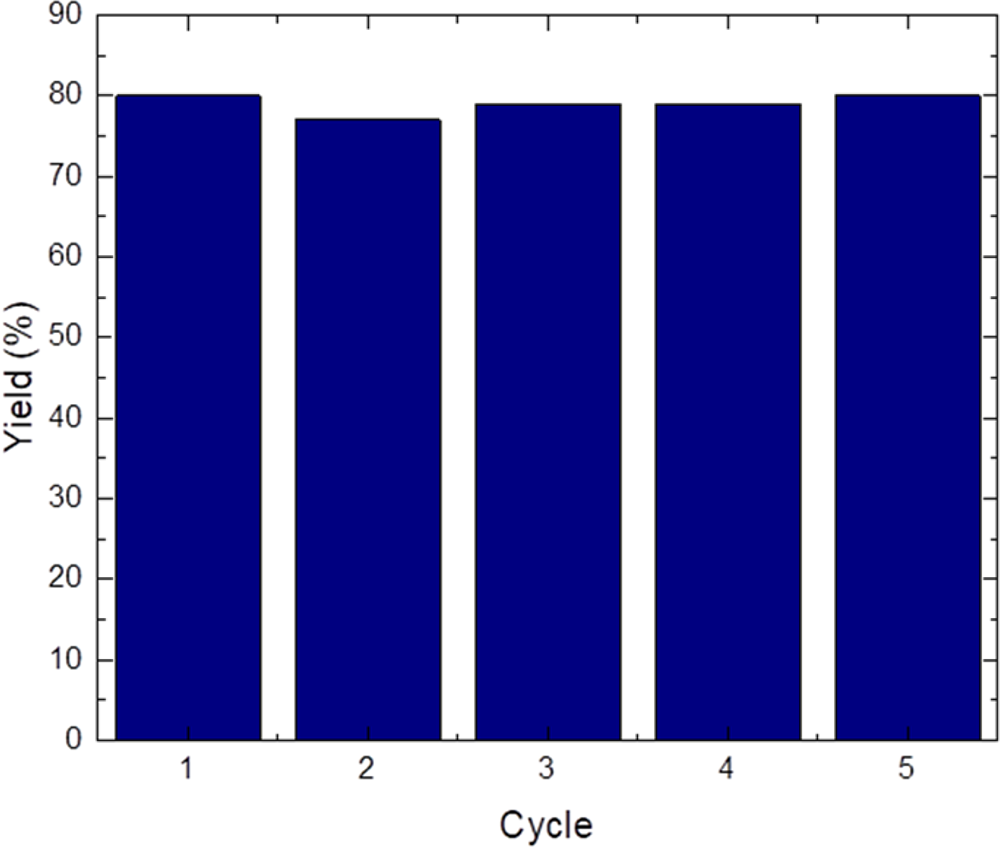
After evaluating AAVrm-Cu2 catalyst for five consecutive cycles of reaction (Fig. 8), no significant decrease in the yield or leaching of copper between cycles was observed as no copper dissolution was detected by XRF. AAVrm-Cu2 may, therefore, be considered to be a robust catalyst, easily separable from the reaction mixture by filtration.
Recycling of AAVrm-Cu2 in Biginelli synthesis of 4a.

After recycling AAVrm-Cu2 five times, the Si/Cu ratio of the solid materials (supplementary Fig. S3) suggested a minor decrease in the Cu content (Table 5).
Si/Cu intensity ratio based on XRF spectra of AAVrm-Cu2 and recycled AAVrm-Cu2 after 5 cycles of Biginelli reaction.

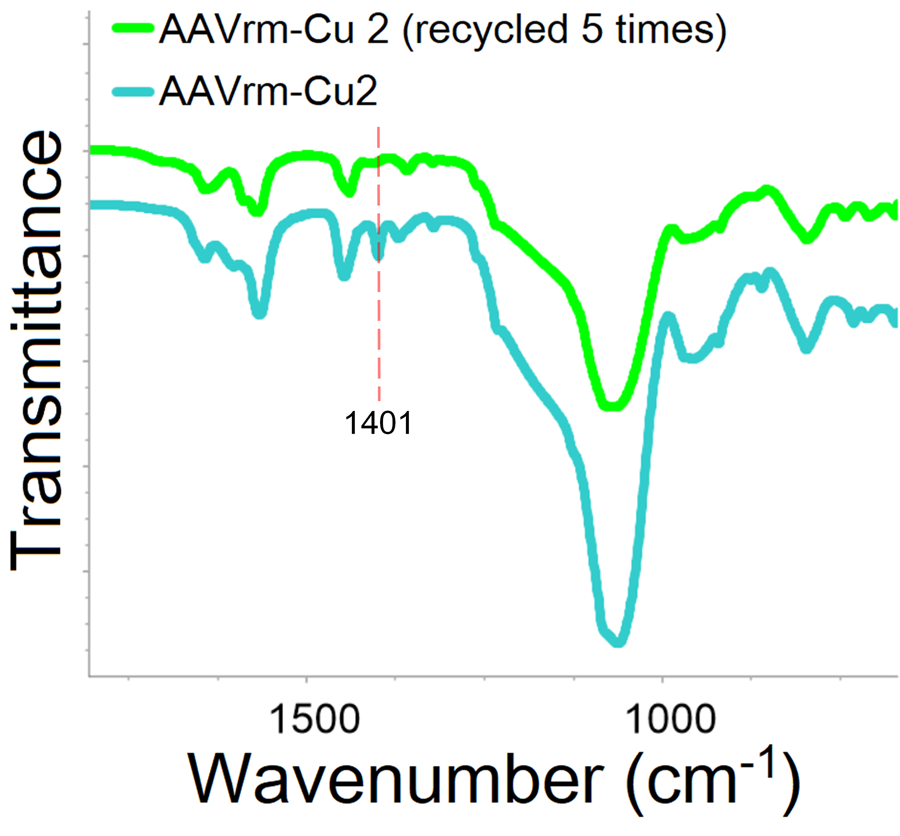
Mass-balance calculations based on the Cu content determined by XRF (Table 2) and the citrate content measured by TGA (Fig. 6) suggest that AAVrm-Cu2 contains 9.72 mmol of copper (618 mg) and 6.78 mmol of citrate (1284 mg) per 10 g of material. This implies an excess of 1.92 mmol of uncomplexed citrate ligand in 10 g of AAVrm-Cu2 catalyst because the FTIR spectrum and XRD trace of AAVrm-Cu2 suggested that the hydrated copper citrate corresponds to [Cu2(cit)(H2O)2]n. To further examine this point, AAVrm was added to the dissolution of sodium citrate used in the synthesis of the catalyst without adding CuCl2; no fixation of sodium citrate was detected on AAVrm as shown in FTIR analysis (Fig. S5). Nevertheless, when evaluating by FTIR spectroscopy the stability of AAVrm-Cu2 after five bouts of recycling, the band at 1401 cm–1 had disappeared (Fig. 9). This band has been studied previously (Kets et al., Reference Kets, IJpelaar, Hoekstra and Vromans2004) and assigned to carboxylate groups in sodium citrate. The present experiment confirmed the presence of uncomplexed citrate ligand in AAVrm-Cu2 which is removed easily when the material is exposed to a polar solvent such as ethanol or acetic acid.
FTIR spectra showing the stability of AAVrm-Cu2 after recycling.

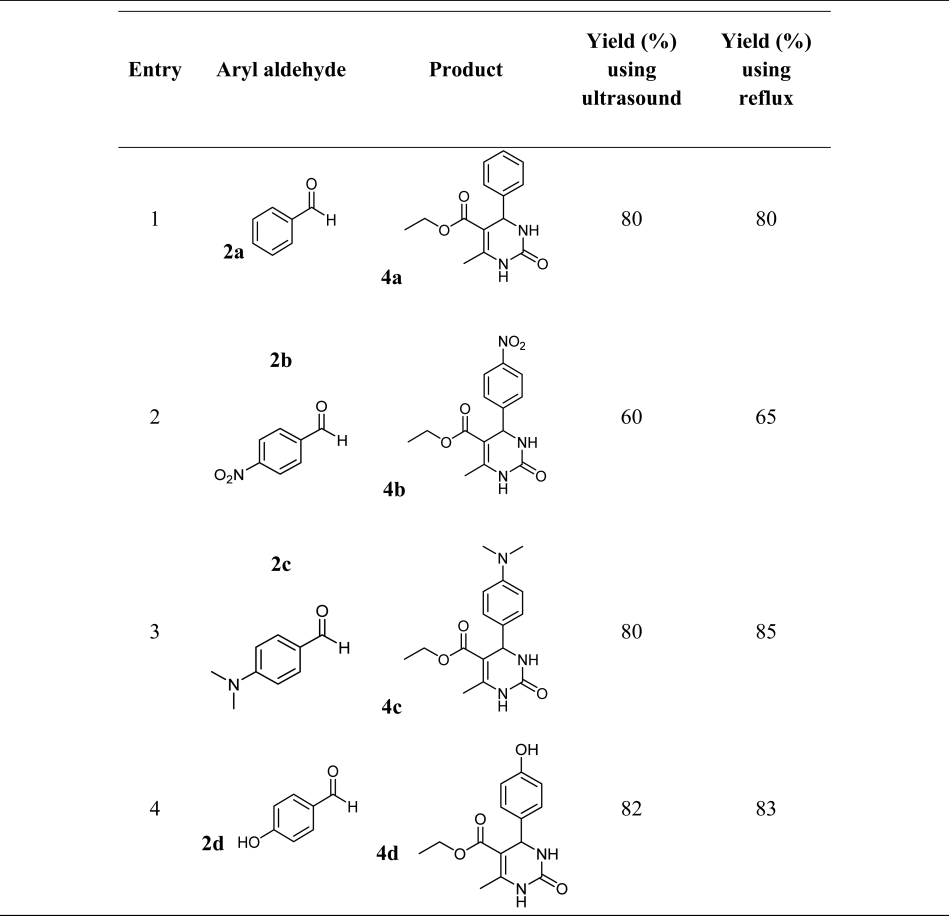
The effect of different p-substituent groups in the aromatic ring of the aldehyde moiety was evaluated (Table 6). In general, a yield of ≥80% was obtained when using aldehydes with electron-donating substitutes (-OH, -N(CH3)2). On the other hand, moderate yields of 60% and 65% were obtained with electron-withdrawing -NO2 groups. This result was fascinating because it has been reported previously that aryl aldehydes with electron-donating groups tend to decrease the Biginelli reaction rate (Yao et al., Reference Yao, Lu, Liu, Tan and Hu2018). However, this effect was not observed when using AAVrm-Cu2 as the catalyst. Melting-point and spectroscopic data for compounds 4a–4d (supplementary Table S1 and supplementary Figs. S6–S20) are in good agreement with results in the literature (Yao et al., Reference Yao, Lu, Liu, Tan and Hu2018).
Synthesis of various dihydropyrimidinones using the optimized conditions of reaction.

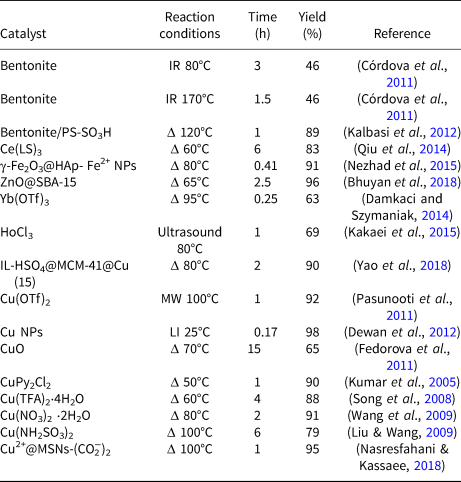
The effectiveness of AAVrm-Cu2 is slightly less than that of expensive catalysts containing holmium or ytterbium but is comparable with and even better than most copper catalysts (Table 7), because it does not require strong mineral acids or inert atmosphere to maintain the catalytic activity and the recyclability in the reaction.
Comparison between the catalytic activity of reported catalysts and the present work.

A reasonable mechanism is proposed on the basis of this work (Fig. 10) and the available literature (Nasresfahani & Kassaee, Reference Nasresfahani and Kassaee2018; Yao et al., Reference Yao, Lu, Liu, Tan and Hu2018; Kappe, Reference Kappe2000). The catalyst AAVrm-Cu2 activates the carbonyl group in the aryl aldehyde by coordination to O atoms in order to favor the nucleophilic attack of urea. Immediately, one of the Cu2+ atoms that is coordinated to two interlayer water molecules can coordinate to OH groups in intermediate I and favor the elimination of water to form the N-acyliminium intermediate II. This intermediate then encounters the enol tautomer of ethyl acetoacetate to form the open chain ureide III, which then undergoes a cyclization to form IV followed by the acid-catalyzed elimination of water by Cu2+ atoms in AAVrm-Cu2 to form the target dihydropyrimidinone.
Proposed mechanism for the Biginelli reaction using AAVrm-Cu2.

Conclusions
AAVrm-Cu2 is a new catalyst composed of a hydrated copper citrate complex supported on acid-activated vermiculite. This catalyst showed a slight increase in Brønsted acidity and significant enhancement of the Lewis acidity compared to natural vermiculite and acid-activated vermiculite. The catalyst contains 6.18% of elemental copper and showed good thermal stability up to 247°C. The catalyst AAVrm-Cu2 is an efficient, robust and recyclable heterogeneous catalyst for the synthesis of dihydropyrimidinones under mild conditions using ultrasound or reflux and can be separated easily from reaction by filtration. The optimized reaction conditions can be extended to different aryl aldehydes with electron-donating and electron-withdrawing p-groups to obtain important Biginelli adducts with yields of between 60 and 85%.
Supplementary material
To view supplementary material for this article, please visit https://doi.org/10.1180/clm.2020.37.
Acknowledgements
The authors are grateful to graduate student Janet Alvarado for the support provided in terms of the identification of acid sites in the materials, to Universidad del Valle de Guatemala for help with the FTIR spectroscopy; to CETEC laboratory at Cementos Progreso S.A. for the instruments and the support provided during TGA, XRD, EDS and SEM characterization of the materials presented here, and finally to Professor Cecilio Alvarez at the Chemistry laboratory at the Institute of Chemistry at UNAM for help with the characterization of dihydropyrimidinones by NMR and Mass Spectrometry.