




No CrossRef data available.
Article contents
Trypanosomatid biodiversity in Costa Rica: genotyping of parasites from Heteroptera using the spliced leader RNA gene
Published online by Cambridge University Press: 05 October 2004
Abstract
The biodiversity of insect trypanosomes is largely unknown, resulting in significant gaps in the understanding of pathogen evolution. A culture-independent preliminary survey of trypanosomatid fauna was conducted for the parasites of Heteroptera (Hemiptera) from several localities in Costa Rica. Trypanosomatid infections were detected by light microscopy of smeared gut contents. Out of 257 insects representing 6 families, infections were found in 62 cases; cultures were obtained for 29 new isolates. Gut material from infected hosts was preserved in the field using an SDS–EDTA buffer solution for subsequent DNA extraction in the laboratory. PCR amplification of the trypanosomatid-specific spliced leader (SL) RNA gene repeats was successful for 60 field samples. Eighteen distinct SL RNA typing units were identified in a set of 28 samples analysed in detail. Cluster analysis indicated that these typing units were unique and thus could represent new species and, in some cases, new genera. This study reveals only a minor fraction of the trypanosomatid biodiversity, which is anticipated to be high.
Information
- Type
- Research Article
- Information
- Copyright
- © 2004 Cambridge University Press
INTRODUCTION
Trypanosomatid protozoa include several monoxenous (1 host) genera, including Blastocrithidia, Crithidia, Herpetomonas, Leptomonas, Rhynchoidomonas and Wallaceina, that are often referred to as ‘insect trypanosomatids’ on the basis of their host. In contrast to the insect-transmitted dixenous (2 hosts) parasites of vertebrates from the genera Trypanosoma and Leishmania, very little is known about the diversity, phylogeny, host specificity and geographical distribution of insect trypanosomatids. Thus our knowledge of the entire family remains fragmentary. The lack of sufficient attention to the monoxenous parasites is only partially responsible for this situation. Insect trypanosomatids are usually difficult to distinguish from each other using light microscopy. An ideal solution to this problem would be the recovery of each new isolate in axenic culture, serving both as a species voucher and a source of material for comprehensive biochemical and molecular analyses (Sbravate et al. 1989; Jankevicius et al. 1993; Batistoti et al. 2001; Catarino et al. 2001). However, cultivation is not possible for all of the known trypanosomatids. Consequently, although there are more than 400 published reports describing insect trypanosomatids (Wallace, 1966; Podlipaev, 1990), the identity of most of these organisms remains uncertain.
Insect trypanosomatids are broadly distributed. Two insect orders, Hemiptera and Diptera, account for nearly 35 and 55%, respectively, of the known hosts (Podlipaev, 1990). A recent 18S rRNA phylogenetic study (Merzlyak et al. 2001) identified several previously undescribed lineages of insect trypanosomatids (Hollar, Lukeš & Maslov, 1998), and led to the suggestion that the group is extremely diverse (Stevens, 2001).
Application of PCR is a viable alternative to cultivation in microbial biodiversity surveys, as a minimal amount of genetic material is sufficient for genotyping, such as might be contained in a field sample. The main advantages of a culture-independent approach are that it allows for identification of organisms that are difficult or impossible to cultivate and avoids culture-induced homogenization of mixed infections. Culture-independent surveys are rapidly expanding the investigated range of eukaryotic biodiversity (Baldauf, 2003) including the discovery of potentially deep branching free-living kinetoplastids (Lopez-Garcia et al. 2003).
The multicopy spliced leader (SL) RNA (also referred to as mini-exon donor RNA) gene array represents one of the best studied and most useful markers for genotyping of trypanosomatids (Murthy, Dibbern & Campbell, 1992); its highly conserved exon sequence allows for specific and efficient amplification from a broad selection of species, a moderately variable intron is useful for selective grouping of related species, while a hypervariable intergenic region provides the highest level of discrimination among isolates. In addition, SL RNA is not present in the insect or vertebrate hosts of trypanosomatids. SL RNA genotyping has been used to investigate relationships within the genera Crithidia (Fernandes et al. 1997), Herpetomonas, Leptomonas and Blastocrithidia (Podlipaev et al. 2004), Phytomonas (Sturm, Fernandes & Campbell, 1995; Dollet, Sturm & Campbell, 2001), Leishmania and Endotrypanum (Fernandes, Degrave & Campbell, 1993; Fernandes et al. 1994), and Trypanosoma (Souto et al. 1996; Fernandes et al. 1998; Grisard, Campbell & Romanha, 1999; Grisard, Sturm & Campbell, 2003). Development of group-specific amplification protocols and hybridization probes has further increased the versatility of the SL RNA gene marker (Ramos et al. 1996; Teixeira et al. 1996; Fernandes et al. 1997; Harris et al. 1998; Serrano et al. 1999; Fernandes et al. 2001; Godoi et al. 2002; Marfurt et al. 2003), such that it is a logical choice for conducting culture-independent surveys of trypanosomatids.
Our long-term goal is to describe the full range of diversity among insect trypanosomatids. In this work we apply a SL RNA gene repeat-based PCR strategy for a survey of trypanosomatids from Heteroptera (Hemiptera) in Costa Rica, the country known for its great insect diversity and a relative proximity of multiple ecosystems.
MATERIALS AND METHODS
Sample handling: field stage
Heteropteran bugs were collected at 5 sites in Costa Rica: 2 locations in the Carara National Park, near the northern boundary of the Guanacaste National Park, near the La Selva Biological Station, and at the western boundary of the Braulio Carrillo National Park (El Ceibo). Insects were collected by sweep-netting, attraction to black and mercury vapour light, or by hand picking. Live specimens were kept individually in small plastic vials before dissection, which usually took place the same day. Insects were dissected using disposable fine-point wooden toothpicks. After opening the abdomen, the contents were suspended in a few drops (0·2–0·3 ml) of 1×SSC buffer (150 mM NaCl, 15 mM sodium citrate) on a microscope slide. The slides were examined using phase-contrast light microscopy at 400× magnification with a cover-slip. Upon detection of a trypanosomatid infection, the material from the slide was divided between two 1·5 ml Eppendorf tubes: one tube containing 1 ml of 1% SDS, 0·1 M EDTA for DNA preservation, and another tube with 1 ml of brain heart infusion (BHI) medium, supplemented with 10 μg/ml haemin, 100 μg/ml ampicillin, 100 μg/ml tetracycline and 50 μg/ml chloramphenicol to initiate a primary culture. The remaining material on the slide was fixed with ethanol and air-dried for subsequent staining with Giemsa. The post-dissection insects (‘xenotypes’) were deposited in the UCR Research Entomology Museum as voucher specimens.
Sample handling: laboratory stage
Extraction of DNA from the material preserved in the SDS–EDTA buffer was performed after digestion with pronase (200 μg/ml) at 65 °C for 30 min. The lysate was extracted with Tris-buffered phenol (pH 8), followed by extraction with phenol–chloroform. Nucleic acid from the aqueous phase was precipitated with isopropanol after addition of glycogen (5 μg/ml) as a carrier. The pellets were washed with ethanol and resuspended in 100 μl of 10 mM Tris–HCl, pH 8·0, 0·1 mM EDTA.
PCR amplification, cloning and sequencing
The SL RNA gene repeats were amplified from sample DNAs using the overlapping oligonucleotides M167, 5′-gggaagcTTCTGTACT(A/T)TATTGGTA, and M168, 5′-gggaattCAATA(A/T)AGTACAGAAACTG, wherein the lower case letters indicate nucleotides added to the genomic sequence to facilitate PCR. These oligonucleotides were based on the exon-specific primers suggested originally (Murthy et al. 1992). The DNA contained in 1 μl of each sample was used for PCR with Taq polymerase with the following cycling profile: initial denaturation at 95 °C for 5 min, followed by 3 low-stringency cycles (95 °C for 30 s, 42 °C for 1 min, 65 °C for 2 min 30 s) and 32 high-stringency cycles (95 °C for 30 s, 50 °C for 1 min, 72 °C for 2 min 30 s). Agarose gel electrophoresis was performed by standard procedures (Sambrook, Fritsch & Maniatis, 1989). The Phytomonas-specific hybridization oligonucleotide probe (‘probe 42’) was 5′-TTGGACTCGGGGCCTTCGG. The DNA blots were hybridized in 6×SSC buffer containing 1×Denhardt's solution, 0·1% SDS at 42 °C; the post-hybridization washes were performed in 2×SSC, 0·1% SDS at 55 °C. For cloning, amplified DNA products of interest were size-selected and eluted from electrophoretic gels using the QIAquick gel extraction kit (QIAGEN), cloned in the TOPO® TA vector (Invitrogen) and sequenced by a commercial facility (Laragen). Sequences were analyzed with Vector NTI Suite 6.0 (InforMax).
Cluster analysis
Partial SL RNA gene repeats were aligned using ClustalX, version 1.81 (Thompson et al. 1997). The region corresponding to the amplification primers (positions 21 to 42 of the SL RNA) and most of the intergenic region except for positions −100 to −1 were excluded from the analysis. Clustering was performed using the neighbour-joining method with the Kimura 2-parameter distance model in PAUP* 4.0, beta version (Swofford, 1998). For preliminary analyses the trees were also constructed by ClustalX using default parameters and viewed using TreeViewX, version 0.4. The following SL RNA gene repeat sequences were retrieved from the GenBank™: Phytomonas sp. Mar1 (AF250986), Phytomonas sp. Hart1 (X87136), Phytomonas serpens (X87137), Phytomonas sp. EM1 (X87138), Herpetomonas pessoai (X62331), Leptomonas seymouri (X07488), Leptomonas collosoma (S76723), Trypanosoma cruzi (K02632), T. cruzi CL Brener (U57984), T. cruzi Y (K02634), T. cruzi Silvio (X62674), T. cruzi Tulahuen (X00632), T. cruzi M6241 (AF050522), T. cruzi M5631 (AF050521), T. cruzi MT4167 (AF050523), T. cruzi Cutia (AY367129), T. cruzi 92122102r (AY367124), T. cruzi SC43 (AY367127), T. cruzi MN (AY367128), T. cruzi CanIII (AY367123), Trypanosoma rangeli (AJ012419), Trypanosoma lewisi (AJ250740), Trypanosoma desterrensis (AF124146), Crithidia oncopelti (U96172), Crithidia fasciculata (U96170), Crithidia luciliae (U96171), Crithidia deanei (U96168), Crithidia acanthocephali (U96167), Endotrypanum schaudinni (L05398), Leishmania mexicana (AY155508), Leishmania amazonensis (L05395), Leishmania colombiensis (AY155502), Leishmania brasiliensis (X69442), Leishmania panamensis (AY155509), Leishmania guyanensis (X69452), Leishmania shawi (X69455). The alignment and other supplementing material are available on-line (http://www.kinetoplast.ucr.edu/CostaRica03/Genotyping.htm).
RESULTS AND DISCUSSION
SL RNA gene repeats can be amplified from field DNA samples
DNA contained in insect gut material from infection-positive samples was preserved efficiently in a solution of high EDTA concentration and a strong ionic detergent. After several weeks at the ambient temperature of the tropical environment, the samples preserved in the EDTA–SDS buffer contained enough intact trypanosomatid DNA for amplification of SL RNA gene repeats in 60 out of 62 preparations. Since trypanosomatid cells represented a minor fraction in the original crude samples that also contained insect cells, fungi, and various protist and microbial components, this result testifies to the effectiveness of our sample preservation and PCR amplification strategies.
A representative gel of the amplification products is shown in Fig. 1A. The sizes of the bands varied from 0·25 to 1·0 kb. In many cases more than one band was observed which, in some, but not all, cases could be attributed to amplification of tandem repeat ‘dimers’ as observed previously (Fernandes et al. 1993, 1994; Sturm et al. 1995; Dollet et al. 2001). This was particularly evident for smaller repeats such as those in samples 42–56. When multiple products were amplified from a single sample, the bands were designated A, B, C, and so on, by increasing size. Products representing different size classes were eluted from the gel, cloned and sequenced. The DNA samples that were used for this analysis are listed in Table 1.

Fig. 1. Analysis of the trypanosomatid-specific SL RNA gene repeat from field samples. (A) Ethidium bromide staining of a 2% agarose gel electrophoresis of PCR products from a representative set of samples. (B) DNA blot hybridization of a replicate gel with the Phytomonas group-specific oligonucleotide ‘probe 42’.

Thirty-four sequenced DNA fragments were SL RNA gene-specific: they contained recognizable SL RNA features including the conserved exon and intron followed by a T-tract and a variable intergenic region. In several cases, the intergenic region of the SL RNA gene repeat contained the 5S rRNA gene, which is linked with SL RNA genes in some trypanosomatids and bodonids (Santana et al. 2001). Several cloned and sequenced bands (42B, 44B, 47B, 48B, 50B, 52B, 55B) were dimers, some of which (47B, 48B, 50B, and 52B) differed internally by a single nucleotide in the intergenic region, as seen previously (Dollet et al. 2001).
Diagnostic features of the SL RNA exon allow preliminary grouping of new sequences
Exon positions 1 to 20, the region immediately upstream of the amplification primers, contain specific nucleotides that may be diagnostic for certain species, groups of species or genera (Sturm et al. 1995, 2001). To further explore the potential of exon variability for genotyping and identification, we grouped the new sequences and those from several known species according to the exon patterns (Table 2). The previously described species formed several groups corresponding to their phylogenetic affinities within the family (Croan, Morrison & Ellis, 1997; Hollar & Maslov, 1997; Noyes et al. 1997; Haag, O'Huigin & Overath, 1998; Hollar, Luke & Maslov, 1998; Stevens et al. 1999; Merzlyak et al. 2001). Thus, the species of Leishmania, Endotrypanum, some species of Crithidia, and L. seymouri were all found within the same group. All known species of Phytomonas formed a distinct group, as did the South American trypanosomes. Trypanosomatids containing endosymbionts, such as H. pessoai, C. oncopelti, and C. deanei, although monophyletic, are characterized by rapid sequence evolution (Hollar, Luke & Maslov, 1998) and thus belong to separate exon groups.

The new sequences fell into several groups, some of which matched groups composed of known species, indicating potential relationships among them. The other sequences formed 5 unique groups, suggesting that they represent distinct undescribed lineages in the family.
Cluster analysis of a portion of the SL RNA gene repeat
Our next goal was to explore the full potential of SL RNA gene repeats for genotyping, including identification of new species or higher taxonomic ranks. We wanted to challenge the exon-based groups presented above at the level of the complete genes. Due to the extreme length and sequence variability of intergenic regions, SL RNA gene repeats from the entire set of isolates could not be fully aligned except from closely-related isolates. Cluster analysis performed with complete repeats could be used to identify the clades of the most similar sequences but the rest of the tree would be biased due to extensive misaligned regions (data not shown).
In order to obtain maximally-informative and minimally-biased SL RNA gene repeat-based clustering, we constructed an alignment from position −100 relative to the exon to the T-tract. The region contains the upstream promoter and the SL RNA gene transcribed region (Saito, Elgort & Campbell, 1994; Campbell, Sturm & Yu, 2000). The result of cluster analysis performed by neighbour joining is shown in Fig. 2. The unrooted tree included all available sequences of monoxenous insect trypanosomatids and several dixenous representatives including Neotropical leishmanias, trypanosomes and Phytomonas.

Fig. 2. Cluster analysis of the SL RNA gene with new and previously described trypanosomatids. Neighbour-joining tree inferred from the aligned SL RNA gene sequence encompassing positions −100 to the 3′ end of the intron. Kimura 2-parameter distances were used. Bootstrapping was performed using 500 replicates and the values are shown at the selected clades that were preserved in the 50% majority-rule consensus tree. Most of the terminal clades were also preserved, although the bootstrap values are not shown. Numbers given at the tips of the branches correspond to the new trypanosomatid sequences followed by designations of the corresponding typing units (in parentheses).
The bootstrapping of our data set indicated that most of the subterminal clades were weakly supported and the deep branches unresolved (data not shown), while the small terminal clades were highly supported (data not shown). Of particular importance was the question of which of the larger clades faithfully reflected genetic relatedness among the isolates. In this regard, it was remarkable that the dixenous organisms known to form distinct clades in SSU trees also formed the corresponding groups in our tree, although with variable support. For example, the isolates of T. cruzi formed a monophyletic clade (Tibayrenc, 1998; Brisse, Verhoff & Tibayrenc, 2001) that was monophyletic with other South American trypanosomes in accordance with the monophyly of the genus Trypanosoma (Lukĕs et al. 1997; Haag et al. 1998; Stevens et al. 1999). The Leishmania spp. formed a clade with Endotrypanum (Croan et al. 1997; Noyes et al. 1997).
Relationships among the reference monoxenous trypanosomatids were resolved only for C. fasciculata, C. luciliae and C. acanthocephali, albeit with low bootstrap support. For the rest, the high levels of sequence divergence apparently exceeded the resolving power of the SL RNA marker. A high level of divergence was expected among C. fasciculata, C. oncopelti, C. deanei, H. pessoai, L. collosoma, for which the phylogeny is known (Hollar et al. 1998; Merzlyak et al. 2001).
SL RNA gene repeats are indicative of new typing units or potential new species
We considered the results from the exon comparison, the cluster analysis, and the sequence in the entire SL RNA gene repeat to determine the relationships among the new and described trypanosomatids. We have chosen arbitrarily the threshold level of 90% identity of the whole SL repeat as a limit of intraspecies variation. Thus, if the identity of two sequences exceeds 90%, they would belong to the same species or, due to the uncertainty of the species concept in asexual parasites (Kunz, 2002), to the same discrete typing unit (Tibayrenc, 1998). We realize that this definition, as a trypanosomatid species definition itself, is debatable, as the level of phylogenetic divergence warranting ‘splitting’ versus ‘lumping’ is still a matter of subjective judgment in molecular parasitology. This situation is well illustrated by the Leishmania – T. cruzi taxonomic inconsistency (Tibayrenc, 1998). The identity levels observed for SL RNA gene repeats from closely related Leishmania species ([ges ]92% for the Viannia species and ~94% between L. m. mexicana and L. m. amazonensis) were much higher than among the major T. cruzi natural clones, wherein it dropped below 60% in the intergenic region (Souto et al. 1996; Brisse et al. 2001). Following our level of 90%, the single T. cruzi species should be broken up into several typing units. On the other hand, sequence identity level, while sufficient to define typing units, is not the only criterion for defining species, which must include consideration of the biological properties of the organisms in question.
The cluster tree showed that none of the new sequences fell into close association with the named species. Rather, the new sequences formed several distinct clusters and thus may represent new taxa. Some of the new sequences were identical among themselves, or nearly so. Given the common origin of these sequences, it is likely that they were derived from members of the same species. For example, two nearly identical sequences, 25E and 28B (typing unit 1), corresponded to trypanosomatids found in the same population of hosts (Table 1), as do the sequences within the clusters 34A/35B, 50A/50B/52B, and 47B/48B/55B (units 2, 3 and 4, respectively).
Another potential new species (typing unit 5) was formed by SL RNA gene repeats 42B and 44B which were 96·4% identical and shared the same origin (Table 1).
A group of 3 related sequences was represented by the cluster 11A/41B/62. The corresponding isolates came from 3 different host species collected at 3 different locales. The identity between the whole repeats 11A and 41B was 79·1%, and the longer sequence 62 was only 38–44% identical to the two other sequences, thereby relegating these trypanosomatids to independent typing units 6, 7 and 8, respectively.
A large group of sequences (from sequence 1B to sequence 33 moving down the tree) is found in 1 weakly (59%) supported clade. The corresponding samples were obtained from 6 host species collected at 4 different locales (Table 1). The sequences in this cluster formed several terminal clades with 83–100% support levels. Eight typing units (9 to 16) were identified by applying the 90% threshold rule with sequences 61 and 33 separate from the rest of their clades.
Two additional typing units (17 and 18) were formed by sequences 16B and 49A.
Cluster analysis allows assignment of new species to the known genera or designation of potential new genera
A remarkable feature of the SL RNA gene tree is that new species were distributed consistently with their associations identified by exon positions 1 to 20 (Table 2) indicating that there was no bias in nucleotide substitution patterns of the exon compared to the rest of the alignable SL RNA gene sequence. Therefore changes in the exon sequence are indicative of phylogeny.
Typing units 1, 2, 3 and 4 were associated with three species of Crithidia on the tree, as they were based on exon sequence. Since bootstrap support with the SL RNA data set was generally low, additional analyses are required to verify this relationship. None of the sequences contained a 5S rRNA gene in the intergenic region, similar to the Crithidia species.
The sequences 42 and 44 (typing unit 5) were monophyletic with Phytomonas spp., thus confirming their preliminary assignment to this group. According to the SSU rRNA phylogenetic analyses (Marche et al. 1995; Hollar & Maslov, 1997), several phloem, latex and fruit isolates classified as Phytomonas species form a monophyletic group. The criterion of monophyly is thus a useful definition for the genus Phytomonas, which is sometimes considered arbitrary as its original criteria (morphology and host specificity) are also met by other trypanosomatid taxa (Jankevicius et al. 1993; Catarino et al. 2001), and because plant parasites themselves are a diverse group (Muller et al. 1994, 1995; Dollet et al. 2000). Nevertheless, the sequences of SL RNA gene arrays from several fruit, phloem and latex isolates (Nunes et al. 1995; Sturm et al. 1995; Dollet et al. 2001) clearly distinguish these organisms from other trypanosomatids. The alignment of exon-intron and the upstream regions of the isolates 42 and 44 with several Phytomonas species (Fig. 3) demonstrated that the new isolates are distinguishable from the other phytomonads by their intron and the upstream intergenic regions. These differences are reflected by a separate branch of the new isolates within the Phytomonas clade in the tree. There were no 5S rRNA genes in SL RNA gene repeats from new isolates, similar to the species of Phytomonas.

Fig. 3. Sequence analysis of new Phytomonas-like isolates from insects. Alignment of SL RNA exon (positions 1 to 39), intron (positions 49 to 105) and upstream region (positions −65 to −1) sequences of the isolates 42 and 44 with several trypanosomatids isolated from plants. The sequence 42A is a monomer, and the sequences 42B and 44B represent second units from the corresponding dimers. The additional Phytomonas sequences included in the alignment are isolates Aca (L42376), Ech (E42382), Alp1 (AF250967), Cbe (L42377) and Jma (L42378).
Sequences 11A, 41B and 62 (typing units 6, 7, 8) formed a well-supported clade that branches off deeply, and is not associated with any known trypanosomatids. They also formed 2 separate but obviously similar groups based on exon sequence. This cluster is a likely candidate for a new genus if the deep branching position is verified using additional markers. There were no 5S rRNA genes in the intergenic regions of these sequences.
The existence of a large clade formed by typing units 9–16 is also consistent with the corresponding sequences forming 2 similar exon groups. The sequence 16B weakly associated with this clade in the tree is a member of one of these groups. These sequences contained 5S genes in intergenic regions. It is likely that the entire clade represents a separate genus.
Sequence 49A is another candidate for a new genus as it forms a long branch on the tree with a distinctive exon. This sequence contains a 5S rRNA gene in the intergenic region.
These results provide credibility to the exon-based typing. The position of L. seymouri, separate from other members of its exon group, is due to its extraordinary exon length and high sequence divergence; the SSU rRNA phylogeny showed that L. seymouri was indeed monophyletic with other members of the Leishmania exon group (Merzlyak et al. 2001).
Group-specific probes can be used for assigning additional isolates to typing units
We investigated if group-specific hybridization probes could be used to investigate relationships of additional samples with the typing units. In particular, we asked if the DNA samples 43, 45 and 46 (Fig. 1A), which were obtained from the same population of hosts and have the same amplified repeat patterns as the samples 42 and 44, also belonged to the same new putative species of Phytomonas (typing unit 5). An analogous blot of the gel presented in Fig. 1A was hybridized with labelled oligonucleotide probe matching intron positions +78 to +96 of the 42B and 44B sequences (‘probe 42’, Fig. 3). Specific and efficient hybridization of this probe to samples 42–46 (Fig. 1B) indicated that the corresponding SL RNA genes were closely related. Given their common origin, they likely belong to the same typing unit.
Analysis of SL RNA gene repeats detects multiple infections
Three sequences obtained from sample 9 (9A, 9B and 9C) fell into different typing units, as did two sequences obtained from sample 4 (4A and 4B). Multiple infections of individual hosts would produce these results; however, the existence of related but non-identical repeat arrays within the same genome could not be eliminated (Maslov et al. 1993; Yu et al. 2002). While sequence 9B was unique and likely authentic, questions remained regarding the origin of the sequences 9A and 9C which are ~96% identical to their counterparts from the corresponding typing units. Likewise, sequences 7B1 and 7B2 were obtained from the same individual host and are 93·6% identical; they could originate from the same trypanosomatid or from two closely related trypanosomatids infecting the same host. Levels of SL RNA gene repeat sequence variability within an array or between an allelic and non-allelic array, as well as within populations, have not been sufficiently investigated. The clonal mode of reproduction that is predominant in nature can result in a rapid accumulation of differences between closely related organisms, as seen on a larger scale in T. cruzi (Tibayrenc, Kjellberg & Ayala, 1990).
Culture-independent approach allows for a more complete and less biased sampling of diversity
We have attempted to cultivate all trypanosomatids encountered during this survey. Stably propagating cultures were obtained in 29 cases. Out of the 33 failed cultivation attempts, the parasites grew in the primary culture in 24 cases but were lost during subsequent transfers, and no growth of parasites in the primary culture was seen in the remaining 9 cases. It is possible that the use of more complex media (e.g. LIT supplemented with foetal bovine serum) would allow for a better recovery of viable cultures. Analysis of the successful cultures is in progress.
Among the trypanosomatid groups identified by the culture-independent approach, the distribution of cultivable organisms was non-random (Table 1). Thus, most of the recovered cultures correspond to typing units 1–4 that have been associated tentatively with 3 described species of Crithidia. Most of the known members of this genus are easy to cultivate. On the contrary, we did not recover the many putative Phytomonas species, and this failure was consistent with the reported difficulties in cultivating plant parasites (Dollet, 1994). Moreover, only two cultures were recovered for the large group of isolates representing units 9 to 17. Thus only 5 out of the 18 putative new species could be cultivated. Without negating the importance of cultures, these results demonstrate advantages of the culture-independent approach, without which the new typing units would not have been found.
Concluding remarks
The work presented here describes the potential of a culture-independent survey strategy based on PCR amplification and sequencing of SL RNA gene repeats. Amplification of DNA extracted from the preserved field samples was largely successful. The trypanosomatid diversity was revealed efficiently by sequencing of the amplified repeats followed by cluster analysis. Diversity was found to be high, especially considering the relatively narrow host range and limited geographical scope of this study. These sequences can be used for developing group-specific hybridization probes that can reduce the amount of future sequencing. The ease and specificity of obtaining SL RNA gene sequences from a large number of samples thus justifies the use of this marker for preliminary grouping or clustering of organisms in a high-throughput survey strategy. These preliminary descriptions will be complemented by use of a more informative phylogenetic marker (e.g. SSU rRNA) to investigate relationships among the SL RNA groups. Due to the occurrence of mixed infections in insects, analyses incorporating multiple genetic markers must rely on the successful generation of axenic, clonal cell cultures. The work also highlights the current dearth of information on the natural diversity of insect trypanosomatids and the need for developing criteria for correlating levels of genetic divergence of isolates with their taxonomic status.
We thank J. Longino and the ALAS staff for assistance with logistics and organization of the field work at La Selva; R. Blanco and M. M. Chavarria for similar help at PN Guanacaste; John Heraty, Daniel Janzen and Daniel Brooks for discussions; H. Brailovsky, J. O'Donnell, D. Thomas, C. Schaefer and M. Schwartz for host identification; F. Campos and OTS for help with permits; N. Maslov for field assistance. The work was supported by the UCR Academic Senate grant to D.A.M.; D.A.C. and S.A.P. were partners in a CIRAD Action Thématique Programmée awarded to Michel Dollet; S.J.W. was supported in part by the UCLA IGERT Bioinformatics Program funded by NSFG grant DGE9987641.
References
REFERENCES
BATISTOTI, M., CAVAZZANA, M. Jr., SERRANO, M. G., OGATTA, S. F., BACCAN, G. C., JANKEVICIUS, J. V., TEIXEIRA, M. M. G. &
JANKEVICIUS, S. T. (
2001).
Genetic variability of trypanosomatids isolated from phytophagous Hemiptera defined by morphological, biochemical, and molecular taxonomic markers.
Journal of Parasitology
87, 1335–1341.CrossRefGoogle Scholar
BRISSE, S., VERHOEF, J. &
TIBAYRENC, M. (
2001).
Characterization of large and small subunit rRNA and mini-exon genes further supports the distinction of six Trypanosoma cruzi lineages.
International Journal for Parasitology
31, 1218–1226.CrossRefGoogle Scholar
CAMPBELL, D. A., STURM, N. R. &
YU, M. C. (
2000).
Transcription of the kinetoplastid spliced leader RNA gene.
Parasitology Today
16, 78–82.CrossRefGoogle Scholar
CATARINO, L. M., SERRANO, M. G., CAVAZZANA, M. Jr., ALMEIDA, M. L., KANESHINA, E. K., CAMPANER, M., JANKEVICIUS, J. V., TEIXEIRA, M. M. G. &
ITOW-JANKEVICIUS, S. (
2001).
Classification of trypanosomatids from fruits and seeds using morphological, biochemical and molecular markers revealed several genera among fruit isolates.
FEMS Microbiology Letters
201, 65–72.CrossRefGoogle Scholar
CROAN, D. G., MORRISON, D. A. &
ELLIS, J. T. (
1997).
Evolution of the genus Leishmania revealed by comparison of DNA and RNA polymerase gene sequences.
Molecular and Biochemical Parasitology
89, 149–159.CrossRefGoogle Scholar
DOLLET, M. (
1994).
Identification and characterization of pest organisms: a plant trypanosomes case study. In
Identification and Characterization of Pest Organisms (
ed. Hawksworth, D. L.), pp.
415–426.
CAB International, Wallingford, UK.
DOLLET, M., STURM, N. R. &
CAMPBELL, D. A. (
2001).
The spliced leader RNA gene array in phloem-restricted plant trypanosomatids (Phytomonas) partitions into two major groupings: epidemiological implications.
Parasitology
122, 289–297.CrossRefGoogle Scholar
DOLLET, M., STURM, N. R., SÁNCHEZ-MORENO, M. &
CAMPBELL, D. A. (
2000).
5S ribosomal RNA gene repeat sequences define at least eight groups of plant trypanosomatids (Phytomonas spp.): phloem-restricted pathogens form a distinct section.
Journal of Eukaryotic Microbiology
47, 569–574.Google Scholar
FERNANDES, O., DEGRAVE, W. &
CAMPBELL, D. A. (
1993).
The mini-exon gene: a molecular marker for Endotrypanum schaudinni.
Parasitology
107, 219–224.CrossRefGoogle Scholar
FERNANDES, O., MURTHY, V. K., KURATH, U., DEGRAVE, W. M. &
CAMPBELL, D. A. (
1994).
Mini-exon gene variation in human pathogenic Leishmania species.
Molecular and Biochemical Parasitology
66, 261–271.CrossRefGoogle Scholar
FERNANDES, O., SANTOS, S. S., CUPOLILLO, E., MENDONÇA, B., DERRE, R., JUNQUEIRA, A. C. V., SANTOS, L. C., STURM, N. R., NAIFF, R. D., BARRET, T. V. &
CAMPBELL, D. A. (
2001).
A mini-exon multiplex polymerase chain reaction to distinguish the major groups of Trypanosoma cruzi and T. rangeli in the Brazilian Amazon.
Transactions of the Royal Society of Tropical Medicine and Hygiene
95, 97–99.CrossRefGoogle Scholar
FERNANDES, O., SOUTO, R. P., CASTRO, J. A., PEREIRA, J. B., FERNANDES, N. C., JUNQUEIRA, A. C. V., NAIFF, R. D., BARRETT, T. V., DEGRAVE, W., ZINGALES, B., CAMPBELL, D. A. &
COURA, J. R. (
1998).
Brazilian isolates of Trypanosoma cruzi from humans and triatomines classified into two lineages using mini-exon and ribosomal RNA sequences.
American Journal of Tropical Medicine and Hygiene
58, 807–811.CrossRefGoogle Scholar
FERNANDES, O., TEIXEIRA, M. M., STURM, N. R., SOUSA, M. A., CAMARGO, E. P., DEGRAVE, W. M. &
CAMPBELL, D. A. (
1997).
Mini-exon gene sequences define six groups within the genus Crithidia.
Journal of Eukaryotic Microbiology
44, 535–539.CrossRefGoogle Scholar
GODOI, M. M. I., SERRANO, M. G., TEIXEIRA, M. M. G. &
CAMARGO, E. P. (
2002).
A PCR-based survey on Phytomonas (Euglenozoa: Trypanosomatidae) in phytophagous hemipterans of the Amazon region.
Journal of Eukaryotic Microbiology
49, 275–279.CrossRefGoogle Scholar
GRISARD, E. C., CAMPBELL, D. A. &
ROMANHA, A. J. (
1999).
Mini-exon gene sequence polymorphism among Trypanosoma rangeli strains isolated from distinct geographical regions.
Parasitology
118, 375–382.CrossRefGoogle Scholar
GRISARD, E. C., STURM, N. R. &
CAMPBELL, D. A. (
2003).
A new species of trypanosomes isolated from South American bats, Trypanosoma desterrensis sp. n.
Parasitology
127, 265–271.CrossRefGoogle Scholar
HAAG, J., O'HUIGIN, C. &
OVERATH, P. (
1998).
The molecular phylogeny of trypanosomes: evidence for an early divergence of the Salivaria.
Molecular and Biochemical Parasitology
91, 37–49.CrossRefGoogle Scholar
HARRIS, E., KROPP, G., BELLI, A., RODRIGUEZ, B. &
AGABIAN, N. (
1998).
Single-step multiplex PCR assay for characterization of New World Leishmania complexes.
Journal of Clinical Microbiology
36, 1989–1995.Google Scholar
HOLLAR, L., LUKEš, J. &
MASLOV, D. A. (
1998).
Monophyly of endosymbiont containing trypanosomatids: phylogeny versus taxonomy.
Journal of Eukaryotic Microbiology
45, 293–297.CrossRefGoogle Scholar
HOLLAR, L., MASLOV, D. A. (
1997).
A phylogenetic view on the genus Phytomonas.
Molecular and Biochemical Parasitology
89, 295–299.CrossRefGoogle Scholar
JANKEVICIUS, S. I., DE ALMEIDA, M. L., JANKEVICIUS, J. V., CAVAZZANA, M. Jr., ATTIAS, M. &
DE SOUZA, W. (
1993).
Axenic cultivation of trypanosomatids found in corn (Zea mays) and in phytophagous hemipterans (Leptoglossus zonatus Coreidae) and their experimental transmission.
Journal of Eukaryotic Microbiology
40, 576–581.CrossRefGoogle Scholar
KUNZ, W. (
2002).
When is a parasite species a species?
Trends in Parasitology
18, 121–124.Google Scholar
LOPEZ-GARCIA, P., PHILIPPE, H., GAILL, F. &
MOREIRA, D. (
2003).
Autochthonous eukaryotic diversity in hydrothermal sediment and experimental micro-colonizers at the Mid-Atlantic Ridge.
Proceedings of the National Academy of Sciences, USA
100, 697–702.CrossRefGoogle Scholar
LUKEš, J., JIRKŮ, M., DOLEŽEL, D., KRAL'OVÁ, I., HOLLAR, L. &
MASLOV, D. A. (
1997).
Analysis of ribosomal RNA genes suggests that trypanosomes are monophyletic.
Journal of Molecular Evolution
44, 521–527.CrossRefGoogle Scholar
MARCHE, S., ROTH, CH., PHILIPPE, H., DOLLET, M. &
BALTZ, T. (
1995).
Characterization and detection of plant trypanosomatids by sequence analysis of the small subunit ribosomal RNA gene.
Molecular and Biochemical Parasitology
71, 15–26.CrossRefGoogle Scholar
MARFURT, J., NASEREDDIN, A., NIEDERWIESER, I., JAFFE, C. L., BECK, H. P. &
FELGER, I. (
2003).
Identification and differentiation of Leishmania species in clinical samples by PCR amplification of the miniexon sequence and subsequent restriction fragment length polymorphism analysis.
Journal of Clinical Microbiology
41, 3147–3153.CrossRefGoogle Scholar
MASLOV, D. A., ELGORT, M. G., WONG, S., PECKOVÁ, H., LOM, J., SIMPSON, L. &
CAMPBELL, D. A. (
1993).
Organization of mini-exon and 5S rRNA genes in the kinetoplastid Trypanoplasma borreli.
Molecular and Biochemical Parasitology
61, 127–136.CrossRefGoogle Scholar
MERZLYAK, E., YURCHENKO, V., KOLESNIKOV, A. A., ALEXANDROV, K., PODLIPAEV, S. A. &
MASLOV, D. A. (
2001).
Diversity and phylogeny of insect trypanosomatids based on small subunit rRNA genes: Polyphyly of Leptomonas and Blastocrithidia.
Journal of Eukaryotic Microbiology
48, 161–169.CrossRefGoogle Scholar
MULLER, E., AHOMADEGBE, J., COULAUD, D., GARGANI, D., FERNANDEZ-BECERRA, C. &
DOLLET, M. (
1995).
Variability of kinetoplast DNA from plant trypanosomatids responsible for Hartrot and Marchitez diseases.
Phytopathology
85, 942–947.CrossRefGoogle Scholar
MULLER, E., GARGANI, D., SCHAEFFER, V., STEVENS, J., FERNANDEZ-BECERRA, C., SANCHEZ-MORENO, M. &
DOLLET, M. (
1994).
Variability in the phloem restricted plant trypanosomes (Phytomonas spp) associated with wilts of cultivated crops.
European Journal of Plant Pathology
100, 425–434.CrossRefGoogle Scholar
MURTHY, V. K., DIBBERN, K. M. &
CAMPBELL, D. A. (
1992).
PCR amplification of mini-exon genes differentiates Trypanosoma cruzi and Trypanosoma rangeli.
Molecular and Cellular Probes
6, 237–243.CrossRefGoogle Scholar
NOYES, H. A., ARANA, B. A., CHANCE, M. L. &
MAINGON, R. (
1997).
The Leishmania hertigi (Kinetoplastida; Trypanosomatidae) complex and the lizard Leishmania: Their classification and evidence for a Neotropical origin of the Leishmania-Endotrypanum clade.
Journal of Eukaryotic Microbiology
44, 511–517.CrossRefGoogle Scholar
NUNES, L. R., TEIXEIRA, M. M. G., CAMARGO, E. P. &
BUCK, G. A. (
1995).
Sequence and structural characterization of the spliced leader genes and transcripts in Phytomonas.
Molecular and Biochemical Parasitology
74, 233–237.CrossRefGoogle Scholar
PODLIPAEV, S. A. (
1990).
Catalogue of World Fauna of Trypanosomatidae (Protozoa).
Leningrad, USSR.
PODLIPAEV, S. A., STURM, N. R., FIALA, I., FERNANDES, O., WESTENBERGER, S. J., DOLLET, M., CAMPBELL, D. A. &
LUKEš, J. (
2004).
Diversity of insect trypanosomatids assessed from the spliced leader RNA ans 5S rRNA genes and intergenic regions.
Journal of Eukaryotic Microbiology
51, 283–290.CrossRefGoogle Scholar
RAMOS, A., MASLOV, D. A., FERNANDES, O., CAMPBELL, D. A. &
SIMPSON, L. (
1996).
Detection and identification of human pathogenic Leishmania and Trypanosoma species by hybridization of PCR-amplified mini-exon repeats.
Experimental Parasitology
82, 242–250.CrossRefGoogle Scholar
SAITO, R. M., ELGORT, M. G. &
CAMPBELL, D. A. (
1994).
A conserved upstream element is essential for transcription of the Leishmania tarentolae mini-exon gene.
EMBO Journal
13, 5460–5469.Google Scholar
SAMBROOK, J., FRITSCH, E. F. &
MANIATIS, T. (
1989).
Molecular Cloning – a Laboratory Manual.
Cold Spring Harbor Laboratory Press, Cold Spring Harbor, New York.
SANTANA, D. M., LUKEš, J., STURM, N. R. &
CAMPBELL, D. A. (
2001).
Two sequence classes of kinetoplastid 5S ribosomal RNA gene revealed among bodonid spliced leader RNA gene arrays.
FEMS Microbiology Letters
204, 233–237.CrossRefGoogle Scholar
SBRAVATE, C., CAMPANER, M., CAMARGO, L. E. A., CONCHON, I., TEIXEIRA, M. &
CAMARGO, E. P. (
1989).
Culture and generic identification of trypanosomatids of phytophagous Hemiptera in Brazil.
Journal of Protozoology
36, 543–547.CrossRefGoogle Scholar
SERRANO, M. G., NUNES, L. R., CAMPANER, M., BUCK, G. A., CAMARGO, E. P. &
TEIXEIRA, M. M. G. (
1999).
Trypanosomatidae: Phytomonas detection in plants and phytophagous insects by PCR amplification of a genus-specific sequence of the spliced leader gene.
Experimental Parasitology
91, 268–279.CrossRefGoogle Scholar
SOUTO, R. P., FERNANDES, O., MACEDO, A. M., CAMPBELL, D. A. &
ZINGALES, B. (
1996).
DNA markers define two major phylogenetic lineages of Trypanosoma cruzi.
Molecular and Biochemical Parasitology
83, 141–152.CrossRefGoogle Scholar
STEVENS, J. R. (
2001).
One million insects – a lot of parasites?
Trends in Parasitology
17, 119–120.Google Scholar
STEVENS, J. R., NOYES, H. A., DOVER, G. A. &
GIBSON, W. C. (
1999).
The ancient and divergent origins of the human pathogenic trypanosomes, Trypanosoma brucei and T. cruzi.
Parasitology
118, 107–116.CrossRefGoogle Scholar
STURM, N. R., FERNANDES, O. &
CAMPBELL, D. A. (
1995).
The mini-exon genes of three Phytomonas isolates that differ in plant tissue tropism.
FEMS Microbiology Letters
130, 177–182.CrossRefGoogle Scholar
STURM, N. R., MASLOV, D. A., GRISARD, E. C. &
CAMPBELL, D. A. (
2001).
Diplonema spp. possess spliced leader RNA genes similar to the Kinetoplastida.
Journal of Eukaryotic Microbiology
48, 325–331.Google Scholar
SWOFFORD, D. L. (
1998).
PAUP* 4.0: Phylogenetic Analysis Using Parsimony (and Other Methods), beta version, 1998.
Sinauer Associates, Inc., Sunderland, MA.
TEIXEIRA, M. M. G., SERRANO, M. G., NUNES, L. R., CAMPANER, M., BUCK, G. A. &
CAMARGO, E. P. (
1996).
Trypanosomatidae: a spliced-leader-derived probe specific for genus Phytomonas.
Experimental Parasitology
84, 311–319.CrossRefGoogle Scholar
THOMPSON, J. D., GIBSON, T. J., PLEWNIAK, F., JEANMOUGIN, F. &
HIGGINS, D. G. (
1997).
The ClustalX windows interface: flexible strategies for multiple sequence alignment aided by quality analysis tools.
Nucleic Acids Research
24, 4876–4882.CrossRefGoogle Scholar
TIBAYRENC, M. (
1998).
Genetic epidemiology of parasitic protozoa and other infectious agents: the need for an integrated approach.
International Journal for Parasitology
28, 85–104.CrossRefGoogle Scholar
TIBAYRENC, M., KJELLBERG, F. &
AYALA, F. J. (
1990).
A clonal theory of parasitic protozoa: the population structures of Entamoeba, Giardia, Leishmania, Naegleria, Plasmodium, Trichomonas, and Trypanosoma and their medical and taxonomical consequences.
Proceedings of the National Academy of Sciences, USA
87, 2414–2418.CrossRefGoogle Scholar
WALLACE, F. G. (
1966).
The trypanosomatid parasites of insects and arachnids.
Experimental Parasitology
18, 124–193.CrossRefGoogle Scholar
YU, M. C., ORLANDO, T. C., STURM, N. R., ZHONG, L., SAITO, R. M., FLOETER-WINTER, L. M. &
CAMPBELL, D. A. (
2002).
Two distinct functional spliced leader RNA gene arrays in Leishmania tarentolae are found in several lizard Leishmania species.
International Journal for Parasitology
32, 1411–1422.CrossRefGoogle Scholar

Fig. 1. Analysis of the trypanosomatid-specific SL RNA gene repeat from field samples. (A) Ethidium bromide staining of a 2% agarose gel electrophoresis of PCR products from a representative set of samples. (B) DNA blot hybridization of a replicate gel with the Phytomonas group-specific oligonucleotide ‘probe 42’.

Table 1. Summary of the trypanosomatid SL RNA repeat sequences and isolates analysed in this study
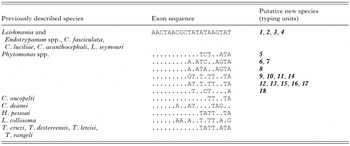
Table 2. Species groups defined by the SL RNA exon (positions 1–20 of the Leishmania sequence)

Fig. 2. Cluster analysis of the SL RNA gene with new and previously described trypanosomatids. Neighbour-joining tree inferred from the aligned SL RNA gene sequence encompassing positions −100 to the 3′ end of the intron. Kimura 2-parameter distances were used. Bootstrapping was performed using 500 replicates and the values are shown at the selected clades that were preserved in the 50% majority-rule consensus tree. Most of the terminal clades were also preserved, although the bootstrap values are not shown. Numbers given at the tips of the branches correspond to the new trypanosomatid sequences followed by designations of the corresponding typing units (in parentheses).

Fig. 3. Sequence analysis of new Phytomonas-like isolates from insects. Alignment of SL RNA exon (positions 1 to 39), intron (positions 49 to 105) and upstream region (positions −65 to −1) sequences of the isolates 42 and 44 with several trypanosomatids isolated from plants. The sequence 42A is a monomer, and the sequences 42B and 44B represent second units from the corresponding dimers. The additional Phytomonas sequences included in the alignment are isolates Aca (L42376), Ech (E42382), Alp1 (AF250967), Cbe (L42377) and Jma (L42378).
 You have
Access
- 58
- Cited by