

I. Introduction
Facing the threat of COVID-19, the European Union (EU) went through an early phase of chaotic, uncoordinated national responses. The situation began to settle and the European Commission became increasingly prominent in leading the EU through this difficult period. One key EU response was the EU Vaccines Strategy (hereafter, the Strategy), announced on 17 June 2020 by the Commission, which aimed to accelerate the development, manufacturing and deployment of COVID-19 vaccines in the EU.Footnote 1
The importance of the Strategy is not only reflected in the need for vaccines to protect millions of lives, but also in its historical significance as a Commission-led joint EU response to a major public health emergency. The Strategy was based on Article 122 of the Treaty on the Functioning of the European Union (TFEU) and also the activation of the Emergency Support Instrument (ESI), while the joint procurement of medical countermeasures was enabled by Decision 1082/2013/EU. The fact that these legal provisions preceded the COVID-19 pandemic does not diminish the importance of the Strategy in the history of the EU administration. First of all, as acknowledged by the Commission, the Joint Procurement Agreement “is a preparedness tool and was not designed to deal with an ongoing crisis.”Footnote 2 The crisis situation put the Commission’s capacity and the available legal provisions into test. Despite the legal basis, the Commission and other relevant agencies and bodies had to work out the steps with urgency without precedents or references. Such exercise of executive power led to persistent criticism of the Commission, especially of President Ursula von der Leyen, from civil society and the European Parliament, particularly towards the transparency of the joint procurement process.Footnote 3
Despite its importance, more than three years since the announcement of the Strategy, academic discussion of this important Commission initiative remains scarce.Footnote 4 While some hold a relatively positive view of the Commission’s actions,Footnote 5 others criticised the lack of transparency in its negotiations with companies on vaccine procurement.Footnote 6 The literature lacks a comprehensive assessment of the effectiveness of the Strategy that would guide future cooperation between the EU and national executives and further EU institutional building.
Moreover, there is a tendency that the EU solves problems caused by integration with further integration.Footnote 7 Discussion on integration in the field of public health cannot be based on narratives and anecdotes. In particular, it is doubtful whether the European Health Union would be qualitatively different from previous attempts, and there is no guarantee that without addressing the weaknesses of national health systems joint EU actions will be capable of enhancing future public health emergency response.Footnote 8 Meanwhile, EU health law is a dynamic system that can be interpreted according to different contexts,Footnote 9 and the Union has responded to the problems revealed by the pandemic with more integration through building on existing structures, demonstrating that the EU does indeed have more competences than some believed.Footnote 10 The powerful and dynamic EU law system, combined with a proactive Commission, could lead to both desirable and undesirable outcomes. The EU could fall into a spiral of more centralisation of power with increased autonomy, without reflecting on the effectiveness or necessity of joint actions.
As a result, it is necessary to assess this major EU effort – the EU Vaccines Strategy, to carefully evaluate EU actions against the stated objectives and to learn from the lessons when considering and designing future institutional or procedural reforms in any policy areas. This paper reflects on the Strategy by assessing its effectiveness, defined in this paper as goal attainment. To provide an objective assessment, we seek quantitative measures wherever possible, and compare the EU’s performance with that of the US. When quantitative analysis is not possible, we rely on qualitative analysis of official documents and support from the literature.
In addition to the stated objectives, we also assess the overall transparency of the implementation of the Strategy. The importance of transparency has been repeatedly stressed by the European Parliament and the public. As a satisfactory level of transparency was widely expected, we consider maintaining transparency an implicit objective of the Strategy.
The contribution of this paper is at least threefold. First, it comprehensively assesses the effectiveness of the EU Vaccines Strategy and serves as a reference for national governments and the EU in future joint EU efforts, especially on procurements of medical countermeasures. The paper provides researchers and policymakers with a systematic reflection that can guide future developments in this policy area. The involvement of the Member States in the Health Emergency Preparedness and Response Authority Board (HERA Board) and the Health Crisis BoardFootnote 11 nonetheless allocates greater responsibilities to national governments. It is therefore essential to draw lessons carefully and faciliate discussions at both Union and national levels. Second, the paper provides an objective assessment of the EU’s efforts, which are often not articulately communicated. A better understanding of the EU’s contribution to public health during the pandemic can help combat misinformation and increase the accountability of EU institutions. Finally, this paper contributes to a wider debate on the centralisation of executive power at the EU level.
II. Assessing the attainment of the four objectives of the Strategy
The four main goals of the Strategy are set out as follows:
-
to ensure the quality, safety and efficacy of vaccines;
-
to secure timely access to vaccines for Member States and their populations while leading the global solidarity effort;
-
to ensure equitable and affordable access for all in the EU to an affordable vaccine as early as possible;
-
to make sure that preparations are made in EU Member States regarding the rollout of safe and effective vaccines, addressing transportation and deployment needs, and identifying priority groups.
The rest of this section evaluates the EU achievement against these stated objectives and concludes by a short study of the transparency of the process.
1. Ensuring the quality, safety and efficacy of vaccines
The European Medicines Agency (EMA) was set up in 1995 to harmonise national medicine regulatory bodies and since then has been the gatekeeper responsible for “the scientific evaluation, supervision and safety monitoring of medicines” in the EU.Footnote 12 “Ensuring the quality, safety and efficacy of vaccines,” the foremost objective listed in the EU Vaccines Strategy, was mainly carried out by EMA. The pandemic put the existing marketing authorisation mechanism into test as there was a huge pressure and demand from the public on authorities to assess candidate vaccines and treatments swiftly. EMA indeed adapted its operation and provided flexible and fast review of medicines through its pandemic Task Force (COVID-ETF). To assess the EMA’s performance during the pandemic, this section first describes in brief its operation, including the expedited authorisation and the continuous monitoring of vaccine safety.
While providing explanations or justifications for procedures is valuable, it cannot replace the need for a more rigorous assessment based on the outcomes of the final products. The section, therefore, investigates whether the approved vaccines demonstrate high efficacy in clinical trials and high effectiveness in post-marketing phases, supported by evidence found from the relevant literature. Furthermore, addressing concerns regarding the comparatively slower authorisation process of the EU vis-à-vis the United States, this section concludes with a comparative analysis between the US’s Emergency Use Authorisation and the EU conditional marketing authorisation.
a. Expedited authorisation by EMA
During the COVID-19 pandemic, EMA was active in supporting the development and authorisation of vaccines through various channels.
-
The COVID-19 EMA pandemic Task Force (subsequently Emergency Task Force) was established on 9 April 2020, and was made up of experts across Europe. The aim of the Task Force was to support regulatory activities including, in particular, product and scientific data assessment.Footnote 13 Under EMA’s new mandate, the Emergency Task Force replaced the COVID-19 EMA pandemic Task Force and became a permanent body of EMA. Footnote 14,Footnote 15,Footnote 16
-
EMA provided rapid scientific advice to vaccine developers at the early development phases.
-
EMA activated a rolling review of scientific data from clinical trials as soon as the data were available. Once EMA confirmed the sufficiency of the data, the developers submitted a formal application for a conditional marketing authorisation (CMA).
-
The Commission granted CMAs of the vaccines based on EMA’s recommendations and on consultations with the Member States. A CMA is valid for one year, is renewable and can be converted to a standard marketing authorisation. Full clinical data were not required to be available at the time of authorisation, but CMA holders were obliged to share the completed clinical data within defined timeframes.Footnote 17
Any applications submitted to EMA for vaccine approval contain “pharmaceutical quality studies” that provides information about the vaccine’s active components, purity and other ingredients, how the vaccine is manufactured, its stability and shelf life, and how best to store it. Additionally, companies developing COVID-19 vaccines provide information about the manufacturing technology used, and can only produce vaccines in certified facilities.Footnote 18
b. Continuous monitoring of vaccine safety
EMA continues to monitor the safety of COVID-19 vaccines based on all available data from the studies reported by the companies, and also from national authorities. In collaboration with the authorities of the Member States, EMA uses real world data to implement the pharmacovigilance plan of the EU regulatory network for authorised COVID-19 treatments and vaccines.Footnote 19
Research so far has not found severe side effects induced by the EU-approved COVID-19 vaccines, though thrombosis (formation of blood clots in the blood vessels) has been added to the list of side effects of AstraZeneca (Vaxzevria), which may affect up to 1 in 10,000 people.Footnote 20 Likewise, myocarditis and pericarditis (inflammatory conditions of the heart) have been added to the list of side effects of both Pfizer-BioNTech (Comirnaty) and Moderna (Spikevax), which may affect up to 1 in 10,000 people. To ensure vaccine safety for children, EU pharmaceutical legislation imposes an obligation (paediatric investigation plan) on vaccine developers to carry out trials to collect data on efficacy and safety for those younger than 18 years.
c. Ensuring high efficacy of COVID-19 vaccines
In the context of COVID-19 vaccines, efficacy refers the ability of a vaccine to prevent symptomatic diseases in individuals affected by COVID-19.Footnote 21 Generally speaking, the efficacy of the COVID-19 vaccines approved by EMA is high.Footnote 22 In particular, the vaccines developed by Pfizer-BioNTech and Moderna reach at least a 90 per cent efficacy rate against early variants of the virus, Footnote 23,Footnote 24,Footnote 25 with AstraZeneca not very far behind.Footnote 26 Subsequent epidemiological research points to the same conclusion that the COVID-19 vaccines currently in use are highly effective. Footnote 27,Footnote 28,Footnote 29
d. Comparison between the US and the EU approaches
During the emergency, countries followed different routes to reach the urgently needed vaccines. Russia and China opted for speed, and administrated COVID-19 vaccines in the absence of phase 3 trial data. The emergency use authorisation adopted by the United States requires less paperwork, while the EU’s CMA is a formal and structured authorisation process. Indeed, the “Guidance on Emergency Use Authorization of Medical Products and Related Authorities” by the US Food and Drug Administration (FDA) states that the FDA may allow emergency use of medicines given a reasonable evidence that the medicine “may be effective”Footnote 30 while the EU CMA requires that “the benefit-risk balance of the medicine is positive.”Footnote 31 An excellent comparative study points out several key differences and we highlight two of them here:Footnote 32
-
The EU CMA follows the same procedure as the standard marketing authorisation, whereas the US emergency use authorisation is a different procedure than the standard new drug application.
-
The EU CMA requires stricter post-authorisation obligations, while the US emergency use authorisation is granted on the sponsor’s plan.
It is true that EMA approved the use of the two important vaccines, developed by Pfizer/BioNTech and Moderna, later than the US (to be discussed below). Yet given the procedural differences in their approach, EMA performed satisfactorily in balancing authorisation speed and vaccine safety, while successfully pressing the pharmaceutical companies to submit data and documents in a timely manner.
2. Securing timely access to vaccines
The second goal of the Strategy, closely related to the first one, was to secure timely access to vaccines for the EU Member States and their populations, while leading the global solidarity effort, which seems containing contradictory objectives. Did the EU and its Member States manage to secure timely access to vaccines for the EU population while doing the same for disadvantaged populations globally?
To assess the EU actions in securing timely access to COVID-19 vaccines, we first check the time needed for six COVID-19 vaccines from the beginning of the rolling review until the authorisation decision, and then study the speed of delivery to the EU Member States, defined as the number of weeks elapsed since 2021 needed to cover 100% of their population. Regarding the Strategy’s ambition to contribute to the global vaccine solidarity, we study the contribution of the EU to the COVAX facility using the data provided by the UNICEF COVID-19 Market Dashboard.
a. Rapid development and delivery of COVID-19 vaccines
Advance Purchase Agreements (APAs) were the backbone of the Strategy, through which the Commission secured vaccine supply in the EU within a short timeframe. The Commission conducted exploratory talks, entered into agreements with vaccine producers and purchased – or reserved the right to purchase – vaccines in advance, despite those vaccines not yet having been granted marketing authorisation. This approach indeed simplified the negotiation process, with a joint negotiation team formed of representatives of seven EU Member States. The APAs also established a plan for the distribution of vaccines across the EU Member States, ensuring equal access and delivery based on population size.
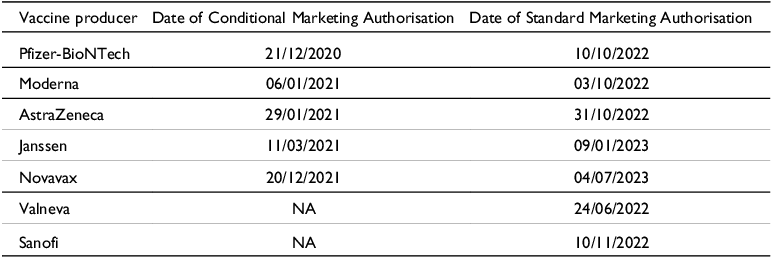
By October 2022, EMA had given CMAs to six successful vaccine candidates, listed in Table 1. The use of regulatory flexibility expedited the regulatory approval of COVID-19 vaccines compared with any vaccines developed in the past. While in general the average time to develop a medicinal product from phase 1 trials to approval is around 10 years, this process took less than a year for some COVID-19 vaccines.Footnote 34 EMA’s rolling review certainly reduced the time needed for the delivery of CMAs.Footnote 35
Timeline of COVID-19 vaccine marketing authorisation in the EU

Note: Some vaccines received a standard marketing authorisation directly (Valneva and Sanofi) while for others a standard marketing authorisation was issued after a CMA.
Data source: EMA Footnote 33
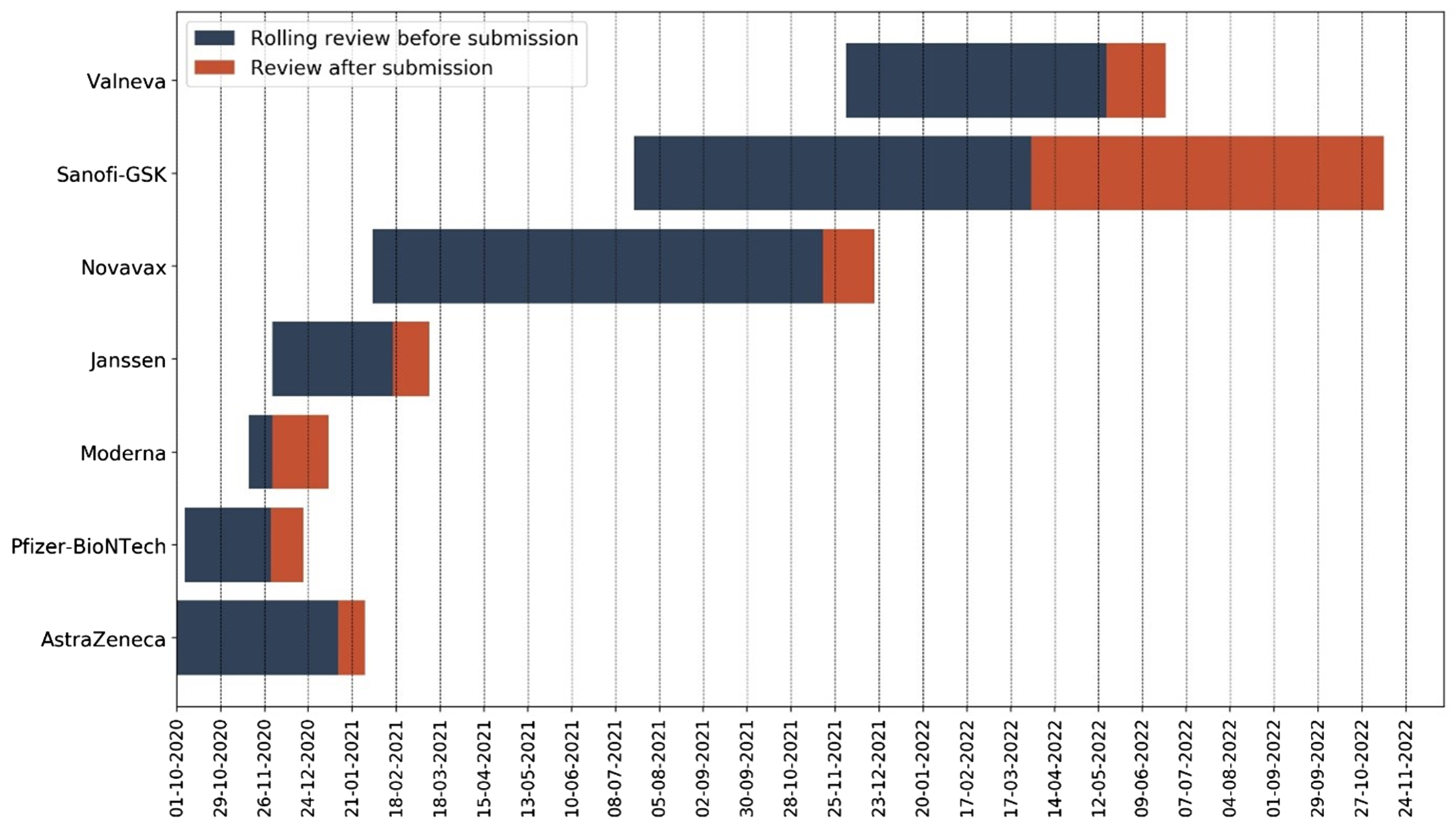
Altogether, these efforts led to a record time to authorise COVID-19 vaccines in the EU, as shown in Figure 1. There were just 21 days between Pfizer-BioNTech’s application and the issuance of the CMA, 36 days for Moderna, 17 days for AstraZeneca and 23 days for Janssen, compared with the standard EU review timeline of 210 working days.Footnote 36
Timeline of COVID-19 vaccine authorisation in the EU.
Note: This Gantt chart shows the timeline of all six COVID-19 vaccine authorisations in the EU. The process consisted of two steps, namely a rolling review before formal submission and a review after formal submission. The first COVID-19 vaccine to begin the rolling review process was AstraZeneca (Vaxzevria) (1 October 2020). Pfizer-BioNTech (Comirnaty) was the first COVID-19 vaccine to receive a CMA (21 December 2020). The average time from the start of the rolling review to the issuance of a CMA was 145 days.
Data source: EMA

The EU Member States could have opted for faster access to the vaccines through emergency use at the national level, but eventually chose a more robust, scientific and unified EU approach.
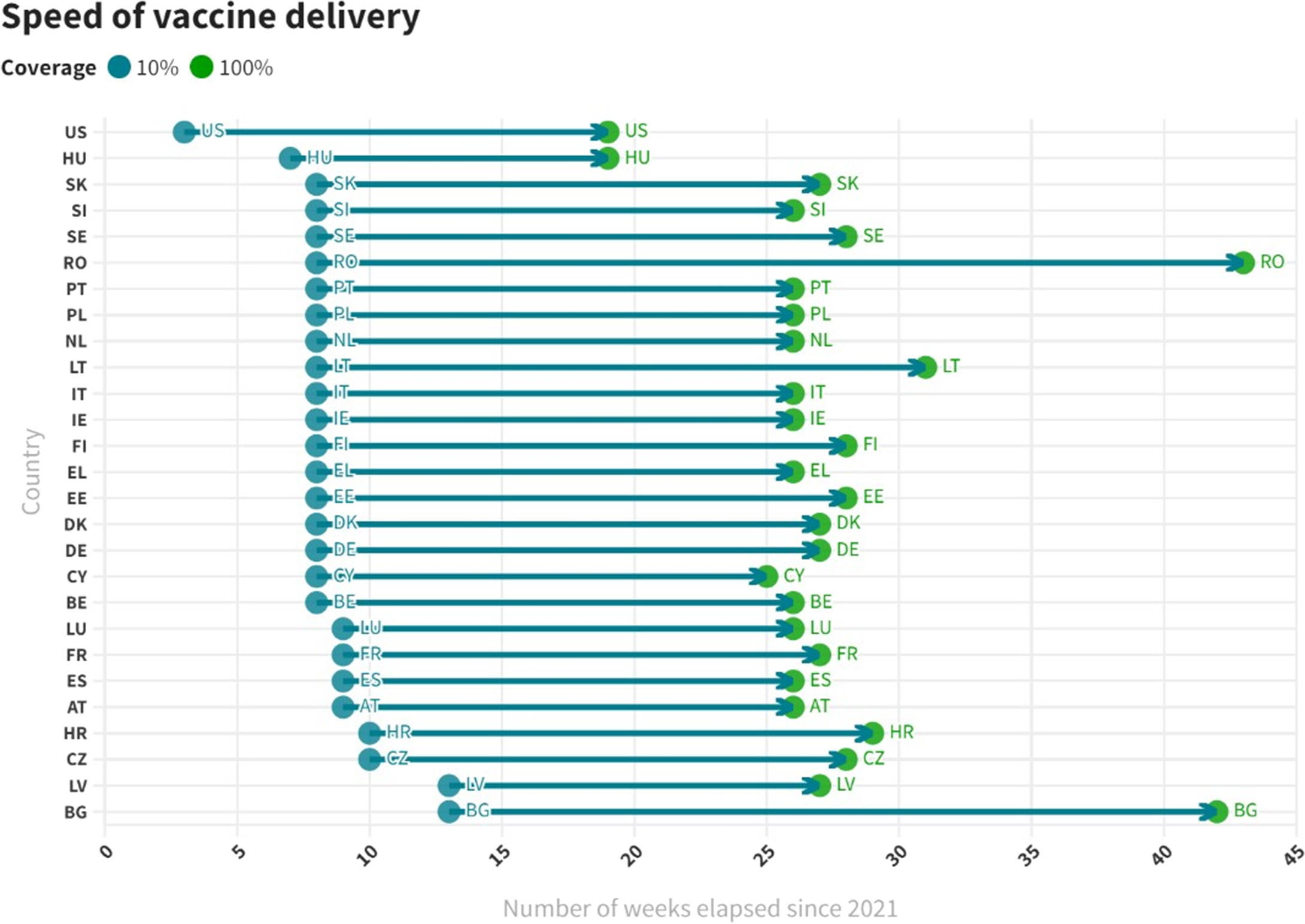
Authorisation marks only the beginning; ensuring timely access to a vaccine requires both swift production and equitable distribution across the Member States. To assess potential disparities in the distribution of COVID-19 vaccines among the Member States, we analyse the number of weeks elapsed since 2021 it took for each country to receive sufficient doses to theoretically vaccinate 10 per cent and 100 per cent of its population. For example, in a country with a population of 10 million, we compare the numbers of weeks it took to receive 1 million and 10 million doses. It is important to note that this analysis differs from the count of administered vaccine doses, which is certainly lower.
Vaccine delivery in the EU was evenly distributed at the initial stage – pro rata based on Member State population – despite some complaints.Footnote 37 Most Member States received enough COVID-19 vaccine doses to cover 10 per cent of their population within eight weeks since the beginning of 2021, as shown in Figure 2. Most countries received sufficient doses to theoretically vaccinate their whole population once within half a year, but differences among countries existed. One of the reasons is that the deliveries were, to a certain extent, demand-driven. For example, the two least-vaccinated Member States, Bulgaria and Romania, were also the slowest to receive vaccine doses.Footnote 38
Speed of vaccine delivery.
Note: Authors’ own elaboration on the data of ECDC Vaccine Tracker and the data provided by the US Centers for Disease Control and Prevention.

Some Member States decided to diversify their vaccine portfolios earlier than others. For example, Hungary authorised the use of the Sputnik V vaccine, which was developed by Russia and not authorised at the EU level, lessening the amount of time it took to adequately cover its population.
The EU was however slower in securing deliveries than the US, where the use of Pfizer/BioNTech vaccine was authorised 10 days earlier and achieved to distribute an amount of doses equal to 10 per cent of the population in Week 3 of 2021 and 100% in Week 19, using only the supply of Pfizer/BioNTech and Moderna.
Considering the more structured authorisation process and the complexity in coordinating and assisting the logistics of 27 Member States, the EU’s contributions should not be understated. Besides, it is also true that Pfizer-BioNTech prioritised the entry to the US market.Footnote 39 On delivery, the lower prices and the relatively late agreements between the pharmaceutical companies and the Commission might have led to the sluggish supply in the EU in the first half of 2021.Footnote 40
b. Global solidarity
The EU committed politically to leading global solidarity efforts during the COVID-19 pandemic. However, the European Commission made extensive use of APAs to secure vaccines only for the EU/EEA population. Securing vaccines for EU/EEA citizens and maintaining global solidarity were to a large extent not compatible objectives.
One of the major global solidarity efforts to secure timely access to vaccines was the COVID-19 Vaccines Global Access (COVAX) Facility.Footnote 41 One fundamental commitment was “to bring every participating country to 20 per cent vaccination before releasing supplies for any country to go above 20 per cent” (this allocation mechanism referred to phase 1, in place until April 2022), with a priority for frontline healthcare workers and the most vulnerable groups.Footnote 42 This commitment made the COVAX Facility unattractive to some high-income countries, which would have had to adapt their vaccine demand to this commitment while they were financially able to sign bilateral purchase agreements and vaccinate their populations quickly.Footnote 43 Countries had the possibility to opt out of this commitment and conclude bilateral agreements.Footnote 44 Indeed, EU Member States did not acquire doses through COVAX. The EU and its Member States participated in the COVAX Facility as “self-financing economies,” being as donors rather than recipients.
According to the UNICEF COVID-19 Market Dashboard, by June 2023, roughly 925 million doses of COVID-19 vaccines had been shipped through the COVAX Facility to 114 countries. The data show that 23 EU Member States had donated approximately 418 million doses through COVAX to 101 countries by June 2023.Footnote 45 The US was another major donor, contributing roughly 400 million doses.
The EU and its Member States also contributed to the COVAX Advanced Market Commitment (AMC). Launched on 4 June 2021, this is a financial mechanism to make COVID-19 vaccines available to lower- and middle-income countries regardless of their ability to pay. The COVAX AMC acts as an insurance policy and is funded by voluntary contributions from high-income countries and private donors. The European Commission confirmed its participation in the COVAX AMC by announcing a direct contribution of EUR 400 million in grants. It also contributed, together with the European Investment Bank, an additional EUR 600 million in guarantees, while the EU Member States contributed a further EUR 2.5 billion.Footnote 46
The COVAX mechanism was originally created as a multilateral tool, with the objective of ensuring timely access to vaccines for the global population by orchestrating collective purchases and sharing the doses among all participating countries. Yet, the possibility of high-income countries to negotiate bilateral agreements limited the benefits of the COVAX mechanism.Footnote 47 The EU and its Member States were together one of the biggest donors of the COVAX Facility’s budget, while at the same time, they prioritised access to vaccines for their own population. From the global perspective, it is no doubt that the EU, together with the more advanced economies, enjoyed the fruits of the vaccine development earlier than the rest of the world.
Nevertheless, the EU helped ensure access to vaccines globally by export controls. The export controls managed by the EU served two goals depending on the supply condition. The export of COVID-19 vaccines and active substances from the EU to non-vulnerable countries were regulated by an EU export authorisation scheme.Footnote 48 The EU could stop exporting vaccines to non-vulnerable countries (with some countries and territories excluded from the scope of the Regulation) in case of a breach of the contractual agreements set out in the APAs, or in case of a threat to the security of supply within the EU. It served first the aim to secure doses for the EU Member States and second protected vulnerable countries. As of March 2021, 380 export requests to 33 different destinations had been granted for a total of around 43 million doses.Footnote 49 Notably, the EU was the only democratic region in the world to export COVID-19 vaccines on a large scale.Footnote 50
3. Ensuring equitable and affordable access to vaccines
The equity and affordability of COVID-19 vaccines were major concerns in 2020. Due to the infectiousness and severity of the disease, as well as the swift emergence of new variants, some commentators argued that “no one is safe until everyone is safe.”Footnote 52 Others predicted that the world did not have the capacity to produce sufficient doses of COVID-19 vaccines to vaccinate the entire global population.Footnote 53 As vaccines were expected to be limited in their initial supply, it was reasonable to anticipate issues with equitable allocation.
At the top level, countries might attempt to bid for or persuade pharmaceutical companies to prioritise supplies for them. Within a country, different groups of people would compete for a limited number of doses. Would the doses first be given to richer people who are more able to pay? What would be the optimal allocation rule that balances the moral obligation to look after vulnerable groups with the efficient functioning of the economy?
These worries proved to be excessively pessimistic. Scrambling for COVID-19 vaccines among the EU Member States was successfully avoided thanks to the joint procurement. Within nations, people were generally considerate and wait for their turn, allowing the elderly and those on the frontline to be vaccinated before the general public. As shown earlier in Figure 2, most Member States received enough doses to theoretically vaccinate their whole population once within half a year.
This “progress” from insufficiency to abundance, however, is not without criticism. In this section we discuss affordability very generally, and then move to the opposite of the fear of scarcity: surplus.
a. Affordability
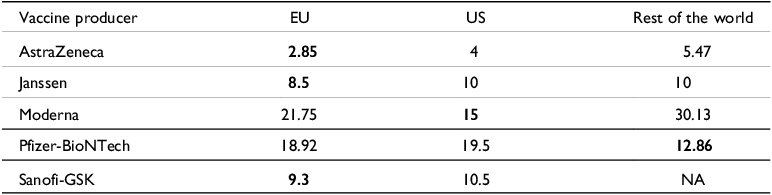
COVID-19 vaccines are offered free of charge in all Member States, yet taxpayers pay the cost indirectly. As a result, we twist the question and study the cost of the vaccines. To assess affordability, we compare the prices of five COVID-19 vaccines across the EU, the US, and the rest of the world using the data provided by the UNICEF COVID-19 Market Dashboard. The price per dose paid by the EU is not high compared with the US and the rest of the world (see Table 2). For the COVID-19 vaccines manufactured by AstraZeneca, Janssen and Pfizer-BioNTech, the EU paid on average less than the US. The price of a product is only one facade of affordability. One might pay little for one dose of vaccine but buy much more than needed, eventually still paying more than necessary. In any case, a purchase should be evaluated with all conditions considered. Unfortunately, important conditions in the contracts, which include price, volume, delivery schedule, purchase guarantee and liability clauses, are not publicly available.Footnote 55
Price per dose comparison (USD)

Data source: The UNICEF COVID-19 Vaccine Market Dashboard (as at 13 November 2022).Footnote 51 These data were collected by the UNICEF from the media and thus the numbers are not considered official.
b. Surplus
The EU transitioned from scarcity to surplus within a year. The extent of this surplus, and the wastage of vaccines worldwide, remained largely neglected by the public until researchers gradually picked up the matter. Footnote 56,Footnote 57,Footnote 58
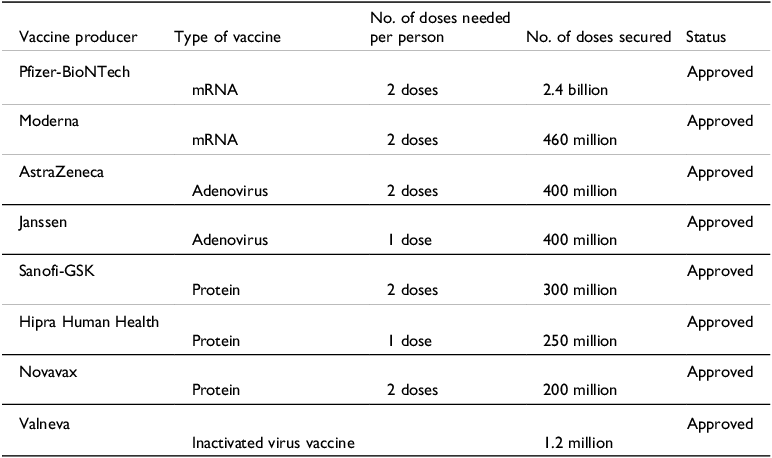
A surplus of vaccines was indeed planned. More than 4 billion doses of COVID-19 vaccines have been secured for roughly 445 million EU residents (see Table 3).Footnote 59 Certainly, there are several reasons for the Commission securing more doses than the population size. The first argument is diversification: it is important to invest in different technologies to increase the chance of developing and buying an effective and safe vaccine. Second, several vaccines require more than one dose to fully vaccinate a person, and some require boosters.

The EU initially struggled to secure sufficient vaccine doses but overcame this problem eventually. This could be interpreted as a success, but it has arrived at the other extreme as there is a considerable amount of vaccine surplus. This is unfortunate, considering the resources spent on purchasing and producing the doses as well as the EU’s commitment to achieving global vaccine equity.
To investigate the delivery of vaccines and the extent of vaccine surplus, we use the data collected by ECDC (version of 1 June 2023). The number of vaccines received (used) per week is calculated by adding together the number of doses received (used) of each vaccine brand. The cumulative sum is then calculated on a weekly basis for both the number of doses received and the number of doses used. The surplus is the cumulative difference between the number of doses received and the number of doses used by the EU Member States. However, we do not have information on when doses expired or were destroyed, so the total surplus indicates more vaccines than are actually stored as reserve. Note that data for Malta are missing.
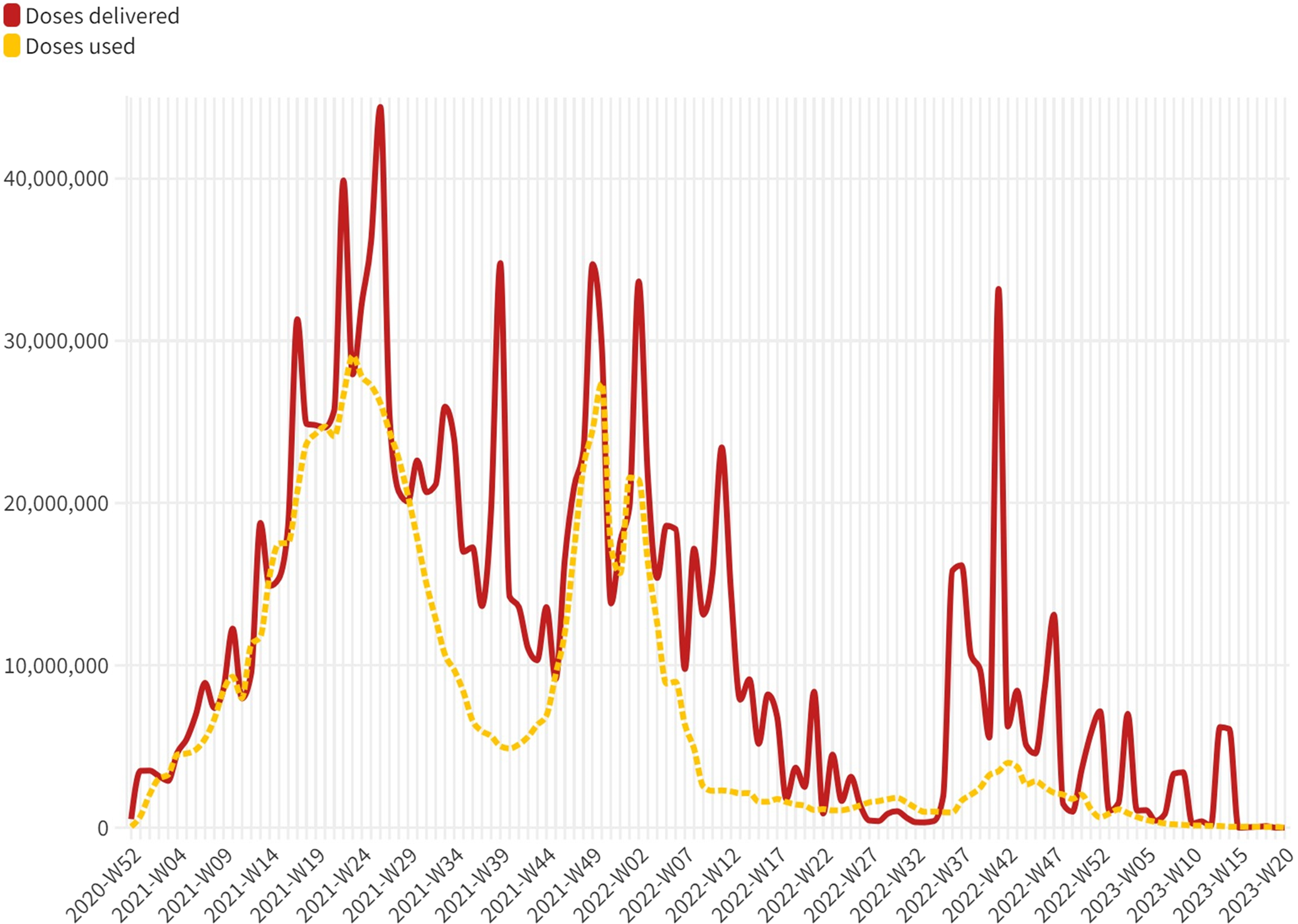
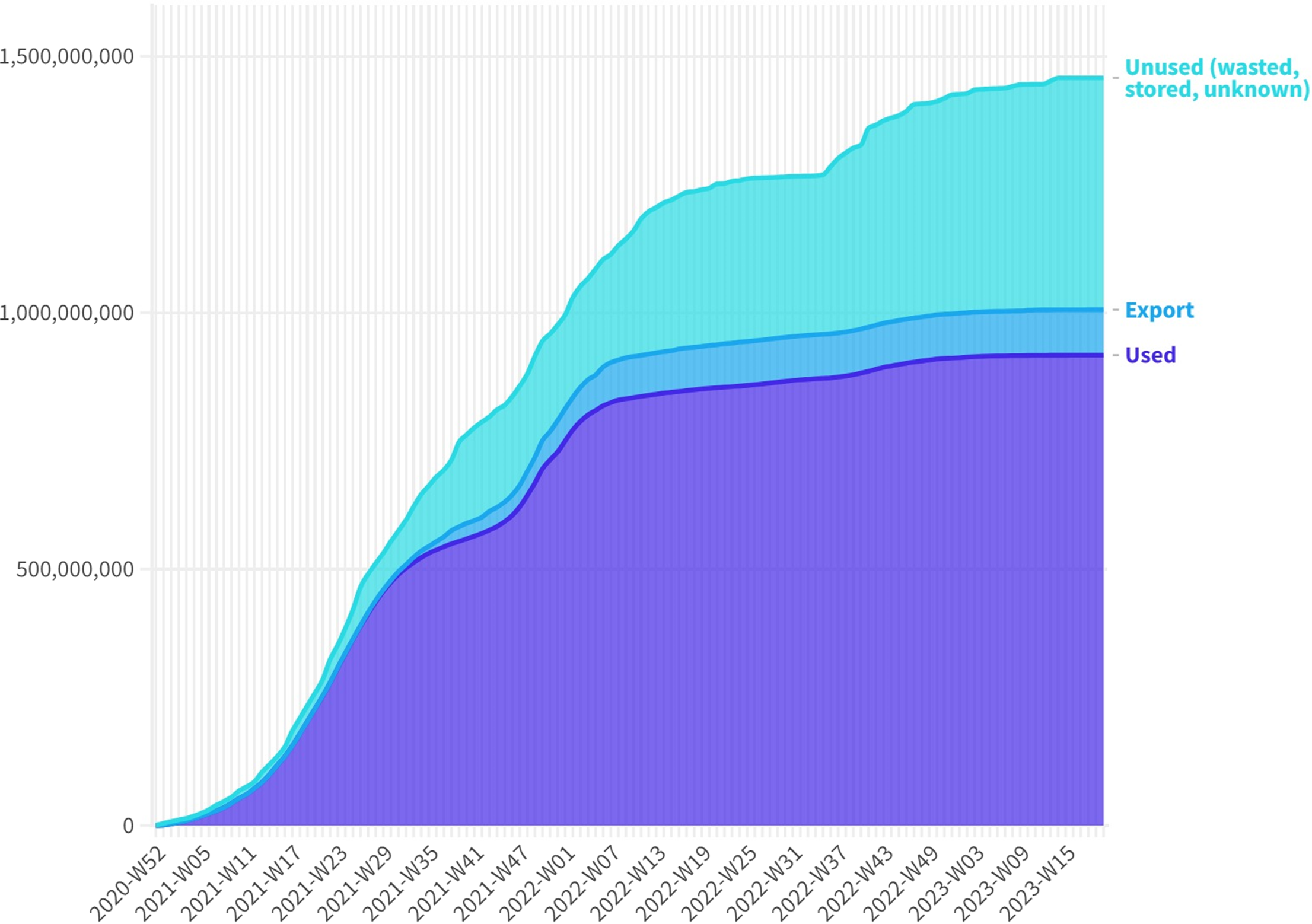
Figure 3 shows that the arrival of vaccines in the EU is an intermittent process. The graph depicts the numbers of doses received by the EU on a weekly basis from 2020 week 52 to 2023 week 20. Both delivery and usage dipped during the third quarter of 2021, as well as after the beginning of 2022. Obviously deliveries were driven by use/demand, at least until 2021. The soar of vaccine delivery in mid-2022 is partly due to the arrival of the adapted versions by Pfizer-BioNTech and Moderna targeting Omicron BA.4 and BA.5. Yet the usage is low. Figure 4 illustrates the same information in its cumulative form and includes exports of vaccines in the picture. The number of unused vaccines had increased steadily, reaching around 450 million by May 2023. These had been either stored, sent to unknown destinations, or wasted.
Weekly vaccines received and used.
Source: Authors’ own elaboration on the data of ECDC Vaccine Tracker (version of 1 June 2023).

Cumulative COVID-19 vaccines received, used, exported and unused.
Source: Authors’ own elaboration on the data of ECDC Vaccine Tracker (version of 1 June 2023).

While it is desirable for Member States to have a stockpile of vaccines, there are two major concerns with such a large surplus. The first is wastage and the second is global equity. Wastage is certainly due to vaccine expiry. For example, in May 2022 Denmark had to destroy 1 million vaccines that had past their expiry date.Footnote 60 Concerning global equity, the EU failed to ensure global solidarity as vaccines were sitting in storage and not being administered into arms.
In May 2022, the Commission announced that it had reach an agreement with Pfizer-BioNTech to adapt the contractually agreed delivery dates to better align with Member State needs.Footnote 61 In essence, doses scheduled to be delivered throughout the summer would instead be delivered during the autumn and winter. In June 2022, a group of EU Member States (Bulgaria, Croatia, Latvia, Lithuania, Estonia, Poland, Romania, Slovakia, Hungary and Slovenia) sent an official request to the Commission to review the contracts signed with manufacturers to make deliveries more flexible, showing that they did not need the pre-ordered doses.Footnote 62 In the letter, these Member States highlighted that being tied to paying for COVID-19 vaccines that they did not need would waste public money.
The COVID-19 vaccine wastage is a lesson learned for the Commission. Any future similar procurement of medical countermeasures (MCMs) should ensure flexible deliveries that respond to actual demands, in order to avoid wastage. While renegotiating purchase contracts is an option,Footnote 63 it is imperative to explicitly outline within the contract how the risk of over-purchase will be shared.
4. Making sure that preparations are made in EU Member States
The fourth objective stated in the Strategy was to ensure that the EU Member States were well prepared to roll out COVID-19 vaccines. According to Article 168(7) TFEU, the organisation and delivery of health services are the responsibility of the Member States. The Union accordingly does not have the competence to manage or interfere in national vaccination campaigns. The EU played mainly a supportive role by providing guidance, as well as helping the Member States to address potential challenges and gaps. To assess the achievement of the EU concerning this objective, this section first lists some major support by the EU in this area and then provides the authors’ own assessment based on evidence and opinions from the literature.
First of all, among the EUR 13 billion joint procurement of medical and protective equipment conducted by the Commission in early 2020, EUR 2.27 billion was used to purchase medical equipment for vaccination, including 1.2 billion syringes, 588 million needles and 1.18 million vaccine carriers.Footnote 64 The Commission in the meantime created platforms for the Member States to acquire medical supplies and transport capacity. In April 2020, the Commission created the COVID-19 Clearing House for medical equipment to help the Member States source available supplies to match their needs for different products, including personal protective equipment, medical and hospital supplies, and ICU therapeutics and vaccines.Footnote 65 The Commission in addition reallocated funds and resources for meeting the Member States’ urgent needs through the existing Union Civil Protection Mechanism and the strategic medical stockpile created under rescEU.Footnote 66 Part of the funding available under the Emergency Support Instrument was used to bolster the Member States’ preparations for vaccinations, for example in the transportation of COVID-19 vaccination-related equipment. In hindsight, the slow rollout in the beginning of the vaccination campaign was not a result of lack of preparation but more an issue of vaccine production capacity.Footnote 67
Another major support by the EU came in the form of guidance and recommendations. The Commission provided recommendations for the Member States to undertake the necessary preparations for vaccination rollout. Published in October 2020, prior to the start of the Member States’ vaccination campaigns, the Commission’s communication on preparedness for COVID-19 vaccination strategies and vaccine deployment set out the chief elements to be taken into consideration.Footnote 68
The European Centre for Disease Prevention and Control (ECDC) also played an important role. To advise the Member States in defining priority groups, ECDC published two reports in October and December 2020 on prioritisation strategies for vaccinationFootnote 69 and two reports in March and October 2021 on sharing good practices of vaccine rollout.Footnote 70 Despite these efforts, it was reported that COVID-19 vaccine policies in the EU vary significantly,Footnote 71 partly due to the fact that ECDC is not mandated to issue legally binding recommendations. Divergent vaccine policies could fuel misinformation and hurt public trust.Footnote 72 Meanwhile, the European Ombudsman opened a case concerning how ECDC gathered and assessed information during the pandemic in the context of a wider work on the response of the EU administration. While no maladministration was found, the Ombudsman made several recommendations on promoting transparency and facilitating scrutiny of the data and assessments compiled by ECDC.Footnote 73 Following voices complaining the lack of effectiveness and authority of ECDC,Footnote 74 the mandate of ECDC has been strengthened but the impact of the new mandate will only been seen in the next crisis.Footnote 75
5. Transparency as a transcending issue
The core of the EU Vaccines Strategy, the Joint Procurement Agreements (JPAs) of COVID-19 vaccines, was not built upon the legal basis provided by Article 168 TFEU. Instead, the leagal basis of JPAs has been defined, long before the onset of the pandemic, as an exercise of the executive power of the Commission under Article 17 TEU.Footnote 76 Besides, the Advanced Purchase Agreements (APAs) granted the Commission the power to distribute the purchased vaccines, signifying a structural change of the relations between the EU and its Member States and also a further centralisation of executive power by the Commission.Footnote 77 The use of JPAs, an act of centralisation of executive power, is however subject to the judicial review by the Court of Justice of the European Union and should comply with some principles of good administration applicable to contracts that involve the use of the budget of the Union.Footnote 78 One of the principles is transparency.Footnote 79
Indeed, the transparency aspect of the Commission’s negotiations with pharmaceutical companies on the COVID-19 vaccines has been scrutinised. Footnote 80,Footnote 81 The negotiations of the APAs were mainly conducted behind closed doors with limited transparency. Under pressure from the European Parliament and some civil society organisations, the Commission released substantially redacted versions of the contracts, stating the need to protect business secrets. This approach was criticised for denying the public’s right to review public contracts.Footnote 82 The release of the redacted versions led to the closure of the EU Ombudsman’s inquiry into the transparency of the APAs between the Commission and the pharmaceutical companies. However, the Ombudsman urges the Commission to ensure transparency of the ongoing and future vaccine negotiations.Footnote 83
Looking ahead, while Regulation (EU) 2022/2371 mentions that “joint procurement procedures should abide by high standards of transparency in relation to Union institutions … and Union citizens,” it remains largely a very vague commitment. The Regulation makes some other references to transparency (e.g. Recital 40 and Article 13(5)), but always with the mention of the protection of commercially sensitive information and security interests, without introducing sufficient safeguards to protect the public’s right to access public documents. The extent to which the Regulation would help improve transparency is still unknown, as companies seem to maintain the veto power over information disclosure.
A transparent governance framework would enhance the EU’s perceived authority and allow for more efficient and effective deliberation and implementation of policies. Stronger safeguards for transparency in the different steps of a public health emergency response would be beneficial for the EU to effectively address any type of cross-border health threat, while keeping public support on its side. This would, for instance, be very valuable when it comes to the incorporation of scientific advice into policymaking or the use of public resources, for example in funding the research and development of crisis-relevant MCMs. If the legislation is to be kept reasonably flexible, such safeguards could take the shape of more specific guidelines on how to conduct certain processes and disclose certain types of information, and of a strong accountability mechanism that would ensure that EU officials are given sufficient and correct incentives to always work for the public interest.
III. Conclusions
The EU Vaccines Strategy stands out as a significant case study in public health policy, notable for its ambitious goals, clear necessity, and its implications to the EU institutional framework. This centralised approach, in hindsight, effectively prevented a chaotic rush for vaccines and ensured fair distribution among the EU Member States, irrespective of their financial resources. While this analysis aims to extract lessons for the future, it is important to acknowledge the EU’s proactive approach and achievements in addressing an unprecedented crisis within a complex institutional framework involving 27 sovereign states.
Yet the Advanced Purchase Agreements (APAs), central to the Strategy, have faced scrutiny and criticism, particularly due to concerns about transparency. The substantial size of these procurement contracts brought attention to the need for increased transparency throughout the process. Given the potential for misinformation fuelled by this lack of transparency, it is essential for the EU to maintain a heightened level of transparency and due diligence in future joint procurement efforts for medical countermeasures.
Moreover, the shortcomings of the Strategy, particularly its excessive purchases, should serve as a learning opportunity for both EU and national leaders and officials, guiding future centralised or coordinated actions. The EU Vaccines Strategy experience highlights the importance of ensuring that increased integration or centralisation of power at EU level should be accompanied by transparent procedures and a robust accountability mechanism.
Acknowledgement
This research has received funding from the Horizon 2020 research and innovation programme for the EU under the Grant Agreement No 101016233, H2020-SC1-PHE Coronavirus-2020-2-RTD, PERISCOPE (Pan-European Response to the Impacts of COVID-19 and future Pandemic and Epidemics).
Competing interests
The authors have no conflicts of interest to declare.

 Open access

