Methicillin-resistant Staphylococcus aureus (MRSA) is an antimicrobial-resistant bacteria traditionally associated with nosocomial infections.Reference Monecke, Coombs and Shore 1 Community-associated (CA) MRSA was notably distinct from healthcare-associated (HA) MRSA in its epidemiology and microbiologic properties when it emerged.Reference David and Daum 2 It is important to understand strain-specific differences, including their transmissibility within households. There is a dearth of research comparing the differences in virulence, transmissibility, and risk factors between HA- and CA- strains within MRSA-positive households.
Several studies have demonstrated that S. aureus and MRSA carriers can be a source of transmission of these pathogens to their household contacts, with many suggesting the spread of MRSA within households to be substantial.Reference Calfee, Durbin, Germanson, Toney, Smith and Farr 3 – Reference Mollema, Richardus and Behrendt 6 Whereas the epidemic USA300 strain accounted for more than 90% of MRSA isolates in communities in the United States, at the time of this study, the Greater Toronto Area (Ontario, Canada) had both HA-MRSA and CA-MRSA strains co-circulating.Reference Borgundvaag, Ng, Rowe and Katz 7 This provided an opportunity to directly compare the relative virulence and transmissibility of these strain types. We undertook a cohort study to compare the prevalence of MRSA colonization among household contacts of MRSA patients, and to determine the risks associated with household transmission, of CA- vs HA-MRSA strains.
METHODS
A prospective cohort study of household contacts of MRSA-infected or MRSA-colonized index cases was conducted from October 4, 2008, through December 3, 2012. Study staff recruited index cases from 7 Greater Toronto Area acute care hospitals. Patients and their household contacts were eligible for study inclusion if the index case was evaluated or admitted to 1 of the study hospitals, infected or colonized with MRSA, and discharged to a residence (eg, house, apartment) where at least 1 additional person resided (spent over 20 hours per week in the residence). The patient and at least 1 household contact had to give informed consent to participate. For index cases or household contacts who were younger than 18 years, consent was provided by their parents or legal guardians.
This study was approved by the research ethics board at each participating site.
Data Collection
Consenting participants were interviewed at their homes. Baseline interviews were conducted within 1 week of discharge. Study staff used a standardized data collection form to collect demographic information, clinical characteristics, personal cleaning and hygiene information, and information on known CA- and HA-MRSA risk factors monthly for 3 months.Reference Borgundvaag, Ng, Rowe and Katz 7 Household-level data (eg, type, square footage, cleaning practices) were also collected. Interviewers were masked to the index cases’ MRSA strain type.
All consenting participants had swab samples obtained from anterior nares, rectum, volar surface of forearm, axilla, throat, and open lesions/exit sites at the baseline visit and monthly for 3 months. Monthly environmental sampling was undertaken of the bed sheets, pillows, pillow cases, floor beside the bed, telephone handle and mouthpiece, sink taps (bathroom and kitchen), bathroom towels, chair rails, and armrests and floor at the foot of the most commonly used chairs. Pets were also tested (nares only). If all household contacts were colonized, sampling was discontinued.
Laboratory Methods
Specimens were processed per standard protocols at the clinical laboratories. MRSA isolates were forwarded to a central laboratory for strain typing. 8 , 9 Swab samples were enriched in 3 mL brain heart infusion broth overnight at 37°C (Oxoid, Thermo-Scientific), subcultured to Chromogenic MRSA/Denim Blue Agar (Oxoid), and incubated 24 h at 37°C.Reference Drews, Willey and Kreiswirth 10 – Reference Zhang, Drews, Tomassi and Katz 12 The first isolates from the index case and household contact underwent pulsed-field gel electrophoresis using standardized protocol.Reference Mulvey, Chui and Ismail 13 Strains were analyzed using Bionumerics, version 4.6 (Applied Maths), and classified by Canadian MRSA epidemic strain nomenclature.Reference Mulvey, Chui and Ismail 13 PVL gene detection and staphylococcal cassette chromosome (SCC) mec typing were performed by previously defined methods.Reference Oliveira and de Lencastre 14 , Reference Kondo, Ito and Ma 15 Strains carrying SCCmec types IV or V were considered CA-MRSA, and those carrying other SCCmec types were considered HA-MRSA.
Statistical Methods
Data were entered and analyzed using SPSS, version 21.0 (IBM). Comparisons of categorical variables were performed using the χ2 test or Fisher exact test. Comparisons of continuous data were performed with the t test or Mann-Whitney test. The attack rate is the proportion of susceptible household contacts (tested negative at baseline), from households with MRSA transmission, who become MRSA positive.
A direct risk factor included surgery, hemodialysis, urinary or intravenous line, hospitalization within the previous year, working or volunteering in a healthcare facility, or residence in a long-term care facility. Community risk factor included regular contact with group settings (retirement home, shelter, barracks, prison), illicit drug use, tattoo or piercing, member of gay/lesbian/bisexual community, or team sports participation within 12 months. Two-tailed P-values <.05 were considered significant.
RESULTS
Ninety-nine index cases were enrolled, who lived with 241 eligible household contacts, of whom 183 (76%) were enrolled. The median (range) age of index cases was 62 years (1 month-89 years). Of 99 index cases, 11 (11%) were younger than 18 years, 8 of whom were younger than 5 years; 56 (57%) of index cases were male. Forty-nine index cases (49%) were colonized with CA-MRSA, whereas 50 (51%) had HA-MRSA. The median (range) age of household contacts was 41 years (1 month-85 years), and 40% were male. Most households were single detached homes (44%) or apartments/condominiums (31%). The median number of bedrooms was 3 and the median number of bathrooms was 2. Pulsed-field gel electrophoresis strain typing results were 100% concordant within households.
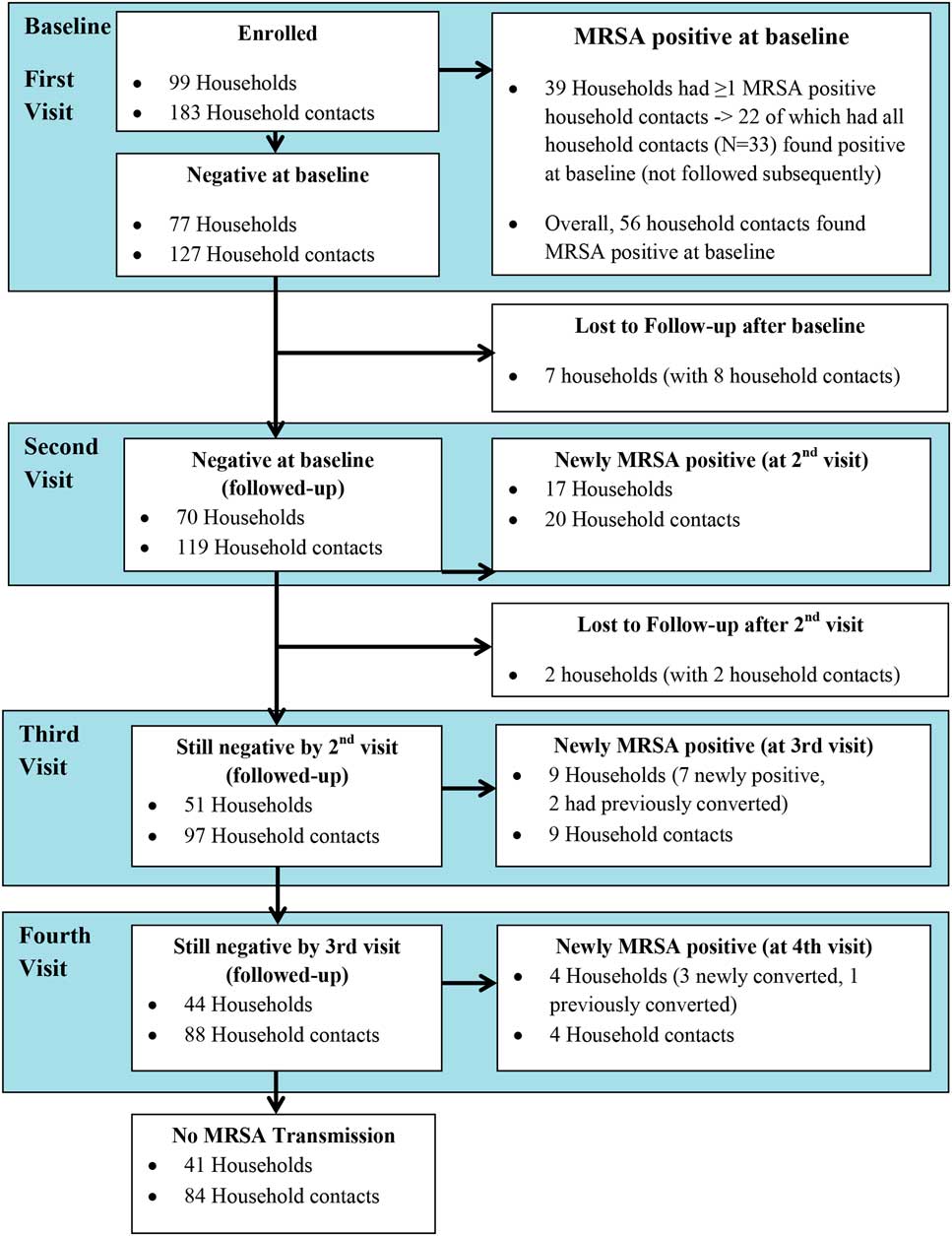
Figure 1 details the study procedure. Of the 77 households whose household contacts all tested negative at baseline, 9 were subsequently lost to follow-up. Of the remaining 68 households, 27 (40%) were found to have MRSA transmission. These 27 households together had 71 household contacts who were negative at baseline. The attack rate of MRSA transmission among those household contacts was 46%, since 33 were found to be MRSA positive during subsequent visits. These contacts were mainly colonized in the nares (n=15), throat (n=10), forearm (n=9), and/or rectum (n=8).
Flow diagram detailing methicillin-resistant Staphylococcus aureus (MRSA) screening results of households as well as index cases and their household contacts throughout study.
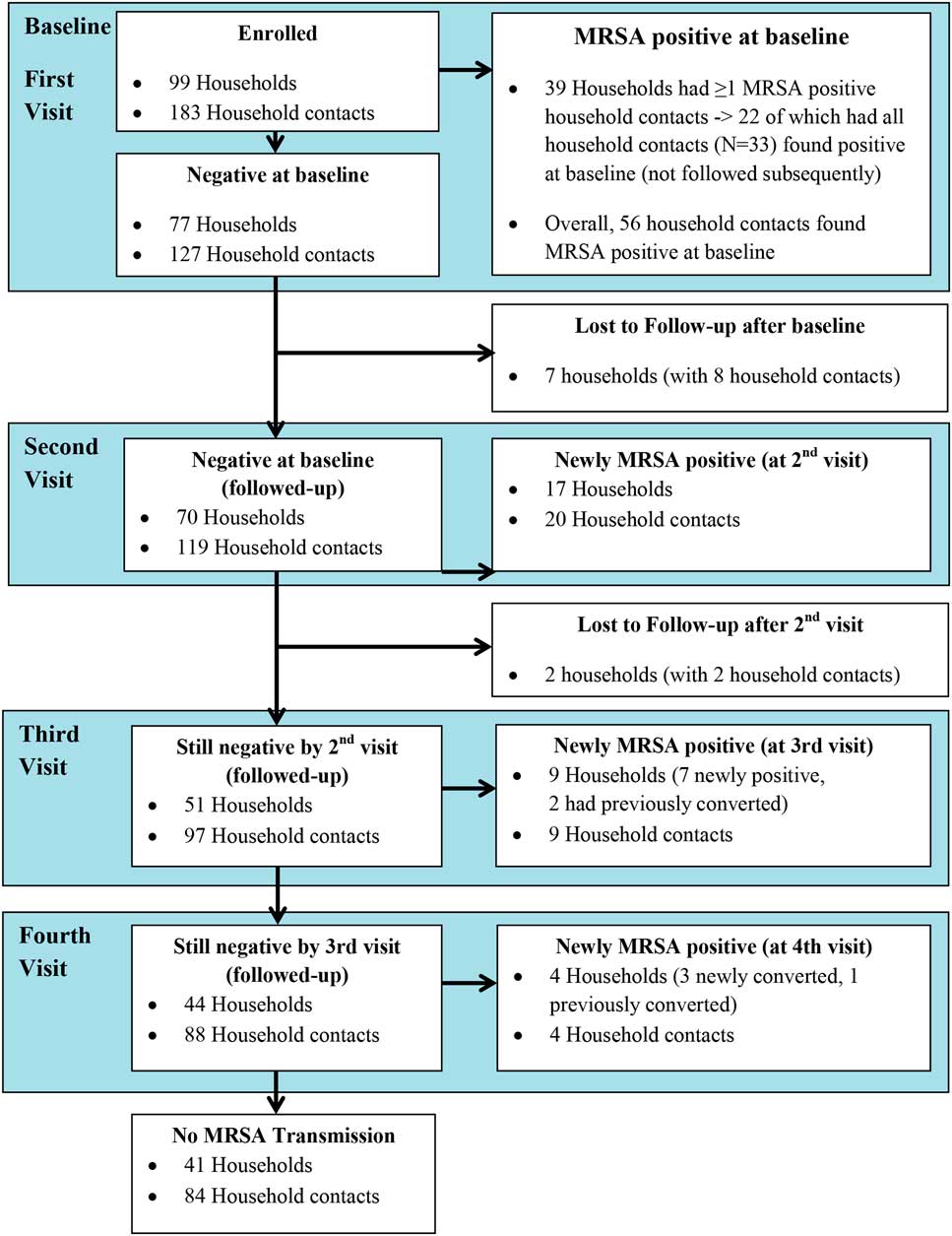
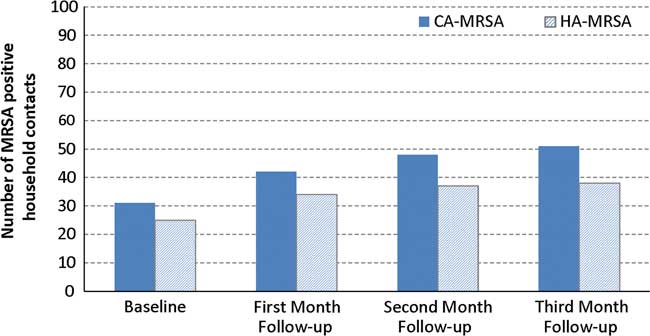
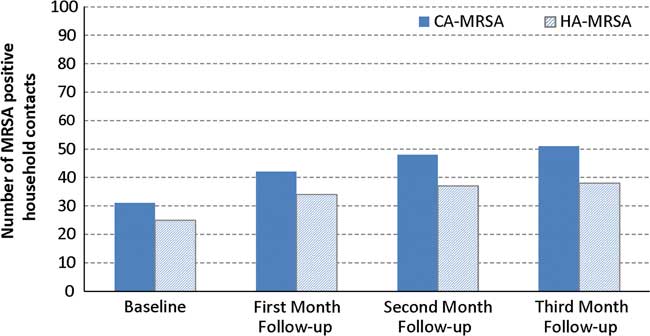
At the baseline visit, 56 (31%) of 183 household contacts were colonized with MRSA and 39 (39%) of 99 households had at least 1 contact colonized with MRSA. Twenty-two households had all swabbed household contacts positive at baseline. Figure 2 depicts the cumulative number of household contacts found positive at each household visit, by strain-type.
Cumulative number of methicillin-resistant Staphylococcus aureus (MRSA)–positive household contacts of MRSA-positive index cases by strain type (community-associated [CA-] MRSA vs healthcare-associated [HA-] MRSA) and timing of visits, Toronto, Canada (2008–2012).
Risk Factors for MRSA Transmission and Acquisition
Index cases with MRSA transmission to their household contacts were significantly younger (median age, 42 years vs 62 years, P=.05) than those without transmission. Six (22%) of 27 index cases who transmitted MRSA were younger than 18 years (5 of whom were younger than 5 years), whereas only 1 (2%) of 41 cases who did not transmit MRSA was younger than 18 years (P=.03). Index cases with MRSA transmission were more likely to report a chronic skin condition than those without transmission (10/26 [38%] vs 5/40 [13%], P=.01). There were no significant associations between any of the index cases’ personal cleaning and infection prevention and control behaviors and risk of MRSA transmission.
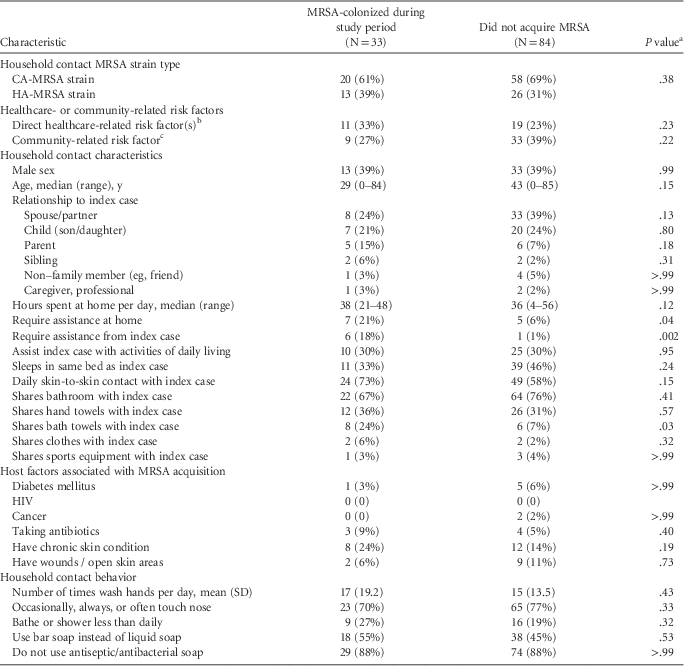
Table 1 shows the household contact–related variables for MRSA acquisition.
Household Contact–Related Variables for MRSA Acquisition

NOTE. Data are number (%) unless otherwise indicated. CA, community-acquired; HA, healthcare-acquired; HIV, human immunodeficiency virus.
a χ2 test or, where cell counts <5, Fisher exact 2×2 test for a difference in proportions, Mann-Whitney test (2-sided) for difference in medians.
b Direct healthcare-related risk factor included any one of the following: healthcare (in hospital, clinic or nursing home) worker/volunteer; hospitalized overnight or resident of a long-term care facility in previous year; received dialysis in the previous year; had a urinary catheter or intravenous line in the previous year; had surgery in the previous year.
c Community risk factor included any one of the following: lived or worked in a retirement home, home for the disabled, shelter, military barracks, correctional facility or other group setting in the previous year; had regular contact with someone who lives/works in a home for the disabled or a shelter, is homeless, is in a military barracks or a correctional facility, or uses nonprescription illicit drugs; is a member of the gay/lesbian/bisexual community; participated in group or contact sports; received a tattoo or body piercing in the previous year; or used illicit drugs in the previous year. (Other group settings reported by patients with MRSA included rehabilitation center, recreational and educational facilities, centers for the disabled, and subsidized housing.)
Environmental Contamination
A total of 2,332 environmental surface samples were taken from the 99 households. MRSA was recovered from 524 (22%) of the 2,332 samples in 78 (79%) of the 99 households. MRSA was most frequently recovered from the index case’s bed linens (49%), bathroom towel (47%), chair (44%), and carpet by the bed (44%). Environmental samples from HA-MRSA households were more likely to be positive than those of CA-MRSA households (290/1,024 [28%] vs 234/1,308 [18%], P<.001).
Among the 68 households with susceptible household contacts, the rate of MRSA environmental contamination was significantly greater in households where transmission occurred (24/27 [89%] vs 29/41 [71%] of sites positive, P=.04). Further, the median number of body sites colonized among index cases was significantly greater in households with enviromental contamination than in households without contamination (3.5 vs 1.0, P=.002). However, the median number of body sites colonized did not differ between index cases who transmitted MRSA and those who did not (3 vs 3, P=.78).
Five (10%) of 52 pets were positive (all 5 were from HA-MRSA households) and strains were all concordant with the index case.
CA- vs HA-MRSA Strain Differences
Among the 40 CA-MRSA index cases with follow-up data, 16 (40%) transmitted MRSA to 20 household contacts, whereas for the 28 HA-MRSA index cases, 11 (39%) transmitted MRSA to 13 household contacts (P=.95). Among index cases with susceptible household contacts that were followed up, the percentage who received decolonization therapy was similar between those who transmitted MRSA (15%) and those who did not (13%) (P=.80), and among CA- (20%) and HA- (21%) MRSA households (P=.84).
Index cases with CA-MRSA were younger (P=.001), were more likely to bathe daily (P=.002), reported greater handwashing (mean 15/day vs 10/day, P=.03), and were less likely to touch their noses (P=.01) than index cases with HA-MRSA. Households with CA-MRSA strains had a significantly greater median number of household members than HA-MRSA households (4 vs 2, P=.005).
Most CA-MRSA isolates (64%) were PVL(+) whereas none of the HA-MRSA isolates were PVL(+). Most CA-MRSA isolates were SCCmec type IV (88%) whereas most HA-MRSA isolates were SCCmec type II (98%). USA-300/CMRSA-10 was the predominant clone among typeable CA-MRSA isolates (45%), followed by USA-100/CMRSA-2 (9%). HA-MRSA strains were predominantly USA-100/CMRSA-2 (48/50 [96%]).
DISCUSSION
This multicenter study compared HA- vs CA-MRSA transmission patterns, environmental contamination, and risk factors for transmission on the basis of repeated home visits in a setting where CA- and HA-MRSA strains were co-circulating. The baseline prevalence of MRSA carriage among household contacts was high (31% of household contacts). This is consistent with other published studies in which 12% to 37% of household contacts were MRSA-colonized during the home visit.Reference Calfee, Durbin, Germanson, Toney, Smith and Farr 3 , Reference Johansson, Gustafsson and Ringberg 5 , Reference Zafar, Johnson and Hanna 16 – Reference Nerby, Gorwitz and Lesher 18
In recent years, CA-MRSA has emerged and has become endemic, and it is now the most common cause of skin infections in many parts of North America,Reference Borgundvaag, Ng, Rowe and Katz 7 , Reference Moran, Krishnadasan and Gorwitz 19 predominantly caused by the USA300/CMRSA-10 and to a lesser extent USA400/CMRSA-7. The emergence and epidemiology of MRSA in the community suggests an enhanced ability of these strains to transmit. Emerging epidemiologic data suggest CA strains may colonize body sites differently.Reference Saravolatz, Markowitz, Arking, Pohlod and Fisher 20 , Reference Kazakova, Hageman and Matava 21 These differences may contribute to enhanced person-to-person transmission through direct transmission (eg, skin-to-skin) or through environmental contamination.
Our investigation showed that 40% of susceptible (baseline negative) household contacts became colonized over a 3-month period. The 1% difference in the risk of transmission between HA- and CA-MRSA households was not found to be statistically significant. We are unsure how this finding relates to the observed early epidemiology of CA-MRSA as a community pathogen as noted above.Reference Saravolatz, Markowitz, Arking, Pohlod and Fisher 20 Almost three-quarters of household environments were contaminated with MRSA (HA-MRSA more often than CA-MRSA). Index cases with CA-MRSA tended to be younger and more likely to exercise good infection prevention and control practices in the home (eg, bathed/showered and washed hands more often) than index cases with HA-MRSA, which may have reduced their transmission rate closer to the null.
Our finding of a 40% transmission rate among MRSA households was consistent with studies such as Johansson et alReference Johansson, Gustafsson and Ringberg 5 (43%) and Mollema et alReference Mollema, Richardus and Behrendt 6 (47%). Calfee et alReference Calfee, Durbin, Germanson, Toney, Smith and Farr 3 reported a lower MRSA transmission rate (24%) than in our study, mainly because their finding was based on a single prevalence screening of household contacts. To our knowledge, our study is the first to directly compare prospective household transmission risk between HA- and CA-MRSA; the difference in risk was small (39% vs 40%) and was not statistically significant.
We note younger age being an index case–related variable independently associated with MRSA transmission to household contacts. This is likely because of the greater proportion of pediatric cases in our cohort of index cases who transmitted MRSA to their household contacts. Of the 6 pediatric index cases who transmitted MRSA, 5 were younger than 5 years. Pediatric cases most likely have more frequent contact with household members, particularly their parents or siblings. In fact, 5 of the 6 pediatric index cases who transmitted MRSA transmitted to their parents, and 1 spread MRSA to a sibling. Having a chronic skin condition was also a risk factor for transmission, a finding that was consistent with the results reported by Moore et al,Reference Moore, Dhaliwal and Tong 22 where chronic skin lesions or broken skin contributed to the acquisition of MRSA in household contacts with MRSA. Furthermore, we demonstrated that households with transmission had more household contacts than those with no transmission. This is in keeping with other household transmission studiesReference Calfee, Durbin, Germanson, Toney, Smith and Farr 3 , Reference Johansson, Gustafsson and Ringberg 5 , Reference Mollema, Richardus and Behrendt 23 and outbreak reportsReference Campbell, Vaughn and Russell 24 , Reference Okano and Blower 25 where crowding was found to be a risk factor for MRSA spread.
Household contact risk factors for acquiring MRSA included requiring assistance at home, especially from the index case, and sharing bath towels. These modifiable risk factors for acquiring MRSA are similar to previously reported studies on CA-MRSA transmission in households with children,Reference Nerby, Gorwitz and Lesher 18 where assisting the index case to bathe or shower or sharing lotions or ointments with the index case were found to be risk factors for MRSA colonization. This is also in keeping with CA-MRSA reported outbreaks among sports participants in which sharing towelsReference Nguyen, Mascola and Brancoft 26 , Reference Como-Sabetti, Harriman, Fridkin, Jawahir and Lynfield 27 or sports equipmentReference Barrett and Moran 28 and contact with lesions of other playersReference Sosin, Gunn, Ford and Skaggs 29 were associated with a higher risk of developing MRSA colonization or infection.
This study, unlike other household transmission studies, examined the potential role of the household environment in MRSA transmission.Reference Calfee, Durbin, Germanson, Toney, Smith and Farr 3 , Reference Mollema, Richardus and Behrendt 23 , Reference Lucet, Paoletti and Demontpion 30 Almost 80% of households had environmental contamination in our study. Fomites have been identified as possible vectors of transmission in various settings.Reference Dancer 31 , Reference Gwizdala, Miller and Bhat 32 Our observation is consistent with the previous work of Miller and Diep,Reference Miller and Diep 33 suggesting that fomite-person transmission is an important route of CA-MRSA infection. We observed that environmental contamination was more prominent in households with HA-MRSA strains than with CA-MRSA strains. The increased shedding or better survival in the environment did not, however, result in an appreciable overall increase in transmission risk. Other studies have also reported MRSA in the home environment (eg, razors, mattresses, bed linen, pillows, carpets, door handles, computers, and domestic pets).Reference Allen, Anson, Parsons and Frost 34 – Reference Kniehl, Becker and Forster 36 Our results suggest patient education on preventing the spread of MRSA should focus on environmental cleaningsReference Murphy, Eells and Quan 37 and awareness of the risk of sharing personal items.
There are a number of limitations to this study. First, in situations where both index case and household contacts were positive at baseline, directionality of spread is questionable. This was addressed by looking separately at those household contacts who were negative at baseline (susceptible). Second, it is possible the transmission did not relate to household dynamics but rather came from an external community source. Since we found 100% concordance in strain type between all index case and household contact pairings, we feel it is highly likely intrafamilial transmission had occurred in these instances. Third, since carriage can be intermittent, it is possible that household contacts who appeared to become newly positive after a negative baseline could theoretically have been colonized previously. Fourth, patient and household contact questionnaires may be subject to social desirability bias, particularly regarding personal hygiene and household cleaning regime. This should have biased towards the null. Fifth, culture-based methods to detect MRSA are less sensitive than molecular-based methods. Finally, the frequency of environmental contamination may have been underestimated with the use of environmental swabs on surfaces that may have been recently cleaned.
In summary, our findings suggest that MRSA transmission in households is common and the difference in transmission risk between CA- and HA-MRSA was not statistically significant. The data reinforce that household members should exercise excellent hand hygiene before and after having contact with the MRSA household member, whether HA-MRSA or CA-MRSA. Reducing shared use of personal care items and reducing environmental contamination should be areas of educational focus.
ACKNOWLEDGMENTS
We are grateful to the infection control practitioners, microbiologists, technologists, patients, and their families for their contributions to this study.
Financial support. Physician Services Incorporated Foundation.
Potential conflicts of interest. All authors report no conflicts of interest relevant to this article.